


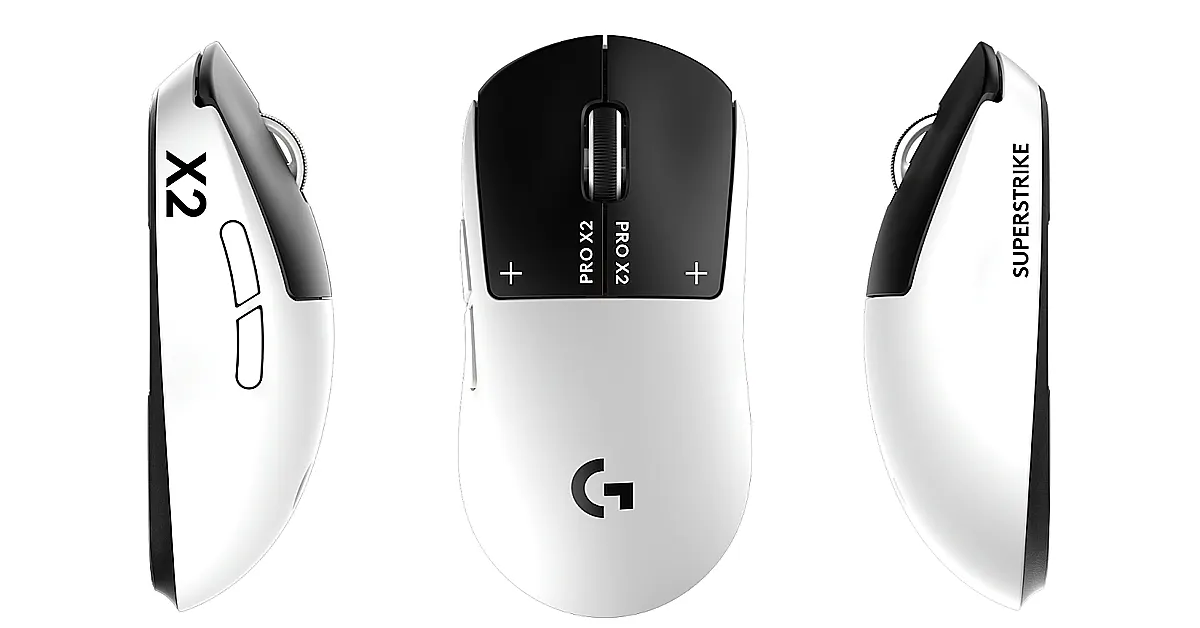
Logitech has launched the Logitech G PRO X2 SUPERSTRIKE mouse in India at a price of Rs 23,995, bringing what it calls a fresh take on click performance in competitive gaming. The new PRO X2 SUPERSTRIKE mouse introduces a completely different approach to how a gaming mouse registers clicks, combining analogue sensing with haptic feedback. The result, at least on paper, is a faster and more responsive experience aimed squarely at esports professionals and serious gamers.
In This Article
A New Approach to Click Performance
The headline feature here is Logitech’s SUPERSTRIKE technology, which replaces traditional mechanical microswitches with an inductive system. At the centre of this shift is the Haptic Inductive Trigger System, or HITS, which relies on electromagnetic sensing instead of physical contacts.
This means clicks are no longer just binary. Players get adjustable actuation with up to 10 levels, along with five rapid trigger reset settings. That level of customisation is designed to cater to different playstyles, whether it is fast-paced FPS gameplay or slower, tactical strategy titles.
The system also introduces real-time click haptics. Every click is paired with tactile feedback, which can be tuned across five intensity levels via Logitech’s G HUB software. The idea is simple. You feel the click the moment it registers, adding an extra layer of confidence in high-pressure situations.
Read Also: Apple Fitness+ Just Got a New Pilates Program, and Your Core Has No More Excuses
Reduced Latency That Actually Matters
In competitive gaming, latency is often discussed in milliseconds, and this is where the PRO X2 SUPERSTRIKE attempts to stand out. Logitech claims the new system can cut click latency by up to 30 milliseconds compared to traditional designs.
That number may sound small, but in esports, it can be the difference between landing a shot and missing it. Early testing feedback from pro players suggests the difference feels noticeable, particularly in high-speed scenarios.
The mouse has also been developed in collaboration with teams like G2 Esports, NAVI, and BLG. Their involvement hints that this is not just a lab experiment but a product shaped by real-world competitive demands.
HERO 2 Sensor and “Power of 8” Explained
Under the hood, the PRO X2 SUPERSTRIKE is powered by Logitech’s HERO 2 sensor. The company pairs this with what it calls the “Power of 8” technology suite, which focuses on precision and responsiveness.
Here are the key highlights:
- 8 kHz polling rate for ultra-fast input transmission
- 88G acceleration support for high-speed flicks
- 888 IPS tracking speed for consistent precision
- Up to 44,000 DPI sensitivity
This combination aims to deliver near-instant tracking without smoothing or filtering, ensuring that every movement translates directly to the screen.
Lightweight Build With Long Battery Life
Despite the focus on performance, Logitech has kept the design practical. The mouse weighs around 65 grams, which should make it comfortable for long gaming sessions. It also features PTFE feet with curve-cut edges for smoother gliding across surfaces.
Battery life is rated at up to 90 hours under constant motion, which is impressive for a wireless gaming mouse with such a high polling rate. Logitech’s LIGHTSPEED wireless technology is also onboard, aiming to deliver wired-like performance without the cable.
Logitech G PRO X2 SUPERSTRIKE Price in India and Availability
The Logitech G PRO X2 SUPERSTRIKE is priced at Rs 23,995 in India. It will be available in a Lunar Eclipse colour option, targeting gamers who want both performance and a premium aesthetic.
You can buy Logitech G PRO X2 SUPERSTRIKE from here.
Read Also: Top 10 smartphones under Rs 50,000 (April 2026)
Should You Care About SUPERSTRIKE?
The PRO X2 SUPERSTRIKE feels like Logitech is trying to rethink one of the most fundamental aspects of a gaming mouse. The shift from mechanical switches to inductive sensing is bold, and the added haptic layer is an interesting twist.
In practical terms, the benefits will likely matter most to competitive players who can actually feel and use that extra speed and customisation. For casual gamers, it may be more about future-proofing than necessity. Still, it is refreshing to see innovation in a category that often plays it safe.


