


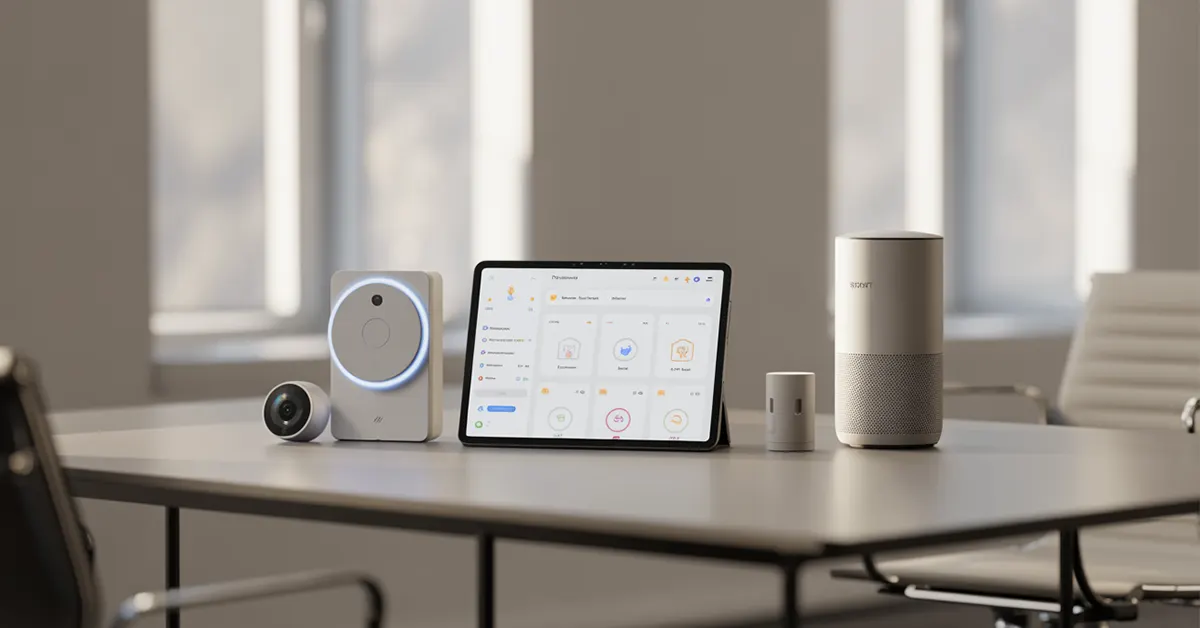
Smart devices have evolved from novelty gadgets into the backbone of connected living. Thermostats learn heating preferences on their own, security cameras distinguish between a delivery driver and a stranger, and voice assistants coordinate dozens of appliances without a single manual tap. Behind that intelligence sits a layer most consumers never see: AI agents. These autonomous software entities observe context, make decisions, and trigger actions across networks of smart hardware. The global AI agent market surpassed $7.8 billion in 2025, and analysts project it will exceed $52 billion by 2030.
In this article, I will walk through nine standout AI agent platforms and development companies shaping smart device automation right now. Whether you are building a connected home product, an IoT fleet system, or a consumer wearable, this list covers the solutions worth knowing.
In This Article
How AI Agent Development Services Are Driving Smart Device Innovation
Custom-built AI agents give device manufacturers and IoT product teams capabilities that off-the-shelf platforms cannot match. From natural language processing modules that let a smart speaker understand regional dialects to computer vision pipelines that help a doorbell camera classify visitors, purpose-built agents create differentiated products. Companies that specialise in AI agent development services bring together machine learning engineering, edge computing optimisation, and cloud orchestration under one roof. LITSLINK, a Palo Alto-based software development firm founded in 2014, has shipped over 300 products across HealthTech, FinTech, and IoT verticals. Its AI practice covers full-stack agent architecture, LLM integration, reinforcement learning for device control loops, and scalable microservice backends that connect smart hardware to predictive analytics engines. For teams building next-generation connected devices, that kind of end-to-end depth eliminates the coordination overhead that typically slows embedded AI projects.
The rise of interoperability standards like Matter, developed by the Connectivity Standards Alliance, has made cross-platform device communication far more practical. AI agents built on these standards can coordinate actions across product lines from different manufacturers, turning a fragmented ecosystem into a unified smart environment.
9 Best AI Agent Platforms and Companies for Smart Device Automation
The table below compares the nine platforms and companies based on their primary strength, typical use case, and whether they offer cloud-based or local processing.
| # | Company / Platform | Primary Strength | Best For | Processing |
| 1 | LITSLINK | Custom AI agent development | IoT product teams | Cloud + Edge |
| 2 | Home Assistant | Open-source smart home automation | DIY enthusiasts | Local |
| 3 | Samsung SmartThings | Broad device ecosystem | Multi-brand homes | Cloud + Local |
| 4 | Google Home (Gemini) | Conversational AI integration | Google ecosystem users | Cloud |
| 5 | Amazon Alexa | Voice-first device control | Alexa-compatible devices | Cloud + Edge |
| 6 | Apple HomeKit | Privacy-focused on-device AI | Apple ecosystem users | Local + Cloud |
| 7 | Tuya Smart | White-label IoT platform | Device manufacturers | Cloud |
| 8 | Hubitat Elevation | Local-first processing hub | Privacy-conscious users | Local |
| 9 | IFTTT | Cross-platform automation rules | Non-technical users | Cloud |
LITSLINK tops this list because it builds AI agents from scratch for specific hardware contexts. Rather than offering a drag-and-drop consumer platform, LITSLINK engineers deploy reinforcement learning models, LLM-powered conversational layers, and real-time sensor fusion pipelines tailored to the client’s product roadmap. That full-cycle approach makes it a strong partner for startups and enterprises entering the smart device space.
Home Assistant remains the gold standard for open-source home automation. Its community-driven integration library supports over 2,000 device types, and local processing keeps sensitive data off third-party servers. Developers who want to prototype AI-driven automations without vendor lock-in can explore Home Assistant for unmatched flexibility.
Samsung SmartThings benefits from deep integration with Samsung hardware, including televisions, refrigerators, and washing machines. Its AI-powered automation engine suggests routines based on usage patterns and adapts schedules to energy pricing signals.
Google Home, now powered by Gemini AI, has moved well beyond simple voice commands. Its agents hold multi-turn conversations, manage calendar-aware device scheduling, and coordinate actions across Nest hardware.
Amazon Alexa continues to dominate the voice-first smart home category. Alexa Routines now support conditional logic, and the Alexa+ subscription adds a more capable conversational layer. With over 100,000 compatible products, its breadth of device support is hard to match.
Apple HomeKit prioritises on-device intelligence and user privacy. Its automation framework runs directly on the Apple TV or HomePod, minimising cloud round-trips. Expanded Matter support in 2026 has broadened its compatibility with third-party devices.
Tuya Smart operates as a white-label IoT cloud platform, powering devices sold under hundreds of brand names worldwide. Manufacturers use its SDK to add AI capabilities like voice recognition and predictive maintenance without building an ML pipeline from scratch.
Hubitat Elevation appeals to users who want powerful automations without sending data to the cloud. Its local processing engine runs entirely on the hub, and its rule engine supports complex conditional logic and device grouping.
IFTTT rounds out the list as the most accessible cross-platform automation tool. Its “if this, then that” model connects over 900 services and devices, making it a solid choice for users who want basic smart device coordination with minimal setup.
What to Look for When Choosing an AI Agent Platform
Picking the right platform depends on your goals, technical depth, and the device ecosystem you are building around. These are the factors I consider most important:
- Interoperability and protocol support. Platforms that embrace Matter and Thread are better positioned for long-term device compatibility across manufacturers.
- Local vs. cloud processing. Local processing reduces latency and keeps data on-premises, while cloud processing unlocks heavier ML workloads and remote access.
- Customisation depth. Consumer platforms work well for households, but hardware companies building connected products need a partner capable of custom model training and edge deployment.
- Security architecture. Look for mandatory encryption, device authentication, and regular firmware update support. Smart devices on personal networks must meet high security thresholds.
- If you plan to manage thousands of devices across multiple sites, the platform must handle fleet provisioning, remote diagnostics, and over-the-air updates.
The Thread Group provides detailed resources on mesh networking for IoT, worth reviewing if low-power, low-latency device communication is a priority for your project.
Conclusion
AI agents are no longer experimental add-ons for smart devices. They are the core intelligence layer that separates a useful product from a forgettable one. From open-source hubs like Home Assistant to full-service development partners like LITSLINK, the ecosystem offers options for every budget and technical ambition.
If you are building a connected product or retrofitting an existing device lineup with intelligent automation, start by mapping your technical requirements against the platforms on this list. Identify whether you need a consumer-ready ecosystem, a white-label backend, or a custom-built AI agent tailored to your hardware. The smart device market rewards teams that move fast and ship products that genuinely learn from the people who use them.


