



Key Takeaways
- Both smartphones are powered by Qualcomm Snapdragon 8 Elite Gen 6 processors, run on Xiaomi HyperOS 4, and utilize silicon-carbon batteries.
- The devices include advanced privacy features such as a hardware-level Privacy Display, AI Privacy Notice, and Xiaomi Privacy Call technology.
- The secondary back display supports 1-120Hz refresh rates, 4,000 nits peak brightness, and offers features like AI interpretation and GenAI mini-app creation.
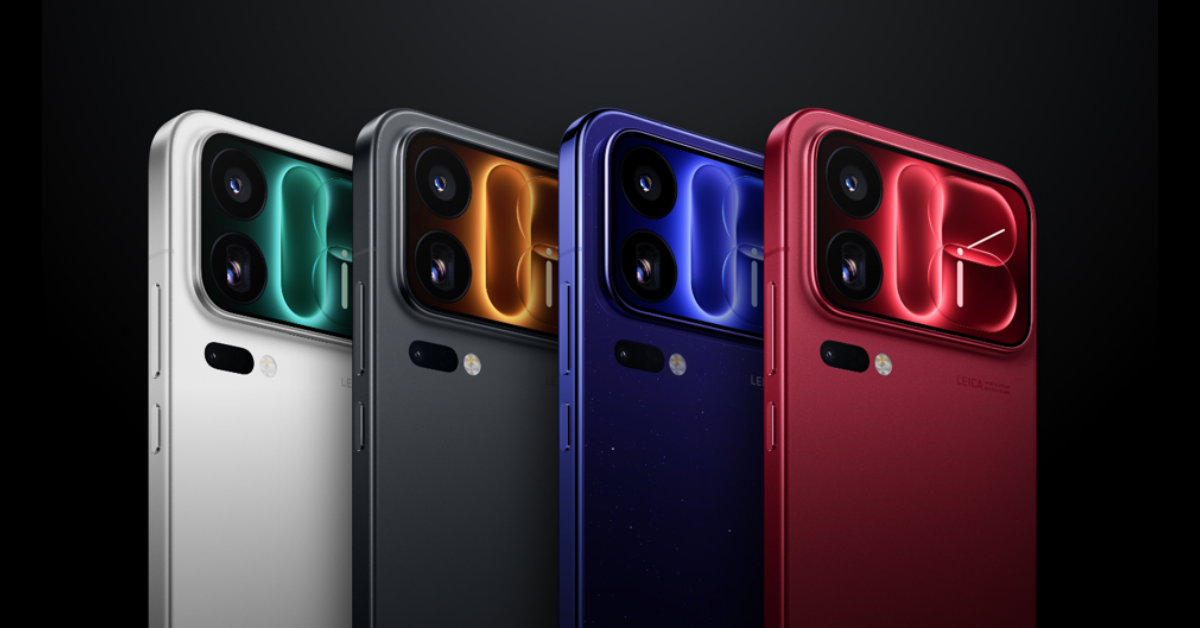
Xiaomi recently launched its new Xiaomi 18 Pro and Xiaomi 18 Pro Max in Paris, emphasising their revolutionary features. Both smartphones come with an AI-powered back display and a state-of-the-art Leica Dual-200MP camera system. They are equipped with Qualcomm Snapdragon 8 Elite Gen 6 processors, ensuring excellent performance. They also include a hardware-level Privacy Display for further protection, operate on Xiaomi HyperOS 4 and use silicon-carbon batteries. The design stands out with its symmetrical 0.99mm bezels and deep integration with Google Gemini, demonstrating a fusion of innovative technology and refined aesthetics.
In This Article
Xiaomi 18 Pro, Xiaomi 18 Pro Max Pricing and Availability
The basic edition of the Xiaomi 18 Pro with 12GB RAM and 256GB storage is priced at EUR 1,399 (about Rs 1,44,000). For those looking for additional capacity, the higher-end edition with 12GB RAM and 512GB storage is priced at EUR 1,599 (about Rs 1,64,000).
Meanwhile, the basic variant of the Xiaomi 18 Pro Max with 12GB RAM and 256GB storage is priced at a starting price of EUR 1,599 (about Rs 1,64,000). The top-end variant of the Pro Max with 12GB RAM and 512GB storage is priced at EUR 1,799 (about Rs 1,85,000) while the most advanced model with 16GB RAM and 1TB storage is priced at EUR 2,099 (around Rs 2,16,000). Both models come in Black, Cosmic Blue, Velvet Red and White colours. These smartphones are primarily available in select global markets through the Xiaomi online shop.
Specifications, Features
Xiaomi has unveiled two flagship smartphones, the Xiaomi 18 Pro and Xiaomi 18 Pro Max, packed with cutting-edge features and specs geared at photography aficionados and tech-savvy customers.
Both the phones are Black, White, Velvet Red and Cosmic Blue in colours and have slight differences in dimensions. The Xiaomi 18 Pro dimensions are 151.8mm x 72mm x 8.46mm and weigh 198g to 203g. The Pro Max is bigger at 163.39mm x 77.6mm x 8.39mm and weighs 229g to 234g.
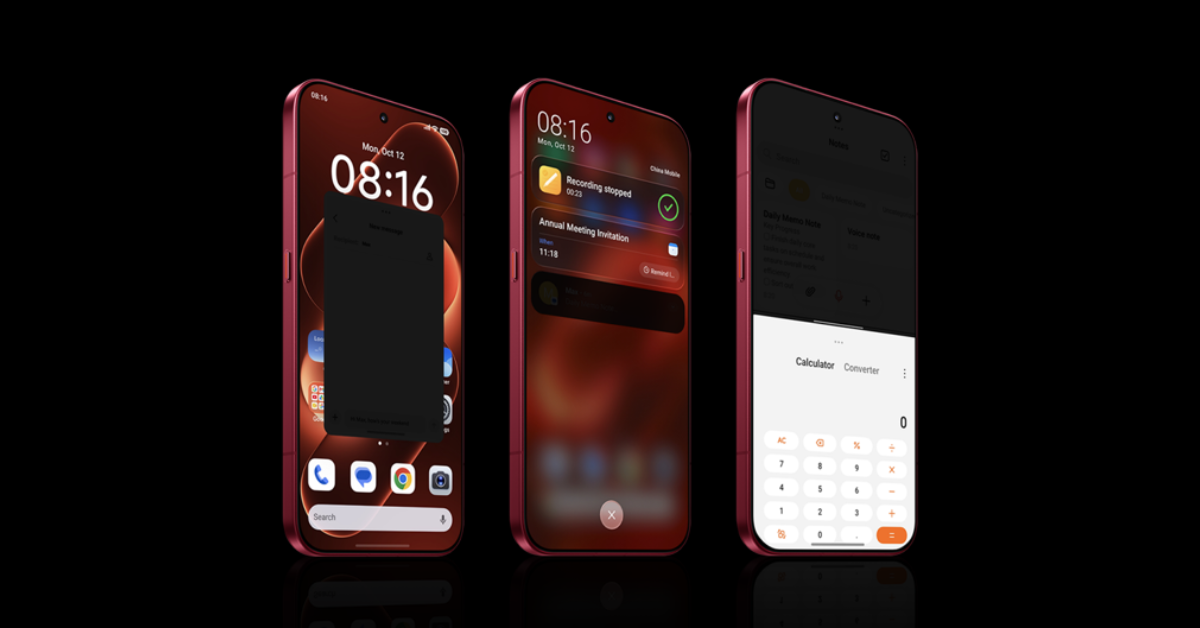
Both versions have Xiaomi’s Privacy Display technology, the Pro sporting a 6.4-inch panel and the Pro Max a bigger 6.9-inch display. The displays are based on M11 LTPO AMOLED technology and have a 1-120Hz refresh rate. The two displays are covered by Xiaomi Shield Glass 3.0 and have low blue light emission certification.
Both displays use Xiaomi HyperRGB 2.0 technology, which uses individual red, green and blue sub-pixels to provide a peak brightness of up to 4,000 nits and BT.2020 colour accuracy, with symmetrical 0.99mm bezels. The Side AI Button will also get you access to a Privacy Mode, which disables wide-angle pixels to improve user privacy without sacrificing display clarity. It also has an AI Privacy Notice function which identifies close observers and vibrates quietly to inform the user. For better anonymity in conversations, the Pro Max also has Xiaomi Privacy Call technology that creates anti-phase sound waves from the back speaker to prevent audio leaking.
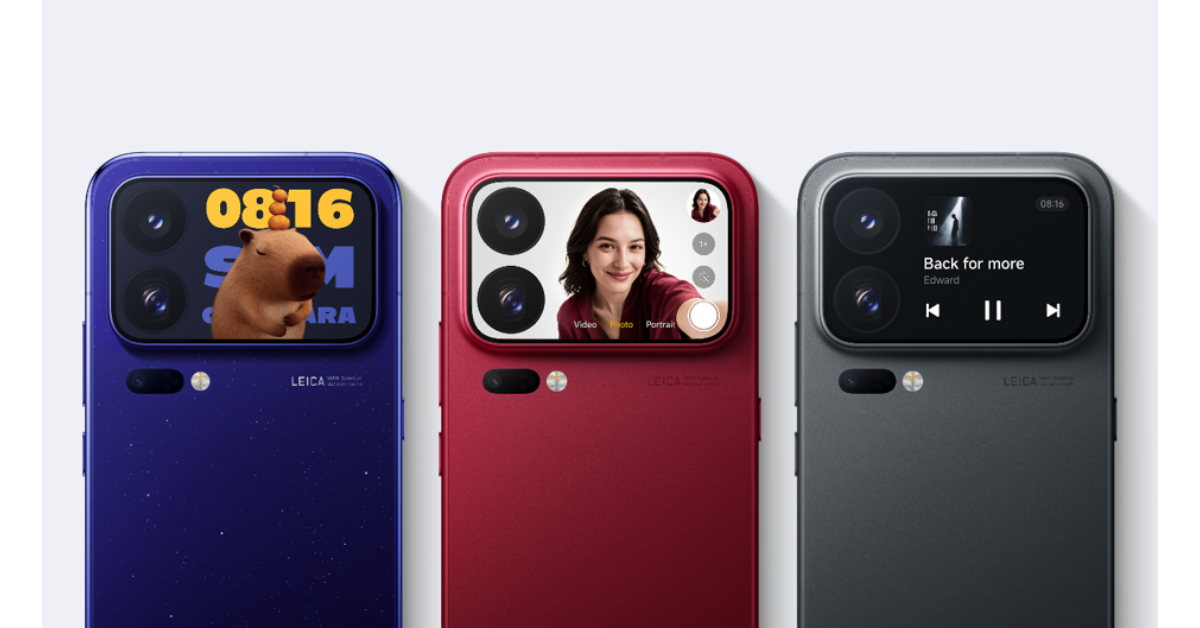
On the flagship, Xiaomi has included a secondary back display using a proprietary M11 LTPO screen. This back display has adjustable refresh rates of 1-120Hz and a peak brightness of up to 4,000 nits, all covered by Corning Gorilla Glass Victus 2. It lets users record high-quality selfies and 8K vlogs thanks to the primary Leica sensors and switches to ultra-wide automatically when group photographs are taken.
Glanceable widgets on the Back Display provide real-time information for calls, navigation, ride-hailing, and food delivery, and users can also pin boarding passes and QR codes for quick access. There is also an AI Interpreter function that provides two-way live translation in 29 languages and a GenAI Apps feature that lets users build unique mini-apps and games for the Back Display using natural language input.
Both smartphones are powered by the Snapdragon 8 Elite Gen 6 CPU, albeit with different performance cores and supported configurations. The Xiaomi 18 Pro is available in 12GB + 256GB and 12GB + 512GB models, while the Pro Max provides a wider range of options with up to 16GB RAM and 1TB storage, enabling excellent efficiency and performance.
The primary camera arrangement on both phones sees noticeable improvements, with the addition of Leica optical lenses (Summilux type). The main cameras are a 200MP, 1/1.28″ Light Fusion 960 image sensor in the Pro and a variation of the same sensor in the Pro Max, with improvements such as a dynamic range of 16.2EV and support for LOFIC HDR. The primary camera has an f/1.67 aperture.
Also Read: Google Play Best Apps and Games of 2026 in India Announced: Adobe Premiere, Arknights: Endfield, and ScarFall 2.0 Take Top Honours
Both models use a Leica 75mm lens with Optical Image Stabilisation (OIS) and a 200MP Samsung HP5 image sensor in the telephoto options, which has an f/2.4 aperture. The ultra-wide camera is paired with a Leica 17mm lens and a 50MP sensor, and both front cameras have a 50MP sensor with an f/2.4 aperture and an f/2.2 aperture, respectively, with Auto Focus technology.
The device includes a set of Essential Moment colour profiles (B&W Film, Iconic CCD, Modern Vintage), 35mm/75mm optical lens simulations, AI Portrait Fill Light, and supports 4K 120fps Dolby Vision and 10-bit Log video recording.
Also Read: Active Garena Free Fire MAX Redeem Codes (November 18, 2026): Throne Jackpot and Cosmic Fists Drop
Battery capacity is also somewhat different; the Pro gets a 6000mAh battery and the Pro Max gets 7050 mAh. These changes also extend to the charging capabilities, with the Pro enabling 90W wired and 50W wireless fast charging, while the Pro Max takes the charging capabilities to 100W wired and equivalent wireless capabilities.


