


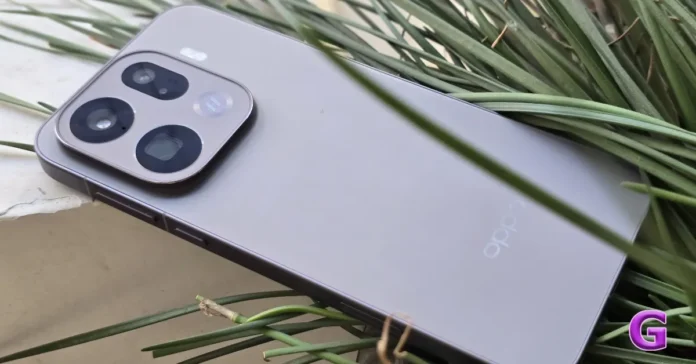
The Oppo Find X9 Pro sets a new benchmark in the premium smartphone category, boasting a stunning design highlighted by a distinctive square camera module. As a true flagship device, it features a powerful Dimensity 9500 CPU, paired with up to 16 GB of high-speed RAM and the fastest available internal storage.
Key specifications include an impressive 200-megapixel telephoto lens and a high-quality 120 Hz AMOLED display with minimal bezels. Powering the device is a large 7,500 mAh battery with 80-watt quick charging capability.
Further cementing its premium status, the Find X9 Pro is IP69 certified for superior dust and water resistance and runs on the latest Colour OS 16. Our detailed review is a must-read before considering your next smartphone purchase.
In This Article
Design and Display
Compared to last year’s model, the X9 Pro has undergone a significant redesign.
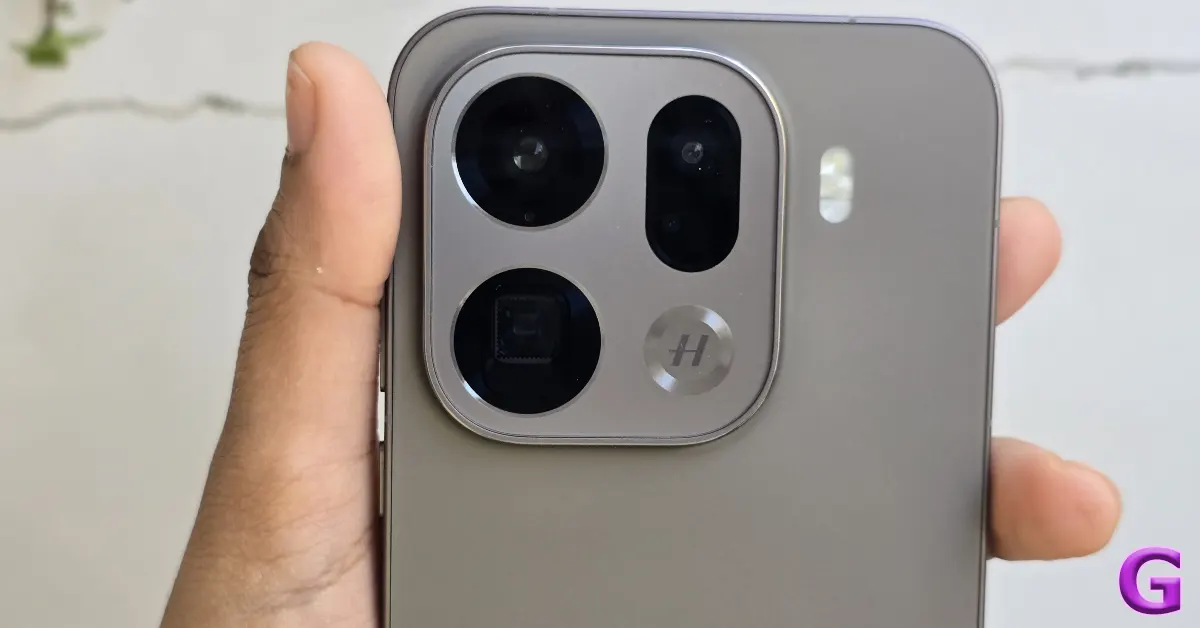
The camera module’s design has undergone significant changes, with the old, large, circular “Cosmos Ring” housing replaced by a redesigned Squircle camera island located in the device’s top-left corner. This change improves usability by providing for a more comfortable grip that prevents fingers from accidentally brushing the camera ring, lowering the risk of lens smudge. The refreshed design not only enhances ergonomics but also contributes to the sophisticated and familiar appearance that is common among current smartphones.
It is made of high-quality materials and has an aerospace-grade aluminium frame with Corning Gorilla Glass Victus 2 reinforcement on the front and rear. This mobile has a very high-end, soft feel and a matte finish on the back. The side frames are matte as well. Additionally, Oppo Find X9 Pro features a generally flat front and side design.
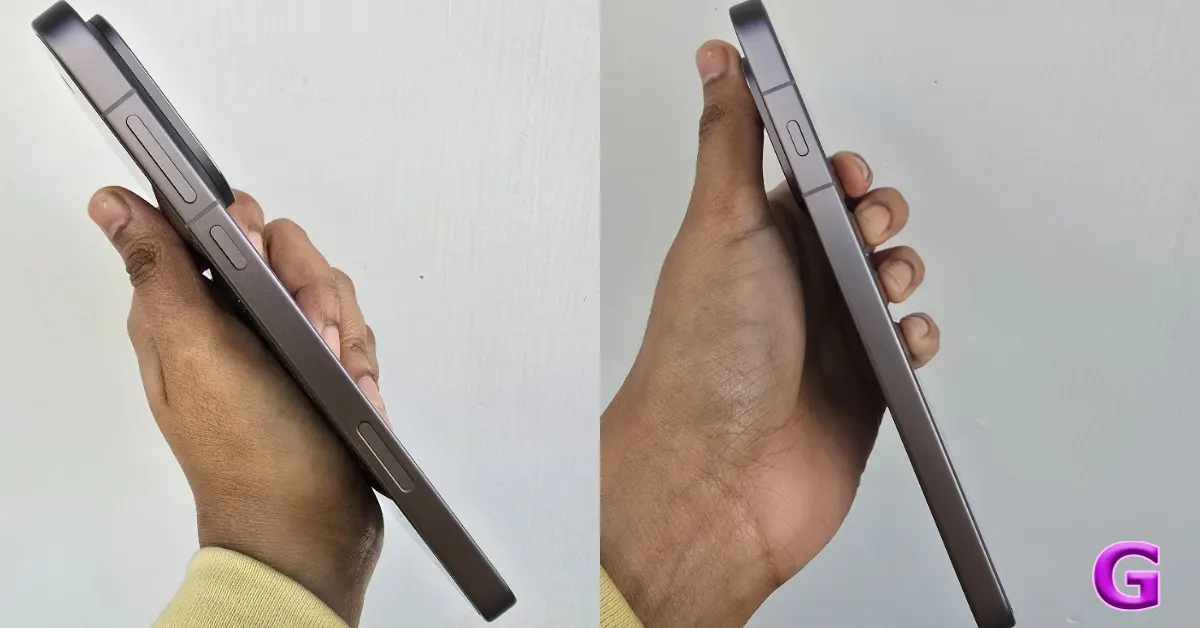
The phone is kitted out with some cool physical controls. On the right, there’s a special pressure-sensitive “quick button” made just for the camera, it’s a two-stage shutter and lets you zoom with a swipe. Over on the left, you get a “snap key” that you can set up as a shortcut for things like the voice recorder, camera, or the AI Mind Space. The phone may also function as a universal remote control thanks to an integrated infrared blaster on the top edge. The non-Pro model’s lack of a quick button is the only distinction. However, you do receive the snap key. There isn’t much of a difference between the two if you like a compact phone. However, camera sensors, battery size, and display size are all different.
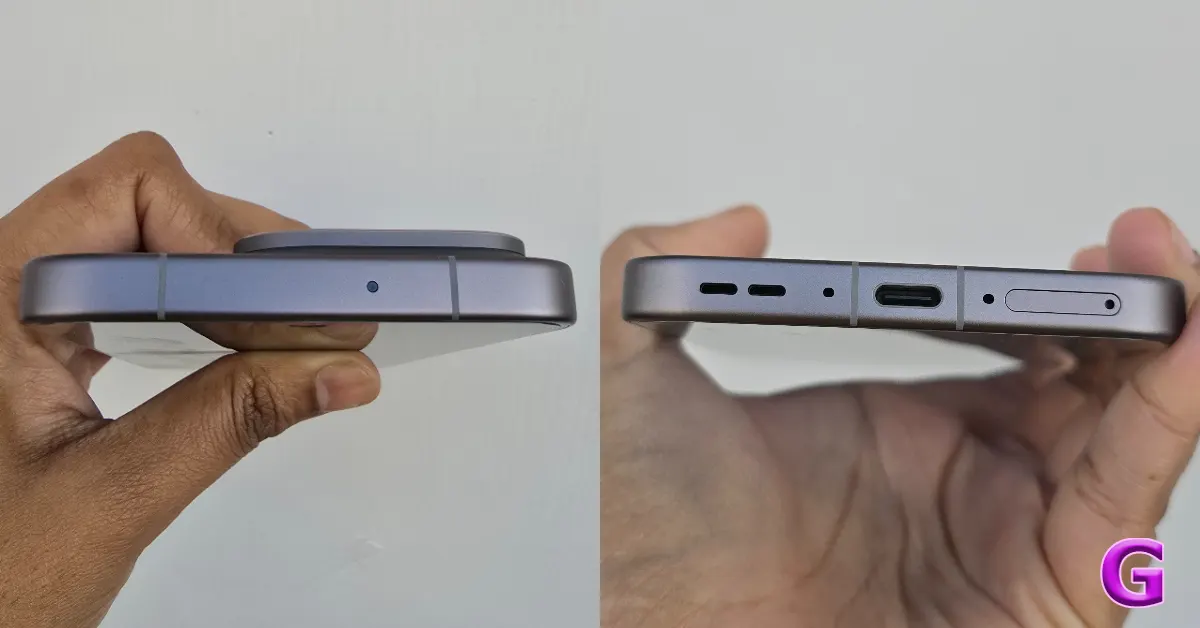
The Find X9 Pro has a main USB-C connector on its bottom edge that can charge at 80W using SUPERVOOC technology, transfer data, and connect wired audio via adapters or USB-C headphones. This connection supports the USB Type-C 3.2 standard, which allows quick data transfer and high-resolution video output. Additionally, the phone enables a dual SIM setup, which may accommodate either two Nano-SIMs or a Nano-SIM and an eSIM. Notably, the device does not have a separate 3.5mm headphone connector; therefore, wired headphones must be connected via Bluetooth audio or the USB-C port.
Also Read: Vivo X200 FE Review: A well-rounded flagship-level compact phone
Despite its large battery, the device’s dimensions are impressively slim, with a thickness of roughly 8.3 mm and a weight of around 224 g. The gadget is offered in two colours with sophisticated matte textures, including ‘Titanium Charcoal’, which has a muted and fingerprint-resistant surface. The ‘Silk White’ has a beautiful, iridescent shimmer and a velvety texture. For the review, we have the former model.
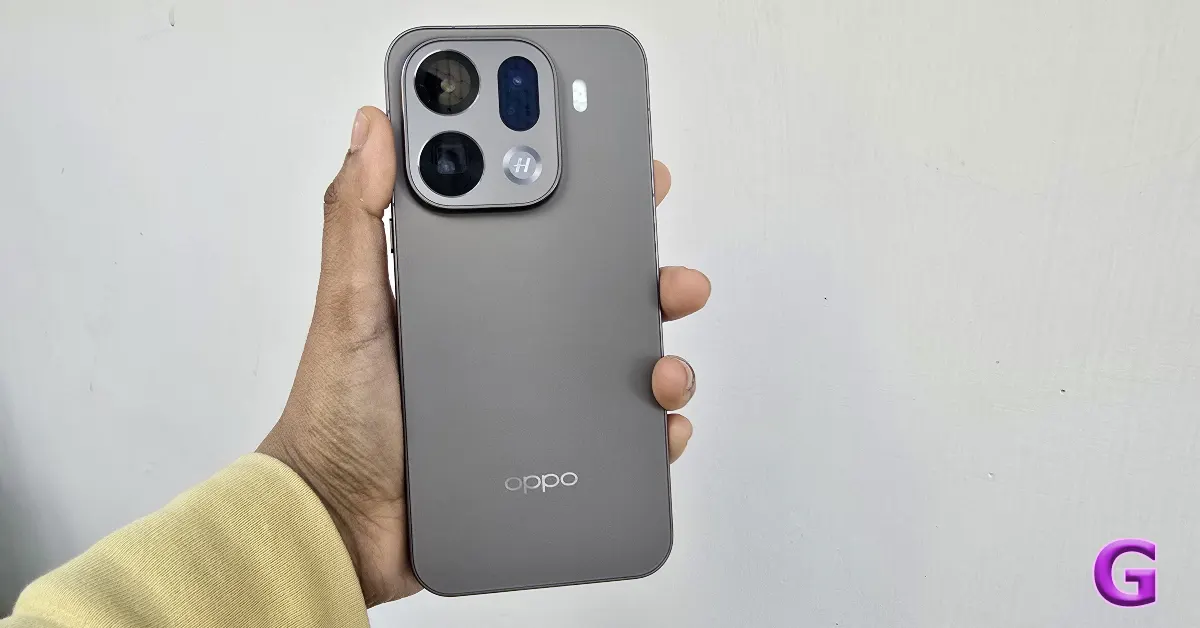
The Find X9 Pro stands out with its tough design, with a stunning triple-threat grade for water and dust protection. It has an IP66 rating, which offers protection against intense jets of water, making it appropriate for situations with significant water exposure. It also has an IP68 rating, which is the norm for flagship products and allows for continuous immersion in water up to 1.5 metres deep for 30 minutes.
Its IP69 rating, which indicates its resistance to high-pressure and high-temperature water jets, further solidifies its reputation as an incredibly robust device. Corning Gorilla Glass Victus 2 is used to protect the Find X9 Pro’s front glass, adding to its overall durability and longevity. Thus, excellent durability as well.
The phone has a flat screen and a flat metal frame, in contrast to its predecessors’ dramatically curved edges, which improves grip and stability, making it especially useful for gaming and photography. And when you have so much of this flawless AMOLED display that seems fantastic regardless of the environment, you can’t help but notice it. It also supports high-dynamic-range streaming. By the way, this one includes an ultrasonic fingerprint sensor, which is quicker and safer than the optical ones seen on other smartphones.
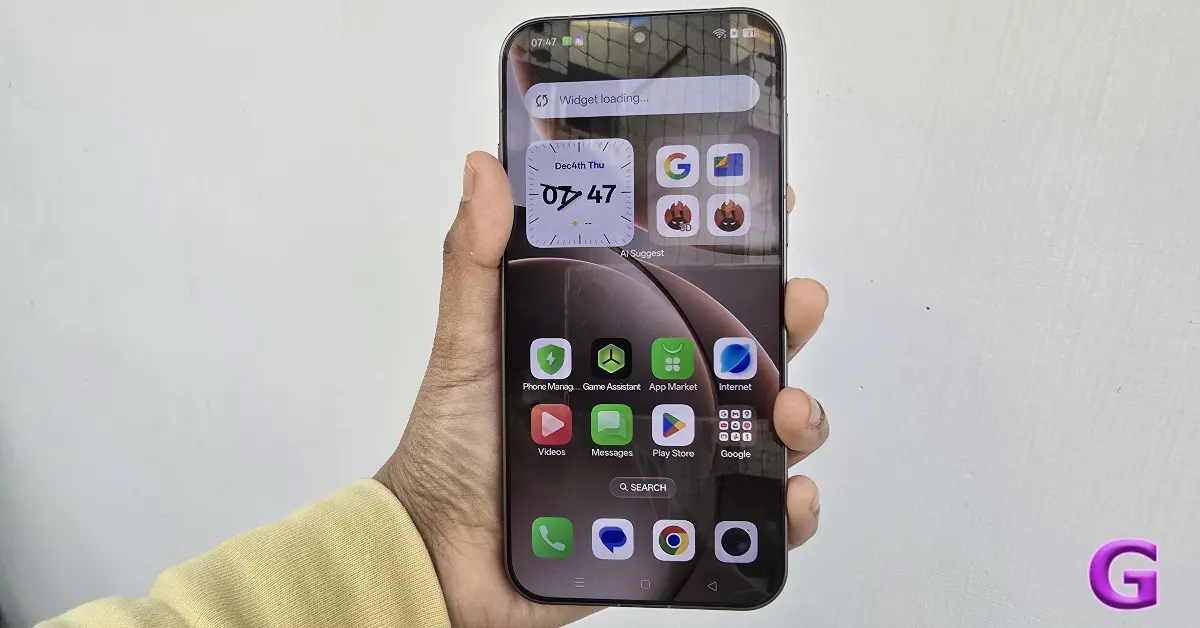
The 6.78-inch LTPO AMOLED panel’s peak brightness can reach an incredible 3,600 nits in small highlight spots for HDR content, while in High Brightness Mode (HBM), it offers around 1,800 nits across every inch of screen, guaranteeing good visibility even in bright daylight. The LTPO AMOLED technology improves fluidity and efficiency by dynamically adjusting the refresh rate between 1 Hz and 120 Hz, maximising battery life while providing seamless performance for a variety of workloads.
Furthermore, the display has exceptional colour accuracy, supporting 100% of the DCI-P3 colour gamut, Dolby Vision and HDR10+, resulting in rich images with deep blacks and crisp highlights, improving the multimedia consumption. Eye comfort is prioritised, with high-frequency PWM dimming at 2,160 Hz for decreased flicker tolerance and a touch sampling rate of 240 Hz, guaranteeing fast and responsive touch performance for gaming and other applications.
The Find X9 Pro has a powerful stereo audio system that includes two speakers—one at the bottom and another embedded into the earpiece. They can provide strong, clear sound with enough depth while minimising harsh tones even at high levels, making them ideal for multimedia consumption and gaming. Even though the balance between the bottom and top speakers isn’t ideal, the overall audio quality appears to be quite good.
The gadget also supports Dolby Atmos and Hi-Res Audio, which improves sound quality for both built-in speakers and headphones. It also has a multi-microphone array, normally a quad-microphone arrangement, which guarantees quality audio capture for video recording, voice notes, and excellent noise cancellation during calls.
Performance and Cameras
Let’s talk about the performance first.
The OPPO Find X9 Pro shines as a flagship handset, thanks to improved internal hardware designed for demanding tasks such as multitasking, gaming, and on-device AI processing. It has the Dimensity 9500 processor, LPDDR5X RAM, and UFS 4.1 storage, making it one of the top performers in Android benchmarks, frequently rivalling the Snapdragon 8 Elite Gen 5.
Check out Antutu Results:19,90,380
Actual testing indicates that high-end titles such as Genshin Impact, Asphalt 9: Legends, and Call of Duty run smoothly thanks to the strong GPU and ColorOS 16 optimisations.
ColorOS 16 features a number of software optimisations designed specifically for gaming, including the Game Space/Pro Mode. This specialised section allows users to improve performance by adjusting settings such as maximum performance, notification blocking, temperature control, and real-time FPS and CPU/GPU metrics.
Also Read: Vivo X Fold 5 Review: This is more than a phone; it’s a statement piece
The platform also includes specialised features like a voice changer, screen recording, and performance optimisation, all of which are easily available during gaming via a swipe-down overlay.
The device uses outstanding thermal management using a vapour chamber cooling mechanism to provide prolonged efficiency without overheating. Yes, the device did get slightly warm after 30 minutes of continuous gameplay.
Moreover, the embedded MediaTek NPU 990 improves AI capabilities for better camera processing and system optimisation, while also giving users access to Google Gemini Pro for advanced generative AI features.
ColorOS 16 includes the AI Mind Space, which provides a safe environment for organising information and thoughts. To swiftly make voice notes or save images, users may activate AI Mind Space with the customisable Snap Key. The system smartly organises related notes, images, and recordings and can read text from actual objects such as concert posters and suggest calendar additions.
Users can utilise the Gemini integration to create personalised itineraries and develop project strategies based on previously saved content. The AI Recorder Assistant enhances recording capabilities by transcribing audio in real time, recognising various speakers, and automatically generating titles and concise summaries for recordings. The AI Writing Assistant also integrates into a variety of system apps and social media platforms, enabling users to draft emails and summaries, generate creative captions from photographs, and convert text into structured documents such as spreadsheets.
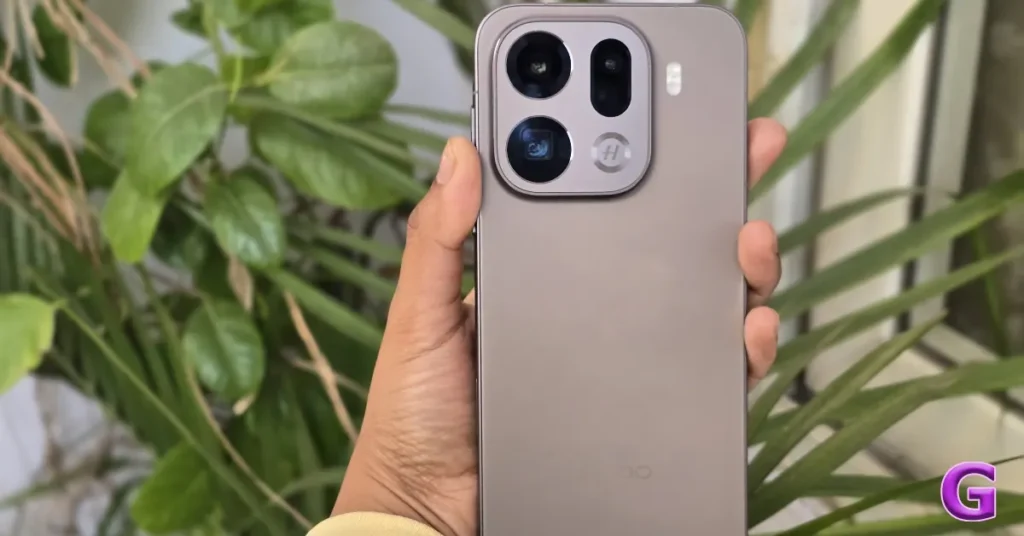
The Flux Home Screen feature enables dynamic scaling of application folders and individual app icons, allowing for bigger icons with integrated quick actions, such as launching Hasselblad Hi-Res mode from the camera icon.
When it comes to other issues, there are a handful that we believe should not be included. Yes, here we are referring to bloatware. However, ColorOS 16 gives users complete control over app management, letting them uninstall several system apps, including Phone Manager, for further flexibility during setup. Unlike other UIs, ColorOS 16 allows us to clear out undesired applications. It also has OPLUS Connect, which allows for smooth data transfer across Android, iPhone, Mac, and Windows platforms, making it easier to share between OPPO devices.
Finally, OPPO offers a comprehensive Software Support Policy, ensuring five years of major OS upgrades, including updates to Android 21, and six years of security fixes. This commitment demonstrates OPPO’s priority to ensure the long-term reliability and safety of its products.
The cameras on the phone are its most powerful feature. The 50-megapixel primary camera, an ultrawide camera, and an impressive 200-megapixel periscope telephoto lens with 3x digital zoom capabilities make up the X9 Pro’s sophisticated camera system. Additionally, it boasts a 50-megapixel front-facing camera for taking selfies, which enhances its photographic and videographic capabilities.

Overall, the camera system’s image quality is outstanding in a variety of lighting conditions. With the help of the Hasselblad Natural Colour Solution, which ensures true-to-life colour authenticity and consistent results throughout the primary, ultra-wide, and telephoto lenses, photographs show a high degree of detail and vibrancy. Also, the images look as natural as when we look through our eyes. Nothing extra. Furthermore, the camera performs admirably in low light, taking crisp pictures with noticeable detail in darker areas.

All thanks to the LUMO Image Engine and large sensors, especially the 1/1.28-inch primary sensor, which supports this ability by working together to control noise levels while maintaining colour fidelity in challenging lighting conditions. By default set to 50MP resolution, the cameras maximise picture capture in optimal lighting conditions. As a result, they provide considerable flexibility for further cropping and editing without compromising quality.
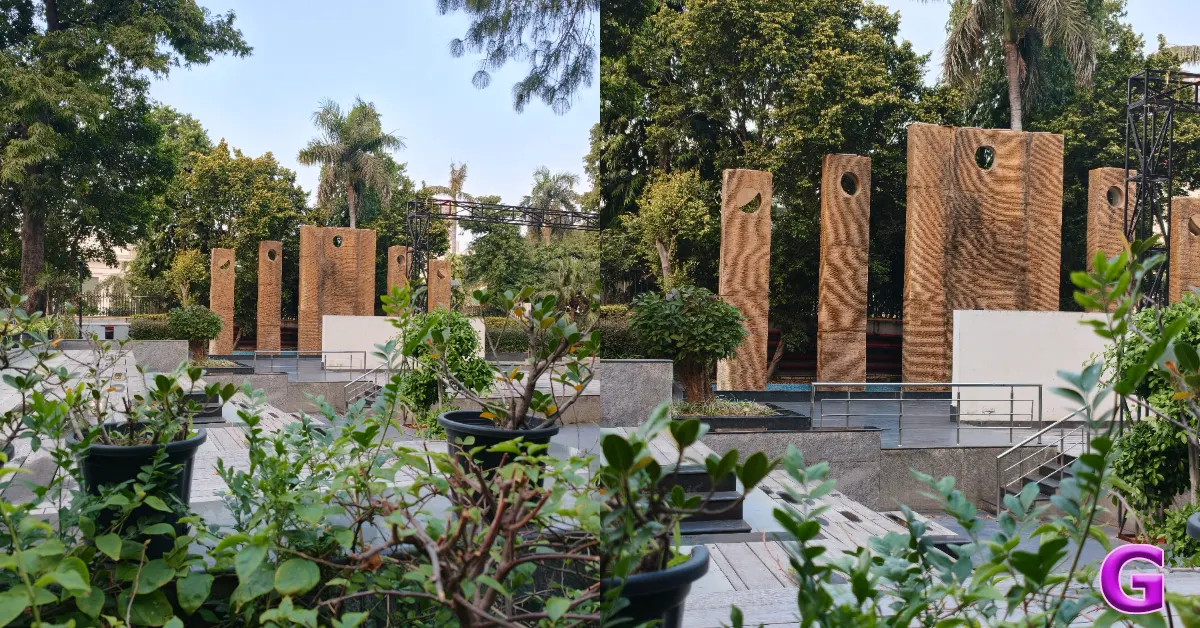
And our favourite part is the 200MP periscope telephoto lens, which delivers excellent performance. It achieves truly high-quality, lossless-like zoom of up to 13.2x by smartly cropping data from its huge 200MP sensor, making it excellent for capturing precise details at concerts, athletic events, or beautiful landscapes. The digital zoom power reaches 120x, and while it may soften details, it can reveal things that would otherwise be invisible to the human eye.

On top of that, the lens supports tele-macro photography, allowing focus as near as 10 cm, resulting in spectacular photographs with a natural depth of field. The lens is also ideal for portrait photography, with a 3x equivalent focal length that creates natural bokeh, fine detail, and realistic skin tones, which are improved by Hasselblad colour tuning.

The ultra-wide 50MP Sony LYT-828 sensor produces outstanding dynamic range and picture quality in a variety of lighting settings. The processing enhances photos gently, avoiding dramatic sharpening. The Ultra-Wide Camera, also at 50MP, retains great colour constancy and detail over its large 120-degree field of view, with no edge distortion snapped. At last, you may shoot photographs with varying focus lengths. If you desire 15mm ultrawide, you may choose from 23mm, 70mm, or 135mm.
It supports 4K recording at up to 120 fps on both the primary and telephoto lenses, allowing you to catch moving subjects like our pets and create detailed slow-motion videos. It also includes professional-grade capabilities like Dolby Vision HDR and LOG recording with ACES certification, making it an asset for videographers who demand extensive colour grading control. We think this smartphone is a mini DSLR which you can carry anywhere.
This 50MP front-facing camera sensor excels in terms of performance and image quality, catching fine detail, especially in well-lit conditions, and producing high-resolution photographs. The autofocus feature sets it apart from ordinary front cameras by providing good focus on desired subjects regardless of distance, substantially decreasing the chance of blurry selfies.
The camera works well in terms of colour and dynamic range, with rich colours as well as satisfactory control of bright backgrounds. We also noticed that the white balance is occasionally colder or excessively saturated when compared to rear cameras. Now we are nitpicking, but that’s okay.

On the other hand, Portrait mode uses high-resolution data combined with artificial intelligence for perfect edge detection, resulting in an interesting bokeh effect. Video recording capabilities are outstanding, with 4K at 60 fps capture and electronic image stabilisation (gyro-EIS) for smooth, detailed video, making it more useful for content creators.
Hasselblad’s Natural Colour Solution (HNCS) guarantees that all lenses have true-to-life, brilliant colours, with an emphasis on natural-looking skin tone. The Hasselblad Portrait Modes provide optimised focal lengths, such as 70mm and 85mm, as well as custom colour profiles and realistic bokeh effects.

In the end, the company also offers the Hasselblad Teleconverter Kit, which increases the phone’s optical zoom from 20.3x to 21.6x, bringing the total digital zoom capability to 200x. That can be purchased separately.
The OPPO Find X9 Pro has an impressive battery performance, brought out by its 7,500 mAh silicon-carbon battery, which outperforms most recent flagship smartphones. The novel silicon-carbon technology allows for great energy density in a thin form. This device has excellent endurance, lasting two days with moderate to extensive usage.
Also, you can get up to four days’ worth of battery life with minimal usage. OPPO also claims that the battery retains 80% of its original capacity after five years of regular use, which addresses lifespan issues.
Also Read: Samsung Galaxy S25 Edge Review: Slim Is In
Verdict
Overall, we believe the Oppo Find X9 Pro is an excellent piece of technology. It boasts a solid build, a stunning design, flagship-grade durability, an outstanding display, and one of the greatest smartphone cameras available today. We also consider its UI as one of the best, owing to its amazing, highly customisable full-screen Always On Display (AOD) and flawless transitions between AOD, lock screen, and home screen, resulting in a fluid animation effect. FluxTheme 2.0 allows for advanced customisation, expandable icons, and several customisable widgets. Unlike other UIs, it uses a Luminous rendering engine that runs in parallel, resulting in smooth performance with no lag or jitter.
All of the photographs shot with this Android phone have outstanding depth and dynamic range, thanks to Hasselblad branding and features like Expand Mode and Hasselblad High Resolution Mode for native 50MP snapping. The phone’s camera and performance are impressive, and it has a battery life of up to two days, meeting all of the required specifications. We believe it checks all of the boxes, for sure.
Price in India starts at Rs 1,09,999.
Buy here
Pros
- Well-built and sturdy
- Premium looks
- No lags and no stutters
- Long software support
- Amazing Cameras
- Massive Battery = long endurance
- The display is nice to our eyes; it didn’t strain
Cons
- Pricing is on the higher side
- It gets warm after 30 minutes of a continuous gaming session (but this is not a deal breaker because there was no overheating)


