


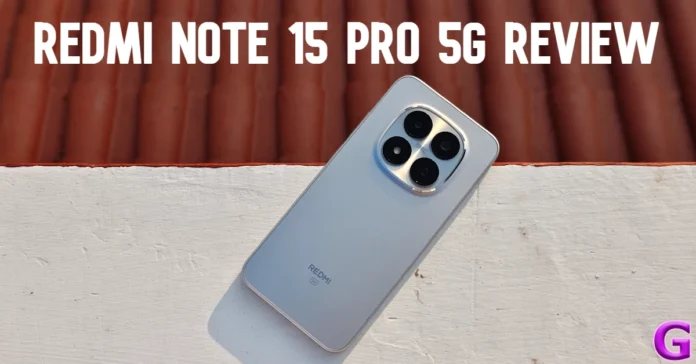
The Redmi Note 15 series arrived in India last month, with the base model launching early in January, followed by the two Pro models towards the end of the month. We reviewed the base model soon after it launched and found it to be a reliable daily driver for the average user. Now, we turn our attention to the Pro model, which is currently priced at Rs 29,999. It packs the MediaTek Dimensity 7400 Ultra chipset under its hood and flaunts a 6.83-inch AMOLED display. Its rear camera panel houses a stunning 200MP primary camera. We’ve been using the smartphone for the last week, going through the ins and outs and putting it through a series of tests. Here is our review of the Redmi Note 15 Pro.
Read Also: Goboult Mustang Racer smartwatch with over 120 sports modes launched in India
In This Article
Redmi Note 15 Pro 5G Review: Design and Display
Here is what you get inside the Redmi Note 15 Pro’s retail box:
- Smartphone
- 45W power adapter
- USB-A to USB-C cable
- Silicone cover
- SIM ejector
- Quick start guide
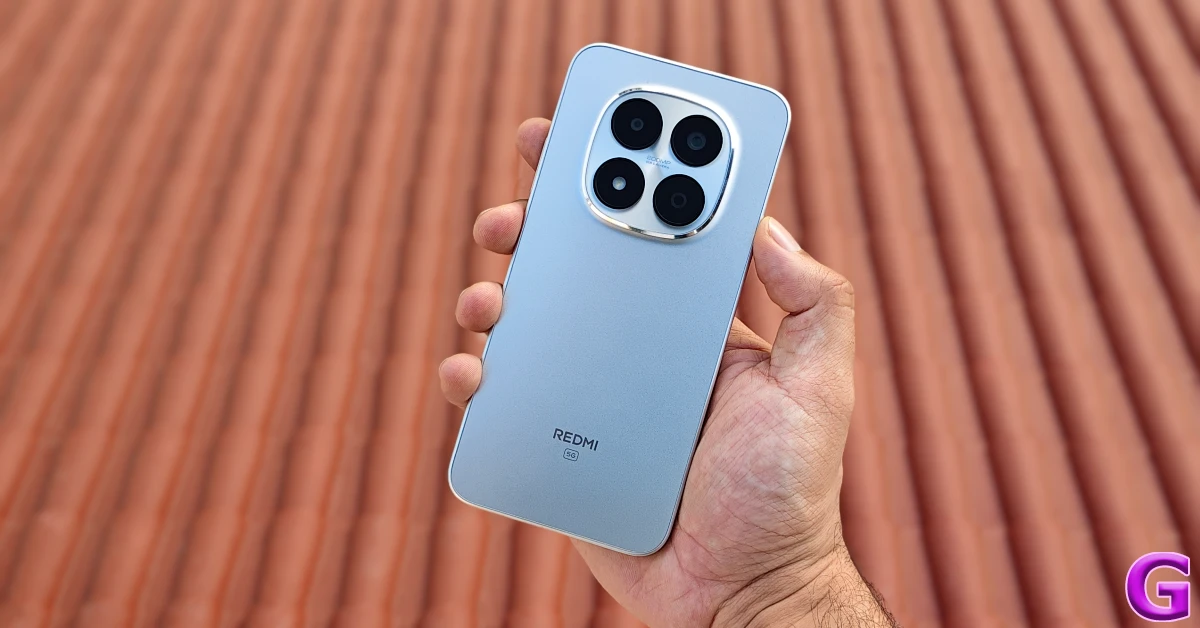
The Note 15 Pro follows the design language of its predecessor (our review here). The plastic back panel has a centre-aligned camera island. The smooth finish offers a nice in-hand feel, but it feels like a downgrade among the glass back panels in this price bracket. There are 3 colour schemes on offer – Silver Ash, Mirage Blue, and Carbon Black.
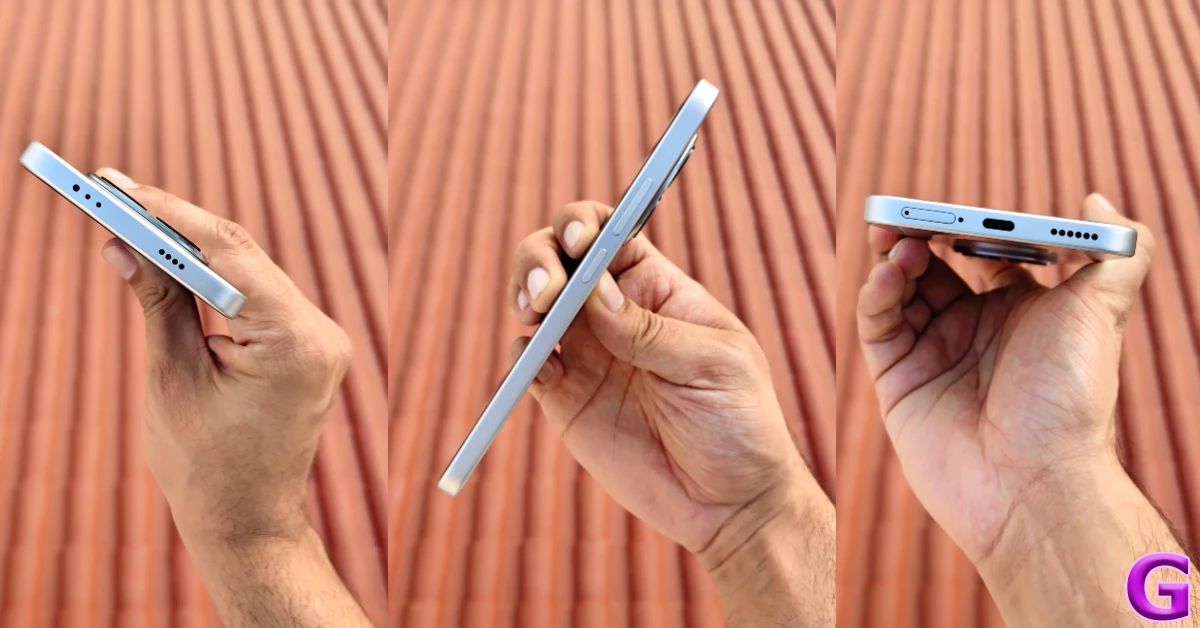
The flat plastic frame has round corners. It houses the volume rocker and the side button on its right edge. At the bottom lie the SIM tray, primary microphone, USB-C port, and primary speaker grille. The IR blaster, secondary microphone, and secondary speaker grille are positioned up top. The smartphone is rated IP68/IP69K for protection against dust and water. It can survive drops from a height of 2.5m.
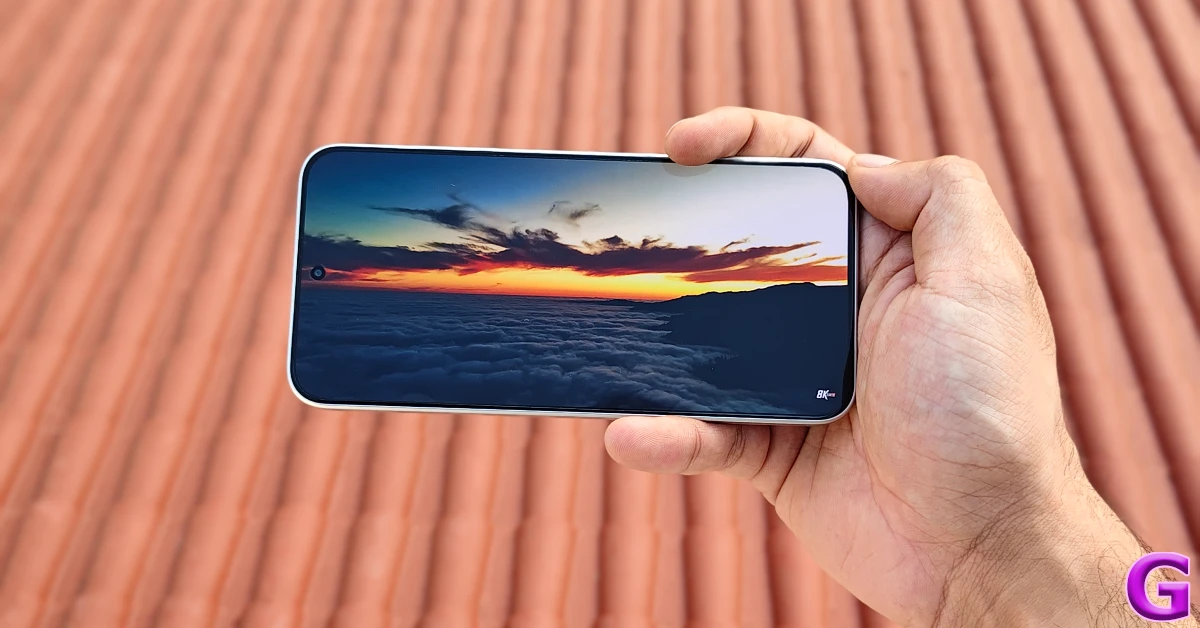
The 6.83-inch AMOLED display is one of the Note 15 Pro’s biggest assets. This wide display has a 120Hz refresh rate and can reach a peak brightness of 3,200 nits. It is surrounded by thin, uniform bezels. The touch response is smooth and enjoyable. The under-display fingerprint sensor puts up a snappy performance. The display does a good job of overcoming surrounding brightness in bright outdoor conditions to maintain optimum legibility.
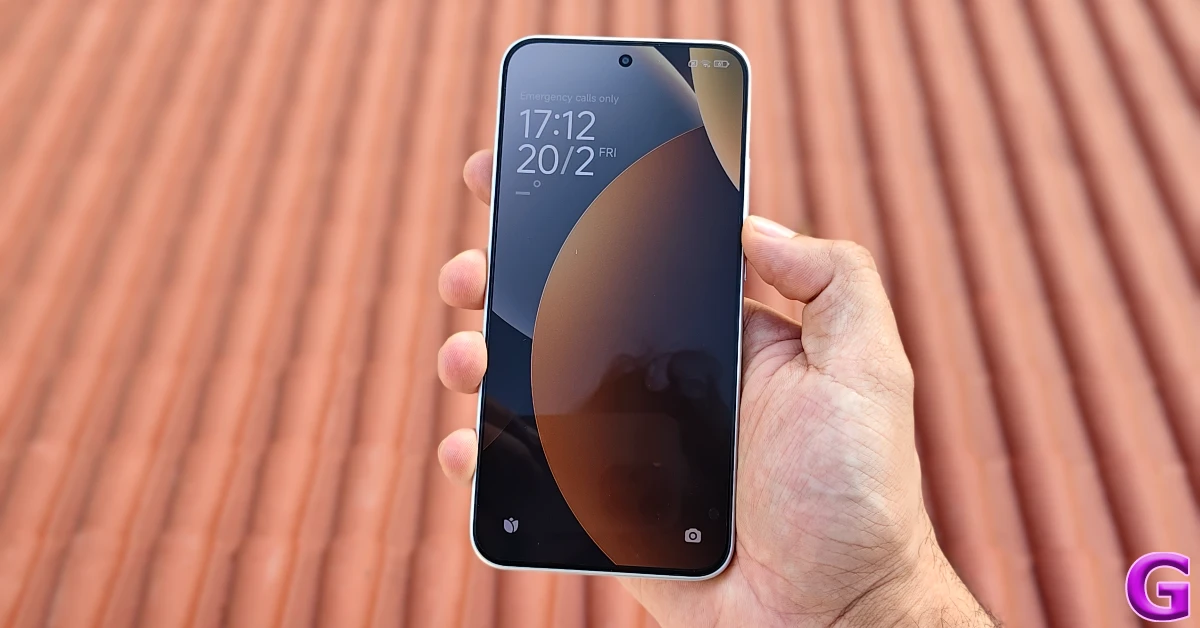
During the review period, we used the Redmi Note 15 Pro as our primary media streaming device. The 1,280 x 2,772p display relayed brilliant visuals packed with spectacular details and rich colours. The Widevine L1 support ensured an enjoyable viewing experience across streaming platforms like Netflix, Prime Video, and Disney+ Hotstar. However, the audio output produced by the dual speaker setup left more to be desired. The sound quality was boxy and lacked a prominent low-end.
Redmi Note 15 Pro 5G Review: Performance and Cameras
At the heart of the Redmi Note 15 Pro lies the MediaTek Dimensity 7400 Ultra chipset. There’s 8GB (LPDDR4X) RAM on board and 2 storage (UFS 2.2) variants on offer:
- 128GB: Rs 29,999
- 256GB: Rs 31,999
We ran a couple of benchmark tests on the device. Here is how it performed.
- AnTuTu 3D: 941,422
- Geekbench 6: 1,053 (single-core) | 2,956 (multi-core)
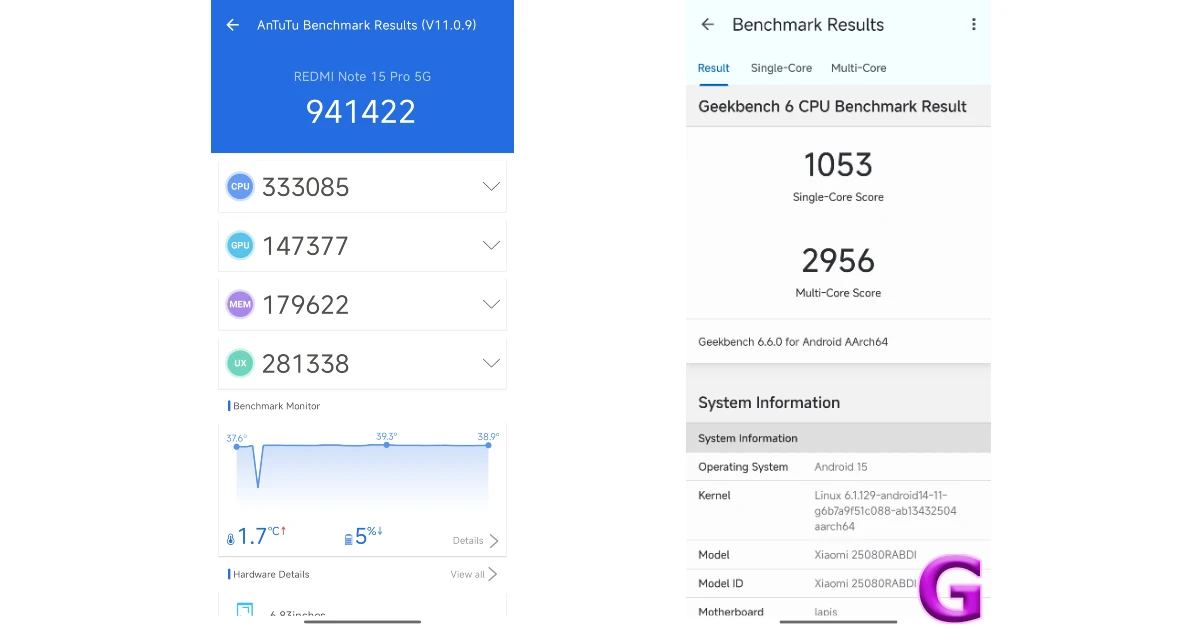
Even though the Note 15 Pro did not breach the million-point mark on AnTuTu 3D, it proved to be well-equipped to handle routine tasks like calling, instant messaging, web browsing, navigation, media streaming, and more. We did not come across a single stutter or lag during our time with the device. Apps don’t take a long time to load. Juggling among them is a smooth process. The vibration motor could use some work, especially when it comes to the haptic feedback produced while typing.
The Note 15 Pro is able to run games like Call of Duty Mobile and BGMI at 90fps if you limit the graphics to their lowest settings. Playing on medium/high graphics settings means settling for a 60fps frame rate. In our testing, the gameplay remained consistent for the most part, with a couple of odd stutters every now and then. There were no frame drops to be seen. The back panel started warming up after the 20-minute mark, but it did not affect the performance.
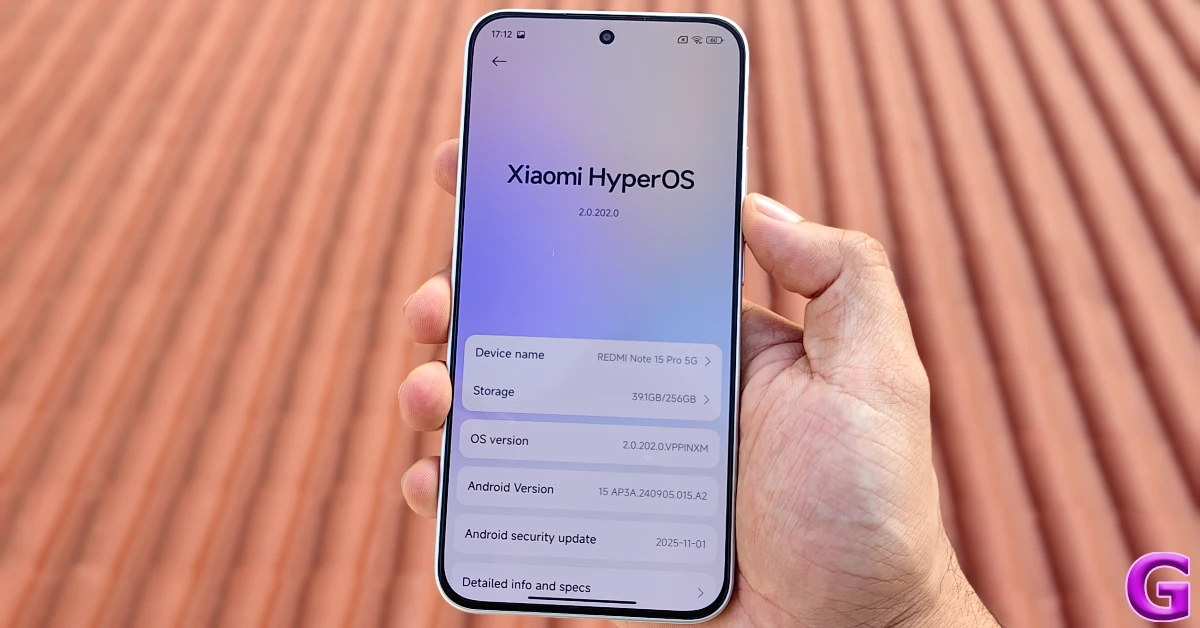
Software duties on this device are handled by the Android 15-based HyperOS 2. Not shipping with Android 16 out of the box is a bit of a letdown, but Xiaomi has promised 4 major OS upgrades and 6 years of security patches for this smartphone. There are several bloatware apps on this device, but they can be uninstalled easily.
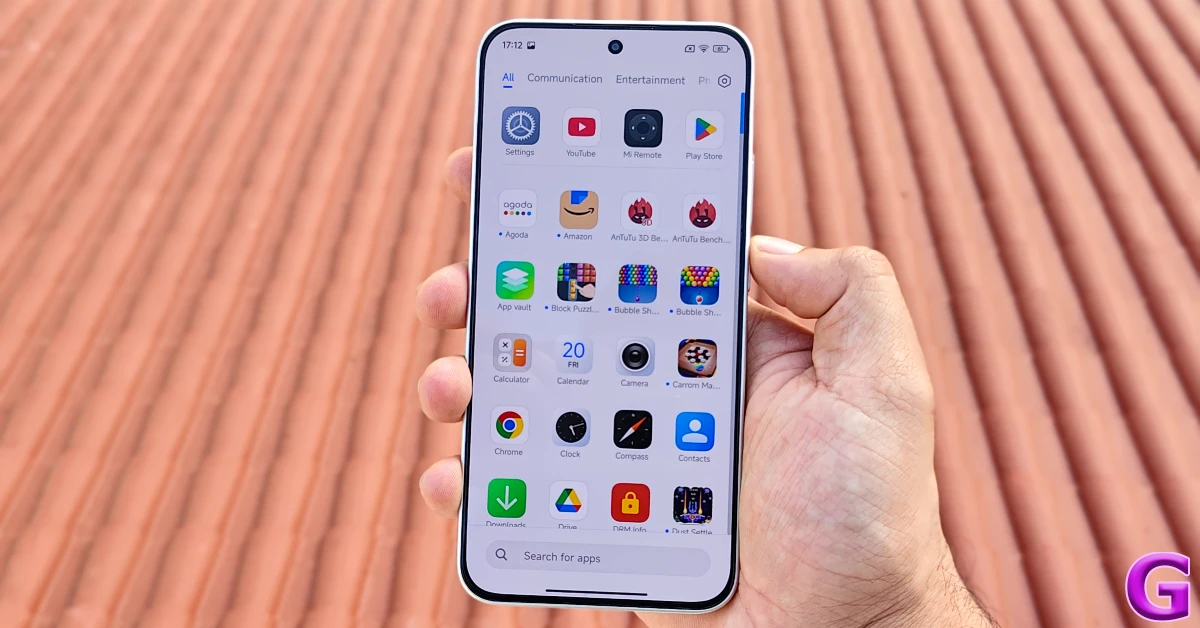
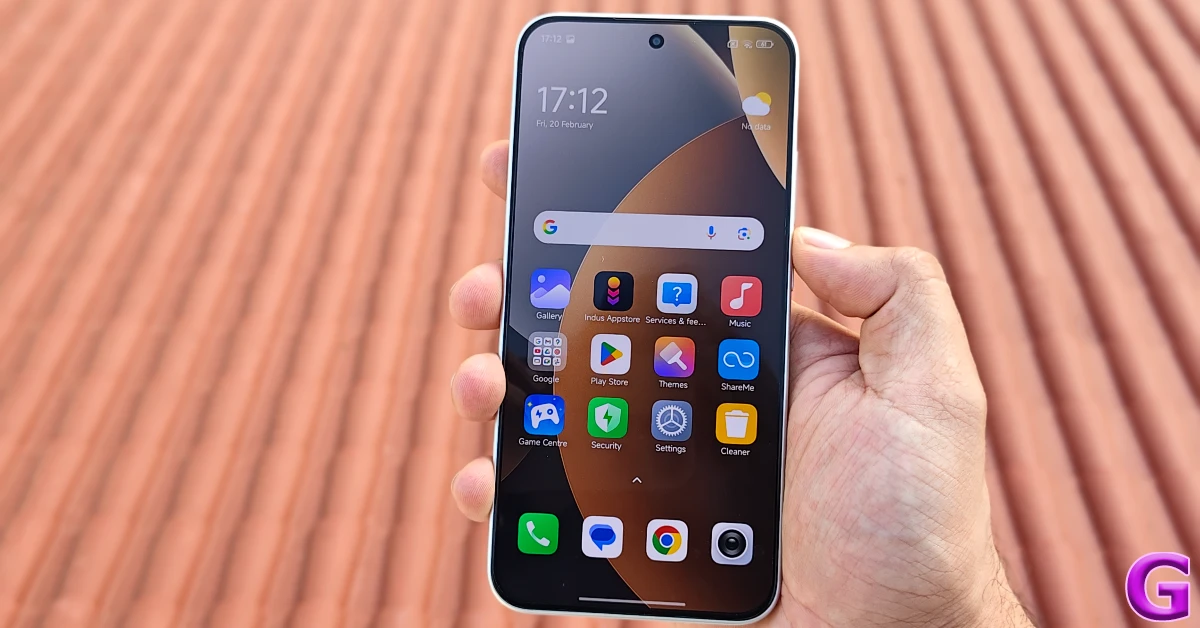
HyperOS 2 offers plenty of customisation options for the lockscreen, home page, Always on Display, app icons, fingerprint effects, and notification styles. The UI is very intuitive and easy to browse. The notification shade and quick settings menu are inspired by iOS, but don’t look out of place. We would like to see a better design for the app drawer in a future iteration.
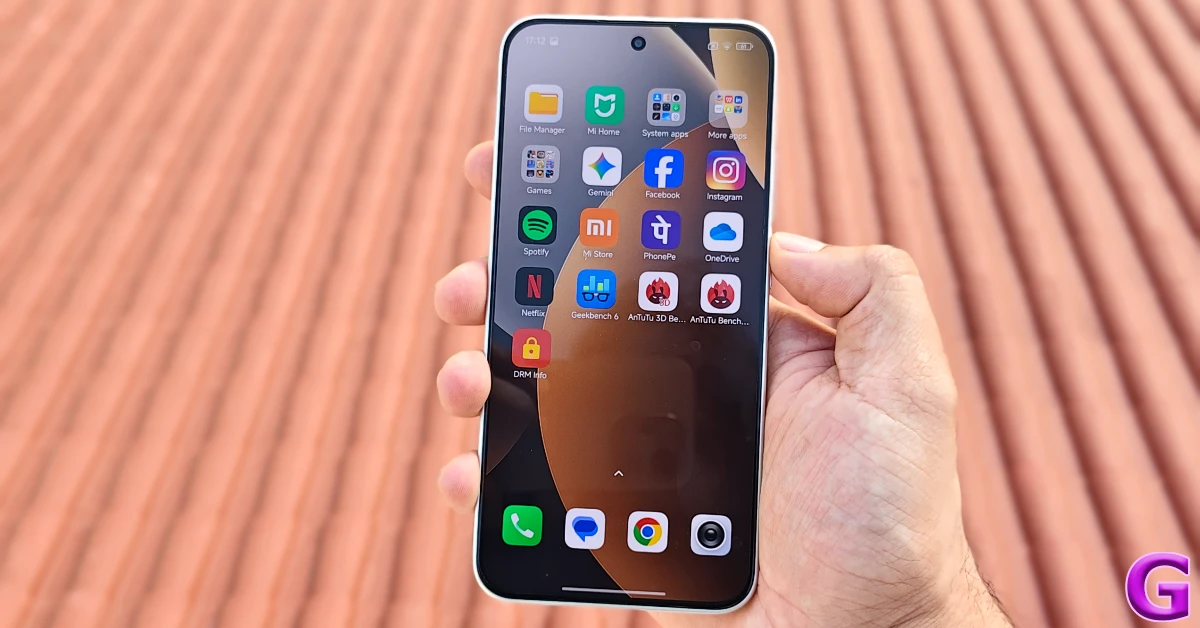
You also get a few useful AI features on this device. Google’s Circle to Search and Gemini AI are available out of the box. The native Gallery app has a handy object eraser that works well on small objects. The ‘Sky’ tool applies AI effects to landscape shots, but the results appear artificial and tacked-on. The same is the case with the ‘AI Film’ tool.
Xiaomi has equipped the Redmi Note 15 with a massive 6,580mAh Si/C battery pack. It can easily coast through a day of heavy use without needing a refuel. If you’re more conservative with your usage, you can push the battery life to 2 days. The 45W adapter provided in the box takes up to 90 minutes to fully charge the device.
The Pro model in Redmi’s Note series is known for its main camera. Xiaomi has upheld this tradition by housing a 200MP HPE primary shooter on the rear camera island. Accompanying this sensor is an 8MP ultrawide lens. A 20MP front-facing camera is nestled inside the punch-hole cutout on the display.
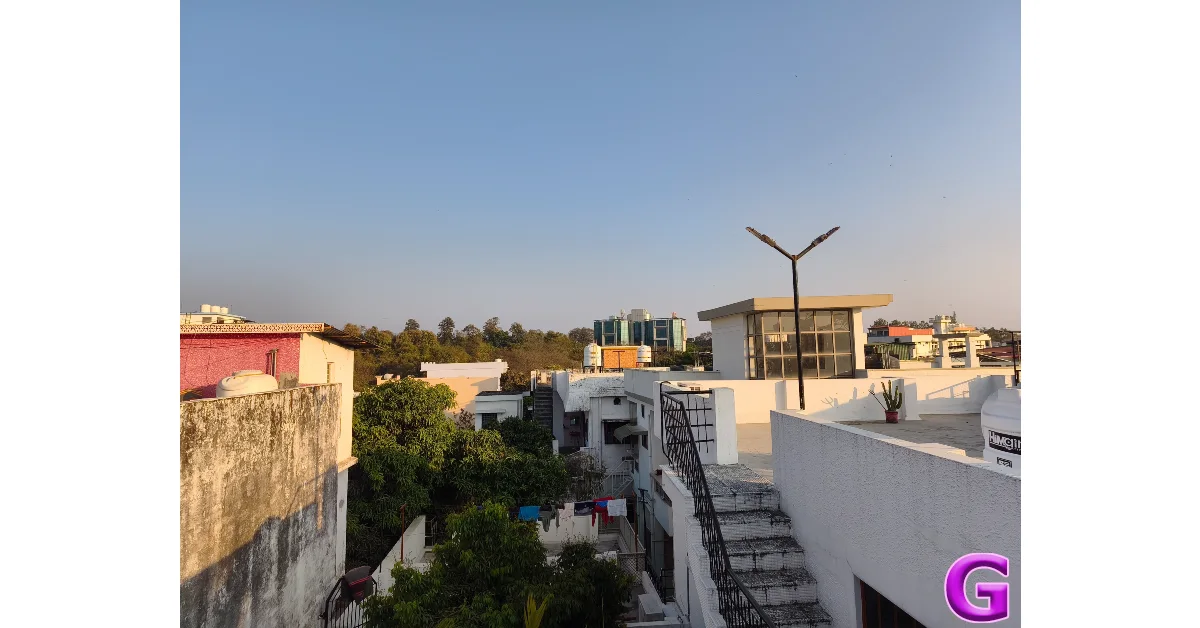
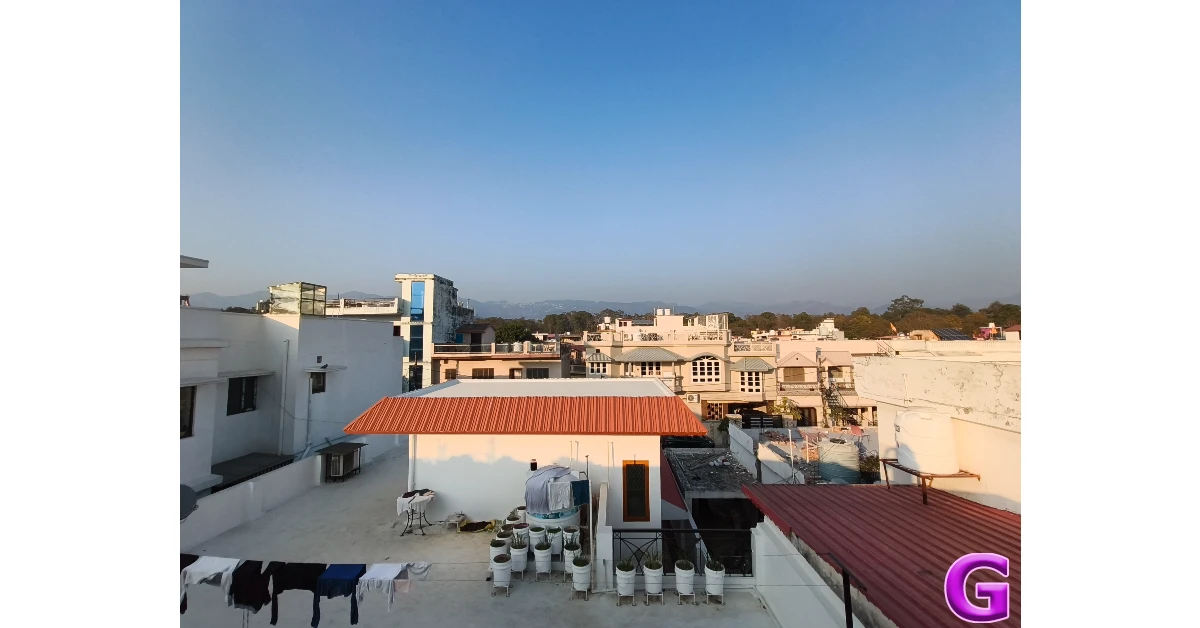
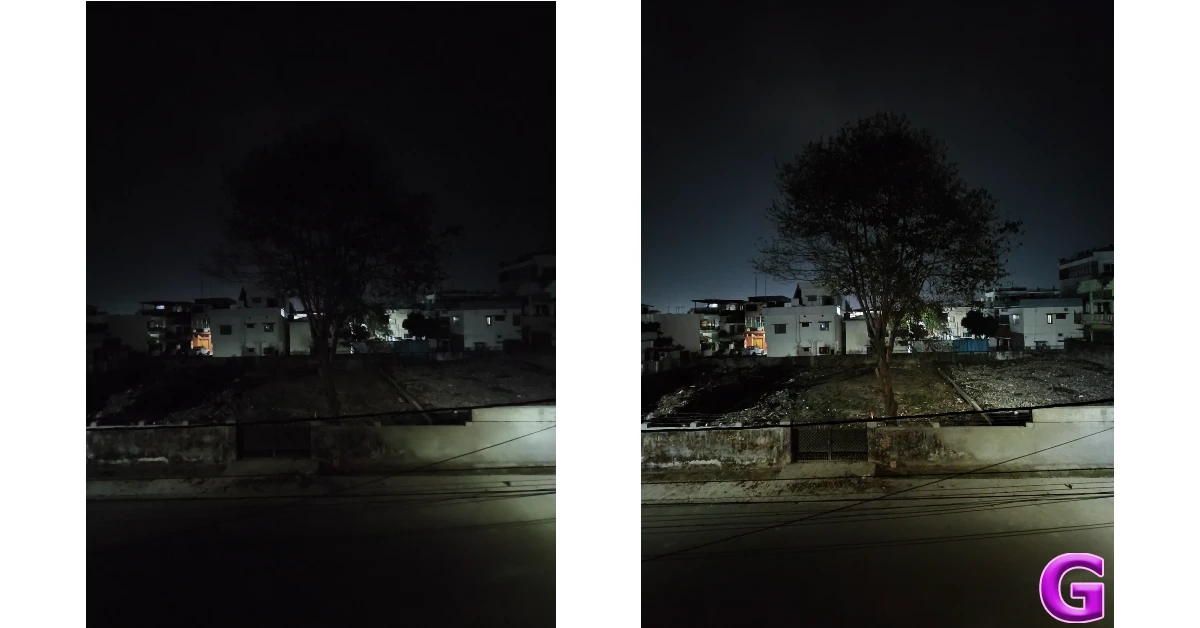
The 200MP primary shooter takes great shots in outdoor daylight conditions. The images are packed with details and showcase vibrant colours. We like that the smartphone doesn’t overprocess the colours. The shots appear natural and life-like. In limited lighting conditions, the Night Mode kicks in automatically to illuminate the shot and resolve the noise.

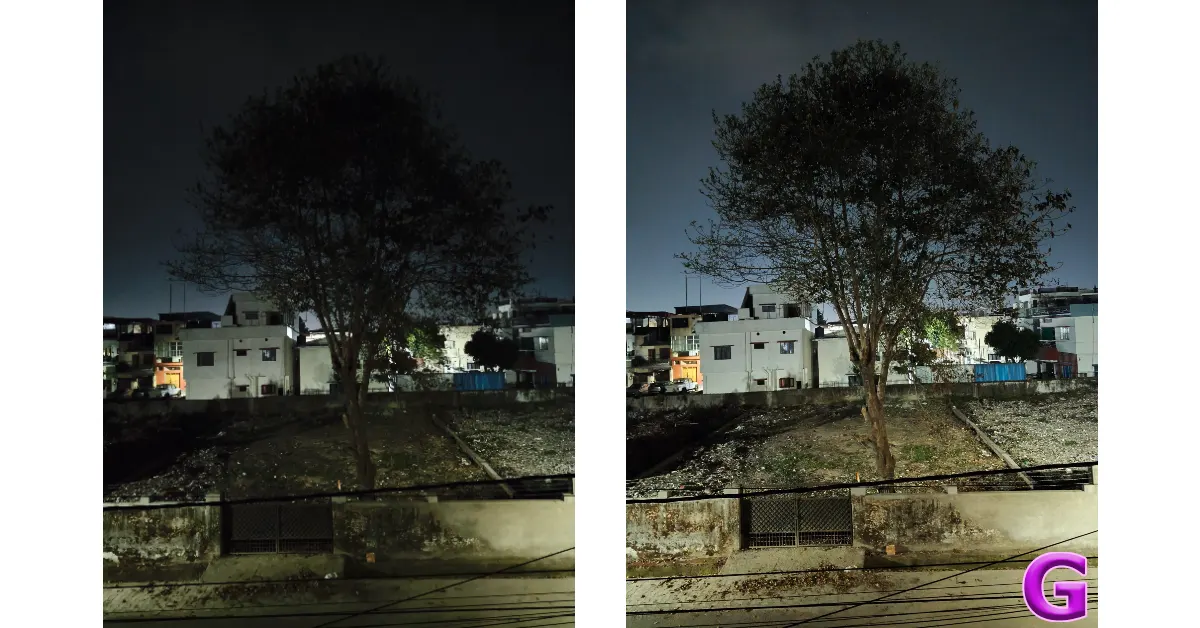
Images taken with the 8MP ultrawide lens are noticeably soft, but they retain the colour profile of the main camera. The dynamic range and contrast levels are decent. We found a lot of use for this lens, especially while taking landscape shots. In limited lighting conditions, it did a decent job of lighting up the shot, but some grain managed to creep into the final results.

Portraits taken by the Redmi Note 15 Pro are vivid and well-focused. The smartphone does a good job of locking into the subject instantly and separating it from its background. However, the background blur on 1x zoom left more to be desired. The front-facing 20MP camera takes clear selfies. It tends to brighten the skin tone and apply a smoothing effect, but not to a point where the images feel artificial. This camera can record 1,080p videos at 30/60fps. Meanwhile, the main camera can shoot 4K videos at 30fps and 1,080p videos at 30/60fps. The recording skills of the ultrawide lens are limited to 1,080p at 30fps.
Read Also: Xiaomi QLED TV X Pro 75 with Dolby Vision support launched in India
Verdict
The Redmi Note 15 Pro ticks all the essential boxes for a dependable midrange phone. It packs a good processor that’s powerful enough to handle routine tasks. The wide AMOLED display is a treat for consuming content. The 200MP primary shooter has your back at all times, regardless of the lighting conditions in front of you. The 6,580mAh battery pack ties a neat bow on the user experience, with its 2-day battery backup.
However, if you’re more of an enthusiast who’s looking for cutting-edge specs, there are other exciting options in this price bracket for you. This also means making some trade-offs depending on what you want. The Redmi Note 15 is designed for the average user who prioritises the basics – a good display, dependable camera, and enough power for daily tasks.
Pros
- Bright display
- Good main camera
- Big battery
Cons
- Plastic back panel
- Not the most powerful chipset in the segment
- Runs Android 15 out of the box


