


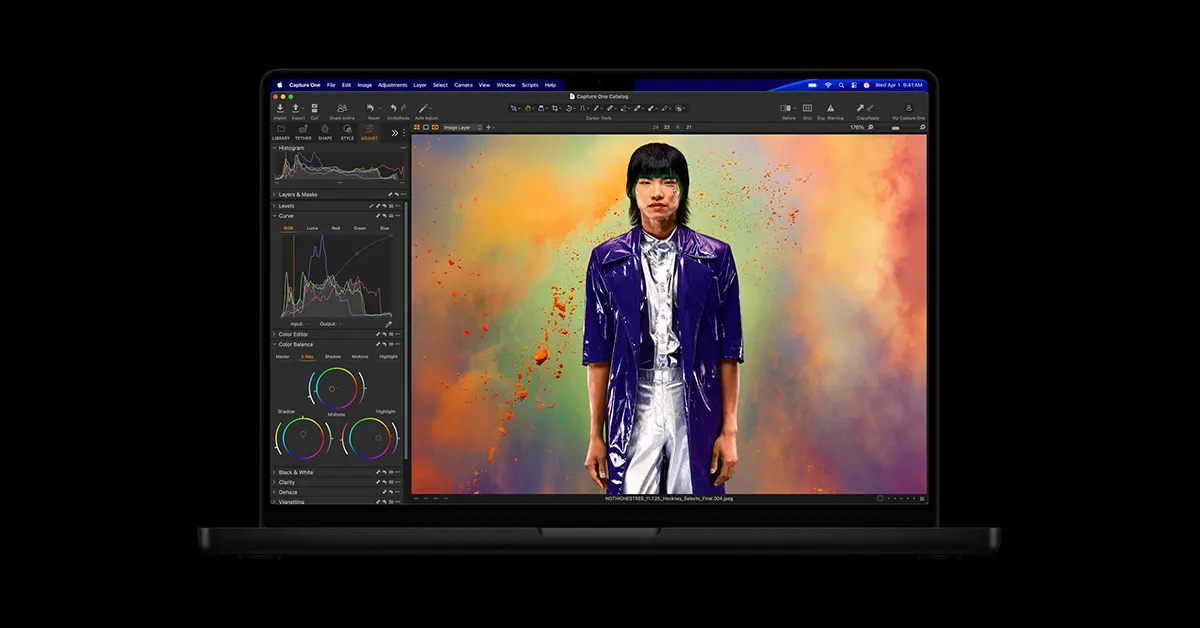
If your workflow involves juggling timelines, code, RAW photos, or a suspicious number of browser tabs, the new MacBook Pro M5 lineup is being pitched as the upgrade that keeps it all moving fast, even when you are offline. Apple has unveiled refreshed 14-inch and 16-inch MacBook Pro models powered by the new M5 Pro and M5 Max chips, with a heavy emphasis on on-device AI, higher memory bandwidth, and noticeably faster storage.
Pre-orders open March 4, with availability starting March 11. The laptops come in space black and silver, and they ship with macOS Tahoe.
Read Also: Apple’s new MacBook Air with M5 brings faster on-device AI, 512GB base storage, and Wi-Fi 7
In This Article
What’s actually new this year
Apple’s headline changes are split into three buckets that matter to working pros.
-
More base storage, less immediate upgrading guilt
M5 Pro models start at 1TB storage, while M5 Max models start at 2TB. Apple is also touting 2x faster SSD performance versus the previous generation, with read and write speeds claimed up to 14.5GB/s. -
A big push for on-device AI
M5 Pro and M5 Max add a GPU design that includes a Neural Accelerator inside each core, alongside higher unified memory bandwidth. In Apple’s framing, this is about making AI tasks feel instant and local, including faster LLM prompt processing and AI-assisted creative work. Consider this the “do it on the laptop, not on a server” era getting louder.- Advertisement - -
New networking silicon
The MacBook Pro adds an Apple-designed N1 wireless chip, enabling Wi-Fi 7 MacBook support and Bluetooth 6, aiming for faster and more reliable wireless connections.
M5 Pro performance vs M5 Max AI goals
Both chips are designed for heavy workloads, but the intent is different.
M5 Pro performance is positioned for people who live in complex, multi-app pipelines, like developers compiling and testing at scale, photographers crunching large libraries, and creators running layered edits. It supports up to 64GB unified memory and up to 307GB/s memory bandwidth.
M5 Max AI is aimed at those who regularly hit the ceiling, like engineers simulating, 3D artists pushing scenes in real time, or AI developers experimenting locally. It supports up to 128GB unified memory and up to 614GB/s memory bandwidth, which is the kind of spec that quietly changes what “portable workstation” means.
Apple is also claiming notable uplifts in ray tracing gaming and pro apps, including examples like Maxon Redshift and DaVinci Resolve Studio. Real-world gains will still depend on your exact apps and projects, but the message is clear: the ceiling moved up again.
Ports, display, camera, and the day-to-day stuff
Specs are fun, but ports and screens pay the bills.
-
Thunderbolt 5 ports are included, alongside HDMI (up to 8K), an SDXC card slot, and MagSafe 3.
-
A Liquid Retina XDR display returns with a nano-texture option.
-
A 12MP Centre Stage camera, studio-quality mics, and a six-speaker system target hybrid work and content creation.
-
Apple claims up to 24 hours of battery life, plus fast charging up to 50 per cent in 30 minutes using a 96W or higher USB-C adapter.
macOS Tahoe features that matter to pros
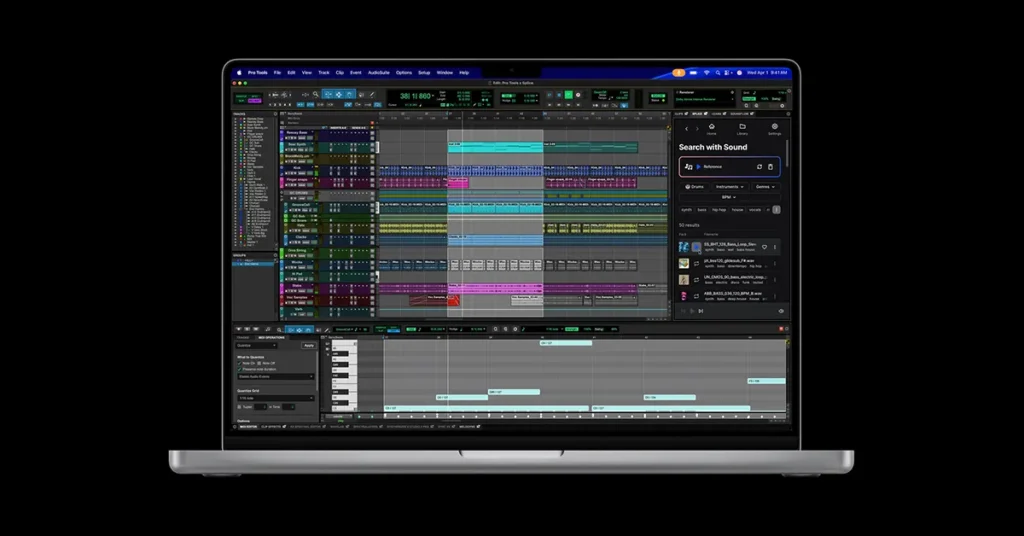
The new MacBook Pro ships with macOS Tahoe features like a refreshed Spotlight that supports quicker actions, stronger Shortcuts with intelligent actions, and Live Translation integrated into core communication apps. Apple Intelligence features are also part of the story, with a focus on privacy and on-device processing where possible.
India pricing and availability
In India, pricing starts at:
-
14-inch MacBook Pro with M5 Pro: Rs 2,49,900 (education Rs 2,32,900)
-
16-inch MacBook Pro with M5 Pro: Rs 2,99,900 (education Rs 2,77,900)
-
14-inch MacBook Pro with M5 Max: Rs 3,99,900 (education Rs 3,66,900)
-
16-inch MacBook Pro with M5 Max: Rs 4,29,900 (education Rs 3,94,900)
Pre-orders begin March 4, and availability starts March 11.
The smartest part of this refresh is not just raw speed, it’s the shift toward serious on-device AI plus faster storage and bigger base SSDs. If you are already happy with an M4 Pro or M4 Max, this may feel like a “nice” upgrade. If you are on Intel or early Apple silicon, it looks less like temptation and more like a practical productivity intervention.


