


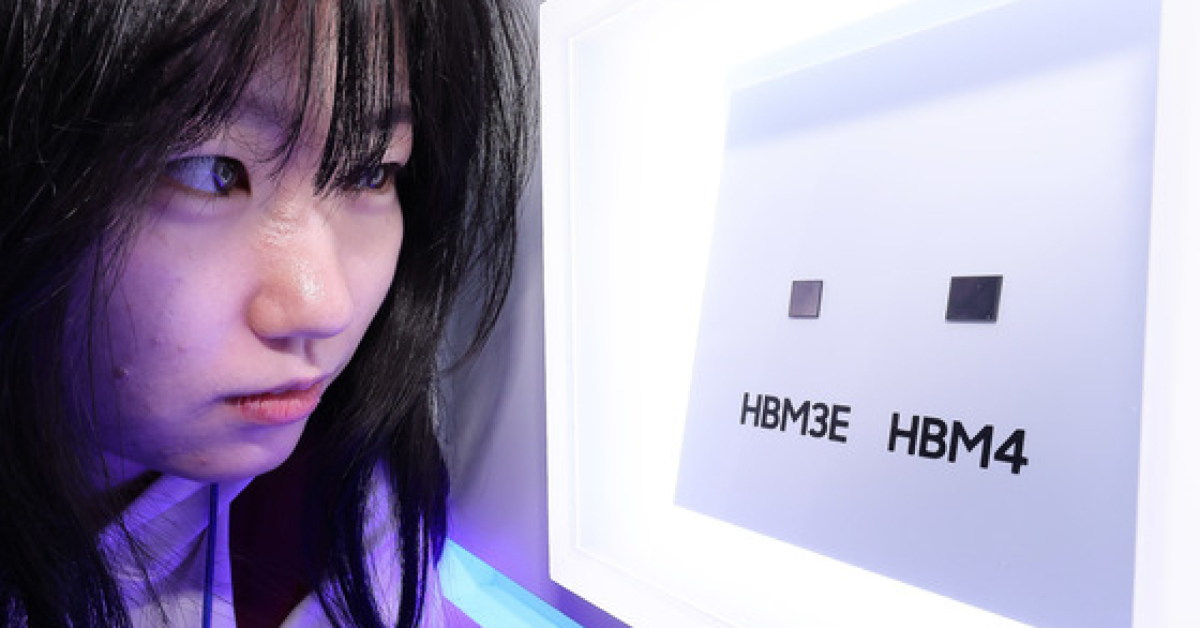
Samsung and SK Hynix plan to mass-produce sixth-generation high-bandwidth memory (HBM4) chips designed for artificial intelligence (AI) uses. Samsung is anticipated to start manufacturing in February 2026, followed by SK Hynix in September 2026. NVIDIA’s Vera Rubin AI accelerator system will primarily utilise these processors, providing significant performance and customisation improvements compared to previous versions.
According to a report, Samsung Electronics and SK Hynix will begin mass production of HBM4, the sixth-generation high-bandwidth memory, in February of next year, marking a key milestone in the memory semiconductor industry. This milestone will consolidate their market leadership, especially as HBM4 will be used in Nvidia’s next-generation AI processor, ‘Rubin’, highlighting their technological superiority over competitors like Micron. Production will take place in SK Hynix’s M16 plant in Icheon and the M15X fab in Cheongju, while Samsung’s operations will commence concurrently at its Pyeongtaek location. The shift to mass manufacturing comes after satisfactory testing of HBM4 samples delivered to Nvidia, implying that the K-semiconductor monopoly in the global memory industry will continue in the coming year.
HBM4 represents a significant leap in customised products, with SK Hynix and TSMC using a 12 nm logic process for the base chip. This advancement has resulted in double the bandwidth and more than 40% higher power efficiency than previous generations. Analysts predict that HBM4 will be a flagship product by the middle of next year, corresponding with NVIDIA‘s Rubin launch. SK Hynix plans to maintain its market leadership by beginning mass manufacturing in September.
Also Read: Here is how you can buy a Samsung Galaxy S25 Ultra at Rs 69,999
Samsung Electronics is stated to have implemented an integrated strategy from design to manufacturing, utilising advanced microfabrication technology for HBM4 production, which has received good performance ratings from NVIDIA. HBM4 demonstrated a peak performance of 11.7 Gbps in testing, necessitating a faster mass production schedule for February. In contrast, Micron intends to begin mass manufacturing in the second quarter of next year, creating a timing lag with Korean companies. NVIDIA intends to align its next-generation chip development with the February schedules of Samsung and SK.
Furthermore, SK Hynix plans to expand manufacturing at its M15X fab in Cheongju, commencing mass production of HBM4 in February of next year. With an expenditure of more than 20 trillion won, this facility will manufacture HBM3E and HBM4 chips, as well as establish a 10 nm-class 6th-generation DRAM line for HBM4E. The M15X will run two cleanrooms: one opens in February, the other by year’s end. By mid-2027, M15X is expected to create an extra 50,000 12-inch wafer-based DRAM units per month, easing HBM supply limitations and increasing sales.
Also Read: Poco M8 5G camera specs revealed ahead of India’s launch
Samsung Electronics is increasing its market position by leveraging its large manufacturing facilities, which presently produce 650,000 DRAM units per month, outpacing SK Hynix’s 550,000. Samsung is marginally behind SK Hynix in HBM output, with 160,000 units produced vs 170,000 by Hynix. Amidst worldwide investment in AI leadership, the firm intends to improve HBM4 yields and technology to disrupt the industry, emphasising the vital requirement for a solid supply chain.


 chips designed for artificial intelligence (AI) uses.)