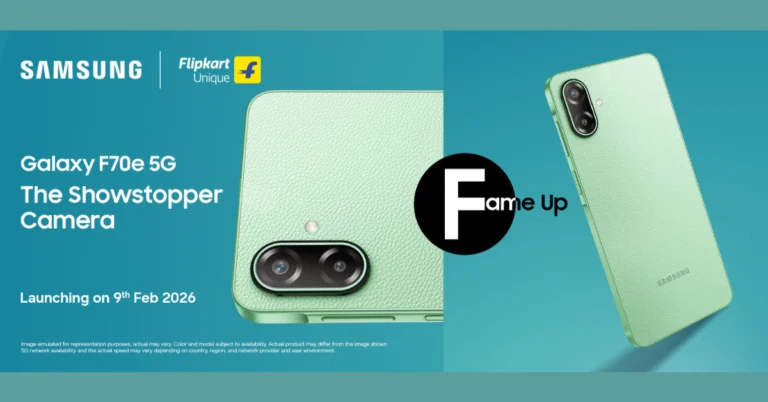
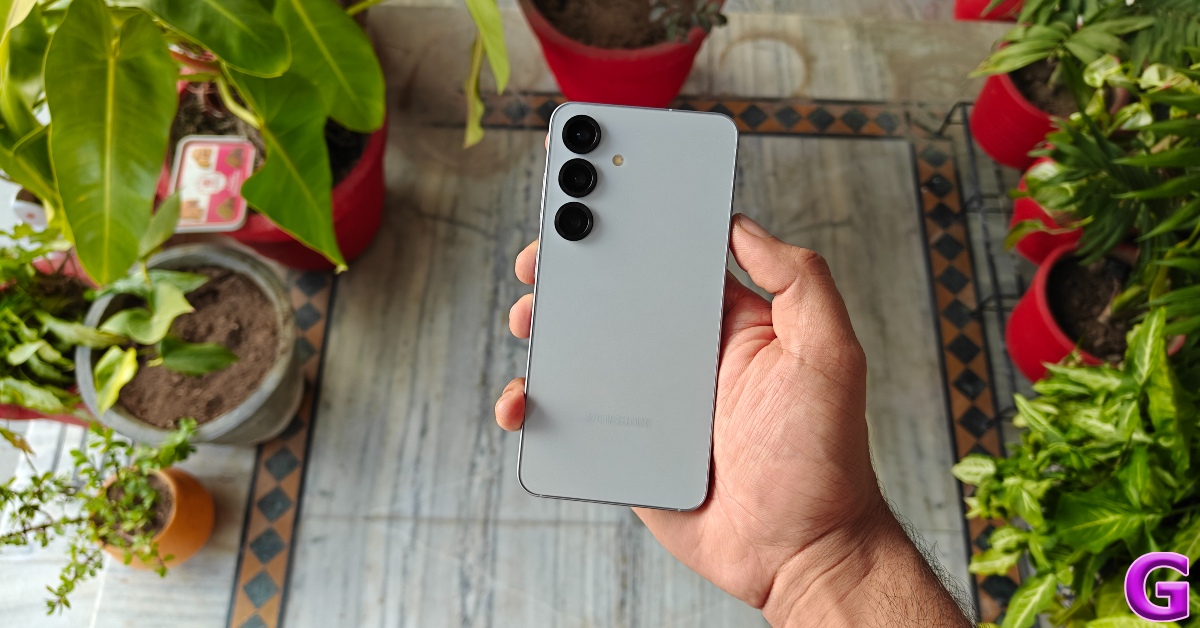
The Samsung Galaxy F70e 5G will be the first phone in the Galaxy F70 series to be out in India. The company has confirmed the launch date and shared some details about the device, including its textured back panel and a waterdrop-style notch for the front-facing selfie camera. The smartphone will also include a big 6,000 mAh battery and two rear cameras, which makes it a major addition to Samsung’s mobile range.
Samsung has officially confirmed that the Samsung Galaxy F70e 5G will be launched in India on February 9. The company has also updated the microsite exclusively for the device, which offers a lot of information regarding the smartphone.
Samsung has revealed that the Galaxy F70e 5G has two back cameras that work together to provide high-quality content that you can share. It has a 50MP main camera that takes bright photos and clear videos, as well as a second depth camera that makes portrait photographs look better.
The manufacturer claims that the 50MP camera’s innovative imaging system provides balanced exposure, reduces light flare, and keeps detail in both bright and low-light circumstances. This lets users take pictures of landscapes, street scenes, and candid moments with rich details and bright colours. The main camera’s f/1.8 aperture, along with the depth camera, makes natural bokeh effects by keeping subjects in focus while gradually blurring the backgrounds. It has also been confirmed that the phone includes an 8MP front camera for taking selfies and making video calls.
The Galaxy F70e 5G has a display that refreshes at 120 Hz, which makes things like app navigation, online browsing, and gaming look clearer and scroll more smoothly. It has a big 6000mAh battery that is 20% bigger than previous generations. It can last up to two days on a single charge. The device can also charge quickly at 25W.
The Galaxy F70 series will be aimed at the middle and lower price ranges, with pricing below Rs 30,000. The first smartphone in this line will be out in February and will cost between Rs 10,000 and 15,000. This launch will set the expectations and positioning for the F70 lineup. More versions from the series are expected to come out later, and they may be available at a range of prices.
Garena Free Fire (GFF) Max is a battle royale game with regular awards and tournaments to keep players interested. If you play GFF, you should be aware of the redeem codes that are released on a daily basis. However, because the battle royale game is banned in India, players from other countries can use theFree Fire Redeem codes daily. If you’re unfamiliar with the codes or don’t know how to get them, we’ve put together a step-by-step guide to help youredeem them. Check out Garena Free Fire Max Redeem Codes for 3 February 2026.
These codes are a great way to get free items in the game. The 12-digit codes contain letters and numbers, as well as an expiration date and time. Because the Garena FF redeem codes cannot be used more than once, you should hurry to the redemption page to claim your free reward before someone else does. To get a free reward, all you have to do is go toreward.ff.garena.com/en, which is the official redemption page. Also, keep an eye on this space for daily updates on Gadget Bridge on GFF Max redemption codes and rewards.
Amazon Quiz 3 February 2026: The New Daily Quiz is now available. Customers from different parts of the country are participating in the daily quiz. The quiz starts at midnight today and will be live until 11:59 PM tonight. By successfully answering every question, participants in the quiz have the chance to win wonderful rewards. Up to Rs 500 Amazon Pay Balance is up for grabs for participants today.
One wrong answer could eliminate you from the quiz. You have a chance to win up to Rs 500 Amazon Pay Balance if you successfully answer every question. Users of the app only have the opportunity to take the quiz. Check Out the 3 February 2026 Quiz.
In This Article
Are you not able to find Amazon FunZone? Click below and participate.
Now fill in the required information through the Sign-Up option.
To find the Amazon Daily Quiz banner, log in to the Amazon app and scroll down to the home screen.
Tap on the banner and tap on the Start button to start the Quiz.
Now you will get 5 questions, and you need to answer them correctly. One wrong answer will eliminate you from the Quiz.
After answering all the questions correctly, you are now eligible for a Lucky Draw.
The previous winner’s name will be announced today at 12 PM.
Amazon Daily Quiz Answers from the previous few days.
Here are all the answers from the previous 5 days of the Amazon Daily Quiz and Contest.
2 February 2026
Question 1: Who beat Novak Djokovic in the final to win his 2nd consecutive Wimbledon men’s singles title?
Answer: Carlos Alcaraz
Question 2: In ‘Captain America” Brave New World’ scheduled to be released in 2025, which legendary actor plays the role of Thaddeus ‘Thunderbolt’ Ross?
Answer: Prabhas Harrison Ford
Question 3: Which place in South India is also known as the ‘Scotland of India’?
Answer: Coorg
Question 4: This is a picture taken in which African country?
Answer: Morocco
Question 5: What is the name given to the profession of the man in the picture?
Answer: Gondoliere
1 February 2026
Question 1: Which team did Spain beat in the final to win the Euro 2024 football tournament?
Answer: England
Question 2: Who plays the lead character of Bhairava in the movie ‘Kalki 2898 AD’?
Answer: Prabhas
Question 3: The Beaver is the national animal of which country?
Answer: Canada
Question 4: An airport named after this famous artist and polymath is located in which city?
Answer: Rome
Question 5: This is Bletchley Park, the main centre of Allied code breaking during World War II. Who among these was part of the team of codebreakers?
Answer: Alan Turing
30 January 2026
Question 1: In 2024, who became the youngest person to win two Oscars?
Answer: Billie Eilish
Question 2: The D. B. Patil International Airport is located in which place?
Answer: Navi Mumbai
Question 3: Which country had the first-ever married couple to serve as flag bearers at the Paris Olympic Opening Ceremony?
Answer: Romania
Question 4: When was this app launched?
Answer: 2011
Question 5: Which is the smallest monkey in the world?
Answer: Pygmy marmoset
29 January 2026
Question 1: Which film is based on Mstyslav Chernov’s daily news dispatches and personal footage of his own country at war?
Answer: 20 Days in Mariupol
Question 2: Ae Watan Mere Watan’ is inspired by which freedom fighter, instrumental in founding the underground Congress Radio?
Answer: Usha Mehta
Question 3: Which Indian musician’s biography, written by Oliver Craske, is titled Indian Sun?
Answer: Ravi Shankar
Question 4: Which Roman Emperor was fond of this fruit?
Answer: Tiberius
Question 5: In the beginning, what was this system called?
Answer: Navstar
28 January 2026
Question 1: As per Guinness World Records, which national flag is the world’s oldest and longest-running flag?
Answer: Denmark
Question 2: Name this largest and most powerful rocket ever flown.
Answer: Starship
Question 3: Which of the major planets of our solar system is named for a Greek god, not a Roman?
Answer: Uranus
Question 4: Which candy brand was the first to go to space?
Answer: M&M
Question 5: The character of Spock in Star Trek is from which planet?
Answer: Vulcan
27 January 2026
Question 1: The iconic Air India building at Nariman Point was handed over to which state government?
Answer: Maharashtra
Question 2: Which country topped the list of the UN’s Human Development Index?
Answer: Switzerland
Question 3:Which Hollywood superstar portrays the role of MMA legend Matt Kerr in the biopic ‘The Smashing Machine’?
Answer: Dwayne Johnson
Question 4: Which sport first appeared in the Winter Olympics in 1936?
Answer: Alpine skiing
Question 5: This brand is the largest sportswear manufacturer in which continent?
Answer: Europe
23 January 2026
Question 1: Who scored a half century in just 15 balls in a losing effort against Sunrisers Hyderabad in IPL 2024 for Delhi Capitals?
Answer: Jake Fraser- Mcgurk
Question 2: The Amazon Prime series- ‘A Gentleman in Moscow’ stars which famous actor in the lead role of Alexander Rostov?
Answer: Ewan McGregor
Question 3: The Achyutraya temple, the Virupaksha temple and the Vithala temple are located in which UNESCO World Heritage Site?
Answer: Hampi
Question 4: This is the logo of a famous automobile company headquartered in which country?
Answer: France
Question 5: This visual shows which dwarf planet as seen from the New Horizons spacecraft in 2015?
We have written an explainer above; you can refer to that.
When are the winners of the Quiz and contest announced or declared?
The announcement of today’s quiz winner will take place Tomorrow. As for the Special Quiz and “Spin & Win” Contest, the winners will be declared once the Quiz Contest comes to an end. To find out who the lucky winner is, you can refer to the Winners List or visit the Amazon Winners tab in the Amazon App.
How to participate in the Daily Amazon Quiz?
That is very easy, just got to the Amazon app and scroll to the bottom of the page and you will find the Quiz section. Click on it (usually it is called the fun zone) and you can enter the Amazon Today Quiz Contest.
Are there any other quizzes or contests running on Amazon daily?
Yes, there are many running daily. These range from spinning the wheel to answering the questions correctly. All are located in the Fun Zone.
What are the criteria for selecting a winner in the Daily Amazon Quiz?
When a qualified player submits correct answers to all the questions, they will automatically be entered into a lucky draw. This draw will include all participants who answered all the questions correctly. Amazon randomly selects the final winners from the pool of eligible participants who gave the right answers.
Which Types of Questions are asked within the Amazon Daily Quiz?
These are very simple and straightforward questions. These are mainly related to general knowledge.
Where should I look for Amazon Daily Quiz answers?
You can bookmark our website www.gadgetbridge.com as we will help you every day with the Amazon Daily Quiz. We bring you fresh answers every day for the Amazon Daily Quiz and Contest.
What time does Amazon announce previous winners?
The previous winner’s name will be announced today at 12 PM (noon).
Are you looking for today’s Wordle answer for February 3, 2026? The problem is difficult to solve, so if you need assistance, we’ve included hints and the clue to today’s Wordle Quiz. Below, we have made it simple for everyone to understand how to get to the Wordle Answer today.
In This Article
Hints and Answers for Today’s Wordle February 3
Before answering directly, please check the Wordle Hints first.
Hint 1: Today’s Wordle answer includes two vowels. Hint 2: The answer for today has no repeating letter. Hint 3: Meaning- to measure how heavy something is, especially by using a machine (scales)
What word does today’s Wordle begin with?
Do you need help with today’s Wordle answer’s initial letter?
The first letter in today’s Wordle is “W”
Today’s Wordle Answer
The answer to Wordle #1690 on February 3, 2026, is — WEIGH
Wordle: A Five-Letter Word Guessing Game • The game allows six guesses of a five-letter word. • Provide feedback on the guessed letters’ placement in the puzzle. • The New York Times purchased the game in 2022. • Created by Josh Wardle for his partner, narrowing down 12,000 English words to 2,500. • Named after the word “word.”
How To Play Wordle?
Wordle is a New York Times word puzzle game that allows users to guess a five-letter word in six attempts. The letters are highlighted in Yellow and Green, indicating whether the word is present in the answer or not, and Green letters indicate the correct guess.
Select a powerful starting word: Avoid using unusual words, as they frequently do not match common letters. A good opening word has plenty of benefits.
Repeating letters: Don’t be afraid of repeating letters; they appear frequently in words. The answer may contain one or two repeated letters.
Use the Wordlebot: The NYT’s Wordlebot analyses and compares replies to itself. This challenge can assist you in enhancing your guessing skills and highlighting areas for development.
With the Super Bowl coming up next week, the hype around American Football is reaching crazy levels this month. If you follow the NFL, you’d be pleased to know that it has a game on Roblox. This is where you get to execute clever set plays and put in crunching tackles. To help you along the way, the game offers some special codes. Here are all the NFL Universe Football codes available in February 2026.
If you’d like some more footballing action on Roblox, check out Endzone Strike. While you’re here, take a look at the latest Volleyball Legends codes as well. If you have any questions, let us know in the comments!
Based on Haikyuu!!, Volleyball Legends gives the players a chance to step inside the world of the anime and engage in engrossing volleyball action. As you make your way through the matches, your opponents keep getting tougher. To hone your skills and reach higher levels, you will need to use the special codes offered by the game. Here are all the Volleyball Legends codes that are up for grabs in February 2026.
For more sporting action, we highly recommend giving NFL Universe Football and Endzone Strike a shot. While you’re here, check out the latest Catch and Tame codes as well. If you have any questions, let us know in the comments!
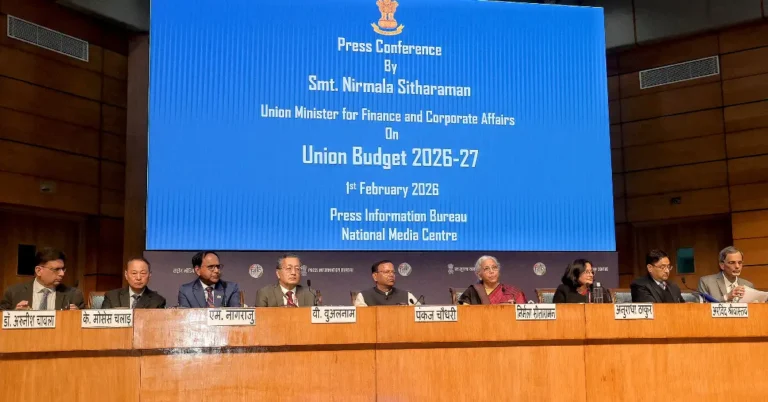
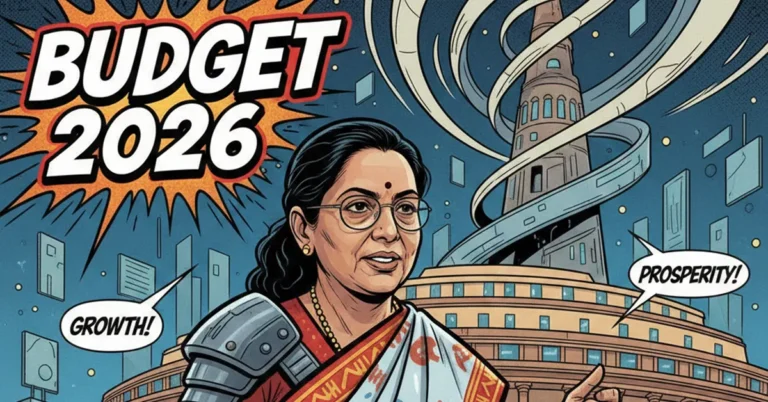
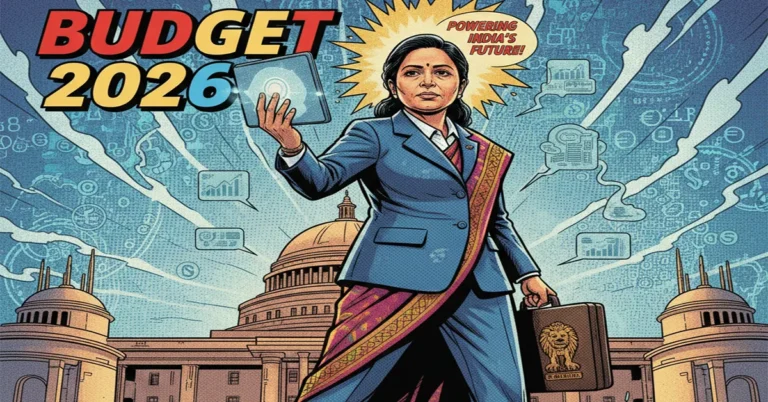
The Union Budget 2026 was presented by the Finance Minister, Smt. Nirmala Sitharaman on February 1, 2026. The budget proposes new changes in customs duties and tariffs that are set to make some tech items cheaper this year. The announcement of ISM 2.0 and a bigger budget for ECMS will also lead to numerous benefits for the Indian consumer. Let’s take a quick look at what’s getting cheaper in the world of tech.
Union Budget 2026: Smartphones cheaper, coffee machines and cameras more expensive
The Union Budget 2026/27 gave way to new import tariffs and customs duties. The new structure allows more breathing room for medicines by slashing the Basic Customs Duty (BCD) on 17 cancer drugs to zero and nullifying the import duties for medications and specialised nutrition related to 7 rare diseases. The customs duties on personal-use imports have been brought down to 10% from 20%. When it comes to tech, these products will get cheaper this fiscal year:
Smartphones and Tablets
TVs
Microwaves and Ovens
EV batteries
Solar panels
New changes to the law will encourage smartphone companies to scale up production within India, effectively bringing down the prices of their products. The new policy dictates that products made from machines owned by manufacturers like Tata and Foxconn will not incur additional charges. This rule applies to factories in ‘custom-bonded areas’ till 2030-31.
Indian Semiconductor Mission (ISM) 2.0 was one of the big announcements in the Union Budget 2026. It seeks to produce equipment and materials, design full-stack Indian IP, and fortify supply chains. The outlay to the Electronics Components Manufacturing Scheme (ECMS) has been increased from Rs 22,919 crore to Rs 40,000 crore. To enable critical infrastructure and boost investment in data centres, the Budget 26/27 has proposed a tax holiday till 2047 to any foreign company that provides cloud services to customers globally by using data centre services from India. However, these services must be provided to Indian customers through an Indian reseller entity.
While the smartphones may be getting cheaper, the price of these items is set to go up in the next fiscal year:
As we move further into the year, the reduction in high import costs associated with semiconductors will trickle down to the user in the form of lower asking prices. Expect cheaper AI services as well. What did you think of the Union Budget 2026? Let us know in the comments!
Google Maps is adding cycling and walking navigation to its Gemini support, which already includes options for cars and bikes. This upgrade lets people talk to Gemini while walking or riding a bicycle, which means they can get help with things like asking for directions and sending text messages without having to use their hands. These new navigation modes are being rolled out as part of a global expansion that started with the launch of Gemini in navigation last November.
Gemini is now available for cycling and walking, and it acts as a personal tour guide while you use Maps, making the experience better, like having a friend in the passenger seat. Users can ask questions like “What neighbourhood am I in?” or “What are the best restaurants nearby?” to get personalised suggestions based on real-time location data. Gemini helps cyclists by letting them ask about their anticipated arrival time or set reminders without taking their eyes off the road. This navigation capability is now being rolled out to all iOS and Android smartphones around the world where Gemini is available.
Previous announcements
Google Maps added hands-free driving via Gemini, an AI assistant, to make getting around easier. People may easily ask about places along their route, check for electric vehicle chargers, and tell friends when they think they’ll arrive by just asking. Gemini can help with hard tasks like discovering nearby vegan eateries that are easy on the wallet and adding events to your calendar automatically when you ask. The AI can even give you specific suggestions for popular foods or let you read the news. It also keeps drivers safe by letting them report traffic problems right away.
Gemini also added a landmark-based navigation tool that makes it easier to find your way while driving. Along with standard suggestions like “turn right at 500 feet,” users will also get directions leading to popular destinations like gas stations and restaurants. For instance, directions will say things like “turn right after the Thai Siam Restaurant”, and the location will be clearly shown on the navigation map.
Google Maps features a function that lets users know about road disruptions, such as sudden closures or major traffic jams, even while they aren’t actively navigating. This feature, which is being rolled out in the U.S. for Android users right now, is meant to assist people in escaping traffic before they get stuck in it.
Gemini makes Google Maps better by letting people use their cameras to find restaurants, cafes, stores, and other important places. Users can press on a pin and ask questions about the place out loud, like how popular it is and what the atmosphere is like. This tool is meant to give customers short, relevant responses to help them decide if a site is worth visiting.
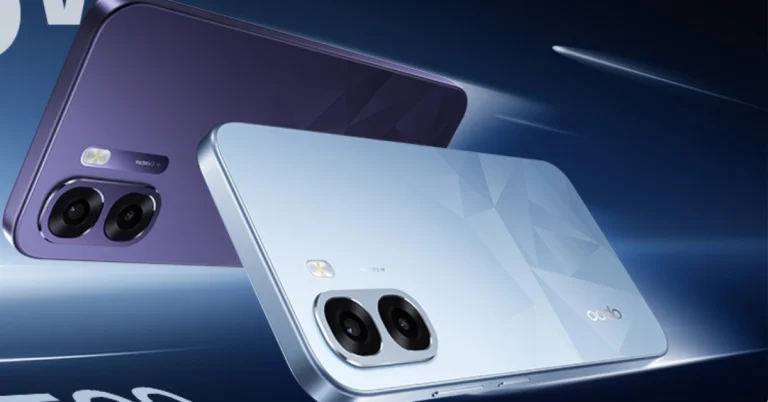
Oppo is expanding its K-Series in India with the addition of a brand new phone. The company today officially confirmed the launch date of Oppo K14x. The smartphone has been listed on Flipkart, which highlights the key specs of the upcoming smartphone. The device’s pricing and chipset details were previously leaked.
In This Article
India launch date confirmed
Oppo K13x 5G, launched in India last year, will soon get its predecessor. The Oppo K15x is confirmed to arrive in India on February 10. The dedicated microsite has also been introduced on Flipkart, which reveals its display, camera, battery and chipset details.
Confirmed Specifications
As per the company, the upcoming Oppo phone will support long endurance with heavy usage. The K14x will boast a 6,500mAh battery that is claimed to deliver up to 20.9 hours of screen-off calling, 17.6 hours of YouTube video playback, and 16.1 hours of Google Maps navigation, while supporting up to 12.1 hours of WhatsApp video calling. Moreover, it is said to offer up to 11 hours of MLBB, 10.5 hours of Free Fire, 9.4 hours of BGMI, and 8.2 hours of PUBG. Not just this, it will have 45W fast charging support. The previous model came with a 6,000mAh battery with similar charging support.
The Oppo K14x will feature a 6.75-inch HD+ display with a 120Hz refresh rate and up to 1,125 nits of peak brightness. In addition to this, it also supports an Outdoor Mode 2.0, which is said to have improved thermal management during extended usage or in high temperature conditions. Apart from that, the device has an IP64 classification and MIL-STD 810-H durability, offering protection against dust and water splashes.
In terms of optics, Oppo has revealed that the K14x will also have a 50-megapixel rear camera. Besides this, the mobile phone will also come with AI features like AI Eraser, AI Reflection Remover, AI Best Shot, and AI Unblur.
The phone will be powered by MediaTek Dimensity 6300 chipset with the company’s own AI LinkBoost 3.0, which is promised to deliver “smoother gameplay, reduced lag, and more stable connectivity during critical moments”. The handset will operate on ColorOS 15. According to the company, more details will be revealed soon.
To recall, its predecessor, Oppo K13x, was introduced in India at a starting price of Rs 11,999 for the base 4GB RAM with 128GB storage option. The 6GB RAM with 128GB storage option and the 8GB RAM with similar storage were priced at Rs 12,999 and Rs 14,999, respectively.
Vijay Sales is now offering fresh discounts on the iPhone 17 Pro model. The new discount on the Apple product makes it more affordable for Apple fans. So if you have already missed the recently ended Republic Day Sale in India, now is the right time to get the device, as these offers are rare on the Pro models. In addition to the price reduction,n the buyers can also access bank deals to further bring down the cost of the handset. Here is everything you need to know about the existing offer.
On Vijay Sales, the iPhone 17 Pro, 256GB storage variant is available at a reduced price of Rs 1,32,490. There is a 2 per cent discount on the original price of Rs 1,34,900. To bring down the cost further, buyers can also avail a flat Rs 4,000 discount on the ICICI Bank credit or debit card transactions. Similarly, there will be an Rs 4,000 instant discount on Axis Bank Credit Card No Cost EMI.
If you are an HDFC cardholder, then fortunately, you can get up to Rs 4,500 instant discount. The same goes for if you choose to go for the EMI option on the e-commerce platform. The no-cost EMI starts at Rs 21,414 for six months. Additionally, the firm is also offering a Rs 4,000 exchange bonus on the product.
The price of the iPhone 17 Pro in India starts at Rs 1,34,900 for the base 256GB storage model. The 512GB variant is available at Rd 1,54,900. Lastly, the top-of-the-line 1TB storage model comes with a price tag of Rs 1,74,900. The iPhone model is offered in three colour options: silver, cosmic orange and deep blue.
Specifications and Features
iPhone 17 Pro comes with a 6.3-inch Super Retina XDR display. Whereas Pro Max features a 6.9-inch Super Retina XDR display. The display panel supports ProMotion up to 120Hz, Always-On, along with 3,000 nits of peak outdoor brightness. It includes a vapour chamber function, which is not available on Android. The iPhone 17 Pro is also durable, with Ceramic Shield glass on both the front and back.
Under the hood, there is the new A19 Pro chipset, a six-core CPU and GPU architecture, each with neural accelerators offering a six-core CPU and GPU architecture, each with neural accelerators.
The Pro model operates on iOS 26 with new Apple Intelligence features such as Live Translation in the Messages, FaceTime, and Phone app and more.
The iPhone 17 Pro features a triple rear camera setup with a 48-megapixel primary, ultrawide, and telephoto lens, the first time all three cameras have the same resolution. The telephoto camera is 56% larger and offers 8x optical zoom and 40x digital zoom. The phone also includes an 18-megapixel selfie camera with Centre Stage mode.
Additionally, the iPhone variant can be charged 50 per cent in 20 minutes with an optional high-wattage USB-C power adapter like Apple’s new 40W Dynamic Power Adapter with 60W Max.
Out of all the places in your house, the living room has the highest potential to be decked out with creature comforts driven by smart tech. Since this is where you court your guests, you don’t want the smart devices to be too distracting. On the other hand, you don’t want it to be underequipped for group activities, be it movie-watching sessions or karaoke parties. For those looking to strike the right balance, here are the top 10 smart devices and gadgets for the living room.
The Frame TV from Samsung not only curates an excellent viewing experience, but it also acts as a stunning art piece when it’s not playing media. This 55-inch TV has a matte display, which reduces reflections and glare from the light falling on it. This display is surrounded by slim bezels that exude the look of a painting frame. Powering this TV is the NQ4 AI Gen2 processor. Its connect box has 3 HDMI, 1 LAN, and 2 USB ports. The TV produces a 40W audio output and has Alexa, Bixby, and Google Assistant built into it. The SolarCell Remote can be charged using natural or artificial light.
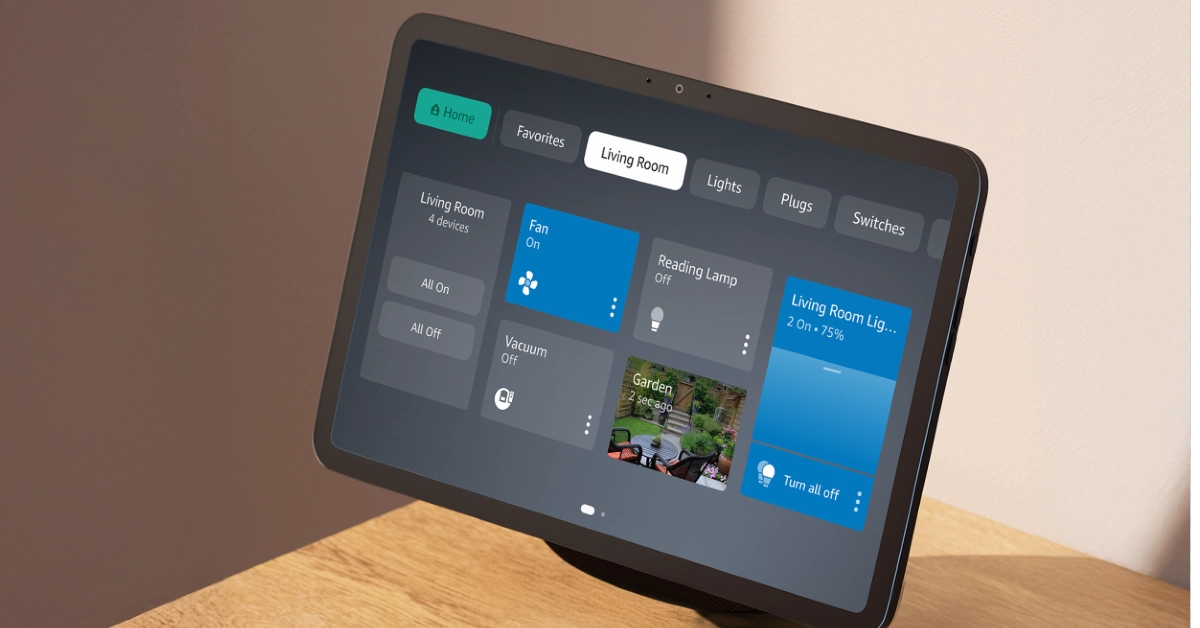
The new Amazon Echo Show 11 comes with a full 11-inch HD display that can relay the feed from security cameras around your house and offer quick controls for smart appliances connected to the device. You can monitor the live feed from up to 4 cameras simultaneously, including video doorbells. The AZ3 Pro chip powering this Echo puts up a fine display when it comes to everyday tasks. The Omnisense technology lets you set up routines via temperature and presence detection. The audio output from the speaker is loud enough to fill an average-sized living room. It is excellent for playing music or taking the odd video call.
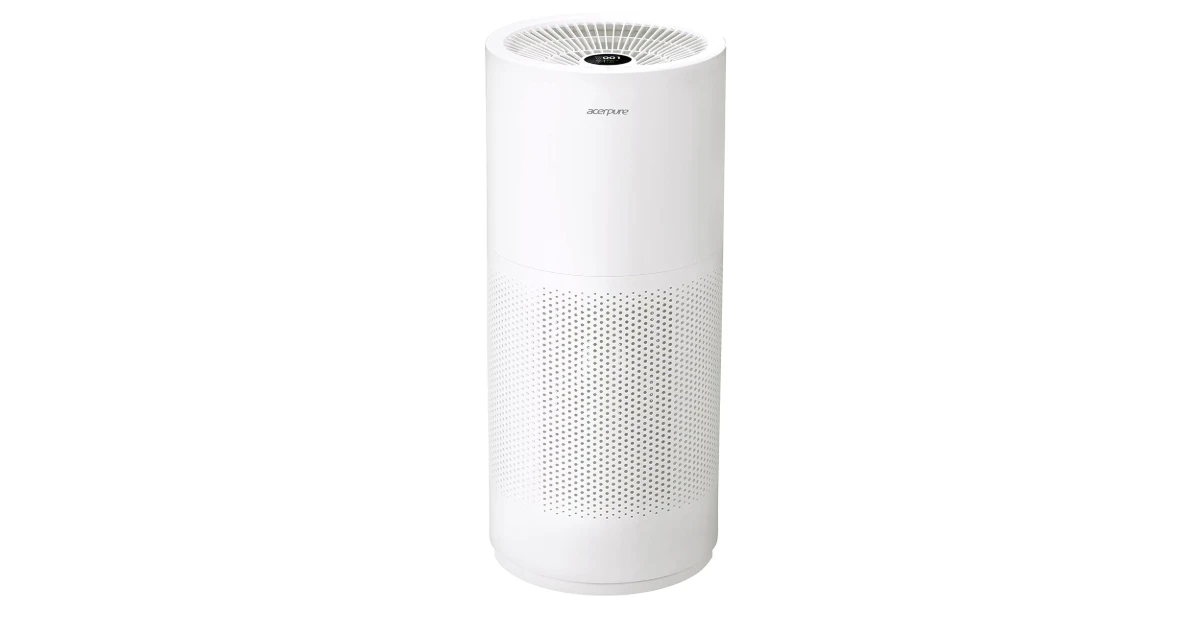
The Acerpure Pro air purifier revitalises your living room with clean, pollutant-free air and gets rid of unwanted odours. It has a Clean Air Delivery Rate (CADR) of 324 CMH, which allows it to filter dust, smoke, bacteria, viruses, and all kinds of pollutants from the air with an impressive efficiency. Its 4-in-1 filter comprises a pre-filter, an activated carbon filter, a HEPA 13 main filter, and a HEPA Plus filter. The negative ions emitted from the air purifier capture ultrafine dust and PM 1.0 particles. The air quality and gas sensor in the device automatically regulates its speed based on the quality of the air around it.
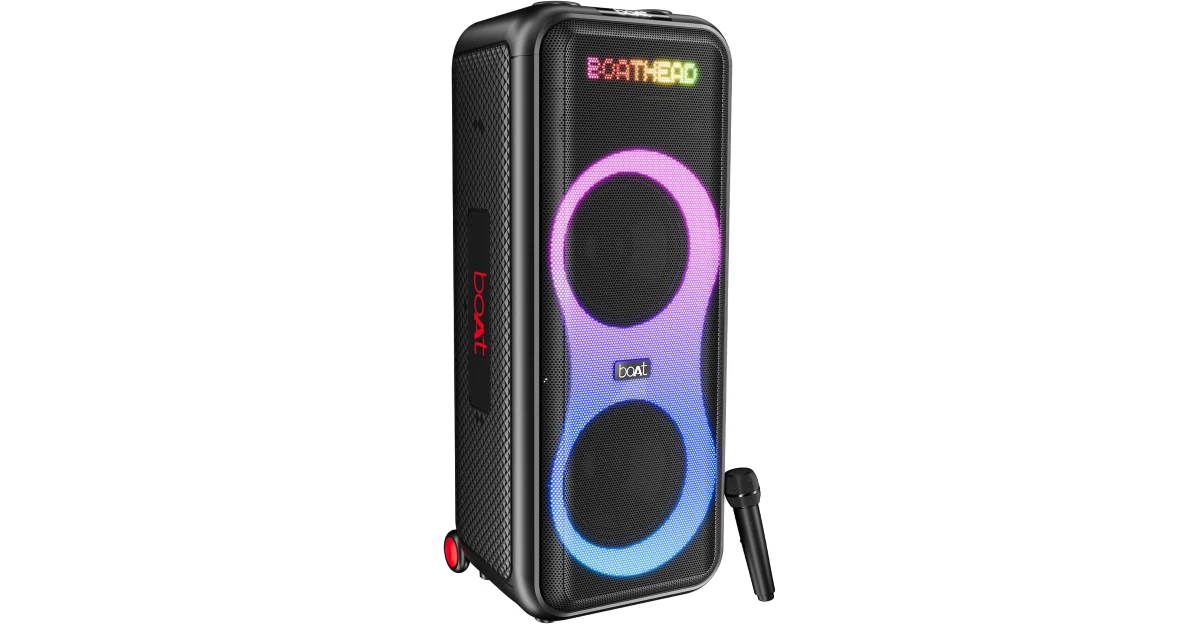
The boAt PartyPal 600 brings your living room to life with its stunning 220W audio output. The sound from this tower speaker can fill a large living room with ease. The 10-inch drivers and dual tweeters produce a highly enjoyable output with a warm envelope of bass. The LED lighting on the speaker plays into its party aesthetic. The PartyPal 600 comes with a wireless microphone for karaoke sessions. Additionally, it has support for 2 wired microphones. You can also plug in your guitar along with the mic. A full charge offers up to 7 hours of playtime.
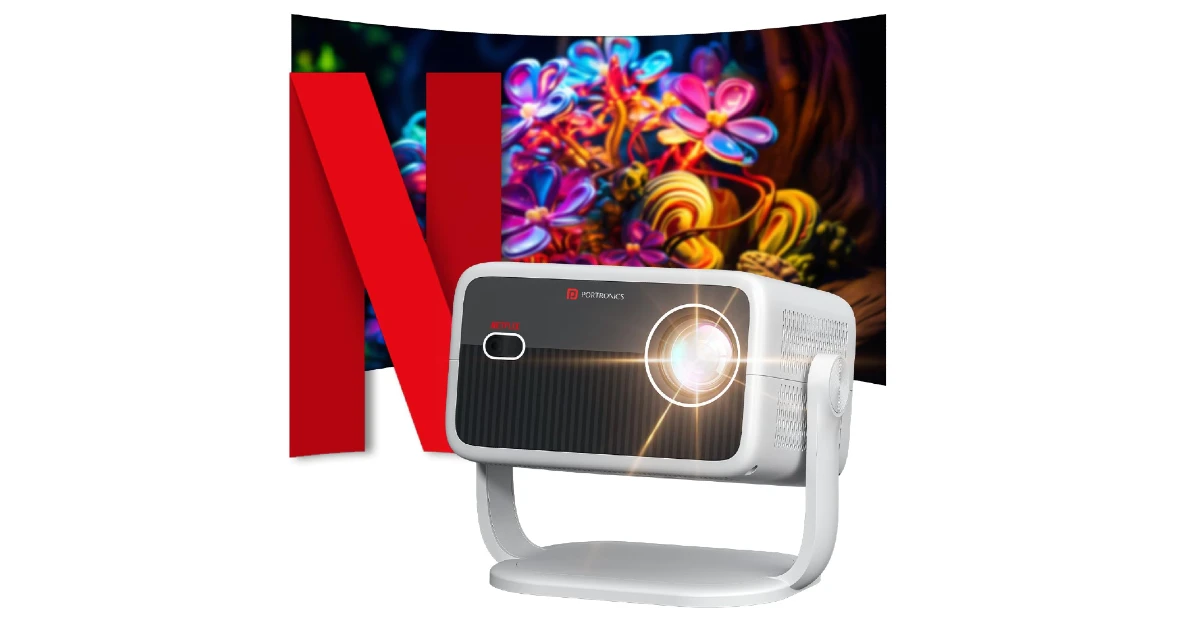
The newly launched Portonics Beem 560 smart projector has a brightness of 5,300 lumens. It has a 1,080p resolution, producing detailed, bright, and vivid visuals. It can cast projections up to 100 inches. The projector runs Android OS and comes with pre-installed entertainment apps like Netflix, Prime Video, YouTube, and more. You can also choose to mirror your smartphone, laptop, or tablet on the projector over WiFi. The tilt design of the projector allows you to adjust its angle while it’s resting on a tabletop. There is support for USB, HDMI, Bluetooth, and WiFi on board.
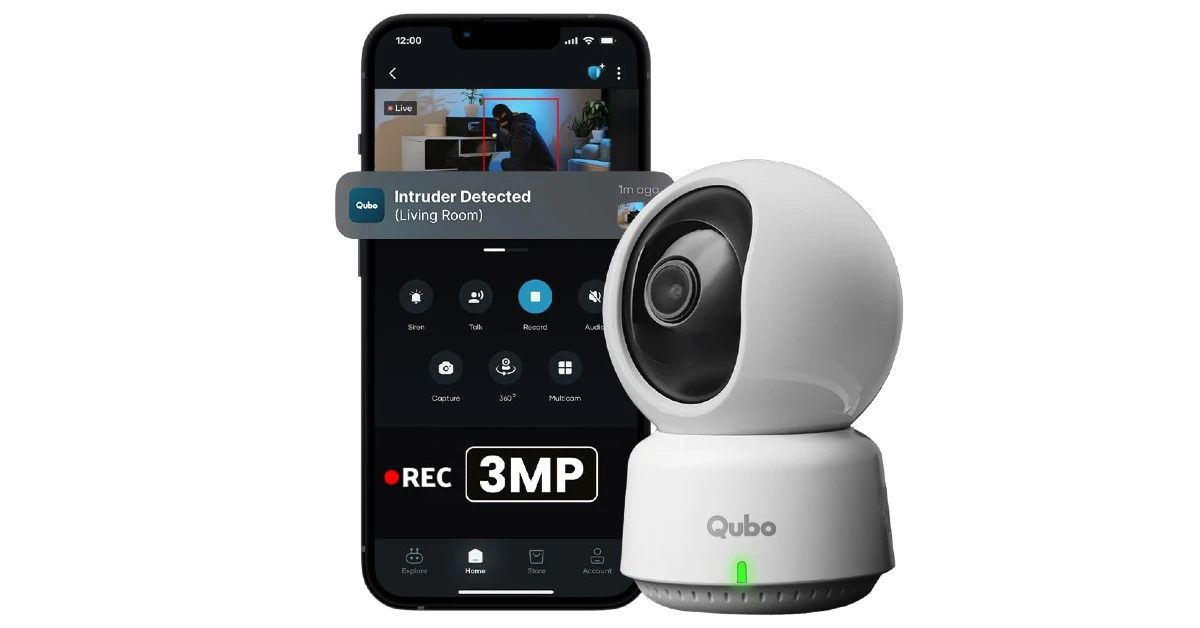
The Qubo Smart 360° keeps an eye on your living room when no one’s around. Its dual motor head allows 360° horizontal and 90° vertical movements. You can manually control it using its companion app on your phone. The 3MP sensor captures 2K HD footage with enhanced clarity, even in limited lighting conditions. The IR LEDs kick in when there’s pitch darkness surrounding the camera. The device can detect unexpected motion and warn the user through push notifications. In case of an emergency, it sounds an intruder alarm. With SD card support, you can record up to 1TB of footage on the device itself. You can also subscribe to the cloud service if you want to keep the footage backed up.
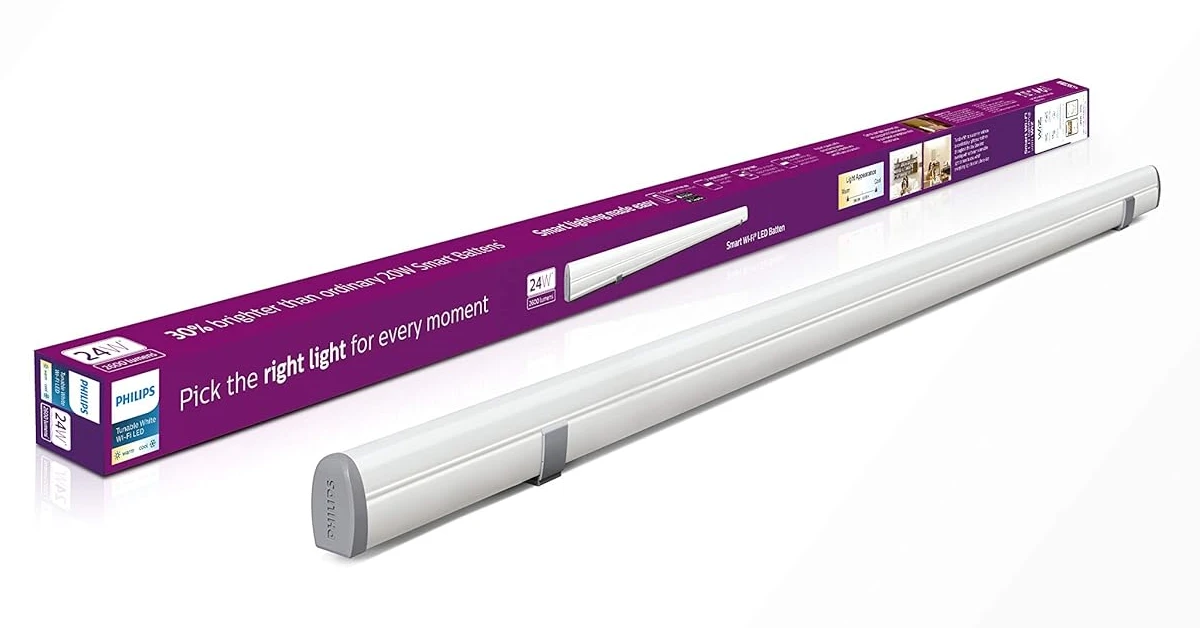
The smart batten from Philips has a 16-million colour spectrum that can be modulated from the WiZ Connected app to create the perfect mood lighting for your living room. It can hit a brightness of 2,600 lumens, lighting up the entire room with ease. The 24W input wattage ensures super bright light and a wide and uniform spread. The batten is compatible with Alexa and Google Assistant. Once paired with a smart hub, you can control it using voice commands. Philips offers a 1-year standard warranty on this product.
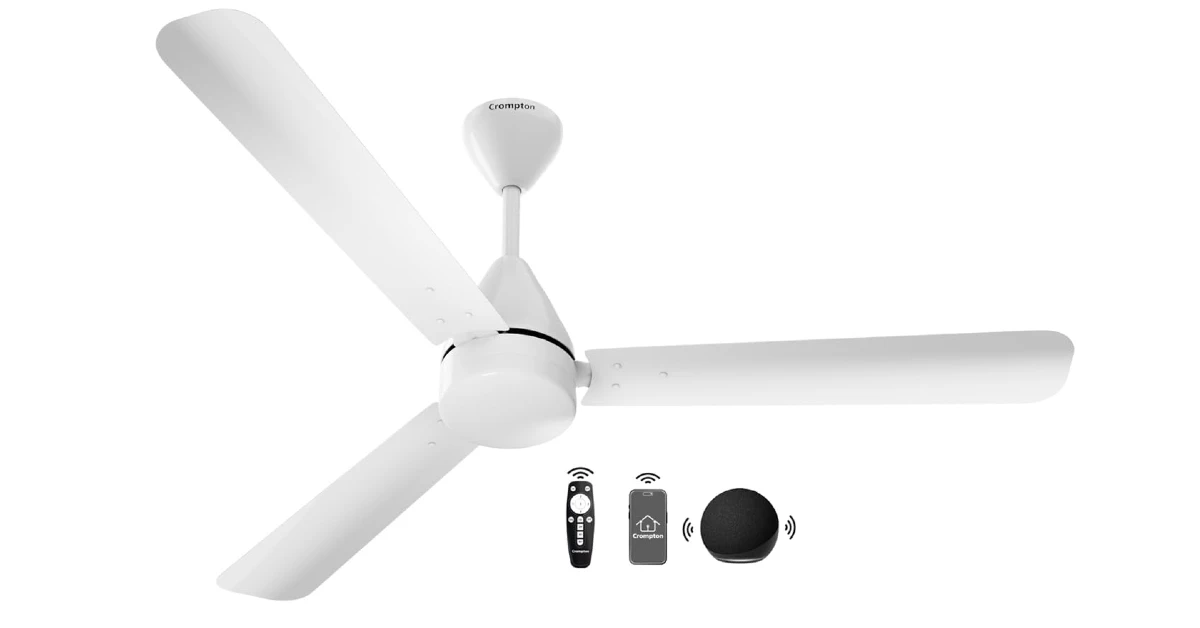
The Crompton Energion ceiling fan has a 5-star BEE rating, ensuring energy saving all year round. What makes this ceiling fan ‘smart’ is support for Alexa and Google Assistant. If you don’t have a smart hub in your house, you can control the fan from your phone via the Crompton Senze app. The 35W fan can operate at a speed of 350rpm. Its slim design goes well with modern living rooms. The powder-coated aluminium blades are well guarded against rust. The electric motor powering the fan does not produce distracting noise.
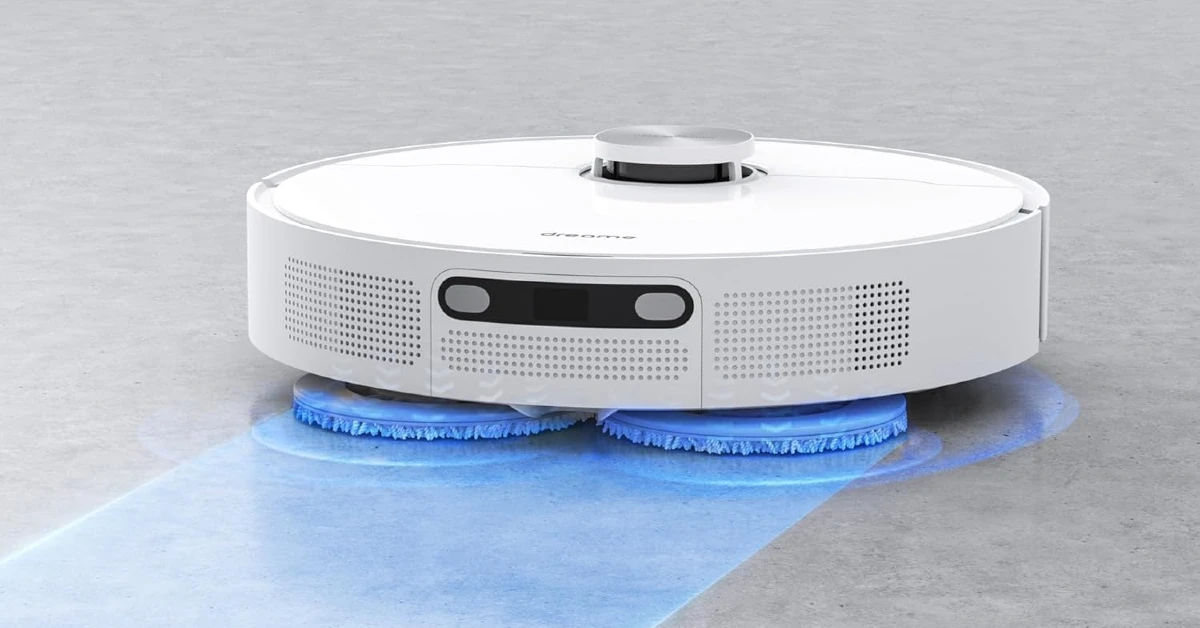
The Dreame L10 smart robot takes care of cleaning tasks without requiring a great deal of help. It is able to generate a suction force of up to 4,000Pa, which is optimum for getting rid of hair, dust, and stubborn dirt particles. Its rising mop ensures that the living room carpet does not get wet in the cleaning process. The 2 rotating mops can differentiate between different kinds of messes and deploy the suitable cleaning technique. The mops are automatically washed after every cleaning session. The air dryer prevents any bacterial or mould growth on the mop.
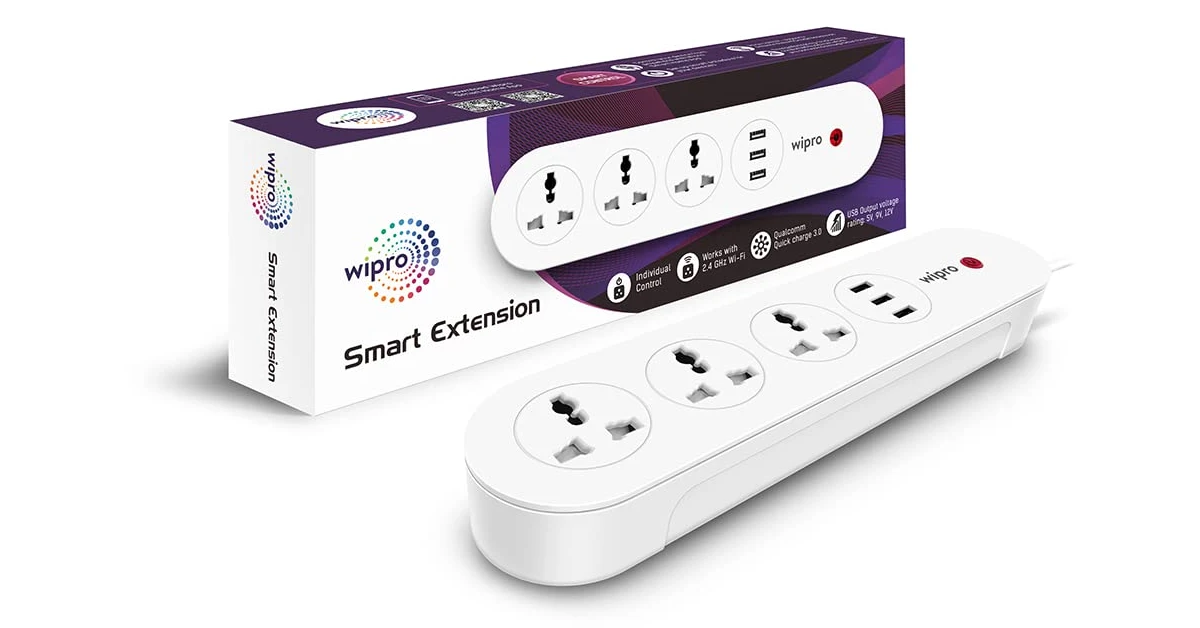
The wall outlets in your living room can only service the people sitting next to them. The smart extension board from Wipro takes care of guests who aren’t seated in close proximity to wall outlets. This device has 3 universal sockets and 3 USB ports. The Wipro Smart Home app lets you control the connected devices from anywhere. If you’re in another room, you can switch off the connected charger without getting up. The companion app also lets you set up on/off schedules. Amazon Alexa and Google Assistant support open the door to voice commands.
These are the top 10 smart devices and gadgets you can get for your living room in 2026. Stay tuned for smart tech recommendations for the kitchen, bedroom, and office as well. If you have any questions, let us know in the comments!
Google has made Project Genie available to Premium Gemini subscribers in the US. This lets users create, explore, and remix their own dynamic worlds. This project is an experimental research prototype that uses the Genie 3 AI model. Its goal is to enable the creation of fully interactive virtual environments using natural-language input. Users can create situations that last for up to 60 seconds. Project Genie comes after the release of Genie 3 in August 2025 and adds features from Nano Banana and Gemini 3.
“Starting today, we’re rolling out access to Project Genie for Google AI Ultra subscribers in the U.S. (18+). This experimental research prototype lets users create, explore, and remix their own interactive worlds,” the company said via blog post.
In This Article
Capabilities
Project Genie is a new prototype web app that uses Genie 3, Nano Banana Pro, and Gemini to let users interact directly with immersive experiences based on a world model.
Users can make and change surroundings with the World sketching tool by typing in text and using images that are either created or uploaded. This involves making your own characters and choosing how to explore, such as walking, flying, or driving. When you connect with Nano Banana Pro, this process improves because you can see and change things in real time to enhance both the visual landscape and the user’s perspective, whether in first- or third-person.
The application makes the world a dynamic place to explore, with paths that change in real time as users interact with it. Users can change the angles of the cameras to make their discovery more fun.
Users can remix existing worlds, enabling them to generate new ideas by modifying existing prompts. They can also browse curated galleries for inspiration and download videos of their creations and explorations once finished.
The system’s current constraints include a limited action space, which means that agents can only do a small number of things, even when there are many world events that could urge them to do so. The interaction and simulation of several autonomous agents constitute a continuing research challenge. Also, Genie 3 can’t fully imitate real-world locations, and clear text rendering only works in the world description context. The model also only works for short-duration interactions, which usually last a few minutes.
Pricing and Availability
In the United States, Google AI Ultra customers can use Project Genie, which is an interactive feature that is only available to anyone over the age of 18. The Ultra subscription package costs $249.99 a month in the U.S., which is about Rs 22,980. The same subscription in India costs Rs 24,500 a month, but it’s important to keep in mind that Project Genie is not currently available in India.
Budget day always lands like a surprise product drop: everyone rushes past the headline features, then squints at the fine print to see what actually changes on the factory floor and the store shelf. This year, India’s consumer tech crowd is doing exactly that, decoding the signals on manufacturing, duties, chips, batteries, skilling, AI, and the infrastructure that keeps our apps, creators, and gadgets humming. Here is what the industry is cheering, questioning, and quietly calculating before the next wave of “new price, same phone” stickers shows up.
“A bold Budget that combines growth with inclusion. The strong emphasis on skilling, alongside sustained investments in science, innovation, and research are timely & will strengthen domestic capabilities, advancing import substitution in critical sectors.
Bolstering infrastructure and logistics, with a focus on energy efficiency and impetus for the data centre ecosystem, will further reinforce confidence in our burgeoning digital economy.
Bharti remains highly committed to play its part in enabling technology-led growth, expanding financial inclusion, and accelerating future-ready education through Bharti Airtel Foundation to secure India’s talent dividend.”
Rajesh Sethi, Group Chief Financial Officer, Lava International Ltd
“The Union Budget 2026–27 reflects a continued focus on building India’s manufacturing strength and capabilities, with electronics positioned as a key pillar of economic growth. By fostering a supportive policy environment for domestic production and scale, the Budget lays the groundwork for sustained job creation, stronger industrial capabilities and deeper integration into global value chains. Over time, these measures can contribute meaningfully to India’s economic resilience and long-term competitiveness.”
“The Union Budget 2026 reinforces India’s emergence as a trusted technology and innovation partner. The Government’s recognition of cutting‑edge technologies such as Artificial Intelligence as force multipliers for good governance is particularly encouraging. It underscores the pivotal role of the Indian IT industry in delivering innovation, efficiency and scalable digital solutions for the nation. Initiatives such as the IndiaAI Mission, National Quantum Mission, National Research Fund and the enhanced R&D ecosystem reflect a bold, inclusive, and future‑ready vision. This alignment of policy, technology and talent will accelerate India’s journey toward becoming a global innovation powerhouse. Additionally, the launch of India Semiconductor Mission 2.0 will significantly strengthen the country’s technology ecosystem by deepening the integration of hardware and software capabilities, positioning India as a leader in next‑generation digital infrastructure.”
Anku Jain, Managing Director, MediaTek India
“The expansion of India Semiconductor Mission through ISM 2.0 in Budget 2026 is a strong step towards building India as a global semiconductor hub. By prioritising the development of full-stack Indian IP and domestic equipment manufacturing with continued policy support, the government is fostering an environment to boost innovation and design, strengthening India’s competitiveness by supporting scale, speed and just-in-time manufacturing.”
Madhav Mani, CEO, Usha International
“This year’s Union Budget sends a strong signal of confidence in India’s economic momentum by reinforcing consumer purchasing power and long-term demand creation. Its emphasis on stable taxation, continued support for disposable incomes, and sustained public capital expenditure provides long-term visibility and confidence for manufacturers to invest in capacity, technology, and distribution, creating a positive environment for discretionary consumption.
For the consumer durables sector, where buying decisions are closely linked to household confidence and accessibility, the focus on rural income support, improved infrastructure, formal credit expansion through digital channels, and a predictable GST framework is expected to unlock upgrade demand, particularly across Tier 2 and Tier 3 markets.
Importantly, the renewed push towards localisation, electronics and component manufacturing, and domestic value addition will be critical in strengthening supply-chain resilience and improving cost competitiveness for Indian brands. By strengthening MSME participation across the manufacturing value chain, the budget supports a more resilient and inclusive growth model, enabling manufacturers to build globally competitive, energy-efficient products while creating employment and sustainable growth, from component suppliers to last-mile retailers, as demand momentum builds in the coming quarters.”
Arijeet Talapatra, CEO at itel India
“The Union Budget 2026 delivers a clear and reassuring message for brands investing in India’s electronics ecosystem, laying a strong framework towards establishing India as a global hub for manufacturing electronics. The increased outlay of the Electronics Component Manufacturing Scheme will help deepen localisation, strengthen the value chains, and improve the cost competitiveness of consumer electronics goods. The announcement of the India Semiconductor Mission 2.0 is a welcome move that will bolster India’s journey towards becoming Atmanirbhar – critical for ensuring uninterrupted access to crucial technologies.
The government’s focus on infrastructure development in Tier-2 and Tier-3 cities will further drive consumer-led growth by improving access, distribution efficiency, and last-mile connectivity. For itel, these initiatives resonate deeply with our commitment to democratising access to durable, reliable, and affordable technology – empowering millions of consumers across Bharat.”
Tadashi Chiba, MD & CEO, Panasonic India
“The Government’s consistent focus on infrastructure continues to be central to India’s growth agenda. The Union Budget 2026–27, with capital expenditure increased to ₹12.2 lakh crore, reaffirms infrastructure as the backbone of India’s economic expansion. This sustained push will directly support the scaling of Panasonic’s advanced B2B solutions and offerings, which are integral to large-scale infrastructure development. The continued focus on strengthening India’s manufacturing ecosystem through ECMS and the exemption of basic customs duty on select electrical appliances, including microwaves, is a timely measure that will improve cost efficiencies, encourage domestic value creation, and boost market adoption.
The emphasis on the strategic deployment of cutting-edge technologies, including AI, to improve governance and productivity, will lay a strong foundation for inclusive, sustainable, and people-centric growth in India.”
Avneet Singh Marwah, CEO, SPPL, Exclusive brand licensee for Blaupunkt, Kodak and Thomson in India
“Budget 2026-27 provides a strong platform to accelerate the growth of India’s semiconductor and electronics manufacturing ecosystem. If India has to become competitive globally, the focus should shift from announcement to execution. Design-linked incentives, deeper component localisation and semiconductor-linked supply chains are critical to help Indian manufacturers climb up the value chain.”
Rajesh Doshi Director and Co-Founder at Zebronics
The Union Budget 2026 sends a strong and timely signal towards strengthening India’s electronics manufacturing backbone in line with the Viksit Bharat vision. The emphasis on empowering MSMEs, developing rare-earth and component supply corridors, and reinforcing core manufacturing capabilities will be crucial in building resilient domestic ecosystems. Equally important is the government’s intent to simplify taxation and improve ease of doing business, enabling manufacturers to deploy capital more efficiently toward growth and innovation. For Zebronics, this direction aligns seamlessly with our long-term commitment to local manufacturing and our readiness for the next phase of consumer electronics demand in India.
India already hosts a large share of global semiconductor design engineers, and the Semiconductor 1.0 policy is now pushing local IP creation and product companies. Indian Semiconductor Mission 2.0 to produce materials, design full-stack Indian IP and fortify supply chains will strengthen India’s position in the global race for better tech infrastructure. While challenge remains in the long gestation period and building dense regional clusters, if implemented rapidly with existing PLI & DLI schemes properly, it’ll help in Global South‑oriented chip design for local use‑cases & can help India in building ‘chip diplomacy’ ahead with global south & north nations. To match the global race, India has to invest more towards its semiconductor mission and with an enhancement in outlay to 40,000 cr (almost double) for Semiconductor capacity is a sign of how the government wants to improve the critical frontier technology ecosystem for homegrown chip production across EVs, electronics and defence industries.
Rakesh Kaul, Managing Director of Livpure
“Union Budget 2026 reflects a steady and thoughtful approach to sustaining India’s growth momentum. The increase in capital expenditure to ₹12.2 lakh crore signals continuity in infrastructure-led development, which is essential for building resilient industries, stronger supply chains and a healthier consumption environment. The focus on reviving over 2,000 industry clusters, along with the ₹10,000 crore MSME Growth Fund, shows a clear intent to strengthen local manufacturing and enable enterprises at the grassroots to scale with confidence,” he continued.
“The Budget’s emphasis on MSMEs, technology enablement and emerging areas such as artificial intelligence provides that direction. Investments in digital and AI-led capabilities will not only improve productivity but also help Indian companies become more agile and competitive in a rapidly evolving global landscape. The continued towards the new tax regime and simpler compliance frameworks further improves ease of doing business and allows organisations to channel energy towards innovation and long-term value creation.”
“For companies like ours, which work closely with Indian households, this Budget creates the confidence to invest responsibly, deepen localisation, adopt advanced technologies and strengthen manufacturing capabilities in India. Aligned with the Viksit Bharat vision, it reinforces the role of industry as a partner in building a future-ready, inclusive economy that improves everyday quality of life .”
Shishir Gupta, Co-founder, CEO of Oakter
The launch of India Semiconductor Mission 2.0 marks a decisive shift from assembly scale to technology depth and IP ownership, which is exactly what the electronics sector has been waiting for. Moving into equipment, materials, and full-stack Indian IP creation strengthens the backbone needed for original design manufacturing to thrive at global standards. The increased outlay of ₹40,000 crore for electronics component manufacturing is a strong signal that localisation will now be measured not just in volumes but in capability and value addition. For ODM-led companies, this creates room to design, build, and scale complex products entirely from India while integrating more resilient supply chains. The proposed ₹10,000 crore SME growth fund is equally important as it addresses a chronic gap in growth capital that limits innovation-led manufacturing. If implemented with speed and clarity, these measures can unlock automation, deepen component ecosystems, and help Indian electronics brands compete confidently in global markets as creators rather than contract manufacturers.
Murali Mantravadi, Joint Managing Director, Energy Bots – Flosenso
“Reading the Union Budget 2026, what becomes clear is a steady shift in how technology is being viewed. The push through India Semiconductor Mission 2.0 and higher investment in electronic components suggests the government wants India to build deeper capability, not just scale services. That is an important signal. Sustainable advantage comes from owning design, supply chains and execution, not only distribution. The continued emphasis on AI, industry-linked research and creative skills points to an understanding that technology outcomes depend as much on people and process as on policy. The real test now is execution, but the intent feels more structural than symbolic.”
Nakul Kumar, Co-Founder at Cashify
While the Union Budget 2026–27 is largely focused on strengthening India’s electronics manufacturing ecosystem, its ripple effects will be equally significant for the recommerce sector. Increased domestic production, better component availability, and improved logistics infrastructure will strengthen the lifecycle of devices, making refurbishment more efficient and scalable. Over time, this will aid in expanding access to high-quality, affordable electronics for consumers and reinforce India’s transition towards a more circular and sustainable digital economy.
Alok Nigam, Managing Director, Brother International (India)
“The Union Budget 2026 strikes a thoughtful balance between growth ambition and on-ground business realities. By simplifying GST, strengthening domestic manufacturing and placing MSMEs at the centre of the growth agenda, the government has addressed some of the most pressing needs of Indian enterprises.
The announcement of a ₹10,000 crore SME Growth Fund, along with a clear increase in outlay for electronics and semiconductor-led manufacturing to ₹40,000 crore and the launch of the India Semiconductor Mission 2.0, sends a strong signal of India’s intent to deepen value addition and build resilient supply chains. The continued focus on electronics components manufacturing, industrial clusters, hi-tech tool rooms and infrastructure-led growth reinforces the long-term commitment to strengthening India’s domestic manufacturing ecosystem. These measures will encourage businesses to invest in technology, improve productivity and scale with greater confidence. For MSMEs, which contribute close to 30% of India’s GDP, better access to capital and structured growth support can significantly accelerate modernisation.
For Brother International India, this creates a more conducive environment for the wider adoption of office automation and digital workflow solutions across enterprises and consumers. As India aligns more closely with global markets, the Budget’s emphasis on localisation, technology adoption and ease of doing business positions businesses to compete more efficiently, while enabling us to support them with reliable, productivity-driven solutions.”
Anil Rai Gupta, Chairman and Managing Director, Havells India
“We commend and congratulate the Government of India for presenting a progressive and industry-focused Union Budget 2026–27 that strengthens India’s journey toward self-reliance and global competitiveness. The proposed capital expenditure of ₹12.2 lakh crore, alongside measures to mobilise private investment through the Infrastructure Risk Guarantee Fund, accelerated CPSE real estate monetisation via REITs, and development of dedicated freight corridors with sustainable cargo focus, will accelerate execution across housing, commercial, industrial, and logistics projects.
Key interventions such as the expansion of the Electronics Components Manufacturing Scheme from ₹22,999 crore to ₹40,000 crore, the ₹10,000 crore, five-year initiative to promote domestic container manufacturing, and rationalisation of customs duties to correct inverted structures reflect a decisive push towards localisation and technology-led manufacturing. These measures are expected to drive capacity creation, strengthen supply chains, and enhance India’s competitiveness across critical industrial sectors.
By advancing the ‘Make in India’ agenda through sustained policy support, targeted investments, and focus on industrial competitiveness, this Budget lays a robust foundation for resilient, inclusive, and technology-driven growth across India’s industrial landscape.”
Manish Agarwal, Board Member, GDAI
“The announcement of AVGC content creator labs in schools and colleges is a landmark step toward building India’s next generation of game designers and developers. Over the past few years, GDAI has been closely engaging with government stakeholders to help shape a long-term talent pipeline that starts at the school level and extends through higher education and industry readiness. We strongly welcome this move, which will significantly accelerate the growth of gaming, AVGC-XR, and interactive media careers across the country.”
Anurag Choudhary, Founder & CEO, Felicity Games:
“The government’s push on AVGC and creative tech education is a strong step forward. Gaming and interactive media are talent-led industries, and building this pipeline early can help India move from being a large consumer market to becoming a global producer of content and IP, driving jobs and long-term economic growth. Over time, this can translate into meaningful jobs, startups, and export-driven growth for the economy.”
Jeet Chandan, Co-Founder, Shortgun Games
“This Budget is a direct policy push for India’s AVGC revolution AVGC Creator Labs across 15,000 schools and 500 colleges is a game-changing talent pipeline. For Shortgun Games, this means faster scaling of XR-led game design and global IP creation. India isn’t just playing games now, India is building the world’s gaming content factory.”
Sanjay Chitkara, Co-CSMO, LG Electronics India Limited.
The Union Budget 2026 reinforces India’s ambition to become a global high-tech manufacturing hub through higher capital investment, Semiconductor Mission 2.0, and expanded support for electronics component manufacturing. Measures such as duty exemptions, MSME funding, and improved infrastructure will strengthen supply chains and enhance industry competitiveness. For companies like
LG Electronics, this creates a stronger ecosystem for localised manufacturing, innovation, and long-term growth. At the same time, tax rationalisation and policies aligned with middle-class needs will boost consumption and job creation, delivering balanced growth for both industry and citizens.
Paresh Vij, Director, U&i
“The Union Budget 2026, presented by Hon’ble Union Finance Minister Nirmala Sitharaman, reinforces India’s long-term vision of becoming a global electronics manufacturing powerhouse. The expansion of the India Semiconductor Mission 2.0 with a ₹40,000-crore outlay, along with enhanced support for the Electronics Components Manufacturing Scheme, will significantly strengthen domestic value chains and reduce import dependence. These measures will enable faster innovation, better cost efficiencies, and improved supply-chain resilience for consumer electronics brands. At U&i, we see this as a decisive step towards empowering Indian manufacturers to compete globally while delivering high-quality, affordable products to consumers. The budget provides much-needed policy stability and confidence for sustained investments in manufacturing, technology, and talent.”
Rajeev Singh, Managing Director, BenQ India and South Asia
The Union Budget 2026 makes a clear statement on reimagining education as a direct driver of employability and economic growth. The proposed Education-to-Employment Standing Committee acknowledges the urgent need to align learning with industry demand and the accelerating impact of technologies such as artificial intelligence.
Initiatives such as Content Creator Labs in 15,000 schools and the development of university townships near industry corridors mark an important shift towards hands-on, technology-enabled, and industry-connected learning environments. These measures will encourage creativity, collaboration, and real-world skill development across K-12 and higher education.
Together with continued support for domestic manufacturing and the semiconductor ecosystem, the Budget creates a strong foundation for modern digital classrooms and future-ready campuses. It enables education and enterprise technology providers to play a meaningful role in building skills, improving learning outcomes, and preparing India’s talent base for global competitiveness. It will be good to see how these initiatives take shape in the coming days, and we will support them to the best of our ability.
Ravi Agarwal, Co-Founder and Managing Director, Cellecor
The Union Budget 2026 reflects a steady and constructive approach toward strengthening India’s consumer electronics and technology manufacturing ecosystem. The near doubling of the Electronics Components Manufacturing Scheme outlay from ₹22,919 crore to ₹40,000 crore is a meaningful step toward building a stronger domestic component supply chain. Alongside the expansion of the India Semiconductor Mission (ISM) 2.0 into a broader, full-stack programme covering materials, equipment, design, and R&D, this signals strong momentum toward positioning India higher on the global electronics value chain.
The parallel focus on employment generation and large-scale skilling in electronics manufacturing and emerging technologies will help create a future-ready workforce across factories, assembly lines, and service ecosystems.
Overall, the Budget creates a supportive environment for consumer electronics brands to invest with confidence. We look forward to contributing to this growth journey through innovation, localisation, and product development.
Pankaj Rana, CEO, Hisense India
The Union Budget 2026 outlines a forward-looking technology roadmap that strengthens India’s position as a global electronics and innovation hub. The sustained focus on semiconductor manufacturing, electronics components, and AI-led innovation reflects a strong policy commitment to building a resilient domestic ecosystem. Initiatives like India Semiconductor Mission 2.0 and the enhanced outlay for electronics manufacturing are expected to deepen local value creation and strengthen supply chains. For the consumer electronics industry, this creates a stable, growth-oriented environment that encourages long-term investments, innovation, and localisation.
Aditya Khemka, Founder & Managing Director, CP PLUS
The Union Budget 2026 signals a decisive shift in India’s technology and security journey, with a clear focus on building capability at home. The strengthened push under the India Semiconductor Mission 2.0 is not only about self-reliance, but about ensuring that the intelligence, computing power, and hardware powering next-generation AI systems are designed and manufactured in India.
The government’s emphasis on artificial intelligence reflects a move from experimentation to real-world, mission-critical deployment. As AI becomes central to public safety, surveillance, and smart infrastructure, this Budget lays the foundation for scalable, secure, and responsible adoption across the country.
For homegrown technology companies, this policy clarity creates long-term confidence to invest locally, innovate for Indian needs, and build globally competitive solutions. It positions India not just as a consumer of advanced technologies, but as a trusted creator of AI-led security and infrastructure solutions aligned with the vision of Make in India
NS Satish, President, Haier Appliances India
“The Union Budget 2026 reflects a strategic step forward for India’s manufacturing ecosystem. The ₹40,000 crore allocation towards electronics components and manufacturing is a landmark announcement that will strengthen the domestic supply chain, accelerate localisation, and enhance India’s competitiveness in the global electronics landscape.
Coupled with the recently concluded India-EU Free Trade Agreement, which opens new avenues for technology collaboration and exports, this Budget reinforces India’s position as an increasingly preferred manufacturing hub. For the consumer durables sector, these measures will drive cost efficiencies, improve affordability, and expand appliance penetration across emerging markets.
At Haier Appliances India, we strongly support the government’s vision and are accelerating our investments in local manufacturing and value addition, contributing to India’s emergence as a world-class hub for consumer durables. The Budget’s emphasis on AI adoption and inclusive growth further aligns with this transformative agenda.”
Manoj Nair, Head Of Applications- Global Delivery Unit, Fujitsu
“The Hon’ble Finance Minister has presented a forward-looking Union Budget that strongly reinforces India’s Viksit Bharat ambition, and conducive policies to make India a global technology hub. There is a huge focus on AI by positioning it as a force multiplier, combined with robust policies to support the growth of data centres. The launch of the India Semiconductor Mission 2.0 will accelerate the development of a resilient semiconductor ecosystem, spanning materials, equipment, full-stack IP design, and enhancing supply chains.”
“The move to approve Safe Harbour for IT services through an automated, rule-based mechanism is a significant reform that enhances ease of doing business and provides certainty in taxation for the industry. Equally encouraging is the focus on positioning data centres as critical infrastructure, along with the proposal to extend tax holidays till 2047 for global cloud service providers operating from India.”
“Together, these measures will help in boosting investor confidence, enhance innovation, create long-term growth opportunities for semiconductor and IT services companies, including data centre players, while further strengthening India’s role in the global technology value chain.”
Arjun Bajaj, Director – Videotex.
‘The Budget is a positive step for the consumer electronics industry, with the introduction of ISM 2.0 and a significant increase in the outlay for the Electronics Components Manufacturing Scheme to ₹40,000 crore, along with support for the rare earth permanent magnet ecosystem. These measures are expected to strengthen the sector over the long term. Overall, the Budget’s emphasis on skill development, domestic manufacturing, and infrastructure lays a strong foundation for innovation and long-term competitiveness across the electronics ecosystem”.
Pankaj Jathar, CEO, NIIT Ltd.
“This Budget underscores that India is at a decisive inflexion point where economic growth, inclusion, and global competitiveness will be shaped by how effectively we skill our people across sectors. The emphasis on AI-led national missions, capacity building for nearly 25 crore individuals, and the proposed ‘Education to Employment and Enterprise’ Standing Committee signals a clear intent to align learning with real industry outcomes, especially in services, which can anchor India’s journey towards a Viksit Bharat with a 10% global share by 2047. To truly realise inclusive growth, India must now accelerate large-scale, industry-aligned skilling, integrating AI, emerging technologies, and employability, so every sector and region can participate meaningfully in the nation’s next phase of development.”
Nikita Kumawat, Co-Founder and Executive Director, Brandworks Technologies
“Union Budget 2026 marks a significant change in India’s electronics and semiconductor journey, shifting the focus from capacity creation to long-term capability development. The introduction of the Indian Semiconductor Mission 2.0 and the launch of the Shakti initiative, coupled with an enhanced financial outlay of Rs 40,000 crore, further strengthen the ecosystem and reflect the government’s commitment to building a future-ready ecosystem across equipment, materials, full-stack IP, and resilient supply chains.
The focus on domestic component manufacturing, R&D, and workforce upskilling is a critical step towards strengthening India’s position in the global electronics value chain. These measures will reduce import dependence and create the foundation for innovation-led, sustainable growth.
India’s next phase of progress will be driven by companies that integrate design, engineering, and advanced manufacturing at scale, for which Budget 2026 lays the groundwork. This transition reinforces India’s ambition to emerge as a global hub for electronics and semiconductor innovation.”
Arjun Nair, Co-founder, Great Learning
The Indian Union Budget 2026–27 is a decisive step in repositioning education as a core economic and workforce engine for India. It is encouraging to see a clear emphasis on employability, AI integration, and industry-aligned skills, which reflects a strong understanding of how talent and careers are evolving. According to me, linking education more directly with jobs, entrepreneurship, and services-led growth is the right direction. The push to embed AI across learning, expand higher-education capacity around industrial corridors, and encourage modular, industry-designed programmes will meaningfully strengthen India’s talent pipeline.
For the edtech sector, this creates a strong opportunity to move beyond content and play a deeper role in shaping learning outcomes. AI, industry partnerships, and closer collaboration with institutions will be key for edtechs to deliver more relevant, job-ready learning at scale.
Rahul Agarwalla, Managing Partner, SenseAI
“The Union Budget 2026–27 reflects a measured but important recognition of artificial intelligence as a long-term driver of productivity and inclusion. By anchoring AI within national research missions and applied use cases such as agriculture and assistive technologies, the government signals a shift toward embedding intelligence into real-world systems rather than limiting it to experimentation.
The emphasis on capacity building and mission-led innovation reinforces the importance of strengthening talent, institutions and responsible AI practices alongside technological progress. The 20-year tax holiday for data centres stands out as a key step that will encourage long-term investment and make India a preferred location for digital and AI infrastructure. Together, these measures will work as a force to strengthen India’s ability towards building scalable AI solutions for domestic and global markets.”
Varun Gupta, Co-Founder, GOBOULT
“Budget 2026–27 places attention on how electronics are built, not just how much is produced. The expansion of the Electronics Components Manufacturing Scheme to ₹40,000 crore and the rollout of India Semiconductor Mission 2.0 strengthen the component layer of the ecosystem.
For the audio industry, components shape performance, power efficiency and product life, and they also influence cost stability. As component manufacturing develops locally, pricing is unlikely to fall immediately, but volatility will reduce. Over time, brands gain the ability to hold price points steady while improving quality and durability.
Alongside public capital expenditure of ₹12.2 lakh crore, this approach supports long-term manufacturing capacity. If executed consistently, it allows the industry to move beyond assembly volume toward building better products that deliver sustained value and wider access for users across the country.”
Olivier Loison, Managing Director Alstom India
“We welcome this progressive Union Budget 2026 that prioritises national development and growth. The focus on improving India’s rail infrastructure with the announcement of seven new high-speed rail corridors will significantly boost India’s passenger mobility, strengthening the overall economic ecosystem. Furthermore, infrastructure development in Tier 2/3 cities and tourism initiatives will enhance national railway and urban mobility. Railways will be a key driver for national development given the noteworthy outlay of ₹ 2,78,030 crores in FY 2026–27. As the trusted partner in India’s rail revolution, we are well-placed to address the government’s domestic and export ambitions while bringing efficient and safe rail products and solutions, contributing to the Viksit Bharat vision. This provides the desired impetus for more modernisation in manufacturing, skilling, and overall community impact.”
“The Union Budget 2026 presents a balanced and forward-looking roadmap, and we welcome the strong emphasis on continuity and predictability in fiscal and industrial policy.
Infrastructure investments, particularly in highways, rural roads and urban mobility, will enhance logistics efficiency and strengthen supply-chain resilience. A sharper focus on localisation will further reinforce domestic manufacturing while improving global competitiveness.
We also welcome the Union Budget’s continued support for the electric mobility ecosystem, including charging infrastructure, duty relief for battery manufacturing, and a focus on building rare earth mineral corridors. Together, these measures can accelerate the transition to clean mobility and make sustainable transportation a mainstream choice for millions of Indians.
Overall, this Budget charts a confident pathway for industrial expansion, innovation and sustainability, strengthening business sentiment while delivering long-term value for consumers and the economy alike.”
Piyush Jha, Group Vice President & Head – APAC at GlobalLogic.
“This Union Budget 2026–27 is a strong signal of policy confidence, positioning technology as the backbone of a Viksit Bharat. At a time when global macro headwinds are reshaping tech spending, the Budget brings much-needed certainty for India’s IT services and GCC ecosystem. The unified IT services safe harbour framework with a predictable 15.5% margin, along with faster closure of advance pricing agreements, meaningfully strengthens ease of doing business and reinforces India’s competitiveness as a global delivery and engineering hub.
Just as importantly, the Budget makes a clear long-term bet on AI, through AI-led governance and enabling digital infrastructure, while recognising that India’s next growth curve will be won on talent. What is more encouraging is our government’s balanced approach, combining regulatory simplicity with long-term bets on AI-led governance, emerging technologies like quantum computing, and stronger participation of women in STEM. Put together, this is a decisive step towards making India not just a scale destination, but a high-value, trusted technology partner to the world.”
Ankit Mehta – CEO of ideaForge Technology Pvt. Ltd
“We congratulate the Finance Minister for presenting a pragmatic Budget that continues to prioritise Defence capital outlay while strengthening India’s domestic manufacturing ecosystem, electronics base, and semiconductor capabilities. Proposed measures such as the India Semiconductor Mission 2.0, the expanded Electronics Components Manufacturing Scheme, and support for advanced technology R&D signal a strong focus on building strategic supply chains and indigenous high-tech capability.
With Defence capital expenditure in FY27 rising to ₹2.19 Lakh Crore, almost 22% higher than last year, the government has signalled a strong commitment to modernisation and long-term capability building. This provides clear guidance for frontier technologies and positions ideaForge to continue leading in indigenous UAVs, electronic warfare systems, and advanced aerial platforms, while contributing to India’s vision of a Viksit Bharat and a forward-moving Bharat.”
Vineet Kumar, Founder and Global President, CyberPeace
Union Budget 2026–27 reinforces the Government’s long-term commitment to building India as a technology-first, innovation-led economy. The emphasis on ₹12.2 lakh crore public capex, alongside focus areas like deep-tech manufacturing (semiconductors, electronics, strategic materials), infra-tech, clean energy, and AI-enabled decision systems, signals a strong intent to create durable national capabilities and global competitiveness.
A particularly bold and future-looking step is the proposed tax holiday till 2047 for foreign companies providing global cloud services from data centres located in India. This kind of long-horizon policy certainty can attract meaningful global investment into India’s compute and data infrastructure—an essential layer for scaling AI and digital services and to make India a Global AI Hub.
At the same time, as we welcome this direction, it is worth ensuring that infrastructure creation translates into capability creation. Data centres are critical foundations, but the highest value in the AI economy ultimately accrues to AI models, platforms, and intellectual property. India’s opportunity is to pair infrastructure incentives with stronger pathways for domestic IP, indigenous AI models, advanced R&D, and high-skill job creation, so that India captures not only “hosting value” but also “innovation value.”
In parallel, the Budget’s support for the creator economy under the “Orange Economy”, including AVGC Content Creator Labs across 15,000 schools and 500 colleges and support to IICT Mumbai, is a meaningful investment in talent and digital creativity—strengthening India’s soft power and export potential in AVGC and digital content.
Overall, Budget 2026–27 is a positive, strategic signal. The next step is execution with calibrated incentives that expand both India’s digital infrastructure and India’s ownership of technology and intelligence, ensuring that growth is sustainable, job-creating, and globally competitive.
Heng Lee, Head of Government Affairs and Public Policy, Asia-Pacific and Japan at Kaspersky
“The Government of India’s sustained investments in digital public infrastructure and cybercrime response have helped strengthen the country’s overall cybersecurity resilience. Over the years, coordinated efforts to improve incident reporting, inter-agency cooperation, and national-level monitoring have contributed to a more structured response to cyber risks affecting citizens and organisations alike.
At the same time, India’s expanding digital footprint continues to attract cybercriminal activity. According to our Threat Intelligence report, Indian users remain among the most targeted globally by web-based attacks, with phishing-led social engineering and malware delivery continuing to dominate the threat landscape.
Looking ahead to Budget 2026, addressing structural issues such as the cybersecurity skills gap, rising ransomware activity, and the protection of critical infrastructure will require sustained and targeted investment. As digital transformation remains a key driver of economic growth and service delivery in India, prioritising intelligence-led security, advanced threat detection, and workforce development will be essential.”
Warren Harris, CEO & MD, Tata Technologies Ltd
“The Union Budget 2026 is a masterclass in structural reform, decisively positioning India as the world’s preferred engine for advanced manufacturing, digital engineering, and sustainable innovation. The government’s focus on rare earth permanent magnet corridors will significantly strengthen domestic supply chains critical for EVs, aerospace and advanced electronics sectors, which rely on deep engineering expertise. By launching India Semiconductor Mission (ISM) 2.0 with a fortified INR 40,000 crore outlay for electronics manufacturing, the government has transitioned our ecosystem from assembly-led growth to high-value, full-stack IP and component sovereignty. The strong push on STEM education, AI integration and large-scale youth skilling is equally impactful. Initiatives to embed AI-enabled learning systems and expand research infrastructure reflect a clear commitment to building future-ready talent for Industry 4.0.
At Tata Technologies, we welcome this Budget as a strong enabler of the Viksit Bharat vision, reinforcing India’s ambition to emerge as a global leader in digital engineering and R&D. Enhanced support for electronics manufacturing, including the expansion of component incentives to INR 40,000 crore along with streamlined IT services frameworks and higher safe harbour thresholds of INR 2,000 crore will further strengthen India’s innovation ecosystem. Incentives for aviation manufacturing and MRO will accelerate high-value engineering opportunities across mobility and aerospace.
Overall, this Budget creates a robust platform for innovation-driven growth, advanced manufacturing and global technology leadership.”
The Union Budget 2026-27 focuses on deep-tech manufacturing and AI infrastructure to boost the digital economy, as presented by the Finance Minister Nirmala Sitharaman on February 1, 2026. It aspires for technological self-reliance and better strategic digital infrastructure, with a focus on semiconductors, data centres, AI tools, and skill development, as well as long-term incentives to entice global tech investment in India.
The shift from India Semiconductor Mission (ISM) 1.0 to 2.0 aims to strengthen India’s position in the semiconductor industry by moving up the value chain. The major goal is to transition from just assembling imported components to producing and holding intellectual property (IP) specific to India. This strategic move intends to reduce the high import costs associated with semiconductors while also increasing India’s impact in the global technology setting, especially in light of ongoing technical competitions.
The government has set aside Rs 1,000 crore for the fiscal year 2026-27 to help with this transition. The funds would go toward industry-led research and the building of training institutes. The money will help with the design and production of Indian IP and the making of semiconductor equipment, which are very important for making chips. India wants to make the semiconductor ecosystem more self-sufficient and strong by putting money into these areas. This would help the country compete better in the global market.
The National Quantum Mission has been given an additional Rs 900 crore in funding, showing that India is serious about moving forward with quantum technology projects. The SHAKTI program would also benefit the biopharmaceutical industry. It will spend Rs 10,000 crore over five years to improve India’s ability to make biologics and biosimilars. Also, setting up Rare Earth Corridors in places like Odisha and Tamil Nadu is an intelligent approach to protect the supply chains for important minerals that are needed to make electric vehicle (EV) batteries and smartphones.
The Electronics Components Manufacturing Scheme (ECMS) has gotten a big upgrade, with the budget going from Rs 22,919 crore to Rs 40,000 crore. The primary objective of this significant financial boost is to leverage twice the projected investment commitments from 2025. This will help add more value to electronics production in the area.
The Indian government has offered a full tax break for international companies that use Indian data centres to provide worldwide cloud services. This is part of an effort to make India a major player in the global AI and cloud infrastructure market. This tax break will last until 2047, but only if services are provided to Indian customers through resellers in India. This strategic move is part of larger national AI missions, such as the Bharat-VISTAAR program, which is an example of continuous funding efforts to use AI technologies in important areas like agriculture and healthcare.
The reason for the 2047 deadline is in keeping with India’s Viksit Bharat 2047 vision, which lays out an ambitious plan for the country’s growth over the next 20 years. This plan guarantees policy consistency that is frequently lacking from tax systems around the world. In addition, this action is considered a tactical move to gain more control over data management. The government wants to keep control of the economy and make sure that foreign cloud services use Indian resellers. This will protect the country’s data security and economic interests while also bringing in global investment in its digital infrastructure.
India is making big changes to its policies to become a global centre for artificial intelligence (AI) and cloud infrastructure. For example, global businesses that use Indian data centres to deliver cloud services to Indian clients would not have to pay taxes on those services until 2047. The goal of this project is to bring in foreign investors and help the growth of AI technologies in the country.
At the same time, the government is still committed to national AI missions, with an emphasis on using AI in different areas, including agriculture and healthcare. One program that stands out is Bharat-VISTAAR, which aims to move AI applications from academic settings to real-world use. Bharat-VISTAAR wants to give farmers a “digital consultant” that makes it easier for them to access complicated agricultural research and useful information through an AI tool that can speak multiple languages.
AI is also being used in logistics to make things safer and more efficient. For example, non-intrusive AI scanning devices at ports speed up trade and improve national security. This comprehensive strategy demonstrates India’s significant investment in AI as a transformative force for both the economy and security.
The budget acknowledges that creating digital content is becoming more and more significant, especially in the Animation, Visual Effects, Gaming, and Comics (AVGC) sector. One of the main goals is to set up Content Creator Labs in partnership with the Indian Institute of Creative Technologies in Mumbai. The plan is to establish these labs in 15,000 secondary schools and 500 institutions. This program aims to help create a trained workforce that can fill the two million jobs that are expected to be available in this field by 2030. These facilities will help create jobs and support the expansion of the AVGC industry.
Garena Free Fire (GFF) Max is a battle royale game with regular awards and tournaments to keep players interested. If you play GFF, you should be aware of the redeem codes that are released on a daily basis. However, because the battle royale game is banned in India, players from other countries can use theFree Fire Redeem codes daily. If you’re unfamiliar with the codes or don’t know how to get them, we’ve put together a step-by-step guide to help youredeem them. Check out Garena Free Fire Max Redeem Codes for 2 February 2026.
These codes are a great way to get free items in the game. The 12-digit codes contain letters and numbers, as well as an expiration date and time. Because the Garena FF redeem codes cannot be used more than once, you should hurry to the redemption page to claim your free reward before someone else does. To get a free reward, all you have to do is go toreward.ff.garena.com/en, which is the official redemption page. Also, keep an eye on this space for daily updates on Gadget Bridge on GFF Max redemption codes and rewards.
Amazon Quiz 2 February 2026: The New Daily Quiz is now available. Customers from different parts of the country are participating in the daily quiz. The quiz starts at midnight today and will be live until 11:59 PM tonight. By successfully answering every question, participants in the quiz have the chance to win wonderful rewards. Up to Rs 500 Amazon Pay Balance is up for grabs for participants today.
One wrong answer could eliminate you from the quiz. You have a chance to win up to Rs 500 Amazon Pay Balance if you successfully answer every question. Users of the app only have the opportunity to take the quiz. Check Out the 2 February 2026 Quiz.
In This Article
Are you not able to find Amazon FunZone? Click below and participate.
Amazon Daily Quiz Answers Today: Win Up To ₹ 500 Amazon Pay Balance
Question 1: Who beat Novak Djokovic in the final to win his 2nd consecutive Wimbledon men’s singles title?
Answer: Carlos Alcaraz
Question 2: In ‘Captain America” Brave New World’ scheduled to be released in 2025, which legendary actor plays the role of Thaddeus ‘Thunderbolt’ Ross?
Answer: Prabhas Harrison Ford
Question 3: Which place in South India is also known as the ‘Scotland of India’?
Answer: Coorg
Question 4: This is a picture taken in which African country?
Answer: Morocco
Question 5: What is the name given to the profession of the man in the picture?
We have written an explainer above; you can refer to that.
When are the winners of the Quiz and contest announced or declared?
The announcement of today’s quiz winner will take place Tomorrow. As for the Special Quiz and “Spin & Win” Contest, the winners will be declared once the Quiz Contest comes to an end. To find out who the lucky winner is, you can refer to the Winners List or visit the Amazon Winners tab in the Amazon App.
How to participate in the Daily Amazon Quiz?
That is very easy, just got to the Amazon app and scroll to the bottom of the page and you will find the Quiz section. Click on it (usually it is called the fun zone) and you can enter the Amazon Today Quiz Contest.
Are there any other quizzes or contests running on Amazon daily?
Yes, there are many running daily. These range from spinning the wheel to answering the questions correctly. All are located in the Fun Zone.
What are the criteria for selecting a winner in the Daily Amazon Quiz?
When a qualified player submits correct answers to all the questions, they will automatically be entered into a lucky draw. This draw will include all participants who answered all the questions correctly. Amazon randomly selects the final winners from the pool of eligible participants who gave the right answers.
Which Types of Questions are asked within the Amazon Daily Quiz?
These are very simple and straightforward questions. These are mainly related to general knowledge.
Where should I look for Amazon Daily Quiz answers?
You can bookmark our website www.gadgetbridge.com as we will help you every day with the Amazon Daily Quiz. We bring you fresh answers every day for the Amazon Daily Quiz and Contest.
What time does Amazon announce previous winners?
The previous winner’s name will be announced today at 12 PM (noon).
Are you looking for today’s Wordle answer for February 2, 2026? The problem is difficult to solve, so if you need assistance, we’ve included hints and the clue to today’s Wordle Quiz. Below, we have made it simple for everyone to understand how to get to the Wordle Answer today.
In This Article
Hints and Answers for Today’s Wordle February 2
Before answering directly, please check the Wordle Hints first.
Hint 1: Today’s Wordle answer includes two vowels. Hint 2: The answer for today has no repeating letter. Hint 3: Meaning- A roll of dried tobacco leaves that people smoke
What word does today’s Wordle begin with?
Do you need help with today’s Wordle answer’s initial letter?
The first letter in today’s Wordle is “S”
Today’s Wordle Answer
The answer to Wordle #1689 on February 2, 2026, is — CIGAR
Wordle: A Five-Letter Word Guessing Game • The game allows six guesses of a five-letter word. • Provide feedback on the guessed letters’ placement in the puzzle. • The New York Times purchased the game in 2022. • Created by Josh Wardle for his partner, narrowing down 12,000 English words to 2,500. • Named after the word “word.”
How To Play Wordle?
Wordle is a New York Times word puzzle game that allows users to guess a five-letter word in six attempts. The letters are highlighted in Yellow and Green, indicating whether the word is present in the answer or not, and Green letters indicate the correct guess.
Select a powerful starting word: Avoid using unusual words, as they frequently do not match common letters. A good opening word has plenty of benefits.
Repeating letters: Don’t be afraid of repeating letters; they appear frequently in words. The answer may contain one or two repeated letters.
Use the Wordlebot: The NYT’s Wordlebot analyses and compares replies to itself. This challenge can assist you in enhancing your guessing skills and highlighting areas for development.
Amazon Quiz 1 February 2026: The New Daily Quiz is now available. Customers from different parts of the country are participating in the daily quiz. The quiz starts at midnight today and will be live until 11:59 PM tonight. By successfully answering every question, participants in the quiz have the chance to win wonderful rewards. Up to Rs 500 Amazon Pay Balance is up for grabs for participants today.
One wrong answer could eliminate you from the quiz. You have a chance to win up to Rs 500 Amazon Pay Balance if you successfully answer every question. Users of the app only have the opportunity to take the quiz. Check Out the 1 February 2026 Quiz.
In This Article
Are you not able to find Amazon FunZone? Click below and participate.
We have written an explainer above; you can refer to that.
When are the winners of the Quiz and contest announced or declared?
The announcement of today’s quiz winner will take place Tomorrow. As for the Special Quiz and “Spin & Win” Contest, the winners will be declared once the Quiz Contest comes to an end. To find out who the lucky winner is, you can refer to the Winners List or visit the Amazon Winners tab in the Amazon App.
How to participate in the Daily Amazon Quiz?
That is very easy, just got to the Amazon app and scroll to the bottom of the page and you will find the Quiz section. Click on it (usually it is called the fun zone) and you can enter the Amazon Today Quiz Contest.
Are there any other quizzes or contests running on Amazon daily?
Yes, there are many running daily. These range from spinning the wheel to answering the questions correctly. All are located in the Fun Zone.
What are the criteria for selecting a winner in the Daily Amazon Quiz?
When a qualified player submits correct answers to all the questions, they will automatically be entered into a lucky draw. This draw will include all participants who answered all the questions correctly. Amazon randomly selects the final winners from the pool of eligible participants who gave the right answers.
Which Types of Questions are asked within the Amazon Daily Quiz?
These are very simple and straightforward questions. These are mainly related to general knowledge.
Where should I look for Amazon Daily Quiz answers?
You can bookmark our website www.gadgetbridge.com as we will help you every day with the Amazon Daily Quiz. We bring you fresh answers every day for the Amazon Daily Quiz and Contest.
What time does Amazon announce previous winners?
The previous winner’s name will be announced today at 12 PM (noon).
Catch and Tame’s gameplay is exactly what its name implies. You get to roam on an island full of wild animals and catch them using your lasso. You can take the animals to your pen and keep them as pets. You’re responsible for feeding them and maintaining their growth. To help you in this journey, the game offers some special codes. Here are all the Catch and Tames codes available in February 2026.
Need more games that let you roam freely and tame wild beasts? Give Creatures of Sonaria a shot. While you’re here, check out the latest Neo Tennis codes too. If you have any questions, let us know in the comments!
Are you looking for today’s Wordle answer for February 1, 2026? The problem is difficult to solve, so if you need assistance, we’ve included hints and the clue to today’s Wordle Quiz. Below, we have made it simple for everyone to understand how to get to the Wordle Answer today.
In This Article
Hints and Answers for Today’s Wordle February 1
Before answering directly, please check the Wordle Hints first.
Hint 1: Today’s Wordle answer includes a vowel. Hint 2: The answer for today has no repeating letter. Hint 3: Meaning- abounding with difficulties, obstacles, or annoyances
What word does today’s Wordle begin with?
Do you need help with today’s Wordle answer’s initial letter?
The first letter in today’s Wordle is “S”
Today’s Wordle Answer
The answer to Wordle #1688 on February 1, 2026, is — SPINY
Wordle: A Five-Letter Word Guessing Game • The game allows six guesses of a five-letter word. • Provide feedback on the guessed letters’ placement in the puzzle. • The New York Times purchased the game in 2022. • Created by Josh Wardle for his partner, narrowing down 12,000 English words to 2,500. • Named after the word “word.”
How To Play Wordle?
Wordle is a New York Times word puzzle game that allows users to guess a five-letter word in six attempts. The letters are highlighted in Yellow and Green, indicating whether the word is present in the answer or not, and Green letters indicate the correct guess.
Select a powerful starting word: Avoid using unusual words, as they frequently do not match common letters. A good opening word has plenty of benefits.
Repeating letters: Don’t be afraid of repeating letters; they appear frequently in words. The answer may contain one or two repeated letters.
Use the Wordlebot: The NYT’s Wordlebot analyses and compares replies to itself. This challenge can assist you in enhancing your guessing skills and highlighting areas for development.
To celebrate Valentine’s Day, NuRepublic has released a special limited-edition audio collection called “Pop Love.” It can only be found on the Blinkit platform. This set of wireless speakers and earbuds is all red and is meant to appeal to people who like fashionable products. The Pop Love Wireless Speaker is small, has better bass, connects to Bluetooth v5.3, and can play for up to 15 hours.
The red version of the Pop Love Wireless Speaker is one of the most popular items in the Valentine’s Day collection. This speaker is a wonderful gift idea for the season because it has a small design and works well for everyday use. It strikes a good mix between style and usefulness, making it a good choice for anyone who wants to give meaningful gifts on Valentine’s Day.
The small speaker is designed to provide a full audio experience with improved bass, making it suitable for various contexts, from an empty room to a casual get-together. It has Bluetooth v5.3 for connecting to other devices and True Wireless Stereo (TWS) pairing, which lets users connect two speakers for a richer sound. It boasts 52 mm dynamic drivers that provide it 6 W of power and guarantee up to 15 hours of gameplay.
The Pop Love Wireless Speaker is a stylish and affordable option for people looking for Valentine’s Day gifts. It costs INR 699. The bright red colour of this speaker is only available in the Valentine’s Day collection, which makes it even more appealing in a limited edition. Starting on February 1, 2026, the collection will only be available on Blinkit. This will make it easy for people all throughout India to purchase Valentine’s Day gifts and have them delivered quickly to their doors.
This partnership’s goal is to help people choose out a present for Valentine’s Day that is both personal and high-quality, which reduces worries about shipping delays.
Neo Tennis is a fun Roblox game to kill some time. It is quickly climbing the platform’s charts because of how engrossing it is. The game allows you to hone your tennis skills and use them on the court against your opponents. To give you some extra firepower, the game offers some special codes that can be redeemed for useful items. Here are all the Neo Tennis codes available in February 2026.
For more sports-themed gaming action, we recommend giving Endzone Strike and NFL Universe Football a shot on Roblox. While you’re here, check out the latest Knockout codes. If you have any questions, let us know in the comments!
The midrange smartphone market is MediaTek’s bread and butter. With a diverse range of Dimensity chipsets in its catalogue, MediaTek powers a vast number of devices in every price bracket. These smartphones can take care of routine tasks like calling, texting, photo editing, media streaming and more, without getting out of second gear. Here are our top 7 phones powered by MediaTek Dimensity chipsets in the Rs 20,000 – Rs 45,000 price bracket.
The base model in the Realme GT 7 series is one of the few phones to be powered by the MediaTek Dimensity 9400e chipset. It runs the Android 15-based Realme UI 6 out of the box. Its 6.78-inch LTPO AMOLED display has a 120Hz refresh rate and can reach a peak brightness of 6,000 nits. There’s IP69 protection against dust and water on board. The rear camera array comprises a 50MP primary shooter, a 50MP telephoto lens with 2x optical zoom, and an 8MP ultrawide lens. The 7,000mAh Si/C battery pack supports 120W wired charging.
The Nord CE5 was OnePlus’s most affordable smartphone this year. It is powered by the unswerving MediaTek Dimensity 8350 Apex chipset. The smartphone’s 6.77-inch AMOLED display has a 120Hz refresh rate and can reach a peak brightness of 1,430 nits. The hybrid SIM card slot has additional space for a microSD card. The dual rear camera array comprises a 50MP primary shooter and an 8MP ultrawide lens. The 7,100mAh Si/C battery pack supports 80W wired charging. Read our OnePlus Nord CE5 review for more details about its general performance.
The newly launched India-made Lava Agni 4 rocks the MediaTek Dimensity 8350 chipset under its hood. Its 6.67-inch AMOLED display has a 120Hz refresh rate and can reach a peak brightness of 2,400 nits. Software duties are handled by Android 15 OS on this device. The camera bar on the back panel consists of a 50MP primary shooter and an 8MP ultrawide lens. The 5,000mAh Li-Po battery pack supports 66W wired charging. Check out our Lava Agni 4 review for more details.
MediaTek processors are well-equipped to handle the needs of serious gamers. The Infinix GT 30 Pro proves this. Powered by the MediaTek 8350 Ultimate chipset, this smartphone can run FPS games like BGMI and Call of Duty Mobile at high graphics and frame rate settings with ease. You can map gaming controls to this phone’s shoulder triggers and gain an edge over your opponents in intense gaming scenarios. The 6.78-inch AMOLED display has a 144Hz refresh rate and can reach a peak brightness of 4,500 nits. Software duties are handled by the Android 15-based XOS 15. The rear camera panel houses a 108MP primary shooter and an 8MP ultrawide lens. The 5,500mAh battery pack supports 45W wired and 30W wireless charging. Read our review of the Infinix GT 30 Pro for a deeper analysis of its gaming performance.
Powered by the MediaTek Dimensity 8350 Extreme SoC, the Motorola Edge 60 Pro crushes everyday tasks without breaking a sweat. For those obsessed with a clean software experience, the smartphone runs stock Android 15 out of the box. The device is rated IP68/IP69 for protection against dust and water. On top of that, it is compliant with MIL-STD-810H durability standards. Its 6.7-inch P-OLED display has a 120Hz refresh rate and can reach a peak brightness of 4,500 nits. The rear camera panel houses a 50MP primary shooter, a 10MP telephoto lens with 3x optical zoom, and another 50MP sensor for the ultrawide lens. The 6,000mAh Si/C battery pack supports 90W wired and 15W wireless charging.
With the MediaTek Dimensity 9300+ chipset under its hood, the Vivo T4 Ultra can take on any smartphone in its segment. This smartphone flaunts a 6.67-inch AMOLED display with a 120Hz refresh rate and 5,000 nits of peak brightness. The sleek camera island houses a 50MP primary shooter, a 50MP periscope telephoto lens with 3x optical zoom, and an 8MP ultrawide lens. A 32MP front-facing camera is nestled inside a punch-hole cutout on the display. The 5,500mAh battery pack supports 90W wired charging. Read our Vivo T4 Ultra review for a comprehensive analysis of its everyday performance.
The Oppo K13 Turbo is one of the few smartphones that has your back in intense gaming scenarios. You can depend on this device to maintain its cool (quite literally) in extended gaming sessions. It does this with the help of an external cooling fan situated right below the main camera lens. It channels the warm air out through a slit in the frame. Powering the smartphone is the dependable MediaTek Dimensity 8450 chipset. This is one of the rare processors in the midrange segment that packs a solid punch. The 6.8-inch AMOLED display has a 120Hz refresh rate and can reach a peak brightness of 1,600 nits. The 7,000mAh battery pack supports 80W wired charging. Dive into our review of the Oppo K13 Turbo to learn more about its gaming performance.
These are our favourite MediaTek-powered midrange phones priced between Rs 20,000 and Rs 45,000. If you’re looking for something more affordable, check out the MediaTek-powered offerings from CMF and Tecno in the sub-Rs 20,000 price bracket. Got any questions? Let us know in the comments!
February is shaping up to be a promising month for smartphone releases across all price segments. Samsung has already started dropping teasers for the highly anticipated Galaxy S26 series. Meanwhile, iQOO will be adding a flagship-killer to its ranks. Vivo’s midrange V series, with its special Zeiss-tuned cameras, will also hit the stores this month. With several releases already announced, let’s take a look at the upcoming smartphones in February 2026.
Samsung’s flagship smartphone series typically hits the market in January, but this year the tech outfit delayed the release by a month. The Galaxy S26 series will launch in late February. The brand will stick with 3 variants for the series – Base, Plus, and Ultra. The entry-level and Plus models will be powered by Samsung’s in-house Exynos 2600 SoC, while the top-spec Ultra model will rock the Snapdragon 8 Elite Gen 5 processor. Samsung has also teased a new privacy display for the Ultra model, which keeps the content on the phone hidden from prying eyes in public. More details are expected to drop as we get closer to launch.
Expected launch: February 25
Samsung Galaxy F70 Series
Apart from the flagship Galaxy S series, Samsung will also be coming out with the new iteration of the midrange F series. The Galaxy F70 will be a new avatar for the series. It will likely be priced under Rs 30,000. The F series smartphones are usually aimed at users who want a bang for their buck. While Samsung has not revealed any specs related to this smartphone, expect a good set of cameras (maybe even a telephoto lens!), a Super AMOLED display, and a big battery pack. We wouldn’t be surprised if the F70 packs the biggest battery on a Samsung smartphone yet. At this point, it is unclear whether Samsung will put out multiple devices in the Galaxy F70 lineup. We’ll keep you updated with new details as we get closer to launch.
Launch date: February 2
Vivo V70 Series
Vivo’s midrange camera-specialist series will be back this month. It’ll comprise 2 models – V70 and V70 Elite. The former will be powered by the Snapdragon 7 Gen 4 processor, while the Elite model will pack the Snapdragon 8s Gen 3 chipset under its hood. Both models will flaunt a 50MP telephoto lens with a Sony IMX882 sensor. This lens will support 3x optical zoom. Joining this lens will be a 50MP primary shooter with a Sony IMX766 sensor. The ultrawide lens will be the distinguishing factor in the camera islands of the two smartphones. Vivo has gone for a square design for the rear camera panel this year.
Expected launch: Early February
Realme P4 Power
Realme announced the P4 Power in January, but it will go on sale on February 5. The smartphone packs a massive 10,001mAh Si/C battery – the biggest we’ve seen on a mass market smartphone yet. This battery pack supports 80W wired charging. It can reach a 50% charge in 36 minutes. Powering the smartphone is the MediaTek Dimensity 7400 Ultra chipset. Software duties are handled by the Android 16-based Realme UI 7. The rear camera panel houses a 50MP primary shooter and an 8MP ultrawide lens.
Launch date: February 5
Redmi Note 15 Pro Series
The Redmi Note 15 Pro series will go on sale on February 4. It was announced on January 29. The lineup consists of a Pro model and a Pro+ variant. Both smartphones flaunt a 200MP primary shooter and an 8MP ultrawide lens. They rock the same display too – a 6.83-inch AMOLED panel with a 120Hz refresh rate and a peak brightness of 3,200 nits. The smartphones are highly durable, with Xiaomi claiming drop resistance up to 2.5m. There are IP68/IP69K ratings on board, making the smartphones completely dustproof and waterproof. The Pro model is powered by the MediaTek Dimensity 7400 Ultra SoC and has a 6,580mAh battery, while the Pro+ model packs the Snapdragon 7s Gen 4 chipset under its hood and has a 6,500mAh battery.
Launch date: February 4
iQOO 15R
iQOO will follow the footsteps of OnePlus and launch an ‘R’ variant of its flagship model this month. The iQOO 15R will be powered by the Snapdragon 8 Gen 5 SoC alongside iQOO’s in-house Supercomputing Chip Q2. Software duties will be handled by the Android 16-based OriginOS 6. iQOO will provide 4 major OS upgrades and 6 years of security patches for this smartphone. Promotional material also confirms that the iQOO 15R will be able to run BGMI at 144fps. The rear camera panel will house 2 sensors. More details are awaited in the coming weeks.
Launch date: February 24
Tecno Pova Curve 2
Tecno Pova Curve
Tecno’s sleek smartphone from 2025 is set to get an update in February. The Pova Curve 2 will retain the slim profile and curved form factor. It will likely be powered by the MediaTek Dimensity 7400 Ultimate chipset. The 6.78-inch AMOLED display from the previous model (our review here) is expected to be carried forward to the Pova Curve 2. This display has a 144Hz refresh rate and can reach a peak brightness of 1,300 nits. The smartphone is rumoured to pack a 6,000mAh battery, which, if true, would be an incredible feat given its slim profile. The battery pack will support 45W wired charging.
These are the upcoming smartphones in February 2026. Can’t wait to upgrade your daily driver? Check out the best smartphones you can buy right now. If you have any questions, let us know in the comments!
Samsung has started to tease the release of the Galaxy F70 series in India. The teaser has been shown on an e-commerce platform, which means it will be available in India. We don’t yet know the specifications or how many variants will be in the Galaxy F70 series.
The Samsung Galaxy F70 Series India will be available on February 2, according to the firm. The price of the smartphone will probably be less than Rs 30,000. The business has also made a special page on Flipkart for the new phone, although it doesn’t say anything about it other than when it will be available. There is also no confirmation that this will be the release date for the Galaxy F70 series phone or just an announcement about the new lineup.
The company says that the smartphone would have powerful hardware and new AI-powered features. The teaser also shows off the camera sensor, which suggests that the Galaxy F70 series will focus on improvements in photography.
It’s important to note that the Galaxy F series hasn’t been updated in a few months. This means that people who are looking to buy a budget phone might want to wait and see what new models Samsung will release in the Galaxy F series.
The Galaxy F series has always been aimed at people with limited budgets and those who want something in the middle. This is the first “70-series” in the Galaxy F brand, and it marks the start of a new era for the product line. The F70 series will probably follow this tried-and-true plan while trying to improve on the performance and user experience than its predecessors.
As was said before, the Galaxy F70 series will be aimed at the middle and lower price ranges, with pricing below Rs 30,000. The first smartphone in this line will be out in February and will cost between Rs 10,000 and 15,000. This launch will set the expectations and positioning for the F70 lineup. More versions from the series are expected to come out later, and they may be available at a range of prices.
Samsung hasn’t given out all of the details of the Galaxy F70 series, so there are still a lot of things we don’t know. As the debut date gets closer, people are getting more excited because they expect more details to come out.