


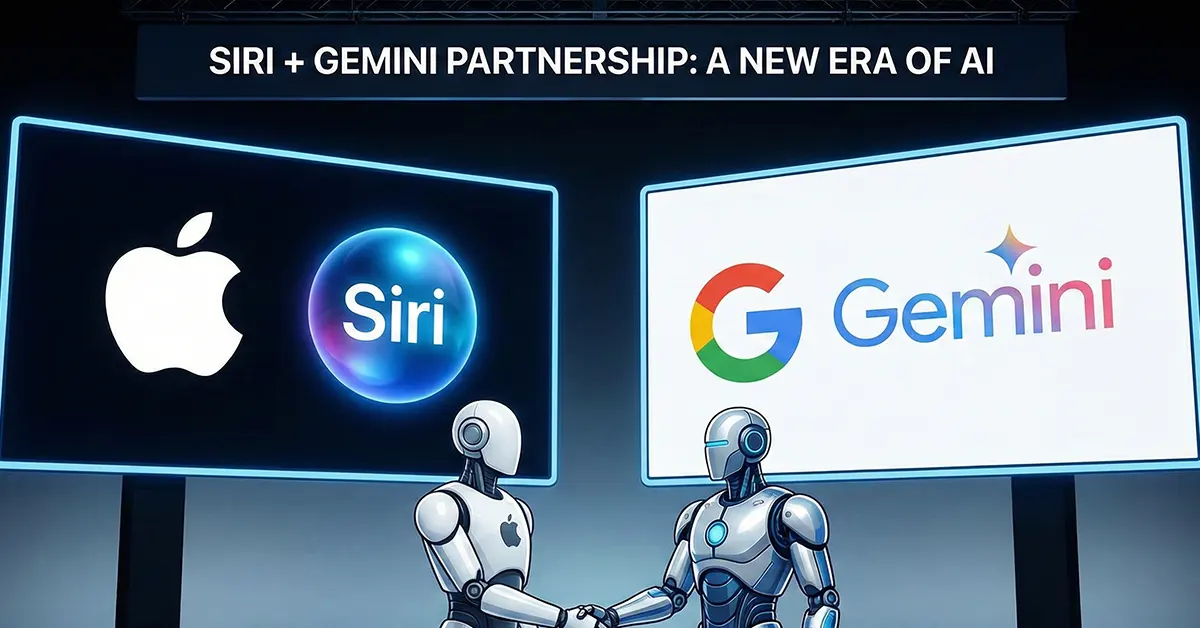

If you have been waiting for Gemini-powered Siri to finally feel like the assistant Apple teased at WWDC 2024, this announcement is the biggest sign yet that the long pause is turning into a proper push. Apple and Google say they have entered a multi-year collaboration where the next generation of Apple Foundation Models will be based on Google’s Gemini models and cloud technology. The aim is to unlock future Apple Intelligence features, including a more personalised Siri expected later this year (2026).
In This Article
What was announced, in simple terms
This is not “Siri is now Google.” It is closer to: Apple is choosing a powerful underlying AI foundation and pairing it with its own system-level design.
Read Also: Samsung is running Super Big Republic, Super Big TV, offering a complimentary soundbar
Apple says it evaluated options and decided Google’s AI technology offered the most capable foundation for Apple Foundation Models. At the same time, Apple says Apple Intelligence will continue to run on Apple devices and through Private Cloud Compute, with its privacy standards intact.
Call it the Apple Google AI deal that wants two things at once: better answers and fewer privacy headaches.
Why the timing matters
Apple showcased a more capable Siri at WWDC 2024, hinting at features that sounded genuinely useful, not just flashy:
-
Understanding personal context to answer questions more naturally
-
Taking precise actions in apps, not just opening them
-
Handling follow-ups without making you repeat every detail
But the rollout has felt slower than a Monday morning software update. Reports over the past year have suggested the personalised Siri upgrade needed more time, with expectations sliding into 2026. This partnership reads like a strategic shortcut: borrow proven AI infrastructure, then ship the experience in Apple’s style.
What “Apple Foundation Models” means for users
Foundation models are the big brains that power smaller, user-facing skills. They are the reason an assistant can summarise, rewrite, reason, and act. If the foundation is stronger, the features built on top usually become:
-
More accurate with fewer weird guesses
-
Better at multi-step requests
-
More consistent across topics and languages
In practical terms, the Apple Foundation Models shift could show up as Siri being less of a “voice remote” and more of a reliable daily tool.
The privacy promise, and what it implies
Apple is clearly trying to keep the privacy narrative clean. The company says Apple Intelligence will keep running on-device where possible, and use Private Cloud Compute when heavier processing is needed.
That matters because “more personalised” can sound like “more data-hungry” to the average user. Apple’s message is essentially: personalisation is not an excuse for sloppy data handling. This is the Apple Intelligence privacy angle in one line: smarter does not have to mean nosier.
Read Also: Redmi Pad 2 Pro 5G goes on sale for the first time in India
What we still do not know (yet)
Even with a big headline, the fine print is still missing. Key unanswered questions include:
-
Which Siri requests will rely on Gemini-backed foundation layers versus Apple-built models
-
How the experience will be explained to users inside settings and permissions
-
Whether the integration changes anything across regions, languages, or devices
-
How much of this is “cloud-first” versus “device-first” in real-world use
And yes, people will ask about money. There has been reporting about large annual payments and model scale, but the companies have not publicly confirmed commercial terms in detail.
This partnership feels less like a surprise friendship and more like a deadline decision. If Apple can ship a genuinely helpful, genuinely personal Siri in 2026 without turning privacy into a footnote, most users will not care whose tech helped under the hood. They will just be happy Siri finally stops playing catch-up.


