


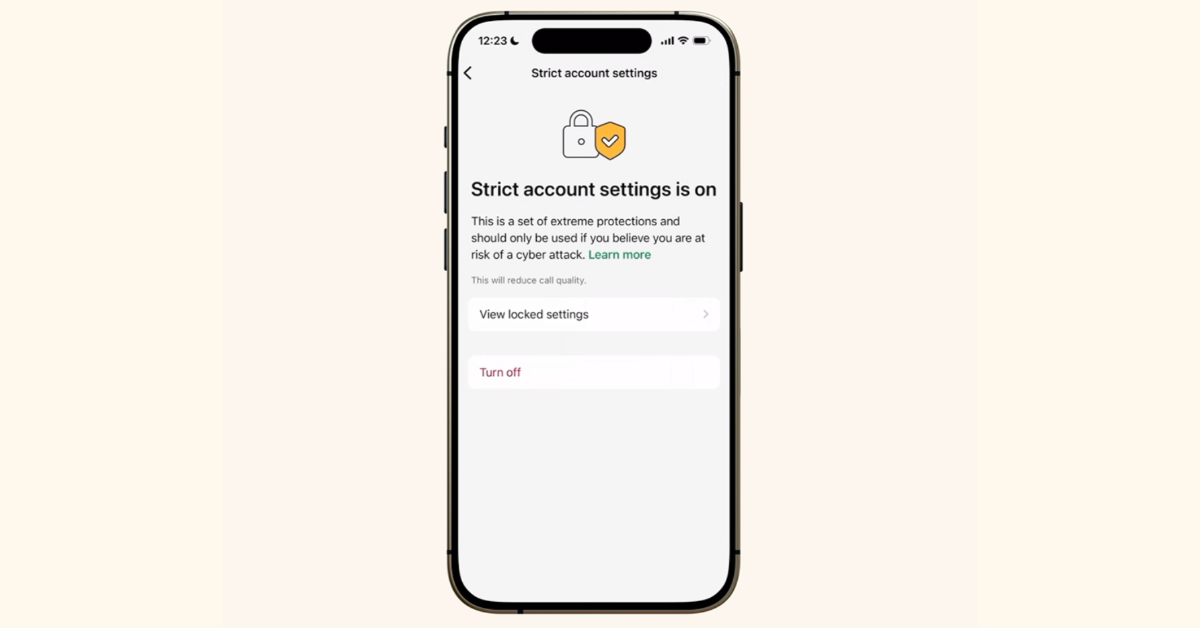
WhatsApp is adding a feature called Strict Account Settings to make it safer for people who are likely to be targeted by cyberattacks, especially journalists and public figures. This feature locks accounts at the highest level of security, so users can’t get media and attachments from people who aren’t contacts. WhatsApp has also added Rust to make media more secure.
“Strict Account Settings”, a new feature from WhatsApp, is intended to improve account security for accounts that are especially vulnerable to sophisticated cyberattacks. This function is intended for people who might be particularly vulnerable to security risks, such as public figures and journalists.
This new lockdown-style tool makes WhatsApp safer by letting users instantly turn on the most restrictive account settings. Users can automatically block attachments and media from unknown senders, silence calls from individuals they don’t know, and change other settings that might affect how the application works. You will be able to use the Strict Account Settings feature in the next few weeks. To turn it on, go to WhatsApp Settings, then Privacy, and then Advanced Settings.
Also Read: Samsung Galaxy S26 Ultra to come with a new layer of privacy: The company confirms
Strict account settings are an additional layer of protection for those who may need to take serious measures to keep their accounts safe from advanced attacks in a digital world where privacy is becoming more and more important.
The company, via a blog post, said, “Strict Account Settings is one of the many ways we’re working to protect you from the most sophisticated cyber threats.”
WhatsApp’s core service is a comprehensive security system that includes default end-to-end encryption for personal communications, guaranteeing that messages and calls are kept private.
Also Read: You can now place and track orders on Swiggy using ChatGPT, Gemini and other AI chatbots
WhatsApp has added Strict Account Settings to make it harder for hackers to get into your account. They have also added Rust, a memory-safe programming language, to protect your photographs, videos, and messages. The transition involved substituting 160,000 lines of C++ code with 90,000 lines of Rust code, which made the program run faster and use less memory. The goal of the upgrade is to keep media sharing safe and consistent across devices. Control flow integrity (CFI), toughened memory allocators, and improved buffer handling APIs are some of the extra protections that have been put in place. Developers have gone through special training and automated security assessments, and there are tight Service Level Agreements (SLAs) in place to deal with problems that come up during risk identification.


