


Key Takeaways
- Xreal has launched a new sub-brand called X By Xreal (XBX), with its debut product being the a01 AR glasses, designed to be the lightest and brightest the company has ever made.
- Priced at $299, the XBX a01 aims to be an accessible entry point into Xreal's AR ecosystem, featuring a lightweight nylon body (62 grams) and an industry-leading perceived brightness of 1,600 nits with HDR10 support.
- The a01 utilizes dual-layer Sony MicroOLED panels and supports real-time AI SDR-to-HDR conversion, offering a 50-degree field of view equivalent to a 147-inch screen from four meters.
Xreal has quietly been building one of the most compelling lineups in wearable tech, and now the company is taking its boldest step yet. The Chinese AR glasses maker has announced a brand new sub-brand called X By Xreal, also going by the acronym XBX, and its debut product is the a01, the lightest and brightest AR display glasses the company has ever made. At $299, the X By Xreal a01 affordable AR glasses are positioned as the accessible, everyday entry point into Xreal’s growing wearable display ecosystem. They are already available in China, with a US launch confirmed for July 2026.
In This Article
A Sub-brand That Does Not Mean a Step Down
You might assume a cheaper sub-brand means cheaper everything. Xreal is eager to correct that assumption. The company insists the a01 is not a budget compromise, pointing to two headline specs that stand out in the category. Weighing in at just 62 grams with an ultra-light nylon body, the a01 claims the title of the lightest AR display glasses on the market right now. It also boasts an industry-leading perceived brightness of 1,600 nits, with HDR10 support across 14 brightness levels. That combination is genuinely unusual for this price range.
The display system relies on dual-layer Sony MicroOLED panels, a dedicated image enhancement chip, and support for 1.07 billion colours. The glasses deliver a 50-degree field of view, which Xreal says translates to the visual equivalent of a 147-inch screen viewed from about four meters away. It also supports real-time AI SDR-to-HDR conversion, so even older content gets a cinematic visual upgrade on the fly.
Spatial Anti-Shake: A Feature Built for the Commuter Age
One of the more interesting technical additions in the a01 is its spatial anti-shake algorithm. AR display glasses typically struggle when you’re wearing them on the move. The a01 addresses this directly with a new stabilisation system designed to keep the image smooth and clear on commutes, flights, train rides, and subway journeys. Xreal describes it as a meaningful step forward over other anti-shake approaches in the market, reducing motion blur and improving image clarity in dynamic environments. For the target audience of business travellers and commuters, that is not a minor detail.
Customisation That Goes Beyond Colour Options
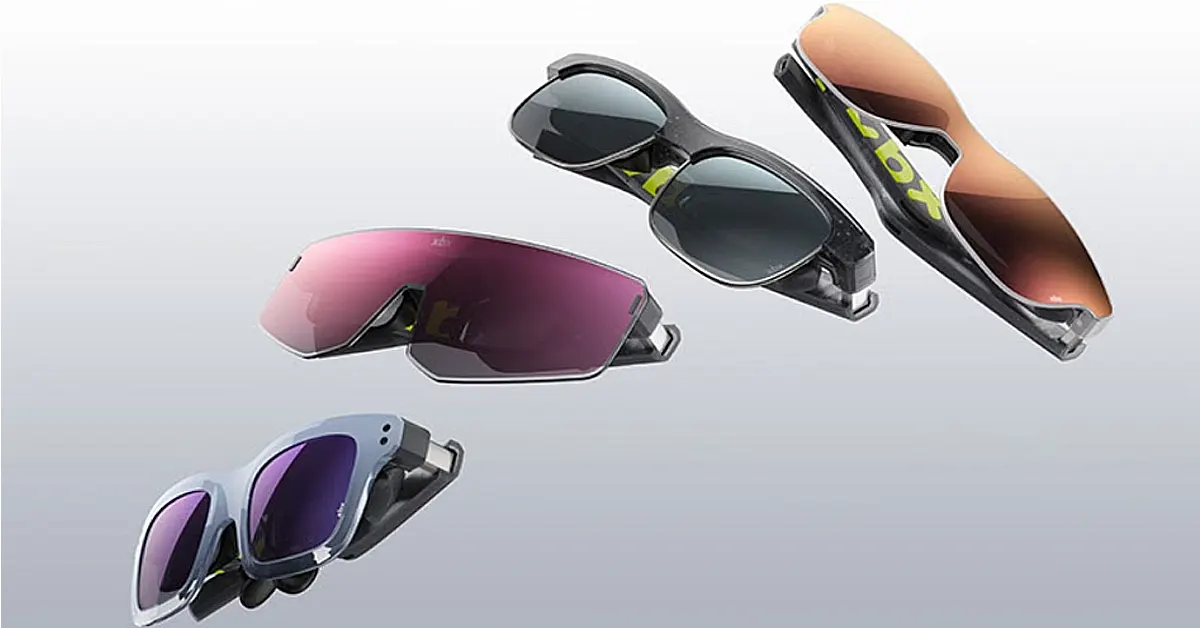
The a01 also tries to stand out on the style front. It comes with an interchangeable front-frame design, allowing users to switch between a transparent mode and a fully immersive dark mode, or simply swap frames to match an outfit or mood. Xreal adds that users who are comfortable with 3D printing can design and print their own custom front-frame accessories. The frames sit on a flexible temple and adjustable nose pad system in three sizes, making the fit more versatile than many rivals. The semi-transparent body gives the glasses a distinctly modern, slightly futuristic look without going full cyberpunk.
Where XBX Fits in the Xreal Universe
Xreal is clearly engineering a tiered product strategy. At the top of the range, the company recently showed off its Project Aura glasses at Google I/O, built on Android XR, equipped with multiple cameras, and targeting power users who want full spatial computing. The Xreal One Pro, launched earlier this year, carries a $650 price tag and offers a 57-degree field of view along with Bose audio. The XBX a01 sits firmly at the other end, stripped of cameras and Bose audio to keep things light and affordable, but still competitive where it matters most: screen quality and wearability.
The a01 is being pitched at what Xreal calls the “pocket cinema” crowd. That includes portable gamers, long-haul travellers, people who want a private big-screen experience on a plane, and commuters who are tired of squinting at a phone screen in a crowded carriage. With no cameras on the frame, the glasses also sidestep privacy concerns that follow camera-equipped wearables everywhere they go.
US Pricing, Availability and What to Expect
The X By Xreal a01 is currently available in China at approximately CN¥1,799, which works out to roughly $265 at current exchange rates. The US launch is set for July, with pricing confirmed at $299. Xreal has not yet detailed exact retail availability, but given the company’s existing US distribution through its own website and major retail partners, a smooth rollout is expected.
There is, it should be noted, one mildly amusing footnote to all of this. The XBX name bears an uncanny resemblance to a certain well-known gaming console acronym. Xreal was previously called Nreal before a trademark dispute with Epic Games forced a rebrand in 2023. Whether XBX will attract similar scrutiny as the brand expands westward remains to be seen.
Read Also: DailyObjects NODE Is Here, and Your Charging Setup Will Never Be the Same
A Smart Play at a Surprisingly Good Price
Honestly, $299 for AR glasses with 1,600 nits of brightness, Sony MicroOLED displays, HDR10, real-time AI upscaling, and spatial anti-shake is a harder offer to dismiss than most launches in this category. The XBX a01 will not replace your VR headset, and it will not give you spatial computing on the go. But for a commuter who wants a private widescreen cinema experience without spending $650, it might just be the most sensibly priced wearable display of the year. Sometimes the best gadget is not the flashiest one. It is the one you can actually afford to put on your face.


