



Key Takeaways
- WhatsApp has launched a new username feature allowing users to create a handle instead of sharing their phone number, but there are significant risks of scams and impersonation.
- Security experts and governments, including India's Ministry of Electronics and Information Technology, have warned that the username feature could increase online fraud, phishing, and impersonation attacks.
- The ability to create lookalike usernames makes it easier for fraudsters to impersonate prominent individuals, celebrities, and institutions, potentially leading to investment and payment scams.
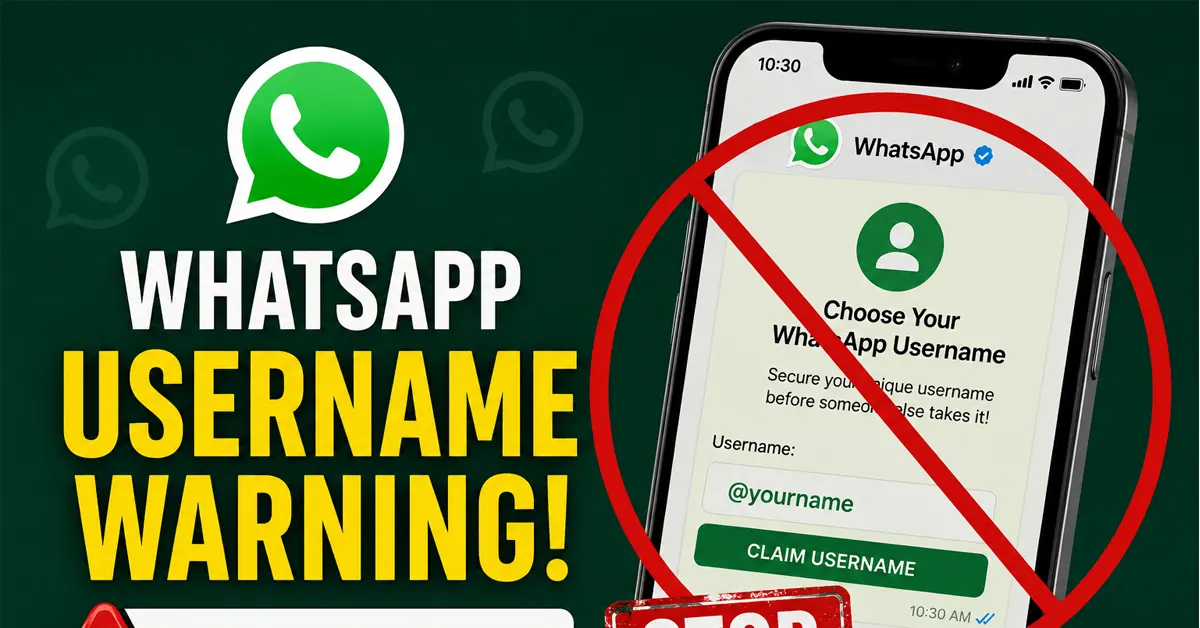
WhatsApp has finally joined the username party, and everyone is scrambling to reserve their perfect handle. Before you rush to grab yours, pause for a moment. The WhatsApp username scam risks are real, they are already being flagged by governments and security experts, and in our view, the smartest move right now is to simply not set one. That may sound dramatic for a feature marketed as a privacy upgrade, but the early evidence is hard to ignore.
In This Article
What Exactly Has WhatsApp Launched
In late June 2026, WhatsApp opened username reservations for its three billion-plus users, ahead of a phased global rollout later this year. The idea is simple. Instead of handing out your phone number to every new acquaintance, you share a handle like @yourname. Usernames must be 3 to 35 characters, use lowercase letters, numbers, periods and underscores, and be unclaimed across Meta platforms including Instagram and Facebook. There is also an optional four-digit username key that acts as a second lock on your inbox. On paper, it all sounds sensible. In practice, the WhatsApp username feature privacy concerns started piling up within 48 hours of the announcement.
Read Also: ARC launched a waitlist for its first handheld gaming gadget in India
The Impersonation Problem Nobody Can Ignore
Here is the uncomfortable truth about handles. Your phone number, for all its flaws, is a verification tool. When a message arrives, the number tells you something about who sent it. A username tells you nothing except what the sender wants you to believe. During early testing, journalists found handles resembling prominent politicians, Bollywood stars and even banking institutions still available to reserve, including variations that referenced the Indian Prime Minister and the RBI. That should send a chill down anyone’s spine.
Entrepreneur Ankur Warikoo publicly called the rollout a potential disaster without strong anti abuse systems, pointing out that fraudsters could register near identical variations of well known names to run investment and payment scams. Paytm founder Vijay Shekhar Sharma raised a similar worry, noting that verified handles sitting next to lookalike unverified ones will confuse ordinary users. Even Binance founder Changpeng Zhao reported he could not reserve his own famous handle, which means anyone messaging people under that name is almost certainly not him.
Why India Hit the Brakes
This is exactly why the advice to avoid WhatsApp usernames is coming from the very top. On July 1, India’s Ministry of Electronics and Information Technology sent WhatsApp a formal notice warning that the feature could materially increase online fraud, phishing, digital arrest scams and impersonation attacks, and asked the company to pause the WhatsApp username rollout India wide until consultations conclude. When the government of the app’s largest market, home to over 500 million users, tells Meta to hold on, casual users should probably listen too.
The Mozilla Foundation has flagged increased scams from fake handles as a major tradeoff, while security researcher Rachel Tobac cautioned that identity verification becomes trickier once usernames enter the picture. Cybersecurity analysts have also warned about fake customer support accounts and fraudulent business profiles built entirely on WhatsApp username impersonation fraud danger.
Read Also: vivo X300e Leak Reveals Snapdragon 8 Gen 5 and a 7,100mAh Battery in a Sub-8mm Body
But Does It Not Protect My Phone Number?
Yes, and that is the genuinely good part. Hiding your number from strangers has value. However, there is a flip side. Usernames make you searchable. Anyone who knows or guesses your handle can attempt contact without ever needing your number, which opens a fresh channel for fake WhatsApp username phishing attacks. Meta says it will limit how many new people an account can message, block repeated guessing attempts, and reserve high-profile names for their rightful owners. Those safeguards sound reasonable, but they are untested at the scale of three billion users, and scammers have historically outpaced platform defences.
Final Thoughts
Skip the username, at least for now. The privacy benefit is modest, the scam surface is enormous, and the feature is optional anyway. Let the early adopters be the crash test dummies while Meta irons out impersonation controls and India finishes its consultations. If you absolutely must reserve a handle to stop squatters, fine, grab it and then do not activate discovery, enable the username key, and treat every unknown handle in your inbox like a stranger knocking at midnight. The best WhatsApp username safety tips 2026 can offer boil down to one line. Your phone number was never the problem, misplaced trust is, and usernames just gave that trust a brand new costume.


