


Poco has refreshed its X8 series with 2 new models – X8 and X8 Power. The 2 variants join the X8 Pro and X8 Pro Max (our review here) in the lineup. At a time when smartphone prices are going through the roof, Poco’s midrange offerings still manage to offer a bang for the buck. The newly launched X8 Power packs a massive 10,000mAh battery under its hood, flaunts a 6.83-inch AMOLED display with impressive 3,500 nits of peak brightness, and has the respectable Snapdragon 6 Gen 5 chipset at the helm. We used this smartphone for a week to investigate whether it is the best deal in the sub-Rs 40,000 price bracket right now. Here is our review of the Poco X8 Power.
Read Also: Poco M8 Power 5G Review: Lasts Long, Really Long
In This Article
Poco X8 Power Review: Design and Display
Box Contents
- Smartphone
- 100W power adapter
- USB-A to USB-C cable
- Silicone cover
- SIM ejector
- Quick start guide
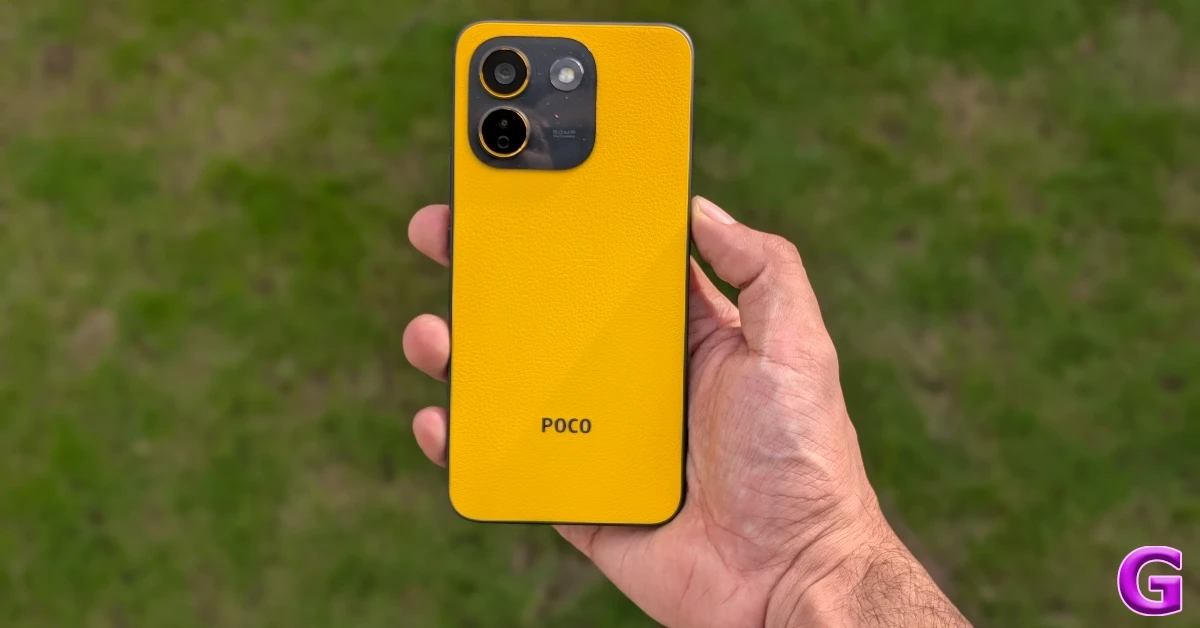
The X8 Power gets Poco’s signature black-and-yellow colour treatment. Its faux leather back has a nice in-hand feel and does not collect smudges or fingerprints. The ‘Poco’ lettering is etched at the bottom of the panel. The blacked-out camera island has individual cutouts for the primary and ultrawide lenses. These cutouts have a shiny gold border. Even though the device has a 10,000mAh battery, it does not feel beefy. With a thickness of 8.6mm, it does not feel bulkier than an average smartphone. Its 229g weight is certainly on the heavier side, but we got used to it pretty quickly.
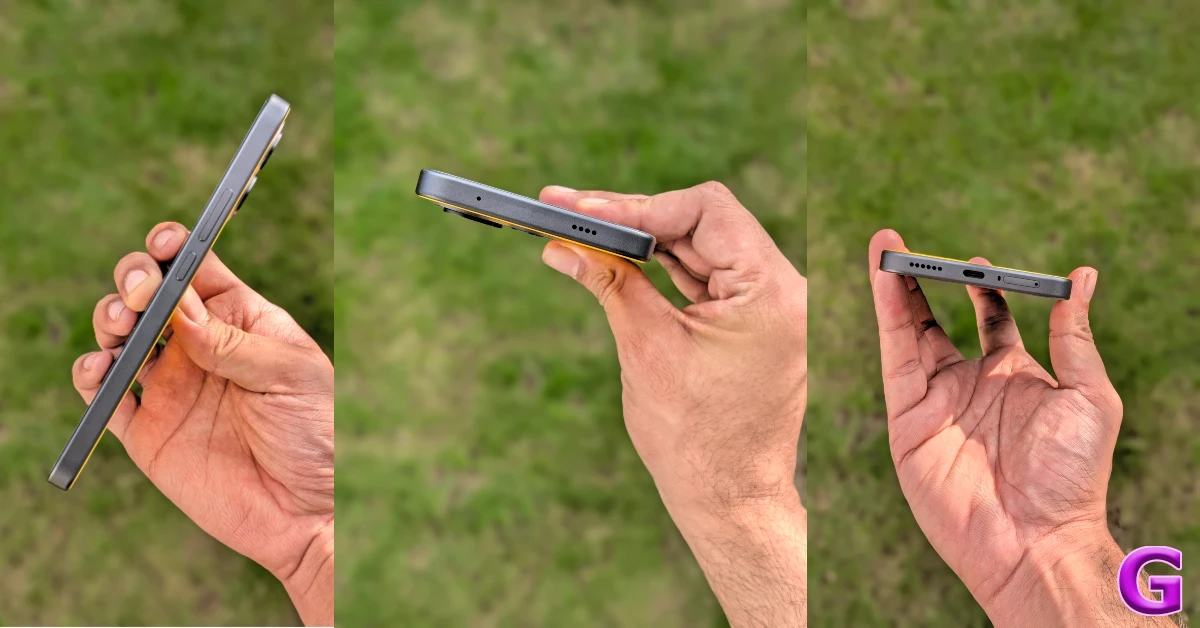
The black colour of the plastic rails goes nicely with the yellow back panel. The frame houses the volume rocker and the side button on its right edge. The SIM tray, microphone, and primary speaker grille are placed at the bottom. Up top, lie the secondary speaker grille and noise-cancelling microphone. The smartphone is rated IP69/IP69K for dust and water resistance. It can survive exposure to high-pressure water jets and is immersible in water up to 2 metres for 30 minutes. While it doesn’t have an official military-grade durability rating, Poco says the X8 Power is drop-resistant up to 3 metres.
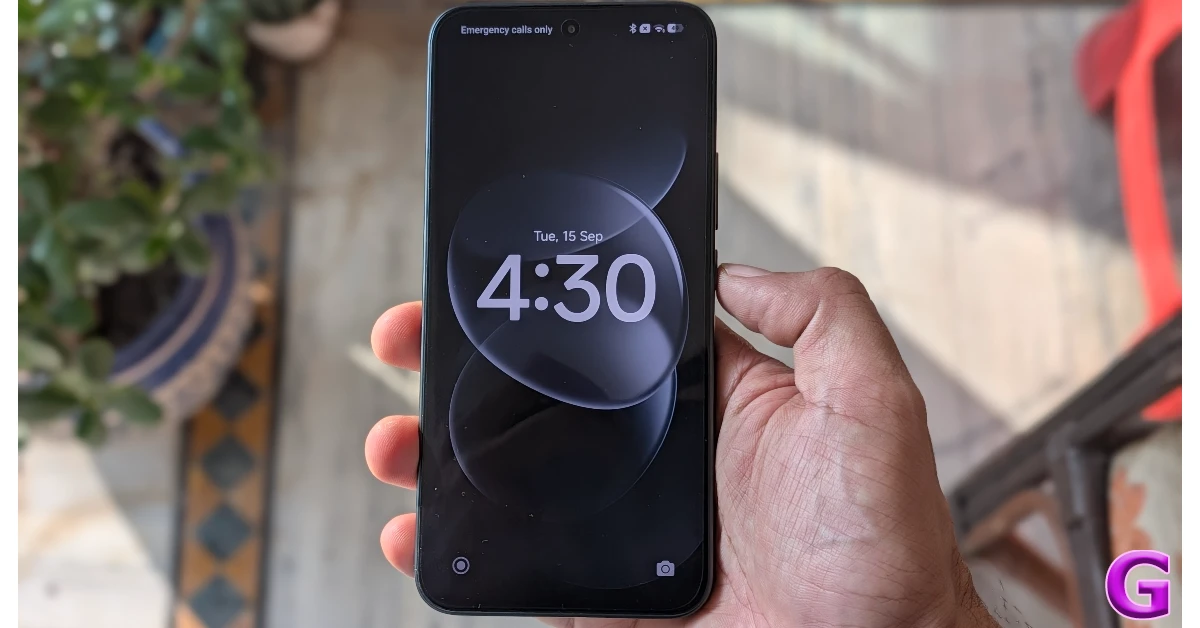
The 6.83-inch AMOLED display can hit a peak brightness of 3,500 nits while playing HDR content. In High Brightness Mode, it can reach up to 2,000 nits, maintaining optimum clarity under harsh sunlight. Its 120Hz refresh rate lends it a satisfying smoothness. The touch response is very smooth as well. The under-display optical fingerprint sensor works fine. The bezels surrounding the screen are thin and uniform.
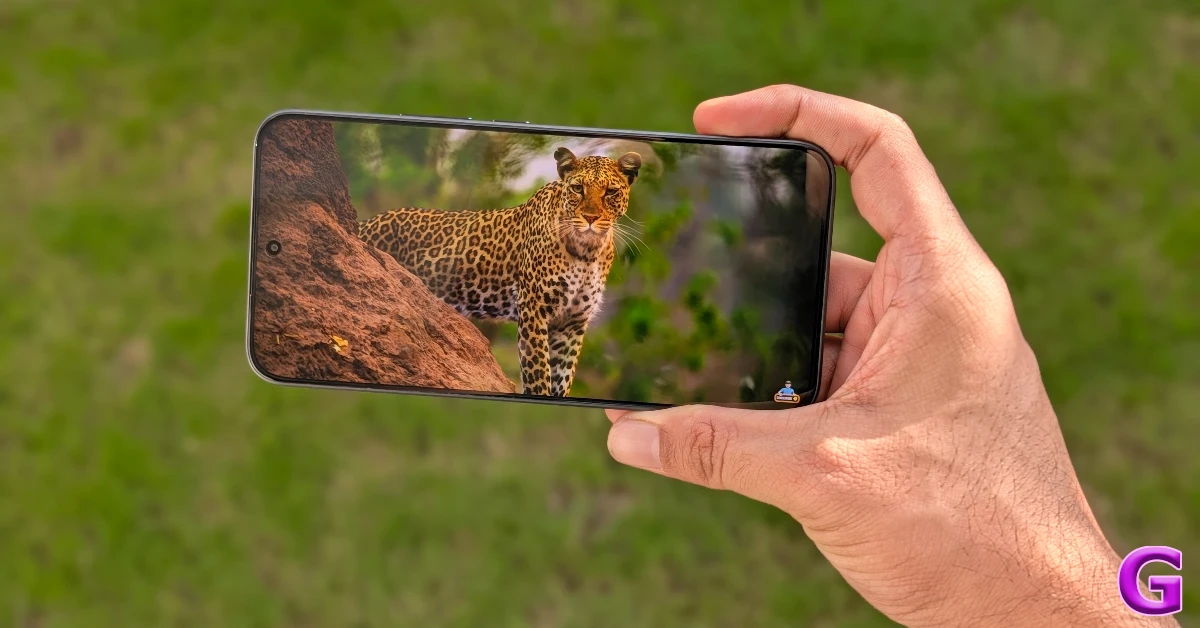
When it comes to the viewing experience, the Poco X8 Power towers over most of its peers. The 1.5K 12-bit AMOLED panel supports HDR10+ and produces sharp, vibrant, and rich visuals with a punchy contrast. This performance remains consistent across every major streaming app. The dual speaker setup produces a loud, well-rounded audio output.
Poco X8 Power Review: Performance and Cameras
The Snapdragon 6 Gen 5 chipset lies at the heart of the X8 Power. It is equipped with 8GB LPDDR5X RAM and comes in 2 storage options:
- 128GB (UFS 2.2): Rs 35,999
- 256GB (UFS 4.1): Rs 38,999
We ran a couple of benchmark tests on the smartphone. Here’s how it performed.
- AnTuTu 3D: 1,036,884
- Geekbench 7: 953 (single-core) | 3,001 (multi-core)
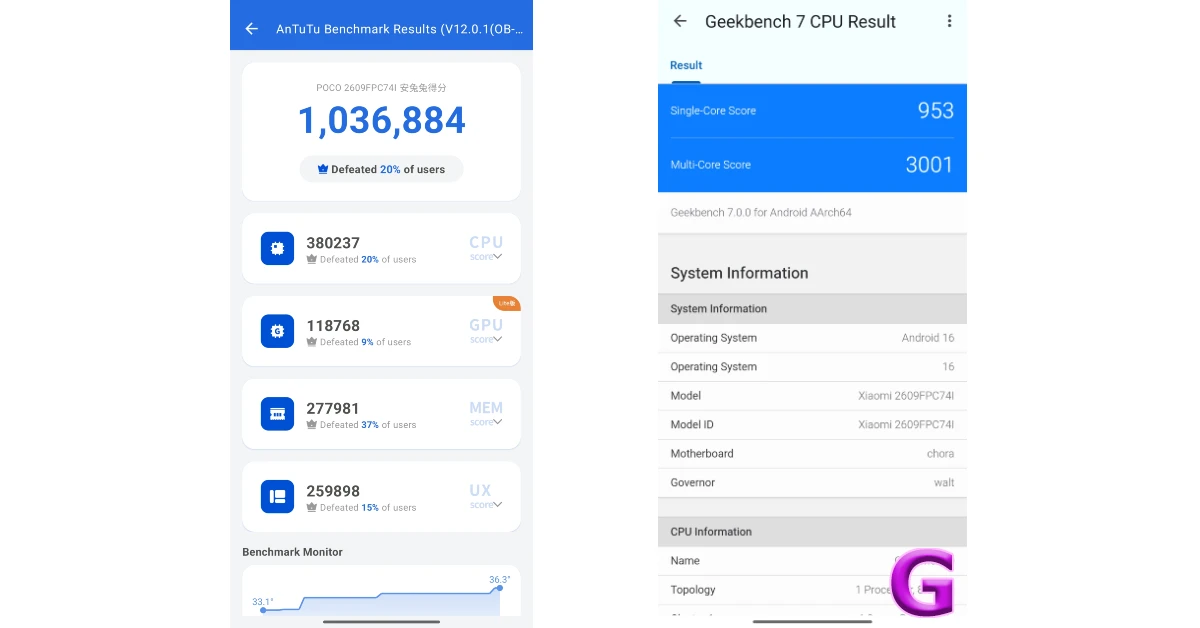
While the Snapdragon 6 Gen 5 chip isn’t the most powerful one in this category, it does quite well while handling routine tasks like calling, texting, media streaming, web browsing, and navigation. You won’t ever find yourself needing more power in everyday use. The apps load instantly, and the LPDDR5X RAM does a fine job of juggling a bunch of them together. The vibrational feedback produced by the haptic motor is a bit blunt, but that is a nitpick on our end.
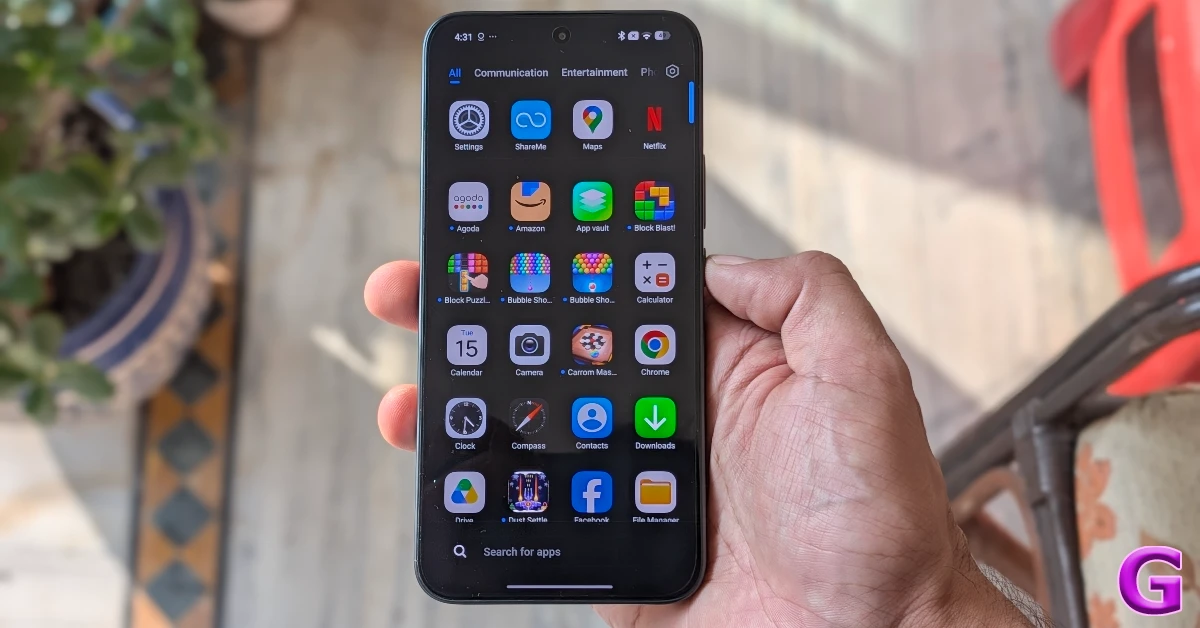
The Poco X8 Power can run titles like BGMI and Call of Duty Mobile, although we recommend limiting yourself to medium graphics and frame rate for a smooth gameplay experience. We did not come across any unwarranted stutters or frame drops during our time with the device. The internal cooling system did a good job of managing the heat generated by the device. We felt the first signs of warmth along the back panel after crossing the 15-minute mark.
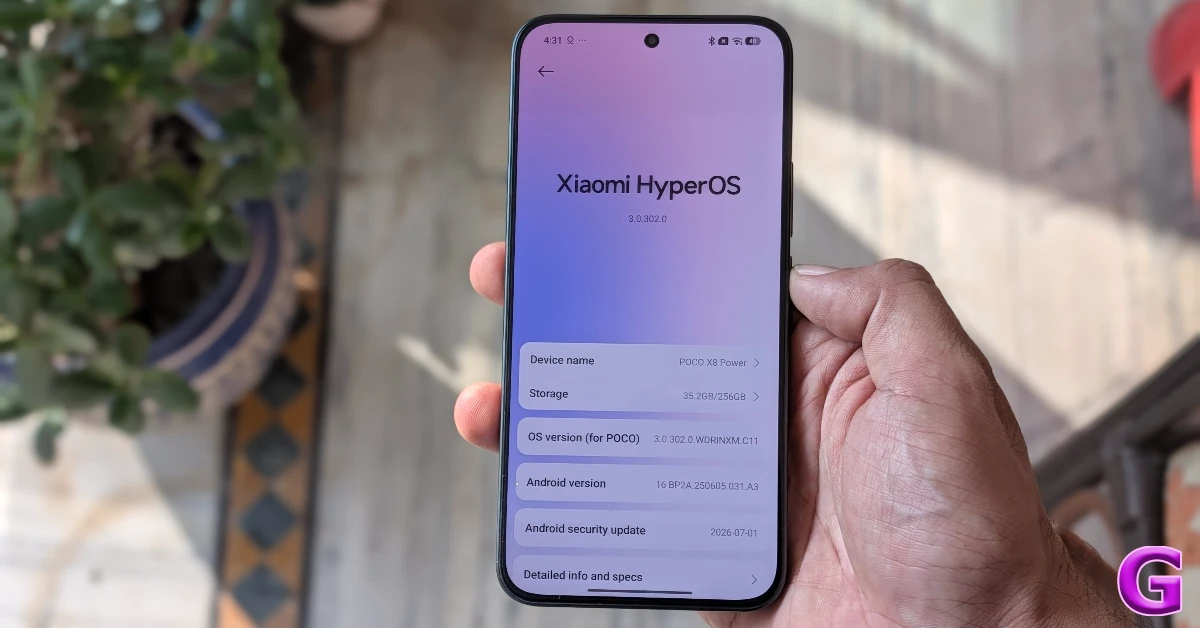
Software duties on this device are handled by Android 16 out of the box. Xiaomi’s HyperOS 3 skin brings its own unique flavour into the mix. There are some bloatware apps and games on the phone, but they can be completely uninstalled. Poco has promised 4 major OS updates and 6 years of security patches for the X8 Power, which is a pretty good deal in this price bracket.
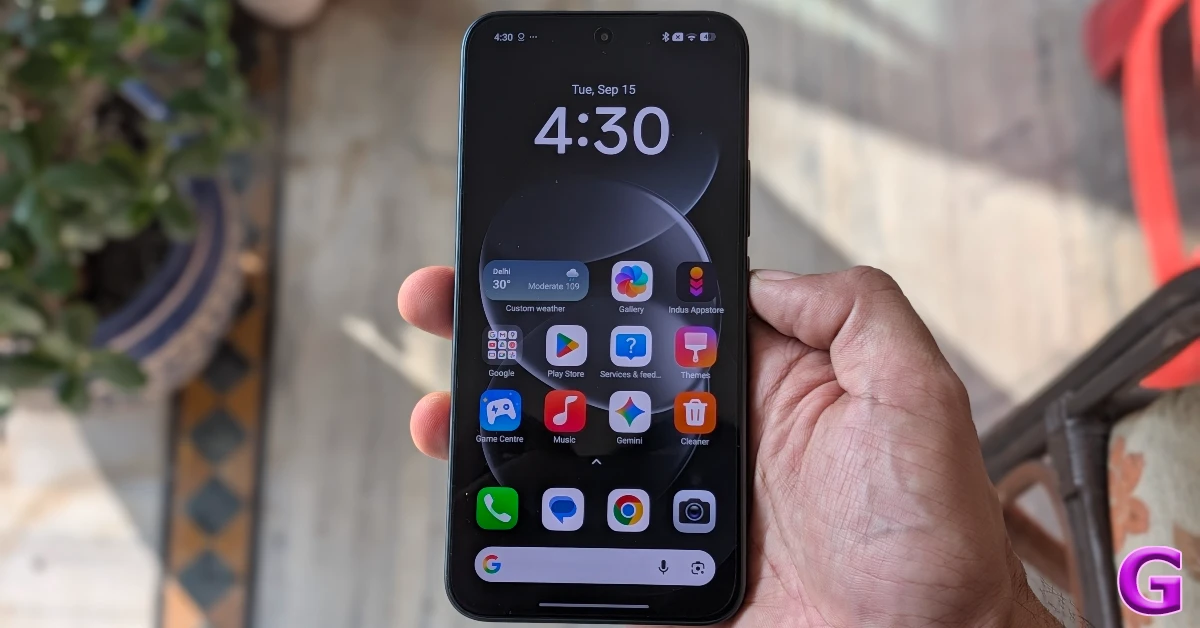
The HyperOS 3 skin is vibrant and light. It feels well-optimised for the platform. Over the years, Xiaomi has perfected the aesthetics of its UI. You do notice some iOS influence on a couple of elements (lock screen and quick settings), but it has been executed tastefully, so we don’t have any complaints. We really like the customisation options on offer for the lock screen and home page. The native wallpaper library has a lot of exciting stills. The ‘AI Dynamic Wallpapers’ have a nice motion effect to them, which works well on the lock screen. You can save multiple lock screen/home page combinations and switch them up whenever you like. You also get a good range of customisable AOD presets.
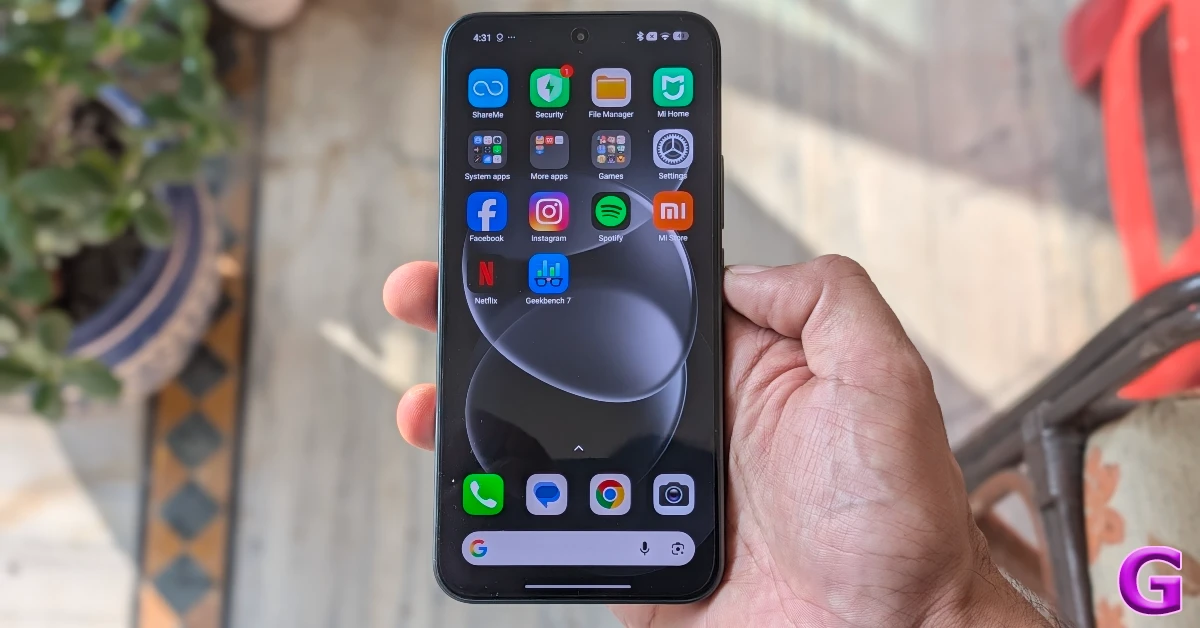
The X8 Power does not have a central ‘Xiaomi HyperAI’ suite, but you do get tools like AI Writing and AI Translator for everyday tasks. The former can come up with drafts, essays, and emails, while the latter can translate your calls. On top of that, you get Google’s Circle to Search and Gemini Assistant. There’s a ‘Heart Rate’ tool tucked away in Additional Settings, that uses the LED flash and primary camera to calculate your current heart rate.
The massive 10,000mAh Si/C battery is what earns this smartphone its ‘Power’ moniker. This battery pack stores enough juice to last up to 2 days of regular use. On days with 4-5 hours of screen time, we were left with a solid 40-45% charge still in the tank. The 100W power adapter provided in the box took up to an hour to fully charge the phone, which is a pretty impressive feat when you take the battery size into account. The device also supports 27W reverse wireless charging.
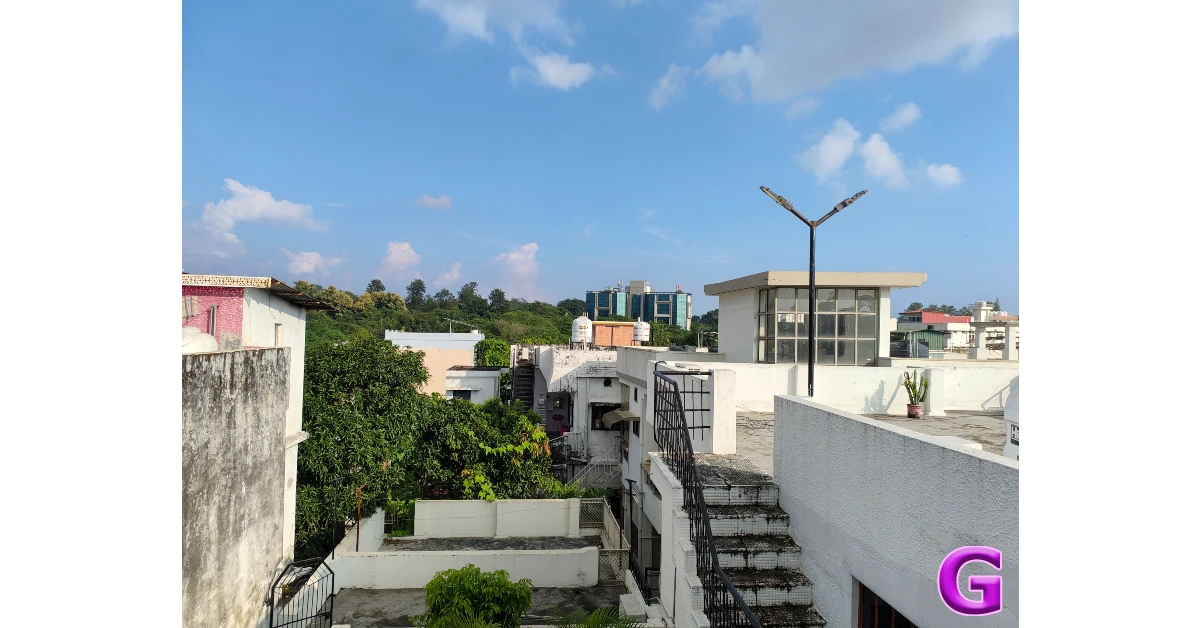
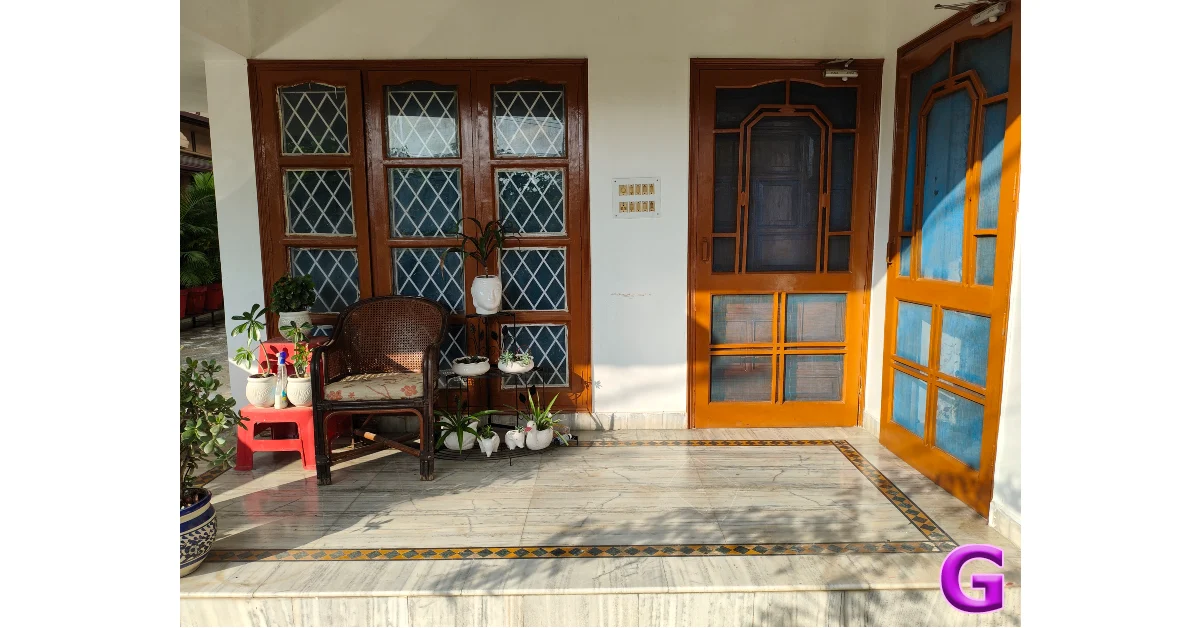
The rear camera island houses a 50MP primary shooter and an 8MP ultrawide lens. A 32MP selfie lens is nestled inside a punch-hole cutout on the display. The primary shooter captures stunning shots in outdoor daylight conditions. The pictures look vibrant without losing their natural feel. The sharpness of these shots sets them apart from other phones in this category. The contrast and dynamic range are on point too. In limited lighting conditions, the Night Mode does a good job of artificially lighting up the shot and reducing the noise.
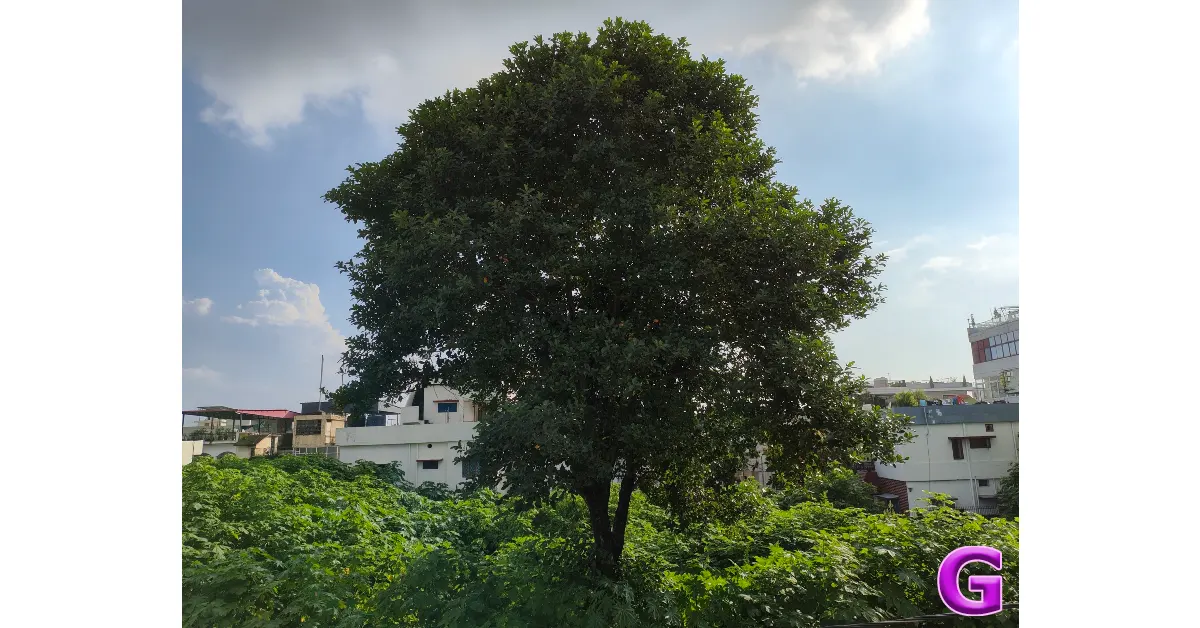

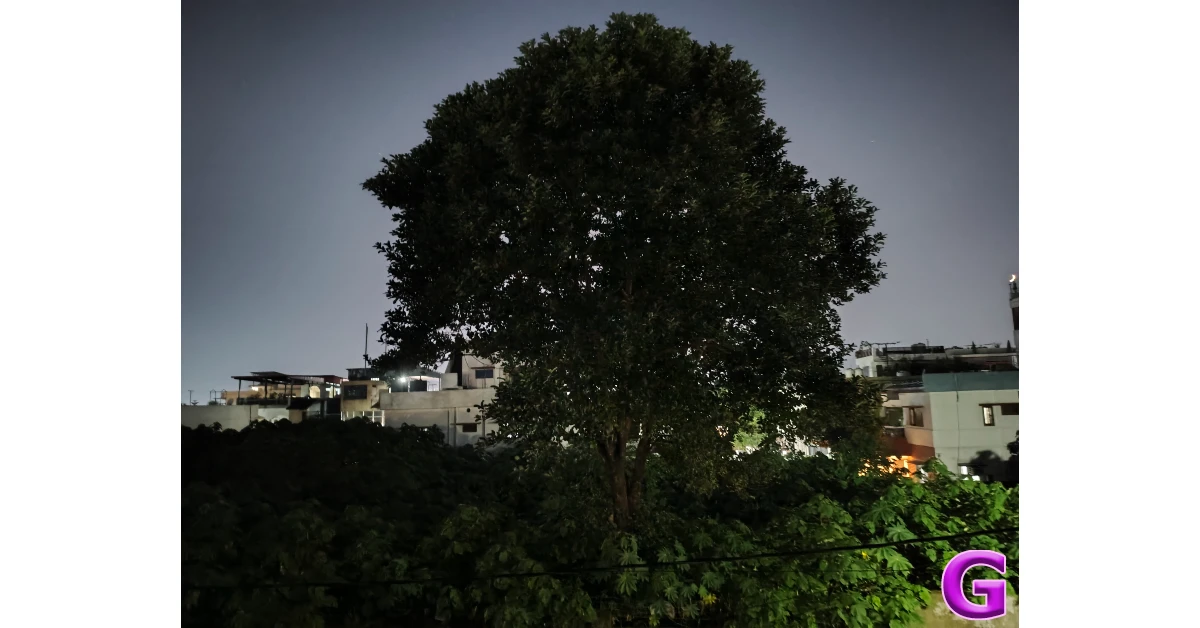
Images captured using the ultrawide lens are a tad soft, but their colour tone is on point. In outdoor daylight conditions, we had no issues handing over the reins to this sensor while taking wide shots. The smartphone did the necessary things behind the scenes to ensure that the ultrawide images look as close to their primary sensor counterparts as possible. In limited lighting conditions, the images looked a bit grainy, but still passable.



The Portrait Mode in the native Camera app offers 2 focal length options – 26mm and 52mm. The portraits are vibrant, well-focused, and ‘poppy’, but the strength of the background blur leaves more to be desired. The 32MP front-facing camera captures clear and detailed selfies. This camera, along with the primary shooter, can record 4K videos at 30fps. Meanwhile, the ultrawide lens can only shoot 1,080p footage at 30/60fps.

Read Also: Sony Bravia Theatre Bar 7, Sub 8 and Rear 8 Review: Small Soundbar System, Big Cinema Audio
Verdict
Given the current turbulent status of the midrange smartphone market, the Poco X8 Power is one of the best deals under Rs 40,000 right now. It checks all of the important boxes for us – a vibrant and smooth display, a processor that doesn’t buckle under pressure, a fun and lively main camera, and a battery pack that can last more than a day. On top of that, the software experience is quite intuitive and satisfying, even though it misses out on flashy AI features. We would have liked stronger gaming performance from this phone, but for casual users, the X8 Power is an easy recommendation from us.
Pros
- Bright display
- Fun design
- Great main camera
- Big battery
Cons
- Not the best phone for gaming


