


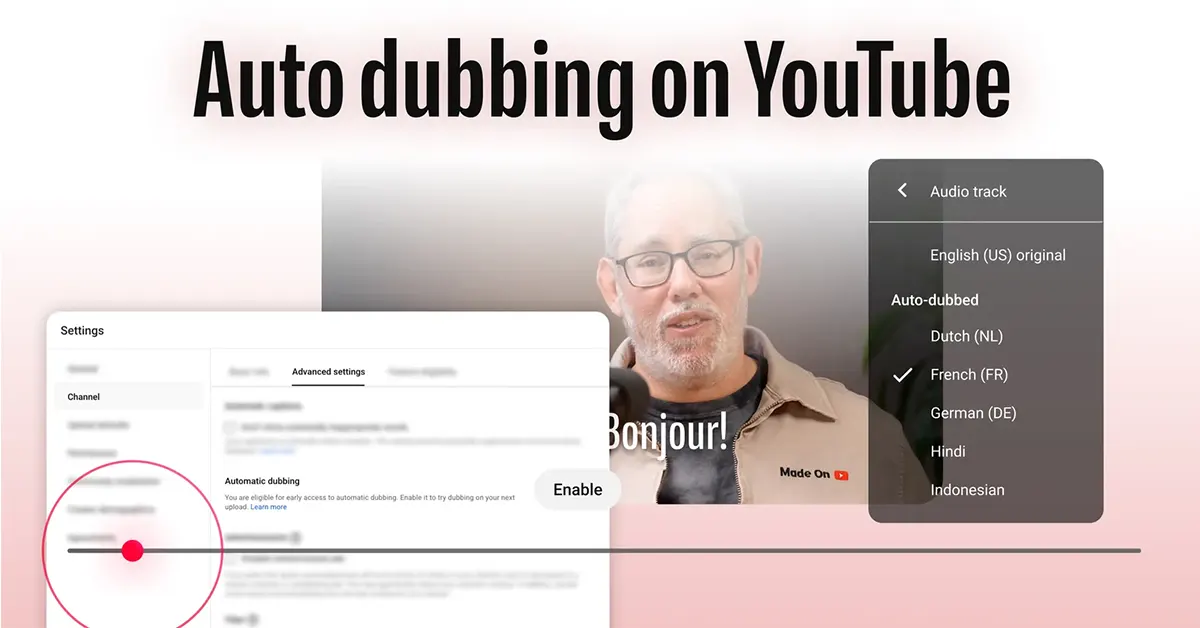
If you have ever clicked on a brilliant video from another country and bounced because your brain did not feel like translating today, YouTube wants to remove that friction. YouTube auto dubbing is now rolling out more broadly with upgrades aimed at one goal: make global videos feel local the moment you hit play.
The biggest change is scale. YouTube says auto dubbing is now available broadly, with an expanded library of 27 languages. The company also shared an adoption datapoint, noting that in December, it averaged more than 6 million daily viewers who watched at least 10 minutes of auto-dubbed content.
In This Article
More languages are nice, but better voices are the real flex
More languages help you reach more people. More natural voices help you keep them.
YouTube is now introducing an “Expressive Speech” upgrade in eight languages: English, French, German, Hindi, Indonesian, Italian, Portuguese, and Spanish. The intent is simple. Preserve emotion and energy so a creator does not sound like they are reading their own script in a waiting room.
Read Also: Haier Lumière Colourful 4-Door Refrigerator Range launched in India
For creators, this matters because the number one complaint about AI dubbing is not translation accuracy. It is vibe accuracy. If expressive delivery improves, watch time usually follows.
Viewers get a steering wheel, not just a passenger seat
Dubbing is helpful until it is not. Some viewers want the original voice. Others want the dub every single time.
YouTube is adding a Preferred Language setting designed for multilingual audiences and anyone who prefers the original language by default. YouTube already uses watch history to guess what you want, but this gives people a direct way to set their preferences.
Practical impact for viewers:
-
Less surprise dubbing when you wanted the original audio
-
More consistent playback choices across creators and regions
-
Better control for bilingual households where preferences vary
Lip sync is being tested to reduce the “bad movie dub” effect
Even when a dub sounds good, the visual mismatch can break immersion fast.
YouTube says it is testing a lip sync pilot that subtly matches a speaker’s lip movements to the translated audio. If it works well, dubbed videos could feel closer to native recordings, especially in talking-head content like explainers, podcasts, interviews, and tutorials.
Creator-side upgrades that aim to prevent awkward dubs
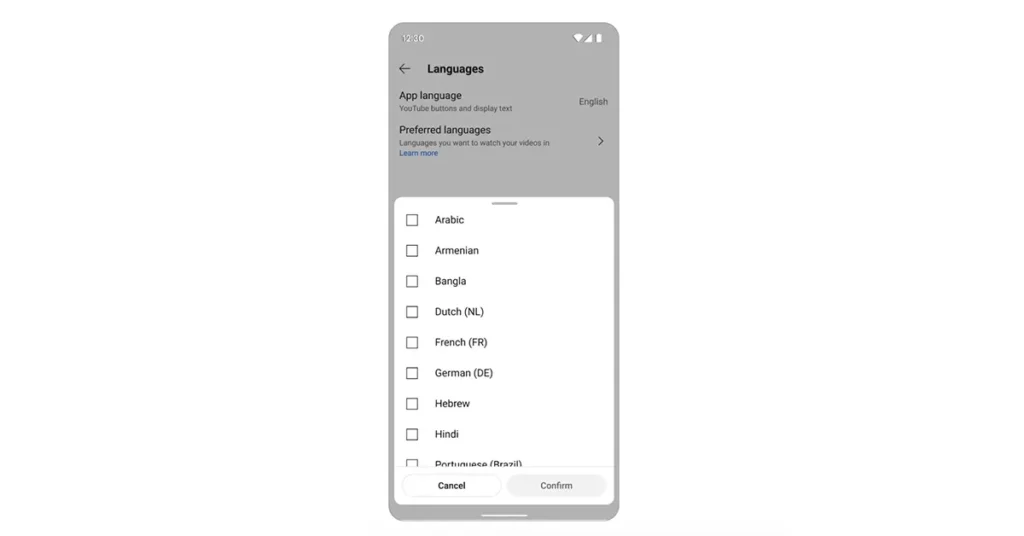
YouTube is also trying to make auto dubbing feel like an assist, not a risk.
Key creator controls and safeguards include:
-
Smart filtering for dubs that can detect when a video should not be dubbed, such as music-heavy content or silent vlogs, so the platform does not “help” in the wrong places
-
The ability to provide your own dubs or turn auto dubbing off entirely
-
A promise that auto dubs have no negative impact on the original video’s discovery, with potential upside for multilingual reach instead
That last point is especially important for creators who worry that experimenting with AI tools could confuse the algorithm. YouTube is clearly trying to lower that anxiety.
What this means for global discovery in 2026
If you cover tech, gaming, education, cooking, finance, or basically anything that travels well, the direction is obvious. YouTube is building a world where language is no longer a hard boundary for distribution. It also suggests a new baseline expectation for creators: if you want international audiences, you may not need a full localisation team to start. But you do need quality checks, because mistranslations and tone misses can still happen with automated systems.
Read Also: India’s New Baggage Rules 2026: Here is how to get an iPhone 17 and a new laptop in India duty-free
What we think
This is one of those features that sounds small until you watch the ripple effect. Auto dubbing can turn a “global audience” from a slide-deck dream into a weekly analytics reality. Still, the best outcome is not more dubs. It is a better dub. If Expressive Speech and lip sync reduce the uncanny valley, viewers win, creators win, and the comment section loses one common reason to fight.


