Are you looking for today’s Wordle answer for January 31, 2026? The problem is difficult to solve, so if you need assistance, we’ve included hints and the clue to today’s Wordle Quiz. Below, we have made it simple for everyone to understand how to get to the Wordle Answer today.
In This Article
Hints and Answers for Today’s Wordle January 31
Before answering directly, please check the Wordle Hints first.
Hint 1: Today’s Wordle answer includes two vowels. Hint 2: The answer for today has a repeating letter. Hint 3: Meaning- to give a share of work, time, etc. to somebody/something
What word does today’s Wordle begin with?
Do you need help with today’s Wordle answer’s initial letter?
The first letter in today’s Wordle is “A”
Today’s Wordle Answer
The answer to Wordle #1687 on January 31, 2026, is — ALLOT
Wordle: A Five-Letter Word Guessing Game • The game allows six guesses of a five-letter word. • Provide feedback on the guessed letters’ placement in the puzzle. • The New York Times purchased the game in 2022. • Created by Josh Wardle for his partner, narrowing down 12,000 English words to 2,500. • Named after the word “word.”
How To Play Wordle?
Wordle is a New York Times word puzzle game that allows users to guess a five-letter word in six attempts. The letters are highlighted in Yellow and Green, indicating whether the word is present in the answer or not, and Green letters indicate the correct guess.
Select a powerful starting word: Avoid using unusual words, as they frequently do not match common letters. A good opening word has plenty of benefits.
Repeating letters: Don’t be afraid of repeating letters; they appear frequently in words. The answer may contain one or two repeated letters.
Use the Wordlebot: The NYT’s Wordlebot analyses and compares replies to itself. This challenge can assist you in enhancing your guessing skills and highlighting areas for development.
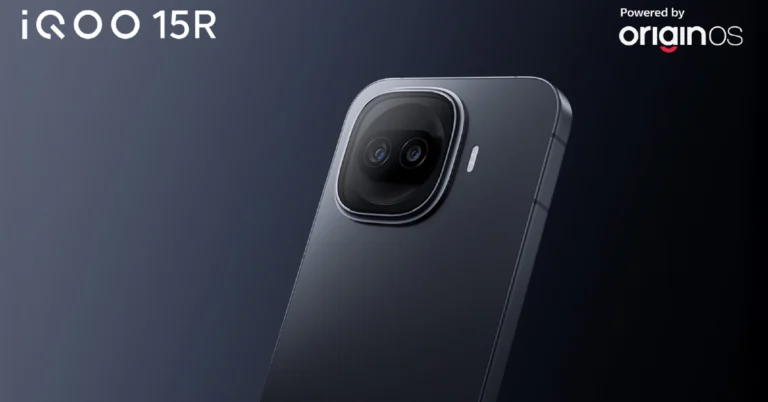
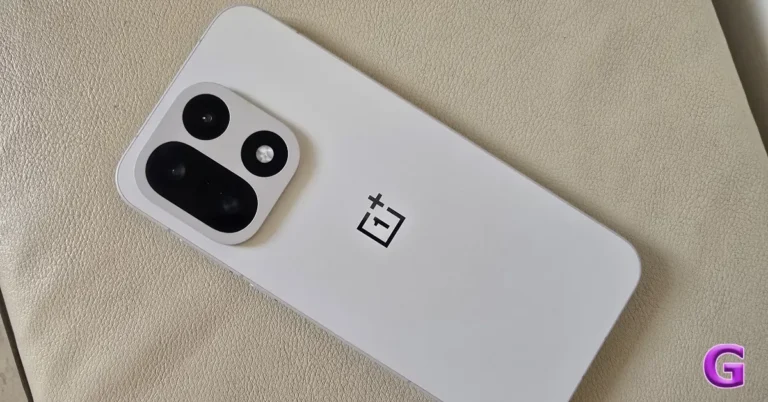
Vivo’s sub-brand iQoo is planning to getting ready to launch the 15R smartphone in the Indian market later this month. Before the phone arrives, the company has started to reveal its main features and design. A dedicated microsite has been updated to confirm that the iQOO 15R will have a Qualcomm Snapdragon 8 series chipset.
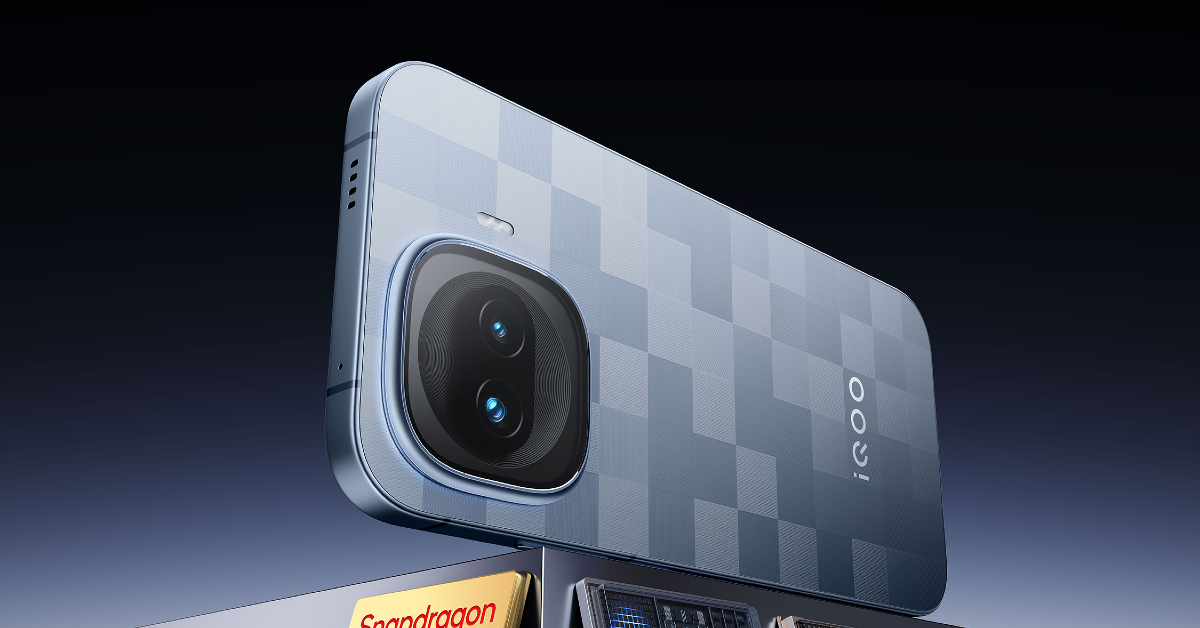
Weeks prior to the iQOO 15R’s launch in India, the Vivo sub-brand iQOO provided teasers regarding its design and features. There will be a Dark Knight colour option for the smartphone. A new microsite on Amazon says that there will also be a blue option, but the name of this colour has not yet been revealed. The device is set to be out on February 24.
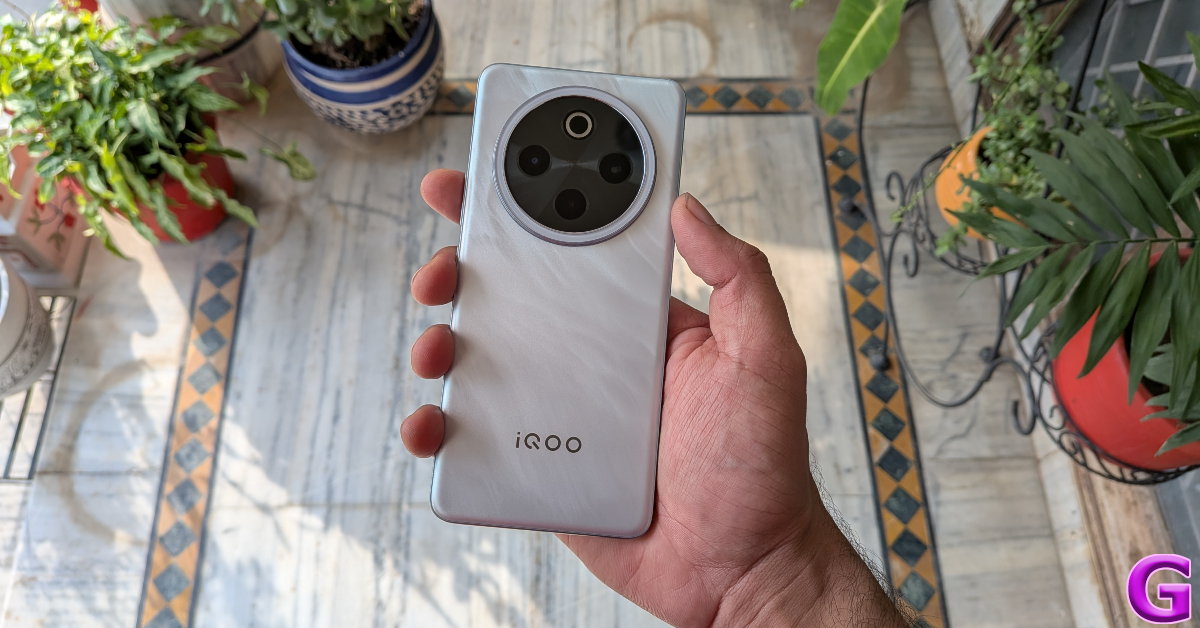
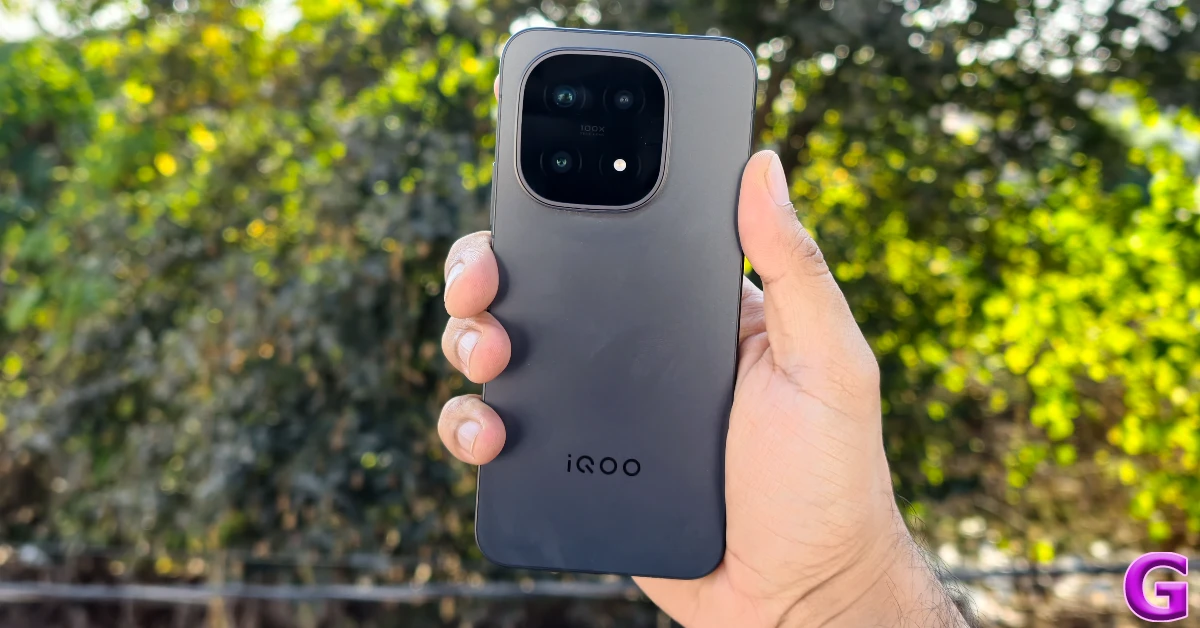
A square-shaped module with rounded corners on the back of the phone holds a dual rear camera setup, as shown in the official teaser. This design is reminiscent of the iQOO 15. The back panel also has a checkered pattern and a grey finish that changes colour.
The phone is rumoured to be a rebranded version of the China-exclusive iQOO Z11 Turbo. A 6.59-inch 1.5K AMOLED display with a refresh rate of 144 Hz is one of the things that are expected. The iQOO 15R might have an IP68 + IP69 designation for water and dust resistance. It might also include up to 16GB of LPDDR5x Ultra RAM and 1TB of UFS 4.1 storage. The Snapdragon 8 Gen 5 chipset is probably going to be there.
It should have a dual rear camera system with a 200-megapixel main camera and an 8-megapixel ultrawide camera, as well as a 32-megapixel front camera. The smartphone may also include a 7,600 mAh battery that enables 100 W wired fast charging.
The iQOO Z11 Turbo includes an ultrasonic fingerprint scanner to increase user security. This sensor is a way to confirm someone’s identity. OriginOS, which launched on the iQOO 15 flagship phone in November, is expected to power the device.
The iQOO Z11 Turbo was released in China, and the base model with 12GB of RAM and 256GB of storage costs CNY 2,699 (which is equivalent to Rs 35,999).
Knockout is hugely popular on Roblox right now. In this game, your penguin avatar is placed in an icy block among other penguins, where each player is made to aim an arrow in a random direction. After a while, the arrows are revealed, and the players are flung in the direction of their pointer. In case of a collision, the stronger penguin survives. But here’s the catch – you can’t see the aim or power of other penguins. To help you along the way, the game offers some special codes. Here are all the Knockout codes available in January 2026.
For more fun and chill games, check out Slap Battles and My Fishing Brainrots on Roblox. While you’re here, take a look at the latest Bee Swarm Simulator codes as well. If you have any questions, let us know in the comments!
Vivo has confirmed the upcoming launch of the Vivo V70 and V70 Elite in India, which will be available for purchase on Flipkart. The series includes Snapdragon chipsets and a Zeiss-tuned camera system. The Vivo V70 is expected to feature a 6.59-inch AMOLED display.
Vivo has confirmed that the Vivo V70 and Vivo V70 Elite will soon be available in India. A separate microsite has been set up to show that it will be available through Flipkart. Vivo hasn’t said when its next smartphones will come out yet, but it should be able to do so in a couple of weeks.
Both variants have rear camera modules that are powered by Zeiss. The Vivo V70 will include Qualcomm’s Snapdragon 7 Gen 4 chipset, while the Vivo V70 Elite will have the Snapdragon 8s Gen 3 SoC.
Recent rumours say that the Vivo V70 series will cost less than Rs 55,000 in India. The regular model is expected to come in Passion Red and Lemon Yellow, while the Vivo V70 Elite may come in Passion Red, Sand Beige, and Black.
The Vivo V70 and Vivo V70 Elite will look the same. The Vivo V70 Elite may have a hole-punch cutout for the selfie camera on the front and has bezels that are not very thick. They probably have a square camera island with three cameras on the back and an LED flash. The Vivo logo is on the lower left corner of the rear panel, while the power button and volume rockers are likely on the right side of the device.
The Vivo V70 and Vivo V70 Elite are likely to include a 6.59-inch Full-HD+ AMOLED screen that can refresh at up to 120 Hz. The Elite variant is going to use a Snapdragon 8s Gen 3 processor, while the standard model may have a Snapdragon 7 Gen 4 SoC. Both models will probably have a 50-megapixel main camera, an 8-megapixel ultrawide camera, and a 50-megapixel telephoto camera with 3x optical zoom. Zeiss tuning will make these cameras even better.
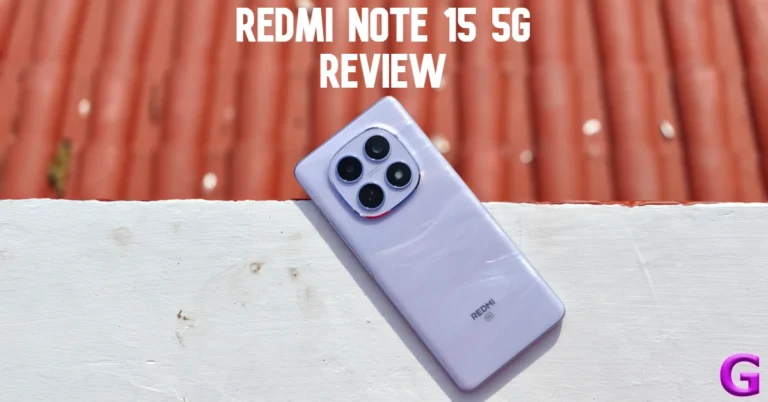
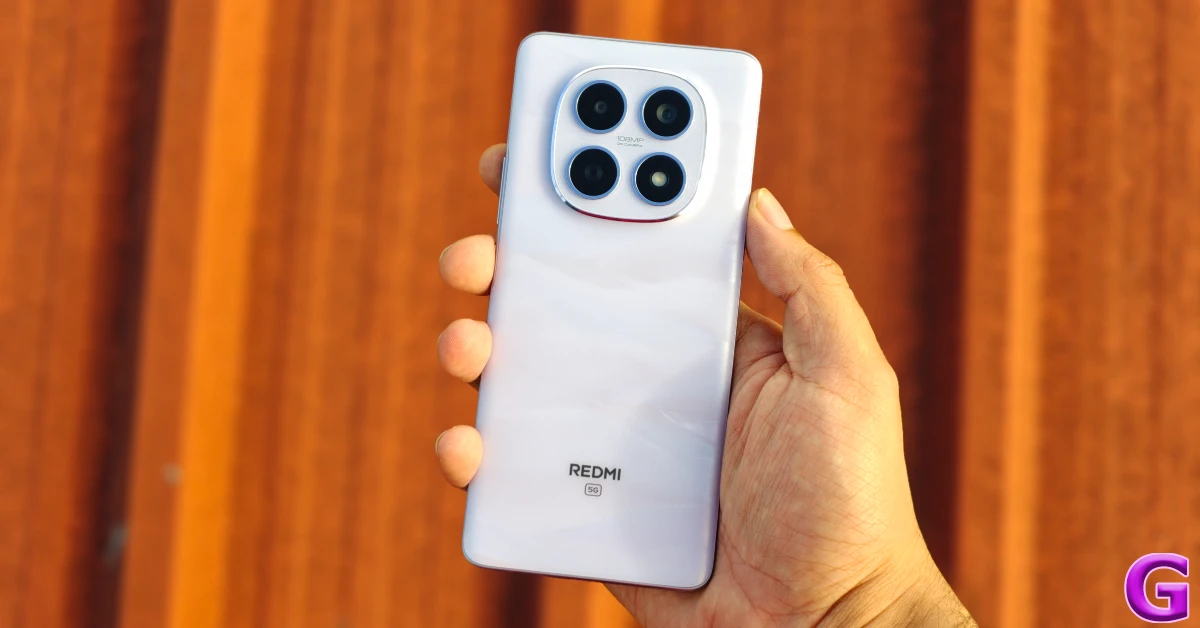
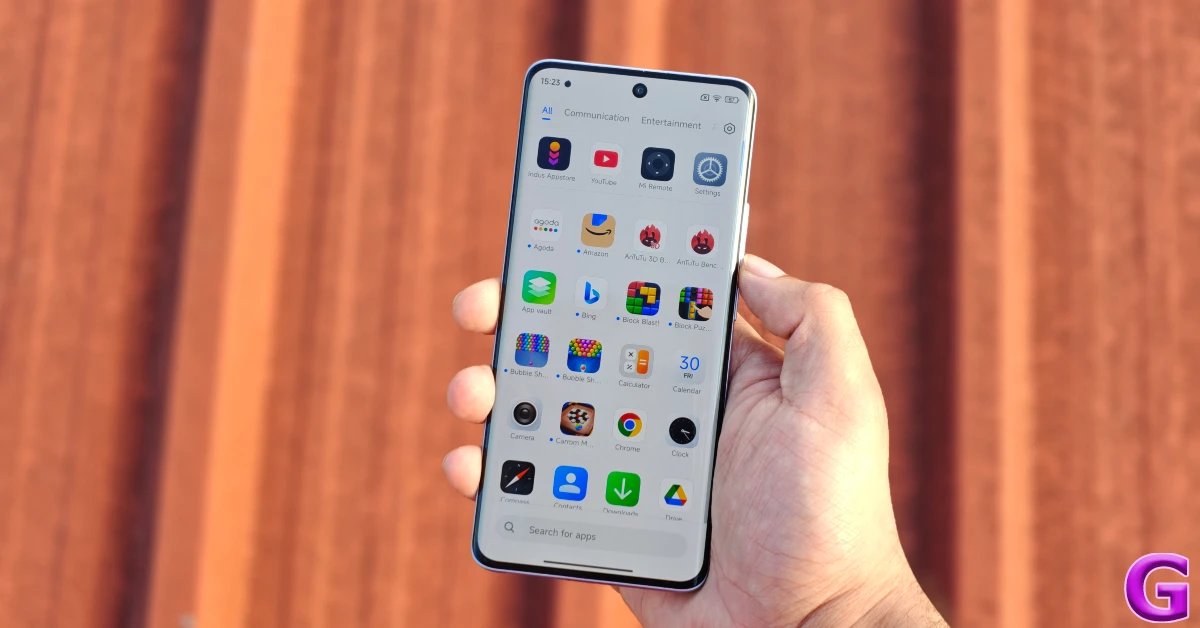
Over the years, Xiaomi’s budget sub-brand, Redmi, has faced tough competition from new players like Realme, Lava, and Infinix, but its Note series smartphones continue to dominate the midrange segment. On the Note 15 series, Redmi has stuck to its successful formula of putting out 3 variants – Base, Pro, and Pro+. The base model hit the market earlier this month, and we’ve been daily driving it for the last week. On paper, it promises a lot of action. Its rear camera panel houses a dazzling 108MP primary sensor, while the gritty Snapdragon 6 Gen 3 SoC chugs away at the heart of the device. The 3,200 nits AMOLED display is nothing to scoff at either. So, the question remains – is this the best smartphone you can get for Rs 23,000 in today’s market? Find out in our Redmi Note 15 5G review.
Here’s what you get inside the Note 15’s retail box:
Smartphone
45W power adapter
USB-A to USB-C cable
Silicone cover
SIM ejector
Phone seal stickers
Quick start guide
The base variant in the Note 15 series follows the design language of the Note 14 Pro (our review here). Its camera island is aligned along the centre of the plastic back panel. This square island has rounded corners. It houses the camera array as well as the LED flashlight. The back panel is made entirely out of plastic, but it doesn’t feel cheap. The smooth matte finish lends it a premium in-hand feel. There are 3 colour variants on offer – Black, Glacier Blue, and Mist Purple.
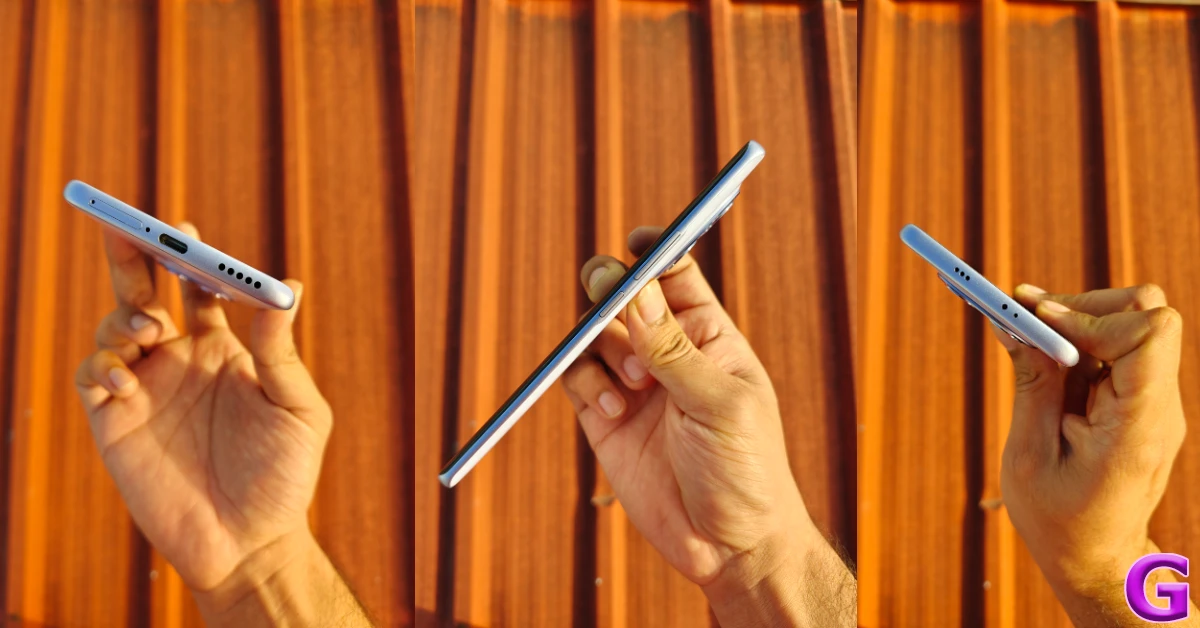
The back panel curves gently into the plastic frame. The left edge of this frame houses the volume rocker and the side button. At the bottom lies the SIM tray (with microSD slot), primary microphone, USB-C port, and speaker grille. The noise-cancelling microphone, IR blaster, and secondary speaker are positioned up top. The Note 15 is one of the last remaining smartphones to still offer expandable storage. It is also nice to see an IR blaster on this device, given how it’s vanishing from upper midrange and flagship phones.
The IP65/IP66 rating ensures protection against light water sprinkles. A full water dip can damage the device. This may not be the case when it comes to hard impact against solid ground, as the Note 15 is compliant with MIL-STD-810H durability standards. While we did not carry out a drop test, the smartphone was able to absorb light knocks with ease.
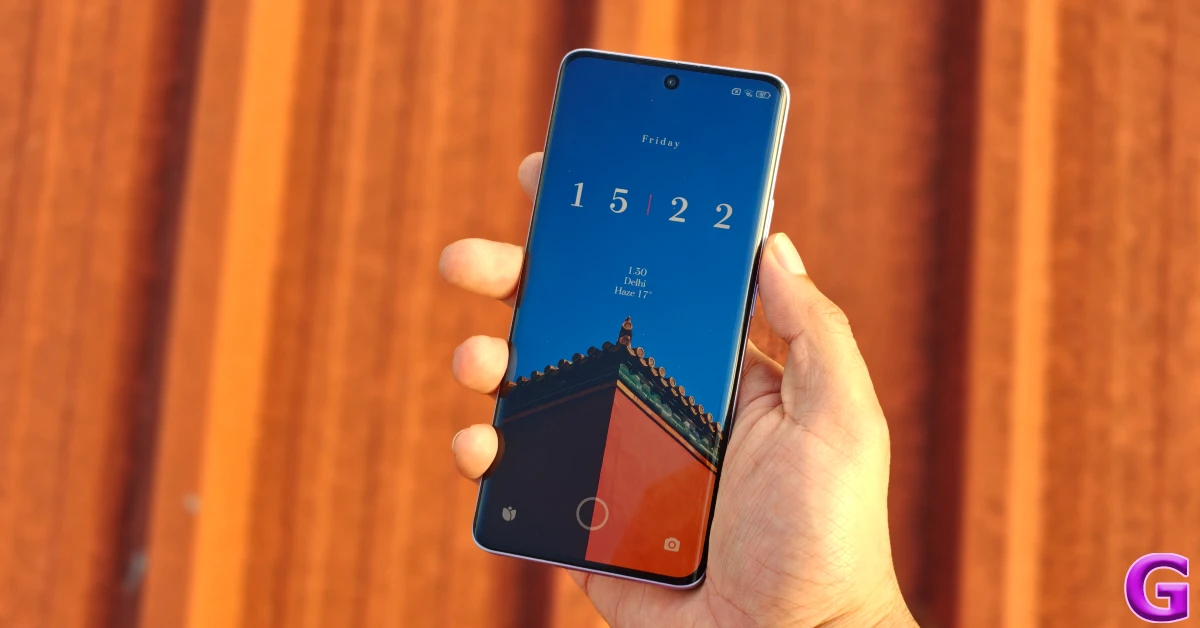
The 6.77-inch curved AMOLED display has a 120Hz refresh rate and can hit a peak brightness of 3,200 nits. It is able to overcome the surrounding brightness in outdoor conditions and maintain optimal legibility. The touch response on offer is pretty decent. The display is able to register the faintest of touches. The curved edges are prone to the odd accidental touch, but not to the point of annoyance. The optical fingerprint scanner is snappy and accurate.
The 1,080 x 2,392p display curates a fine viewing experience. During the review period, we used the Redmi Note 15 as our primary media streaming device, watching titles across OTT apps like Netflix, Prime Video, and JioHotstar. The AMOLED display produced punchy visuals with rich colours and amazing contrast. However, the audio output left more to be desired. Despite having a dual-speaker setup, the smartphone produces a boxy output with a very weak low end.
Redmi Note 15 5G Review: Performance and Cameras
Qualcomm’s Snapdragon 6 Gen 3 chipset powers the Redmi Note 15. There’s 8GB LPDDR4X RAM on board. The smartphone comes in 2 storage (UFS 2.2) variants:
128GB: Rs 22,999
256GB: Rs 24,999
You can expand the storage up to 1TB using a microSD card.
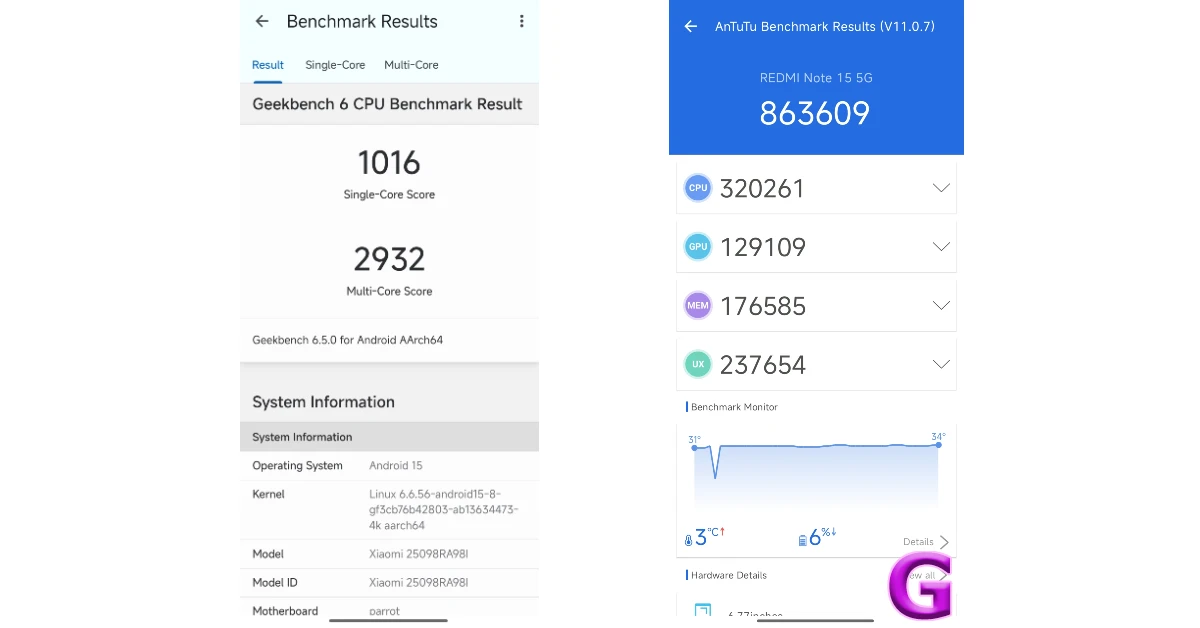
We ran the Geekbench 6 and AnTuTu 3D tests on this device. Here’s how it performed.
The benchmark numbers translate to reliable everyday performance. Routine tasks like calling, instant messaging, web browsing, media streaming, and navigation are handled with ease. It is very rare to come across a hiccup or stutter. The overall browsing experience is smooth and quick. However, the UFS 2.2 configuration for the internal storage is on the slower end – something that becomes apparent while launching apps. On the flipside, the LPDDR4X RAM does a good job of juggling multiple apps. The haptic motor could use some tuning, as the vibrational feedback was a bit too blunt for our liking.
We played Call of Duty Mobile on the Note 15 to get a taste of its gaming performance. The smartphone delivered decent gameplay at a 60fps frame rate and medium graphics. You can push the frame rate to 90fps, but that means settling for low graphics. Either way, the gameplay was smooth and mostly lag-free. We did come across the odd frame drop, but it certainly wasn’t a recurring issue. The back panel got slightly warm after 20 minutes of gameplay, but there were no throttling issues to be seen. We should mention that we tested the phone in January, when the winter spell is at its peak.
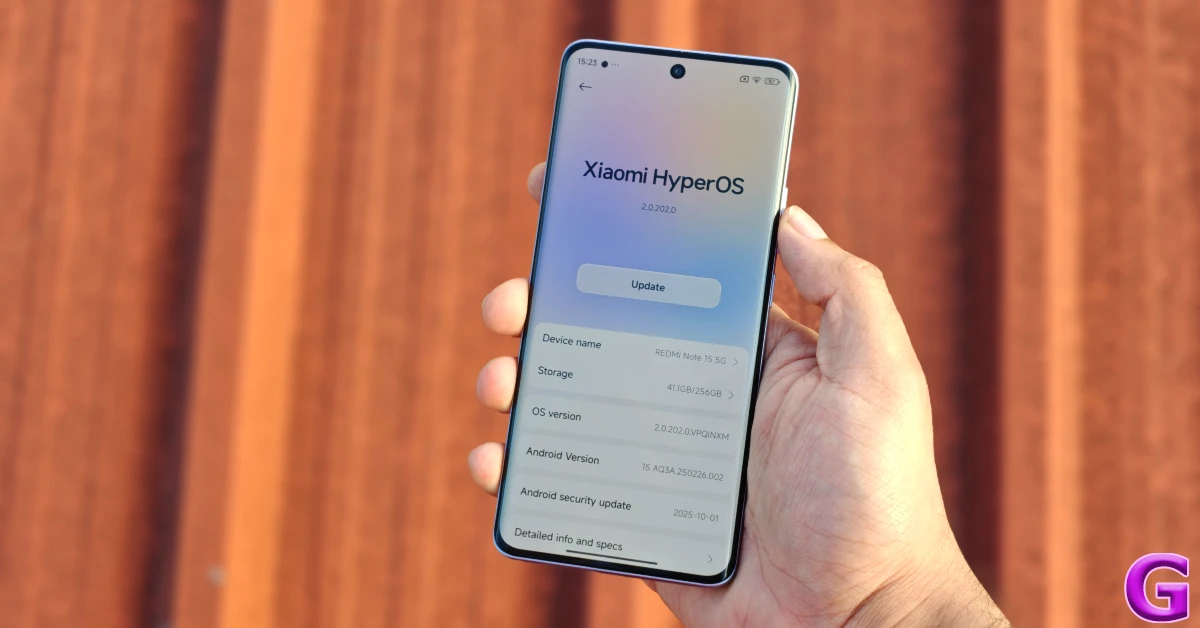
Software duties on this device are handled by the Android 15-based HyperOS 2. It is quite bewildering that it doesn’t run Android 16 out of the box, given how the OS has been out for several months at this point. Xiaomi has promised 4 major OS upgrades and 6 years of security patches for this phone, which does soften the blow a little bit.
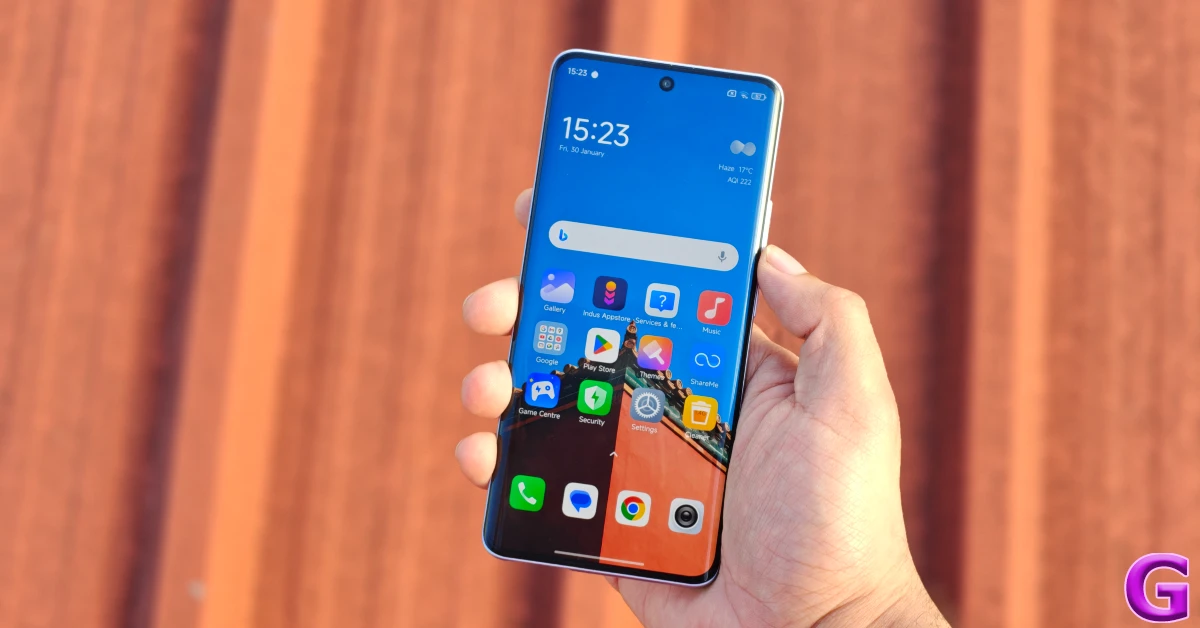
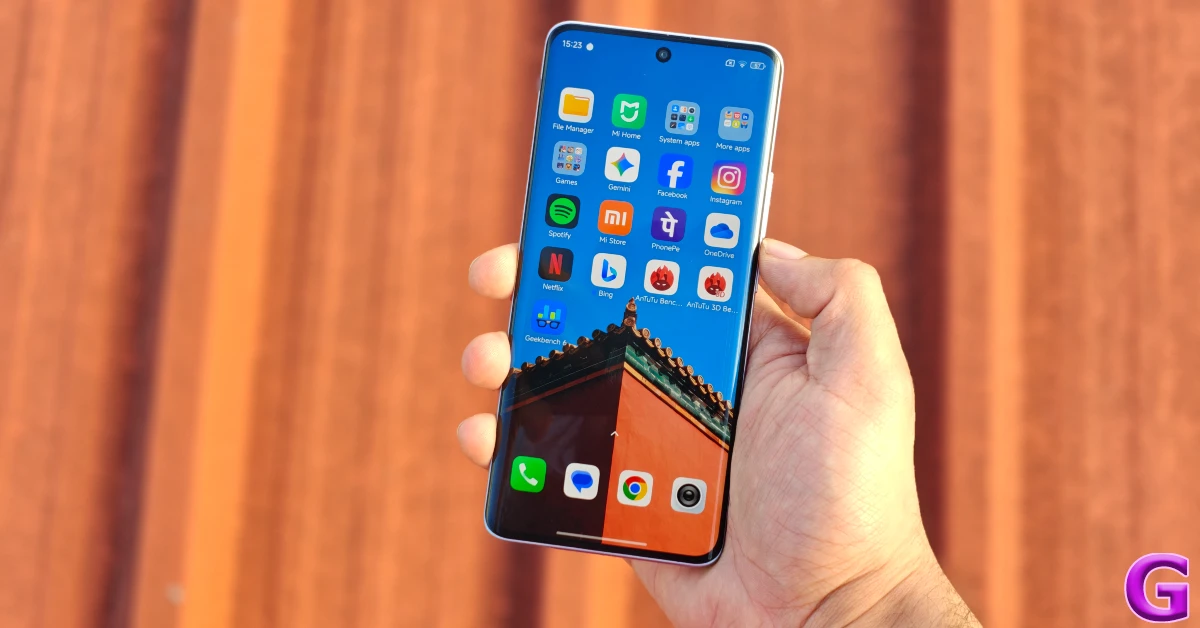
When it comes to software experience, we like what HyperOS 2 brings to the table. It builds on the foundation set by its predecessor, adding fine optimisations to make the browsing experience even more seamless. The lockscreen and home page customisations remain our favourite thing about this Android skin. The cover library caters to a diverse range of aesthetic tastes. There are plenty of themes for the Always on Display as well. When it comes to AI features, the Redmi Note 15 packs Google’s Gemini Assistant and Circle to Search. There’s a handy object eraser in the native photo editor, which works fine while dealing with small objects.
The 5,520mAh battery pack lasts an entire day with ease. During the review period, we recorded between 5-6 hours of daily screen time on the Redmi Note 15, and were left with ~20% charge in the tank each day. The 45W power adapter provided in the box took just over an hour to fully charge the device. This is a decent battery performance, but given the segment is rapidly moving to 7,000mAh Si/C battery packs, we expected Redmi to stay ahead of the curve.
The rear camera array comprises a 108MP primary shooter and an 8MP ultrawide lens. The punch-hole cutout on the display houses a 20MP selfie camera.
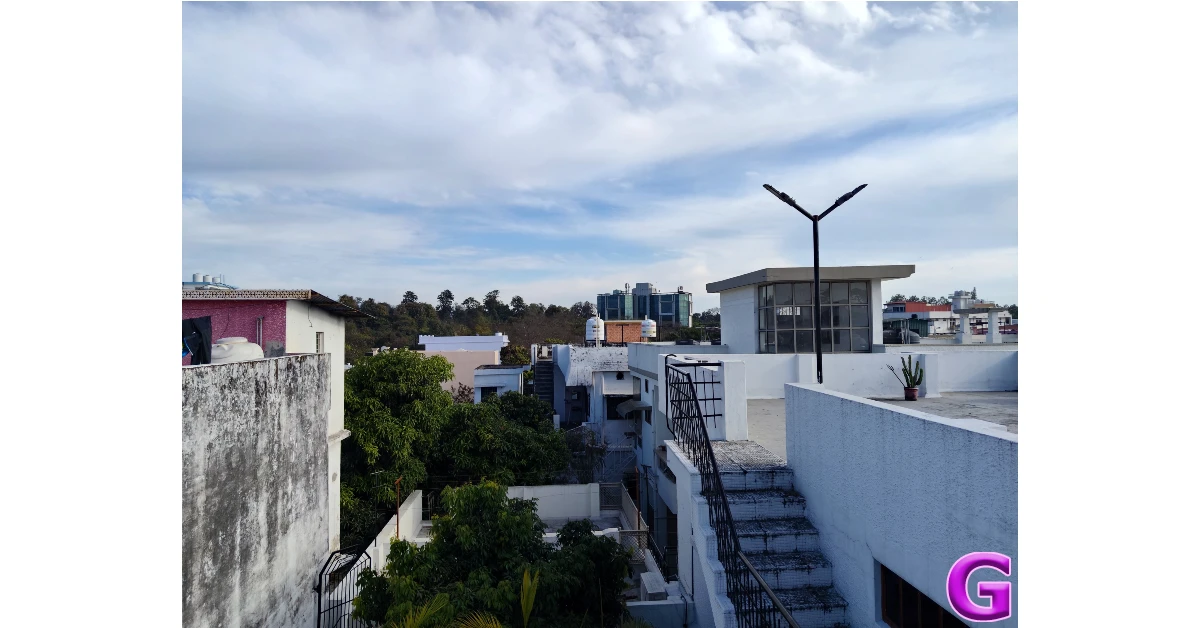
The 50MP primary shooter captures very good images in bright outdoor conditions. The colours are crisp, and the pictures pack a lot of detail. The tasteful contrast and dynamic range bring the best out of the images. The final results are certainly more ‘social media ready’, but they don’t look overprocessed. In limited lighting conditions, the primary shooter relies on Night Mode to get rid of the grain and illuminate the shot.
Ultrawide
Images taken from the 8MP ultrawide lens are visibly softer compared to the primary shooter. However, the colour profile remains consistent, papering over the cracks left behind by the missing details. In limited lighting conditions, the Night Mode puts in a shift to curb the noise, but some grain manages to creep into the shots.
UltrawideNight Mode: Primary v Ultrawide
Portrait shoots taken by the Redmi Note 15 are vivid and well-focused. The smartphone does a good job of recognising the edges of the subject and separating it from the background. The background blur applied in the processing phase is a bit weak, but not a dealbreaker. The front-facing 20MP camera takes clear selfies without meddling with the skin tone and texture too much. The selfie and ultrawide cameras can record 1,080p videos at 30fps. Meanwhile, the primary lens can shoot 4K footage at 30fps.
The base model in Redmi’s Note series remains one of the most dependable smartphones around. The Redmi Note 15 has all the power an average user needs. It can handle routine tasks without getting out of the first gear. If you want to try a bit of casual gaming, this phone has you covered. The main camera can go toe-to-toe with some of the best camera phones in the segment, capturing great shots in natural lighting. On top of that, the Note 15 distinguishes itself with niche features like expandable storage and an IR blaster. Our only big gripe with this smartphone is that it runs Android 15 out of the box, but Redmi’s promise of 4 major OS upgrades makes up for it.
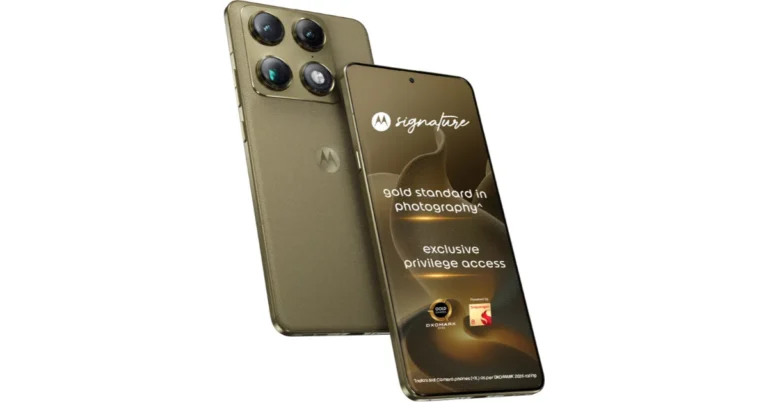
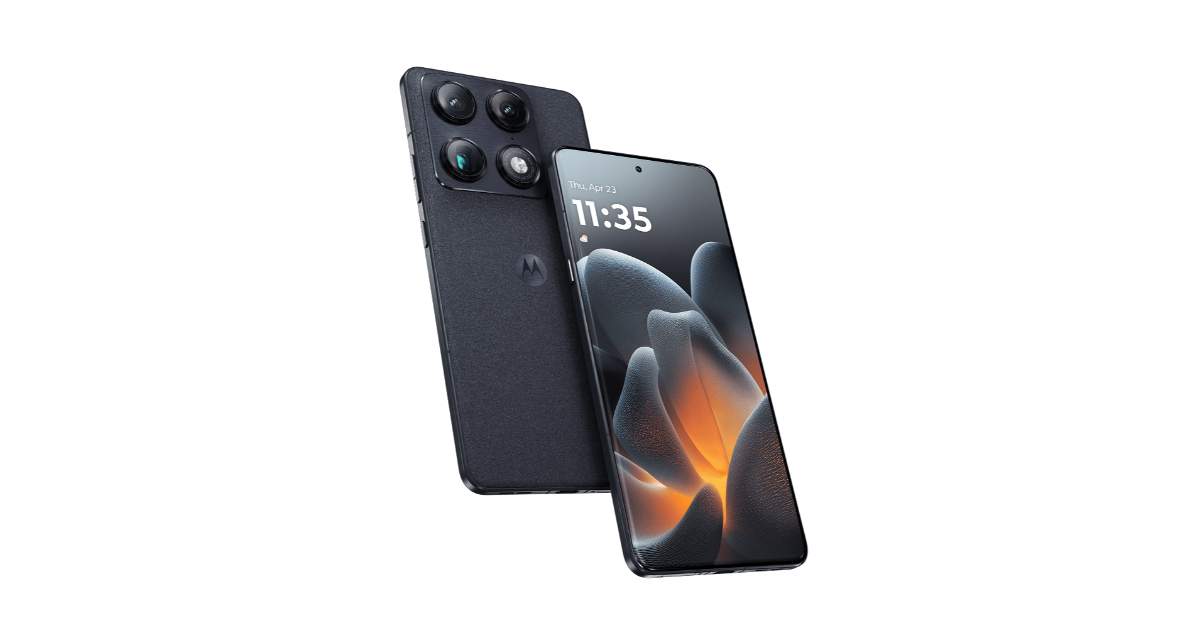
Motorola has begun selling its flagship smartphone, the Motorola Signature. It sports a triple Sony LYTIA Pro-Grade Camera System with DXOMARK Gold Certification and is powered by the Snapdragon 8 Gen 5 CPU. The device has a 6.8-inch Extreme AMOLED screen and comes in two colours: Pantone Carbon and Pantone Martini Olive. The 5,200mAh silicon carbon battery can be charged quickly with a wired connection at 90W or a wireless connection at 50W. It promises up to 41 hours of battery life. Customers will also be able to use Signature Club for lifestyle support and Moto Elite Care.
The Motorola Signature will come in two colours: PANTONE Carbon and PANTONE Martini Olive. The device has a high-end finish on an aluminium frame that is strong enough for use in aircraft. Starting costs for the 12GB/256GB model will be Rs 59,999, the 16GB/512GB model will be Rs 64,999, and the 16GB/1TB model will be Rs 69,999. The sale begins today, January 30, 2026, and the phones will be available on Flipkart, Motorola.in, and in major retail outlets across India.
The launch offer includes a bank offer that gives you an instant discount of Rs.5000 through HDFC and Axis Banks, as well as an exchange bonus of up to Rs 5000 (or Rs 7500 for some models). The prices with these deals are as follows: 12GB + 256GB for Rs. 54,999, 16GB + 512GB for Rs 59,999, and 16GB + 1TB for Rs 64,999. Customers can also get a free 6-month subscription to Perplexity Pro and welcome incentives worth up to Rs 6000 through the Motorola Signature Club app with any Bespoke privilege experience.
Motorola Signature features a 6.8-inch Super HD LTPO Extreme AMOLED display with a resolution of 1,264×2,780 pixels. The display has a refresh rate of up to 165 Hz, a full 100 per cent DCI-P3 colour gamut, a maximum brightness of up to 6,200 nits, and a pixel density of 450 ppi. It also has SGS Blue Light Reduction and Motion Blur Reduction certifications, which add to a more comfortable viewing experience. It also supports HDR10+ and Dolby Vision. Furthermore, the Smart Water Touch technology enables device operation even when fingers are wet or damp, increasing usage in various conditions.
The smartphone runs on Android 16-based Hello UI out of the box. The company promised to provide 7 years of OS upgrades and 7 years of security updates. The device is powered by the Snapdragon 8 Gen 5 chipset with up to 16GB of LPDDR5x RAM and up to 1TB of UFS 4.1 storage.
The handset sports a triple back camera array that comprises a 50-megapixel (f/1.6) Sony LYT 828 sensor with optical image stabilisation (OIS) for increased image clarity. The gadget also has a 50-megapixel (f/2.0) ultrawide camera and a specialised 50-megapixel Sony LYT 600 periscope telephoto camera with a 3x optical zoom and support for a stunning 100x hybrid zoom, both of which are stabilised by OIS. On the front, the Motorola Signature has a high-resolution 50-megapixel (f/2.0) Sony LYT 500 selfie camera.
It is fueled by a 5,200mAh battery made of silicon carbon, with support for fast charging capabilities, including 90W wired and 50W wireless charging, as well as reverse charging options of 10W wireless and 5W wired. The dual stereo speakers are tuned with Sound by Bose and Dolby Atmos, along with Hi-Res Audio.
The phone is MIL-STD-810H military-grade certified and offers IP68 + IP69 protection, making it resistant to water, dust, sand, and extreme environmental conditions.
Samsung has launched its Bespoke AI WindFree AC lineup for 2026 in India, expanding the range to 23 models across segments and adding new 4-star air conditioners. The pitch is simple and very India-coded, keep rooms comfortable without harsh blasts of cold air, cut electricity use with AI-led optimisation, and handle sticky monsoon humidity without turning your living room into a freezer.
The company says the new range is designed around Indian homes and climate conditions, combining AI-driven cooling, energy efficiency, humidity management, and preventive maintenance through connected features. Pricing starts at Rs 32,490, with availability across leading retail outlets and major online platforms.
WindFree cooling, but smarter about when to go fast
A big talking point remains WindFree Cooling, which aims to reduce the “AC hit-in-the-face” effect by dispersing air gently through thousands of micro air holes. In practical terms, it is trying to deliver an even temperature feel with fewer noticeable drafts, especially useful for bedrooms, study rooms, and work-from-home setups, where direct airflow can get annoying fast.
Samsung is also pushing AI Fast and WindFree Cooling+, which is essentially a two-step approach. When you need quick relief, Fast Cooling kicks in to drop the temperature. Once the target comfort level is reached, it transitions to WindFree or Dry Comfort mode to maintain a steadier feel and avoid overcooling.
AI Energy Mode and new 4-star models
Electricity bills are where most AC buying decisions get real, real quick. The 2026 lineup includes AI Energy Mode, which Samsung claims can deliver up to 30% energy savings by optimising compressor operation, temperature settings, and cooling intensity based on learned usage patterns. It is the kind of feature that sounds small on paper but can matter over an entire summer if it works as intended.
The addition of Samsung 4-star AC models also widens the choice for buyers who want a more energy-efficient option without necessarily jumping to the highest-rated tier.
SmartThings control plus maintenance that tries to be proactive
Smart features are only useful when they reduce effort, not add another app to your life. With SmartThings integration, Samsung says users can control settings remotely, automate routines, and manage multiple rooms more easily. Key experiences highlighted include:
Quick Remote controls for power, temperature, mode, and airflow
Map View-style home overview for monitoring different spaces
Welcome and Away Care-style adjustments based on presence to balance comfort and energy use
For upkeep, SmartThings Home Care is positioned as a more proactive layer. The idea is to monitor operational status, detect abnormalities, send notifications, and use AI-based diagnosis to point to potential issues early. It also claims to track usage patterns and alert users when accessories need replacement.
Dry Comfort mode for monsoon season mood swings
If Indian summers are brutal, Indian humidity is the sequel nobody asked for. The lineup introduces Dry Comfort mode, which uses humidity sensing and smart refrigerant flow control to reduce excess moisture without making the room excessively cold. The promise here is a less sticky feel, better perceived comfort, and a fresher indoor environment during long humid spells.
The new models are compatible with voice assistants, including Bixby, Alexa, and Google Assistant, for hands-free control. On after-sales confidence, Samsung says the lineup comes with a 5-year comprehensive warranty on key components and a 10-year warranty on the AI Inverter Compressor.
Price and availability
The 2026 Bespoke AI WindFree range starts at Rs 32,490 and will be sold via leading retail outlets and major online platforms in India.
AI in an air conditioner is only as good as the comfort you feel and the bill you pay. If WindFree delivers genuinely calmer airflow while AI Energy Mode actually trims usage over time, this lineup could be less “smart home buzzword” and more “finally, a practical upgrade.”
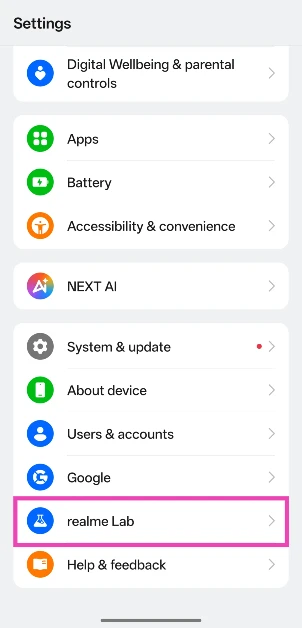
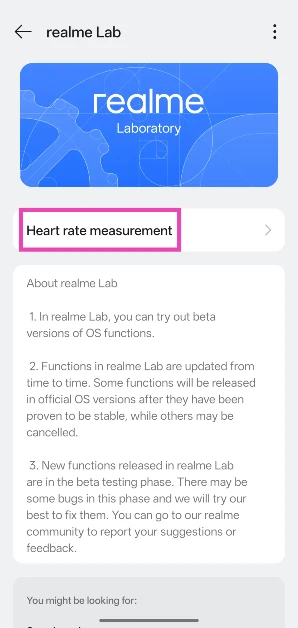
With how abundant smart wearables have become, it is hard to imagine working out without them – especially if you’re a data enthusiast who likes to record every minute metric. Those who spend several hours on cardio find it necessary to track their heart rate throughout the workout. So, what happens when you forget to wear your smartwatch to the gym? The good news is that your smartphone can measure your heart rate with decent accuracy. Here are 3 ways to go about it.
Your smartphone relies on the same mechanism as the average smart wearable to measure heart rate – monitoring the change in the size of the blood capillaries with every heartbeat, a process known as photoplethysmography. It does this by flashing a pulse of light on the skin. Since blood absorbs flashes of light, the swelling and shrinking of capillaries becomes more apparent.
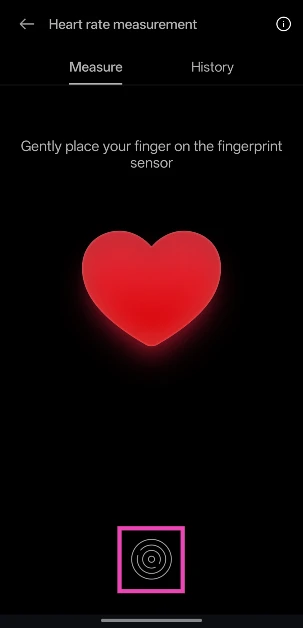
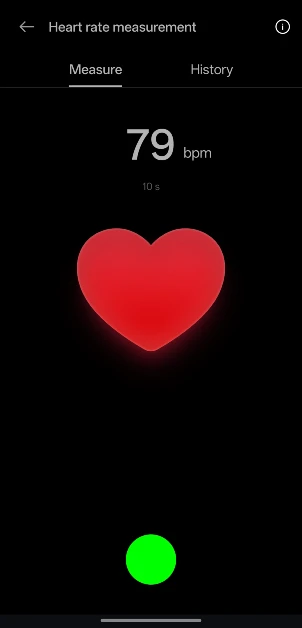
There are 2 ways to go about this process. Some smartphones use the optical fingerprint sensor (which is essentially a small camera) while others resort to the main rear camera. While taking a reading, it is important to stick to the following guidelines:
Do not press heavily against the lens/fingerprint scanner.
Make sure the entirety of the lens/fingerprint scanner is covered.
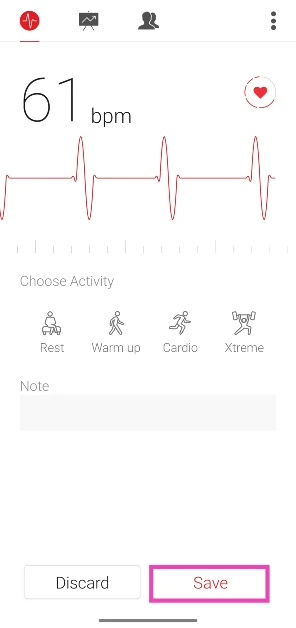
Launch the app and give it permission to use your phone’s camera.
Gently press your finger on the main camera and hit Start.
The app will take a few seconds to calculate your heart rate.
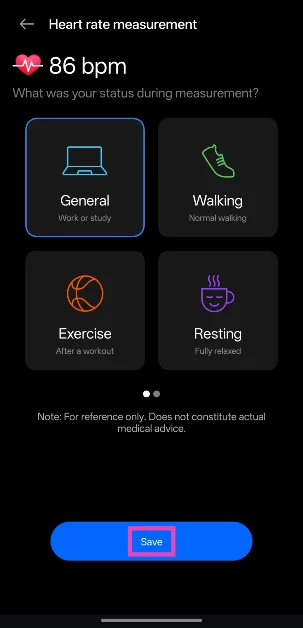
Once the app is done measuring your heart rate, hit Save to record the reading.
Frequently Asked Questions (FAQs)
Can I measure my heart rate with my phone?
Realme smartphones have a native tool that lets you measure your heart rate. Other smartphones require installing third-party apps like Cardiograph and HR Monitor.
How do smartphones measure heart rate?
Similar to smart wearables, smartphones rely on a process called photoplethysmography to monitor the changes in blood volume just below your skin. This can be done using the optical fingerprint scanner or the camera lens.
How do I measure my heart rate using my phone?
Install the Cardiograph app, launch it, and place your finger on the main camera lens. Hit ‘Start’. Wait for a few seconds for the phone to take the reading.
Are phone heart rate readings accurate?
The heart rate readings taken from an average smartphone can be off by up to 20bpm.
What is the ideal resting heart rate?
A normal resting heart rate is between 60 and 100 bpm.
It is important to remember that the heart rate readings taken by your phone are not always consistent with medical-grade equipment. This method is fine if you want a ballpark figure, but it shouldn’t be used to base any medical diagnosis.
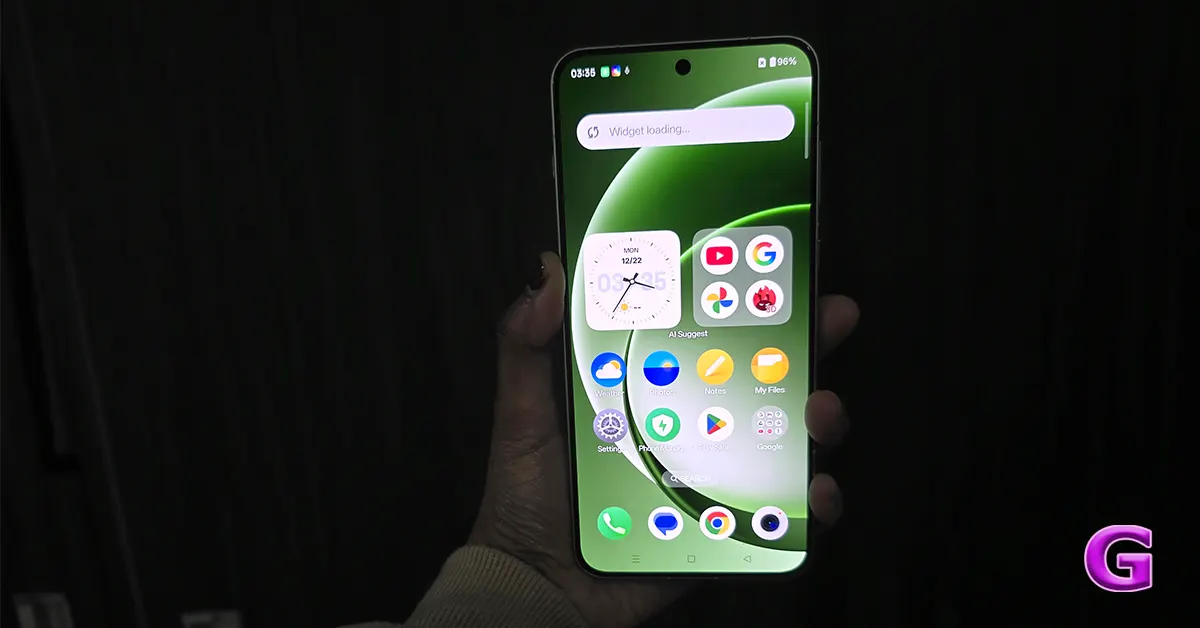
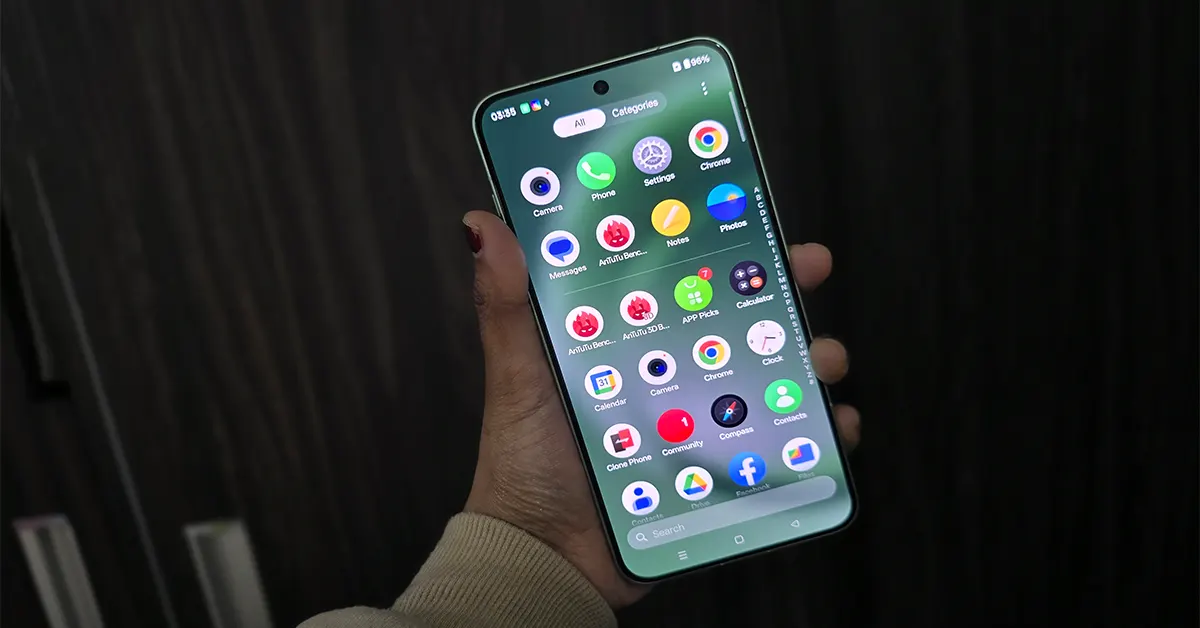
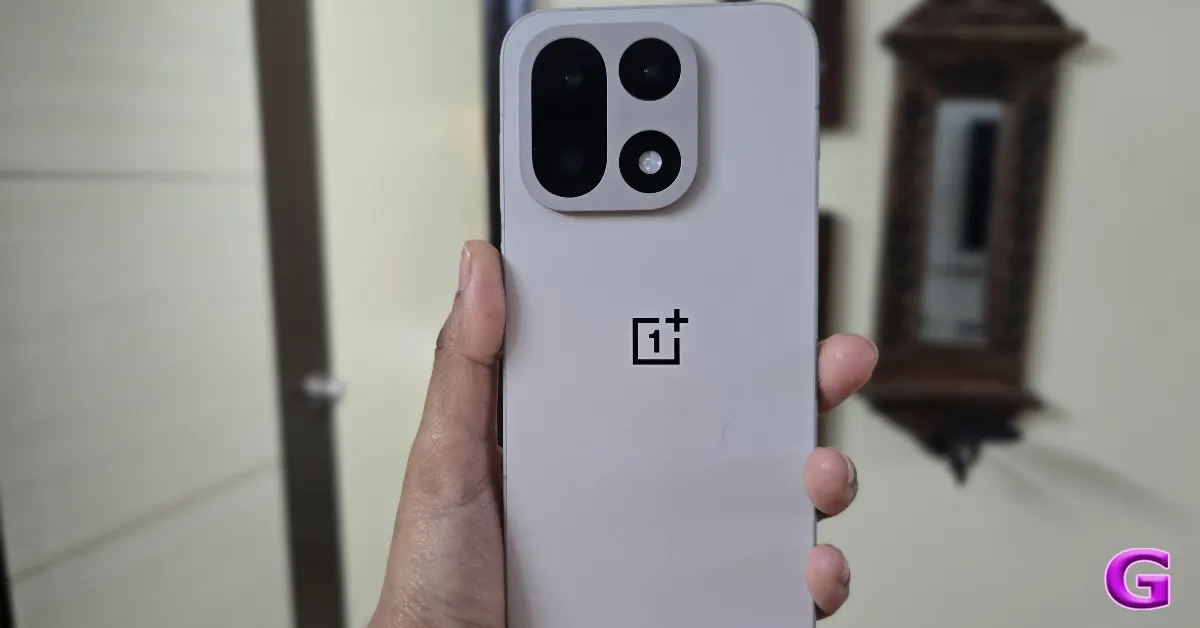
The OnePlus 15R is a gaming-focused phone featuring a large 7,400mAh battery and the inaugural Snapdragon 8 Gen 5 chipset within its price category. It suits users who spend extensive time gaming or outdoors, eliminating the need for a power bank. The device offers a more practical design compared to the more luxurious OnePlus 15, although it isn’t as premium-looking. With advancements like 100x zoom and AI-generated portraits, it raises the question of whether performance alone is enough to attract users. This review covers the device’s everyday performance based on our tests.
In This Article
Design and Display
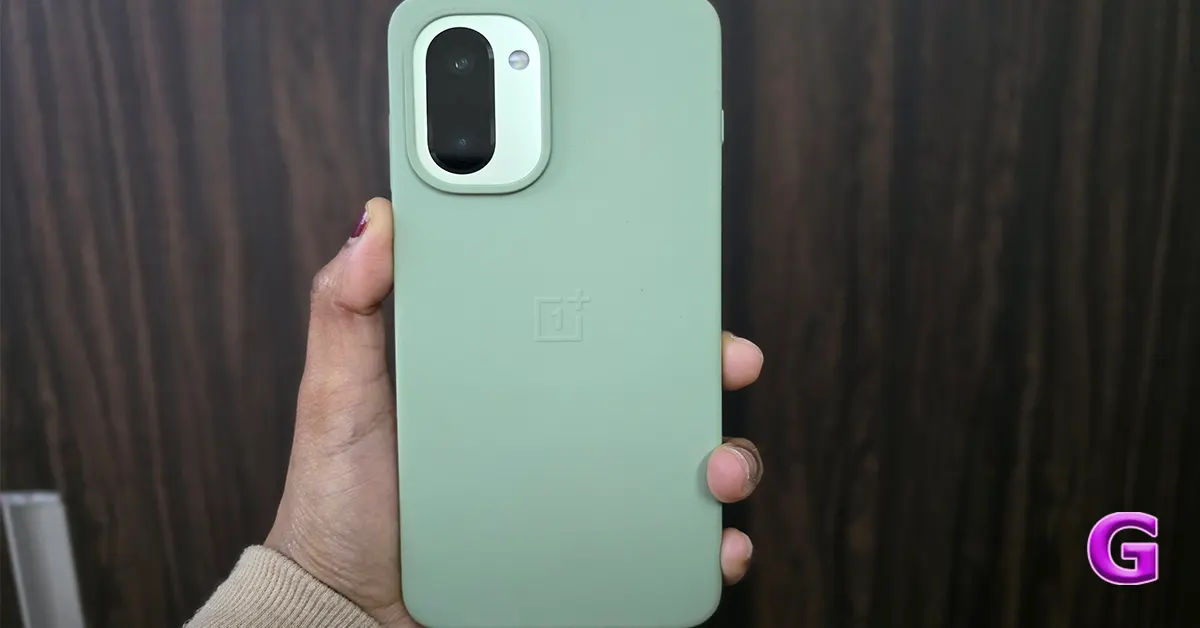
So the box contains some documents that we believe no one reads. Then we have a silicon case, which is really soft and of high quality.
The package includes the OnePlus 15R, a SIM ejector pin, the well-known OnePlus Red USB-A to USB-C charging cable, and an 80W Super V charger. This is typically what you get when purchasing from a store. Now, let’s examine the phone more closely.
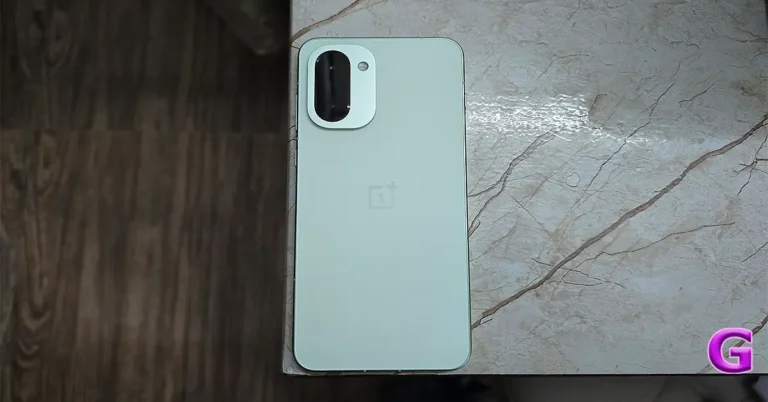
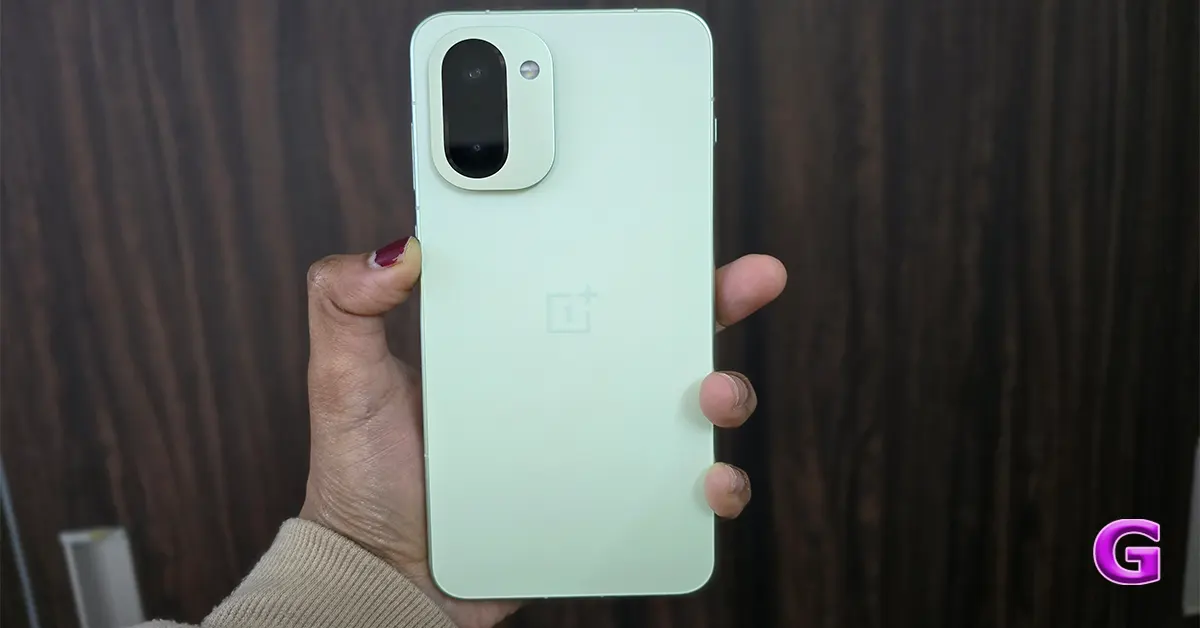
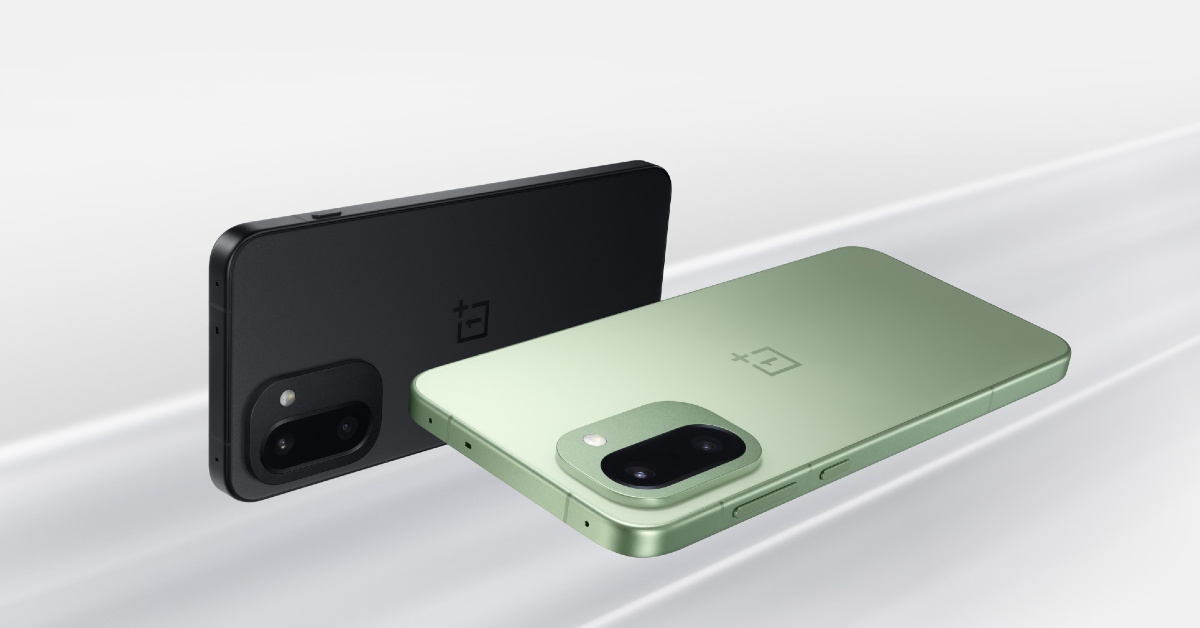
We have the mint breeze colour, which is very pretty. The light green hue uses a matte-frosted glass that doesn’t get fingerprints or smudges. The OnePlus 15R also comes in black, by the way. But we really like this shade. Right in the middle, you can see the OnePlus logo. The cameras are placed in the top left corner.
The silicone case that comes with the phone has an excellent finish, giving a very high-end appearance. Even after attaching the case, it still feels as if there’s no cover. Plus, it keeps the phone safe, which is a great bonus.
The design of the OnePlus 15R is entirely flat, setting it apart from the OnePlus 12R’s curved edges.
The 13R, however, feels different in the hand than the 15R despite being the first in the series to switch to a flat frame and flat display. This flat profile, which resembles the normal OnePlus 15, has a contemporary, boxy look thanks to its flat display and frame. The design makes the phone easier to hold, which is great for gaming.
The small square camera module in the upper left corner stands out because it differs from the round “watch-dial” design of the OnePlus 11, 12, and 13 series. This newer module is simpler, featuring only two cameras compared to the previous models.
The frame is made of Grade-4 Aluminium, which makes the device strong and gives it a high-end, cool-to-the-touch sensation.
Corning Gorilla Glass 7i protects the front. It’s not as advanced as the Victus 2 used in the flagship 15, but this still does a good job of protecting against scratches and impacts.
The overall quality of the build strikes a balance between looks and long-lasting function, making the smartphone suitable for regular usage.
The 15R has an amazing protective system, and its four IP ratings make this stand out in the industry. First of all, the mobile has an IP66 classification, which means it can withstand high-pressure water jets and will last even under tough conditions. Second, the IP68 rating means that the device can be submerged in water up to two meters deep for 30 minutes, and the gadget may be used in a variety of water sports.
Furthermore, the gadget also has IP69 and IP69K classifications, which mean it can withstand high temperatures (up to 80°C) and high-pressure steam cleaning. This shows that the product can handle tough situations. It’s really incredible.
The right side of the unit has a standard yet polished layout for user comfort and functionality. The power button is positioned at a natural thumb height for convenient access. By default, long pressing this button activates Google Gemini, its built-in AI capability. Users can also double-press the power button to quickly launch the camera, which improves user experience and efficiency. Above the power button, there is a volume rocker constructed as a single tactile bar that gives solid, clicky feedback with no wobble, assuring consistent use.
The Plus Key, which replaces the usual three-stage Alert Slider, was introduced with the device’s new left-side facelift. This new physical, clickable button, known as a Programmable Action Button, offers more functionality than the predecessor.
The Plus Key can be programmed to do various functions, including muting or unmuting the device, which replaces the slider’s primary function. A double press turns on the torch or records a voice note. A long press also activates Plus Mind, a function that captures and stores screen content like text, photos, or appointments directly to an AI clipboard.
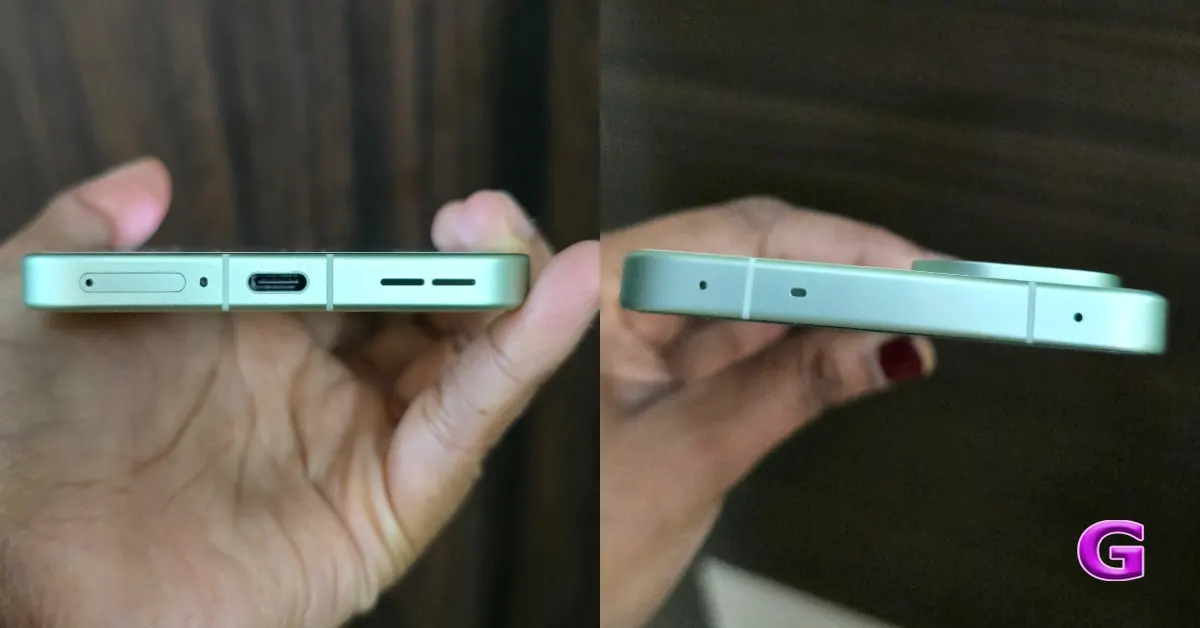
The device’s bottom edge features a USB Type-C port that operates at USB 2.0 speeds. This port supports 80W SUPERVOOC charging and Type-C audio but does not enable high-speed data transfer or video output, setting it apart from the USB 3.2 connector available on the standard OnePlus 15.
Additionally, there is a dual SIM slot designed to hold two Nano-SIM cards, which is gasket-sealed to keep the device’s IP69 water-resistant classification. The structure also contains a primary speaker and microphone near the large speaker grille, which improves audio output and voice capture.
The Top Edge includes a secondary speaker vent, which works with the bottom speaker to create a balanced stereo effect. The rail also includes a noise-cancelling microphone, which improves call quality and video recording.
The OnePlus phone has a large 7,400mAh battery and is rather thin, measuring about 8.3 mm thick. The weight varies from 214g to 219g, depending on the colour you choose. The balanced weight distribution is a big plus for how this feels in your hand. Most people consider the device a two-handed smartphone because of its large 6.83-inch screen. The flat edges make it easier to hold on to, which is especially helpful when playing games in landscape mode, making for a comfortable and steady experience.
Engineered for speed and responsiveness, the OnePlus 15R now boasts a 6.83-inch 1.5K LTPS AMOLED display. The panel’s 165 Hz refresh rate is the highest for a non-gaming-specific OnePlus device. The system usually runs at 120 Hz for regular tasks, but the refresh rate may go up to the maximum 165 Hz in games that support this, like Call of Duty Mobile, PUBG, and BGMI. The 15R’s display can’t go down to 1 Hz because it uses LTPS (Low-Temperature Polycrystalline Silicon) technology. Instead, it switches between fixed refresh rates of 60 Hz, 90 Hz, 120 Hz, 144 Hz, and 165 Hz.
The screen’s 1.15 mm ultra-slim bezels on all sides make it look almost borderless, like more expensive flagship models.
OnePlus has made its handset more responsive by adding a dedicated Touch Response Chip that can sample touches at an amazing 3,200 Hz rate. This new technology gets rid of the noticeable lag between user input and screen response, which is beneficial for competitive gaming. The OnePlus 15R also has great visibility and brightness, making the screen a great choice for outdoor use.
The display features a High Brightness Mode (HBM) that reaches up to 1,800 nits in auto-brightness settings for outdoor visibility, and can go as high as 3,600 nits in small areas during HDR playback. Despite the absence of an anti-reflective coating, the screen remains easy to read even in bright afternoon sunlight. The Sun Display algorithm enhances this experience by adjusting brightness, contrast, and colours when exposed to direct sunlight, ensuring that dark UI elements, like those in dark mode, remain clearly visible.
Besides the display, the focus is also on features that enhance user immersion and eye protection. The 15R includes two excellent features perfect for watching movies at night in dim environments. It features 3840 Hz PWM dimming technology, operating at high frequencies to prevent flickering when brightness is low. This is particularly beneficial for those who experience headaches or eye strain when using devices in low-light conditions.
But that isn’t noticeable by the naked eye, and this feature helps with cognitive ease a lot. This function effectively reduces the flickering that happens with most OLED displays at lower brightness levels. This feature reduces eye strain and fatigue, making it particularly helpful during long viewing sessions such as watching a three-hour movie.
Following that, the 15R has an amazing minimum brightness level of 1 nit, which lets the screen get very low luminance. When combined with the Reduce White Point option, this allows you to watch videos in complete darkness without the glare of excessive brightness, similar to looking into a flashlight. These features work together to enhance the viewing experience by prioritising comfort and clarity in low-light conditions.
One of the most notable features is the Aqua Touch 2.0, which allows users to type full text messages even when their hands are wet or sweaty, effectively eradicating ghost touch concerns. However, the functionality has limitations; while it handles droplets and wet fingers well, it struggles when a consistent, heavy stream of water flows directly over the sensor.
The phone’s display supports advanced HDR formats like Dolby Vision, HDR10+, and HDR Vivid. These formats make streaming apps like Netflix and YouTube look better. The AMOLED screen displays true blacks in dark scenes, eliminating the greyish washes common on less advanced screens, especially noticeable in “Stranger Things.”
The gadget also has a 10-bit panel that offers 1.07 billion colours, resulting in incredibly smooth gradients. This makes for a wonderful viewing experience for things like sunsets in videos, without the banding effect that typically happens on lower-quality screens.
The 15R has two stereo speakers, which may not be able to replace a Bluetooth speaker, but OReality Audio tuning makes the soundstage more expansive. This technological improvement makes the audio experience more immersive, allowing listeners to hear music moving in space. For instance, you can clearly hear music travelling from the left to the right side of the screen.
Performance and Cameras
The OnePlus 15R has the latest technology and performance features that are perfect for gamers and power users.
The OnePlus 15R has a different processor than the standard OnePlus 15 (Review), the Snapdragon 8 Gen 5. Because of its 3nm architecture, this processor operates more efficiently and consumes less power. The device also has LPDDR5X Ultra RAM and UFS 4.1 storage technology built in.
These specs make everything a lot more efficient, so file transfers and game loading times are a lot faster than they were on the OnePlus 13R.
In real-world situations, the OnePlus 15R is extremely responsive, with AnTuTu benchmark scores reaching almost 3 million points (2,974,187). This high score means that apps open instantaneously, and you can easily navigate between more than 20 apps running in the background without any lag.
The 15R smartphone is designed as a top-tier gaming device, emphasising high-performance features essential for superior gaming. It supports gaming at an impressive 165 Hz, allowing it to run demanding titles like Call of Duty Mobile at 165 frames per second (FPS). As a result, it stands out as one of the few phones capable of handling these tasks effectively.
The toy also has a special OverPower Chip that lets it run popular games like Genshin Impact at a consistent 120 FPS, all while playing. This feature is highly important because it ensures the phone continues to run smoothly even during extended gaming sessions when it heats up, thus enhancing the overall gaming experience.
The 15R excels in touch precision with an instant sampling rate of 3,200 Hz. Its military-grade gyroscope, capable of handling movements of ±4,000 degrees per second (DPS), enhances gaming accuracy significantly. These features are particularly beneficial for games requiring precise control, such as first-person shooter targeting or rapid racing manoeuvres. Designed with gamers in mind, the 15r ensures reliable performance and responsiveness.
The OnePlus 8 Gen 5’s thermal management has been greatly improved, mostly because of the addition of a massive 3D vapour chamber that is 5,704 mm², making this one of the largest in its class. An “aerospace-grade” aerogel layer beneath the screen enhances this cooling mechanism. This technology keeps the screen comfortable to the touch, even when the processor is working hard.
The OnePlus 15R’s OxygenOS 16 refocuses from trivial AI features to practical ones like OP Gaming Core and Mind Space, making good use of the Snapdragon 8 Gen 5. It features a dedicated OverPower Chip offering various functionalities. For instance, AI Gaming Super-Resolution enhances game resolution to 1.5K in real time. The HyperRendering Engine introduces AI-generated frames, boosting 60 FPS games to 120 or 165 FPS for smoother gameplay. The Adaptive CPU Scheduler also increases CPU speeds during critical gaming moments to boost performance and prevent frame drops during intense gameplay.
One of the most interesting AI features of this device is Mind Space, which is built into the Plus Key on the side of the phone. The Visual Clipboard allows users to long-press the Plus Key to copy text, dates, and images from the screen and save them in Mind Space. The customised Google Gemini on the 15R improves functionality by allowing immediate access to Mind Space. Furthermore, the AI Scan function intelligently recognises documents from skewed angles, automatically removing shadows and fingerprints and producing clean PDFs.
The 15R is focused on performance, and its AI improves the 50MP camera’s capabilities with features like AI Portrait Glow, which uses digital relighting to fix harsh backlighting on faces; AI Perfect Shot, which lets you change expressions in group photos; and AI Writer, which is built into the keyboard for summarising articles, creating social media captions, and making mind maps for students.
Parallel Processing 2.0, an AI-driven technology, improves smartphone performance through effortless multitasking and fluid transitions. It monitors your daily app usage and preloads frequently used apps into RAM, enabling instant app launches and reducing waiting times. Additionally, it employs parabolic bounce animations to ensure smooth and uninterrupted animations, even when switching between apps.
The OnePlus 15R is excellent for video and selfies, but not so great for long-distance zoom because the company has put lens quality ahead of versatility. The main sensor is a 50-megapixel Sony IMX906, and the ultrawide sensor is 8 megapixels. Both are improved by the OnePlus DetailMax Engine, which has features like Ultra Clear Mode, Clear Burst, and the Clear Night Engine that are meant to make images more detailed. A 32-megapixel sensor is also added to improve focusing and the quality of the images as a whole.
The DetailMax Engine, derived from the OnePlus 15, is at the heart of its image capabilities. This engine does a fantastic job of taking pictures that look natural, which is something that many AI-enhanced images don’t do well. The camera works great in bright light, and pictures shot in bright light seem almost exactly like those taken by high-end flagship mobile phones. It has a wide dynamic range that keeps details in both bright and dark areas, such as skies and shadows.
This makes sure that the image stays clear in different lighting settings. The Clear Night Engine does a good job of reducing noise in low-light conditions, although it may take 1 to 2 seconds to process photos. This feature takes accurate nighttime pictures, which makes nighttime photography look better instead of artificially brightening dark conditions.
Portrait
The 15R has an 8MP ultra-wide lens that works well for group photographs in bright light, but it’s important to remember that the image quality drops a lot in low light. Also, the device only has digital zoom and no telephoto lens. Because of this, anything more than a 2x zoom tends to look hazy, which is a major issue for people who like to zoom in on things that are far away, like during concerts or when looking at wildlife. This is the biggest drawback with the 15R, especially for people who love photography.
portraitsLong distance shotsLong distance shots
The 15R smartphone has video specs that are better than those of many more expensive competitors. The smartphone can record 4K video at 120 frames per second (FPS), which is rare for cameras in this price range. This lets people make exceedingly smooth 4K videos. The gadget also has dual stabilisation technology, which combines optical image stabilisation (OIS) and electronic image stabilisation (EIS). This combination gives users gimbal-like stability, which makes it ideal for vlogging or shooting video while walking.
Low light shots (portraits)
The 15R features a 32MP front camera with autofocus, distinguishing it from other phones that typically have fixed-focus selfie cameras. This autofocus ensures that your face remains sharp regardless of the distance, ranging from 5 inches to 3 feet. Additionally, the camera supports 4K video recording, making it ideal for users who require high-quality visuals for professional purposes. The AI Portrait Glow enhances portrait shots by intelligently adjusting the lighting on your face, especially in low-light conditions or against bright backgrounds like sunsets. This helps prevent the common issue of pictures turning out as silhouettes.
The phone’s best feature is its big 7,400mAh silicon-carbon battery, which is bigger than the 5,000mAh batteries in Samsung’s and Apple’s high-end phones. Users can use it for up to 10 hours of Screen-On Time (SOT), which is enough for moderate users to use it for up to 2 days. The charging capability features 80W SUPERVOOC technology, which means the battery can go from 1% to 50% in about twenty-five minutes. This is slower than the 120W of prior models, unfortunately. The smartphone also has a bypass charging feature that is ideal for gamers. The feature lets you power the hardware directly without charging the battery, which reduces heat and extends battery life.
The phone’s battery life and charging capabilities are big selling points because they make it an excellent option for people who want their devices to last a long time and function efficiently.
The OnePlus 15R is a high-performance smartphone made for gamers and power users. The device has flagship-level speed at an affordable cost. The phone has a premium look and feel, with a focus on longevity, thanks to its great materials and build quality. The device has an IP69 classification, which means it can be washed under a tap or used in heavy rain without any problems.
The OnePlus 15R doesn’t have the high-end Hasselblad camera name, but this makes up for it with a bigger battery and faster screen responsiveness that is better for gaming. This phone is designed to last a long time on a single charge, so the smartphone operates smoothly even though it doesn’t have some of the high-end camera features that more expensive phones have.
Airtel has made Adobe Express Premium available for free to 360 million Indians as part of a major worldwide effort. This change lets all Airtel users use Adobe’s AI-powered design tool, which costs about Rs 4,000. The project was announced on January 29, 2026, and its goal is to give consumers the tools they need to be creative in a quick and easy way.
Airtel x Adobe Express Premium
This agreement gives Airtel customers access to Adobe Express Premium, which makes it easy for them to make high-quality marketing materials, social media posts, and short videos. This subscription, worth about Rs 4,000 and free for a year, allows Airtel users to unleash their creativity and create professional-quality content, regardless of their design experience. All Airtel customers can take advantage of this deal, whether they use mobile, Wi-Fi, or DTH services. Customers don’t need a credit card to get the subscription; they just need to log in to the Airtel Thanks App.
Adobe Express Premium has a full set of design tools and resources that make it easy for users to make content that looks good. Subscribers may use AI-powered tools like instant background removal, custom image creation, and one-tap video editing, as well as thousands of professional design templates for Indian festivities and local businesses. With the subscription, you get 100GB of cloud storage, premium Adobe Stock assets, more than 30,000 professional fonts, and advanced functions like automatic captions and instant resizing. There are no watermarks, and there is smooth device synchronisation.
The online platform supports several languages, including English, Hindi, Tamil, and Bengali, so users can use features in the language they want. People can make wedding invitations, festival greeting cards, and ads for local businesses or social media because of this ease of use.
The partnership with Airtel gives users, such as creators and small businesses, the ability to use Adobe Express’s tools to make content faster and better. This affects numerous sectors, from marketing to education, by offering custom solutions for brand identity and project development.
Garena Free Fire (GFF) Max is a battle royale game with regular awards and tournaments to keep players interested. If you play GFF, you should be aware of the redeem codes that are released on a daily basis. However, because the battle royale game is banned in India, players from other countries can use theFree Fire Redeem codes daily. If you’re unfamiliar with the codes or don’t know how to get them, we’ve put together a step-by-step guide to help youredeem them. Check out Garena Free Fire Max Redeem Codes for 30 January 2026.
These codes are a great way to get free items in the game. The 12-digit codes contain letters and numbers, as well as an expiration date and time. Because the Garena FF redeem codes cannot be used more than once, you should hurry to the redemption page to claim your free reward before someone else does. To get a free reward, all you have to do is go toreward.ff.garena.com/en, which is the official redemption page. Also, keep an eye on this space for daily updates on Gadget Bridge on GFF Max redemption codes and rewards.
Amazon Quiz 30 January 2026: The New Daily Quiz is now available. Customers from different parts of the country are participating in the daily quiz. The quiz starts at midnight today and will be live until 11:59 PM tonight. By successfully answering every question, participants in the quiz have the chance to win wonderful rewards. Up to Rs 500 Amazon Pay Balance is up for grabs for participants today.
One wrong answer could eliminate you from the quiz. You have a chance to win up to Rs 500 Amazon Pay Balance if you successfully answer every question. Users of the app only have the opportunity to take the quiz. Check Out the 30 January 2026 Quiz.
In This Article
Are you not able to find Amazon FunZone? Click below and participate.
We have written an explainer above; you can refer to that.
When are the winners of the Quiz and contest announced or declared?
The announcement of today’s quiz winner will take place Tomorrow. As for the Special Quiz and “Spin & Win” Contest, the winners will be declared once the Quiz Contest comes to an end. To find out who the lucky winner is, you can refer to the Winners List or visit the Amazon Winners tab in the Amazon App.
How to participate in the Daily Amazon Quiz?
That is very easy, just got to the Amazon app and scroll to the bottom of the page and you will find the Quiz section. Click on it (usually it is called the fun zone) and you can enter the Amazon Today Quiz Contest.
Are there any other quizzes or contests running on Amazon daily?
Yes, there are many running daily. These range from spinning the wheel to answering the questions correctly. All are located in the Fun Zone.
What are the criteria for selecting a winner in the Daily Amazon Quiz?
When a qualified player submits correct answers to all the questions, they will automatically be entered into a lucky draw. This draw will include all participants who answered all the questions correctly. Amazon randomly selects the final winners from the pool of eligible participants who gave the right answers.
Which Types of Questions are asked within the Amazon Daily Quiz?
These are very simple and straightforward questions. These are mainly related to general knowledge.
Where should I look for Amazon Daily Quiz answers?
You can bookmark our website www.gadgetbridge.com as we will help you every day with the Amazon Daily Quiz. We bring you fresh answers every day for the Amazon Daily Quiz and Contest.
What time does Amazon announce previous winners?
The previous winner’s name will be announced today at 12 PM (noon).
Are you looking for today’s Wordle answer for January 30, 2026? The problem is difficult to solve, so if you need assistance, we’ve included hints and the clue to today’s Wordle Quiz. Below, we have made it simple for everyone to understand how to get to the Wordle Answer today.
In This Article
Hints and Answers for Today’s Wordle January 30
Before answering directly, please check the Wordle Hints first.
Hint 1: Today’s Wordle answer includes two vowels. Hint 2: The answer for today has no repeating letter. Hint 3: Meaning- very large
What word does today’s Wordle begin with?
Do you need help with today’s Wordle answer’s initial letter?
The first letter in today’s Wordle is “J”
Today’s Wordle Answer
The answer to Wordle #1686 on January 30, 2026, is — JUMBO
Wordle: A Five-Letter Word Guessing Game • The game allows six guesses of a five-letter word. • Provide feedback on the guessed letters’ placement in the puzzle. • The New York Times purchased the game in 2022. • Created by Josh Wardle for his partner, narrowing down 12,000 English words to 2,500. • Named after the word “word.”
How To Play Wordle?
Wordle is a New York Times word puzzle game that allows users to guess a five-letter word in six attempts. The letters are highlighted in Yellow and Green, indicating whether the word is present in the answer or not, and Green letters indicate the correct guess.
Select a powerful starting word: Avoid using unusual words, as they frequently do not match common letters. A good opening word has plenty of benefits.
Repeating letters: Don’t be afraid of repeating letters; they appear frequently in words. The answer may contain one or two repeated letters.
Use the Wordlebot: The NYT’s Wordlebot analyses and compares replies to itself. This challenge can assist you in enhancing your guessing skills and highlighting areas for development.
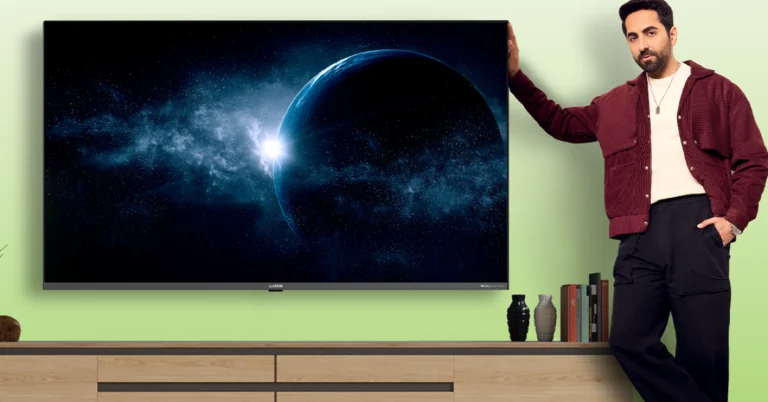
Wobble Displays has launched the X and K series of Google TVs in India, setting new engineering standards. The X Series features TRU 80W PRO Audio and AI-driven performance, while the K Series redefines the mass-premium segment with HDMI 2.1 and 32GB storage. These products include Google TV 5.0 with Gemini integration for personalised content suggestions.
The Wobble Series products are priced as follows: the Wobble X Series starts at Rs 23,999, and the Wobble K Series starts at Rs 10,999. Both series are available for purchase on Flipkart.
In This Article
The Wobble X Series
The Wobble X Series is the perfect display for people who love performance. It comes in sizes of 43 inches, 50 inches, and 55 inches. These models feature a sleek metal finish and a slim, frameless design that enhances the immersion of gaming and movie watching.
The series’ Ultra QLED display can display an incredible 1.07 billion bright colours, thanks to innovative technologies like Dolby Vision Atmos, MEMC, and ALLM (auto-low latency mode). Together, these elements help create fluid and lifelike visuals.
The Wobble X Series is driven by the advanced DynamIQ Dual Processor, which combines the A75 and A55 AI CPU architectures with an AI output processing engine. This collaboration offers superior image quality and user interface performance.
The line has TRU 80W PRO Speakers, which provide exceptional sound quality. This complex audio design comprises dual woofers, separate amplifiers, and tweeters, ensuring one of the best sound experiences in this segment.
For gamers, the Wobble X Series is particularly “game-ready,” since it enables a variable refresh rate (VRR) of up to 120 Hz. It also features HDMI 2.1, eARC (Enhanced Audio Return Channel), and dual-band Wi-Fi, all of which work together to provide a smooth and lag-free gaming experience.
The Wobble K Series takes a revolutionary approach to televisions in the mass-premium market, with versions available in 43-inch, 50-inch, 55-inch, and 65-inch.
One of its main features is amazing premium connectivity, which combines HDMI 2.1 and dual-band Wi-Fi, allowing for next-generation connectivity speeds that suit modern home demands. Furthermore, the series has a large storage capacity, with 32GB of internal space, allowing users to download a wide range of applications and content while keeping consistent performance.
In terms of audio and visual quality, the Wobble K Series outperforms with a robust 40W sound output and Dolby Vision-Atmos compatibility. This comprehensive audiovisual arrangement ensures that users have an immersive and rewarding entertainment experience. Furthermore, the series runs on the latest Google TV 5.0 platform and features a sleek, modern, slim frameless design. It is further improved with ALLM and MEMC technology, which contribute to smoother playback and a more enjoyable viewing experience.
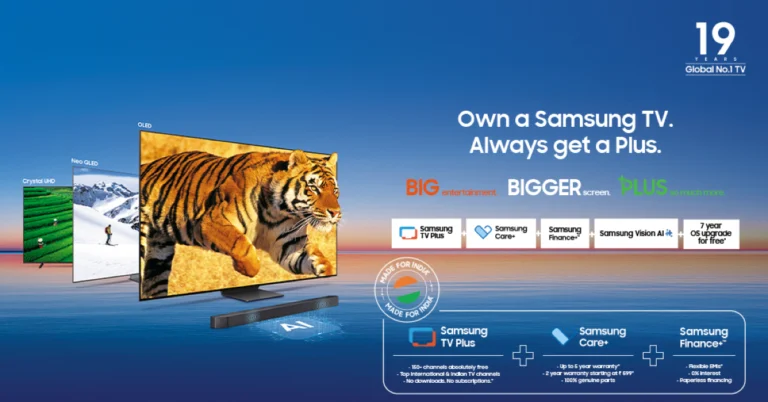
Samsung has launched the ‘Plus’ campaign aimed at simplifying TV ownership in India. This initiative offers a combination of larger screens, advanced Vision AI-powered viewing, complimentary TV channels, extended warranty, and convenient financing options. The campaign encompasses a range of products, including Neo QLED, OLED, and Crystal UHD TVs, providing benefits such as free content through Samsung TV Plus, warranty coverage via Samsung Care+, and flexible purchasing solutions through Samsung Finance+.
Samsung has launched its ‘Made for India’ Plus campaign, rewarding consumers with benefits for purchasing a Samsung television. This initiative aims to enhance value and ownership experiences for Indian consumers by integrating advanced display technologies, content access, service assurance, flexible financing, and long-term software support, emphasising Samsung’s commitment to tailored solutions for India.
Consumers within the Plus ecosystem benefit from Samsung Care+, which provides enhanced after-sales service and offers up to five years of warranty coverage. This service includes a two-year comprehensive warranty available for INR 599, utilising 100 per cent genuine parts and backed by Samsung’s nationwide service network.
Samsung Finance+ provides flexible and paperless financing options aimed at enhancing the purchasing experience for customers. It includes attractive zero per cent interest plans, making financing more accessible. This streamlined financing process is specifically designed to minimise barriers to purchase, offer convenience at the point of sale, and facilitate a more customer-friendly transaction experience.
The Plus campaign encompasses the Crystal UHD, Neo QLED, and OLED TV ranges. Consumers can access Samsung TV Plus, which offers over 150 free channels, covering entertainment, movies, news, and regional content, without the need for subscriptions or downloads. The televisions provide an immersive viewing experience on larger screens, are enhanced by Samsung Vision AI for intelligent picture quality, and guarantee up to seven years of OS upgrades, ensuring long-term performance and relevance.
Viplesh Dang, Senior Director, Visual Display Business, Samsung India, said, “The ‘Made for India’ Plus campaign reflects our deep understanding of Indian consumers and their expectation for greater value from their purchases. Today’s TV buyers are looking for more than just superior picture quality. They seek longevity, flexibility, smart experiences and trusted services. With PLUS, we bring together innovation, convenience and assurance in a single offering, making premium television experiences more accessible to Indian households.”
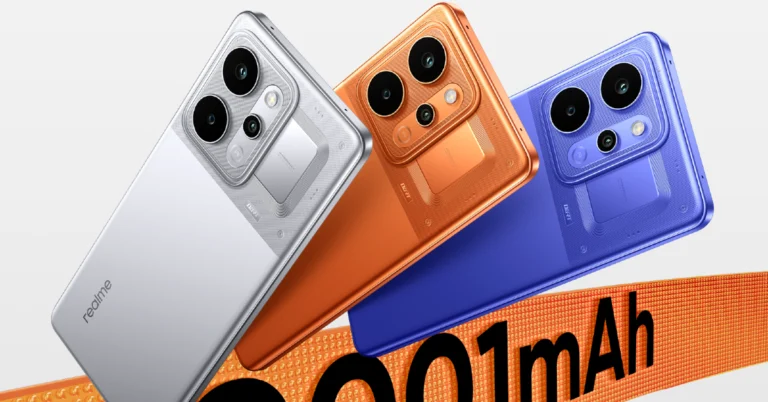
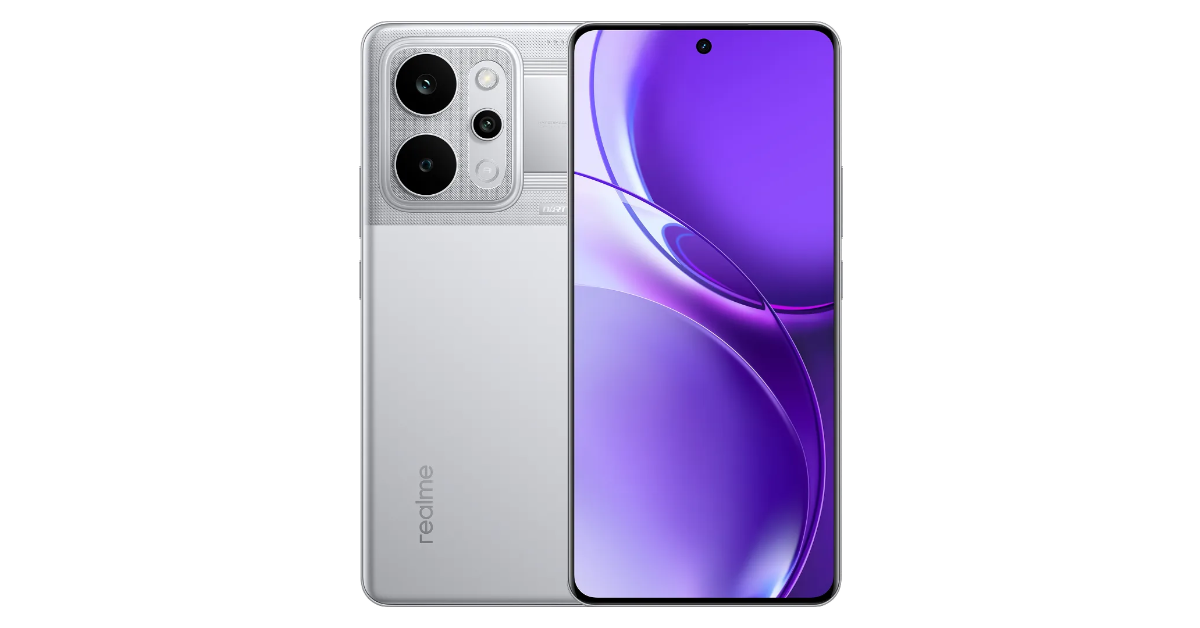
The Realme P4 Power 5G has been launched in India. The MediaTek Dimensity 7400 Ultra SoC powers this smartphone and runs on Realme UI 7.0, which is based on Android 16. It has a 1.5K 4D Curve+ HyperGlow display that can refresh up to 144Hz. The new phone has a 50-megapixel main camera and a 10,001mAh silicon carbon Titan Battery, which lets it last about 39 days on a single charge. It has two cameras on the back and an LED flash.
In This Article
Pricing and Availability
Realme has released the P4 Power 5G in India, beginning at Rs 25,999 for the entry-level option with 8GB RAM and 128GB storage. The device with 8GB RAM and 256GB storage costs Rs 27,999, while the premium option has 12GB RAM and 256GB storage for Rs 30,999.
The device is available for purchase on Flipkart in three colours: silver, orange, and blue, with the TransView Design. Customers can also benefit from a Rs 2,000 bank discount on their purchases.
Specs and Features
The Realme P4 Power 5G has strong ArmorShell Protection and high ratings for dust and water resistance (IP66, IP68, and IP69), so it can handle tough conditions. The display is 6.8 inches wide and has a resolution of 1.5K. It also has 4D Curve+ HyperGlow technology, which helps it refresh quickly at up to 144Hz. The screen is quite bright, with a maximum brightness of 6,500 nits, and it can show an amazing 1.07 billion colours. It also supports HDR 10+ content, which makes the experience even better.
The Realme P4 Power 5G runs on Realme UI 7.0, which is based on Android 16. The company promises three years of OS upgrades and four security patches to keep the gadget up to date and safe. The MediaTek Dimensity 7400 Ultra chipset is inside, and it was made utilising a cutting-edge 4nm technology. Realme has also added a huge 4,613 sq mm AirFlow vapour chamber to the P4 Power 5G design to keep the device’s temperature stable even when it is being used heavily. The HyperVision+ AI technology in this smartphone says it can boost image resolution by up to 300% and frame rates by up to 400%.
It has a big 10,001mAh silicon carbon Titan Battery that is made to last a long time and work well. The manufacturer says that the device can play videos for up to 32.5 hours, stay on standby for up to 932.6 hours, and play music through Spotify for about 185.7 hours. It can also last up to 11.7 hours of gaming on BGMI on a single charge. The phone can also charge quickly; it has 80W wired fast charging and 27W wired reverse charging support.
The main camera in this setup is a 50-megapixel Sony IMX882 sensor with an f/1.8 aperture and optical image stabilisation (OIS) to make pictures clearer and more stable. There is also an 8-megapixel ultrawide camera, allowing for wider field captures. The phone also has a 16-megapixel front-facing camera that you can use to take selfies and make video calls. The camera system can record video at up to 4K resolution at 30 frames per second, which makes sure that the video quality is always high for different recording demands.
Xiaomi has launched the REDMI Note 15 Pro 5G series in India, and yes, the headline feature is exactly what your camera roll has been asking for – a 200MP “200MasterPixel” camera system. The lineup includes two models, the REDMI Note 15 Pro 5G and the REDMI Note 15 Pro+ 5G, both built around the idea that a mid-range phone should survive real life and not just showroom lighting.
In This Article
The camera pitch: 200MP, but with practical upgrades too
At the centre is a 200MP HPE sensor (Xiaomi says this is a global debut for the sensor), using a large 1/1.4-inch format and f/1.65 aperture. The series also supports 4x in-sensor zoom, which aims to deliver sharper zoom shots without instantly turning faces into oil paintings. Xiaomi is also leaning hard into “shoot, edit, share” workflows with features like Dynamic Shots 2.0, portrait algorithms, and AI tools such as reflection removal and beautify features, plus quick sharing to apps like Instagram and WhatsApp.
Battery: big numbers, fast charging, and reverse charging
If your daily routine includes maps, calls, videos, and a little doom-scrolling on the side, Xiaomi is clearly betting you want a battery that does not negotiate.
REDMI Note 15 Pro+ 5G: 6,500mAh silicon-carbon battery with 100W fast charging and 22.5W reverse charging
REDMI Note 15 Pro 5G: 6,580mAh Si-C battery with 45W fast charging
Both models ship with a charger in the box. Xiaomi also claims long-term battery health, with the battery management system designed to retain at least 80 per cent capacity after 1,600 charge cycles, which it frames as roughly six years of typical use.
Durability: the “oops-proof” checklist is long
The series leans into what Xiaomi calls “REDMI Titan Durability” with reinforced internal structure and Corning Gorilla Glass Victus 2. Beyond the marketing label, the useful bit is the certification stack and the real-world intent: fewer cracked screens, fewer panic moments.
Highlights include:
SGS Premium Performance Certification
Claimed drop resistance up to 2.5 metres
IP69K water resistance, plus IP66, IP68, and IP69 ratings
TÜV SÜD endurance certification claims, with multiple waterproofing elements
HydroTouch 2.0 for touch response when fingers or the screen are wet
In plain English, it is built for monsoons, dusty commutes, accidental spills, and that one friend who always insists on pool photos.
Redmi Note 15 Pro
Performance and connectivity: two chips, plus offline calling
The Pro+ runs Snapdragon 7s Gen4 and introduces Xiaomi’s IceLoop cooling system to the Note series, aimed at keeping sustained performance steady during gaming and heavy multitasking. The Pro model runs the Dimensity 7400 Ultra, positioned for efficient everyday performance.
Both phones also support Google Gemini and Circle to Search. The Pro+ also includes Xiaomi’s HyperAI layer for additional on-device AI features. The most unusual headline, though, is Xiaomi Offline Communication, which is designed for kilometre-level voice transmission even without cellular coverage, pitched for remote travel and emergencies.
Display and audio: big screen energy
Both devices come with a 6.83-inch near-borderless display, up to 3,200 nits peak brightness, high-frequency PWM dimming (3,840Hz), and TÜV certifications aimed at eye comfort. Audio gets a claimed 400 per cent volume boost, which sounds dramatic, but the practical promise is simply louder and clearer speaker output.
REDMI Note 15 Pro+ 5G (8GB + 256GB): Rs 34,999 (MRP starts Rs 37,999) Bank offers include up to Rs 3,000 off on select HDFC, SBI, and ICICI cards.
Pre-booking extras:
1-year screen replacement on both models
Pro+ pre-bookers also get a Redmi Watch Move free
Colours:
Pro+: Coffee Mocha, Mirage Blue, Carbon Black
Pro: Silver Ash, Mirage Blue, Carbon Black
Sale starts: February 4, 2026, via mi.com, Amazon India, and authorised retail stores.
A 200MP camera and IP69K toughness in the same phone is a very 2026 flex, especially when paired with genuinely large batteries. The real test will be consistency, camera processing, thermal stability, and how much of that “offline communication” people actually use outside adventure plans and power cuts. Still, if you want one phone that can shoot, survive, and last all day, this series is clearly trying to be the sensible choice with a slightly dramatic spec sheet.
India’s Ministry of Skill Development and Entrepreneurship (MSDE) has teamed up with Google Cloud and Chaudhary Charan Singh University (CCSU) to create the country’s first AI-enabled university. The goal of this partnership is to use cutting-edge cloud and AI technologies to build a nationwide framework that updates the vocational education system. Google is giving ₹85 crore to improve public education and is also introducing AI-powered learning tools that will reach 75 million pupils and 1.8 million teachers by December 2027. New features like JEE Main practice exams and tools for teachers will be added to help students learn better through responsible AI.
Driving scaled impact through ecosystem partnerships means that Google.org is giving Wadhwani AI a big grant of ₹85 crore (about $10 million) to improve adaptive learning for a vast demographic, including 75 million students, 1.8 million teachers, and 1 million early-career professionals in all areas of education, from early childhood to higher education, by December 2027. The programme also stresses better support for teachers through a statewide effort to train teachers and support workers. The project aims to create India’s first AI-enabled state university and a national framework to modernise the Indian vocational ecosystem using cutting-edge cloud and AI technologies. It is being done in partnership with the Ministry of Skill Development and Entrepreneurship and Chaudhary Charan Singh University in Meerut.
There are new AI tools for teachers and students, such as full-length JEE Main practice tests in Gemini. Soon, Search will have an AI mode that uses carefully checked content from PhysicsWallah and Careers360. The AI Mode in Search will also help students create detailed study guides and interactive quizzes using a Canvas tool, a flexible side panel for organising and improving educational resources. The Google Classroom app for Gemini is one of the new tools that will help teachers get their students more involved and give them personalised learning experiences. It has built-in audio and video feedback and information on how to use AI. Also, Google Workspace Studio will help teachers use AI agents to automate their work. There are also new tools that the education community can use to check that Google AI has created or changed content.
Google’s educational philosophy is based on combining the human side of teaching with the scientific side of learning, which is how people learn things. Researchers, teachers, and parents all worked together to come up with this method, which stresses that AI models should be used to initiate curiosity rather than just give answers. The Gemini app’s Guided Learning feature is a significant project. It is meant to be like a personal tutor who helps individuals learn reasoning on their own.
To assess the efficacy of AI in educational settings, Google DeepMind executed a randomised control study at City Montessori School in Lucknow, concentrating on the application of guided learning in mathematics lessons for Grade 8-9 students. Initial results indicate that around 75% of classroom interactions prompted students to enhance their understanding of concepts rather than pursue immediate solutions. This finding shows that when AI is made with the goal of teaching and used carefully with teachers, it can help students understand things better and improve their ability to think critically.
India is a top place for AI-powered learners, especially as Gemini is used for learning every day. People in India can use tools like guided learning, quizzes, flashcards, and study guides to learn about a wide range of disciplines, from advanced physics to STEM. India also has a large number of NotebookLM users, who made more than 3 million outputs in the last month, including quizzes and other audio-visual items. Teachers use Google Classroom to make themselves more productive by making lesson plans and doing risk assessments for school excursions. Gemini, NotebookLM, AI Mode in Search, and Google Classroom are some of the most important products that are available in many Indian languages to make sure everyone can use them.
Garena Free Fire (GFF) Max is a battle royale game with regular awards and tournaments to keep players interested. If you play GFF, you should be aware of the redeem codes that are released on a daily basis. However, because the battle royale game is banned in India, players from other countries can use theFree Fire Redeem codes daily. If you’re unfamiliar with the codes or don’t know how to get them, we’ve put together a step-by-step guide to help youredeem them. Check out Garena Free Fire Max Redeem Codes for 29 January 2026.
These codes are a great way to get free items in the game. The 12-digit codes contain letters and numbers, as well as an expiration date and time. Because the Garena FF redeem codes cannot be used more than once, you should hurry to the redemption page to claim your free reward before someone else does. To get a free reward, all you have to do is go toreward.ff.garena.com/en, which is the official redemption page. Also, keep an eye on this space for daily updates on Gadget Bridge on GFF Max redemption codes and rewards.
Amazon Quiz 29 January 2026: The New Daily Quiz is now available. Customers from different parts of the country are participating in the daily quiz. The quiz starts at midnight today and will be live until 11:59 PM tonight. By successfully answering every question, participants in the quiz have the chance to win wonderful rewards. Up to Rs 500 Amazon Pay Balance is up for grabs for participants today.
One wrong answer could eliminate you from the quiz. You have a chance to win up to Rs 500 Amazon Pay Balance if you successfully answer every question. Users of the app only have the opportunity to take the quiz. Check Out the 29 January 2026 Quiz.
In This Article
Are you not able to find Amazon FunZone? Click below and participate.
We have written an explainer above; you can refer to that.
When are the winners of the Quiz and contest announced or declared?
The announcement of today’s quiz winner will take place Tomorrow. As for the Special Quiz and “Spin & Win” Contest, the winners will be declared once the Quiz Contest comes to an end. To find out who the lucky winner is, you can refer to the Winners List or visit the Amazon Winners tab in the Amazon App.
How to participate in the Daily Amazon Quiz?
That is very easy, just got to the Amazon app and scroll to the bottom of the page and you will find the Quiz section. Click on it (usually it is called the fun zone) and you can enter the Amazon Today Quiz Contest.
Are there any other quizzes or contests running on Amazon daily?
Yes, there are many running daily. These range from spinning the wheel to answering the questions correctly. All are located in the Fun Zone.
What are the criteria for selecting a winner in the Daily Amazon Quiz?
When a qualified player submits correct answers to all the questions, they will automatically be entered into a lucky draw. This draw will include all participants who answered all the questions correctly. Amazon randomly selects the final winners from the pool of eligible participants who gave the right answers.
Which Types of Questions are asked within the Amazon Daily Quiz?
These are very simple and straightforward questions. These are mainly related to general knowledge.
Where should I look for Amazon Daily Quiz answers?
You can bookmark our website www.gadgetbridge.com as we will help you every day with the Amazon Daily Quiz. We bring you fresh answers every day for the Amazon Daily Quiz and Contest.
What time does Amazon announce previous winners?
The previous winner’s name will be announced today at 12 PM (noon).
Are you looking for today’s Wordle answer for January 29, 2026? The problem is difficult to solve, so if you need assistance, we’ve included hints and the clue to today’s Wordle Quiz. Below, we have made it simple for everyone to understand how to get to the Wordle Answer today.
In This Article
Hints and Answers for Today’s Wordle January 29
Before answering directly, please check the Wordle Hints first.
Hint 1: Today’s Wordle answer includes two vowels. Hint 2: The answer for today has no repeating letter. Hint 3: Meaning- something that easily breaks into small, thin pieces (like pastry or skin)
What word does today’s Wordle begin with?
Do you need help with today’s Wordle answer’s initial letter?
The first letter in today’s Wordle is “F”
Today’s Wordle Answer
The answer to Wordle #1685 on January 29, 2026, is — FLAKY
Wordle: A Five-Letter Word Guessing Game • The game allows six guesses of a five-letter word. • Provide feedback on the guessed letters’ placement in the puzzle. • The New York Times purchased the game in 2022. • Created by Josh Wardle for his partner, narrowing down 12,000 English words to 2,500. • Named after the word “word.”
How To Play Wordle?
Wordle is a New York Times word puzzle game that allows users to guess a five-letter word in six attempts. The letters are highlighted in Yellow and Green, indicating whether the word is present in the answer or not, and Green letters indicate the correct guess.
Select a powerful starting word: Avoid using unusual words, as they frequently do not match common letters. A good opening word has plenty of benefits.
Repeating letters: Don’t be afraid of repeating letters; they appear frequently in words. The answer may contain one or two repeated letters.
Use the Wordlebot: The NYT’s Wordlebot analyses and compares replies to itself. This challenge can assist you in enhancing your guessing skills and highlighting areas for development.
If you have been Googling the Apple Creator Studio price, here is the headline number and the bigger story. Apple has introduced Apple Creator Studio, a new subscription bundle that groups its pro creative apps and adds new intelligent features across video, music, imaging, and productivity. The subscription begins Wednesday, January 28, and it is clearly designed for people who jump between editing a video, cleaning up audio, and packaging everything into a pitch deck before lunch.
In This Article
What is Apple Creator Studio?
Apple Creator Studio is a single subscription that includes:
Final Cut Pro (Mac and iPad)
Logic Pro (Mac and iPad)
Pixelmator Pro (Mac and iPad)
Motion (Mac)
Compressor (Mac)
MainStage (Mac)
Plus premium content and intelligent features in Keynote, Pages, Numbers, and later Freeform (iPhone, iPad, and Mac)
The practical pitch is simple. Instead of buying multiple apps separately, creators can subscribe and get a coordinated toolkit that spans video, audio, images, and the documents that ship projects out the door.
Final Cut Pro gets smarter search, faster assembly, cleaner rhythm
For video creators, the most meaningful upgrades land in Final Cut Pro, with features that target the slow, repetitive parts of editing.
Transcript Search helps you locate soundbites by typing words or phrases, which is especially useful for interviews, podcasts, and long talking-head footage.
Visual Search lets you search through footage for objects or actions, then pull those moments into the timeline faster.
Beat Detection shows beats, bars, and song sections in the timeline, so cutting to music becomes more precise and less guesswork.
On iPad, Montage Maker can automatically assemble a first pass by analysing footage, then help reframe horizontal clips to vertical with auto-cropping for social-friendly formats.
This is where Final Cut Pro AI becomes less buzzword, more time-saver. The theme is not “replace the editor,” it is “remove the scavenger hunt.”
Logic Pro adds Synth Player, Chord ID, and smarter loop discovery
Music creators and video editors who make their own soundbeds will notice a handful of workflow boosts:
Logic Pro Synth Player joins the Session Player lineup to generate realistic electronic performances with controls for complexity and intensity.
Chord ID can analyse audio or MIDI and turn it into a chord progression, which is a big deal for creators who start with a rough demo and want to build quickly.
A refreshed Sound Library brings more Apple-designed packs and producer packs, with royalty-free loops and samples.
On iPad, natural-language loop search aims to help you find “a bassy, minimal, late-night vibe” without memorising tags.
In short, Logic Pro is leaning into “assistive intelligence,” not autopilot.
Pixelmator Pro arrives on iPad, and that is a big shift
The standout imaging news is Pixelmator Pro iPad support. Pixelmator Pro has been a favourite among creators who want strong editing tools without the heft of more sprawling suites, and the iPad version is built around touch and Apple Pencil workflows.
Key points creators will care about:
A touch-optimised workspace with Apple Pencil support
Layers, smart selection tools, and advanced masks for precise edits
Performance tuned for Apple silicon
Tools like upscaling and smart crop suggestions to polish content quickly
For subscribers, there is also a new Warp tool and mockups that lean into fast content packaging.
Keynote, Pages, and Numbers get premium templates and AI assist
Apple Creator Studio also targets the “work around the work,” meaning the decks, briefs, and spreadsheets that sit behind creative output.
A new Content Hub surfaces curated photos, graphics, and illustrations.
Keynote includes beta features that can generate a first draft of a presentation from an outline, create presenter notes, and help clean up slide layouts.
Numbers can generate formulas and fill tables using pattern recognition style tools, including Magic Fill.
If you build pitches, reports, or client updates alongside your edits, Keynote AI presentation tools may be the sleeper feature that saves you the most time.
Pricing and availability (India and beyond)
Here is what buyers will want upfront, including Creator Studio subscription India details:
India pricing: Rs 399/month or Rs 3,999/year
Education pricing (college students and educators): Rs 199/month or Rs 1,999/year
Free trial: one month for new subscribers
Family Sharing: up to six members can share eligible apps and content
One-time purchases (Mac) still available for Final Cut Pro, Logic Pro, Pixelmator Pro, Motion, Compressor, and MainStage
This is also where the debate begins. Subscriptions lower the entry cost for creators who want Pro Tools today, but they also change the psychology of ownership. The upside is convenience and a wider toolkit; the trade-off is recurring payments and the need to stay subscribed for full access to certain pro workflows.
Apple Creator Studio looks built for the modern creator who films on a phone, edits on an iPad, polishes on a Mac, and still needs a clean deck to close the job. The bundle is compelling on paper, especially at Indian pricing, and the new features are pointed at real bottlenecks. Still, the long-term question is whether creators will accept subscriptions as the default or treat them like a temporary studio rental. Either way, 2026 is shaping up to be the year your editing timeline gets new roommates: transcripts, beat grids, and a whole lot of automation.
If you like all things bees, you need to check out Bee Swarm Simulator on Roblox. This game lets you cultivate a bee collection and do fun activities like collecting pollen and harvesting honey. If you’re looking for some more action, you can go on side quests and fight bugs and monsters. To help you along the way, the game offers some special codes. Here are all the Bee Swarm Simulator codes available in January 2026.
Other Roblox titles like Tap Simulator and Catch Critters recreate experiences similar to this game. We recommend giving them a shot. While you’re here, check out the latest Drift 36 codes as well. If you have any questions, let us know in the comments!
Tap Simulator is a fun spin on the whole digital pet experience. Each tap in this game earns you ‘Clicks’, which can be used to buy new eggs. Once an egg hatches, a pet gets added to your collection. Taking care of your pets earns you more Clicks. You can also explore new islands and have your pets accompany you. To help you get started, the game offers some special codes. Here are all the Tap Simulator codes that are up for grabs in January 2026.
For more chill and relaxing games, check Catch Critters and Bee Swarm Simulator on Roblox. While you’re here, take a look at the latest Drift 36 codes as well. If you have any questions, let us know in the comments!
Over the last couple of years, smartphones across the board have been quick to incorporate silicon carbide (Si/C) battery packs. These batteries are not only slimmer than their Li-ion counterparts, but also have a higher storage capacity. While some brands (like Samsung and Apple) are hesitant to make the switch, the likes of OnePlus, Xiaomi, Oppo, and more have already armed their flagship, midrange, and even midrange offerings with Si/C batteries. If you want to enjoy an almost 2-day battery life on a single charge, check out these top 10 smartphones with the biggest batteries.
The newly-launched Realme P4 Power has the biggest battery pack out of all the smartphones in the market by a big margin. The 10,001 Si/C unit supports 80W wired charging. Realme claims that a full charge can last for 1.5 days under normal use. The company is offering an 80% battery health guarantee over a period of 4 years. It will offer free battery replacements if the health falls below 80% after 4 years. The P4 Power is powered by the MediaTek Dimensity 7400 Ultra chipset. Accompanying this processor is the brand’s in-house Hyper Vision+ AI Chip. The rear camera panel houses a 50MP primary shooter and an 8MP ultrawide lens.
The India-spec model of the Poco F7 has a staggering 7,550mAh Si/C battery pack. It supports 90W wired charging, reaching an 80% charge in just 30 minutes. However, there’s no wireless charging support. The smartphone is powered by the Snapdragon 8s Gen 4 processor. Software duties are handled by the Android 15-based HyperOS 2 out of the box. The 6.83-inch AMOLED display has a 120Hz refresh rate and can reach 3,200 nits of peak brightness. The rear camera panel houses a 50MP primary shooter and an 8MP ultrawide lens. Read our Poco F7 review for more details.
The Oppo Find X9 Pro offers the biggest battery pack among all the flagships. It packs a massive 7,500mAh Si/C battery under its hood. This battery pack supports 80W wired charging, 50W wireless charging, and 10W reverse wireless charging. At the heart of the smartphone lies the MediaTek Dimensity 9500 SoC. It runs the Android 16-based ColorOS 16 out of the box. The rear camera array comprises a 50MP primary shooter, a 200MP telephoto lens with 3x optical zoom, and a 50MP ultrawide lens. Dive into our review of the Oppo Find X9 Pro to learn more about the smartphone.
The R variant in the OnePlus 15 series has a slightly larger battery than the flagship model. This 7,400mAh Si/C battery pack supports 80W wired charging. The smartphone is powered by the Snapdragon 8 Gen 5 SoC. Its 6.83-inch AMOLED display has a 165Hz refresh rate and can reach a peak brightness of 3,600 nits. The rear camera panel houses a 50MP primary shooter and an 8MP ultrawide lens. The smartphone is rated IP68/IP69K for dust and water resistance. It can survive high-pressure water jets and is immerisble up to 1.5m for 30 minutes.
The OnePlus 15 offers the best overall battery experience. While its 7,300mAh Si/C battery pack has a slightly lower capacity than the 15R, it supports 120W wired charging, 50W wireless charging, 10W reverse wireless charging, and 5W reverse wired charging. It is one of the fastest charging smartphones around, taking just 15 minutes to reach a 50% charge. Powering this device is the Snapdragon 8 Elite Gen 5 processor. Its rear camera array comprises three 50MP sensors, one each for the primary shooter, ultrawide lens, and 3.5x periscope telephoto lens. Check out our OnePlus 15 review for more details.
The iQOO Z10 and Vivo T4 share the same design, hardware, and specs. The two midrange smartphones are equipped with a massive 7,300mAh Si/C battery pack and come with a 90W power adapter inside the box. This adapter can fully charge the battery in just over an hour, with a 50% charge taking almost 33 minutes. The 6.77-inch AMOLED display has a 120Hz refresh rate and can reach a peak brightness of 5,000 nits. The rear camera panel houses a 50MP primary shooter and an ultrawide lens. Check out our iQOO Z10 and Vivo T4 reviews before making the purchase.
The entry-level model in the OnePlus Nord 5 series has a bigger battery pack than the standard variant. This 7,100mAh unit supports 80W fast wired charging. The global model comes with a 5,200mAh battery pack. The smartphone is powered by the MediaTek Dimensity 8350 Apex chipset. It runs the Android 15-based ColorOS 15 out of the box. The 6.77-inch Fluid AMOLED display has a 120Hz refresh rate and can reach a peak brightness of 1,430 nits. The rear camera panel houses a 50MP primary shooter and an 8MP ultrawide lens. There’s support for expandable storage on board. The device is rated IP65 for protection against dust and water. Check out our OnePlus Nord CE5 review for more details about the phone.
The gaming-specialist iQOO 15 has a 7,000mAh Si/C battery under its hood. It supports 100W wired and 40W wireless charging. Being a gaming smartphone, it has a nifty Bypass Charging feature, which diverts the incoming current from the charger directly to the motherboard, thereby reducing charge cycles. Its 6.85-inch LTPO AMOLED display has a 144Hz refresh rate and can reach a peak brightness of 6,000 nits. The rear camera panel houses three 50MP sensors, one each for the primary shooter, ultrawide lens, and 3x telephoto lens. Dive into our iQOO 15 review to learn more about its gaming performance.
Realme’s latest flagship smartphone flaunts a 7,000mAh battery pack. It supports 120W wired charging, reaching a full charge in just 43 minutes. With a 50W wireless charging, it takes 79 minutes to accomplish the same feat. There’s support for 5W reverse wired and 10W reverse wireless charging as well. Powering the device is the Snapdragon 8 Elite chipset. Its 6.79-inch AMOLED display has a 144Hz refresh rate and can reach a peak brightness of 7,000 nits. The modular rear camera island houses a 50MP primary shooter, a 200MP telephoto lens with 3x optical zoom, and a 50MP ultrawide lens.
If you’re shopping in the budget segment, check out the Moto G57 Power. Its 7,000mAh Si/C battery pack can last up to 2 days on normal usage. The smartphone comes with a 33W power adapter inside the box, which takes up to 2 hours to fully charge the battery pack. Powering this device is the Snapdragon 6s Gen 4 SoC. The 6.72-inch IPS LCD panel has a 120Hz refresh rate and can reach a peak brightness of 1,050 nits. The rear camera panel houses a 50MP primary shooter and an 8MP ultrawide lens. Read our Moto G57 Power review to learn more about its everyday performance.
The Realme 16 Pro+ comes with a 7,000mAh Si/C battery pack. It supports 80W wired charging, taking up to an hour to reach a full charge. The smartphone is powered by the Snapdragon 7 Gen 4 chipset and runs the Android 16-based Realme UI 7 out of the box. Its 6.8-inch AMOLED display has a 144Hz refresh rate and hits 6,500 nits of peak brightness. The rear camera array comprises a 200MP primary shooter, a 50MP telephoto lens with 3.5x optical zoom, and an 8MP ultrawide lens. Read our Realme 16 Pro+ review to learn more about the smartphone.
These are the top 10 smartphones with the biggest batteries. While buying a smartphone, make sure you check out the brand’s internal battery life cycle tests to give you a better idea of its longevity. If you have any questions, let us know in the comments!