


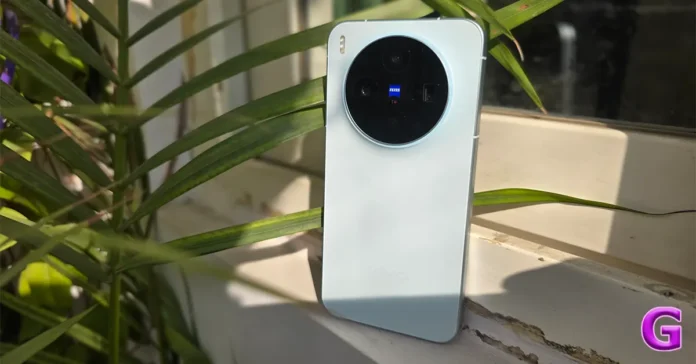
We recently reviewed the Vivo X300 Pro and were extremely satisfied with its performance, particularly the camera. We’re back with another review, this time featuring the Vivo X300, which is surprisingly lightweight and compact. It challenges the idea that you need a large flagship device to capture professional-quality photos. Equipped with the Dimensity 9500 and Vivo’s V3+ imaging silicon, this smartphone is an excellent choice for those seeking a balance of comfort and performance. It stands out from bigger phones.
In this review, we’ll discuss how Vivo managed to create a more compact flagship experience without sacrificing quality.
In This Article
Design and Display

Vivo distinguishes itself as a leading manufacturer by offering a comprehensive out-of-the-box experience. The package includes the following accessories: a 90W FlashCharge Power Adapter, a USB-C to USB-C cable capable of handling 90W of power, a premium protective case often colour-matched or made of high-quality transparent TPU to safeguard the camera module, a pre-applied screen protector on the display, and a SIM eject tool accompanied by standard warranty and quick-start documentation.
The Vivo X300 is a compact flagship phone featuring a unique design that distinguishes it from the X200, its predecessor. It is crafted for one-handed use while maintaining a premium feel.
It is smaller than most of its competitors, making the compact marvel easier to carry around. This makes it less difficult for people with small hands or pockets to operate. The smartphone has a size of 150.57 x 71.92 x 7.95mm. The gadget is easy to carry, weighing 190 g.
According to the firm, it uses a Unibody 3D Glass structure in its Cold-Sculpted glass. In one continuous piece, the glass goes upward to reach the lens housing, not stopping at the camera module. No sharp gaps exist where dust may gather. This design decision enhances the user experience altogether by reducing wobbling on flat surfaces.
Also Read: Vivo V60e Review: Midrange Maverick
The device features Diamond Armour Glass, which is claimed to improve drop resistance by 110% over the previous generation, highlighting its technological durability. Its dual IP ratings of IP68 and IP69 show it can withstand immersion in water and exposure to high-pressure or high-temperature water jets, ensuring it remains sealed and functional even during severe conditions like storms or hot water cleaning. These features establish it as a dependable choice in the smartphone market.
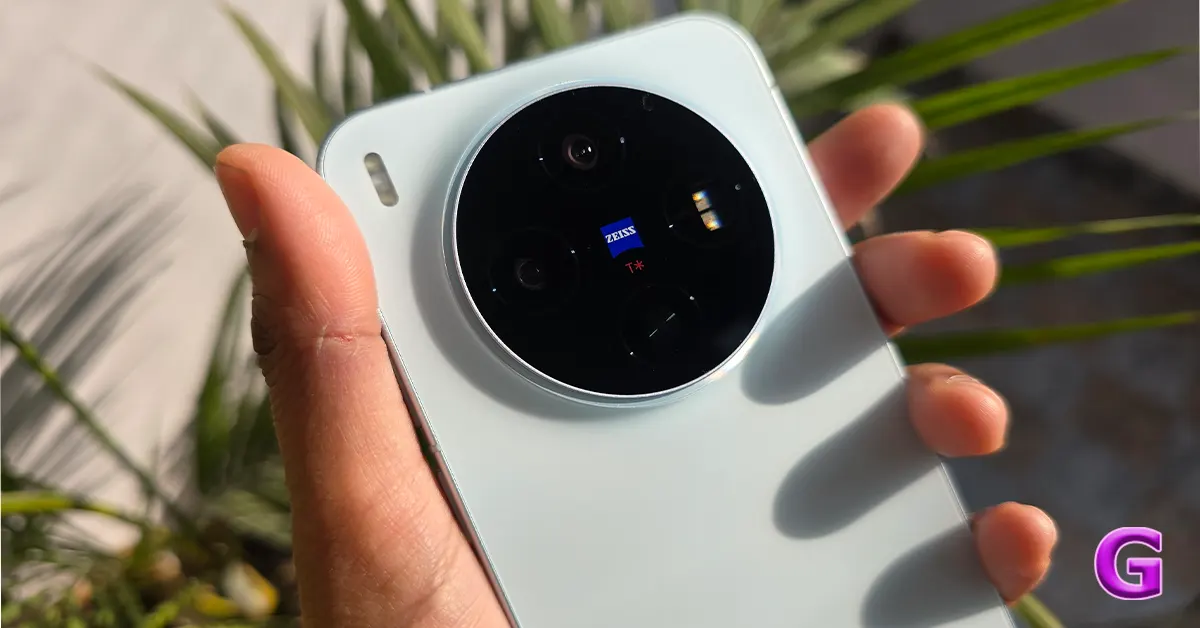
The MistBlue colour option for this review is appealing because it strikes a balance between a vibrant, light-reactive surface and a polished matte finish. When exposed to direct sunshine or intense studio lights, the hue changes from a desaturated ice blue to a pearly white or silver. The micro-etched glass layer on the rear panel is intended to disperse light, producing a gentle, misty glow that accentuates the camera island’s sculpted contours without creating sharp reflections. Furthermore, the polished metal frame and silver-toned ZEISS circular module combine to produce a pleasing contrast with the cool blue hues.
The device’s metal frame has defined edges, which set it apart from the entirely rounded form.
This finish makes it difficult to leave noticeable fingerprints since the smartphone is extremely resistant to smudges and grease stains. When compared to high-gloss glass, the smoothness of the surface may give the handset a slightly slippery feeling despite its impressive pristine state. But as the company has provided a back cover which is of a similar colour to the phone, you can use it to protect the gadget from accidental damage.
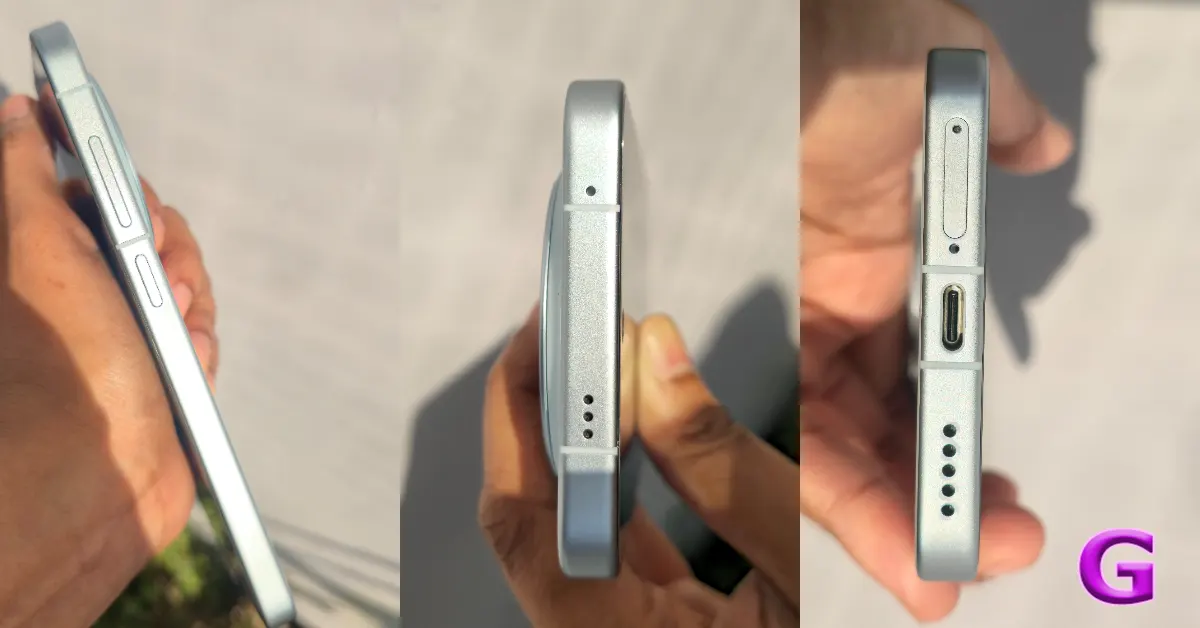
The standard X300 features all physical controls on the right side, making them appear tidy and easily accessible. There is a power button made of high-quality aluminium that is just above the middle of the frame. When you press it, you get a strong click with minimal travel. Above this is a single long button that controls the volume. The buttons are the same colour as the Mist Blue frame and have a distinctive finish that is nice to feel. The left rail of the gadget, on the other hand, is absolutely smooth. The customisable Action Button is exclusively on the bigger X300 Pro model. The regular X300 uses software gestures for comparable tasks.
The bottom border of the gadget has a symmetrical arrangement with a few necessary components. Additionally, it features a USB-C connector (USB 3.2 Gen 1) capable of transferring data at speeds up to 5 Gbps. This port serves as the primary connection for 90W FlashCharge and enables OTG for external devices such as SSDs and cameras. The SIM tray is next to the USB port. It can hold dual-sided Nano-SIM cards (SIM1 on top and SIM2 on the bottom) and also lets you set up eSIMs. There is a main speaker with a precision-drilled grille to the right of the charging port. There is also a small pinhole microphone between the SIM tray and the USB-C connector.
The top edge of the device is designed to be clean and functional, featuring a simple frame that highlights its unibody construction. The second speaker vent is discreetly integrated, allowing the earpiece and speaker to work together to enhance stereo sound. Additionally, a noise-cancelling microphone is included to reduce background noise during calls and capture directional sound for videos. The infrared (IR) blaster is seamlessly embedded, either at the top edge or hidden behind the elegant camera glass, making it seamlessly blend into the design. This integration enables the phone to act as a universal remote control for TVs and air conditioners.
The 3D Ultrasonic Fingerprint 2.0 sensor, located beneath the display, is a single-point sensor that works even in light rain or with greasy fingertips. This sensor has been moved somewhat higher than its predecessor to better accommodate thumb positioning. Additionally, an NFC sensor is embedded just under the mist blue glass on the device’s top rear, allowing for contactless payments and quick pairing.
Vivo uses LIPO technology (low-injection pressure overmoulding) to create bezels that are 1.05 mm in size on both sides, which is narrower than the bezels on the last generation of iPhone Pro models. With this design, the glass appears to fit seamlessly into the frame, giving a floating effect. Also, even though the screen looks flat at first, the panel has a little 2.5D curve along the edges that lets swipe motions, especially the back gesture, be smoother than on a regular flat display.
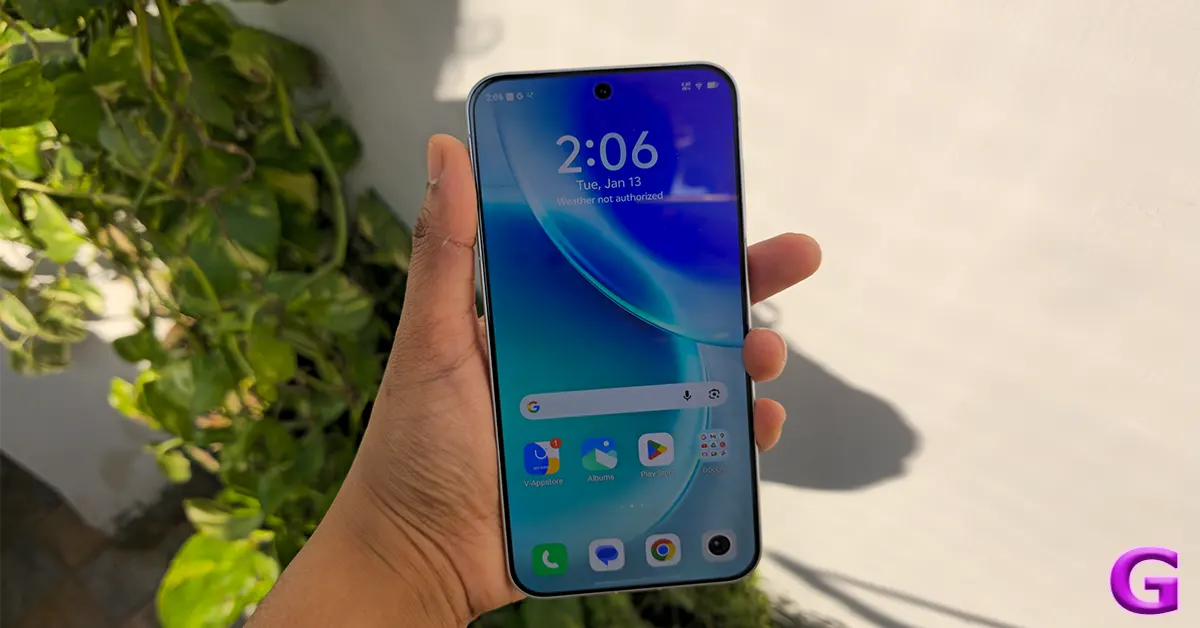
The new 6.31-inch 1.5K AMOLED display, which was co-developed with BOE, uses the Q10+ Luminous Material, resulting in a 15% increase in power efficiency over its predecessor. The panel has a high resolution of 1.5K (1,216 × 2,640 pixels) and a pixel density of 460 PPI, resulting in a far crisper image than ordinary 1080p panels available in other compact devices. The refresh rate extends from 1 to 120 Hz, and an 8T LTPO backplane allows for quicker and more reliable transitions between refresh rates, resulting in the smooth animations observed in OriginOS 6.
The X300’s Night Use & Eye Comfort features include an advanced dimming technology that ensures excellent visibility in low-light situations. The gadget uses high-frequency PWM (pulse width modulation) dimming at 2160 Hz, which considerably minimises screen flicker, which can cause headaches and eye strain, particularly for people who are sensitive to such effects, as seen with other devices such as iPhones and previous Pixels.
Additionally, the X300 has a minimum brightness level of 1 nit, which allows the display to be dim enough to mimic a sheet of paper in a dark environment, improving user comfort during late-night reading sessions.
Furthermore, Vivo’s displays have received TÜV Rheinland Triple Certification, indicating that they meet hardware criteria for low blue light, flicker-free operation, and circadian friendliness for healthy viewing experiences.
The display can also reach a peak brightness of 4,500 nits. The phone’s Immersive Dual-Engine turns on High Brightness Mode when it’s in direct sunlight. This keeps text clear and stops colours from washing away in bright light.
The Wet-Hand Touch algorithm is a cool feature of the gadget. The tech uses AI to tell the difference between water droplets and fingers when it’s wet, as when it’s raining or after washing your hands. Results show that this technology can accurately capture swipes even when the screen is quite wet.
The X300 series features dual stereo speakers. Its broad soundstage enhances sound localisation in games and movies, although the bass is reportedly weak. These speakers excel at podcasts and clear dialogue due to balanced mids and highs. The sound quality is notably powerful, capable of filling a small room.
The new model resolves the problem of screechiness at high volume but lacks bass. It’s worth noting that the X300 and X300 Pro don’t have dedicated Hi-Fi hardware DAC support, but they do work with high-quality wireless codecs like LDAC and aptX Adaptive.
Vivo has included an advanced triple-microphone array meant to improve noise isolation. Also, the AI noise cancellation reduces wind and background noise during calls, making it especially useful in cities. Furthermore, the mics offer audio zooming, which allows users to focus an audio recording on a subject while zooming in, isolating their voice from background noise.
Also Read: Vivo X200 FE Review: A well-rounded flagship-level compact phone
Performance and Cameras
The X300 has the MediaTek Dimensity 9500, which is built on TSMC’s advanced 3nm process. It has a 1+3+4 architecture: one Lumex C1-Ultra core for very demanding single-threaded tasks at 4.21 GHz, three C1-Premium cores for heavy multitasking at 3.5 GHz, and four C1-Pro cores for consistent performance at 2.7 GHz. This configuration results in a 32% increase in single-core performance and a 33% improvement in GPU performance compared to the previous setup.
Vivo’s devices include advanced memory and storage. They come equipped with 12GB or 16GB LPDDR5X Ultra RAM and use Memory Pro technology to keep up to 45 programs running in the background. The phone comes with 256GB or 512GB UFS 4.1 storage, which speeds up performance by increasing the speed of random operations such as reading and writing. This is helpful for things like exporting 4K/120fps video or loading big titles.
The gaming performance of BGMI and CoD Mobile has been optimised, with native 120FPS support and reliable performance. On the highest settings, Genshin Impact maintains a steady 60FPS, with AI Frame Interpolation boosting the experience to a smooth 120fps. To manage heat during use, Vivo employs a specialised 4K Vapour Chamber that utilises a hydrophilic nanofluid, enhancing thermal efficiency and reducing GPU power consumption by improving the heat-vapour transition.
Geekbench 6 Scores:
- Single Core Score – 2,977
- Multi-core score – 9,910

Vivo has officially phased out the Funtouch OS branding worldwide, replacing it with a uniform OriginOS 6 (based on Android 16). This iteration is more than just another skin; it’s an AI-driven upgrade intended to bridge the gap between smartphones and professional workstations.
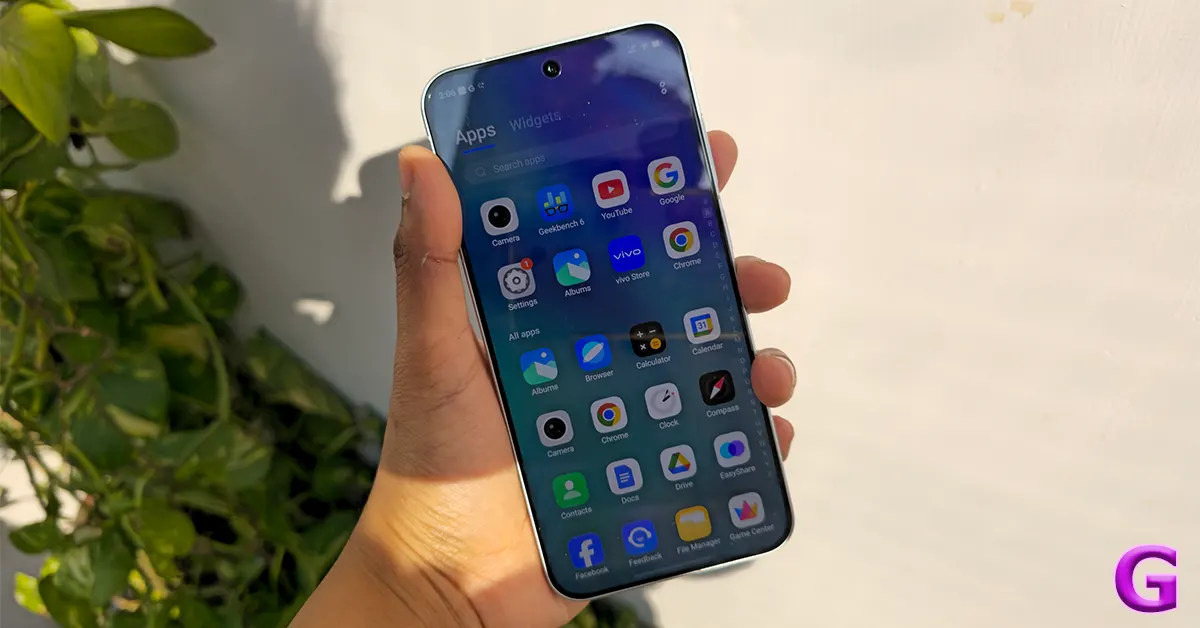
OriginOS 6 introduces a new design language called Liquid Glass, designed to complement the Mist Blue hardware. The system features a Dynamic Glow, making the UI feel more premium, quick, and visually appealing. It uses a real-time physics engine to generate a responsive visual glow during interactions, mimicking how light interacts with the UI, apps, and more. Morphing animations enhance the user experience by smoothly transitioning between application windows, mimicking natural hand movements. The Gradient Blur effect adds depth to menus and notifications while maintaining clear text visibility.
Origin Island is also Vivo’s new way to multitask. There is a dynamic section that shows live controls and lets users drag photographs or text into the island for quick operations, with AI suggestions to help. The Copy & Go tool allows it to be easy to find your way around and call immediately from copied information.
Vivo is promoting the X300 as a great laptop companion for productivity because it has features like One-Tap Transfer, which allows moving files between devices, and AI Captions, which translate and summarise video calls in real time, and better communication with people who speak different languages.
The AI Imaging & Video Suite leverages ZEISS technology to offer innovative features such as AI Image Expander, enhancing photo backgrounds, and AI Magic Move, allowing seamless object repositioning in photos. Additionally, it includes AI UHD Restoration for improving photo quality and Veo 3, available within the Gemini app, which creates short, 8-second videos from text prompts.
The Smart Call Assistant handles calls from unknown numbers, transcribes the caller’s words in real time, and allows users to type responses to the AI’s vocalisations. Perfect for avoiding spam calls during meetings.
The new system works much better now that Memory Fusion is here. This allows 47 apps to run simultaneously in the background without needing to update them, thanks to a compression algorithm. The Dual Rendering Architecture ensures the UI remains smooth at 120 Hz, even if an app crashes or stops responding. Vivo also has the best service policy in the industry, offering 5 years of OS upgrades and 7 years of security fixes. Therefore, the X300 is a good long-term investment.
Apps like Instagram, Chrome, and the camera provide fast access, allowing for smooth transitions between multiple applications, up to 12 at once, without sacrificing speed. The software’s responsiveness enables users to swiftly modify their choices during an animation, ensuring smooth device performance without noticeable delay. It adeptly tackles the lightning-fast, multifarious demands of modern apps, overcoming the hurdles of frequent use with amazing ease and efficiency.
Also Read: Vivo X Fold 5 Review: This is more than a phone; it’s a statement piece
The mobile phone has a strong back camera system developed in collaboration with Zeiss. This system has a high-resolution 200-megapixel primary sensor (1/1.14 inch) with optical image stabilisation (OIS) for increased image quality and stability. It also features a 50-megapixel wide-angle lens with a 1/2.76-inch sensor, allowing for more expansive picture vistas. The camera system is further enhanced with a 50-megapixel telephoto lens, the Sony IMX885 LYT-602, which features optical image stabilisation and has a 3x optical zoom capacity.
The Vivo X300’s front camera features a 50-megapixel sensor for selfies and video calls. Notably, all of the cameras can record in 4K video resolution, resulting in high-quality photos and videos.

The Vivo X300 features an impressive 200MP Samsung HPB sensor that employs pixel-binning and high resolution to enhance photo quality. It’s designed to capture clear, vibrant images ideal for social media when lighting conditions are optimal. Using the full 200MP mode offers excellent detail and extensive cropping possibilities without sacrificing texture, though it requires 1–2 seconds to process and might result in overly sharp images.

The camera uses ZEISS Natural Colour technology to produce pictures that look natural, unlike older models that had colours that were too bright. A contrast-forward method brings about shadows and drama that stand out more in photographs, but it may lose clarity in very dark regions compared to other brands that use balanced HDR.
With a near-instant shutter, the X300 catches moving images with minimum fuzz throughout the day. The phone’s low-light performance is remarkable, thanks to powerful AI noise reduction, which offers clear night photos free of the graininess common to mid-range handsets. The ZEISS T coating decreases lens flare from artificial lighting.
The camera has an ambient exposure style, which means it keeps the intricacies of the shadows while lighting up brighter spots well, like neon signs. When it’s darker outside, colour saturation goes up. This may pull off better cityscape photography, but it can also deliver warmer skin tones when they’re lit up by street lights. Also, the Optical Image Stabilisation (OIS) lets you take 2–3 second long exposure photographs manually in Night Mode without much blur.
Vivo’s relationship with Zeiss adds the Natural Colour feature to its phone cameras, which makes sure that photographs seem as natural as they do to the human eye. This feature lets the camera achieve better usage, especially for vacation photos, by showing them in a professional and authentic style.

Vivo pioneers Portrait Mode, enabling stunning photos with subjects sharply in focus and a gentle, soft blur reminiscent of genuine glass camera lenses. In everyday use, Vivo excels at shooting photographs of children, loved ones, and pets with studio-quality results. The camera’s flexibility is enhanced by its adjustable settings. The 24mm and 35mm settings are ideal for wide-angle environmental pictures, while the 50mm and 85mm settings are traditional portrait sizes. For tighter, more dramatic headshots, the 100mm (X300) and 135mm (Pro) options are available.
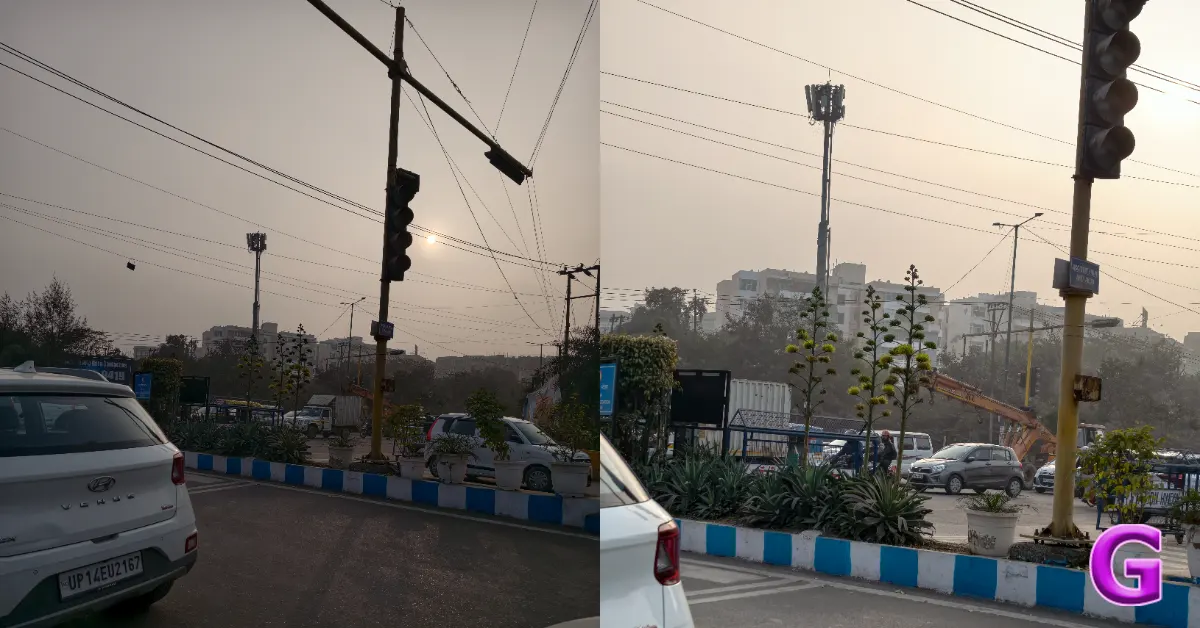

Edge detection works quite well, producing clear outlines around subjects. Vivo’s bokeh styles, such as Mirotar and Biotar, give the company a unique vintage look that sets it apart from competitors like iPhone and Samsung. Both the X300 and its elder sibling use ZEISS APO telephoto lenses, which employ apochromatic lens technology to reduce chromatic aberration in their telephoto cameras. The main difference lies in the sensor and optical zoom capabilities: the Pro model features a 200MP sensor for its telephoto camera, while the standard version has a 50MP sensor. Despite the differences between the two models, the ZEISS APO standard ensures each of them is excellent at capturing images from a distance.
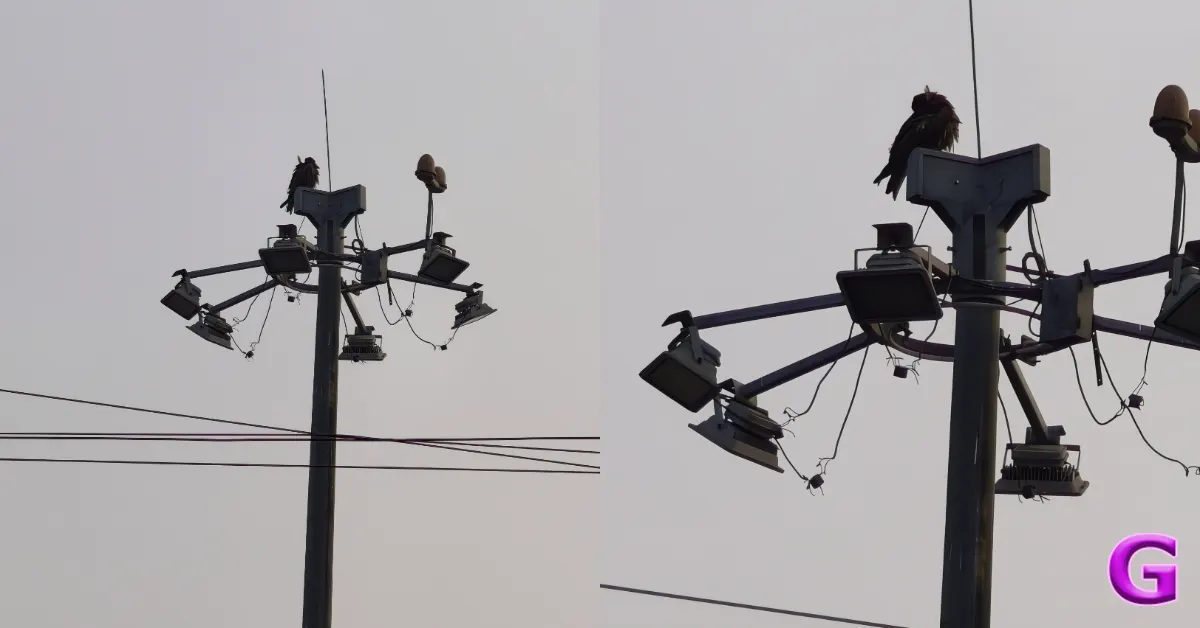
The lens gets rid of the purple or green glow that typically shows up in close-up pictures of bright subjects. This also lets you take close-up macro photos, which is great for taking detailed pictures of flowers or jewellery. People could expect crisp, high-quality zoomed-in pictures instead of pixelated ones when they use it regularly, including at concerts or sporting events.

In bright light, the X300’s ultra-wide lens delivers amazing performance and colour constancy thanks to Vivo’s VCS technology. Advanced distortion correction reduces edge blurring. ZEISS T Coating reduces chromatic aberration in high-contrast regions. The X300 works well in low light because of the V3+ chip, which reduces noise while maintaining contrast, albeit fine textures may be lost.

The ultra-wide lens also serves as an excellent macro camera, enabling focus as near as 2.5cm and capturing fine details with its 50MP sensor. However, it has certain disadvantages, including a lower sensor size, which reduces dynamic range when compared to the 200MP primary lens, and a shorter field of view than other competitors.
The X300 has a wide range of video settings for each lens, including 4K at 120 fps for the primary and telephoto lenses, which allows for high-quality slow-motion recording. The camera supports 4K Dolby Vision HDR, which improves colour vibrancy and highlight retention. The standard X300 is normally limited to 4K; however, the Pro can go up to 8K. Furthermore, the selfie camera can film in 4K at 60 fps, providing vloggers with high-quality front-facing footage.
One of the notable features is the 4K 60fps Cinematic Portrait Video, which uses real-time background blur computed by the V3+ processor to provide more lifelike results than the prior 1080p version. The mobile phone also supports automatic focus shifts with a single screen tap, simulating professional cine lenses. Additionally, the device has presets like Cold White and Film Style, which provide a graded appearance without post-editing.
The X300 has CIPA 4.5-rated stabilisation on both primary and telephoto lenses, allowing for stable handheld shots even when walking or jogging. An Ultra Stabilisation Mode is provided for increased stability, limiting resolution to 2.8K at 60 fps and providing a tripod-like feel during movements.
A 200MP sensor with pixel binning and a V3+ chip decreases noise dramatically, resulting in clear night footage. The Vivo Camera System (VCS) technology reduces digital grain in shadows, while the ZEISS T Coating efficiently eliminates blur and lens flare produced by bright lighting.
So, for easier one-handed use and superior standard photography, go with the Standard X300, which excels in capturing everyday subjects. If zoom capabilities for distant subjects such as the moon or wildlife are important, choose the X300 Pro (Review) with its bigger zoom lens. Overall, the Vivo X300 series stands out for generating realistic, high-quality photographs comparable to those produced by skilled photographers while being portable.
Despite the small form factor, the X300 has an amazing endurance with a 5,360 mAh battery. After extensive usage, including GPS and social media (Instagram, Facebook, Threads and X.com), the battery lasted 40-50%, with 20 hours of continuous YouTube streaming. Gaming experiences reveal an 11% battery depletion per 30 minutes on intensive games. Standby performance has considerably improved, with just a 2 to 3% drop overnight. The charging technology at 90W can fuel the battery from 0% to 50% in 19-20 minutes and fully charge in 45-50 minutes. Vivo assures that the battery will still retain more than 80% of its health after five years of daily fast charging.
Verdict
Ok, now final thoughts.
The Vivo X300 features an 8T LTPO AMOLED display measuring 6.31 inches, with a brightness peak of 4,500 nits, enhancing usability and durability. Its 200MP main camera, equipped with ZEISS lenses and 3x optical zoom, captures high-quality images, though it occasionally faces AI processing issues. Powered by the Dimensity 9500 chipset, the device excels in gaming and remains cool under heavy load. It runs on OriginOS 6, and the manufacturer commits to delivering five major Android updates, ensuring a positive user experience.
This model is ideal for photography enthusiasts seeking top camera quality in a compact smartphone, thanks to its excellent performance. Professional videographers will benefit from features like 10-bit Log and 8K recording. However, if battery life (5,360 mAh) or natural photo processing are important to you, consider alternatives, especially if you prefer a lighter, less bulky device for extended use.
The Vivo X300 is a small yet powerful smartphone that is great for people who love to take pictures.
Vivo X300 price in India starts at Rs 75,999.
Amazon Buying Link
Pros
- slim and compact (easier to use with one hand)
- The 200MP main sensor is incredible.
- IP68 and IP69 ratings
Cons
- Speakers lack bass.
- weak ultra-wide lens performance
- 90W is fast, but it’s a step down from the previous 120W chargers.


