



Key Takeaways
- The Lava Virat V1 Pro 5G is a new 5G smartphone launched in India under Rs 15,000, available on Flipkart from August 31st.
- It features an octa-core Unisoc T8200 chip, 6GB RAM with virtual RAM expansion, and 128GB storage expandable up to 1TB via microSD.
- The phone sports a 6.75-inch HD+ display with a 120Hz refresh rate and a large 6000mAh battery with 18W charging.
The Lava Virat V1 Pro 5G price in India has officially landed, and if you have been shopping for a 5G phone under Rs 15,000, this one just joined the pile you need to sort through. The handset went live on Flipkart on August 31 at noon, arriving in two colourways called Sikkim Midnight and Spiti Frost, and it leans hard into the two things Indian budget buyers say they want most these days. A battery that survives a full day without begging for a charger, and software that does not arrive stuffed with fifteen apps nobody asked for.
Here is what is actually inside the box, and why the pricing needs a second look before you add it to your cart.
In This Article
What The Spec Sheet Actually Says
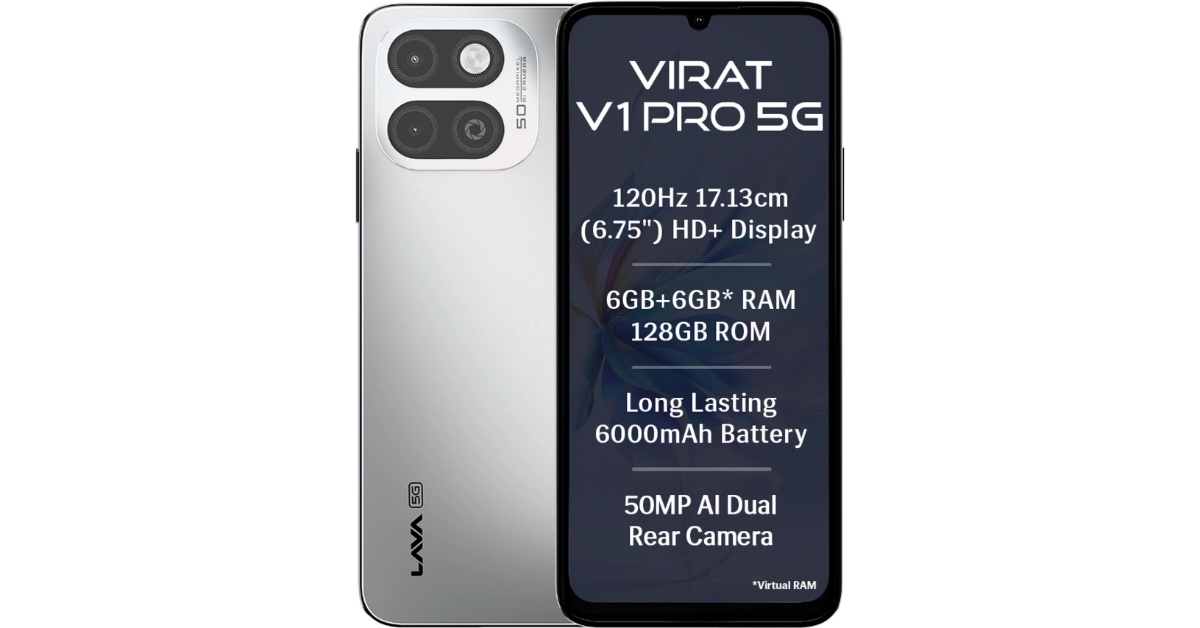
Strip away the marketing language, and the Virat V1 Pro 5G is a fairly straightforward budget phone. It runs on an octa-core Unisoc T8200 chip built on a 6nm process, paired with 6GB of RAM that can borrow another 6GB from storage as Virtual RAM, a trick most budget phones use now to make multitasking feel less painful than the spec sheet suggests. Storage is fixed at 128GB, though a microSD slot lets you push that up to 1TB if photos and downloads pile up fast.
Read Also: Samsung introduced P9 and P7 SSDs supports 8TB USB4 with speeds of up to 4,000MB/s
The display measures 6.75 inches, runs at HD+ resolution rather than Full HD, and refreshes at 120Hz with peak brightness touching 550 nits in high brightness mode. That resolution choice is worth flagging. A 120Hz panel feels smooth when scrolling, but an HD+ screen this large will look noticeably softer than the Full HD+ AMOLED units several rivals pack at a similar price.
Battery, Camera, and the Software Pitch
The 6000mAh battery is the phone’s headline act, charged over USB Type-C at 18W, a speed that feels a touch conservative when several competitors have moved to 33W or faster. On the camera side, there is a 50MP AI-assisted rear sensor with night mode, HDR, portrait and pro modes, alongside an 8MP front camera for calls and selfies. Lava has paired all this with Android 16 running what it calls a bloatware-free interface, backed by one major OS upgrade and two years of security patches. An IP64 rating adds a reasonable buffer against dust and light splashes, useful for a monsoon commute or a spill at your desk.
The Rs 13,999 Number Deserves Context
This is where the story gets more interesting than the spec sheet. The phone’s actual retail price is Rs 15,999. The Rs 13,999 figure everyone is quoting is a conditional offer price, available only when you pay through an eligible bank credit card or credit card EMI option. If you are paying with cash, UPI, or a debit card, you are looking at the higher number. It is a fairly common tactic in India’s budget phone market, and Lava used a similar playbook with the standard Virat V1 5G earlier this year, which launched with a headline discount before settling into a steadier street price within weeks. Buyers heading to Flipkart today should read the fine print on the offer before assuming Rs 13,999 is guaranteed at checkout.
Adding another layer, Lava plans to sell essentially the same hardware through offline retail stores from September under a different name, the Shark 2 Pro 5G. Same chip, same battery, same camera, different badge, and different channel. It is not unusual for Indian phone makers to juggle multiple brand names across online and offline shelves, but it does mean shoppers comparing prices across stores should check the specification sheet rather than the model name alone.
Read Also: Lenovo launched new LOQ Essential 15IPH11, 15IRH11, Tower 17IRH11 and monitors
Where It Sits Against the Competition
At its effective price, the Virat V1 Pro 5G lands in a crowded neighbourhood that includes the POCO M7 Pro 5G, which offers a Full HD+ AMOLED display in a similar budget bracket, something the Lava’s HD+ LCD panel cannot match on paper. What Lava is countering with is a larger battery, a cleaner software experience free of aggressive notification spam, and its own after-sales doorstep service programme, which matters more than people expect once a phone is a year old and needs a repair.


