

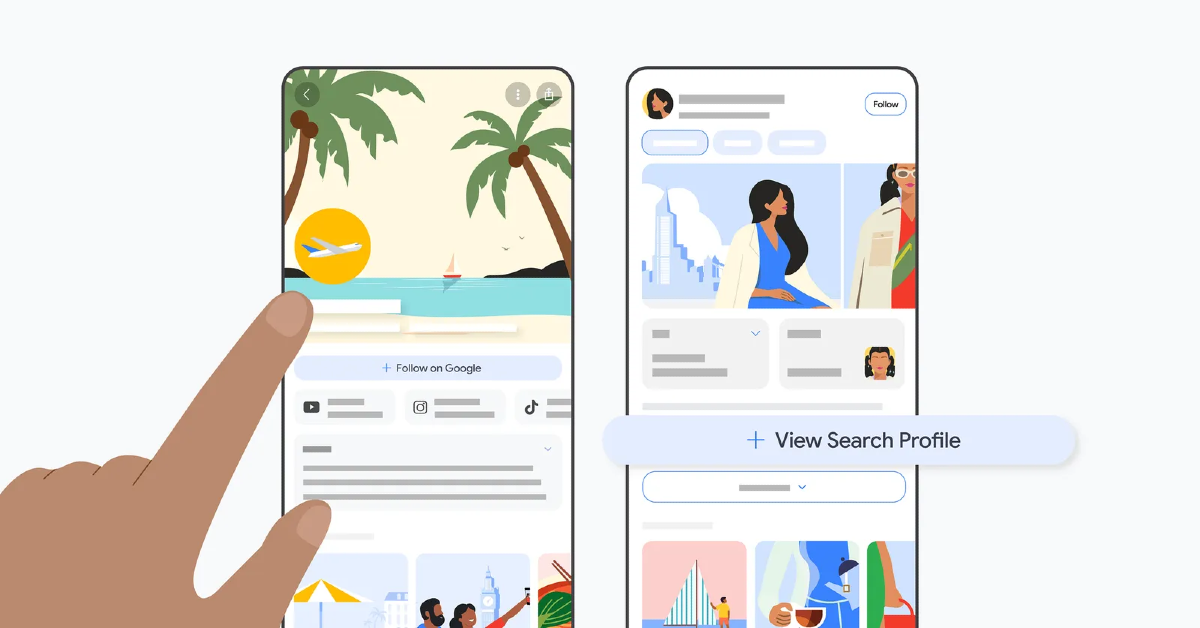
Google has rolled out Search Profiles, a customisable landing page on Google Search and Google Discover, targeted for creators, publishers and brands. It’s a new tool aimed at helping users manage their digital footprint, such as a Linktree or a digital business card. The fundamental aim of Search Profiles is to consolidate individuals’ dispersed online identities on Google’s ecosystem, resulting in a more integrated depiction of their online activities and interactions.
In This Article
What is a Google Search Profile?
The Search profile is a customisable page that’s intended to collect and display a creator’s or publisher’s material from around the web. This feature makes it easier for users to discover information since it brings everything together in one place, including social media channels, websites and videos, so that users don’t have to go looking for each specific channel individually.
Search Profiles: Key Features and Benefits
Search Profiles provide comprehensive integrations and benefits that integrate content, enable personalisation, increase Google visibility via Knowledge Panels, and improve content discovery on Google Discover feeds.
The tool pulls in content from platforms such as YouTube, Instagram, X (previously Twitter) and TikTok, so users get the latest stories, videos and social network postings in one place. Centralisation enables consumers to access a wide variety of content without having to search several sites multiple times.
Also Read: Xiaomi TV FX Mini LED Series with built-in Fire TV, Filmmaker Mode launched in India
Users also have a lot of flexibility over their profiles, which may be customised with an avatar, bio, and the opportunity to showcase 8 featured posts and connect to 8 other external websites. It creates a different identity for the users and increases the interaction with their audience.
Setting up a Search profile allows users to create or improve their Google Knowledge Panel. This panel may prominently display an updated avatar, an AI-generated bio summary, and direct links to their profile, improving their search visibility and trustworthiness.
The profile will include a Follow button to help boost exposure of content in personalised feeds on Google Discover. This function helps improve the chances of the followers seeing the user’s content, which in turn helps improve engagement and reach.
Where Do These Profiles Appear?
There are 3 key spaces that let users engage with a Search profile on mobile:
- In Search Results: At the bottom of the creator’s or publisher’s Knowledge Panel, tap “View Search Profile”.
- On Google Discover: Tap the author or publisher name above a content card in the feed.
- Direct Link: Each profile includes a link to share on other social channels or websites.
Also Read: Amazon Quiz Answers Today June 5, 2026: Participate to win Up To Rs 500 Amazon Pay Balance
Who is eligible, and what are the requirements?
Google is already rolling out profiles in the United States (and aims to roll out globally) to make sure there are legitimate digital footprints.
The minimum number of followers required on each platform is:
- YouTube: 100,000 subscribers
- Instagram: 100K followers
- Twitter (X) – 100,000 followers
- TikTok: 300K followers (if TikTok is the only qualifying platform)
It should be noted that in order to claim a profile, the managing Google Account holder must be above the age of 18.
How to Claim It
- Visit creators.google/profile to confirm your eligibility and set up your profile.
- Sign in and validate qualified social accounts for identification during setup.
- Once active, content from linked platforms will sync and be live on your Search profile, usually within 24 hours.
How Does It Help Publishers and Creators?
The upgrade comes with considerable strategic advantages for publishers and creators who want to increase their online presence. First, the “Follow” button added to Google Discover improves visibility, as users may follow certain profiles and so enhance the content of those profiles on home screens in the Google App. That doesn’t have anything to do with conventional SEO rankings. Secondly, it gives creators direct control over their public image via the management of their Knowledge Panels. This enables you to update bios, pinned links, and profile images, which limits the chances of running into problems with old or incorrect information that may happen with automated web scraping.
The upgrade also makes it easier for brands and collaborators to discover, acting as a kind of media kit. This means that users will be able to simply check out the official accounts of influencers and publishers and get their latest works and contact details. Lastly, the fear of impersonation is addressed by making authenticated social media links mandatory. This criterion increases authenticity and decreases the likelihood of fake or duplicate accounts showing in search results. Overall, the upgrade is a win for creators and online platforms alike, giving creators more exposure and power and fostering a culture of trust and verification.


