


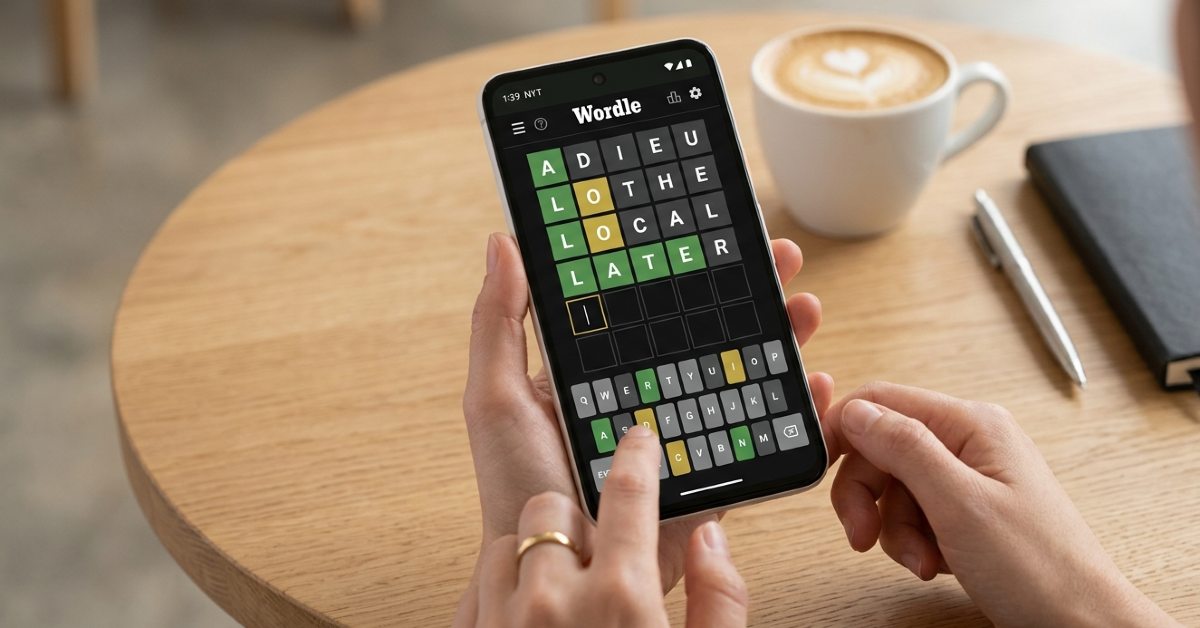

The NYT Wordle #1827 today, June 20, 2026, for the weekend, is a geometric illusion meant to break players’ extended winning streaks. A strategic approach is necessary for players tackling the challenge because of the front-end consonant clustering. The Wordle Answer begins with a unique consonant blend and then transitions to a suffix family that includes common spellings. Such patterns might tempt players into choosing words that are almost similar (e.g., BRAKE, FLAKE, SNAKE), which emphasises the necessity of diligent elimination strategies to prevent making incorrect guesses that would harm one’s score. This post, therefore, presents a full strategy guide to defend gamers’ rankings before the start of weekend activities.
In This Article
Is today’s Wordle #1827 difficult?
Early morning stats for the day show an average of 4.1 solves out of 6 tries globally, which may be deceptive. In word games, the choice of starting words tends to favour commonly used endings like ‘-AKE’ and good green signs like STARE or CRATE. This is an issue in Hard Mode, since there are so many -AKE terms, such as BAKE, CAKE, MAKE, etc. So brute forcing is not only inefficient but unsafe too. Instead, players should try to use diagnostic phrases like BLUDS or CHOMP to remove several initial consonants, which will help them better control their guesses and not lose the game early on.
Tip for solving today’s Wordle
The Wordle #1827 you have today is a representation of proactive interference, where the brain prefers regular patterns of structure, such as -AKE, which leads to a flood of familiar words, such as MAKE or TAKE. The overload of working memory leads to the filtering out of more specific words. To avoid this cognitive bias, it is advised that you clear your mind and physically see the letter arrangement, which may help with clearer problem-solving. The first part of the puzzle may include a multi-word suffix situation in which the green letters are trapped. In such circumstances, you should stop using conventional guesswork and instead design an elimination term that combines many missing first letters. It is based on the idea of collecting as much visual data as possible in order to increase the probability of a successful outcome, even if it means squandering a queue of greens.
Today’s Wordle Hints and Answers for June 20, 2026
Wordle Hints 1 Vowel Configuration: 2 Unique Vowels (A, E) separated by a hard consonant
Wordle Hints 2 Consonants: 3 Unique Consonants (D, R, K)
Wordle Hints 3 Repeat Letters: None. Every single tile on today’s board is entirely unique.
Wordle Hints 4 Starting Letter: D
Wordle Hints 5 Ending Letter: E
Wordle Hints 6 Meaning: Today’s Wordle answer is a noun that primarily refers to an adult male duck. The female of the species is called a hen.
Also Read: Behind Closed Doors: Exclusive Live Images Reveal the OPPO Reno 16 Series Ahead of Official Launch
Today’s Wordle Answer #1827
The answer to Wordle today is: DRAKE
DRAKE hits the board as a classic Saturday morning stress test. The phrase is well-known, but its structural construction is a big challenge, especially a high-density rhyming trap. This makes the game more difficult for Hard Mode players, particularly with the availability of a -AKE answer, which may lead to frustrating repeating one-letter guessing.
Etymology of DRAKE
The word “drake” has a quite harsh modern use, reflecting its dual-language heritage. ‘Modern English’ is used for a male duck. The word came into English via Middle English and either developed from an unattested Old English word or was adopted from Old High German (antrih, “leader of ducks”). In ancient English literature, however, “drake” was the translation of “dragon”, from the Old English “draca” and Latin “draco”, which also gave us “draconian”. The contrast creates a deep history, like comparing a common duck with a fabled fire-breathing beast. It adds to the weight and nuance of the word.
Previous Wordle Answers
Also read: Asus Chromebook CM32 Detachable, CM14 and CM15 with Google AI capabilities launched in India
How To Play Wordle:
• Players have six attempts to guess a hidden five-letter word.
• Feedback is provided through colour changes to tiles after each guess:
– Green indicates a correct letter in the correct position.
– Yellow indicates a correct letter in the wrong position.
– Grey indicates a letter that is not in the word.
Tips and tricks to solve the puzzle
• Choose a strong starting word that contains common letters rather than unusual ones.
• Repeating letters are common in words; don’t hesitate to use them in guesses.
• Utilise WordleBot, which analyses guesses and identifies areas for improvement to enhance your skills.


