


Key Takeaways
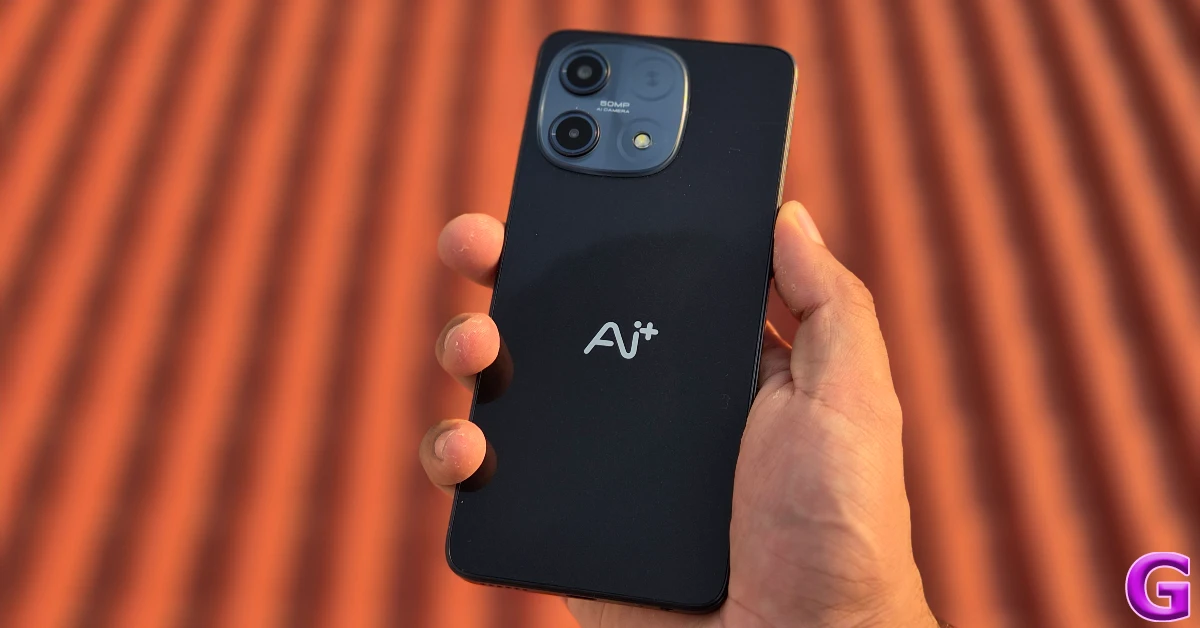
- Ai+ Smartphone CEO Madhav Sheth is adopting an unconventional strategy by releasing the Nova 2 Pro and Nova 2 Neo to reviewers without embargoes or talking points, allowing them a full week for unfiltered feedback before the phones go on sale.
- The Nova 2 Neo targets first-time 5G users, younger buyers, and value-conscious consumers with a focus on smooth performance, clean software, and a strong camera experience, making the Nova experience accessible.
- The Nova 2 Pro is designed for users who demand more, including creators, professionals, and power users, offering stronger imaging, refined performance, and a sharper, more capable device.
Most smartphone brands guard their launch narrative like a state secret. Embargoes, curated briefings, carefully scripted “hands-on” sessions. Madhav Sheth is doing the opposite. The Ai+ Smartphone CEO is handing the Nova 2 Pro and Nova 2 Neo to reviewers with no embargo, no talking points, and a promise that the phones won’t go on sale until critics have had a full week to say whatever they want. It’s either supreme confidence or a very expensive gamble, and coming off a ₹350 crore month with over 3 lakh units shipped, Sheth clearly believes it’s the former. In this exclusive conversation with Gadget Bridge, the industry veteran who helped build some of India’s biggest smartphone brands explains why his newest venture is being built on trust rather than spec sheets, what meaningful AI on a phone actually looks like, and where Indian tech brands can still do better.
- The Ai+ Nova 2 Pro and Nova 2 Neo are arriving at a crowded moment in the Indian smartphone market. What makes these two devices genuinely different, and which specific segment of consumers are you targeting with each?
The Indian smartphone market is crowded, but it is also becoming far more discerning. Consumers are no longer looking only at headline specifications. They are looking at the complete experience: how the device performs in everyday life, how long it stays reliable, how clean the software feels, how much trust they can place in the brand, and whether the product actually reflects their needs rather than a generic global template.
That is where the Nova 2 Neo and Nova 2 Pro are different. Both devices have been shaped after listening closely to feedback from reviewers, creators and our own community. We did not approach them as two more SKUs in a crowded market. We approached them as two distinct responses to two very different user needs.
The Nova 2 Neo is built for first-time 5G users, younger buyers, and value-conscious consumers who want a dependable, stylish and future-ready smartphone without unnecessary complexity. It is about making the Nova experience more accessible without compromising on the things that matter most to users today: smooth performance, clean software, a strong camera experience, and confidence in day-to-day use.
The Nova 2 Pro, on the other hand, is aimed at users who expect more from their smartphone every single day whether that is creators, professionals, power users, or upgraders who want stronger imaging, more refined performance, and a device that feels sharper and more capable across use cases. With Pro, the focus is on delivering a more elevated Nova experience while still staying rooted in practical value.
What genuinely differentiates both devices is not one isolated feature. It is the philosophy behind them. They are built around feedback, they are designed to be transparent in how they operate, and they are part of a broader effort to create technology that feels more practical, trustworthy and relevant to Indian users.
- Crossing ₹350 crore is a significant signal. What does that number tell you about where consumer confidence in Indian technology brands stands right now? And can you break down the number?
For us, the ₹350 crore milestone is important not simply because of the number itself, but because of what it represents. It tells us that Indian consumers are increasingly willing to back homegrown technology brands when those brands demonstrate seriousness, consistency and intent. There is a clear appetite for Indian technology products, but that trust is not automatic. It has to be earned through product quality, after-sales commitment, software discipline, and a willingness to stay accountable in public.
The ₹350 crore figure reflects our smartphone business performance in May 2026, during which we also crossed 3 lakh units in monthly shipments. It was driven by momentum across our portfolio, including strong demand in the value and mid-range segments, a healthy contribution from the Nova series, and a growing user base that is responding to our larger proposition around accessible, trustworthy technology.
I would also say that the number reflects something else: Indian consumers are no longer evaluating brands only on legacy or scale. They are willing to try newer brands if they see clarity of purpose, relevant products, and genuine engagement. In that sense, the milestone is encouraging not only for Ai+ Smartphone, but for the broader idea that Indian technology brands can build meaningful consumer businesses if they stay disciplined and consumer-first.
- The Open Review Programme is an unusual move for a brand this early in its journey. Was there internal debate about opening yourselves up to unfiltered public evaluation, and what gave you the confidence to go ahead with it?
Yes, there was honest debate. When you are a young brand still building your reputation, the instinct is always to protect the narrative. But we made a deliberate choice to do the opposite. With the Nova2 Neo and Pro, we are sending devices to reviewers, journalists, creators, and members of the tech community before we open sales, with no embargo, no review guidelines, no scripted messaging, and no curated launch experiences. And critically, the devices will not go on sale until reviewers have had seven days to share their unfiltered feedback.
What gave us confidence was a simple belief trust is earned, not claimed. If there is something we need to improve, we would rather hear it from reviewers before consumers spend their money. For us, this is not a marketing exercise, but it is about building Ai+ smartphone the right way. As a young brand, we know credibility comes from being open, listening to feedback and letting the product speak for itself.
- You have spent over two decades building some of India’s biggest smartphone brands. What are you doing differently with Ai+ that you either could not do before or wish you had done earlier?
The biggest difference with Ai+ is that we are building the company around first principles rather than inherited playbooks.
In earlier roles, scale was often the primary lens: market share, speed of expansion, portfolio breadth, channel aggression. Those are all important, and I have learned a lot from building brands at that level. But with Ai+, I have the opportunity to ask a more fundamental question: if you were building a technology brand from India today and what would you prioritise differently?
- AI is a word every smartphone brand is using right now. What does meaningful AI integration look like on the Nova 2 series in day-to-day use, beyond the marketing headline?
I agree that AI is becoming a very overused word in this industry. For us, meaningful AI integration is not about adding features for a launch slide. It is about making the smartphone more intuitive, more helpful and more efficient in ways that users genuinely notice in daily life.
On the Nova 2 series, our view is that AI should quietly improve the experience rather than constantly announce itself. That means helping optimise performance in the background, making the camera smarter in real-world scenarios, improving power management based on usage behaviour, reducing friction in routine tasks, and making the device more responsive to the way the user actually uses it over time.
- Data privacy and digital sovereignty are increasingly part of the conversation around consumer technology in India. How is Ai+ addressing these concerns at a product and infrastructure level, not just in positioning?
For us, privacy and digital sovereignty cannot be treated as marketing language. They have to be reflected in product design, software architecture and infrastructure choices.
At the product level, we have been working to create a cleaner and more transparent software experience with tighter control over permissions, reduced clutter, and clearer visibility into how the device behaves.
At the infrastructure level, our broader direction has been to ensure that the way user data is handled, stored and governed aligns with Indian expectations around sovereignty and accountability. That includes building with a stronger India-first approach to software governance and data architecture, and continuously strengthening the systems around security, privacy and compliance.
- India has repeatedly been described as a potential global electronics and technology powerhouse, but the gap between ambition and execution remains wide. Where do Indian brands still fall short, and how does Ai+ plan to close that gap?
India has the market, the talent, the policy momentum and the entrepreneurial energy to become a much larger technology and electronics powerhouse. Where we still fall short is in building depth across the value chain.
For too long, many Indian brands have been strong in distribution and go-to-market, but weaker in core technology ownership, software capability, long-term product planning, and ecosystem thinking. In some cases, we have also been too dependent on external templates rather than building enough proprietary differentiation ourselves. That is where the gap between ambition and execution shows up most clearly.
We want Ai+ to be a company that contributes to India’s technology capability not just through assembly or distribution, but through product thinking, software, ecosystem building and trust infrastructure. If Indian brands want to close the gap, we have to stop thinking only in terms of shipment numbers and start thinking in terms of capability ownership.
- The mid-range and value segments in India are brutally competitive, dominated by brands with enormous scale and supply chain advantages. What is the sustainable pathway for a brand like Ai+ five years from now?
Our goal over the next five years is not simply to become bigger. It is to become more trusted, more capable and more relevant across the consumer technology journey.
- What does the product roadmap beyond smartphones look like, and are there adjacent categories such as wearables, audio, or connected home that Ai+ is actively building towards?
Smartphones will remain at the heart of our business and our roadmap. They are the most personal piece of technology consumers own, and they are the foundation on which we are building Ai+.
That said, our vision extends beyond a single device. We see significant opportunities across the connected ecosystem, including categories such as wearables, audio and other AIoT devices that can work together seamlessly to enhance the user experience. The smartphone will serve as the anchor device, connecting and powering that broader ecosystem.
As we expand into new categories, our approach will remain consistent. We will focus on products that solve real consumer needs, deliver a seamless experience and create meaningful value for users.