



Key Takeaways
- A Parliamentary Standing Committee has demanded an unconditional apology from Meta CEO Mark Zuckerberg within three days over the removal of Prime Minister Narendra Modi's video.
- The committee is also considering revoking Meta's 'safe harbour' protections under India's Information Technology Act, which could impact digital platforms operating in the country.
- Similar scrutiny has been called for against Google India regarding cyber fraud complaints linked to apps from Google Play, raising questions about platform responsibility.
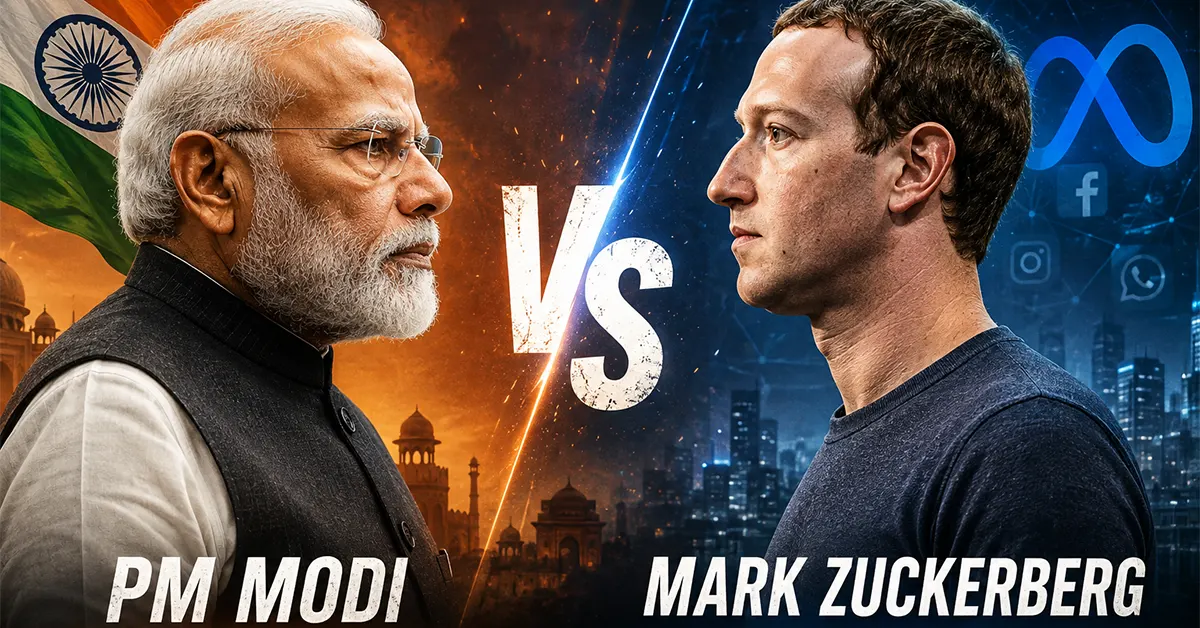
The Meta PM Modi video safe harbour controversy has quickly become one of India’s biggest technology policy stories this week. A Parliamentary Standing Committee has asked Meta CEO Mark Zuckerberg to issue an unconditional apology within three days over the removal of Hon’ble Prime Minister Shri Narendra Modi‘s video from Facebook and other Meta Platforms. The committee has also urged the government to examine whether Meta should continue enjoying safe harbour protections under India’s Information Technology Act, a move that could have significant implications for digital platforms operating in the country.
The development also widens beyond Meta. The committee has similarly called for action against Google India, citing cyber fraud complaints linked to apps allegedly downloaded through Google Play. Together, the developments have reignited a long-running debate about where the responsibility of technology platforms begins and ends.
In This Article
Why Meta is facing parliamentary scrutiny
According to the communication issued by the Parliamentary Standing Committee on Communications and Information Technology, the panel has demanded an unconditional apology from Meta following the removal of Prime Minister Narendra Modi’s July 23 video message. The video reportedly disappeared during a period when youth protests were taking place at Jantar Mantar and other locations across India.
The committee, chaired by BJP MP Nishikant Dubey, stated that if Zuckerberg does not apologise within three days of receiving the communication, the government should consider withdrawing the immunity available to Meta under Section 79(3) of the Information Technology Act.
The issue has also attracted attention within the government, with officials reportedly seeking a detailed explanation from the company regarding the removal of the Prime Minister’s content.
At the time the matter became public, neither Meta nor the Ministry of Electronics and Information Technology had issued an official response. Google also declined to comment on the committee’s communication.
What exactly is safe harbour protection?
The phrase “safe harbour” frequently appears in discussions about social media regulation, but its meaning is often misunderstood.
Under Section 79 of the Information Technology Act, intermediaries such as social media platforms, search engines and hosting providers generally receive protection from legal liability for content posted by users. This protection exists because platforms typically act as intermediaries rather than publishers of every individual post.
However, this immunity is conditional.
Intermediaries are expected to comply with legal obligations, including responding to lawful government notices and following requirements laid out under the Information Technology Rules, 2021. Failure to meet these obligations can affect whether safe harbour protection applies in a particular situation.
The committee also raises concerns about Google India
Meta was not the only technology company questioned by the committee.
The panel also recommended examining Google’s intermediary protections after referring to cybercrime complaints from Hyderabad. According to the committee, victims reportedly lost more than Rs 48 lakh through fraudulent applications allegedly downloaded from Google Play.
The committee’s communication noted that Google’s India country manager had been named as a co-accused in those complaints, although Google has not commented publicly on the matter.
Separately, lawmakers also referred to previous reports concerning child sexual abuse material advertisements and objectionable content targeting women on Instagram. The committee urged stronger action against intermediary platforms carrying such harmful material.
Opposition voices concerns over political influence
The discussion did not unfold without disagreement.
During the committee proceedings involving representatives from Meta, Google and X, Opposition Members of Parliament reportedly argued that decisions surrounding online content moderation should remain free from political influence.
Their intervention highlights the broader challenge governments around the world continue to face. Regulators increasingly expect platforms to act responsibly against harmful content while also avoiding actions that may be perceived as politically motivated or inconsistent.
Balancing free expression, public interest and platform accountability remains one of the most complex policy questions in today’s digital landscape.
Read Also: Oppo Reno16 Review: The return of the midrange camera champ!
Can the government actually revoke safe harbour?
This is perhaps the biggest legal question emerging from the controversy.
Legal experts point out that India’s current legal framework does not explicitly provide a mechanism allowing the government to revoke an intermediary’s safe harbour protection across its entire platform.
Instead, Section 79 protections are generally interpreted on a case-by-case basis. Courts typically examine whether an intermediary fulfilled its legal obligations in relation to a specific incident before deciding whether immunity applies.
That means even if protection is denied in one particular matter, it does not automatically remove legal immunity for every service or every piece of user-generated content hosted by the platform.
As a result, any broader attempt to strip platform-wide safe harbour protection could invite substantial legal scrutiny. However, this can also be looked at as a one-off case where the top position of the country is being subjected to such an external force; an apology is the bare minimum one can expect.
Why this matters for the global technology industry
The India Meta safe harbour rules explained debate extends well beyond one removed video.
India represents one of the world’s largest internet markets and an important growth region for global technology companies. Any regulatory shift affecting intermediary liability could influence how platforms handle content moderation, appeals, automated enforcement and compliance with government requests.
The Section 79 IT Act intermediary protection framework has become central to discussions involving platform accountability, online safety, misinformation and digital rights. The latest developments are therefore likely to be watched closely not only in India but also by policymakers and technology firms across the US, UK, Australia and other major digital markets.
For Meta and Google, the immediate focus will be responding to parliamentary concerns. For everyone else, this episode serves as another reminder that the rules governing the internet continue to evolve as rapidly as the platforms themselves.


