


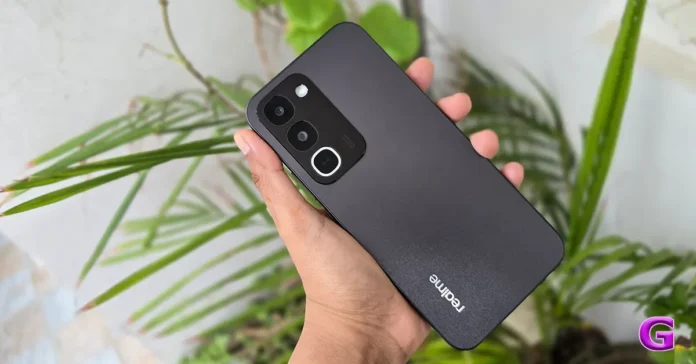
Most budget-friendly phones nowadays seem to be boring with basic displays, terrible cameras and low-life batteries; in short, they have no appeal. But that is not the case with Realme P4R 5G. We have been using this phone for a week now, and it’s quite clear that this device redefines the budget category by prioritising excellent battery life over traditional features. It comes with a durable, thermal-cooled construction and a robust 8,000mAh battery, and you can use the gadget for three days without recharging. If you’re a gamer or a commuter tired of spending life plugged into a power bank, this tank is calling your attention. Let’s look at actual performance and see whether it’s worth the cost.
In This Article
Design and Display
The device’s design reflects a clean and minimalist style, as seen by its streamlined form. Realme’s smartphone has a rectangular camera module in the upper-left corner of its back panel, a design decision that complements the device’s modern flat-edge aesthetic.
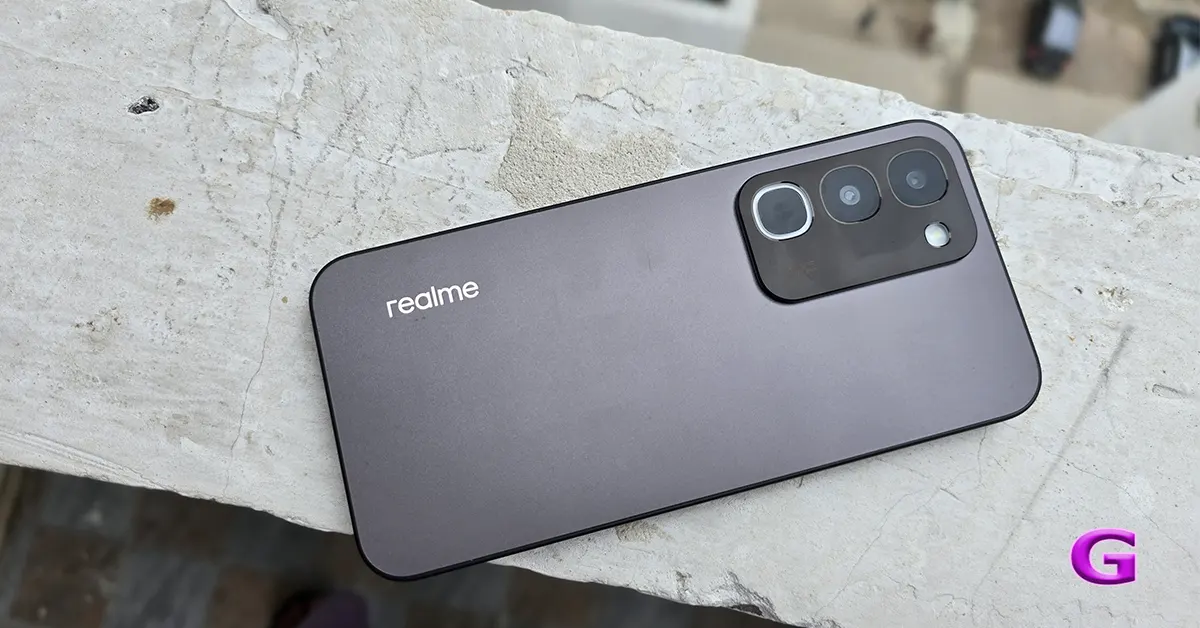
The rear camera module is a standout feature, as it is fully integrated into the back panel, helping the device maintain a slim profile with no visible bumps that could disrupt its clean lines. The exterior is coated with Titanium Glare, which has a subtle, reflective matte finish; this finish not only enhances the visual appeal by shifting gently with changes in ambient light, but it is also designed to resist fingerprints, keeping the device looking polished.
This rectangular structure not only enhances the phone’s overall elegant look, but also serves a practical purpose by keeping the device low profile and reducing the chance of excessive wobbling when placed flat on a surface such as a desk.
The back has a customisable LED ring that encircles the camera, allowing users to choose from nine vibrant colours and adjust the speed among five distinct settings. This LED feature can be assigned to various notifications, including incoming calls, charging status, alerts, and in-game events. This feature gives the gadget a distinct personality while maintaining a modest look, ideally balancing usefulness and design.
Inside the sleek 8.8mm shell of the Realme P4R 5G is a massive 8,000mAh Titan battery, and the phone weighs a total of 224g. Despite this weight, the gadget has an ergonomic design, so the bulk is well distributed, significantly improving the comfort of use. The phone also includes a flat frame with curved edges, which enables you to hold it comfortably, avoiding sharp edges like recent iPhone models for easy one-handed use.
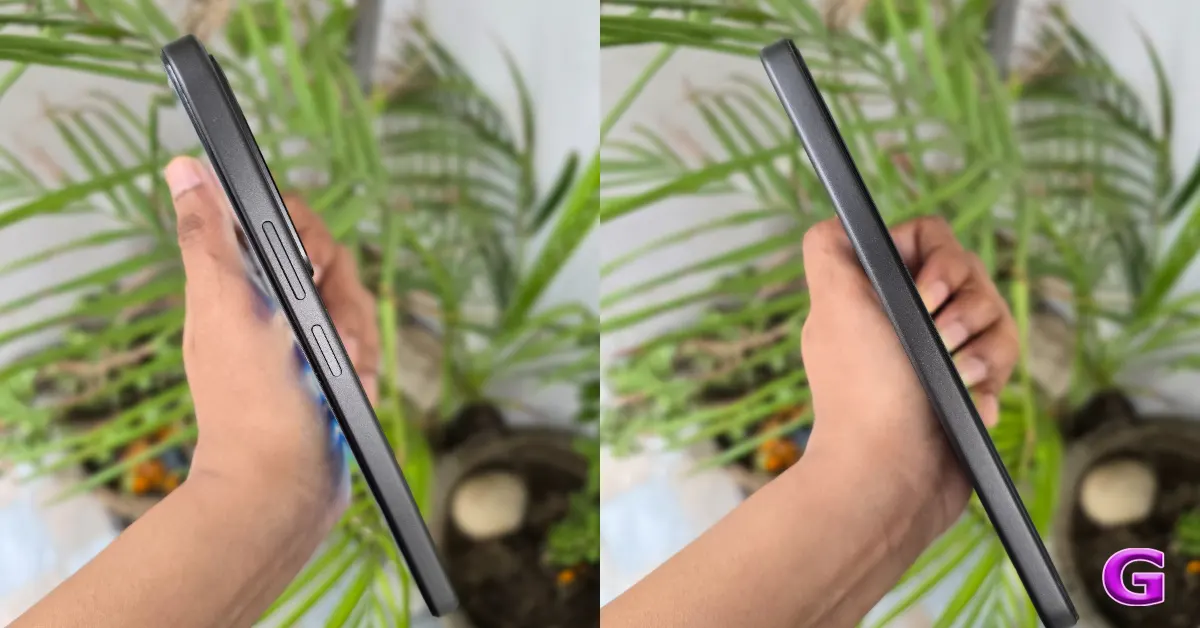
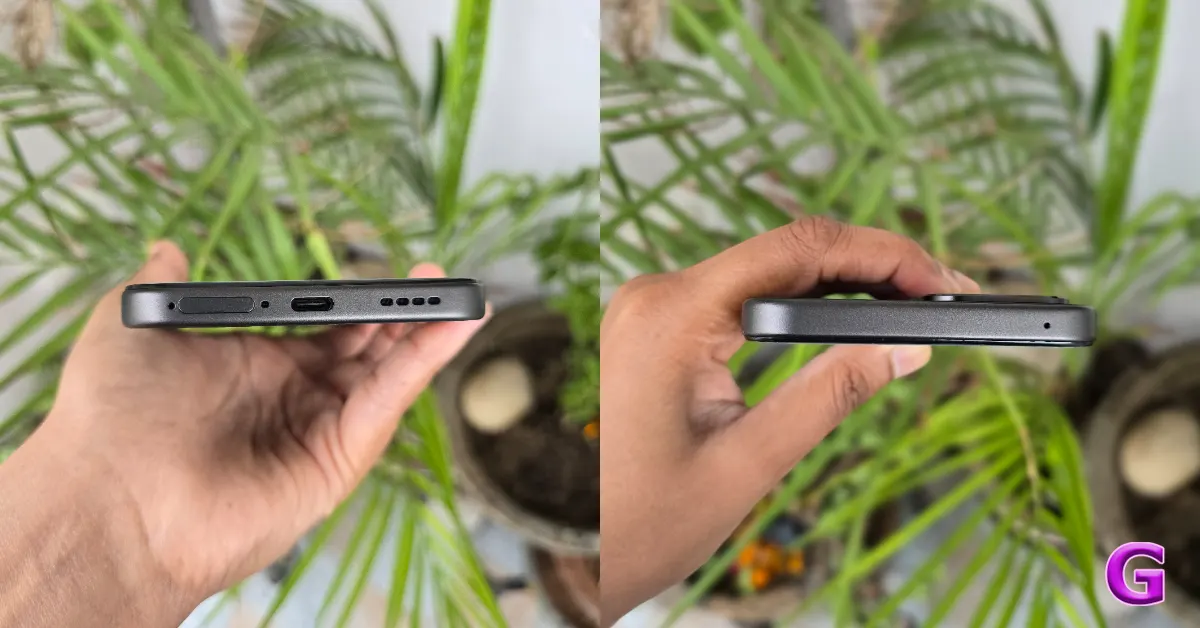
On the right edge, you’ll find a volume rocker and power button, which doubles as a side-mounted fingerprint reader for quick access. The left side is completely free, which makes it effortless to use horizontally while gaming. At the bottom edge, you get a SIM tray with a microSD card, a main microphone, a USB Type-C connector for fast and reverse charging, and a speaker grille for better sound quality. The top edge is minimalistic and has a secondary noise-cancelling microphone.
The Realme P4R 5G has been designed with a focus on build quality and durability. It has an ArmorShell tough build, with a focus on structural integrity and durability. This smartphone is MIL-STD-810H certified, meaning it can withstand drops from a height of up to 1.8 metres, indicating its military-grade protection.
The sturdy frame, reinforced with aluminium, airbag shock absorption, and corner protection, further enhances its longevity. The display is protected with Panda-1681 cover glass that offers considerable scratch resistance. The Realme P4R 5G also has an IP65 rating, so it can handle a good amount of dust exposure and water splashes.
The phone is also optimised to respond to touch in various settings. It offers special features like “Wet Hands”, “Oil Hands”, and “Glove Touch” that allow users to efficiently interact with the touchscreen in any scenario.
The smartphone includes a 6.8-inch IPS LCD with an HD+ resolution of 720 x 1570 pixels. The display is around 254 ppi, and the resolution leads to softer textures, which might compromise the sharpness of fine details.
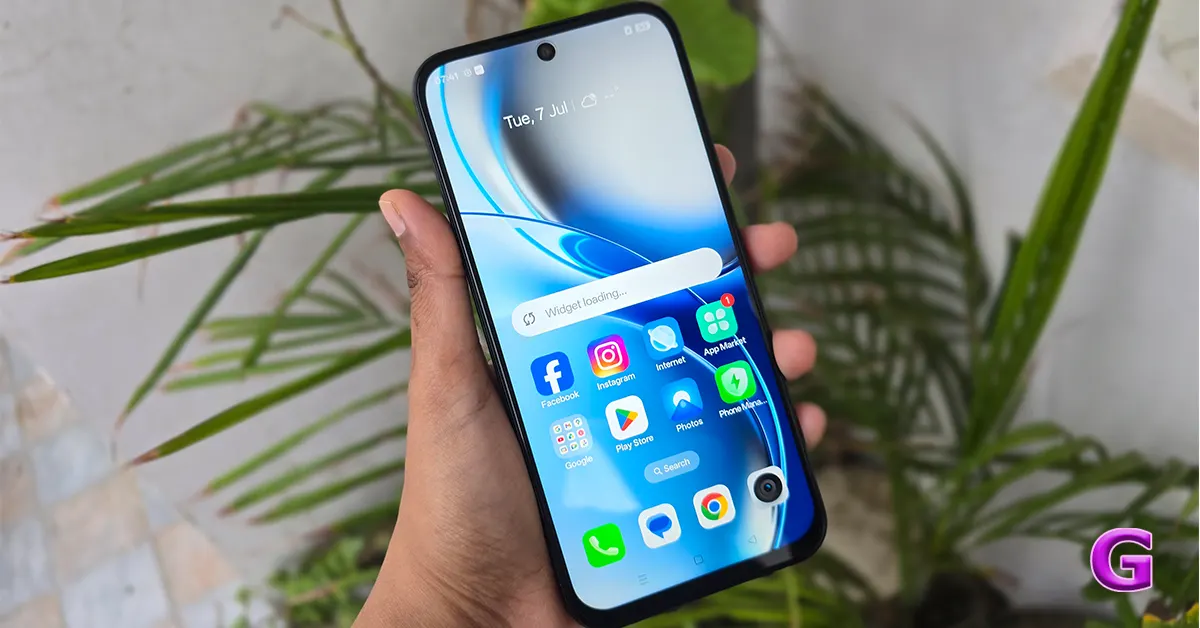
The colour tuning on the LCD panel is decent but doesn’t give you the deep blacks you’d get from AMOLED screens. The Vivid Mode really shines here, taking up 83% of the DCI-P3 colour gamut. It’s a pleasing, vivid, saturated aesthetic that really helps with user interface elements and visually appealing graphics.
On the other hand, the Natural Mode also performs with high accuracy, spanning the entire sRGB colour spectrum at 100%, providing a more natural and eye-friendly visual presentation. Plus, the standard 8-bit colour depth means it can also display 16.7 million colours. This is fine for casual media viewing, but it may not be enough for people who do serious image editing, where more accurate colour reproduction is often needed.
Indoors, the display boasts about 975 nits, which is more than enough for bright situations. In most cases, you will find that keeping the brightness at less than 50 per cent while inside is sufficient. The High Brightness Mode (HBM) boosts brightness to 1,200 nits in direct sunlight. When we tested this on our balcony, where we get bright direct sunlight, the result was great outdoor visibility that allows you to read easily without having to shade the screen with your hand.
With a maximum refresh rate of 144Hz, you can navigate smoothly and switch apps seamlessly. The touch sampling rate is up to 180Hz, with a default of 120Hz, giving the responsiveness needed for fast-paced games like BGMI and COD. In our testing, we really liked that this display can also deal with diverse conditions such as wet hands, oily hands and glove touch, which helps to improve input accuracy in tough situations like cooking and handling other chores at home or when outdoors during light showers or rain.
The speakers include a 400% Ultra Boom mode for audio output. This function can produce a very loud sound, but it may also distort when the volume is turned up to the highest level. There’s also no 3.5mm headphone connector, so you will need to use Bluetooth or a USB Type-C adaptor to use wired headphones. It does support high-resolution audio codecs like LHDC 5.0, aptX HD and LDAC, which will improve the wireless audio experience.
Performance and cameras
The Realme P4R comes with a MediaTek Dimensity 6300 processor based on 6nm technology. It is available in 2 RAM variants: 4GB and 6GB of LPDDR4X. Another intriguing part of this chipset is dynamic virtual RAM extension, which boosts performance by giving you more memory when you need it. For regular day-to-day multitasking, the 6GB model is good enough to work well and provide stable performance.
Realme has optimised this phone for maximum battery life; however, this optimisation includes a memory management system that may forcefully close older applications when needed. As a result, while using resource-intensive applications like BGMI or multitasking while capturing 1080p video, you might notice that previously open apps reload.
The device is equipped with UFS 2.2 storage, which means app installs and loading rates are reliable but are nowhere close to the higher speeds of UFS 4.0. Core apps such as WhatsApp, YouTube, Gmail, and Instagram load quickly, with no noticeable lag.
The gadget provides a fluid browsing experience on image-heavy platforms such as Instagram, backed by a 144Hz refresh rate. It has a mid-range CPU that would provide visually smooth performance. It scores around 6065678 on the AnTuTu test. Web surfing is efficient and can handle 12–15 tabs in Google Chrome with just mild stuttering on poorly optimised pages.
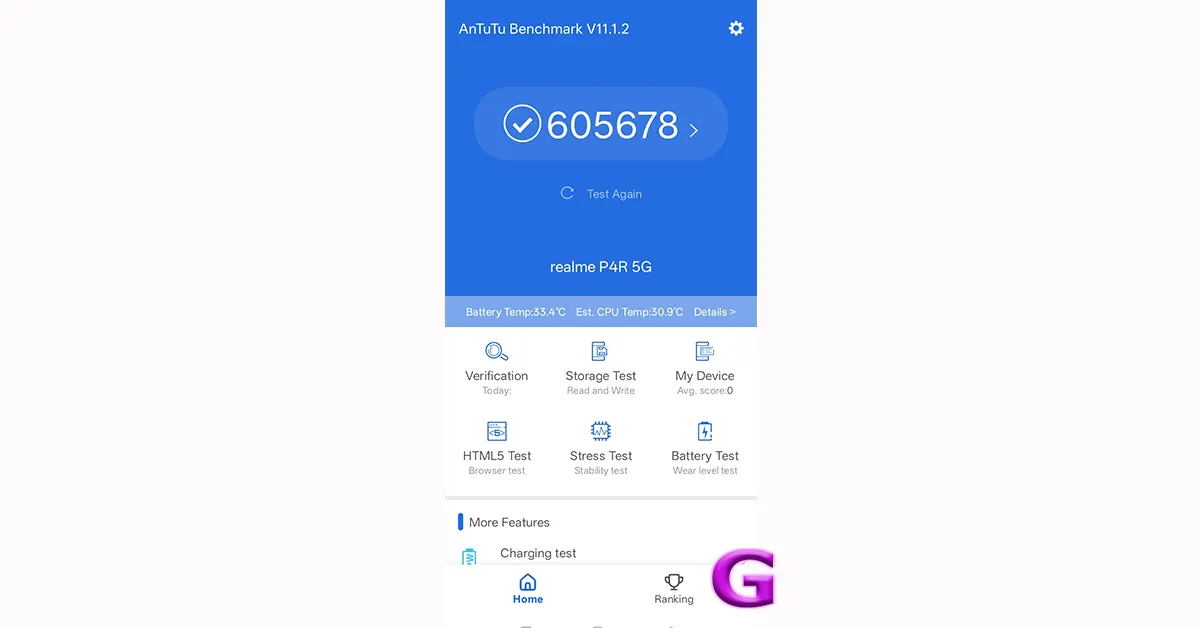
A 5,300 mm² vapour chamber dissipates heat efficiently, allowing the gadget to stay cool throughout normal operation. Messaging, video streaming, online surfing and multitasking in productivity applications all provide constant usability, resulting in a lag-free, dependable experience.
The Realme P4R 5G is not a dedicated gaming phone like the ASUS ROG or flagship iQOO smartphones, but it’s optimised to handle a variety of games apart from casual ones like Candy Crush or Subway Surfers.
The Mali-G57 MC2 GPU provides inconsistent performance across various games. BGMI runs well on Smooth + Extreme, delivering a steady 60 FPS; however, you may notice some latency on higher graphics settings like HDR and Ultra. By contrast, Genshin Impact requires lower settings and is playable only on low or medium for decent frame rates.
The device comes pre-installed with Realme UI 7.0, which is based on Android 16. When it boots up, expect to see the usual pre-loaded apps and ecosystem recommendations, most of which you can just uninstall or disable via settings. It is recommended to disable glance lock screens and push notifications from the app store early on to keep the notification shade clean and responsive.
The Flux Engine and Flux Animation Framework in Realme UI 7.0 greatly enhances the smoothness of animations. Users can simply swipe up to close applications while animations continue to run, ensuring smooth performance without any frame dips or freezing issues.
NEXT AI and Google Gemini Live have shown improvements in real-time software experiences. Gemini Live also provides screen analysis, which helps you debug issues based on context and document translation. AI productivity tools also include a text scanner with perspective distortion correction and an AI assistant for quick text extraction and summarisation. Smart system-level utilities include AI Night Charging Mode and AI Cold Charging Mode, which monitor heat and sleep habits to protect battery health.
Realme has launched a 48-Month Fluency Certification for its smartphones, backed by a software tool called Extended Use Care. This feature claims to increase system smoothness by 20% in long-term use. It does this by clearing out the storage and optimising system caches while the device is unused, such as during overnight charging.
For photography, the Realme P4R is equipped with a single 50-megapixel main back camera with an f/1.8 aperture, a 1/2.88-inch sensor size and phase-detection autofocus. It also sports an 8-megapixel f/2.0 aperture front selfie camera. No OIS (Optical Image Stabilisation).

The 50-megapixel sensor does a decent job of pixel binning to capture clear shots in bright daylight, but details are lost beyond 2x digital zoom. Realme’s image tuning produces some bright, lively images that really pop, especially the blues in the sky and the greens of foliage, but it comes at the cost of colour accuracy in favour of social media appeal. The Auto HDR does a good job balancing the bright and dark regions, but sometimes in the afternoon sun when it’s harsh and intensely bright, it blurs out the highlight details a little too much, particularly on reflecting surfaces.
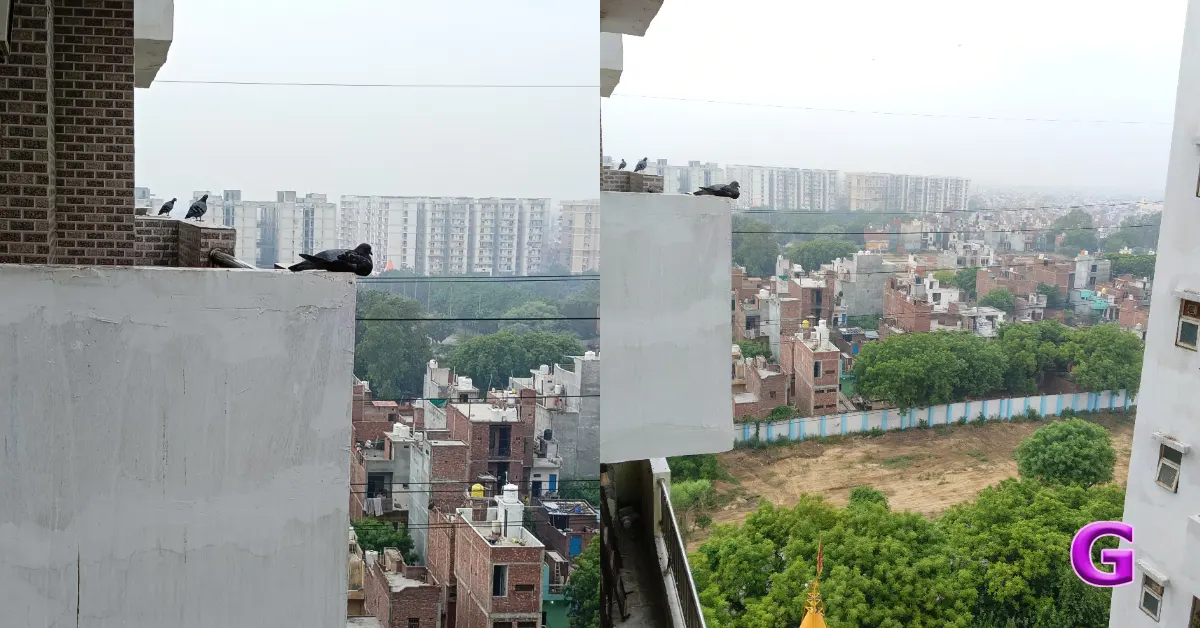
Photos without OIS can look quite blurry since even a little hand movement causes noticeable motion blur, especially in dim environments. To get a crisp picture, it is important to keep the gadget stationary for one to two seconds. Night mode significantly improves shot quality in dim, low-light conditions. While Realme’s noise reduction algorithms can help remove grain from photos, they can also reduce fine detail, making textures look smoother. Additionally, the software artificially boosts brightness levels, which makes dimly lit streets more visually appealing.

For portraits, the camera does a good job of isolating shoulders and faces, providing decent separation in basic portraits. The camera is also useful for portraits, shoulders and faces to provide a nice separation in basic photographs. However, it struggles with more complex elements like loose hair or transparent spectacles, which may result in small defects such as bleeding of unnatural bokeh.

There’s an AI Portrait Glow function that uses artificial intelligence to improve portrait lighting. It does this by picking up architectural elements in the backdrop and adding a digital fill-light effect. This leads to brighter and warmer skin tones, especially in low-light conditions, which enhances the overall quality of the portrait photographs.
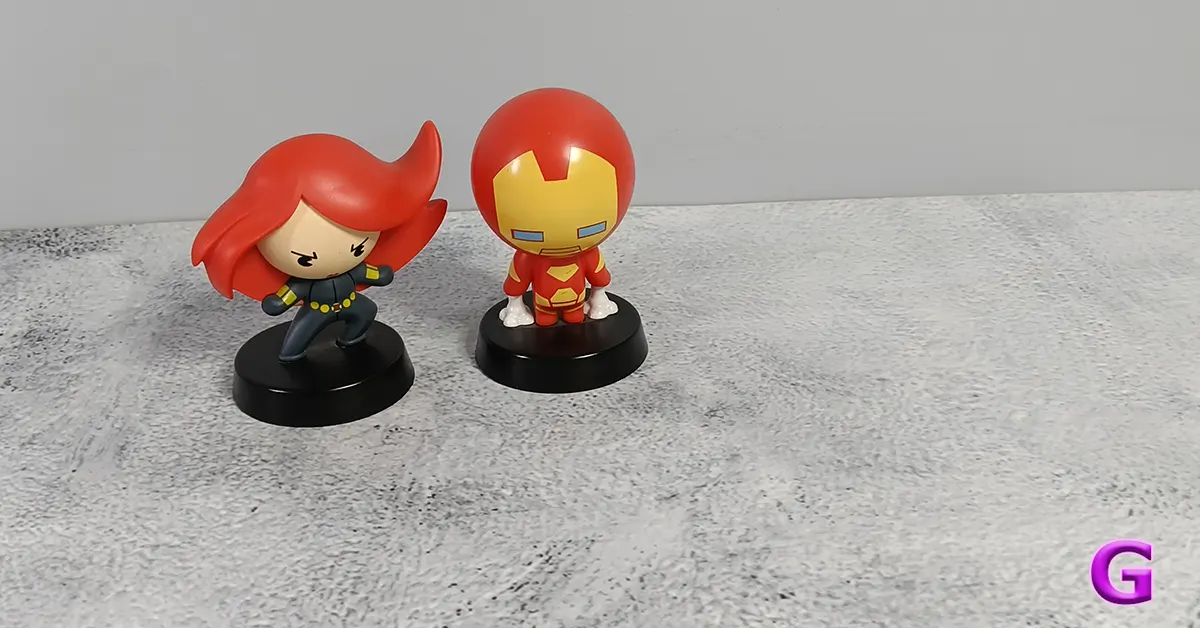
For selfies, the device’s 8-megapixel front camera is decent in daylight settings, especially with adequate indirect lighting, producing photos with natural-looking skin tones. However, there are some significant restrictions; the camera has a limited dynamic range, which may result in overexposed backgrounds, particularly when shooting against a bright sky. In low-light circumstances, the camera suffers with noise and a lack of clarity, relying on a screen flash for lighting. While this makes it appropriate for casual video calls, it falls short of high-quality footage recording at night.
The Realme P4R 5G includes a massive 8,000mAh battery, which is a major plus for the user experience. This huge capacity means a typical smartphone user can use the device for up to three days without recharging, even while handling routine tasks like writing emails and reading the news. For casual use, such as browsing social media or keeping several browser tabs open at once, the battery life is only slightly reduced, which says a lot about this smartphone’s power-management capabilities.
The 45W SuperVOOC charger supplied in the box makes it a slow procedure to fill the device’s large 8,000mAh reservoir. The charging system is stable and secure, not ultra-fast. In case you’re in a rush, there’s a quick 5-minute charge that will give you around 8% battery life, which is good enough for a few hours of vital functions such as calling or GPS navigation. It takes about 2 hours to fully charge the phone from a drained (0%) to 100 per cent, at 1 hour and 55 minutes.
Also Read: Best AI camera phones under Rs 25,000: Here are our top 10 recommendations
Verdict
The Realme P4R 5G is built with a few trade-offs that may not meet everybody’s requirements. It’s not top-notch whether you want high-res photos or advanced streaming, but it does include an HD+ display and a working 50MP camera. But it’s perfect for competitive gamers, commuters or anyone worried about battery longevity. The highlight is the powerful 8,000mAh battery, which ensures extended use without the need for frequent recharging. Plus, it has a 144Hz refresh rate and military-grade shock resistance for added durability for daily use. Durability, heat dissipation and endurance take priority over resolution and camera versatility.
Battery life and durability are the Realme P4R 5G’s strong selling points, but it’s not the best pick for those who are looking for premium display quality or better camera performance.
Price starts at Rs 18,999 in India.
Buy Here
Pros
- 8,000mAh Battery
- 144Hz Refresh Rate
- built-in vapour chamber cooling
- MIL-STD-810H shock resistance and an IP65 rating
Cons
- LCD panel
- Lacks an ultra-wide lens
- 8MP selfie camera


