


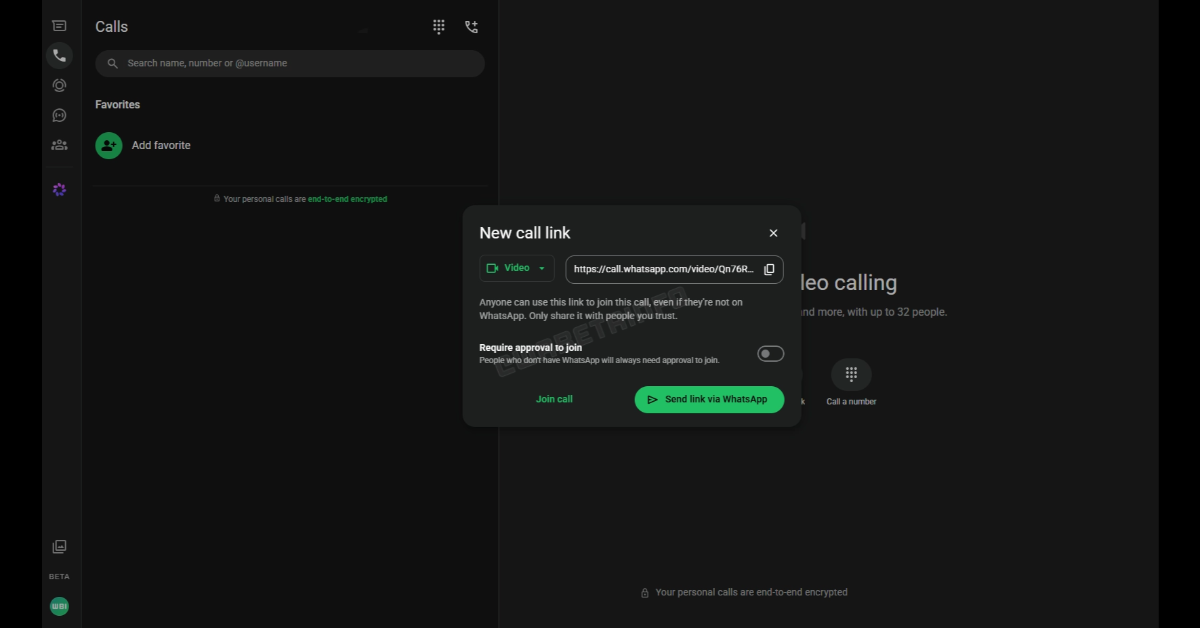

WhatsApp is working on a new guest calling feature that would enable those who don’t have a WhatsApp account to join calls. This feature enables hosts to decide who joins the call by asking every visitor to request to join on an individual basis. You may start a call with a guest by creating a secure invite link. The host also gets to choose the format of the call. It’s also supposed to make it simpler for individuals to participate in talks via web browsers so they don’t need to download the app or create an account — which will open calls to more users.
Recently, WABetaInfo has spotted a new feature on WhatsApp called guest conversations. The functionality allows those without an account to join calls by clicking on a link in their web browser, eliminating the need to download the WhatsApp app.
To tackle privacy and security issues, the guest chat feature on WhatsApp Web works by generating a new identity for every guest. The process creates an encryption key, which guarantees that all the chats held with this option are end-to-end encrypted.
Also Read: Logitech launched MX Keypad, its first MX AI developer control centre
The guest chat feature is currently only available in text chat. However, WhatsApp is creating a new feature that will enable stranger users to join audio calls. This will be done using a similar link-based method that applies the same encryption technology that protects guest conversations to secure guest calls. This is a huge step forward in boosting accessibility while protecting security for all users on the site.
Also Read: Xiaomi 18 Fold with Xring O3 AI flagship SoC, 7.58-inch main display introduced
Hosts may create call links from the Calls tab to enable those who do not use WhatsApp to join in calls. Guests may join these calls immediately using a web browser without having to download an app. But for security reasons, guest access still requires host permission. Each call is end-to-end encrypted and uses a unique session ID to preserve the privacy of users. To prevent unauthorised access, guests must confirm their identity for an additional level of protection. The guest calls are described as real-time and transient, compared to chat messages which are asynchronous and stored for a maximum of 10 days. Hosts have complete control over the call, including the ability to approve participants and remove disruptive individuals.


