


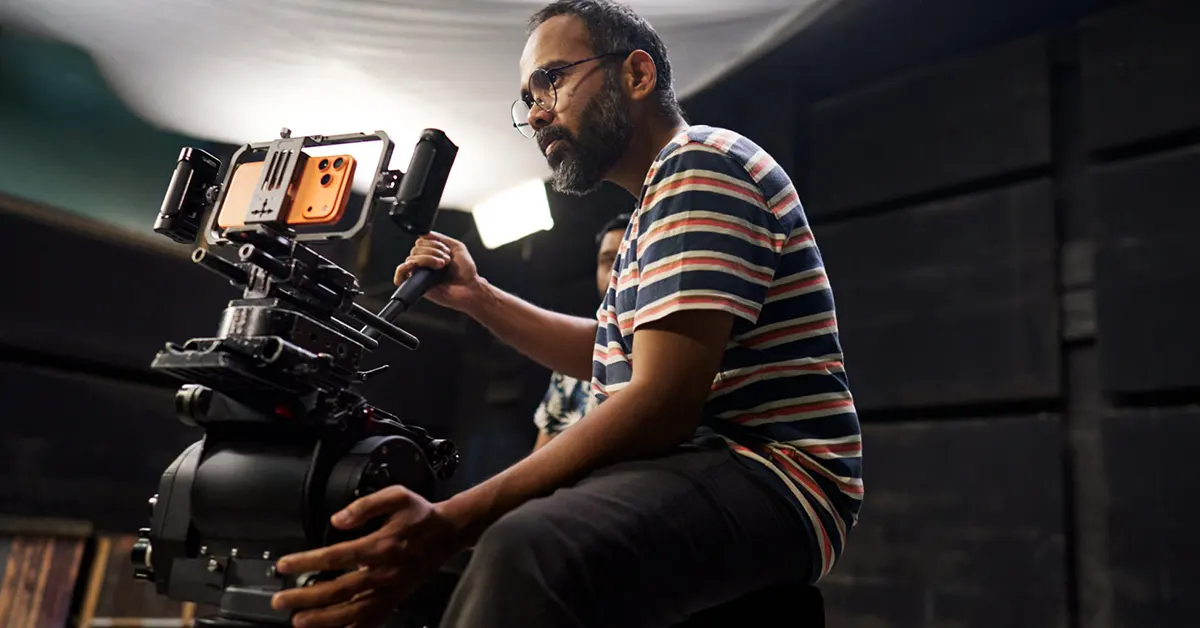

Four emerging Indian filmmakers have completed cinematic short films shot entirely on iPhone 17 Pro Max for the third annual MAMI Select: Filmed on iPhone program, a collaboration between the Mumbai Academy of Moving Image (MAMI) and Apple. The films showcase an extraordinary range of storytelling, from a moonlit romance on Mumbai’s streets to an angel crash-landing in a Kerala backyard, and the results are turning heads well beyond India’s borders. If you thought the best smartphone camera was only good for shooting your lunch, think again.
In This Article
What Is MAMI Select: Filmed on iPhone?
The MAMI Select: Filmed on iPhone program is designed to put professional filmmaking tools in the hands of emerging Indian storytellers and then get out of the way. This year’s cohort features four filmmakers, each bringing a wildly different background and cinematic vision to the table. They used an iPhone 17 Pro Max as their primary camera, supported by a MacBook Pro with M5 and an iPad Pro with M5 for editing and monitoring. The films are now available to watch on MAMI’s YouTube channel.
The program carries serious mentorship weight. This year’s mentors include director Sriram Raghavan (Andhadhun), Chaitanya Tamhane (Court, The Disciple), Dibakar Banerjee, and Geetu Mohandas, together carrying accolades from India’s National Film Awards, the Venice International Film Festival, and the Sundance Film Festival. Tamhane noted that smartphone filmmaking is “redefining the art form” by opening up possibilities around choreography, movement, and accessibility.
Read Also: First Flip Smartphone Under ₹30,000 Is Real, and It Is From A Brand Called Ai+
The Four Films and the Filmmakers Behind Them
11.11 by Shreela Agarwal
Perhaps the most unconventional filmmaker in the group, Shreela Agarwal, is a national-level boxing gold medallist who returned to cinema after a career-ending injury. Her film 11.11 is described as a love letter to Mumbai after dark, following two women on a first date through dimly lit streets and beaches. The challenging low-light conditions were overcome using ProRes RAW capture, which allowed her team to push ISO settings in post-production and recover shadow detail without the expensive lighting rigs that typically make indie filmmaking so cost-prohibitive. Inspired by the expressionist dance-theatre of German choreographer Pina Bausch, Agarwal needed a camera she could physically climb rocks with. The iPhone’s built-in stabilisation made that possible. “The freedom,” she says, “is simply unmatched.”
She Sells Seashells by Ritesh Sharma
Ritesh Sharma, who grew up in Varanasi and trained as a street theatre performer, directs She Sells Seashells, a quietly devastating story of a 17-year-old Rajasthani migrant named Maruti who dreams of entering a beachside restaurant she cannot afford in Goa. Sharma used iPhone 17 Pro Max’s Cinematic mode to blur the line between his protagonist’s outer reality and interior dreamscape, shifting focus to guide the audience emotionally. To manage the considerable noise of the Arabian Sea and Goa’s carnival atmosphere, he leaned on the Audio Mix feature, which allowed precise control over ambient sound. “I felt like a moving studio,” he said. He also used iPad Pro as a second monitor via Sidecar while reviewing edits on MacBook Pro during production.
Pathanam (Paradise Fall) by Robin Joy
Robin Joy, who served as associate director on Payal Kapadia’s All We Imagine as Light (winner of the Grand Prix at the 2024 Cannes Film Festival), brings a wonderfully absurdist premise to his short: an angel collapses in the backyard of a committed atheist, triggering sociopolitical chaos. Joy had long considered the concept too ambitious because of its demanding outdoor sets and action sequences, but iPhone 17 Pro Max changed his calculation. Action mode kept footage stable even while the crew was tossed about on a small boat in the middle of a lake. The most technically audacious shot in the film, depicting the angel unfolding its wings and ascending back to the heavens, was originally estimated to take three months of post-production work. AI-powered mask tracking in Adobe Premiere Pro, accelerated by the Neural Accelerators in MacBook Pro’s M5 GPU, cut that timeline down to three weeks. “Being able to capture cinematic stories with an iPhone lets newer filmmakers explore so many more possibilities,” Joy says.
Read Also: OnePlus Nord CE 6 Goes on Sale for the First Time in India: Price and Specs
Kathar Katha (The Tale of Katha) by Dhritisree Sarkar
Dhritisree Sarkar is a PhD scholar specialising in gender and development who made her filmmaking debut during the COVID pandemic on an iPhone 7. That debut short, Chhaddonam (Pen Name), was later acquired by streaming platform MUBI. Her new film, Kathar Katha, follows a news anchor diagnosed with a condition that progressively seals her external orifices, a concept born from Sarkar’s own unsettling moment of self-reflection. The film’s most striking visual, a close-up of a Bengali bread called luchi puffing up in the character’s eye as a metaphor for suppressed rage, was made possible by the iPhone 17 Pro Max’s 8x optical zoom at 200mm. To recreate the look of celluloid film and evoke the lives of an earlier generation of women, Sarkar and her cinematographer shot in ProRes RAW with Apple Log 2 and pushed contrast and grain to the extreme in post.
Why This Program Matters Beyond India
The program now has a proven track record, with last year’s Seeing Red exceeding one million views on YouTube and Kovarty winning Best Short Film at the Bengaluru International Short Film Festival. MAMI Mumbai Film Festival director Shivendra Singh Dungarpur says the work is triggering a wider creative movement, with hundreds of people inspired to pick up their phones and start making short films themselves. That is not a trivial claim. Independent filmmaking has historically been constrained not by talent, but by access to equipment, crew, and capital. A device capable of shooting cinema-grade ProRes RAW at 4K, with built-in stabilisation, a 200mm optical zoom, and precise audio controls, dramatically shrinks that barrier.
The broader picture here is about who gets to tell stories. A boxer-turned-filmmaker recovering from injury. An economist from Bengal. A street theatre actor from Varanasi. A Cannes-adjacent director from Kerala. None of these is the profile that traditional film schools and production studios were built to serve. The MAMI Select program, now in its third year, is making the case that the camera itself was always the gatekeeper.
The Bigger Shift in Indian Independent Cinema
This year’s lineup sits within a broader moment of momentum for Indian independent cinema globally. With All We Imagine as Light taking the Grand Prix at Cannes in 2024 and Indian short films increasingly finding audiences on platforms like MUBI and YouTube, the international appetite for Indian independent storytelling has never been stronger. Programs like MAMI Select are feeding directly into that pipeline, identifying voices before they have the infrastructure, not after.
It is worth noting, too, that the choice of tools matters as much as the talent. ProRes RAW, Cinematic mode, Action mode, Audio Mix, and 8x optical zoom are not gimmicks. In the hands of filmmakers who know how to use them, these are the kinds of capabilities that used to require a rental camera and a full crew.
The most interesting thing about MAMI Select: Filmed on iPhone is not the technology. It is the argument the program makes about gatekeeping. When a national-level boxer, an economics scholar, a street theatre performer, and a Cannes associate director can each make a cinematically distinct short film on the same device, the old excuses about who gets to make movies start sounding a lot less convincing. The next great Indian film might already be shooting.


