


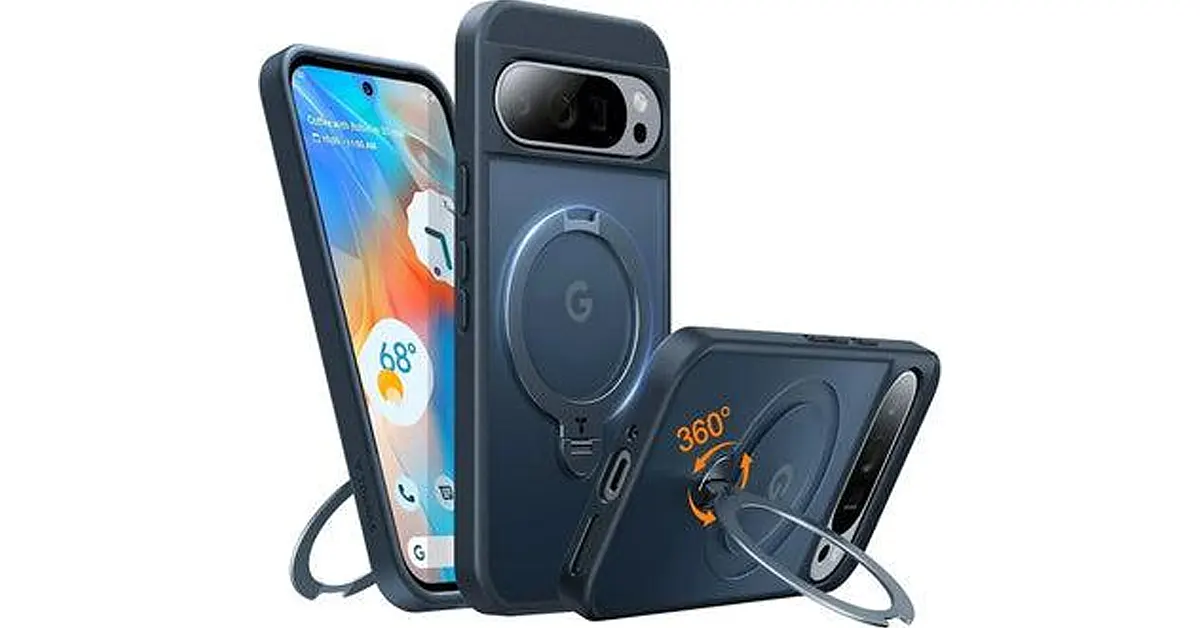
Our smartphones have become indispensable companions during every adventure, from morning trail runs to cross-country travel. They serve as GPS navigators, fitness trackers, cameras, and communication lifelines—all while enduring the bumps, drops, and environmental hazards that come with an active life. For Google Pixel owners who refuse to slow down, finding the right protective case presents a genuine challenge: how do you secure a magnetic case with stand functionality that can withstand real-world abuse without turning your sleek device into an unwieldy brick?
This guide is designed for active lifestyle individuals who demand both rugged durability and everyday comfort from their phone accessories. Whether you’re clipping your Pixel to a magnetic car mount during your commute or propping it up on a stand to follow a recipe after a long hike, your case needs to perform reliably in every scenario. In the sections ahead, we’ll break down the essential selection criteria, from material science to ergonomic design, so you can make a confident, informed choice that keeps your Google Pixel protected for the long haul.
In This Article
Why Durability is Non-Negotiable for Active Lifestyles
Consider what your Google Pixel endures during a typical active day. A trail run subjects it to repetitive jolting impacts against your thigh or armband. A mountain bike ride sends vibrations through every mount point while gravel and debris fly unpredictably. Even a simple day of travel exposes your device to being tossed into bags alongside keys, water bottles, and other hard objects that scratch and scuff without mercy.
The consequences of inadequate protection extend far beyond cosmetic damage. A single drop onto concrete from waist height can shatter a screen, costing hundreds in repairs and leaving you without your primary navigation tool mid-adventure. Internal component damage from repeated minor impacts often manifests gradually—a camera that stops focusing properly, a battery connection that becomes intermittent, or a charging port that loosens over time. These failures tend to surface at the worst possible moments: when you’re deep in unfamiliar territory relying on GPS, or trying to capture a once-in-a-lifetime sunset.
A genuinely durable case transforms your Pixel from a fragile liability into a reliable tool you can trust in demanding conditions. It means you stop worrying about where you place your phone, how you carry it, or what happens if it slips from sweaty hands onto rocky ground. This psychological freedom is just as valuable as the physical protection itself—it lets you stay focused on the activity rather than babying your device. For anyone whose lifestyle regularly puts their phone in harm’s way, durability isn’t a luxury feature to consider; it’s the foundational requirement that every other case attribute must be built upon.
Key Features to Evaluate in a Google Pixel Magnetic Case
Selecting the right magnetic case with stand functionality requires looking beyond marketing claims and understanding the specific features that determine real-world performance. Three core attributes separate cases that last from those that fail prematurely: the materials used in construction, the engineering of impact-vulnerable zones, and the ergonomic design that determines whether you’ll actually enjoy using the case daily. Each of these elements works in concert—a case with excellent shock absorption but poor grip will still end up on the ground more often than it should.
Advanced Materials for Maximum Protection
The foundation of any durable case lies in its material composition. Polycarbonate outer shells provide rigid structural integrity that resists punctures and distributes impact force across a wider area rather than concentrating it at the point of contact. Thermoplastic polyurethane (TPU) inner layers offer flexibility that absorbs energy rather than transferring it directly to your device. The most effective designs use hybrid constructions that layer these materials strategically, placing rigid protection where impacts are most likely while maintaining flexibility where the case needs to flex without cracking. Brands like TORRAS have refined this hybrid approach, engineering precise material layering that maximises protection without unnecessary bulk. Advanced materials also resist environmental degradation—UV exposure that weakens cheaper plastics, temperature fluctuations that cause brittleness, and moisture that compromises adhesive bonds over time. When evaluating a case, look for specific material callouts rather than vague terms like “military-grade,” which carry no standardised meaning.
Shock-Absorbing Corners and Reinforced Edges
Corner impacts account for the majority of drop-related phone damage because corners concentrate force into a small area that then radiates cracks across the screen. Effective shock-absorbing corners use air-cushion technology—small pockets of space within the corner material that compress on impact, extending the deceleration time and dramatically reducing peak force transmitted to the device. Reinforced edges along the top and bottom protect against flat drops and provide a raised lip that keeps the screen and camera lens elevated above flat surfaces. The best designs integrate these protective elements without adding excessive bulk, using precise engineering to place material only where physics demands it.
Ensuring a Comfortable Grip for Daily Use
Protection means nothing if the case itself causes drops through poor ergonomics. A comfortable grip comes from thoughtful contouring that matches natural hand positions, textured surfaces that maintain friction even with sweaty or wet hands, and a slim profile that doesn’t strain your fingers during extended one-handed use. Micro-dot patterns, soft-touch coatings, and subtle side ridges all contribute to secure handling without making the case feel sticky or difficult to slide into pockets. Since you’ll hold your phone hundreds of times daily, grip comfort directly impacts both usability and the likelihood of accidental drops during active moments.
Step-by-Step Guide to Selecting the Right Case
Finding the ideal Google Pixel magnetic case with a stand becomes far more manageable when you approach the decision systematically rather than scrolling endlessly through options. Start by honestly assessing your activity level and identifying your primary protection priorities. If you regularly hike rocky terrain or work in construction, impact resistance ranks above all else. If you’re primarily a commuter and traveler, scratch resistance and magnetic mount reliability might take precedence. Write down your top three use scenarios—this clarity prevents you from being swayed by features you’ll never actually need.
Next, verify magnetic compatibility and stand functionality. Not all magnetic cases work seamlessly with every MagSafe-compatible accessory, and stand mechanisms vary enormously in stability and adjustability. Confirm that the built-in magnets align properly with your car mount, wireless charger, or wallet attachment. For the stand, consider whether you need portrait orientation for video calls, landscape for streaming, or both. A stand that only works at one angle may frustrate you more than it helps.
Once you’ve narrowed your options, inspect each candidate for shock-absorbing corners and reinforced edges—physically if possible, or through detailed product images and teardown reviews. Look for visible air-cushion pockets in the corners and a measurable lip around the screen and camera module. Then evaluate grip by reading user reviews that specifically mention handling during exercise or wet conditions. Terms like “slippery after a month” or “coating peeled off” reveal long-term durability issues that product photos cannot. Finally, compare your shortlisted brands based on material transparency and consistent user feedback. Manufacturers who specify exact material compositions rather than relying on vague descriptors typically deliver more reliable products. Cross-reference multiple review sources to identify patterns—a single negative review means little, but repeated complaints about the same failure point should eliminate a contender immediately.
Balancing Protection with Everyday Comfort
The tension between maximum protection and daily comfort is real, but it doesn’t have to be a zero-sum game. The key lies in recognizing that modern case engineering has evolved beyond the old paradigm where rugged meant bulky. Today’s best Google Pixel magnetic cases with stand functionality achieve this balance through strategic material placement—concentrating protective bulk only at high-impact zones while keeping the overall profile slim enough for comfortable pocket carry and one-handed texting.
When evaluating trade-offs, start by identifying which protective features you can’t compromise on versus which ones add bulk without matching your actual risk profile. If you never work around heavy machinery, you likely don’t need the thickest possible corner bumpers. Conversely, if you frequently use your phone with wet hands during cooking or post-workout, grip texture matters more than an extra millimetre of edge reinforcement. Advanced materials help bridge this gap significantly—newer polymer blends deliver impact absorption equivalent to older, thicker designs at a fraction of the weight and profile. A hybrid case using precision-moulded polycarbonate with targeted TPU inserts can feel remarkably thin while still passing serious drop tests.
The stand feature itself represents a comfort advantage that many buyers underestimate. A reliable kickstand eliminates the need to hold your phone during video calls at camp, following workout tutorials, or watching content during travel downtime. This hands-free convenience reduces fatigue and keeps your device positioned safely on stable surfaces rather than balanced precariously against objects where it might slide and fall. Look for stand mechanisms that fold completely flush when not in use—any protrusion that catches on pockets or creates an uneven surface against your palm undermines the comfort you’re seeking. The ideal case should feel like a natural extension of your Pixel, providing confidence that your device is protected without ever reminding you that protection is there through awkward bulk or compromised handling.
Making the Right Investment for Long-Lasting Pixel Protection
Choosing a durable Google Pixel magnetic case with a stand comes down to understanding what your active lifestyle actually demands and refusing to settle for anything less. The foundation starts with recognising that durability isn’t optional when your phone serves as your navigation system, camera, and communication tool through every adventure. From there, the selection process becomes clearer when you focus on the features that matter most: advanced materials like polycarbonate and TPU hybrids that resist impacts and environmental wear, shock-absorbing corners engineered to dissipate force during inevitable drops, and a comfortable grip that prevents those drops from happening in the first place.
By following a systematic approach—assessing your specific activity risks, verifying magnetic and stand compatibility, inspecting protective engineering, and cross-referencing real user experiences—you eliminate guesswork and invest in a case that genuinely performs. The best choice will feel almost invisible during daily use while providing unwavering confidence that your Pixel is shielded from whatever your next adventure throws at it. Take the time to evaluate these criteria thoroughly, and you’ll find a case that serves you reliably for years rather than months, making it one of the smartest accessories you’ll ever purchase for your device.


