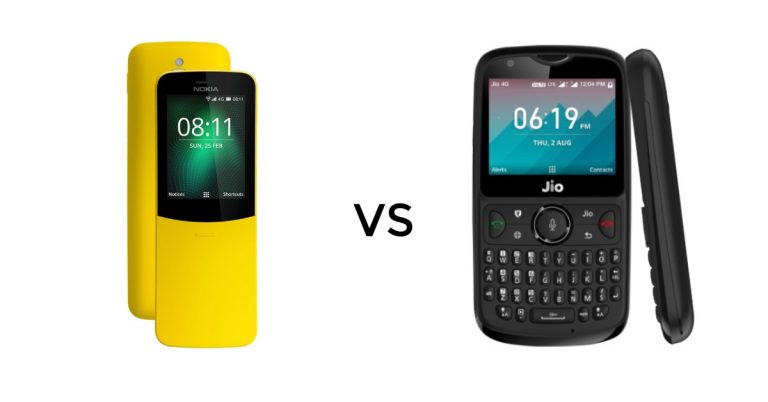
Nokia last week played the nostalgia card on us once again and launched the Banana phone in India. Nokia 8110 4G, as the name suggests, is a revamped version of the company’s popular 8110 device. The Matrix phone from Nokia directly competes with JioPhone 2. Both the feature phones run KaiOS and have recently got support for some widely used apps like WhatsApp, YouTube, and Google Maps which obviously makes them better value for money devices. Both Nokia 8110 4G and JioPhone 2 come with support for 4G VoLTE and sport a QWERTY keypad. While Nokia 8110 4G has some nifty features and comes with the revamped version of the iconic Snake game, JioPhone 2 has been launched by Reliance with the idea of getting 4G connectivity to one and all.
But which one should you choose among them? Should you give in to nostalgia and pick the revamped Nokia 8110 4G smart feature phone or will JioPhone 2 prove to be a better buy? Also, should you opt to buy either of the two as your primary device or are they only good enough to be a secondary one?
Here, we compare all the specifications and pricing of the two smart feature phones so that you can decide which one is the right buy for you:
This week saw a big yet affordable upgrade come to HMD Global’s Nokia lineup. The company launched its Nokia 3.1 Plus smartphone in India, which is the successor to Nokia 3.1 that was unveiled in July. To recall, although Nokia 3.1 was a value for money device, it did lack some key features. For instance, the smartphone did not come with a fingerprint sensor.
But we don’t have a reason to complain anymore, because Nokia 3.1 Plus does address the complaints users had with its predecessor. The smartphone features a bigger screen than Nokia 3.1, comes with a fingerprint scanner on its back panel and even has a bumped up MediaTek HelioP22 processor and a 3,500mAh battery. But that’s still not the best thing that the company has added to the new smartphone. Nokia 3.1 Plus sports a dual rear camera that enables it offer portrait mode effects. And like all other Nokia smartphones that have been launched recently, the mobile phone comes under the Android One program, which gives it an edge over others because it will get timely Android updates for two years and security patches for three years.
The smartphone costs Rs 11,499, and at this price it competes with the likes of Moto G6 (review), Xiaomi Redmi Note 5 Pro and Asus Zenfone Max Pro M1 (review). We spent some time with the Nokia 3.1 Plus and here are our first impressions of the device.
Nokia 3.1 Plus design
We really liked the design of Nokia 3.1 Plus. The smartphone has a sturdy built and it feels solid to hold. And it was certainly refreshing to use a smartphone that has matte finish as it means no fingerprint smudges. The back panel of Nokia 3.1 Plus houses the dual rear cameras, LED flash and the fingerprint scanner. The volume rocker and power buttons are sandwiched on the right edge and the SIM card and microSD card slots are on the left edge. The top and bottom edges house the 3.5mm jack, USB port and speaker grilles.
Flip the phone over and you’ll see the 6-inch screen of the smartphone with Nokia branding, earpiece and selfie camera on top. Overall, we really liked the design of Nokia 3.1 Plus. It definitely is one among the better looking phones in the budget segment and its matte finish makes it stand out.
Nokia 3.1 Plus display
Nokia 3.1 Plus smartphone sports a 6-inch HD+ IPS display that has an aspect ratio of 18:9. One thing that we found to be a differentiator is the fact that Nokia 3.1 Plus does not sport a notch on its display, something that is not very common anymore. Coming back to the display, it showcased bright and vibrant colours and had good viewing angles. The colour reproduction is accurate and the images projected are sharp and clear. In our limited time with the phone, the only downside to the display that we observed was its sunlight readability. That certainly could have been better. But you’ll have to wait for our review till we give you our complete opinion on it.
Nokia 3.1 Plus cameras
Nokia 3.1 Plus sports dual rear cameras with a 13MP sensor that comes with an f2.0 aperture and a 5MP sensor that has an f2.4 aperture. The front panel of the smartphone houses an 8MP camera with f2.2 aperture. Bokeh feature is present on the dual rear cameras as well as on the selfie camera of Nokia 3.1 Plus. It is worth noticing that the dual rear cameras have the Live Bokeh mode, which basically enable the user to adjust the depth in Bokeh mode before he clicks a picture. However, the same cannot be done while clicking selfies. Time-lapse and slow motion videos can also be recorded using Nokia 3.1 Plus. We took a few shots using the smartphone and we were impressed by the colour reproduction and the details that the cameras captured. However, our opinion as of now is limited to shots taken in brightly lit areas. You would have to wait for our full review to know about the low-light shots. One aspect of the smartphone that truly disappointed us was the selfie camera. If you are selfie fan, you may not be too happy with the results you’ll get from Nokia 3.1 Plus’ front facing snapper. We tried to take a number of shots, but the selfies we took were just not up to the mark as compared to other smartphones in this price segment. But then, we will use it for a little longer before we jump to any conclusions about it.
What we think
In the limited time that we got with the Nokia 3.1 Plus, we loved its design and even found our experience with the display to be good. The cameras did leave us with mixed feelings, but as we said, it would be too soon for us to jump to any conclusion. The smartphone does have its own set of positive points and because it comes under the Android One program, it may be one among the first budget phones in the country to get an Android Pie update. Till now, Nokia 3.1 Plus seems to be a promising budget smartphone, but we will use it for a few more days and come back to talk about its performance and battery life.
This week, Google launched its Pixel 3 smartphones. With this, this year’s flagship devices of Google, Apple and Samsung have been showcased. And if you were waiting to see the Google Pixel 3 lineup before you treat yourself with a good smartphone, then we are here to help. Here’s our comparison of Google Pixel 3 XL, iPhone XS Max and Samsung Galaxy Note 9 to help you decide which one is the perfect buy for you:
Display
Google Pixel 3 XL: 6.3-inch QHD+ flexible OLED display
Apple iPhone XS Max: 6.5-inch OLED HDR Super Retina display
Samsung Galaxy Note 9: 6.4-inch Super AMOLED Infinity screen with Quad HD+ resolution
Processor
Google Pixel 3 XL: Qualcomm Snapdragon 845
Apple iPhone XS Max: A12 Bionic processor
Samsung Galaxy Note 9: Qualcomm Snapdragon 845
Primary camera
Google Pixel 3 XL: 12.2MP dual pixel single rear camera with a 76-degree field-of-view
Apple iPhone XS Max: 12MP wide-angle lens and a 12MP telephoto lens
Samsung Galaxy Note 9: Dual rear cameras with 12MP telephoto and wide angle sensors
Selfie camera
Google Pixel 3 XL: 8MP wide-angle sensor with 97-degree field of view and fixed focus coupled with an 8MP secondary sensor with 75-degree field-of-view
Apple iPhone XS Max: 7MP TrueDepth camera
Samsung Galaxy Note 9: 8MP autofocus camera
RAM and storageGoogle Pixel 3 XL: 4GB RAM clubbed with 64GB/256GB inbuilt storage
Apple iPhone XS Max: Three storage options — 64GB, 256GB, and 512GB
Samsung Galaxy Note 9: 6GB RAM/128GB onboard storage and 8GB RAM/512GB internal storage
Support for microSD card
Google Pixel 3 XL: No microSD card slot
Apple iPhone XS Max: No microSD card slot
Samsung Galaxy Note 9: Up to 512GB
Battery
Google Pixel 3 XL: 3,430mAh
Apple iPhone XS Max: Lasts up to one and a half hours longer than iPhone X.
Samsung Galaxy Note 9: 4,000mAhOperating system
Google Pixel 3 XL: Android 9.0 Pie
Apple iPhone XS Max: iOS 12
Samsung Galaxy Note 9: Android 8.1 Oreo
Price
Google Pixel 3 XL: The 64GB storage variant costs Rs 83,000 and the 256GB version bears a price tag of Rs 92,000.
Apple iPhone XS Max: The 64GB storage variant costs Rs 1,09,900, 256GB variant is available at Rs 1,24,900 and 512GB variant is priced at Rs 1,44,900.
Samsung Galaxy Note 9: The 6GB RAM/128GB internal storage version costs Rs 67,900 and the 8GB RAM/512GB storage variant is priced at Rs 84,900.
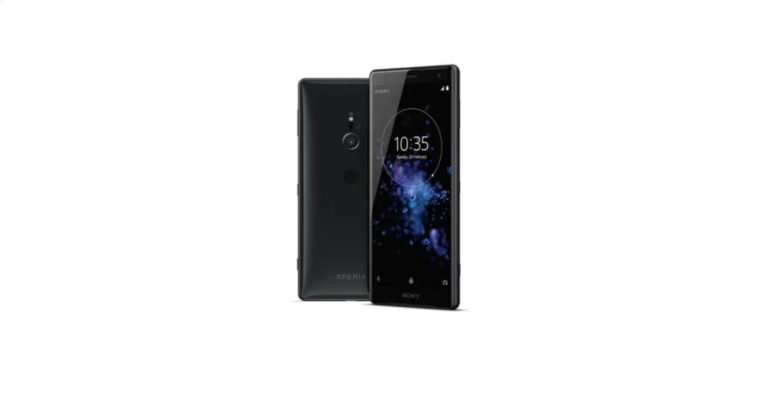
Sony had earlier announced that Android 9.0 Pie is scheduled to come to its Xperia XZ2, Xperia XZ2 Premium, XZ2 Compact, XZ Premium, XZ1 and Xperia XZ1 Compact smartphones in November. However, it has been reported that the latest Android update has already started rolling out to Sony Xperia XZ2 and Xperia XZ2 Compact smartphones.
Users of the two smartphones in Europe started reporting on a thread on Reddit about the Android 9.0 Pie update coming to Sony Xperia XZ2 and Xperia XZ2 Compact. And now, users in the United States have also spotted the update. Those you don’t get the notification can check for it manually in the Settings of their smartphones, provided they live in either Europe or the United States. The arrival of the update to Sony Xperia XZ2 and Xperia XZ2 Compact was first spotted by Xperia blog.
The October security also comes with the Android 9.0 Pie update to Sony Xperia XZ2 and Xperia XZ2 Compact.
Now that the Android 9.0 Pie update has come to the two Sony smartphones ahead of time, we can also expect it to come soon to the rest of the smartphones from the company that are compatible.
Other smartphones from Sony that are scheduled to get the update in November are Xperia XZ2 Premium, XZ Premium, XZ1 and Xperia XZ1 Compact. Sony Xperia XA2, Xperia XA2 Ultra, and Xperia XA2 Plus can expect to get the latest Android update on their smartphones by 2019.
If you have one among the Sony Xperia XZ2 or Xperia XZ2 Compact mobile phones, then we recommend you to install it over Wi-Fi as it is over 1GB in size. Also it is preferable to have at least 80% battery in your phone before you begin installing the update.
To recall, Sony Xperia XZ2 sports a 5.70-inch touchscreen display and is powered by Snapdragon 845 processor clubbed with 4GB of RAM. Other features of the smartphone include 64GB of storage, a microSD card slot of 400GB capacity, a 19MP primary camera and a 5MP front facing snapper. The smartphone houses a 3180mAh battery. On the other hand, Sony Xperia XZ2 Compact features a 5.00-inch touchscreen display and packs a 2780mAh battery.
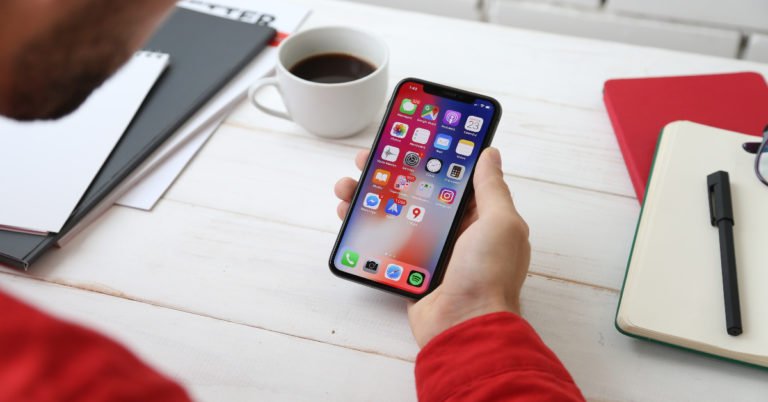
If you have been planning to change your smartphone, no other time would have been better. While we have already told you about the attractive smartphone deals on Flipkart and Amazon, if you want to buy the iPhone X, you should head to Paytm Mall right away. As a part of Paytm Mall Maha Cashback sale, the 64GB storage variant of iPhone X that is priced at Rs 95,000, is being sold at a discounted price of Rs 89,350. So that brings down the price of Apple’s last year’s flagship by Rs 6,032.
Additionally, Paytm all is offering customers a cashback of Rs 22,000 on using the promocode MOBFESTIVE22K. On using the promocode, the effective cost of the iPhone X comes down to Rs 67,358.
That’s not all. Buyers will also get a discount of Rs 2,500 if they pay for the smartphone using an ICICI Bank credit or debit card. On doing this, the cost of the smartphone further comes down to Rs 64,858.
The same offers are also valid on the 256GB storage version of iPhone X which bears a price tag of Rs 1,08,930.
The customers will get the cashback promised by the website in their Paytm wallets within 24 hours of their new smartphone getting shipped.
So if you have been one among the Apple fans who were disappointed last month with three rather costly iPhones being added to Apple’s lineup, this may be the right deal for you.
Apple’s iPhone X is also available on a discounted price on Amazon India’s website as a part of its Great Indian Festival sale. While the 64GB storage version of the smartphone can be picked up from Amazon at Rs 69,999, the 256GB storage variant can be bought at Rs 1,06,704. Flipkart is also offering the smartphone in its Big Billion Days sale, but the deals available on Amazon India and Paytm Mall are far better.
But in case you miss the chance of buying the smartphone from either, you can still pick it from Flipkart at a reduced price. On Flipkart, the 64GB storage variant of iPhone X costs Rs 79,999, the 256GB storage version is being sold at Rs 98,999.
To recall, iPhone X sports an edge to edge 5.8-inch SuperRetina OLED display and is powered by Apple’s A11 Bionic chipset. On the camera front, there are 12MP wide-angle and telephoto rear cameras and a 7MP selfie camera. It is the first ever iPhone to support FaceID and it comes with a 1-year manufacturer warranty.
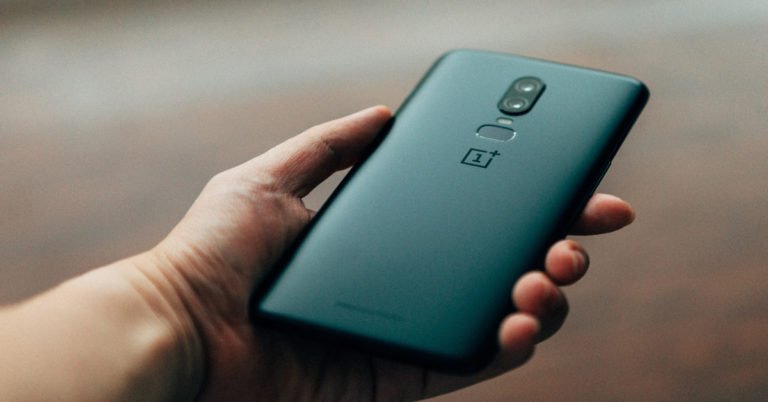
As its launch on October 30 approaches, the rumour mill about the much awaited OnePlus 6T cannot seem to end. The company yesterday confirmed that OnePlus 6T will sport an in-display fingerprint sensor, and today, it has been tipped by Roland Quandt of WinFuture.de that that the smartphone has hit Geekbench. He further said that it has been revealed that OnePlus 6T will be powered by Snapdragon 845 processor clubbed with 8GB RAM and run Android 9.0 Pie out of the box.
A report on WinFuture.de also the image of OnePlus 6T’s Geekbench test. It is worth noting that the screenshot of the Geekbench test that has been shared does not have OnePlus 6T’s name on it and instead says FS FS P8801. According to the report, this is OnePlus 6T has not been tested on Geekbench with its official marketing name and FS FS P8801 is the name that the device has been given.
Using a false name is not unusual the company, as prior to its launch, OnePlus 6 was found under the name NS NS P7819 on Geekbench.
But then, what has been revealed by the Geekbench test is hardly anything new. Since OnePlus 6 was powered by Snapdragon 845 — which still is the most powerful processor in the market, nobody was really expecting any other processor to be present on the company’s upcoming device. Same is the case with 8GB RAM.
The presence of Android 9.0 Pie is nowhere close to being shocking too since OnePlus is known to launch its smartphones with the latest Android version and also because the company rolled out the latest update to OnePlus 6 just a few weeks back.
Besides the latest update and the presence of an in-display fingerprint sensor, what we do know for sure is that OnePlus 6T would replace its 3.5mm headphone jack with a Type-C port. Also, it would not be dust or water resistant as it will come without an IP rating and there will be no support for wireless charging.
The smartphone is expected to feature a 6.4-inch Optic AMOLED full-HD+ display and will house a 3,700mAh battery.
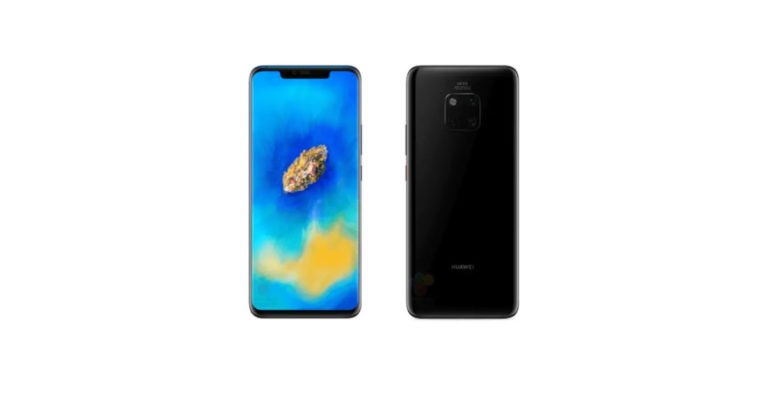
Huawei’s next upcoming flagship smartphone — Mate 20 Pro — is all set to launch in London on October 16. And just before its launch, the specifications and pricing details of Huawei Mate 20 Pro have been leaked. Besides Huawei Mate 20 Pro, the company will also be launching its Mate 20 and Mate 20 gaming phone.
Speaking of Huawei Mate 20 Pro, the smartphone is expected to launch in 6GB and 8GB RAM variants and will come in two storage options — 256GB and 512GB. A report in WinFuture.de reveals that smartphone will feature a 6.39-inch QHD+ OLED display and will be powered by HiSilicon Kirin 980 processor that will be clubbed with Mali-G72 GPU. The smartphone will be available in the two RAM and storage options that we mentioned earlier and will come with a ‘Nano Memory Card’ format to hold a microSD card of up to 256GB.
It will reportedly feature an in-display fingerprint scanner and like Huawei P20 Pro, the smartphone will sport a triple rear camera setup. The triple cameras at the back could come with a 40MP primary sensor, a 20MP secondary sensor and an 8MP ultra wide angle sensor. For selfies and video calls, Huawei Mate 20 Pro is expected to come with a 24MP front facing snapper coupled with a Vertical Surface Emitting Laser module. A VSEL module is said to enable Apple’s Face ID like 3D facial recognition on the device.
The rear cameras of the smartphone will reportedly come with 5x optical zoom and will be able to capture ultra-macro shots even from a distance of 2.5cm.
Huawei Mate 20 Pro mobile will house a 4,200mAh battery and come with SuperCharge technology and 40W charger. The battery of the smartphone is said to go from 0 to 70% with just 30 minutes of charge time. The upcoming handset from Huawei will also support wireless charging and will be IP68 certified — which makes them water and dust resistant. The smartphone will reportedly run Android 9.0 Pie skinned with EMUI 9.0 and will be available four colour options: Black, Blue, Green and Twilight.
One more thing to add: Huawei Mate 20 Pro 6/128 GB costs 899 GBP unlocked in UK. https://t.co/FyNepfw508
The report in WinFuture.de did not reveal the pricing, but Roland Quandt — who writes for the website — has tweeted that the 6GB RAM and 128GB storage variant of the device will bear a price tag of GBP 899. However, there is no word on the pricing of the other variant.
Image courtesy: WinFuture.de
Speculations and rumours about Samsung’s first foldable smartphone have been surfacing online for months now. Earlier this year, the company’s mobile division CEO DJ Koh had said that the much talked about smartphone could arrive in November this year. Amid the leaks of the smartphone that are doing rounds, Koh has confirmed some details of the much talked about device.
The foldable device by Samsung will be able to work as a tablet that can be folded into a smartphone to fit into the user’s pocket, Koh revealed. By doing this, the company would be ensuring that users can multitask with the device without compromising on its portability.
In an interview to CNET, CEO DJ Koh said that Samsung wants to make a foldable phone only when it is “really meaningful to our customer”. He further said that, “If the user experience is not up to my standard, I don’t want to deliver those kind of products.”
Speaking more on the device, CEO DJ Koh also said that Samsung’s foldable smartphone is not a “gimmick product” that disappears just six to nine months after being launched. And unlike Samsung Galaxy Round that was only sold in its home country, the company’s foldable smartphone will be made available in global markets.
While he didn’t talk about the specifications of the upcoming device, Koh did say that a large screen is important in smartphones. He recalled how Samsung’s Note series inspired the likes of Apple and Google to come up with larger screened smartphones and suggested that the upcoming foldable smartphone would pave the way for devices whose displays are more than 6.5-inches.
Addressing the fact that not everyone may want a smartphone with such a big screen, Koh went on to say, “Possibly when we start selling the foldable phone, it may be a niche market, but definitely, it will expand. I’m positive that we do need a foldable phone.”
Samsung’s DJ Koh spoke about the upcoming foldable smartphone of the company at the launch of Galaxy A9 (2018). Samsung Galaxy A9 (2018) is the first smartphone ever to come with four cameras on its back panel. The newly launched smartphone by Samsung is powered by Qualcomm Snapdragon 660 processor and comes in 6GB and 8GB RAM variants. The device has support for Bixby and Samsung Pay.
Nokia 3.1 Plus Unboxing, First Impressions and Camera Shots. Yes the Nokia 3.1 Plus is here, it sports a 6-inch FHD+ screen, dual rear camera setup, 3GB RAM and 32GB memory. This is expandable using a microSD card by up to 400GB. It also supports dual nano SIMS. Wi-Fi, 4G and micro USB charging is supported.
India Price: Rs 11,499 (3GB Ram + 32GB Storage)
For the latest gadget and tech news, and gadget reviews, follow us on Twitter, Facebook, Instagram and YouTube.
If you own an Apple product, here is something you must know about. China’s leading payment services Alipay and WeChat Pay have issued warnings that compromised Apple IDs are being being used by thieves to make purchases with users’ accounts.
According to Reuters, Alipay has posted a warning titled ‘security tips about Apple phones.’ The company clearly states in the warning that it has been trying to get in touch with Apple to solve the issue. The parent company of WeChat Pay — Tencent — has also spoken about similar issues to Bloomberg.
According to Bloomberg, Alipay has said that, “Since Apple hasn’t resolved this issue, users who’ve linked their Apple ID to any payments method, including Alipay, WePay, or credit cards, may be vulnerable to theft.”
As of now, there is no clarity on how much money has been lost because of the issue or how widespread it is. A report in Reuters further says according to a Chinese state media outlet has said that some losses were even as high as $290. A source has also confirmed that Apple will be refunding the money that was spent fraudulently because of the issue.
Although Apple is being called out by Alipay and WeChat Pay, right now, it cannot be said for sure if the issue is arising because of a flaw in Cupertino-based technology company’s ID system.
However, it can be possible that Apple ID credentials have been stolen and are being used by thieves to log in to Apple accounts to make purchases with payment method that has been linked to them. And Alipay and WeChat Pay are just two of many payment methods that can be linked.
An official from Apple has said that the company has always encouraged its customers to protect their accounts with strong passwords and by enabling two-factor authentication.
Although Alipay has now removed its post on social media in which it called out Apple, word about it has already spread globally.
But it is worth noting that this issue points towards a big problem faced by technology giants like Apple. They don’t only have to secure their own apps and websites, they also need to take care of common accounts and passwords getting leaked from other sources.


 Nokia 8110 4G: 2.4-inch QVGA TFT curved display
JioPhone 2: 2.4-inch QVGA screen
Nokia 8110 4G: 2.4-inch QVGA TFT curved display
JioPhone 2: 2.4-inch QVGA screen
 Nokia 8110 4G: 1.1GHz dual-core Qualcomm Snapdragon 205 processor
JioPhone 2: 1.1GHz dual-core processor
Nokia 8110 4G: 1.1GHz dual-core Qualcomm Snapdragon 205 processor
JioPhone 2: 1.1GHz dual-core processor
 Nokia 8110 4G: 2MP primary camera with LED flash
JioPhone 2: 2MP rear camera
Nokia 8110 4G: 2MP primary camera with LED flash
JioPhone 2: 2MP rear camera
 Nokia 8110 4G: N.A.
JioPhone 2: 0.3MP (VGA) front facing camera
Nokia 8110 4G: N.A.
JioPhone 2: 0.3MP (VGA) front facing camera
 Nokia 8110 4G: 512MB RAM and 4GB of internal storage
JioPhone 2: 512MB of RAM and 4GB of onboard storage
Nokia 8110 4G: 512MB RAM and 4GB of internal storage
JioPhone 2: 512MB of RAM and 4GB of onboard storage
 Nokia 8110 4G: No
JioPhone 2: Up to 128GB
Nokia 8110 4G: No
JioPhone 2: Up to 128GB
 Nokia 8110 4G: 1,500mAh battery
JioPhone 2: 2,000mAh battery
Nokia 8110 4G: 1,500mAh battery
JioPhone 2: 2,000mAh battery
 Nokia 8110 4G: Feature OS powered by KaiOS
JioPhone 2: KaiOS
Nokia 8110 4G: Feature OS powered by KaiOS
JioPhone 2: KaiOS
 Nokia 8110 4G: Rs 5,999
JioPhone 2: Rs 2,999
For the latest gadget and tech news, and gadget reviews, follow us on Twitter, Facebook, Instagram and YouTube.
[td_smart_list_end]
Nokia 8110 4G: Rs 5,999
JioPhone 2: Rs 2,999
For the latest gadget and tech news, and gadget reviews, follow us on Twitter, Facebook, Instagram and YouTube.
[td_smart_list_end] 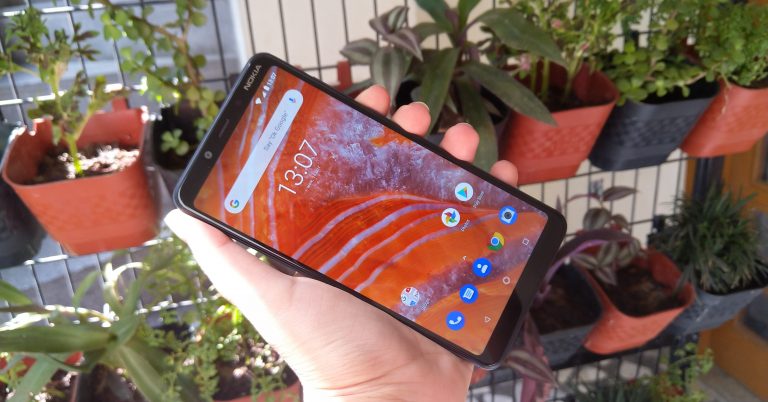
 We really liked the design of Nokia 3.1 Plus. The
  Flip the phone over and you’ll see the 6-inch screen of the smartphone with Nokia branding, earpiece and selfie camera on top. Overall, we really liked the design of Nokia 3.1 Plus. It definitely is one among the better looking phones in the budget segment and its matte finish makes it stand out.
Nokia 3.1 Plus display
Flip the phone over and you’ll see the 6-inch screen of the smartphone with Nokia branding, earpiece and selfie camera on top. Overall, we really liked the design of Nokia 3.1 Plus. It definitely is one among the better looking phones in the budget segment and its matte finish makes it stand out.
Nokia 3.1 Plus display
 Nokia 3.1 Plus smartphone sports a 6-inch HD+ IPS display that has an aspect ratio of 18:9. One thing that we found to be a differentiator is the fact that Nokia 3.1 Plus does not sport a notch on its display, something that is not very common anymore. Coming back to the display, it showcased bright and vibrant colours and had good viewing angles. The colour reproduction is accurate and the images projected are sharp and clear. In our limited time with the phone, the only downside to the display that we observed was its sunlight readability. That certainly could have been better. But you’ll have to wait for our review till we give you our complete opinion on it.
Nokia 3.1 Plus cameras
Nokia 3.1 Plus smartphone sports a 6-inch HD+ IPS display that has an aspect ratio of 18:9. One thing that we found to be a differentiator is the fact that Nokia 3.1 Plus does not sport a notch on its display, something that is not very common anymore. Coming back to the display, it showcased bright and vibrant colours and had good viewing angles. The colour reproduction is accurate and the images projected are sharp and clear. In our limited time with the phone, the only downside to the display that we observed was its sunlight readability. That certainly could have been better. But you’ll have to wait for our review till we give you our complete opinion on it.
Nokia 3.1 Plus cameras
 Nokia 3.1 Plus sports dual rear cameras with a 13MP sensor that comes with an f2.0 aperture and a 5MP sensor that has an f2.4 aperture. The front panel of the smartphone houses an 8MP camera with f2.2 aperture. Bokeh feature is present on the dual rear cameras as well as on the selfie camera of Nokia 3.1 Plus. It is worth noticing that the dual rear cameras have the Live Bokeh mode, which basically enable the user to adjust the depth in Bokeh mode before he clicks a picture. However, the same cannot be done while clicking selfies. Time-lapse and slow motion videos can also be recorded using Nokia 3.1 Plus. We took a few shots using the smartphone and we were impressed by the colour reproduction and the details that the cameras captured. However, our opinion as of now is limited to shots taken in brightly lit areas. You would have to wait for our full review to know about the low-light shots. One aspect of the smartphone that truly disappointed us was the selfie camera. If you are selfie fan, you may not be too happy with the results you’ll get from Nokia 3.1 Plus’ front facing snapper. We tried to take a number of shots, but the selfies we took were just not up to the mark as compared to other smartphones in this price segment. But then, we will use it for a little longer before we jump to any conclusions about it.
What we think
In the limited time that we got with the Nokia 3.1 Plus, we loved its design and even found our experience with the display to be good. The cameras did leave us with mixed feelings, but as we said, it would be too soon for us to jump to any conclusion. The smartphone does have its own set of positive points and because it comes under the
Nokia 3.1 Plus sports dual rear cameras with a 13MP sensor that comes with an f2.0 aperture and a 5MP sensor that has an f2.4 aperture. The front panel of the smartphone houses an 8MP camera with f2.2 aperture. Bokeh feature is present on the dual rear cameras as well as on the selfie camera of Nokia 3.1 Plus. It is worth noticing that the dual rear cameras have the Live Bokeh mode, which basically enable the user to adjust the depth in Bokeh mode before he clicks a picture. However, the same cannot be done while clicking selfies. Time-lapse and slow motion videos can also be recorded using Nokia 3.1 Plus. We took a few shots using the smartphone and we were impressed by the colour reproduction and the details that the cameras captured. However, our opinion as of now is limited to shots taken in brightly lit areas. You would have to wait for our full review to know about the low-light shots. One aspect of the smartphone that truly disappointed us was the selfie camera. If you are selfie fan, you may not be too happy with the results you’ll get from Nokia 3.1 Plus’ front facing snapper. We tried to take a number of shots, but the selfies we took were just not up to the mark as compared to other smartphones in this price segment. But then, we will use it for a little longer before we jump to any conclusions about it.
What we think
In the limited time that we got with the Nokia 3.1 Plus, we loved its design and even found our experience with the display to be good. The cameras did leave us with mixed feelings, but as we said, it would be too soon for us to jump to any conclusion. The smartphone does have its own set of positive points and because it comes under the 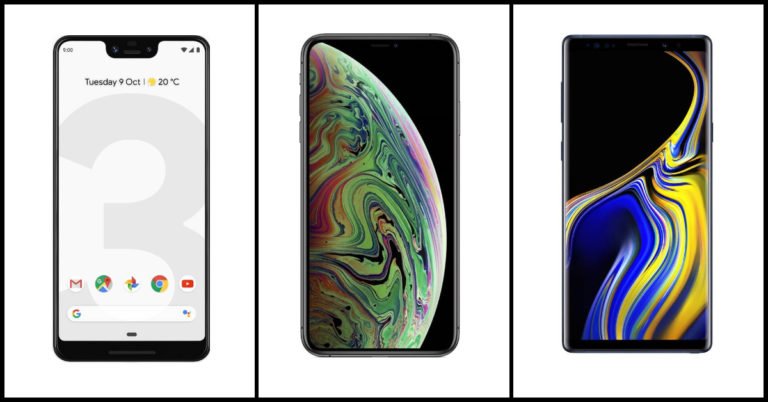
![[Video] Nokia 3.1 Plus Unboxing, First Impressions & Camera Shots](https://www.gadgetbridge.com/wp-content/uploads/2018/10/maxresdefault-768x432.jpg "[Video] Nokia 3.1 Plus Unboxing, First Impressions & Camera Shots")