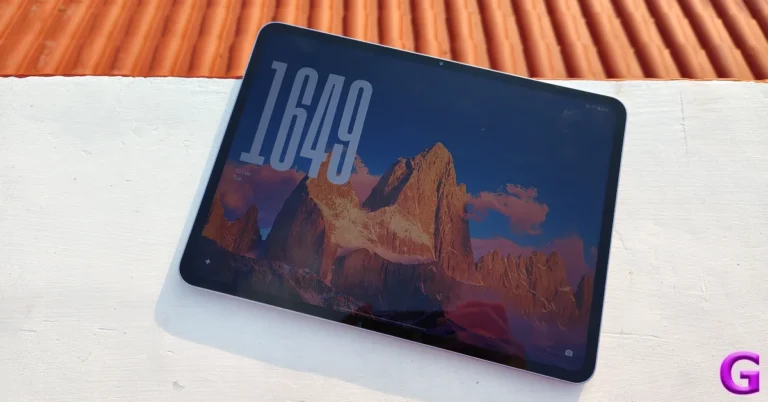
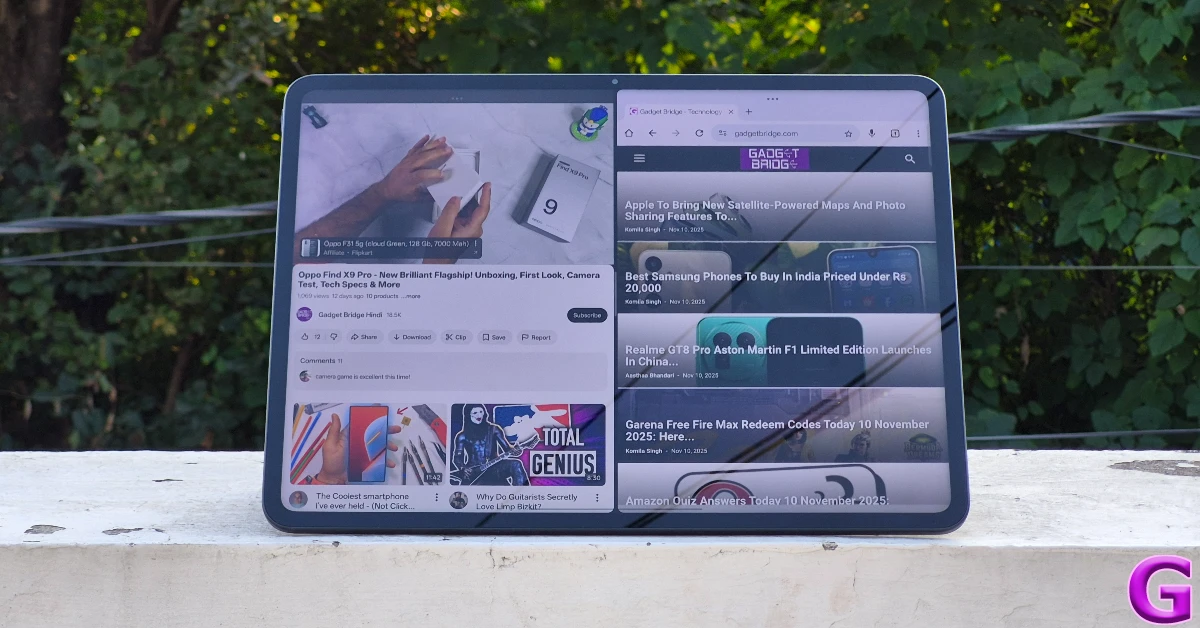
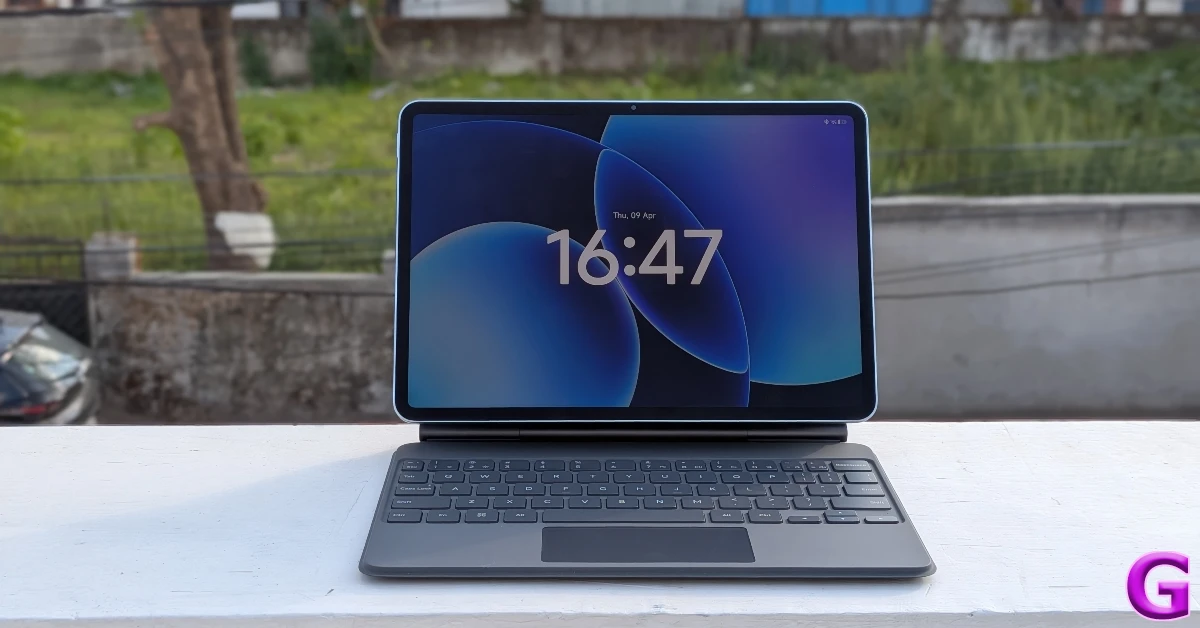
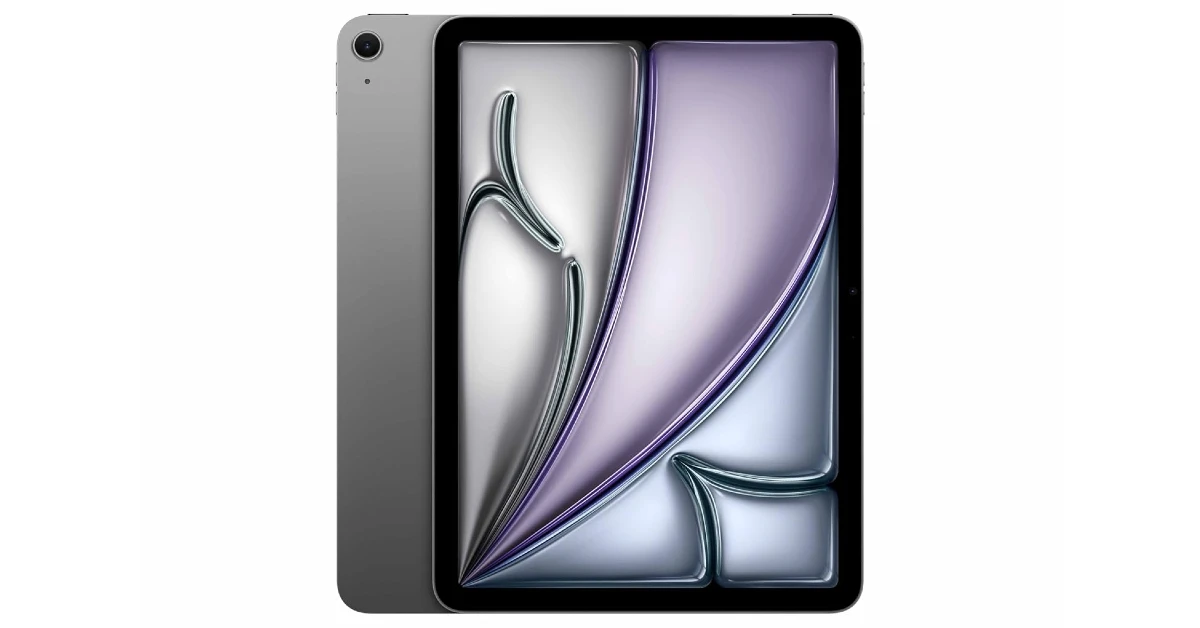
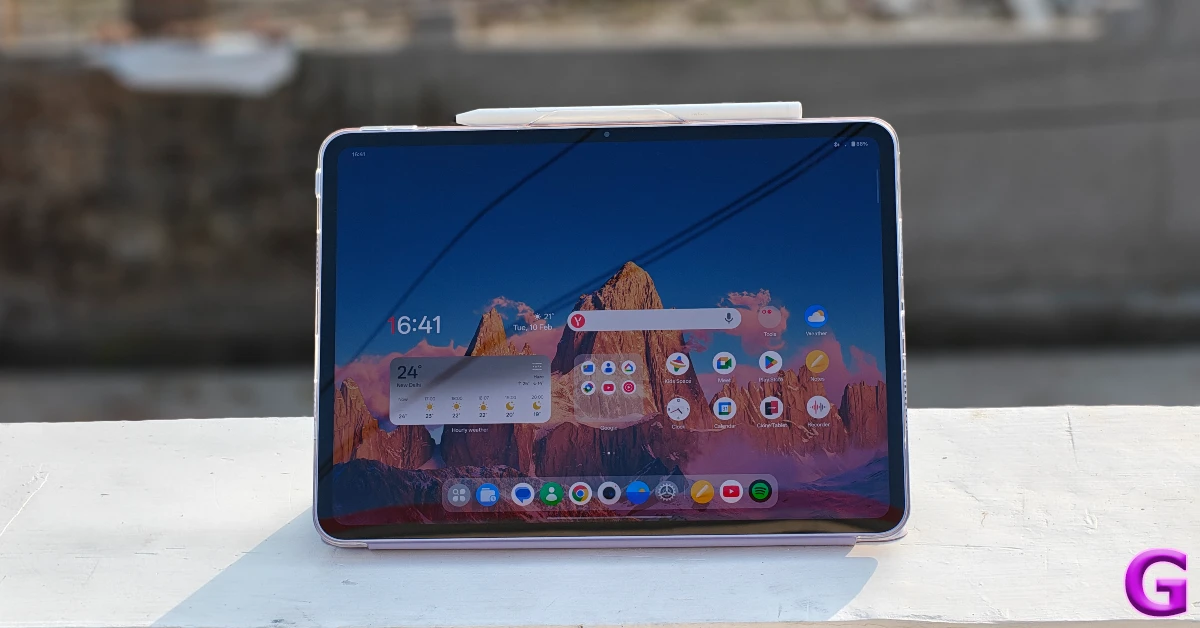
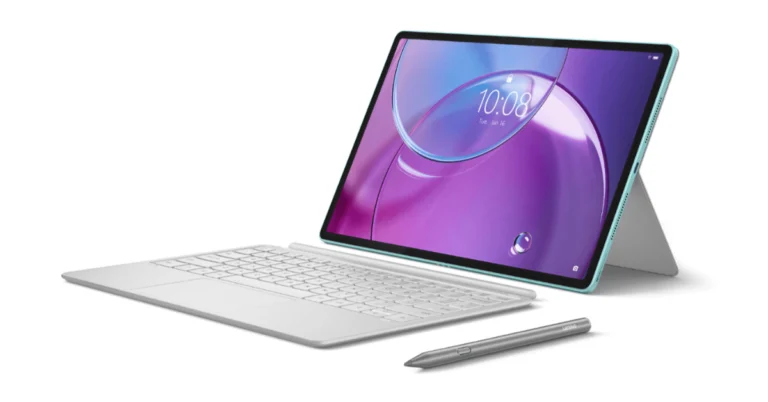
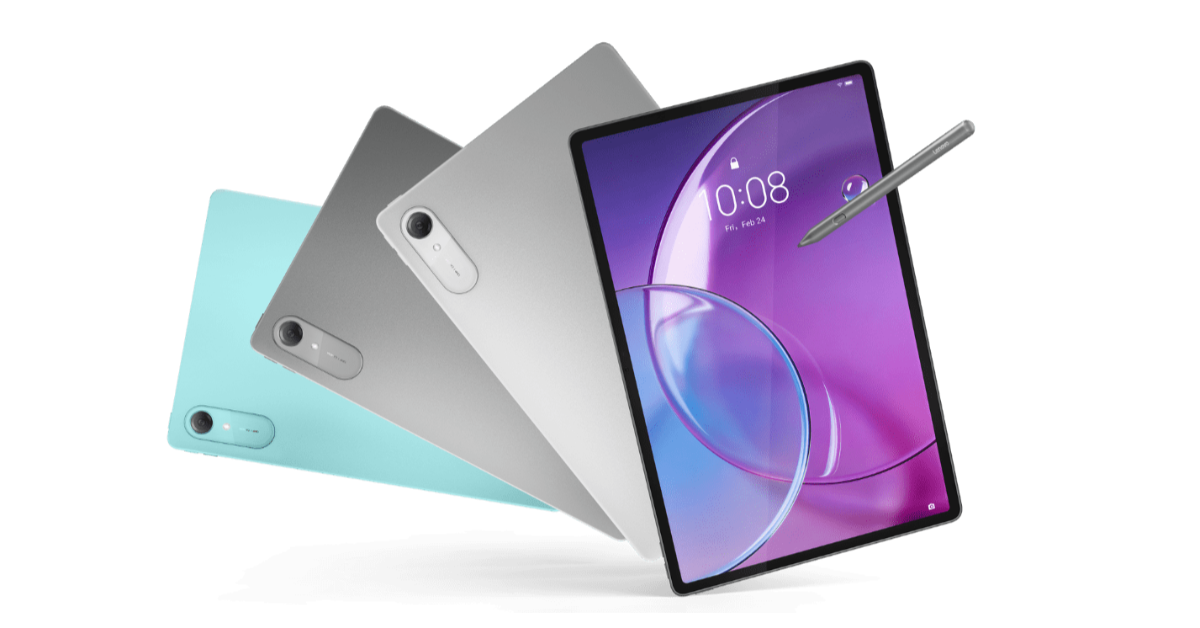
Lenovo has announced the introduction of the Idea Tab Pro Gen 2 in India, along with the Lenovo Tab Pen Plus. The tablet is equipped with a 13-inch 3.5K LCD display with Dolby Vision compatibility and a 144Hz refresh rate. It comes with a Snapdragon 8s Gen 4 CPU and runs on Android 16 with AI features like AI Notes and Smart Reader. Four JBL speakers with Dolby Atmos compatibility add to the audio experience. The gadget is powered by a powerful 10,200mAh battery with 45W charging support and comes in a single configuration of 8GB RAM with 256GB storage.
Pricing and Availability
The Lenovo IdeaPad Pro Gen 2 will be sold for Rs 39,999 and will be available in three different colour choices – Cloud Grey, Jelly Mint and Luna Grey. Availability is expected to begin from May 1, 2026, directly on Lenovo’s official website, several e-commerce websites and retail outlets throughout India. Moreover, to encourage buying, there will also be an immediate bank discount of Rs 3,000 for a short period.
Specifications, Features
Also Read:Garena Free Fire Max Redeem Codes Today 28 April 2026: Here is how to claim themThe Idea Tab Pro Gen 2 has a 13-inch LCD display with a resolution of 2,190×3,540 pixels and support for Dolby Vision for improved visual quality. The display can attain a peak brightness of 600 nits, and with High Brightness Mode (HBM), it can reach up to 800 nits, providing bright, vibrant images for reading, writing and streaming entertainment. The tablet has a 16:10 aspect ratio and 144Hz refresh rate, resulting in a pixel density of 319 pixels per inch (ppi), which helps provide a rich visual experience. The tablet runs Android 16 under the hood and is expected to get two more updates, meaning it will be running Android 18. On the security front, the Idea Tab Pro Gen 2 will get security fixes for the next four years, so users will be protected until 2030.Also Read:Samsung Galaxy S25+ Review: This middle child shines brightThe tablet is powered by the Snapdragon 8s Gen 4 processor, which packs on-device AI capabilities for quick and fluid performance in multitasking, content production, and entertainment. It is packed with 8GB of RAM and 256GB of storage to provide smooth performance and enough capacity for different apps. It also brings in various AI-led capabilities like AI Notes, Smart Reader, AI Creation Tools and Live Transcript, which make information collection, organisation and creation more efficient. Additionally, features like Circle to Search, Google Gemini, and real-time translation enable continuous exploration and learning, making the tablet an excellent option for those in need of cutting-edge technical assistance.Also Read:10 Best photography-focused smartphones under Rs 20,000The gadget has a 13-megapixel back camera with autofocus and an 8-megapixel front camera with fixed focus for video calls and quick snaps. Designed to provide a laptop-like experience, it’s seamlessly connectable to keyboard and touchpad peripherals and comes with the Lenovo Tab Pen Plus for writing, drawing and annotating straight out of the box. The superior metal body makes it very portable at only 598 grams and comfortable for long-term usage. It has quad JBL speakers with Dolby Atmos for an immersive audio experience.For connectivity, it has Wi-Fi 7 and Bluetooth 6.0, so you can expect quick and reliable connections. It also comes with a 1-year warranty with options for extended coverage and further protection.
Drift 36 is one of the best high-octane racing games we’ve played on Roblox. In this game, you get to drive slick, fast cars on thrilling tracks. Getting your hands on powerful cars requires spending in-game currency. If you don’t want to buy the currency, you can always use some special codes to get free cash in the game. Here are all the Drift 36 codes available in April 2026.Read Also: Top 10 tablets to buy right now (2026)
Unable to quench your thirst for high-speed racing? We highly recommend giving Midnight Chasers: Highway Racing and Roblox MotoRush a shot as well. While you’re here, check out the latest BloxStrike codes. If you have any questions, let us know in the comments!
One of the finest FPS games on Roblox is a CounterStrike adaptation. BloxStrike is free of frills and full of action. It drops you and your team in the middle of 5v5 action, where you battle it out with high-end guns and deploy effective strategies to emerge victorious. The game offers some special codes to help you along the way. Here are all the BloxStrike codes available in April 2026. Read Also: Portronics Launches Strings: A 3-in-1 Smart Bedside Speaker
List of active codes (April 2026)
Missions: 250 Credits. (Limited to 2.5k users)
EASTER2026: 67 Credits. (Limited to 10k users)
STILETTO: 250 Credits. (Limited to 2.5k users)
UPDATE320: 250 Credits. (Limited to 2.5k users)
GAMEBROKE318: Rewards.
DUST_II: 250 Credits.
LIL30MINUTEDOWNTIME: 35 Credits. (Limited to 5k users)
Can’t get enough of first person shooter games? You should check out Entry Point and Combat Arena on Roblox. While you’re here, take a look at the latest Knife Arena codes. If you have any questions, let us know in the comments!
Knife Arena is one of the most popular games on Roblox, constantly featuring in its trending chart. You get to engage in thrilling knife battles in this game and hone your blade skills at the same time. If you care about aesthetics, you can get your hands on eye-catching cases for extra money. Don’t have the dough? The game offers some special codes that can be redeemed for cases. Here are all the Knife Arena codes that are up for grabs in April 2026.Read Also: 10 Best photography-focused smartphones under Rs 20,000
List of active codes (April 2026)
EASTER2026: Limited Easter Case.
newupd: Limited Luna Case.
freecase: Release Case.
List of expired codes
Currently, this title does not have any expired codes.
Need more combat action on Roblox? We highly recommend checking out Combat Arena and Untitled Boxing Game. While you’re here, take a look at the latest Dungeon Hunters codes. If you have any questions, let us know in the comments!
The Samsung Galaxy S26+, which debuted at the tail end of February, is in a tricky spot between the smaller S26 and the larger S26 Ultra. The S26+ isn’t only a high-specification powerhouse; it aspires to be a trustworthy smartphone for professionals with its new 2nm Exynos 2600 CPU and improved One UI 8.5.
Does the S26+’s new 7.3 mm slim profile give too much to aesthetics in a market where the Indian summer is the ultimate stress test for thin glass-and-metal slabs? This review looks closely at the improved design features, such as the Ambient Island camera and the AI-based Now Briefs, to see whether the S26+ is a big step forward or just a cosmetic tweak to an existing device. Let’s find out.
Design and Display
In comparison to its predecessor, the Samsung Galaxy S26+ has minor but noticeable upgrades. The Ambient Island camera housing enhances the phone’s appearance with a sleeker design, but it also causes the phone to wobble on flat surfaces. The device is built from robust materials, including Armor Aluminum 2 and Gorilla Glass Victus 2, making it very durable. The Ultra model (Review), on the other hand, uses Gorilla Armor 2, which is even stronger, for further protection.
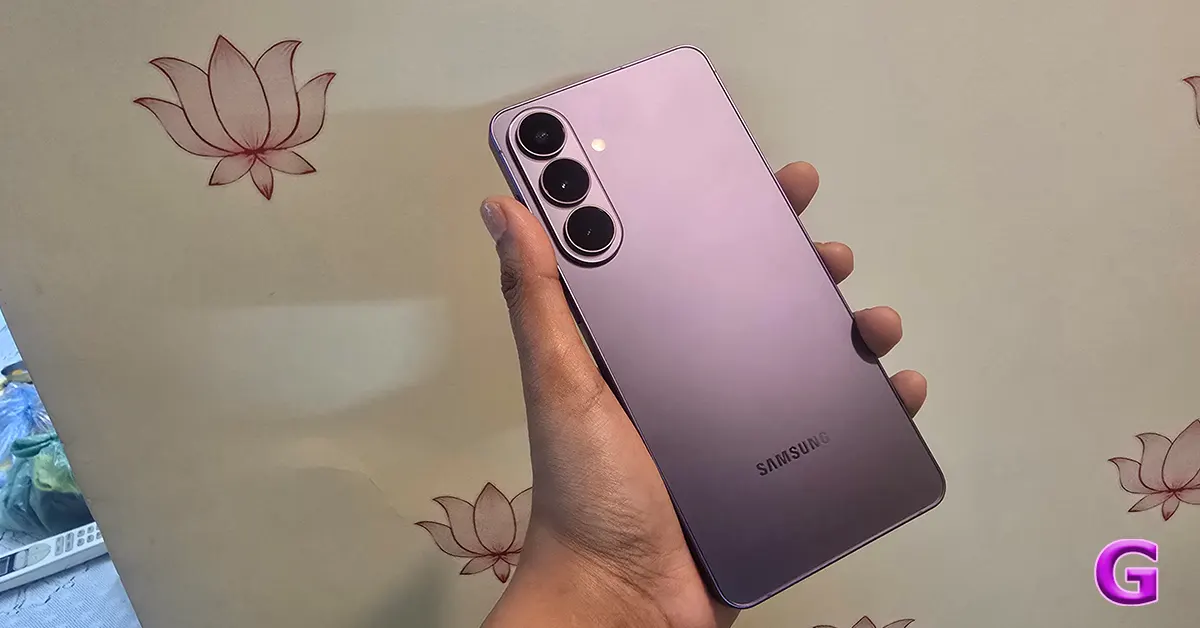
We received the S26+ in a cobalt blue colour for our review. It’s intended to repel fingerprints, but if your hands tend to be dry, you may want to consider using a case for more secure handling. From an ergonomic standpoint, the phone’s rounded edges make it more comfortable to hold for long periods of time.
It weighs 190g and is 7.3mm thick, so it seems light, but it can feel slightly top-heavy due to the dense camera module. The gadget is 7.3mm thick, which might make the buttons seem recessed when used with thicker cases, potentially affecting usability.
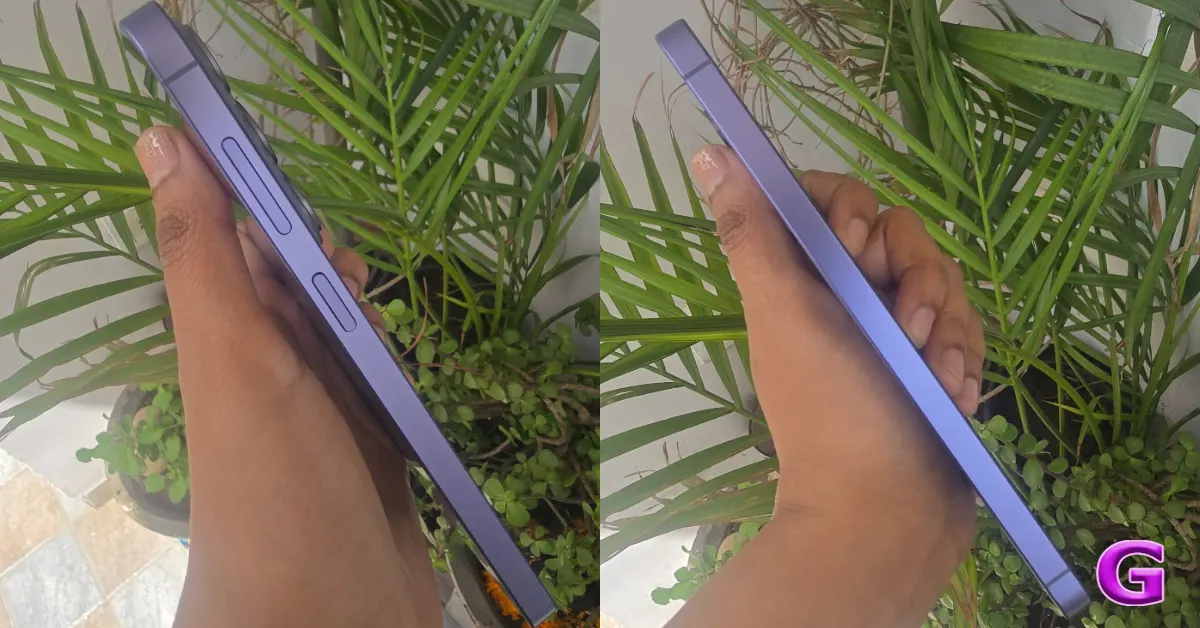
The Samsung Galaxy S26+ has a familiar interface, but it might be a little tricky for those who are switching from older handsets or other brands. The right side of the device has all the buttons and controls for physical interaction, such as the volume rocker at the top and the side key (power) slightly below it. The volume buttons are positioned too high, making it hard to use the volume up function with one hand, especially since the phone measures 6.7 inches in height. They are made from Armor Aluminum 2, which has a pleasant tactile feel and is well-made.
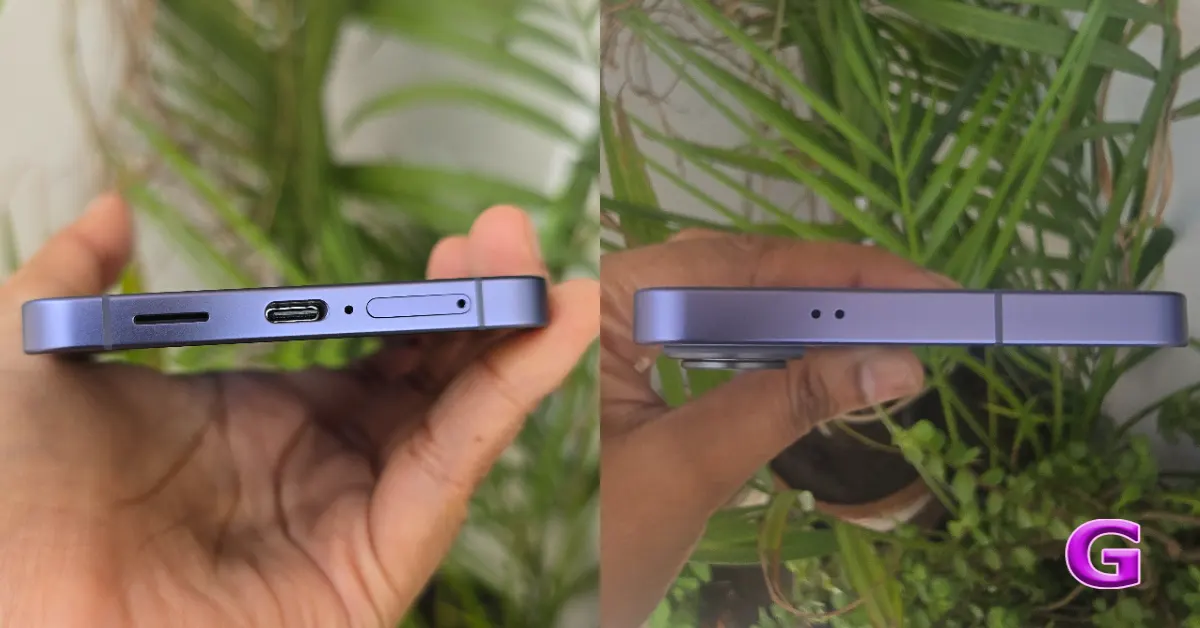
There are no buttons on the left side of the gadget, which is made of sleek aluminium. This adds to its minimalist look. The design also includes plastic antenna lines that are particularly designed to improve 5G reception in this version, although they do slightly detract from the overall visual appeal. A more streamlined form is seen at the top edge, where two noise-cancelling pinhole microphones are located. The top frame and glass are divided by a micro-slit that also serves as a concealed speaker grille. Keep in mind that this small opening may collect lint and dust over time, possibly affecting the stereo balance during media playback. The device’s slim, symmetrical bezels contribute to its sleek, high-quality look.
The bottom edge of the gadget is quite useful since it has a centred USB-C port that works with USB 3.2 Gen 1 for fast data transfer and charging. The pill-shaped speaker grille sits next to this port on the right side. It adds to the overall sonic design of the gadget. The SIM tray located on the left side of the charging port can hold two Nano-SIM cards for individuals and also supports eSIM technology, which gives users more ways to connect.
Nevertheless, a serious flaw in the design is evident. Dangerously next to a microphone hole is the SIM ejector hole. This closeness brings to light a design flaw that could affect the user experience, such as the risk of inadvertently damaging the microphone when using the SIM ejector tool. Overall, the bottom edge of the gadget works well; however, this design flaw should be fixed so that the microphone doesn’t get damaged by accident while managing SIM cards.
Known for its outstanding consistency, the 6.7-inch Dynamic AMOLED 2X display is standard on the Samsung Galaxy S26+. With a pixel density of 513 ppi and a QHD+ resolution of 3,120 x 1,440, this screen is able to show 10-bit colour depth, sharper text, and more natural colour gradients. The display also has almost flawless colour homogeneity, free of serious problems like rainbow effects and edge tinting. The display’s adaptive refresh rate can vary from 1Hz to 120Hz, enabling smooth transitions and optimal energy efficiency.
Whether it’s bright outside or in low light, the S26+ has a number of usability and user experience issues.
Initially, the device’s PWM dimming operates at a low frequency of 480Hz, which can lead to screen flickering. This flicker may cause eye strain and headaches, especially for users who are sensitive. Competing products, on the other hand, use higher PWM frequencies, such as 3,840Hz, or DC dimming methods to address this problem.
The S26+ also doesn’t have the Gorilla Armor covering that the Ultra has; instead, it uses Gorilla Glass Victus 2 for protection. This results in a lot of glare in strong light, which makes it harder to see. To fix this, it is suggested to use a high-quality matte screen protector, even if it can make AMOLED colours a little less bright.
Samsung claims the peak brightness reaches 2,600 nits, which is notable for its brightness and visibility. Yet, this level isn’t maintained at high temperatures. HDR10+ videos look vivid, but outdoor use can cause the device to overheat, leading to reduced brightness to prevent damage. Additionally, the S26+ reflects about 4% to 5% of ambient light, making it difficult to view in direct sunlight. As a result, the screen needs to be brighter, which can drain the battery more quickly.
Also Read:10 Best photography-focused smartphones under Rs 20,000
Lastly, even though the S26+ has a QHD+ resolution of 3120 x 1440 and a high pixel density, the low PWM frequency we spoke about before causes flickering in dark environments. This condition often results in symptoms such as ocular tiredness, xerophthalmia, and screen headaches. After scrolling for a long time, you may feel like your eyes are sandy, which suggests that low-frequency flicker is one factor that worsens these problems.
Samsung seems to be focusing on brightness standards rather than tackling the issues of reflection and eye strain, which their Chinese rivals have successfully addressed this year, given the present state of the market.
The speaker volume of the gadget is impressive; it’s one of the loudest thin phones on the market right now. However, when the volume is turned all the way up, users may notice that the high frequencies sound harsh.
The AI Audio Eraser tool does a good job of making dialogue clearer during movie playback; however, it can’t be used in all apps since it doesn’t have a universal equaliser. The device’s haptic feedback is in sync with the audio output, giving you a vibrational bass experience. However, when the gadget is put on hard surfaces, users may feel a buzzing sensation from the haptic motor.
The gadget can play back videos at 8K quality at 30 frames per second and supports HDR10+.
The Galaxy S26+ is a fantastic choice for anyone who wants a smartphone that looks good and works well. It has a good mix of durability, design, and performance.
Performance and Cameras
The Exynos 2600 processor differentiates the Samsung Galaxy S26+ in India from Snapdragon models, ensuring performance optimised for the Indian market. Manufacturing is done utilising a 2nm technology, which highlights efficiency and powerful AI capabilities. Its 12 gigs of RAM and over two million AnTuTu points (20,10,232) put it in the conversation for best flagship smartphone of 2026.
Under everyday use, the S26+ performs well; yet, in the scorching Indian summer, power consumption might increase by roughly forty per cent compared to Snapdragon-powered smartphones, resulting in considerable overheating. The gadget doesn’t shut down immediately when it gets too hot, but it does slow down significantly. Additionally, Samsung has increased the vapor chamber size by 29 per cent to improve heat dissipation and address thermal issues.
The device’s thin profile, which is just 7.3mm thick, helps it hold heat, especially around the volume buttons, making it hard to use for long periods of time when it’s hot outside.
5G connectivity is quite stable, although utilising the device as a hotspot might make it heat very quickly. The 2nm technology is great on colder days because it makes the battery last longer. However, as the temperature rises, the cooling system works harder, which drains the battery faster. In short, the Exynos 2600 chipset is quite powerful, but it has trouble with heat, particularly in extreme temperature conditions.
The gaming performance is great, and it can run any game on the Play Store at maximum settings. However, when the device becomes hotter, you may notice a lot of frame drops. AI processes function well, but they also make the device warm up quickly under heavy usage.
The device has an AMD-based Xclipse 550 GPU, which helps it produce high-quality textures. The device is also optimised for popular games like BGMI and Call of Duty: Mobile, allowing it to run games at near-perfect frame rates of 90 to 120 FPS. Users should expect very few frame dips, especially in the first 30 to 40 minutes of gameplay, which makes for a seamless gaming experience.
The S26+ also has an advanced AI Frame Booster that uses a 2nm Neural Processing Unit (NPU) to smartly predict when frames will go down while you play. This feature makes it easier to add artificial frames, which is especially useful during intense squad battles when smooth performance is essential. This improves the overall game experience in high-demand scenarios.
The device’s touch sampling capability is great since it makes games more responsive, especially for flick shots. However, using the gadget for a long time in hot weather may make it less sensitive and accurate to touch, which would negatively impact the overall gameplay experience.
Also Read:Garena Free Fire Max Redeem Codes Today 28 April 2026: Here is how to claim them
The smartphone offers handy game-focused features like Priority Mode, which minimises calls and notifications to help you stay focused during gameplay. It also includes Bypass Charging; however, when enabled, the device often overheats, potentially limiting prolonged gaming sessions.
The Samsung Galaxy S26+ runs One UI 8.5, which is based on Android 16. It has advanced AI features designed to enhance the user experience. The Indian edition of the S26+ includes some bloatware, meaning it comes with many additional applications you are unlikely to use, such as LinkedIn, Microsoft 365, and Netflix.
Because of this, users are advised to spend around 15 minutes changing their settings to make the interface easier to use. Samsung offers these third-party applications in India because of regional partnerships in the country. But we bypassed the installation of most third-party recommendations during the initial setup.
The addition of the Agentic AI system is a big step forward for this smartphone. It lets the phone take care of basic tasks on its own, making daily activities easier for the user. The Galaxy S26+ also adds a big privacy improvement: a technology that automatically blurs critical information before sharing it with others, which protects user data.
The device has a Creative Studio that lets users edit images with natural language commands, making it easy to use for digital photography. Getting the prompts correctly takes some practice, but it’s probably the most fun part. Also, the Audio Eraser 2.0 technology gets rid of background noise in real-time during video conversations or recordings, enhancing audio clarity and user communication.
Samsung has made big enhancements to its animation engine, making transitions smoother and more flexible. This makes the user experience better, especially on devices with a 120Hz display. But the Exynos 2600 CPU, which uses AMD’s RDNA 4 GPU architecture, has caused problems with performance.
Several apps, such as Zomato, Lightroom, Canva, and LinkedIn, are still not optimised for this architecture, leading to stability issues. We occasionally experienced small stutters, especially with resource-intensive banking apps like HDFC Bank and ICICI iMobile, or when accessing the Google Feed. The Exynos thermal management often halts the Canva app to conserve power when you switch away to reply to a WhatsApp message.
You have to wait for the whole project to load again when you go back. The Exynos CPU has 12GB of RAM, but the software that comes with it is rather aggressive about managing memory. It closes background apps to keep the device cool, which means that apps that were used before have to be reloaded when the device opens again.
Samsung’s One UI 8.5 has a new glassy transparency design that makes the user interface seem better by adding frosted glass elements to it. This update gives the Quick Panel and notification shade a high-end translucent design that changes colour to match the wallpaper, making it seem better than One UI 7. The animation engine has been much enhanced, making scrolling elastic and interruptible animations work better. This makes the user experience more fluid.
Also, new features like Now Nudge and Now Brief are meant to make the app easier to use while you’re being proactive. Now Nudge suggests you share your location in messaging applications, and Now Brief sends you a daily AI-generated summary of your calendar events, weather updates, and news right on the lock screen. Some of you, on the other hand, may find these features annoying and need to change your settings to get fewer uninvited context-based recommendations.
Over that, Samsung has promised to provide the S26+ with seven years of operating system and security upgrades, which means that users will be able to get support until 2033.
The Samsung Galaxy S26+ has a far better camera than last year’s model. The hardware design is mostly the same as the one before it, although there are some important changes, such as the Exynos 2600 CPU, which has a better image signal processor (ISP). The AI features in One UI 8.5 also make taking pictures every day much better, making it easier for consumers to take high-quality pictures.
Also Read:Amazon Quiz Answers Today 28 April 2026: Participate to win Up To Rs 500 Amazon Pay Balance
The rear of the S26+ has three cameras: a 50 MP wide-angle camera with an f/1.8 aperture and OIS, a 10 MP telephoto camera with an f/2.4 aperture, OIS, and 3x optical zoom, and a 12 MP ultra-wide camera with an f/2.2 aperture and a 120-degree field of view. The front camera is a 12 MP wide-angle camera with an f/2.2 aperture. The rear cameras can record 8K video at 24 or 30 frames per second and 4K video at 30 or 60 frames per second.
When it comes to taking high-quality pictures, the main sensor is where the camera system really shines.
During the day, the S26+ smartphone does a great job of capturing a wide spectrum of colours, even in strong light. It has great depth and clarity in daylight, making it great for landscape and architectural photography. Users may crop photographs without losing texture.
However, it features noticeable shutter lag that can result in motion blur if subjects change direction or move quickly, particularly in poor lighting conditions. The sensor effectively maintains detail in bright areas and prevents the sky from becoming overexposed, but it can occasionally render colours, especially greens and reds, too vividly.
In low light, the strong OIS lets you take 2-second handheld shots with minimal blur, and the Night Mode works well with less lag. However, cropping photographs with aggressive AI noise suppression might cause a watercolour effect that affects the fine texture quality.
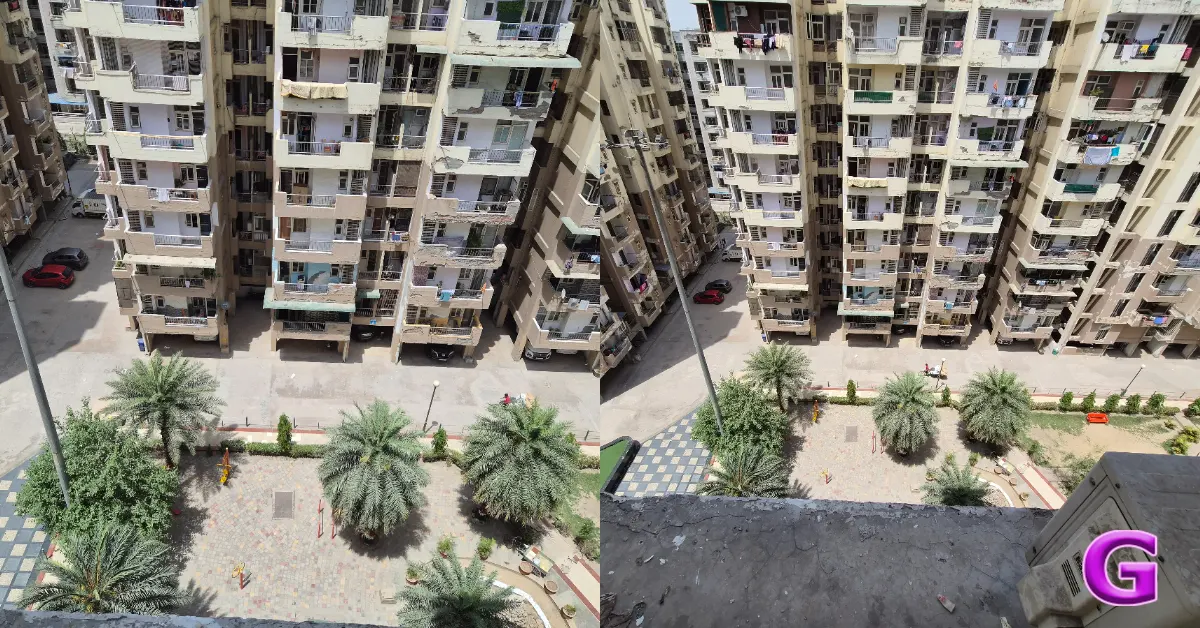
The ultrawide sensor has a 12MP lens with an f/2.2 aperture and a 120° field of view, keeping the colours consistent with the primary sensor during the day. However, it has some apparent shortcomings, such as fixed-focus capabilities that make macro shooting difficult and visible corner softness and reduced detail at the edges of images.
The sensor struggles in super-low light because it cannot collect enough illumination, resulting in grainy and dark photos that lack shadow detail. Without Optical Image Stabilisation (OIS), its performance diminishes further in low-light conditions, making it more suitable for brightly lit environments.
The ultrawide sensor works well for casual daytime shooting, but it doesn’t work as well in low light or while taking high-resolution landscape photos since it makes certain performance trade-offs.
The telephoto lens is great for street photography when the lighting is just right, like during the day. It makes the backdrop blur look natural and beautiful, and it focuses on the subject well. However, it’s important to remember that the 10MP sensor’s low resolution makes images seem much less acceptable when you try to utilise digital zoom at 10x or 20x. This is quite different from the Ultra’s better periscope zoom performance.
In low light, the camera can take good close-up images, but when it becomes dark enough, it usually reverts to its main 50MP sensor. This switch can increase noise and reduce the quality of photographs taken at 3x magnification due to cropping. Overall, although the S26+’s telephoto sensor performs well in favourable circumstances, it faces significant challenges in less-than-ideal lighting, highlighting its limits and the need for careful handling to produce the best photographic results.
The selfie camera has a 12MP resolution and an f/2.2 aperture. It also uses Dual Pixel Autofocus (AF) technology. The camera has distinct advantages when used during the day. For example, it captures sharp focus on faces and eyes, which is helpful for a wide range of photography styles, from close-ups to group photographs. It also supports 4K video recording at 60 frames per second (fps), which makes it easier to shoot high-quality footage.
For low-light performance, the camera employs Nightography technology, which significantly enhances its capabilities in dimly lit environments. The swift autofocus function works effectively to reduce blur, thus improving overall image quality even under challenging lighting conditions.
However, there are significant downsides, especially in high-contrast environments where AI processing may result in over-sharpened features. This may emerge as an unnatural appearance on skin textures and facial hair, giving the illusion of being manufactured or digital.
The S26+ has a 4,900 mAh battery, which is the same size as the one before it. However, its efficiency profile has changed a lot. The gadget has a 2nm design that makes the battery last longer, so if you’re doing mild to moderate activities like reading emails, surfing social media, or listening to music, you’ll have around 30–35% battery life left at the end of the day.
The Exynos 2600 processor doesn’t work as well as the Snapdragon model while doing intensive activities like capturing 4K video or using 5G navigation for a long time. This means that the battery life is around 2.5 hours shorter.
The Samsung S26+ still uses the 45W Super Fast Charging 2.0 standard, but the Ultra model now supports charging at 60W. When using a compatible 45W PPS charger, the battery can go from 0% to approximately 65% in about 30 minutes. The charging speed drops dramatically after the battery percentage hits 80%, which is good for the battery’s health. Because of this, the last 20% of the charge might take as long as the first 50% to finish.
It’s worth noting that Samsung didn’t include a charger in the box, so buyers will need to buy a particular USB-PD 3.0 with PPS brick to get the 45W charging speed. If you use an older 25W Samsung charger instead, it may take around an hour and twenty minutes to fully charge.
The S26+ smartphone has Qi2 wireless charging features, which enable a power output of up to 20W. This type uses magnetic chargers that improve alignment throughout the charging process, which helps to decrease heat emission. Furthermore, the S26+ supports reverse wireless charging at 4.5W; however, it is intended mainly for emergency use. While this function is useful for charging Galaxy Buds, it is quite slow and can overheat the device’s back while in use.
Verdict
The Samsung Galaxy S26+ is a safe and steady improvement that has an ergonomic design that makes it more comfortable to use. At Rs 1,19,999, it’s slightly more expensive compared to its rivals that provide more advanced features. This model is great for anyone who wants a bigger screen without the extra weight of the S26 Ultra. It also offers a luxury feel and a smooth software experience with One UI 8.5, which is known for avoiding usual bloatware issues.
The Indian version has an Exynos 2600 (2nm) chipset inside, which offers it powerful artificial intelligence capabilities. However, it may also become too hot while it is running at maximum speed, especially in hot climates.
However, competitor handsets are noted for offering more features like 100W+ charging and improved camera systems, contributing to the perception of a Samsung Tax for the S26+. On the bright side, the S26+ has a noteworthy 7-year software update promise, as well as superb post-purchase assistance geared exclusively for the Indian market.
The device is recommended for users who prioritise a large display and reliable software support over quick charging. However, it may not meet the needs of serious macro photography enthusiasts and those who prefer fast charging, as it does not include advanced camera features or rapid charging technology that are commonly favoured by these users.
Buy Here
Pros
Comfortable and thin
Gorgeous, sharp and bright QHD+ display
AI beast
Reliable main and selfie camera
Cons
Lacks anti-reflective glass and 480Hz low PWM flicker
The Exynos 2600 throttles under high temperatures.
Dungeon Hunters is one of our favourite exploration games on Roblox. Behind every door lies a treasure or a scary monster. Your character must be equipped to slay the beasts in order to emerge victorious. The game offers some special codes that can be exchanged for gems. These gems can be used to get useful items. Here are all the Dungeon Hunters codes that are up for grabs in April 2026.Read Also:Vivo Y600 Pro with a robust 10,200mAh battery announced
List of active codes
k300_LIkEs: 100 Gems.
Dc_!20000: 100 Gems.
200K_liKEs: 100 Gems.
Dc_!10000!: 100 Gems.
dC_!9000: 100 Gems.
DC_!8000: 100 Gems.
120kLIKes: 100 Gems.
DC_7000!: 100 Gems.
DC_6000!: 100 Gems.
DC_5000!: 100 Gems.
Dc_4000!: 100 Gems.
Dc!_3000: 100 Gems.
DC_2000: 100 Gems.
50likeS_k: 100 Gems.
k25lIkES: 100 Gems.
DC_1000: 100 Gems.
DC_500: 100 Gems.
DC_100: 100 Gems.
12K_LiKes: 100 Gems.
5K_lIKes: 100 Gems.
1K_LiKes: 100 Gems.
100liKES: 100 Gems.
DC_join: 100 Gems.
NEW: 100 Gems.
List of expired codes
Currently, this title does not have any expired codes.
Feel like watching a movie in bed, but don’t have a TV in your room? Instead of breaking the bank on a big TV, you can get yourself a big tablet. If your usage does not go beyond media streaming, you don’t have to shell out big money for one either. However, if you’re particular about OLED displays, you will need to shop in the flagship segment. Here are the top 10 tablets that you can buy right now.Read Also:Vivo Y600 Pro with a robust 10,200mAh battery announced
Samsung Galaxy Tab S11 Ultra
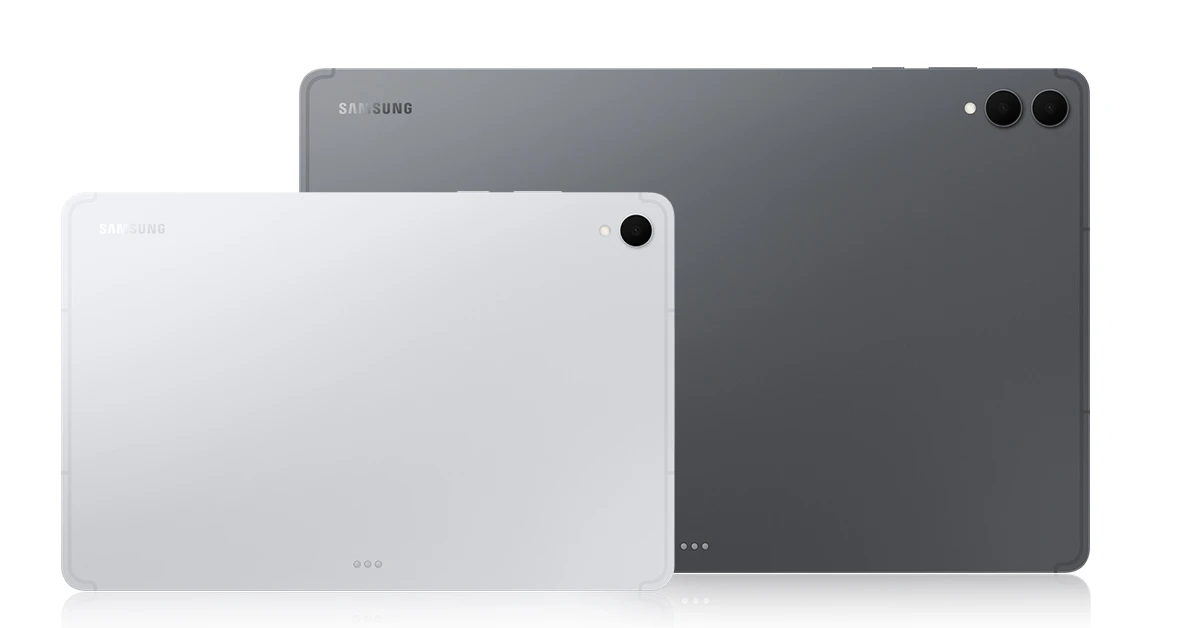
The Samsung Galaxy Tab S11 Ultra is one of the finest slates in the game right now. Its 14.6-inch Dynamic AMOLED 2X display has a refresh rate of 120Hz and can reach a peak brightness of 1,600 nits. Powering the tablet is the MediaTek Dimensity 9400+. Software duties are handled by the Android 16-based One UI 8 out of the box. The camera island houses a 13MP primary shooter and an 8MP ultrawide lens. The 11,600mAh battery pack supports 45W wired charging.Pros
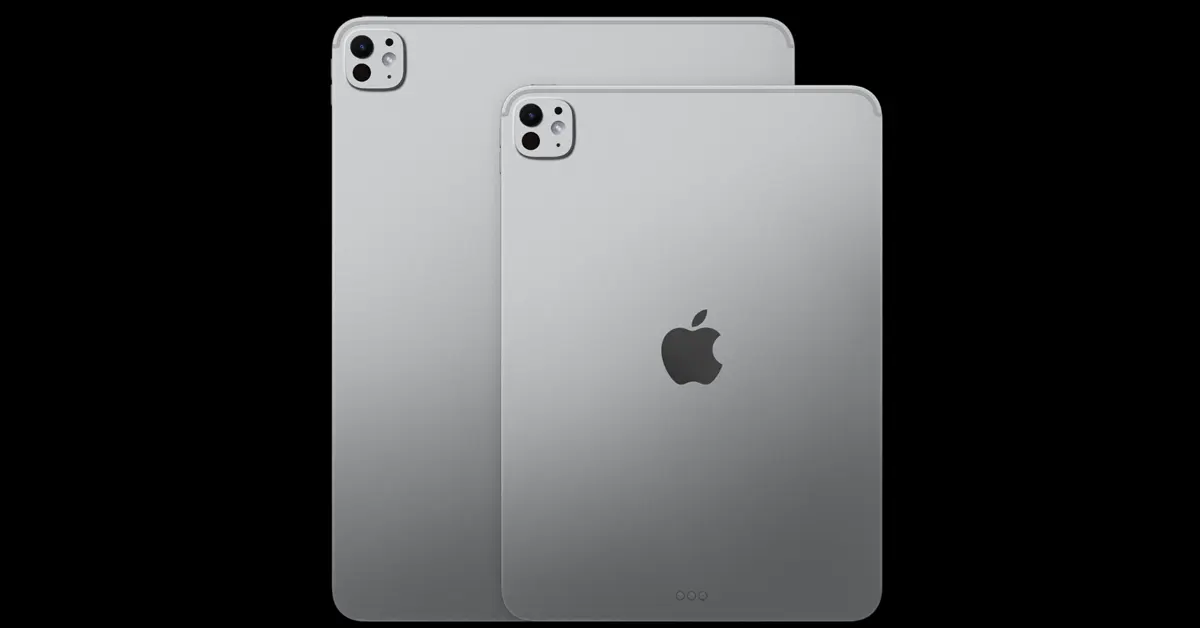
The iPad Pro can be had in 11-inch and 13-inch display sizes. The Ultra Retina Tandem OLED display has a 120Hz refresh rate and can reach a peak brightness of 1,600 nits. The 11-inch variant has an 8,160mAh battery pack, while the latter gets a 10,290mAh unit. At the heart of the tablet lies Apple’s in-house M5 chipset. Software duties are handled by iPadOS 26 out of the box. The rear camera panel houses a 12MP camera and a 3D LiDAR scanner. There’s a 12MP selfie camera on board as well.Pros
Don’t want to spend an egregious amount of money on a tablet? Check out the OnePlus Pad 3. This mean machine packs Qualcomm’s flagship Snapdragon 8 Elite chipset under its hood. Its 13.2-inch IPS LCD panel has a 144Hz refresh rate and can reach 900 nits in High Brightness Mode. There are 2 cameras on this device – a 13MP sensor on the back panel and an 8MP front-facing lens. The 12,140mAh battery pack supports 80W wired charging. Dive into our review of the OnePlus Pad 3 for more details about the tablet.Pros
The Xiaomi Pad 8 does not leave any room for complaints. It is powered by the Snapdragon 8s Gen 4 chipset and runs the Android 16-based HyperOS 3 out of the box. Its 11.2-inch IPS LCD panel has a 144Hz refresh rate and can reach a peak brightness of 800 nits. The Focus Keyboard and Focus Pen Pro accessories take this tablet to the next level. The camera island on the back panel houses a 13MP primary shooter. The upper longer bezel on the display houses an 8MP front-facing camera. The 9,200mAh battery pack supports 45W wired charging. Read our Xiaomi Pad 8 review for more details about its accessories and performance.Pros
If your primary demands are media streaming and web browsing, you don’t need the colossal processing power of the Apple M5-powered iPad Pro. The iPad Air will suit you just fine. Powered by the Apple M4 chipset, this tablet goes through routine tasks like a hot knife through butter. It can even carry out power-intensive tasks like photo and video editing without any hiccups. Like its Pro counterpart, the iPad Air comes in 11-inch and 13-inch display sizes. The Liquid Retina IPS LCD panel has a 60Hz refresh rate and can reach 600 nits of typical brightness (500 nits on the 11-inch model). The 11-inch variant has a 7,606mAh battery pack, while the latter packs a 9,705mAh unit.Pros
The OnePlus Pad Go 2 is one of the best midrange tablets around. It is powered by the MediaTek Dimensity 7300 Ultra chipset and runs the Android 16-based OxygenOS 16 out of the box. 12.1-inch IPS LCD panel has a 2K resolution, 120Hz refresh rate, and can reach 900 nits in High Brightness Mode. The tablet packs an 8MP main rear camera and another 8MP front-facing lens. The 10,050mAh battery pack supports 33W wired charging. Read our OnePlus Pad Go 2 review for more details about the tablet’s performance.Pros
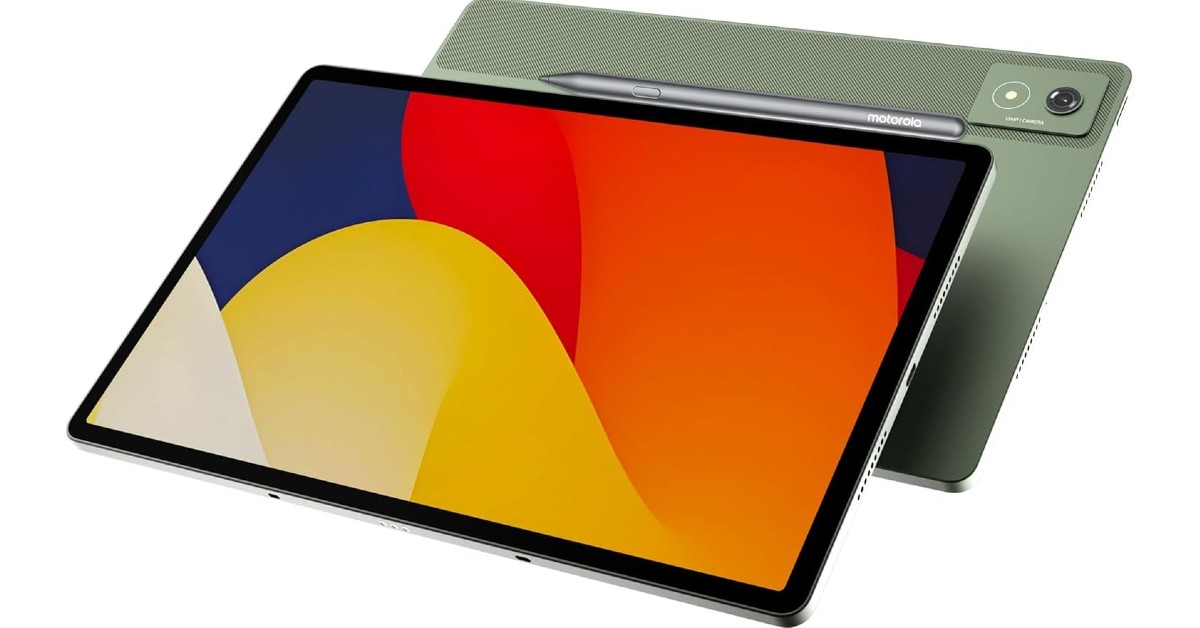
The Moto Pad 60 Pro has all the ingredients of a great midrange tablet. It is powered by the MediaTek Dimensity 8300 chipset. Software duties are handled by Android 14 out of the box, but the tablet has been promised 2 major OS upgrades. The 12.7-inch IPS LCD panel has a 144Hz refresh rate and can reach 400 nits of typical brightness. The rear camera panel houses a 13MP lens and an 8MP selfie lens. The massive 10,200mAh battery pack supports 45W wired charging. One of our favourite things about this tablet is that its stylus pen is included in the retail box.Pros
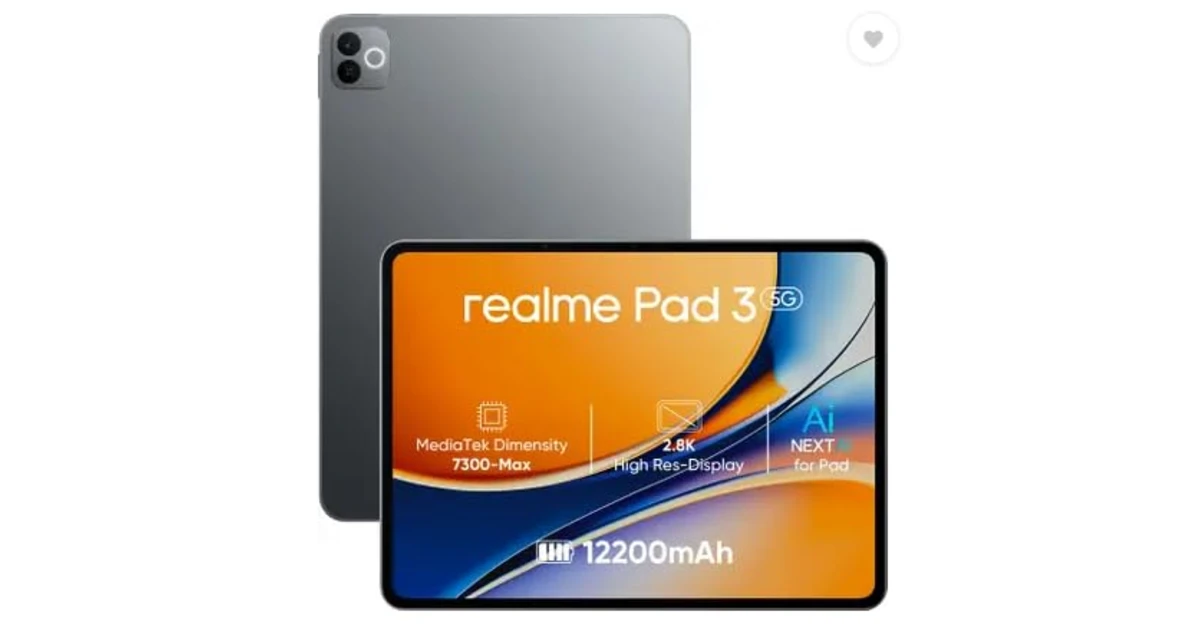
The 11.6-inch IPS LCD panel of the Realme Pad 3 has a 120Hz refresh rate and can reach 550 nits in High Brightness Mode. This tablet is powered by the MediaTek Dimensity 7300 Max chipset. It runs the Android 16-based Realme UI 7 out of the box. There are two 8MP sensors on this tablet – one for the main rear camera and the other for the front-facing lens. The massive 12,200mAh Si/C battery pack supports 45W wired and 6.5W reverse wired charging.Pros
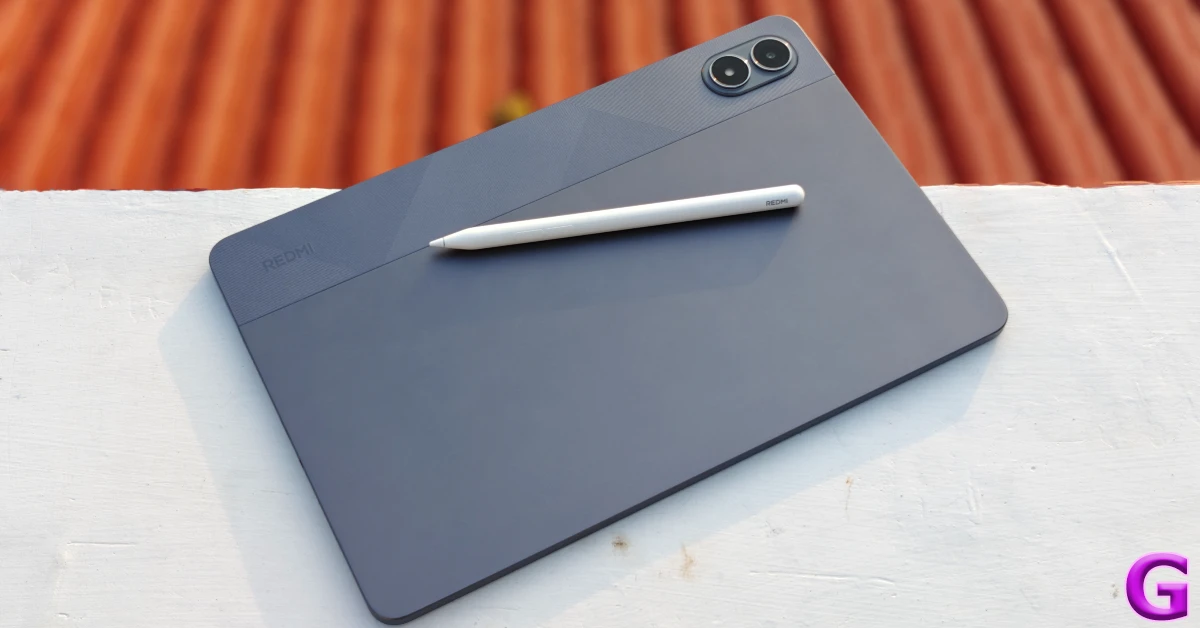
The Redmi Pad 2 Pro packs the Snapdragon 7s Gen 4 chipset under its hood. Software duties are handled by the Android 15-based HyperOS 2 out of the box. The tablet is rated IP53 for dust and water resistance. Its 12.1-inch IPS LCD panel has a 120Hz refresh rate and can reach 600 nits in High Brightness Mode. The rear camera island houses a 13MP primary shooter on the 5G model and an 8MP lens on the WiFi model. The 12,000mAh battery pack supports 33W wired charging. Read our Redmi Pad 2 Pro review for more details.Pros
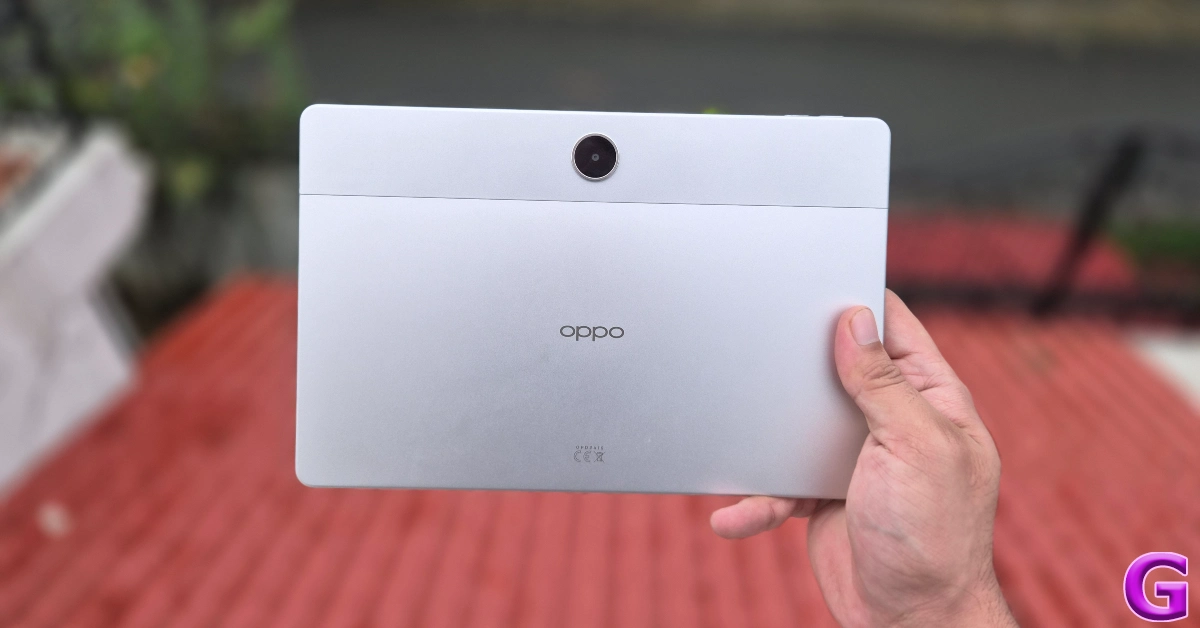
Ending this list is one of the finest budget laptops on the market, the Oppo Pad SE. This tablet’s 11-inch IPS LCD panel has a 90Hz refresh rate and can reach 500 nits of peak brightness. It is powered by the MediaTek Helio G100 chipset and runs the Android 15-based ColorOS 15 out of the box. The circular rear camera cutout houses a 5MP primary shooter. A 5MP front-facing camera is placed inside one of the longer bezels. The 9,340mAh battery pack supports 33W wired charging. Dive into our review of the Oppo Pad SE for more details about the tablet.Pros
These are the top 10 tablets that you can buy right now. Looking for a smartphone instead? Check out our top flagship phones. If you have any questions, let us know in the comments!
Indian consumer electronics brand Portronics has launched the Portronics Strings 3-in-1 smart bedside speaker in India, and it is making a strong case for being the one device that replaces several on your nightstand. Announced on April 28, 2026, the Strings brings together a 16W HD speaker, a 15W wireless charger, a digital alarm clock, and dynamic RGB ambient lighting, all inside a single sleek unit. For anyone tired of a cluttered bedside table bristling with cables and gadgets, this launch is worth paying attention to.
The device is available now at a launch price of Rs 2,249 across Portronics website, Amazon, Flipkart, and leading online and offline retail stores across India.
What the Portronics Strings Brings to the Table
Portronics has designed the Strings with everyday convenience at its core. The device sports a minimalist white finish and a soft fabric exterior, giving it a clean, modern look that blends naturally into living spaces, bedrooms, and home offices. A clear digital display sits on the front for at-a-glance timekeeping, while the top panel doubles as a wireless charging surface, allowing users to simply set their smartphone down for a power boost instead of fumbling for a cable in the dark.
The integrated RGB ambient lighting adds a layer of versatility to the device, enabling users to set different moods depending on the time of day or their personal preference. Whether it is a warm, calming glow before sleep or a more vibrant atmosphere during a work session, the Strings offers that flexibility without the need for a separate smart bulb or lamp.
16W Audio and Bluetooth 5.3 Connectivity
On the audio front, the Strings is equipped with a 16W HD sound output, which Portronics says delivers crisp highs, balanced mids, and deep bass for an immersive listening experience. That is a fairly substantial output for a bedside or desktop speaker, covering everything from morning music to late-night podcasts and video calls.
Wireless connectivity is handled by Bluetooth 5.3, bringing with it faster device pairing, a more stable signal, and reduced audio latency compared to older Bluetooth standards. For users who prefer a wired connection, the Strings also support USB and AUX input options, making it compatible with a wider range of devices and setups.
Key Specifications at a Glance
Speaker Output – 16W HD sound with crisp highs, balanced mids, and deep bass
Wireless Charging – 15W (recommended with 18W or higher adapters)
Bluetooth Version – Bluetooth 5.3 with fast pairing and low latency
Ambient Lighting – Dynamic RGB with multiple modes
Alarm Clock – Built-in digital display with alarm functionality
White Noise Modes – Built-in for sleep, relaxation, and focus
Wired Input – USB and AUX input supported
Battery Playtime – Up to 4 hours on a single charge
Warranty – 1 year
White Noise Modes and Sleep-Friendly Features
One of the more practical additions to the Strings is its built-in white noise modes, designed to create a calming audio environment that supports better sleep, deeper focus, or simple relaxation. Rather than relying on a separate app or device for ambient sound at bedtime, users can access these modes directly from the Strings itself. It is a small feature that speaks to how the product has been positioned as a holistic bedside solution rather than just another Bluetooth speaker with a bonus charging pad.
Battery life on the Strings is rated at up to 4 hours of playback, which is a practical figure for a device that will most likely spend the majority of its time plugged in at a desk or nightstand.
The Portronics Strings is priced at Rs 2,249 and is available for purchase on Portronics.com, Amazon, Flipkart, and other leading online and offline retail stores across India. The product comes with a 1-year warranty.
At that price, the Strings positions itself as an accessible multi-function device in a market where standalone wireless chargers, Bluetooth speakers, and smart lamps can each cost a similar amount independently. Portronics appears to be targeting users who want to simplify their setup without stretching their budget.
Finding a decent camera phone under Rs 20,000 is a challenging task, at least as of April 2026. The photography-focused smartphones in this price bracket are also paying more attention to important features such as optical image stabilisation (OIS) and good sensors like the Sony LYT series. These features are important for getting crisp clarity and making video recording steady, which is critical for those who value photography. The relevance of these aspects shows the changing needs of users seeking economical yet efficient ways to take pictures. With these factors in mind, a list of the best 10 camera phones in this price range will provide you with a complete set of options that exemplify these key technologies.
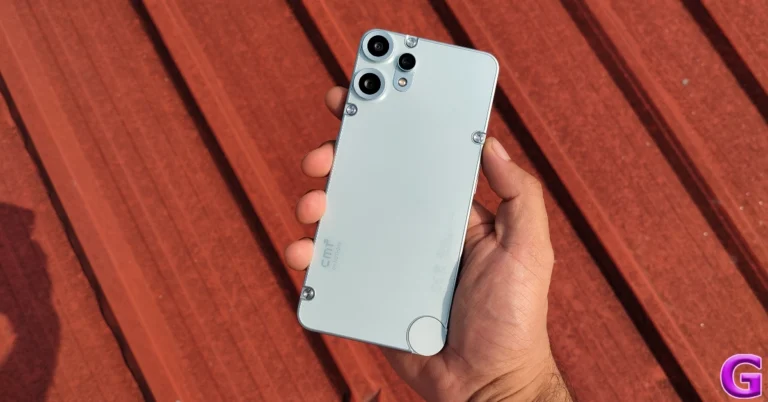
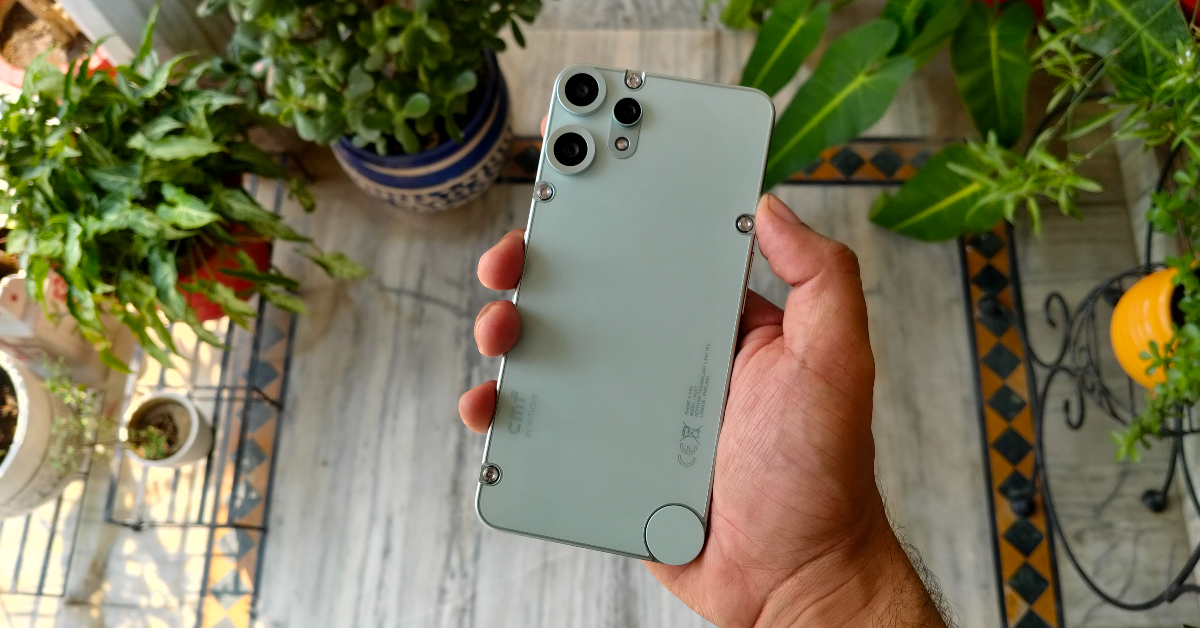
CMF Phone 2 Pro
The CMF Phone 2 Pro (Review) triple rear camera unit includes the following:
50-megapixel 1/1.57-inch sensor (with f/1.88 aperture and EIS)
50-megapixel telephoto camera (2x optical zoom and 20x digital zoom)
8-megapixel ultra-wide camera (f/2.2 aperture and a 119.5-degree field of view)
16-megapixel selfie camera on the front for selfies
Uses Nothing’s TrueLens Engine 3.0 technology for better camera results.
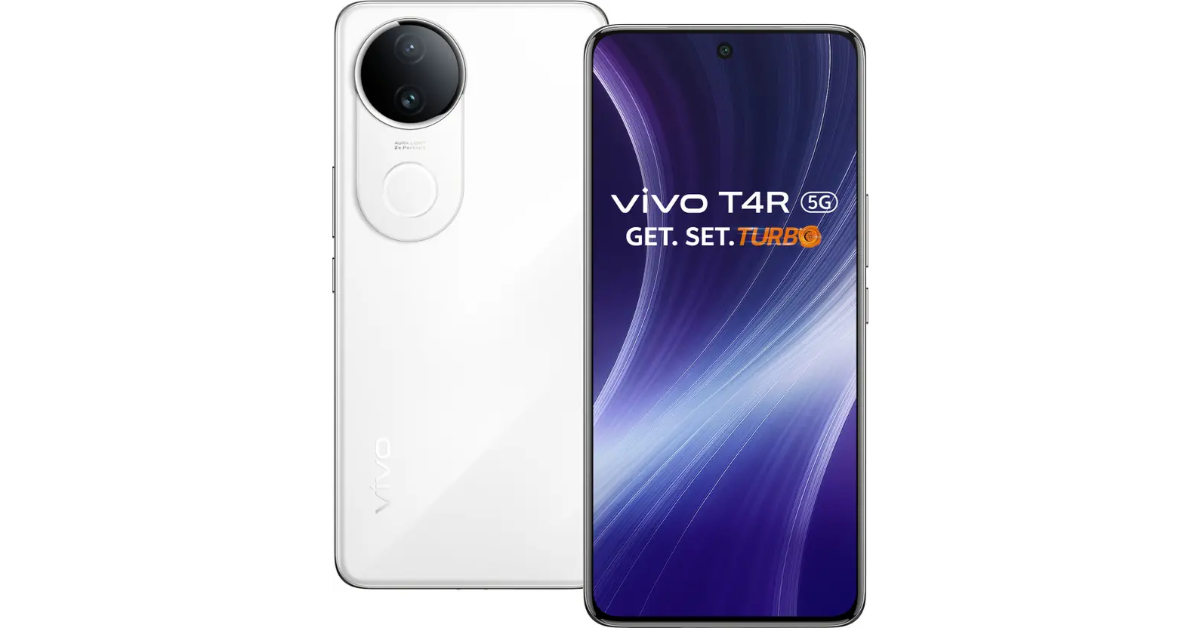
50 MP Sony LYTIA-700C sensor with optical image stabilisation (OIS)
13MP ultra-wide sensor with 120-degree field of view
10MP telephoto lens with 30X AI super zoom and 3X optical zoom
It has a 32-megapixel front camera for selfies and video calls.
Integrated Google Photos AI capabilities, including Auto Enhance, Tilt-shift Mode, Auto Smile Capture, Auto Night Vision, and Advanced Long Exposure Mode.
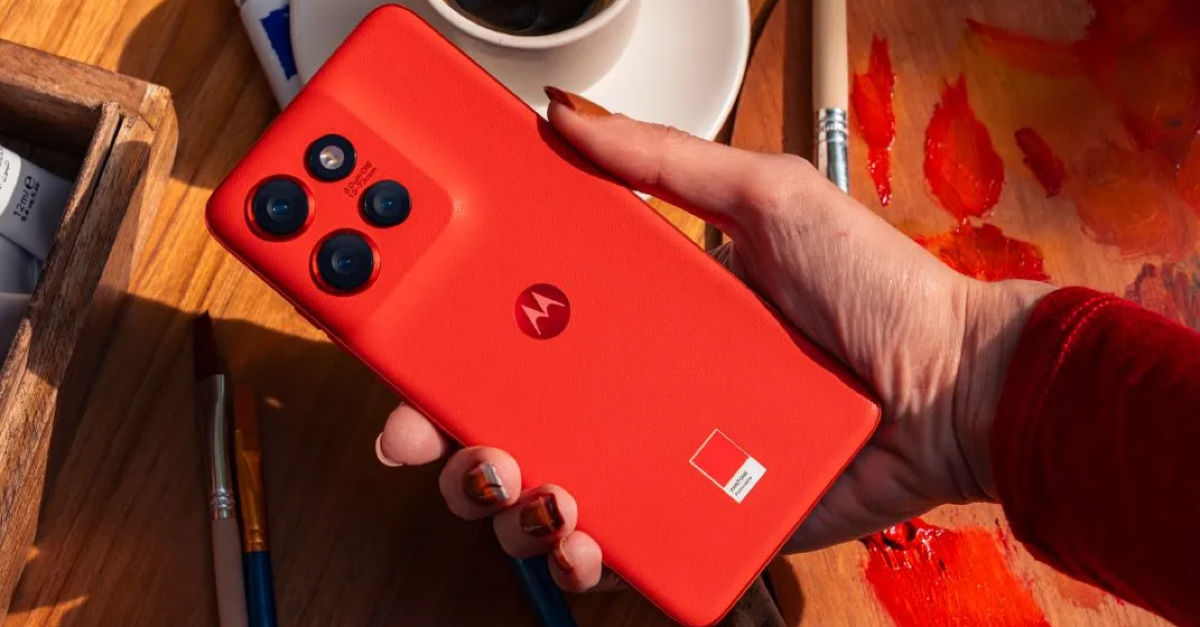
The Oppo K13 5G (Review) has a dual rear camera setup with a 50-megapixel OV50D40 primary sensor with f/1.85 aperture and autofocus, and a 2-megapixel OV02B1B depth camera.
Features a 16-megapixel front camera with a Sony IMX480 sensor.
The gadget has AI capabilities, such as AI Eraser 2.0, AI Clarity Enhancer, AI Reflection Remover, and AI Unblur.
Your physical wallet just got a little less relevant. Google has officially rolled out support for Aadhaar Verifiable Credentials inside Google Wallet for users in India, marking a significant step forward in the country’s digital identity journey. Built in partnership with the Unique Identification Authority of India (UIDAI), this new capability lets you store a secure, device-based version of your Aadhaar ID and use it across a growing list of everyday services. No more digging through your bag at the cinema. No more re-entering your passport details for the fifth time in a visa form.
What Exactly Is an Aadhaar Verifiable Credential in Google Wallet?
Think of it as your Aadhaar card, but smarter and far more private. The credential lives on your device inside Google Wallet, and it uses a privacy feature called selective disclosure. This means when a service asks to verify your identity, only the specific details required for that transaction are shared, nothing more. Proving your age at a multiplex? The system shares just that. It does not hand over your full ID profile to every app and service you interact with. That is a meaningful privacy upgrade over handing over a physical card.
The initial partner lineup in India includes some recognisable names. PVR INOX users can now quickly verify their age for age-restricted movies and also unlock loyalty rewards. BharatMatrimony is using the credentials to power verified “Prime” profiles, so matchmaking can happen with greater confidence in the other person’s identity. Atlys, the popular visa facilitation platform, lets travellers auto-fill international visa applications with a single tap, using the verified credentials directly.
Two more integrations are coming soon. Mygate, widely used by residential communities across Indian cities, will use the system to verify delivery and service personnel entering gated societies. Snabbit, focused on the gig economy, plans to introduce seamless identity checks for service providers. Both integrations are expected to add a layer of trust that the gig and home-services sector genuinely needs.
Built on Global Standards, Not a Quick Fix
Google has been clear that security, privacy, and interoperability are not afterthoughts here. The Aadhaar integration is built on globally recognised digital identity standards, which means it is designed to work across digital and physical environments without creating new vulnerabilities. The focus on interoperability also signals that this is not a closed ecosystem play. It is built to be open, extensible, and ready for the long term.
ID Passes Now Available in Singapore, Taiwan, and Brazil
India is not the only country getting a digital identity upgrade from Google Wallet. Users in Singapore, Taiwan, and Brazil can now create what Google calls an “ID pass.” This is a secure digital ID built on passport information, saved directly in Google Wallet. It can be used to verify identity or confirm age for both in-person situations and online services, such as signing into accounts that require age verification.
The ID pass rollout signals Google’s broader strategy to make digital identity a standard, global capability inside its Wallet product rather than a one-off regional feature. For travellers and globally mobile users, a consistent identity layer across countries is an increasingly practical necessity.
Digital IDs done right represent something more than a shortcut. When identity systems respect privacy by design, they reduce the risk of data over-collection, a problem that has plagued the digital economy for years. Selective disclosure, in particular, is a principle that regulators, privacy advocates, and users alike have been pushing for a long time. Seeing it implemented at scale, across a country the size of India, is genuinely noteworthy.
The ripple effect could be significant. As more services integrate with verified digital credentials, the incentive to build proper, standards-based identity systems grows for developers, businesses, and governments alike. Countries watching India’s rollout may well accelerate their own digital ID programmes.
The world is moving toward digital-first identity management, whether we are ready or not. If Google’s expanding ecosystem is any indication, the future of proving who you are might just live in your pocket rather than your wallet.


 Also Read: Garena Free Fire Max Redeem Codes Today 28 April 2026: Here is how to claim them
The Idea Tab Pro Gen 2 has a 13-inch LCD display with a resolution of 2,190×3,540 pixels and support for Dolby Vision for improved visual quality. The display can attain a peak brightness of 600 nits, and with High Brightness Mode (HBM), it can reach up to 800 nits, providing bright, vibrant images for reading, writing and streaming entertainment. The tablet has a 16:10 aspect ratio and 144Hz refresh rate, resulting in a pixel density of 319 pixels per inch (ppi), which helps provide a rich visual experience. The tablet runs Android 16 under the hood and is expected to get two more updates, meaning it will be running Android 18. On the security front, the Idea Tab Pro Gen 2 will get security fixes for the next four years, so users will be protected until 2030.
Also Read: Samsung Galaxy S25+ Review: This middle child shines bright
The tablet is powered by the Snapdragon 8s Gen 4 processor, which packs on-device AI capabilities for quick and fluid performance in multitasking, content production, and entertainment. It is packed with 8GB of RAM and 256GB of storage to provide smooth performance and enough capacity for different apps. It also brings in various AI-led capabilities like AI Notes, Smart Reader, AI Creation Tools and Live Transcript, which make information collection, organisation and creation more efficient. Additionally, features like Circle to Search, Google Gemini, and real-time translation enable continuous exploration and learning, making the tablet an excellent option for those in need of cutting-edge technical assistance.
Also Read: 10 Best photography-focused smartphones under Rs 20,000
The gadget has a 13-megapixel back camera with autofocus and an 8-megapixel front camera with fixed focus for video calls and quick snaps. Designed to provide a laptop-like experience, it’s seamlessly connectable to keyboard and touchpad peripherals and comes with the Lenovo Tab Pen Plus for writing, drawing and annotating straight out of the box. The superior metal body makes it very portable at only 598 grams and comfortable for long-term usage. It has quad JBL speakers with Dolby Atmos for an immersive audio experience.
For connectivity, it has Wi-Fi 7 and Bluetooth 6.0, so you can expect quick and reliable connections. It also comes with a 1-year warranty with options for extended coverage and further protection.
Also Read: Garena Free Fire Max Redeem Codes Today 28 April 2026: Here is how to claim them
The Idea Tab Pro Gen 2 has a 13-inch LCD display with a resolution of 2,190×3,540 pixels and support for Dolby Vision for improved visual quality. The display can attain a peak brightness of 600 nits, and with High Brightness Mode (HBM), it can reach up to 800 nits, providing bright, vibrant images for reading, writing and streaming entertainment. The tablet has a 16:10 aspect ratio and 144Hz refresh rate, resulting in a pixel density of 319 pixels per inch (ppi), which helps provide a rich visual experience. The tablet runs Android 16 under the hood and is expected to get two more updates, meaning it will be running Android 18. On the security front, the Idea Tab Pro Gen 2 will get security fixes for the next four years, so users will be protected until 2030.
Also Read: Samsung Galaxy S25+ Review: This middle child shines bright
The tablet is powered by the Snapdragon 8s Gen 4 processor, which packs on-device AI capabilities for quick and fluid performance in multitasking, content production, and entertainment. It is packed with 8GB of RAM and 256GB of storage to provide smooth performance and enough capacity for different apps. It also brings in various AI-led capabilities like AI Notes, Smart Reader, AI Creation Tools and Live Transcript, which make information collection, organisation and creation more efficient. Additionally, features like Circle to Search, Google Gemini, and real-time translation enable continuous exploration and learning, making the tablet an excellent option for those in need of cutting-edge technical assistance.
Also Read: 10 Best photography-focused smartphones under Rs 20,000
The gadget has a 13-megapixel back camera with autofocus and an 8-megapixel front camera with fixed focus for video calls and quick snaps. Designed to provide a laptop-like experience, it’s seamlessly connectable to keyboard and touchpad peripherals and comes with the Lenovo Tab Pen Plus for writing, drawing and annotating straight out of the box. The superior metal body makes it very portable at only 598 grams and comfortable for long-term usage. It has quad JBL speakers with Dolby Atmos for an immersive audio experience.
For connectivity, it has Wi-Fi 7 and Bluetooth 6.0, so you can expect quick and reliable connections. It also comes with a 1-year warranty with options for extended coverage and further protection. 





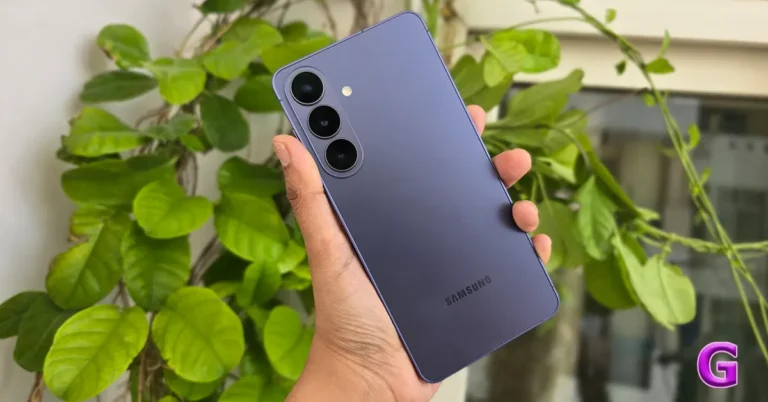
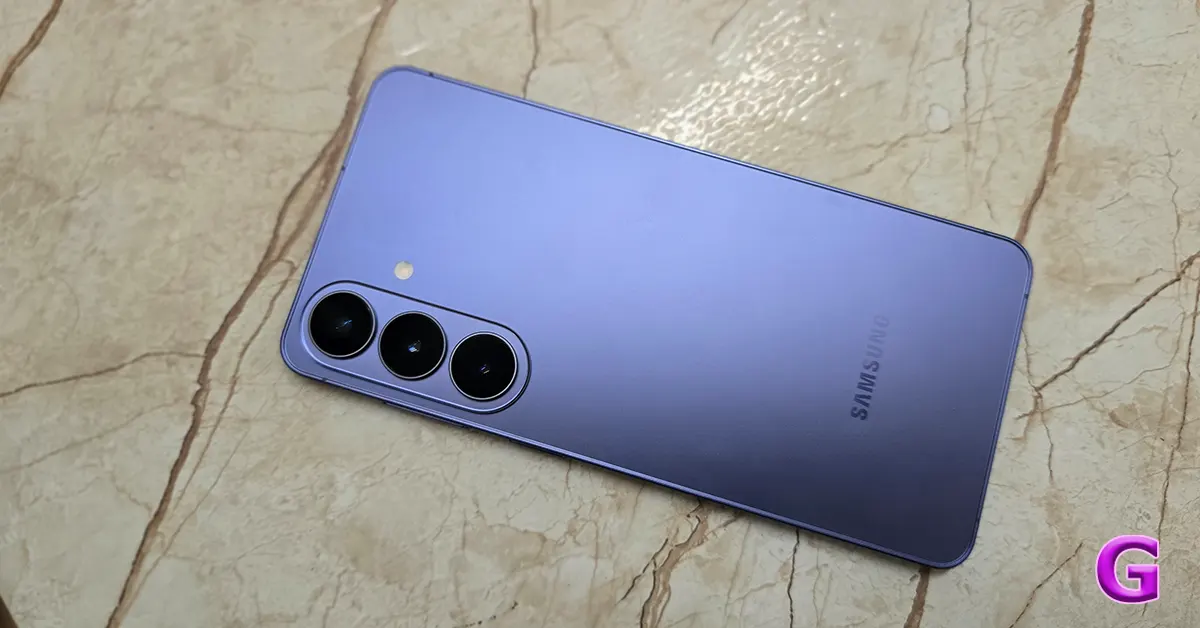 We received the S26+ in a cobalt blue colour for our review. It’s intended to repel fingerprints, but if your hands tend to be dry, you may want to consider using a case for more secure handling. From an ergonomic standpoint, the phone’s rounded edges make it more comfortable to hold for long periods of time.
It weighs 190g and is 7.3mm thick, so it seems light, but it can feel slightly top-heavy due to the dense camera module. The gadget is 7.3mm thick, which might make the buttons seem recessed when used with thicker cases, potentially affecting usability.
The Samsung Galaxy S26+ has a familiar interface, but it might be a little tricky for those who are switching from older handsets or other brands. The right side of the device has all the buttons and controls for physical interaction, such as the volume rocker at the top and the side key (power) slightly below it. The volume buttons are positioned too high, making it hard to use the volume up function with one hand, especially since the phone measures 6.7 inches in height. They are made from Armor Aluminum 2, which has a pleasant tactile feel and is well-made.
There are no buttons on the left side of the gadget, which is made of sleek aluminium. This adds to its minimalist look. The design also includes plastic antenna lines that are particularly designed to improve 5G reception in this version, although they do slightly detract from the overall visual appeal. A more streamlined form is seen at the top edge, where two noise-cancelling pinhole microphones are located. The top frame and glass are divided by a micro-slit that also serves as a concealed speaker grille. Keep in mind that this small opening may collect lint and dust over time, possibly affecting the stereo balance during media playback. The device’s slim, symmetrical bezels contribute to its sleek, high-quality look.
We received the S26+ in a cobalt blue colour for our review. It’s intended to repel fingerprints, but if your hands tend to be dry, you may want to consider using a case for more secure handling. From an ergonomic standpoint, the phone’s rounded edges make it more comfortable to hold for long periods of time.
It weighs 190g and is 7.3mm thick, so it seems light, but it can feel slightly top-heavy due to the dense camera module. The gadget is 7.3mm thick, which might make the buttons seem recessed when used with thicker cases, potentially affecting usability.
The Samsung Galaxy S26+ has a familiar interface, but it might be a little tricky for those who are switching from older handsets or other brands. The right side of the device has all the buttons and controls for physical interaction, such as the volume rocker at the top and the side key (power) slightly below it. The volume buttons are positioned too high, making it hard to use the volume up function with one hand, especially since the phone measures 6.7 inches in height. They are made from Armor Aluminum 2, which has a pleasant tactile feel and is well-made.
There are no buttons on the left side of the gadget, which is made of sleek aluminium. This adds to its minimalist look. The design also includes plastic antenna lines that are particularly designed to improve 5G reception in this version, although they do slightly detract from the overall visual appeal. A more streamlined form is seen at the top edge, where two noise-cancelling pinhole microphones are located. The top frame and glass are divided by a micro-slit that also serves as a concealed speaker grille. Keep in mind that this small opening may collect lint and dust over time, possibly affecting the stereo balance during media playback. The device’s slim, symmetrical bezels contribute to its sleek, high-quality look.
 The bottom edge of the gadget is quite useful since it has a centred USB-C port that works with USB 3.2 Gen 1 for fast data transfer and charging. The pill-shaped speaker grille sits next to this port on the right side. It adds to the overall sonic design of the gadget. The SIM tray located on the left side of the charging port can hold two Nano-SIM cards for individuals and also supports eSIM technology, which gives users more ways to connect.
 Nevertheless, a serious flaw in the design is evident. Dangerously next to a microphone hole is the SIM ejector hole. This closeness brings to light a design flaw that could affect the user experience, such as the risk of inadvertently damaging the microphone when using the SIM ejector tool. Overall, the bottom edge of the gadget works well; however, this design flaw should be fixed so that the microphone doesn’t get damaged by accident while managing SIM cards.
Known for its outstanding consistency, the 6.7-inch Dynamic AMOLED 2X display is standard on the
Nevertheless, a serious flaw in the design is evident. Dangerously next to a microphone hole is the SIM ejector hole. This closeness brings to light a design flaw that could affect the user experience, such as the risk of inadvertently damaging the microphone when using the SIM ejector tool. Overall, the bottom edge of the gadget works well; however, this design flaw should be fixed so that the microphone doesn’t get damaged by accident while managing SIM cards.
Known for its outstanding consistency, the 6.7-inch Dynamic AMOLED 2X display is standard on the 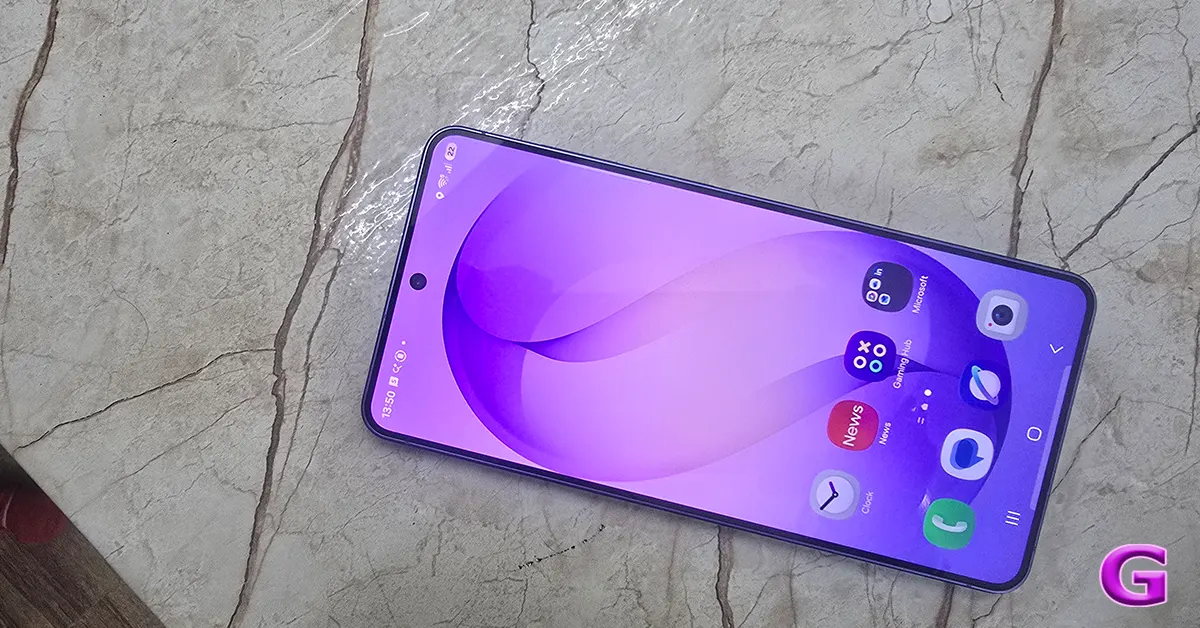 Whether it’s bright outside or in low light, the S26+ has a number of usability and user experience issues.
Initially, the device’s PWM dimming operates at a low frequency of 480Hz, which can lead to screen flickering. This flicker may cause eye strain and headaches, especially for users who are sensitive. Competing products, on the other hand, use higher PWM frequencies, such as 3,840Hz, or DC dimming methods to address this problem.
The S26+ also doesn’t have the Gorilla Armor covering that the Ultra has; instead, it uses Gorilla Glass Victus 2 for protection. This results in a lot of glare in strong light, which makes it harder to see. To fix this, it is suggested to use a high-quality matte screen protector, even if it can make AMOLED colours a little less bright.
Samsung claims the peak brightness reaches 2,600 nits, which is notable for its brightness and visibility. Yet, this level isn’t maintained at high temperatures. HDR10+ videos look vivid, but outdoor use can cause the device to overheat, leading to reduced brightness to prevent damage. Additionally, the S26+ reflects about 4% to 5% of ambient light, making it difficult to view in direct sunlight. As a result, the screen needs to be brighter, which can drain the battery more quickly.
Also Read:
Whether it’s bright outside or in low light, the S26+ has a number of usability and user experience issues.
Initially, the device’s PWM dimming operates at a low frequency of 480Hz, which can lead to screen flickering. This flicker may cause eye strain and headaches, especially for users who are sensitive. Competing products, on the other hand, use higher PWM frequencies, such as 3,840Hz, or DC dimming methods to address this problem.
The S26+ also doesn’t have the Gorilla Armor covering that the Ultra has; instead, it uses Gorilla Glass Victus 2 for protection. This results in a lot of glare in strong light, which makes it harder to see. To fix this, it is suggested to use a high-quality matte screen protector, even if it can make AMOLED colours a little less bright.
Samsung claims the peak brightness reaches 2,600 nits, which is notable for its brightness and visibility. Yet, this level isn’t maintained at high temperatures. HDR10+ videos look vivid, but outdoor use can cause the device to overheat, leading to reduced brightness to prevent damage. Additionally, the S26+ reflects about 4% to 5% of ambient light, making it difficult to view in direct sunlight. As a result, the screen needs to be brighter, which can drain the battery more quickly.
Also Read: 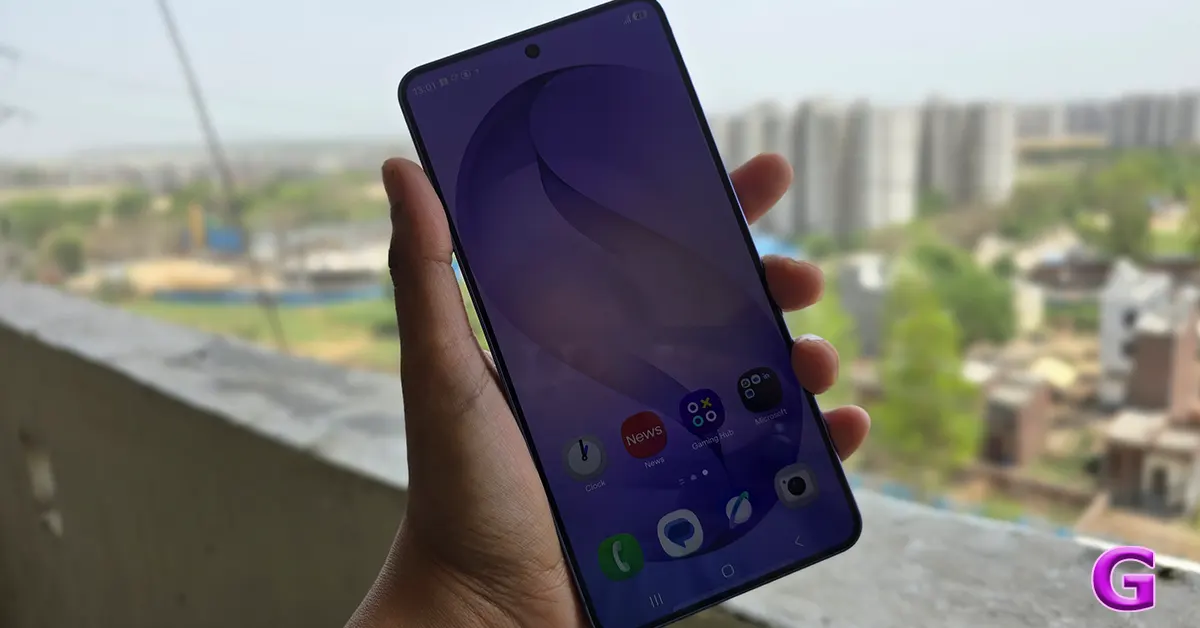 The
The 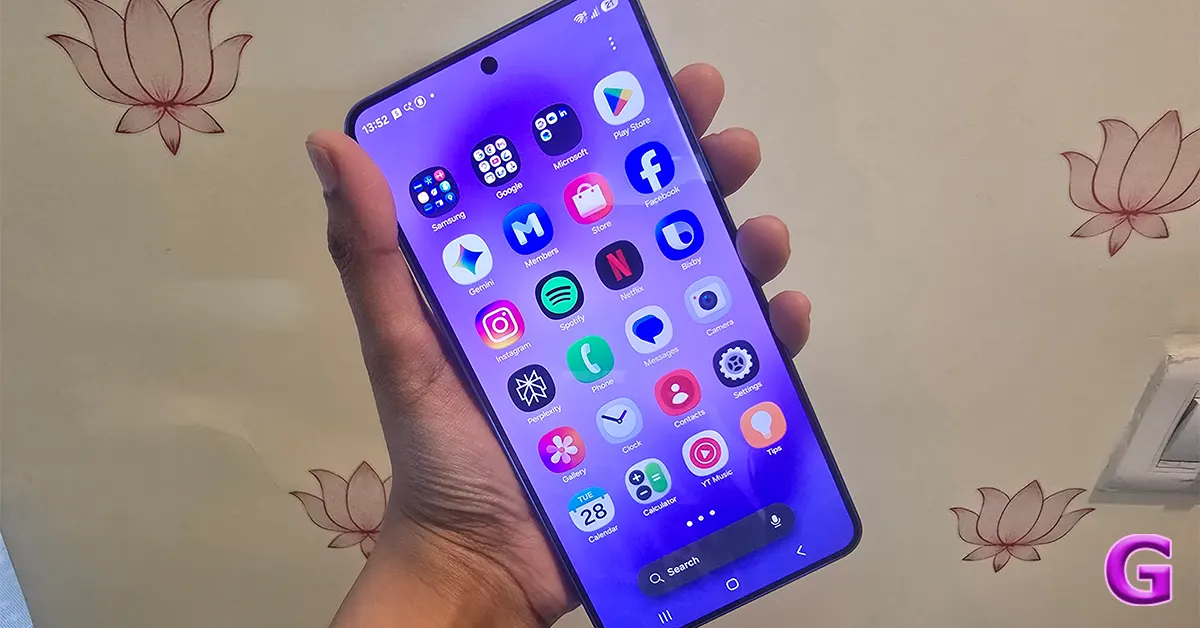 Because of this, users are advised to spend around 15 minutes changing their settings to make the interface easier to use. Samsung offers these third-party applications in India because of regional partnerships in the country. But we bypassed the installation of most third-party recommendations during the initial setup.
The addition of the Agentic AI system is a big step forward for this smartphone. It lets the phone take care of basic tasks on its own, making daily activities easier for the user. The Galaxy S26+ also adds a big privacy improvement: a technology that automatically blurs critical information before sharing it with others, which protects user data.
The device has a Creative Studio that lets users edit images with natural language commands, making it easy to use for digital photography. Getting the prompts correctly takes some practice, but it’s probably the most fun part. Also, the Audio Eraser 2.0 technology gets rid of background noise in real-time during video conversations or recordings, enhancing audio clarity and user communication.
Samsung has made big enhancements to its animation engine, making transitions smoother and more flexible. This makes the user experience better, especially on devices with a 120Hz display. But the Exynos 2600 CPU, which uses AMD’s RDNA 4 GPU architecture, has caused problems with performance.
Several apps, such as Zomato, Lightroom, Canva, and LinkedIn, are still not optimised for this architecture, leading to stability issues. We occasionally experienced small stutters, especially with resource-intensive banking apps like HDFC Bank and ICICI iMobile, or when accessing the Google Feed. The Exynos thermal management often halts the Canva app to conserve power when you switch away to reply to a WhatsApp message.
You have to wait for the whole project to load again when you go back. The Exynos CPU has 12GB of RAM, but the software that comes with it is rather aggressive about managing memory. It closes background apps to keep the device cool, which means that apps that were used before have to be reloaded when the device opens again.
Samsung’s One UI 8.5 has a new glassy transparency design that makes the user interface seem better by adding frosted glass elements to it. This update gives the Quick Panel and notification shade a high-end translucent design that changes colour to match the wallpaper, making it seem better than One UI 7. The animation engine has been much enhanced, making scrolling elastic and interruptible animations work better. This makes the user experience more fluid.
Also, new features like Now Nudge and Now Brief are meant to make the app easier to use while you’re being proactive. Now Nudge suggests you share your location in messaging applications, and Now Brief sends you a daily AI-generated summary of your calendar events, weather updates, and news right on the lock screen. Some of you, on the other hand, may find these features annoying and need to change your settings to get fewer uninvited context-based recommendations.
Over that, Samsung has promised to provide the S26+ with seven years of operating system and security upgrades, which means that users will be able to get support until 2033.
The Samsung Galaxy S26+ has a far better camera than last year’s model. The hardware design is mostly the same as the one before it, although there are some important changes, such as the Exynos 2600 CPU, which has a better image signal processor (ISP). The AI features in One UI 8.5 also make taking pictures every day much better, making it easier for consumers to take high-quality pictures.
Also Read:
Because of this, users are advised to spend around 15 minutes changing their settings to make the interface easier to use. Samsung offers these third-party applications in India because of regional partnerships in the country. But we bypassed the installation of most third-party recommendations during the initial setup.
The addition of the Agentic AI system is a big step forward for this smartphone. It lets the phone take care of basic tasks on its own, making daily activities easier for the user. The Galaxy S26+ also adds a big privacy improvement: a technology that automatically blurs critical information before sharing it with others, which protects user data.
The device has a Creative Studio that lets users edit images with natural language commands, making it easy to use for digital photography. Getting the prompts correctly takes some practice, but it’s probably the most fun part. Also, the Audio Eraser 2.0 technology gets rid of background noise in real-time during video conversations or recordings, enhancing audio clarity and user communication.
Samsung has made big enhancements to its animation engine, making transitions smoother and more flexible. This makes the user experience better, especially on devices with a 120Hz display. But the Exynos 2600 CPU, which uses AMD’s RDNA 4 GPU architecture, has caused problems with performance.
Several apps, such as Zomato, Lightroom, Canva, and LinkedIn, are still not optimised for this architecture, leading to stability issues. We occasionally experienced small stutters, especially with resource-intensive banking apps like HDFC Bank and ICICI iMobile, or when accessing the Google Feed. The Exynos thermal management often halts the Canva app to conserve power when you switch away to reply to a WhatsApp message.
You have to wait for the whole project to load again when you go back. The Exynos CPU has 12GB of RAM, but the software that comes with it is rather aggressive about managing memory. It closes background apps to keep the device cool, which means that apps that were used before have to be reloaded when the device opens again.
Samsung’s One UI 8.5 has a new glassy transparency design that makes the user interface seem better by adding frosted glass elements to it. This update gives the Quick Panel and notification shade a high-end translucent design that changes colour to match the wallpaper, making it seem better than One UI 7. The animation engine has been much enhanced, making scrolling elastic and interruptible animations work better. This makes the user experience more fluid.
Also, new features like Now Nudge and Now Brief are meant to make the app easier to use while you’re being proactive. Now Nudge suggests you share your location in messaging applications, and Now Brief sends you a daily AI-generated summary of your calendar events, weather updates, and news right on the lock screen. Some of you, on the other hand, may find these features annoying and need to change your settings to get fewer uninvited context-based recommendations.
Over that, Samsung has promised to provide the S26+ with seven years of operating system and security upgrades, which means that users will be able to get support until 2033.
The Samsung Galaxy S26+ has a far better camera than last year’s model. The hardware design is mostly the same as the one before it, although there are some important changes, such as the Exynos 2600 CPU, which has a better image signal processor (ISP). The AI features in One UI 8.5 also make taking pictures every day much better, making it easier for consumers to take high-quality pictures.
Also Read: 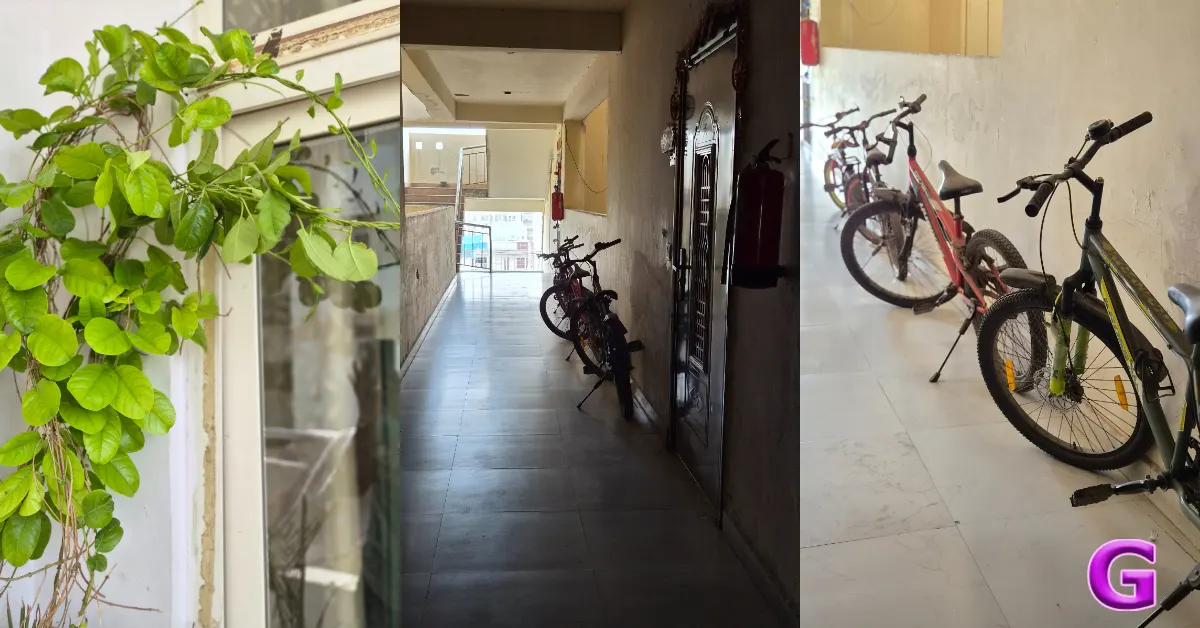 During the day, the S26+ smartphone does a great job of capturing a wide spectrum of colours, even in strong light. It has great depth and clarity in daylight, making it great for landscape and architectural photography. Users may crop photographs without losing texture.
However, it features noticeable shutter lag that can result in motion blur if subjects change direction or move quickly, particularly in poor lighting conditions. The sensor effectively maintains detail in bright areas and prevents the sky from becoming overexposed, but it can occasionally render colours, especially greens and reds, too vividly.
During the day, the S26+ smartphone does a great job of capturing a wide spectrum of colours, even in strong light. It has great depth and clarity in daylight, making it great for landscape and architectural photography. Users may crop photographs without losing texture.
However, it features noticeable shutter lag that can result in motion blur if subjects change direction or move quickly, particularly in poor lighting conditions. The sensor effectively maintains detail in bright areas and prevents the sky from becoming overexposed, but it can occasionally render colours, especially greens and reds, too vividly.

 In low light, the strong OIS lets you take 2-second handheld shots with minimal blur, and the Night Mode works well with less lag. However, cropping photographs with aggressive AI noise suppression might cause a watercolour effect that affects the fine texture quality.
 The ultrawide sensor has a 12MP lens with an f/2.2 aperture and a 120° field of view, keeping the colours consistent with the primary sensor during the day. However, it has some apparent shortcomings, such as fixed-focus capabilities that make macro shooting difficult and visible corner softness and reduced detail at the edges of images.
The sensor struggles in super-low light because it cannot collect enough illumination, resulting in grainy and dark photos that lack shadow detail. Without Optical Image Stabilisation (OIS), its performance diminishes further in low-light conditions, making it more suitable for brightly lit environments.
The ultrawide sensor has a 12MP lens with an f/2.2 aperture and a 120° field of view, keeping the colours consistent with the primary sensor during the day. However, it has some apparent shortcomings, such as fixed-focus capabilities that make macro shooting difficult and visible corner softness and reduced detail at the edges of images.
The sensor struggles in super-low light because it cannot collect enough illumination, resulting in grainy and dark photos that lack shadow detail. Without Optical Image Stabilisation (OIS), its performance diminishes further in low-light conditions, making it more suitable for brightly lit environments.
 The ultrawide sensor works well for casual daytime shooting, but it doesn’t work as well in low light or while taking high-resolution landscape photos since it makes certain performance trade-offs.
The telephoto lens is great for street photography when the lighting is just right, like during the day. It makes the backdrop blur look natural and beautiful, and it focuses on the subject well. However, it’s important to remember that the 10MP sensor’s low resolution makes images seem much less acceptable when you try to utilise digital zoom at 10x or 20x. This is quite different from the Ultra’s better periscope zoom performance.
The ultrawide sensor works well for casual daytime shooting, but it doesn’t work as well in low light or while taking high-resolution landscape photos since it makes certain performance trade-offs.
The telephoto lens is great for street photography when the lighting is just right, like during the day. It makes the backdrop blur look natural and beautiful, and it focuses on the subject well. However, it’s important to remember that the 10MP sensor’s low resolution makes images seem much less acceptable when you try to utilise digital zoom at 10x or 20x. This is quite different from the Ultra’s better periscope zoom performance.

 In low light, the camera can take good close-up images, but when it becomes dark enough, it usually reverts to its main 50MP sensor. This switch can increase noise and reduce the quality of photographs taken at 3x magnification due to cropping. Overall, although the S26+’s telephoto sensor performs well in favourable circumstances, it faces significant challenges in less-than-ideal lighting, highlighting its limits and the need for careful handling to produce the best photographic results.
 The selfie camera has a 12MP resolution and an f/2.2 aperture. It also uses Dual Pixel Autofocus (AF) technology. The camera has distinct advantages when used during the day. For example, it captures sharp focus on faces and eyes, which is helpful for a wide range of photography styles, from close-ups to group photographs. It also supports 4K video recording at 60 frames per second (fps), which makes it easier to shoot high-quality footage.
 For low-light performance, the camera employs
  However, there are significant downsides, especially in high-contrast environments where AI processing may result in over-sharpened features. This may emerge as an unnatural appearance on skin textures and facial hair, giving the illusion of being manufactured or digital.
The S26+ has a 4,900 mAh battery, which is the same size as the one before it. However, its efficiency profile has changed a lot. The gadget has a 2nm design that makes the battery last longer, so if you’re doing mild to moderate activities like reading emails, surfing social media, or listening to music, you’ll have around 30–35% battery life left at the end of the day.
The Exynos 2600 processor doesn’t work as well as the Snapdragon model while doing intensive activities like capturing 4K video or using 5G navigation for a long time. This means that the battery life is around 2.5 hours shorter.
The Samsung S26+ still uses the 45W Super Fast Charging 2.0 standard, but the Ultra model now supports charging at 60W. When using a compatible 45W PPS charger, the battery can go from 0% to approximately 65% in about 30 minutes. The charging speed drops dramatically after the battery percentage hits 80%, which is good for the battery’s health. Because of this, the last 20% of the charge might take as long as the first 50% to finish.
It’s worth noting that Samsung didn’t include a charger in the box, so buyers will need to buy a particular USB-PD 3.0 with PPS brick to get the 45W charging speed. If you use an older 25W Samsung charger instead, it may take around an hour and twenty minutes to fully charge.
The S26+ smartphone has Qi2 wireless charging features, which enable a power output of up to 20W. This type uses magnetic chargers that improve alignment throughout the charging process, which helps to decrease heat emission. Furthermore, the S26+ supports reverse wireless charging at 4.5W; however, it is intended mainly for emergency use. While this function is useful for charging Galaxy Buds, it is quite slow and can overheat the device’s back while in use.
However, there are significant downsides, especially in high-contrast environments where AI processing may result in over-sharpened features. This may emerge as an unnatural appearance on skin textures and facial hair, giving the illusion of being manufactured or digital.
The S26+ has a 4,900 mAh battery, which is the same size as the one before it. However, its efficiency profile has changed a lot. The gadget has a 2nm design that makes the battery last longer, so if you’re doing mild to moderate activities like reading emails, surfing social media, or listening to music, you’ll have around 30–35% battery life left at the end of the day.
The Exynos 2600 processor doesn’t work as well as the Snapdragon model while doing intensive activities like capturing 4K video or using 5G navigation for a long time. This means that the battery life is around 2.5 hours shorter.
The Samsung S26+ still uses the 45W Super Fast Charging 2.0 standard, but the Ultra model now supports charging at 60W. When using a compatible 45W PPS charger, the battery can go from 0% to approximately 65% in about 30 minutes. The charging speed drops dramatically after the battery percentage hits 80%, which is good for the battery’s health. Because of this, the last 20% of the charge might take as long as the first 50% to finish.
It’s worth noting that Samsung didn’t include a charger in the box, so buyers will need to buy a particular USB-PD 3.0 with PPS brick to get the 45W charging speed. If you use an older 25W Samsung charger instead, it may take around an hour and twenty minutes to fully charge.
The S26+ smartphone has Qi2 wireless charging features, which enable a power output of up to 20W. This type uses magnetic chargers that improve alignment throughout the charging process, which helps to decrease heat emission. Furthermore, the S26+ supports reverse wireless charging at 4.5W; however, it is intended mainly for emergency use. While this function is useful for charging Galaxy Buds, it is quite slow and can overheat the device’s back while in use.