

- Google Tez gets re-branded at Google Pay: The technology giant’s payment app Google Tez will now be rebranded to Google Pay. Google is eyeing to get over 15,000 retail stores in India and 2,000 online merchants on its Google Pay app by Diwali 2018. It also talked about its plans to bring rich interactions to its payment app. Businesses and merchants can also start using Google Pay to pay for Google Ads. Google Pay is also collaborating with Federal Banks, HDFC Bank, ICICI Bank among others for loans. It is worth noticing that the app will only act as an intermediary and that the customer will only be able to get these pre-approved loans via banks. This feature will start appearing on Google Pay app in the next few weeks.
- Google Station to reach over 12,000 villages: Google announced today that it has joined hands with Andhra Pradesh State FiberNet Ltd (APSFNL) to bring Google Station to over 12,000 villages, using the Station Wi-Fi model. This move by the technology giant will help in providing internet access to around 10 million people in the country. Prior to this, the company had partnered with RailTel and provided Wi-Fi access across 400 Indian railway stations.
- Google will promote Indian language content online with Project Navlekha: Another announcement that Google made today was that it is working with Indian language publishers and aims to bring online content that is more relevant to audience in the country. As of now, the amount of online content that is available in Indian languages is only 1% of that available in English. With its new Project Navlekha, Google aims to enable publishers working in Indian regional languages to bring their content online. Navlekha is a Sanskrit word that means ‘a new way to write’. According to Google, just with help of a simple application, publishers will be able to create web pages from scanned copies of pages. Google claims that among 135,000 of print publishers in India, 90% do not have a website. With Project Navlekha, it eyes to change that with an AI tool that will render any PDF file with Indian language content into editable text.
- Users to get the option of listening to web pages: At its Google for India conference, Google has also announced a number of upcoming features for Google Go and Android (Go edition) OS. The key announcement was that Google’s AI based technology will enable users to “listen to webpages.” Users will now have two brand new features that they can access — bilingual news feed and audio playback. Basically, Google News Feed is set to become bilingual and will support both English and Hindi. In a few months, this feature will arrive on Google Go as well. And with the audio playback feature, users will be able to listen to webpages. The new feature by Google uses natural language processing and speech synthesis AI and can support 28 languages. Furthermore, users will be able to listen to web pages even if they are using a 2G connection.
Google for India 2018: All you need to know

Technology giant Google’s fourth edition of ‘Google for India’ took place at an event in New Delhi today. As expected, there were a number of announcements that were made at Google’s annual event. India has the second largest population of internet users, and hence is a very important market for Google. Here are the key announcements that Google spoke about at its event today:
Realme 2 with notch display and 4,230 mAh battery launched in India: Specs, price and more
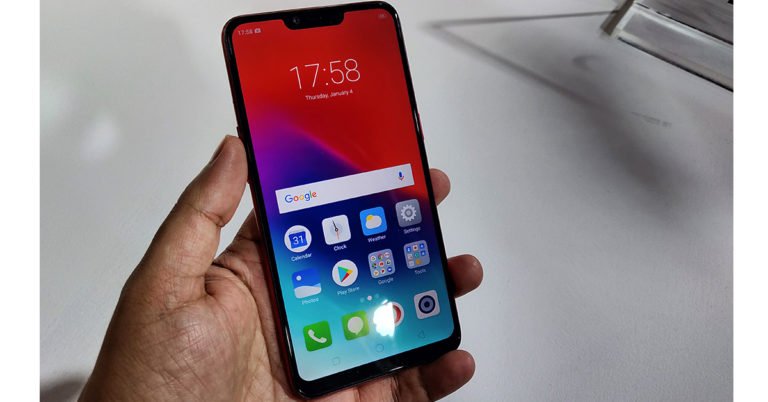
Realme is the sub-brand of Oppo mobiles that just got independent of the parent company and apparently is doing really well in India. Today at an event in New Delhi the company has launched Realme 2, the first smartphone in India in the sub Rs 10K category that sports a notch display. Available in two variations and 3 colours (Red, Black and Blue) the smartphone does look similar to the previous edition with its own distinct features.
Realme 2 technical specifications
The Realme 2 is a smartphone that screams for attention. It has been built on the same crystal design format as previously seen on other Oppo smartphones. The Realme 2 features a 6.2-inch HD+ (1,520×720 pixels) ICP touch screen with 19:9 aspect ratio. Yes, it does have a notch that has most of the front sensors and an 8MP (f/2.2 aperture) selfie camera. At the rear users will get a dual camera setup (horizontally located) featuring a 13MP primary sensor with f/2.2 aperture and 2MP secondary camera with f/2.4 aperture. A fingerprint reader at the back has also been thrown in the mix. Under the hood, the Realme 2 sports a Qualcomm Snapdragon 450 chipset. The mobile is available in two versions. One with 3GB RAM and 32GB storage and other with 4GB RAM and 64GB storage. The memory is expandable by up to 256GB on both the variants. For graphical duties this smartphone has Adreno 506 GPU on it. As for the battery the Realme 2 houses a 4,230 mAh battery and come with 10W charger in the box. The phone is 8.2mm thick and weighs 168grams. To sum up the connectivity features the Realme 2 has Bluetooth v4.2, 4G VOLTE, GPS/A-GPS, micro USB port and 3.5mm audio jack.
Realme 2 price
The 3GB RAM and 32GB storage variant is priced at Rs 8,990 and the 4GB RAM and 64GB storage version is priced at Rs 10,990. The phone will be available exclusively on Flipkart and will start sales on September 4. There is a Rs 750 discount also running when the phone is bought using HDFC bank cards. Also, up to 120 GB data can be drawn by Reliance JIO users when they buy this smartphone, along with Rs 4,200 benefits.
For the latest gadget and tech news, and gadget reviews, follow us on Twitter, Facebook, Instagram and YouTube.
Under the hood, the Realme 2 sports a Qualcomm Snapdragon 450 chipset. The mobile is available in two versions. One with 3GB RAM and 32GB storage and other with 4GB RAM and 64GB storage. The memory is expandable by up to 256GB on both the variants. For graphical duties this smartphone has Adreno 506 GPU on it. As for the battery the Realme 2 houses a 4,230 mAh battery and come with 10W charger in the box. The phone is 8.2mm thick and weighs 168grams. To sum up the connectivity features the Realme 2 has Bluetooth v4.2, 4G VOLTE, GPS/A-GPS, micro USB port and 3.5mm audio jack.
Realme 2 price
The 3GB RAM and 32GB storage variant is priced at Rs 8,990 and the 4GB RAM and 64GB storage version is priced at Rs 10,990. The phone will be available exclusively on Flipkart and will start sales on September 4. There is a Rs 750 discount also running when the phone is bought using HDFC bank cards. Also, up to 120 GB data can be drawn by Reliance JIO users when they buy this smartphone, along with Rs 4,200 benefits.
For the latest gadget and tech news, and gadget reviews, follow us on Twitter, Facebook, Instagram and YouTube.
 Under the hood, the Realme 2 sports a Qualcomm Snapdragon 450 chipset. The mobile is available in two versions. One with 3GB RAM and 32GB storage and other with 4GB RAM and 64GB storage. The memory is expandable by up to 256GB on both the variants. For graphical duties this smartphone has Adreno 506 GPU on it. As for the battery the Realme 2 houses a 4,230 mAh battery and come with 10W charger in the box. The phone is 8.2mm thick and weighs 168grams. To sum up the connectivity features the Realme 2 has Bluetooth v4.2, 4G VOLTE, GPS/A-GPS, micro USB port and 3.5mm audio jack.
Realme 2 price
The 3GB RAM and 32GB storage variant is priced at Rs 8,990 and the 4GB RAM and 64GB storage version is priced at Rs 10,990. The phone will be available exclusively on Flipkart and will start sales on September 4. There is a Rs 750 discount also running when the phone is bought using HDFC bank cards. Also, up to 120 GB data can be drawn by Reliance JIO users when they buy this smartphone, along with Rs 4,200 benefits.
For the latest gadget and tech news, and gadget reviews, follow us on Twitter, Facebook, Instagram and YouTube.
Under the hood, the Realme 2 sports a Qualcomm Snapdragon 450 chipset. The mobile is available in two versions. One with 3GB RAM and 32GB storage and other with 4GB RAM and 64GB storage. The memory is expandable by up to 256GB on both the variants. For graphical duties this smartphone has Adreno 506 GPU on it. As for the battery the Realme 2 houses a 4,230 mAh battery and come with 10W charger in the box. The phone is 8.2mm thick and weighs 168grams. To sum up the connectivity features the Realme 2 has Bluetooth v4.2, 4G VOLTE, GPS/A-GPS, micro USB port and 3.5mm audio jack.
Realme 2 price
The 3GB RAM and 32GB storage variant is priced at Rs 8,990 and the 4GB RAM and 64GB storage version is priced at Rs 10,990. The phone will be available exclusively on Flipkart and will start sales on September 4. There is a Rs 750 discount also running when the phone is bought using HDFC bank cards. Also, up to 120 GB data can be drawn by Reliance JIO users when they buy this smartphone, along with Rs 4,200 benefits.
For the latest gadget and tech news, and gadget reviews, follow us on Twitter, Facebook, Instagram and YouTube. Flying drones to be legalized in India starting December

Ministry of Civil Aviation today finalised a new drone policy according to which flying Remotely Piloted Aircraft System (RPAS), or in simpler words – drones – will be legal across India starting December 1, 2018.
Currently, prior permission from government authorities is required for flying drones and it is also considered illegal for flying them for civilian purposes.
Those wanting to use drones will be required to do a one-time registration of the drones, as well as their pilots and owners.
After this, a request for permission to fly the drone has to be made on a mobile app. This has to be done each time the user wishes to fly the drone. The request will be permitted or denied via an automated process. If denied, the drone will not be able to take off as it’ll require a digital permit.
Even if a drone gets the permission to fly, it can only do so during the day time. The Ministry of Civil Aviation has also said that the maximum altitude at which a drone can fly is 400-ft.
There are also ‘No Drone Zones’ that have been defined by the Ministry of Civil Aviation. Areas coming under ‘No Drone Zones’ are areas around airports, near international border, Vijay Chowk in Delhi, State Secretariat Complex in state capitals, strategic locations, vital military installations etc. The regulations announced today are titled Regulations 1.0 because they are the first set of rules given by the government regarding this subject. The Ministry defined drones as a technology platform that has a number of applications including photography, agriculture, insurance and even infrastructure asset management. Speaking about the regulations issued, Minister of Civil Aviation, Suresh Prabhu said, “Today we start an exciting new chapter in India’s aviation history by allowing commercial use of drones. I am sure that many new and exciting applications will emerge that will propel India’s economy forward. Our progressive regulations will encourage a vast Made in India drone industry.” For the latest gadget and tech news, and gadget reviews, follow us on Twitter, Facebook, Instagram and YouTubePress Release on Drones: pic.twitter.com/6ZlPeLJpxB
— MoCA_GoI (@MoCA_GoI) August 27, 2018
Samsung Galaxy A8 Star launched in India: Specifications, price and more
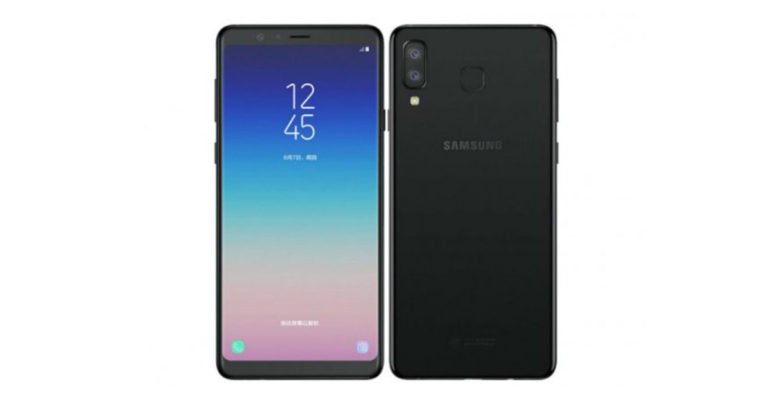
Just two days after Samsung launched its flagship phablet – Note 9 – in India, it has taken wraps off its Galaxy A8 Star mobile phone too. The smartphone was launched in China in June this year where it was dubbed as Samsung Galaxy A9 Star. In India, it is priced at Rs 34,900 and competes directly with OnePlus 6 and Asus Zenfone 5Z.
Samsung Galaxy A8 Specifications
Samsung Galaxy A8 Star features a 6.3-inch Full HD+ Super AMOLED Infinity display which comes with an aspect ratio of 18.5:9. The smartphone comes with 2.5D and 3D curved glass body coupled with metallic frames. Powered by Qualcomm Snapdragon 660 processor clubbed with 6GB RAM, the smartphone comes with 64GB onboard storage and can hold a microSD card of up to 400GB.
For imaging duties, Samsung Galaxy A8 Star comes with what it calls as ‘Dual Intellicam’ on its back panel with 16MP +24MP sensors. For selfies and video calls, there is a 24MP front facing snapper.
According to the company, the rear cameras of this smartphone can detect the lighting conditions and then accordingly choose the perfect lens to click photos. It also has a Live Focus feature – which is the South Korean technology giant’s take on the Bokeh effect.
Samsung Galaxy A8 Star houses a 3,700mAh battery and comes with a pre-installed Secure Folder functionality. This feature can be used to protect important files and sensitive content in the smartphone.
The smartphone also comes with Samsung Pay, face recognition technology and the company’s digital assistant – Bixby.
Price and availability
Samsung Galaxy A8 Star is priced at Rs 34,900 and will be available in two colours — Midnight Black and Ivory White. It will be available on Amazon India’s website starting August 27. It will hit the retail stores by September 5.
For the latest gadget and tech news, and gadget reviews, follow us on Twitter, Facebook, Instagram and YouTube
Tim Cook completes 7 years as Apple CEO: Seven innovations and products we have seen under his leadership

It was 7 years ago on this day that Tim Cook stepped into the role of the CEO at Apple. And a lot has changed at the Cupertino based technology giant since then. The company’s biggest achievement under his leadership came just a few days back when Apple was announced to the world’s first trillion dollar company. With Tim Cook as Apple’s CEO, even Apple Services business has shown a double digit growth. What lies behind this massive growth in business are the number of innovations that are happening at Apple and the new products the company is coming up with. And with Tim Cook as the leader, there are many on the list. Here, we list down 7 new Apple products and services we have seen under Tim Cook’s leadership:
In This Article
iPhone X
Apple iPhone X had to dominate our list. The tenth anniversary edition of the iPhone is the most expensive smartphone from Apple till date. And it has been a trendsetter in many ways. Although it wasn’t the first smartphone to sport the notch on its display, the design became a rage only after iPhone X was unveiled in September last year. So did the bezel-less edge to edge display that iPhone X sports. Apple replaced the fingerprint sensor in iPhone X with Face ID – which meant that a user could unlock his device by just placing his phone in front of his face. Furthermore, iPhone X can be charged wirelessly by using a standard called Qi. The phone has been the most futuristic smartphone by Apple yet. And ever since it has been launched we have seen a multiple smartphone manufacturers get inspired by its features.Apple Watch
We saw the first Apple Watch getting launched in 2014. And since then, we have seen a number editions of the smartwatch including Apple Watch Series 1, Apple Watch Series 2, Apple Watch Hermes, Apple Watch Nike+, and Apple Watch Series 3. While earlier editions of Apple Watch could only work if they were connected to an iPhone, the Apple Watch Series 3 is different. It can be used even when it is not connected to an iPhone and can be used to make phone calls.Apple AirPods
The next Apple product on our list is AirPods. If you are living under the rock and haven’t seen them yet, they wirelessly connect to your Apple devices so that you can listen to music, change songs and control volume. Furthermore, music gets paused on your iPhone the moment you remove them. Users can also access Siri via AirPods. They are compatible with iPhones powered by iOS 10.2 or higher, Apple Watch editions with WatchOS 3 and devices with macOS Sierra. It can also be connected to Android phones that come with Bluetooth v4.0 and can sync automatically with iCloud.Apple HomePod
Apple HomePod is a smart home speaker by the technology company which comes in White and Space Gray colour variants. Apple HomePod has the company’s digital assistant — Siri — on board and is powered by Apple A8 CPU. The HomePod by Apple connects with Apple Music and syncs all the playlists that are made by the user. It has the ability to take voice commands, answer queries and detect noise in its surroundings to tune its music output correspondingly.AirPower
AirPower is a really cool product that the technology giant unveiled in September last year along with iPhone X, iPhone 8 and iPhone 8 Plus. The AirPower is a wireless charging mat and it has the ability to charge iPhones, AirPods and Apple Watches — all at once.Apple Music
Apple Music is popular music and video streaming service by the Cupertino based technology giant. Launched in 2015, the service is available in over 100 countries worldwide. It enables users to choose music to stream on their device on demand or to listen to playlists that have already been curated. It also gives users access to Beats 1. The service saw immense popularity right after it was launched and saw 10 million people subscribe to it within six months of its launch. As of May 2018, Apple Music had 50 million paying subscribers.Apple Pay
As the name suggests, Apple Pay is a mobile payment service by Apple. With Apple Pay, users can make payments in person, on the web and on iOS apps. The payment service by Apple can run on iPhone, Apple Watch, iPad and Mac. Apple Pay can work with any merchant that accepts contactless payments and replaces credit card or debit card chip and PIN and magnetic stripe transactions. While using Apple Pay, Apple devices communicate wirelessly with point of sale systems using NFC antenna, and Apple’s Touch ID and Wallet.7 things you can do with your Samsung Galaxy Note 9’s S Pen
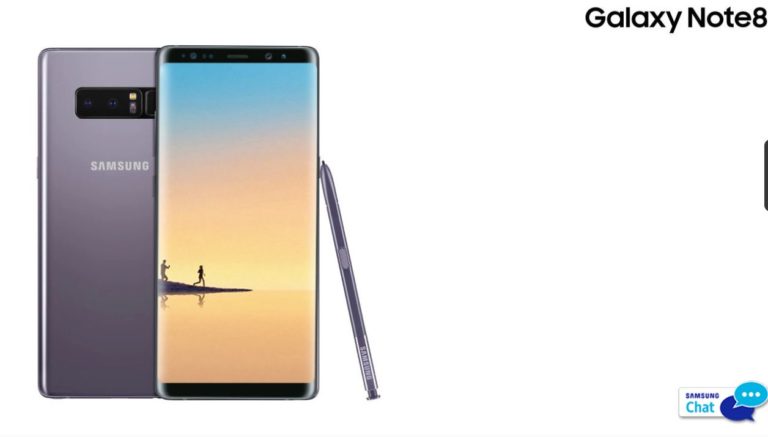
Whenever we think of the Samsung Galaxy Note series, the S Pen automatically pops up in our heads. The Note phablets and their S Pens are literally inseparable. And the S Pen has surely come a long way. What was earlier a plastic stylus that enabled users to perform certain functions; the latest S Pen has been upgraded by Samsung to come equipped with Bluetooth technology. And Samsung Galaxy Note 9’s S Pen can handle a number of functionalities. Besides doing everything that you could with the previous S Pen, here are the functions Samsung Galaxy Note 9’s S Pen can take care of:
In This Article
Launch the camera
You can be standing away from your Samsung Galaxy Note 9 and still launch the camera app of the smartphone. But you must have the S Pen in your hand to do this. Just hold on the Bluetooth button on the S Pen and Galaxy Note 9’s camera app will get launched.Click selfies
At the launch of the Samsung Galaxy Note 9, the company demonstrated various things that one can do with the S Pen. And a really cool functionality of the upgraded S Pen is that users can click selfies with it. It literally acts like a mini selfie stick that can function remotely. Once you have the camera app open, all you have to do is click on the Bluetooth button to click photos.Switch camera modes
If Samsung has enabled you to click images remotely, it has also made it easier to change camera modes. So suppose the selfie you are clicking looks too dark, you wouldn’t have to get up to change the camera mode to get that perfect shot. Just double tap on the Bluetooth button and the mode in the camera app will be changed. Isn’t that a cakewalk?Control apps like YouTube
Although we haven’t used it yet, we are expecting the experience of watching videos and listing to music on Samsung Galaxy Note 9 to be superb – just like it always is on Note devices. But this time, it won’t just be the excellent display that will make the experience so good. Users will be able to Play or Pause music and videos using the S Pen. This can be particularly useful if the smartphone is connected to a Bluetooth speaker.Give an entire presentation
Another very cool thing to do with Samsung Galaxy Note 9’s S Pen is give presentations. So no need to carry your laptop to every meeting you go to. Just take your Samsung Galaxy Note 9 along with you. Just tapping on the Bluetooth button will take you on the next slide or back to the previous one. You will, however, need to connect your phone to a projector.Integrate it with various apps
The South Korean technology giant is opening the SDK of Galaxy Note 9’s S Pen. This will enable app developers to integrate the functions of the S Pen with their apps. Although Samsung hasn’t spoken about it, this will completely change the way we use various apps. We can already think of endless possibilities of integrations of S Pen’s functionalities with various apps of all genres.Pop it back in the phone to recharge
Needless to say, if you buy a Samsung Galaxy Note 9, you’ll end up using the S Pen a lot. And even if goes out of charge, you just need to pop it back in the smartphone and keep it there for 40 seconds. Post that, it will again work for 30 minutes on standby or for around 200 clicks. [td_smart_list_end]Samsung Galaxy Note 9 launched in India: Price, specifications and more
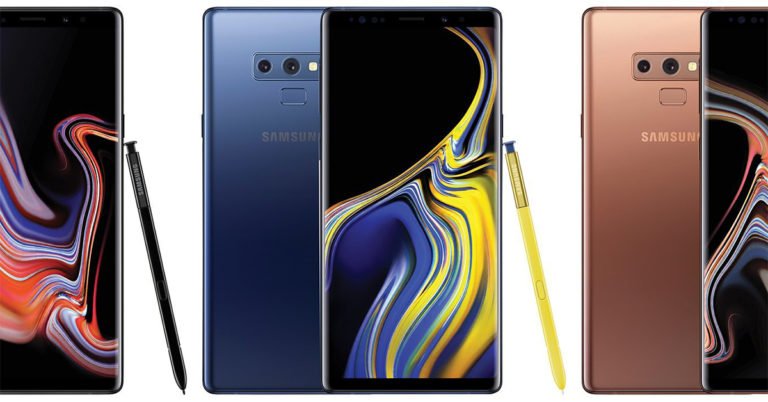
If you have been counting days to get your hands on Samsung’s flagship Galaxy Note 9, your wait is finally over. The phone is getting launched in India two days prior to its global availability – which will begin on August 24. The key highlights of the smartphone include a bigger display and the upgraded S Pen that comes with Bluetooth support. The smartphone is also the first from Samsung to come with a 4,000mAh battery.
Specifications
Samsung Galaxy Note 9 features a 6.4-inch Super AMOLED Infinity display with Quad HD+ resolution. The screen of the smartphone has an aspect ratio of 18.5:9. While in a number of global markets, Samsung Galaxy Note 9 will be powered by Qualcomm Snapdragon 845 SoC, in India, it will be powered by Exynos 9810 processor. There are two storage variants of the device — 6GB RAM/128GB storage and 8GB RAM/512GB of storage. It can also hold a microSD of up to 512GB in case users want more storage.
Samsung Galaxy Note 9 houses a 4,000mAh battery and sports a dual rear camera setup with a 12MP wide angle autofocus sensor and a 12MP telephoto autofocus sensor. Both the sensors support optical image stabilization. There is also an 8MP autofocus sensor on the front panel that can be used for taking selfies and making video calls on this mobile. The Android 8.1 Oreo based smartphone sports an upgraded S Pen that supports Bluetooth Low Energy module. The new S Pen can be used as a remote control for presentations and can manage various apps like YouTube. It can also be used to switch between primary and secondary cameras and for clicking selfies. Furthermore, the S Pen starts getting charged automatically just by placing it inside the smartphone. It is claimed that with just 40 seconds of charging, S Pen can function for 30 minutes.
Samsung Galaxy Note 9 comes with Dex. With Dex on-board, users can get a desktop-like experience from their phone.
The smartphone is IP68-rated waterproof and comes with wireless charging. Galaxy Note 9 features AKG Harman speakers and support iris, face and fingerprint sensors. For connectivity options, there is dual-band Wi-Fi, Bluetooth v5.0, USB Type-C, a 3.5mm headphone jack, WiFi, Ant+, NFC, MST, and Gigabit LTE.
Price and availability
The 6GB RAM/128GB inbuilt storage version costs Rs 67,900 and the 8GB RAM/512GB variant is priced at Rs 84,900. The pre-booking of the device started on August 10, but now it has been closed. The smartphone will be available at Samsung Mobile Store, Amazon India website, Flipkart and Airtel online store. It will also be available on Samsung Shop and various offline retail stores.
For the latest gadget and tech news, and gadget reviews, follow us on Twitter, Facebook, Instagram and YouTube
The Android 8.1 Oreo based smartphone sports an upgraded S Pen that supports Bluetooth Low Energy module. The new S Pen can be used as a remote control for presentations and can manage various apps like YouTube. It can also be used to switch between primary and secondary cameras and for clicking selfies. Furthermore, the S Pen starts getting charged automatically just by placing it inside the smartphone. It is claimed that with just 40 seconds of charging, S Pen can function for 30 minutes.
Samsung Galaxy Note 9 comes with Dex. With Dex on-board, users can get a desktop-like experience from their phone.
The smartphone is IP68-rated waterproof and comes with wireless charging. Galaxy Note 9 features AKG Harman speakers and support iris, face and fingerprint sensors. For connectivity options, there is dual-band Wi-Fi, Bluetooth v5.0, USB Type-C, a 3.5mm headphone jack, WiFi, Ant+, NFC, MST, and Gigabit LTE.
Price and availability
The 6GB RAM/128GB inbuilt storage version costs Rs 67,900 and the 8GB RAM/512GB variant is priced at Rs 84,900. The pre-booking of the device started on August 10, but now it has been closed. The smartphone will be available at Samsung Mobile Store, Amazon India website, Flipkart and Airtel online store. It will also be available on Samsung Shop and various offline retail stores.
For the latest gadget and tech news, and gadget reviews, follow us on Twitter, Facebook, Instagram and YouTube
 The Android 8.1 Oreo based smartphone sports an upgraded S Pen that supports Bluetooth Low Energy module. The new S Pen can be used as a remote control for presentations and can manage various apps like YouTube. It can also be used to switch between primary and secondary cameras and for clicking selfies. Furthermore, the S Pen starts getting charged automatically just by placing it inside the smartphone. It is claimed that with just 40 seconds of charging, S Pen can function for 30 minutes.
Samsung Galaxy Note 9 comes with Dex. With Dex on-board, users can get a desktop-like experience from their phone.
The smartphone is IP68-rated waterproof and comes with wireless charging. Galaxy Note 9 features AKG Harman speakers and support iris, face and fingerprint sensors. For connectivity options, there is dual-band Wi-Fi, Bluetooth v5.0, USB Type-C, a 3.5mm headphone jack, WiFi, Ant+, NFC, MST, and Gigabit LTE.
Price and availability
The 6GB RAM/128GB inbuilt storage version costs Rs 67,900 and the 8GB RAM/512GB variant is priced at Rs 84,900. The pre-booking of the device started on August 10, but now it has been closed. The smartphone will be available at Samsung Mobile Store, Amazon India website, Flipkart and Airtel online store. It will also be available on Samsung Shop and various offline retail stores.
For the latest gadget and tech news, and gadget reviews, follow us on Twitter, Facebook, Instagram and YouTube
The Android 8.1 Oreo based smartphone sports an upgraded S Pen that supports Bluetooth Low Energy module. The new S Pen can be used as a remote control for presentations and can manage various apps like YouTube. It can also be used to switch between primary and secondary cameras and for clicking selfies. Furthermore, the S Pen starts getting charged automatically just by placing it inside the smartphone. It is claimed that with just 40 seconds of charging, S Pen can function for 30 minutes.
Samsung Galaxy Note 9 comes with Dex. With Dex on-board, users can get a desktop-like experience from their phone.
The smartphone is IP68-rated waterproof and comes with wireless charging. Galaxy Note 9 features AKG Harman speakers and support iris, face and fingerprint sensors. For connectivity options, there is dual-band Wi-Fi, Bluetooth v5.0, USB Type-C, a 3.5mm headphone jack, WiFi, Ant+, NFC, MST, and Gigabit LTE.
Price and availability
The 6GB RAM/128GB inbuilt storage version costs Rs 67,900 and the 8GB RAM/512GB variant is priced at Rs 84,900. The pre-booking of the device started on August 10, but now it has been closed. The smartphone will be available at Samsung Mobile Store, Amazon India website, Flipkart and Airtel online store. It will also be available on Samsung Shop and various offline retail stores.
For the latest gadget and tech news, and gadget reviews, follow us on Twitter, Facebook, Instagram and YouTube Nokia 6.1 Plus launched in India: Price, specifications and more
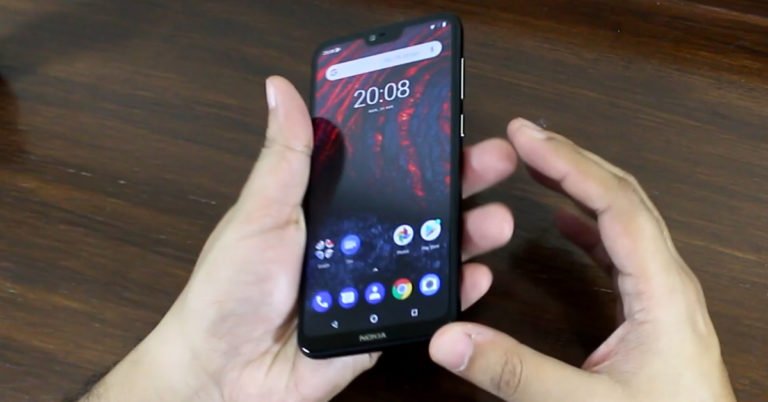
Almost every smartphone company this year rolled out a device that sports a notch on its display. HMD Global – that manufactures Nokia smartphones – couldn’t have lagged behind. So it came out with Nokia X6 – its own smartphone with a notch – in China in May this year. Today, HMD Global’s Nokia 6.1 Plus – the global version of Nokia X6 — has been launched in India. Till now, the only other market where Nokia 6.1 Plus has been launched is Hong Kong.
Among the key features of Nokia 6.1 Plus is that it is an Android One device. For those who don’t know, smartphones under Google’s Android One programme provide an optimized stock Android experience to the user and receive quick updates from the company.
Apart from this, all other specifications of the smartphone are the same as Nokia X6.
Specifications
The Android 8.1 Oreo based smartphone can support dual SIM cards and sports a 5.8-inch full-HD+ display that comes with an aspect ratio of 19:9. The screen of the Nokia 6.1 Plus is protected by 2.5D Gorilla Glass 3. Powered by Qualcomm Snapdragon 636 processor, the smartphone comes with 4GB of RAM and packs 64GB of internal storage. It can hold a microSD card of up to 400GB to provide more storage to the user.
Nokia 6.1 Plus houses a 3060mAh battery that supports Quick Charge 3.0 technology. For imaging duties, the device supports a dual rear camera setup with 16MP primary sensor and a 5MP monochrome sensor. It also has a 16MP front facing camera for selfies and video calls.
The smartphone’s camera app is also touted to come with AI features including depth of field, portrait lighting effects, optimized colour contrast, face recognition and HDR support. The Bothie feature that we saw in Nokia 8 and Nokia 8 Sirocco is also present. For those unaware, with Bothie feature, one can click a picture from the rear camera and selfie camera of the smartphone simultaneously.
The connectivity options of the smartphone include 4G VoLTE, Wi-Fi, Bluetooth 5.0, GPS, USB type C port and a 3.5mm jack
Price and availability
Priced at Rs 15999, Nokia 6.1 Plus competes directly with the likes of Xiaomi Redmi Note 5 Pro, Huawei P20 Lite and Vivo V9 Youth. It will be available exclusively on Flipkart and Nokia’s web store. Few Airtel offers are also there on the phone available on the website.
For the latest gadget and tech news, and gadget reviews, follow us on Twitter, Facebook, Instagram and YouTube.
ASUS Zenfone 5Z review: Powerful performance at an affordable price
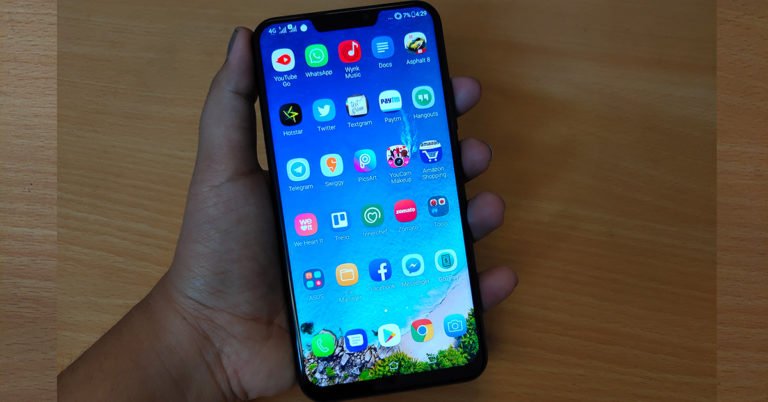
OnePlus 6 isn’t the only budget flagship smartphone that is being spoken about this year. ASUS Zenfone 5Z – which comes at a lower price and offers more features has taken its fair share of limelight too. The smartphone is powered by Qualcomm Snapdragon 845 processor, comes with dual rear cameras and has a premium design with a glass body. But is it too good to be true, or is it as good as it sounds to be? Read the rest of our review to find out.
Design and Blueprint
We have always liked smartphones that come with a glass body. And Asus Zenfone 5Z is no exception. It is available in Meteor Silver and Midnight Blue colour variants and the one that we got for review was dressed in silver. While the front and back panels of the smartphone have 2.5D glass, the frame between them is made of aerospace-grade aluminium. With glass and metal coming together, there’s nothing about ASUS Zenfone 5Z that doesn’t look premium.
With a 6.2-inch display dominating its front panel, the Asus Zenfone 5Z is tall, but it also narrower than other smartphones that we have used recently. This isn’t a downside at all because using it with one hand was far easier. The screen of the smartphone comes with 19:9 aspect ratio and has a notch at the top of the display. The notch houses the selfie camera, the earpiece and sensors. On flipping over, you will see a dual rear camera setup with an LED flash, a fingerprint scanner and ASUS branding.
The edges of the smartphone house the power and volume rocker buttons. A USB Type C port, a speaker grille, a 3.5mm jack, and a SIM tray are also there.
The screen that is protected by Corning Gorilla Glass 3. The display showcased bright and vivid colours that were accurate. We were impressed by the viewing angles and were also satisfied with sunlight readability – something we have always considered to be a big plus in any smartphone.
The smartphone comes with the ability to adjust the screen according to the current ambient lighting. However, there is an option of manually adjusting it too. The phone also has a smart screen feature that keeps the display on when you look at it. Another interesting feature is glove mode. This can be used to increase the sensitivity of the display in case you are using it with gloves on.
To sum it up, we would say that we were impressed with both design and display of Asus Zenfone 5Z. The smartphone looks premium, is apt for one handed usage and comes with a display that shows accurate colours and has good viewing angles. However, the device isn’t dust proof or waterproof, so one must be careful while using it.
Performance, cameras and other features
Asus ZenFone 5Z is powered by Qualcomm Snapdragon 845 processor and is available in three storage variants — 6GB RAM/64GB storage, 6GB RAM/128GB storage and 8GB RAM/256GB storage. Also, the Asus ZenFone 5Z can accommodate a microSD card of up to 1TB. The unit that we got for review was 6GB RAM/64GB storage one.
The smartphone runs Android Oreo skinned with ZenUI and houses a 3,300mAh battery that supports quick charging. It is notable, however, that the phone lacks support for wireless charging.
With Snapdragon 845 on boards, we obviously did not feel any lag while we performed day to day tasks on the smartphone. Launching various apps, switching between them or even leaving a number of apps unused the entire day did not make our device stutter even once.
As we just mentioned, the smartphone runs Android Oreo skinned with ZenUI. This adds a number of tweaks to the operating system powering the Asus Zenfone 5Z. The company has touted a number of AI driven features with ASUS Zenfone 5Z. For instance, the smartphone adjusts the charging speed based on established patterns. This feature is said to be better for battery health. Besides this, there is also an option of Scheduled Charging that uses time that is manually set by the user.
There is also a BeautyLive mode that we have earlier seen in Asus Beauty Live. As the name suggests, the feature adds beautification while you are streaming a live video.
There is also ZeniMoji – which is ASUS’ rival to Animoji, and ZenUI Safeguard – which enables users to send an SOS message and location to emergency numbers or certain contacts. They can do this just by pressing the power button thrice.
The mobile also supports a number of gestures including launching apps by drawing certain alphabets on the screen when it is off, muting or receiving an incoming call by flipping the phone over or by placing it on your ear. The smartphone also supports face unlock – which during our time with the smartphone – worked quickly and effectively.
The smartphone did disappoint us a bit when we used it for gaming. We expected it to handle even games as heavy as Asphalt 8 with perfect ease – given the processor it uses. While there was no problem in launching most games, the smartphone started heating up when we played them for some time. So even though the game ran smoothly on the device, we had to close it down.
In fact, we faced a similar problem when we used navigation on the device for a prolonged time. At the given price, this was certainly not acceptable.
There is another performance area that we found only satisfactory – the battery life of the smartphone. With usage that involved social media, watching YouTube videos, listening to music and navigation, we needed to charge our smartphone for the second time by 5 or 6pm.
While this is not bad, we have seen other phones in the same price range do much better than this. Having said that, there is one upside too. The device offers a number of battery modes to choose from including Normal, Power Saving, Super Saving, Performance and a Customised Battery Saver mode. With Customised Battery Saver mode, you can choose how the smartphone uses its battery life. Another plus is that the smartphone doesn’t take too long to get charged completely. In a little over an hour, ASUS Zenfone 5Z’s battery is completely charged.
The call quality of the device is as good as it can be. We didn’t face any issue with it at all regardless of the place where we received phone calls.
Coming to the imaging duties of the smartphone, ASUS Zenfone 5Z sports a dual rear camera setup with a 12MP Sony IMX363 sensor with f/1.8 aperture, auto focus and phase detection and an 8MP sensor that is wide angle ready and supports Bokeh effect. There is also an 8MP selfie camera. The camera app of the smartphone supports Pro, Super Resolution, Beauty, Slow Motion, GIF Animation and Time Lapse modes. It also lets users switch between the two cameras easily. The app also supports AI Scene detection and AI Photo Learning. While AI Scene detection identifies objects and scenes while taking pictures, AI Photo Learning suggests edits for photos once they are taken.
The photos taken by the dual rear cameras were really good. They had enough details, the colours were accurate and bright, and all turned out to be sharp and clear. The performance remained consistent even in lowly lit areas. However, we can’t say the same thing about the selfie camera of the smartphone. Even in areas that were well-lit, we noticed a lot of noise in the pictures. But we must add that the ones taken outdoors were better than the ones taken indoors. The ones taken in dimly lit areas lacked clarity. It always took a couple of shots to get one that can actually be uploaded on social media. At the given price, we have seen other smartphones do exceptionally well in this particular category.
We ran some benchmark tests on the device. While it scored 2407 and 8924 in single and multi-core scores of Geekbench 4, in Antutu its score was 2,47,560.
Verdict
At a price of Rs 29,999 the smartphone is a decent buy. It has its own share of pros and cons. While the design and display are amazing and the performance is superb, the heating up of the smartphone was not acceptable. We wouldn’t count battery life as a downside because it can be dealt with thanks to the customization options, but the selfie camera could certainly be better. Lack of wireless charging, and not being water or dust proof were disappointing too.
But then, these are not exactly deal breakers. If you are not too much into selfies and gaming, the device is a perfect buy for you at the given price.
Pros
Premium design, Vibrant display, Smooth performance, AI integration
Cons
Heating issue, average selfie camera
For the latest gadget and tech news, and gadget reviews, follow us on Twitter, Facebook, Instagram and YouTube
 With a 6.2-inch display dominating its front panel, the Asus Zenfone 5Z is tall, but it also narrower than other smartphones that we have used recently. This isn’t a downside at all because using it with one hand was far easier. The screen of the smartphone comes with 19:9 aspect ratio and has a notch at the top of the display. The notch houses the selfie camera, the earpiece and sensors. On flipping over, you will see a dual rear camera setup with an LED flash, a fingerprint scanner and ASUS branding.
The edges of the smartphone house the power and volume rocker buttons. A USB Type C port, a speaker grille, a 3.5mm jack, and a SIM tray are also there.
The screen that is protected by Corning Gorilla Glass 3. The display showcased bright and vivid colours that were accurate. We were impressed by the viewing angles and were also satisfied with sunlight readability – something we have always considered to be a big plus in any smartphone.
The smartphone comes with the ability to adjust the screen according to the current ambient lighting. However, there is an option of manually adjusting it too. The phone also has a smart screen feature that keeps the display on when you look at it. Another interesting feature is glove mode. This can be used to increase the sensitivity of the display in case you are using it with gloves on.
With a 6.2-inch display dominating its front panel, the Asus Zenfone 5Z is tall, but it also narrower than other smartphones that we have used recently. This isn’t a downside at all because using it with one hand was far easier. The screen of the smartphone comes with 19:9 aspect ratio and has a notch at the top of the display. The notch houses the selfie camera, the earpiece and sensors. On flipping over, you will see a dual rear camera setup with an LED flash, a fingerprint scanner and ASUS branding.
The edges of the smartphone house the power and volume rocker buttons. A USB Type C port, a speaker grille, a 3.5mm jack, and a SIM tray are also there.
The screen that is protected by Corning Gorilla Glass 3. The display showcased bright and vivid colours that were accurate. We were impressed by the viewing angles and were also satisfied with sunlight readability – something we have always considered to be a big plus in any smartphone.
The smartphone comes with the ability to adjust the screen according to the current ambient lighting. However, there is an option of manually adjusting it too. The phone also has a smart screen feature that keeps the display on when you look at it. Another interesting feature is glove mode. This can be used to increase the sensitivity of the display in case you are using it with gloves on.
 To sum it up, we would say that we were impressed with both design and display of Asus Zenfone 5Z. The smartphone looks premium, is apt for one handed usage and comes with a display that shows accurate colours and has good viewing angles. However, the device isn’t dust proof or waterproof, so one must be careful while using it.
Performance, cameras and other features
Asus ZenFone 5Z is powered by Qualcomm Snapdragon 845 processor and is available in three storage variants — 6GB RAM/64GB storage, 6GB RAM/128GB storage and 8GB RAM/256GB storage. Also, the Asus ZenFone 5Z can accommodate a microSD card of up to 1TB. The unit that we got for review was 6GB RAM/64GB storage one.
The smartphone runs Android Oreo skinned with ZenUI and houses a 3,300mAh battery that supports quick charging. It is notable, however, that the phone lacks support for wireless charging.
With Snapdragon 845 on boards, we obviously did not feel any lag while we performed day to day tasks on the smartphone. Launching various apps, switching between them or even leaving a number of apps unused the entire day did not make our device stutter even once.
As we just mentioned, the smartphone runs Android Oreo skinned with ZenUI. This adds a number of tweaks to the operating system powering the Asus Zenfone 5Z. The company has touted a number of AI driven features with ASUS Zenfone 5Z. For instance, the smartphone adjusts the charging speed based on established patterns. This feature is said to be better for battery health. Besides this, there is also an option of Scheduled Charging that uses time that is manually set by the user.
There is also a BeautyLive mode that we have earlier seen in Asus Beauty Live. As the name suggests, the feature adds beautification while you are streaming a live video.
There is also ZeniMoji – which is ASUS’ rival to Animoji, and ZenUI Safeguard – which enables users to send an SOS message and location to emergency numbers or certain contacts. They can do this just by pressing the power button thrice.
The mobile also supports a number of gestures including launching apps by drawing certain alphabets on the screen when it is off, muting or receiving an incoming call by flipping the phone over or by placing it on your ear. The smartphone also supports face unlock – which during our time with the smartphone – worked quickly and effectively.
The smartphone did disappoint us a bit when we used it for gaming. We expected it to handle even games as heavy as Asphalt 8 with perfect ease – given the processor it uses. While there was no problem in launching most games, the smartphone started heating up when we played them for some time. So even though the game ran smoothly on the device, we had to close it down.
In fact, we faced a similar problem when we used navigation on the device for a prolonged time. At the given price, this was certainly not acceptable.
There is another performance area that we found only satisfactory – the battery life of the smartphone. With usage that involved social media, watching YouTube videos, listening to music and navigation, we needed to charge our smartphone for the second time by 5 or 6pm.
While this is not bad, we have seen other phones in the same price range do much better than this. Having said that, there is one upside too. The device offers a number of battery modes to choose from including Normal, Power Saving, Super Saving, Performance and a Customised Battery Saver mode. With Customised Battery Saver mode, you can choose how the smartphone uses its battery life. Another plus is that the smartphone doesn’t take too long to get charged completely. In a little over an hour, ASUS Zenfone 5Z’s battery is completely charged.
The call quality of the device is as good as it can be. We didn’t face any issue with it at all regardless of the place where we received phone calls.
Coming to the imaging duties of the smartphone, ASUS Zenfone 5Z sports a dual rear camera setup with a 12MP Sony IMX363 sensor with f/1.8 aperture, auto focus and phase detection and an 8MP sensor that is wide angle ready and supports Bokeh effect. There is also an 8MP selfie camera. The camera app of the smartphone supports Pro, Super Resolution, Beauty, Slow Motion, GIF Animation and Time Lapse modes. It also lets users switch between the two cameras easily. The app also supports AI Scene detection and AI Photo Learning. While AI Scene detection identifies objects and scenes while taking pictures, AI Photo Learning suggests edits for photos once they are taken.
To sum it up, we would say that we were impressed with both design and display of Asus Zenfone 5Z. The smartphone looks premium, is apt for one handed usage and comes with a display that shows accurate colours and has good viewing angles. However, the device isn’t dust proof or waterproof, so one must be careful while using it.
Performance, cameras and other features
Asus ZenFone 5Z is powered by Qualcomm Snapdragon 845 processor and is available in three storage variants — 6GB RAM/64GB storage, 6GB RAM/128GB storage and 8GB RAM/256GB storage. Also, the Asus ZenFone 5Z can accommodate a microSD card of up to 1TB. The unit that we got for review was 6GB RAM/64GB storage one.
The smartphone runs Android Oreo skinned with ZenUI and houses a 3,300mAh battery that supports quick charging. It is notable, however, that the phone lacks support for wireless charging.
With Snapdragon 845 on boards, we obviously did not feel any lag while we performed day to day tasks on the smartphone. Launching various apps, switching between them or even leaving a number of apps unused the entire day did not make our device stutter even once.
As we just mentioned, the smartphone runs Android Oreo skinned with ZenUI. This adds a number of tweaks to the operating system powering the Asus Zenfone 5Z. The company has touted a number of AI driven features with ASUS Zenfone 5Z. For instance, the smartphone adjusts the charging speed based on established patterns. This feature is said to be better for battery health. Besides this, there is also an option of Scheduled Charging that uses time that is manually set by the user.
There is also a BeautyLive mode that we have earlier seen in Asus Beauty Live. As the name suggests, the feature adds beautification while you are streaming a live video.
There is also ZeniMoji – which is ASUS’ rival to Animoji, and ZenUI Safeguard – which enables users to send an SOS message and location to emergency numbers or certain contacts. They can do this just by pressing the power button thrice.
The mobile also supports a number of gestures including launching apps by drawing certain alphabets on the screen when it is off, muting or receiving an incoming call by flipping the phone over or by placing it on your ear. The smartphone also supports face unlock – which during our time with the smartphone – worked quickly and effectively.
The smartphone did disappoint us a bit when we used it for gaming. We expected it to handle even games as heavy as Asphalt 8 with perfect ease – given the processor it uses. While there was no problem in launching most games, the smartphone started heating up when we played them for some time. So even though the game ran smoothly on the device, we had to close it down.
In fact, we faced a similar problem when we used navigation on the device for a prolonged time. At the given price, this was certainly not acceptable.
There is another performance area that we found only satisfactory – the battery life of the smartphone. With usage that involved social media, watching YouTube videos, listening to music and navigation, we needed to charge our smartphone for the second time by 5 or 6pm.
While this is not bad, we have seen other phones in the same price range do much better than this. Having said that, there is one upside too. The device offers a number of battery modes to choose from including Normal, Power Saving, Super Saving, Performance and a Customised Battery Saver mode. With Customised Battery Saver mode, you can choose how the smartphone uses its battery life. Another plus is that the smartphone doesn’t take too long to get charged completely. In a little over an hour, ASUS Zenfone 5Z’s battery is completely charged.
The call quality of the device is as good as it can be. We didn’t face any issue with it at all regardless of the place where we received phone calls.
Coming to the imaging duties of the smartphone, ASUS Zenfone 5Z sports a dual rear camera setup with a 12MP Sony IMX363 sensor with f/1.8 aperture, auto focus and phase detection and an 8MP sensor that is wide angle ready and supports Bokeh effect. There is also an 8MP selfie camera. The camera app of the smartphone supports Pro, Super Resolution, Beauty, Slow Motion, GIF Animation and Time Lapse modes. It also lets users switch between the two cameras easily. The app also supports AI Scene detection and AI Photo Learning. While AI Scene detection identifies objects and scenes while taking pictures, AI Photo Learning suggests edits for photos once they are taken.
 The photos taken by the dual rear cameras were really good. They had enough details, the colours were accurate and bright, and all turned out to be sharp and clear. The performance remained consistent even in lowly lit areas. However, we can’t say the same thing about the selfie camera of the smartphone. Even in areas that were well-lit, we noticed a lot of noise in the pictures. But we must add that the ones taken outdoors were better than the ones taken indoors. The ones taken in dimly lit areas lacked clarity. It always took a couple of shots to get one that can actually be uploaded on social media. At the given price, we have seen other smartphones do exceptionally well in this particular category.
 We ran some benchmark tests on the device. While it scored 2407 and 8924 in single and multi-core scores of Geekbench 4, in Antutu its score was 2,47,560.
Verdict
At a price of Rs 29,999 the smartphone is a decent buy. It has its own share of pros and cons. While the design and display are amazing and the performance is superb, the heating up of the smartphone was not acceptable. We wouldn’t count battery life as a downside because it can be dealt with thanks to the customization options, but the selfie camera could certainly be better. Lack of wireless charging, and not being water or dust proof were disappointing too.
But then, these are not exactly deal breakers. If you are not too much into selfies and gaming, the device is a perfect buy for you at the given price.
Pros
Premium design, Vibrant display, Smooth performance, AI integration
Cons
Heating issue, average selfie camera
For the latest gadget and tech news, and gadget reviews, follow us on Twitter, Facebook, Instagram and YouTube
We ran some benchmark tests on the device. While it scored 2407 and 8924 in single and multi-core scores of Geekbench 4, in Antutu its score was 2,47,560.
Verdict
At a price of Rs 29,999 the smartphone is a decent buy. It has its own share of pros and cons. While the design and display are amazing and the performance is superb, the heating up of the smartphone was not acceptable. We wouldn’t count battery life as a downside because it can be dealt with thanks to the customization options, but the selfie camera could certainly be better. Lack of wireless charging, and not being water or dust proof were disappointing too.
But then, these are not exactly deal breakers. If you are not too much into selfies and gaming, the device is a perfect buy for you at the given price.
Pros
Premium design, Vibrant display, Smooth performance, AI integration
Cons
Heating issue, average selfie camera
For the latest gadget and tech news, and gadget reviews, follow us on Twitter, Facebook, Instagram and YouTube [Video] Top Upcoming Smartphones Of 2018
![[Video] Top Upcoming Smartphones Of 2018](https://www.gadgetbridge.com/wp-content/uploads/2018/08/maxresdefault-3-768x432.jpg "[Video] Top Upcoming Smartphones Of 2018")
Top Upcoming Smartphones Of 2018
1) Samsung Note 9
2) Apple iPhone 2018
3) Google Pixel 3
4) Nokia Edge
5) Xiaomi Redmi Note 6
6) OnePlus 6T
For the latest gadget and tech news, and gadget reviews, follow us on Twitter, Facebook, Instagram and YouTube