

 Although the concept behind the trainers is really futuristic and reminds us of shoes from the movie Back to the Future Part 2, we will have to wait to see if these shoes are actually useful or just a marketing gimmick. We also hope to see the company roll out the technology to other shoes in its range as a lot of runners may find self-lacing shoes extremely useful.
For the latest gadget and tech news, and gadget reviews, follow us on Twitter, Facebook and Instagram. For newest tech & gadget videos subscribe to our YouTube Channel.
Although the concept behind the trainers is really futuristic and reminds us of shoes from the movie Back to the Future Part 2, we will have to wait to see if these shoes are actually useful or just a marketing gimmick. We also hope to see the company roll out the technology to other shoes in its range as a lot of runners may find self-lacing shoes extremely useful.
For the latest gadget and tech news, and gadget reviews, follow us on Twitter, Facebook and Instagram. For newest tech & gadget videos subscribe to our YouTube Channel. Nike just launched the second edition of shoes that can lace themselves on their own
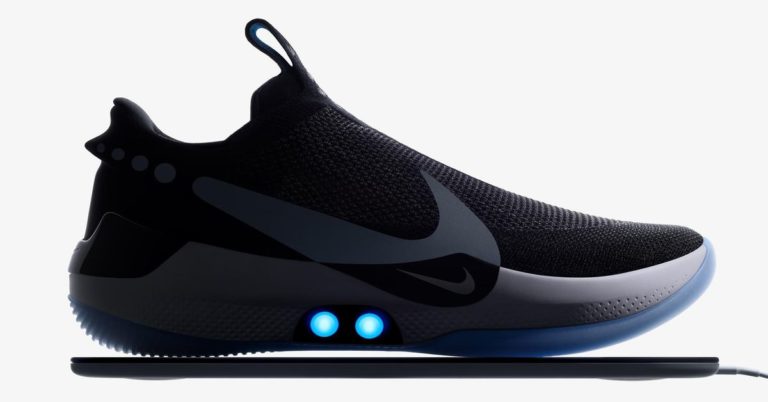
Nike has launched a pair of self-lacing trainers that can fit themselves to the shape of the wearer’s feet. That’s not all, the wearer will also have the ability to control his shoes with the help of a smartphone. Called Nike Adapt BB, the new self-lacing trainers cost $350 and are set to go on sale in February. The major highlight of the newly launched smart wearables is that they don’t need a physical button to activate the laces. It is worth noticing that these trainers are the successor of a HyperAdapt 1.0, that was launched by Nike in 2016.
Speaking about the futuristic self-lacing trainers by Nike, Eric Avar, Nike’s creative director of innovation said, “We picked basketball as the first sport for Nike Adapt intentionally because of the demands that athletes put on their shoes. During a normal basketball game, the athlete’s foot changes and the ability to quickly change your fit by loosening your shoe to increase blood flow and then tighten again for performance is a key element that we believe will improve the athlete’s experience.”
With Nike Adapt BB, the users will be able to customise the fit of the shoes for themselves and control them accordingly via a smartphone app. The app will be able to save the fit preferences of the user. So, if the wearer uses the trainers for a basketball game, he will have the option of loosening them during breaks and tightening them again when he begins to play. The app will also save some additional data, and users will have the option of sharing it with Nike.
The company has said that as soon as the wearer steps into the shoes, a custom motor and gear in the trainers will be able to sense it and the shoe will adjust itself accordingly.
 Although the concept behind the trainers is really futuristic and reminds us of shoes from the movie Back to the Future Part 2, we will have to wait to see if these shoes are actually useful or just a marketing gimmick. We also hope to see the company roll out the technology to other shoes in its range as a lot of runners may find self-lacing shoes extremely useful.
For the latest gadget and tech news, and gadget reviews, follow us on Twitter, Facebook and Instagram. For newest tech & gadget videos subscribe to our YouTube Channel.
Although the concept behind the trainers is really futuristic and reminds us of shoes from the movie Back to the Future Part 2, we will have to wait to see if these shoes are actually useful or just a marketing gimmick. We also hope to see the company roll out the technology to other shoes in its range as a lot of runners may find self-lacing shoes extremely useful.
For the latest gadget and tech news, and gadget reviews, follow us on Twitter, Facebook and Instagram. For newest tech & gadget videos subscribe to our YouTube Channel.
Although the concept behind the trainers is really futuristic and reminds us of shoes from the movie Back to the Future Part 2, we will have to wait to see if these shoes are actually useful or just a marketing gimmick. We also hope to see the company roll out the technology to other shoes in its range as a lot of runners may find self-lacing shoes extremely useful.
For the latest gadget and tech news, and gadget reviews, follow us on Twitter, Facebook and Instagram. For newest tech & gadget videos subscribe to our YouTube Channel. Watch: Xiaomi Redmi Note 7 teardown video showcasing all its internals
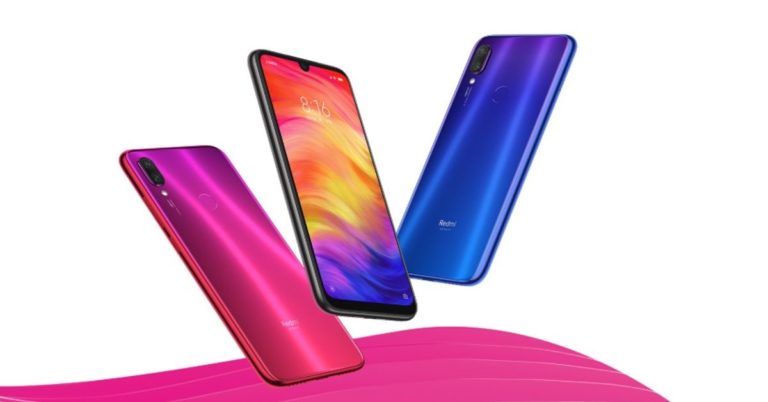
Chinese smartphone brand Xiaomi last week launched the much awaited Redmi Note 7 smartphone at an event that was held in China. What made the launch even more prominent was the fact that Redmi Note 7 is the first smartphone to be launched under the independent Redmi sub-brand. The smartphone has primarily garnered appreciation for packing powerful specifications at an affordable price. However, the most notable feature of Redmi Note 7 happens to be its dual rear camera setup that comprises of a 48MP sensor and a 5MP sensor.
Just after the launch of the smartphone, a video that has been shared on Chinese instant messaging platform QQ shows the newly launched Redmi Note 7 being taken apart to showcase its internals. The teardown video begins by showing the removal of Xiaomi Redmi Note 7’s glossy back panel and hybrid nanoSIM/microSD tray. The next thing to be removed is the smartphone’s fingerprint scanner’s ribbon cable. The device’s primary logic board and other important hardware components are revealed after some thin plates are taken off.
According to GSMArena, the teardown video also showcases Redmi Note 7’s USB Type-C port which is there on a secondary logic board. The placement of the port is such that it would make it easier to repair it or replace it in case it stops working. Two more ribbon cables are placed over Redmi Note 7’s 4,000mAh battery and they connect the primary and secondary boards of the smartphone with each other.
https://www.youtube.com/watch?v=telKzIbFbBQ
We should mention that Redmi Note 7’s dual rear camera setup is covered by a single lens cover, which also means that replacing or repairing it would be easy.
Speaking about the specifications of the device, Xiaomi’s Redmi Note 7 smartphone is powered by the Snapdragon 660 processor and comes with 3GB/4GB/6GB of RAM. The smartphone is available in 32GB and 64GB storage variants and runs Android 9.0 Pie skinned with MIUI 10. Redmi Note 7 features a 6.3-inch FullHD+ display that has an aspect ratio of 19.5:9 and comes with a waterdrop shaped notch on top. The key highlight of the smartphone is its 48MP+5MP dual rear cameras. For selfies and video calls, Redmi Note 7 houses a 13MP front-facing snapper.
Video courtesy: Creator Studio, QQ
For the latest gadget and tech news, and gadget reviews, follow us on Twitter, Facebook and Instagram. For newest tech & gadget videos subscribe to our YouTube Channel.
The Huawei P20 Pro and Nova 3 have started getting Android Pie updates with EMUI 9
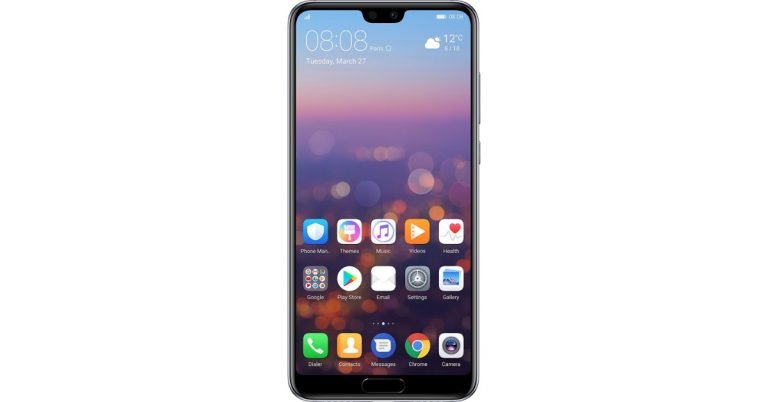
Huawei just announced that it is going to roll out the Android Pie for its Nova 3 and P20 Pro models. The update would be skinned with the company’s EMUI 9. The update is going arrive over-the-air (OTA) firmware. Huawei claims that the EMUI 9.0 update is going to be user-friendly. The users will find it simple, enjoyable and consistent. The EMUI 9.0 update is 12.9 percent faster than its predecessor and has the ability to launch apps at a quicker rate.
The EMUI 9.0 update includes capabilities such as consolidated menus, unified design language, new gesture-based navigation, GPU Turbo 2.0 and Powerful on device AI enhance user experience. What’s interesting about the phone is that it supports 22 Indian languages. Furthermore, it has a customised Indian calendar, deep integration of apps like Paytm aimed for executing convenient payment.
The EMUI 9.0 will also bring GPU Turbo 2.0, HiVision visual search, Password Vault, Digital Balance dashboard, navigation gestures, multiple backup options, one-handed controls and improved Huawei Share features. Looking back a few days ago, Huawei Y9(2019) was launched with a price tag of Rs 15,990. The smartphone comes with a 4GB RAM variant which brings 64GB internal storage. The smartphone sports a 6.5-inch FHD+ FullView display with an aspect ratio of 19.5:9.
The Huawei Y9(2019) comes with a 2.2GHz octa-core Kirin 710 processor and packs a 4,000mAh battery. There is a 16MP primary sensor and a 2MP secondary sensor at the back. There are two selfie cameras also on this smartphone (16MP + 2MP). It is noteworthy, that all cameras come with AI enhancements. The smartphone runs on Android Oreo skinned with EMUI 8 and is now getting the Android Pie update. The smartphone comes in two colour options—midnight black and sapphire blue.
Considering that the Nova 3 and the P20 Pro are prominent Huawei phones, the incorporation of the EMUI 9.0 might increase its usership further. The company claims that the EMUI 9.0 has been created to “enable a quality life, where the features of user interface supports consumers in creating better every day experiences and enhance smartphone functions.”
For the latest gadget and tech news, and gadget reviews, follow us on Twitter, Facebook and Instagram. For newest tech & gadget videos subscribe to our YouTube Channel.
Samsung Galaxy Note 8 starts receiving Android Pie based One UI beta update
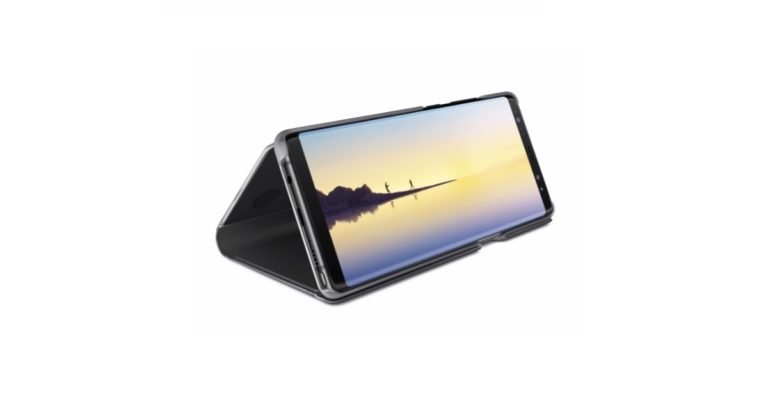
Samsung’s One UI has been in news ever since it got unveiled by the company in November last year. Earlier this month reports surfaced online which claimed that Samsung Galaxy Note 8 One UI beta program could go live soon. We should mention that beta One UI builds for Samsung Galaxy Note 8 smartphone had already been spotted on the company’s servers at the time when these reports emerged. And now, the company has confirmed that Samsung Galaxy Note 8 will be getting the Android Pie beta.
It is worth noticing that this also improves the chances of Galaxy S8 to get the One UI based Android Pie beta. Beta builds from Samsung Galaxy S8 and Galaxy S8+ have also been spotted on the company’s servers. If our guess is right, the smartphone giant will roll out the beta launch to those two smartphones too.
Coming back to Samsung Galaxy Note 8, it is a pleasant surprise for users to know that their smartphone will be getting the Android Pie beta build. When Android Pie beta builds were rolled out to Samsung Galaxy Note 9, users were very happy to get an opportunity to experience the new One UI software. And then, the company went a step ahead and opened up the One UI based Android Pie beta for Samsung Galaxy Note 8 too.
This is the first time that the company is rolling out its beta programs to previous generation smartphones. Prior to this, it has limited beta programs only to its current flagship models.
Samsung has posted a notice on its Samsung Members app about the Galaxy Note 8 One UI beta program which says that the users of the smartphone will get to experience Android Pie based One UI earlier than others.
If you are a Samsung Galaxy Note 8 user, you should know that the registrations for the program have opened. Till now, the update has only started rolling out in India and South Korea, but it is expected to make its way to other markets too. By signing up for the beta program, you will be able to experience One UI before its stable update rolls out to masses.
For the latest gadget and tech news, and gadget reviews, follow us on Twitter, Facebook and Instagram. For newest tech & gadget videos subscribe to our YouTube Channel.
Samsung Galaxy Note 8 receives a price cut of Rs 13,000 in India
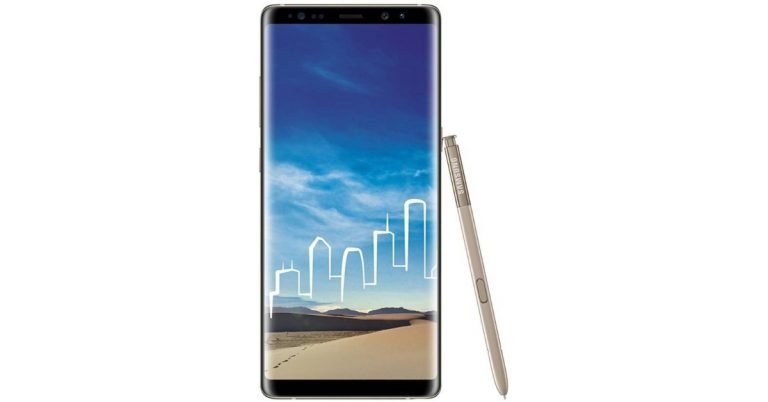
If you have been planning to buy a new smartphone, and only want a high-end device for yourself, then now seems to be a good time. This is because you can get the Samsung Galaxy Note 8 smartphone at a discounted price. It may not be Samsung‘s latest offering in its Note series, but Galaxy Note 8 still continues to be counted as one among the best buys in India. And one has all the reasons to consider Samsung Galaxy Note 8 as a good buy even now.
The smartphone comes with a QHD+ display, is equipped with an S-Pen, and sports a dual rear camera setup. So the latest price cut just makes it an even better deal than what it already was. The South Korean technology giant has just announced a price cut of Rs 13,000 on its Galaxy Note 8 smartphone. We should mention that this is not the first time that Samsung Galaxy Note 8 has received a price slash. The company has announced a price cut on the device back in August 2018 when it announced its Galaxy Note 9 smartphone. Back then, it had received a price cut of Rs 12,000.
With the latest price cut, the 6GB RAM/64GB storage model of the smartphone can be purchased at Rs 42,900. The new pricing of the smartphone has been updated on Samsung’s official website as well as its other online retailers. It is worth noticing that at least on Samsung’s website, the pricing of other RAM/storage variants has not been mentioned. Even if you opt to buy the smartphone via offline stores, you would be able to avail the offer. Furthermore, if you pay for your purchase via PayTM, you would be able to get an additional discount of Rs 1,000.
Although Samsung has mentioned on its website that this is a limited period offer, considering that it has been over a year since the smartphone has been launched, the discount is very likely to be a permanent one.
To recall, Samsung Galaxy Note 8 features a 6.3-inch Super AMOLED Infinity Display and is powered by the Exynos 8895 processor. The device has 12MP+8MP dual rear cameras and an 8MP front-facing snapper that can be used for selfies and video calls. Samsung Galaxy Note 8 houses a 3,300mAh battery and supports fast as well as wireless charging.
For the latest gadget and tech news, and gadget reviews, follow us on Twitter, Facebook and Instagram. For newest tech & gadget videos subscribe to our YouTube Channel.
Honor 10 Lite vs Xiaomi Redmi Note 6 Pro vs Realme U1: Comparison

Huawei’s sub-brand Honor today launched its Honor 10 Lite smartphone in India. Honor 10 Lite is available at a starting price of Rs 13,999 and competes with the likes of Xiaomi Redmi Note 6 Pro and Realme U1 mobiles. Here, we compare all the three devices so that you can pick the right one for yourself based on the specifications that suit your requirements. So here’s the comparison of Honor 10 Lite, Xiaomi Redmi Note 6 Pro and Realme U1 smartphones:
In This Article
Display
Honor 10 Lite: 6.21-inch full-HD+ display Xiaomi Redmi Note 6 Pro: 6.26-inch Full HD+ display Realme U1: 6.3-inch FHD+ Dewdrop LCD displayProcessor
Honor 10 Lite: HiSilicon Kirin 710 processor Xiaomi Redmi Note 6 Pro: Qualcomm Snapdragon 636 14nm processor Realme U1: MediaTek Helio P70 processorPrimary camera
Honor 10 Lite: 13MP+2MP dual rear cameras with AI scene technology Xiaomi Redmi Note 6 Pro: 12MP+5MP dual rear cameras with AI enhancements Realme U1: 13MP+2MP dual rear camerasSelfie camera
Honor 10 Lite: 24MP front-facing snapper Xiaomi Redmi Note 6 Pro: 20MP+2MP dual front cameras Realme U1: 25MP IMX576 sensorRAM and storage
Honor 10 Lite: 4GB/6GB RAM coupled with 64GB of onboard storage Xiaomi Redmi Note 6 Pro: 4GB/6GB RAM/ 64GB storage Realme U1: 3GB RAM/32GB storage, 4GB RAM/64GB storageSupport for microSD card
Honor 10 Lite: Up to 512GB Xiaomi Redmi Note 6 Pro: Up to 256GB Realme U1: Up to 256GBBattery
Honor 10 Lite: 3,400mAh battery Xiaomi Redmi Note 6 Pro: 4,000mAh battery Realme U1: 3,500mAh batteryOperating system
Honor 10 Lite: Android 9.0 Pie skinned with EMUI 9.0 Xiaomi Redmi Note 6 Pro: Android 8.1 Oreo skinned with MIUI 10 Realme U1: Android 8.1 Oreo skinned with Color OS 5.2Price
Honor 10 Lite: 4GB RAM/64GB storage version can be bought at Rs 13,999 and 6GB RAM/64GB storage variant is priced at Rs Rs 17,999. Xiaomi Redmi Note 6 Pro: 4GB RAM/64GB storage model costs Rs 13,999, the 6GB RAM/64GB storage variant can be picked up at Rs 15,999. Realme U1: 3GB RAM/32GB storage variant bears a price tag of Rs 11,999, the 4GB RAM/64GB storage model is priced at Rs 14,999. For the latest gadget and tech news, and gadget reviews, follow us on Twitter, Facebook and Instagram. For newest tech & gadget videos subscribe to our YouTube Channel.Samsung Galaxy A50 will run Android 9 out-of-the-box; to be launched soon
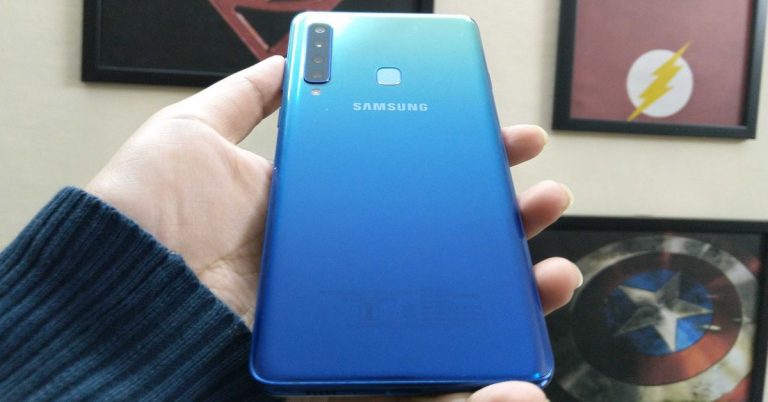
This year, Samsung is going to introduce a new version of Galaxy A5 known as the Galaxy A50. There have been fresh details that have emerged from a new listing. That listing states that the Samsung A50 is going to have WiFi 802.11 a/b/g/a/ac connectivity. We have also got to know that the smartphone will run on Android 9.0 Pie out-of-the-box. One important thing to note is that, the Samsung phone will have two variants, one of which is supposed to come with a single-SIM support, and the other with dual-SIM supports.
In Geekbench, the Samsung Galaxy A50 was showcased with the model number SM-A505FN. The WiFi certification on the other hand shows the number, SM-A520FN/DS. This number is speculated to be for the dual-SIM variant. Just like WiFi certification, the Geekbench listing also shows that the Samsung Galaxy A50 is going to run on Android Pie. Furthermore, it says that the smartphone would be powered by an Octa-core Exynos 7 9610 SoC. The processor includes four cortex A73 cores clocked at 2.3GHz and four Cortex A53 cores clocked at 1.6GHz.
The chipset is aided by Mali-G72 MP3 that will take care of all the visual and gaming activity. The Samsung Galaxy A50 will house a 4,000mAh battery and will have two RAM variants—4GB and 6GB. The former comes with 64GB storage and the latter comes with 128GB storage. The Samsung Galaxy A50 is also slated to have an on-screen fingerprint scanner.
According to a report by Korea-based ET News, besides Samsung Galaxy A50, the Galaxy A90 and Galaxy A70 are also going to have the on-screen fingerprint scanner. Besides this, all the Galaxy-A series smartphones are going to have multiple rear cameras and some of them will also feature Time of Flight (ToF) 3D sensors. With this, we believe the South Korean technology giant plans to grow its market share in the mid-range category of smartphones. Therefore, it intends to provide flagship phones at affordable prices, this can bring them back in the game and gain some edge of the fast running Xiaomi.
For the latest gadget and tech news, and gadget reviews, follow us on Twitter, Facebook and Instagram. For newest tech & gadget videos subscribe to our YouTube Channel.
Shashi Tharoor proposed a bill to regulate online gaming

Online gaming has become extremely popular in India with the introduction of games such as PUBG, especially. And now, Shashi Tharoor, senior Congress Member of Parliament has introduced a private member bill. This bill unveiled in Lok Sabha was introduced for regulatory measures for the online gaming industry. He stressed the necessity of the bill by highlighting high growth of the gaming industry looking a few years back.
While introducing the bill, Tharoor said, “The main purpose of my bill is to preserve the integrity of sports. The bill is primarily divided into two parts for this purpose. One part recognizes the offence of sports fraud and prescribes a special procedure to deal with it. The other part acknowledges the fact that the increasing commercial nature of sports increases financial incentives for vested interests to manipulate sporting events, therefore it provides for the regulation of online sports betting activities.”
According to Shashi Tharoor there is an immediate need for a statutory framework. This statutory framework needs to be supervised by the government in order to ensure that service providers follow licensing conditions and curb any illegal activity, in case they take place. This, according to him will reduce the flow of black money and regulate flow of finances in the industry. A report by All India Gaming Federation (AIGF) says that India has 120 million gamers which includes an increase of 30 percent, retrospecting three years before.
Online gaming in India is reportedly valued at $360 million, and is expected to grow to $1 billion by 2021. On an interesting note, the bill which Shashi Tharoor proposed plans to regulate games which would involve prediction. Also, there would be betting on sporting event results, which will happen with the help of telecommunication devices. It will be interesting to watch how this impacts the gaming consumers.
Roland Landers, the CEO of AIGF said, “There is an urgent need to have government intervention in order to streamline the industry, preserve integrity of sports and eliminate sports fraud. AIGF is committed to dealing with issues pertaining to online gaming industry.”
For the latest gadget and tech news, and gadget reviews, follow us on Twitter, Facebook and Instagram. For newest tech & gadget videos subscribe to our YouTube Channel.
YouTube brings swipe-through-videos feature for iOS devices

YouTube is pushing a new update for its iOS app that will make it simpler for user to browse videos. With the latest update, you can swipe through videos horizontally if you want to switch from one recommended video to the other. If you swipe left, then it will take you to recommended videos and if right, then you will find previously played videos. YouTube has confirmed the change to TechCrunch and said that the update will roll out to iOS users this week. However, as of now, there is no word on when YouTube’s Android app will receive it.
The newly rolled-out feature resembles the swipe gesture feature of Snapchat, Tinder and Instagram stories. The horizontal swipe trend has encompassed many prominent apps and now, it has finally made its way to YouTube. Looking back, the Google-owned video platform has been modified to a great extent and probably the most notable change in the app is its own Stories format. Other major changes in YouTube include the dark mode, automatically playing videos on mobile homepage, auto-play improvements etc.
Coming back to the newly launched feature, according to a report in Popular Science that cites the company, the swipe-through-videos feature is not something that has been decided overnight and the company has been working on it for around two years now.
It is worth mentioning that the new YouTube feature also works when the user is watching videos in full screen mode. Even then, he can swipe left to go to recommended videos and right to go to previously played videos.
Swiping has increasingly become a common trend with all popular apps, primarily because it makes it easy to use the app and increases engagement levels of the users. The swipe-through-videos feature will be accessible to a majority of YouTube users if it gets rolled out to Android smartphones too. This is because 70 percent of YouTube users access the platform via their smartphones. Prior to this, YouTube had also introduced double tap gestures that enabled users to skip forward and backward while watching a video in the smartphone app.
For the latest gadget and tech news, and gadget reviews, follow us on Twitter, Facebook and Instagram. For newest tech & gadget videos subscribe to our YouTube Channel.
Asus to unveil a Zenbook series laptop on January 30 in India
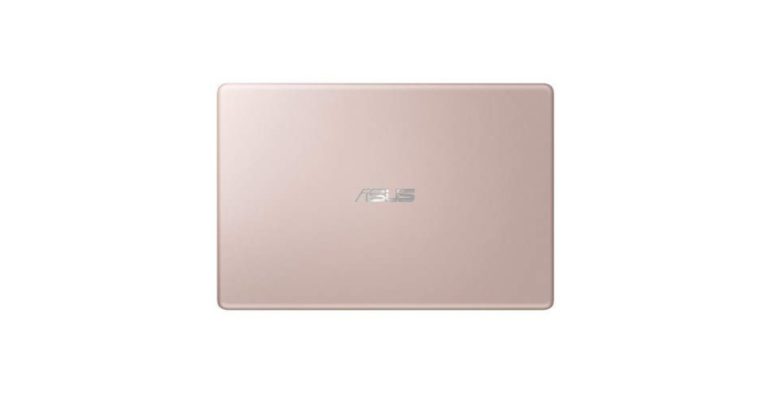
Taiwanese consumer electronics maker Asus has made quite a mark for itself in the Indian smartphone market in 2018. Whether it was its budget smartphones like Zenfone Max Pro M1 and Zenfone Max Pro M2 or its high-end gaming ROG Phone, they all garnered a lot of appreciation from users.
And it seems like Asus is planning to start the year by not focussing on smartphones, but by launching its laptops in the country. The company has sent out a save the date invite to Indian tech press saying that it will be launching the new Zenbook series on January 30. The invite doesn’t say much. It has only asked us to block our date for event that is scheduled to take place in New Delhi.
So that leaves a lot to just speculations. Although there is no word on what the company plans to launch on January 30, we personally are hoping to see Asus Zenbook S13 laptop in India. For those unaware, the laptop was recently showcased at CES 2019 in Las Vegas and is the first ever to come with a reversed notch on the top of its display. Along with the reversed notch, Asus Zenbook S13 also comes with trimmed down bezels to provide users with as much screen space as possible. Speaking of internals, Asus Zenbook S13 laptop is powered by 8th Gen Intel Core i7 and comes with 16GB of RAM and up to 1TB of PCIe SSD storage.
Although we can’t wait to get our hands on the device, some may argue that it is too soon for the launch of the laptop in India, considering that it hasn’t even gone on sale in the United States yet. And that is a fair point too.
 So the only next option that we can think of is Asus Zenbook 13 laptop that the company launched at IFA 2018 in Berlin. Speaking about the laptop, it comes with a new frameless Asus NanoEdge display and is equipped with a NumberPad which, according to the company, a LED-illuminated numeric keypad built into the touchpad of the laptop. Powered by the latest 8th Generation Intel Core i7 quad-core processor, Asus Zenbook 13 comes with Nvidia GeForce GTX 1050 Max-Q graphics.
However, as of now, this too is just a speculation and we will have to wait till January 30 to find out what is it that Asus really has up its sleeve.
For the latest gadget and tech news, and gadget reviews, follow us on Twitter, Facebook and Instagram. For newest tech & gadget videos subscribe to our YouTube Channel.
So the only next option that we can think of is Asus Zenbook 13 laptop that the company launched at IFA 2018 in Berlin. Speaking about the laptop, it comes with a new frameless Asus NanoEdge display and is equipped with a NumberPad which, according to the company, a LED-illuminated numeric keypad built into the touchpad of the laptop. Powered by the latest 8th Generation Intel Core i7 quad-core processor, Asus Zenbook 13 comes with Nvidia GeForce GTX 1050 Max-Q graphics.
However, as of now, this too is just a speculation and we will have to wait till January 30 to find out what is it that Asus really has up its sleeve.
For the latest gadget and tech news, and gadget reviews, follow us on Twitter, Facebook and Instagram. For newest tech & gadget videos subscribe to our YouTube Channel.
 So the only next option that we can think of is Asus Zenbook 13 laptop that the company launched at IFA 2018 in Berlin. Speaking about the laptop, it comes with a new frameless Asus NanoEdge display and is equipped with a NumberPad which, according to the company, a LED-illuminated numeric keypad built into the touchpad of the laptop. Powered by the latest 8th Generation Intel Core i7 quad-core processor, Asus Zenbook 13 comes with Nvidia GeForce GTX 1050 Max-Q graphics.
However, as of now, this too is just a speculation and we will have to wait till January 30 to find out what is it that Asus really has up its sleeve.
For the latest gadget and tech news, and gadget reviews, follow us on Twitter, Facebook and Instagram. For newest tech & gadget videos subscribe to our YouTube Channel.
So the only next option that we can think of is Asus Zenbook 13 laptop that the company launched at IFA 2018 in Berlin. Speaking about the laptop, it comes with a new frameless Asus NanoEdge display and is equipped with a NumberPad which, according to the company, a LED-illuminated numeric keypad built into the touchpad of the laptop. Powered by the latest 8th Generation Intel Core i7 quad-core processor, Asus Zenbook 13 comes with Nvidia GeForce GTX 1050 Max-Q graphics.
However, as of now, this too is just a speculation and we will have to wait till January 30 to find out what is it that Asus really has up its sleeve.
For the latest gadget and tech news, and gadget reviews, follow us on Twitter, Facebook and Instagram. For newest tech & gadget videos subscribe to our YouTube Channel.