Apple today officially announced its Worldwide developer’s conference 2021. The Cupertino-based company confirmed that this year too it is going to host the WWDC21 online-only commencing from June 7. Like last year the company has decided to hold the event online owing to the coronavirus pandemic. Apple’s Worldwide developer’s conference for the year 2021 will be hosted from June 7 till June 11 in an all-online format. The conference will be available to all developers for free via the Apple Developer app and Apple Developer website. Apple has not yet revealed its upcoming lineup of new software but the conference will offer unique insight into the future of iOS, iPadOS, macOS, watchOS, and tvOS. “Building on the record-breaking participation and learnings from last year’s online conference, WWDC21 is an opportunity for developers to learn about the new technologies, tools, and frameworks they rely on to build innovative and platform-differentiating apps and games,” Apple commented.In addition to this like last year, Apple also announced that this year’s Swift Student Challenge, an opportunity for young developers to demonstrate their coding skills by creating a Swift playground, is now accepting submissions. For those who are unaware Swift Playgrounds is a revolutionary app for iPad and Mac that makes learning the Swift programming language interactive and fun. Now through April 18, students can submit their Swift playground to the Swift Student Challenge. Winners will receive exclusive WWDC21 outerwear and a customised pin set. For more information, visit the Swift Student Challenge website.“We love bringing our developers together each year at WWDC to learn about our latest technologies and to connect them with Apple engineers,” said Susan Prescott, Apple’s vice president of Worldwide Developer Relations and Enterprise and Education Marketing. “We are working to make WWDC21 our biggest and best yet, and are excited to offer Apple developers new tools to support them as they create apps that change the way we live, work, and play.”The company says that this year’s conference will include announcements from the keynote and State of the Union stages, online sessions, 1:1 labs offering technical guidance, and new ways for developers to interact with Apple engineers and designers to learn about the latest frameworks and technologies.Additionally, to support the local economy Apple part of its $100 million Racial Equity and Justice Initiative, Apple is also committing $1 million to SJ Aspires, an education and equity initiative launched by the City of San José. SJ Aspires offers a performance-based scholarship program that educates students about their college and career choices, and provides individual mentorship and advising as well as online tools to help reduce the barriers Black and Brown students face in accessing academic opportunities. More information will be shared on this program through the Apple Developer app, on the Apple Developer website, and via email.
For the latest gadget and tech news, and gadget reviews, follow us on Twitter, Facebook and Instagram. For newest tech & gadget videos subscribe to our YouTube Channel. You can also stay up to date using the Gadget Bridge Android App.
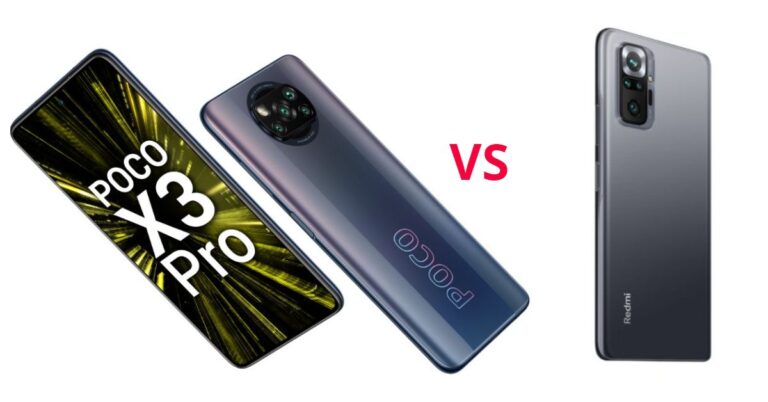
Today Poco launched its highly anticipated Poco X3 Pro smartphone in India. So we have compared Poco X3 Pro to Redmi Note 10 Pro. We have collated each feature as well as pricing to help you decide how Poco is different from the Redmi device or whether Xiaomi trumps Poco.
Display
Poco X3 Pro: 6.67-inch full-HD+ dot display Redmi Note 10 Pro: 6.67-inch full-HD+ Super AMOLED
Poco X3 Pro: A quad rear camera setup that includes a 48-megapixel primary Sony IMX582 sensor with an f/1.79 aperture. Furthermore, there is an 8-megapixel ultra-wide-angle lens with a 119-degree field of view and f/2.2 aperture, as well as two 2-megapixel macro and a depth sensor.Redmi Note 10 Pro: A quad rear camera setup that includes a 64-megapixel primary sensor. Moreover, there is a 5-megapixel super macro lens, an 8-megapixel ultra-wide-angle camera and a 2-megapixel depth sensor.
Selfie camera
Poco X3 Pro: 20-megapixel front-facing cameraRedmi Note 10 Pro:16-megapixel front-facing camera
RAM and storage
Poco X3 Pro: 6GB RAM with 128GB storage and 8GB RAM with 128GB storage modelRedmi Note 10 Pro: 6GB RAM with 64GB storage, 6GB RAM with 128GB storage and 8GB RAM with 128GB storage
Poco X3 Pro: MIUI 12 for Poco based on Android 11Redmi Note 10 Pro: MIUI 12 on top of Android 11
Starting Price
Poco X3 Pro: Rs 18,999Redmi Note 10 Pro: Rs 15,999
Our verdict
Both the phones support a 120Hz Super AMOLED display and a massive 5,000mAh battery. Over that, both Poco X3 Pro and Redmi Note 10 Pro offer great cameras, but the Xiaomi smartphone features a higher resolution camera than its opposition. When comparing the price and design of the smartphone, the Redmi Note 10 Pro offers better features at a much lesser price and is slimmer too. So, it is less bulky and easier to be carried in a pocket.
For the latest gadget and tech news, and gadget reviews, follow us on Twitter, Facebook and Instagram. For newest tech & gadget videos subscribe to our YouTube Channel. You can also stay up to date using the Gadget Bridge Android App.
Vivo the Chinese smartphone company has a dedicated popular V series that caters to the premium mid-range segment. The recent addition to the company’s line up is the Vivo V20 series, which includes three devices: a standard variant, a Pro version and the SE model. The company mainly focuses on the camera capabilities of the V-series, but this time the company has focused on the design of the V20 series too. We have already reviewed the Pro variant a while ago and today we are here with another review, this time of the regular variant, which is the Vivo V20. Looking at the phone we can say that the company has improved a lot in terms of pricing. The device has landed with a Rs 3,000 cheaper price tag, which seems like that the company is ready to take on Samsung and OnePlus.
DESIGN
We have been using Vivo V20 for a while now and indeed it is an incredible smartphone. But before we check out how the device performed, allow us to throw some light on the design of the mobile phone. Although this is the slightly cheaper variant of the Pro variant, the phone looks similar to its elder sibling and is quite different from the SE model. The design is the best part about the phone. We have the Midnight Jazz colour variant but you can also choose from the Moonlight Sonata and Sunset Melody. The phone changes its hue from grey to blue and surprisingly the phone is not slippery at all, as most of the phones these days are quite slippery but not in the case of V20. The rear of this beauty is resistant to scratches and the anti-fingerprint coating does not catch smudges. However, the company still provides a clear case that protects it from accidental falls. That is good!The device is also really lightweight and slim and bears a rectangular rear camera module, which makes the phone wobble a little when placed on a flat surface. The phone has a plastic frame with a glossy finish and the power button here is textured that doubles up as a fingerprint scanner with a volume rocker just above it. These are well placed so one can reach there with no trouble using one hand. We think the company has nailed it in terms of design, but we wish Vivo V20 had an IP rating seeing that the much cheaper phone these days come with an IP certification for water and dust resistance. Moving to the front, the phone has a 6.44-inch full-HD+ AMOLED display with 1,080×2,400 pixels of resolution and a 20:9 aspect ratio. The device has an in-display fingerprint scanner that is fast, accurate and instant except when your hands are wet or greasy. In some cases, it demands a little bit of extra pressure to get it working. The Vivo V20 display is the best thing about this smartphone. The screen refreshes at 60Hz, which could come as a disappointment for some but we did not mind it because the AMOLED display is really good. A higher refresh rate could have been even nicer. The AMOLED display here delivers vibrant colours, deeper blacks and the brightness is sufficient too, thanks to the incredible contrast ratio. At the top of the display, there is a U-shaped front camera module. It is also worth noting that this phone has slightly pronounced bezels especially at the bottom, but apart from this the Vivo V20 display is one of the best things about the device. The professional colour mode in the display settings offers moderately muted hues therefore the human subjects look more natural. Under this setting, one can also customise screen colour in the display settings itself. Like we said before the phone lacks Gorilla glass protection and to compensate the company has provided a screen protector pre-applied. All in all, the display and the design are pretty much stellar and neat.
PERFORMANCE AND CAMERAS
At its heart, Vivo V20 is powered by the Qualcomm Snapdragon 720G chipset, which we have already seen on much cheaper devices by Redmi. It could have been much better if the company had provided a more powerful Snapdragon 765G, which comes on the OnePlus Nord. But still, the 720G on the V20 smartphone is a good upgrade over the previous generation that is Vivo V19 (click here for the Review) that houses the Snapdragon 675. The device did not disappoint us in our day to day usage but sometimes it took a couple of seconds to launch an app from the notifications. It has been paired with 8GB of RAM or either 128GB/ 256GB of storage that can be expanded up to 1TB using a microSD card. We have tested the 8GB of RAM and 256GB of storage model.Speaking of gaming, we didn’t come across any major stutter or lag. While playing Call of Duty Mobile on this phone at Max framerate and High graphics settings it delivered extremely smooth and solid gameplay. The heat management on this smartphone is impressive too although it does not have the vapour chamber liquid cooling tech. We noticed that in half an hour or more of gaming on the Vivo V20 it does get a little bit warm, though it cools down really quickly when you turn off the game. On the software front, the Vivo V20 smartphone’s Funtouch OS 11 is Vivo’s custom skin based on Android 11. It is so far the best OS skin giving you a stock Android-like experience inspired by OnePlus’s Oxygen OS. The company has revamped the look, feel and optimized its UI and is much better now. Vivo’s custom OS offers some interesting features like the ultra game mode, which helps in optimising system resources, locks notifications therefore gaming improvement. Just like Motorola smartphones, you can activate the flashlight by just shaking the phone however it does not turn it off. Also, the revamped power menu on the Android 11 takes up a longer time to activate than normal on this phone. Unlike its previous generation of Android skin, it doesn’t get a lot of bloatware or Ads popping up. Alright, now it’s time to talk about the cameras. Vivo claims to offer professional-grade photography features to its V-series of smartphones. Vivo V20 features a triple camera setup at the back. You get a 64-megapixel Samsung ISOCELL GW1 primary sensor with an f/1.89 aperture. Further assisted by an 8-megapixel ultra-wide-angle lens with f/2.2 aperture, a 2-megapixel monochrome sensor with an f/2.4 aperture. While on the front it comes with a 44-megapixel selfie sensor with an f/2.0 aperture.Starting with the front first, Vivo V20 comes with an eye autofocus feature which makes sure that the eye which is closest to the camera is always tracked. It should be noted that this functionality is available on the front as well as the rear cameras. The front 44-megapixel selfie sensor’s output and the quality are really amazing. But one of our favourite features is that the camera app has dual video modes, which activate when we click on an 8-shaped or infinity icon. So basically what it does is also activates the rear camera as well as the front one at the same time. That is quite an impressive feature for the vloggers. In addition to this, you can also opt for the picture in picture mode while also offering the lens guide option. We preferred video shooting in the ultra-wide mode offering more frames while recording video. You can also choose the dual rear mode to show a video in standard and ultrawide definition.Not only this the front camera also gives you the option to record selfie videos in Slow Motion. The selfie camera also has a portrait mode, which gives you the option of applying filters to your selfies. You can apply these filters before taking a selfie, too.Primary camera sampleWe have already talked about the rear camera specifications in the beginning but the interesting part here is its secondary lens is three in one. Basically, the 8-megapixel lens lets you shoot pictures in ultra-wide, macro and also senses depth. Macro lens sampleThe motion autofocus feature we are seeing on many flagship devices is provided in the V20 too. How does it work? Suppose we have a moving subject, on double-tapping, it will make sure that autofocus keeps tracking it even if the subject is moving hence giving you more stable images. The dynamic range is quite good even in the low light situation too. The focusing of the camera is fast, which is worth appreciating. As you can see the samples here while taking pictures in portrait mode the edge detection is on point, very natural and even falls off so portrait mode has also done a great job.Portrait ModeThe tripod mode makes sure when you click pictures, the delivered images are stable and detailed. The Pro mode, or you can say the manual mode, offers from 50 ISO level to 3200 ISO, which is apt for low light photography complementing the AI noise reduction algorithm. Presets are also given to adjust white balance otherwise you can use the scale to adjust it manually.Low Light samplesMoving ahead to the video modes, the standard camera allows you to record in 2x and 1x. Here you get the option of a super-ultra-wide angle option so you can shoot in this mode as well. Under the resolution section, you have the option to record video in 4K, 1080P and 720P. The ultra-wide supports up to 1080P with a frame rate option of 30 or 50fps. Moreover, in 4K you can also shoot at 30 or 60fps. Personally speaking, we are quite impressed with the Vivo V20’s camera performance even during backlit conditions, whereas the dynamic range is very good. The colours are very close to natural, not oversaturated. As per our preference, the camera outputs are excellent while focusing is very good. So V20 is a clear winner in terms of selfies and the photos look lively with a warm colour tone.Moving to the battery, the Vivo V20 equips a 4,000mAh battery that supports a 33W FlashCharge fast charging solution. For regular users the phone’s battery lasted for a day and a half, which consisted of gaming, binging videos and scrolling through our multiple social media accounts. But if used extensively you would need to put it on a charge before heading to the office the next day. Getting to the audio quality, the call quality is great however the single bottom-firing speaker is not that impressive. It could have been louder.
VERDICT
All in all, Vivo V20 is a capable mid-range phone. The detail preservation and colour balance while maintaining better highlights with a wider dynamic range in pictures is great. The device’s screen also manages background HDR very well. The phone’s design is classic though but we would have loved it more if the company had given a better chipset and higher refresh rate panel.PROSClassic designCapable camerasDecent battery lifeCONSCould have come with a better chipsetA higher refresh rate screen Lacks IP rating
For the latest gadget and tech news, and gadget reviews, follow us on Twitter, Facebook and Instagram. For newest tech & gadget videos subscribe to our YouTube Channel. You can also stay up to date using the Gadget Bridge Android App.
The Indian government has reported permitted the PUBG Mobile parent company, Krafton, to release its video game in India with the name PUBG Mobile India. The rumour has quickly gained currency in recent times owing to the stern stand of the Indian government to ban application owned by Chinese companies.
What are the arguments in support of the rumour?
The Indian government has not released any official statement regarding the returning of the video game. However, a few sources suggest that the rumour may turn into a reality in the coming months. Some famous Indian YouTubers have even posted stories offering good news to PUBG fans in India.
The positive updates from Krafton, PUBG Mobile developer, have the maximum credibility. In the past months, the company has been in a negotiating mode. It even said that they respect the decision of the Indian government and shall patiently try to resolve the issues. The fact that the company is constantly in touch with the Indian government is seen as a silver lining.
How soon will PUBG Mobile India arrive?
Despite ongoing rumours regarding the comeback of PUBG Mobile to India, the release date is yet not known. Almost all the reports and sources confirm that game shall be released in the coming months. However, none of them carries material information regarding the launch date. Considering the heat of the rumours, we can expect significant outcomes regarding the video game in the next two months.
According to Sean Hyunil Sohn, Head of Corporate Development at Krafton, “I cannot tell the timing or anything because we don’t know yet. But what I can tell you is, we care about the Indian market greatly, and also, that’s how I get to know you and get to know friends in the Indian gaming industry now. So definitely, we will work hard to make it happen”.
How soon will PUBG Mobile India arrive?
What is the significance of the rumour?
The news of the returning of the PUBG Mobile video game is surely a matter of celebration for PUBG gamers in India. This time Krafton wants to launch the video not merely with a business mindset. Instead, the company wants to release a video game that offers an Indian essence to gamers.
Recent positive negotiations on the Indo-China border is also seen as an influencing factor regarding the PUBG Mobile. Although the official statement from the Indian government is awaiting, the enthusiasm on the game developer’s end to conform to the national sentiments of the Indians shows that the rumour of the returning of the video game might turn into a reality.
For the latest gadget and tech news, and gadget reviews, follow us on Twitter, Facebook and Instagram. For newest tech & gadget videos subscribe to our YouTube Channel. You can also stay up to date with the Gadget Bridge Android App.
Sony PlayStation’s backward compatibility feature enables you to play PlayStation 4 games on the latest PlayStation 5 console. Moreover, some video game publishers allow you to upgrade PS4 games to your PS5 console to experience advanced graphics and game dynamics like 4K resolutions, 60fps refresh rate, and ray-tracing. Here are the best methods to transfer your PS4 games and save data to your new PS5 console.
Method 1: Using Data transfer technique
This is the easiest method to transfer your PS4 games and data to your PS5. Follow these steps.
In the Settings of your PS4, verify the System Software Update section to ensure that your PS4 has the latest update.
Connect your PS4 and PS5 to the same network.
Go to Settings > System > System Software > Data Transfer.
When you press Continue, your PS5 will prompt you to hit the power button on your PS4.
You will get a list of saved games and applications to transfer. Select the ones you wish to transfer.
The data will start getting transferred in the background. To know the transfer progress, go to the downloads section of your PS5.
Method 2: Download from PlayStation Store
This method works the best for all the games purchased from the PlayStation Store. However, you can also transfer PlayStation Plus free games from your library provided your account is active. This method is preferred by those who want to download a few titles. Unless you modify the default settings, the games will automatically be installed on your external drive.
Method 2: Download from PlayStation Store
Method 3: Use an external storage drive
For this method, you may utilise the storage drive connected to your PS4 for storing the data of your games. Follow these steps.
Connect your storage drive to your PS4.
Got to Settings > Devices > USB Storage Devices.
Choose your storage drive and select the Format As Extended Storage option.
Choose Next > Format > Confirm.
Exit the Settings and choose Storage.
When calculation finishes, select System Storage.
Follow the on-screen instructions to pick the games you want to transfer to the storage drive. Once done, select Move to Extended Storage.
Go to the USB storage devices and select Stop Using This External Storage to safely disconnect your storage drive.
Connect the drive to your PS5.
Go to Settings > Storage > External Storage > Games and Apps.
You’ll find a list of games that you just transferred.
Apple recently released the beta 5 versions of an upcoming watchOS 7.4 update for testing purposes. The watchOS 7.4 will be a significant update that will not only allow you to use your Apple Watch as an iPhone key but also unlock new methods for streaming Fitness Plus.
Who should download the watchOS 7.4 beta 5?
Apple regularly releases beta versions of its software for its devices like iOS, iPadOS, and watchOS. Unlike the stable releases, these beta versions consist of new features and some pre-release bugs that need to be removed. Thus, if you are a watchOS developer, you may download the watchOS 7.4 beta 5 for testing. Before downloading the software on your iPhone with iOS 14 beta, you will need to install a certificate on your Apple Watch.
Remember: Beta versions are test versions and should be downloaded with caution. Chances are very low, but at times it might brick your device as well.
How to install the watchOS 7 beta certificate?
To install the watchOS 7 beta certificate, your iPhone must have the developer beta for iOS 14. Follow these steps.
Use your iPhone linked with your Apple Watch to log into the website apple.com.
Go to Discover > watchOS > Download.
Log in using your Apple ID if asked.
Tap Install Profile located next to watchOS 7 Beta.
Tap Allow for permitting to install a profile.
Tap on the Install button.
Enter your Passcode and tap on Install.
Tap Restart to reboot your Apple Watch.
How to install watchOS 7 using your iPhone?
As soon as the Apple Watch app identifies the update, you may install the watchOS 7. Follow these steps.
Connect your iPhone to the internet and start the Apple Watch application.
Go to My Watch > General > Software Update > Download and Install.
Enter your iPhone Passcode and tap Agree.
Tap the Install button on your iPhone or Apple Watch.
Once the watchOS update is downloaded and installed, your Apple Watch will reboot to apply the software update.
How to install watchOS 7 using your iPhone?
How to install watchOS 7 using your Apple Watch?
The facility to update the watchOS from the Settings app within the Apple Watch was first introduced with watchOS 6. To install watchOS 7 using your Apple Watch, follow these steps.
Open the Settings application on your Apple Watch
Go to General > Software Update > Install.
Tap OK.
Now launch the Apple Watch application on your iPhone and Agree to the Terms & Conditions.
Samsung recently added a podcast player to Samsung Free, an entertainment application that replaced Samsung Daily. The Samsung free app is compatible with the Galaxy S10, Galaxy S20, Galaxy S21, Galaxy Note 10, and Galaxy Note 20 smartphones. The new feature will open a new dimension in the capabilities of the Galaxy smartphones.
What are the features of Samsung’s new podcast?
The new feature that will be integrated with the Samsung Free application is called the Samsung Podcast. The Samsung Free application enables users to stream videos, play games, and browse news. Samsung will collaborate with the Liberated Syndication Podcast Hosting Network to offer a platform to more than 75,000 podcasters.
According to Samsung, the Samsung Free app has “all the top podcasts of news, society and culture, true crime, comedy and sports”.
The podcast hosting network revealed that Libsyn podcasters will be able to include their shows in the Samsung Free application. The service will run on a limited basis initially to expand in the coming weeks.
How to use the Samsung Podcast?
To the Samsung Podcast, the users have to log in using their Samsung account. The users will be able to find it below the Listen tab of the app. If you have Samsung’s flagship smartphones, just swipe right to find the podcasts within the Samsung Free application. As soon as you choose the new ‘Listen’ tab, you will get a plethora of podcasts from renowned broadcasters including iHeartMedia and NPR.
A report by Slashgear, a tech website, reveals that this is the first instance when Samsung’s smartphones will get a pre-installed podcast application. The website further reported that you may receive an update regarding the Listen tab soon if Watch, Play, and Read tabs are displayed on your Galaxy smartphone. These categories have the following meanings:
Watch: This category allows you to stream videos through Samsung TV Plus
How to use the Samsung Podcast?
Another report said that the new podcast feature is different from other podcast services like Pocket Casts and Google Podcasts. According to the popular tech blog, Samsung’s podcast is not an independent application, rather a feature integrated with the existing Samsung Free app.
Whats is the significance of Samsung’s new podcast feature?
Samsung’s new Podcast feature will bring the latest podcasts related to various users. It will help people find new interests and connect to people with similar interests. moreover, the feature will provide a platform for upcoming podcasters who want to expand their influence or business by connecting to a wider audience.
For the latest gadget and tech news, and gadget reviews, follow us on Twitter, Facebook and Instagram. For newest tech & gadget videos subscribe to our YouTube Channel. You can also stay up to date with the Gadget Bridge Android App.
Poco X3 Pro has officially landed in the Indian market today. Before hitting the Indian shore the smartphone made its debut globally last week in the European market alongside Poco F3. The all-new Poco X3 Pro is powered by the new Qualcomm Snapdragon 860 4G processor offering 5G connectivity support. In addition to this, there is a quad rear camera setup with a 48-megapixel primary sensor. Anuj Sharma, Country Director, POCO India, said, “At POCO, we strive to deliver the best of technology in line with our consumers’ requirements. Our rise to the top 3 in the online smartphone space is a testimony to the love from our consumers. Our first phone, POCO F1 launched in 2018 continues to be the performance champion till date being the longest popular smartphone prevalent in the market.”Poco X3 Pro price and availability detailsPoco X3 Pro has been launched in India with a price tag of Rs 18,999 for the 6GB with 128GB storage and 8GB RAM with 128GB storage model is priced at Rs 20,999. The new Poco smartphone will be available in three colour options of Golden Bronze, Graphite Black, and Steel Blue. The device is scheduled to go on sale starting April 6 via Flipkart from 12 noon onwards.On the purchase of Poco X3 Pro the buyers can also avail up to Rs 1,000 instant discount with ICICI debit and credit cards.Poco X3 Pro specificationsSpeaking of the technical specifications, Poco X3 Pro features a 6.67-inch full-HD+ dot display with 1,080×2,400 pixels of resolution and a 20:9 aspect ratio. It supports a 120Hz refresh rate, 240Hz touch sampling rate and a peak brightness of 450nits protected with Gorilla Glass 6. The mobile phone runs MIUI 12 for Poco based on Android 11 and is powered by 7mm octa-core Qualcomm Snapdragon 860 SoC. This is paired with Adreno 640 GPU for graphics. It packs up to 8GB RAM and 128GB of storage, which can be expanded by up to 1TB with the use of a microSD card. The Poco X3 Pro sports a quad rear camera setup that includes a 48-megapixel primary Sony IMX582 sensor with an f/1.79 aperture. Furthermore, there is an 8-megapixel ultra-wide-angle lens with a 119-degree field of view and f/2.2 aperture, as well as two 2-megapixel macro and a depth sensor. For selfies, there is a 20-megapixel front-facing camera with an f/2.2 aperture. The device supports 4K video recording at 30/60fps and comes with several features including smooth video zoom, focus peaking and AE/AF lock along with Vlog mode, to capture high-res videos in great quality for content creation and social media stories. In addition, it will come with features such as Night mode 2.0, Long exposure, Clone Photo and Video mode.The Poco smartphone boasts a massive 5,160mAh battery with MMT tech, a split charge technology that allows better charge time in a shorter span of time. It also protects the battery health cycle enabling it to last longer. The device strides in with an in-box fast 33W Type-C charger and supports a USB PD charge at 26W. The Poco X3 Pro is paired with a dual-stereo speaker setup, high-res audio and is aptX HD certified. The phone comes with IP53 certification for resistance against dust and water ingress. For connectivity, there is 4G LTE, Wi-Fi 802.11ac, Bluetooth 5.0, GPS/ A-GPS, NFC, IR Blaster, and a headphone jack. The smartphone comes with LiquidCool Technology 1.0 Plus to keep the phone cool when playing games for long. The sensors onboard include an accelerometer, ambient light, gyroscope, infrared (IR), and a proximity sensor in addition to a side-mounted fingerprint sensor.
For the latest gadget and tech news, and gadget reviews, follow us on Twitter, Facebook and Instagram. For newest tech & gadget videos subscribe to our YouTube Channel. You can also stay up to date using the Gadget Bridge Android App.
Samsung recently launched its three flagship smartphones including Galaxy S21, Galaxy S21+ and Galaxy S21 Ultra in India. We have been completely smitten by the smartphones ever since they were first unveiled, and we were very intrigued to review them. Samsung Galaxy S21+ is available in India in two storage variants priced that at Rs 81,999 and Rs 84,999 and it comes with some top-of-the-line specifications. We got to spend an entire week with the smartphone, and read the rest of our Samsung Galaxy S21+ review to know what we think of it:
Samsung Galaxy S21+ design and display
The design of the Samsung Galaxy S21+ is really stunning. The device has a layer of Corning Gorilla Glass Victus on its front as well as back panel and it feels really solid to hold. The smartphone looks very premium and is available in a number of colour options including Phantom Violet, Phantom Silver, and Phantom Black. The unit that we got for review was Violet in colour. The back panel of Samsung Galaxy S21+ has a camera module that is rose gold in colour and houses the three lenses of the device. The LED flash of the handset is placed right next to it and the Samsung branding can be found towards the bottom of the back panel.
The same rose gold coloured metallic frame outlines the device on all its four edges. While the right edge houses the Power and Volume Rocker buttons, the bottom edge has the SIM tray, Type-C port, the microphone and the speaker grille. We should mention that in spite of the fact that the device is so upscale, the back panel of the smartphone is made of polycarbonate.
The front panel of the smartphone is dominated by its 6.7-inch display that has a selfie camera housed in a cut-out hole right below the speaker. Single handed usage on the device was simple in spite of its big form factor. Samsung Galaxy S21+ packs a 4,800mAh battery and weighs 200 grams. The smartphone also comes with IP68 rating, which basically means that it has water and dust resistance. It is worth noting that the device comes without a charger in the box and headphones are not included either. There is, however, a Type-C cable, but you would need a Type-C charger if you wish to use it.
Coming to the display, Samsung Galaxy S21+ sports a 6.7-inch Flat full-HD+ Dynamic AMOLED 2X Infinity-O display that comes with an adaptive refresh rate of 120Hz and an aspect ratio of 20:9. The screen of the device also has HDR10+ certification and the company’s Eye Comfort Shield. The display is easily one among the best aspects of the smartphone. We spent hours binge watching shows on Netflix and the experience was amazing because of the great quality of images projected on the screen. It was very sharp and clear and the colours were vibrant and they stayed consistent at different viewing angles. There is also an on-screen fingerprint sensor on the front panel of the device, which worked well for us during out time with the smartphone.
Samsung Galaxy S21+ performance and cameras
Before we talk about the performance of the smartphone, let’s throw light on the rest of specifications of Samsung Galaxy S21+. The smartphone is powered by the company’s own Exynos 2100 5G SoC clubbed with 8GB of RAM. The handset is available in 128GB and 256GB storage options, and it does not come with a microSD card slot. The device runs Android 11 skinned with the company’s own One UI 3.0. The user-interface of the smartphone was easy to use in spite of being customised. There are some pre-installed apps on the handset including Netflix and Facebook. Besides this, there is the usual suite of apps from Google and Microsoft. Samsung’s own apps like My Galaxy and Galaxy Shop were there too and they at times sent notifications about certain offers.
As expected, Samsung Galaxy S21+ was flawless in terms of performance. We did a lot of multi-tasking on the device and faced no hiccups at all. We could open and switch between apps without any delay. We used the smartphone for more than a week, and we didn’t encounter any troubles with any task ranging from phone calls to navigation. We also played a number of games on the handset ranging from Alto’s Odyssey to graphic-hungry ones like Asphalt 9: Legends. Regardless of the game that we played, we didn’t notice any lag or stutter on the smartphone. Coming to the battery life, with usage involving games, browsing social media apps, phone calls, and an active Telegram account, the device easily lasted more than a day, which is pretty good.
Finally, let’s talk about the cameras of the smartphone. Samsung Galaxy S21+ comes with triple rear cameras including a 64MP telephoto lens and two 12MP wide angle and ultra wide angle lenses. For selfies and video calls, there is a 10MP camera on the front panel. The cameras of Samsung Galaxy S21+ were very impressive. The shots taken by the primary camera turned out to be excellent. The colours, the lights, everything was impeccable. The best thing about it was that the performance of the camera remained fairly good in dim-lit areas too.
The zoom levels of the lens are 3X, 4X, 10X, 20X, and 30X. Images taken till 4X were very sharp and clear, but then, with each additional zoom-in, the quality did get compromised a bit. The image quality of the other two lenses was not as good as that of the 64MP camera, but then, it can’t really be called bad or even average for that matter.
While we did see slight distortion in some of the pictures taken by the two cameras, most people wouldn’t even notice until they view them on a laptop. Another plus was the fact that all the sensors on the device did not take long to focus on the object being clicked, and the AI scene optimizer was quick too.
The selfies that we took using the 10MP camera turned out to be very good too, and much like the rear lenses, the performance of the front shooter remained consistent in dim light too.
Verdict
There is absolutely no reason to say that Samsung Galaxy S21+ is a smartphone you wouldn’t be happy with. The display is brilliant, the performance is very smooth, the battery life is lasting too and the cameras do a great job most of the times. The design of the smartphone is premium, but we think that paying an exorbitant price like Rs 81,999 and getting a polycarbonate back panel is something that wouldn’t please some users, especially when there are devices with a glass body in the same price range from the brand. Other than this, we expected a charger in the box. But besides this, there isn’t anything about Samsung Galaxy S21+ that isn’t good. It is one of the best we have so far this season.
The popular Chinese brand Xiaomi has introduced three brand new smartphones Mi 11 Ultra, Mi 11 Pro, and Mi 11 Lite 5G to the Mi 11 series that was launched in December last year. All the devices have been introduced in its home market in China alongside the next generation Mi Smart Band 6. The smartphones come with 5G support and are yet to be introduced in India, but the new series is largely anticipated to launch in the region soon.Xiaomi Mi 11 Ultra, Mi 11 Pro and Mi 11 Lite 5G price and availability detailsXiaomi has launched Mi 11 Ultra in a multiple configurations of 8GB RAM with 256GB storage at CNY 5,999 (approx Rs 66,400), 12GB with 256GB storage variant at CNY 6,499 (approx Rs 72,000) and the 12GB RAM with 512GB storage variant priced at CNY 6,999 (approx Rs 77,500). This smartphone is offered in two colour options of Black and White. The price of the White Ceramic Special Edition with 12GB RAM and 512GB storage has been set at CNY 6,999 that translates to Rs 77,500.Similarly, the Mi 11 Pro by Xiaomi comes in an 8GB RAM with 128GB storage model priced at CNY 4,999 (approx Rs 55,400) and the 8GB RAM with 256GB storage variant comes with a price tag of CNY 5,299 (approx Rs 58,700). Lastly the 12GB RAM with 256GB storage model will be available at CNY 5,699 (approx Rs 63,100). This phone will be offered in three colour options of Black, Green, and White.On the other hand, the Mi 11 Lite 5G has been launched in two different models of 8GB RAM with 128GB storage at CNY 2,299 (approx Rs 25,500) and 8GB RAM with 256GB storage with a price tag of CNY 2,599 (approx Rs 28,800). This smartphone will be available in Citrus Yellow, Mint Green, and Truffle Black colour variants.The former two devices will be available for purchase starting April 2 in China while the Mi 11 Lite 5G is expected to go on sale later next month.Mi 11 Ultra specificationsThe Mi 11 Ultra features a quad-curved 6.81-inch 2K WQHD+ E4 AMOLED display having 3,200× 1,440 pixels of resolution. It supports a 120Hz refresh rate panel with a 240Hz touch sampling rate and a 551ppi pixel density. The screen is protected with Corning Gorilla Glass Victus and supports HDR10+ as well as Dolby Vision too. In addition to this, there is a secondary display on the back featuring a 1.1-inch AMOLED touch screen with 126×294 pixels of resolution.Xiaomi Mi 11 UltraThe phone runs MIUI 12 on top of Android 11 and is powered by Qualcomm Snapdragon 888 SoC paired with Adreno 660 GPU. It packs up to 12GB LPDDR5 RAM, and up to 512GB UFS 3.1 storage. The phone comes with a rectangular shaped triple rear camera setup with a multi-functional secondary display for notifications, battery level, and weather alerts. The camera set up includes a 50-megapixel Samsung GN2 primary wide-angle sensor with f/1.95 aperture and OIS support. In addition to this, there are two 48-megapixel Sony IMX586 ultra-wide-angle and tele-macro sensors (5x optical and 120x digital zoom) onboard. All three sensors support 8K video recording at 24fps. Upfront, there is a 20-megapixel sensor for taking selfies and video calling.The phone houses a 5,000mAh battery, which has support for 67W wired and wireless fast charging tech along with 10W reverse wireless charging facility.
Mi 11 Pro specificationsThe Mi 11 Pro shares a lot of similarities with its elder sibling Ultra, however, it lacks a secondary display and a few of its camera features. The display is the same, same chipset and battery too.Mi 11 Pro comes with a less advanced camera set up, the primary camera is the same while the other two sensors are a 13-megapixel ultra-wide-angle sensor and an 8-megapixel tele-macro lens with 50x digital zoom, and a 5x optical zoom and OIS support. There is a similar 20-megapixel front camera on this device too.Mi 11 Lite 5G specificationsLast on the list is the Mi 11 Lite 5G that features a smaller 6.55-inch full-HD+ AMOLED display. It supports a 90Hz refresh rate panel with HDR10+ and Dolby Vision support. Under the hood, there is a Qualcomm Snapdragon 780G SoC, paired with Adreno 642 GPU for graphics. The device packs a 4,250mAh battery that supports 33W fast charging.Mi 11 Lite 5GAs it is a toned-down variant, the triple rear camera set up includes a 64-megapixel primary sensor in addition to an 8-megapixel ultra-wide-angle sensor and a 5-megapixel macro sensor. This phone also sports a 20-megapixel front-facing camera.
For the latest gadget and tech news, and gadget reviews, follow us on Twitter, Facebook and Instagram. For newest tech & gadget videos subscribe to our YouTube Channel. You can also stay up to date using the Gadget Bridge Android App.



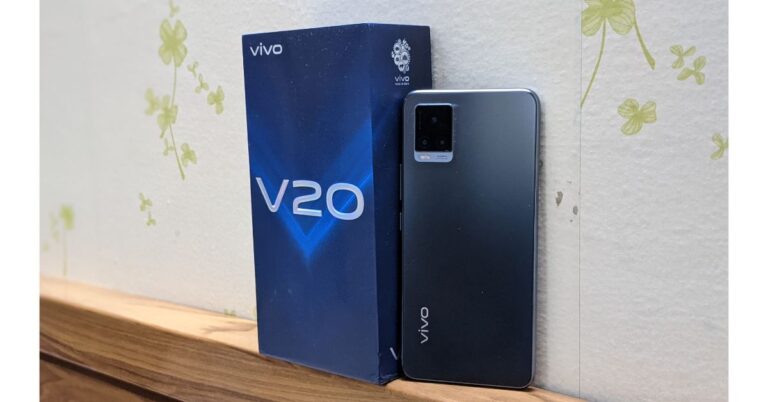
 The design is the best part about the phone. We have the Midnight Jazz colour variant but you can also choose from the Moonlight Sonata and Sunset Melody. The phone changes its hue from grey to blue and surprisingly the phone is not slippery at all, as most of the phones these days are quite slippery but not in the case of V20. The rear of this beauty is resistant to scratches and the anti-fingerprint coating does not catch smudges. However, the company still provides a clear case that protects it from accidental falls. That is good!
 The device is also really lightweight and slim and bears a rectangular rear camera module, which makes the phone wobble a little when placed on a flat surface. The phone has a plastic frame with a glossy finish and the power button here is textured that doubles up as a fingerprint scanner with a volume rocker just above it. These are well placed so one can reach there with no trouble using one hand. We think the company has nailed it in terms of design, but we wish Vivo V20 had an IP rating seeing that the much cheaper phone these days come with an IP certification for water and dust resistance.
 Moving to the front, the phone has a 6.44-inch full-HD+ AMOLED display with 1,080×2,400 pixels of resolution and a 20:9 aspect ratio. The device has an in-display fingerprint scanner that is fast, accurate and instant except when your hands are wet or greasy. In some cases, it demands a little bit of extra pressure to get it working. The Vivo V20 display is the best thing about this smartphone. The screen refreshes at 60Hz, which could come as a disappointment for some but we did not mind it because the AMOLED display is really good. A higher refresh rate could have been even nicer.
The AMOLED display here delivers vibrant colours, deeper blacks and the brightness is sufficient too, thanks to the incredible contrast ratio. At the top of the display, there is a U-shaped front camera module. It is also worth noting that this phone has slightly pronounced bezels especially at the bottom, but apart from this the Vivo V20 display is one of the best things about the device.
The professional colour mode in the display settings offers moderately muted hues therefore the human subjects look more natural. Under this setting, one can also customise screen colour in the display settings itself. Like we said before the phone lacks Gorilla glass protection and to compensate the company has provided a screen protector pre-applied. All in all, the display and the design are pretty much stellar and neat.
Moving to the front, the phone has a 6.44-inch full-HD+ AMOLED display with 1,080×2,400 pixels of resolution and a 20:9 aspect ratio. The device has an in-display fingerprint scanner that is fast, accurate and instant except when your hands are wet or greasy. In some cases, it demands a little bit of extra pressure to get it working. The Vivo V20 display is the best thing about this smartphone. The screen refreshes at 60Hz, which could come as a disappointment for some but we did not mind it because the AMOLED display is really good. A higher refresh rate could have been even nicer.
The AMOLED display here delivers vibrant colours, deeper blacks and the brightness is sufficient too, thanks to the incredible contrast ratio. At the top of the display, there is a U-shaped front camera module. It is also worth noting that this phone has slightly pronounced bezels especially at the bottom, but apart from this the Vivo V20 display is one of the best things about the device.
The professional colour mode in the display settings offers moderately muted hues therefore the human subjects look more natural. Under this setting, one can also customise screen colour in the display settings itself. Like we said before the phone lacks Gorilla glass protection and to compensate the company has provided a screen protector pre-applied. All in all, the display and the design are pretty much stellar and neat.
 Vivo’s custom OS offers some interesting features like the ultra game mode, which helps in optimising system resources, locks notifications therefore gaming improvement. Just like Motorola smartphones, you can activate the flashlight by just shaking the phone however it does not turn it off. Also, the revamped power menu on the Android 11 takes up a longer time to activate than normal on this phone. Unlike its previous generation of Android skin, it doesn’t get a lot of bloatware or Ads popping up.
Alright, now it’s time to talk about the cameras. Vivo claims to offer professional-grade photography features to its V-series of smartphones. Vivo V20 features a triple camera setup at the back. You get a 64-megapixel Samsung ISOCELL GW1 primary sensor with an f/1.89 aperture. Further assisted by an 8-megapixel ultra-wide-angle lens with f/2.2 aperture, a 2-megapixel monochrome sensor with an f/2.4 aperture. While on the front it comes with a 44-megapixel selfie sensor with an f/2.0 aperture.
Starting with the front first, Vivo V20 comes with an eye autofocus feature which makes sure that the eye which is closest to the camera is always tracked. It should be noted that this functionality is available on the front as well as the rear cameras. The front 44-megapixel selfie sensor’s output and the quality are really amazing. But one of our favourite features is that the camera app has dual video modes, which activate when we click on an 8-shaped or infinity icon.
So basically what it does is also activates the rear camera as well as the front one at the same time. That is quite an impressive feature for the vloggers. In addition to this, you can also opt for the picture in picture mode while also offering the lens guide option. We preferred video shooting in the ultra-wide mode offering more frames while recording video. You can also choose the dual rear mode to show a video in standard and ultrawide definition.
Not only this the front camera also gives you the option to record selfie videos in Slow Motion. The selfie camera also has a portrait mode, which gives you the option of applying filters to your selfies. You can apply these filters before taking a selfie, too.
Vivo’s custom OS offers some interesting features like the ultra game mode, which helps in optimising system resources, locks notifications therefore gaming improvement. Just like Motorola smartphones, you can activate the flashlight by just shaking the phone however it does not turn it off. Also, the revamped power menu on the Android 11 takes up a longer time to activate than normal on this phone. Unlike its previous generation of Android skin, it doesn’t get a lot of bloatware or Ads popping up.
Alright, now it’s time to talk about the cameras. Vivo claims to offer professional-grade photography features to its V-series of smartphones. Vivo V20 features a triple camera setup at the back. You get a 64-megapixel Samsung ISOCELL GW1 primary sensor with an f/1.89 aperture. Further assisted by an 8-megapixel ultra-wide-angle lens with f/2.2 aperture, a 2-megapixel monochrome sensor with an f/2.4 aperture. While on the front it comes with a 44-megapixel selfie sensor with an f/2.0 aperture.
Starting with the front first, Vivo V20 comes with an eye autofocus feature which makes sure that the eye which is closest to the camera is always tracked. It should be noted that this functionality is available on the front as well as the rear cameras. The front 44-megapixel selfie sensor’s output and the quality are really amazing. But one of our favourite features is that the camera app has dual video modes, which activate when we click on an 8-shaped or infinity icon.
So basically what it does is also activates the rear camera as well as the front one at the same time. That is quite an impressive feature for the vloggers. In addition to this, you can also opt for the picture in picture mode while also offering the lens guide option. We preferred video shooting in the ultra-wide mode offering more frames while recording video. You can also choose the dual rear mode to show a video in standard and ultrawide definition.
Not only this the front camera also gives you the option to record selfie videos in Slow Motion. The selfie camera also has a portrait mode, which gives you the option of applying filters to your selfies. You can apply these filters before taking a selfie, too.


 The design is the best part about the phone. We have the Midnight Jazz colour variant but you can also choose from the Moonlight Sonata and Sunset Melody. The phone changes its hue from grey to blue and surprisingly the phone is not slippery at all, as most of the phones these days are quite slippery but not in the case of V20. The rear of this beauty is resistant to scratches and the anti-fingerprint coating does not catch smudges. However, the company still provides a clear case that protects it from accidental falls. That is good!
 The device is also really lightweight and slim and bears a rectangular rear camera module, which makes the phone wobble a little when placed on a flat surface. The phone has a plastic frame with a glossy finish and the power button here is textured that doubles up as a fingerprint scanner with a volume rocker just above it. These are well placed so one can reach there with no trouble using one hand. We think the company has nailed it in terms of design, but we wish Vivo V20 had an IP rating seeing that the much cheaper phone these days come with an IP certification for water and dust resistance.
 Moving to the front, the phone has a 6.44-inch full-HD+ AMOLED display with 1,080×2,400 pixels of resolution and a 20:9 aspect ratio. The device has an in-display fingerprint scanner that is fast, accurate and instant except when your hands are wet or greasy. In some cases, it demands a little bit of extra pressure to get it working. The Vivo V20 display is the best thing about this smartphone. The screen refreshes at 60Hz, which could come as a disappointment for some but we did not mind it because the AMOLED display is really good. A higher refresh rate could have been even nicer.
The AMOLED display here delivers vibrant colours, deeper blacks and the brightness is sufficient too, thanks to the incredible contrast ratio. At the top of the display, there is a U-shaped front camera module. It is also worth noting that this phone has slightly pronounced bezels especially at the bottom, but apart from this the Vivo V20 display is one of the best things about the device.
The professional colour mode in the display settings offers moderately muted hues therefore the human subjects look more natural. Under this setting, one can also customise screen colour in the display settings itself. Like we said before the phone lacks Gorilla glass protection and to compensate the company has provided a screen protector pre-applied. All in all, the display and the design are pretty much stellar and neat.
Moving to the front, the phone has a 6.44-inch full-HD+ AMOLED display with 1,080×2,400 pixels of resolution and a 20:9 aspect ratio. The device has an in-display fingerprint scanner that is fast, accurate and instant except when your hands are wet or greasy. In some cases, it demands a little bit of extra pressure to get it working. The Vivo V20 display is the best thing about this smartphone. The screen refreshes at 60Hz, which could come as a disappointment for some but we did not mind it because the AMOLED display is really good. A higher refresh rate could have been even nicer.
The AMOLED display here delivers vibrant colours, deeper blacks and the brightness is sufficient too, thanks to the incredible contrast ratio. At the top of the display, there is a U-shaped front camera module. It is also worth noting that this phone has slightly pronounced bezels especially at the bottom, but apart from this the Vivo V20 display is one of the best things about the device.
The professional colour mode in the display settings offers moderately muted hues therefore the human subjects look more natural. Under this setting, one can also customise screen colour in the display settings itself. Like we said before the phone lacks Gorilla glass protection and to compensate the company has provided a screen protector pre-applied. All in all, the display and the design are pretty much stellar and neat.
 Vivo’s custom OS offers some interesting features like the ultra game mode, which helps in optimising system resources, locks notifications therefore gaming improvement. Just like Motorola smartphones, you can activate the flashlight by just shaking the phone however it does not turn it off. Also, the revamped power menu on the Android 11 takes up a longer time to activate than normal on this phone. Unlike its previous generation of Android skin, it doesn’t get a lot of bloatware or Ads popping up.
Alright, now it’s time to talk about the cameras. Vivo claims to offer professional-grade photography features to its V-series of smartphones. Vivo V20 features a triple camera setup at the back. You get a 64-megapixel Samsung ISOCELL GW1 primary sensor with an f/1.89 aperture. Further assisted by an 8-megapixel ultra-wide-angle lens with f/2.2 aperture, a 2-megapixel monochrome sensor with an f/2.4 aperture. While on the front it comes with a 44-megapixel selfie sensor with an f/2.0 aperture.
Starting with the front first, Vivo V20 comes with an eye autofocus feature which makes sure that the eye which is closest to the camera is always tracked. It should be noted that this functionality is available on the front as well as the rear cameras. The front 44-megapixel selfie sensor’s output and the quality are really amazing. But one of our favourite features is that the camera app has dual video modes, which activate when we click on an 8-shaped or infinity icon.
So basically what it does is also activates the rear camera as well as the front one at the same time. That is quite an impressive feature for the vloggers. In addition to this, you can also opt for the picture in picture mode while also offering the lens guide option. We preferred video shooting in the ultra-wide mode offering more frames while recording video. You can also choose the dual rear mode to show a video in standard and ultrawide definition.
Not only this the front camera also gives you the option to record selfie videos in Slow Motion. The selfie camera also has a portrait mode, which gives you the option of applying filters to your selfies. You can apply these filters before taking a selfie, too.
Vivo’s custom OS offers some interesting features like the ultra game mode, which helps in optimising system resources, locks notifications therefore gaming improvement. Just like Motorola smartphones, you can activate the flashlight by just shaking the phone however it does not turn it off. Also, the revamped power menu on the Android 11 takes up a longer time to activate than normal on this phone. Unlike its previous generation of Android skin, it doesn’t get a lot of bloatware or Ads popping up.
Alright, now it’s time to talk about the cameras. Vivo claims to offer professional-grade photography features to its V-series of smartphones. Vivo V20 features a triple camera setup at the back. You get a 64-megapixel Samsung ISOCELL GW1 primary sensor with an f/1.89 aperture. Further assisted by an 8-megapixel ultra-wide-angle lens with f/2.2 aperture, a 2-megapixel monochrome sensor with an f/2.4 aperture. While on the front it comes with a 44-megapixel selfie sensor with an f/2.0 aperture.
Starting with the front first, Vivo V20 comes with an eye autofocus feature which makes sure that the eye which is closest to the camera is always tracked. It should be noted that this functionality is available on the front as well as the rear cameras. The front 44-megapixel selfie sensor’s output and the quality are really amazing. But one of our favourite features is that the camera app has dual video modes, which activate when we click on an 8-shaped or infinity icon.
So basically what it does is also activates the rear camera as well as the front one at the same time. That is quite an impressive feature for the vloggers. In addition to this, you can also opt for the picture in picture mode while also offering the lens guide option. We preferred video shooting in the ultra-wide mode offering more frames while recording video. You can also choose the dual rear mode to show a video in standard and ultrawide definition.
Not only this the front camera also gives you the option to record selfie videos in Slow Motion. The selfie camera also has a portrait mode, which gives you the option of applying filters to your selfies. You can apply these filters before taking a selfie, too.










 Poco X3 Pro specifications
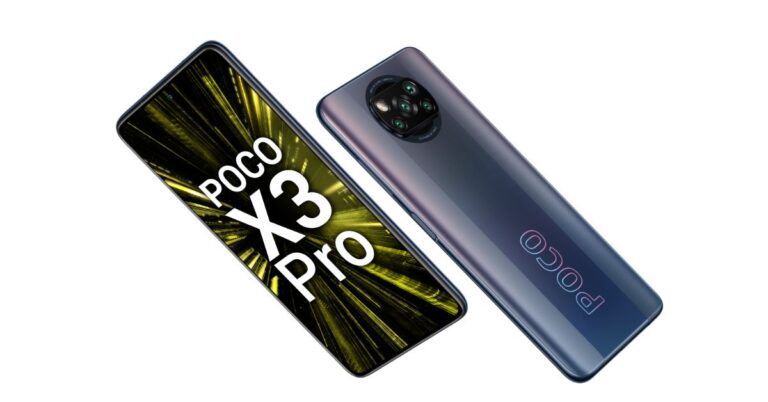
Speaking of the technical specifications, Poco X3 Pro features a 6.67-inch full-HD+ dot display with 1,080×2,400 pixels of resolution and a 20:9 aspect ratio. It supports a 120Hz refresh rate, 240Hz touch sampling rate and a peak brightness of 450nits protected with Gorilla Glass 6. The mobile phone runs MIUI 12 for Poco based on Android 11 and is powered by 7mm octa-core Qualcomm Snapdragon 860 SoC. This is paired with Adreno 640 GPU for graphics. It packs up to 8GB RAM and 128GB of storage, which can be expanded by up to 1TB with the use of a microSD card.
The Poco X3 Pro sports a quad rear camera setup that includes a 48-megapixel primary Sony IMX582 sensor with an f/1.79 aperture. Furthermore, there is an 8-megapixel ultra-wide-angle lens with a 119-degree field of view and f/2.2 aperture, as well as two 2-megapixel macro and a depth sensor. For selfies, there is a 20-megapixel front-facing camera with an f/2.2 aperture.
The device supports 4K video recording at 30/60fps and comes with several features including smooth video zoom, focus peaking and AE/AF lock along with Vlog mode, to capture high-res videos in great quality for content creation and social media stories. In addition, it will come with features such as Night mode 2.0, Long exposure, Clone Photo and Video mode.
The Poco smartphone boasts a massive 5,160mAh battery with MMT tech, a split charge technology that allows better charge time in a shorter span of time. It also protects the battery health cycle enabling it to last longer. The device strides in with an in-box fast 33W Type-C charger and supports a USB PD charge at 26W. The Poco X3 Pro is paired with a dual-stereo speaker setup, high-res audio and is aptX HD certified. The phone comes with IP53 certification for resistance against dust and water ingress.
For connectivity, there is 4G LTE, Wi-Fi 802.11ac, Bluetooth 5.0, GPS/ A-GPS, NFC, IR Blaster, and a headphone jack. The smartphone comes with LiquidCool Technology 1.0 Plus to keep the phone cool when playing games for long. The sensors onboard include an accelerometer, ambient light, gyroscope, infrared (IR), and a proximity sensor in addition to a side-mounted fingerprint sensor.
For the latest gadget and tech news, and gadget reviews, follow us on Twitter, Facebook and Instagram. For newest tech & gadget videos subscribe to our YouTube Channel. You can also stay up to date using the Gadget Bridge Android App.
Poco X3 Pro specifications
Speaking of the technical specifications, Poco X3 Pro features a 6.67-inch full-HD+ dot display with 1,080×2,400 pixels of resolution and a 20:9 aspect ratio. It supports a 120Hz refresh rate, 240Hz touch sampling rate and a peak brightness of 450nits protected with Gorilla Glass 6. The mobile phone runs MIUI 12 for Poco based on Android 11 and is powered by 7mm octa-core Qualcomm Snapdragon 860 SoC. This is paired with Adreno 640 GPU for graphics. It packs up to 8GB RAM and 128GB of storage, which can be expanded by up to 1TB with the use of a microSD card.
The Poco X3 Pro sports a quad rear camera setup that includes a 48-megapixel primary Sony IMX582 sensor with an f/1.79 aperture. Furthermore, there is an 8-megapixel ultra-wide-angle lens with a 119-degree field of view and f/2.2 aperture, as well as two 2-megapixel macro and a depth sensor. For selfies, there is a 20-megapixel front-facing camera with an f/2.2 aperture.
The device supports 4K video recording at 30/60fps and comes with several features including smooth video zoom, focus peaking and AE/AF lock along with Vlog mode, to capture high-res videos in great quality for content creation and social media stories. In addition, it will come with features such as Night mode 2.0, Long exposure, Clone Photo and Video mode.
The Poco smartphone boasts a massive 5,160mAh battery with MMT tech, a split charge technology that allows better charge time in a shorter span of time. It also protects the battery health cycle enabling it to last longer. The device strides in with an in-box fast 33W Type-C charger and supports a USB PD charge at 26W. The Poco X3 Pro is paired with a dual-stereo speaker setup, high-res audio and is aptX HD certified. The phone comes with IP53 certification for resistance against dust and water ingress.
For connectivity, there is 4G LTE, Wi-Fi 802.11ac, Bluetooth 5.0, GPS/ A-GPS, NFC, IR Blaster, and a headphone jack. The smartphone comes with LiquidCool Technology 1.0 Plus to keep the phone cool when playing games for long. The sensors onboard include an accelerometer, ambient light, gyroscope, infrared (IR), and a proximity sensor in addition to a side-mounted fingerprint sensor.
For the latest gadget and tech news, and gadget reviews, follow us on Twitter, Facebook and Instagram. For newest tech & gadget videos subscribe to our YouTube Channel. You can also stay up to date using the Gadget Bridge Android App.  Poco X3 Pro specifications
Speaking of the technical specifications, Poco X3 Pro features a 6.67-inch full-HD+ dot display with 1,080×2,400 pixels of resolution and a 20:9 aspect ratio. It supports a 120Hz refresh rate, 240Hz touch sampling rate and a peak brightness of 450nits protected with Gorilla Glass 6. The mobile phone runs MIUI 12 for Poco based on Android 11 and is powered by 7mm octa-core Qualcomm Snapdragon 860 SoC. This is paired with Adreno 640 GPU for graphics. It packs up to 8GB RAM and 128GB of storage, which can be expanded by up to 1TB with the use of a microSD card.
The Poco X3 Pro sports a quad rear camera setup that includes a 48-megapixel primary Sony IMX582 sensor with an f/1.79 aperture. Furthermore, there is an 8-megapixel ultra-wide-angle lens with a 119-degree field of view and f/2.2 aperture, as well as two 2-megapixel macro and a depth sensor. For selfies, there is a 20-megapixel front-facing camera with an f/2.2 aperture.
The device supports 4K video recording at 30/60fps and comes with several features including smooth video zoom, focus peaking and AE/AF lock along with Vlog mode, to capture high-res videos in great quality for content creation and social media stories. In addition, it will come with features such as Night mode 2.0, Long exposure, Clone Photo and Video mode.
The Poco smartphone boasts a massive 5,160mAh battery with MMT tech, a split charge technology that allows better charge time in a shorter span of time. It also protects the battery health cycle enabling it to last longer. The device strides in with an in-box fast 33W Type-C charger and supports a USB PD charge at 26W. The Poco X3 Pro is paired with a dual-stereo speaker setup, high-res audio and is aptX HD certified. The phone comes with IP53 certification for resistance against dust and water ingress.
For connectivity, there is 4G LTE, Wi-Fi 802.11ac, Bluetooth 5.0, GPS/ A-GPS, NFC, IR Blaster, and a headphone jack. The smartphone comes with LiquidCool Technology 1.0 Plus to keep the phone cool when playing games for long. The sensors onboard include an accelerometer, ambient light, gyroscope, infrared (IR), and a proximity sensor in addition to a side-mounted fingerprint sensor.
For the latest gadget and tech news, and gadget reviews, follow us on Twitter, Facebook and Instagram. For newest tech & gadget videos subscribe to our YouTube Channel. You can also stay up to date using the Gadget Bridge Android App.
Poco X3 Pro specifications
Speaking of the technical specifications, Poco X3 Pro features a 6.67-inch full-HD+ dot display with 1,080×2,400 pixels of resolution and a 20:9 aspect ratio. It supports a 120Hz refresh rate, 240Hz touch sampling rate and a peak brightness of 450nits protected with Gorilla Glass 6. The mobile phone runs MIUI 12 for Poco based on Android 11 and is powered by 7mm octa-core Qualcomm Snapdragon 860 SoC. This is paired with Adreno 640 GPU for graphics. It packs up to 8GB RAM and 128GB of storage, which can be expanded by up to 1TB with the use of a microSD card.
The Poco X3 Pro sports a quad rear camera setup that includes a 48-megapixel primary Sony IMX582 sensor with an f/1.79 aperture. Furthermore, there is an 8-megapixel ultra-wide-angle lens with a 119-degree field of view and f/2.2 aperture, as well as two 2-megapixel macro and a depth sensor. For selfies, there is a 20-megapixel front-facing camera with an f/2.2 aperture.
The device supports 4K video recording at 30/60fps and comes with several features including smooth video zoom, focus peaking and AE/AF lock along with Vlog mode, to capture high-res videos in great quality for content creation and social media stories. In addition, it will come with features such as Night mode 2.0, Long exposure, Clone Photo and Video mode.
The Poco smartphone boasts a massive 5,160mAh battery with MMT tech, a split charge technology that allows better charge time in a shorter span of time. It also protects the battery health cycle enabling it to last longer. The device strides in with an in-box fast 33W Type-C charger and supports a USB PD charge at 26W. The Poco X3 Pro is paired with a dual-stereo speaker setup, high-res audio and is aptX HD certified. The phone comes with IP53 certification for resistance against dust and water ingress.
For connectivity, there is 4G LTE, Wi-Fi 802.11ac, Bluetooth 5.0, GPS/ A-GPS, NFC, IR Blaster, and a headphone jack. The smartphone comes with LiquidCool Technology 1.0 Plus to keep the phone cool when playing games for long. The sensors onboard include an accelerometer, ambient light, gyroscope, infrared (IR), and a proximity sensor in addition to a side-mounted fingerprint sensor.
For the latest gadget and tech news, and gadget reviews, follow us on Twitter, Facebook and Instagram. For newest tech & gadget videos subscribe to our YouTube Channel. You can also stay up to date using the Gadget Bridge Android App. 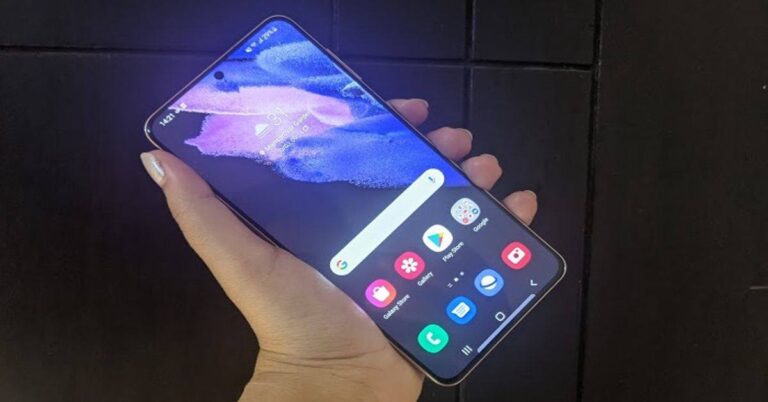
 The same rose gold coloured metallic frame outlines the device on all its four edges. While the right edge houses the Power and Volume Rocker buttons, the bottom edge has the SIM tray, Type-C port, the microphone and the speaker grille. We should mention that in spite of the fact that the device is so upscale, the back panel of the smartphone is made of polycarbonate.
The front panel of the smartphone is dominated by its 6.7-inch display that has a selfie camera housed in a cut-out hole right below the speaker. Single handed usage on the device was simple in spite of its big form factor. Samsung Galaxy S21+ packs a 4,800mAh battery and weighs 200 grams. The smartphone also comes with IP68 rating, which basically means that it has water and dust resistance. It is worth noting that the device comes without a charger in the box and headphones are not included either. There is, however, a Type-C cable, but you would need a Type-C charger if you wish to use it.
The same rose gold coloured metallic frame outlines the device on all its four edges. While the right edge houses the Power and Volume Rocker buttons, the bottom edge has the SIM tray, Type-C port, the microphone and the speaker grille. We should mention that in spite of the fact that the device is so upscale, the back panel of the smartphone is made of polycarbonate.
The front panel of the smartphone is dominated by its 6.7-inch display that has a selfie camera housed in a cut-out hole right below the speaker. Single handed usage on the device was simple in spite of its big form factor. Samsung Galaxy S21+ packs a 4,800mAh battery and weighs 200 grams. The smartphone also comes with IP68 rating, which basically means that it has water and dust resistance. It is worth noting that the device comes without a charger in the box and headphones are not included either. There is, however, a Type-C cable, but you would need a Type-C charger if you wish to use it.
 Coming to the display, Samsung Galaxy S21+ sports a 6.7-inch Flat full-HD+ Dynamic AMOLED 2X Infinity-O display that comes with an adaptive refresh rate of 120Hz and an aspect ratio of 20:9. The screen of the device also has HDR10+ certification and the company’s Eye Comfort Shield. The display is easily one among the best aspects of the smartphone. We spent hours binge watching shows on Netflix and the experience was amazing because of the great quality of images projected on the screen. It was very sharp and clear and the colours were vibrant and they stayed consistent at different viewing angles. There is also an on-screen fingerprint sensor on the front panel of the device, which worked well for us during out time with the smartphone.
 Finally, let’s talk about the cameras of the smartphone. Samsung Galaxy S21+ comes with triple rear cameras including a 64MP telephoto lens and two 12MP wide angle and ultra wide angle lenses. For selfies and video calls, there is a 10MP camera on the front panel. The cameras of Samsung Galaxy S21+ were very impressive. The shots taken by the primary camera turned out to be excellent. The colours, the lights, everything was impeccable. The best thing about it was that the performance of the camera remained fairly good in dim-lit areas too.
 The zoom levels of the lens are 3X, 4X, 10X, 20X, and 30X. Images taken till 4X were very sharp and clear, but then, with each additional zoom-in, the quality did get compromised a bit. The image quality of the other two lenses was not as good as that of the 64MP camera, but then, it can’t really be called bad or even average for that matter.
 While we did see slight distortion in some of the pictures taken by the two cameras, most people wouldn’t even notice until they view them on a laptop. Another plus was the fact that all the sensors on the device did not take long to focus on the object being clicked, and the AI scene optimizer was quick too.
 The selfies that we took using the 10MP camera turned out to be very good too, and much like the rear lenses, the performance of the front shooter remained consistent in dim light too.
 The same rose gold coloured metallic frame outlines the device on all its four edges. While the right edge houses the Power and Volume Rocker buttons, the bottom edge has the SIM tray, Type-C port, the microphone and the speaker grille. We should mention that in spite of the fact that the device is so upscale, the back panel of the smartphone is made of polycarbonate.
The front panel of the smartphone is dominated by its 6.7-inch display that has a selfie camera housed in a cut-out hole right below the speaker. Single handed usage on the device was simple in spite of its big form factor. Samsung Galaxy S21+ packs a 4,800mAh battery and weighs 200 grams. The smartphone also comes with IP68 rating, which basically means that it has water and dust resistance. It is worth noting that the device comes without a charger in the box and headphones are not included either. There is, however, a Type-C cable, but you would need a Type-C charger if you wish to use it.
The same rose gold coloured metallic frame outlines the device on all its four edges. While the right edge houses the Power and Volume Rocker buttons, the bottom edge has the SIM tray, Type-C port, the microphone and the speaker grille. We should mention that in spite of the fact that the device is so upscale, the back panel of the smartphone is made of polycarbonate.
The front panel of the smartphone is dominated by its 6.7-inch display that has a selfie camera housed in a cut-out hole right below the speaker. Single handed usage on the device was simple in spite of its big form factor. Samsung Galaxy S21+ packs a 4,800mAh battery and weighs 200 grams. The smartphone also comes with IP68 rating, which basically means that it has water and dust resistance. It is worth noting that the device comes without a charger in the box and headphones are not included either. There is, however, a Type-C cable, but you would need a Type-C charger if you wish to use it.
 Coming to the display, Samsung Galaxy S21+ sports a 6.7-inch Flat full-HD+ Dynamic AMOLED 2X Infinity-O display that comes with an adaptive refresh rate of 120Hz and an aspect ratio of 20:9. The screen of the device also has HDR10+ certification and the company’s Eye Comfort Shield. The display is easily one among the best aspects of the smartphone. We spent hours binge watching shows on Netflix and the experience was amazing because of the great quality of images projected on the screen. It was very sharp and clear and the colours were vibrant and they stayed consistent at different viewing angles. There is also an on-screen fingerprint sensor on the front panel of the device, which worked well for us during out time with the smartphone.
 As expected, Samsung Galaxy S21+ was flawless in terms of performance. We did a lot of multi-tasking on the device and faced no hiccups at all. We could open and switch between apps without any delay. We used the smartphone for more than a week, and we didn’t encounter any troubles with any task ranging from phone calls to navigation. We also played a number of games on the handset ranging from Alto’s Odyssey to graphic-hungry ones like Asphalt 9: Legends. Regardless of the game that we played, we didn’t notice any lag or stutter on the smartphone. Coming to the battery life, with usage involving games, browsing social media apps, phone calls, and an active Telegram account, the device easily lasted more than a day, which is pretty good.
 Finally, let’s talk about the cameras of the smartphone. Samsung Galaxy S21+ comes with triple rear cameras including a 64MP telephoto lens and two 12MP wide angle and ultra wide angle lenses. For selfies and video calls, there is a 10MP camera on the front panel. The cameras of Samsung Galaxy S21+ were very impressive. The shots taken by the primary camera turned out to be excellent. The colours, the lights, everything was impeccable. The best thing about it was that the performance of the camera remained fairly good in dim-lit areas too.
 The zoom levels of the lens are 3X, 4X, 10X, 20X, and 30X. Images taken till 4X were very sharp and clear, but then, with each additional zoom-in, the quality did get compromised a bit. The image quality of the other two lenses was not as good as that of the 64MP camera, but then, it can’t really be called bad or even average for that matter.
 While we did see slight distortion in some of the pictures taken by the two cameras, most people wouldn’t even notice until they view them on a laptop. Another plus was the fact that all the sensors on the device did not take long to focus on the object being clicked, and the AI scene optimizer was quick too.
 The selfies that we took using the 10MP camera turned out to be very good too, and much like the rear lenses, the performance of the front shooter remained consistent in dim light too.

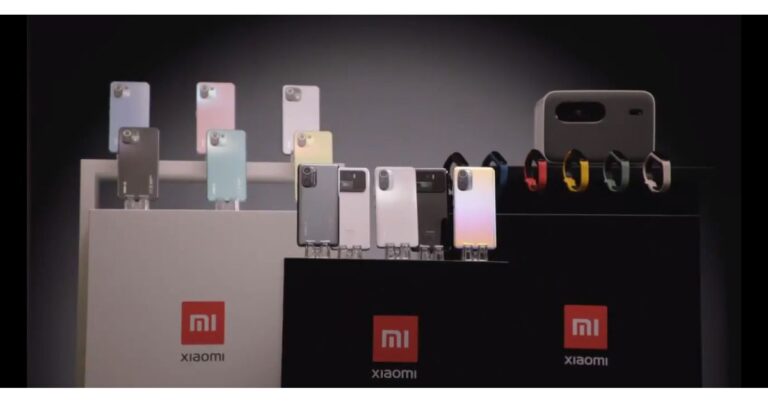
 Similarly, the Mi 11 Pro by Xiaomi comes in an 8GB RAM with 128GB storage model priced at CNY 4,999 (approx Rs 55,400) and the 8GB RAM with 256GB storage variant comes with a price tag of CNY 5,299 (approx Rs 58,700). Lastly the 12GB RAM with 256GB storage model will be available at CNY 5,699 (approx Rs 63,100). This phone will be offered in three colour options of Black, Green, and White.
On the other hand, the Mi 11 Lite 5G has been launched in two different models of 8GB RAM with 128GB storage at CNY 2,299 (approx Rs 25,500) and 8GB RAM with 256GB storage with a price tag of CNY 2,599 (approx Rs 28,800). This smartphone will be available in Citrus Yellow, Mint Green, and Truffle Black colour variants.
The former two devices will be available for purchase starting April 2 in China while the Mi 11 Lite 5G is expected to go on sale later next month.
Mi 11 Ultra specifications
The Mi 11 Ultra features a quad-curved 6.81-inch 2K WQHD+ E4 AMOLED display having 3,200× 1,440 pixels of resolution. It supports a 120Hz refresh rate panel with a 240Hz touch sampling rate and a 551ppi pixel density. The screen is protected with Corning Gorilla Glass Victus and supports HDR10+ as well as Dolby Vision too. In addition to this, there is a secondary display on the back featuring a 1.1-inch AMOLED touch screen with 126×294 pixels of resolution.
Similarly, the Mi 11 Pro by Xiaomi comes in an 8GB RAM with 128GB storage model priced at CNY 4,999 (approx Rs 55,400) and the 8GB RAM with 256GB storage variant comes with a price tag of CNY 5,299 (approx Rs 58,700). Lastly the 12GB RAM with 256GB storage model will be available at CNY 5,699 (approx Rs 63,100). This phone will be offered in three colour options of Black, Green, and White.
On the other hand, the Mi 11 Lite 5G has been launched in two different models of 8GB RAM with 128GB storage at CNY 2,299 (approx Rs 25,500) and 8GB RAM with 256GB storage with a price tag of CNY 2,599 (approx Rs 28,800). This smartphone will be available in Citrus Yellow, Mint Green, and Truffle Black colour variants.
The former two devices will be available for purchase starting April 2 in China while the Mi 11 Lite 5G is expected to go on sale later next month.
Mi 11 Ultra specifications
The Mi 11 Ultra features a quad-curved 6.81-inch 2K WQHD+ E4 AMOLED display having 3,200× 1,440 pixels of resolution. It supports a 120Hz refresh rate panel with a 240Hz touch sampling rate and a 551ppi pixel density. The screen is protected with Corning Gorilla Glass Victus and supports HDR10+ as well as Dolby Vision too. In addition to this, there is a secondary display on the back featuring a 1.1-inch AMOLED touch screen with 126×294 pixels of resolution.


 Similarly, the Mi 11 Pro by Xiaomi comes in an 8GB RAM with 128GB storage model priced at CNY 4,999 (approx Rs 55,400) and the 8GB RAM with 256GB storage variant comes with a price tag of CNY 5,299 (approx Rs 58,700). Lastly the 12GB RAM with 256GB storage model will be available at CNY 5,699 (approx Rs 63,100). This phone will be offered in three colour options of Black, Green, and White.
On the other hand, the Mi 11 Lite 5G has been launched in two different models of 8GB RAM with 128GB storage at CNY 2,299 (approx Rs 25,500) and 8GB RAM with 256GB storage with a price tag of CNY 2,599 (approx Rs 28,800). This smartphone will be available in Citrus Yellow, Mint Green, and Truffle Black colour variants.
The former two devices will be available for purchase starting April 2 in China while the Mi 11 Lite 5G is expected to go on sale later next month.
Mi 11 Ultra specifications
The Mi 11 Ultra features a quad-curved 6.81-inch 2K WQHD+ E4 AMOLED display having 3,200× 1,440 pixels of resolution. It supports a 120Hz refresh rate panel with a 240Hz touch sampling rate and a 551ppi pixel density. The screen is protected with Corning Gorilla Glass Victus and supports HDR10+ as well as Dolby Vision too. In addition to this, there is a secondary display on the back featuring a 1.1-inch AMOLED touch screen with 126×294 pixels of resolution.
Similarly, the Mi 11 Pro by Xiaomi comes in an 8GB RAM with 128GB storage model priced at CNY 4,999 (approx Rs 55,400) and the 8GB RAM with 256GB storage variant comes with a price tag of CNY 5,299 (approx Rs 58,700). Lastly the 12GB RAM with 256GB storage model will be available at CNY 5,699 (approx Rs 63,100). This phone will be offered in three colour options of Black, Green, and White.
On the other hand, the Mi 11 Lite 5G has been launched in two different models of 8GB RAM with 128GB storage at CNY 2,299 (approx Rs 25,500) and 8GB RAM with 256GB storage with a price tag of CNY 2,599 (approx Rs 28,800). This smartphone will be available in Citrus Yellow, Mint Green, and Truffle Black colour variants.
The former two devices will be available for purchase starting April 2 in China while the Mi 11 Lite 5G is expected to go on sale later next month.
Mi 11 Ultra specifications
The Mi 11 Ultra features a quad-curved 6.81-inch 2K WQHD+ E4 AMOLED display having 3,200× 1,440 pixels of resolution. It supports a 120Hz refresh rate panel with a 240Hz touch sampling rate and a 551ppi pixel density. The screen is protected with Corning Gorilla Glass Victus and supports HDR10+ as well as Dolby Vision too. In addition to this, there is a secondary display on the back featuring a 1.1-inch AMOLED touch screen with 126×294 pixels of resolution.

