

Leaked: Moto G7, Moto G7 Plus, Moto G7 Power and Moto G7 Play renders
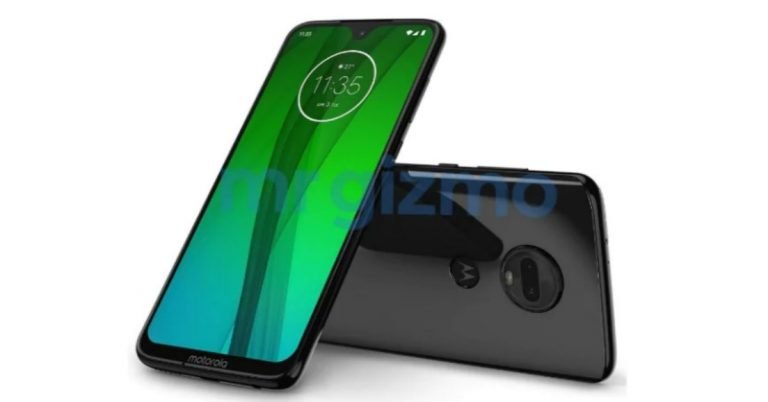
Recently, the about-to-launch Moto G7 series was passed through the US FCC. And two days ago, one of the phones, Moto G7 Play passed the Eurasian Economic Commission. A lot about the phone is being talking about yet there are some unanswered questions. Like will it run on Android Pie out-of-the-box, would it have a microSD card slot, an audio jack, a hybrid dual SIM slot, what will be final battery size? etc.
Now the renders of the smartphones have emerged. In these leaked renders we have got to know more about the above phones as well as the other phones in the range. We can also do a comparative analysis so that you can weigh them against each other. Firstly, the Moto G7 and Moto G7 Plus will have a waterdrop notch whereas the Moto G7 Power and Moto G7 Play will have the traditional notch. While the former two have a smaller notch it is comparatively thicker than the competitive brands, which also sport a waterdrop design.
The Moto G7 Power is said to have a 5,000mAh battery which would be the largest amongst all four phones. As the phone’s name suggests ‘Power’, it is quite obvious that this would happen. The screen to body ratio of the Moto G7 and G7 Plus is expected to be higher than the previous Moto series. And they are also expected to have a dual rear camera setup.
The Moto G7 Power and G7 Play are likely to have a single rear camera setup and would have a fingerprint sensor on the Motorola bat-shaped logo at the back. The difference between their cameras is that the G7 Play would have a selfie flash.
The Moto G7 is expected to have a Qualcomm Snapdragon 660 SoC, 4GB of RAM with 32GB internal storage. The Moto G7 Plus in turn would probably have a Snapdragon 710 SoC with 4/6GB RAM with a 64GB onboard storage. All four phones are expected to launch during early 2019, probably around MWC. Till then we can sit back and enjoy the beautiful renders and covet the phones. For those who are dying to buy them, it is the hardest thing to do. But as the old saying goes, patience breeds fruitful outcomes.
For the latest gadget and tech news, and gadget reviews, follow us on Twitter, Facebook and Instagram. For newest tech & gadget videos subscribe to our YouTube Channel.
Firefox Focus browser now has Enhanced Tracking Protection and Google Safe Search

Firefox focus browser has been updated and now has Enhanced Tracking Protection, which would allow it to provide improved protection for user’s data. In the earlier version of Firefox Focus, cookies were blocked by default. However, with this enhancement, you can choose amongst which cookies you want to allow to track your data. This can be done by creating an ‘allowlist’ which would separate the trackers you want to provide access to and to those whom you do not. There is a feature called ‘Disconnect Tracking Protection’ which identifies third parties that can possibly track your data. In a nutshell, this leads to a much better and advanced form of protection for users’ data.
There is a ‘Google Safe Search’ feature added to the browser too, which hunts down suspicious activities by checking each URL visited on the server. Once Firefox Focus identifies a fraudulent site, it will alert the users and a message would be displayed on the screen to make them aware about it.
To recall, the Firefox Focus was launched back in 2017 by Mozilla Firefox with the intention to protect users’ privacy. Mozilla who owns Firefox, has regularly upgraded this browser for better protection. The Enhanced Tracking Protection is the latest one the company has launched for desktops. Reports have suggested that it is soon expected to launch in Android phones as well. Users can download the current version of the browser from Android Play Store or the iOS app store. Also, iOS users can receive automated suggestions by typing anything in the search engine and can obtain results accordingly through this update.
Another advantage of this feature is that, by curbing trackers to access your browsing data, it leads to a faster internet speed and therefore a better browsing experience.
For the latest gadget and tech news, and gadget reviews, follow us on Twitter, Facebook and Instagram. For newest tech & gadget videos subscribe to our YouTube Channel.
Artificial Intelligence trends are reinventing the Consumer Electronics segment

After taking healthcare, education, and telecommunication sectors by storm, Artificial Intelligence (AI) is all decked up to revolutionize the consumer electronics industry within the next five years. As per IBEF’S industry analysis report, Indian consumer electronics market is expected to grow at 41 percent CAGR during 2017-20 to reach US$ 400 billion. Evidently, the combination of AI and IoT into the market products is further going to fuel the exponential growth. Though some of the product segments, including smartphones, alarm clocks, watches, etc, have evolved into smart ones, many are going through a rapid AI transformation phase.
The application of AI into the industry of consumer electronics opens up many growth avenues and opportunities. For attracting the ever-evolving customers, the manufacturers are adopting the latest ground-breaking technologies, which specifically appeal to the customers and cater to their needs and requirements.
AI adoption by industry
Household electronics and appliance manufacturers are leveraging Artificial Intelligence to offer smart products to the customers redefining their interaction and experience. As per the findings of Gartner, some of the largest companies will be switching to intelligent technologies and Big Data analytics for tailoring their services and products to enhance customer experience. Though the wave has just started, consumer goods integrated with AI capabilities aim to provide world-class customer experience without any need for human intervention. To connect, understand, engage with tech-savvy customers, the consumer goods companies are leaving no stone unturned to empower their products with digital and AI technologies. In fact, consumer goods companies are heavily investing in cutting-edge emerging technologies like AI, Deep Learning, and IoT to specifically target advertising and marketing as many shoppers have gone digital and use mobile devices during shopping.
Building Smart Homes
The completely automated home is a novice concept in the market today, but steadily we are moving towards the true realization of it. Many household appliance manufacturers integrate IoT and AI in the household products enabling the consumers to connect intuitively with their living spaces, equipped with many such AI-powered capabilities ensuring the convenience, comfort, and affordability for customers. They, no longer, will have to bear the confusion or worries whether they switched off all devices and appliances before leaving the house as the intelligent devices can automatically get switched off or can be monitored in real-time using smartphones.
From OTT to Smart TVs
The era of Smart TVs commenced with many brands launching their AI-powered smart TVs. As per the report of IHS technology, global unit-share of Smart TVs increased from 45% to 64% in the year 2017 and is expected to reach 70% by the end of the year 2018. With the next-gen intelligent Smart TVs, the users can connect their Smart TVs to the Internet without using any wire and may simply access the streaming services like Netflix and Amazon Prime. Such Over-the-top (OTT) content providers make use of AI and its predictive nature for suggesting movies, TV shows, and web series on the basis of the viewing habits of the customers. In the next few years, we can see Smart TVs enabling us to browse Facebook, stream live videos, and check emails just like we use our smartphones. Quite recently, Netflix has integrated AI-powered dynamic optimizer into its system, which compresses the online video uniformly according to the Internet connection speed. The future of Smart TVs holds such AI-powered dynamic optimizer integration, which will allow the TVs to deliver better quality pictures using less bandwidth.
 Author: Karan Bedi, COO, Blaupunkt Televisions India
For the latest gadget and tech news, and gadget reviews, follow us on Twitter, Facebook and Instagram. For newest tech & gadget videos subscribe to our YouTube Channel.
Author: Karan Bedi, COO, Blaupunkt Televisions India
For the latest gadget and tech news, and gadget reviews, follow us on Twitter, Facebook and Instagram. For newest tech & gadget videos subscribe to our YouTube Channel.
 Author: Karan Bedi, COO, Blaupunkt Televisions India
For the latest gadget and tech news, and gadget reviews, follow us on Twitter, Facebook and Instagram. For newest tech & gadget videos subscribe to our YouTube Channel.
Author: Karan Bedi, COO, Blaupunkt Televisions India
For the latest gadget and tech news, and gadget reviews, follow us on Twitter, Facebook and Instagram. For newest tech & gadget videos subscribe to our YouTube Channel. OnePlus 6T starts receiving OxygenOS 9.0.10 update and receives its first open beta
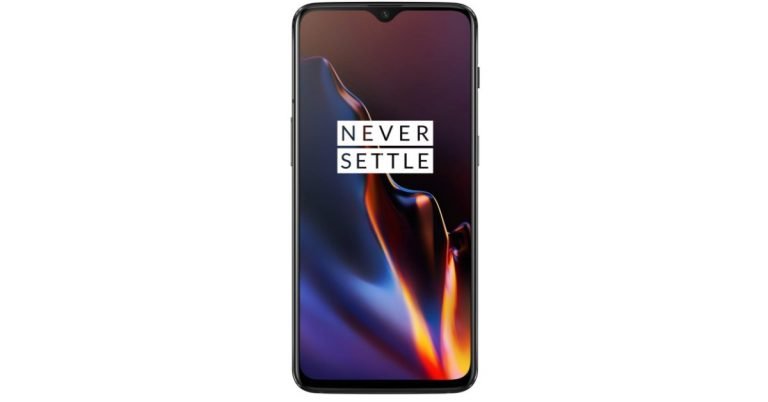
OnePlus’ latest flagship, OnePlus 6T has started receiving the OxygenOS 9.0.10 update that has got several new improvements to the smartphone. The changes that the latest update has got include improvements in the Face Unlock feature of the smartphone, enhancements in Nightscape mode, Wi-Fi stability, along with some bug fixes.
The update also gets the December security patch to OnePlus 6T as is rolling out over-the-air (OTA). You can head to the Settings menu of your smartphone in order to manually check for the latest update. Like most updates by the company, the rollout of the OxygenOS 9.0.10 update is incremental in nature. It will first reach a few users and then be rolled out to everyone.
The company has also released the first beta update for OnePlus 6T (review) users, which brings with itself a number of new features including the support for migrating data from an iPhone, an optimised UI that filters spam calls, OnePlus Switch feature and a new call history page that shows incoming calls from unknown numbers. Another addition is an added ‘toast message’ when parallel apps are not available due to data corruption. This update will also have the December security patch with itself. The size of the update is reported to be 1.63GB, so we recommend you to only download it when your smartphone is connected to Wi-Fi and do backup the data on your device before you begin. Remember to follow all the instructions on the download page when installing the beta update.
In another report, DxOMark has released its results for OnePlus 6T and the camera on the latest flagship has secured better results than OnePlus 6. OnePlus 6T’s overall DxOMark rating is 98, which is two points ahead of its predecessor.
The website states that while OnePlus 6T mobile does not come with improved camera hardware, the company has made software enhancements to make the experience better. However, the website also said, “The only area for both photo and video in which the OnePlus 6T did not improve over the OnePlus 6 – and in fact, shows a regression that affected its overall scores – is for Noise, which seems to have been the price OnePlus decided to pay in the short term for improved detail capture.”
For the latest gadget and tech news, and gadget reviews, follow us on Twitter, Facebook and Instagram. For newest tech & gadget videos subscribe to our YouTube Channel.
Xiaomi Mi Pay app beta testing starts in India

The Mi Pay app which was launched by Xiaomi sometime back in China is soon going to be launched in India. The beta testing has already started. The Mi Pay app has similar features that one would find on Google Pay. When it was launched in China, it was only compatible with NFC based payments, but now in India it can make both UPI as well as VPA payments. The Mi Pay app launch became possible in India because it passed the policies of National Payments Corporation of India(NPCI).
This technology is going to interact with the phone’s existing contacts, SMS, Scanner, apps and App Vault in order to make payments. With this setup, payments can be transferred easily and the process is going to be fast. The company claims, “All user-generated data will be kept in a highly encrypted format within the India-based cloud infrastructure.” However, going by the company being Chinese how safe will your money be with it?
The way Mi Pay is differentiated from Google Pay is that, unlike Google Pay, Mi Pay works with credit cards, debit cards and Internet Banking. The Mi Pay app can be used to pay phone bills, water bills, electricity bills, DTH recharge et al.
One needs to be on the MIUI Global Beta ROM in order to participate in the beta testing in India. In its forum post the company said, “Mi Pay’s biggest advantage is its deep integration within MIUI, which makes transferring payments to contacts and vendors extremely easy”.
The company has also reportedly claimed that payments can be done by scanning QR codes which include Bharat QR codes. Furthermore, users can also check their balance via this application and there is an option of resetting the UPI PIN of one’s bank account. However, being a Chinese brand, one might not find it preferable to check their account balance through this or even connect their bank account to it.
The credit behind the company being able to understand the local market and prepare its services accordingly, goes to a fintech startup ZestMoney. Xiaomi funded in KrazyBee, which is a Bengaluru-based student credit platform and invested in this fintech, which apparently led to the localisation as far as India is concerned. This might lead the company to gain hugely in India and expand its business furthermore. Being one of the topmost brands in the mobile industry, it might attract customers even more in the near future to this app. We are sure once final, we will see this app to be part of every new Xiaomi smartphone.
Image courtesy: Head topics
https://www.youtube.com/watch?v=WXXb9yXtyVI&t=4s
For the latest gadget and tech news, and gadget reviews, follow us on Twitter, Facebook, Instagram and YouTube.
After China, iPhones may be banned in Germany too
Just a few days back, Qualcomm won a patent dispute case against Apple in China and got a ban placed on iPhones. And things really seem to be in favour of the American chipmaker as it has won another patent case against the Cupertino based technology giant in Berlin too. A German court has passed a ruling in favour of Qualcomm that may lead to a ban on iPhone sales in Germany.
The regional court in Munich said in a statement, “The ruling effectively outlaws the offering and placing on the market of the finished product in Germany, including the sale. The iPhones 7 Plus, 7, 8, 8 Plus and X are affected.”
It is worth noticing that Apple can appeal to the court to reconsider its initial ruling. Considering this, the court added that the ban on the sales of affected iPhones – iPhone 7, iPhone 7 Plus, iPhone 8, iPhone 8 Plus and iPhone X – can only be imposed with immediate effect of Qualcomm pays a security deposit of 668.4 million euros ($765 million).
The court further added that it is asking for such a large sum so that it can be used to pay Apple as revenue losses if the company manages to get the ruling overturned by a higher court in the country.
This is the second major win for Qualcomm against Apple in a month. As we mentioned earlier, a Chinese court had ordered a prohibition on iPhone sales over a separate patent dispute on December 10.
Both the technology companies have been involved in a long-running battle over patents and royalties. Their cases are being played out in various courts and administrative bodies across the globe.
The case in Germany involves Qualcomm chips built into iPhones and both the technology giants are at loggerheads about how the chips actually work, according to the court.
Earlier this month, Apple avoided an iPhone ban in India by allowing TRAI’s DND app on its App Store. The government had told Apple that it would place a ban on iPhones in India if their app was not allowed for iOS users by January 2019. Just weeks before the deadline, Apple did the needful to avoid a ban in one of its most important markets.
For the latest gadget and tech news, and gadget reviews, follow us on Twitter, Facebook and Instagram. For newest tech & gadget videos subscribe to our YouTube Channel.
Gionee files for bankruptcy and enters liquidation: Report

Chinese smartphone brand Gionee, which reportedly owes CNY 20.2 billion (nearly $3 billion) to 648 creditors, has filed for bankruptcy and will be liquidated. According to the latest reports on this matter, a Shenzhen based court has accepted Gionee’s application for liquidation bankruptcy. With this, another Chinese smartphone company has gone bust.
Last month, a report in The South China Morning Post had stated that Gionee’s founder admitted that he may have used the smartphone maker’s assets for gambling at a casino in Saipan. An interview in Securities Times reported Gionee’s Chairman and Chief Executive Liu Lirong admitting that Gionee’s debts total to CNY 17 billion and out of this amount, the company owes CNY 10 billion to banks, CNY 5 billion to it suppliers and around CNY 2 billion to advertising agencies.
Liu was even questioned about how much money he lost while gambling and he replied to Security Times saying, “a bit more than CNY 1 billion.” However, reports suggest that he may have lost close to CNY 10 billion.
It is worth noticing that Gionee was right behind Apple at sixth position in terms of handset sales in China last year. The company began facing difficulties when its suppliers decided to put a pause on selling it components of devices after Gionee failed to make payments for many months.
Gionee was initially founded in 2002 and was among the mainstream brands in China and even saw success in India. The smartphone brand sold over 40 million handsets in 2016. The company forayed in the Indian market in 2012 and in earlier this year in February, it claimed to have a retail presence in more than 42,000 stores and said that it has 600 service centres in India. Gionee also said that it has a customer base of 1.25 crore in the country. After Gionee India’s CEO and Managing Director Arvind Vohra stepped down in 2017, the company’s Global Sales Director, David Chang started looking after its operations in India.
In Q1 2018, the smartphone maker shipped 1,50,000 units in India, which was down by 90% year-on-year according to research firm Counterpoint. The company also launched two smartphones in India in April this year and post that, there had been no word from the company on whether or not it had any further plans. After LeEco, Gionee is the second Chinese smartphone company to close operations in India after it faced a financial crisis.
For the latest gadget and tech news, and gadget reviews, follow us on Twitter, Facebook and Instagram. For newest tech & gadget videos subscribe to our YouTube Channel.
Google Assistant will soon predict flight delays

Every wondered what a wonderful thing it would be when you are about to leave for the airport to catch a flight. Suddenly a voice tells you not to go or to go at a later time, because your flight has been delayed or cancelled. Sounds far-fetched? Well no, since this is going to be reality soon and Google is working hard to make it mainstream very-very quickly. The Alphabet owned company is enabling Google Assistant to predict flight delays and, in all probability, will work around the world with most flights that support the English language. Other language functionality is still not clear.
Yes, Google assistant is to be updated soon to notify you whether your flight is on time or not. In order for this technology to be realized, Google combined flight status data with Machine Learning(ML). From then on, if Google’s algorithms predict flight delays it will notify you. Until now, through Google Flight, it used to inform users about flight delays if it was 85 percent sure about it.
“We use historic flight status data combined with machine learning to make these predictions in advance of airlines confirming delays.” Said Google in a blog post. “You can ask things like, ‘Hey Google, is my flight on time?’ or ‘Hey Google, what’s the status of the American Airlines flight from Philadelphia to Denver?'” said Google.
Industry insiders do suggest that the feature is supposed trickle down to all Android smartphones and Google Home products. The technology should be voice enabled too, so one can ask Google Assistant on any of the Android/Google enabled devices if there is any delay in the flight timings. This would be a boon for frequent fliers who are always on the go. They just need to ask a simple question to the Google Assistant and within seconds they will know if they should wait or rush to the airport.
For the latest gadget and tech news, and gadget reviews, follow us on Twitter, Facebook, Instagram and YouTube.
TCL to build its largest manufacturing base outside China in Andhra Pradesh

Chinese consumer electronics maker TCL has announced its first integrated smart manufacturing industrial park in India. The company is setting up its ambitious project in Tirupati in Andhra Pradesh. It is worth noticing that this will be TCL’s largest manufacturing base outside its home-country China and it is being made to build by the company to localize its manufacturing capabilities as a part of its long-term strategy in the country. The manufacturing unit will be a part of ‘Make in India‘ initiative.
The Tirupati based industrial park will comprise of two major manufacturing facilities and one among them will be a panel module factory – the first of its kind outside China. This particular unit is owned by Shenzhen China Star Optoelectronics Technology Co Ltd, which is TCL’s panel subsidiary.
The factory will be manufacturing screens for televisions and smartphones and is said to have a capacity of producing eight million 22-inch to 55-inch large-sized television screens and 30 million 3.5-inch to 8-inch smartphone displays in a year. The production at this plant is set to begin in February 2020.
The other facility will be dedicated for manufacturing smart TVs and that will be owned by the company’s television arm – TCL Electronics. It has been said that this plant will be able to manufacture six million 32-inch to 65-inch TV sets in a year. The smart TV manufacturing facility will be beginning its operations in December 2019.
Speaking about the manufacturing plant TCL is setting up in India, Tomson Li, chairman and CEO of the company said, “India is a strategic market for TCL and our investment in India is a significant milestone in our globalization plans. The project will strengthen our supply chain integration capabilities in India and in turn, will benefit our local consumers, providing them with superior quality products at a greater value.”
The company’s sales in India have grown by 120% year-on-year and TCL’s products are available in 3,000 outlets via over 30 channel partners like Croma, Vijay Sales and Reliance Digital. Earlier this year in April, the company also launched its online-centric smart brand iFFALCON for which it partnered with Flipkart.
For the latest gadget and tech news, and gadget reviews, follow us on Twitter, Facebook and Instagram. For newest tech & gadget videos subscribe to our YouTube Channel.
Coolpad Mega 5, Coolpad Mega 5M, Coolpad Mega 5C smartphones launched in India: Price and specifications

Coolpad has launched its Mega 5, Mega 5M and Mega 5C smartphones in India today. All three smartphones have been launched in the budget segment of the smartphone market and in fact, the most expensive of the three is priced at Rs 6,999. All the three smartphones come with traditional displays and only Coolpad Mega 5 has a dual rear camera setup. Here are the entire pricing details and specifications of the three newly launched Coolpad smartphones:
In This Article