Losing your smartphone can be very stressful. Not only does it get with itself the worry of buying a new smartphone, but it can also be troublesome to secure the information on your lost device. In this step-by-step guide, we aren’t going to just tell you to take the obvious steps like setting up a screen lock on your device. Mostly everyone uses biometric locks on their devices to add an extra layer of security and that can be a saver in a lot of situations. Instead, we are going to talk about Google’s Android Device Manager, which is a very useful tool for tracking down a lost smartphone. In case you haven’t as yet lost your smartphone and are here just to know what should be done to secure it better using Android device manager:
Make sure that the option of ‘Find my device’ is enabled.
Add a password, pattern or a PIN to your smartphone.
Use biometric locks such as fingerprint scanners or Face Unlock.
Additionally, you can download the ‘Find my device’ app on your smartphone.
Now, if you lose your device, you will be able to log out of your Google account remotely and erase all data from it. Even if you haven’t followed these steps, you can try these steps as Android Device Manager is present in all Android smartphones via Google Play Services. However, we asked you to keep the app in your phone just in case you haven’t enabled Google Play Services on your device. Here’s what you need to do if your Android smartphone is lost to recover it, log out of it or erase your data:
Go to google.com/android/devicemanager.
Select the device that you were using last.
You would be able to see your smartphone’s location via a map. If it is present where you are, press on Play Sound. This will make it ring loudly and you will be able to find your device.
In case you think it is stolen, you can press on ‘Secure Device’ to lock your smartphone and log out of your Gmail account.
In case you have data in your smartphone that you don’t want anyone to access like credit card information or some photographs, press on ‘Erase Device’.
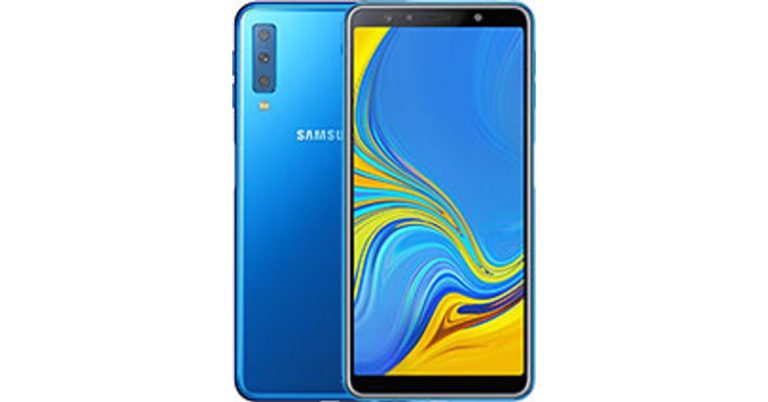
Samsung has cut down its smartphone prices across mid-range to budget category of smartphones. The Galaxy A7 which comes in a 6GB with a 128GB internal storage model will experience a price cut of Rs 3,000. So, it is going to be available at Rs 25,990 instead of Rs 28,990. The base model of this phone which has 4GB RAM and 64GB storage will receive Rs 2,000 discount—it will come at Rs 21,990 instead of Rs 23,990.
To talk about its specifications, the Samsung Galaxy A7 comes with an octa-core 2.2GHz processor. It has a display of 6.0-inches with 1,080×2,220 pixels. The device sports a 24MP front camera as well as a 24MP+5MP+8MP triple rear camera setup. The smartphone houses a 3,300mAh battery, which is non-removable.
The Galaxy J8, which was earlier priced at Rs 18,990 will now be available at Rs 15,990. The Samsung Galaxy J6+ can be picked up for Rs 14,990 instead of Rs 15,990, the Galaxy J6 at Rs 11,490 from Rs 12,990. Finally, the Galaxy J4 and J2 Core will receive a price cut of Rs 1,000 each and can be purchased at Rs 9,990 and Rs 5,990 respectively.
The Galaxy J8 runs on Android 8.0 Oreo and sports a Qualcomm Snapdragon 450 processor. Two RAM variants include 4GB and 3GB, these come with 64GB and 32GB internal storage respectively. There is a microSD card slot that can store up to 256GB of data. Connectivity options include WLAN, Bluetooth, GPS, FM Radio and a microUSB 2.0.
These discounts are active on all online shopping portals like Flipkart, Amazon India and Paytm mall. The new prices have also been put to effect on all offline retail outlets. With this the company might want to get rid of stocks before they launch new smartphones in the coming months. The Galaxy S10 is something which every one is really waiting for.
The new family of the S series consists of four phones—S10, S10Lite, S10Plus and a 5G model whose name hasn’t been known as of now. The models are expected to come with an AMOLED Infinity O display, ultrasonic in-display fingerprint sensor and Exynos 9820 or Snapdragon 855 SoC processor.
Flipkart would be hosting a year end carnival sale starting 23rd December. The discount would encompass refrigerators, washing machines, TVs and other large electronic items. Companies on whose products these discounts are available include Samsung, Xiaomi, Vu et al. It is a 9-day discount period starting from December 23 to December 31. There would also be special offers titled ‘magical deals’ in between 12AM and 1AM at every day of the discount.
The Xiaomi Mi 43-inch Smart TV 4A will be discounted and can be picked up for Rs 21,999, its original price being Rs 22,999. The Samsung 32-inch HD LED TV 2018 edition is getting a discount of more than Rs 10,000. Its original price being Rs 26,999, it will be sold at Rs 15,999.
The Vu Iconium 43-inch 4K Smart TV will also see a price slash at Rs24,999, instead of the earlier Rs 41,000. The Vu 32-inch Smart TV will experience a price cut to Rs 12,999 and the Vu 40-inch full HD LED TV will be sold at a discounted rate of Rs 15,499. The IFFALCON 4K 55-inch Android TV will be discounted to Rs 39,999 from Rs 59,999. The Micromax 32-inch HD TV’s price would decline to Rs 10,499 where it was originally at Rs 19,990. The Thomson B9 Pro 40-inch Full-HD Smart TV will see a price cut of Rs 8,000. Where it was priced at Rs 25,999 it will now be available at a cost of Rs 10,499.
Now we come the large appliances. The Midea 6kg front load washing machine will come at a cost of Rs 14,499 instead of Rs 11,999. The IFB 6kg front load washing machine will be priced at Rs 19,499 instead of Rs 22,590. The LG 260 litre frost-free double door refrigerator will be priced at Rs 22,490 where it costed Rs 30,690 previously. Also, the Whirlpool 292 litre frost free double door refrigerator will available at a discounted price of Rs 24,240 from Rs 28,100.
Now to talk about ACs. The Midea 1 tonne 3 star 2018 AC will see a price drop of more than Rs 20,000. Where it was earlier priced at Rs 37,000 now it will cost Rs 21,999. The Morphy Richards 30 Litre Convection Microwave will be priced at Rs 8,999 where it was priced Rs 15,670 earlier.
The Livpure Pep Pro++ 7litre RO+UV+UF Water Purifier will experience a price reduction from Rs 15,000 to Rs 8,499. The Hindware Atlantic 3Litre Instant Water Geyser and Maharaja Whiteline Neo Mixer will priced at Rs 1,999 and Rs 1,299 respectively. Seems like a good number of large appliances are going to undergo a rate slash and it would be a prove to be a good time to buy at discounted rates.
For the latest gadget and tech news, and gadget reviews, follow us on Twitter, Facebook and Instagram. For newest tech & gadget videos subscribe to our YouTube Channel.
The about-to-launch Android smartphone of Xiaomi, Redmi Go is said to launch with Android Pie out-of-the-box. The big news is that the Pie version is reportedly said to launch with the Go edition of Android. No phone until now has been launched in this edition by the company, so this is going to be the first one by them.
This was known on the basis of three certifications that the phones has passed. They are the Federal Communications Commission(FCC) in US, the Eurasian Economic Commission(EEC) in Russia, and Info-Communications Media Development Authority(IMDA) in Singapore. In US and Russia, the name of the phone wasn’t revealed, it was only mentioned in the Singapore certification. So, whether the Redmi Go has passed through FCC and EEC cannot be ascertained as of yet.
The model number in FCC and EEC is reportedly said to be M1903C3GG. Industry insiders also say that the US FCC certification revealed some of its specifications. The Xiaomi’s latest handset is expected to have a dual SIM capability along with 2.4GHz WiFi and Bluetooth v4.2. The dimensions are supposed to be 141x71x150mm and the touchscreen will come with an aspect ratio of 18:9.
The device would probably be a non-premium model just like most of Xiaomi’s budget phones. We expect its price to be under Rs 10,000. Thus, it might attract a lot of customers after its launch which is anticipated to be within the beginning of next year. The certifications also allegedly reveal that this non-flagship model is going to have a 1GB RAM.
Though we don’t know when the Redmi Go is launching, we know that the Xiaomi Mi Play will launch on 24th December. The Xiaomi Mi Play was leaked in TENAA with the model number M1901F9T. It is expected to have an octa-core CPU with 2.3GHz and a waterdrop notch.
A 5.84-inch multi-touch TFT display screen is said to be in the phone with a toughened glass on top. The about-to-launch smartphone would offer 2,280×1,080 pixels resolution and an aspect ratio of 19:9.
For the latest gadget and tech news, and gadget reviews, follow us on Twitter, Facebook and Instagram. For newest tech & gadget videos subscribe to our YouTube Channel.
The Xiaomi Redmi Note 3 is quite an old phone and was once one of the most widely used phones of Xiaomi. It is still pretty much in use and for those who still possess the mobile there is good news in store for you. The smartphone is receiving a MIUI 10 based Android 6.0 Marshmallow OTA update.
Considering that it is quite an old phone, this update is expected to be the final one Xiaomi is going to launch. This is probably targeted to give the old customers a taste of the new UI based update. The update is supposed to bring a split screen feature and Quick switch for the Redmi Note 3. It will bring to the device a redesigned notification panel, full-screen gestures, improved multitasking management, redesigned volume sliders, natural sound system etc.
A July 2018 security patch is supposed to be launched for the smartphone, too. The Android version number is MIUI 10.1.1.0 MHOMIFI and is 261MB in size. For your convenience we are going to tell you how to update your mobile. Since it is an OTA(Over-the-air) update, the smartphone will receive it automatically. One doesn’t need to update it manually.
For ensuring that your phone has been updated, go to Settings>General settings>About phone. Here you would be able to view the MIUI version your phone consists of. Another alternative to check is settings> general settings> about phone> system updates. At this stage, you’ll find an ‘Android Version’ section. If it shows 6.0 then the update has been installed on your phone or you can press on update now button.
To talk about the device’s specifications, it comes with a Hexa-core Qualcomm MSM8956 Snapdragon 650 processor. The mobile device comes in two RAM variants—2GB and 3GB with in-built storage of 16GB and 32GB respectively.
The device has a microSD card slot which can store up to 256GB of data. There is a 16MP single camera and a 5MP selfie camera. A large battery of 4,050mAh houses the smartphone, which is non-removable. Connectivity options includes WiFi 802.11, hotspot, Bluetooth 4.1, infrared port, GPS, FM radio and microUSB 2.0 wire. The phone comes in three colour options which are silver, gray and gold.
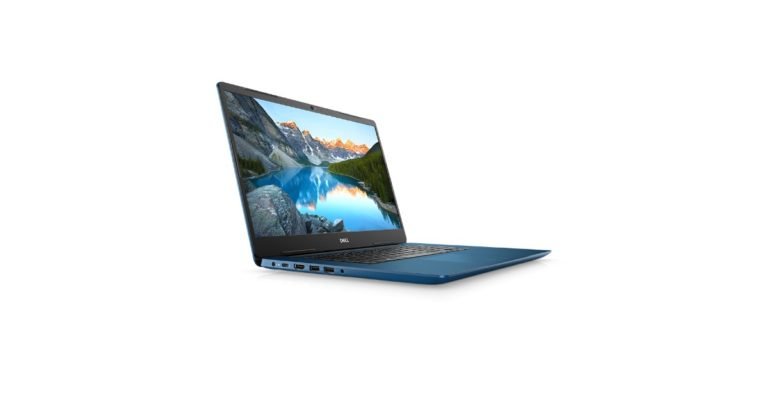
Dell has unveiled two of new laptops in India under its ‘Inspiron 5000’ series. The two new laptops that has been launched include the Dell Inspiron 5480 and the Dell Inspiron 5580. The latest offerings by the laptop maker come with Dell Cinema software that is said to offer users an enhanced entertainment experience.
Let’s talk about the pricing details of the new laptops. Speaking of Dell Inspiron 14 5480 laptop, its base variant comes with an 8th Gen Core i3-8145U processor and 4GB of RAM and it is priced at Rs 33,990. The high-end variant of the laptop comes with an 8th Gen Intel Core i5-8265U processor clubbed with 8GB RAM and it is priced at Rs 49,990.
Coming to Dell Inspiron 5480, its 8th Gen Core i3-8145U processor + 4GB RAM model is priced at Rs 34,990, and its variant with same processor/RAM configurations with 16GB Optane memory bear a price tag of Rs 40,990. If we talk about the 8th Gen Intel Core i5-8265U processor + 8GB RAM + 2TB HDD storage model of Dell Inspiron 5580, it is priced at Rs 54,990 and the high-end variant with 8th Gen Intel Core i5-8265U processor + 8GB RAM + 2TB HDD + 2GB Nvidia MX150 GPU bears a price tag of Rs 55,990. The newly launched devices are available in Platinum Silver, Burgundy, and Ink colour options.
The new notebooks from Dell come with either 8th Gen Intel Core-i3 or Core-i5 processor and sport a Full HD display that comes with a coating of an anti-glare solution. Dell Inspiron 14 and Inspiron 15 come displays that sport very narrow bezels on all sides. Those who use their device for video calls would be happy to know that the laptops come with a miniaturized, 4-element lens webcam. This ensures the good quality of voice calling in low-light conditions with the help of Temporal Noise Reduction.
The laptops come with an option of upgrading storage and also have the ability to upgrade RAM up to 32GB. The option of Intel Optane Memory is also available on select models that helps them improve the rear and write speed of the HDD.
Speaking about the launch of the new laptops, Alen Joe Jose, Director- Product Marketing, Consumer & Small Business, Dell India said, “A year end delight, are the 2 new models from Dell’s Inspiron portfolio. Tech savvy users who know how to get the maximum from their notebook and are looking for style statements when it comes to personal technology, will surely appreciate these machines.”
If you can build apps, you should know that one different idea can actually make you a billionaire. Don’t believe us? Here, we have listed down 10 popular apps that are worth more than $1 billion. These include instant messengers, gaming apps, applications that are used for navigation and more. Check out our list now:
In This Article
WhatsApp
The most popular instant messaging app in the world had to be on the top of our list. WhatsApp was acquired by Facebook in February 2014 for $19 billion. It is worth noticing that prior to the acquisition, WhatsApp was making revenue of around $20 million per year.
Uber
The next on our list if Uber, which completely changed the way we hail cabs. Thanks to Uber, getting a cab anywhere on the globe is actually just as easy as tapping a few buttons on your smartphone. Naturally, the app made a lot of money. The app was reportedly valued at $76 billion after Toyota invested $500 million in it. However, a report in Bloomberg says that Uber has been told by the banks that it could be $120 billion company when it goes public in 2019.
Instagram
Everyone knows about Instagram’s acquisition. The photo-sharing app was acquired by Facebook for $1 billion in 2012, however, a recent Bloomberg report said that the app would have been 100 times more valuable had the deal not taken place in 2012. We should say that that truly was a good investment that Facebook made.
Snapchat
Snapchat has been locked in a rivalry with Facebook since ages and the app has seen its share of ups and downs. This year, its valuation fluctuated a lot and as of March 2018, it was valued at $20.82 billion. It is worth mentioning that this value was recorded after Kylie Jenner and Rihanna’s posts on social media which made the company valuation fall.
PUBG
Now let’s talk about the most popular game of the year — PUBG. The game has got millions of people around the globe hooked to it. While its current valuation is not confirmed, a report in Bloomberg last year said that the valuation of Bluehole, PUBG’s developer to be over $4.6 billion. Considering that the developer’s deal with Tencent happened this year, we are sure this value only grew.
Candy Crush
There was a time when everyone was glued to Candy Crush. And do you know how well that paid off for the makers? King, the company behind the app, was acquired by Activision Blizzard for a massive $5.9 billion in 2016. Yes, you read that right.
Waze
If Google acquires an app, there are very high chances of it being useful. And Waze is no different. Its time-saving features are indeed very useful. No wonder Google agreed to pay $1.3 billion for it when it acquired the app in 2013.
Clash of Clans
Every gamer knows about the popularity of Clash of Clans. And this popularity made its parent good money too. In 2016, Supercell, the company behind Clash of Clans and Boom Beach got acquired by Tencent at a massive $10.2 billion valuation. That’s an insane amount of money, isn’t it?
Square
If reports are to be believed, then Jack Dorsey’s Square was actually more valuable than microblogging website earlier this year. The mobile payment service was valued at $19 billion, according to various media reports.
Kakao Talk
Kakao Talk is a popular instant messenger used in Korea and some adjacent countries. It has a user base of over 40 million and was valued at $7 billion at the beginning of the year.
For the latest gadget and tech news, and gadget reviews, follow us on Twitter, Facebook and Instagram. For newest tech & gadget videos subscribe to our YouTube Channel.
[td_smart_list_end]
Sometimes, it accidentally might happen that due pressing the wrong set of keys your computer screen rotates to portrait mode. The correct position of your computer is the landscape mode where you are able to see the screen in front of you with Windows key on the bottom right. And in portrait mode, the screen is tilted towards the left and unless you tilt sideways you won’t be able to see the screen correctly. There is also Landscape-flipped mode in which your screen is upside down.
Here we have enlisted some methods through which you can get your screen back in the right position. When your screen gets rotated it doesn’t mean that the computer has got some problem. It is just a change in the display settings that has been executed from certain shortcuts or by accidentally pressing some keys.
Through the same keys you’ll be able to rotate your screen to the landscape position. Here is what you need to do. It is the shortest and simplest method of all. You need to press CTRL+ALT+Up Arrow. This should bring back your computer screen to the landscape position.
However, if this doesn’t work then you need to do it manually. This only works for Windows 7, 8 and 10. Here are the steps:
Right click on desktop and then click on display settings
In settings, you will find ‘scale and layout’. The third option would be ‘Orientation. Click on that.
You would see the option of Landscape, Landscape(flipped) and portrait (flipped). Click on Landscape and that would bring your computer screen back to normal.
The shortcut to portrait and landscape flipped is CTRL+ALT+Left Arrow/Down Arrow respectively. Also, for other computers that might have a discreet graphic card in them there is another alternative. Right click>Graphic options>Rotation>Rotate to normal. We are sure if not one, then the other would definitely work. We hope this helps you guys to fix your problem. That’s about it.
Whenever we get an iPhone the first thing which comes to our mind is how to transfer music from the computer or pc to the new iPhone (after we move the contacts of course). But often times we don’t know how to transfer the music to the new device or are not adept in tech and gizmotics.
There are few ways you can transfer music to your Apple iPhone. Since iOS is not as open as Android it takes few extra steps to transfer those MP3 files from the computer to the iPhone. Transferring your songs to your iPhone is pretty simple if you follow the steps given below. One way to do it is through iTunes.
Here is how you can transfer music from the computer to iPhone using iTunes:
Once you connect your iPhone to computer via USB port click on ‘Continue’ after the window pops up for iTunes to read your iPhone data.
Then a dialogue would appear on your iPhone in which there would be a ‘Trust’ icon. Tap on it.
Click the phone icon on the left side of the interface. In order to manage media folders manually you have to go to ‘options’ and then under ‘summary’ cancel ‘automatically sync when this iPhone is connected’ and check ‘Manually manage music and videos’. In the end, click ‘Done’.
Now you need to import music by going to iTunes by clicking on ‘File’ and then ‘Add file to library’.
Select ‘Music’, ‘Sync Music’ and then ‘Done’.
There is another alternative without iTunes. Here are the steps for you:
Launch AnyTrans for iOS.
Go to ‘Audio’.
Click on ‘Music’.
There a button would appear with a plus icon. Click on it, select the music you want to transfer.
Finally click on ‘Open’ to start transferring music.
What a comeback it has been for Nokia. Now the HMD Global owned brand, Nokia is on the rise again. For almost half a decade the company was down and out, being kicked around from post to post. Now they have regained the lost limelight and are running towards glory. If you ask us, 2018 was the year of Nokia smartphones. They have launched exceptional smart mobiles throughout the year. And they left the best for last. The Nokia 7.1 is what they launched in the final month of 2018 and we got it over for a review. We tested it extensively and this what we found out about the too-hot-to-handle device.
Nokia 7.1 Design and Display
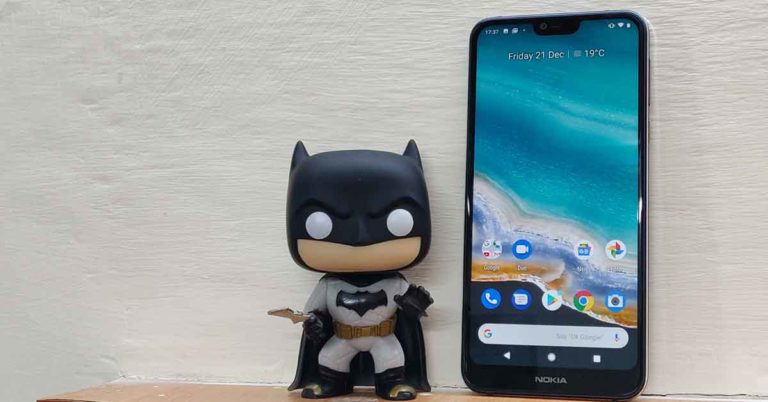
You get to see something new in the Nokia 7.1. Instead of the usual curved back design, this smartphone has a very nice sophisticated design. It is like a block and does remind us of the iPhone 5S. This form is refreshing to see, in a sea of mobiles that are very similar to look at. Nokia 7.1 sports a 5.84-inch FHD+ IPS display with a screen to body ratio of 79.9 percent. Which makes a lot of room in the chin area for the Nokia branding to be displayed. The notch on the top is quite small, holds sensors and the speaker grille along with the front facing camera.
Dressed in navy blue with silver chamfers on the sides, which the company says are diamond cut, the Nokia 7.1 is built of metal and glass materials. Both the front and back sport toughened glass, set on an aluminum finish. These are fingerprint attractors, but do make the smartphone look premium. The thin blocky design is great to hold and is perfect for one hand usage. The power and volume rocker buttons set on the right side are well within reach. The 3.5mm audio port and the second microphone can be found on the top side of the Nokia 7.1, while the hybrid SIM tray is placed on the left side. The SIM tray can hold two nano SIMs or one nano SIM plus the microSD card of up to 400GB.
The bottom part of the chassis has the primary microphone, USB type-C charging port as well as the mono loudspeaker. Turn the Nokia 7.1 around and you are greeted by the vertically placed cameras and a LED flash bump. Underneath that is a well-placed fingerprint sensor and the Nokia branding. The Android One logo also makes and appearance at the back and if you look closely under that, you could see that the smartphone is made in India.
Coming to the Display of the Nokia 7.1 we loved every bit of it. Yes, it is not the phablet size and is couple of notches smaller, but that does not mean it does not perform well. We give Nokia full marks in the display department. Everything from sunlight readability to indoor viewing is top notch. The text is crisp and one can clearly see great details on-screen. This has also has been made possible because the smartphone utilizes 432 pixel per inch density and supports HDR10 PureDisplay.
We ran HD videos on it and the screen did not disappoint at all. There was almost no ghosting effect and we were quite happy with what we saw. The video experience on this smartphone was quite good, we loved the HD movies on it and the loud speaker did perfect justice to it. Gaming experience on the display was vibrant, too. All in all, the display is one of the strongest points of the Nokia 7.1, after its design.
Nokia 7.1 Performance and Camera
The year 2018 has brought Nokia out of the hiding and they are proudly partnering with best chipset manufacturers. Their phones have the latest best in each price segment and Nokia 7.1 is no different. This smartphone holds the Qualcomm Snapdragon 636 chipset inside with a 1.8GHz Octa-core CPU on it. Graphics are powered by Adreno 509 and are good for entry to mid-level games. Anything above that, the phone starts to show signs of lag here and there. But, that does not mean you cannot play games like PUBG on it. The experience is quite nice thanks to the 4GB RAM on board this device. However, you might miss a shot or two while playing the game on this configuration.
For storage Nokia 7.1 comes with 64GB inbuilt memory module that is good to begin with. If you are one of serial downloaders who loves to download and keep on the phone’s storage, then you will run out of it soon. Thankfully this smartphone can, as we said before, accommodate large microSD cards. Just keep one installed, if you own a single SIM and you will be all right.
The operating system on the Nokia 7.1 is Android 9 Pie. It first came with Android 8.1 but as soon as we connected it to the Internet it upgraded over the air to the latest one. The Interface is slick and has no bloatware, since it is built on the Android One platform. This gives its user a smooth native Android experience with no drivel skins on top. The touch sensitive display buttons at the bottom work well and the app drawers is smooth to operate. One can easily roll down the top shortcuts screen and there is negligible lag in multi-tasking.
Talking about which, the Nokia 7.1 does not get hot at all. Even when you have multiple applications open or are using GPS navigation. Yes, it does get warm at times when playing graphic intensive games, but nothing that will make you place the phone in an ice bucket to cool it down. The audio reception on this smart is pretty neat and it supports 4G LTE. We used it on the reliance JIO network, since both Vodafone and Airtel are shoddy in New Delhi, and we could hear everything clearly, even when we were in a basement. WiFi bands 802.11 a/b/g/n/ac are supported, which made us get 150 MBPS speeds via our router with ease.
Thanks to which everything ran smoothly. Websites opened in a jiffy without lag along with apps and games that need an internet connection to boot up. The fingerprint on this mobile is easy to reach and does the job nicely on most counts. We faced almost no problem with it. Coming to the cameras of the Nokia 7.1, this smartphone sports a dual camera array at the back. This comprises of 12MP plus 5MP sensors (partnered with Zeiss optics) with f/1.8 and f/2.4 aperture size respectively. 4K videos can also be recorded on the rear camera. The front snapper has an 8MP sensor supporting an aperture size of f/2.0.
We had a gala time with the cameras. The colours are vibrant and the objects are sharp. The depth effect works exceptionally well and we faced very less shutter lag on them. Macro shots came out really well. Night shots on the other hand with the LED flash were good, but without it lost a lot of details. There are plenty of camera modes on the Nokia 7.1 including a pro mode that gives you additional abilities to manage your shots. As we tested it further, it became our go to mode for each and any type of shots.
The selfie camera also has the pro mode, which works well and comes with the beauty shot. The beauty shot does manage to do the job, but we have seen better ones in some of its competitors. But that is not a deal breaker, as overall the cameras do a wonderful job. Like we said before, the rear cameras can record videos in 4K at 30fps and they come out to be really close to life. Be careful these do consume a lot of space, so keeping them on the added storage is always a good idea.
The Nokia 7.1 is powered by a 3,060 mAh battery that at first seems less, however to or amazement lasted for more than a day. And our day included a lot of phone calls over 4G with WiFi on and numerous Whatsapp message exchanges. We played an hour or two of games on it as well and used GPS for an hour. And yet the phone had 20% battery left by the end of our day.
We ran couple of benchmarks on the device and it did fairly well for a mid-range device. The Nokia 7.1 scored 1,17,455 on AnTuTu, 4,249 marks on Geekbench’s compute test and 1,342 points on single core Geekbench CPU test. It also managed to get 4,866 points on Geekbench’s multi-core CPU test.
Verdict and Final Words
The Nokia 7.1 is priced at Rs 19,999, but can be picked up for few hundreds less from places like Amazon. So, does it justify the price? Yes, absolutely. If you are in search of a mid-range smartphone that has great looks, good battery life, exceptional cameras and display then you can go for it without a doubt. This smartphone is bound to get you that second look. So we are putting it out there, Nokia 7.1 is a showstopper.
Pros:
Excellent battery life
Refreshing design
Awesome display
Cons:
Smaller screen size
Some lag seen while playing high-end games
Large chin area




 The most popular instant messaging app in the world had to be on the top of our list. WhatsApp was acquired by Facebook in February 2014 for $19 billion. It is worth noticing that prior to the acquisition, WhatsApp was making revenue of around $20 million per year.
 The next on our list if Uber, which completely changed the way we hail cabs. Thanks to Uber, getting a cab anywhere on the globe is actually just as easy as tapping a few buttons on your smartphone. Naturally, the app made a lot of money. The app was reportedly valued at $76 billion after Toyota invested $500 million in it. However, a report in Bloomberg says that Uber has been told by the banks that it could be $120 billion company when it goes public in 2019.
 Everyone knows about Instagram’s acquisition. The photo-sharing app was acquired by Facebook for $1 billion in 2012, however, a recent Bloomberg report said that the app would have been 100 times more valuable had the deal not taken place in 2012. We should say that that truly was a good investment that Facebook made.
 Snapchat has been locked in a rivalry with Facebook since ages and the app has seen its share of ups and downs. This year, its valuation fluctuated a lot and as of March 2018, it was valued at $20.82 billion. It is worth mentioning that this value was recorded after Kylie Jenner and Rihanna’s posts on social media which made the company valuation fall.
 Now let’s talk about the most popular game of the year — PUBG. The game has got millions of people around the globe hooked to it. While its current valuation is not confirmed, a report in Bloomberg last year said that the valuation of Bluehole, PUBG’s developer to be over $4.6 billion. Considering that the developer’s deal with Tencent happened this year, we are sure this value only grew.
 There was a time when everyone was glued to Candy Crush. And do you know how well that paid off for the makers? King, the company behind the app, was acquired by Activision Blizzard for a massive $5.9 billion in 2016. Yes, you read that right.
 If Google acquires an app, there are very high chances of it being useful. And Waze is no different. Its time-saving features are indeed very useful. No wonder Google agreed to pay $1.3 billion for it when it acquired the app in 2013.
 Every gamer knows about the popularity of Clash of Clans. And this popularity made its parent good money too. In 2016, Supercell, the company behind Clash of Clans and Boom Beach got acquired by Tencent at a massive $10.2 billion valuation. That’s an insane amount of money, isn’t it?
 If reports are to be believed, then Jack Dorsey’s Square was actually more valuable than microblogging website earlier this year. The mobile payment service was valued at $19 billion, according to various media reports.
 Kakao Talk is a popular instant messenger used in Korea and some adjacent countries. It has a user base of over 40 million and was valued at $7 billion at the beginning of the year.
For the latest
Kakao Talk is a popular instant messenger used in Korea and some adjacent countries. It has a user base of over 40 million and was valued at $7 billion at the beginning of the year.
For the latest 
 Dressed in navy blue with silver chamfers on the sides, which the company says are diamond cut, the
  The bottom part of the chassis has the primary microphone, USB type-C charging port as well as the mono loudspeaker. Turn the Nokia 7.1 around and you are greeted by the vertically placed cameras and a LED flash bump. Underneath that is a well-placed fingerprint sensor and the Nokia branding. The Android One logo also makes and appearance at the back and if you look closely under that, you could see that the smartphone is made in India.
Coming to the Display of the Nokia 7.1 we loved every bit of it. Yes, it is not the phablet size and is couple of notches smaller, but that does not mean it does not perform well. We give Nokia full marks in the display department. Everything from sunlight readability to indoor viewing is top notch. The text is crisp and one can clearly see great details on-screen. This has also has been made possible because the smartphone utilizes 432 pixel per inch density and supports HDR10 PureDisplay.
We ran HD videos on it and the screen did not disappoint at all. There was almost no ghosting effect and we were quite happy with what we saw. The video experience on this smartphone was quite good, we loved the HD movies on it and the loud speaker did perfect justice to it. Gaming experience on the display was vibrant, too. All in all, the display is one of the strongest points of the Nokia 7.1, after its design.
The bottom part of the chassis has the primary microphone, USB type-C charging port as well as the mono loudspeaker. Turn the Nokia 7.1 around and you are greeted by the vertically placed cameras and a LED flash bump. Underneath that is a well-placed fingerprint sensor and the Nokia branding. The Android One logo also makes and appearance at the back and if you look closely under that, you could see that the smartphone is made in India.
Coming to the Display of the Nokia 7.1 we loved every bit of it. Yes, it is not the phablet size and is couple of notches smaller, but that does not mean it does not perform well. We give Nokia full marks in the display department. Everything from sunlight readability to indoor viewing is top notch. The text is crisp and one can clearly see great details on-screen. This has also has been made possible because the smartphone utilizes 432 pixel per inch density and supports HDR10 PureDisplay.
We ran HD videos on it and the screen did not disappoint at all. There was almost no ghosting effect and we were quite happy with what we saw. The video experience on this smartphone was quite good, we loved the HD movies on it and the loud speaker did perfect justice to it. Gaming experience on the display was vibrant, too. All in all, the display is one of the strongest points of the Nokia 7.1, after its design.
 We had a gala time with the cameras. The colours are vibrant and the objects are sharp. The depth effect works exceptionally well and we faced very less shutter lag on them. Macro shots came out really well. Night shots on the other hand with the LED flash were good, but without it lost a lot of details. There are plenty of camera modes on the Nokia 7.1 including a pro mode that gives you additional abilities to manage your shots. As we tested it further, it became our go to mode for each and any type of shots.
 The selfie camera also has the pro mode, which works well and comes with the beauty shot. The beauty shot does manage to do the job, but we have seen better ones in some of its competitors. But that is not a deal breaker, as overall the cameras do a wonderful job. Like we said before, the rear cameras can record videos in 4K at 30fps and they come out to be really close to life. Be careful these do consume a lot of space, so keeping them on the added storage is always a good idea.
The Nokia 7.1 is powered by a 3,060 mAh battery that at first seems less, however to or amazement lasted for more than a day. And our day included a lot of phone calls over 4G with WiFi on and numerous Whatsapp message exchanges. We played an hour or two of games on it as well and used GPS for an hour. And yet the phone had 20% battery left by the end of our day.
The selfie camera also has the pro mode, which works well and comes with the beauty shot. The beauty shot does manage to do the job, but we have seen better ones in some of its competitors. But that is not a deal breaker, as overall the cameras do a wonderful job. Like we said before, the rear cameras can record videos in 4K at 30fps and they come out to be really close to life. Be careful these do consume a lot of space, so keeping them on the added storage is always a good idea.
The Nokia 7.1 is powered by a 3,060 mAh battery that at first seems less, however to or amazement lasted for more than a day. And our day included a lot of phone calls over 4G with WiFi on and numerous Whatsapp message exchanges. We played an hour or two of games on it as well and used GPS for an hour. And yet the phone had 20% battery left by the end of our day. We ran couple of benchmarks on the device and it did fairly well for a mid-range device. The Nokia 7.1 scored 1,17,455 on AnTuTu, 4,249 marks on Geekbench’s compute test and 1,342 points on single core Geekbench CPU test. It also managed to get 4,866 points on Geekbench’s multi-core CPU test.
Verdict and Final Words
The Nokia 7.1 is priced at Rs 19,999, but can be picked up for few hundreds less from places like Amazon. So, does it justify the price? Yes, absolutely. If you are in search of a mid-range smartphone that has great looks, good battery life, exceptional cameras and display then you can go for it without a doubt. This smartphone is bound to get you that second look. So we are putting it out there, Nokia 7.1 is a showstopper.
Pros:
Excellent battery life
Refreshing design
Awesome display
Cons:
Smaller screen size
Some lag seen while playing high-end games
Large chin area
We ran couple of benchmarks on the device and it did fairly well for a mid-range device. The Nokia 7.1 scored 1,17,455 on AnTuTu, 4,249 marks on Geekbench’s compute test and 1,342 points on single core Geekbench CPU test. It also managed to get 4,866 points on Geekbench’s multi-core CPU test.
Verdict and Final Words
The Nokia 7.1 is priced at Rs 19,999, but can be picked up for few hundreds less from places like Amazon. So, does it justify the price? Yes, absolutely. If you are in search of a mid-range smartphone that has great looks, good battery life, exceptional cameras and display then you can go for it without a doubt. This smartphone is bound to get you that second look. So we are putting it out there, Nokia 7.1 is a showstopper.
Pros:
Excellent battery life
Refreshing design
Awesome display
Cons:
Smaller screen size
Some lag seen while playing high-end games
Large chin area