

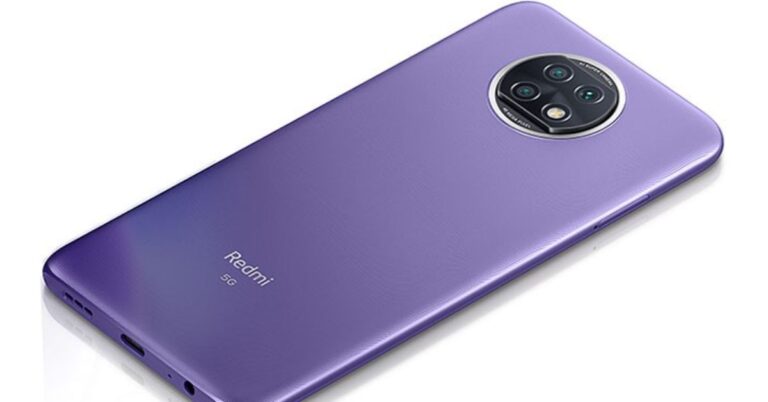
Xiaomi has officially launched two new devices in the market under its sub-brand Redmi. The company has introduced Redmi Note 9T and Redmi 9T in the European market which is said to be a twisted variant of Redmi Note 9 5G and Redmi Note 9 4G respectively. Both these Note 9 devices have already made their debut in China in November last year. The Redmi Note 9T is a 5G variant while the Redmi 9T is a 4G version. The earlier one comes with triple rear cameras but the latter one has a quad-camera set up on its back. Leats check out the pricing and specifications of both the devices.
Redmi Note 9T and Redmi 9T pricing
Redmi Note 9T price of the base 4GB RAM with 64GB storage variant has been set at EUR 229 that translates to Rs 20,500 while the 4GB RAM with 128GB storage model will be available with a price tag of EUR 269 that translates to Rs 24,100. Both the variants will be offered in Nightfall Black and Daybreak Purple. This device will go on sale in Europe starting January 11.
Whereas Redmi 9T will come with pricing of EUR 159 that translates to Rs 14,300 for the base 4GB RAM with 64GB storage model. The price of the 4GB RAM with 128GB storage has been set at EUR 189 that translates to Rs 17,000. Lastly, the 6GB RAM with 128GB storage option is priced at EUR 199 that translates to Rs 17,900. This smartphone will come in Carbon Gray, Twilight Blue, Sunrise Orange, and Ocean Green colour options and go on sale on January 9.
Redmi Note 9T tech specs
Redmi Note 9T features a 6.53-inch full-HD+ display with 1,080×2,340 pixels of resolution and an aspect ratio of 19.5:9. The device runs on MIUI 12 on top of Android 10. Under the hood, there is an octa-core MediaTek Dimensity 800U SoC with 4GB of LPDDR4X RAM and up to 128GB of UFS 2.2 storage. The internal memory can be expanded up to 256GB using a microSD card.

In terms of photography, there is a triple rear camera set up on the Redmi Note 9T which includes a 48-megapixel primary sensor with f/1.79 aperture. Other lenses include a 2-megapixel depth sensor with f/2.4 aperture and a 2-megapixel macro lens. On the front, there is a 13-megapixel selfie camera with f/2.25 aperture.
Furthermore, the Redmi Note 9T includes 5G, 4G LTE, Wi-Fi, Bluetooth, GPS/ A-GPS, Infrared (IR) blaster, NFC, USB Type-C, and a 3.5mm audio jack for connectivity options. In addition to this, there is a side-mounted fingerprint sensor too. The smartphone also houses a 5,000mAh battery with 18W fast charging support.
Redmi 9T tech specs
Redmi 9T is powered by an octa-core Qualcomm Snapdragon 662 SoC with up to 6GB of LPDDR4X RAM and 128GB of UFS 2.2 internal storage that can be expanded up to 512GB using a microSD card. There is a 6.53-inch full-HD+ display with 1,080×2,340 pixels of resolution and 19.5:9 aspect ratio. The phone runs on MIUI 12 on top of Android 10.

There is a quad rear camera set up on the Redmi 9T that consists of a 48-megapixel primary sensor with an f/1.79 aperture. In addition to this, there is an 8-megapixel ultra-wide-angle lens with f/2.2 aperture, a 2-megapixel depth sensor with f/2.2 aperture and a 2-megapixel macro lens. Upfront there is an 8-megapixel selfie camera with f/2.05 aperture.
The smartphone houses a 6,000mAh battery with 18W fast charging and reverse wired charging support. In terms of connectivity, there is a 4G LTE, Wi-Fi, Bluetooth 5.0, GPS/ A-GPS, FM radio, IR blaster, NFC, USB Type-C, and a 3.5mm audio jack.
For the latest gadget and tech news, and gadget reviews, follow us on Twitter, Facebook and Instagram. For newest tech & gadget videos subscribe to our YouTube Channel. You can also stay up to date using the Gadget Bridge Android App.








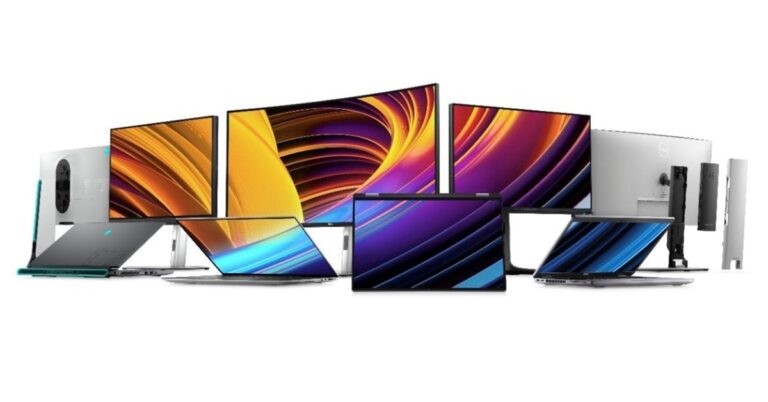

 In the recent times, we have noticed that robots are transforming industries including caregiving and health care, mobility and delivery, household tasks, leisure and recreation, retail and customer experience, and education. Though there might have been concerns about automation and the future of work before the current health crisis, the pandemic has shown how robots are benefiting us while the world grapples with the novel coronavirus.
The safety provided by robots, as well as the fact that robotic solutions are helping businesses stay open, are making them popular companions in the current climate. Robots are also able to safely drop off packages and groceries to consumers. As contactless and online shopping experiences are on the rise, robotic and sterile delivery options are now desirable.
Robots can help reduce the number of staff that need to physically be at work. As human counterparts try to reduce their exposure to risks, robots are able to efficiently obtain registration and check-in information and return used cutlery. These amazing machines can also safely sanitize workspaces and common areas. In health services, semi-autonomous or remotely monitored robots can disinfect large surfaces quickly, removing the need for cleaners to be exposed to the risk of contagion.
VR makes way to education
In the recent times, we have noticed that robots are transforming industries including caregiving and health care, mobility and delivery, household tasks, leisure and recreation, retail and customer experience, and education. Though there might have been concerns about automation and the future of work before the current health crisis, the pandemic has shown how robots are benefiting us while the world grapples with the novel coronavirus.
The safety provided by robots, as well as the fact that robotic solutions are helping businesses stay open, are making them popular companions in the current climate. Robots are also able to safely drop off packages and groceries to consumers. As contactless and online shopping experiences are on the rise, robotic and sterile delivery options are now desirable.
Robots can help reduce the number of staff that need to physically be at work. As human counterparts try to reduce their exposure to risks, robots are able to efficiently obtain registration and check-in information and return used cutlery. These amazing machines can also safely sanitize workspaces and common areas. In health services, semi-autonomous or remotely monitored robots can disinfect large surfaces quickly, removing the need for cleaners to be exposed to the risk of contagion.
VR makes way to education
 Overall spending on augmented, virtual and mixed reality technology (collectively called XR) — headsets, software and services, including purchases by consumers, increased in 2020 to US$12 billion globally, and is expected to grow at 50 percent annually to 2024. Recently COVID-19 has forced multiple schools to use XR since in-person training wasn’t possible. Seeing the current scenario, VR will help institution across the globe in seamless and safe delivery of education at all levels.
Increase in telehealth virtual doctor visit
Overall spending on augmented, virtual and mixed reality technology (collectively called XR) — headsets, software and services, including purchases by consumers, increased in 2020 to US$12 billion globally, and is expected to grow at 50 percent annually to 2024. Recently COVID-19 has forced multiple schools to use XR since in-person training wasn’t possible. Seeing the current scenario, VR will help institution across the globe in seamless and safe delivery of education at all levels.
Increase in telehealth virtual doctor visit
 Owing to the COVID-19 pandemic, people worldwide got dependent on telehealth for consultation with their doctors for treatment. Five percent of all patient visits worldwide will be video calls in 2021, and the market for pure-play telehealth virtual visit solutions (both video and non-video) will reach US$8 billion. More than US$33 billion of medical-grade home health care technology — mainly therapeutic and monitoring solutions and including FDA-approved smartwatches — will be sold in 2021, up almost 20 percent over 2019.
5G strategies for future
Owing to the COVID-19 pandemic, people worldwide got dependent on telehealth for consultation with their doctors for treatment. Five percent of all patient visits worldwide will be video calls in 2021, and the market for pure-play telehealth virtual visit solutions (both video and non-video) will reach US$8 billion. More than US$33 billion of medical-grade home health care technology — mainly therapeutic and monitoring solutions and including FDA-approved smartwatches — will be sold in 2021, up almost 20 percent over 2019.
5G strategies for future
 The wait for 5G is coming to an end as new phones and other technology products begin to launch with 5G capabilities and global connectivity powerhouses build out 5G strategies for the future. The coming 5G technology also opens up new opportunities in education. Remote learning and online classrooms will be able to include faster multi-user livestreaming for classroom experiences that match those of in-person learning.
Moreover, streaming technology with 5G
The wait for 5G is coming to an end as new phones and other technology products begin to launch with 5G capabilities and global connectivity powerhouses build out 5G strategies for the future. The coming 5G technology also opens up new opportunities in education. Remote learning and online classrooms will be able to include faster multi-user livestreaming for classroom experiences that match those of in-person learning.
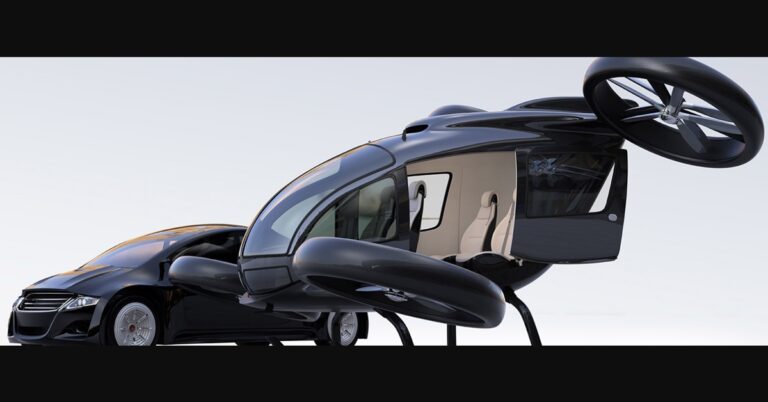
Moreover, streaming technology with 5G  As the burgeoning air taxi industry has continued to evolve, people may soon see a fleet of flying cars hover above everyday streets. A new kind of aerial vehicle, the vertical takeoff and landing aircraft (VTOL) could be the helicopter-drone combination that brings the mobility industry to realize that dream. Ride-sharing giant Uber shared that its intention is to have thousands of VTOLs sharing a city’s airspace. According to Nikhil Goel, head of product at Uber Elevate, the company unit working on VTOL development, “Our goal is to make traveling by air as economical as traveling by car.”
For the latest
As the burgeoning air taxi industry has continued to evolve, people may soon see a fleet of flying cars hover above everyday streets. A new kind of aerial vehicle, the vertical takeoff and landing aircraft (VTOL) could be the helicopter-drone combination that brings the mobility industry to realize that dream. Ride-sharing giant Uber shared that its intention is to have thousands of VTOLs sharing a city’s airspace. According to Nikhil Goel, head of product at Uber Elevate, the company unit working on VTOL development, “Our goal is to make traveling by air as economical as traveling by car.”
For the latest 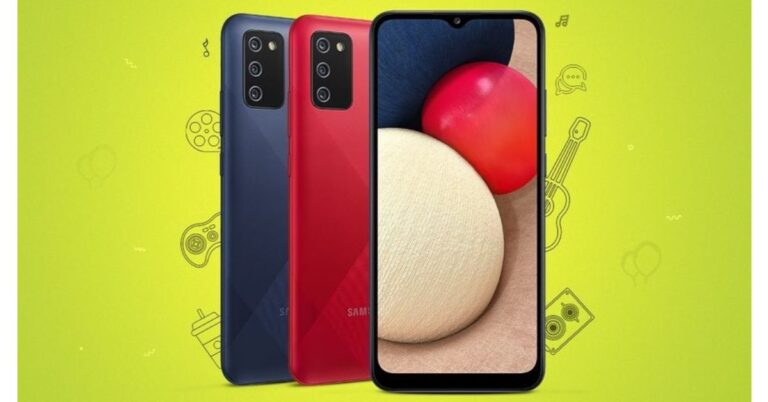
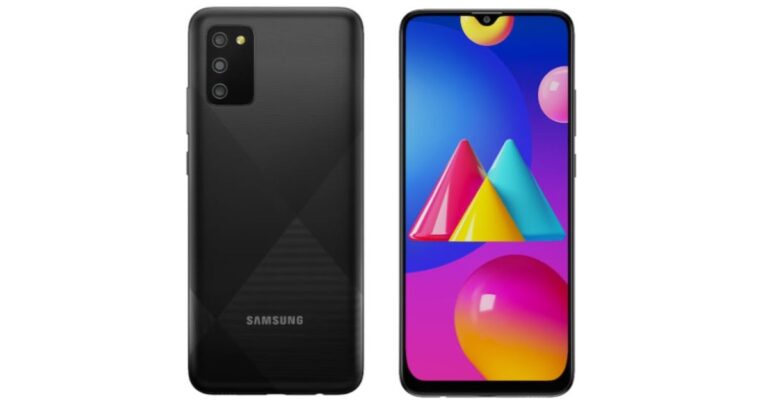
 Samsung Galaxy M02s technical specifications



 Xiaomi Mi 10i Tech Specs