In This Article
The processor
 Xiaomi Redmi Note 6 Pro is powered by the same processor as Redmi Note 5 Pro — Qualcomm Snapdragon 636 Soc. Considering this, it is safe to assume that the smartphone will have similar performance as the one we saw in Redmi Note 5 Pro.
The battery capacity
 With Xiaomi Redmi Note 6 Pro, the company has not bumped up the battery of the smartphone at all. It is the same at its predecessor — Redmi Note 5 Pro. Both the smartphones house the same 4,000mAh battery.
The dual rear cameras
 Believe it or not, but Xiaomi has not changed the cameras in its latest smartphone. Both Xiaomi Redmi Note 5 Pro and Redmi Note 6 Pro come with the same 12MP+5MP dual rear cameras. However, the company did say that it has changed the aperture. While the cameras of Redmi Note 5 Pro had an f/2.2 aperture, Xiaomi’s Redmi Note 6 Pro has an f/1.9 aperture. The new smartphone also comes with AI scene detection. However, we can’t say if it’ll effect the performance of the cameras as the AI enhancements have become more of a marketing gimmick that most smartphone companies use to sell their products better.
The RAM and storage
 Xiaomi Redmi Note 6 Pro, much like its predecessor, comes in two RAM variants — 4GB and 6GB. And much like its predecessor, both the variants are clubbed with 64GB onboard storage. We personally were expecting an upgrade to 128GB storage, but it seems like customers would have to buy an extra microSD card to get more storage onboard.
The primary selfie camera
 Xiaomi Redmi Note 6 Pro does have an extra camera on its front panel, but the main primary camera remains the same as the one we saw on its predecessor Redmi Note 5 Pro. Both the smartphones come with the same 20MP primary selfie camera, although Xiaomi does claim that Redmi Note 6 Pro has an AI Portrait Selfie mode. We would have to see it to believe that it makes any difference or not.
Our take
 We feel that Xiaomi has not made any relevant changes to the smartphone. Most of the internals remain the same and come with only minor upgrades. The company claims of AI functionalities, but as we mentioned earlier, AI has become more of a marketing tool of most smartphone brands. We would say, if you have the Xiaomi Redmi Note 5 Pro, you don’t need to upgrade. In the budget range too, you can consider some Nokia devices that fall under the Android One program because they will surely last longer, or you go for a smartphone in the Realme series as they are available at a better price.
For the latest gadget and tech news, and gadget reviews, follow us on Twitter, Facebook and Instagram. For newest tech & gadget videos subscribe to our YouTube Channel.
We feel that Xiaomi has not made any relevant changes to the smartphone. Most of the internals remain the same and come with only minor upgrades. The company claims of AI functionalities, but as we mentioned earlier, AI has become more of a marketing tool of most smartphone brands. We would say, if you have the Xiaomi Redmi Note 5 Pro, you don’t need to upgrade. In the budget range too, you can consider some Nokia devices that fall under the Android One program because they will surely last longer, or you go for a smartphone in the Realme series as they are available at a better price.
For the latest gadget and tech news, and gadget reviews, follow us on Twitter, Facebook and Instagram. For newest tech & gadget videos subscribe to our YouTube Channel. 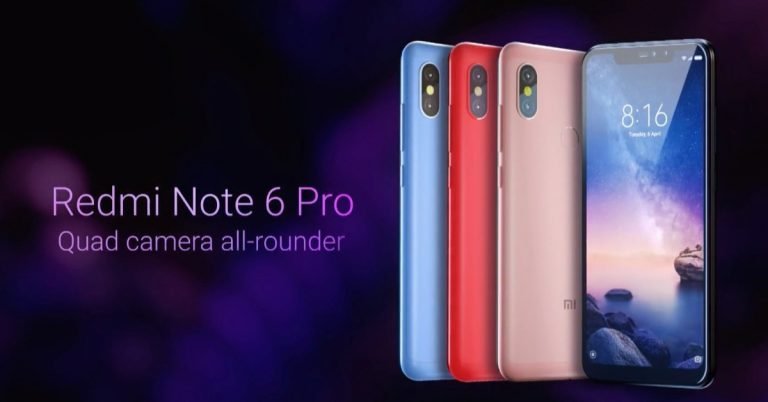

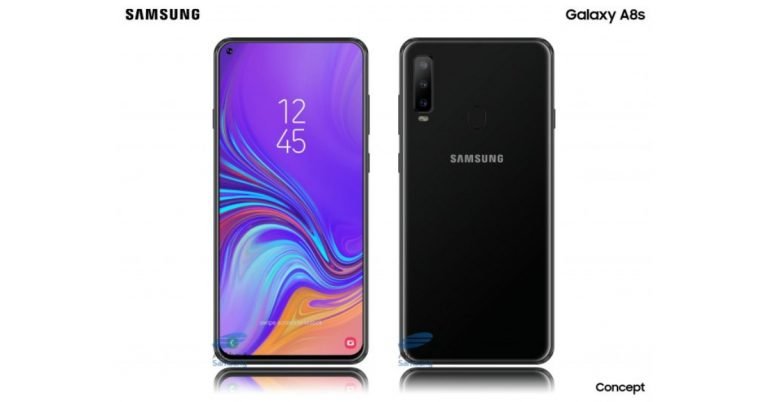
 In the render that has been provided by AllAboutSamsung, the cut-out and the selfie camera are present on the top left corner, much like what Samsung said it will be like when it announced its Galaxy A6s
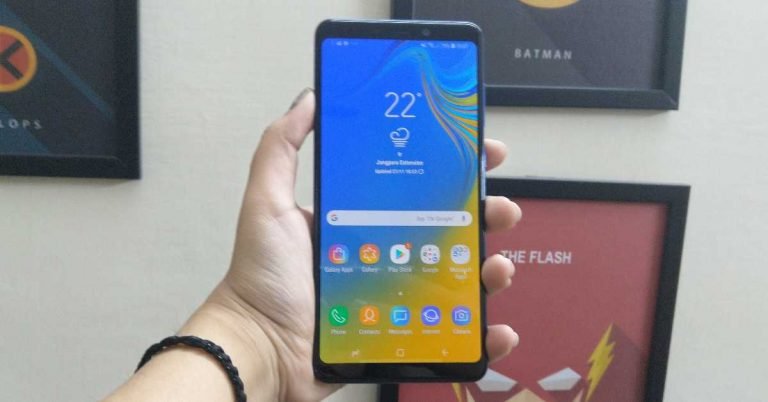
 On flipping over, you will see the 6.3-inch AMOLED display of Samsung Galaxy A9 (2018), that surprisingly comes without a notch. The edges of the
  The SIM card slot is placed on the top edge instead of the side and the bottom has a Type-C port, a 3.5mm jack and a speaker grille. The smartphone is definitely a stunner as far as its looks go. However, if you are someone who doesn’t like smartphones whose screen is too big, then Samsung Galaxy A9 (2018) may not be the right choice for you.
 But for us, it wasn’t really a minus, because of the crisp quality of images we got on the Super AMOLED panel of the device. At 6.3-inches, the display is tall, and everything that is showcased on it is so sharp and clear that we won’t be exaggerating it when we say that it was a visual treat. Although we haven’t spent too long with the smartphone yet, we plan to spend a lot of time playing games and watching videos, because the device’s display does seem very promising. We’ll test more aspects like sunlight readability and let you know about them in our detailed review.
 The primary camera of Samsung Galaxy A9 (2018) has a 24MP sensor that has an f/1.7 aperture, which us clubbed with a 10MP telephoto lens with f/2.4 aperture that can be used for 2X optical zoom. Besides this, there is an 8MP 120-degrees ultra wide-angle lens and a 5MP depth camera with f/2.2 aperture which can be used for live focus.
 We took some shots using the device indoors with good lighting conditions and they turned out to be really good. The images were vibrant, has accuracy in terms of colours and had details. The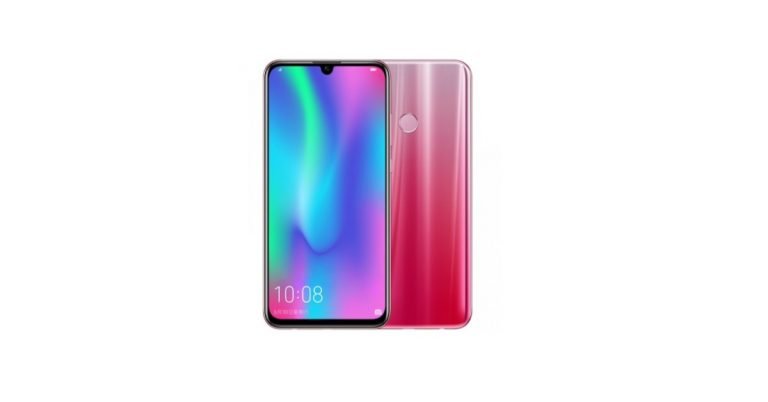
![[Video] Samsung Galaxy A9: Unboxing, First Look and Camera Samples](https://www.gadgetbridge.com/wp-content/uploads/2018/11/maxresdefault-4-768x432.jpg "[Video] Samsung Galaxy A9: Unboxing, First Look and Camera Samples")

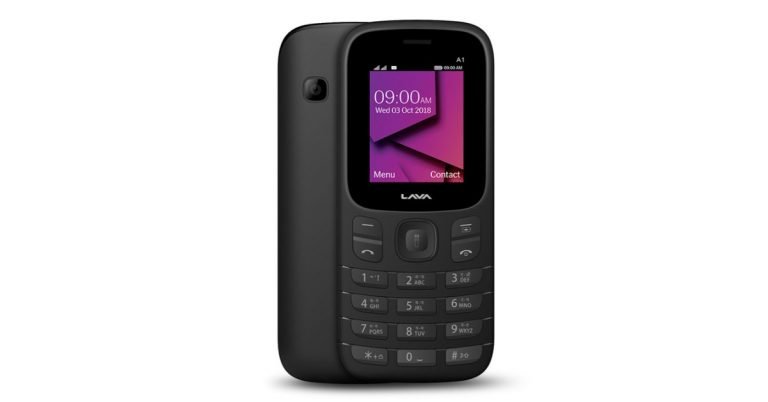
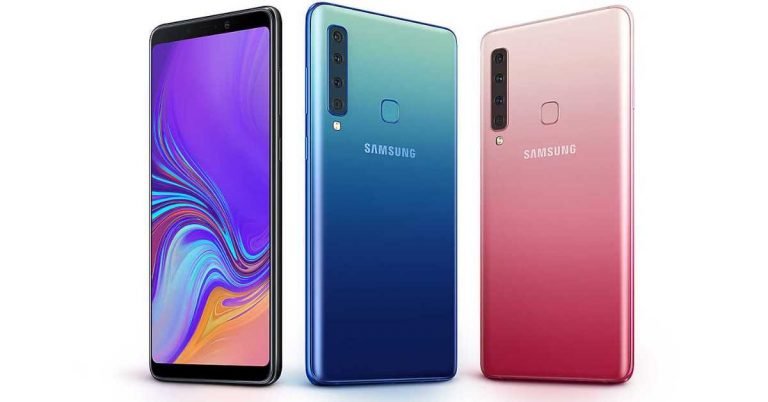
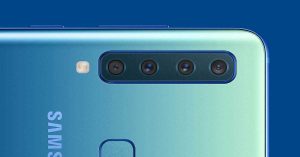 The first reason to buy had to be this one. As we mentioned earlier, the smartphone is the world’s first to come with a quadruple camera setup on its back panel. And this makes it an obvious choice for those who love smartphone photography. The rear cameras of Samsung Galaxy A9 (2018) comprise of a 24MP primary sensor that has an f/1.7 aperture, a 10MP telephoto sensor that comes with 2x optical zoom and comes with an f/2.4 aperture, an 8MP ultra-wide sensor that has a 120-degree lens and an f/2.4 aperture and a 5MP depth sensor that has an f/2.2 aperture. The camera app comes with a number of options for the user including Panorama, Pro, Beauty, and Auto modes. Live Focus, Scene Optimiser, and AR Emojis are also present. Samsung Galaxy A9 can also be used to make Super Slow-Mo, Hyperlapse and Slow Motion videos. In a nutshell, if you are a smartphone photography lover, you will get a lot of options in Samsung Galaxy A9 (2018).
 The smartphone is completely photography centric. So it hasn’t concentrated its complete attention on just the rear cameras of the device. On the front panel, there is a 24MP sensor that comes with an f/2.0 aperture. The front facing snapper of the smartphone comes with Selfie Focus, AR Emoji and Wide Selfie modes. So if you love clicking selfies, you won’t be disappointed with Samsung Galaxy A9 (2018).
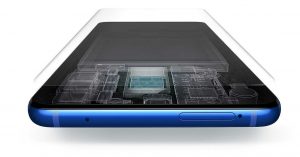 Samsung Galaxy A9 (2018) comes with Qualcomm Snapdragon 660 processor paired with either 6GB or 8GB of RAM. It is an octa-core processor This isn’t a bad processor at all, but we cannot ignore the fact that there are smartphones are in the same price bracket, or even cheaper that come with Snapdragon 845 SoC, which is the most high-end chip that is available. If you power user, and value the performance of the device over its cameras, you should rather opt for OnePlus 6, OnePlus 6T or Asus Zenfone 5Z.
 The newly launched smartphone from Samsung comes with 6.3-inch FHD+ Super AMOLED Infinity Display, which is said to produce sharp contrast and high dynamic colour, that result in a more immersive viewing experience. The smartphone has a screen to body ratio of 18:9 and 383.3ppi. This basically means that anything on the display — be it images or videos — would look super crisp and have a very high quality.
 Most smartphones these days come with a notch on top of their display. In fact, the waterdrop-shaped notch, which provides even more screen space is also becoming increasingly popular. However, Samsung Galaxy A9 (2018) lacks a notch at the top and doesn’t come with an all-screen experience or even a nearly full-screen experience. While some people may not consider this as a problem, those who spend a lot of time watching videos or playing games on their device may want to opt for a smartphone that comes with an all screen experience.
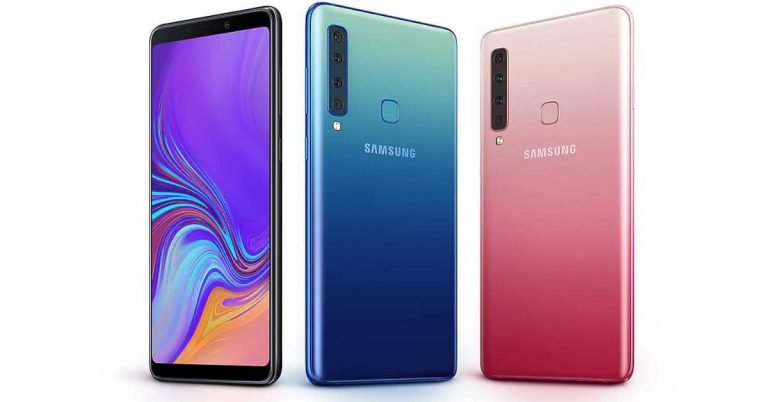
 If a smartphone’s looks are important for you, you would be happy to know that the Samsung Galaxy A9 (2018) is a stunner. The smartphone has a glass back panel that comes with shaded colours, making the device look extremely premium. Furthermore, the device is available in three colour options — Caviar Black, Bubblegum Pink, and Lemonade Blue. We personally really like the last two because they are so unconventional and make the device stand out.
 Samsung Galaxy A9 is not water-proof. So you would have to use it very carefully. This may not be a deal-breaker for most people, but if you have used to having a water-poof device, it sometimes is difficult to adapt to a smartphone which is not.
 One feature that most smartphones in the mid-range segment ignore is support for wireless charging. But Samsung Galaxy A9 (2018) has not skipped it. You do have the option of charging the device wirelessly or, you can opt for charging it via its type-c port that support fast charging.
 Samsung Galaxy A9 (2018) runs Android 8.0 Oreo out of the box, which is not the latest one that is available. However, the company has promised an update where the smartphone will be upgraded to Android 9.0 Pie. And hopefully, it will happen soon.
For the latest
Samsung Galaxy A9 (2018) runs Android 8.0 Oreo out of the box, which is not the latest one that is available. However, the company has promised an update where the smartphone will be upgraded to Android 9.0 Pie. And hopefully, it will happen soon.
For the latest 
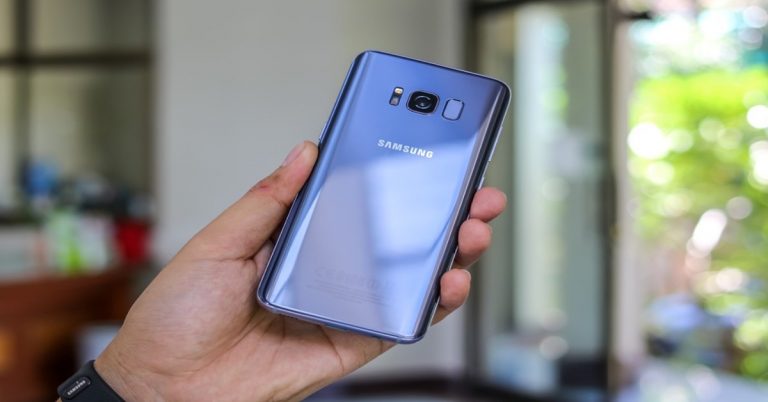

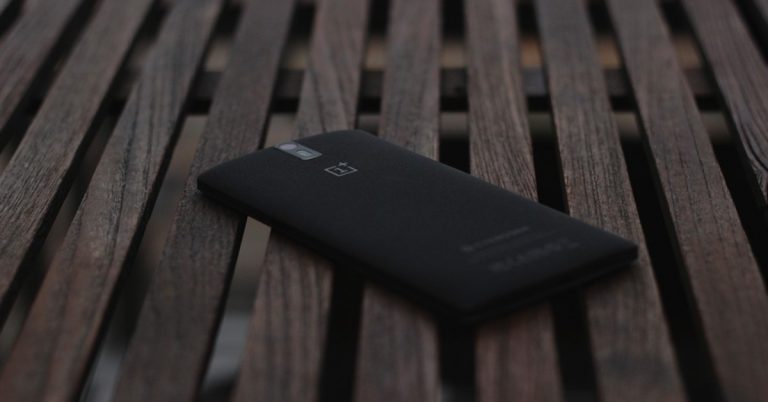
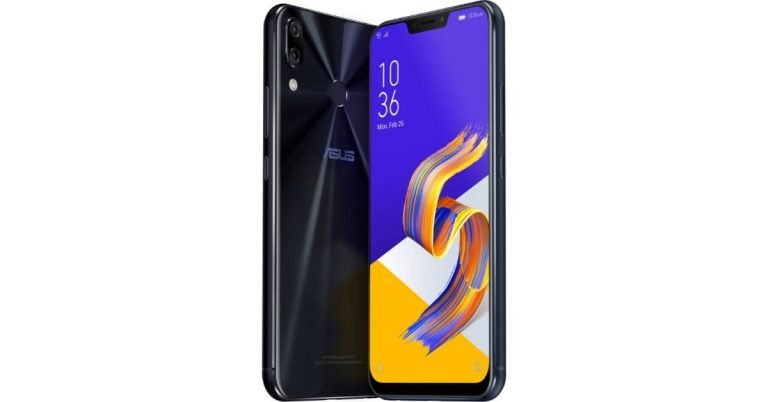
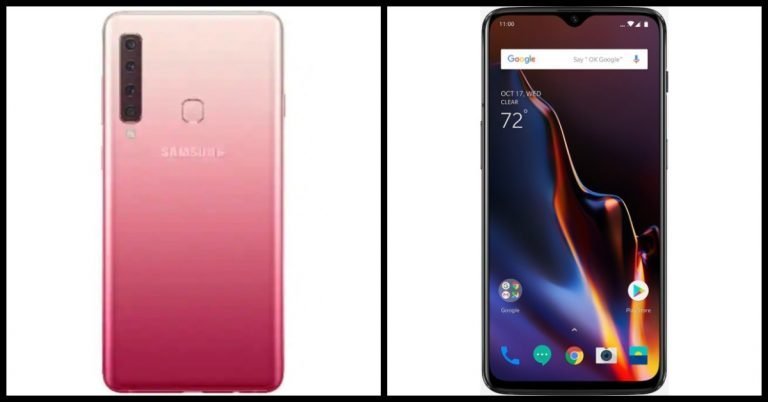
 OnePlus 6T: 6.41-inch full-HD+ Optic AMOLED panel with an aspect ratio of 19.5:9.
Samsung Galaxy A9 (2018): 6.3-inch full-HD+ Super AMOLED Infinity display that has an aspect ratio of 18.5:9.
OnePlus 6T: 6.41-inch full-HD+ Optic AMOLED panel with an aspect ratio of 19.5:9.
Samsung Galaxy A9 (2018): 6.3-inch full-HD+ Super AMOLED Infinity display that has an aspect ratio of 18.5:9.
 OnePlus 6T: 64-bit octa-core Qualcomm Snapdragon 845 SoC.
Samsung Galaxy A9 (2018): Qualcomm Snapdragon 660 processor.
OnePlus 6T: 64-bit octa-core Qualcomm Snapdragon 845 SoC.
Samsung Galaxy A9 (2018): Qualcomm Snapdragon 660 processor.
 OnePlus 6T: 6GB or 8GB RAM, 128GB and 256GB storage variants.
Samsung Galaxy A9 (2018): 6GB or 8GB RAM with 128GB onboar storage.
OnePlus 6T: 6GB or 8GB RAM, 128GB and 256GB storage variants.
Samsung Galaxy A9 (2018): 6GB or 8GB RAM with 128GB onboar storage.
 OnePlus 6T:
  OnePlus 6T: 16MP Sony IMX371 sensor with an f/2.0 aperture.
Samsung Galaxy A9 (2018): 24MP sensor with an f/2.0 aperture.
OnePlus 6T: 16MP Sony IMX371 sensor with an f/2.0 aperture.
Samsung Galaxy A9 (2018): 24MP sensor with an f/2.0 aperture.
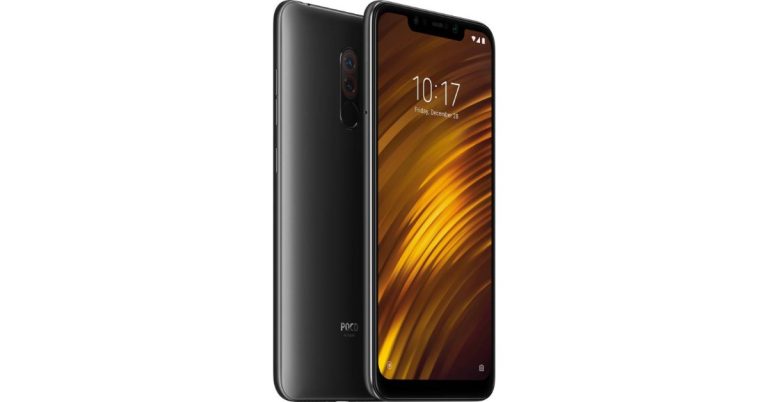
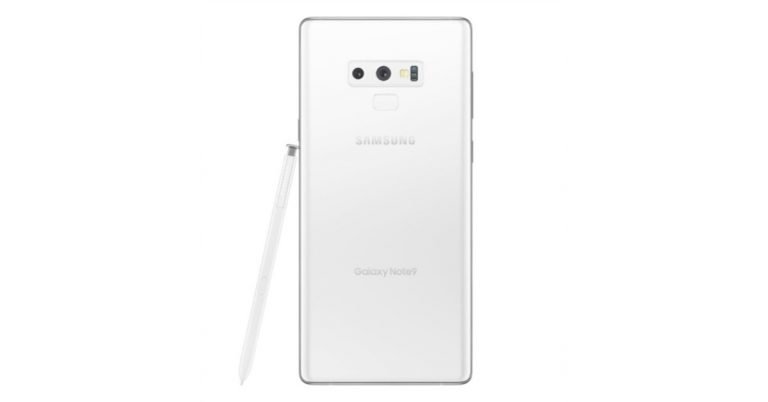
 Head: 1.188 W/kg
Body: 0.334 W/kg (distance 15 mm)
Head: 1.188 W/kg
Body: 0.334 W/kg (distance 15 mm)
 Head: 1.115 W/kg
Body: 1.238 W/kg (distance 15 mm)
Head: 1.115 W/kg
Body: 1.238 W/kg (distance 15 mm)
 Head: 1.39w/kg
Body: 1.31w/kg (Max distance 5 mm)
Global value:
Head: 1.22 W/kg
Body: 0.710 W/kg (Max distance 5 mm)
Head: 1.39w/kg
Body: 1.31w/kg (Max distance 5 mm)
Global value:
Head: 1.22 W/kg
Body: 0.710 W/kg (Max distance 5 mm)
 Head: 1.092 W/kg
Body: 0.259W/kg (distance 15 mm)
Global value:
Head: 1.16 W/kg
Body: 0.66 W/kg (distance 10 mm)
Head: 1.092 W/kg
Body: 0.259W/kg (distance 15 mm)
Global value:
Head: 1.16 W/kg
Body: 0.66 W/kg (distance 10 mm)
 Head: 0.880w/kg
Body: 0.850w/kg (distance 15 mm)
Global value:
Head: 0.390W/Kg
Body: 1.770W/Kg (Max distance 5 mm)
Head: 0.880w/kg
Body: 0.850w/kg (distance 15 mm)
Global value:
Head: 0.390W/Kg
Body: 1.770W/Kg (Max distance 5 mm)
 Head: 0.66 W/kg
Body: 1.18 W/kg (distance 10 mm)
Global value:
Head: 0.66 W/kg
Body: 1.18 W/kg (distance 10 mm)
Head: 0.66 W/kg
Body: 1.18 W/kg (distance 10 mm)
Global value:
Head: 0.66 W/kg
Body: 1.18 W/kg (distance 10 mm)
 Head: 0.746 W/kg
Body: 0.715 W/kg (distance 15 mm)
Global value:
Model M1804C3CG
Head: 0.78 W/kg, Body: 1.17 W/kg (distance 10 mm)
Model M1804C3CH
Head: 0.79W/kg, Body: 1.18 W/kg (distance 10 mm)
Head: 0.746 W/kg
Body: 0.715 W/kg (distance 15 mm)
Global value:
Model M1804C3CG
Head: 0.78 W/kg, Body: 1.17 W/kg (distance 10 mm)
Model M1804C3CH
Head: 0.79W/kg, Body: 1.18 W/kg (distance 10 mm)
 Head: 0.793 W/kg
Body: 0.707 W/kg (distance 15 mm)
Global value:
Model M1804C3DG
Head: 0.97 W/kg, Body: 1.15 W/kg (distance 10 mm)
Model M1804C3DH
Head: 0.95 W/kg, Body: 1.15 W/kg (distance 10 mm)
Head: 0.793 W/kg
Body: 0.707 W/kg (distance 15 mm)
Global value:
Model M1804C3DG
Head: 0.97 W/kg, Body: 1.15 W/kg (distance 10 mm)
Model M1804C3DH
Head: 0.95 W/kg, Body: 1.15 W/kg (distance 10 mm)
 Head: 0.964 W/kg
Body: 0.780 W/kg (distance 15 mm)
Note: Different countries term different SAR values as safe for humans. European Union and International Electrotechnical Commission allow smartphones with up to 2 watts per kilogram of SAR level. In the US, the FCC only approves of SAR level at or below 1.6 watts per kilogram and India follows this model, but other factors are taken into consideration too. On the other hand, Der Blaue Engel, a German certification for products and services on the basis of environmental friendliness, only certifies smartphones that have lesser than 0.60 watts per kilogram of absorption rate.
For the latest
Head: 0.964 W/kg
Body: 0.780 W/kg (distance 15 mm)
Note: Different countries term different SAR values as safe for humans. European Union and International Electrotechnical Commission allow smartphones with up to 2 watts per kilogram of SAR level. In the US, the FCC only approves of SAR level at or below 1.6 watts per kilogram and India follows this model, but other factors are taken into consideration too. On the other hand, Der Blaue Engel, a German certification for products and services on the basis of environmental friendliness, only certifies smartphones that have lesser than 0.60 watts per kilogram of absorption rate.
For the latest ![[Video] This Week In Tech: Episode 4 (November 12 – November 17)](https://www.gadgetbridge.com/wp-content/uploads/2018/11/maxresdefault-3-768x432.jpg "[Video] This Week In Tech: Episode 4 (November 12 – November 17)")