


For the latest gadget and tech news, and gadget reviews, follow us on Twitter, Facebook and Instagram. For newest tech & gadget videos subscribe to our YouTube Channel.





 This is probably the most affordable gift that we can suggest to you. If your Valentine is a movie buff or loves watching TV shows, then they would love you for buying them their Netflix subscription. The most premium yearly plan available is for Rs 800, but you can also pick the Rs 500 and Rs 800 one. Alternatively, you can also buy them Amazon Prime subscription that is available for Rs 999 for a year. That will not only let them stream videos, but they would also be able to get one-day delivery for free.
 If you want your gift to be truly different and memorable, you can go for the Instax Mini 9 by Fujifilm. The instant camera is priced at Rs 5,999 and it uses instax mini film cartridges by Fujifilm to print your photos. We think it’s quite a fun gadget to own, especially for someone who loves vintage photography.
 Gift your Valentine the Google Home so that it can provide assistance to them the entire day. Trust us, they’ll thank you for it. Google Home can read out morning news, tell directions to various locations, play songs, answer contextual questions and do so much more. While the Google Home Mini is priced at Rs 5,999, the Google Home can be picked up at Rs 9,999.
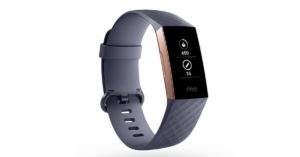 If your Valentine is a fitness freak, Fitbit Charge 3 will make a good gift for them. It comes with a 24×7 heart rate monitor and can track sleep, calories, real-time pace and distance. The device is touted to have a 7-day battery life and is swim-proof. The Fitbit Charge 3 is priced at Rs 13,990 in India.
 You can pick this for your Valentine if they want to buy a new premium smartphone. As a part of Valentine’s Day offer, Samsung is offering a cashback of Rs 7,000 on Galaxy Note 9 and a discount of Rs 7,000 on Galaxy S9+. You can read more about the discount and offers that Samsung is offering over here.
 You can pick these as a Valentine’s Day gift if you don’t want to go wrong with your gift. Everyone likes listening to music, so the gift will definitely be a useful one. OnePlus Type-C Bullet headphones are available for Rs 1,490 in India and are known to have an amazing sound output.
 You can buy the Asus Zenfone 5Z smartphone for your Valentine if you want to buy a device with powerful specifications at a more affordable price than Samsung Galaxy S9 and Note 9. The smartphone is powered by Qualcomm Snapdragon 845 processor and its base variant can be bought for Rs 29,999.
 If your date loves to read, then there cannot be a better gift than Amazon Kindle Paperwhite. Amazon Kindle Paperwhite is every reader’s dream gadget and it is available in 8GB and 32GB storage variants. While the former is priced at Rs 12,999, the latter costs Rs 17,999.
 Ultimate Ears Wonderboom is a good gift for anyone who loves to listen to music aloud, or even someone who likes hosting house parties. The Bluetooth speaker is priced at Rs 4,999, is waterproof and offers 10 hours of battery life.

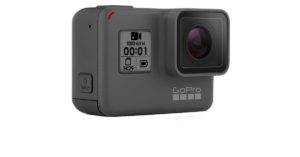 An action camera is something your date would enjoy if they have a love for travelling as well as photography. The 2018 Go Pro Hero can now be bought at Rs 13,900 in India and we think it makes a great gift.
 If your date loves gaming, just buy them an Xbox One controller already. It can be picked up at Rs 4,030 on Amazon India. You can actually couple this with an Xbox Game Pass which is priced at Rs 699 per month. They would totally love you for it.
For the latest gadget and tech news, and gadget reviews, follow us on Twitter, Facebook and Instagram. For newest tech & gadget videos subscribe to our YouTube Channel.
[td_smart_list_end]
If your date loves gaming, just buy them an Xbox One controller already. It can be picked up at Rs 4,030 on Amazon India. You can actually couple this with an Xbox Game Pass which is priced at Rs 699 per month. They would totally love you for it.
For the latest gadget and tech news, and gadget reviews, follow us on Twitter, Facebook and Instagram. For newest tech & gadget videos subscribe to our YouTube Channel.
[td_smart_list_end] 

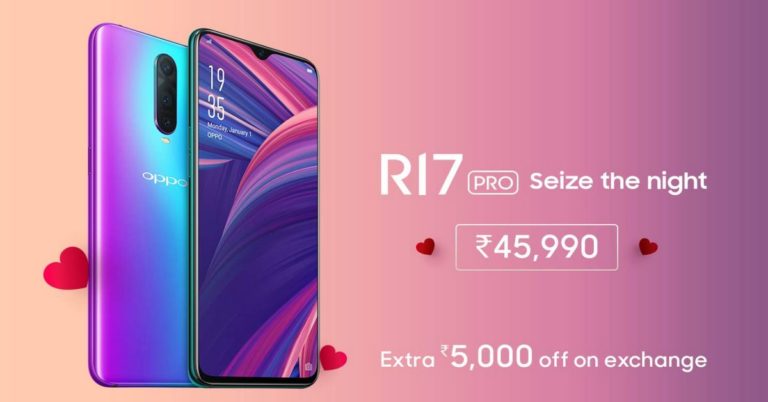
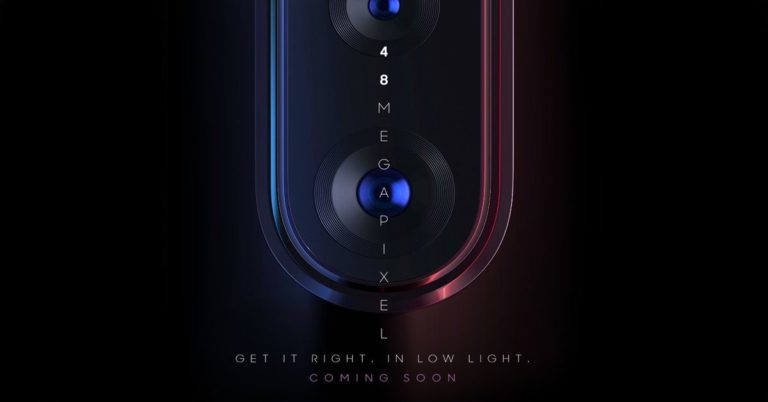
Speaking further about the upcoming device‘s camera, Oppo has said that in order to get clear images in dimly lit areas, its F11 Pro smartphone will come with Super Night Mode feature. The Super Night Mode feature will work like Oppo’s AI Ultra-Clear Engine which, according to the company, optimizes the camera experience of the device by including AI Engine, Ultra-clear Engine, and Color Engine. Other than this, the mode in Oppo F11 Pro will be able to recognise scenes and will be adept in image-stabilization during long exposure, low-light performance, and skin brightening. We should mention that this week, technology website 91mobiles also shared an alleged press image of the Oppo F11 Pro. In the image, Oppo F11 Pro can be seen sporting a full-screen display and does not come with a selfie camera on the front panel. This can mean that the device may come with a pop-up selfie camera like Vivo NEX.Brilliant Portraits in Low Light with the 48 MP Camera. Coming Soon. #OPPOF11Pro pic.twitter.com/AsJrOCYEh4
— OPPO India (@oppomobileindia) February 13, 2019

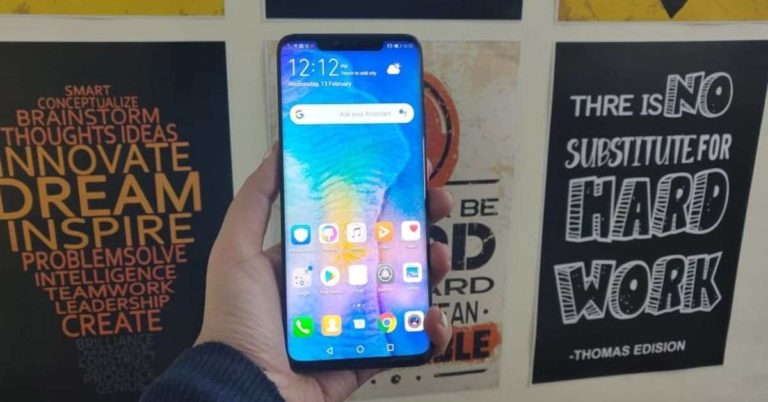
 While the front is dominated by the display that comes with a notch on top and an on-screen fingerprint sensor, the back panel has shades of three colours on it—Blue, Purple and Black. The lightest of all shades, Blue, starts from the top, followed by Purple at the middle and Black towards the bottom. The rear panel houses the square camera module that has three sensors and an LED flash. At the bottom is where the Huawei branding can be found. We loved the three-tone pattern on metallic back panel of the device. Also, Huawei makes its flagship stand out with the square camera module. During our time with the smartphone, it didn’t catch any scratches, and we think that’s a big plus.
The power and the volume rocker buttons are placed on the right edge of the smartphone and we loved how Huawei has made the power button Pink. The colour is in contrast with the shades used on the rest of the smartphone’s body. But then, instead of looking out of place, it actually makes the smartphone look more stylish. The bottom edge houses the USB Type C port along with the SIM tray and IR emitter is placed at the top. You would notice that Huawei Mate 20 Pro does not have a 3.5mm headphone jack or a speaker grille. This is because Huawei has used the USB Type-C port as an outlet for sound and the earpiece for audio playback in the smartphone. However, we should mention that this doesn’t deteriorate the quality of sound on the Mate 20 Pro, although if you try to listen to music while charging your smartphone, the sound is not as loud as it is otherwise.
While the front is dominated by the display that comes with a notch on top and an on-screen fingerprint sensor, the back panel has shades of three colours on it—Blue, Purple and Black. The lightest of all shades, Blue, starts from the top, followed by Purple at the middle and Black towards the bottom. The rear panel houses the square camera module that has three sensors and an LED flash. At the bottom is where the Huawei branding can be found. We loved the three-tone pattern on metallic back panel of the device. Also, Huawei makes its flagship stand out with the square camera module. During our time with the smartphone, it didn’t catch any scratches, and we think that’s a big plus.
The power and the volume rocker buttons are placed on the right edge of the smartphone and we loved how Huawei has made the power button Pink. The colour is in contrast with the shades used on the rest of the smartphone’s body. But then, instead of looking out of place, it actually makes the smartphone look more stylish. The bottom edge houses the USB Type C port along with the SIM tray and IR emitter is placed at the top. You would notice that Huawei Mate 20 Pro does not have a 3.5mm headphone jack or a speaker grille. This is because Huawei has used the USB Type-C port as an outlet for sound and the earpiece for audio playback in the smartphone. However, we should mention that this doesn’t deteriorate the quality of sound on the Mate 20 Pro, although if you try to listen to music while charging your smartphone, the sound is not as loud as it is otherwise.
 We should mention that Huawei Mate 20 Pro has support for the company’s NM card format, which can be used for more storage. For those unaware, the NM card is smaller than a microSD card and can be inserted in the second SIM card slot. However, as of now, there is no word on when it will be made available.
In a nutshell, Huawei Mate 20 Pro ‘s design is extremely premium and the device manages to stand out with its three-toned pack panel, square camera setup and curved display.
Coming to the display of the newly launched Huawei Mate 20 Pro, it was simply a delight to use it. The screen of the device is 6.39-inches diagonally, so if you love watching videos and TV shows on your smartphone, be ready to be hooked to Huawei Mate 20 Pro. We found ourselves binge-watching videos for hours because of the high quality of the images projected.
We should mention that Huawei Mate 20 Pro has support for the company’s NM card format, which can be used for more storage. For those unaware, the NM card is smaller than a microSD card and can be inserted in the second SIM card slot. However, as of now, there is no word on when it will be made available.
In a nutshell, Huawei Mate 20 Pro ‘s design is extremely premium and the device manages to stand out with its three-toned pack panel, square camera setup and curved display.
Coming to the display of the newly launched Huawei Mate 20 Pro, it was simply a delight to use it. The screen of the device is 6.39-inches diagonally, so if you love watching videos and TV shows on your smartphone, be ready to be hooked to Huawei Mate 20 Pro. We found ourselves binge-watching videos for hours because of the high quality of the images projected.
 Huawei Mate 20 Pro has an OLED display with QHD+ resolution and it has support for HDR. Thanks to the top-notch display specifications of Huawei Mate 20 Pro, the colours were very rich, the blacks were deeper than what we have seen on other flagships. And the curved screen has- 86.9% screen-to-body ratio, ensuring an incredible viewing experience for its user. One of the finer nuances that Huawei has taken care of is that unlike most other smartphones, the chin at the bottom of the display is very small, which is something we like.
There is a ‘Natural Tone’ option in the Display Settings of the smartphone, which makes the device’s display adjust its colour temperature based on the ambient light. Furthermore, you can select the Colour mode and temperature of the display on your own and switch on Eye Comfort to filter out the blue light. The latter proved to be useful when we used the device for some late-night reading.
Huawei Mate 20 Pro has an OLED display with QHD+ resolution and it has support for HDR. Thanks to the top-notch display specifications of Huawei Mate 20 Pro, the colours were very rich, the blacks were deeper than what we have seen on other flagships. And the curved screen has- 86.9% screen-to-body ratio, ensuring an incredible viewing experience for its user. One of the finer nuances that Huawei has taken care of is that unlike most other smartphones, the chin at the bottom of the display is very small, which is something we like.
There is a ‘Natural Tone’ option in the Display Settings of the smartphone, which makes the device’s display adjust its colour temperature based on the ambient light. Furthermore, you can select the Colour mode and temperature of the display on your own and switch on Eye Comfort to filter out the blue light. The latter proved to be useful when we used the device for some late-night reading.
 Huawei Mate 20 Pro has an in-display fingerprint scanner, and rather than being placed towards the bottom of the smartphone, as we saw in Vivo NEX and OnePlus 6T, it is more towards the centre. We liked the performance of the on-screen fingerprint sensor as it mostly could recognise our fingerprint. The only exception to this was once when we tried unlocking the device with our moist finger. But then, we loved the ripple effect that is created on the smartphone each time it is unlocked. Apart from unlocking the device, the fingerprint scanner can also be used to access some locked apps.
To sum it all up, we would say that Huawei Mate 20 Pro has one of the best displays among the smartphones that we have used in the last few months. No matter what content you watch on it, it will all be a visual treat for the eyes.
Huawei Mate 20 Pro has an in-display fingerprint scanner, and rather than being placed towards the bottom of the smartphone, as we saw in Vivo NEX and OnePlus 6T, it is more towards the centre. We liked the performance of the on-screen fingerprint sensor as it mostly could recognise our fingerprint. The only exception to this was once when we tried unlocking the device with our moist finger. But then, we loved the ripple effect that is created on the smartphone each time it is unlocked. Apart from unlocking the device, the fingerprint scanner can also be used to access some locked apps.
To sum it all up, we would say that Huawei Mate 20 Pro has one of the best displays among the smartphones that we have used in the last few months. No matter what content you watch on it, it will all be a visual treat for the eyes.
 On Huawei Mate 20 Pro’s front panel, there is a 24MP RGB selfie camera that has an f/2.0 aperture and it has support for 3D facial unlocking. This smartphone houses a 4,200mAh battery that supports 40W SuperCharge technology and 15W fast wireless charging technology. The smartphone also comes with a provision for wireless reverse charging, so it can be used to charge other Qi wireless devices.
Now let’s talk about the software and the operating system of the Huawei Mate 20 Pro. One of the key features of the new EMUI 9.0 skin by Huawei is that digital wallets, flashlight, calculator and other useful features, and apps can be accessed directly from the lock screen of the smartphone. Another very interesting feature that has been added is in the camera app of the smartphone. Huawei Mate 20 Pro mobile comes with HiVision, which is the company’s answer to Google Lens and can be used to identify objects, count the calories in food items, find similar objects online to shop, scan QR codes and translate the text.
Huawei Mate 20 Pro has support for a number of gestures. Like swiping left will take you back to the previous screen, swiping up from the bottom will take you to the Home Screen, and you can access Google Assistant by swiping upwards from the corners.
On Huawei Mate 20 Pro’s front panel, there is a 24MP RGB selfie camera that has an f/2.0 aperture and it has support for 3D facial unlocking. This smartphone houses a 4,200mAh battery that supports 40W SuperCharge technology and 15W fast wireless charging technology. The smartphone also comes with a provision for wireless reverse charging, so it can be used to charge other Qi wireless devices.
Now let’s talk about the software and the operating system of the Huawei Mate 20 Pro. One of the key features of the new EMUI 9.0 skin by Huawei is that digital wallets, flashlight, calculator and other useful features, and apps can be accessed directly from the lock screen of the smartphone. Another very interesting feature that has been added is in the camera app of the smartphone. Huawei Mate 20 Pro mobile comes with HiVision, which is the company’s answer to Google Lens and can be used to identify objects, count the calories in food items, find similar objects online to shop, scan QR codes and translate the text.
Huawei Mate 20 Pro has support for a number of gestures. Like swiping left will take you back to the previous screen, swiping up from the bottom will take you to the Home Screen, and you can access Google Assistant by swiping upwards from the corners.
 Huawei Mate 20 Pro also comes with Android 9 Pie’s Digital Wellbeing feature, however, since the device has a skin of its own, it has been named as Digital Balance. The feature gives you a daily report about your app usage and can also be used to limit your screen time. There is an option called ‘Bedtime’ that turns the screen to greyscale after the pre-set time.
The mobile device also comes with a Password Vault that saves all the login credentials for your apps. According to Huawei, to ensure user privacy, the passwords are stored locally on the smartphone and not digitally.
You can also find some gaming-centric features like ‘Game acceleration’ and ‘Uninterrupted gaming’ in the AppAssitant section that can be found in the Settings of your device. This will ensure that the device gives its best while gaming and you aren’t disturbed by notifications.
Huawei Mate 20 Pro also comes with Android 9 Pie’s Digital Wellbeing feature, however, since the device has a skin of its own, it has been named as Digital Balance. The feature gives you a daily report about your app usage and can also be used to limit your screen time. There is an option called ‘Bedtime’ that turns the screen to greyscale after the pre-set time.
The mobile device also comes with a Password Vault that saves all the login credentials for your apps. According to Huawei, to ensure user privacy, the passwords are stored locally on the smartphone and not digitally.
You can also find some gaming-centric features like ‘Game acceleration’ and ‘Uninterrupted gaming’ in the AppAssitant section that can be found in the Settings of your device. This will ensure that the device gives its best while gaming and you aren’t disturbed by notifications.
 Huawei Mate 20 Pro comes with some pre-installed apps like Facebook and Netflix, which can be removed if the user doesn’t think he requires them.
Moving on, we would say that Huawei Mate 20 Pro is quite a power performer. The company’s new Kirin 980 SoC can literally handle anything starting from multitasking, to heavy gaming and even hours of streaming videos. Even high graphics games like PUBG Mobile and Asphalt 9: Legends run very smoothly on this smartphone.
Even after prolonged gaming and navigation (which we often did together), the smartphone didn’t heat up or even warm up a bit. Most people would expect this from a flagship smartphone, but considering Huawei Mate 20 Pro is not powered by Qualcomm’s Snapdragon 845 processor like most other high-end Android devices, we weren’t sure about it till we started using it.
While we have already spoken about the in-display fingerprint scanner of the smartphone, another feature that deserves your attention is 3D face recognition, which we think is quite brilliant. Regardless of the lighting conditions, the 3D face unlock feature worked very quickly. We even tried to use it in a room that was pitch dark and -surprisingly it worked.
Huawei Mate 20 Pro comes with some pre-installed apps like Facebook and Netflix, which can be removed if the user doesn’t think he requires them.
Moving on, we would say that Huawei Mate 20 Pro is quite a power performer. The company’s new Kirin 980 SoC can literally handle anything starting from multitasking, to heavy gaming and even hours of streaming videos. Even high graphics games like PUBG Mobile and Asphalt 9: Legends run very smoothly on this smartphone.
Even after prolonged gaming and navigation (which we often did together), the smartphone didn’t heat up or even warm up a bit. Most people would expect this from a flagship smartphone, but considering Huawei Mate 20 Pro is not powered by Qualcomm’s Snapdragon 845 processor like most other high-end Android devices, we weren’t sure about it till we started using it.
While we have already spoken about the in-display fingerprint scanner of the smartphone, another feature that deserves your attention is 3D face recognition, which we think is quite brilliant. Regardless of the lighting conditions, the 3D face unlock feature worked very quickly. We even tried to use it in a room that was pitch dark and -surprisingly it worked.
 The biggest highlight of the smartphone: Its triple rear camera setup is what everyone is talking about. So we spent a little extra time with it to understand it in and out. As we mentioned earlier, Huawei Mate 20 Pro has a 40MP primary sensor, a 20MP wide-angle sensor and an 8MP telephoto sensor. According to Huawei, the default settings of the 40MP primary sensor is such that it combines four pixels into one. So basically, you will get a 10MP image from it. However, you can change these settings and shoot at a complete 40MP resolution too.
 The camera app of the smartphone is extremely easy to use and it is very simple to toggle between the three cameras.
 In well-lit conditions, Huawei Mate 20 Pro can focus on an object very quickly and can automatically detect objects, and scenes to switch modes according to what it sees. We noticed that the colours were a little enhanced in the images, but they didn’t look artificial at all. In fact, they somehow made the images look better. And when you point the camera towards a person, the app automatically switches its mode to Portrait.
 Coming to the 20MP wide-angle sensor, you can use this mode to click various landscape shots. Although the images that we took with this sensor were very clear and sharp, they were not as great as the ones taken with the primary sensor. However, we did like some of the shots that we managed to take with the ‘Super Macros’ mode turned on.
 We are really impressed by the 8MP telephoto lens of the smartphone that supports up to 3x zoom. We clicked some very clear zoomed-in images using it and they were extremely sharp with almost no noise.

 Coming to the 24MP selfie camera of the smartphone, it left us with a bag of mixed feelings. In well-lit conditions, it did an excellent job. The images taken were simply amazing, had accurate colours and were as clear as the ones taken by rear cameras. We even liked how we had the ability to choose Bokeh patterns and use personalised beautification features.
However, in dimly lit conditions, the quality of the images somehow goes down. It didn’t match up to the rear cameras of the device, and we expected slightly better in terms of clarity of the images. We should also mention that Huawei Mate 20 Pro can be used to shoot 4K videos at 30fps and slow-motion videos at up to 960fps.
Now, let’s talk about the 4,200mAh battery of the smartphone. We used the smartphone for streaming videos, binge-watching YouTube, playing games, navigation via Google Maps for hours and so much more. However, even with usage like that, the battery could easily last more than a day. Even when the battery is less than 20%, you would be able to use the device for navigation and playing music for an hour. How many smartphones can do that?
Coming to the 24MP selfie camera of the smartphone, it left us with a bag of mixed feelings. In well-lit conditions, it did an excellent job. The images taken were simply amazing, had accurate colours and were as clear as the ones taken by rear cameras. We even liked how we had the ability to choose Bokeh patterns and use personalised beautification features.
However, in dimly lit conditions, the quality of the images somehow goes down. It didn’t match up to the rear cameras of the device, and we expected slightly better in terms of clarity of the images. We should also mention that Huawei Mate 20 Pro can be used to shoot 4K videos at 30fps and slow-motion videos at up to 960fps.
Now, let’s talk about the 4,200mAh battery of the smartphone. We used the smartphone for streaming videos, binge-watching YouTube, playing games, navigation via Google Maps for hours and so much more. However, even with usage like that, the battery could easily last more than a day. Even when the battery is less than 20%, you would be able to use the device for navigation and playing music for an hour. How many smartphones can do that?
 The smartphone comes with a feature called Super Charge, with which it can charge from 0 to 96% in an hour. No, we are not exaggerating. A unique ability of the device is that it comes with reverse wireless charging. So, it can act as a wireless charger and charge other devices that support Qi wireless charging. However, we couldn’t test this feature during our time with the smartphone.
 We ran benchmark tests on the smartphone, too. While it scored 3,273 and 9,828 in single and multi-core scores of Geekbench, it managed a 2,76,067 in Antutu. All of them indicating high-end performance.

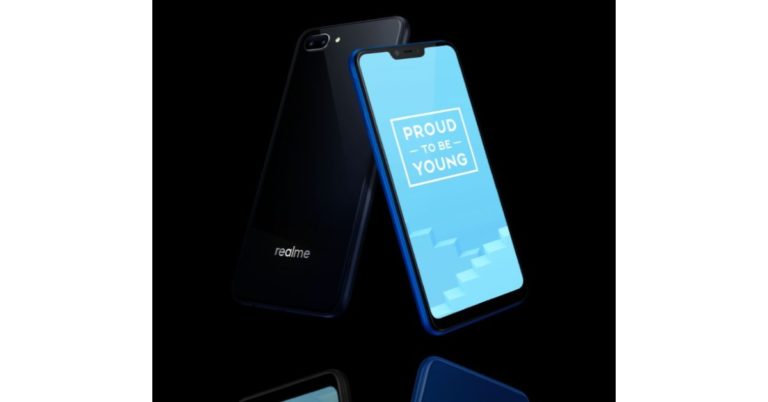
 The smartphone is powered by a 3,400mAh non-removable battery. The Samsung Galaxy M10 has couple of sensors too, including accelerometer and a proximity sensor. The handset runs on Android 8.1 Oreo skinned with Experience 9.5. The measurements of the mobile phone is 155.6 x 75.6 x 7.7mm and it weighs 163 grams. Coming back to the Realme C1 (2019), since it is an open sale, it should go on till stocks last.
For the latest gadget and tech news, and gadget reviews, follow us on Twitter, Facebook and Instagram. For newest tech & gadget videos subscribe to our YouTube Channel.
The smartphone is powered by a 3,400mAh non-removable battery. The Samsung Galaxy M10 has couple of sensors too, including accelerometer and a proximity sensor. The handset runs on Android 8.1 Oreo skinned with Experience 9.5. The measurements of the mobile phone is 155.6 x 75.6 x 7.7mm and it weighs 163 grams. Coming back to the Realme C1 (2019), since it is an open sale, it should go on till stocks last.
For the latest gadget and tech news, and gadget reviews, follow us on Twitter, Facebook and Instagram. For newest tech & gadget videos subscribe to our YouTube Channel.



If you have ever used the desktop version of Instagram, you would know that as of now it’s very minimal and has comparatively fewer features than the mobile app. For instance, there is still no way to directly upload photos on Instagram’s desktop version and it even got support for browser notifications in September last year. And there are some features, like adding stories, which are still not available on the mobile web or desktop versions of Instagram. We should mention that although Stories can be viewed in both of these versions of Instagram, they can only be added via the mobile app. And we don’t expect this to change too, as Instagram has said that it doesn’t have any “plans to let users upload photos or stories from the desktop.” Considering this, getting the Direct Message feature is a big step forward for Instagram’s web version. After the company introduced the ability to send GIFs on Direct Messages in September last year, this is the big piece of news about the feature that we have got. We should mention that Instagram has built a standalone messaging app called Direct, which is being tested in six countries since 2017. Direct Message feature coming to Instagram’s web version points towards the increased importance the Instagram team is giving to promote messaging among users on the platform. Or probably Instagram has seen that the feature is being used a lot and is now testing it on the web version to make it more user-friendly.Instagram's Direct on Web will also be available on desktop pic.twitter.com/Y3iTIdDwKV
— Jane Manchun Wong (@wongmjane) February 12, 2019


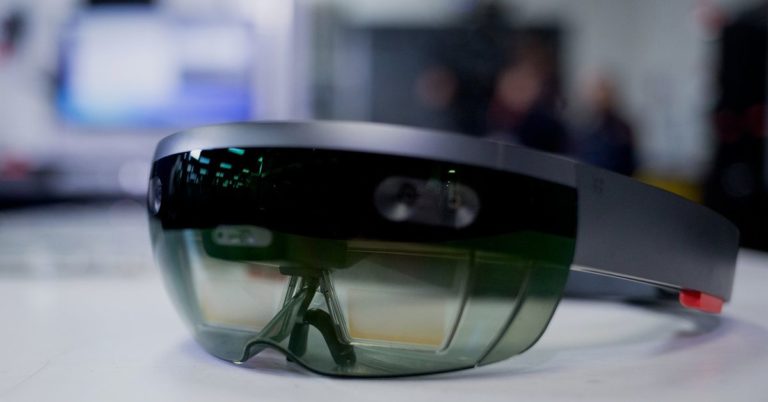
“We have a lot of exciting things to talk about at MWC 2019,” a Microsoft spokesperson said, so we can expect much from the tech giant. If one is lucky, we could see some new technology spring up, which the company has been working on in secret. As said, released in 2016, Hololens 1 came packed with hologram-like 3d graphics capable of projecting in real time. There were many great things about the Hololens and it was one of a kind, but it too had some technical limits. The successor of Hololens might get good improvements over its predecessor. It should come with better processor, advanced controls, better graphics projection, better field of view as well as eye-tracking. There are many applications of Hololens, it can be used in field of science, graphic design, military training, and video games. We for one are quite excited to hear about this news.2.24.19 #MWC19 – are you excited? I know I am…https://t.co/nO8apOLrGB pic.twitter.com/JXENF2nzEq
— Alex Kipman (@akipman) February 11, 2019