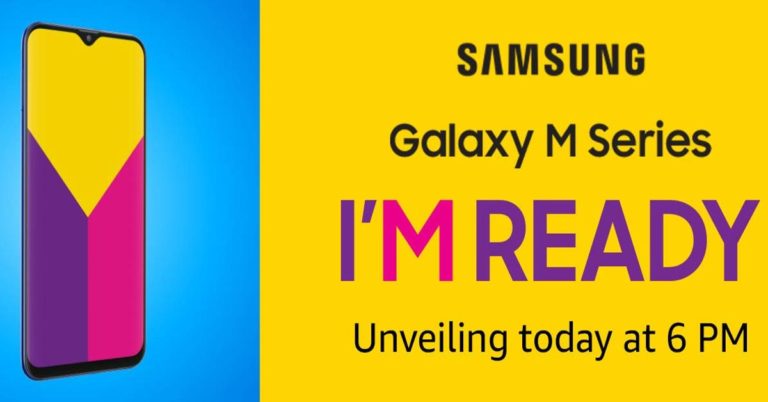
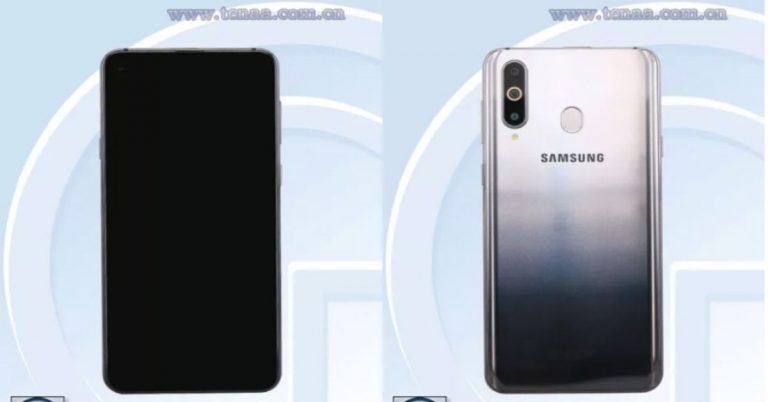
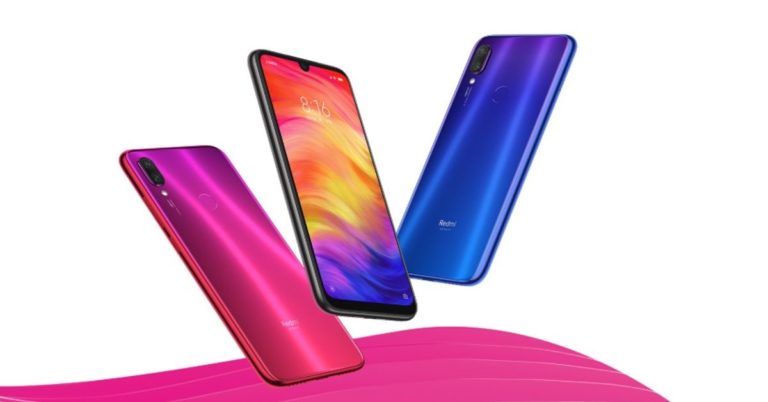
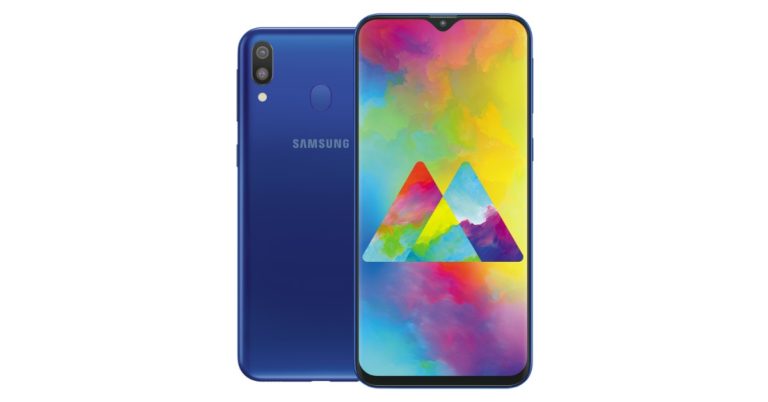
Samsung Galaxy M20: Dual rear camera setup with 13MP and 5MP sensors
Realme C1 (2019): Dual rear camera setup with 13MP and 2MP sensors, come with AI enhancements
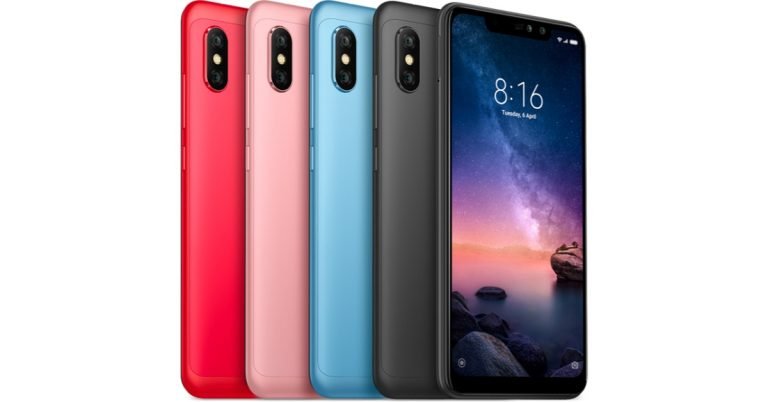
Xiaomi Redmi Note 6 Pro: 12MP+5MP dual rear cameras that come with AI enhancements
Samsung Galaxy M20: Android 8.1 Oreo skinned with Samsung Experience v9.5
Realme C1 (2019): Android 8.1 Oreo skinned with Color OS 5.1
Xiaomi Redmi Note 6 Pro: Android 8.1 Oreo skinned with MIUI 10
Price
Samsung Galaxy M20: The 3GB RAM/32GB storage is priced at Rs 10,990, 4GB RAM/64GB storage costs Rs 12,990.
Realme C1 (2019): The 2GB RAM/32GB storage is priced at Rs 7,499, the 3GB RAM/32GB storage model costs Rs 8,499.
Xiaomi Redmi Note 6 Pro: The 4GB RAM/64GB storage model costs Rs 13,999, the 6GB RAM/64GB storage variant is priced at Rs 15,999.
For the latest gadget and tech news, and gadget reviews, follow us on Twitter, Facebook and Instagram. For newest tech & gadget videos subscribe to our YouTube Channel.
Samsung has been experimenting with the design and performance of its entry level smartphones since some time now and the outcome is the launch of Samsung Galaxy M20 and M10 smartphones. The Galaxy M20 smartphone is built for the youth and is an India first innovation. This one has a massive 5,000 mAh battery inside and comes with an Exynos 7904 Octa core CPU with 1.8GHz clock speed. We spent some time with the latest smartphone by Samsung (the 4GB RAM + 64GB storage version) and here are our first impressions of the neat little device.
Samsung Galaxy M20 Design and Display
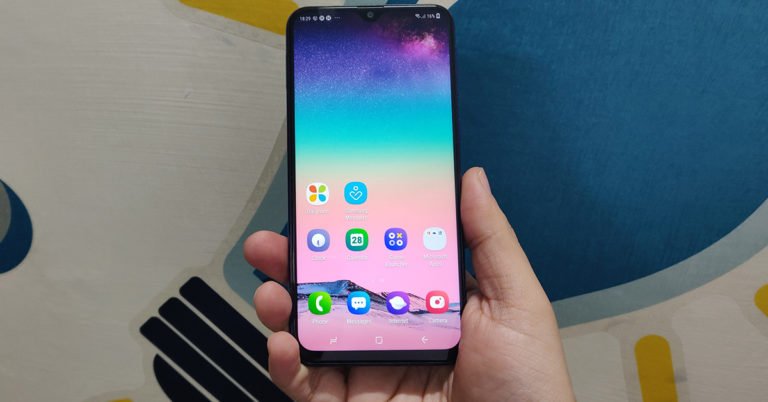
Let’s talk about its design first. The Samsung Galaxy M20 is not the usual lightweight boxer you find in the budget segment, instead it is a heavyweight thanks to the mammoth 5,000 mAh battery inside. The front of the smartphone is dominated by a large 6.3-inch FHD+ infinity-V display. This is the first smartphone by Samsung that comes with a waterdrop notch design, which has the front facing camera on it. With the ear speaker right above it on the top edge. Since it is Samsung’s first waterdrop design innovation under the Made for India initiative, we have to say we are a bit impressed that Samsung has kept such a slim chin area. When we compare it to others in the market like Xiaomi or Oppo, some of their phones in this price bracket still have a large chin band. But not this one.
Moving on, the screen is protected by toughened glass which is a bit raised and comes a few millimeters out of its casing. Nevertheless, this smartphone is comfortable to hold. The case is derived from a single mold of plastic and there no sharp or jagged edges on this smartphone. The right side of the mobile has the volume rocker key with the power button right under it. The left side has the SIM tray. Talking about which, this one can place 2 nano SIM cards inside as well as a microSD card of up to 512GB.
At the bottom Samsung has placed a mono loudspeaker, USB type C charging port and 3.5mm audio jack. On the top you get the secondary pin hole microphone. Flip the device around and you will see the dual vertically stacked cameras with a LED flash under it, next to it is the larger than usual finger print scanner, with the Samsung branding below it. Also, if you look closely at the bottom part of the case you will find that it reads manufactured in India, which is quite cool to recite.
We played quite a few YouTube videos on the Samsung Galaxy M20 and we were not one bit disappointed. The colours are vibrant and the text is crisp. The sunlight legibility is also quite good.
Samsung Galaxy M20 Cameras
The 13-megapixel primary camera at the back has an aperture size of 1.9 and the secondary 5-megapixel sensor there has an aperture size of 2.2. The front 8MP sensor has an aperture size of 2.0. These are great for photos and we will show some of the shots the rear one can take in just about a second. Videos can be recorded in Full HD and not 4k, on both the front and rear cams. Maybe in the next software update that will be available too. We found the cameras to take crisp pictures with very close to life colours. Our initial tests do suggest that this smartphone can very well be the king in the budget segment when it comes to smart photography.
Samsung Galaxy M20 Operating System
This smartphone has Android 8.1 Oreo running on it and not the Pie. There might be a software update coming soon, but no official word has been given. The user interface is very Samsung and at the time of its first boot the device did ask us which apps to additionally install on the device. This is great as you can reduce the bloatware and can keep only those apps which you want on it. But you will still find some additional apps lurking on it. Thankfully these can be quickly uninstalled, in case you don’t want them.
What We Think
Overall, at the moment the operating system is slick, we are not facing any sort of lag during operation, and things are loading quite swiftly. The cameras are working well and the large battery is lasting for more than a day, even after heavy usage. The loudspeaker is pretty loud and we tested the Dolby Atmos sound with a pair of headphones, it does make a difference. The younger brother Samsung Galaxy M10 has also been launched with this smartphone, so together they provide a lot of choice to the user.
For the latest gadget and tech news, and gadget reviews, follow us on Twitter, Facebook and Instagram. For newest tech & gadget videos subscribe to our YouTube Channel.
Bharti Airtel has reintroduced Rs 100 and Rs 500 recharge plans with 28 days validity and a lifetime activation validity for its subscribers, both the ‘talk-time’ recharge plans are live as of now. The telecom giant had discontinued the plans last year because it wasn’t received well by the customers due to its ‘limited time’ validity so the users moved on to other telecom operators which offered lifetime validity for the same price. But now they have been brought back and they offer a lifetime validity. But it’s still not sure if the company will be bringing the plans for a specific region or all of the regions.
The users of Airtel can recharge and avail to the plan by going on their ‘My Airtel’ app, then they can go to the ‘prepaid’, then to ‘best plans’ and then to ‘talk time’. The plan can be recharged from there.
The validity of Rs 100 recharge plan is 28 days for outgoing calls with lifetime validity for incoming calls, and it will give Rs 81.75 talk time. While Rs 500 will also give 28 days of outgoing and lifetime incoming calls validity and its balance will be Rs 420.73.
The company is fighting to survive in the fierce telecom sector with many competitors on its heels. Airtel has been introducing and changing plans to match and compete with its closest rival Reliance Jio. And with these affordable recharge plan it hopes to gain a foothold in the market and lure in more subscribers.
Last week the company had launched Rs 1699 recharge plan which is quite similar to that offered by Reliance Jio. In this plan Airtel will be offering unlimited STD calls, roaming, local calls, 100 SMS and also 1GB of data every day. It also gave access to Airtel TV’s premium content with no FUP with this recharge. Airtel’s other unlimited recharge plans are of Rs 597 with 168 days validity in which they offer unlimited calls, 100 SMS every day and 6GB of data which gets recharged after 28 days, and Rs 998 which has a validity of 336 days with unlimited voice calling and 12 GB of data which gets recharged after 28 days.
For the latest gadget and tech news, and gadget reviews, follow us on Twitter, Facebook and Instagram. For newest tech & gadget videos subscribe to our YouTube Channel.
South Korean technology giant Samsung has taken wraps off its Galaxy M10 and Galaxy M20 smartphones in India. The newly launched Samsung Galaxy M10 and Galaxy M20 smartphones compete directly with handsets from Xiaomi’s Redmi series, some with the company’s new Infinity V displays and house 5,000mAh battery. Here’s a look at the pricing details and specifications of the Samsung Galaxy M10 and Galaxy M20 smartphones.
In This Article
Samsung Galaxy M10, Galaxy M20 price and availability
Samsung Galaxy M10 is available in two storage models – one with 2GB of RAM and 16GB of storage and the other with 3GB of RAM and 32GB of storage. While the former costs Rs 7,990, the latter bears a price tag of Rs 8,990.
Speaking of Samsung Galaxy M20, it is available in a variant with 3GB RAM and 32GB storage, and its more high-end model has 4GB of RAM and 64GB storage. The base model costs Rs 10,990, the 4GB RAM variant is priced at Rs 12,990.
Both the smartphones will be available via Amazon India’s website and Samsung’s online store starting February 5. The devices are available in Ocean Blue and Charcoal Black colours.
Samsung Galaxy M10, Galaxy M20 specifications
Coming to the specifications, Samsung Galaxy M10 runs Android 8.1 Oreo and features a 6.2-inch HD+ TFT display. The smartphone is powered by the company’s own Exynos 7870 processor and is available with up to 3GB of RAM and 32GB of onboard storage. On the camera front, Samsung Galaxy M10 comes with a dual rear camera setup with a 13MP sensor with f/1.9 aperture and a 5MP ultra-wide sensor. For selfies and video calls, there is a 5MP front-facing snapper with f/2.0 aperture. The handset has support for face unlock and houses a 3,400mAh battery.
Coming to Samsung Galaxy M20, the device sports a 6.3-inch full HD+ display and runs Android 8.1 Oreo. Powered by an octa-core Exynos 7904 processor, Samsung Galaxy M20 comes with up to 4GB of RAM and 64GB of onboard storage.
While it has the same dual rear camera setup as Samsung Galaxy M10, the smartphone comes with a better 8MP selfie camera. In addition to face unlock, the handset also has a fingerprint sensor on its back panel and houses a massive 5,000mAh battery.
For the latest gadget and tech news, and gadget reviews, follow us on Twitter, Facebook and Instagram. For newest tech & gadget videos subscribe to our YouTube Channel.
Realme C1 is now available in two new storage variants in India. Oppo’s sub-brand has announced the launch of the 2GB RAM/32GB storage model and the 3GB RAM/32GB storage variant of the Realme C1 (2019) smartphone. Prior to this, the smartphone was only available in 2GB RAM/16GB storage version in the country.
Other key specifications of the device include Qualcomm Snapdragon 450 processor and a 4,230mAh battery. We should mention that Realme C1 has been announced just hours before the launch of Samsung Galaxy M10 in India. Here’s a look at the price and specifications of the new storage variants of the smartphone:
In This Article
Realme C1 (2019) price in India
The 2GB RAM/ 32GB storage model of Realme C1 is priced at Rs 7,499, the 3GB RAM/ 32GB storage variant costs Rs 8,499 in India. Both the models of the smartphone will go on sale on Flipkart starting February 5 at 12 pm. Realme C1 is available in Deep Black and Ocean Blue colour options.
Realme C1 (2019) specifications
Apart from the change in RAM and storage, the new editions of Realme C1 are the same as the handset that was launched last year. There is no other change in the specifications for the device. To recall, Realme C1 runs Android 8.1 Oreo skinned with ColorOS 5.1 and features a 6.2-inch HD+ display that is protected by Corning Gorilla Glass panel.
The screen of the mobile phone comes with a notch on top, has an aspect ratio of 19:9, and 88.8% screen-to-body ratio. Powered by an octa-core Qualcomm Snapdragon 450 processor, Realme C1 comes with the aforementioned RAM and storage options and can hold a microSD card of up to 256GB.
On the camera front, Realme C1 sports a dual rear camera setup with 13MP and 2MP sensors along with an LED flash. For selfies and video calls, there is a 5MP front-facing snapper. Both the cameras of the smartphone come with AI enhancements.
Realme C1 houses a 4,230mAh battery and comes with 4G VoLTE, Wi-Fi, Bluetooth v4.2, GPS, Micro-USB, and a 3.5mm headphone jack for connectivity.
For the latest gadget and tech news, and gadget reviews, follow us on Twitter, Facebook and Instagram. For newest tech & gadget videos subscribe to our YouTube Channel.
Some users of the 2018 flagship of OnePlus, the 6T are complaining about a rapid battery drain issue in their smartphones. The problem was reported by some users on the internet, according to them their smartphone batteries were draining faster than normal. Many users of the smartphone took to the official OnePlus forum to report about the issue. According to some users, some apps installed in the phone were consuming more battery than usual and that was affecting the overall battery performance, some users has reported that the Google Play Services was consuming more battery than it did before. They are getting on an average 4-5 hours of screen-on time compared to the 7-8 hours it gave before the problem began. The company’s official reddit forum was flooded by the complaints of the users about the battery issue, the original user posted that he was facing problems with his battery and not even the battery saver or a factory reset seems to solve the problem.Despite OnePlus being the company which always keeps its software updates in mind and pushes the updates regularly. But till now there has no official word from the company and there hasn’t been a software update to solve this problem. Recently the company pushed out updates for the OnePlus 6 and 6T along with the other smartphones it released in the past years till the OnePlus 3.The OnePlus 6T offers Snapdragon 845Soc with 6GB/8GB RAM and has a 3700mAh battery which is capable of handling a full day of tasks thrown at it. And this it was the first flagship to come with the android 9.0 Pie out of the box. But this issue is cutting down the screen-on time by half.
But surprisingly not all users have reported this issue. The problem could be most likely related to some apps or updates or it could be a software issue or a bug. But despite all the complaints the company still has to address the issue and push out solutions or updates as their hasn’t been an official word as of yet.
For the latest gadget and tech news, and gadget reviews, follow us on Twitter, Facebook and Instagram. For newest tech & gadget videos subscribe to our YouTube Channel.
WhatsApp is about to launch a PIP feature for WhatsApp Web very soon. The Facebook-owned-messaging-app has just launched fingerprint authentication and redesigned emojis. PIP is the acronym for Picture-in-Picture feature wherein WhatsApp Web users can watch a shared video and check their chats or use a different app at the same time. This feature, that was once only exclusively available to Android users is now finally available to desktop users as well.
All this information has been tipped by WABetainfo, who say the picture-in-picture feature is part of the latest 0.3.2041 app version. Many users provide upcoming WhatsApp Web update to be a little patient. The report also says that the PIP feature will support videos of different formats hosted on multiple services. Note, that for regular users, this means that WhatsApp web users can now watch YouTube video shared in a chat. At the same time, they can browse it through other WhatsApp chats as well.
When it comes to picture-in-picture feature, this is how it works. First, send a message with a YouTube link or any video platform link to the other person. Then, the receiver is going to receive this link with the preview. This means that if the user taps on it, the video will start playing within whatsapp. The video will start playing in a bubble after the user changes the chat. With the help of the PIP mode, the user can close the video playing by a swipe gesture.
A very recent update that WhatsApp has received is the fingerprint authentication support and revamped emojis. This is part of WhatsApp’s latest beta 2.19.21 version that one can download via Google PlayStore. This new feature consists of a new emoji layout for 21 existing emojis. Even though there aren’t any substantial changes to the emojis, there are some subtle changes in colours and the designs of the emoji pack.
The fingerprint scanner works very similar to how most app lockers work. So, once you open WhatsApp, you will be asked to scan your fingerprint or allow the selfie camera to identify your face.
For the latest gadget and tech news, and gadget reviews, follow us on Twitter, Facebook and Instagram. For newest tech & gadget videos subscribe to our YouTube Channel.
Technology is one of the most dynamic fields in the world. With new innovations happening every day, a lot of trends come and go and a few manage to make a mark. Here, we are listing down the ten most-awaited technology trends of the year 2019:
In This Article
5G networks
This is probably the most awaited trend this year. A number of technology companies have announced that they will be rolling out their 5G enabled devices this year. These include the likes of Samsung, OnePlus, Motorola, Xiaomi among others. Considering that Qualcomm’s latest processor – Snapdragon 855 – comes with support for 5G, we can expect 5G connectivity in most major Android flagship smartphones that will be launched this year.
Foldable phones
Foldable phones are definitely one among the most anticipated technology trends this year. Samsung was the first one to showcase its foldable device at its developer conference in November last year. And soon after that, a number of smartphone makers announced that they are working on foldable devices too. Oppo, Xiaomi, Motorola, Huawei and LG are among the popular technology companies that will be showcasing their foldable phones this year.
Multiple cameras on smartphones
Let’s face it: There are hardly any popular smartphones that come with just one primary camera. Till now, Samsung Galaxy A9 (2018) is the smartphone that comes with the most number of rear cameras – four. However, with Nokia 9 PureView all set to launch at MWC 2019, this will change as the smartphone will come with five rear cameras. As the year progresses, we expect to see smartphones with more number of cameras getting launched.
More advanced in display fingerprint scanners
Physical fingerprint sensors are slowly becoming a thing of past. More and more smartphones now incorporate in-display fingerprint scanners. If reports are correct, 10% of Samsung Galaxy S10+’s display will act as a fingerprint sensor. So if you place your fingerprint anywhere on it, the device will unlock. However, before Samsung could make a statement with its upcoming smartphone, Vivo announced its Apex 2019 concept phone that comes with full-display fingerprint scanning. So, no matter where you place your finger on the handset’s screen, it will unlock. We expect to see more such advancements as the year goes forward.
Hole-punch displays
Last year, we saw a few smartphones from Samsung, Huawei and Honor that come with a hole on the top left corner of their display to house the selfie camera. Various reports online also suggest that Samsung’s flagship smartphones will also feature the same kind of selfie cameras. A report also suggests that Nokia 6.2 smartphone, that will be launched at the MWC 2019, will also come with a hole on its display.
Faster charging
Charging on smartphones has become way faster than it was earlier. Various smartphone makers like Oppo, OnePlus, Huawei and even Meizu offer a very high speed when it comes to charging devices. This year, we expect Apple and Samsung to come up with faster ways of charging too.
Biometric payments
Fingerprint sensors and facial unlocks have become a very regular feature on smartphones. So, the obvious next step is to enable payments with biometric scans. They will not only be easier to do but also far more secure than current payment models.
Drone delivery
Drones are now legal in India. Although there are a number of rules that have to be complied with, we expect to see drone deliveries becoming common in the country this year.
Smart wearables
Wearables are also expected to become smarter this year. For instance, we expect to see shoes that will be able to track steps and clothes that will be able to count calories. Such wearables have the potential of becoming extremely popular in the fitness and health industry.
Rollable TVs
LG’s rollable TV has finally become commercial this year. Considering the kind of appreciation it garnered at the CES 2019, we expect to see more electronics makers launching similar TVs this year too.
For the latest gadget and tech news, and gadget reviews, follow us on Twitter, Facebook and Instagram. For newest tech & gadget videos subscribe to our YouTube Channel.
[td_smart_list_end]
Redmi Note 7 boasts a behemoth 48MP camera, was announced in January of 2019 and since then it has been making headlines. And this week the company will release its 128GB variant in China. Wang Teng Thomas who is Xiaomi’s product Director announced on his Weibo account that the 6GB variant of the smartphone will be released this week in China. Later the company CEO Lin Bin did a popularity poll on the social media platform to know which of the variants of the Note 7 would be more popular with the users.The polls had all the variants of the smartphone (released and unreleased) with their prices included. The smartphone with the 32GB and the 64GB variant had already been launched in China at the start of the month, and this week the 4GB RAM + 128GB storage and/or 6GB RAM + 128GB storage will be launched, and according to the polls the fans voted most for the 6GB version. The second in the popularity poll was the 6GB + 64GB storage version and on the third place was 4GB RAM + 128GB storage smartphone.The pricing of all the Note 7 variants lie under Rs. 20,000 mark. The 3GB RAM+ 32GB storage is priced at RMB 999, which is approx Rs 10,500, similarly for the 4GB RAM + 64GB storage the price is RMB 1,199 (approx Rs 12,600), for the 4GB RAM + 64GB storage the price is RMB 1,399 (approx Rs 14,750), for the 4GB + 128GB storage the price will be RMB 1,499 (approx Rs 15,840), and for the 6GB + 128GB storage variant, the price will be RMB 1,599 (approx. Rs. 16,850).
The Note 7 will be paired with a Samsung ISOCELL GM1 48 Megapixels camera along with a 5 Megapixel rear camera setup. And after the release of the Note 7 the company will release the pro version of the same phone called the Note 7 Pro. The Pro version will have a Sony IMX 586 48 Megapixel camera. It will also be equipped with the Snapdragon 675 Soc while the regular Note 7 will have the Snapdragon 660 Soc.Redmi India has also been teasing the release of the Note 7 since January and needless to say it will be launched shortly after being launched in China.
For the latest gadget and tech news, and gadget reviews, follow us on Twitter, Facebook and Instagram. For newest tech & gadget videos subscribe to our YouTube Channel.
Joining in on the three-camera bandwagon is the Vivo V15 Pro, which will be the successor of 2018’s Vivo V11 Pro. A case of the upcoming smartphone was released in China that allegedly leaked its multi camera setup and the 32 Megapixels selfie popup camera. The same was earlier seen in the popular Vivo Nex.The case has a long camera cutout on the back with another cutout at the top hinting at the motorised pop up front facing camera. Also, there is no fingerprint scanner cutout at the back and if we are to believe at the leak it hints at the in-screen fingerprint scanner, which many phone companies are coming up with lately. And this is no surprise as its predecessor, the V11 Pro, too sported similar unlock feature. Aiming for the mid-range market the phone will be sporting a full screen display.We can see the phone to be released sometime around next month. The pricing of the V15 Pro will be somewhere around Rs. 30,000 as the V11 Pro currently sells for Rs 23,999 on amazon and Rs 25,990 on Flipkart. And for the other smaller variant of the V15 Pro which will be the V15 the pricing will be around Rs 18,000 to 25,000.The Vivo V15 Pro leaked case suggests at a popup selfie camera. Image Courtesy: WeiboMore details about the phone has not been revealed yet, and the specs will be revealed somewhere in mid Feb. But, the phone is aimed at the mid-price segment and has lots of good competitors like the Poco F1, One Plus 6, Asus 5z to name a few. If it has to make a name for itself like the Vivo Nex or its predecessor the V11 Pro it will have to have some good industry competing specs.
Vivo Nex through which the company introduced the motorized selfie camera will allegedly be discontinued to make way for the newer V15 Pro. Last year’s Vivo Nex had been a game changer in the smartphone world as it completely got rid of the notch while still not abandoning the front facing camera. Vivo has lately been the company to bring something new to the platter, last year they did the motorized pop up selfie camera with the Nex, then they brought the double sided Vivo Nex Dual display and then the Vivo Apex 2019 with Snapdragon 855 Soc with 12GB RAM without any physical buttons. Which makes us wonder what will the Chinese major bring next to the table?
For the latest gadget and tech news, and gadget reviews, follow us on Twitter, Facebook and Instagram. For newest tech & gadget videos subscribe to our YouTube Channel.
As you would know, a new version of PUBG has been launched. This version of Player Unknown’s Battleground is called PUBG Lite. This is a standalone version that requires fewer system resources to play the game. Computers with low-end hardware can also run the game with ease. Earlier, in order to run the game, one needs good frames, graphics with minimum performance level as GTX 1050ti or above. PUBG Lite is a free to play game that has been developed for systems that do not have extreme performance. This game was mainly created because players with low entry graphics card were finding it hard to play PUBG.
PUBG devs said, “Our goal for PUBG Lite is simple: Deliver the PlayerUnknown’s Battlegrounds experience to players in areas where the core game’s required specifications are more difficult to achieve due to the hardware available. To this end, the PUBG Lite team has focused on balancing lower hardware requirements, without compromising on our quality standards. The end result is a build that is playable even on computers and laptops utilizing integrated graphics.” However, one needs to have certain requirements to play the game.
In order to play PUBG Lite, you need to have Windows 7/8/10, 64-bit. The Minimum CPU requirement is Intel Core i3 2.4GHz and 4GB RAM. In terms of graphics, you need to have Intel HD Graphics 4000 and HDD space of 4GB. The recommended specifications of your device to operate the game includes Windows 7/8/10, 64-bit. When it comes to CPU, you should be able to run it on Intel Core i5 2.8GHz. In terms of RAM it is recommended that you have 8GB RAM. Also, you can incorporate Nvidia GeForce GTX 660 or AMD Radeon HD 7870. Just like the minimum specifications requirements, it is recommended that you have a HDD of 4GB.
Considering that it can be played with Intel HD series, it is clear that the PUBG Lite has very low requirements when it comes to integrated graphics.
Technology giant Google’s next Android version has already started making headlines. Just a few days back, a report had surfaced online along with pictures from the beta build of the upcoming Android Q update. The report spoke about various Android Q features like a system-wide dark theme and changes in permissions log.
The first images of the beta build of Android Q were shared by XDA Developers. And now, another report has surfaced on the same website which claims that the search giant is working on getting the native support for 3D facial recognition for hardware that will run Android Q. The technology website has spotted a number of strings and various methods, classes and fields related to facial recognition in the framework, SystemUI and Settings APKs of Android Q’s leaked AOSP build.
We should mention that a number of Android smartphones have already adopted the face unlock and a few like Huawei Mate 20 Pro and Mi 8 Explorer Edition come with support for 3D facial recognition. It is worth noticing that till now if smartphones had to come with support for a facial unlock feature, its Android operating system was heavily customised. However, with Android Q getting native support for 3D facial recognition, this would no longer be the case.
According to XDA Developers, the APKs that they found do mention that the handsets will need to have the hardware for facial recognition, which can be integrated with the software in order to make it work.
Furthermore, the strings found in the Settings APK suggest that devices that will run Android Q will not just use facial recognition for the purpose of unlocking the handset, but also for payments and signing into various apps.
When setting up facial recognition of their smartphones, users will also have to set a PIN, a passcode or a pattern as a back-up. They will come in use in case the facial recognition fails and also at the time of restarting the device.
However, as of now, there is no word on the devices on which Google is testing its biometric facial recognition feature. There have been no reports about any upcoming devices coming with the feature so we guess we would have to wait till Google I/O 2019 to find out more.
For the latest gadget and tech news, and gadget reviews, follow us on Twitter, Facebook and Instagram. For newest tech & gadget videos subscribe to our YouTube Channel.
Flipkart and Xiaomi have once again collaborated to bring forth yet another sale, titled “Mi Days”. This sale starts tonight at 12 midnight. This is a short-time sales period that is applicable until January 30 where you get up to flat Rs 4,000 off. The smartphones in which this offer has been established includes Xiaomi Redmi 6, Xiaomi Redmi Note 5 Pro, Xiaomi Redmi Note 6 Pro and Xiaomi Poco F1. When it comes to the Xiaomi Redmi 6, the smartphone will experience a flat Rs 500 off. The 32GB storage variant that costs Rs 7,999 will now come at a price of Rs 7,499. On the other hand, the 64GB variant which comes at a price of Rs 8,999 will cost Rs 8499 until January 28.
Moreover, if you exchange an old Xiaomi smartphone with the Redmi Note 6, you will avail up to Rs 8,500 discount that effectively brings down its price to Rs 500. The Xiaomi Redmi Note 5 Pro is available at Rs 12,999 for its 4GB RAM variant. When it comes to the 6GB RAM variant, the device costs Rs 13,999. With the Mi Days sale, the base model will cost Rs 10,999 and the higher end model will cost Rs 12,999. There are no cost EMI options and exchange discount of up to Rs 12,600 available, too.
Xiaomi Redmi Note 6 Pro comes with a dual front and rear camera. The base model will be available at Rs 12,999 whereas the higher end model will cost Rs 14,999. Originally, they cost Rs 13,999 and Rs 15,999 respectively. Also, it is noteworthy that Flipkart will be offering exchange discounts and no cost EMI options on these models. The next device up in line is the Xiaomi Poco F1. This is one of Xiaomi’s flagship phones, which was recently launched. It experienced a permanent price cut of Rs 1,000. This has brought its price down from Rs 20,999 to Rs 19,999.
With this offer, the Xiaomi Poco F1 can be bought at Rs 18,999 for its base end model. When it comes to the handset’s 128GB model, it can be bought at Rs 21,999 and the 256GB model will be available at Rs 25,999.
Popular messaging app WhatsApp keeps on getting new features every now and then that make it more user-friendly. Last week, we had reported that the app has got support for ‘Show in chat’, ‘Rotate’ and ‘Forward’ shortcuts in its beta version. And now, another beta version of the Facebook-owned messaging app has surfaced that gets a new emoji layout along with fingerprint and Face ID recognition to the app.
WhatsApp‘s latest beta version (2.19.21) is now available for download via the Google Play Store and it features a new emoji layout for 21 existing emojis. While you may not see any drastic changes to the emojis, there are some subtle changes in the colours and the designs of the emoji pack.
We should mention that WABetaInfo, a Twitter account that tracks changes in WhatsApp’s beta versions, had earlier reported that WhatsApp is working on an update to improve the layout of its 357 emojis as a part of the 2.18.384 beta update. But then, as soon as the messaging app rolled out its 2.18.384 beta update, it was followed by another update that reads as version 2.19.21.
Besides the new layout, WhatsApp is also expected to get support for fingerprint and facial recognition-based authentication system with its latest beta version 2.19.21. It is worth noticing that as of now, the feature does not work, but reports suggest that the instant messaging app will enable the feature when the stable version of 2.19.21 is ready to be rolled out to the masses.
WhatsApp beta for Android 2.19.21: what's new? New layout for 21 emojis, and new info about the Authentication feature!https://t.co/7x9uqGdzXf
The feature will reportedly work similarly to how most app lockers work. So, whenever you open WhatsApp, you will be asked to scan your fingerprint or allow the selfie camera to recognise your face.
Image courtesy: WABetaInfo
Even earlier reports suggest that WhatsApp is working on its fingerprint authentication feature since the beginning of the month. However, the feature isn’t ready even to be rolled out in the beta version of the app yet. However, once an update comes to WhatsApp’s beta version, it usually doesn’t take very long for them to be rolled out in a stable update to the masses. So, we are expecting to see the new features to come to all WhatsApp users soon.
For the latest gadget and tech news, and gadget reviews, follow us on Twitter, Facebook and Instagram. For newest tech & gadget videos subscribe to our YouTube Channel.
Nokia 9 PureView is undoubtedly one among the most anticipated smartphones from HMD Global. A number of reports have surfaced about the smartphone in the last few months speaking about its various specifications. Among all the features of Nokia 9 PureView that have been reported yet, the key highlight of the handset happens to be its penta-camera setup on its back panel.
And now, HMD Global has started teasing the Nokia 9 PureView as well as another smartphone with a punch-hole display in China. The teasers of the mobile phones have surfaced on Baidu and were first spotted by Android Pure. According to the teasers, the handsets will be unveiled on February 24, which is a day before Mobile World Congress 2019 begins in Barcelona, Spain.
It is also worth noticing that HMD Global’s Chief Product Officer Juho Sarvikas has also tweeted that the company will be hosting a launch event on February 24, however, he didn’t mention the products that will be getting unveiled.
Reports have surfaced online speculating that HMD Global will be launching its much-awaited Nokia 9 PureView along will Nokia 6.2. While the former will sport five cameras on its back panel, the latter will feature a punch-hole screen to house the selfie camera.
We really really really really really really really really really really really really really really really really really really really would like you to tune into our Barcelona MWC showdown on the 24th of Feb 😎
We should mention that according to previous reports, Nokia 9 PureView will sport Zeiss-certified lenses on its back panel and will be powered by Snapdragon 845 processor clubbed with 6GB of RAM and 128GB of onboard storage. It has also been said that the flagship smartphone will feature an in-display fingerprint scanner and will come with a 5.99-inch QHD+ display.
Image Courtesy: Android Pure
Speaking of Nokia 6.2, it will be the first smartphone by HMD Global to come with a punch-hole display and as the name suggests, the device will sport a 6.2-inch display. It has been reported that the handset will be powered by Qualcomm’s Snapdragon 632 SoC clubbed with either 4GB or 6GB RAM.
A recent leak by Tiger Mobiles suggests that HMD Global may also launch the Nokia 1 Plus smartphone. The entry-level handset will be the successor of Nokia 1 Android Go smartphone and will come with 1GB of RAM.
For the latest gadget and tech news, and gadget reviews, follow us on Twitter, Facebook and Instagram. For newest tech & gadget videos subscribe to our YouTube Channel.
South Korean technology giant Samsung is expected to unveil its Galaxy M Series in India today with the launch of its much-talked-about smartphones – Galaxy M10 and Galaxy M20. With its Galaxy M series, Samsung will be replacing its Galaxy On series, J series and C series. According to Samsung, the ‘India-first’ smartphones are aimed at ‘young millennials’ and will sport Infinity-V displays and house powerful batteries. Here’s a look at the launch details, expected pricing and specifications of the Samsung Galaxy M10 and Galaxy M20 smartphones:
In This Article
Samsung Galaxy M10, Galaxy M20 launch details
The South Korean technology giant will be unveiling its first Galaxy M series smartphones at 6 pm today. It is expected to launch the Samsung Galaxy M10 and Galaxy M20 smartphones and the company has confirmed that the handsets will be going on sale starting February 5.
It is worth noticing that the company has a ‘notify me’ page on Amazon India’s website for the Galaxy M series. With this, it can be concluded that Samsung Galaxy M10 and Galaxy M20 smartphones will be going on sale on Amazon India as well as the company’s own online store.
You can watch the live steam of Samsung Galaxy M10 and Galaxy M20’s launch on Samsung India’s website at 6 pm.
Samsung Galaxy M10, Galaxy M20 price (expected)
According to a report by news agency IANS, Samsung Galaxy M10 will be available in two storage variants in India – 2GB RAM/16GB storage and 3GB RAM/32GB storage. While the former is reported to be priced at Rs 7,990, the latter is said to be priced at Rs 8,990. The same report also shed light on the pricing details of Samsung Galaxy M20 smartphone. While the 3GB/32GB storage model of the handset is expected to cost Rs 10,990, the 4GB RAM/64GB storage variant is said to be priced at Rs 12,990.
Coming to the specifications, Samsung Galaxy M10 will reportedly run the Android 8.1 Oreo and feature a 6.2-inch HD+ display. Powered by 14nm octa-core Exynos 7870 processor, Galaxy M10 will be available in the aforementioned RAM/storage options. On the camera front, the device is said to feature a dual rear camera setup with 13MP and 5MP sensors and in terms of battery, it is expected to house a 3,400mAh battery.
Speaking of Samsung Galaxy M20, it is also said to run Android 8.1 Oreo but will come with a bigger 6.3-inch full-HD+ display. The handset is said to be powered by the company’s own Exynos 7885 processor clubbed with the RAM and storage we mentioned earlier. The device will reportedly come with a dual rear camera setup with a 13MP and a 5MP sensor. Furthermore, Samsung Galaxy M20 is said to house a 5,000mAh battery that will come with support for fast charging.
For the latest gadget and tech news, and gadget reviews, follow us on Twitter, Facebook and Instagram. For newest tech & gadget videos subscribe to our YouTube Channel.
Technology giant Google has announced its I/O 2019 event confirming its date and venue. Although the details about the Google I/O 2019 are scare, they directly come from CEO Sundar Pichai, who took to Twitter announce about the event.
This year, Google I/O is set to begin on May 7 and will go on till May 9. The event will be held at the Shoreline Amphitheatre, Mountain View, California.
It is worth noticing that Google I//O is being held at the same venue for three years now. While it was easy to guess the venue of the event even before the announcement, it’s slightly harder to guess what the technology giant has up its sleeve for the I/O 2019.
Glad the transmission was received:) See you at Shoreline Amphitheatre May 7-9 for this year's I/O! #io19pic.twitter.com/CXWpQR4Eza
First and foremost, the company will be announcing its new mobile platform – Android Q – at the Google I/O 2019. We should mention that a recent report that had surfaced online gave us the first glimpse into the upcoming operating system. The images of the beta build that were shared with the report show a system-wide dark theme, a revamped permissions model and a number of other changes.
Google usually announced its latest operating system at the I/O event every year and this year should be no different. We are also waiting eagerly to know what Google will name its Android version this time. Any desert names starting with Q you know of?
Moving on, it’s too early to expect the Pixel 4 smartphones. And the company anyway has a tradition of announcing its smartphones at its October event. Although we have no hopes of seeing the Pixel 4 handset, we expect Google to unveil its mid-range smartphones Pixel 3 Lite and Pixel 3 XL Lite. A number of reports have been circulating about the two smartphones online. So, we wouldn’t be wrong to expect Google to use its I/O event to announce the two.
Another device by the company – ‘Google Coral’ – has been spotted at various benchmark sites over the last few months. The device runs Qualcomm’s latest Snapdragon 855 processor clubbed with Android Q. While not much has been said about the device, it has been speculated that Google Coral is actually a tablet that the company is planning to launch. However, until there is an official word on the device, we would take this information with a pinch of salt.
For the latest gadget and tech news, and gadget reviews, follow us on Twitter, Facebook and Instagram. For newest tech & gadget videos subscribe to our YouTube Channel.
In a new move made by Facebook, Mark Zuckerberg is planning to integrate Facebook Messenger, WhatsApp and Instagram together. This is going to happen by end-to-end encryption of all three apps. This move, as Mark Zuckerberg puts it, will protect messages from being viewed by anyone other than the participants in a conversation. However, the three social media platforms are going to act as stand-alone apps. After this has been implemented, a Facebook user will reportedly be able to send an encrypted message to a user who is not on Facebook, but WhatsApp or Instagram.
Though this has been targeted towards user safety, the technology won’t always conceal metadata. Researchers speculate that information about who is interacting with whom might be leaked. The probability of metadata integration to let Facebook learn more about users is high.
Basic information like phone numbers, email addresses just might be shared. And this data might be used by Facebook to charge more for advertising and targeted services. Messenger lets strangers contact people without sharing their phone numbers and so, stalking cases might not be curbed. Facebook accounts that have phone numbers will be given additional privacy concerns as government and other entities can easily extract location information from such sources.
Some do feel positively about the end-to end encryption of the apps, albeit admitting its precarious nature. This could help stop terrorism from happening in all these platforms, which Facebook is not taking seriously. There have been reports in the past that terrorists and cyber attackers might use non-secure messaging services. With ETEE the chances of using these platforms will go down considerably.
For the latest gadget and tech news, and gadget reviews, follow us on Twitter, Facebook and Instagram. For newest tech & gadget videos subscribe to our YouTube Channel.
The new Samsung Galaxy A9 Pro (2019) has just been launched in South Korea. From what we know, its main highlights are that it comes with an Infinity-O-Display and a triple rear camera setup. It is said that the Samsung Galaxy A9 Pro (2019) is a variant of the Samsung Galaxy A8s. However, in what sense has this been said is still a mystery to us. The smartphone has been launched with a price tag of KRW 5,99,000 that is roughly Rs 37,800. It is said to launch in India in the midst of the MWC, that is on February 28.
The Infinity-O Display with a hole is located at the top left edge of the screen for the selfie camera sensor. The triple rear camera setup is located at the back side of the phone where a fingerprint scanner is also located. At the bottom, there is a USB Type-C port, a speaker grille and a microphone. At the right edge you can find the power and volume buttons, and on the left, a Bixby button. When it comes to specifications, the Samsung Galaxy A9 Pro (2019), the screen sports an aspect ratio of 19.5:9. It has a single RAM variant of 6GB that comes with 128GB internal storage.
The Samsung Galaxy A9 Pro (2019) packs a 3,400mAh battery. The triple rear camera setup consists of a 24MP main sensor, 10MP telephoto sensor and another 5MP sensor. The 10MP telephoto sensor offers 2X optical zoom and the 5MP sensor has been incorporated for more depth in photos. If the device is indeed a variant of a Samsung Galaxy A8s, then it is expected to be powered by a Qualcomm Snapdragon 710 processor, 6.4-inch display and offer NFC support. To recall, the Samsung Galaxy A8s sports a 6.4-inch 1080×2340 display with an aspect ratio of 19.5:9.
There is a 6GB RAM and an 8GB RAM variant, both of which bring a 128GB internal storage. One thing, that we know is common between the Samsung Galaxy A9 Pro (2019) and Samsung A8s is the triple rear camera setup. Even the Samsung Galaxy A8s has a 24MP, 10MP and 5MP sensor on the rear.
Image courtesy: Tenna
For the latest gadget and tech news, and gadget reviews, follow us on Twitter, Facebook and Instagram. For newest tech & gadget videos subscribe to our YouTube Channel.
Apple is about to launch two gadgets—an entry level iPad and an iPad Mini soon. It has registered in the Eurasian Economic Commission database for the same. The new iPad Mini 5 is going to be a very different model that users will come across. And the entry level iPad is going to be an updated version of the previous models that we were earlier introduced to. From the EEC report we have come to know that it consists of two filings, both of which talk about new tablets that will launch in future and run iOS 12.
The first filing mentions five different models, whereas the second filing talks about two different models. This news is in sync with a previous tip off that an iPad mini and an entry level iPad is about to hit the market. It is expected that the Apple iPad mini will sport a 7.9-inch display. To look back, the device hasn’t been updated for quite some time now and users started to believe that Apple might discontinue the product. However, this does not turn out to be so and especially for the ones who are interested in the form factor, the iPad mini is worth a try.
Talking about the normal size iPad, it was last updated during March, 2018, where a 9.7-inch display was incorporated. The device costs $329 that is roughly Rs 23,000. The screen has a resolution of 1,536×2,048 pixels and an aspect ratio of 4:3. The Apple iPad 9.7-inch is powered by Quad-core 2.34GHz CPU. There is a single RAM variant of 2GB that brings two onboard storage options—32GB and 128GB. In terms of camera, the iPad 9.7-inch has a single rear camera that consists of an 8MP sensor. On the other side, the camera meant for taking selfies is powered by a 1.2MP.
Connectivity options include WiFi 802.11, Bluetooth 4.2, GPS and USB 2.0. Sensors of the Apple device include fingerprint, accelerometer, gyro, compass and barometer.
For the latest gadget and tech news, and gadget reviews, follow us on Twitter, Facebook and Instagram. For newest tech & gadget videos subscribe to our YouTube Channel.
Reliance Jio has announced two new recharge plans for Jio Phone users. These plans include the Rs 594 and Rs 297 recharge plans. The former has a validity of 168 days and latter has 84 days, corresponding to 6 and 3 monthly recharge cycles. Both the plans offer 0.5GB high speed data per day for its feature phone users, total of 84GB and 42GB respectively. Also, they come with 300 text messages (SMS) for every 28 days. In total, you will get 1800 and 900 text messages respectively. One notable feature includes unlimited voice calls.
The 0.5GB of high speed in the Rs 297 Jio Plan calculates up to 42GB throughout the 84-day validity. It also includes complimentary subscriptions to the telco’s own content apps. The Rs 594 recharge plan, on the other hand brings a total of 84GB data for the entire validity period. Just like the Rs 297 plan, the Rs 594 plan also includes 300 SMS messages per recharge plans with a total of 1800 text messages. Another common thing between these plans is that both of them are featuring unlimited voice calling benefits.
Recharge options of Rs 49, Rs 99 and Rs 153 come with a validity of 28 days. The telco is positioning these recharge options as an extension of the Jio Phone Monsoon Hungama offer. To recall, the Jio Phone Monsoon Hungama exchange offer was launched in July last year at the Reliance Industries Annual General Meeting (AGM). This was launched with an intention to upgrade to the Jio Phone. As part of this offer, you can own the upgraded Jio phone by exchanging an old feature phone.
Speaking of the Monsoon Hungama offer, it brings down the price of Jio phone from Rs 1,500 to Rs 501. To talk about recent events surrounding Reliance Jio, it started offering information about the Kumbh Mela on Jio Phone. With this, feature phone users will get information of the entire event, travel information of special trains and buses, and route maps etc.
For the latest gadget and tech news, and gadget reviews, follow us on Twitter, Facebook and Instagram. For newest tech & gadget videos subscribe to our YouTube Channel.
Cupertino-based technology giant Apple is reportedly planning to produce its own batteries. The smartphone giant has hired Soonho Ahn, who previously worked at Samsung SDI for over four years. Once this happened, speculative reports started circulating that Apple is working on its own line of batteries.
While this is not a very prominent sign of the company manufacturing its own batteries, a recent report in Bloomberg also said that Apple has started sourcing cobalt from miners, which adds credibility to the fact that the technology giant is indeed working on its own batteries.
It is worth noticing that cobalt is a key material that is required in manufacturing Lithium-ion batteries. We should also mention that until now, Apple used batteries from third-party suppliers in its iPhones and other products.
However, it should also be added that even now, Apple is far more involved in designing batteries than most other companies. For instance, Apple especially got customised L-shaped batteries for the iPhone XS in order to save space on their devices.
But from what it seems like, Apple is looking to have full control over its batteries and not just be partially involved in the process. Making its own batteries from the scratch may also see the Cupertino-based smartphone company innovate its core battery technology. For a very long time, the innovation of rechargeable Lithium-ion batteries has been as less as it could have been. There has only been a marginal increase in battery density and there hasn’t been much change in the electrolytes that enhance the battery’s standby times and fastens its charging standards.
Although the battery stamina has increased, other factors, like how much space smartphones’ batteries take has remained largely unchanged.
Apple’s latest hiring may be an indication that this is exactly what the company is planning to do with its own batteries. It would not only change the battery’s shape but also better utilise the space inside iPhones. This would also enable Apple to add some improved features to its mobile phone lineup. However, as of now, Apple is being tight-lipped about its battery manufacturing plans and currently, there is no other information available about it. We’ll update you as we get to know more.
For the latest gadget and tech news, and gadget reviews, follow us on Twitter, Facebook and Instagram. For newest tech & gadget videos subscribe to our YouTube Channel.
People who are planning to switch from an iPhone to an Android device (which is becoming more common these days), transferring of contacts might trouble some. So, if you have to transfer your contacts from iPhone to Android without losing any data, we have introduced three methods that can help you with the same. The first method is to transfer your contacts via iCloud. Here is how to do it:
On your iPhone, go to Settings>[your name]>iCloud>turn on iCloud service for contacts.
A pop-up video will appear where you’ll find ‘Merge’, Press that.
On your computer, open iCloud and log in with you Apple ID
Now select the contacts on your iPhone> Export vCard. At this point, your iPhone contacts will be transferred to your computer
Now connect your Android phone to your computer via USB. Copy the file containing the contacts, and import them to your android device and populate.
The next method is transferring your contacts with the help of a Google Account. This is only applicable if you are using your Gmail account. So, if you want to use this method then make sure that you have one. Here are the steps involved when you want to transfer contacts from iPhone to Android using Gmail account:
Login to your Gmail account.
Click the Gmail logo, and select your contacts on iPhone like you did earlier.
After this, select More in the drop-down menu, click on Import.
Import the file downloaded from iCloud, and your contacts will automatically be synced to the Android device.
The third and final method is, the use of iTunes. Here are the steps which will help you transfer your contact using this option:
Launch iTunes on your computer
Connect your iPhone with it
On iTunes, click on the device icon and choose info
Now, check ‘Sync Contacts With’ and then select Google Contacts. Type the username of your account contact, and password and click on Apply
Your Android device should be synced with the same Gmail account. This allows Google to sync contacts to your Android phone automatically when you connect your Gmail account to it.
For the latest gadget and tech news, and gadget reviews, follow us on Twitter, Facebook and Instagram. For newest tech & gadget videos subscribe to our YouTube Channel.
The MIUI team had recently announced that the Redmi Note 7 is going to get a Super Night Scene Mode in the upcoming software update. Well, this turns out to be true. Xiaomi confirmed that this update will be rolled out to all Redmi Note 7 users very soon. To look back, the original Super Night Scene camera mode was incorporated in the Xiaomi Mi Mix 3 last year. And subsequently, the Super Night Scene Mode was brought to the Xiaomi Mi 8 and the Mi Mix 2S. The Xiaomi Redmi Note 7 is the latest smartphone to receive this update.
Weibo also confirmed through a post that the Xiaomi Redmi Note 7 is about to receive the Super Night Scene Mode. This feature helps users to click HDR pictures in low-light areas. Xiaomi started with this feature after being inspired from Google’s Night Scene Mode. Mi Mix 3 received this feature last year during November as a part of MIUI 10 8.11.7 update. Then during the same month, this was released for the Mi 8 and the Mi Mix 2S as a part of MIUI 10.8.11.8 update. To recall, the Xiaomi Redmi Note 7 was launched in China and yesterday we got to know that it is also about to launch in India.
To talk about its specifications, the dimensions of the Xiaomi Redmi Note 7 are 159.2×75.2×8.1mm and it weighs 186 grams. The smartphone sports a 6.3-inch 1,080×2,340 display with an aspect ratio of 19.5:9. It is powered by Qualcomm’s SDM660 Snapdragon 660 SoC. The RAM variants include 3GB, 4GB and 6GB. The 4GB and 6GB variant brings a 64GB internal storage whereas the 3GB variant comes with 32GB storage. The main camera consists of a 5MP sensor and a 48MP sensor. On the other hand, selfie camera which is on the front consists of a 13MP sensor.
Connectivity options include WiFi 802.11, dual-band, WiFi Direct, hotspot, Bluetooth 5.0, GPS, Infrared port, FM Radio and USB 2.0. The Xiaomi Redmi Note 7 packs a large 4,000mAh battery. Sensors include fingerprint, accelerometer, gyro, proximity and compass.
For the latest gadget and tech news, and gadget reviews, follow us on Twitter, Facebook and Instagram. For newest tech & gadget videos subscribe to our YouTube Channel.
Social networking giant Facebook launched its Moments app back in 2015 saying that it was a way of managing pictures of you and your friends by uploading them to the app. With Moments, Facebook’s facial recognition software identified images of the user’s friends and enabled him to share the photos with them.
However, it seems like the idea behind Facebook‘s app never became a hit with people and maybe that’s why the company has today announced that it will be closing down the app on February 25.
The report about Facebook closing down its Moments app first appeared on CNET, which quoted Rushabh Doshi, director of product management for Moments saying, “We’re ending support for the Moments app, which we originally launched as a place for people to save their photos. We know the photos people share are important to them so we will continue offering ways to save memories within the Facebook app.”
While Moments was initially thought of as an interesting attempt by Facebook to create a photo-sharing app, it probably would have worked better had the images uploaded on the app actually linked to the social platform too. Most users just found it easier to directly upload their photos on Facebook instead of separately uploading them on Moments and Facebook to ultimately share with the same set of people.
According to Facebook, the main reason behind closing down Moments is that not enough people are using the photo-sharing app. But then, it’s also fair to point out that the social networking giant never really pushed its users to get on the app. It never tried to popularise the existing features of the app, and never rolled out new interesting features to get more people onboard.
However, we’ll just thank Facebook for one thing: That it didn’t force us to download the Moments app as it did with Messenger.
Coming back to Moments, if you were one among the few people who used the app which is on the verge of being closed down, you would be able to get all your photos via a tool that Facebook has created. You can do this by either creating a private album on your Facebook account or download all the photos on your device. You have until May to download and transfer these photos.
For the latest gadget and tech news, and gadget reviews, follow us on Twitter, Facebook and Instagram. For newest tech & gadget videos subscribe to our YouTube Channel.



 The 13-megapixel primary camera at the back has an aperture size of 1.9 and the secondary 5-megapixel sensor there has an aperture size of 2.2. The front 8MP sensor has an aperture size of 2.0. These are great for photos and we will show some of the shots the rear one can take in just about a second. Videos can be recorded in Full HD and not 4k, on both the front and rear cams. Maybe in the next software update that will be available too. We found the cameras to take crisp pictures with very close to life colours. Our initial tests do suggest that this smartphone can very well be the king in the budget segment when it comes to smart photography.
Samsung Galaxy M20 Operating System
This smartphone has Android 8.1 Oreo running on it and not the Pie. There might be a software update coming soon, but no official word has been given. The user interface is very Samsung and at the time of its first boot the device did ask us which apps to additionally install on the device. This is great as you can reduce the bloatware and can keep only those apps which you want on it. But you will still find some additional apps lurking on it. Thankfully these can be quickly uninstalled, in case you don’t want them.
What We Think
Overall, at the moment the operating system is slick, we are not facing any sort of lag during operation, and things are loading quite swiftly. The cameras are working well and the large battery is lasting for more than a day, even after heavy usage. The loudspeaker is pretty loud and we tested the Dolby Atmos sound with a pair of headphones, it does make a difference. The younger brother Samsung Galaxy M10 has also been launched with this smartphone, so together they provide a lot of choice to the user.
For the latest gadget and tech news, and gadget reviews, follow us on Twitter, Facebook and Instagram. For newest tech & gadget videos subscribe to our YouTube Channel.
The 13-megapixel primary camera at the back has an aperture size of 1.9 and the secondary 5-megapixel sensor there has an aperture size of 2.2. The front 8MP sensor has an aperture size of 2.0. These are great for photos and we will show some of the shots the rear one can take in just about a second. Videos can be recorded in Full HD and not 4k, on both the front and rear cams. Maybe in the next software update that will be available too. We found the cameras to take crisp pictures with very close to life colours. Our initial tests do suggest that this smartphone can very well be the king in the budget segment when it comes to smart photography.
Samsung Galaxy M20 Operating System
This smartphone has Android 8.1 Oreo running on it and not the Pie. There might be a software update coming soon, but no official word has been given. The user interface is very Samsung and at the time of its first boot the device did ask us which apps to additionally install on the device. This is great as you can reduce the bloatware and can keep only those apps which you want on it. But you will still find some additional apps lurking on it. Thankfully these can be quickly uninstalled, in case you don’t want them.
What We Think
Overall, at the moment the operating system is slick, we are not facing any sort of lag during operation, and things are loading quite swiftly. The cameras are working well and the large battery is lasting for more than a day, even after heavy usage. The loudspeaker is pretty loud and we tested the Dolby Atmos sound with a pair of headphones, it does make a difference. The younger brother Samsung Galaxy M10 has also been launched with this smartphone, so together they provide a lot of choice to the user.
For the latest gadget and tech news, and gadget reviews, follow us on Twitter, Facebook and Instagram. For newest tech & gadget videos subscribe to our YouTube Channel.  The 13-megapixel primary camera at the back has an aperture size of 1.9 and the secondary 5-megapixel sensor there has an aperture size of 2.2. The front 8MP sensor has an aperture size of 2.0. These are great for photos and we will show some of the shots the rear one can take in just about a second. Videos can be recorded in Full HD and not 4k, on both the front and rear cams. Maybe in the next software update that will be available too. We found the cameras to take crisp pictures with very close to life colours. Our initial tests do suggest that this smartphone can very well be the king in the budget segment when it comes to smart photography.
Samsung Galaxy M20 Operating System
This smartphone has Android 8.1 Oreo running on it and not the Pie. There might be a software update coming soon, but no official word has been given. The user interface is very Samsung and at the time of its first boot the device did ask us which apps to additionally install on the device. This is great as you can reduce the bloatware and can keep only those apps which you want on it. But you will still find some additional apps lurking on it. Thankfully these can be quickly uninstalled, in case you don’t want them.
What We Think
Overall, at the moment the operating system is slick, we are not facing any sort of lag during operation, and things are loading quite swiftly. The cameras are working well and the large battery is lasting for more than a day, even after heavy usage. The loudspeaker is pretty loud and we tested the Dolby Atmos sound with a pair of headphones, it does make a difference. The younger brother Samsung Galaxy M10 has also been launched with this smartphone, so together they provide a lot of choice to the user.
For the latest gadget and tech news, and gadget reviews, follow us on Twitter, Facebook and Instagram. For newest tech & gadget videos subscribe to our YouTube Channel.
The 13-megapixel primary camera at the back has an aperture size of 1.9 and the secondary 5-megapixel sensor there has an aperture size of 2.2. The front 8MP sensor has an aperture size of 2.0. These are great for photos and we will show some of the shots the rear one can take in just about a second. Videos can be recorded in Full HD and not 4k, on both the front and rear cams. Maybe in the next software update that will be available too. We found the cameras to take crisp pictures with very close to life colours. Our initial tests do suggest that this smartphone can very well be the king in the budget segment when it comes to smart photography.
Samsung Galaxy M20 Operating System
This smartphone has Android 8.1 Oreo running on it and not the Pie. There might be a software update coming soon, but no official word has been given. The user interface is very Samsung and at the time of its first boot the device did ask us which apps to additionally install on the device. This is great as you can reduce the bloatware and can keep only those apps which you want on it. But you will still find some additional apps lurking on it. Thankfully these can be quickly uninstalled, in case you don’t want them.
What We Think
Overall, at the moment the operating system is slick, we are not facing any sort of lag during operation, and things are loading quite swiftly. The cameras are working well and the large battery is lasting for more than a day, even after heavy usage. The loudspeaker is pretty loud and we tested the Dolby Atmos sound with a pair of headphones, it does make a difference. The younger brother Samsung Galaxy M10 has also been launched with this smartphone, so together they provide a lot of choice to the user.
For the latest gadget and tech news, and gadget reviews, follow us on Twitter, Facebook and Instagram. For newest tech & gadget videos subscribe to our YouTube Channel. 



 This is probably the most awaited trend this year. A number of technology companies have announced that they will be rolling out their 5G enabled devices this year. These include the likes of Samsung, OnePlus, Motorola, Xiaomi among others. Considering that Qualcomm’s latest processor – Snapdragon 855 – comes with support for 5G, we can expect 5G connectivity in most major Android flagship smartphones that will be launched this year.
 Foldable phones are definitely one among the most anticipated technology trends this year. Samsung was the first one to showcase its foldable device at its developer conference in November last year. And soon after that, a number of smartphone makers announced that they are working on foldable devices too. Oppo, Xiaomi, Motorola, Huawei and LG are among the popular technology companies that will be showcasing their foldable phones this year.
 Let’s face it: There are hardly any popular smartphones that come with just one primary camera. Till now, Samsung Galaxy A9 (2018) is the smartphone that comes with the most number of rear cameras – four. However, with Nokia 9 PureView all set to launch at MWC 2019, this will change as the smartphone will come with five rear cameras. As the year progresses, we expect to see smartphones with more number of cameras getting launched.
 Physical fingerprint sensors are slowly becoming a thing of past. More and more smartphones now incorporate in-display fingerprint scanners. If reports are correct, 10% of Samsung Galaxy S10+’s display will act as a fingerprint sensor. So if you place your fingerprint anywhere on it, the device will unlock. However, before Samsung could make a statement with its upcoming smartphone, Vivo announced its Apex 2019 concept phone that comes with full-display fingerprint scanning. So, no matter where you place your finger on the handset’s screen, it will unlock. We expect to see more such advancements as the year goes forward.
 Last year, we saw a few smartphones from Samsung, Huawei and Honor that come with a hole on the top left corner of their display to house the selfie camera. Various reports online also suggest that Samsung’s flagship smartphones will also feature the same kind of selfie cameras. A report also suggests that Nokia 6.2 smartphone, that will be launched at the MWC 2019, will also come with a hole on its display.
 Charging on smartphones has become way faster than it was earlier. Various smartphone makers like Oppo, OnePlus, Huawei and even Meizu offer a very high speed when it comes to charging devices. This year, we expect Apple and Samsung to come up with faster ways of charging too.
 Wearables are also expected to become smarter this year. For instance, we expect to see shoes that will be able to track steps and clothes that will be able to count calories. Such wearables have the potential of becoming extremely popular in the fitness and health industry.
 This is probably the most awaited trend this year. A number of technology companies have announced that they will be rolling out their 5G enabled devices this year. These include the likes of Samsung, OnePlus, Motorola, Xiaomi among others. Considering that Qualcomm’s latest processor – Snapdragon 855 – comes with support for 5G, we can expect 5G connectivity in most major Android flagship smartphones that will be launched this year.
 Foldable phones are definitely one among the most anticipated technology trends this year. Samsung was the first one to showcase its foldable device at its developer conference in November last year. And soon after that, a number of smartphone makers announced that they are working on foldable devices too. Oppo, Xiaomi, Motorola, Huawei and LG are among the popular technology companies that will be showcasing their foldable phones this year.
 Let’s face it: There are hardly any popular smartphones that come with just one primary camera. Till now, Samsung Galaxy A9 (2018) is the smartphone that comes with the most number of rear cameras – four. However, with Nokia 9 PureView all set to launch at MWC 2019, this will change as the smartphone will come with five rear cameras. As the year progresses, we expect to see smartphones with more number of cameras getting launched.
 Physical fingerprint sensors are slowly becoming a thing of past. More and more smartphones now incorporate in-display fingerprint scanners. If reports are correct, 10% of Samsung Galaxy S10+’s display will act as a fingerprint sensor. So if you place your fingerprint anywhere on it, the device will unlock. However, before Samsung could make a statement with its upcoming smartphone, Vivo announced its Apex 2019 concept phone that comes with full-display fingerprint scanning. So, no matter where you place your finger on the handset’s screen, it will unlock. We expect to see more such advancements as the year goes forward.
 Last year, we saw a few smartphones from Samsung, Huawei and Honor that come with a hole on the top left corner of their display to house the selfie camera. Various reports online also suggest that Samsung’s flagship smartphones will also feature the same kind of selfie cameras. A report also suggests that Nokia 6.2 smartphone, that will be launched at the MWC 2019, will also come with a hole on its display.
 Charging on smartphones has become way faster than it was earlier. Various smartphone makers like Oppo, OnePlus, Huawei and even Meizu offer a very high speed when it comes to charging devices. This year, we expect Apple and Samsung to come up with faster ways of charging too.
 Fingerprint sensors and facial unlocks have become a very regular feature on smartphones. So, the obvious next step is to enable payments with biometric scans. They will not only be easier to do but also far more secure than current payment models.

 Wearables are also expected to become smarter this year. For instance, we expect to see shoes that will be able to track steps and clothes that will be able to count calories. Such wearables have the potential of becoming extremely popular in the fitness and health industry.
 LG’s rollable TV has finally become commercial this year. Considering the kind of appreciation it garnered at the CES 2019, we expect to see more electronics makers launching similar TVs this year too.
For the latest gadget and tech news, and gadget reviews, follow us on Twitter, Facebook and Instagram. For newest tech & gadget videos subscribe to our YouTube Channel.
[td_smart_list_end]
LG’s rollable TV has finally become commercial this year. Considering the kind of appreciation it garnered at the CES 2019, we expect to see more electronics makers launching similar TVs this year too.
For the latest gadget and tech news, and gadget reviews, follow us on Twitter, Facebook and Instagram. For newest tech & gadget videos subscribe to our YouTube Channel.
[td_smart_list_end]