

Nokia 5.1 Plus starts receiving Android 9.0 Pie update

As confirmed by HMD Global, the Nokia 5.1 Plus has started receiving Android Pie update. The smartphone was launched with Android 8.1 Oreo out-of-the-box this September in India. It came with an MRP of Rs 10,999 and then eventually experienced a permanent price cut of Rs 1,000. This brought down the price of the phone to Rs 9,999.
The rollout of the Android Pie update is said to be similar to that of the rollout in case of Nokia X5. The update in the Nokia 5.1 Plus is supposed to be available globally in a phased manner. Also it is an OTA (Over The Air) update so one doesn’t need to update their phones manually. It will automatically come to your phone with time. The new update is going to bring about features such as Adaptive battery, Adaptive Brightness and more. Its size is supposed to be 1,214.4MB and is coming with a version number v2.09B.
The rollout is a part of Android One Programme, which brings about timely updates and stock Android Interface. The smartphone is also going to be introduced to a December 2018 Android Security Patch.
Talking about the specifications of the Nokia 5.1 Plus, it has dimensions of 149.5x72x8.1mm. The smartphone weighs 160 grams and is powered by an octa-core Mediatek Helio P60 processor. The CPU has dual 4 cores running at 1.8GHz each. As mentioned, the Nokia 5.1 Plus was launched with Android 8.1 Oreo and now is finally upgradable to Android Pie. The smartphone has a 5.86-inch touchscreen with 79.6 percent screen to body ration. The touchscreen supports HD+ graphics.
The handset comes with a dual rear camera setup which comprises of 13MP and 5MP. The selfie camera on the other hand is of 8MP. There are two RAM variants—3GB and 4GB which come with internal storage of 32GB and 64GB respectively. A microSD card slot is also available on the Nokia 5.1 Plus, which has the capacity to store up to 400GB of files. Connectivity options include WiFi 802.11, hotspot, Bluetooth 4.2, GPS, FM Radio and USB 2.0. Also, it is noteworthy that the handset has a fingerprint sensor, accelerometer, gyro, proximity and a compass.
For the latest gadget and tech news, and gadget reviews, follow us on Twitter, Facebook and Instagram. For newest tech & gadget videos subscribe to our YouTube Channel.
iPhone XS, iPhone XS Max and iPhone XR may become more affordable in 2019, here’s why

Cupertino based technology giant Apple took the definition of pricey smartphones to a different level last year when it launched the iPhone X. While a number of loyalists were left baffled with the exorbitant pricing and decided to go for the iPhone 8 and iPhone 8 Plus, some opted for the tenth-anniversary edition inspire of the high cost. And this year, the prices went even higher with iPhone XS and iPhone XS Max. Even the base model of the two smartphones bear a price tag of over Rs 1 lakh. And the supposedly ‘affordable’ iPhone XR is also priced at over Rs 70,000.
Soon after the latest lineup of iPhones went on sale in India, reports started surfacing online that iPhone sales have seen a decline. Some media reports said that Apple is set to see the first full-year fall in revenue in the country and others claimed that the company has cancelled production of iPhone XR, which it thought would have better sales than iPhone XS and iPhone XS Max when it was launched. While the sales of iPhone XR never escalated, iPhone 8 and iPhone 8 Plus did start selling well after the launch of the latest iPhones. So maybe for consumers, they were the real affordable iPhones.
However, Apple may be coming up with a strategy to change the fate of its latest iPhones in India. According to a report in the Economic Times, Apple plans to start the production of its latest iPhones in India. The report quotes sources who have stated that Apple will be partnering will Foxconn to manufacture the iPhone XS, iPhone XS Max and iPhone XR in the country. The smartphone giant may also start manufacturing the iPhone X in the country in order to lower the price of the device.
The report further reveals that Foxconn will be manufacturing these iPhones at Sriperumbudur plant located in Tamil Nadu. According to Reuters, Tamil Nadu’s Industries Minister M C Sampath has said that the iPhone manufacturer will be investing Rs 25 billion in the Sriperumbudur plant in order to accommodate the manufacturing of the new iPhones. It is worth noticing that Foxconn also manufactures devices for Xiaomi in India.
Till now, a contributory factor in the high pricing iPhones was the import duty that Apple had to pay. However, with iPhone manufacturing coming to India, we can expect the pricing of the smartphones to fall.
For the latest gadget and tech news, and gadget reviews, follow us on Twitter, Facebook and Instagram. For newest tech & gadget videos subscribe to our YouTube Channel.
iPhone XR contributed to 32% of iPhone sales during its first month

Consumer Intelligence Research Partners (or CIRP) has released a report that sheds light on how well iPhones were sold as compared to one another. It is worth noticing that since Apple doesn’t disclose the number of units sold anymore, it has become tough to estimate how well an iPhone is selling. But then, this year some reports have claimed that the new iPhone lineup did not sell as much as it was expected to, so naturally, there is more eagerness to find out how well did they really do.
According to the CIRP report, iPhone XR (review), which is touted to be the ‘affordable’ iPhone of the year, made up for about 32% of the iPhones that were sold during the first month of its launch. Speaking of the other two iPhones that were launched this year – iPhone XS and iPhone XS Max – they collectively contributed to around 35% of Apple market share.
This year, Apple tweaked its approach when it launched the iPhones. The more expensive iPhone XS and iPhone XS Max were released first and the ‘affordable’ iPhone XR followed a month later. This may have been done to attract iOS loyalists to upgrade to the most high-end phones that were available.
If you compare this to last year, iPhone 8 and iPhone 8 Plus – which were relatively more affordable than Apple’s tenth-anniversary edition – were made available exactly after the launch, while iPhone X hit the shelves a month later. And iPhone X contributed to 30% of the iPhone market share during its first month of launch and did better than in sales as compared to iPhone 8 and iPhone 8 Plus.
The report also said that 82% of the customers upgraded from older iPhones while 16% switched from Android smartphones. In 2017 86% upgraded from iOS and 11% switched from Android mobiles.
However, the 2017 iPhones managed a 69% total iPhone market share, while the latest lineup yielded a 65%. We should mention that these numbers have been estimated based on a survey that involved 165 participants and was conducted after the release of iPhone XR, within a month of its launch.
For the latest gadget and tech news, and gadget reviews, follow us on Twitter, Facebook and Instagram. For newest tech & gadget videos subscribe to our YouTube Channel.
Vivo V12 Pro expected to launch early next year, will launch a 5G smartphone too
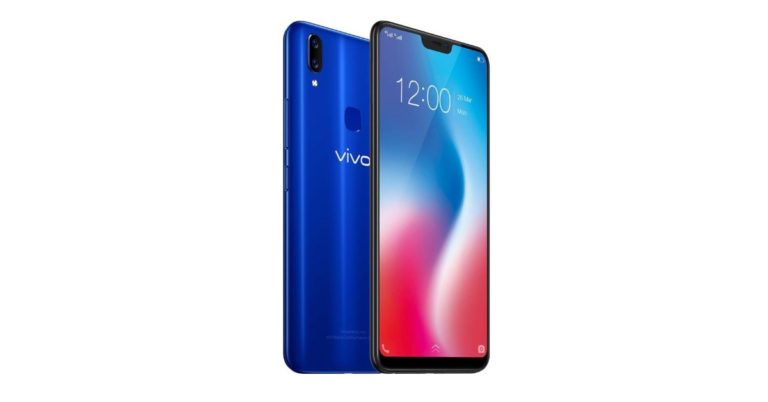
The successor of Vivo V11 Pro is rumoured to be launching soon. Since it is the successor of the V11 Pro, it is likely to be called Vivo V12 Pro. If we go by reports the pricing is expected to be under Rs 30,000. The smartphone would probably have an improved in-display fingerprint sensor that would be faster than the V11 Pro. It can also be said that the device might house a selfie camera on the basis of the latest display piercing tech on the display. So, we might see the pin hole front camera on this smartphone.
The company had launched the V9 in the first half of this year and the V11 Pro in the second half. So, if the V12 Pro comes in the first half of next year, the Vivo V10 which is the successor of V9 can be expected to launch in the second half. Nipun Marya, Director-Brand strategy, Vivo India said in an interview with India Today, “we will be launching something in the first half of 2019 and it will be the successor of the V11 Pro. One in the first half and the other in the second half.” This is likely to be the Vivo V12 Pro.
Also, the company has revealed that it is going to launch another smartphone with 5G connectivity. It says that the same would be launched in the coming year. The company did not specify the date, and plans to launch them only when “the market is ready”. However, the Chinese smartphone brand is confident that it will be one of the first companies to launch the trend of 5G smartphones.
Marya is sure about Vivo’s authenticity that it would be one of the leading brands when it comes to 5G network. This is what he said, “We have done a very deep collaboration with Qualcomm, and we will be among the first few brands to launch a 5G device. In fact, we are already in advanced stages on the development of a 5G phone, so all the testing is already happening”.
Other than Vivo, OnePlus had also announced that they will be the first ones to bring a 5G smartphone. However, with 4G not working properly in India, a 5G phone does not make sense here. Yes, in developed markets a 5G smartphone can reap great benefits.
For the latest gadget and tech news, and gadget reviews, follow us on Twitter, Facebook and Instagram. For newest tech & gadget videos subscribe to our YouTube Channel.
Xiaomi Notebook Air unveiled with Intel Core i5 CPU: Price, specifications and more

Well, the Chinese maker Xiaomi is great at copying everything and this time they have copied the name of a famous laptop by Apple. The new laptop by the Chinese company is called Xiaomi Notebook Air that comes with an Intel Core i5 processor inside. In terms of design, the laptop is similar to the Mi Notebook Air powered by Intel Core M3 processor. Both have a 12.5-inch display.
Xiaomi Notebook Air Technical specifications
The laptop has a resolution of 1,920×1,080 pixels. It provides 170 degrees wide viewing angle and brightness of 300nits. The Xiaomi Notebook Air has a contrast ratio of 600:1 and a widescreen ratio of 16:9. The Notebook runs on Windows 10 Home Edition. It is paired with Intel HD integrated graphics 615, 4GB RAM and 256GB SSD.
4G connectivity is available on the Xiaomi Notebook Air. Rest of the connectivity options include WiFi 802.11ac, Bluetooth 4.1, USB 3.0 port, HDMI and 3.5mm earphone jack. The dimensions of the device are 292x202x12.9mm and it weighs 1.07kg. It features a 1MP web camera with 720p video calling support. The Notebook allows fast charging and in terms of online video playback it can last up to 8 hours. Also, it supports 7.5 hours of local video playback and 7.5 hours of web browsing.
Xiaomi Notebook Air Price
The Xiaomi Notebook Air has been launched in China for CNY 3,999 and is yet to be launched in India. If it launches in India it would probably cost Rs 40,500 approximately as that is the Indian currency equivalent of this Chinese product. It is up for pre-sale in Mi.com and JD.com. Only one colour option is available and that is silver. Customers can pre-order the gadget by paying CNY 100.
Now what is left for us to see is when would it be launched in India. If they do, will they be able to capture the market in the laptop segment just like they were able to in the mobile world, is something only time will tell. As of now there is no news on its official launch in India.
Image courtesy: Mi.com
For the latest gadget and tech news, and gadget reviews, follow us on Twitter, Facebook and Instagram. For newest tech & gadget videos subscribe to our YouTube Channel.
Smartphone with MediaTek Helio P90 SoC gets listed on Antutu

Taiwan based chipmaker MediaTek had launched its Helio P90 chipset at the beginning of this month. MediaTek Helio P90 is said to be the most powerful processor by the chipmaker yet and is aimed towards high-end flagship level smartphones. MediaTek has touted the newly launched chipset to be power efficient and the company said that the SoC has an extremely good performance in terms of artificial intelligence. However, we will have to wait to see the chipset’s performance in a smartphone before we can say whether these claims are correct or not. But then, for now, we the AnTuTu benchmark leak that gives us an idea about the performance of MediaTek’s Helio P90 chipset.
The AnTuTu benchmark results of the newly launched MediaTek Helio P90 processor were shared by an Indonesian tipster, Bang Gogo. He is reportedly a renowned tipster as most of the leaks provided by him earlier have turned out to be true. Gogo has shared a screenshot of which reveals the becnchmark results as well as the hardware details of the handset on which it was captured. The smartphone that was used for the listing was powered by an Octa-Core Helio P90 processor clubbed with IMG PowerVR GM 9446 GPU.
The display of the smartphone that featured in the listing had a resolution of 2160px x 1080 px. The test smartphone runs Android 9.0 Pie operating system and packs a 6GB RAM along with 128GB of internal storage. As we mentioned earlier, the device is powered by MediaTek Helio P90, and on Antutu benchmark test, it scored 1,62,861. If we compare this with smartphones that are powered by Qualcomm’s Snapdragon 845 processor, their scores usually range from 2,50,000 to 2,90,000. But we’ll take this listing with a pinch of salt as there is a possibility that the test device is not optimised, which contributed to the rather low score. So, till a smartphone is actually launched with the chipset in question, we can’t determine the performance of MediaTek Helio P90 processor. MediaTek Helio P90 processor is an Octa-Core chipset that has been made by the chipmaker using 12nm TSMC technology and it has been touted by the company for its advanced AI capabilities. For the latest gadget and tech news, and gadget reviews, follow us on Twitter, Facebook and Instagram. For newest tech & gadget videos subscribe to our YouTube Channel.#antutu #mediatek #heliop90 pic.twitter.com/AthCbbmwm8
— 📱📶💻📸👻🔮☪️ (@bang_gogo_) December 27, 2018
PUBG Mobile bans 30,000 players: Here’s why

PlayerUnknown’s Battlegrounds or PUBG Mobile recently rolled out an all-new snow map called Vikendi. The game is now covered in snow, has got new locations, and there is a Christmas theme that has been added to it too. However, besides these cosmetic changes and the addition of new weapons, the game has also introduced an Anti-Cheat and Reporting feature with the latest update, according to a report in PCGamesN.
PUBG also banned over 30,000 players from playing the game because they used cheat codes during the game. Some of these accounts belonged to PUBG Pro players like TEXQS, Papaya, Cageman, PlayerJones, Hoffmann88, Sezk0, Houlow and Kragen. To be more specific, these 30,000 players have been banned by PUBG for using the Radar Hack Cheat code while playing the game.
For those unaware, Radar Hack Cheat gives users detailed information about his rival player’s position. The information from the servers is sent to a third-party VPN and the user getting the information naturally has higher chances of winning the game.
To put it more simply, with Radar Hack, users are able to see the position of other players using a smartphone app or a second monitor and this gives them an advantage over that player in the game.
According to several media reports, a player Justlikethegypsysaid said about this hack, “I cannot count on both hands the amount of times I have ran into people obviously using some form of radar cheat today. I will be sitting in a room, or behind a rock. Then I hear footsteps heading towards me, and the second even their head is visible I’m prefired into the next dimension. I understand that these cheats are undetectable as they run on entirely separate devices to Pubg, however, there has to be some way that Pubgcorp can close the loop of information being fed to these devices and apps. I cannot see why people should be able to leech match information while it is still in progress.”
The latest update of PUBG Mobile, that also has the Vikendi map, comes with anti-cheating features. An anti-cheating tool is also available in the patch notes available on Steam Community that states that the information about the ban will now be written on those players ‘feed in real time who have been banned for cheating, teaming or teamkilling.
For the latest gadget and tech news, and gadget reviews, follow us on Twitter, Facebook and Instagram. For newest tech & gadget videos subscribe to our YouTube Channel.
20 smartphones launched in 2018 with the highest level of radiation

Most of us want to get rid of our smartphone addiction because we think it wastes our time, or because we think we spend too much time glued to a screen. However, it poses a far more serious threat because a lot of smartphones come with radiation levels that are dangerously high. Different regions in the world have different values of SAR that they consider to be acceptable. While in the US, SAR level at or below 1.6 watts per kilogram is permitted, the European Union allows 2 watts per kilogram of SAR level. India follows the US model when its SAR value. However, Der Blaue Engel, a German certification for products and services on the basis of environmental friendliness, considers a far lesser level of SAR acceptable. It only certifies the smartphones that have lesser than 0.60 watts per kilogram of absorption rate. Here, we have curated a list of 20 smartphones that were launched in 2018 that have the maximum level of SAR values:
 SAR value (at the ear): 1.58 W/kg
SAR value (on the body): 1.42 W/kg
SAR value (at the ear): 1.58 W/kg
SAR value (on the body): 1.42 W/kg
 SAR value (at the ear): 1.55 W/kg
SAR value (on the body): 1.27 W/kg
SAR value (at the ear): 1.55 W/kg
SAR value (on the body): 1.27 W/kg
 SAR value (at the ear): 1.39 W/kg
SAR value (on the body): 1.4 W/kg
SAR value (at the ear): 1.33 W/kg
SAR value (on the body): 1.38 W/kg
SAR value (at the ear): 1.33 W/kg
SAR value (on the body): 1.49 W/kg
SAR value (at the ear): 1.39 W/kg
SAR value (on the body): 1.4 W/kg
SAR value (at the ear): 1.33 W/kg
SAR value (on the body): 1.38 W/kg
SAR value (at the ear): 1.33 W/kg
SAR value (on the body): 1.49 W/kg
 SAR value: 1.188 W/kg
 SAR value (at the ear): 1.19 W/kg
SAR value (on the body): 1.59 W/kg
SAR value (at the ear): 1.19 W/kg
SAR value (on the body): 1.59 W/kg
 SAR value (at the ear): 1.07 W/kg
SAR value (on the body): 1.43 W/kg
SAR value (at the ear): 1.07 W/kg
SAR value (on the body): 1.43 W/kg
 SAR value (at the ear): 0.99 W/kg
SAR value (on the body): 0.99 W/kg
SAR value (at the ear): 0.99 W/kg
SAR value (on the body): 0.99 W/kg
SAR value (at the ear): 0.99 W/kg
SAR value (on the body): 0.99 W/kg
SAR value (at the ear): 0.99 W/kg
SAR value (on the body): 0.99 W/kg
 SAR value (at the ear): 0.99 W/kg
SAR value (on the body): 0.99 W/kg
SAR value (at the ear): 0.99 W/kg
SAR value (on the body): 0.99 W/kg
 SAR value (at the ear): 0.96 W/kg
SAR value (on the body): 1.6 W/kg
SAR value (at the ear): 0.96 W/kg
SAR value (on the body): 1.6 W/kg
 SAR value (at the ear): 0.96 W/kg
SAR value (on the body): 0.64 W/kg
SAR value (at the ear): 0.96 W/kg
SAR value (on the body): 0.64 W/kg
 SAR value (at the ear): 0.79 W/kg
SAR value (on the body): 1.15 W/kg
SAR value (at the ear): 0.79 W/kg
SAR value (on the body): 1.15 W/kg
 SAR value (at the ear): 0.77 W/kg
SAR value (on the body): 1.05 W/kg
SAR value (at the ear): 0.76 W/kg
SAR value (on the body): 1.48 W/kg
SAR value (at the ear): 0.73 W/kg
SAR value (on the body): 1.22 W/kg
SAR value (at the ear): 0.77 W/kg
SAR value (on the body): 1.05 W/kg
SAR value (at the ear): 0.76 W/kg
SAR value (on the body): 1.48 W/kg
SAR value (at the ear): 0.73 W/kg
SAR value (on the body): 1.22 W/kg
 SAR value (at the ear): 0.67 W/kg
SAR value (on the body): 1.07 W/kg
SAR value (at the ear): 0.67 W/kg
SAR value (on the body): 1.07 W/kg
 SAR value (at the ear): 0.64 W/kg
SAR value (on the body): 1.36 W/kg
SAR value (at the ear): 0.66 W/kg
SAR value (on the body): 1.42 W/kg
Data sources: German Federal Office for Radiation Protection (Bundesamt für Strahlenschutz), Devicespecifications.com.
For the latest gadget and tech news, and gadget reviews, follow us on Twitter, Facebook and Instagram. For newest tech & gadget videos subscribe to our YouTube Channel.
[td_smart_list_end]
SAR value (at the ear): 0.64 W/kg
SAR value (on the body): 1.36 W/kg
SAR value (at the ear): 0.66 W/kg
SAR value (on the body): 1.42 W/kg
Data sources: German Federal Office for Radiation Protection (Bundesamt für Strahlenschutz), Devicespecifications.com.
For the latest gadget and tech news, and gadget reviews, follow us on Twitter, Facebook and Instagram. For newest tech & gadget videos subscribe to our YouTube Channel.
[td_smart_list_end]
In This Article
Xiaomi Mi Max 3
 SAR value (at the ear): 1.58 W/kg
SAR value (on the body): 1.42 W/kg
SAR value (at the ear): 1.58 W/kg
SAR value (on the body): 1.42 W/kg
OnePlus 6T
 SAR value (at the ear): 1.55 W/kg
SAR value (on the body): 1.27 W/kg
SAR value (at the ear): 1.55 W/kg
SAR value (on the body): 1.27 W/kg
Google Pixel 3 XL
 SAR value (at the ear): 1.39 W/kg
SAR value (on the body): 1.4 W/kg
SAR value (at the ear): 1.39 W/kg
SAR value (on the body): 1.4 W/kg
OnePlus 6
 SAR value (at the ear): 1.33 W/kg
SAR value (on the body): 1.38 W/kg
SAR value (at the ear): 1.33 W/kg
SAR value (on the body): 1.38 W/kg
Google Pixel 3
 SAR value (at the ear): 1.33 W/kg
SAR value (on the body): 1.49 W/kg
SAR value (at the ear): 1.33 W/kg
SAR value (on the body): 1.49 W/kg
Xiaomi Redmi Note 5 Pro
 SAR value: 1.188 W/kg
Asus ZenFone 5Z (ZS620KL)
 SAR value (at the ear): 1.19 W/kg
SAR value (on the body): 1.59 W/kg
SAR value (at the ear): 1.19 W/kg
SAR value (on the body): 1.59 W/kg
Sony Xperia XA2 (H3113; H3133)
 SAR value (at the ear): 1.07 W/kg
SAR value (on the body): 1.43 W/kg
SAR value (at the ear): 1.07 W/kg
SAR value (on the body): 1.43 W/kg
Apple iPhone XR
 SAR value (at the ear): 0.99 W/kg
SAR value (on the body): 0.99 W/kg
SAR value (at the ear): 0.99 W/kg
SAR value (on the body): 0.99 W/kg
Apple iPhone XS
 SAR value (at the ear): 0.99 W/kg
SAR value (on the body): 0.99 W/kg
SAR value (at the ear): 0.99 W/kg
SAR value (on the body): 0.99 W/kg
Apple iPhone XS Max
 SAR value (at the ear): 0.99 W/kg
SAR value (on the body): 0.99 W/kg
SAR value (at the ear): 0.99 W/kg
SAR value (on the body): 0.99 W/kg
Asus ROG Phone
 SAR value (at the ear): 0.96 W/kg
SAR value (on the body): 1.6 W/kg
SAR value (at the ear): 0.96 W/kg
SAR value (on the body): 1.6 W/kg
Xiaomi Mi A2
 SAR value (at the ear): 0.96 W/kg
SAR value (on the body): 0.64 W/kg
SAR value (at the ear): 0.96 W/kg
SAR value (on the body): 0.64 W/kg
Honor 10
 SAR value (at the ear): 0.79 W/kg
SAR value (on the body): 1.15 W/kg
SAR value (at the ear): 0.79 W/kg
SAR value (on the body): 1.15 W/kg
Sony Xperia XZ2 Compact (H8314; H8324)
 SAR value (at the ear): 0.77 W/kg
SAR value (on the body): 1.05 W/kg
SAR value (at the ear): 0.77 W/kg
SAR value (on the body): 1.05 W/kg
Xiaomi Redmi Note 6 Pro
 SAR value (at the ear): 0.76 W/kg
SAR value (on the body): 1.48 W/kg
SAR value (at the ear): 0.76 W/kg
SAR value (on the body): 1.48 W/kg
Huawei P20 Pro
 SAR value (at the ear): 0.73 W/kg
SAR value (on the body): 1.22 W/kg
SAR value (at the ear): 0.73 W/kg
SAR value (on the body): 1.22 W/kg
Sony Xperia XZ2 (H8266; H8296)
 SAR value (at the ear): 0.67 W/kg
SAR value (on the body): 1.07 W/kg
SAR value (at the ear): 0.67 W/kg
SAR value (on the body): 1.07 W/kg
Moto G6
 SAR value (at the ear): 0.64 W/kg
SAR value (on the body): 1.36 W/kg
SAR value (at the ear): 0.64 W/kg
SAR value (on the body): 1.36 W/kg
Moto G6 Play
 SAR value (at the ear): 0.66 W/kg
SAR value (on the body): 1.42 W/kg
Data sources: German Federal Office for Radiation Protection (Bundesamt für Strahlenschutz), Devicespecifications.com.
For the latest gadget and tech news, and gadget reviews, follow us on Twitter, Facebook and Instagram. For newest tech & gadget videos subscribe to our YouTube Channel.
[td_smart_list_end]
SAR value (at the ear): 0.66 W/kg
SAR value (on the body): 1.42 W/kg
Data sources: German Federal Office for Radiation Protection (Bundesamt für Strahlenschutz), Devicespecifications.com.
For the latest gadget and tech news, and gadget reviews, follow us on Twitter, Facebook and Instagram. For newest tech & gadget videos subscribe to our YouTube Channel.
[td_smart_list_end] OnePlus 6T to be available at a discounted price for a limited period starting December 29
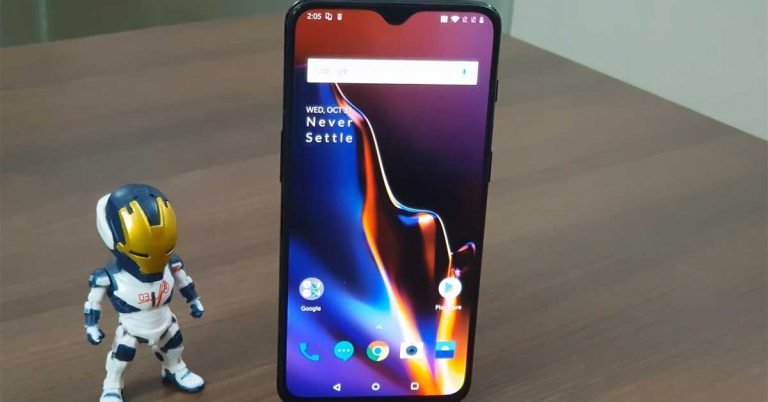
If you have been planning to buy the OnePlus 6T, we have some good news for you. The Chinese smartphone brand has rolled out some year-end offers on its latest flagship smartphone. These offers will go live starting December 29, 2018, and customers will be able to avail them till January 6, 2019.
As a part of the offers, customers will be able to avail an instant discount of Rs 1,500 when they buy the OnePlus 6T from Amazon.in, provided they opt for EMI transactions and pay for their purchase using HDFC Bank credit and debit cards. A no-cost EMI option for six months can also be availed on buying OnePlus 6T via Amazon.in, OnePlus.in, Croma outlets and OnePlus exclusive offline stores. Apart from this, if you exchange your old OnePlus device for the OnePlus 6T (review), you would be able to avail a discount of up to Rs 2,000. If you don’t have a OnePlus smartphone, you can change any other phone to get a discount of up to Rs 1,500.
Recently, OnePlus partnered with racing giant McLaren for its special edition smartphone, OnePlus 6T McLaren. While most of the features of the smartphone remain the same as OnePlus 6T, it does some key changes in design as well as specifications. For starters, the special edition smartphone comes with signature McLaren Papaya Orange coloured side edges, and has a pattern underneath its glass back panel that is based on McLaren’s carbon fiber. OnePlus 6T McLaren comes with 10GB of RAM and supports the company’s Warp Charge 30 technology.
Coming to the specifications of OnePlus 6T, the smartphone features a 6.41-inch full-HD+ AMOLED display that has an aspect ratio of 19.5:9. The device is powered by Qualcomm Snapdragon 845 processor clubbed with either 6GB or 8GB RAM, or in McLaren edition’s case – 10GB RAM. The flagship smartphone is available in 128GB or 256GB storage options. OnePlus 6T sports a waterdrop-style notch and an in-display fingerprint scanner. The smartphone runs Android 9.0 Pie skinned with the company’s own OxygenOS.
On the camera front, the smartphone comes with a 16MP Sony IMX519 sensor aperture and a secondary 20MP Sony IMX376K sensor. OnePlus 6T comes with support for OIS and EIS and has a dual-LED flash module. For selfies and video calls, there is a 16MP Sony IMX371 sensor on the front panel of the smartphone. The base variant of OnePlus 6T is priced at Rs 37,999, while the most high-end McLaren Edition costs Rs 50,999.
For the latest gadget and tech news, and gadget reviews, follow us on Twitter, Facebook and Instagram. For newest tech & gadget videos subscribe to our YouTube Channel.
Moto G7 Power leaked on Geekbench: Here is all you need to know about the phone
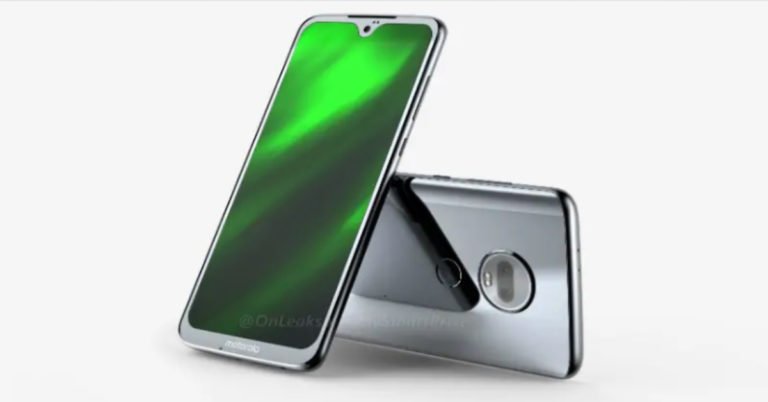
Geekbench is a platform which categorises phones on the basis of the performance of their processors and computing power. It marks them on the basis of single-core and multi-core performance. And based on this a phone gets points that tells us how powerful the mobile really is. In a recent leak, the Moto G7 Power has scored 1,286 points on Geekbench test marking.
Coming to the phone’s built and specifications, the Moto G7 Power will have a traditional notch as we have observed in other leaks as well. Compared to the previous Motorola series which was Moto G6, the Moto G7 Power will provide a larger screen space. Also, as its name suggests ‘Power’ the mobile will probably have a larger battery than other phones belonging to the same series.
Connectivity options of the Moto G7 in all probability will include a headphone jack and USB Type-C charging port. Considering that the Moto G7 will be the flagship phone in the series it can indicate what other next generation of Moto devices would also feature in the same series.
The Moto G7 Power is expected to come with an octa-core Qualcomm Snapdragon 625 chipset. The smartphone would have a single RAM variant of 4GB and would be running on the latest Android Pie OS. Furthermore, it will be powered by a massive battery of 5,000mAh.
Three phones—the Moto G7, G7 Plus and G7 Power were leaked in the Federal Communications Commission(FCC) previously. The other one, the Moto G7 Play was rendered in the Eurasian Economic Commission(EEC).
Now that we have introduced the other smartphones as well, it won’t do any harm in weighing them against each other. The Moto G7 and G7 Plus are expected to have a waterdrop notch whereas the Moto G7 Play and G7 Power will have a traditional notch. Though the former two indeed have a waterdrop notch, they are not as slim as seen in the competing devices from makers like OnePlus or Vivo.
The Moto G7 Power and G7 Play in all probability will have a single rear camera setup. In both handsets, users will have fingerprint sensors at the back where the Motorola logo is housed. In case of G7 and G7 Plus, both would come with dual rear camera setup.
For the latest gadget and tech news, and gadget reviews, follow us on Twitter, Facebook and Instagram. For newest tech & gadget videos subscribe to our YouTube Channel.