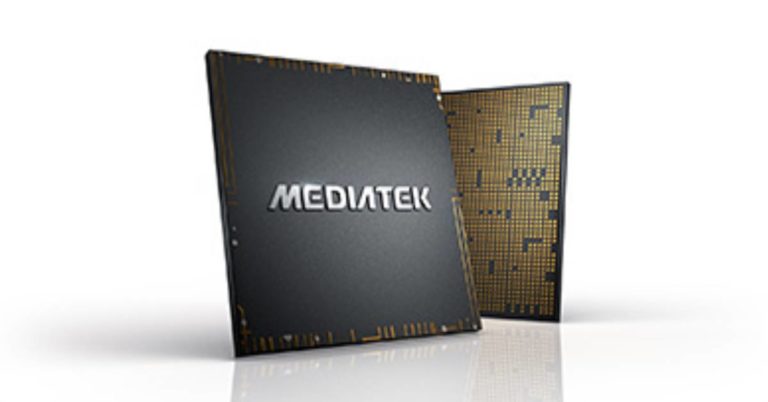
In order to provide users incredible visual quality and smoother video experiences while using less data, MediaTek has announced that it will enable YouTube video streams using the cutting-edge AV1 video codec on the MediaTek Dimensity 1000 5G SoC. With this, the MediaTek Dimensity 1000 will become the world’s first smartphone SoC to integrate an AV1 hardware video decoder by enabling it to play back AV1 video streams up to 4K resolution at 60fps.
As video streaming is the top most activity that most of the smartphone owners are engaged in, the users can enjoy longer battery life through the Dimensity 1000’s more power efficient hardware-based AV1 video decoder.
“MediaTek is engaged in consistently upgrading its offerings to enhance user experience, and AV1 technology is a prime example. Video is now the most used form of communication, with 70% of Millennials and Gen Z reportedly using streaming services,” said Dr Yenchi Lee, Assistant General Manager of MediaTek’s Wireless Business Unit.
Combined with its ultra-fast 5G connectivity in a single chip, the Dimensity 1000 leads the industry in design and capability.
It is worth mentioning that the AV1 video codec is creating a landmark change in the video streaming industry. First released in 2018 by the Alliance for Open Media (AOMedia), AV1 is royalty-free, crafted to replace the VP9 codec and become the Internet Video Codec (NETVC) standard. AV1 is an ultra-high-performance video codec technology that delivers 30% more compression efficiency over existing VP9.
“AV1 has become an increasingly important format to allow high-resolution playback on handheld devices, and we’re excited that MediaTek has implemented dedicated AV1 hardware to advance its adoption, such as what’s included in their Dimensity 1000 5G SoC,” said Matt Frost, Director of Product Management of Google Chrome.
“As mobile video streaming becomes more prevalent, new use cases like MediaTek’s emphasize the important work of developing next-generation codecs,” added Frost.
As per the Industry reports, the video streaming market is likely to expand at a CAGR of 19.6 percent and touch $124.57 billion by 2025. Mind you! Video streaming market is one of the principle drivers of 5G services. In order to capture this market, MediaTek is leading the way in enabling effective video streaming with AV1.
For the latest gadget and tech news, and gadget reviews, follow us on Twitter, Facebook and Instagram. For newest tech & gadget videos subscribe to our YouTube Channel. You can also stay up to date using the Gadget Bridge Android App.
With increased demand for video-conferencing solutions that provide security and reliability together with popular features like tiled view, Google Cloud has now announced that it is making Google Meet, the tech giant’s premium video-conferencing solution, free for everyone with availability rolling out over the coming weeks.
According to the tech giant, anyone with an email address can sign up for Meet starting early May. This would enable a user to gain access to the same features available to G Suite’s business and education users, which includes simple scheduling and screen sharing, real-time captions, and layouts with the expanded tiled view.
The California-based tech giant has revealed, “Google will be gradually expanding Meet’s availability to more and more people over the following weeks. While users might not be able to create meetings at meet.google.com right away, they can sign up to be notified when it’s available.”
Once the roll out is complete, anyone with an email address will be able to use Google Meet for free via meet.google.com and the Meet mobile apps for iOS or Android to schedule, join or start secure video meetings with anyone. The users will require a free Google Account, which only takes a minute to create using your work or personal email address of choice. This step is required as a security measure, and they only need to sign up once. According to Google, “Meetings are limited to 60 minutes for the free product, though we will not enforce this time limit until after September 30.”
For organizations that aren’t already G Suite customers, Google has announced a new edition called G Suite Essentials, which also includes Google Drive for easy and secure access to all of a team’s content, and Docs, Sheets and Slides for content creation and real-time collaboration. In a blog post, the tech giant said, “It’s perfect for teams that need access to Meet’s more advanced features, such as dial-in phone numbers, larger meetings and meeting recording. Through Sept. 30, we’re providing G Suite Essentials and all of these advanced features free of charge.”
However, G Suite’s 6 million existing customers already have access to Meet. Admins simply need to enable Meet by following instructions outlined on Google’s Help Center.
As far as schools and higher education institutions are concerned, Google Meet is included in G Suite for Education, a suite of free Google apps tailored specifically for schools, which serves over 120 million students and teachers globally for high-quality virtual classes, PTA meetings, parent-teacher conferences, tutoring, and even school socials.
For the latest gadget and tech news, and gadget reviews, follow us on Twitter, Facebook and Instagram. For newest tech & gadget videos subscribe to our YouTube Channel. You can also stay up to date using the Gadget Bridge Android App.
Last week the Chinese Premium smartphone company revealed the pricing of its OnePlus 8 Series for the Indian market. However due to lockdown the company did not declare the official sale date for both OnePlus 8 and OnePlus 8 Pro. But the company could not keep its fans waiting and has now opened the pre-bookings of both the devices. Also, the company has revealed the pricing for its new wireless charging dock in India. Read on to know more about the pre-booking details of the all-new OnePlus 8 series.
How to pre-book OnePlus8 or OnePlus 8 Pro?
OnePlus 8 and OnePlus 8 Pro are now available for pre-booking in the country. And for the pre-booking, OnePlus has created a dedicated microsite on Amazon.
So in order to book a device, you need to Self-purchase the Amazon Pay Gift Card worth INR 1000 or more available here any time between April 29th, 2020 to May 10th, 2020.
After which the Gift card will be sent to you via email.
You can claim the coupon through the link shared.
Now you can purchase any model from the OnePlus 8 series between May 11 to June 30.
The buyers will receive Rs 1000 back in their Amazon Pay account within 30 days from the date of purchase.
The pre-booking of both the devices are exclusively available through e-commerce website Amazon. However, the sale date is still unclear but the company is expected to put the device on sale from May 11 after the lockdown is over.OnePlus 8 series pricing detailsThe OnePlus 8 price starts at Rs 41,999 for the base 6GB RAM and 128GB storage whereas the 8GB RAM with 128GB storage model comes with a price tag of Rs 44,999, and the top variant which is the 12GB RAM with 256GB storage comes at Rs 49,999. The pricing of the OnePlus 8 Pro 8GB RAM with 128GB storage variant starts at Rs 54,999, whereas the 12GB RAM with 256GB memory model will be available at Rs 59,999. According to the company, the 6GB RAM model of the OnePlus 8 is going to be Amazon India exclusive only whereas all the other models of the series will be available across all online and offline channels that include the Amazon India website, OnePlus experience store as well as Croma.OnePlus 8 specificationThe OnePlus 8 comes with a 6.55-inch full-HD+ Fluid AMOLED display with 1080×2400 pixels of resolution and up to 90Hz refresh rate. It offers a 20:9 aspect ratio, a 3D Corning Gorilla Glass protection and an in-display fingerprint sensor. The device runs on OxygenOS on top of Android 10 and is powered by the latest Qualcomm Snapdragon 865 paired with up to 12GB of RAM with 256GB of expandable storage. The smartphone is IP68 rated for dust and water resistance. It houses a 4,300mAh battery that is supported by Warp Charge 30T.In terms of imaging, the OnePlus 8 consists of a triple rear camera set up with a 48-megapixel Sony IMX586 primary sensor with f/1.75 aperture. The set also includes a secondary 2-megapixel macro sensor with f/2.4 aperture along with a tertiary 12-megapixel camera sensor with f/2.2 aperture. The camera system also supports 4K video recording at 30/ 60fps. On the front, there is a 6-megapixel Sony IMX471 sensor with f/2.45 aperture.
OnePlus 8 Pro specifications
The OnePlus 8 Pro features a bigger 6.78-inch QHD+ Fluid AMOLED display along with up to 120Hz refresh rate. It will be offering 1440×3168 pixels of resolution, 19.8:9 aspect ratio and is protected with a layer of 3D Corning Gorilla Glass. The smartphone runs on OxygenOS based on top of Android 10. Under the hood, there is Qualcomm Snapdragon 865 paired with up to 12GB of RAM and 256GB of storage. For optics, the handset features a quad rear camera set up that includes a 48-megapixel primary Sony IMX689 sensor with f/1.78 aperture and OIS and EIS support. It further includes a secondary 8-megapixel telephoto lens with f/2.44 aperture, a tertiary 48-megapixel ultra-wide-angle lens with f/2.2 aperture and finally a 5-megapixel color filter sensor with f/2.4 aperture for artistic lighting effects and filters. It sports a 16-megapixel Sony IMX471 sensor with f/2.45 aperture on the front for taking selfies.There is a larger 4,510mAh battery on the OnePlus 8 pro which is supported by Warp Charge 30T and Warp Charge 30 Wireless.
For the latest gadget and tech news, and gadget reviews, follow us on Twitter, Facebook and Instagram. For newest tech & gadget videos subscribe to our YouTube Channel. You can also stay up to date with the Gadget Bridge Android App.
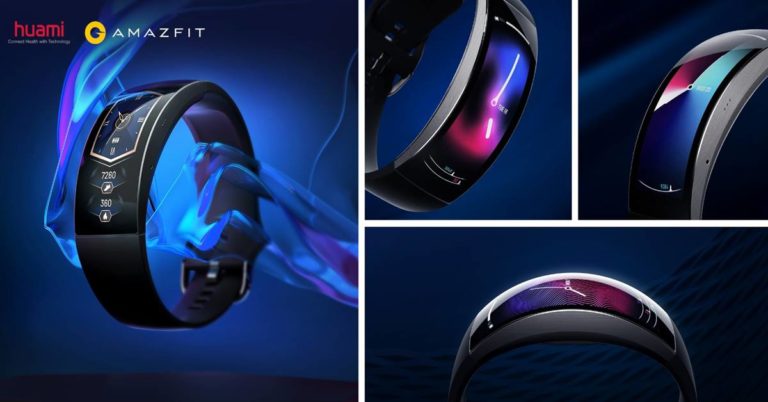
Huami has finally lifted curtains off its Amazfit X Smartwatch, which comes with curved-AMOLED screen and button-free design, with a price tag of $149 (approximately Rs 11,282). The Amazfit X Smartwatch went on sale by crowdfunding on Indiegogo and will be available globally without shipping charges.
Amazfit X, which features 2.07-inch AMOLED display curved at 92-degrees curvatures to fit your wrist, also carries a 3-segment-motherboard connected through flexible circuit in order to adapt the device’s curves. Besides this, the 326ppi HD resolution display shows 100 percent NTSC colour saturation and peak screen brightness of 400 nits.
Huami Amazfit X looks like a band but is a real smartwatch. When connected to the smartphone, it supports notifications push from SMS messages, emails, calendar and all contents will be displayed on the display. Built-in apps are also available for easy access. It allows Bluetooth music control to directly operate watch while exercising without having to pull out your phone.
Moreover, the Amazfit X features a design that does away with buttons and watch crowns that can dig on your wrist. Instead, the smartwatch is fitted with a pressure button that helps you access everything with a press of your finger. In addition to this, there is force-sensing sensor that allows users to complete the operation by responds to the users’ touch with textured, natural vibrations.
The Amazfit X is made of the TC4 titanium alloy that is used as material in aerospace with the purpose of weight reduction. The TC4 titanium alloy has high strength and excellent corrosion resistance. The smartwatch makes the metal with glass together in less than 39gram with short fluoro-rubber strap, despite complicated high making-cost in the process. Besides this, the 3D Corning Gorilla glass and anti-fingerprint coating makes Amazfit X scratch resistant and easy to keep clean, and more exquisite watch faces can be downloaded from Amazfit App. Its 5ATM water resistant design also allows you to advance activities under water, keeping track of your performance in open water swimming or triathlons is made easier than ever.
In addition to this, the Amazfit X smartwatch is equipped with Huami self-developed BioTracker PPG optical sensor to detect stress 4 level when the user is feeling tense through heart rate variability. It monitors your heart rate throughout the day and will give you updates on where your stress levels are: Relaxed, Normal, Medium, and High.
Complete with a GPS+GLONASS dual-satellite positioning system, you can easily track your route even when you travel abroad through Amazfit X.
On the battery front, the Amazfit X smartwatch features a 200mAh curved lithium battery lasts 7-days on a single charge. Additionally, the Amazfit X provides 9 sports modes that support outdoor running, walking, outdoor cycling, indoor cycling, open water swimming, pool swimming, elliptical trainer, indoor fitness and treadmill.
For the latest gadget and tech news, and gadget reviews, follow us on Twitter, Facebook and Instagram. For newest tech & gadget videos subscribe to our YouTube Channel. You can also stay up to date using the Gadget Bridge Android App.
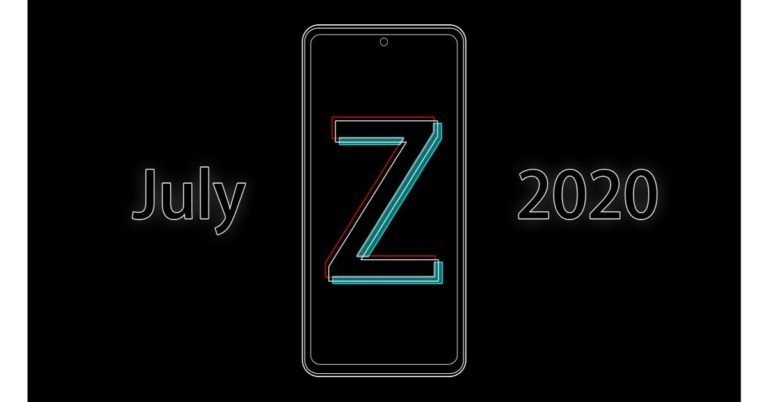
OnePlus recently unveiled its latest smartphone globally, the OnePlus 8 Series. The line up includes two devices namely OnePlus 8 and OnePlus 8 Pro. The company launched the devices in China a few weeks back and before this, it shared a picture of a white mystery box via its social media channel. The box was rumoured to contain a toned-down variant the new series being called as OnePlus Z. Now again the device is new and this time a tipster has predicted the timeline for the launch of the device.A tipster named Max J has taken to Twitter to reveal that the Chinese company might unveil the OnePlus Z device in July this year. He also shared an image which contains a sketch of the upcoming device revealing that the handset might feature a centrally placed punch hole housing a selfie camera. The feature tipped is in line with the earlier reports that also declared a similar feature. However, there is still now confirmed dare for the launch of the device. Many of the previous reports claim that the toned-down variant of the OnePlus 8 will be known as the OnePlus 8 Lite. Whereas some other reports suggest that the company is likely to bring the successor to the OnePlus X that was introduced back in 2015 which means after a gap of five long years the company will begin where it left. The device is expected to range somewhere around Rs 30,000. OnePlus devices are popular for its premium features, loaded smartphones being offered at much affordable pricing so we can expect that the company might launch an affordable option to its fans who are seeking a pocket-friendly yet premium device. However, it is a matter of consideration that recently the company introduced its new headset called OnePlus Bullets Wireless Z and the “Z” tag used in the name of headphones also indicates the same OnePlus “Z” branding what the reports are talking about. The reports suggest that the OnePlus Z or OnePlus 8 Lite will come with a 6.4-inch display, a triple camera set up on the back and a hole-punch display. It is said to house a 4,000mAh battery.
For the latest gadget and tech news, and gadget reviews, follow us on Twitter, Facebook and Instagram. For newest tech & gadget videos subscribe to our YouTube Channel. You can also stay up to date with the Gadget Bridge Android App.
Recently, we got to see the first look of the much anticipated LG Velvet smartphone via a render leak. The device is said to come with Dual Screen accessories and is going to fall under the upper mid-range segment. The smartphone is expected to look similar to Samsung Galaxy Note 8 or Galaxy Note 9 with a curved display with 21:9 aspect ratio. LG Velvet is confirmed to launch next month on April 15 and the specification of the device has been itself revealed by the company ahead of the official launch.According to the company, the device will be featuring a 6.8-inch Cinema FullVision full-HD+ OLED display with 20.5:9 aspect ratio. The South Korean electronics major revealed that LG Velvet will come with a ‘Waterdrop Camera’ and ‘3D Arc Design’. There will be slim bezels on the top as well as the bottom. The smartphone will be an octa-core Snapdragon 765G processor with a 5G modem coupled with 8GB of RAM and 128GB of expandable internal storage. The device comes with a dedicated slot for a microSD card to further expand the memory. There will be Kryo 475 core clocked at 2400Mhz, a Kryo 475 core clocked at 2200Mhz and six Kryo 475 cores clocked at 1800Mhz.In term of optics, LG Velvet will be featuring a Waterdrop Camera design on the back in which three rear cameras and a flash are arranged in a vertical direction. The camera set up will include a 48-megapixel primary sensor, a secondary 8-megapixel ultra-wide camera and a tertiary 5-megapixel depth sensor for portraits. On the front, there will be a 16-megapixel selfie camera housed inside a waterdrop notch on the front display. The company revealed that LG Velvet Will be drawing its power from a 4,300mAh battery with 10W wireless charging support. In terms of connectivity, the device will include a Wi-Fi 802.11ax, Bluetooth 5.1, GPS/ GLONASS/ Beidou, NFC support and USB Type-C port. The smartphone will be available in four colour options Aurora Green, Aurora Gray, Aurora White, and Illusion Sunset.For the latest gadget and tech news, and gadget reviews, follow us on Twitter, Facebook and Instagram. For newest tech & gadget videos subscribe to our YouTube Channel. You can also stay up to date with the Gadget Bridge Android App.
As the whole world is struggling with the coronavirus impact the Chinese smartphone and electronics majors are moving ahead with their launches to recover their loss due to COVID-19 lockdown. Xiaomi is one of the many companies who is stuck between whether to go ahead with their launches in India as the government has extended the lockdown till May 3 in the country. Many smartphones, laptops and other gadgets are long due in the country. But the company is hoping to soon bring the long-awaited RedmiBook and Mi-laptops to India. Earlier this year the company was scheduled to bring the RedmiBook 13 notebook to the Indian market but unfortunately could not. It even got a trademark for RedmiBook in the country registered. Now the company is again planning to bring the MI laptops to India however it did not confirm any official timeline to launch the Redmi device. Via an online meeting with the retailers Xiaomi India head Manu Kumar Jain revealed to launch Redmibook and Mi laptops in India soon. This piece of information was shared by tipster Ishan Agarwal via its Twitter account. His tweet reads, “@manukumarjain said in today’s online meeting with retailers that Mi/ Redmi Laptops will launch in India ASAP (HOPE!). Didn’t provide any concrete date/timeline. Not planning to launch any Tabs like Mi Pad, though. Didn’t comment on upcoming launches like Mi 10 lite/K30 Pro”This indicated that the company is ready to launch its products in the country but is waiting until the lockdown is lifted. Until the lockdown is over the government has banned the sale of non-essential items such as smartphones and other electronics gadgets. Even before the lockdown was not there Manu Kumar Jain dropped a hint about the launch of its Mi10 series in India stating that the Mi 10 series might be pricier in India. Also, there are so many leaks floating on the web that indicates that the company is going to bring its latest K30 Pro series to India under its spin-off Poco. In India, it will be rebranded as Poco F2 Pro.
For the latest gadget and tech news, and gadget reviews, follow us on Twitter, Facebook and Instagram. For newest tech & gadget videos subscribe to our YouTube Channel. You can also stay up to date with the Gadget Bridge Android App.
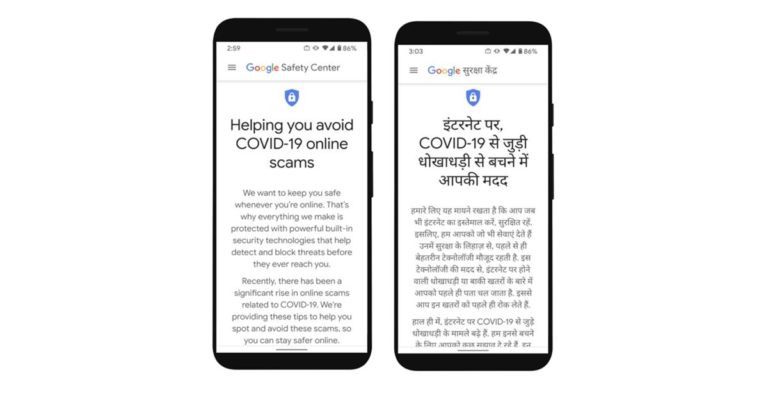
Digital platform has gained a centre-stage in our lives in the unprecedented times of the COVID-19 pandemic as people are turning to new apps and communications tools to work, learn, access information, and stay connected with loved ones. While keep us connected at one hand, it is also posing online security risks for the users. Google has now come out with simple tips, tools and resources to help you stay secure everywhere online.
In a blog post, Saikat Mitra, Director – Trust & Safety at Google, said, “During the past couple of weeks across the globe, our advanced machine-learning classifiers have seen 18 million daily malware and phishing attempts related to COVID-19, in addition to more than 240 million COVID-related spam messages.”
If you wish to know how can you identify and avoid COVID-19 scams as the Internet is being bombarded with them in the form of phishing emails, it’s important to pause and evaluate any COVID-19 related email before clicking any links or taking other actions. In a blog post, Saikat Mitra, Director – Trust & Safety at Google, said, “Be wary of requests for personal information such as your home address or bank details. Fake links often imitate established websites by adding extra words or letters to them—check the URL’s validity by hovering over it (on desktop) or with a long press (on mobile).” Google has even provided these tips online on Google Safety centre at g.co/covidsecuritytips in Hindi and English, with more Indian languages being added in the coming weeks. A user can also download these tips as handy one-pagers both in Hindi and English languages.
Google advises you users to use a password manager to create and store strong passwords. With all the new applications and services you might be using for work and school purposes, it can be tempting to use just one password for all. According to the tech giant, “To keep your private information private, always use unique, hard-to-guess passwords. A password manager, like the one built into Android, Chrome, and your Google Account can help make this easier.”
The California-based tech giant has further asked users to protect their Google Account. Therefore, if you use a Google Account, you can easily review any recent security issues and get personalized recommendations to help protect your data and devices with the Security Checkup. Besides this, you can also run a Password Check-up to find out if the password you have saved for third party sites or accounts have been compromised. If that’s the case, quickly change the old password with a new one to be safe.
Besides this, you should also consider adding two-factor authentication in order to be able to gain an extra layer of security. Mind you! This helps keep out anyone who shouldn’t have access to your accounts by requiring a secondary factor on top of your username and password to sign in. If you security is at stake online, all you need to do is enroll in Google’s strongest security offering Advanced Protection Program at g.co/advancedprotection.
Meanwhile, Google has also built advanced security protections into Google products to automatically identify and stop threats before they ever reach its users. The tech giant’s machine learning models in Gmail already detect and block more than 99.9 percent of spam, phishing and malware.
For the latest gadget and tech news, and gadget reviews, follow us on Twitter, Facebook and Instagram. For newest tech & gadget videos subscribe to our YouTube Channel. You can also stay up to date using the Gadget Bridge Android App.
Tencent Games is all set to roll out a new PUBG Mobile update next month. On May 7 the company will be releasing version 0.18.0 update to its popular mobile game. Which means PUBG Mobile Season 13 is going to come out soon. Also, the company is consistent at trying its best to provide the topmost gaming experience in all the matches during the time of lockdown. While the players are earning their Winner Chicken Dinner and enjoying the Royal Pass Season 12. As the season is coming to an end the company is giving new rewards. This time the players have a chance to win an Apple iPhone 11 Pro. Yes, you heard it right as PUBG Mobile Season 12 is approaching the last week the company is coming up with new rewards. This time the players can shake a tree to win an iPhone 11 Pro. The company will be hosting PUBG Mobile’s latest Lucky Money Tree event that will run for seven days and the event will come to an end on May 2. In this, the players will be completing any mission in order to secure 2 chances per day to shake the tree and win big prizes. Every day there will be three lucky winners who would get a chance to win big prizes“As we approach the last week of PUBG MOBILE season 12, it is raining rewards or in this case, it is falling from a tree! PUBG MOBILE’s latest Lucky Money Tree event will run for 7 days between 8th April 2020 to 2nd May 2020. Players will be required to complete any mission they want to secure 2 daily chances to shake the tree and win big prizes,” the company said.How to access and play the Lucky Money Tree?
Login: Just by logging into your PUBG MOBILE account, you secure your first chance to shake the tree.
Complete a mission of your choice: Players can pick whichever mission they would like to participate in, for instance, a classic match. On completing the mission, they secure their second chance to shake the money tree
Prizes: There will be 3 lucky players a day, out of whom one will win an iPhone 11 Pro and the other two will win Apple Air pods.
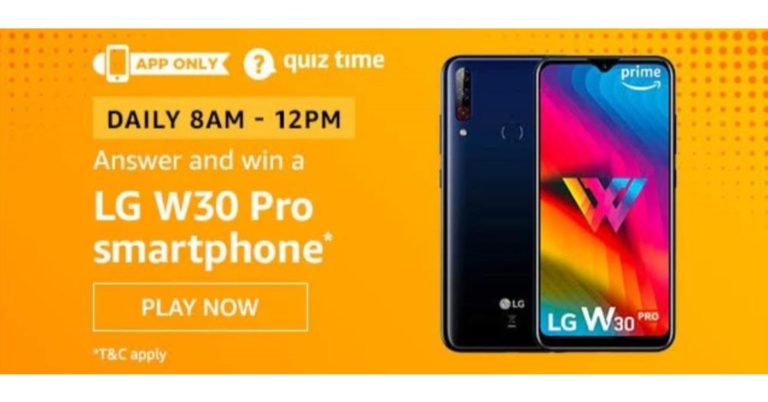
Today’s Amazon Quiz has already gone live on its app. Today, the contestants have a chance to win LG W30 Pro Smartphone. The quiz goes live every day from 8 AM which runs till 12 noon. Amazon brings a quiz on a daily basis on its mobile platform app that consists of five questions. The participants have to answer the questions correctly to enter into a lucky draw. The set of questions is based on general knowledge and current affairs. The results of the lucky draw will be announced at the end of the month. Getting any question incorrect makes you ineligible for the lucky draw. You can try your luck again the next morning. Like said earlier the quiz is for app users only and is not available for desktop platforms. The Amazon Quiz can be played from 8 AM till 12 noon. The result of today will be announced via luck draw on May 30. We have already updated all the answers of today’s quiz below.
Checkout April 29 Amazon Quiz Answers
Question 1: NASA’s Juno spacecraft recently captured a stunning image of the northern regions of which solar body and its swirling, chaotic atmosphere?The Answer is- JupiterQuestion 2: The Red Guardian is a character to be introduced to the MCU in the Black Widow movie. In which country was he born?The Answer is- RussiaQuestion 3: How do we better know the Korean candy Ppopgi? (Hint: A famous coffee trend currently running all over social media)The Answer is- DalgonaQuestion 4: The recently launched book, ‘Shuttling to the Top’ is the biography of which Indian sportsperson?The Answer is- PV SindhuQuestion 5: Which famous actor born on April 24th in Gajanur, was also known as Nata Saarvabhouma (emperor of actors)?The Answer is- Dr. Rajkumar
The first episode of Gadget Bridge Tech Master Class is out now on Gadget Bridge YouTube channel. The very first guest of the master class is Mr. Dinesh Sharma, Mobile Business Head, Asus India. In the first episode, he tells how he is coping up with the coronavirus lockdown where almost all the employees in the country have to work from home in order to maintain social distancing. In the episode, he gives you an insight into gadgets he is using to increase productivity and work lifestyle. Surprisingly he also revealed that that soon the company is going to launch a new set of earphones called ROG Cetra for gaming.Asus is planning to launch ROG Cetra headset for gaming in India best suitable for ROG devices. It is an in-ear gaming headphone that comes with Active Noise Cancellation (ANC) along with USB-C connector. The device supports multiple platforms such as mobile phones, PC, Mac and Nintendo Switch. It will be available in three sizes of ear gels and fins, and a pair of foam ear tips to give you a secure and comfortable fit. The earbud design is slightly tilted at the front to better fit human ears and comes with a small bump at the base so the earbuds sit more securely on the ear.It comes integrated with Active Noise Cancellation technology that cancels out all the environmental noise for the best gaming experience. The audio device will block all the unwanted noises while providing a natural audio experience.
It comes with a large 10mm ASUS Essence drivers to deliver strong bass and optimized gaming audio. When the Ambient mode is turned on the ROG Cetra automatically switches off noise cancellation and lets you hear the sounds of the world around you without having to take off your headphones. It can be activated with a push of a button and is useful when you are travelling in a metro or when you do not want to miss important announcements at the Airport while enjoying music, or crossing the street.It features controls to adjust volume, play/pause, and activate ANC mode and Ambient mode. In addition to this, the ROG Cetra earphones come with a compact travel case for better storage of your earbuds and ear fins. Also, the red ROG logo on each earbud lightens up when connected to a device giving the headphones a more stylish look. The device is compatible with all the models of Asus ROG phones, Asus Zenfone 6, 5Z, 5 4 Pro, 4, Zenfone AR, Samsung Galaxy S9, Google Pixel and many other smartphones.
For the latest gadget and tech news, and gadget reviews, follow us on Twitter, Facebook and Instagram. For newest tech & gadget videos subscribe to our YouTube Channel. You can also stay up to date with the Gadget Bridge Android App.
Apple has given the best of the iPhones to its fans worldwide. Now, the tech giant is once again in news not because it is bringing something new. According to a Forbes report, Apple has now confirmed that the report by ZecOps, which had stated that every iPhone powered by iOS 6 or newer version is prone to remote attacks, is a reality.
The report by Forbes has revealed that “Apple has now gone a step further in talking about this security breach and it has met a controversial response.” As per an official statement issued by the tech giant, “Apple takes all reports of security threats seriously. We have thoroughly investigated the researcher’s report and, based on the information provided, have concluded these issues do not pose an immediate risk to our users. The researcher identified three issues in Mail, but alone they are insufficient to bypass iPhone and iPad security protections, and we have found no evidence they were used against customers.
In the official statement, Apple clarified, “These potential issues will be addressed in a software update soon. We value our collaboration with security researchers to help keep our users safe and will be crediting the researcher for their assistance.”
Earlier, ZecOps had revealed that “Following a routine iOS Digital Forensics and Incident Response (DFIR) investigation, ZecOps found a number of suspicious events that affecting the default Mail application on iOS dating as far back as Jan 2018. ZecOps analysed these events and discovered an exploitable vulnerability affecting Apple’s iPhones and iPads. ZecOps detected multiple triggers in the wild to this vulnerability on enterprise users, VIPs, and MSSPs, over a prolonged period of time.”
ZecOps had further stated in its report that the attack’s scope consists of sending a specially crafted email to a victim’s mailbox enabling it to trigger the vulnerability in the context of iOS MobileMail application on iOS 12 or maild on iOS 13.
In addition to this, ZecOps had added “We believe that these attacks are correlative with at least one nation-state threat operator or a nation-state that purchased the exploit from a third-party researcher in a Proof of Concept (POC) grade and used ‘as-is’ or with minor modifications (hence the 4141..41 strings). While ZecOps refrain from attributing these attacks to a specific threat actor, we are aware that at least one ‘hackers-for-hire’ organization is selling exploits using vulnerabilities that leverage email addresses as a main identifier.”
For the latest gadget and tech news, and gadget reviews, follow us on Twitter, Facebook and Instagram. For newest tech & gadget videos subscribe to our YouTube Channel. You can also stay up to date using the Gadget Bridge Android App.
The Social media app Telegram Messenger has come up with new features that will be helpful to many users to stay connected. The chatting app will introduce secure group video calls. It comes with various features such as folders, cloud storage as well as desktop support to make it more useful to users working from home or studying during the lockdown.Right now it is not easier to trust any of the other video communication tools. Some are secure but not useable or those who are usable but not secure for instance Zoom. In order to take on these popular but not so secure video conferencing apps Telegram is going to come up with a secure group video calls feature on its platform. However, the feature was announced last week and the company also introduced several other features to kill time while getting bored at home. These features are Quizzes, educational tests, 20,000 stickers and many more.Until now Telegram did not support a video calling feature but via a new blog post, the company aims to bring a secure group video calls to feature by this year when most of the apps are not secure keeping their user’s data and privacy at risk. “What’s next, you might ask? The currentglobal lockdown highlighted the need for a trusted video communication tool. Video calls in 2020 are much like messaging in 2013. There are apps that are either secure or usable, but not both. We’d like to fix that, and we will focus on bringing you secure group video calls in 2020. When will they be ready? You‘ll be the first to know when we’re done, promise. So stop asking,” the blog post said.While on the other hand its rival and popular chatting app WhatsApp has increased the limit of people in a group video or voice call. It now supports up to eight participants in group video calls. Earlier it used to support up to four people.Earlier this year Telegram introduced a Quiz Mode that allowed users to lex theirtriviamuscles. Now the company is rolling out an update to this feature with educational features. Earlier it has objective-based multiple-choice questions but with the new update, the users can now add explanations in response to quiz questions allowing them to learn from their mistakes or giving them more context. Now while creating a quiz via @Quizbot the users can now set a timer for questions. Timers add to the competitive element of Telegram quizzes, which are often used for exam preparation in student group chats. With the new countdown animation, everyone can see how much time they have left.Furthermore, Telegram has announced to distribute EUR 400,000 )that translates to Rs 3.29 crores) among creators of educational tests. “To take part, use@QuizBot to create and publish an original educational test on any subject at any difficulty level, in any language. Feel free to choose anything from basic Medieval European History in English to Mikrobiologie für Experten auf Deutsch – and add any media you require to your questions, but make sure all intellectual property rights are respected. We will publish the quizzes you submit in a searchable directory. Based on their quality and popularity we will then announce the winners in several stages. Submissions for the first stage end on May 15.”Moreover, the company has also introduced a new sticker directory where you can browse and search the over 20,000 high-quality free Telegram stickers created in the last 5 years.
For the latest gadget and tech news, and gadget reviews, follow us on Twitter, Facebook and Instagram. For newest tech & gadget videos subscribe to our YouTube Channel. You can also stay up to date with the Gadget Bridge Android App.
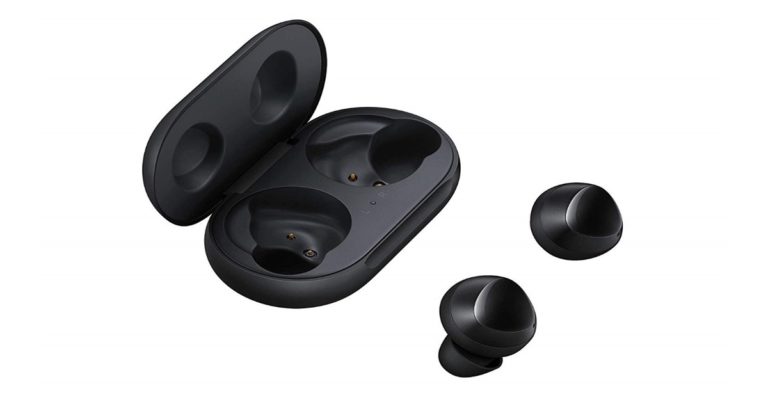
If you wish your original Galaxy Buds to work like Galaxy Bud+, Samsung has now announced that it is bringing new connectivity features to the device through a software update that will be available on smartphones running Android Lollipop OS or higher with more than 1.5GB RAM. All you need to ensure is that you have access to the latest version of the Galaxy Wearable app and the earbuds software. According to Samsung, These features “allow Galaxy Buds users to now go completely wireless and take their music more easily than ever before – whether it’s on a run, at your workspace or around your home.” Let’s check out how these new features will enable you to do more with your Galaxy Buds.
The Microsoft Swift Pair feature allows you to easily pair your Galaxy Buds to your Windows 10-based PC. All you need to do is simply head to the ‘Bluetooth & other devices’ menu under settings on a PC to pair your Galaxy Buds. This will enable you to utilize Galaxy Buds’ innovative sound quality on work-related tasks, such as remote video meetings, or listening to the music that helps you power through the workday. The Swift Pair compatibility feature has made Galaxy Buds join Galaxy Buds+ to support multiple pairing experiences across mobile and PC devices.
Besides this, the update now enables you to experience Ambient Sound for the first time on Galaxy Buds. Mind you! Ambient Sound can be pre-set and enabled through the Galaxy Wearable app, which can be downloaded via the Galaxy Store or Google Play Store. As per a blog post by Samsung, “By simply putting your Buds on, you can now hear your surroundings and remain aware of the world around you, even when you’re watching movies or listening to your favourite tunes with the volume up. In addition, you can now experience Ambient Sound even with only one earbud in, giving you more options of how you tune in, or tune out, of your surrounding environment.”
Moreover, the update allows Spotify users to instantly listen to personalized music on their Galaxy Buds with a single press. Through a simple ‘Tap & Hold’ gesture, users can launch Spotify and start listening to music where ever you left off. All that is required is a pre-setup. You simply need to go to setting and ‘Touch Pad’ menu to select your preference under the Galaxy Wearable app. This feature is available to users that have installed the latest version of the Spotify app on their smartphone, subscription fees may apply for personalized music.
For the latest gadget and tech news, and gadget reviews, follow us on Twitter, Facebook and Instagram. For newest tech & gadget videos subscribe to our YouTube Channel. You can also stay up to date using the Gadget Bridge Android App.
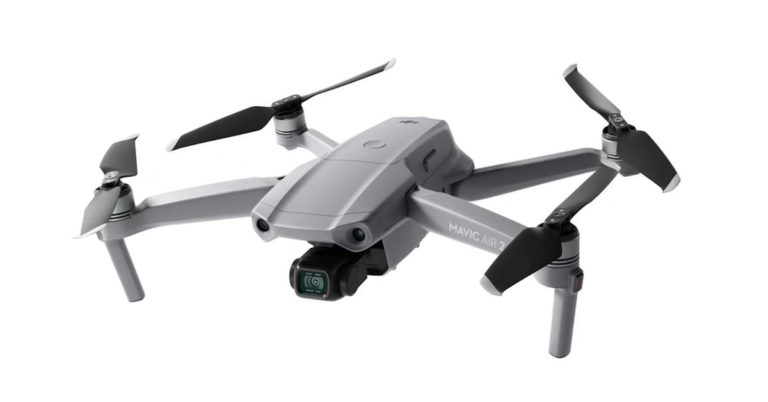
DJI, the global leader in civilian drones and aerial imaging technology, has now stepped into a new era of aerial creativity with the compact and easy-to-fold Mavic Air 2 drone.
Stressing that Mavic Air 2 is another milestone for the company, Roger Luo, President of DJI, claimed, “While the Mavic Air 2 bears all the hallmarks of the Mavic drone family, we had to completely rethink its design and development process. Our goal was to create a drone that offered the best overall experience possible to even the most novice pilot. We hope our drones can help boost creativity and become a fun yet educational experience that can be enjoyed, even at this unprecedented moment in history.”
The new Mavic Air 2 drone features robust imaging capabilities for every type of creator. In an press statement, DJI claims, “No matter the skill level of the pilot, Mavic Air 2’s features and technology are sure to appeal to every creative visionary. Mavic Air 2 is the first drone in the Mavic series to offer 4K video at 60 fps and 120 Mbps.”
In addition to this, users of DJI Mavic Air 2 drone can record content using HDR video, 4X Slow Motion in 1080p at 120 fps or 8X Slow Motion in 1080p at 240 fps. Moreover, pilots can capture 12MP images or choose a new high-resolution 48MP feature that allows the user not to miss even the minutest of the details. Besides, there is a mechanical 3-axis gimbal that enables a user to compensate for camera shake to create smooth and stable footage even in unpredictable scenarios.
Apart from the 3-axis gimbal, DJI stressed that the large Quad Bayer ½-inch sensor of the Mavic Air 2 is the perfect tool to take creativity to the next level with a suite of image capture modes. The newly added SmartPhoto feature clicks 12MP photos using advanced scene analysis and deep-learning to automatically choose one of three image capture options:
HDR photos:
DJI Mavic Air 2 drone automatically captures seven varying exposures of the HDR photograph, merging them together to bring out a highly dynamic image.
Hyperlight:
This is designed for low-light scenarios, taking multiple photographs and merging them to bring out a clear image with less of the noise which usually occurs in low-light scenes.
Scene Recognition:
DJI Mavic Air 2 can recognize five categories of scenes including sunsets, blue skies, grass, snow, and trees, then optimize settings to make the photograph pop by bringing out the highest degree of colour, detail, and tones.
With an aim to provide unparalleled flight performance, DJI Mavic Air 2 weighs as much as a small water bottle at 570 grams. Besides this, the Mavic Air 2 drone comes equipped with new motors, new electronic speed controllers (ESCs), enhanced battery technology and an aerodynamic design to provide a maximum flight time of up to 34 minutes. According to the company, “DJI’s proprietary OcuSync 2.0 transmission technology has been upgraded to deliver an extremely reliable and stable HD video feed from the drone at a maximum distance of 10km. OcuSync 2.0 supports both 2.4GHz and 5.8GHz frequency bands and uses an auto-switching feature to move between the two based on signal strength, while anti-interference technology blocks unwanted signals to keep the video feed clear.”
Looking at the other features of DJI Mavic Air 2 drone is equipped with obstacle sensors on the front and rear of the drone to warn pilots when they’re too close to an object and can also be set to stop the drone from moving any closer to avoid collision. Besides this, DJI revealed that there are additional sensors and auxiliary lights on the bottom of the Mavic Air 2 to help the user with several functions including smooth, automatic landing even in difficult lighting. Additionally, Mavic Air 2 also house GEO geofencing solution to help keep drones away from the highest-risk locations, such as busy airports.
What’s more interesting is that whe users enable Advanced Pilot Assistance System (APAS) 3.0, as obstacles come into the drone’s path, Mavic Air 2 will create a new path around, under or over the object to avoid collision, giving pilots the confidence to fly in more complex situations while focusing on capturing their ideal images. As per DJI, “Using 3D mapping, the updated version aids in smooth transitions and more fluid movements around objects even in highly complex environments.”
As far as pricing and availability is concerned, DJI Mavic Air 2 is available for immediate purchase in China while other regions will begin taking pre-orders with an expected ship time of mid-May owing to the new complexities for global shipping and logistics due to the coronavirus pandemic. Mind you! DJI Mavic Air 2 will be available in two purchasing options:
A standard package which includes Mavic Air 2, one battery, remote controller and all the required wires and cables for $799 USD (approx INR 60,612.54)
A Fly More option which includes all items from the standard version as well as a shoulder bag, ND filters, charging hub, and 3 batteries for $988 USD (approx INR 74,957.58).
Meanwhile, DJI Mavic Air 2 is available for pre-order through all authorized retailers as well DJI’s online store.
For the latest gadget and tech news, and gadget reviews, follow us on Twitter, Facebook, Instagram and YouTube.
Welcome to the first episode of Gadget Bridge Tech Master Class. Our first guest is Dinesh Shama who heads a the very cool smartphone division at Asus India. He tells us how he works from home and what’s instore from Asus India. Watch the video till the end as something exclusive is hidden in it.
For the latest gadget and tech news, and gadget reviews, follow us on Twitter, Facebook and Instagram. For newest tech & gadget videos subscribe to our YouTube Channel. You can also stay up to date with the Gadget Bridge Android App.
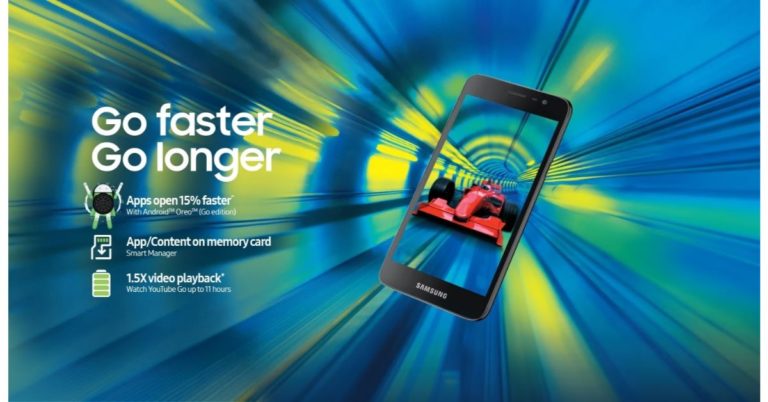
The South Korean smartphone company has just introduced a new budget-friendly smartphone in India. The company unobtrusively launched Samsung Galaxy J2 Core 2020 in India, which is the successor of Galaxy J2 Core that was launched back in the year 2018. However, the device is an upgraded model and comes with very few changes in terms of design as well as specifications. This device comes up as a surprise because since a very long period of time the company has not introduced any smartphone under the J series and instead the very popular A series has taken its place. Let’s see what the J series device is going to offer almost after a gap of two years.
Samsung Galaxy J2 Core 2020 pricing and availability
Without any official announcement, the smartphone company has introduced Samsung Galaxy J2 Core 2020 in India in a single 1GB of RAM and 16GB of storage. Surprisingly Samsung has also put the device on sale via its official Samsung India Store and has been priced at Rs 6,299. The device will be available in three colour options Blue, Black and Gold. It will also be available with EMI options starting at Rs 296.51 per month.
Samsung Galaxy J2 Core 2020 specifications
Coming to the specifications, Samsung Galaxy J2 Core 2020 comes with a 5-inch qHD TFT LCD display with 540×960 pixels of resolution. It runs on Android 8.1 Oreo Go Edition and is powered by 1.4GHz quad-core chipset however the name of the processor is still unknown. It will be offered in a single RAM and storage variant of 1GB of RAM and 16GB of internal storage option. The device comes with a dedicated slot for microSD to help you to further expand the memory up to 256GB. In terms of cameras, Samsung Galaxy J2 Core 2020 features a single 8-megapixel rear camera with f/2.2 aperture along with an LED Flash. While on the front there is a 5-megapixel camera with f/2.2 aperture for taking selfies and video calling. The device houses a 2,600mAh battery offering up to 12 hours of video playback. For connectivity, it includes WiFi, Bluetooth v4.2, GPS, Glonass, Beidou, Micro USB port and 3.5mm headphones jack. The sensors onboard include Accelerometer and proximity sensor. The smartphone measures 143.4 x 72.1 x 8.9 and weighs 154grams.
For the latest gadget and tech news, and gadget reviews, follow us on Twitter, Facebook and Instagram. For newest tech & gadget videos subscribe to our YouTube Channel. You can also stay up to date with the Gadget Bridge Android App.
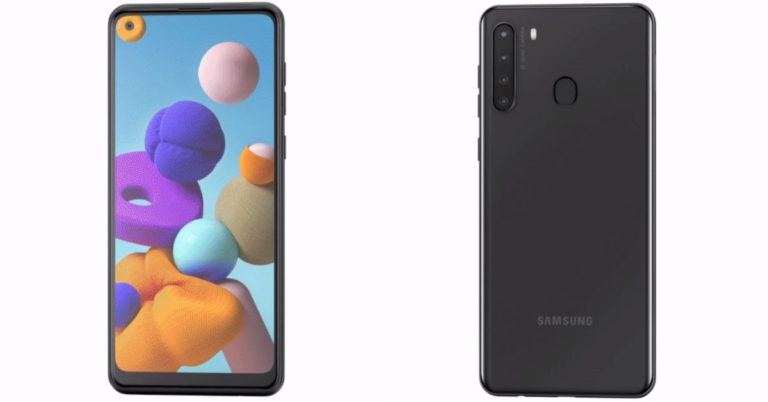
Samsung Galaxy A21s has been part of the rumour mills for a very long time now. Earlier this month the company also introduced Galaxy A21 in the market. Many leaks and rumours have been floating on the web related to A21s. The device was also spotted on various Geekbench listings. In a new development, a piece of fresh information related to the anticipated Samsung smartphone has now appeared on the web prior to its launch. A tipster has shared some information giving us some specification details of Galaxy A21s.According to a fresh leak by Sudhanshu Ambhore Samsung Galaxy A21s is expected to feature a 6.55-inch display screen offering HD+ resolution. While on the back there will be a triple camera setup that is likely to consist of a 48-megapixel primary sensor, a secondary 8-megapixel ultra-wide-angle camera sensor and a tertiary 2-megapixel macro lens. While on the front the device is tipped to sport a 13-megapixel selfie shooter housed inside a hole-punch or a waterdrop notch display.Furthermore, he revealed that the Samsung Galaxy A21s will pack a 5,000mAh battery and will be offered in 3GB of RAM and 64GB of storage. The battery as well as the configuration details matched with the previous Geekbench listings that mentioned it will be powered by Exynos 850 processor. In addition to this, the device is tipped to sport a fingerprint scanner Micro USB, NFC, Dual SIM, 3.5mm jack, BT 5.0. The smartphone is expected to be offered in three colour variants Black, Blue and White. In the end, he mentioned that “this info is from a relatively new source, so it’s better to take it with a pinch of salt????”Like we mentioned earlier the device was spotted in a Geekbench listing with the model number SM-A217F. It revealed that the smartphone will be powered by the Exynos 850 octa-core processor paired with 3GB of RAM that is going to run on One UI 2.0 skinned on top of Android 10 OS.
For the latest gadget and tech news, and gadget reviews, follow us on Twitter, Facebook and Instagram. For newest tech & gadget videos subscribe to our YouTube Channel. You can also stay up to date with the Gadget Bridge Android App.
The Chinese electronics major finally announced its upcoming UI. Yes, MIUI 12 has been officially introduced by the company alongside its new Mi 10 Youth Edition 5G. It comes with a bunch of new features such as privacy, updated dark mode, wallpapers and the Always-on Display feature along with several other features. This year 42 Xiaomi devices will be receiving the new interface which is based on Android 10. However, the custom interface of MIUI 12 but the company promised a stable release to be gradually rolled out in June. Initially, it will reach all the devices of Mi 10, Mi 9, Redmi K30 Pro, Redmi K30 4G and 5G and Redmi K20 series. Subsequently, it will be rolled out to Mi MIX 3, Mi MIX 2S, Mi CC9 series, Mi 9 SE, Mi 8 series, Redmi Note 8 Pro and Note 7 series. Later, Mi CC9E, Mi Note 3, Mi Max 3, Mi 8 Youth Edition, Mi 8 SE, Mi MIX 2, Mi 6X, Redmi Note 8, Redmi 8, 8A, Redmi 7, 7A, Redmi 6, 6 Pro, 6A, Note 5 and S2 are eligible to receive the update.Fresh interfaceThe MIUI 12 new interface is less complicated than its earlier version. You get a white background for clear text and wider spacing in between the text along with a bundle of new graphics to complement it making it more simplified. The company has incorporated natural as well as vital climatic elements in the design of the system’s weather application. A bunch of new live wallpapers featuring Moon, Mars and Earth which can be zoomed in to show the close up of the surface on the plants. When the dark mode is implemented these wallpapers also go dark visualizing how the planets look at night. While opening the folder the wallpaper automatically zooms in and zooms out when closed also accompanied by an Always On Display. You will also be getting an optimised multi-window along with floating chat window support for full-screen apps.Privacy featuresThe company claims that the new privacy tools are much stronger than before and has been certified by Android Enhanced Privacy Protection Test’ done by TÜV Rheinland. With the Flare feature that keeps a check on all the permissions given to apps. It only grants permission when it is necessary or during app usage, and prohibits the use of cameras in the background. Now an app can be used without permission. With the new Mask system feature, it now prevents accessing other information such as calendar, call logs etc.Spirit String Algorithm and Xiaomi HealthWith the new self-developed AI motion behaviour perception algorithm is based on Xiaomi MACE Micro providing accurate data while saving power. The company claims that it power consumption is less than 1% throughout the day. Just like Smasung and Huawei now Xiaomi will also be offering its own health app that comes with a feature to record your activities such as walking, running, stairs among others. It is also capable to record sleep data.
For the latest gadget and tech news, and gadget reviews, follow us on Twitter, Facebook and Instagram. For newest tech & gadget videos subscribe to our YouTube Channel. You can also stay up to date with the Gadget Bridge Android App.
As WhatsApp had earlier announced that it is introducing a limit on the forwarded messages to constrain virality of messages circulating on its platform, a TechCrunch report has now revealed that the Facebook-owned instant messaging app has now registered a 70 percent decrease in the spread of total viral messages forwarded across the globe.
WhatsApp, which had introduced this restriction for all its user on April 7, had said that its users can share the frequently forwarded messages to only one chat at a time. Earlier, these forwarded messages could be sent to five chats at a single go.
In 2019, WhatsApp had unveiled the concept of messages that have been forwarded many times. These messages are labelled with double arrows to indicate they did not originate from a close contact. In effect, these messages are less personal compared to typical messages sent on WhatsApp.
At the time of putting this restriction, WhatsApp had notified that many of its users forward helpful information, as well as funny videos, memes, and reflections or prayers they find meaningful. Besides this, the WhatsApp users had also organised public moments of support for frontline health workers. However, WhatsApp registered a drastic increase in the amount of forwarding that users can feel overwhelming and can contribute to the spread of misinformation. Therefore, WhatsApp thought it’s important to slow the spread of these messages down to keep its platform a place for personal conversation.
Earlier, an official blog post had stated, “WhatsApp cares deeply about the safety of our users in India and around the world. WhatsApp has made significant product changes and worked with partners across civil society, engaged with relevant government authorities and other technology platforms to help address the harmful consequences of misinformation. While there is no single action that can resolve the complex challenges contributing to misinformation, we are committed to helping do our part to ensure that WhatsApp continues to be a force for good in India.”
In addition to this, WhatsApp has also directly collaborated with NGOs and governments, including the World Health Organization (WHO) and over 20 national health ministries, to help connect people with accurate information. Together, these trusted authorities have sent hundreds of millions of messages directly to people requesting information and advice.
Meanwhile, WhatsApp users can learn more about these efforts, as well as how to submit potential myths, hoaxes and rumours to fact checking organizations, on our Coronavirus Information Hub.
For the latest gadget and tech news, and gadget reviews, follow us on Twitter, Facebook and Instagram. For newest tech & gadget videos subscribe to our YouTube Channel. You can also stay up to date using the Gadget Bridge Android App.
Nowadays Amazon Quiz is getting more popular as more and more people are participating in the quiz daily. The participants have to just give the right answers and they can stand a chance to win free gadgets as well as Amazon Pay Balance. Today you have a chance to win a Canon M200 Mirrorless Camera.Amazon Brings a set of 5 questions every day to which people have to answer them correctly. If you got lucky your name will be selected for a lucky draw then the final results will be announced at the end of the month. Today’s Amazon Quiz winner’s name will be announced on May 30. To help our readers to clear the Amazon Quiz successfully, every day we update all the Amazon Quiz questions with their correct answers on our website. To increase more chances of winning prizes we request you to participate in the quiz daily from 8 AM to 12 noon. As it is based on luck you might win something by answering all the questions correctly. Check out today’s answers for the Amazon quiz.
April 28 Amazon Quiz Answers
Question 1: For a song, along with band BTS, which singer holds the Guinness Record for the most-viewed YouTube video in a 24 hour period?The Answer is- HalseyQuestion 2: In the Amazon Prime series, Panchayat who plays the role of the official Pradhan of the village, Phulera?The Answer is- Neena GuptaQuestion 3: ‘Houston, We’ve Had a Problem’ – is a phase associated with which NASA mission that recently celebrated its 50th anniversary?The Answer is- Apollo 13Question 4: The Ministry of Tourism in India has launched a new webinar series called _______?The Answer is- Dekho Apana DeshQuestion 5: Which country is scheduled to host the 2020 edition of the Asian Boxing Championships?The Answer is- India
How to Play Amazon Quiz
Sign in to Amazon App. We urge you to download the app if you have not as the quiz is not available on the desktop platform.
Now sign up by filling the required information.
Now you will be directed to sign-in on the page.
By signing in and then scroll down on the home screen to find the Amazon Quiz banner.
Tap on the Amazon Quiz banner and then tap on the Start button to begin the Quiz.
There will be a total of 5 questions and you need to answer them correctly to enter the lucky draw. One wrong answer will eliminate you from the Quiz.
The winner’s name will be announced on the 30th of every month.
The Chinese smartphone company Xiaomi has announced the launch of its new device in the market. While expanding its Mi 10 series the company has introduced Mi 10 Youth Edition 5G smartphone. The device is the water down variant of Mi 10 that was introduced by the company earlier this year that comes with a waterdrop notch along with a Snapdragon 765G, quad cameras and NFC support.Mi 10 Youth Edition 5G pricing and availabilityMi 10 Youth Edition 5G will be available in different configurations. The 6GB RAM with 64GB storage model will be available at CNY 2,099 that translates to Rs 22,500 while the 6GB of RAM with 128GB storage model comes at CNY 2,299 that translates to Rs 24,700. The 8GB of RAM with 128GB option has been priced at CNY 2,499 that translates to Rs 26,900 whereas the top of the series model that is 8GB of RAM with 128GB storage option will be available at Rs 30,100. The device will be offered in five colour options Black Skill Storm, Blueberry Mint, Four Seasons Spring Milk Green, Peach Grapefruit, and White Peach Oolong. The mobile phone is now up for pre-booking in China and is scheduled to go on sale from April 30.Mi 10 Youth Edition 5G specificationsMi 10 Youth Edition 5G comes with a 6.57-inch full-HD+ display with 1080×2400 pixels of resolution and in-display fingerprint sensor to unlock the phone. The screen offers a 180Hz touch sampling rate with 800nits peak brightness along with TUV Rheinland eye protection and a layer of Corning Gorilla Glass 5 to protect the phone from scratches. The device runs on MIUI 11 OS based on top of Android 10. The device draws its power from an octa-core Snapdragon 765G processor with Adreno 620 GPU and dual-mode suspension liquid cooling support. The handset will be offered with up to 8GB of RAM and up to 256GB of storage.In terms of imaging, Mi 10 Youth Edition 5G features a quad rear camera setup consisting of a 48-megapixel ultra-clear primary sensor with f/1.9 aperture. Further assisted by an 8-megapixel periscope telephoto lens that comes with a capability of 50x periscope zoom, 10x hybrid zoom and 5x optical zoom. Moreover, there is a tertiary 8-megapixel ultra-wide-angle lens with 120-degree field of view and f/2.2 aperture along with a 2-megapixel macro camera. On the front, there is a 16-megapixel selfie camera supported by various AI camera modes. It houses a 4160mAh battery with a 22.5W fast wired charging support. For connectivity, it includes 5G SA/NSA, USB Type-C port, Wi-Fi 5, Bluetooth v5.1, NFC, GPS, 3.5mm audio jack among others. The sensors on the phone include ultrasonic distance sensor, ambient light sensor, acceleration sensor, gyroscope, electronic compass, linear motor sensor and more.
For the latest gadget and tech news, and gadget reviews, follow us on Twitter, Facebook and Instagram. For newest tech & gadget videos subscribe to our YouTube Channel. You can also stay up to date with the Gadget Bridge Android App.
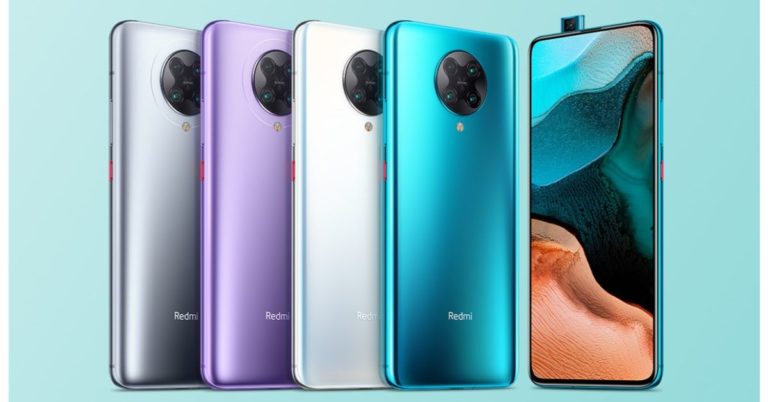
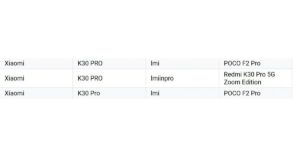
Xiaomi’s sub-brand is soon going to launch Redmi K30 Pro Zoom Edition in India but will be rebranded as a Poco device. There has been a lot of news and rumours that the company is planning to bring the Redmi K30 series to India and so is the Poco F2 Pro. Now a Google Play device listing has revealed that the Poco F2 Pro will be launched as the rebranded variant of Redmi K30 Pro. Both the phones are seen with the same codename under different branding.First spotted by XDA Developers, a Google’s Play listing which includes the names of Play-certified devices meaning all the devices that are certified to make use of Google Mobile Services. The latest listing includes the latest variant of Xiaomi Redmi K30 Pro with code name Imi along with model name POCO F2 Pro indicating that the much-awaited Xioami’s device will be rebranded as the POCO F2 Pro.Image courtesy: XDA DevelopersEarlier it was reported that Redmi K30 Pro will make its way to the Indian market as Poco F2 as suggested by then-latest MIUI Camera code. Both the devices were spotted with the codename “lmi” and “lmiin” within the camera app along with “SHOT ON POCO Phone” watermark confirming that Redmi K30 Pro will be rebranded into a POCO device for India. But the latest development suggests that the Google Play listing including Redmi K30 Pro exists as two codename variations — “lmi” as well as “lmiin“. The reports says that the “in ” at the end of the device codename indicates an Indian model and in the past, the company has launched Poco F1 as the rebranded version of Redmi K30 4G in the Indian market. “This listing does not use “lmiin” for POCO F2 Pro, but only “lmi“. Further, “lmipro“, which is the Redmi K30 Pro Zoom Edition, sees a corresponding Indian variant in the form of “lmiinpro” which retains the same Redmi branding. This leaves us with the conclusion that the Redmi K30 Pro will likely launch in India under the same branding, and the device will be rebranded into the POCO F2 Pro for other markets,” the report says.However, the Google Play listing also displayed the ‘lmiinpro’ for the Redmi k30 Pro Zoom Edition indicating that the company might launch the device under the same branding in the Indian market. Those who are unaware Xiaomi introduced Redmi K30 Pro and Redmi K30 Pro Zoom Edition in March this year. Both the device comes with Qualcomm’s Snapdragon 865 processor and runs onMIUI 11 based on top of Android 10. Both the smartphones features a 6.67-inch full-HD+ HDR10+ AMOLED display with 1080 x 2400 pixels of resolution and 1,200 nits of peak brightness. These phones houses a 4,700mAh battery with 33W fast charging support.Redmi K30 Pro is available in 6GB with 128GB variant, 8GB with 128GB option and 8GB with 256GB model. Whereas the Zoom Edition is offered in 8GB with 128GB storage and 8GB with 256GB variant.For optics, Redmi K30 Pro comes with a quad rear camera setup that includes a 6, 4-megapixel primary sensor with Optical Image Stabilisation, a 5-megapixel macro lens, a 13-megapixel wide-angle sensor with 123-degrees of Field of View and a 2-megapixel depth sensor.Whereas Redmi K30 Pro Zoom Edition also features a quad-camera system with a 64-megapixel primary camera, a 2-megapixel depth sensor, a 13-megapixel wide-angle sensor and an 8-megapixel telephoto lens offering 3X optical zoom and 30X digital zoom. Both the devices sports a 20-megapixel pop-up selfie camera.
For the latest gadget and tech news, and gadget reviews, follow us on Twitter, Facebook and Instagram. For newest tech & gadget videos subscribe to our YouTube Channel. You can also stay up to date with the Gadget Bridge Android App.
As communities across the globe are spending more and more time staying at home to save lives due to the ongoing coronavirus pandemic, Sega, a Japanese multinational video game developer and publisher headquartered in Shinagawa, Tokyo, has announced that ‘Total War: Shogun 2’ has now joined line of free games to keep you entertained.
Asserting that the past few weeks have presented unimaginable challenges to many of us, but the remarkable collective effort being made by the global community to overcome this moment of adversity has been truly inspirational, Sega stated that “With this in mind, we want to continue to encourage you all to stay home and save lives by extending a gift to everyone to help make this difficult situation a little bit easier. Total War: SHOGUN II will be free-to-keep on Steam from Monday 27 April until Friday 1 May.”
Within this epic homage to Feudal Japan, players can recreate an iconic clash of traditional samurai culture, build vast empires from Fukushima to Hitachi, or enact cunning schemes through spy and assassin networks while playing “Total War: SHOGUN II”. With hundreds of hours of campaign and battle to play, we hope it helps make the days a little brighter.
Earlier, Sega had announced that it is closing its Sega Heroes and Crazy Taxi Tycoon mobile titles after its parting ways with developer Demiurge Studios. Mind you! Demiurge, which was bought by Sega back in 2015, has once again been purchased by Albert Reed, its original co-founder.
It is notified that both Sega Heroes and Crazy Taxi Tycoon will not be available to gamers starting May 21, 2020. However, gamers will be unable to make in-app purchases from April 16 onwards.
As per a statement issued by Demiurge, “In 2015 we joined the SEGA family of studios. It has been an amazing ride with SEGA over the past five years, working with iconic IP to create a wonderful portfolio of free to play mobile games. Demiurge Studios will return to its roots. Albert Reed, one of our studio’s founders, leads a team that has acquired the studio from SEGA Corporation. General Manager Bart Simon becomes CEO and continues to lead one of the most experienced and talented teams in the industry.”
For the latest gadget and tech news, and gadget reviews, follow us on Twitter, Facebook and Instagram. For newest tech & gadget videos subscribe to our YouTube Channel. You can also stay up to date with the Gadget Bridge Android App.
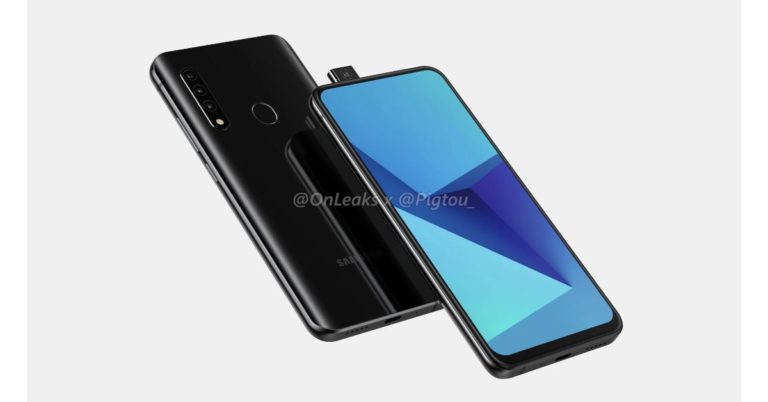
The South Korean smartphone company Samsung is working on a new smartphone that is going to come with a new form factor. The company is tipped to be working on a device that is expected to arrive with a pop-up selfie camera design. However, the smartphone is no more a secret and some of the smartphone’s images have been leaked on the web to prove that the company is working on a device with a new design.Soon Samsung is going to bring its very first smartphone with a pop-up selfie camera. A very famous leakster @OnLeaks in association with Pigtou has shared renders of the smartphone online. The device is clearly seen featuring a centrally placed pop up selfie camera on the top edge. However, the company has ensured to keep the device’s bezels slim and is likely to make its debut under the company’s most popular mid-range A series.Besides this, the device is expected to come with a vertically placed triple rear camera set up with an LED flash and a rear-mounted fingerprint sensor to unlock the phone. The images have furthermore revealed sporting curved edges along with a comfortable grip, with thin side bezels and a noticeable chin at the bottom. On the right edge, you can clearly see a volume rocker and a power bottom. Just like other Samsung devices the sim and microSD tray must be provided on the left side. The handset is going to measure 160.9 x 77 x 9.2mm in size and 9.7mm with the rear camera module the report says. Moreover, the USB Type-C port and the speaker grill is present at the bottom edge and the headphone jack is provided just beside the motorized camera module at the top edge.According to the report, the Samsung pop-up selfie camera smartphone could launch anytime soon after the coronavirus lockdown is lifted globally. However, the report has not covered the specifications part but the device is expected to be powered by an octa-core Exynos chipset paired with 4GB of RAM and 64GB of expandable memory and would run on Android 10 out of the box. In addition to this, the mobile phone is likely to feature a Full-HD+ AMOLED display along with a triple camera setup including a primary sensor, an ultra-wide-angle and a macro sensor.
For the latest gadget and tech news, and gadget reviews, follow us on Twitter, Facebook and Instagram. For newest tech & gadget videos subscribe to our YouTube Channel. You can also stay up to date with the Gadget Bridge Android App.




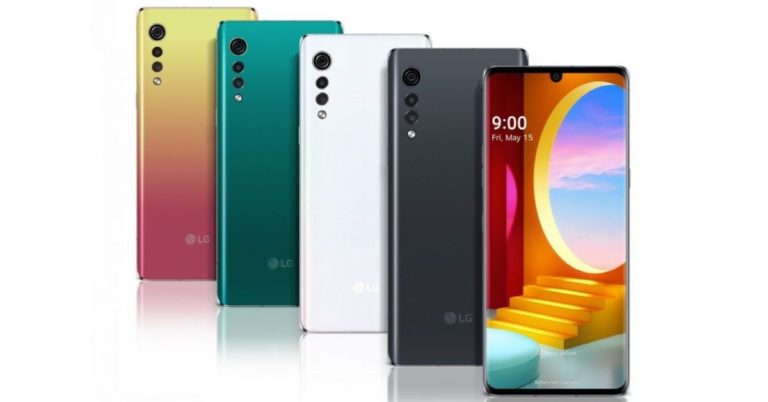
 In term of optics, LG Velvet will be featuring a Waterdrop Camera design on the back in which three rear cameras and a flash are arranged in a vertical direction. The camera set up will include a 48-megapixel primary sensor, a secondary 8-megapixel ultra-wide camera and a tertiary 5-megapixel depth sensor for portraits. On the front, there will be a 16-megapixel selfie camera housed inside a waterdrop notch on the front display.
The company revealed that LG Velvet Will be drawing its power from a 4,300mAh battery with 10W wireless charging support. In terms of connectivity, the device will include a Wi-Fi 802.11ax, Bluetooth 5.1, GPS/ GLONASS/ Beidou, NFC support and USB Type-C port. The smartphone will be available in four colour options Aurora Green, Aurora Gray, Aurora White, and Illusion Sunset.
For the latest gadget and tech news, and gadget reviews, follow us on Twitter, Facebook and Instagram. For newest tech & gadget videos subscribe to our YouTube Channel. You can also stay up to date with the Gadget Bridge Android App.
In term of optics, LG Velvet will be featuring a Waterdrop Camera design on the back in which three rear cameras and a flash are arranged in a vertical direction. The camera set up will include a 48-megapixel primary sensor, a secondary 8-megapixel ultra-wide camera and a tertiary 5-megapixel depth sensor for portraits. On the front, there will be a 16-megapixel selfie camera housed inside a waterdrop notch on the front display.
The company revealed that LG Velvet Will be drawing its power from a 4,300mAh battery with 10W wireless charging support. In terms of connectivity, the device will include a Wi-Fi 802.11ax, Bluetooth 5.1, GPS/ GLONASS/ Beidou, NFC support and USB Type-C port. The smartphone will be available in four colour options Aurora Green, Aurora Gray, Aurora White, and Illusion Sunset.
For the latest gadget and tech news, and gadget reviews, follow us on Twitter, Facebook and Instagram. For newest tech & gadget videos subscribe to our YouTube Channel. You can also stay up to date with the Gadget Bridge Android App.  In term of optics, LG Velvet will be featuring a Waterdrop Camera design on the back in which three rear cameras and a flash are arranged in a vertical direction. The camera set up will include a 48-megapixel primary sensor, a secondary 8-megapixel ultra-wide camera and a tertiary 5-megapixel depth sensor for portraits. On the front, there will be a 16-megapixel selfie camera housed inside a waterdrop notch on the front display.
The company revealed that LG Velvet Will be drawing its power from a 4,300mAh battery with 10W wireless charging support. In terms of connectivity, the device will include a Wi-Fi 802.11ax, Bluetooth 5.1, GPS/ GLONASS/ Beidou, NFC support and USB Type-C port. The smartphone will be available in four colour options Aurora Green, Aurora Gray, Aurora White, and Illusion Sunset.
For the latest gadget and tech news, and gadget reviews, follow us on Twitter, Facebook and Instagram. For newest tech & gadget videos subscribe to our YouTube Channel. You can also stay up to date with the Gadget Bridge Android App.
In term of optics, LG Velvet will be featuring a Waterdrop Camera design on the back in which three rear cameras and a flash are arranged in a vertical direction. The camera set up will include a 48-megapixel primary sensor, a secondary 8-megapixel ultra-wide camera and a tertiary 5-megapixel depth sensor for portraits. On the front, there will be a 16-megapixel selfie camera housed inside a waterdrop notch on the front display.
The company revealed that LG Velvet Will be drawing its power from a 4,300mAh battery with 10W wireless charging support. In terms of connectivity, the device will include a Wi-Fi 802.11ax, Bluetooth 5.1, GPS/ GLONASS/ Beidou, NFC support and USB Type-C port. The smartphone will be available in four colour options Aurora Green, Aurora Gray, Aurora White, and Illusion Sunset.
For the latest gadget and tech news, and gadget reviews, follow us on Twitter, Facebook and Instagram. For newest tech & gadget videos subscribe to our YouTube Channel. You can also stay up to date with the Gadget Bridge Android App. 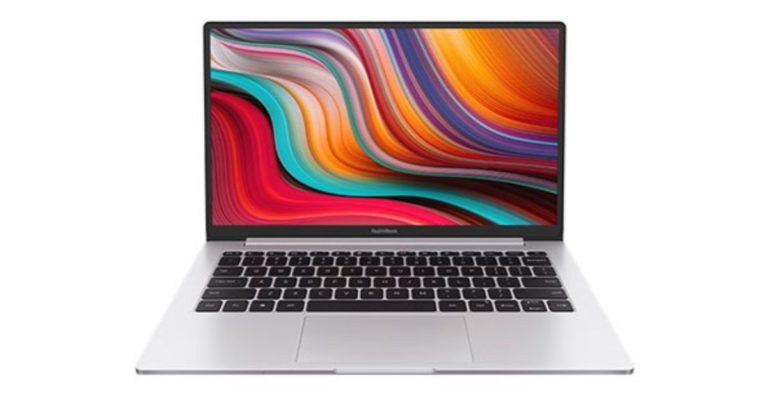

![[Exclusive] ROG Cetra Gaming headset to be launched soon in India, reveals Dinesh Sharma during the first episode of Gadget Bridge Tech Master Class](https://www.gadgetbridge.com/wp-content/uploads/2020/04/Screenshot-270-768x402.jpg "[Exclusive] ROG Cetra Gaming headset to be launched soon in India, reveals Dinesh Sharma during the first episode of Gadget Bridge Tech Master Class")


![[Exclusive] Tech Master Class Episode 1 with Dinesh Sharma from Asus India, this is coming from Asus](https://www.gadgetbridge.com/wp-content/uploads/2020/04/dinesh-high-res-768x541.jpg "[Exclusive] Tech Master Class Episode 1 with Dinesh Sharma from Asus India, this is coming from Asus")



 Privacy features
The company claims that the new privacy tools are much stronger than before and has been certified by Android Enhanced Privacy Protection Test’ done by TÜV Rheinland. With the Flare feature that keeps a check on all the permissions given to apps. It only grants permission when it is necessary or during app usage, and prohibits the use of cameras in the background. Now an app can be used without permission. With the new Mask system feature, it now prevents accessing other information such as calendar, call logs etc.
Spirit String Algorithm and Xiaomi Health
With the new self-developed AI motion behaviour perception algorithm is based on Xiaomi MACE Micro providing accurate data while saving power. The company claims that it power consumption is less than 1% throughout the day. Just like Smasung and Huawei now Xiaomi will also be offering its own health app that comes with a feature to record your activities such as walking, running, stairs among others. It is also capable to record sleep data.
For the latest gadget and tech news, and gadget reviews, follow us on Twitter, Facebook and Instagram. For newest tech & gadget videos subscribe to our YouTube Channel. You can also stay up to date with the Gadget Bridge Android App.
Privacy features
The company claims that the new privacy tools are much stronger than before and has been certified by Android Enhanced Privacy Protection Test’ done by TÜV Rheinland. With the Flare feature that keeps a check on all the permissions given to apps. It only grants permission when it is necessary or during app usage, and prohibits the use of cameras in the background. Now an app can be used without permission. With the new Mask system feature, it now prevents accessing other information such as calendar, call logs etc.
Spirit String Algorithm and Xiaomi Health
With the new self-developed AI motion behaviour perception algorithm is based on Xiaomi MACE Micro providing accurate data while saving power. The company claims that it power consumption is less than 1% throughout the day. Just like Smasung and Huawei now Xiaomi will also be offering its own health app that comes with a feature to record your activities such as walking, running, stairs among others. It is also capable to record sleep data.
For the latest gadget and tech news, and gadget reviews, follow us on Twitter, Facebook and Instagram. For newest tech & gadget videos subscribe to our YouTube Channel. You can also stay up to date with the Gadget Bridge Android App.  Privacy features
The company claims that the new privacy tools are much stronger than before and has been certified by Android Enhanced Privacy Protection Test’ done by TÜV Rheinland. With the Flare feature that keeps a check on all the permissions given to apps. It only grants permission when it is necessary or during app usage, and prohibits the use of cameras in the background. Now an app can be used without permission. With the new Mask system feature, it now prevents accessing other information such as calendar, call logs etc.
Spirit String Algorithm and Xiaomi Health
With the new self-developed AI motion behaviour perception algorithm is based on Xiaomi MACE Micro providing accurate data while saving power. The company claims that it power consumption is less than 1% throughout the day. Just like Smasung and Huawei now Xiaomi will also be offering its own health app that comes with a feature to record your activities such as walking, running, stairs among others. It is also capable to record sleep data.
For the latest gadget and tech news, and gadget reviews, follow us on Twitter, Facebook and Instagram. For newest tech & gadget videos subscribe to our YouTube Channel. You can also stay up to date with the Gadget Bridge Android App.
Privacy features
The company claims that the new privacy tools are much stronger than before and has been certified by Android Enhanced Privacy Protection Test’ done by TÜV Rheinland. With the Flare feature that keeps a check on all the permissions given to apps. It only grants permission when it is necessary or during app usage, and prohibits the use of cameras in the background. Now an app can be used without permission. With the new Mask system feature, it now prevents accessing other information such as calendar, call logs etc.
Spirit String Algorithm and Xiaomi Health
With the new self-developed AI motion behaviour perception algorithm is based on Xiaomi MACE Micro providing accurate data while saving power. The company claims that it power consumption is less than 1% throughout the day. Just like Smasung and Huawei now Xiaomi will also be offering its own health app that comes with a feature to record your activities such as walking, running, stairs among others. It is also capable to record sleep data.
For the latest gadget and tech news, and gadget reviews, follow us on Twitter, Facebook and Instagram. For newest tech & gadget videos subscribe to our YouTube Channel. You can also stay up to date with the Gadget Bridge Android App.