Valentine’s Day gifting guide: Here are 12 great techy ideas to gift your partner

Who doesn’t like to receive gifts on Valentine’s Day? While it’s great to receive gifts, it tough to choose the right one. Here, we have listed down 12 cool tech gifts that you can gift your date on Valentine’s Day:

Netflix subscription

Netflix

This is probably the most affordable gift that we can suggest to you. If your Valentine is a movie buff or loves watching TV shows, then they would love you for buying them their Netflix subscription. The most premium yearly plan available is for Rs 800, but you can also pick the Rs 500 and Rs 800 one. Alternatively, you can also buy them Amazon Prime subscription that is available for Rs 999 for a year. That will not only let them stream videos, but they would also be able to get one-day delivery for free.

Fujifilm Instax Mini 9

Fujifilm instax mini 9

If you want your gift to be truly different and memorable, you can go for the Instax Mini 9 by Fujifilm. The instant camera is priced at Rs 5,999 and it uses instax mini film cartridges by Fujifilm to print your photos. We think it’s quite a fun gadget to own, especially for someone who loves vintage photography.

Google Home

google-home

Gift your Valentine the Google Home so that it can provide assistance to them the entire day. Trust us, they’ll thank you for it. Google Home can read out morning news, tell directions to various locations, play songs, answer contextual questions and do so much more. While the Google Home Mini is priced at Rs 5,999, the Google Home can be picked up at Rs 9,999.

Fitbit Charge 3

fitbit charge 3

If your Valentine is a fitness freak, Fitbit Charge 3 will make a good gift for them. It comes with a 24×7 heart rate monitor and can track sleep, calories, real-time pace and distance. The device is touted to have a 7-day battery life and is swim-proof. The Fitbit Charge 3 is priced at Rs 13,990 in India.

Samsung Galaxy S9+ or Galaxy Note 9

samsung galaxy note 9

You can pick this for your Valentine if they want to buy a new premium smartphone. As a part of Valentine’s Day offer, Samsung is offering a cashback of Rs 7,000 on Galaxy Note 9 and a discount of Rs 7,000 on Galaxy S9+. You can read more about the discount and offers that Samsung is offering over here.

OnePlus Type-C Bullet headphones

oneplus type c

You can pick these as a Valentine’s Day gift if you don’t want to go wrong with your gift. Everyone likes listening to music, so the gift will definitely be a useful one. OnePlus Type-C Bullet headphones are available for Rs 1,490 in India and are known to have an amazing sound output.

Asus Zenfone 5Z

asus-zenfone-5z

You can buy the Asus Zenfone 5Z smartphone for your Valentine if you want to buy a device with powerful specifications at a more affordable price than Samsung Galaxy S9 and Note 9. The smartphone is powered by Qualcomm Snapdragon 845 processor and its base variant can be bought for Rs 29,999.

Amazon Kindle Paperwhite

Amazon Kindle Paperwhite

If your date loves to read, then there cannot be a better gift than Amazon Kindle Paperwhite. Amazon Kindle Paperwhite is every reader’s dream gadget and it is available in 8GB and 32GB storage variants. While the former is priced at Rs 12,999, the latter costs Rs 17,999.

Ultimate Ears Wonderboom

UE-wonderboom

Ultimate Ears Wonderboom is a good gift for anyone who loves to listen to music aloud, or even someone who likes hosting house parties. The Bluetooth speaker is priced at Rs 4,999, is waterproof and offers 10 hours of battery life.

iPhone XR

iphone XR 5

If budget is no constraint for you, you can pick the iPhone XR to show your Valentine how much you love them. It’s anyway a good time to buy the smartphone considering it is available on a discount via Mahesh Telecom.

2018 Go Pro Hero

2018 Go Pro

An action camera is something your date would enjoy if they have a love for travelling as well as photography. The 2018 Go Pro Hero can now be bought at Rs 13,900 in India and we think it makes a great gift.

Xbox One Controller

xbox one controller

If your date loves gaming, just buy them an Xbox One controller already. It can be picked up at Rs 4,030 on Amazon India. You can actually couple this with an Xbox Game Pass which is priced at Rs 699 per month. They would totally love you for it.

For the latest gadget and tech news, and gadget reviews, follow us on TwitterFacebook and Instagram. For newest tech & gadget videos subscribe to our YouTube Channel.

[td_smart_list_end]

LG G8 ThinQ leaked images shows the phone in its full glory

0

Weeks ahead of its alleged release at MWC 2019, LG’s new smartphone – LG G8 ThinQ’s images have been leaked online. The leaked picture of the phone was posted on Twitter by a renowned phone leaker Evan Blass. The image shows LG’s next phone from every angle.

Although LG has not confirmed if the leaked pictures is actually the phone, the company is going to unveil on 20th February in Barcelona. If it is true then its design and looks probably won’t be a surprise. But, the notch on the phone comes in as a surprise in 2019, when all the other phones are going ‘notch-less’ or are finding better ways to hide the notch. Furthermore, it is not the first leaked image of the phone, others had also posted an image of LG G8 ThinQ last month that was similar to the current leaked image. So, we can assume that this is what the phone would look like.

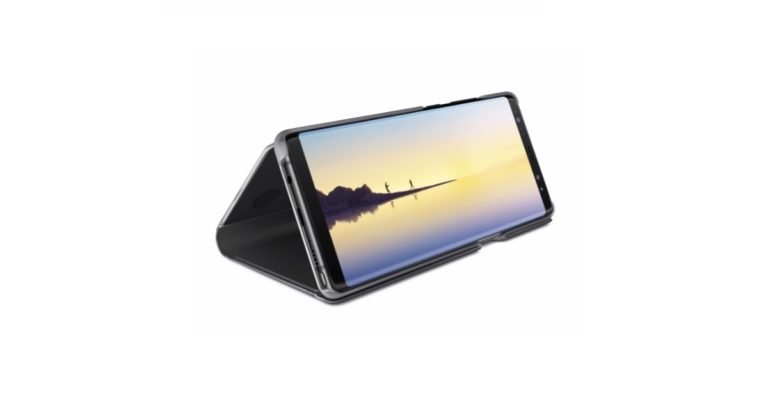
Rumor is that LG G8 ThinQ will be capable of producing sound through vibrations in the screen. According to a report by CNET the G8 will come with a special case attachment which will give it a second screen. There is also news that the company might release their flagship – LG V50 next month. There isn’t much information about the flagship of LG, but it needs to do better than its predecessor, the LG V40, which came with three cameras.

Last week, LG revealed that their next phone will be the G8 ThinQ and it will come with a 3D ToF (time-of-flight) depth front camera and it will deliver a ‘new level of front camera capability’.

Talking about the camera, Chang Ma who is the Senior Vice President and Head of Product Strategy at LG said, “Keeping in mind LG’s goal to provide real value to its mobile customers, our newest flagship was designed with ToF technology from inception to give users a unique and secure verification system without sacrificing camera capabilities. The LG G8 ThinQ featuring ToF will be the optimal choice for users in search of a premium smartphone that offers unmatched camera capabilities.”

https://twitter.com/evleaks/status/1095460802562351109

There aren’t many specifications known about LG V8 ThinQ, but it will be a high-end phone that should have latest hardware inside. Otherwise it would slip down the charts because 2019 is going to see some massive launches from almost every top phone companies. And most of those phones will come with some impressive hardware and specifications. And with MWC right around the corner, we won’t even have to wait that long.

For the latest gadget and tech news, and gadget reviews, follow us on TwitterFacebook and Instagram. For newest tech & gadget videos subscribe to our YouTube Channel.

Over 500 movie theatres in India now have Dolby Atmos in them and more than 500 movie titles are supported

Today, Dolby Laboratories announced that it has crossed the threshold of 500 Dolby Atmos screens across India. The company has gained quite a lot of success as it is found in 143 cities and 22 states and Union Territories. This expansion has been done by collaborating with Carnival Cinemas, Cinepolis, Inox Cinemas, PVR Cinemas, SPI Cinemas and more. Dolby has provided 17 mixing facilities and more than 500 feature films released or announced till now. These feature films can be watched in many regional languages like Hindi, Malayalam, Marathi, Punjabi to name a few.

Doug Darrow, the Senior Vice President of Cinema Business Group, Dolby Laboratories said, “Dolby celebrates this milestone with its cinema exhibitors, which are increasingly using Dolby technology to differentiate their cinema offerings and share Dolby’s vision to provide a premium experience for moviegoers. Dolby Atmos transports you into the story with breathtaking, moving audio that fills the cinema and flows all around you, offering viewers an incomparable and engaging viewing experience.”

Dolby Atmos is very different from channel-based sound systems like 5.1, 7.1 and 11.1 that require filmmakers to think about the number and location of speakers. It allows them to designate where should each sound be placed or moved in the cinema space so that audiences can have a realistic experience of the film. Some of the top cinemas have congratulated Dolby for its success.

Gautam Dutta, the CEO of PVR Cinemas said, “PVR Cinemas congratulate Dolby on achieving the new milestone, which is a testament of innovation and excellence. We value our collaboration in redefining the cinema viewing experience in India through pioneering concepts and advanced solutions. We reiterate our focus in making movie entertainment an inclusive and sustainable sector through increased efficiency and effective initiatives.”

Dolby Atmos is now available on smartphones as well. Samsung’s latest, M-series, smartphones in the budget segment also come with Dolby Atmos. This shows that the vibrant Atmos surround sound is not just limited to movie theatres, but can be incorporated in mobiles and laptops too.

For the latest gadget and tech news, and gadget reviews, follow us on TwitterFacebook and Instagram. For newest tech & gadget videos subscribe to our YouTube Channel.

Xiaomi Mi Home Security camera basic launched in India: Has 130-degree lens and 1080p video recording

Xiaomi has expanded its home security portfolio by introducing the Mi Home Security Camera Basic in India. This security camera was teased earlier, and now it has finally been launched in the country. It provides 1080p video recording and features 130-degree wide angle lens. There is an artificial intelligence powered detection engine, infrared night vision and a talkback feature in it. Other features include local storage via microSD card along with cloud NAS storage. In terms of pricing, the Mi Home Security camera basic costs RS 2,299. However, in Mi.com it is listed with a price tag of Rs 1,999.

Xiaomi said that the sale will start from February 14 at 12PM and for now, it is available in white colour only. There is a Notify button which can be found on Mi.com. This button can be used to set a reminder for those who want to buy the security camera tomorrow. There are some stark differences between the Mi Home Security camera basic and the Mi Home Security 360 that was launched sometime ago. While the latter provides 360 degree PTZ lens, the former offers 130-degree wide-angle lens. The Mi Home Security camera 360 is priced at Rs 2,699.

The Mi Home Security Camera Basic comes with a maximum frame rate of up to 10 metres. There is an advanced AI motion detection feature in it, which reduces false alarms like curtain movements, insects, and light changes. This feature is disabled by default and needs to be switched on so that you can get notified if anything is detected. There is an app, which once paired to the device offers a talkback feature. This can be used for voice calls between camera and app with full duplex voice call design. Also, this app supports picture-in-picture mode for multi-tasking on the phone.

Xiaomi said that this one-screen multiple-picture mode is only supported on mainstream mobile phones running on iOS and Android.WiFi 802.11 and wireless 2.4GHz  technology is also supported. Power is supplied via a 5V-1A input to the device.

For the latest gadget and tech news, and gadget reviews, follow us on TwitterFacebook and Instagram. For newest tech & gadget videos subscribe to our YouTube Channel.


NVIDIA GTX 1660 Ti: This is what the new graphic card is going to look like

0

NVIDIA launched their next generation of graphics cards, the Nvidia RTX 2080 last year. The RTX 2080 is a costly GPU, but recently their upcoming graphics card the Nvidia GTX 1660 Ti, which is the mid-range GPU in the GTX lineup was leaked online. Like others in the series, the GTX 1660 Ti will be the upgraded version of the GTX 1660.

Rumors about the 16-series GPU of NVIDIA had been floating online for quite some time. Now some images of the graphics card surfaced on the web, which shows the packaging of the GTX 1660 Ti. Along with the packaging of the GPU there are also live images of the card. The image shows only one fan cooler attached to the GPU and is smaller in size, which is unlike its predecessors. According to a report by Videocardz, the GTX 1660 Ti will be released on February 22, but there hasn’t been any official comment from Nvidia’s side.

The Galax GTX 1660 Ti, leaked online, has 6GB GDDR6 RAM with a dual 90mm fan cooler, 1526 CUDA cores and DVI-D. It also has a HDMI port along with a Display Port connection on its back. But there was no mention of GPU’s clock speed in the leak.

Whereas, the Palit 1660 Ti will also have 6GB of GDDR6 RAM with 1526 CUDA cores, but it will come in two different variants – the StormX and the StormX OC (overclock). Both the GPUs have single fan cooler, which are mounted on top of a large aluminum heat sink with copper heat pipes. There won’t be much of a difference between the two cards (except faster clock speeds) and they are also expected to be priced similar to each other.

Nvidia hasn’t made any official comment on their prices, but the GTX 1660 Ti and its variants are expected to be priced around $280 (approx Rs 20,000). The mid-range pricing puts them directly head to head with NVIDIA’s GTX 1660 that is priced around $200 (around Rs 15,000) and the AMD Radeon RX 580 and RX 590.

Nvidia witnessed the downfall of its company’s shares due to the hefty price of RTX 2080, which sold for $699 (Rs 50,000 roughly) and the RTX 2080 Ti selling at $999 (Rs 1,28,000 in India).  And to make matters worse for the company, AMD released their own Radeon VII to compete with RTX 2080 and priced it much cheaper than the Nvidia’s GPU. If the company is coming up with their next line-up of mid-range GPUs and if the leaks of the release date is correct then the company might once again see increase in sales.

For the latest gadget and tech news, and gadget reviews, follow us on TwitterFacebook and Instagram. For newest tech & gadget videos subscribe to our YouTube Channel.

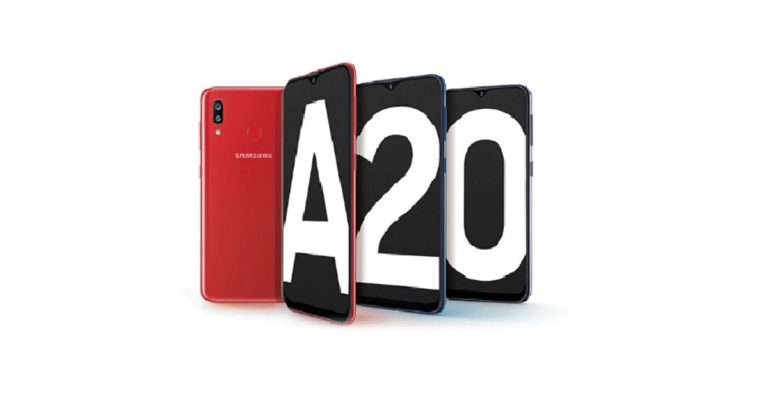
Samsung Galaxy A50 specifications revealed, Galaxy A20 spotted with Android Go on Geekbench

FCC recently certified the Samsung Galaxy A50, and in doing so, revealed some of its specifications. The Samsung Galaxy A50 will come with WiFi a/b/g/n/ac, Bluetooth 5.0, LE, ANT+ and LTE as connectivity options. The smartphone is going to have a screen size of 6.22-inch, which is going to sport a waterdrop notch. The phone measures 158.5×74.5mm and comes with standard adaptive fast charger, a USB cable and a wired headset. The Samsung Galaxy A50 is supposed to house a massive battery of 4,000mAh and will be powered by Exynos 9610 chipset.

In terms of RAM, we have knowledge of its 6GB RAM version, which might or might not be its only variant. Another smartphone which is part of the Galaxy A series was listed on Geekbench. This smartphone is called the Samsung Galaxy A20 and one major thing the listing has revealed, is that it will be running Android Go. The smartphone will be powered by Exynos 7870 and will come with 1GB RAM. The Samsung Galaxy A20 has been spotted with the codename SM-A260F. Samsung has launched quite a lot of smartphones which are part of the Galaxy A-series.

A recent one was the Samsung Galaxy A8s that was launched in December, 2018. The smartphone sports a 6.4-inch 1,080×2,340 display and runs on Android Pie out-of-the-box. The Samsung Galaxy A8s is powered by Qualcomm Snapdragon 710 SoC. There are two RAM variants—6GB and 8GB, both have onboard storage of 128GB. With the help of a microSD card slot, the smartphone can hold up to 512GB of additional data. There is a triple rear camera setup that brings a 24MP, 10MP and a 5MP sensor.

In terms of connectivity options, the device has WiFi 802.11, Bluetooth 5.0, GPS, NFC, FM Radio and USB 2.0. The Samsung Galaxy A8s houses a 3,400mAh battery and comes in three colour options. These colour options include blue, gray and black. The measurement of the device is 158.4 x 74.9 x 7.4mm and it weighs 173 grams.

For the latest gadget and tech news, and gadget reviews, follow us on TwitterFacebook and Instagram. For newest tech & gadget videos subscribe to our YouTube Channel.


Oppo’s Fantastic Days sale goes live: Upto Rs 5,000 discount on smartphones

0

After Asus’s OMG! Days Sale and Xiaomi’s Mi Days Sale, the Chinese smartphone company Oppo is bringing a sale for its smartphones. Oppo announced a three-day sale on Amazon India called the Fantastic Days where most of Oppo’s devices come at a discounted price. The sale is kept with Valentine’s Day in mind to allure more customers.

In this three-day sale the customers can get offers and discounts up to Rs 5,000 on Oppo smartphones. The sale started on 12th February and will end on 14th February, so the customers can buy Oppo smartphones like the Oppo F9 Pro, Oppo R17 Pro, Oppo R 17 or Oppo R15 Pro during the sale. Other Oppo products are on discount as well.

Oppo F9 Pro with 6GB RAM and 64GB storage is currently available at a discounted price of Rs 21,990, which was originally priced at Rs 25,990. While the 128GB variant of Oppo F9 Pro is selling at Rs 23,990, which is Rs 3,000 off of its original price. Similarly, Oppo R15 Pro with 6GB RAM and 128GB storage is selling at Rs 25,990. The R15 Pro has a 6.28-inch Full HD+ screen and runs Snapdragon 660SoC. It is a mid-range smartphone from the Chinese smartphone maker, it runs on Android 8.0 Oreo and has VOOC fast charging support.

Oppo’s flagship, the R17 Pro is also on discount. Users can get Rs 5,000 off onits original price of Rs 45,990. It is currently selling at Rs 40,990 on Amazon India. The R17 Pro has a triple rear camera setup and runs Snapdragon 710SoC. It also has 8GB RAM and 128GB storage. The phone is backed by a 3,700mAh battery and has an in-display fingerprint scanner.

Lastly, Oppo R17 that is based on company’s flagship model, but is watered down on performance. Currently is going for Rs 5,000 less of its original price. One can pick it up for Rs 31,990 instead of Rs 36,990. The phone runs Snapdragon 670SoC and comes paired with 8GB of RAM and 128GB of storage. It has a dual rear camera setup and also has an in-display fingerprint scanner. Oppos R17 has a 25MP front camera and comes in vibrant color options like the neon purple and ambient blue.

For the latest gadget and tech news, and gadget reviews, follow us on TwitterFacebook and Instagram. For newest tech & gadget videos subscribe to our YouTube Channel.

Oppo F11 Pro to launch soon in India, will come with a 48MP primary camera

Chinese smartphone brand Oppo recently launched its K1 smartphone in India. And just a few days after the launch of the Oppo K1, the smartphone maker is gearing to refresh its F series in the country. Various reports have emerged that says that Oppo is planning to launch its F11 and F11 Pro smartphones in India in the first week of March. We should also mention that the same handset will reportedly be launched in China with a different name – Oppo R19.

Today, the company has confirmed that it will indeed be launching the Oppo F11 Pro, and has further said that the handset will come with a massive 48MP primary camera. However, there is no word on the launch date of the smartphone.

The company also posted a teaser image of the upcoming smartphone on Twitter with the caption “Brilliant Portraits in Low Light with the 48 MP Camera. Coming Soon. #OPPOF11Pro”. On the image, a dual rear camera is shown coupled with text ’48 megapixel’. The image also says ‘Get it right. In low light. Coming soon.’  From this, we can derive that Oppo is all set to launch a photography-centric smartphone in India with 48MP primary sensor.

Speaking further about the upcoming device‘s camera, Oppo has said that in order to get clear images in dimly lit areas, its F11 Pro smartphone will come with Super Night Mode feature. The Super Night Mode feature will work like Oppo’s AI Ultra-Clear Engine which, according to the company, optimizes the camera experience of the device by including AI Engine, Ultra-clear Engine, and Color Engine. Other than this, the mode in Oppo F11 Pro will be able to recognise scenes and will be adept in image-stabilization during long exposure, low-light performance, and skin brightening.

We should mention that this week, technology website 91mobiles also shared an alleged press image of the Oppo F11 Pro. In the image, Oppo F11 Pro can be seen sporting a full-screen display and does not come with a selfie camera on the front panel. This can mean that the device may come with a pop-up selfie camera like Vivo NEX.

oppo_f11_pro_render
Image courtesy: 91mobiles

Furthermore, the handset’s chin is also shown to be almost negligible in the image. On the camera front, the smartphone is shown to have a dual rear camera setup in a strip-like module that looks a lot like the one we have seen in the teaser video of Vivo V15 Pro. Other than the cameras, the back panel also houses the fingerprint sensor and Oppo branding.

We should mention that the smartphone was earlier speculated to come with a pill-shaped cut-out on its display on the top right corner to house its dual selfie cameras. However, in the press renders that have surfaced online, this punch-hole cut-out cannot be seen.

For the latest gadget and tech news, and gadget reviews, follow us on TwitterFacebook and Instagram. For newest tech & gadget videos subscribe to our YouTube Channel.

Huawei Mate 20 Pro review: High-end performance

Chinese smartphone brand Huawei recently launched its flagship smartphone Mate 20 Pro in India. The smartphone is touted for its exquisite design, triple rear cameras, powerful Kirin 980 processor and so much more. You name a feature, and Huawei guarantees that Mate 20 Pro can excel in it. We spent a few days with it, to find out if the smartphone is really that great. Read the rest of our review to know if Huawei Mate 20 Pro should be your next buy:

Design and Display

Everything about Huawei Mate 20 Pro‘s design is premium. The smartphone looks absolutely stunning with its curved display and gradient metallic back panel. The two merge with each other seamlessly at the thin edges. At first, it may remind you of the Samsung Galaxy S9 or Galaxy S9+, but Huawei Mate 20 Pro does have a personality of its own.

Huawei has said that its flagship device comes with a ‘hyper-optical pattern’ on the glass that enhances the grip of the user. It also reduces the number of fingerprints that the smartphone catches while being used. We have to admit that Huawei Mate 20 Pro does not catch as many fingerprints as other glass smartphones.  Over that, we – found it to be less slippery. Considering we almost accepted the fact that all smartphones with glass bodies are fingerprint magnets and can easily slip, Huawei Mate 20 Pro – made a mark by not being either.

Huawei Mate 20 Pro 5

While the front is dominated by the display that comes with a notch on top and an on-screen fingerprint sensor, the back panel has shades of three colours on it—Blue, Purple and Black. The lightest of all shades, Blue, starts from the top, followed by Purple at the middle and Black towards the bottom. The rear panel houses the square camera module that has three sensors and an LED flash. At the bottom is where the Huawei branding can be found. We loved the three-tone pattern on metallic back panel of the device. Also, Huawei makes its flagship stand out with the square camera module. During our time with the smartphone, it didn’t catch any scratches, and we think that’s a big plus.

The power and the volume rocker buttons are placed on the right edge of the smartphone and we loved how Huawei has made the power button Pink. The colour is in contrast with the shades used on the rest of the smartphone’s body. But then, instead of looking out of place, it actually makes the smartphone look more stylish. The bottom edge houses the USB Type C port along with the SIM tray and IR emitter is placed at the top. You would notice that Huawei Mate 20 Pro does not have a 3.5mm headphone jack or a speaker grille. This is because Huawei has used the USB Type-C port as an outlet for sound and the earpiece for audio playback in the smartphone. However, we should mention that this doesn’t deteriorate the quality of sound on the Mate 20 Pro, although if you try to listen to music while charging your smartphone, the sound is not as loud as it is otherwise.

Huawei Mate 20 Pro 7

We should mention that Huawei Mate 20 Pro has support for the company’s NM card format, which can be used for more storage. For those unaware, the NM card is smaller than a microSD card and can be inserted in the second SIM card slot. However, as of now, there is no word on when it will be made available.

In a nutshell, Huawei Mate 20 Pro ‘s design is extremely premium and the device manages to stand out with its three-toned pack panel, square camera setup and curved display.

Coming to the display of the newly launched Huawei Mate 20 Pro, it was simply a delight to use it. The screen of the device is 6.39-inches diagonally, so if you love watching videos and TV shows on your smartphone, be ready to be hooked to Huawei Mate 20 Pro. We found ourselves binge-watching videos for hours because of the high quality of the images projected.

Huawei Mate 20 Pro 12

Huawei Mate 20 Pro has an OLED display with QHD+ resolution and it has support for HDR. Thanks to the top-notch display specifications of Huawei Mate 20 Pro, the colours were very rich, the blacks were deeper than what we have seen on other flagships. And the curved screen has- 86.9% screen-to-body ratio, ensuring an incredible viewing experience for its user. One of the finer nuances that Huawei has taken care of is that unlike most other smartphones, the chin at the bottom of the display is very small, which is something we like.

There is a ‘Natural Tone’ option in the Display Settings of the smartphone, which makes the device’s display adjust its colour temperature based on the ambient light. Furthermore, you can select the Colour mode and temperature of the display on your own and switch on Eye Comfort to filter out the blue light. The latter proved to be useful when we used the device for some late-night reading.

Huawei Mate 20 Pro 4

Huawei Mate 20 Pro has an in-display fingerprint scanner, and rather than being placed towards the bottom of the smartphone, as we saw in Vivo NEX and OnePlus 6T, it is more towards the centre. We liked the performance of the on-screen fingerprint sensor as it mostly could recognise our fingerprint. The only exception to this was once when we tried unlocking the device with our moist finger. But then, we loved the ripple effect that is created on the smartphone each time it is unlocked. Apart from unlocking the device, the fingerprint scanner can also be used to access some locked apps.

To sum it all up, we would say that Huawei Mate 20 Pro has one of the best displays among the smartphones that we have used in the last few months. No matter what content you watch on it, it will all be a visual treat for the eyes.

Performance and Cameras

Before we start talking about the performance of the Huawei Mate 20 Pro, lets us run you down through its specifications. The smartphone runs Android 9.0 Pie skinned with EMUI 9.0 out of the box and is powered by the company’s flagship HiSilicon Kirin 980 processor clubbed with 6GB RAM. The smartphone comes with 128GB storage as we mentioned earlier, uses a Nano-memory card of up to 256GB for more storage space.

On the camera front, Huawei Mate 20 Pro comes with a triple rear camera setup that comprises of a 40MP primary wide-angle sensor with f/1.8 aperture, a 20MP ultra wide-angle sensor with f/2.2 aperture, and an 8MP 3X telephoto sensor with f/2.4 aperture. The camera app of the device has support for Optical Imaging Stabalization, too.

Huawei Mate 20 Pro 6

On Huawei Mate 20 Pro’s front panel, there is a 24MP RGB selfie camera that has an f/2.0 aperture and it has support for 3D facial unlocking. This smartphone houses a 4,200mAh battery that supports 40W SuperCharge technology and 15W fast wireless charging technology. The smartphone also comes with a provision for wireless reverse charging, so it can be used to charge other Qi wireless devices.

Now let’s talk about the software and the operating system of the Huawei Mate 20 Pro. One of the key features of the new EMUI 9.0 skin by Huawei is that digital wallets, flashlight, calculator and other useful features, and apps can be accessed directly from the lock screen of the smartphone. Another very interesting feature that has been added is in the camera app of the smartphone. Huawei Mate 20 Pro mobile comes with HiVision, which is the company’s answer to Google Lens and can be used to identify objects, count the calories in food items, find similar objects online to shop, scan QR codes and translate the text.

Huawei Mate 20 Pro has support for a number of gestures. Like swiping left will take you back to the previous screen, swiping up from the bottom will take you to the Home Screen, and you can access Google Assistant by swiping upwards from the corners.

Huawei Mate 20 Pro also comes with Android 9 Pie’s Digital Wellbeing feature, however, since the device has a skin of its own, it has been named as Digital Balance. The feature gives you a daily report about your app usage and can also be used to limit your screen time. There is an option called ‘Bedtime’ that turns the screen to greyscale after the pre-set time.

The mobile device also comes with a Password Vault that saves all the login credentials for your apps. According to Huawei, to ensure user privacy, the passwords are stored locally on the smartphone and not digitally.

You can also find some gaming-centric features like ‘Game acceleration’ and ‘Uninterrupted gaming’ in the AppAssitant section that can be found in the Settings of your device. This will ensure that the device gives its best while gaming and you aren’t disturbed by notifications.

Huawei Mate 20 Pro 3

Huawei Mate 20 Pro comes with some pre-installed apps like Facebook and Netflix, which can be removed if the user doesn’t think he requires them.

Moving on, we would say that Huawei Mate 20 Pro is quite a power performer. The company’s new Kirin 980 SoC can literally handle anything starting from multitasking, to heavy gaming and even hours of streaming videos. Even high graphics games like PUBG Mobile and Asphalt 9: Legends run very smoothly on this smartphone.

Even after prolonged gaming and navigation (which we often did together), the smartphone didn’t heat up or even warm up a bit. Most people would expect this from a flagship smartphone, but considering Huawei Mate 20 Pro is not powered by Qualcomm’s Snapdragon 845 processor like most other high-end Android devices, we weren’t sure about it till we started using it.

While we have already spoken about the in-display fingerprint scanner of the smartphone, another feature that deserves your attention is 3D face recognition, which we think is quite brilliant. Regardless of the lighting conditions, the 3D face unlock feature worked very quickly. We even tried to use it in a room that was pitch dark and -surprisingly it worked.

Huawei Mate 20 Pro camera sample

The biggest highlight of the smartphone: Its triple rear camera setup is what everyone is talking about. So we spent a little extra time with it to understand it in and out. As we mentioned earlier, Huawei Mate 20 Pro has a 40MP primary sensor, a 20MP wide-angle sensor and an 8MP telephoto sensor. According to Huawei, the default settings of the 40MP primary sensor is such that it combines four pixels into one. So basically, you will get a 10MP image from it. However, you can change these settings and shoot at a complete 40MP resolution too.

camera sample- Huawei Mate 20 Pro

The camera app of the smartphone is extremely easy to use and it is very simple to toggle between the three cameras.

Huawei Mate 20 pro image

In well-lit conditions, Huawei Mate 20 Pro can focus on an object very quickly and can automatically detect objects, and scenes to switch modes according to what it sees. We noticed that the colours were a little enhanced in the images, but they didn’t look artificial at all. In fact, they somehow made the images look better. And when you point the camera towards a person, the app automatically switches its mode to Portrait.

huawei mate 20 pro images 2

Coming to the 20MP wide-angle sensor, you can use this mode to click various landscape shots. Although the images that we took with this sensor were very clear and sharp, they were not as great as the ones taken with the primary sensor. However, we did like some of the shots that we managed to take with the ‘Super Macros’ mode turned on.

Huawei mate 20 pro camera sample comparison (1)

We are really impressed by the 8MP telephoto lens of the smartphone that supports up to 3x zoom. We clicked some very clear zoomed-in images using it and they were extremely sharp with almost no noise.

huawei mate 20 pro images 3
An image taken with 3X zoom enabled

The cameras of the smartphone clicked some very high-quality images with excellent colours, sharpness and clarity. The details, exposure and white balance were just right. What’s more, the sensors managed to retain their performance in dimly lit areas too, without compromising on the focusing speed.

camera sample- Huawei Mate 20 Pro 2

Coming to the 24MP selfie camera of the smartphone, it left us with a bag of mixed feelings. In well-lit conditions, it did an excellent job. The images taken were simply amazing, had accurate colours and were as clear as the ones taken by rear cameras. We even liked how we had the ability to choose Bokeh patterns and use personalised beautification features.

However, in dimly lit conditions, the quality of the images somehow goes down. It didn’t match up to the rear cameras of the device, and we expected slightly better in terms of clarity of the images. We should also mention that Huawei Mate 20 Pro can be used to shoot 4K videos at 30fps and slow-motion videos at up to 960fps.

Now, let’s talk about the 4,200mAh battery of the smartphone. We used the smartphone for streaming videos, binge-watching YouTube, playing games, navigation via Google Maps for hours and so much more. However, even with usage like that, the battery could easily last more than a day. Even when the battery is less than 20%, you would be able to use the device for navigation and playing music for an hour.  How many smartphones can do that?

The smartphone comes with a feature called Super Charge, with which it can charge from 0 to 96% in an hour. No, we are not exaggerating. A unique ability of the device is that it comes with reverse wireless charging. So, it can act as a wireless charger and charge other devices that support Qi wireless charging.  However, we couldn’t test this feature during our time with the smartphone.

We ran benchmark tests on the smartphone, too. While it scored 3,273 and 9,828 in single and multi-core scores of Geekbench, it managed a 2,76,067 in Antutu. All of them indicating high-end performance.

Huawei Mate 20 pro geekbench

Verdict and Final Thoughts

Huawei Mate 20 Pro is one of the most powerful performers in the premium smartphone market right now. The mobile device cannot disappoint you in any aspect. Although it comes with an exorbitant price tag of Rs 69,990, it doesn’t seem unreasonable considering the number of features this smartphone has to offer. Unless you are a Samsung or Apple loyalist, you can totally go for the Huawei Mate 20 Pro. It’s a powerful performer that has amazing cameras, a great display and stunning looks.

Pros

  • Stunning design and display
  • Amazing rear cameras
  • Powerful performance

Cons

  • In-display fingerprint sensor could have been more consistent
  • Selfie camera can be better in dimly lit conditions

For the latest gadget and tech news, and gadget reviews, follow us on TwitterFacebook and Instagram. For newest tech & gadget videos subscribe to our YouTube Channel.

Realme C1 (2019) is now available via Open Sale on Flipkart

After Realme hosted the third flash sale of the Realme C1 (2019), an open sale for the same has been introduced. The open sale is happening in India and is being conducted through Flipkart. The smartphone is available at a price of Rs 7,499 for its 2GB RAM variant and Rs 8,499 for its 3GB RAM variant. Both models come in Deep Black and Ocean Blue colour options. The sale was announced on Tuesday through the twitter account of Madhav Sheth, the CEO of Realme. The smartphone was launched a month back in India.

To recall, the Realme C1 (2019) sports an IPS 6.2-inch 720×1,520 resolution display with an aspect ratio of 19:9. The smartphone is powered by a Qualcomm Snapdragon 450 chipset and has a dual rear camera setup. This includes a 13MP and a 2MP sensor. On the front, there is a 5MP sensor meant for clicking selfies. Connectivity options include WiFi 802.11, Bluetooth 4.2, GPS, FM Radio and micro USB 2.0. The device comes in two colour options—black and blue and packs a 4,230mAh battery. The mobile weighs 168 grams.

The Realme C1 (2019) is the competitor of the Samsung Galaxy M10 that was launched recently. The Samsung Galaxy M10 sports a 6.22-inch 720×1,520 resolution with an aspect ratio of 19:9. The smartphone comes in 2GB and 3GB RAM versions. These have 16GB and 32GB internal storage, respectively. The dual rear camera setup includes a 13MP and a 5MP sensor. On the other hand, the front camera includes a 5MP sensor meant for clicking selfies. Connectivity options include WiFi 802.11, Bluetooth 4.2, GPS, FM Radio and microUSB 2.0.

realme c1

The smartphone is powered by a 3,400mAh non-removable battery. The Samsung Galaxy M10 has couple of sensors too, including accelerometer and a proximity sensor. The handset runs on Android 8.1 Oreo skinned with Experience 9.5. The measurements of the mobile phone is 155.6 x 75.6 x 7.7mm and it weighs 163 grams. Coming back to the Realme C1 (2019), since it is an open sale, it should go on till stocks last.

For the latest gadget and tech news, and gadget reviews, follow us on TwitterFacebook and Instagram. For newest tech & gadget videos subscribe to our YouTube Channel.


Nokia 9 PureView and Nokia 1 Plus specifications leaked ahead of MWC launch

The Nokia 9 PureView has been in a lot of rumours lately. Loads of renders have been posted, which have given us a rough idea about what the phone is going to be like. A lot about its technical specifcations has already been said. Also, a lot of people might have already weighed the pros and cons of the product to decide whether or not to buy it. Lately, there has been another leak by Google, which confirms its past leaks and rumours about the Nokia 9 PureView. The leak approves that the device will feature a 6-inch display and will run  Android Pie out-of-the-box.

The leak has also revealed that the smartphone will come in a single RAM variant of 4GB and will fetch internal storage of up to 128GB. Also, it is said that a fingerprint scanner will be incorporated which will lack ‘Zero-touch Support’.  Nokia 9 Pureview will come with 18W fast charging and telephony support, in all likelihood.

Another leak has surfaced on Google Play, which revealed some specifications of the Nokia 1 Plus along with the Nokia 9 PureView. Here, the Nokia 1 Plus with the codename ANT and the Nokia 9 PureView with the codename AOP come to light. The Nokia 1 Plus tech specs will include 480×960 resolution display with 4x ARM Cortex-ARM (1,500 MHz) CPU. Also, the smartphone will include Imagination Tech PowerVR GE8100 (570 MHz) GPU, 213 DPI and 1GB RAM.

To recall, another upcoming HMD Global phone, the Nokia 3.2 has been listed on US FCC. According to the leak, the Nokia 3.1 successor will be part of the Android One programme like many other Nokia phones.

Other things which have been revealed, are a 5.2-inch display. As far as the RAM is concerened this smartphone will be available in two versions—2GB and 3GB.  While the former variant will get 16GB onboard storage, the latter will get 32GB internal storage. Connectivity options may include Bluetooth v4.2, WiFi 802.11. It is also expected that the Nokia 3.2 will be powered by a 3,000mAh battery.

For the latest gadget and tech news, and gadget reviews, follow us on TwitterFacebook and Instagram. For newest tech & gadget videos subscribe to our YouTube Channel.


Apple’s terms for its upcoming subscription news service faces opposition from publishers: Report

0

Apple is coming with tons of products and services in the future, and one of them is the upgraded Apple News subscription service. It is being called the Netflix of News and Magazines. Although we have reported about this earlier today, we’ll tell you about Apple’s upcoming service in case you are unaware.

It will be Apple’s take on delivering news and magazine content to its subscribers. The service will be announced on 25th March and it will be Apple’s first big announcement this year. It was last year when the company acquired a paid subscription app called Texture, which provides unlimited access to a large range of magazine publications for a monthly fee to its subscribers.

According to reports Apple Inc is planning to merge Apple News with Texture, and the result will be the upgraded Apple News service. Currently, Apple news provides news to its users free of charge, but after the announcement of the upgraded news platform, it won’t be free anymore. A report on Buzzfeed stated that there will be different paid options for the users to choose from just like Netflix and according to their choice of plan they will get what they opted for.

Users might be charged $10 (Rs 700) per month to avail Apple News service. The company has also released some screenshots of what the upgrade of the News service would look like on top of iOS 12.2 beta. However, the pricing of the service is not final as there have been reports that the company has had some disagreements with other news publishers.

This was about the revenue being divided between Apple and the news publishers. According to a report in the Wall Street Journal, several publishers are not happy with Apple’ plans to keep about half of the revenue from the upcoming news subscription service. So this means that the proposed pricing of the service is not yet final and may be changed later if the Cupertino-based technology giant is not able to come to an agreement with the publishers.

We should also mention that a media report has also speculated that Apple may have to change the date of the launch of its upcoming news service if the disagreement is not solved timely. And since Apple hasn’t as yet made an official announcement about it, we cannot entirely rule out the possibility of this happening.

As of now, Apple has not commented on the matter. With the recent drop in sales of iPhones that the company has faced, it has started focussing on services business, which has continued to grow consistently.

For the latest gadget and tech news, and gadget reviews, follow us on TwitterFacebook and Instagram. For newest tech & gadget videos subscribe to our YouTube Channel.

Sony Wena smartband to be released, it is not your usual smartband

Sony is not as active as some of its competitors in the smartphone and smart wearables market. Its last smartphone was Sony Xperia XZ3 launched in 2018. While its last smart wearable, an Android Wear Watch, was released back in 2014. Since then it hasn’t released any smart wearables in the market at all.

But the company is going to change that, as it is planning to launch a new smart wearable, and no, its not a smart watch, its a hybrid smartwatch. The new wearable by Sony is called the Sony Wena straps, which allows the user to connect it with their existing watch, turning it into to a smartwatch. Its like an advanced version of Xiaomi’s Fitness band. This smart wearable will bring smart features to your wrist.

Sony Wena will allow the user to do cardless transactions, contactless payments, keep a track of your fitness and also will inform you if your phone receives any notifications. There is a display on the back of the wrist band so that the user can see all the notification from the Wena.

Sony Wena comes in two different styles – Wena Wrist Active, which comes in a silicone option designed for fitness freaks. While the other is called the Wena Wrist Pro, it is a more premium design of the Wena and will most likely have a metal strap. The Wena Weist Active comes with more health features than its other variant. Some other features on this device is the step tracking, inbuilt GPS and also a heart rate tracker. With these many features present onboard, it will give a tough competition to the other fitness bands in the market.

And as stated earlier, the band will have to be paired with a smartphone, so all the data of the band will be able to sync with fitness apps like Apple Health or Google Fit. The band is compatible with both Android and Apple smartwear products. But if a user doesn’t own a smartwatch or hook it to another watch, they can use Sony’s new watch faces which it is releasing alongside the smart band.

But the watch faces won’t have any smart features in them, they will be dependent on the Wena, they will just be monitors to see and use Wena’s features. The watch faces come in three designs – Mechanical, Quartz and Solar.

The pre-orders of these devices are available in some countries like the UK but the company has still not revealed a release date for the product there or in other countries. Following UK, the next countries in line to receive the smart wear might be US or Australia followed by rest of the world.

The pricing of Sony Wena Wrist Active is $450 (Rs 31,700 approx) and the Wena Wrist Pro is a bit costlier at $510 (Rs 35,900 approx). If the user wants to buy the watch faces as well, they start at $130 (Rs 9,100 approx) and go up to $580(Rs 40,900 approx). There is also an option to buy both Wena and the watch face together as a bundle.

For the latest gadget and tech news, and gadget reviews, follow us on TwitterFacebook and Instagram. For newest tech & gadget videos subscribe to our YouTube Channel.

Samsung Galaxy S10’s software features leaked, may have HDR10+ video recording, 1080p super slow motion and more

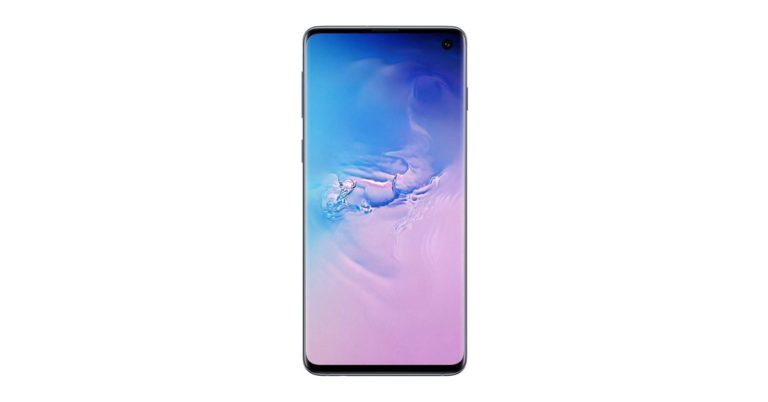
The leaks of an upcoming smartphone these days is not just limited to its images and design, many features of the smartphone also get leaked before its launch. The latest to be the victim of features leak is the Samsung Galaxy S10 series. The features that have come to light include Full-HD Super Slow Motion, Best Shot, HDR10+ video recording, flaw detection improvements, super steady video recording and scene optimiser with Ultra-Wide Angle support.

We are going to briefly explain each – feature of the upcoming Samsung Galaxy S10 so that you have a rough idea about what all of them do.

1080p Super Slow Motion

Initially we found out that a code showing support for recording Super Slow-mo videos in FHD (1080p) resolution has been added. To recall, the Super Slow-mo feature was incorporated in the Samsung Galaxy S9, which allows you to take 0.2 seconds of 960fps video at 720 in automatic mode. Either this, or you can take 0.4 seconds of 480fps video at 720p in manual mode. This feature will produce more detailed slow-motion videos as it has a bump in resolution to FHD. The South-Korean tech giant will take videos in environments in low-light conditions.

0.8 second Super Slow Motion

There will be support for capturing 0.8 seconds at standard quality and 0.4 seconds at high quality. Samsung Galaxy S10 will reportedly have 0.4 seconds of 960fps and 0.8 seconds of 480fps which can be enhanced to 960fps via its software.

Best Shot

There will be a feature for Best Shot too, which is meant to help you click perfectly aligned shots. The Samsung Galaxy S10 will automatically hit the shutter when it detects a shot is being lined up. You don’t need to click the shutter button anymore. Pretty neat if you ask us.

Bokeh effects for Live Focus

The Bokeh effects will help the Samsung Galaxy S10 to blur, colour point, mono, slide, light, spin, vintage and zoom. Blur will be the normal bokeh blur and colour point will turn the blurred background into black and white, whereas mono will make the entire picture black and white. Side light, on the other hand, will add an effect of a light on the side of your face, and spin will spin the light around the background. As of now, it is not known what vintage and zoom are going to do.

Document scanning

Document scanning was released by Adobe when Samsung added third-party plugins for Bixby Vision. The smartphone company is incorporating the document scanning support into the camera of the Samsung Galaxy S10. The camera will use AI that will show a button which will help you click pictures of documents without distortion.

Other features include HEIF Format pictures, dual capture with wide-angle, flaw detection upgrades, scene optimiser upgrades and super steady video.

For the latest gadget and tech news, and gadget reviews, follow us on TwitterFacebook and Instagram. For newest tech & gadget videos subscribe to our YouTube Channel.


Instagram is testing its Direct Message feature for web on mobile and desktop

Facebook-owned photo-sharing app Instagram has always maintained a priority for the mobile platform. So, it’s not uncommon to see new features coming to Instagram’s app first and then, if they are hit with the masses, they make their way to the desktop version of the photo-sharing platform too.

Following the same suit, another key feature of the Instagram app is now being tested on its web on mobile and desktop versions. We are talking about the Direct Message feature.

The news of the Direct Message feature being tested on the web on mobile and desktop versions of Instagram was first shared by app researcher Jane Manchun Wong on Twitter. He even shared a screenshot of the feature along with his tweet.

If you have ever used the desktop version of Instagram, you would know that as of now it’s very minimal and has comparatively fewer features than the mobile app. For instance, there is still no way to directly upload photos on Instagram’s desktop version and it even got support for browser notifications in September last year.

And there are some features, like adding stories, which are still not available on the mobile web or desktop versions of Instagram. We should mention that although Stories can be viewed in both of these versions of Instagram, they can only be added via the mobile app. And we don’t expect this to change too, as Instagram has said that it doesn’t have any “plans to let users upload photos or stories from the desktop.”

Considering this, getting the Direct Message feature is a big step forward for Instagram’s web version. After the company introduced the ability to send GIFs on Direct Messages in September last year, this is the big piece of news about the feature that we have got.

We should mention that Instagram has built a standalone messaging app called Direct, which is being tested in six countries since 2017. Direct Message feature coming to Instagram’s web version points towards the increased importance the Instagram team is giving to promote messaging among users on the platform. Or probably Instagram has seen that the feature is being used a lot and is now testing it on the web version to make it more user-friendly.

instagram direct message feature for web
Image courtesy: Twitter, Jane Manchun Wong

The move could also be related to Facebook‘s decision to merge Messenger, WhatsApp and Instagram DMs into one platform. We would have to wait to find out. But for now, we can be happy about the desktop version of Instagram becoming more user-friendly.

For the latest gadget and tech news, and gadget reviews, follow us on TwitterFacebook and Instagram. For newest tech & gadget videos subscribe to our YouTube Channel.

OnePlus 6T, OnePlus 6 get deeper integration with Google Duo with latest updates

Chinese smartphone brand OnePlus has started rolling out the latest OxygenOS updates for its OnePlus 6 and OnePlus 6T smartphones. While OnePlus 6 is getting the OxygenOS 9.0.4 update, the company’s latest smartphone – OnePlus 6T – has started receiving the OxygenOS 9.0.12 update.

We should mention that even though the updates have different numbers, their changelogs are the same. The only exception is that OnePlus 6T (review) is getting optimizations for its display, while OnePlus 6 (review) won’t be receiving them.

A very key feature that the updates get to OnePlus 6 and OnePlus 6T is deeper integration with Google Duo. Once the updates are installed, OnePlus 6 and OnePlus 6T users will be able to make video calls directly from the Phone and Messages app using Google Duo.

We think that this would make things easier as currently, most of us have to first go to WhatsApp, Messenger or Skype to make video calls. While it is very simple to make video calls via these apps, having the option in the Phone app where we go to make regular phone calls, is definitely a welcome change.

Other than this, the OxygenOS 9.0.4 and OxygenOS 9.0.12 updates also get general bug fixes and system improvements to OnePlus 6 and OnePlus 6T smartphones. They also come with the January 2019 Android security patch. However, we should point out that Google has already rolled out the security patch for February, so this may be considered as disappointing for a few. The company has also spoken about the updates in detail on its official forum.

Like it usually does, OnePlus is rolling out the OxygenOS 9.0.4 and OxygenOS 9.0.12 updates as over-the-air updates and they will first be sent to a small percentage of users. A broader roll-out will happen in a few days or weeks. If you own a OnePlus 6 or a OnePlus 6T, and you don’t receive the update in the next few days, you can check for it on your smartphone manually.

To check for an update manually, head over to Settings of your device, and then click on System. In the System menu, you can check for the latest update and install it by going to System updates.

Update: OnePlus has announced that it will bring native Google Duo support to OnePlus 3, OnePlus 3T, OnePlus 5, OnePlus 5T smartphones in the near future too. The feature will come to the devices via an upcoming OxygenOS update.

For the latest gadget and tech news, and gadget reviews, follow us on TwitterFacebook and Instagram. For newest tech & gadget videos subscribe to our YouTube Channel.

Motorola Moto G4 Plus starts getting Android 8.1 Oreo update

Unlike many of the recent Motorola smartphones, which have received the Android Pie update, the Moto G4 Plus is not among them. The latest event surrounding it is that it has started receiving the Android 8.1 Oreo update. The apprise is going to automatically come to the smartphone so you don’t need to do anything manually.

To recall, Motorola initially did not include the Moto G4 and the Moto G4 Plus in the update schedule, back in September 2017. A few days later, the company clarified that it might launch the Android 8.1 Oreo update for the Moto G4 Plus, but did not give a confirmation in this regard. It seems that it took a long time for Motorola to launch this update for its smartphone.

Motorola G4 Plus specifications

In terms of technical specifications, the Motorola G4 Plus sports a 5.5-inch 1,080×1,920 display with an aspect ratio of 16:9. The smartphone is powered by Qualcomm’s Snapdragon 617 SoC. The Motorola Moto G4 Plus comes in three RAM variants—2GB, 3GB and 4GB. The 2GB variant come with 16GB onboard storage and the other two variants bring along 32GB and 64GB onboard storages respectively. There is a dedicated microSD card slot, which helps the device to store up to 256GB data.

The main camera at the rear has a 16MP sensor and the front camera meant for taking selfies has a 5MP sensor. Connectivity options include WiFi 802.11 Bluetooth 4.1, GPS, FM Radio and a microUSB 2.0 port. The Motorola Moto G4 Plus houses a 3,000mAh non-removable battery. The device comes in two colour options, namely black and white. The handset has multiple sensors which includes fingerprint, accelerometer, gyro and proximity sensor. Very recently, we have come to know that Android Pie is being rolled out for the Motorola Moto Z3 Play.

To recall its specifications, the smartphone sports a Super AMOLED capacitive 6.01-inch touchscreen. It has a dual rear camera setup that comprises of a 12MP and a 5MP sensor. The selfie camera on the front comes with an 8MP sensor. The device just has a single RAM variant of 6GB paired with 128GB of internal storage.

Microsoft to launch Hololens 2 at MWC 2019

0

Hololens is a virtual reality smart-glass developed by the tech giant Microsoft. In simpler terms it is a computer on your head, but there are no wires like the ones found on the VR gaming headsets. Neither it is bulky like a computer. It looks like something from a sci-fi movie. The glasses are compact in size, but proves to be useful in many fields.

We have seen AR in cameras of smartphones, but the Hololens makes those AR look like child’s toy. It can project virtually anything in its display so that the user who is wearing the Hololens can see the ‘object’ in real time without the object actually being in real.

Hololens 1 was released back in 2016 and it became an instant hit thanks to its futuristic design and applications. Now following the lineup, Microsoft is planning to launch Hololens 2 at the upcoming MWC 2019. The company has released a video teaser for the Hololens 2, the trailer is funky and is full of flying stuff, and melting ice.

Earlier on Monday, the creator of Hololens 1 and head of Microsoft’s mixed-reality efforts, Alex Kipman tweeted a video that teased Hololens 2. The video is trippy, cryptic and ends with a date, 24 February 2019. In MWC 2019, the CEO of Microsoft Satya Nadella along with Julia White, Corporate VP in-charge of Microsoft Azure and Alex Kipman are scheduled to address the crowd and will give a keynote.

“We have a lot of exciting things to talk about at MWC 2019,” a Microsoft spokesperson said, so we can expect much from the tech giant. If one is lucky, we could see some new technology spring up, which the company has been working on in secret.

As said, released in 2016, Hololens 1 came packed with hologram-like 3d graphics capable of projecting in real time. There were many great things about the Hololens and it was one of a kind, but it too had some technical limits. The successor of Hololens might get good improvements over its predecessor. It should come with better processor, advanced controls, better graphics projection, better field of view as well as eye-tracking. There are many applications of Hololens, it can be used in field of science, graphic design, military training, and video games. We for one are quite excited to hear about this news.

Apple to hold an event on March 25: Here’s what it plans to launch

0

Cupertino-based technology giant Apple held its last event in October 2018 when it launched its much awaited iPad Pro. And rarely does the company stay out of the limelight for its new products and services for long. If you have been waiting to hear what Apple plans to unveil next, we should tell you that a new report has surfaced online that claims that the company will be making its first big announcement of 2019 on March 25.

The technology company is reportedly planning to hold a special event on March 25 at Steve Jobs Theatre on its Apple Park Campus where it will announce its news subscription news service. The report about Apple’s upcoming event first surfaced on BuzzFeed News.

However, don’t get your hopes too high to see new hardware from the company at the event. According to the report, the next-generation AirPods or the new iPad Mini would not be present at the March 25 event. And it’s way too early to expect the new iPhones too be showcased. We would have to wait for September to see those.

The sources quoted in the report said that Apple plans to keep the event focused on subscription-services, however, they didn’t say anything about the company’s upcoming stand-alone video streaming service which, according to previous reports, will be launched this year. To be more specific, a report in Information said that Apple will be launching the service in April this year. So it is very likely that Apple may launch the two services at the same event.

We should mention that Apple has been holding product events in March for a long time. So, the news of the company planning to hold an event on March 25 isn’t exactly a surprising one. However, another thing we should point out is that the report also mentioned that there is a chance that the final date could shift a bit. If it happens, it will primarily because of the publisher pushback that Apple is getting on the revenue-sharing terms of the ‘Netflix for news service’ that it is planning to launch.

According to reports, Apple has plans of claiming half of the proceeds of the subscription fee that will cost users $10 per month. The other half will be given to publishers based on how many people read their stories. However, the publishers are reportedly not very happy with the terms that have been put forward by Apple.

For the latest gadget and tech news, and gadget reviews, follow us on TwitterFacebook and Instagram. For newest tech & gadget videos subscribe to our YouTube Channel.

Microsoft is helping LinkedIn with its new live video streaming service – LinkedIn Live

Software giant Microsoft is now getting involved in live video streaming via its ownership of the professional social networking platform LinkedIn. LinkedIn is launching a new service called LinkedIn Live for its 600 million users. The service will enable users of the platform to live stream video content and it will start rolling out this week.

However, it is worth mentioning that as of now, the service is only available in beta and that too, only for those who have an invite to use it. We should also mention that the service is being rolled out almost 18 months after LinkedIn started supporting videos.

With LinkedIn Live, users will be able to stream thing like Q&As, conferences, earning call, events, award ceremonies, product announcements and other such corporate happenings. If you are wondering what is Microsoft‘s role in this, we should tell you that the company will be supporting LinkedIn Live via its Azure Media Services and will provide all the important encoding technology that will help videos stream on the platform seamlessly.

For the video-streaming service, LinkedIn is also partnering with Wirecast, Switcher Studio, Wowza Media Systems, Socialive, and Brandlive. With all these onboard, LinkedIn will be able to enable content creators to access experienced broadcasting streaming services.

In an interview with TechCrunch, Pete Davis, Director of product management at LinkedIn shed light on the new service by saying, “Video is the fastest growing format on our platform right now, and the one most likely to get people talking. Live has been the most requested feature.”

But as of now, there is no word on when LinkedIn will be making its new service available to all 600 million users. Users can, however, sign up to get the new service via a contact form on LinkedIn.

In the video streaming space, LinkedIn will be facing competition from Facebook, Twitter, YouTube, Twitch among other services. But LinkedIn is optimistic and thinks that the kind of content it will have on its platform will interest its user base. There wouldn’t be any latest TV shows or games on LinkedIn Live, instead, it will have content that will interest professionals on the platform.

For the latest gadget and tech news, and gadget reviews, follow us on TwitterFacebook and Instagram. For newest tech & gadget videos subscribe to our YouTube Channel.

WhatsApp is now getting a revamped Settings section in its latest beta update

Facebook-owned messaging app WhatsApp has received a new beta update that has got a redesigned ‘Settings’ menu with a different layout to the app. Additionally, the messaging app has also got new icons for a number of tools. The update has now started rolling out to beta testers of the Android version of WhatsApp and its build number is v2.19.45.

According to reports, the redesigned Settings menu with the new layout and other changes that are included in the beta update will soon be made available to all Android users via a stable update.

The new interface of the Settings menu of the app will have options like Account, Chats, Notifications, Payments, Data and storage usage and Help sections and they will be written one below the other in a vertical format. These submenus in Settings, like Accounts and Chats, have been tweaked in the latest beta update as well.

However, we should mention that the latest beta update only changes the UI of the app, and doesn’t add any new features.

whatsapp settings screenshot

But then, this is a very welcome change as the Settings menu of the app has not been revamped for a very long time. The new UI is being rolled out as a part of the beta update v2.19.45 and if you wish to try it out, you can do so by becoming a beta tester. Read our step-by-step guide on how you can become an Android beta tester for WhatsApp here. Alternatively, you can become a beta tester by installing the APK by downloading it from APKMirror.

While this means getting all WhatsApp updates before anyone else does, we should also mention that it also means having to update your app more often than others and at times, the beta updates can also add bugs in your device.

If you don’t think it’s worth it, you can wait for the stable update to be rolled out and you can get to experience the new UI then. Anyway, it’s just a change in the user interface and it doesn’t really improve the functionality of the app, so it’s not like you will be missing out on anything big.

For the latest gadget and tech news, and gadget reviews, follow us on TwitterFacebook and Instagram. For newest tech & gadget videos subscribe to our YouTube Channel.

Gmail’s right-click menu is getting some useful options soon

Gmail is definitely one among the most popular services by Google. And maybe that it why, Google has constantly added more and more features to it over the years to make it more powerful and useful. While Gmail was initially just a simple email service, it now has a number of features that make it far more superior to other services.

Google has just added another change to Gmail with which, you can access some useful features by just going on the right-click menu. We should mention that these features would first roll out for G Suite users and would then come to regular Gmail users too.

With the new options coming in, users would be able to perform various functions by right-clicking on an email or a conversation. The options include replying, forwarding, searching for emails from the sender or with the subject of the conversation, moving the email to a particular label or opening the email in a new window. However, these options can differ depending on whether you have the conversation mode on or not.

Google has mentioned in its blog post that in the next few weeks, all G Suite owners will have access to this feature. Furthermore, it will fully roll out to all users by February 25.

It is worth noticing that users would not have to do anything to activate this feature as it will be enabled on its own as default. Once it gets rolled out to all, users would just have to right click on a conversation or an email to access new options.

Like most other features of the email service, once this feature is rolled out to G Suite users, it is likely to reach regular Gmail users too. Once rolled out, the features would help save time by reducing the number of steps to perform various tasks. Compared to the steps that we have to follow now, the feature that’s coming in would make things far simpler.

It has also been reported that Google is working to bring certain ‘Inbox by Gmail’ features to the Android client, and they are supposed to enhance the functionality of the email service and make it more user-friendly.

For the latest gadget and tech news, and gadget reviews, follow us on TwitterFacebook and Instagram. For newest tech & gadget videos subscribe to our YouTube Channel.

LG Q9 One launched: Price, specifications and more

LG is out with its new LG Q9 variant. This variant is known as the LG Q9 One that sports a display notch and runs on Android Pie skinned with Android One programme. Other key highlights of the smartphone are, that it is powered by a Qualcomm Snapdragon 835 SoC and comes with water resistant capabilities. The device has a thicker bezel at the bottom and a wide notch at the top, in order to house sensors.  At the back, there is a single rear camera setup with LED flash. Also, there is a rear fingerprint sensor in the centre.

LG Q9 One technical specifications

The smartphone sports a 6.1-inch QHD+ 1,440×3,120 display with an aspect ratio of 19.5:9 and pixel density of 564ppi. As mentioned, the smartphone runs on Android Pie, it is part of Google’s Android One programme and is powered by Qualcomm Snapdragon 835 SoC. The LG Q9 One has a single RAM variant of 4GB coupled with 64GB of onboard storage.

With a microSD card, the device can hold up to 2TB of additional storage. The smartphone bears a 16MP sensor at the back and an 8MP sensor on the front. The device packs a 3,000mAh battery with Qualcomm Quick Charge 3 support.

Connectivity options include Bluetooth v5.0, NFC, WiFi 802.11, FM Radio and USB Type-C port. The device measures 153.2×71.9×7.9mm and weighs 156 grams. The LG Q9 One is the new variant of the LG Q9 that was launched a month back. To recall, the LG Q9 runs Android 8.1 Oreo and is powered by Qualcomm’s Snapdragon 821 SoC.

This smartphone has a 16MP main camera and an 8MP selfie camera. The device has 4GB RAM with 64GB onboard storage. This storage can be expanded via a microSD card slot by up to 512GB. Connectivity options include Wifi 802.11, Bluetooth 5.0, GPS, NFC, FM Radio and USB 3.1.

LG Q9 One pricing and availability

The LG Q9 One is priced at KRW 599,500 that is roughly Rs 37,900. It comes in Moroccan blue colour. The Indian date of launch is still unclear, but by the looks of it can come to India in this quarter.

For the latest gadget and tech news, and gadget reviews, follow us on TwitterFacebook and Instagram. For newest tech & gadget videos subscribe to our YouTube Channel.

 Swiggy will now deliver home essentials, along with restaurant food

0

Swiggy, an online food delivering service on Tuesday announced that it would be expanding its business and is now going to deliver home essentials as well. Earlier it had tied up with restaurants only to deliver food and beverages.Now it has tied up with stores to deliver groceries, fruits, vegetables, baby care items, health products and much more, the company said in a statement.

It would deliver “categories such as fruits and vegetables, kiranas and supermarkets, florists, baby care, health and supplements among others. Today’s announcement takes Swiggy to categories beyond food, where we hope to deliver the same level of delightful experiences to consumers for their everyday needs,” Swiggy’s CEO Sriharsha Majety said.

This new service is named ‘Swiggy Stores’ and just like its food delivering app, it too will be accessible via the mobile app. Although it is a first step towards the delivery of home goods by the company, other companies have been doing it  from before. BigBasket and Grofers is an example of such service.

Swiggy has to compete with big market share holders like BigBasket, which has the Chinese MNC AliBaba backing it up. Over that the Badshah of Bollywood, Shahrukh Khan, is its brand ambassador.  So, it can be said that BigBasket has already made a name for itself and has most of the market share presently. So, Swiggy has to do a better job than its competitor if it were to survive in the market.

Swiggy currently operates in more than 80 major Indian cities through its mobile app and website. It surely has a base from its food delivering service so it doesn’t have to start from scratch. Last week Swiggy bought an Artificial Intelligence (AI) named Kint.io that uses machine learning, deep learning and computer vision to recognize objects. Swiggy would use the AI for the Swiggy Stores service, too.

According to the company the next step would be to spread its reach to every store in every Indian city. The merchants who would partner with them would also be able to get new customers and this in turn will help their business, too. To the delivery partners, the company would give them a new and  additional way of getting more income.

Founded in 2014, Swiggy is serving in a lot of cities, delivering food from over 60,000 restaurant, which is a big achievement for the company. Will they be able to make a mark in the competitive “kirana” sector as well? We will come to know in a few quarters.

For the latest gadget and tech news, and gadget reviews, follow us on TwitterFacebook and Instagram. For newest tech & gadget videos subscribe to our YouTube Channel.

Vivo unveils iQoo sub-brand in China, will soon be launched in other countries

Today, vivo has unveiled its new iQoo sub-brand in its home market. It is anticipated the like other smartphone companies, Vivo is going to use this sub-brand to target a specific customer type or price segment. The announcement of this new profile took place via a Chinese website called Weibo. The iQoo sub-brand is going to join the likes of Poco, Redmi, Nubia, Zuk and Honor. The post by Weibo doesn’t clearly picture the sub-brand. It gives a futuristic feel, which provides a speculation that Vivo may have created iQoo to focus on 5G and flagship devices priced around CNY 5,000 (Rs 53,000+).

Spark Ni, the senior Vice President of Vivo said, “Vivo has evolved from a follower to a leader in the tech and lifestyle industry. Through the new branding, we hope to redefine the brand’s positioning in technology and innovation and express our brand vision of ‘enjoying the extraordinary’ with young consumers around the world through Vivo’s unique visuals and creative spirit.”

According to industry insiders, the new Vivo iQoo sub-brand will also make its way into countries like India. However, they were also unclear on the timelines. Much of it will be dependent upon the type of smartphones the company launches under this brand.

Also, there has been news that the Vivo V15 Pro is going to launch on February 20. We recently wrote about an Amazon listing that revealed key highlights of the smartphone.

The Vivo V15 Pro will feature 32MP pop-up front camera for selfies and video calls. A triple rear camera setup would be seen at the back panel. This setup is going to comprise of a large 48MP primary sensor. Apart from this, the Vivo V15 Pro is going to sport a bezel-less Super AMOLED screen. The smartphone is going to be powered by Adreno 612 GPU and will come with  6GB RAM. This – will be coupled with  128GB internal storage. When it comes to imaging, along with the 48MP camera sensor, the smartphone will also have an8MP and a 5MP sensor with enhanced autofocus.

Vivo V15 Pro

The expected price of the Vivo V15 Pro is Rs 31,990. To speak of the pricing, the Vivo V11 and V11 Pro have received price cuts a few days ago. The former received a price cut of Rs 1,000, which made it cost come down to Rs 19,990 from Rs 20,990. The Vivo V11 Pro on the other hand, received a price cut of Rs 2,000. While it earlier costed Rs 25,990, it can now be purchased at Rs 23,990.

For the latest gadget and tech news, and gadget reviews, follow us on TwitterFacebook and Instagram. For newest tech & gadget videos subscribe to our YouTube Channel.