On Thursday, Apple threatened to remove applications from its App Store if they record users’ activity without their consent. According to a report that had surfaced online earlier this week, iPhone apps from Expedia, Air Canada and Hollister were using ‘session replay’ software from a company named Glassbox.
This allowed them to record user’s actions like screen taps and swipes while using an application. The applications, according to the report by TechCrunch, recorded users’ activities without letting them know about it. Therefore, Apple made a decision to tell the app developers to inform users before recording their activities.
Since Apple has made this move, various technology websites have praised it for being concerned about users’ privacy. Speaking on the matter, Apple has been quoted by TechCrunch saying, “Protecting user privacy is paramount in the Apple ecosystem. Our App Store Review Guidelines require that apps request explicit user consent and provide a clear visual indication when recording, logging, or otherwise making a record of user activity. We have notified the developers that are in violation of these strict privacy terms and guidelines, and will take immediate action if necessary.”
There are many apps which have been recording users’ mobile device screens and in spite of doing this, have been present on the App Store. These iOS apps include Hotels.com, Abercrombie and Fitch and Expedia. To recall, a few days ago Apple deleted apps from its app store for violating its terms and conditions. Other companies which provide similar services like Glassbox include UXCam and Appsee.
Last week, a bug was reported in Apple’s Facetime app that let users listen to a conversation between two people even without being a part of the call. So, if a user called a contact on FaceTime who was already engaged in a call, the person calling could hear the conversation even before their call was answered.
Since the bug was discovered, Apple had disabled conference calls on its FaceTime app and now, it has finally rolled out a software update to fix the much-talked-about issue.
Apple has finally fixed the bug in FaceTime that let people eavesdrop on other people’s video calls. To be more specific, because of the bug, if a person called their contact on FaceTime while they were already engaged on a video call, the person calling could hear the conversation even before their call was answered. As a damage control measure, Apple stopped conference FaceTime calls on its iOS devices once it acknowledged the bug and it promised to release an update to fix it.
The Cupertino-based technology giant has kept its promise and has rolled out iOS 12.1.4 and macOS Mojave 10.14.3 updates to iPhones, iPads and Mac computers. We should mention that the updates have been released nine days after the news of the FaceTime bug went viral on social media.
The glitch could have been misused by someone to hear someone else’s conversations. Furthermore, in some cases, the person making the call could not only hear the conversation but also see the live video of the other person in case the recipient pressed the volume button to dismiss the call.
The bug was initially discovered by a 14-year old named Grant Thompson. Thompson was playing Fortnite with his friends one day when he decided he needed to call one of them on FaceTime. However, when he called his friend, he could listen to the conversation his friend was having with someone else even before his call was answered.
He told his mother about it, who reported the issue to Apple. The company has said that it will compensate Thompson and his family for flagging the issue more than a week before it attracted international attention. Although there is no word on how much money would the family be getting as the reward, Apple did say that it would also contribute money towards Thompson’s education.
The smartphone giant also came across another bug while it was investigating the FaceTime bug. While we do know that it was a security issue that involved Live Photos on FaceTime, Apple did not clarify what exactly the bug was or how it worked. However, it did say that the new update fixes that issue too. Prior to releasing the update, Apple had disabled the use of Live Photos and conference calls on FaceTime.
If you have an iOS device, you can install the update by heading to Settings, going to General, and then clicking on Software Updates. Here, tap on ‘Download and Install’ to get the update on your device.
On the other hand, if you are a Mac user, you can head to the App Store and go to the Updates section to get the latest software update.
Speaking about the update, an Apple spokesperson said in a statement, “Today’s software update fixes the security bug in Group FaceTime. We again apologize to our customers and we thank them for their patience. In addition to addressing the bug that was reported, our team conducted a thorough security audit of the FaceTime service and made additional updates to both the FaceTime app and server to improve security.”
The Chinese smartphone company Xiaomi is known for offering feature filled affordable smartphones and it has been popular in the Indian market for quite some time. And the newest in the Note line-up from the company, the Redmi Note 7 which will have a 48MP primary camera has become one of the most popular and talked about phones even before its launch here. The industry along with other users in India are talking about how great the phone will be, already.
Its release in India is expected soon. But before its launch the price at which the Note 7 will be offered is dominated currently by Samsung’s M series which was sold online and was sold out within minutes. So, Note 7 has a competition even before its launch. The Samsung Galaxy M-series is the newest line-up from the South Korean tech giant which is offering Full HD+ Infinity-V display, dual rear camera setup, an octa-core processor and huge battery backup with room for more, and all of that at an affordable price. This the price segment where Xiaomi is dominant and with Samsung stepping up the game, it has sent shivers up Xiaomi’s spine.
Talking about the Redmi Note 7, it will be Xiaomi’s first smartphone with a behemoth 48-megapixel camera. It will also have a 6.3-inch Full HD+ display with up to 6GB RAM, a Qualcomm Snapdragon 660 SoC and much more. And the company will be offering all this at an affordable price for which the Note series is known for, no doubt people are excited.
But recently, Xiaomi has called out Samsung and is claiming that its Note 7 has a better AnTuTu benchmark score than the Samsung M-series. Xiaomi went as far as to make fun of Samsung on Twitter saying that “Are you serious? Don’t tell Mi you’re going to choose a ‘M’obile with TFT display!” Since both the M10 and the M20 uses a TFT display while Note 7 comes with a better display.
It might be possible that the company is bringing the heat with the Note 7 in India soon and it’s also possible that its price will be same as the M-series. The starting price of Redmi Note 7 in china was RMB 999 which is roughly Rs 10,500 so we can expect the Note 7 to be priced around the same. And if it is then Samsung might lose its fair share of the mid-range smartphone market to Xiaomi, or will it?
Last month saw the launch of Samsung Galaxy M20 and Galaxy M10 smartphones in India. With the two smartphones, Samsung replaced its Galaxy On, Galaxy J and Galaxy C series with Galaxy M series. The smartphones are priced in the budget segment and with them, Samsung plans to retake the top slot that it lost to Chinese smartphone brand Xiaomi.
And luckily for Samsung, Indian customers gave the Galaxy M20 and Galaxy M10 smartphones a warm welcome. And now, barely two weeks after the two smartphones got launched, the specifications of Samsung Galaxy M30 have surfaced online.
According to a report in iGyaan, the upcoming smartphone will sport a 6.38-inch display that will come with a resolution of 2220x1080px. The report further says that Samsung Galaxy M30 will sport a 16MP front-facing snapper that will be housed in the smartphone’s waterdrop-shaped notch. The device features a triple rear camera setup on its back panel that has a 13MP sensor with an f/1.9 aperture and dual 5MP sensors with f/2.2 aperture. Among these, one will be a wide-angle sensor and the other will be a telephoto sensor.
According to the report, Samsung Galaxy M30, much like Galaxy M20 is powered by a 5,000mAh battery. Furthermore, it will reportedly come with a 4GB of LPDDR4x RAM and 64GB of eMMC inbuilt storage. Also, like Samsung Galaxy M20 and Galaxy M10, it will be able to hold a microSD card of up to 512GB.
The report also said that Samsung plans to launch the smartphone in the first quarter of 2019. The report further said that Samsung Galaxy M30 will be available in March in India, soon after Galaxy S10’s launch.
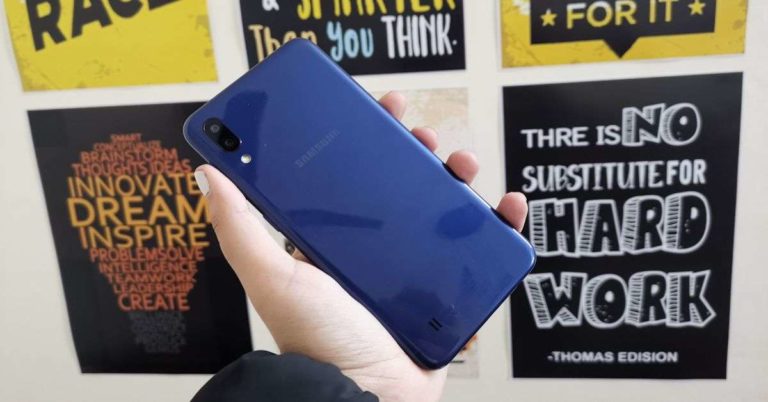
Speaking about the specifications of Samsung Galaxy M10, it runs Android 8.1 Oreo and features a 6.2-inch HD+ TFT display. The device is powered by the Exynos 7870 processor clubbed with up to 3GB of RAM and 32GB of onboard storage. On the camera front, Samsung Galaxy M10 comes with a dual rear camera setup with a 13MP sensor and a 5MP ultra-wide sensor. For selfies, there is a 5MP front-facing snapper and houses a 3,400mAh battery.
Coming to Samsung Galaxy M20, the smartphone sports a 6.3-inch full HD+ display and runs Android 8.1 Oreo. Powered by an octa-core Exynos 7904 processor, Samsung Galaxy M20 comes with up to 4GB of RAM and 64GB of onboard storage.
Samsung Galaxy M20 has the same dual rear camera setup as Galaxy M10, but it has a better 8MP selfie camera. The device has a massive 5,000mAh battery.
After months of keeping us guessing, Motorola has finally launched its Moto G7-series of smartphones today at an event in Brazil. The lineup includes Moto G7, Moto G7 Plus, Moto G7 Play and Moto G7 Power smartphones and they come with features like all-day battery life and enhanced camera performance.
The new devices by the company will be going on sale starting today in Brazil and Mexico and they will be followed by India, North America, Latin America, and Europe. The Moto G7 handsets are the first major smartphone announcement of the year and in India, they will be competing directly with the recently launched Samsung Galaxy M20 and Galaxy M10 devices. Here is the complete list of specifications of the newly launched smartphones along with their pricing and availability:
In This Article
Moto G7 smartphones price and availability
Motorola has said that its Moto G7 smartphone is priced at $299, and Moto G7 Plus bears a price tag of EUR 299.99. The Moto G7 Power smartphone costs $249 and Moto G7 Play is priced at $199. As we mentioned earlier, all the smartphones are going on sale in Brazil and Mexico today itself and will be made available in other regions in mid-February. As of now, we only know that Moto G7 Power will be launched in India in the next few weeks. There is no word on the availability of other devices.
Speaking of what’s common between the Moto G7, Moto G7 Plus, Moto G7 Play, and Moto G7 Power smartphones, they all run Android 9.0 Pie and come with display notches of different sizes. They all have fingerprint scanners on their back panels. Read on to know about the complete set of specifications of all the smartphones:
Moto G7 specifications
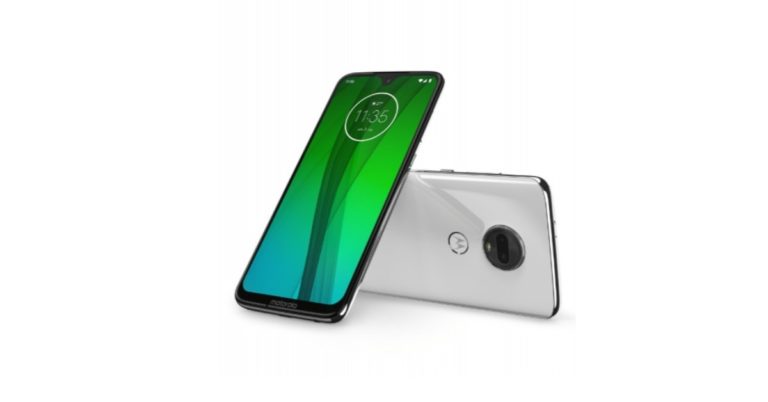
The Moto G7 smartphone sports a 6.24-inch full-HD+ Max Vision display and is powered by an octa-core Qualcomm Snapdragon 632 processor clubbed with 4GB of RAM and 64GB of internal storage. The device can also hold a microSD card of up to 512GB. It has a dual rear camera on its back panel with 12MP primary sensor with an f/1.8 aperture and a 5MP secondary sensor with an f/2.2 aperture. On its front panel, there is an 8MP camera with an f/2.2 aperture that can be used for selfies and video calls.
Moto G7 Plus specifications
Coming to Moto G7 Plus, it has the same display as Moto G7’s but is powered by Qualcomm’s Snapdragon 636 processor clubbed with 4GB of RAM. The smartphone has 64GB of internal storage and can hold a microSD card of up to 512GB. Moto G7 Plus has a dual rear camera setup with a 16MP sensor (f/1.7 lens) and a 5MP sensor (f/2.2 lens). The cameras have support for optical image stabilisation. For selfies and video calls, there is a 12MP front-facing snapper with an f/2.0 lens. The handset houses a 3,000mAh battery.
Moto G7 Play specifications
Moto G7 Play is the most affordable of the four devices and it comes with a 5.7-inch HD+ Max Vision display and is powered by Qualcomm’s Snapdragon 632 processor clubbed with 2GB of RAM. The smartphone has 32GB of internal storage and can hold microSD cards of up to 128GB. Moto G7 Play houses a 3,000mAh battery and sports a 13MP primary camera with f/2.0 aperture and an 8MP selfie camera with an F/2.2 aperture.
Moto G7 Power specifications
Moto G7 Power smartphone has a 6.2-inch HD+ display and is powered by an octa-core Qualcomm Snapdragon 632 processor clubbed with 3GB of RAM. The smartphone has a 32B of internal storage and houses a massive 5,000mAh battery. For imaging duties, Moto G7 Power has a 12MP primary camera with an f/2.0 aperture and an 8MP selfie camera with an f/2.2 sensor.
American multinational semiconductor company AMD has today launched its flagship Radeon VII GPU, which is said to be the world’s first 7nm graphics gaming card and is touted to enhance the performance for latest AAA experiences, eSports, VR titles, 3D rendering, video applications, as well as compute workloads.
AMD has said that its new flagship GPU gives up to 29% better gaming performance than its predecessor Radeon Vega 64 GPU, if the game is played in 4K, ultrawide 1440p, or 1080p with HDR. We should mention that the Radeon VII was first announced at CES 2019 keynote by the company’s CEO Lisa Su.
Graphic cards with AMD Radeon VII GPU are available for purchase worldwide starting today. While in the United States, the card is priced at $699, in India it is available for Rs 54,990 with The Division 2, Resident Evil 2 and Devil May Cry 5 games.
The AMD Radeon VII GPU comes with 3,840 execution units which are called as stream processors by the company. The AMD Radeon VII GPU is clocked at 1400MHz, its maximum boost speed is 1750MHz and has a 13.8 Teraflops performance bandwidth. The company has said that the GPU is manufactured on AMD’s 7nm process and has a revamped version fo the Vega architecture that was also used in Radeon Vega 56 and Radeon Vega 64 GPUs last year.
The AMD Radeon VII GPU comes with 16GB of high-bandwidth 3D-stacked HBM2 memory that is connected with a 4,096-bit bus and has a total memory bandwidth of 1TBps. It is worth noticing that this is double the memory and 2.1X the memory bandwidth that we saw on the Radeon Vega 64.
The power consumption of the Radeon VII is said to be 300W and the GPU supports all of AMD’s software features like FreeSync 2, Radeon Chill, video stream capturing with Radeon ReLive, and performance tweaking with Radeon WattMan.
AMD’s Radeon VII GPU directly competes with Nvidia’s GeForce RTX 2080, however, the company has not made any claims about its GPU being better than the GeForce RTX 2080 Ti. Nvidia CEO Jen-Hsun Huang, on the other hand, has called the new GPU by AMD as “underwhelming” and “lousy” at a session with journalists at CES 2019.
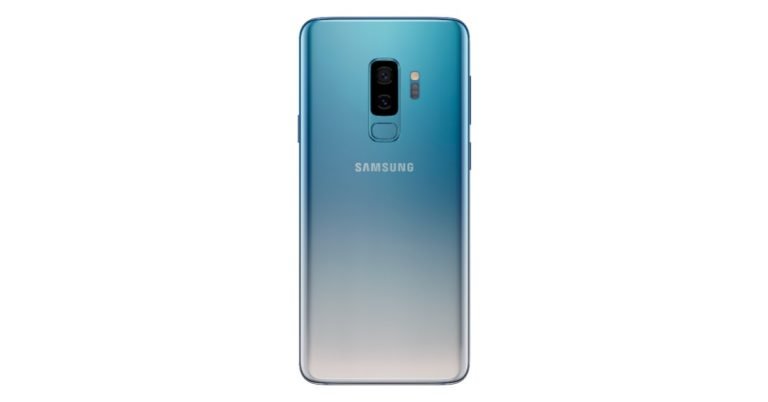
There is an insider who has reportedly played with the Samsung Galaxy S10e, Galaxy S10 and Galaxy S10+. Based on his knowledge, he has announced some of the features of the upcoming smartphones. From what we know, the three phones are going to feature a super AMOLED display with support for 10-bit processing that is similar to YouTube and Netflix. The Samsung Galaxy S10+ will come with a dual selfie snapper with a 10MP sensor. The second front camera is a depth-sensing unit. According to the tipster, the in-display fingerprint scanner of the Samsung Galaxy S10 and the S10+ is faster than the “conventional” in-display scanners.
There is no 3D touch bottom area in the Galaxy S8, S9, Note 8 and Note 9. However, it can still be woken up with a tap or a press on the in-display fingerprint area. The Samsung Galaxy S10+ will house a massive battery of 4,000mAh and will support reverse wireless charging. To talk about the super slow-motion video capture, it has been improved. It can now capture 0.4-0.8s of fast motion instead of 0.2-0.4s. In terms of colour options, the Samsung Galaxy S10 and Galaxy S10+ will come in white, black and teal with vivid blue option.
The Samsung Galaxy S10e will exclusively come with vivid yellow. One common thing among all the models belonging to the S10 series is that they are going to come with a metallic finish. The expected specifications of the Samsung Galaxy S10+ include a 6.4-inch super AMOLED capacitive touchscreen working at a resolution of 1,440×2,960 pixels. The screens aspect ratio is 18.5:9.
Three RAM variants include 6GB, 8GB and 12GB. The first one will bring an onboard storage of 128GB. While the other two will bring 512GB and 1TB respectively. The primary camera comprises of two 12MP sensors whereas the secondary camera meant for selfies will come with an 8MP sensor. The Samsung Galaxy S10+ will run on Android 9.0 Pie skinned with One UI. It will be powered by an Exynos 9820 octa core processor.
Apple might be in a bit of a soup this time, as many Apps on its app store are recording its users’ mobile device screens. Many popular iOS apps like Hotels.com, Abercrombie & Fitch and Expedia are collecting user information about everything they are doing using Glassbox’s ‘session replay’ technology, a report claimed.
The tech allows app developers to search and enhance the issues users face using the app by recording what the user is doing at a granular level. This recording and transferring of data puts the user’s information at a risk. As the sensitive data can be used by someone other than the company. And if such sensitive information which are contained in the session replays aren’t effectively masked then it could be used against the users.
A researched named App Analyst found and flagged this issue. He also reported that Air Canada (an app which uses Glassbox for analytics just like Expedia) was capturing screenshots which contained user’s passwords and other sensitive information. When taking the sensitive user data black boxes are used to conceal the information of the user but sometimes, they failed to do so and the user information was visible. The system which were supposed to do this failed and the user’s passwords, their payment history and other sensitive information was also captured during the screen recordings. If those screenshots were stored or stolen, it could be a serious security issue.
Apple hasn’t done anything about Glassbox or even addressed the problem. It was only days ago when Apple deleted many apps from its App Store because they violated its terms and conditions. Other apps who provide similar services as Glass Box are UXCam and Appsee.
With digital security getting violated by the most prominent companies and world tech leaders it may not be too late before we are forced to delete these apps and stop trusting these so-called leaders of tech world. There should be strict rules and regulations to regulate these companies before they do some ‘real’ damage.
Facebook gets updated regularly and over a period of time, we have experienced a lot of changes in the social networking giant. Some of the major changes have included, more reaction-based options on post, more reaction-based options for comments, protection for profile picture and profile videos. However, there might still be a few changes that you might like to see in the largest social-networking giant that could enrich your experience as a user. Here are four features that we would want to see Facebook to establish in its app and web platform so that it could make the experience even more convenient and enjoyable for everyone:
We think that Facebook gives suggestions about pages that interests us. In our news feeds we should be suggested continuously, about the kind of things associated with our area of interest. Facebook generally suggests us profiles of people we might be interested in. So why not let us know about pages that are similar to the ones we regularly follow? We think that this would be more fun.
Interest based friend suggestion: Speaking of friend suggestions, we get to see people whom we are very remotely associated with, on the basis of mutual friends. We think that Facebook should connect us with those with whom we have similar interests or hobbies.
For example, we are interested in music, or more particularly, listen to the same music as other people. Then Facebook should make us aware about people with same inerests, so that we can have a desirable interaction with them. Like this, we can actually make friends rather than adding unknown people in our friend list with whom we hardly ever interact with.
Option to deactivate ‘seen’ mark: If possible, then we should get the option of de-activating the ‘seen’ mark on a chat of Facebook messenger. Sometimes we just don’t want people to constantly ping us by telling us to reply when we haven’t after looking at the message. However, if we haven’t seen their message, then they might excuse us for we might have replied if we saw it. However, you could kill two birds with one stone if you are able to de-activate the ‘seen’ mark. That way you can look at the message and restrict people from annoying you.
Receive notification if somebody unfriends you: Ever got unfriended by someone? Maybe you would like to know who did it? So, in our opinion, you should get a notification if someone unfriends you. If not a notification, then maybe a link where you can go once a month and see who unfriended you.
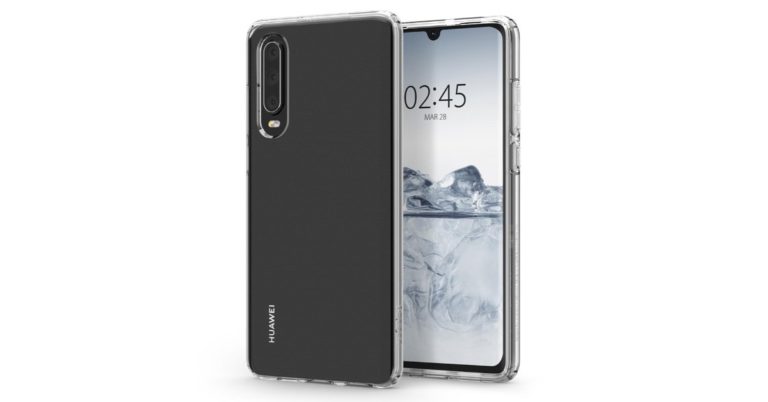
It is the season of leaks. This happens usually around MWC that we get to see lot of image and tech spec leaks of upcoming mobile phones. Another leak, this time of Huawei P30 and P30 pro, reveals the front part of the smartphones publicised by the website called Spigen. From what we have been able to know on the basis of this leak, the Huawei P30 will come with a vertical triple camera setup with the flash horizontally placed below the photo sensors. The last renders of the front part of the smartphones which came to light were very similar to an Oppo smartphone.
There is a waterdrop notch that resembles the Huawei Mate and the Huawei Mate 20X. At the bottom there is a bezel whereas the other three sides have no bezels. The Huawei P30 is reportedly said to launch in Paris during end of March. To recall, the Huawei P20, which is the P30’s predecessor was also launched in Paris. The Huawei P20 measures 149.1×70.8×7.7mm and weighs 165 grams. The smartphone features a 5.8-inch 1,080×2,240 display and runs on Android 8.1 Oreo. The mobile is powered by a Hisilicon Kirin 970 SoC.
The Huawei P20 comes with a 4GB RAM coupled with a 128GB internal storage. There is a dual rear camera setup that comprises of a 12MP and a 20MP sensor. The selfie camera on the front sports a 24MP sensor. Connectivity options include WiFi 802.11, Bluetooth 4.2, GPS, NFC and USB 3.1. The Huawei P20 is powered by a non-removable battery of 3,400mAh. It comes in four colour options—twilight, black, midnight blue and pink gold. When it comes to the sensors, the handset includes fingerprint, accelerometer, gyro, proximity, compass and colour spectrum.
The Huawei P20 Pro was launched around the same period as that of the Huawei P20, during March, 2018. The smartphone features a 6.1-inch 1,020×2,240 display. This handset runs on Android Pie skinned with EMUI 9 and is powered by HiSilicon Kirin 970 processor. There are two RAM variants—6GB and 8GB RAM. The former brings an internal storage of 128GB while the latter brings 256GB internal storage.
Microsoft announced the official dates of its annual Build developer conference. Where it discusses what all will the company bring across to its various products and platforms this year. The conference will be held between 6th May and 8th May in Seattle, USA. Microsoft’s conference is in the same week and it overlaps with Google’s I/O event which is from 7th May to 9th May.
The registration for this event will open on 27th February for anyone planning to attend the conference. In this meet many of the key personnel from Microsoft including the CEO Satya Nadella and the lead of Windows experience team, Joe Belfiore will be present. And the people attending this event might hear from them. Many of Microsoft’s services and products will be discussed which include Azure, HoloLens, Cortana and much more.
Ahead of the conference some rumors have been flying on the web that Microsoft might introduce the Windows Core OS at the Build conference 2019. And this OS will be a major revamp of Windows 10. It is being said that this new OS will bring life to the operating system with a more modular and streamlined user interface set for various factors including the folding PC. There is another possibility that Windows will speak more about their Windows Lite version, which is a new version of Windows which only runs Progressive Web apps to target better Chrome OS. It is not a new program as it was already being developed by Microsoft internally.
In last year’s Build developer conference, we saw the announcement of many new in initiatives of Microsoft. Some of the Build 2018 initiatives included how Cortana could work with Amazon’s Alexa to be more useful. New Windows Mixed Reality headsets, Ubuntu and iTunes coming on Microsoft Store also were some of the big updates.
As of right now not much is known about what the company will unveil or launch at the Build 2019, but their tagline teases us what it will be about.
“Join us in Seattle for Microsoft’s premier event for developers. Come and experience the latest developer tools and technologies. Imagine new ways to create software by getting industry insights into the future of software development. Connect with your community to understand new development trends and innovative ways to code,” stated on a webpage for Build 2019.
Microsoft generally streams its main parts and biggest Build sessions online and on YouTube, so the users can also sit on their couches and enjoy from the comfort of their homes. There are still few months to go for this conference, we for one cannot wait for it to begin.
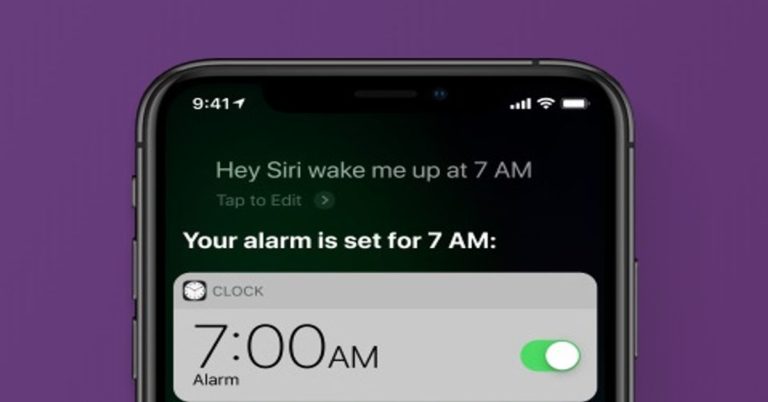
Everyone knows about Siri, regardless of whether they have ever used an Apple product or not. The virtual assistant makes the lives of iPhone and iPad users easy and is known for its sassy replies. While everyone uses Siri to make calls, setting text messages and setting alarms, there are a number of cool things that you can make it do for you. Here, we have made a list of twelve such things you can do on your Apple device with Siri:
In This Article
Find all the aeroplanes flying above you
You can ask Siri about what flights are above you right now and you will get to see a complete list of visible planes. Siri additionally adds flight numbers too in case you wish to know where they are headed. It’s an interesting fun feature!
Ask Siri to remember relationships
You don’t always have to tell Siri to call John Smith. You can tell Siri that “John Smith is my dad.” And next time, you can simply say, “Call Dad,” instead of “Call John Smith.”
Teach it the correct pronunciation of your name
Is Siri pronouncing your name wrong? Teach her the right way to say it. Say “You pronounced my name wrong.” Siri would then ask you how it can pronounce it and you can say the correct pronunciation.
Ask how many calories a food item has
Anyone who is conscious about their weight would love to know that Siri can tell them exactly how many calories a food item has. Try saying, “How many calories are there in a slice of red velvet cake?” Siri will then answer your query.
Post on Facebook and Twitter
Do you often update your Facebook and Twitter profiles? Why don’t you ask Siri to do it instead? Just say “Post to Facebook” or “Post to Twitter”. Siri would then ask you what you wish to post and you can dictate your message to Siri.
Set location based reminders
Although we all know that Siri can set alarms and reminders, what any don’t know is that it can also remind you based on where you are present. Needless to say, you need to have your location turned on for this to work. Then, add locations you would need to your contacts and inform Siri about it. For instance, you would say. “(Contact) is my home” or “Contact is my office”. Going forward, you would be able to give Siri location-based commands like “Remind me to call Joe when I get home.”
Remind you to read content in Safari, Messages, Mail and Notes
There are times when we can’t read our messages and emails because of being pre-occupied. And there is a high chance of forgetting about such messages later on. Well, if you have Siri, you can ask her to remind you to read these messages and emails at a later time. That way, you wouldn’t forget replying to them.
Get directions to various places
Are you heading out to a place and you have no idea where it is? You can ask Siri for directions and it’ll prompt results from the search page. Once you select the option where you want to go, Siri will take you Maps which will direct you to your desired destination.
Do conversions
If you always found it hard to convert meters to yards, or pounds to US dollars, then you should consider Siri to be heaven sent. Just say “Convert 20 Pounds to US dollars,” and Siri will give you the answer.
Do calculations
Do you find maths difficult? Siri can help you out with it. Just say “What is ____ multiplied by ___ added by __ subtracted by ____.” Once you are done, Siri will give you the final answer.
Search for photos using time or location
Instead of opening the gallery in your smartphone and scrolling down to find a picture, you can just tell Siri to do it for you. Try saying, “Find pictures clicked in Chicago,” or “Find pictures clicked last night.” If you want to be more specific, you can say, “Find pictures I clicked in Singapore in October 2017.”
Look for emails
Tired of looking for an email but you can’t seem to find it? Tell Siri to do it for you. Just say, “Find the email with Monday Documents in the subject line” or “Find the email from John Smith.”
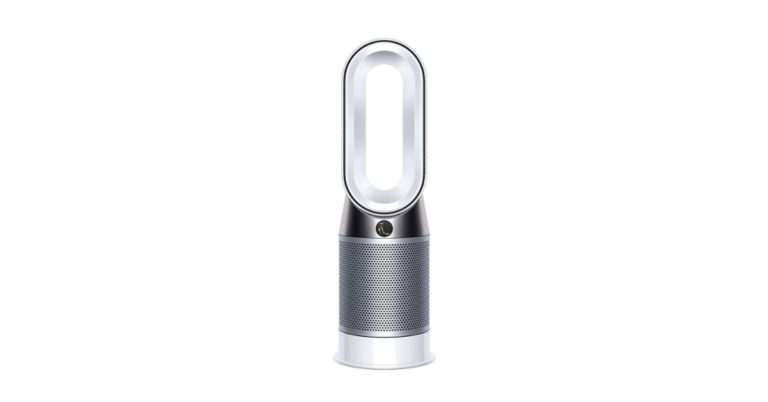
Today, Dyson has launched an air purifier plus heater that it has been working on for quite some time now. The machine is said to automatically detect airborne particles and gases. And then, it simultaneously reports to the new LCD screen and Dyson Link app in real time. Furthermore, this air purifier also has an in-built heating element that will keep your indoors warm during winters. There is a plethora of good characteristics that the Dyson air purifier has. There is a new LCD which shows the particles and gases in the Dyson Pure Hot+Cool air purifier. Over that, a laser measures and identifies fine particles to eliminate them.
Dyson has incorporated 60% more HEPA media into the HEPA filter. To elaborate, they have introduced three times more activated carbon in the filter, which can absorb gases, odours, domestic fumes and VOCs in a better manner. Nine meters of condensed and sealed borosilicate microfiber filter captures 99.95% of particle pollution. The Dyson air purifier provides a better heating performance, too. With the help of thermostat temperature, the heating function switches to stand-by mode when achieved the desired temperature. There is an airflow mode and a fan mode that is featured by Dyson Pure Hot+Cool air purifier.
Also, there is a sleep timer ranging from 15 minutes to 9 hours. In addition to this, there is an Air Multiplier technology and 350 degrees oscillation that projects air around the whole room in a proper way.
To speak of the diffused mode, baffle in the amplifier moves to block the front aperture, and diverts through the rear of the annular loop at an angle of 45 degrees. A wider aperture leads to a diffused airflow that uses less energy and generates less noise. The Dyson Pure Hot+Cool air purifiers are available nationally via Dyson Demo stores. When it comes to online shopping, you can find the Dyson Pure hot+cool air purifier on Dyson’s official website, Amazon and Flipkart.
It comes in white/silver colour and iron/blue colour and is priced at Rs 52,900. There is a limited period warranty of up to two years. Dyson has tied up with various banks in order to offer zero cost EMI options to consumers across all its channels.
The latest phone from Vivo, the V15 Pro’s full specs and price has been leaked online. And according to the latest leak we see that most of the phone’s specs are similar to what reports were stating about the phone earlier.
According to this leak the V15 Pro will be sporting a 6.39-inch Super AMOLED display that will come with full HD+ resolution. The screen won’t have a notch on it and unlike 2018 that saw the rise of notched phone displays, 2019 will see the coming of new notch-less phones. And the Vivo V15 Pro is no exception, its display is advertised as ‘Ultra FullView Display’.
According to the Geekbench listing, Vivo V15 Pro will have a Snapdragon 675 SoC under its hood. And with the SD 675, it could be the first phone with that processor to be launched in India. Also, the phone will have 6GB RAM and it might have an internal storage of 128GB. It will also have an microSD card slot for additional storage.
The V15 Pro will have a 32MP front camera and will have a triple rear camera setup with a humongous 48MP primary sensor paired with an 8MP and 5MP sensors. This will come with AI support for clicking pictures. According to rumours, it could have Samsung’s ISOCELL GM1 as its primary camera sensor. This is already seen on other smartphones like the Samsung Galaxy A8,Redmi Note 7 and Huawei Nove 4. The Vivo V15 Pro is the successor of the V11 Pro which had a 3,400mAh battery, but the V15 Pro is expected to have a larger battery than its predecessor. If rumours are to be believed it will sport a 3,700mAh non-removeable battery. It is also expected to be equipped with support for dual-engine fast charging.
Talking about the price the leaks claim that the Vivo V15 Pro will be priced somewhere between $350 (Rs 25,000) and $460 (Rs 33,000). While its predecessor the V11 Pro with 6GB RAM + 64GB storage is currently priced at Rs 23,990.
Vivo might launch the Vivo V15 Pro alongside Vivo V15. But there are no reports or information available on the specs of the V15. It is estimated that it could be priced between $280 (Rs 20,000) and $350 (Rs 25,000).
These phones are to be launched in India on 20th February this year, but their pre-orders might start as early as 15th February, 2019.
Technology giant Google has announced that its email service, Gmail, will now be able to detect over 100 million more spam emails every day. Google further said that it will be able to do this because of the recent integration of TensorFlow, which has the ability to catch spammers who may slip through Gmail’s scanning technology. With the implementation of TensorFlow, the popular email service has been able to block messages that were image-based, emails that came with hidden embedded content and those that came from domains that are relatively new.
For those unaware, TensorFlow is an open-source machine learning framework that was developed and Google and it was officially launched in 2015. Over the year, the technology has grown to become a service that is largely popular with developers. According to Google, for Gmail, recognising and blocking spam message has been a very challenging task considering how it has constantly been evolving over the last few years.
Google said that although it can successfully block 99.9% of spam emails with its machine learning, TensorFlow will be able to take care of rest of the 0.1% of it.
Furthermore, since TensorFlow has an open-source nature, any fresh community-based research for fighting spam in a better manner will be implemented very easily. To put it simply, TensorFlow will enhance the machine learning efforts that are being made by Google, so that not as many engineers will be needed to ensure that the spam-protection features of Gmail are working as they well as they should.
Google has said on its blog, “Within Gmail, we’re currently experimenting TensorFlow in other security-related areas, such as phishing and malware, as part of our continuous efforts to keep users safe.”
Speaking about the development to The Verge, Neil Kumaran, product manager of Counter Abuse Technology at Google said, “At the scale, we’re operating at, an additional 100 million is not easy to come by. Getting the last bit of incremental spam is increasingly hard, [but] TensorFlow has been great for closing that gap.”
He also added TensorFlow will personalise spam filters in Gmail and learn from user pattern to provide customised results. This means that what may be spam for you, may not be considered spam for your friend in case they engage with it often.
A new type of emojis have just been added to the emoji’s roaster that will finally end the under-representation of those who are differently abled. The disabilities emojis, as the name suggests, show image-based characters with various disabilities such as hearing aids, wheelchairs, prosthetic limbs, guardian dogs, sign language and more.
These emojis were approved for use by the Unicode Consortium and were welcomed by the disability rights campaigners. And now they will be available on all platforms which choose to support them.
However, the emojis aren’t final yet, and these are still samples and we should mention that they may vary from platform to platform. These emojis bring a lot of variation and representation about people, things, animals, and expressions in general and they will add more diversity to the set of emojis that are already present on various platforms. They can be used on almost all messaging apps and social platforms.
Along with disability emojis, another gaggle of emojis have been added which shows a wider range of gender, colour and ethnicity characters for diversity. Some emojis also show Indian lifestyle and character representation of life in India which include – Sari, Tuk – Tuk, Diya lamp etc. Also, there is a wider range of mixed-gender and ethnicity couples among which the users can choose from.
Furthermore, a new ‘drop of blood’ icon is being introduced which is a period-themed emoji. This was followed after a campaign by a girls’ rights charity that wanted to introduce the emoji so that people would not be ashamed when periods are being talked about.
There will be 59 newly approved emojis which are expected to be released later in the coming months of 2019. Some of the new emojis include a yawning face, racoons, sloths, waffles, falafels, racoons, a pot with South American drink mate. Few days ago, Apple had introduced four new animal faces in their Animojis which shows that emojis and animojis are new way of expressing how one is feeling.
In 2018, the highly anticipated addition of emojis depicting characters with ginger hair dominated the headlines. And with this ever-increasing number of emojis it is getting easier to communicate with emojis while also having fun.
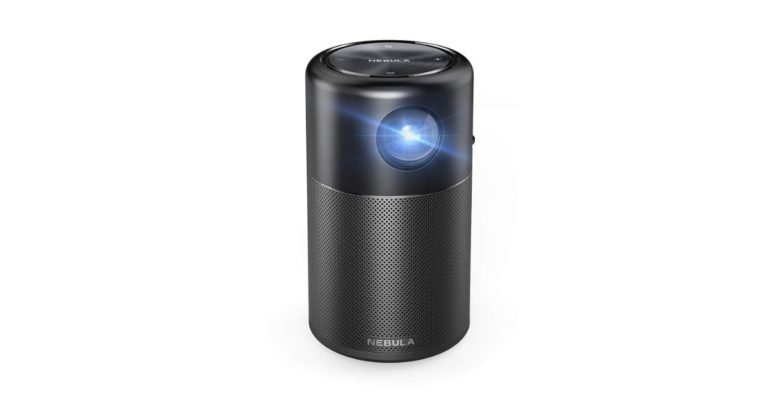
Chinese consumer electronics maker Anker has launched its Nebula Capsule portable projector in India. Anker Nebula Capsule comes with 360-degree surround sound and has 5W speakers that are said to produce an immersive audio experience. The mini portable projector comes with AirPlay and Miracast that enable screen mirroring on it. The Anker Nebula Capsule runs on Android 7.1 Nougat, so you can stream videos on the device from any app that is compatible with it. Th DLP Technology delivers 100 ANSI lumens of picture quality with the help of IntelliBright algorithms.
Since Anker Nebula Capsule is powered by Android 7.1 Nougat, it can run a large number of apps including some popular ones like Netflix and YouTube. Speaking of the DLP Technology, it is expected to let the device project images or videos on any kind of surface. There is also a wireless casting support that allows the projector to mirror the content just the way it is saved in your phone. As we mentioned earlier, this can be rendered successfully with the help of AirPlay and Miracast. The projector sports a 0.2-inch FWVGA 854×480 pixels DLP display technology and provides a lamp life of 30,000 hours.
The Anker Nebula Capsule is powered by a 5,200mAh battery. This battery enables the device to offer four hours of non-stop video playback. There is a dedicated Nebula Connect app available on the App Store and Google Play Store which means that you can operate the device directly from your smartphones. Connectivity options include on Anker Nebula Capsule include Wi-Fi, Bluetooth 4.0, HDMI 1.4, and microUSB port with USB OTG support. In terms of measurement, the Anker Nebula Capsule’s height is 4.72-inches and the diameter is 2.67-inches.
The price of the Anker Nebula Capsule is Rs 31,999 and you can buy it from any retail stores across the country. To recall, Anker recently launched an alarm clock that is called the Soundcore Wakey. This is a rather unusual gadget as it not just wakes you up on time, but also charges your smartphone. It has two five-watt speakers, 10 preset alarms and an FM Radio. It competes with the famous Amazon Echo Spot speaker.
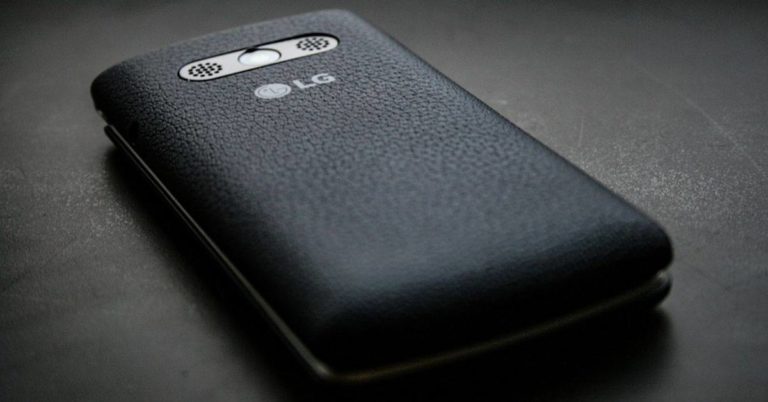
South Korean consumer electronics maker LG is all set to debut its G8 ThinQ smartphone at the upcoming Mobile World Congress 2019, that is scheduled to begin on February 25. The company has officially confirmed this and has also said that its upcoming LG G8 ThinQ smartphone will come with a 3D front camera. The technology company has partnered with German chipmaker Infineon so that it can add the Time-of-Flight (ToF) technology to its front camera setup.
We should mention that with this technology, the front camera of the smartphone will get support for 3D facial recognition and will be able to use enhanced bokeh effect on selfies. The technology will also let a number of augmented reality apps run on the device. According to LG, the G8 ThinQ smartphone will have a “unique and secure verification system without sacrificing camera capabilities”. So, we can expect it to compete directly with the iPhone X models and the Samsung Galaxy S10 lineup.
In its press release, LG has said that the smartphone will not come with a traditional image sensor, but instead, it will feature an Infineon Real 3 sensor chip, that will, in turn, enable the 3D selfie camera experience on the device. The ToF image sensor chip that the company will use has algorithms developed by PMD Technologies that will process 3D point clouds.
The sensor chip is also said to deliver a “new level of front camera capability”. The chip basically throws an infrared light on the subject so that it can be recognised by the camera in 3D form. Furthermore, the sensor of the smartphone does not rely on environmental lighting, so the image recognition rate is more advanced than what we generally see on other devices.
Chang Ma, Senior Vice President and Head of Product Strategy at LG said, “Keeping in mind LG’s goal to provide real value to its mobile customers, our newest flagship was designed with ToF technology from inception to give users a unique and secure verification system without sacrificing camera capabilities. The LG G8 ThinQ featuring ToF will be the optimal choice for users in search of a premium smartphone that offers unmatched camera capabilities.”
Chinese smartphone brand OnePlus has sent out invites for an exclusive, invite-only event which will be held at the upcoming Mobile World Congress (MWC) 2019. The special invite read, “Reimagine the future with OnePlus. Join OnePlus at Ultramarinos where drinks and a taste of the future will be on us. We’ll be celebrating MWC 2019 at this exclusive, invite-only event.”
The cryptic message stated few things which are not known and are yet to be seen. But it is possible that the company might just offer more than just a sneak peek at their upcoming smartphone which will most probably be the OnePlus 7. Some of the OnePlus 7 leaks have already surfaced online so it will be seen if the rumours and the leaks were true or not.
Although closed-door events like the one OnePlus is hosting is not unheard of but they still are rare. Such events not only offer the ‘main-dish’ but also some conceptual project that promises innovation and increases users’ excitement about what the company is developing for the future. Recently, Samsung did something similar in CES 2019 when they held a closed-door event for its partners and vendors showing the exclusive first-look of the Galaxy Flex, which is the name of its foldable phone. But still the Galaxy Flex wasn’t exactly new because the company had given its first look at its developer conference that was held in November 2018. But in case of OnePlus, it remains to be seen if the company will show a new smartphone at the closed door invite-only event.
There might be other projects OnePlus is working on which could see the light of the day this year or the next but it can be said that the OnePlus 7 will be the next smartphone the company will launch in 2019 continuing its line-up. But as stated in its special invite – ‘reimagine the future’, it’s still not sure if the line is aimed at the OnePlus 7. We personally think that the chances of this are highly unlikely as OnePlus has always used its tagline ‘Never Settle’ for its flagship devices. It might be another product from the Chinese smartphone company for which the new tagline is being used. Or, it might just be another one of those OnePlus taglines for their products like they did it with their OnePlus 6T with the in-display fingerprint scanner whose tagline was ‘Unlock the Speed’.
The company is also known to be developing a 5G-enabled smartphone which is not the OnePlus 7. The 5G-enabled phone is going to be a separate phone in itself but the new tagline – ‘reimagine the future’ – does not seem quite fit for it too. So, as of now, it is not known what the company might unveil or announce at MWC 2019. It could be a regular meet-up like it has done in previous years or if not then it could be the unveiling of a new device. February 24 is the date when more news will come about the event from Barcelona. And it would be then that we’ll get to know if it’s an industry defining device or just a marketing propaganda.
Motorola Moto G7 series have been the talk of the town for many months now. The price and specifications of the upcoming smartphones have been speculated in a number of leaks and they have given us a fair idea about what we can expect from the Moto G7 series. The Motorola Moto G7 series, which will come with Moto G7, Moto G7 Plus, Moto G7 Play and Moto G7 Power smartphones is all set to launch today at an event in Brazil. The event is scheduled at 10AM local time, that is 5:30PM IST. Users can watch the live streaming event on Motorola’s social channels.
You can confirm your attendance by going to the Facebook event page that is named ‘O que importa pra você?’ and mark yourself as ‘Going’ or ‘Interested’.
Moto G7 series launch: How to watch the livestream?
If you cannot make it to the launch and want to watch the livestream, you can head to Motorola Brazil’s Twitter handle at because the company will be giving users updates about the live stream just before the launch begins. Also, you can register your name in advance for watching the livestream on the company’s official Brazil website.
Moto G7 series price (expected)
The Moto G7 is expected to launch in the European markets at EUR 300, that is approximately Rs 24,400. The Moto G7 Plus, on the other hand, is expected to be priced at EUR 360, that is approximately Rs 29,300.
The Moto G7 Play is claimed to go on sale at EUR 149, that is approximately Rs 12,100. On the other hand, the expected price of the Moto G7 Power is EUR 209, which is approximately Rs 17,000.
Moto G7 specifications
Speaking about the specifications, the Moto G7 is reported to sport a 6.24-inch full HD+ with a resolution of 1,080×2,270 pixels. It is expected to be powered by octa-core Qualcomm Snapdragon 632 SoC and come with 4GB RAM and 64GB internal storage. Reports suggest that the smartphone will pack a 3,000mAh battery and feature a dual rear camera setup that includes a 12MP and a 5MP sensor. The selfie camera on the front will come with an 8MP sensor.
Moto G7 Power specifications
Coming to Moto G7 Power, it is said to sport a 6.2-inch HD+ display and will be powered by an octa-core Snapdragon 632 SoC. The smartphone is expected to house 3GB of RAM coupled with 32GB internal storage. It is supposed to pack the largest battery among all the other phones – 5,000mAh. The rear camera of Moto G7 Power will reportedly come with a 12MP sensor and the front camera will have an 8MP sensor.
Moto G7 Play specifications
Speaking of Moto G7 Play, it will reportedly sport a 5.7-inch HD+ 720X1,512 display and be powered by octa-core Snapdragon 632 SoC. It is said to come with a 2GB RAM coupled with 32GB internal storage. The single camera setup of the smartphone is expected to include a 13MP sensor and the front camera will have an 8MP sensor. The Moto G7 Play is going to run on Android 9.0 Pie.
Moto G7 Plus specifications
The last gadget in this series is the Moto G7 Plus. The handset is said to come with a 6.24-inch display and house 6GB of RAM and 128GB of internal storage. The device will reportedly come with a dual rear camera setup that is going to include 16MP and 5MP sensors. The Moto G7 Plus is expected to house a 3,000mAh battery and have support for 27W TurboPower charging.
Samsung’s upcoming 2019 Galaxy S10 flagship smartphones have been making headlines since the months now and many concepts have surfaced online which assure that ‘this’ is what the phone would look like and ‘these’ are the features it will have. But keeping all those concepts and theories aside the Galaxy S10 may be the best smartphone of 2019 because the South Korean technology giant is making sure to put all top-notch features in its upcoming flagship smartphone.
Needless to say, people are excited about the tenth iteration of the Galaxy S series getting launched. Even before the smartphones have been launched, it is being speculated that they will make it on the list of best smartphones of 2019.Samsung Galaxy S10 lineup is scheduled to be launched at the company’s Unpacked event that will be held in San Francisco on February 20.
And now, a new leak has surfaced online according to which, Samsung will also be launching Galaxy Buds which will compete directly with Apple’s Airpods. These are seen as Samsung Gear Icon X wireless earbud’s upgrade. The leaked render of the earphones that was first shared by technology website WinFuture shows us what to expect. The leaked image shows the Galaxy Buds in their case which is placed on top of Galaxy S10. On closer look it can be seen that a green charging indicator on the Bud’s case it lit in the image, which confirms that the Galaxy Buds is charging. This confirms that the Buds will come with wireless charging and also that the Samsung Galaxy S10 will come with reverse wireless charging which earlier was seen on the Huawei Mate 20 Pro. Reverse wireless charging is a feature which lets the user charge a device which supports wireless charging by placing it on the back panel of Samsung Galaxy S10.
The wireless earphones are not shown in their full view, we can only see the Galaxy Buds from a certain angle, but it can be seen that they will not have the large wings on them like the Gear Icon X had. It is not known how the earphones will be able to stay inside the ear without falling off without the wings. Having said that, we should mention that Apple’s Airpods does a fine job of staying inside the ear, so Samsung will have to ensure that its Galaxy Buds are able to do it too.
Samsung Galaxy Buds are expected to be priced at $169 (approximately Rs 12,000) and they are expected to be launched alongside the Galaxy S10 smartphone during the Galaxy Unpacked event.
Xiaomi has launched a non-gadget this time. This offbeat device is called Xiaomi Mi Men’s Sports Shoes 2. The shoes have been incorporated with Uni-Moulding Technology which helps it to absorb shocks. At the same time the shoes are slip-resistant and water-resistant. One of the key highlights is that the shoes can be washed in a washing machine without causing any damage. There are layers that have been combined in order to include synthetic rubber outsoles, vacuum press midsoles.
Also, the combined layers include TPU midsole balancing patch, cushion patch and PU supporting layer. The Xiaomi Mi Men’s Sport Shoes 2 has a 10-fishbone structure that, according to Xiaomi, provides support for the arch. At the same time, the fishbone structure helps maintaining balance and reducing chances of sprain. The reason behind the Xiaomi Mi Men’s Sport Shoes 2 being washing machine-washable is, that it is made of mesh fabric. The shoes are available for sale via Xiaomi’s crowdfunding platform at an introductory price of Rs 2,499.
The Xiaomi Men’s Sports Shoes are touted to have been manufactured with the help of 5-in-1 Uni Moulding Technology. Such kind of production is cost-effective and involves combining moulds of different material into a single layer.
The Xiaomi Mi Men’s Sports Shoes come in three colour options—they include black, blue, and grey. The black colour option has a uniform paint of black till the sole. On the other hand, the blue and grey versions have a white sole. The maximum size of these sports shoes is 11 number (UK) and as mentioned, can be bought through the website.
Xiaomi has set a target for selling as many as 5,000 units and the listing for the Mi Men’s Sports Shoes 2 will be live for five days. The original pricing of the Xiaomi Mi Men’s Sports Shoes is Rs 2,999. This price will eventually be established for the product from its current price that is Rs 2,499.
Nokia 9 PureView is one among the most-awaited smartphones from HD Global, and the company recently confirmed that the device will be launched on February 24 in Barcelona, a day before the Mobile World Congress 2019 begins. As the date of the launch of the Nokia 9 PureView draws closer, more and more reports about the device are surfacing online.
And now, the official press renders of the Nokia 9 PureView smartphone have been leaked in a report by 91mobiles and it gives away the key design details of the upcoming flagship device. In the renders, it can be seen that the upcoming smartphone will come with a thick bezel on the top and will also have a broad chin. At a time when most smartphones are going bezel-less and notch-less, this can be termed as a little last season.
The top right corner of the smartphone has the Nokia branding on it, and right next to it the selfie camera of the device is housed. Towards the centre of the top bezel is the earpiece of the upcoming Nokia smartphone and towards the left, the usual set of sensors are placed. Nokia 9 PureView can be seen with an in-display fingerprint scanner that can be used to unlock the device.
Speaking of the back panel of the Nokia 9 PureView, the smartphone can be seen to house five cameras, an LED flash and an autofocus module in a hexagonal pattern. One of the sensors is placed right in the middle of this hexagonal pattern, and it also has a Zeiss branding on top of it. The back panel of the device also has the Nokia and Android One brandings on it.
So this confirms that like all other Nokia smartphones by HMD Global, Nokia 9 Pureview will be a part of Google’s Android One programme, which means that it will get timely Android updates and security patches for the next two and three years respectively.
Another thing worth noticing in the renders is that Nokia 9 PureView mobile comes with curved edges on its back panel, which will definitely help users in gripping the smartphone and assist in one-handed usage. The renders show power and volume buttons placed on the right edge of the smartphone.
According to previous reports, Nokia 9 PureView will feature a 5.99-inch display with 2K resolution and will be powered by Qualcomm’s Snapdragon 855 SoC coupled with 6GB of RAM and 128GB of internal storage.
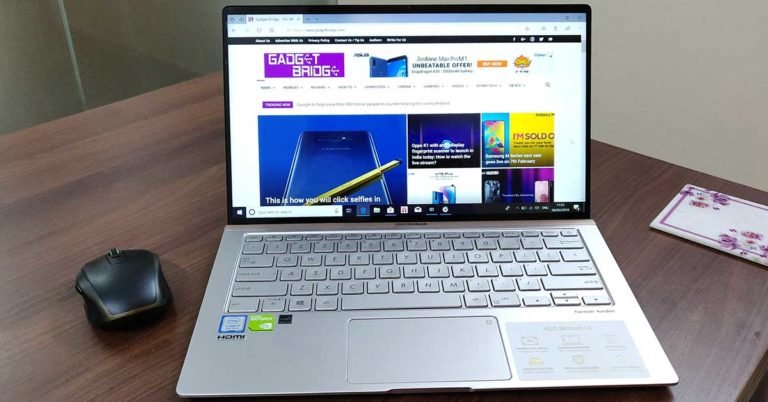
Asus’s Zenbook series has been know for its stylish design, great looks and exceptional performance throughout the years. This time it is no different. New range of Asus Zenbooks were launched couple of months ago globally and now they are available in India. The size ranges from 13 to 15-inches and we got the mid version, which is the 14-inch variant over to the office for review. We took this nifty laptop out for a spin and this is what we could make of the new ultrabook. This is our review of the Asus Zenbook 14.
In This Article
Design And Display
So, before we go ahead, let us start by saying that the Asus Zenbook 14 is one of the smallest notebooks in the Indian market, which has a graphic card within a small frame. The laptop is smaller than an A4 printing sheet when it comes to its width. Out of the box, the first thing you will notice besides its slim body is the 14-inch full HD display. It is almost bezel-less and gives you a wide viewing experience. The screen to body ratio is at a high 92 percent.
The display is ravishing and one can watch it for hours. Though the laptop is small, the display does not seem to be very small, even when you are watching it with your pal or spouse at home. Viewing angles are great and the text on screen is crisp. The ghosting is minimal and one can rarely see it stutter, even when playing demanding games.
We are reviewing the silver version of the laptop ,which also has Blue as another colour option. The metal body is smooth and you can see brushed aluminum all around it. Lift the top lid (which also has Asus’s branding on it in rose pink) and you will notice that the lower part lifts a little. Yes, it does by 3 degrees. The LCD panel has an ergolift hinge setup that raises the bottom part of the laptop for a more ergonomic feel. This actually helps, if you are in the business of typing a lot.
The Asus Zenbook 14 features a large chicklet type backlit keyboard (has three brightness levels) with slightly raised keys. There is a full numeric keypad also hidden in this gem. Where is it, you ask? It is embedded on the trackpad, which doubles up as a touch sensetive numeric keypad. Talking about which there is a layer of glass on the trackpad. To access the numpad, one has to press the numpad button located on the top right of the trackpad.
Asus has placed a mesh style golden layer above the keyboard with the Zenbook branding on it, adding to the show. Users will find a microSD, USB 2.0 and a 3.5mm audio port on the right side of the laptop. While on the left, Asus Zenbook 14 sports a power, HDMI, another regular USB 3.1 as well as USB type C ports. Twin Harman Kardon speakers are neatly tucked under the front side of the laptop. These are somewhat down-firing, so that users get better resonance.
The keyboard also has all the usual multimedia functions, with the power button located on the top right. An HD web camera has also been thrown in to the mix, which can face unlock this laptop. All in all, at just 15.9 mm slimness the Asus Zenbook 14 is a great machine to look at and gets full marks in the design department.
Performance
Now on to the fun part. The Asus Zenbook 14 is an absolute power house, when it comes to under the hood performance. This laptop has Intel Core i7 8th gen 8565U CPU with clock speed of 1.8GHz. This is coupled with 8GB RAM and 512GB SSD storage. Graphics are powered by NVIDIA GEFORCE MX150 graphics card, which come into play when you are playing a game or are using a render software. Otherwise, for normal usage this notebook also has Intel’s UHD 620 on board graphics.
So why the combination of graphic units? Simple, to minimize battery consumption. If the discreet graphic card is being used all the time, the battery will drain out rather quickly.
For faster internet speed, Asus has also put in a Gigabit-class WiFi chip in the Asus Zenbook 14. This is 12 times faster than the regular 802.11n setup. Bluetooth v5 has also been added and the company claims the battery can last up to 13 hours. However, on our tests which did involve gaming, working on word documents, browsing the internet and video chatting. The battery lasted for about 8 hours. Which is really great for a machine this small.
The sound of the Asus Zenbook 14 is also not bad. Harman Kardons do perfect justice to the notebook and the speaker set is pretty loud for the size. Voice clarity is good and bass is somewhat there. Movie audio experience with them was not bad at all. Working on the notebook is not shabby either, the ergonomics play in its favour and we loved the large trackpad on it. However, we are not a big fan of having the numpad on it, since at times we did slip and slide the pointer away while pressing a numeric key.
Asus Zenbook 14 comes with Windows 10 preloaded and has minimal bloatware. A lot of the 512GB SSD is available to work with. Talking about which, the SSD makes this laptop start and shut down in a jiffy. Software load quickly and we didn’t have any problems with it. Games do take some time, since there is only 8GB RAM available on this device, however this laptop is not from Asus’s gaming series. Even if it can run games like PUBG, DOTA 2, CS:GO etc with ease.
Verdict and Final Thoughts
On PC Mark 10 the Asus Zenbook 14 scored 6553 points on the productivity test. Which puts it up in the top of the pack. We are sure if it was the 16GB version, we would have gotten even more marks in the test. However, this is not bad for a laptop that weighs just a kilogram and is extremely portable. In the box users also get a small pancake size charger and a carry sleeve, along with a USB to Ethernet adaptor, since adding an Ethernet port would have meant increasing the laptops size for Asus.
Overall, we loved the experience this notebook brings with it. We were not able to find too many flaws in this laptop, except its exuberant asking price. If you can afford it (Rs 89,990) and want the best Windows experience, go for it, as it will not only get to you that second look, it will last you for a long time too.
One can make an Amazon Prime Account by paying a subscription fee and trust us when we say, it has a lot of benefits. If you have an Amazon Prime subscription account, then for the first 30 days you get a free trial. Initially, you need not pay a subscription fee. If in case you have used this free trial, you need to pay a subscription fee. Per month subscription fee costs Rs 129. On the other hand, the yearly subscription costs Rs 999. Today, we will guide you through a few steps on how to make an Amazon Prime account. Here are the steps for your assistance:
Create an Amazon account in case you don’t have one. For this you need to go to Amazon’s official website, ‘Amazon.com’ or ‘Amazon.in’ and click on create account. You can also create an account on Primevideo.in.
Then fill in the details that are asked for, within the blanks. This will include you email ID, password and credit/debit card details.
After you have filled in the details, click on finish
Now you can create an Amazon prime account. For this, sign in to your Amazon account. You will find the ‘Sign in to your Account’ tab at the top right-hand corner of the home page of Amazon.com
Scroll down to ‘Prime Membership’
From here on, you can start with your free trial. And when you start your Amazon Prime subscription, then you can enjoy a range of new content, free one or two day deliveries. The first purchase that you make will be free of cost, too. Also, you will be able to avail special Prime deals, that are very useful on Amazon Prime Day or Black Friday sales.