






 Mi MIX Fold specifications
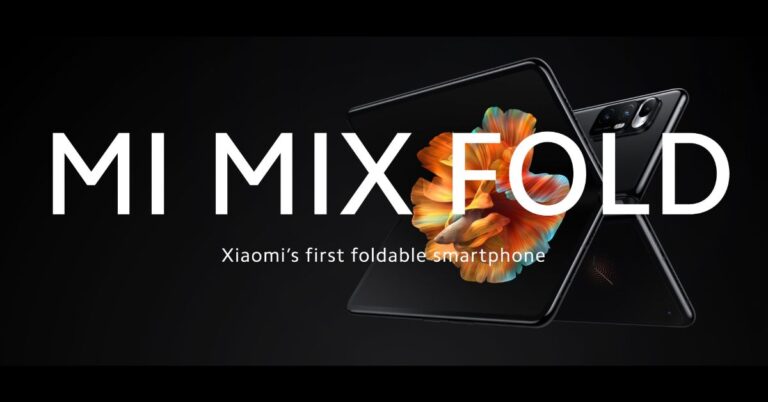
Xiaomi has officially forayed into the flexible phone market with the debut of Mi MIX Fold. The market is largely dominated by three companies Samsung, Motorola and Huawei.
Xiaomi’s Mi MIX Fold adorns a similar form factor as the Samsung Galaxy Z Fold 2, which folds inwards. The display inside features an 8.01-inches OLED screen with 2,480 x 1,860 OLED. However, the display supports a 60Hz refresh rate panel in contrast to Z Fold 2 and the Mate X2.
Mi MIX Fold specifications
Xiaomi has officially forayed into the flexible phone market with the debut of Mi MIX Fold. The market is largely dominated by three companies Samsung, Motorola and Huawei.
Xiaomi’s Mi MIX Fold adorns a similar form factor as the Samsung Galaxy Z Fold 2, which folds inwards. The display inside features an 8.01-inches OLED screen with 2,480 x 1,860 OLED. However, the display supports a 60Hz refresh rate panel in contrast to Z Fold 2 and the Mate X2.
 The outer display offers a 6.5-inch OLED display with 2,520 x 840 pixels of resolution and a 27:9 aspect ratio. Unlike the primary one, this supports a 90Hz refresh rate panel.
Under the hood, there is the top of the line Qualcomm Snapdragon 888 processor paired with up to 16GB of RAM and 512GB of storage options
The Xiaomi’s foldable phone carries four speakers fine-tuned by Harman Kardon and is further backed by a 5,020 mAh battery having 67W fast charging support. The Mi MIX Fold also features a desktop mode to give it a feel of a traditional desktop UI, therefore, turning it into a mini laptop.
Here Xiaomi has given a large camera module similar to the Mi 11 Ultra having a small secondary panel. On the front, there are three camera sensors including a 108-megapixel primary sensor, 13-megapixel ultra-wide sensor and an 8-megapixel ‘liquid lens’. The latter one works as a macro lens and doubles up as a telephoto lens offering a 3x optical zoom. According to the company the 8-megapixel ‘liquid lens’ is powered by its own Surge C1 ISP that helps in quick focusing as well as optimised White Balance with a higher dynamic range.
The company did not talk about the hinges, but Mi MIX Fold is claimed to withstand up to 1 million bends.
For the latest gadget and tech news, and gadget reviews, follow us on Twitter, Facebook and Instagram. For newest tech & gadget videos subscribe to our YouTube Channel. You can also stay up to date using the Gadget Bridge Android App.
The outer display offers a 6.5-inch OLED display with 2,520 x 840 pixels of resolution and a 27:9 aspect ratio. Unlike the primary one, this supports a 90Hz refresh rate panel.
Under the hood, there is the top of the line Qualcomm Snapdragon 888 processor paired with up to 16GB of RAM and 512GB of storage options
The Xiaomi’s foldable phone carries four speakers fine-tuned by Harman Kardon and is further backed by a 5,020 mAh battery having 67W fast charging support. The Mi MIX Fold also features a desktop mode to give it a feel of a traditional desktop UI, therefore, turning it into a mini laptop.
Here Xiaomi has given a large camera module similar to the Mi 11 Ultra having a small secondary panel. On the front, there are three camera sensors including a 108-megapixel primary sensor, 13-megapixel ultra-wide sensor and an 8-megapixel ‘liquid lens’. The latter one works as a macro lens and doubles up as a telephoto lens offering a 3x optical zoom. According to the company the 8-megapixel ‘liquid lens’ is powered by its own Surge C1 ISP that helps in quick focusing as well as optimised White Balance with a higher dynamic range.
The company did not talk about the hinges, but Mi MIX Fold is claimed to withstand up to 1 million bends.
For the latest gadget and tech news, and gadget reviews, follow us on Twitter, Facebook and Instagram. For newest tech & gadget videos subscribe to our YouTube Channel. You can also stay up to date using the Gadget Bridge Android App. 



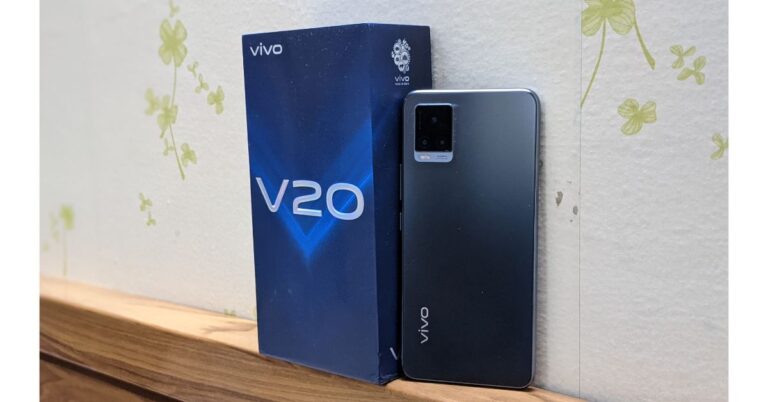
 The design is the best part about the phone. We have the Midnight Jazz colour variant but you can also choose from the Moonlight Sonata and Sunset Melody. The phone changes its hue from grey to blue and surprisingly the phone is not slippery at all, as most of the phones these days are quite slippery but not in the case of V20. The rear of this beauty is resistant to scratches and the anti-fingerprint coating does not catch smudges. However, the company still provides a clear case that protects it from accidental falls. That is good!
 The device is also really lightweight and slim and bears a rectangular rear camera module, which makes the phone wobble a little when placed on a flat surface. The phone has a plastic frame with a glossy finish and the power button here is textured that doubles up as a fingerprint scanner with a volume rocker just above it. These are well placed so one can reach there with no trouble using one hand. We think the company has nailed it in terms of design, but we wish Vivo V20 had an IP rating seeing that the much cheaper phone these days come with an IP certification for water and dust resistance.
 Moving to the front, the phone has a 6.44-inch full-HD+ AMOLED display with 1,080×2,400 pixels of resolution and a 20:9 aspect ratio. The device has an in-display fingerprint scanner that is fast, accurate and instant except when your hands are wet or greasy. In some cases, it demands a little bit of extra pressure to get it working. The Vivo V20 display is the best thing about this smartphone. The screen refreshes at 60Hz, which could come as a disappointment for some but we did not mind it because the AMOLED display is really good. A higher refresh rate could have been even nicer.
The AMOLED display here delivers vibrant colours, deeper blacks and the brightness is sufficient too, thanks to the incredible contrast ratio. At the top of the display, there is a U-shaped front camera module. It is also worth noting that this phone has slightly pronounced bezels especially at the bottom, but apart from this the Vivo V20 display is one of the best things about the device.
The professional colour mode in the display settings offers moderately muted hues therefore the human subjects look more natural. Under this setting, one can also customise screen colour in the display settings itself. Like we said before the phone lacks Gorilla glass protection and to compensate the company has provided a screen protector pre-applied. All in all, the display and the design are pretty much stellar and neat.
Moving to the front, the phone has a 6.44-inch full-HD+ AMOLED display with 1,080×2,400 pixels of resolution and a 20:9 aspect ratio. The device has an in-display fingerprint scanner that is fast, accurate and instant except when your hands are wet or greasy. In some cases, it demands a little bit of extra pressure to get it working. The Vivo V20 display is the best thing about this smartphone. The screen refreshes at 60Hz, which could come as a disappointment for some but we did not mind it because the AMOLED display is really good. A higher refresh rate could have been even nicer.
The AMOLED display here delivers vibrant colours, deeper blacks and the brightness is sufficient too, thanks to the incredible contrast ratio. At the top of the display, there is a U-shaped front camera module. It is also worth noting that this phone has slightly pronounced bezels especially at the bottom, but apart from this the Vivo V20 display is one of the best things about the device.
The professional colour mode in the display settings offers moderately muted hues therefore the human subjects look more natural. Under this setting, one can also customise screen colour in the display settings itself. Like we said before the phone lacks Gorilla glass protection and to compensate the company has provided a screen protector pre-applied. All in all, the display and the design are pretty much stellar and neat.
 Vivo’s custom OS offers some interesting features like the ultra game mode, which helps in optimising system resources, locks notifications therefore gaming improvement. Just like Motorola smartphones, you can activate the flashlight by just shaking the phone however it does not turn it off. Also, the revamped power menu on the Android 11 takes up a longer time to activate than normal on this phone. Unlike its previous generation of Android skin, it doesn’t get a lot of bloatware or Ads popping up.
Alright, now it’s time to talk about the cameras. Vivo claims to offer professional-grade photography features to its V-series of smartphones. Vivo V20 features a triple camera setup at the back. You get a 64-megapixel Samsung ISOCELL GW1 primary sensor with an f/1.89 aperture. Further assisted by an 8-megapixel ultra-wide-angle lens with f/2.2 aperture, a 2-megapixel monochrome sensor with an f/2.4 aperture. While on the front it comes with a 44-megapixel selfie sensor with an f/2.0 aperture.
Starting with the front first, Vivo V20 comes with an eye autofocus feature which makes sure that the eye which is closest to the camera is always tracked. It should be noted that this functionality is available on the front as well as the rear cameras. The front 44-megapixel selfie sensor’s output and the quality are really amazing. But one of our favourite features is that the camera app has dual video modes, which activate when we click on an 8-shaped or infinity icon.
So basically what it does is also activates the rear camera as well as the front one at the same time. That is quite an impressive feature for the vloggers. In addition to this, you can also opt for the picture in picture mode while also offering the lens guide option. We preferred video shooting in the ultra-wide mode offering more frames while recording video. You can also choose the dual rear mode to show a video in standard and ultrawide definition.
Not only this the front camera also gives you the option to record selfie videos in Slow Motion. The selfie camera also has a portrait mode, which gives you the option of applying filters to your selfies. You can apply these filters before taking a selfie, too.
Vivo’s custom OS offers some interesting features like the ultra game mode, which helps in optimising system resources, locks notifications therefore gaming improvement. Just like Motorola smartphones, you can activate the flashlight by just shaking the phone however it does not turn it off. Also, the revamped power menu on the Android 11 takes up a longer time to activate than normal on this phone. Unlike its previous generation of Android skin, it doesn’t get a lot of bloatware or Ads popping up.
Alright, now it’s time to talk about the cameras. Vivo claims to offer professional-grade photography features to its V-series of smartphones. Vivo V20 features a triple camera setup at the back. You get a 64-megapixel Samsung ISOCELL GW1 primary sensor with an f/1.89 aperture. Further assisted by an 8-megapixel ultra-wide-angle lens with f/2.2 aperture, a 2-megapixel monochrome sensor with an f/2.4 aperture. While on the front it comes with a 44-megapixel selfie sensor with an f/2.0 aperture.
Starting with the front first, Vivo V20 comes with an eye autofocus feature which makes sure that the eye which is closest to the camera is always tracked. It should be noted that this functionality is available on the front as well as the rear cameras. The front 44-megapixel selfie sensor’s output and the quality are really amazing. But one of our favourite features is that the camera app has dual video modes, which activate when we click on an 8-shaped or infinity icon.
So basically what it does is also activates the rear camera as well as the front one at the same time. That is quite an impressive feature for the vloggers. In addition to this, you can also opt for the picture in picture mode while also offering the lens guide option. We preferred video shooting in the ultra-wide mode offering more frames while recording video. You can also choose the dual rear mode to show a video in standard and ultrawide definition.
Not only this the front camera also gives you the option to record selfie videos in Slow Motion. The selfie camera also has a portrait mode, which gives you the option of applying filters to your selfies. You can apply these filters before taking a selfie, too.









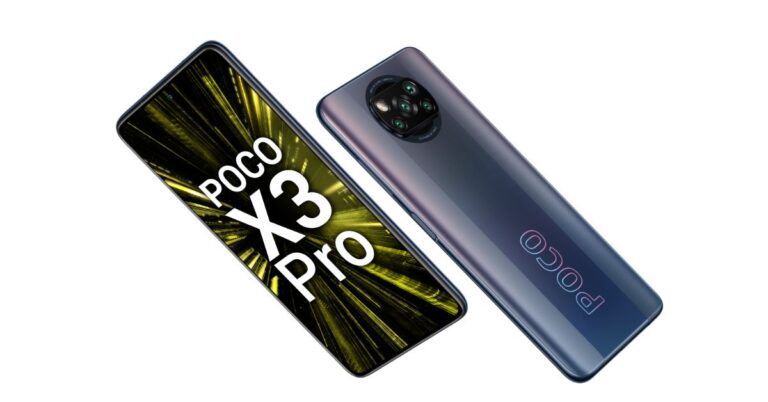
 Poco X3 Pro specifications
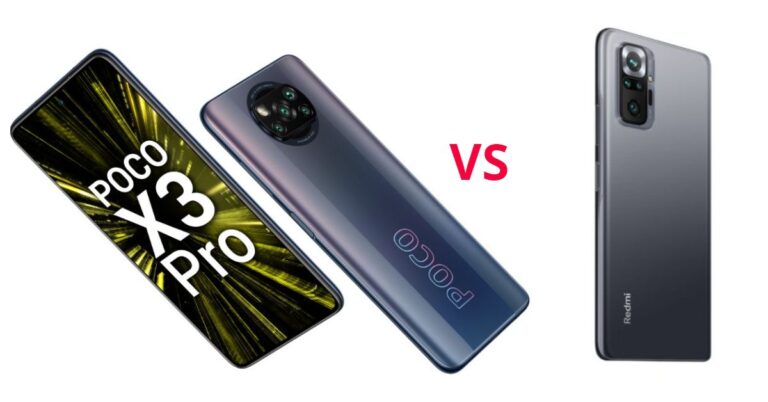
Speaking of the technical specifications, Poco X3 Pro features a 6.67-inch full-HD+ dot display with 1,080×2,400 pixels of resolution and a 20:9 aspect ratio. It supports a 120Hz refresh rate, 240Hz touch sampling rate and a peak brightness of 450nits protected with Gorilla Glass 6. The mobile phone runs MIUI 12 for Poco based on Android 11 and is powered by 7mm octa-core Qualcomm Snapdragon 860 SoC. This is paired with Adreno 640 GPU for graphics. It packs up to 8GB RAM and 128GB of storage, which can be expanded by up to 1TB with the use of a microSD card.
The Poco X3 Pro sports a quad rear camera setup that includes a 48-megapixel primary Sony IMX582 sensor with an f/1.79 aperture. Furthermore, there is an 8-megapixel ultra-wide-angle lens with a 119-degree field of view and f/2.2 aperture, as well as two 2-megapixel macro and a depth sensor. For selfies, there is a 20-megapixel front-facing camera with an f/2.2 aperture.
The device supports 4K video recording at 30/60fps and comes with several features including smooth video zoom, focus peaking and AE/AF lock along with Vlog mode, to capture high-res videos in great quality for content creation and social media stories. In addition, it will come with features such as Night mode 2.0, Long exposure, Clone Photo and Video mode.
The Poco smartphone boasts a massive 5,160mAh battery with MMT tech, a split charge technology that allows better charge time in a shorter span of time. It also protects the battery health cycle enabling it to last longer. The device strides in with an in-box fast 33W Type-C charger and supports a USB PD charge at 26W. The Poco X3 Pro is paired with a dual-stereo speaker setup, high-res audio and is aptX HD certified. The phone comes with IP53 certification for resistance against dust and water ingress.
For connectivity, there is 4G LTE, Wi-Fi 802.11ac, Bluetooth 5.0, GPS/ A-GPS, NFC, IR Blaster, and a headphone jack. The smartphone comes with LiquidCool Technology 1.0 Plus to keep the phone cool when playing games for long. The sensors onboard include an accelerometer, ambient light, gyroscope, infrared (IR), and a proximity sensor in addition to a side-mounted fingerprint sensor.
For the latest gadget and tech news, and gadget reviews, follow us on Twitter, Facebook and Instagram. For newest tech & gadget videos subscribe to our YouTube Channel. You can also stay up to date using the Gadget Bridge Android App.
Poco X3 Pro specifications
Speaking of the technical specifications, Poco X3 Pro features a 6.67-inch full-HD+ dot display with 1,080×2,400 pixels of resolution and a 20:9 aspect ratio. It supports a 120Hz refresh rate, 240Hz touch sampling rate and a peak brightness of 450nits protected with Gorilla Glass 6. The mobile phone runs MIUI 12 for Poco based on Android 11 and is powered by 7mm octa-core Qualcomm Snapdragon 860 SoC. This is paired with Adreno 640 GPU for graphics. It packs up to 8GB RAM and 128GB of storage, which can be expanded by up to 1TB with the use of a microSD card.
The Poco X3 Pro sports a quad rear camera setup that includes a 48-megapixel primary Sony IMX582 sensor with an f/1.79 aperture. Furthermore, there is an 8-megapixel ultra-wide-angle lens with a 119-degree field of view and f/2.2 aperture, as well as two 2-megapixel macro and a depth sensor. For selfies, there is a 20-megapixel front-facing camera with an f/2.2 aperture.
The device supports 4K video recording at 30/60fps and comes with several features including smooth video zoom, focus peaking and AE/AF lock along with Vlog mode, to capture high-res videos in great quality for content creation and social media stories. In addition, it will come with features such as Night mode 2.0, Long exposure, Clone Photo and Video mode.
The Poco smartphone boasts a massive 5,160mAh battery with MMT tech, a split charge technology that allows better charge time in a shorter span of time. It also protects the battery health cycle enabling it to last longer. The device strides in with an in-box fast 33W Type-C charger and supports a USB PD charge at 26W. The Poco X3 Pro is paired with a dual-stereo speaker setup, high-res audio and is aptX HD certified. The phone comes with IP53 certification for resistance against dust and water ingress.
For connectivity, there is 4G LTE, Wi-Fi 802.11ac, Bluetooth 5.0, GPS/ A-GPS, NFC, IR Blaster, and a headphone jack. The smartphone comes with LiquidCool Technology 1.0 Plus to keep the phone cool when playing games for long. The sensors onboard include an accelerometer, ambient light, gyroscope, infrared (IR), and a proximity sensor in addition to a side-mounted fingerprint sensor.
For the latest gadget and tech news, and gadget reviews, follow us on Twitter, Facebook and Instagram. For newest tech & gadget videos subscribe to our YouTube Channel. You can also stay up to date using the Gadget Bridge Android App. 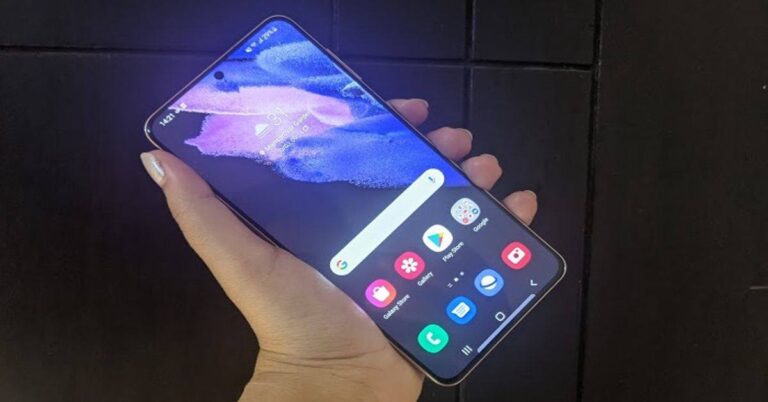
 The same rose gold coloured metallic frame outlines the device on all its four edges. While the right edge houses the Power and Volume Rocker buttons, the bottom edge has the SIM tray, Type-C port, the microphone and the speaker grille. We should mention that in spite of the fact that the device is so upscale, the back panel of the smartphone is made of polycarbonate.
The front panel of the smartphone is dominated by its 6.7-inch display that has a selfie camera housed in a cut-out hole right below the speaker. Single handed usage on the device was simple in spite of its big form factor. Samsung Galaxy S21+ packs a 4,800mAh battery and weighs 200 grams. The smartphone also comes with IP68 rating, which basically means that it has water and dust resistance. It is worth noting that the device comes without a charger in the box and headphones are not included either. There is, however, a Type-C cable, but you would need a Type-C charger if you wish to use it.
The same rose gold coloured metallic frame outlines the device on all its four edges. While the right edge houses the Power and Volume Rocker buttons, the bottom edge has the SIM tray, Type-C port, the microphone and the speaker grille. We should mention that in spite of the fact that the device is so upscale, the back panel of the smartphone is made of polycarbonate.
The front panel of the smartphone is dominated by its 6.7-inch display that has a selfie camera housed in a cut-out hole right below the speaker. Single handed usage on the device was simple in spite of its big form factor. Samsung Galaxy S21+ packs a 4,800mAh battery and weighs 200 grams. The smartphone also comes with IP68 rating, which basically means that it has water and dust resistance. It is worth noting that the device comes without a charger in the box and headphones are not included either. There is, however, a Type-C cable, but you would need a Type-C charger if you wish to use it.
 Coming to the display, Samsung Galaxy S21+ sports a 6.7-inch Flat full-HD+ Dynamic AMOLED 2X Infinity-O display that comes with an adaptive refresh rate of 120Hz and an aspect ratio of 20:9. The screen of the device also has HDR10+ certification and the company’s Eye Comfort Shield. The display is easily one among the best aspects of the smartphone. We spent hours binge watching shows on Netflix and the experience was amazing because of the great quality of images projected on the screen. It was very sharp and clear and the colours were vibrant and they stayed consistent at different viewing angles. There is also an on-screen fingerprint sensor on the front panel of the device, which worked well for us during out time with the smartphone.
 As expected, Samsung Galaxy S21+ was flawless in terms of performance. We did a lot of multi-tasking on the device and faced no hiccups at all. We could open and switch between apps without any delay. We used the smartphone for more than a week, and we didn’t encounter any troubles with any task ranging from phone calls to navigation. We also played a number of games on the handset ranging from Alto’s Odyssey to graphic-hungry ones like Asphalt 9: Legends. Regardless of the game that we played, we didn’t notice any lag or stutter on the smartphone. Coming to the battery life, with usage involving games, browsing social media apps, phone calls, and an active Telegram account, the device easily lasted more than a day, which is pretty good.
 Finally, let’s talk about the cameras of the smartphone. Samsung Galaxy S21+ comes with triple rear cameras including a 64MP telephoto lens and two 12MP wide angle and ultra wide angle lenses. For selfies and video calls, there is a 10MP camera on the front panel. The cameras of Samsung Galaxy S21+ were very impressive. The shots taken by the primary camera turned out to be excellent. The colours, the lights, everything was impeccable. The best thing about it was that the performance of the camera remained fairly good in dim-lit areas too.
 The zoom levels of the lens are 3X, 4X, 10X, 20X, and 30X. Images taken till 4X were very sharp and clear, but then, with each additional zoom-in, the quality did get compromised a bit. The image quality of the other two lenses was not as good as that of the 64MP camera, but then, it can’t really be called bad or even average for that matter.
 While we did see slight distortion in some of the pictures taken by the two cameras, most people wouldn’t even notice until they view them on a laptop. Another plus was the fact that all the sensors on the device did not take long to focus on the object being clicked, and the AI scene optimizer was quick too.
 The selfies that we took using the 10MP camera turned out to be very good too, and much like the rear lenses, the performance of the front shooter remained consistent in dim light too.

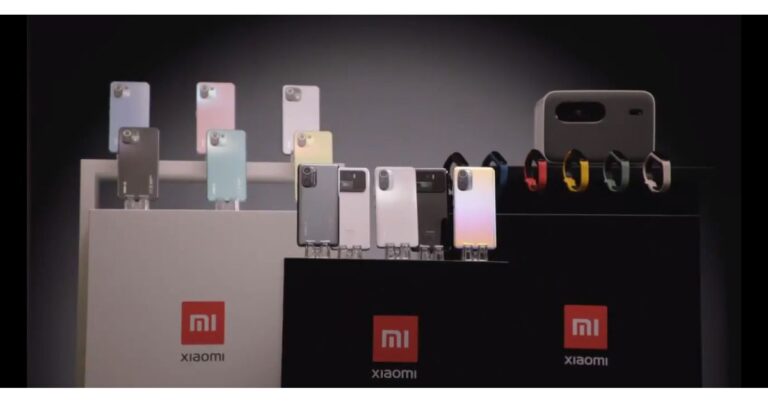
 Similarly, the Mi 11 Pro by Xiaomi comes in an 8GB RAM with 128GB storage model priced at CNY 4,999 (approx Rs 55,400) and the 8GB RAM with 256GB storage variant comes with a price tag of CNY 5,299 (approx Rs 58,700). Lastly the 12GB RAM with 256GB storage model will be available at CNY 5,699 (approx Rs 63,100). This phone will be offered in three colour options of Black, Green, and White.
On the other hand, the Mi 11 Lite 5G has been launched in two different models of 8GB RAM with 128GB storage at CNY 2,299 (approx Rs 25,500) and 8GB RAM with 256GB storage with a price tag of CNY 2,599 (approx Rs 28,800). This smartphone will be available in Citrus Yellow, Mint Green, and Truffle Black colour variants.
The former two devices will be available for purchase starting April 2 in China while the Mi 11 Lite 5G is expected to go on sale later next month.
Mi 11 Ultra specifications
The Mi 11 Ultra features a quad-curved 6.81-inch 2K WQHD+ E4 AMOLED display having 3,200× 1,440 pixels of resolution. It supports a 120Hz refresh rate panel with a 240Hz touch sampling rate and a 551ppi pixel density. The screen is protected with Corning Gorilla Glass Victus and supports HDR10+ as well as Dolby Vision too. In addition to this, there is a secondary display on the back featuring a 1.1-inch AMOLED touch screen with 126×294 pixels of resolution.
Similarly, the Mi 11 Pro by Xiaomi comes in an 8GB RAM with 128GB storage model priced at CNY 4,999 (approx Rs 55,400) and the 8GB RAM with 256GB storage variant comes with a price tag of CNY 5,299 (approx Rs 58,700). Lastly the 12GB RAM with 256GB storage model will be available at CNY 5,699 (approx Rs 63,100). This phone will be offered in three colour options of Black, Green, and White.
On the other hand, the Mi 11 Lite 5G has been launched in two different models of 8GB RAM with 128GB storage at CNY 2,299 (approx Rs 25,500) and 8GB RAM with 256GB storage with a price tag of CNY 2,599 (approx Rs 28,800). This smartphone will be available in Citrus Yellow, Mint Green, and Truffle Black colour variants.
The former two devices will be available for purchase starting April 2 in China while the Mi 11 Lite 5G is expected to go on sale later next month.
Mi 11 Ultra specifications
The Mi 11 Ultra features a quad-curved 6.81-inch 2K WQHD+ E4 AMOLED display having 3,200× 1,440 pixels of resolution. It supports a 120Hz refresh rate panel with a 240Hz touch sampling rate and a 551ppi pixel density. The screen is protected with Corning Gorilla Glass Victus and supports HDR10+ as well as Dolby Vision too. In addition to this, there is a secondary display on the back featuring a 1.1-inch AMOLED touch screen with 126×294 pixels of resolution.

Mi 11 Pro specifications The Mi 11 Pro shares a lot of similarities with its elder sibling Ultra, however, it lacks a secondary display and a few of its camera features. The display is the same, same chipset and battery too. Mi 11 Pro comes with a less advanced camera set up, the primary camera is the same while the other two sensors are a 13-megapixel ultra-wide-angle sensor and an 8-megapixel tele-macro lens with 50x digital zoom, and a 5x optical zoom and OIS support. There is a similar 20-megapixel front camera on this device too. Mi 11 Lite 5G specifications Last on the list is the Mi 11 Lite 5G that features a smaller 6.55-inch full-HD+ AMOLED display. It supports a 90Hz refresh rate panel with HDR10+ and Dolby Vision support. Under the hood, there is a Qualcomm Snapdragon 780G SoC, paired with Adreno 642 GPU for graphics. The device packs a 4,250mAh battery that supports 33W fast charging.Highlights from the #XiaomiMegaLaunch!
— Xiaomi (@Xiaomi) March 30, 2021
Everything you need to know from the Xiaomi 2021 New Product Launch, in just 55 seconds! pic.twitter.com/JnBQBPqMh3






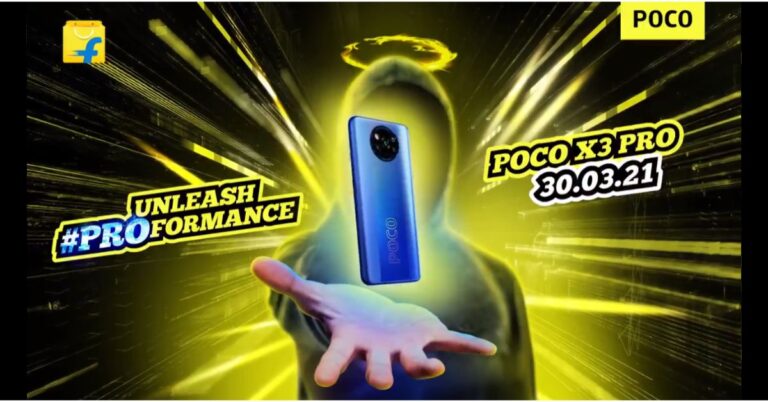
To recall, Poco X3 Pro is globally priced at EUR 249 (approx Rs 21,400) for the 6GB RAM with 128GB storage model and EUR 399 (approx Rs 34,400) 8GB RAM with 256GB storage model. It was launched in three colour options of Night Black, Arctic White, and Deep Ocean Blue. Poco X3 Pro-tech specifications The Poco X3 Pro comes with a 6.67-inch full-HD+ dot display with up to 450nits brightness. The screen supports a 120Hz refresh rate with a 240Hz touch sampling rate and Gorilla Glass 6 protection. The phone runs MIUI 12 for Poco based on Android 11. Under the hood, there is Qualcomm Snapdragon 860 SoC paired with Adreno 640 GPU. Speaking of the imaging capabilities Poco X3 Pro features a quad rear camera setup that includes a 48-megapixel primary Sony IMX582 sensor. Furthermore, there is an 8-megapixel ultra-wide-angle lens, and two 2-megapixel macro and a depth sensor. For selfies there is a 20-megapixel front-facing camera with f/2.2 aperture. The device packs a 5,160mAh battery which comes with 33W fast charging support. For connectivity, there is 4G LTE, Wi-Fi 802.11ac, Bluetooth 5.0, GPS/ A-GPS, NFC, IR Blaster, and a headphone jack. The phone comes with LiquidCool Technology 1.0 Plus to keep the phone cool during longer gameplay. For the latest gadget and tech news, and gadget reviews, follow us on Twitter, Facebook and Instagram. For newest tech & gadget videos subscribe to our YouTube Channel. You can also stay up to date using the Gadget Bridge Android App.Next level flagship performance!#POCOX3PRO 😈
— POCO – Madder By the Minute (@IndiaPOCO) March 22, 2021
Unleash #PROformance
30.03.21 🗓️
Same Madness. Only More. pic.twitter.com/vvS99zmxug