Is It Possible to Live in a Cashless Society?

Cash is still king, but it won’t be for very much longer. Around the globe, countries are adopting cashless payment methods from contactless and credit cards to e-banking and more. These new payment options offer many different benefits to everyone. Consumers can pay for goods and services from home, retailers can keep track of revenue, and governments can track income for tax purposes much easier with cashless transactions. Nonetheless, there are drawbacks to a cashless society. We’ll explore the cashless world so you can see if you’re ready to dive in.

What are the Benefits of a Cashless Lifestyle?

Going cashless has a huge array of advantages for everyone in society including:

Convenience: Cashless transactions are quick and convenient for retailers and consumers. Chip readers take under ten seconds, and contactless is nearly instant. Cash takes more time for everyone.

Better records: Most financial crimes, including money laundering, tax evasion, and drug distribution, rely on cash-based networks. With digital transactions, there’s a record of every payment you send and receive. This also helps both people and governments, making it easier to calculate and pay taxes, receive returns, and prevent audits.

Reduced crime: Illicit crime relies on cash. Digital records lead directly back to the people who made the transaction. Digital currency also protects consumers and retailers from scammers and other types of fraud.

International payments: Whether you are just visiting a country or conducting business, calculating exchanges, and getting the right amount of money is no easy task. With cashless options, your mobile device handles all of that for you.

What Are the Drawbacks of a Cashless Lifestyle?

Going cashless does come with some problems that consumers need to be aware of, too.

Hacking: Hackers constantly try to attack banks and other financial institutions. In cashless societies, it’s much easier for someone to drain all your funds because you don’t have another option. Some countries do protect victims of such crimes, but getting your money back and solving the issue is itself a huge ordeal.

Inequality: A significant percentage of the population does not have access to a bank account. Furthermore, they don’t have access to smartphones or other devices in which they could make payments. Countries have begun experimenting with different techniques, but they still have much more research to do.

Privacy: The records of transactions can also be used against you. Even if you have nothing to hide, online retailers and credit card companies use your purchase history to target advertisements toward you. Further, most nations require all income to be reported on taxes even if it’s just a friend giving you $20.

The tech isn’t perfect: Problems occur. There may be a glitch or an update happening at a critical time, whatever it is can leave you stranded. The same goes with merchants whose systems could malfunction for some reason. Even a dead battery on your phone can leave your broke.

Fees, fees, fees: Cashless transactions feel free, but there’s always a fee in there somewhere. Everybody knows Visa charges a typical 3% per transaction. That cost is pushed onto retailers and eventually, consumers. Many times, it may just be a little convenience fee here and there, but over time this can add up to hundreds or even thousands of dollars per year.

Will Cash Ever Go Extinct?

Definitely not in the near future. Digital transactions are on the rise, but even in highly developed countries like the United States cash still makes up over 30% of all transactions. This number is declining, but many countries still don’t feel comfortable going completely cashless.

In fact, some major tech cities have even passed “cashless bans.” Places like New York and San Francisco are enacting or considering legislation that would prohibit retailers from banning cash in their stores. Citing concerns over privacy and inequality, these places are making sure nobody gets left out.

The Bottom Line: A Promising Technology With a Caveat or Two

So what should you do? Cashless is the wave of the future. India is one of the best examples of this. A few years ago, there were virtually no cashless transactions in the country. Now they are over 800 million per month. Moreover, this number is growing rapidly with targets of increasing this tenfold by 2021. For now, consumers in India should always keep a little cash around in case they need it. Simultaneously, they need to make sure they protect their digital transactions.

The best way to do this is through a VPN (Virtual Private Network). With a VPN, your internet connection is protected with the highest levels of security technology, preventing cyber-attacks. It also protects your privacy from hackers, advertisers, and your ISP. Overall, a VPN in India is the best way of enjoying the benefits of a cashless society while preventing risks to your safety online.

Partnered Post
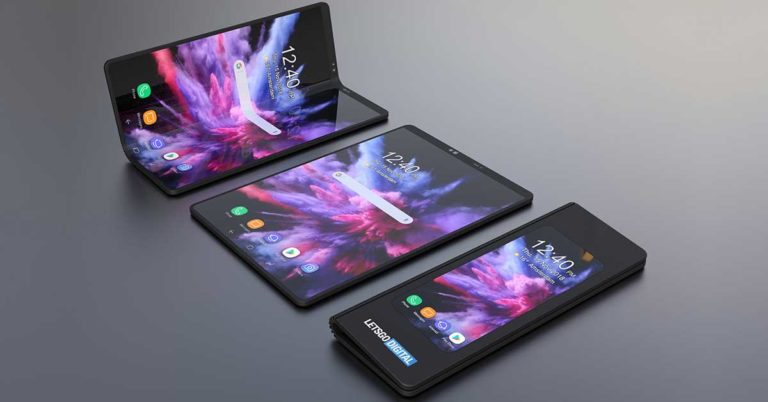
Are Foldable Phones Worth the Money?

The last few years of smartphone upgrades have gotten pretty dull for consumers. Sure, cameras have gotten better, processing speed is faster, and devices are slimmer. But a phone released in 2019 isn’t much different from one released in 2015. However, major companies like Samsung and Huawei have rocked the tech world with the announcement of foldable phones due to be released this year. Foldable phones are a huge breakthrough, but with prices around $2,000, are they worth it?

Let’s take a look.

1) You’re a Guinea Pig

When it comes to first generation technology dating back to products like the original iPad and iPhone, both the software and hardware just weren’t there yet. That’s because nobody, aside from executives, research teams, and corporate partners have even touched these products. Although the latest smartphones might not be as exciting as they once were, billions of consumers have tested them over multiple generations. This just isn’t the case with foldables. Even at the product preview conferences, people were quick to notice bumps on the screen where it folds in both the Samsung and Huawei product demos.

2) They’re Expensive

How many people complained about the $1500 iPhone? Say what you want, but it’s a top of the line phone even if it’s overpriced. When it comes to foldable phones, you’re paying for the incredible OLED technology and all the new components that needed to be developed, including the specialized hinge. But are you getting your value for that price? Remember, it’s not exactly a tablet. Even though more businesses are adopting tablets for enterprise purposes, it’s not the same thing. Simply put, it’s a huge amount of money for untested technology.

3) The Software Problem

At the Android Summit Developer Conference, Google did announce it would support foldable devices. However, they haven’t confirmed it yet for the release of Android Q due later this year. Even with OS support, this may not include apps. So there’s no guarantee that all your favourite streaming apps like Netflix, Hulu, Prime, and more will function properly with a foldable device. This will naturally happen over time, but now there is not much available for first generation phones.

The greater concern is security. With new hardware, software, apps, and comparably little tested, these devices have all kinds of known and unknown vulnerabilities. A typical trend with first-generation products is that developers discontinue support quickly. Consumers forget the most important component of updates is security. When devices stop receiving them, they become vulnerable to all kinds of hacks and malware. One example, the original iPad launched with iOS 3 and was only updated to iOS 5. Whereas Gen 2 released a year later was supported until iOS 9. That’s a five-year difference in support.

But the Technology is Amazing!

For some people, being a part of the first generation is the most important thing. This technology is the first major innovation in smartphones since its inception. If users temper their expectations and don’t mind shelling out the cost of monthly rent on a phone, then they get more than just bragging rights. They get to be among the first people to use this technology. It’s not just trendsetters; many tech enthusiasts and developers actually enjoy being a part of this process. They don’t mind logging errors, working through buggy software, and having issues here and there because they get to directly shape how the technology develops.

If that sounds like you, then you can definitely enjoy a foldable phone. As many critics have pointed out, it may not be a perfect infinity display, and there may be crease here and there, but you do get a truly novel device.

Just make sure that if you choose to go down this road, you take security into your own hands. Most importantly, protect your digital security with a VPN. The vast majority of all cyber attacks come over the internet. Through using a VPN, you protect your network connections with the latest security technology. This is essential for all internet-connected devices but doubly true for new products like foldable phones.

Should I Buy a Foldable Phone?

If you’re an average consumer, a foldable phone likely isn’t for you. You’re better off waiting a few years until the technology is less expensive and has had more time to develop. However, for tech enthusiasts and trendsetters, these first-generation foldable phones are an excellent opportunity to be among the first people to use this amazing new technology. Just make sure to stay safe by using a VPN. With it, you prevent hackers from stealing your data or damaging your new phone. Ultimately, with new technology like this, it’s really up to you to take security into your own hands.

Partnered Post

New PUBG game announced by publisher: All that you need to know

PUBG has become one among the most phenomenal and popular games across the globe today. Now, it has been announced by the publisher of the title that Playerunknown’s Battlegrounds’ next game is in development. However, the new upcoming game has not been named yet. The game publisher did reveal, however, that the new game is being made by a studio named Striking Distance, that has appointed ex-Call of Duty and Dead Space developer Glen Schofield as the CEO.

As of now, it is being speculated that the project is in its infancy stage and hence, very little is known about it. According to PUBG Corporation’s press release, the game is an “original narrative experience within the PUBG universe.” However, Schofield also dropped a hint that it is not necessary for the game to be a part of the battle royale genre by saying, “As a creative, the freedom to explore the PUBG universe has me excited about the possibilities, which I view as beyond the battle royale genre.”

He also tweeted that the game should not be considered a sequel to PUBG.

We should mention that PUBG began as an Arma 2 mod and was later spun off into its own battle royale title in early 2017. The game was first made available for early access on PC and later, it also came to Xbox One and PS4.

It has now become one among the most influential games of the 21st century. PUBG is today one among the most played titles and has fans across the world. It is the game that has inspired the current biggest possible trend in battle royale genre, including games like Fortnite and Call of Duty: Black Ops 4.

We should also mention that recently, PUBG got a new update that is named as #30. The game’s latest update is meant only for PC and now, it has gone live. It gets a number of new elements to PUBG including a new handgun, and an amphibious new vehicle in the form of BRDM-2 that has more damage resistance, and exploding fuel cans. The game has also got a new ledge grab feature with the latest update that enables people to climb up the edges of the roofs and fences.

Another notable addition is the text-based Radio Message feature, using which players can communicate without voice chat. We should add that the maintenance for PUBG update #30 is over and the servers with all the new changes are now live.

For the latest gadget and tech news, and gadget reviews, follow us on TwitterFacebook and Instagram. For newest tech & gadget videos subscribe to our YouTube Channel. You can also stay up to date using the Gadget Bridge Android App.

WhatApp will soon stop working on these smartphones

0

Popular instant messaging app WhatsApp has updated its FAQ, to announce that it will soon stop working for some smartphones by the end of this year. The company has revealed that it will no longer provide services to Android versions 2.3.7 and older, iOS 7 and older.

However, we should mention that WhatsApp will continue working on devices with Android versions 2.3.7 or older and iOS 7 or older until February 1, 2020. But then, people using these handsets will no longer be able to create new accounts nor verify existing accounts. WhatsApp has warned the users of Windows phone that its devices will no longer be able to use the operating system after December 2019. The app may not even be available on the Microsoft store after July 19, 2019. Even Windows users are not able to create or reverify their own account. The company has recommended it’s users to use Android 4.0.3 or more and iOS 8 or a higher version to continue using WhatsApp. The app will also work on KaiOS 2.5.1 (or later).

“You’ll no longer be able to use all Windows Phone operating systems after December 31, 2019, and WhatsApp might not be available in the Microsoft Store after July 1, 2019. Because we no longer actively develop for these operating systems, some features might stop functioning at any time,” the company’s FAQ said.

But the company is still allowing its users who already have the app installed on their smartphones to keep on using it. Users who are still using their old smartphones and Windows operating phones are likely to be most affected by this new change.

This is not the first time that the Facebook-owned WhatsApp has taken such a step. Earlier also the company announced that the app will stop working on smartphones running on Windows Phone operating system. The company has announced that the users of Windows phone will no longer be able to operate the app after December 31, 2019.

Whatsapp is also testing picture in picture or PiP mod for the iOS and Android version of its application. The new update is being rolled out for the beta users. According to a report, the new update will allow the users to minimize the video chat screen itself so that the user can chat with others simultaneously.

For the latest gadget and tech news, and gadget reviews, follow us on TwitterFacebook and Instagram. For newest tech & gadget videos subscribe to our YouTube Channel. You can also stay up to date using the Gadget Bridge Android App.

Coolpad Cool 3 Plus with a 3,000mAh battery and 3GB RAM launched in India: Price and specifications

Chinese smartphone maker Coolpad has launched a new smartphone in the Indian market named Coolpad Cool 3 Plus. The new Coolpad Cool 3 Plus is an entry-level handset that comes with features like dual security, a quad-core Helio CPU, a large display and a fingerprint scanner. The device is touted to be completely made in India and it is aimed for the millennials in the country who want more number of features for their money. Here’s a look at the price and specifications of the handset:

Coolpad Cool 3 Plus price and availability

Coolpad Cool 3 Plus holds a price tag of Rs 5,999 for the 2GB RAM/16GB storage variant while its 3GB RAM/32GB storage model costs Rs 6,499. The device is available in two colour options – Ocean Blue and Cherry Black. It will be available on Amazon India starting July 2.

Speaking on the new launch, Pankaj Updahyay, Online Business  Head, Coolpad India, said, “The Coolpad Cool 3 Plus is set to be a gamechanger in the Indian budget smartphone market. Therefore, it is essential for us to make the phone accessible to each and every one. Launching the phone through India’s leading online shopping destination, Amazon.in, will give us exponentially enhanced visibility. The Cool 3 Plus will be available on Amazon India from 2nd July and we believe that the sales will skyrocket on the back of the website’s vast reach and customer base along with our hard-to-miss prices.”

Coolpad Cool 3 Plus specifications and features

Coolpad Cool 3 Plus sports a 5.7-inch dewdrop screen with an aspect ratio of 19:9 and it is powered by a quad-core MT6761 (Helio A22) SoC clocked at 2.0GHz. The device holds up to 3GB of RAM and up to 32GB of internal storage. It also has support for a microSD card. The device runs Android 9.0 Pie and packs a 3,000mAh battery that does not have support for fast charging.

The Coolpad Cool 3 Plus is light in weight and has a thickness of 8.2mm. The smartphone also packs s rear-mounted fingerprint scanner. It supports dual-SIM (GSM + GSM).

On the imaging front, the Coolpad Cool 3 Plus packs a single 13MP rear camera and on its front, there is an 8MP camera for selfies and video calls.

The Coolpad Cool 3 Plus also offers USB OTG support that can be connected with card reader, U-disk etc. Other features of the newly launched smartphone include, “Bluetooth 5.0, Wi-Fi, GPS, gravity sensor, light sensor and proximity sensor.

Coolpad India CEO, Fisher Yuan said, “We are thrilled to launch the Coolpad Cool 3 Plus which will transform the definition of budget smartphones in the country. While designing the smartphone, we have kept in mind the needs of young millennials who look for products that exceed their expectations. The Indian smartphone industry is at a cusp of innovation and with the launch of our latest product, we aim to provide Indian customers with the best of technology and upgrade the smartphone era. To further this, we will soon be launching 5G-ready smartphones in India with 800+ patents under its name. We are confident that the smartphone will appeal to the Indian masses and help Coolpad achieve its overarching goal to become the most loved smartphone brand and hit the 3 million smartphones mark by the end of FY 2019.”

 For the latest gadget and tech news, and gadget reviews, follow us on TwitterFacebook and Instagram. For newest tech & gadget videos subscribe to our YouTube Channel. You can also stay up to date using the Gadget Bridge Android App.

PUBG update #30 is now out: Here’s everything new

0

Popular battleroyale game PUBG’s latest update for PC is now live and it gets a number of new elements. The update is called as #30 and it gets a new handgun, and an amphibious new vehicle in the form of BRDM-2 that has more damage resistance and exploding fuel cans. A new ledge grab feature has also been added with the latest update to PUBG. This enables people to climb up the edges of the roofs, fences and other such elements in the game.

We should also mention another very notable addition is the text-based Radio Message feature, that lets players communicate without voice chat. The maintenance for PUBG update #30 is over and the servers with all the new changes are now live. Coming to the key additions of the PUBG update, it has got a BRDM-2, that is basically an amphibious vehicle that can be summoned using the flare gun on all the maps. It basically replaces the UAZ and can accommodate four players. It also reduces weapon and red zone damage.

The next major addition to the game is Deagle, which is basically a handgun that has the highest damage of any pistol in the game. Using this, you can crack a level 3 helmet in two headshots and uses .45 ACP ammo while dealing 62 damage per shot. This will be available on all maps and will be capable of fitting red-dot and holographic sights.

With the latest PUBG update, even the gas cans can be used as a weapon. Users can just destroy it when enemies are nearby. While shooting at gas cans will make them explode, we recommend you to keep in mind that all the players in the explosion radius will face the damage. We should also mention that only one gas can be made to explode at a time and each one will appear as a separate item in the inventory.

Speaking of gameplay elements, PUBG update #30 gets a new mechanic called ledge grab, that allows players to scale fences or walls of up to 2.5 metre in height. A new communication method has also arrived that is called Radio Messages. This lets players talk with teammates via text messages and will come in use when the audio chat is not available.

In addition to this, kill distance will now become a part of the centre screen kill message. The game has also got a new supply system with the update.

For the latest gadget and tech news, and gadget reviews, follow us on TwitterFacebook and Instagram. For newest tech & gadget videos subscribe to our YouTube Channel. You can also stay up to date using the Gadget Bridge Android App.

Amazon Mi Days Sale is back: Here’s a look at the discounts

0

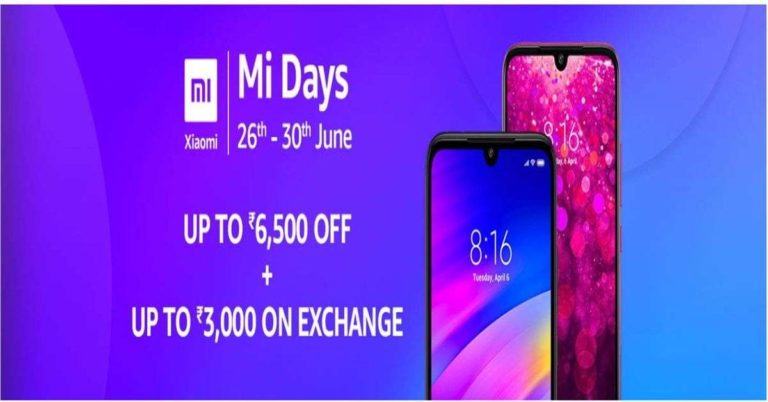
Chinese technology company Xiaomi is coming back with its Mi Days Sale on Amazon India’s website. As always, the company will be selling its smartphones and accessories at big discounts during the sale that begins from today and will go on till June 30. The company is offering a discount of up to Rs 6,500 on its products. In addition to this, the buyers can get up to Rs 3,000 off on exchanges.

Starting with the discounts, Redmi 7’s 2GB/32GB RAM storage model can be purchased at Rs 7,999 while its 3GB/32GB RAM storage variant can be picked up at Rs 8,999. We should mention that the handset runs a 4,000mAh battery and is powered by Qualcomm Snapdragon 632 SoC.

Redmi Y3 smartphone is also available at a discounted price during the Mi Days Sale. While its 3GB RAM/32GB storage version is available at Rs 9,999 during the sale, its 4G RAM/64GB storage model can be picked up at Rs 11,999. We should mention that the handset sports a 32MP camera and is powered by Qualcomm Snapdragon 632 SoC.

Redmi 6A’s 2GB/16GB RAM storage variant can be bought at a discount of Rs 1,000 for Rs 5,999. On the other hand, the 3GB/32GB variant that was earlier priced Rs 7,999 can be purchased at Rs 6,499 during the Mi Days Sale.

The company’s Mi A2 smartphone, that was launched in India at Rs 17,499, is now being offered Rs 10,999 for the 4GB RAM/64GB RAM storage variant. Xiaomi is also offering an additional discount of Rs 1,000 on exchange offers. The 6GB RAM/128GB variant of the handset, that was initially launched in India at Rs 19,999, can now be purchased at Rs 15,999. Users can also get a Rs 3,000 off on the higher-end model if they opt for an exchange.

Redmi Y2 3GB RAM/32GB RAM variant was priced at Rs 10,499, but now, it can be bought at Rs 7,999. The other storage variant with 4GB of RAM and 64GB of storage was earlier priced at Rs 13,499 and can be bought for Rs 9,999.

The company is offering heavy discounts on its smartphones as well as accessories. Redmi 6 Pro that features full HD+ notch display and is powered by Qualcomm Snapdragon 625 is being sold for Rs 9,999 for its 4GB RAM and 64GB storage variant during the Mi Days Sale.

During the sale, the Mi Band 3, that was earlier priced Rs 2,199, can be purchased for Rs 1,999. Mi Band HRX is also being offered for 1,299 after the price cut. Mi Wi-Fi bulb can be purchased for Rs 1,299 instead of Rs 1,499. Mi Body composition scale, that earlier cost Rs 2,999, is now available at a discounted price of Rs 1,999.

For the latest gadget and tech news, and gadget reviews, follow us on TwitterFacebook and Instagram. For newest tech & gadget videos subscribe to our YouTube Channel. You can also stay up to date using the Gadget Bridge Android App.

Realme U1 and Realme 1 start receiving the Andriod 9.0 Pie update

0

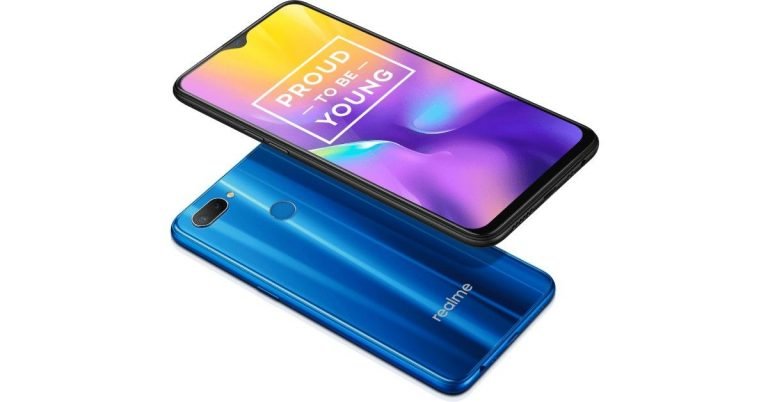
Chinese smartphone maker Realme has rolled out the Android Pie-based ColorOS 6 update for its Realme U1 and Realme 1 users. The company has rolled out a new update in an incremental manner. The update will reach a small percentage of users in the beginning, and after that, a broader rollout will begin. But before doing this, the smartphone maker has already tested the new update by rolling out ColorOS 6 beta update previously this month.

Realme India Support responded to a user on its official Twitter account that says, “The stable update of ColorOS 6 along with Android Pie for Realme 1 and Realme U1 is in a staged rollout process and it will soon be reaching to all the devices.”

According to the changelog, with the Android Pie-based ColorOS 6 update, new notification icons in the status bar has been added. The new update also includes a new navigation gesture and adds an app drawer to ColorOS launcher. It also comes with a riding mode and live wallpapers. The update comes with an Android security patch for May 2019. Apart from that, the new update includes a revamped UI of the notification panel, an updated UI of AI Board, and a new default theme. In regard to the camera, the Nightscape mode has been added. The new update also includes few applications like Realme Theme Store, Realme Game center, Realme community.

Realme U1 specifications

Realme U1 features a 6.3-inch full-HD+ LCD display that comes with an aspect ratio of 19.5:9. Powered by an octa-core MediaTek Helio P70 SoC clicked up to 2.1GHz, the handset comes with ARM G72 GPU and is available in 3GB/4GB RAM options. The device has up to 64GB of internal storage and can hold a microSD card off up to 256GB.

For imaging duties, it has a dual rear camera setup that houses a 13MP primary sensor and a 2MP secondary sensor. On the front, there is a 25MP Sony IMX576 sensor that has an f/2.0 aperture. Realme U1 packs a 3,500mAh battery and for connectivity, there is Wi-Fi, Bluetooth 4.2, GPS, micro-USD port, OTG support, and 3.5mm audio jack.

In an unrelated piece of news, the company launched its flagship smartphone Realme X in the home market. But recently, it announced that it will be launching its flagship smartphone in India that is scheduled for July 17.

Realme India’s CEO Madhav Sheath confirmed that the smartphone will be launched in India and come with different specifications and features than the model that was unveiled in China. The flagship smartphone will be launched in India with onion and garlic finish too. The company’s CEO also confirmed that there will be a special edition of the Realme X that will also be launched in the country.

For the latest gadget and tech news, and gadget reviews, follow us on TwitterFacebook and Instagram. For newest tech & gadget videos subscribe to our YouTube Channel. You can also stay up to date using the Gadget Bridge Android App.

Oppo introduces MeshTalk to let you call and chat without cellular network or Wi-Fi

0

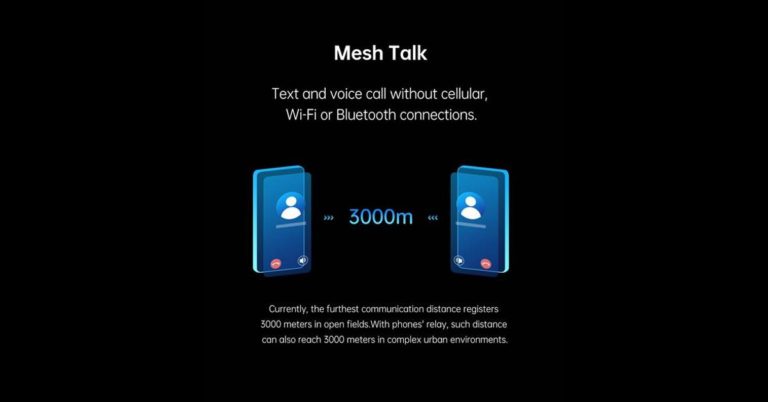
At the ongoing MWC Shanghai 2019, companies are taking their turns announcing new technologies that they are working on or planning to launch in the future. While Vivo unveiled its new AR glasses, Oppo showcased its under the screen selfie camera. Now, Oppo has unveiled another technology in the smartphone world at the ongoing event. This is a new communications technology and Oppo is the first one to launch it. Called MeshTalk, the technology is a decentralized, end-to-end system with which the company can cover up to 3 Km of outdoor environment and the signal relay between the devices can be used. The range can be further increased in a more crowded environment. This technology enables the users to call or chat across medium distance without using the cellular network, Wi-Fi or Bluetooth.

The applications of the MeshTalk can be many once it launches in the future, however, currently it is limited to the Oppo devices only. With this, Oppo devices will be able to create an ad hoc local area network across a wide area. The user will then be able to communicate directly with another user on the other end of the network. So, in short to medium distances users will be able to connect and talk with each other without relying on any cellular or VoLTE networks. They would simply be able to use Oppo’s MeshTalk to communicate. MeshTalk can also be used to connect multiple devices at once, so the users can add multiple devices to create an ad hoc local area network (LAN) and it would enable the group chat capability. This would expand the communication range of MeshTalk via signal relay.

To develop the MeshTalk feature, Oppo has customized the communication chipset to realize the advantages of the lower power consumption and longer distance. Using MeshTalk, the users can guarantee a higher level of privacy than the traditional networks. According to Oppo, MeshTalk can also help users in emergency communications and some outdoor environment as well.

According to Oppo, its new MeshTalk can be used by the users in certain situations like when there is no availability of networks or internet access. Oppo also claims that MeshTalk won’t have much effect on the battery life of the smartphone. The company also has plans to work on a 72-hours standby mode so that the smartphones can be reached in a situation of emergency when the battery of the device is low. Currently, it is not known if Oppo will bring the MeshTalk feature to all its existing smartphones or it will launch only in some new select devices.

For the latest gadget and tech news, and gadget reviews, follow us on TwitterFacebook and Instagram. For newest tech & gadget videos subscribe to our YouTube Channel. You can also stay up to date using the Gadget Bridge Android App.

Vivo announces its first AR glasses at the ongoing MWC Shanghai 2019

0

Chinese smartphone maker Vivo has entered the world of Augmented Reality with the launch of its first AR glasses at the ongoing MWC Shanghai 2019. The AR glasses from Vivo are still in their prototype phase and ad of now, they are just called Vivo AR glasses.

Vivo AR glasses are light in weight and they consist of two transparent displays with 6DoF tracking. The Vivo AR glasses connects with a cable to the company’s own yet-to-be-announced 5G smartphone. The company is also expected to announce its 5G smartphone at the ongoing event.

According to Vivo, its AR glasses has five applications including gaming, 5G theatre, office work, facial recognition and object recognition. The company also posted a promotional video on Weibo showing a user playing games while donning the Vivo AR glasses. The user isn’t engulfed completely in a virtual world like one usually does with headsets. On the other hand, Vivo AR glasses show the user virtual elements like Jellyfish on top of real world elements.

Currently, there is no word on the price or release date of the Vivo AR glasses. However, the company is expected to announce its 5G smartphone later this year and we might also get to see Vivo’s AR glasses launched at the same event. Vivo’s shift from making smartphones to working on AR glasses might be a hint of company’s future plans. There is a possibility that we might see more of Vivo’s products in the future excluding smartphones. We might also get to see smartwatches, AR glasses, 5G smartphones and some other technology from the company.

The applications of the Vivo AR glasses may be many more by the time it launched. Furthermore, one of its major uses will be in the gaming sector where the companies can use the AR glasses to their advantage. Other than gaming, Vivo AR glasses can be used for a number of other uses like studying and doing office works. The working of AR glasses is different than how VR glasses work. In AR glasses, users can see the real world and the virtual world at the same time and he can interact with them both at once. On the other hand, VR glasses are a completely different technology as it is so immersive that the user feels like he is in a different world. Once a user wears VR glasses, he has no sight of the real world and he cannot interact with it till the time he takes it off.

For the latest gadget and tech news, and gadget reviews, follow us on TwitterFacebook and Instagram. For newest tech & gadget videos subscribe to our YouTube Channel. You can also stay up to date using the Gadget Bridge Android App.

10 waterproof smartphones that you can pick today and be safe in the monsoons

Monsoon is here finally! And while rains bring immense joy and moments of happiness, they have some downsides too. One of the major drawbacks of monsoon is that your smartphone may get wet and damaged. To avoid situations like these, you can buy one among these 10 smartphones that come with an IP rating and hence, are waterproof. With these, you wouldn’t have to face any losses. Take a look:

Samsung Galaxy S10, S10 Plus

Samsung Galaxy S10

Samsung’s current flagship smartphones – Galaxy S10 and Galaxy S10 Plus – pack one among the most powerful specifications. They offer a punch-hole design display and are powered by Qualcomm‘s Snapdragon 855 SoC. Both the devices come with an IP68 rating, that makes them water resistant and dust-resistant. The company has also said that they can withstand being submerged as deep as 1.5 meters for up to 30 minutes.

iPhone XS and iPhone XS Max

iphone xs

Apple’s current flagship smartphones – iPhone XS and iPhone XS Max – come with the best possible specifications that the company has offered till now. So, we could really not expect the Cupertino-based technology giant to miss out on an IP rating. Both the premium smartphones come with an IP68 rating. The company has also said that iPhone XR and iPhone XR Max can stay submerged in 2 meters’ deep water for up to 30 minutes and they would not be damaged.

Google Pixel 3 XL

Pixel 3 xl

The current flagship smartphone from Google – Pixel 3 XL – is also water resistant. The key highlight of the smartphone is its camera, but then the IP68 rating is just another reason to buy it. You can use it on a rainy day or even take it inside the water with you to click pictures.

Huawei P30 Pro

Huawei P30 Pro

Another photography-focussed smartphone on our list, Huawei P30 Pro comes with up to 50X digital zoom. It is the first ever smartphone to offer such a functionality. It has a quad-camera setup and in certain tests, it has even surpassed the Pixel 3XL. The fact that it is waterproof further gives customers a reason to buy it. It comes with an IP68 rating, and that means that it is waterproof as well as dustproof.

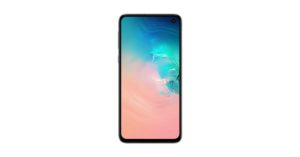
Samsung Galaxy S10e

Samsung galaxy s10e

Samsung Galaxy S10e is the affordable version of the South Korean technology giant’s current flagship handsets. However, this doesn’t mean that Samsung did not add an IP rating to the device. Samsung Galaxy S10e comes with the IP68 rating, just like Galaxy S10 and Galaxy S10 Plus. This makes it water and dust resistant.

iPhone XR

iphone XR 9

The next device on our list is the iPhone XR. The affordable iPhone of 2018 comes with an IP68 rating, just like its elder siblings. So, if you buy this instead of the more premium devices by Apple, you wouldn’t have to face issues regarding it not being waterproof.

Google Pixel 3

Google Pixel 3

Another smartphone that you can consider is the Google Pixel 3. Most of the specifications of the smartphone are similar to that of the Pixel 3 XL. The IP rating of the device is no exception. Like Pixel 3 XL, Google Pixel 3 has an IP68 rating.

Huawei Mate 20 Pro

Huawei Mate 20 Pro

This is Huawei’s flagship in the Mate series. It comes with a triple rear camera setup that is housed in a square module. The handset is also waterproof and dustproof. We should mention that this is a very premium device that comes with an in-display fingerprint scanner and is powered by Huawei’s Kirin 980 processor.

LG V40 ThinQ

lg v40 thinq

The LG V40 ThinQ smartphone is the company’s current flagship of the year. The handset comes with IP68 rating and can survive in up to 1 meter of water for 30 minutes. It is also dust proof and splash proof. So, it can survive the rain too.

Honourable mention: OnePlus 7 Pro

oneplus 7 pro

While OnePlus 7 Pro does not come with an IP rating, the company has boasted a lot about its water-resistance capabilities. OnePlus had even posted a video of the handset being dropped in a bucket of water before its launch.

For the latest gadget and tech news, and gadget reviews, follow us on TwitterFacebook and Instagram. For newest tech & gadget videos subscribe to our YouTube Channel. You can also stay up to date using the Gadget Bridge Android App.

Google Maps rolls out its “Stay Safer” feature for the Indian public

1

To meet the requirements of the ever-changing technology world, Google keeps on adding new features to its platforms. One of its platforms is Google Maps and it is a widely used navigation application around the world. Google has lately been updating maps a lot. Earlier, it was seen testing a new feature called “Stay Safer” in India. The search giant tested this new feature in the country for a while and now, it is being rolled out for everyone. The feature does what its name suggests – it safeguards people traveling in public transport. Once it is active, it will alert the user if any public transport they are traveling in goes off-route.

The new feature also gives the option to share the live location of the user with their friends and family. Currently, this feature is being rolled out for Android users in India. Here’s how the users can use this feature:

  1. To use this feature, the users would need to update Google Maps. After updating, users can search for the destination and get directions.
  2. Then they would have to tap the “Stay Safer” button that is present at the bottom of the screen.
  3. This will prompt two options – “get off-route alerts” and “share live trips”.
  4. Once you have pressed the get off-route alerts, Google Maps will alert you by sending a notification to your smartphone. However, this will only happen if your transport deviates 0.5 km from the suggested route.
  5. On the other hand, the Share live trip option can be used to share the live location of the user on the social media or with friends and family. With this, the user can always be sure that his friends and family knows about his/her location when he wants.

Speaking about the new features, Amanda Bishop, Product Manager, Google Maps said in a statement, “Through our extensive research across India, we found that a lot of people limit their mobility due to safety-related concerns. To address this, we are launching another India-first feature that will deliver a more relevant and reliable experience to our users. Our new ‘Stay Safer’ feature on Google Maps will alert users who are traveling in taxis, auto-rickshaws etc. in case their vehicle goes off route, giving them peace of mind. At Google Maps, we are committed to helping make journeys safe and hassle-free and look forward to bringing more experiences like this to India and beyond.”

Although the new feature is rolling out for Android users, it is currently not available for the iOS users.

For the latest gadget and tech news, and gadget reviews, follow us on TwitterFacebook and Instagram. For newest tech & gadget videos subscribe to our YouTube Channel. You can also stay up to date using the Gadget Bridge Android App.


Lenovo laptops can now be customized with the company’s ‘Made to Order’ programme

1

Technology giant Lenovo has announced a new service called ‘Made to Order’ for the customers in India. The company has started rolling this out and it is now available for its Thinkpad laptops. The new service offered by the company allows you to customize your own Thinkpad laptops. With the service, you get the option to create a factory-built custom PC that offers over 1,00,000 configurations. Currently, the service is available only for ThinkPad line but the company also promises to bring it for all other sub-brands in the next 90 days.

On the launch of the new service Rahul Agarwal- CEO & MD Lenovo, India said, “At Lenovo, we understand that in today’s world every individual uses a laptop differently, because of which there has been a growing demand for personalized laptops, which cater to specific needs. The launch of this service is a big step in our journey to becoming a truly customer-centric company and will prove to be a compelling proposition for our direct e-commerce business on www.lenovo.com”.

According to the company, with the use of automation technology, the laptops will be custom created and will be delivered to the customer’s doorsteps in just over two weeks.

Customization options are available across the following parameters:

  • CPU – AMD/Intel; Intel CPU Customization options – Core i3, i5 or i7.
  • Storage –Standard Hard Disks/ High speed SSD.
  • Graphics –Standard in-built graphics/ dedicated graphics AMD/NVIDIA graphics.
  • Screen – FHD/ UHD, between touch and non-touch screen.
  • Pre-installed Software options – MS Office, Adobe suite, Anti-virus solutions and more.
  • Accessories – Upgraded extra battery, Ethernet dongles, Expansion docks, External monitors and more.
  • Opt for Premier Support – Extended warranty and Accidental Damage Protection

Steps to build your ‘Made-to-Order’ ThinkPad:

Go to Lenovo’s official website.

Step 1: Select your base model.

Step 2: Choose the specifications, upgrades, and accessories.

Step 3: Get it delivered right to your doorstep.

Last month, Qualcomm and Lenovo came together to launch the first 5G-enabled always-connected laptop powered by the Snapdragon 8cx 5G Compute Platform. Both the companies Qualcomm and Lenovo have collaborated on the project to demonstrate the uses of the always-connected computers on the 5G networks. The name of the new laptop is Project Limitless and it is a prototype device that is currently not ready to be launched as a commercial handset.

For the latest gadget and tech news, and gadget reviews, follow us on TwitterFacebook and Instagram. For newest tech & gadget videos subscribe to our YouTube Channel. You can also stay up to date using the Gadget Bridge Android App.

Oppo unveils the world’s first under-display selfie camera: All that you need to know

2

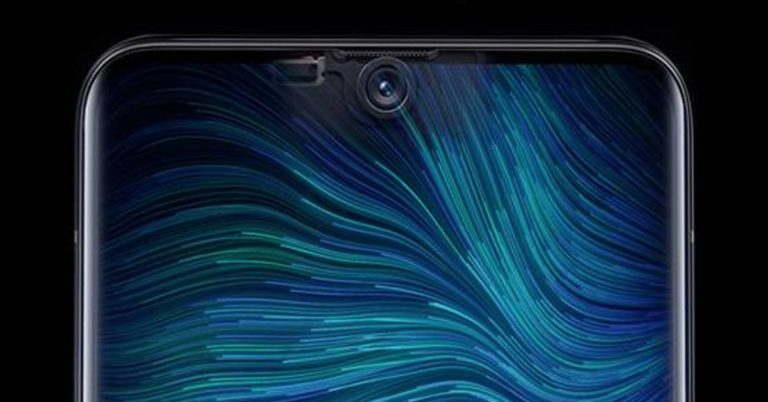
Earlier this month, Chinese smartphone maker Oppo released a teaser showcasing an under-display selfie camera on a device that comes with a full-screen and does not have any notch. Till now, the smartphone was still in its prototype phase, but now, the company has finally revealed its under-display camera sensor.

The smartphone with the under-display selfie camera will provide a full-screen experience as it will come with no notch and no hole-cut out. In addition to this, it will also have a better screen-to-body ratio. Oppo has unveiled its new camera technology to the public for the first time at the MWC Shanghai 2019, and it has also demonstrated how it works.

To avoid the full notch that was introduced in the past, the smartphone makers came up with their own version of solutions. Till now, we have seen the waterdrop shaped notch, the punch-hole camera notch, the pop-up selfie camera, the swing camera setup, the rotating camera, the sliding camera and even the flip camera. But none of them were perfect as the notches hid the screen and the ones with no-notch displays had moving camera parts. With the moving parts of the smartphone, there is always a chance of it getting damaged in the long run. When under-display camera was introduced, it seemed like a solution better than notches and moving parts.

According to Oppo, the display of the smartphone uses a custom transparent material that works with the redesigned pixel structure so that the light can reach the camera sensor. The company also said that the selfie camera sensor placed under the display is larger than the front-facing snappers of other smartphones that come with notches. The selfie camera of the smartphone is even said to come with a wider aperture lens in the front. When not in use, the screen above the selfie camera seems to work as a regular screen and it responds to touch and displays content as well. Oppo has also said that the underdisplay selfie camera’s quality won’t be compromised even though it has a layer of screen above it.

But apart from that, the company did say that the screen in front of the display will offer reduced photo image quality. There will also be problems like haze, glare and colour case that will have to be solved. According to the company, it has developed an algorithm that can be tuned according to the hardware of the device so that these issues can be fixed. However, Oppo further claimed that the quality is “on par with the mainstream devices”.

But then, we should mention that the under-display camera is still new and is in its first phase of launch, it would definitely have some problems and issues. But with time it can become a proper solution to the notch, provided it is improved. We may even get to see many other smartphones with the under-display selfie cameras in future.

For the latest gadget and tech news, and gadget reviews, follow us on TwitterFacebook and Instagram. For newest tech & gadget videos subscribe to our YouTube Channel. You can also stay up to date using the Gadget Bridge Android App.

Samsung Galaxy A90 will be powered by Snapdragon 855 SoC, to come with Tilt OIS: Report

0

Earlier this year, Samsung had promised to launch a new Galaxy A-series smartphone every month till June 2019. Till now, the company has kept its promise as there are more than 10 smartphones launched under the Galaxy A-series in the last 5 months. Till now, the top-end and the most unique smartphone in the Galaxy A-series is the Galaxy A80, that came with the world’s first rotating camera. Now, according to reports, Samsung might be planning to launch a new Galaxy A90 smartphone in the next few weeks. Last week, there were reports that Samsung Galaxy A90 would be a part of the company’s Galaxy R-series but now, the report seems to be incorrect. According to some new sources, the smartphone will be a part of the Galaxy A-series only and it would not be rebranded.

Currently, Samsung Galaxy A90 is still under development and it will be launched sometime in future. However, there is no specific timeline for the launch that has been confirmed as of now. According to a new leak, the device will come in two variants. The two variant of the Galaxy A90 holds the model names – SM-A905 and the SM-A908.

The Samsung Galaxy A90’s SM-A905 model will come with 4G connectivity and it will sport a large 6.7-inch display. The device will also come with an in-display fingerprint scanner and it will feature a triple rear camera setup. Its camera will reportedly comprise of a 48MP main camera sensor paired with a 12MP secondary camera along with a 5MP tertiary sensor. Other than that, there is also a new and unknown feature that the Galaxy A90 will be coming with called the “Tilt OIS”. From just the name, it sounds like a camera-related feature but nothing is known about what it is and what it does.

On the other hand, the Galaxy A90 with model number SM-A908 is the 5G variant and it sports a similar screen with an in-display fingerprint scanner. However, its sensors vary, it too features a triple-rear camera setup. Its camera setup includes a main 48MP primary sensor paired with an 8MP secondary sensor and a third 5MP tertiary sensor.

Camera features aside, the most important aspect of both these models of the Galaxy A90 is that they will reportedly be powered by the Qualcomm’s Snapdragon 855 SoC. This makes it the first smartphone in the Galaxy A-series to be powered by the top-end Snapdragon CPU as all the other devices in the Galaxy A-series house Exynos or lesser CPUs.

If the reports are true, then it might be Samsung’s way of bringing a flagship CPU in an affordable smartphone. Although the price, the launch date and other details of the Galaxy A90 is still unknown, it will be launched sometime in the future.

For the latest gadget and tech news, and gadget reviews, follow us on TwitterFacebook and Instagram. For newest tech & gadget videos subscribe to our YouTube Channel. You can also stay up to date using the Gadget Bridge Android App.

Qualcomm Snapdragon 855 SoC has been certified as secure for offline payments

0

American chipmaker Qualcomm’s current flagship processor – Snapdragon 855 – has today received a Common Criteria EAL-4+ certification, and this makes it the first ever SoC (system on chip) to be recognised to offer a smart card level security. With this certification, manufacturers can now use Qualcomm‘s Snapdragon 855 process as the only secure storage area for applications like payment IDs, encryption keys and eSIM management. This, in a way, completely removes the need for a separate security chip.

We should mention that prior to the certification, smartphone makers had to include a separate security chip in the device so that it acted in a trusted manner. There was also a need for adding a secure area for holding sensitive data such as payment IDs and encryption keys. The companies also had to make sure that they complied with Google’s most stringent security requirements in Gatekeeper and StrongBox.

It is also worth adding that the possibilities go beyond current use cases as well. According to the company, Qualcomm’s Snapdragon 855 processor can now be used as a secure storage container for applications like transit passes, Trusted Platform Modules, and crypto wallets.

However, with the certification, Qualcomm says that the companies can just use the Snapdragon 855 SoC and they don’t have to include any separate chip for security reasons. This is expected to save companies money on the overall build of materials and at the same time, it will free up some space in the device. In most cases, any amount of complexity that can be removed from the internal design of a smartphone is considered a win. It should be pointed out that this is not anything major for mobile phones that have been shipped with Snapdragon 855 and a security chip. However, we should mention that the certification does not apply retroactively.

But then, this is a very big deal for the new smartphones that will house the Snapdragon 855 SoC and even the future handsets that will run the next generation Snapdragon 800-series processor that is expected to go through the same certification.

A number of flagship devices this year house the Qualcomm Snapdragon 855 processor. These include Samsung Galaxy S10, Galaxy S10e, Galaxy S10 Plus, OnePlus 7, OnePlus 7 Pro and Asus 6Z. Even the upcoming flagship smartphones from Google are expected to be powered by the American chipmaker’s flagship SoC. Most of these devices are known for the powerful performance that they can offer, apart from other high-end features.

For the latest gadget and tech news, and gadget reviews, follow us on TwitterFacebook and Instagram. For newest tech & gadget videos subscribe to our YouTube Channel. You can also stay up to date using the Gadget Bridge Android App.

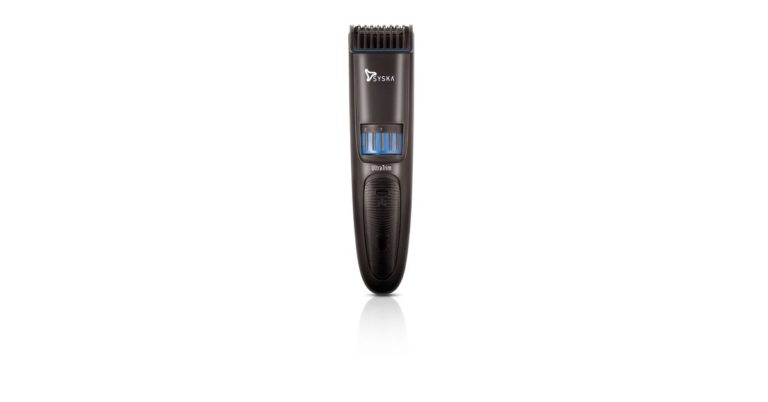
Syska UltraGroom Pro Styling Kit HT5000K for men launched in India: Price and features

0

Syska had today launched a new product in its personal care portfolio. The company took another step into the personal care category by launching a self-grooming kit for men called UltraGroom Pro Styling Kit HT5000K. The company deals from hair straighteners to trimmers in personal care

Commenting on the launch of Syska UltraGroom HT5000K, Mr. Gurumukh Uttamchandani, Executive Director, Syska Group said, “Today’s generation of males are looking for grooming devices that suit their style, are multipurpose in nature and offer manifold benefits. We at Syska believe in bringing innovative products to the market for our millennial and Gen Z consumers. Keeping the evolving needs of our customers in mind, we have launched the UltraGroom kit – a one-stop solution for every man’s grooming needs.”

Syska UltraGroom HT5000K kit can be fully charged in 60 minutes. According to the company, the styling kit uses Senso cut blades that are skin friendly and safe to use for precise trimming action. However, the kit comes with an LED display, power display, travel lock and a charging indicator accompanied by choice of trimmers. Interested buyers can buy this product on all leading e-commerce platforms and retail stores at a cost of Rs 3,999.


Syska UltraGroom Pro Styling Kit HT5000K specifications and features

Syska UltraGroom Pro Styling Kit HT5000K consists of a 21mm cutter width, a hair trimmer that comes with a stubble comb, a nose trimmer, a foil shaver, a precision trimmer, a body groomer with two stubble combs, and an eyebrow trimmer with two stubble combs. The kit is accompanied by a USB cord for charging. The company stated that the kits come with stainless steel blades that self- sharpens when used regularly and adjusts itself according to the user’s facial contour that is skin friendly.  The ClickPro technology used in the product locks the adjustments swiftly and effortlessly. The user can choose the trim size from the 20 trim settings for all types of beard length. The trimmer length can be set with an incremental precision setting of 1mm each.

The device also comes with various LED indicators. As mentioned earlier, the grooming kit comes with a power display that indicates the battery life of the product. The Travel lock feature ensures that the device never switches on accidently while travelling. The maintenance reminder feature is always helpful and it reminds the user about when the device needs maintenance. One can use the styling kit nonstop up to 45 minutes on a single charge. When the kit runs out of battery it can be quickly charged within 60 minutes. The product comes with 12 months warranty against any manufacturing defects.

For the latest gadget and tech news, and gadget reviews, follow us on TwitterFacebook and Instagram. For newest tech & gadget videos subscribe to our YouTube Channel. You can also stay up to date using the Gadget Bridge Android App.

Samsung Galaxy Fold 5G variant receives the FCC certification: Here’s more on it

0

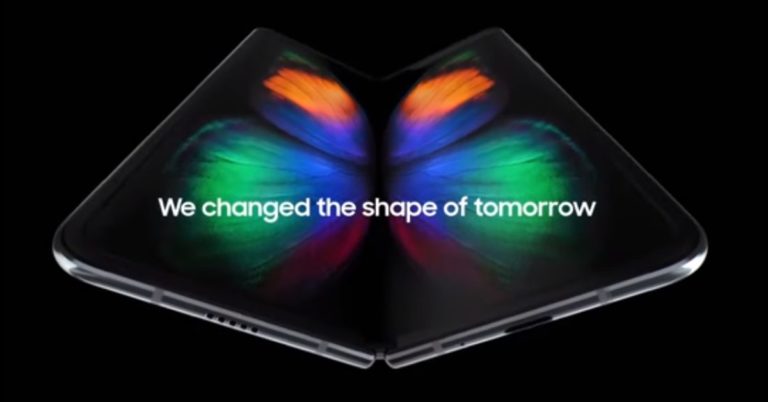
South Korean technology giant Samsung had unveiled its first foldable smartphone – Galaxy Fold – at the Unpacked event in San Francisco in February 2019. The device was showcased with the flagship Galaxy S10-series, and was considered to be one of the unique looking and impressive devices at the time of announcement. Days before its official launch, Samsung Galaxy Fold was diagnosed with multiple problems like blackened screen and hinge issues. After that, Samsung recalled all its Galaxy Fold units and put an indefinite halt to the launch of the Galaxy Fold smartphone.

Later, the company confirmed that it was working on solutions to fix the problems of the Galaxy Fold. Earlier, a spokesperson from the company had said that it will be releasing the Galaxy Fold in the coming weeks but he didn’t mention the dates of the launch.

Now, a 5G variant of Samsung Galaxy Fold has received the FCC certification. According to the leaks, the Galaxy Fold 5G variant’s FCC certification was filed back in April 25, 2019 and the one from an EMC report was approved on June 3. The leaks were first spotted by My Smart Price and if these leaks are true, then we might be seeing the launch of the Galaxy Fold soon enough. The EMC (Electromagnetic Compatibility) test makes sure that the handset doesn’t emit too much energy to cause interference to or from other devices.

We should mention that Galaxy Fold that was launched earlier this year did not come with 5G connectivity, so this seems to be a new variant of the handset. The 4G variant of the device supports dual-SIM cards through a nanoSIM along with an eSIM card. On the other hand, the 5G variant will support a single SIM card.

Other than this, the 5G variant of the Galaxy Fold still holds similar specifications and features that were present in the regular model of the smartphone. However, it will pack a smaller 4,235mAh battery instead of a 4,380mAh battery.

Talking about the delay of the Galaxy Fold, it was found by the YouTube Reviewers that the display of the Galaxy Fold was too fragile and was easily damaged. Due to Samsung’s recall of its Galaxy Fold devices, Huawei also delayed the launch of its Mate X foldable smartphone.

It may seem like the foldable smartphones might not make it to the mainstream market anytime soon, however, Samsung is still optimistic about it. The company’s Display VP said last week that Samsung will be launching the Galaxy Fold soon. However, he didn’t give a timeline of the launch so nothing can be said for now.

For the latest gadget and tech news, and gadget reviews, follow us on TwitterFacebook and Instagram. For newest tech & gadget videos subscribe to our YouTube Channel. You can also stay up to date using the Gadget Bridge Android App.

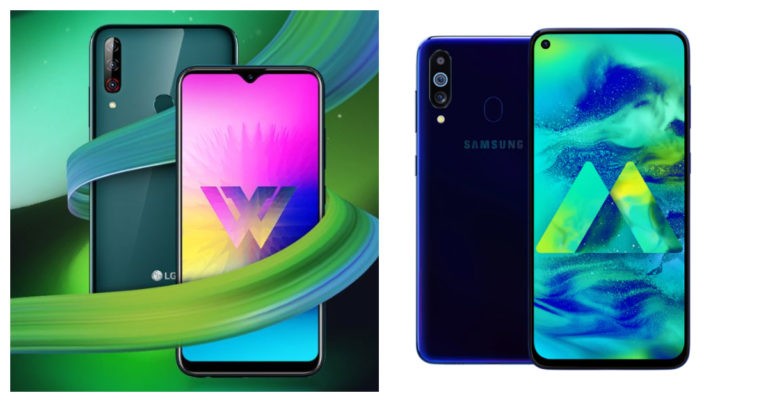
Compare: LG W30 Pro and Samsung Galaxy M40

After weeks of releasing teasers, LG finally launched its new W-series smartphones in India. According to the company, the LG W-series smartphones are aimed at the entry-level smartphone segment in India and it has three smartphones in it – the W10, W30 and the W30 Pro. We are comparing the top-end of the lot the LG W30 Pro with the newly launched Samsung Galaxy M40. Read on to find out how these two new devices compete against each other:

Display

LG W30 Pro: 6.217-inch HD+ FullVisionTM Display

Samsung Galaxy M40: 6.3-inch Full HD+ Infinity-O display with Gorilla Glass 3

The Samsung Galaxy M40 holds a larger display, and offers more resolution than the new LG W30 Pro and it also comes with a Gorilla Glass protection on top. This makes it the winner here.

Processor

LG W30 Pro: Octa-core Qualcomm Snapdragon 632 SoC

Samsung Galaxy M40: Qualcomm’s Snapdragon 675 SoC

Both the smartphones come with the latest CPUs. However, Qualcomm’s Snapdragon 675 SoC is fairly more powerful than the Snapdrgaon 632 SoC.

Rear camera(s)

LG W30 Pro: Triple Real Camera setup with 13 MP main sensor + 5MP secondary sensor + an 8MP tertiary sensor

Samsung Galaxy M40: Triple-rear camera setup with a 32MP main sensor + an 8MP ultra-wide-lens + a 5MP depth sensor.

Both the smartphones feature a triple-rear camera setup on their back panels but the resolution of their main cameras vary. Other than that, the other two cameras hold similar resolutions.

Selfie camera

LG W30 Pro: 16MP selfie camera

Samsung Galaxy M40: 16MP front camera

Both the smartphones have the same 16MP selfie camera. So as far as front-facing cameras go, there is a tie.

RAM and storage

LG W30 Pro: 4GB RAM/ 64GB storage

Samsung Galaxy M40: 6GB RAM/ 128GB storage

Samsung Galaxy M40 comes with more RAM and storage than the LG W30 Pro as it holds just 4GB of RAM.

Support for microSD card

LG W30 Pro: Yes

Samsung Galaxy M40: Up to 512GB

Both the smartphones support a microSD card and they both come with a hybrid SIM slot, so users will be able to put either two SIMs or a single SIM and a microSD card. But till the microSD card capacity of the LG W30 Pro is unannounced, we can’t really say which among the two wins.

Battery

LG W30 Pro: 4,000mAh battery

Samsung Galaxy M40: 3,500mAh battery

This is the department where the LG W30 Pro shines as it packs a larger 4,000mAh battery as compared to Samsung Galaxy M40’s 3,500mAh battery.

Operating system

LG W30 Pro: Android 9 Pie

Samsung Galaxy M40: Android 9 Pie skinned with One UI

Both the smartphones run Android 9 Pie. One comes with LG’s UI while the other has the Samsung’s One UI. However, we should mention that Samsung is far better than LG when it comes to rolling out software updates.

Starting Price

LG W30 Pro: TBA

Samsung Galaxy M40:  Rs 19,990 for the 6GB RAM/ 128GB storage variant

Although the price of the LG W30 Pro is currently not known but considering the specifications of the smartphone, it should be priced under Rs 15,000. On the other hand, the Galaxy M40 holds a price tag of Rs 19,990. However, it does come with better specifications and features. Both the smartphones have their own pros and cons, but then, we would have to wait till the price of LG W30 Pro is known to call one among the two a better value for money device.

For the latest gadget and tech news, and gadget reviews, follow us on TwitterFacebook and Instagram. For newest tech & gadget videos subscribe to our YouTube Channel. You can also stay up to date using the Gadget Bridge Android App.

Nokia smartphone buyers exchanging old devices can now get a 10% additional value: Here’s how 

0

HMD Global has partnered with Cashify to provide an exchange offer to it buyers. The Nokia smartphone buyers who are planning to exchange their old handset can avail an additional 10% value on the exchanged devices. The company has come up with this offer under the ongoing Exchange Festival. Nokia has also provided a list of devices that are valid for the buyback offer on which you can avail an additional value of 10%.

During the Exchange Festival, the company has made it easier for its customers to buy a new product by exchanging the old one. This offer is available on the company’s official website Nokia eStore in India. We should mention that the company is offering an additional 10% value that is valid until June 28 on old Nokia smartphones. The offer is being provided on all Nokia smartphones.

The Buyback offer can be availed in four easy steps.

  • First, visit the Nokia eStore.
  • Then choose a new Nokia smartphone. Before adding the smartphone that you chose in the cart, click the ‘Start Buyback’ button. Following this, answer a few questions related to the condition of your old smartphone that you are willing to exchange. Based on what your answers are, Cashify will generate a quote.
  • When you receive the generated quote, continue shopping and then place an order for the smartphone model by Nokia of your choice. After the confirmation, the company will notify you about the estimated delivery time.
  • After the order is delivered, Cashify’s team will contact you to set an appointment. According to your availability, an agent from the company will visit you and examine the condition of your device that you want to exchange. The agent will offer you an amount based on the examination. You can accept the amount either in cash or via payment gateways like bank transfer and wallets.

Currently Cashify is offering the Buyback programme across all the major cities including Hyderabad, Indore, Mohali, Ludhiana, Chandigarh, Bhopal, Surat, Navi Mumbai, Noida, Jalandhar, Thane, Ahmedabad, Delhi, Bangalore, Lucknow, Mysore, Faridabad, Pune, Kolkata, Vijayawada, Gurgaon, Nagpur, Pondicherry, Hubli, Agra, Howrah, Chennai, Coimbatore, Vadodara, Mumbai, Ghaziabad, Amritsar.

Devices that are valid for the buyback offer include Nokia 2.2, Nokia 3.2, Nokia 4.2, Nokia 6.1 Plus, Nokia 7.1, Nokia 8.1, Nokia 5.1 Plus, the new Nokia 8110 4G, Nokia 3310 Dual SIM, Nokia 3.1 Plus, Nokia 2.1, Nokia 8 Sirocco, Nokia 6.1, Nokia 5.1 and others.

For the latest gadget and tech news, and gadget reviews, follow us on TwitterFacebook and Instagram. For newest tech & gadget videos subscribe to our YouTube Channel. You can also stay up to date using the Gadget Bridge Android App.


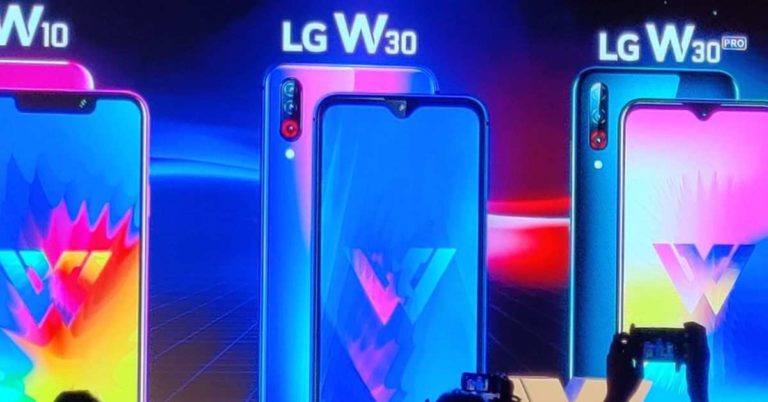
LG W30 Pro, W30 and W10 smartphones launched in India: Price and specifications

South Korean technology company LG has launched three smartphones in India today. The company has launched its LG W30 Pro, W30 and W10 handsets that are touted by LG to come with ” the best-in-class cameras, display and battery.” LG W30 and W30 Pro come with an AI-backed triple rear camera setup, a waterdrop-shaped notch on their display and a powerful 4000mAh battery. Here’s a look at the details of the smartphones:

LG W30 and LG W10 price in India

The company has said that LG W10, W30 and W30Pro will be available exclusively on Amazon India’s website. The handsets will be going on flash sales starting 3rd July. While LG W10 is available at RS 8,999, LG W30 costs Rs 9,999. The price and availability of LG W30 Pro will be announced later.

Speaking on the launch, Mr Ki Wan Kim, Managing Director, LG Electronics India, said “Today is a significant day for us at LG as we add three new smartphones to our product portfolio that are made in India. LG has always believed in bringing customized innovations that offer need-based propositions. Therefore, in every market, we listen to our consumers and reflect that feedback in our products. This philosophy has enabled us to remain at the top and we aim to achieve similar success with our new W-Series smartphone range.”

Mr Advait Vaidya, Business Head- Mobiles, LG India said, “The W-series is a demonstration of LG’s continued commitment to setting new performance standards and inspiring creative expression. We are confident that it will be a game changer in the category as it provides an elevated experience for our tech-evolved consumers coupled with the right pricing. The LG W Series will not only enable our consumers to capture brilliant images but with customizable notch feature, it will also give users flexible options when it comes to setting up the display to fit their tastes and style. With this new range of smartphone developed on Indian insights, we will continue to evolve by offering outstanding quality and advanced features in the mobile category, aimed at exceeding the expectations of our consumers.”

LG W30 Pro, W30 and W10 specifications

The LG W30 Pro smartphone sports a 6.217-inch HD+ FullVisionTM display that has an aspect ratio of 19:9. It is powered by a 1.8GHz Octa-Core processor and comes with 4GB of RAM and 64GB of internal storage. For imaging duties, there is a triple rear camera setup with a 13MP sensor, a 5MP lens and an 8MP sensor. On the front panel, there is a 16MP sensor for selfies and video calls. It also supports face unlock and bokeh effect. The smartphone houses a 4,000mAh battery.

Coming to LG W30, the smartphone comes with a 6.26-inch HD+ IPS Dot FullVisionTM Display that has an aspect ratio of 19:9 and is powered by 2.0 GHz Octa-Core Helio P22 processor. It also comes with a triple rear camera but has different sensors (12MP+ 13MP+ 2 MP). It has the same selfie camera as its older sibling. The device packs 3GB of RAM and 32GB of internal storage and houses a 4,000mAh battery.

Speaking of LG W10, the smartphone sports a 6.19-inch HD+ FullVisionTM Display that has an aspect ratio of 18.9:9. Powered by 2.0 GHz Octa-Core Helio P22 processor, the smartphone has 3GB RAM/32GB storage. It comes with a dual rear camera setup with 13MP and 5MP sensors and sports an 8MP.

We should also mention that LG W30 and W30 Pro come with a customizable mode for notches that gives users flexible options when it comes to setting up the display according to their preferences. The display can be fully expanded for a bezel-less look or it can be set to a more traditional style where the notification bar is completely blacked out.

For the latest gadget and tech news, and gadget reviews, follow us on TwitterFacebook and Instagram. For newest tech & gadget videos subscribe to our YouTube Channel. You can also stay up to date using the Gadget Bridge Android App.

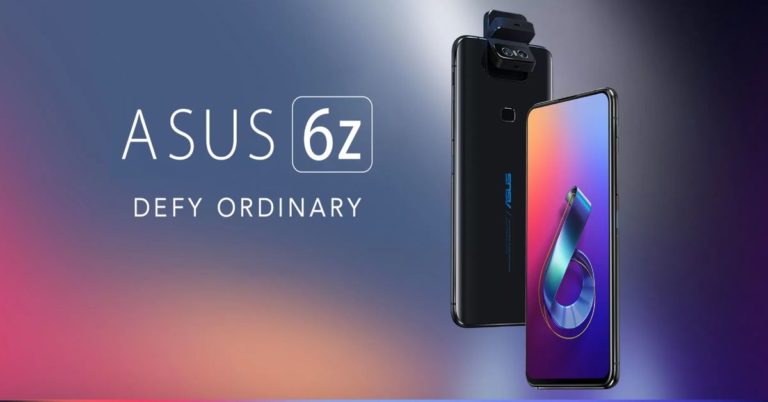
Asus 6Z with a rotating camera setup goes on sale via Flipkart in India

0

Taiwanese technology company Asus launched its 6Z smartphone in India this month. But now, the handset has gone on sale in India via Flipkart. If you are an interested buyer, you can head to the website now as the sale started at 12 pm IST. Last month, the company launched its flagship smartphone in its home country under the name of Asus Zenfone 6. Then, Asus launched the smartphone in India after rebranding the device because a High Court ruling stated that the company cannot launch any products in India with Zen or Zenfone branding.

The key highlights of the smartphone include a 48MP primary sensor that is housed in a rotating camera module and a 5,000mAh battery. Here’s a look at the price, specifications and sale details of the smartphone:

Asus 6Z price

Asus 6Z smartphone was launched in three storage options in India. The base model of the smartphone has 6GB RAM/64GB storage and is available at a price of Rs. 31,999. The 6GB RAM/128GB storage and the 8GB RAM/256GB storage variants of the handsets are priced at Rs 34,999 and Rs 39,999 respectively.

The smartphone will go on sale today at Flipkart from 12 PM noon (IST). The handset will come in two colour options – Midnight Black and Twilight Silver. The e-commerce website is offering the buyers of Asus 6Z with its Complete Mobile Protection at a discounted price of just Rs.99. Otherwise, the same plan costs Rs 3,999.

The company is also offering its buyers an extra 5% additional instant discount with EMIs on ICICI Bank Debit or Credit cards. Flipkart is also offering the buyers who have Axis Bank Buzz Credit Card with an instant discount of 5%.

Asus 6Z specifications and features.

Asus 6Z smartphone runs on Android 9.0 with Zen UI 6 baked on the top. The device comes with a 6.4-inch full-HD+ IPS display that has a screen-to-body ratio of 92% and an aspect ratio of 19.5:9. The newly launched Asus 6Z smartphone’s screen also has 600 nits peak brightness and a colour gamut of 100 DCI-P3. The device is powered by Qualcomm’s Snapdragon 855 SoC coupled with Adreno 640 GPU and up to 8GB of RAM. The dual-SIM (nano) smartphone has 256GB of internal storage and users can install a microSD card of up to 2TB.

On the imaging front, the smartphone sports a flip rotating camera module that comes with a 48MP primary sensor that has an f/1.79 aperture paired with a 13MP ultra-wide-angle sensor. The rotating camera module can be used both as a regular and a selfie camera. In addition to this, the device houses a 5,000mAh battery and it comes with support for Quick Charge 4.0. It also comes with dual speakers and dual smart amplifiers. For connectivity, there is USB Type-C, NFC, Wi-Fi, Bluetooth 5.0, and GPS.

For the latest gadget and tech news, and gadget reviews, follow us on TwitterFacebook and Instagram. For newest tech & gadget videos subscribe to our YouTube Channel. You can also stay up to date using the Gadget Bridge Android App.


Apple acquires self-driving startup Drive.ai days before it dissolved

Self-driving startup Drive.ai was once valued at $200 million. However, recent reports indicated that the company was shutting down and laying off all its staff. But now, that’s not going to happen as Cupertino-based technology giant Apple has confirmed that it has acquired the startup.

Around three weeks back, Apple was said to be in talks to acquire Drive.ai, that was founded in 2015 by machine learning researchers from Stanford University. The startup used to run a ride-hailing service in Texas, but the difference was that it used autonomous shuttles. The deal could mean that a dozen of Drive.ai engineers may join Apple’s Project Titan, which is known to have gone through its own set of troubles.

Earlier today, it seemed like the deal between the two companies did not work out as Drive.ai filed a notice with the state agency that indicated that it permanently wants to close down and lay-off its 90 employees. The report about this first surfaced in the San Francisco Chronicle.

Prior to this, a year ago, Drive.ai looked like one among the most promising startups that focussed on autonomous cars. The company was primarily known for using deep learning to recognize and avoid objects on the road. The company also made headlines last year when it conducted fixed route tests with its autonomous vehicles without any human safety drivers on public roads.

The company’s fleet consists of a modified Nissan NV200s that were orange in colour and had a wavy blue stripe and “self-driving vehicle” emblazoned on the side. The cars also featured four LED screens — one was placed on the hood, one on the rear and two were above each of the front tires. These display messages to pedestrians and anyone else in close proximity to the car. The screens displayed messages that conveyed the vehicle’s intent to others on the road. The messages included words like ‘Waiting’, ‘Going’, ‘Entering’, ‘Existing’, and more.

While a number of investors have put billions of dollars into autonomous vehicle startups and a number of them have readjusted their timelines because of the challenges that they have encountered. A lot of experts also see the full deployment of self-driving cars being years away.

As of now, there is no clarity on whether the company will be going ahead with its layoffs on Friday. According to reports, Apple has purchased Drive.ai’s assets, including its autonomous cars. However, it has also been said that the technology giant has chosen to hire engineers away from Drive.ai directly. Other workers may not get the same option.

For the latest gadget and tech news, and gadget reviews, follow us on TwitterFacebook and Instagram. For newest tech & gadget videos subscribe to our YouTube Channel. You can also stay up to date using the Gadget Bridge Android App.

Flipkart’s Qualcomm Snapdragon Days Sale begins: Discounts on Asus ZenFone 5Z, ZenFone Max Pro M1 and ZenFone Max M1

0

Taiwanese electronic maker Asus has partnered with Indian e-commerce platform Flipkart to bring the Qualcomm Snapdragon Days sale. The sale will start from today and will go on till June 30, 2019. In the sale, the users will get most of the Asus smartphones along with discounts and offers. The 2018 flagship of the company – Asus ZenFone 5Z – is getting Rs 6,000 off on all its variants. The Asus ZenFone Max Pro M1 is getting Rs 2,000 off on its 4GB variant. Other smartphones from Asus are also getting price cuts and offers during the sale. The users who purchase Asus smartphones in the Qualcomm Snapdragon Days sale will also get a No cost EMI option on Bajaj Finserv along with Credit and Debit cards from all the banks (for 3 and 6 months). Lastly, Flipkart’s Complete Mobile Protection Plan can also be bought in the sale for a low price.

The Asus ZenFone 5Z was the flagship smartphone of the company in 2018 and it has now packed all the top-end specifications. As mentioned earlier, all the models of the Asus ZenFone 5Z is getting a price cut of Rs 6,000. The ZenFone 5Z with 6GB RAM/ 128GB storage was earlier selling at Rs 27,999, but during the Qualcomm Snapdragon Days sale, it is being sold at Rs 21,999. Similarly, the top-end 8GB RAM/ 256GB storage model of the smartphone earlier had a price tag of Rs 31,999 and now, it is being sold at Rs 25,999.

Similarly, the mid-range smartphone from Asus, the ZenFone Max Pro M1 is getting a price cut of Rs 2,000 on its 4GB RAM model. While earlier, the 4GB RAM/ 64GB storage variant sold for Rs 10,499, now it sells for Rs 8,499. Other than that, the 3GB RAM/ 32GB storage variant of the device sold for Rs 8,499 earlier and during the Qualcomm Snapdragon Days sale it has been reduced to Rs 7,999. The top end variant of the Asus ZenFone Max Pro M1 with 6GB RAM/ 64GB storage earlier sold for Rs 12,499, but during the sale, it is available for Rs 11,999.

Lastly, the entry-level smartphone from the Taiwanese smartphone maker – the Asus ZenFone Max M1 – is also getting a price cut of Rs 500 off of its original price. So, earlier it sold for Rs 6,999, but during the Qualcomm Snapdragon Days sale, the device will be available for Rs 6,499.

Asus had made sure that the smartphone of every price point is available at a discount, so the users who wanted to get their hands on a handset running the Snapdragon CPU can go for any of these devices.

For the latest gadget and tech news, and gadget reviews, follow us on TwitterFacebook and Instagram. For newest tech & gadget videos subscribe to our YouTube Channel. You can also stay up to date using the Gadget Bridge Android App.

Facebook may let you customize in-app notification badges

Social media giant Facebook is testing a new option of notification customization in order to make the elements present on its platform less distracting. According to a recent report that has surfaced online, Facebook is currently testing its ability to turn on and off the red notification dots on its platform that you get for various individual tabs. For those unaware, these are also known as badges. This should be useful for many. Not everyone is interested in what’s happening at Watch or Groups, so in a way, it’s distracting to see these badges on the top of the mobile app.

This development was found by app researcher and reverse-engineering expert Jane Manchun Wong. A report in TechCrunch said that Facebook is conducting a global experiment on its iOS as well as Android platforms. Speaking to the technology website, a Facebook spokesperson said, “We are testing new ways to give people more control over the notifications they receive in the Facebook app.”

The spokesperson also said that Facebook is aware of the fact that users don’t have to be reminded again and again that notifications are waiting for them. This is particularly true because now there are options of managing how specific app notifications appear with system-level customizations in Android as well as iOS.

Last year, John Herrman wrote an article in New York Times titled ‘How Tiny Red Dots Took Over Your Life’ that spoke about how the new notification design has been made in a way that it actually increases the likelihood of an average smartphone user to tap on an app icon or an in-app icon.

In his article, Herrman said, “What’s so powerful about the dots is that until we investigate them, they could signify anything: a career-altering email; a reminder that Winter Sales End Soon; a match, a date, a ‘we need to talk’.” So, the effect that a small notification can have on our brains can be categorised as hypnotizing to a great extent.

A number of technology companies have lately had awakenings about the kind of effects their apps and services can have on people and even society at large. A lot of companies have also started making efforts to help people manage their relationship with technology in a better and healthier manner. Google‘s Digital Wellbeing and Apple’s Screen Time are two such initiatives that have been taken by technology companies to help us manage our time on our devices.

However, until now, Facebook has not come up with its own way of helping people manage their time better. But then, it is worth pointing out that the social media giant does have dashboards for monitoring usage in the app as well as in Instagram. If it introduces notification customization, it will be another step in the direction of helping its users save their time.

For the latest gadget and tech news, and gadget reviews, follow us on TwitterFacebook and Instagram. For newest tech & gadget videos subscribe to our YouTube Channel. You can also stay up to date using the Gadget Bridge Android App.