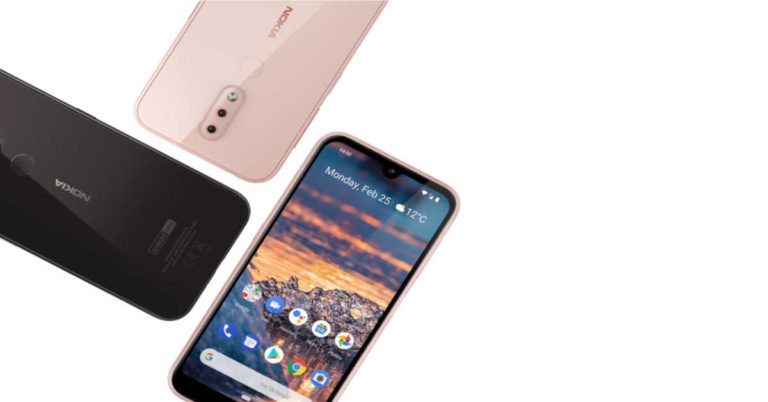
HMD Global launched its Nokia 4.2 smartphone in India today. Priced at Rs 10,990, Nokia 4.2 comes with a 5.71-inch HD+ a-Si TFT display and is powered by an octa-core Qualcomm Snapdragon 439 SoC.
It houses a 3,000mah battery and comes with a dual rear camera setup with 13MP and 2MP sensors. Watch our unboxing video of the smartphone to know more about it.
Xiaomi recently announced that its Redmi X smartphone is set to launch on May 14 – the same day as OnePlus 7. And now, the competitor of the Redmi X, the Realme X’s official launch date has also been announced. Realme confirmed that the Realme X handset will be launching on May 15 at an event in Beijing. Other than the Realme X, the company will also be bringing the Realme X Youth Edition/ Lite Edition. According to the leaks, the Lite Edition of Realme X is just the Realme 3 Pro with a different name. Before the official launch, the Realme X is available for registrations on the major Chinese e-commerce platforms. And the device is likely to make its way to India after launching in China.
Realme announced the launch date of its upcoming device on Chinese official social networking platform Weibo in a post that read that the device will be launched in Beijing on May 15. The company also said that the users can now register for the upcoming smartphone on online shopping platforms like JD.com or Suning. The first 100 customers to register for the Realme X will get a pair of Realme headphones free. Other than that, the company didn’t say anything about the Lite or Youth Edition of the Realme X. Earlier, the handset was spotted alongside the Realme X on the TENAA listing.
Realme X specifications and price (expected)
The Realme X will sport a dew-drop notched display with a Gorilla Glass 5 protection on top. It is expected to be powered by the Snapdragon 730 SoC and will also feature an in-display fingerprint scanner.
The Realme X might come with VOOC 3.0 fast charge support but its exact battery configuration is currently not known. On the camera front, the Realme X may come with a 48MP primary sensor paired with a 5MP depth sensor. The details about the front camera are currently not known.
It is expected that the Realme X will come with three variants. While its base variant with 6GB RAM and 64GB storage is expected to carry a price tag of CNY 1,599 (approximately Rs 16,500). A higher-end model will come with 6GB RAM and 128GB storage and will reportedly hold a price tag of CNY 1,799 (approximately Rs 18,500). Coming to the top end variant pf Realme X, it is said to have 8GB RAM and 128GB storage is expected to be priced at CNY 1,999 (approximately Rs 20,600).
HMD Global has today launched its Nokia 4.2 smartphone in India. The smartphone was initially launched at the Mobile World Congress 2019 in Barcelona and today, it has finally made its way to India. Although Nokia 4.2 falls in the budget range, it comes with a dedicated button for Google Assistant and has an LED notification light on its power button. The company has also taken to Nokia Mobile India’s Twitter handle to tease the features of the handset there.
Like all the other Nokia smartphones from HMD Global, Nokia 4.2 is a part of Google’s Android One program, which basically means that it will be getting timely Android updates for two years and security patches for three years. Here are the pricing details and specifications of the newly launched Nokia 4.2 smartphone that you should know about:
In This Article
Nokia 4.2 price in India
Nokia 4.2 smartphone is available only in one variant in India that comes with 3GB of RAM and 32GB of storage. The handset is priced at Rs 10,990 in the country and will be available starting today.
Interested buyers can head to Nokia’s official online store to buy the Nokia 4.2 handset. The device will be on sale on the platform exclusively for a week, after which it can be picked up from Croma, Reliance, Sangeetha, Poorvika, Big C, and MyG starting May 14.
We should mention that at this price, the newly-launched Nokia 4.2 smartphone competes with the likes of Redmi Note 7 Pro, Realme 3 Pro and Samsung Galaxy M30 (review).
On using the code LAUNCHOFFER till June 10, 2019, on the company’s official website, customers will be able to get Rs 500 off on the Nokia 4.2. In addition to this, Vodafone Idea subscribers will get an instant discount of Rs 2,500 via 50 vouchers of Rs 50 each. Customers will also be getting a free screen replacement that will remain valid for six months.
Nokia 4.2 specifications
Nokia 4.2 has support for dual SIM cards and runs Android 9.0 Pie out-of-the-box. The handset sports a 5.71-inch HD+ (720×1520 pixels) a-Si TFT display that has an aspect ratio of 19:9 and is protected by a 2.5D curved glass. Powered by an octa-core Qualcomm Snapdragon 439 SoC, Nokia 4.2 comes with 3GB of RAM and 32GB of internal storage. In case users want more storage, they can install a microSD card of up to 400GB.
On the camera front, the Nokia 4.2 sports a dual rear camera setup that comprises of a 13MP sensor that has an f/2.2 aperture and a 2MP secondary sensor that comes with an f/2.2 aperture. For selfies and video calls, there is an 8MP front-facing camera that comes with an f/2.0 lens.
The smartphone houses a 3,000mAh battery and in terms of connectivity options, it comes with 4G LTE, Wi-Fi 802.11 b/g/n, Bluetooth v4.2, GPS, NFC, Micro-USB, and a 3.5mm headphone jack. The sensors onboard include an accelerometer, ambient light and a proximity sensor. The device has a rear-mounted fingerprint sensor and it measures a 148.95×71.30×8.39mm.
Google’s I/O 2019 will finally begin today and during it, the company is expected to launch a number of new products and services and at the same time, announce some new ones. The major highlights of the event would be the Google Pixel 3a and Pixel 3a XL, Android Q, and smart home devices. The California-based technology giant will also come with some advancements related to its software ecosystem. Google would also talk about its other products such as Google Stadia gaming console and Google Assistant. The Google I/O 2019 will start today and go on till May 9 at Mountain View, California.
Google I/O 2019: What to expect and how to watch
The Google I/O 2019 will start at 10:00am PDT (10:30pm IST) and the company will be live-streaming it. Those who wishes to watch the livestream of the Google I/O 2019 can go on the official website of the event. The website also has the schedule of the sessions that will take place at the Google I/O 2019.
Other than that, the users can also watch it at the official Google Developers YouTube channel. There is also an official app for the Google I/O 2019 for Android. The users can either download the app or visit the official Developers Facebook and Twitter pages for the live updates.
Talking about the announcements and the launches at the Google I/O 2019, one of its main focus points will be the Google Pixel 3a and the Pixel 3a XL – mid-range versions of Pixel 3 handsets. Both smartphones have already been leaked multiple times in the past with their specifications. Even though they will be affordable, they will come with the Pixel’s famous camera setup. And since they will be a part of the Google’s Pixel family, they will be getting newer updated more quickly than other handsets.
Other than the smartphone, Google is will also be unveiling its Android Q OS, the successor of the Android 9 Pie. Google will be bringing new improvements and many new features to its Android operating system.
The company should give some details and make some announcements in the fields of Google Stadia, Machine learning, Google Assistant, Android TV, Self-driving cars, digital payments, Chrome and much more.
Furthermore, the company has already confirmed that it will be making hardware announcements at the Google I/O 2019. More details about the Google I/O 2019 will be available once it kicks off today at 10:00pm IST.
OnePlus is all set to launch a new flagship device and there is a lot of excitement in the air about the same. Apart from the leak, the company is also sharing a few details regarding the phone to keep that is feeding the frenzy. One such information that has come to light is that OnePlus 7 Pro will come with HDR10+ certification. What this necessarily means is that the display of OnePlus 7 Pro will be compatible with high resolution content from streaming services such as YouTube and Netflix.
Many leading TV brands come with HDR10+ certification as it provides adaptive frame-by-frame adjustments for the optimum representation of contrast from the HDR source content. What one gets HDR 10+ over HDR 10 is brighter content. HDR 10+ delivers 4000 nits of peak brightness, much higher than the older HDR 10 standard that supports 300 nits of brightness. Among the current crop of smartphones, only Samsung Galaxy S10 and Galaxy S10+ support HDR10+.
The company has also been confirmed that OnePlus 7 Pro will support UFS 3.0 storage, which will enable it to be faster than ‘comparable smartphones.
Days ahead of the launch, the price of OnePlus 7 Pro had been leaked by popular tipster Ishan Agarwal. He claims that the price of 6GB RAM/128GB storage model of OnePlus 7 Pro will be priced at Rs 49,999, while its 8GB RAM/256GB storage version will set you back by Rs 52,999. The OnePlus 7 Pro variant that will come with 12GB of RAM and 256GB of internal storage is expected to cost Rs 57,999. He has also said that the smartphone will be available in three colour options namely – Mirror Grey, Nebula Blue, and Almond.
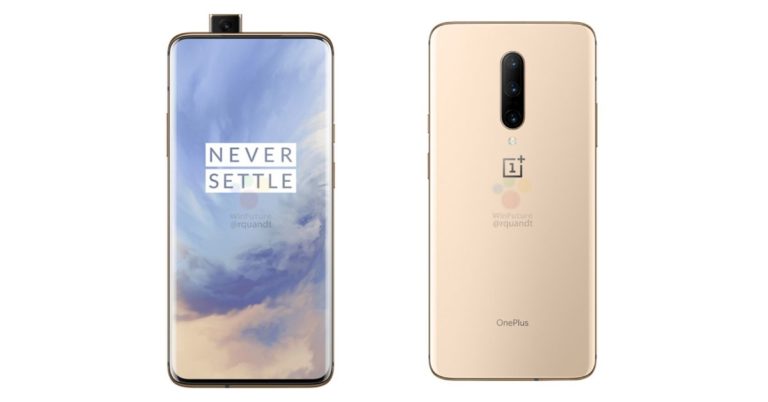
Just a week prior to the launch of OnePlus 7 Pro, its Almond colour variant has been leaked today in some renders that have been shared by technology website WinFuture. In the render that has been leaked, the smartphone can be seen with a pop-up selfie camera coming out of its top edge. The back panel of the device also shows a triple rear camera setup that has all the sensors stacked vertically.
The triple rear camera setup of OnePlus 7 Pro is expected to come with a 48MP, a 16MP, and an 8MP sensor. Other than this, the smartphone is also said to be powered by Qualcomm’s Snapdragon 855 processor, that guarantees a very smooth performance.
OnePlus 7 is undoubtedly one among the most anticipated smartphones of the year and it is all set to launch on May 14. The company has been teasing us with some of the features of the upcoming smartphone. In the latest teaser, it has confirmed that the OnePlus 7 Pro will come with a HDR10+ display along with UFS 3.0 storage.
The company has also revealed that the flagship device from OnePlus with the HDR10+ will give users a more dynamic and detailed display. The display of the device is said to provide adaptive frame-by-frame adjustments for the optimum representation of the contrast from HDR content. In addition to this, the display will produce around 4000nits of peak brightness. So, we would not be wrong to assume that the display of OnePlus 7 Pro will be one of its major features. Other smartphones with the HDR10+ support includes the Samsung’s Galaxy S10 and the Galaxy S10+. Earlier, OnePlus CEO Pete Lau revealed on Twitter that the OnePlus 7 Pro will come with UFS 3.0 storage which will make the device faster than the other smartphones in the market.
Also, there are rumours circulating on the internet that the upcoming OnePlus 7 Pro will have a 90Hz refresh rate display with a QHD+ resolution. Before its launch, the display of the OnePlus 7 Pro received the A+ rating from DisplayMate along with VDE certification making it safe for the eyes.
In a statement, the CEO Lau said, “HDR10+ is the future of not just television displays, but also smartphone displays as well. We hope that our newest device will set a new benchmark for the smartphone industry and open up a new world of visual fluidity for users. We’re glad we are leading the ranks in sharing quality technology with the world.”
Coming to its use of UFS 3.0, the UFS standard is a customised interface which is created to enable the fast read-write operations while minimizing the power consumption. This technology was introduced last year in 2018 and it brought improvements in the read and write speeds while doubling the bandwidth per lane. What it means in smartphone term is that it will make the OnePlus launch apps faster, reduce the loading time of the games and apps, and also giving the device a faster boot time.
To keep matters in perspective, Samsung Galaxy S10 and the Huawei P30 Pro comes with UFS 2.1 storage support. The new UFS 3 is 2 times faster than the UFS 2.1 and it offers a maximum data transfer rate of 23.2Gbps with up to 11.6Gbps per lane. It also consumes less power as it uses the 2.5V VCC.
With these new technologies being brought by OnePlus, the other competitors will have to think outside the box to not get left behind. More details about the OnePlus 7 and the OnePlus 7 Pro will be made available once it launches on May 14.
Chinese smartphone brand OnePlus is all set to launch its OnePlus Pro handset in exactly a week now. And as the date of the launch draws nearer, more and more number of leaks about the device are surfacing online. The hype around the upcoming smartphone is justified considering that OnePlus 7 Pro is touted to be the best handset yet from the company, and fans would obviously be excited. Days before the device’s launch, images of the OnePlus 7 Pro have emerged online.
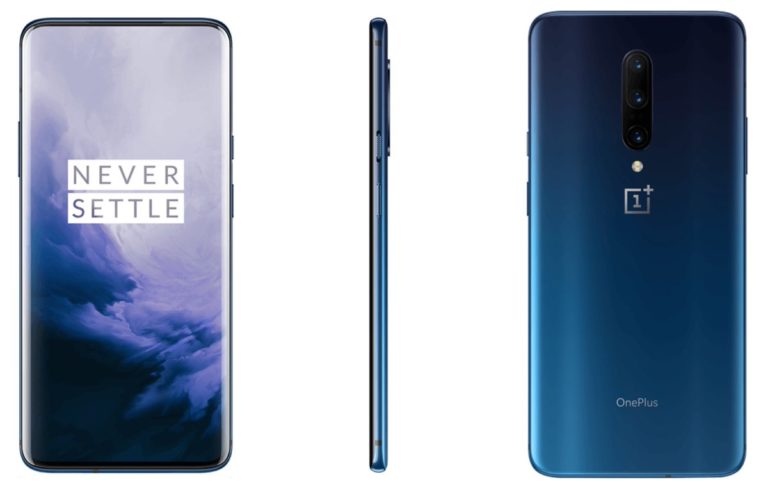
The report was first published by technology website WinFuture and it comes with an entire gallery of pictures of OnePlus 7 Pro. In the images, one can see the handset from all the sides. The pictures show all the colour variants of the OnePlus 7 Pro handset too.
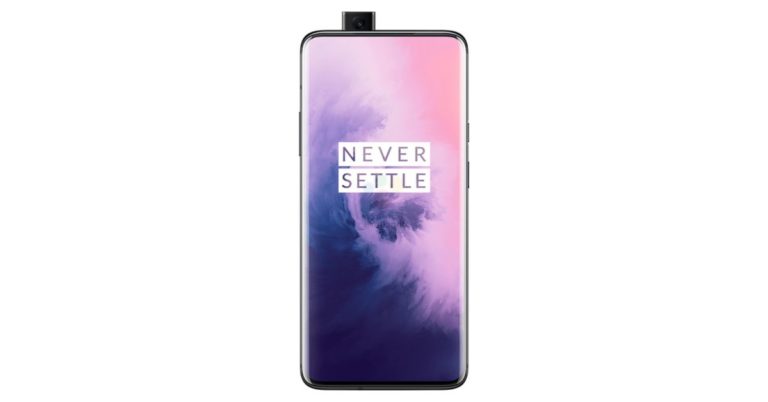
The report in WinFuture claims that the pop-up selfie camera on the top left is also visible for the first time in its extended module. Besides this, it can also be seen that the smartphone has a simpler but a more “reliable realization of the ear piece”, that will be placed in a narrow slot on the top of the device’s display.
OnePlus 7 Pro can be seen to come with a large number of antenna bands. While they make look rather unusual to some, we personally have no concerns about them since they would provide a higher call quality. The handset is seen to come with a 6.67-inches display (diagonal) with a 3120×1440 pixel resolution and its back panel seems rounded on the sides. The display of the smartphone will come with a refresh rate of 90Hz.
The images also show the OnePlus 7 Pro to come with only one loudspeaker at the bottom, that also houses a USB Type C port. In addition to this, it is claimed by the report that the handset comes with a 4,000mh battery that will have support for 30 watts Warp Charging technology. It can also be seen that the camera module on the device will protrude out a bit.
We should mention that OnePlus 7 Pro will be the first smartphone by the company to come with a triple rear camera setup and it is speculated that it will have a 48MP, a 16MP and an 8MP sensor. The handset is expected to be powered by the Qualcomm Snapdragon 855 Octa-core SoC and will come with up to 12GB of RAM and 256GB of internal storage.
HMD Global is all set to launch its Nokia 4.2 smartphone in India today. The company has been teasing to launch the smartphone for a few days now, and last week, it took to Twitter to say that the device will be launched on May 7. Nokia 4.2 smartphone was initially launched at the Mobile World Congress 2019 in Barcelona, Spain.
The key features of the handset include a dedicated button for Google Assistant and an LED notification light on the power button. A teaser shared by the company also showed the back of a smartphone, which looked exactly like Nokia 4.2, and this further cements the fact that the handset will finally make its way to India today.
Another teaser by HMD Global shows a pink coloured variant of Nokia 4.2 that was earlier shown at the MWC 2019, which means that we can expect to see this colour variant in India too. Like all other Nokia smartphones from HMD Global, the device is a part of Google’s Android One program. It features a fingerprint scanner and sports a vertically aligned dual rear camera setup. Here’s everything that we know about the smartphone:
In This Article
Nokia 4.2 price in India (expected)
Globally, Nokia 4.2 is priced at $169 (approximately Rs 11,700) for its base variant that comes with 2GB RAM and 16GB storage, while its 3GB RAM/32GB storage version costs $199 (approximately Rs 13,800). In India too, the pricing of the smartphone is expected to be similar. In this price range, it will compete with the likes of Nokia 4.2 will compete with smartphones like Redmi Note 7 Pro, Samsung Galaxy M30 (review) and Realme 3 Pro.
Nokia 4.2 specifications
Since Nokia 4.2 has been launched already, we know about the specifications of the smartphone. The handset comes with a 2.5D glass on the front as well as on the back. It is made of a polycarbonate body and has a metallic internal structure. Nokia 4.2 has a 5.71-inch HD+ (720 x 1520 pixel) display that has an aspect ratio of 19:9.
Powered by Qualcomm’s Snapdragon 439 SoC processor, the device from Nokia comes with up to 3GB of RAM and 32GB of internal storage. Users can also add a microSD card of up to 400GB for more storage. For imaging duties, Nokia 4.2 sports a dual rear camera setup that comprises of a 13MP camera with f/2.2 autofocus lens and a 2MP fixed-focus lens.
Microsoft today announced a number of new things that it will be doing at its Build 2019 developer’s conference. The software giant has a lot up its sleeve. Here, we have listed down all the plans that it spoke about at Microsoft Build 2019. Take a look:
In This Article
New features for Edge Chromium browser
The software giant unveiled a number of new features for its Edge Chromium browser at its developer’s conference. To begin with, the browser has got a new ‘IE Mode’, that will enable businesses to load old sites on the new browser with Internet Explorer. The company will let businesses customize the New Tab page and it is also building on new Collections feature that will let users collect text, images, and information in a note.
It is worth noticing that Microsoft will be keeling the links of the images or text that you drop in these Collections. Most importantly, the company is also focussing on privacy and would not let web trackers follow you on the internet.
Fluid Framework
With the new Fluid Framework developer platform, Microsoft will let developers build more interactive apps and services on the internet. We should mention that prior to this, the company has tried multiperson collaboration on the internet in Office as well as its Whiteboard app.
And now, with Fluid Framework, it looks like the software giant is getting the learnings to all. According to the company, the content produced using Fluid Framework will be split into different components and hence, developers will be able to use it across various apps.
Edge Chromium browser for macOS
Microsoft has teased that it is getting its Edge Chromium browser for macOS. We should mention that it was first launched last month on Windows as Canary and Dev builds, and now, it will be seen finally making its way to macOS. While the company has not given out any official dates yet, it has definitely hinted that it will be getting the browser to macOS too.
Enhancements to Cortana
Microsoft will be introducing some improvements to its digital assistant Cortana so that it can compete with its rivals like Google Assistant. The company has announced that going forward, the digital assistant will be able to respond to conversations, set reminders and even get meetings in place for the user. While Cortana could already do some of the things that were announced, the part about having conversations is the key addition.
New Minecraft AR games for smartphones
Last but not least, the company teased that a new Minecraft AR game will soon be coming to smartphones. While we do know now that Microsoft is working on the game, we have not been given any details about it as of now. It is speculated to be on the lines of Pokemon Go.
Netflix Originals Sacred Games had created quite a stir when it launched. The makers on Monday dropped the first look for the upcoming season (Sacred Games 2) and according to the same, Kalki Koechlin and Ranvir Shorey will be joining the cast.
In the same promo, we also see glimpses of Saif Ali Khan and Nawazuddin Siddiqui, who play Sartaj Singh and Ganesh Gaitonde respectively. However, they have saved the best for the last as we see Pankaj Tripathi as the mysterious Guruji. It is noteworthy that, Guruji did not have a lot of screen time in the first season but he is expected to play a vital role in the upcoming season. In this new promo, there is no date mentioned on when Sacred Games 2 will start streaming we now know it will happen sometime this year.
Kalki will be playing a character called Batya, while Ranvir will essay the role of Shahid Khan in Sacred Games 2. The duo will play pivotal roles in the unravelling of a new mystery.
Talking about her role in Sacred Games 2, Kalki Koechlin said, “Personally, I am a fan of the series, and it is super awesome to be a part of the Sacred Games and Netflix family. Season 2 promises to be much more exciting and I cannot wait for viewers to watch me in the series.”
Ranvir Shorey, on the other hand, said, “The digital platform is so empowering and working on this audience-favourite show has been an absolute delight! My character in Sacred Games 2, Shahid Khan, is a complete departure from any of the roles I have played before, and I am looking forward to fans across the world bingeing on the new season.”
Another change in the second season of Sacred Games is that it will now be directed by Anurag Kashyap and Neeraj Ghaywan. Neeraj is the director of critically acclaimed film Masaan and has replaced Vikramaditya Motwane, who is continuing as the showrunner.
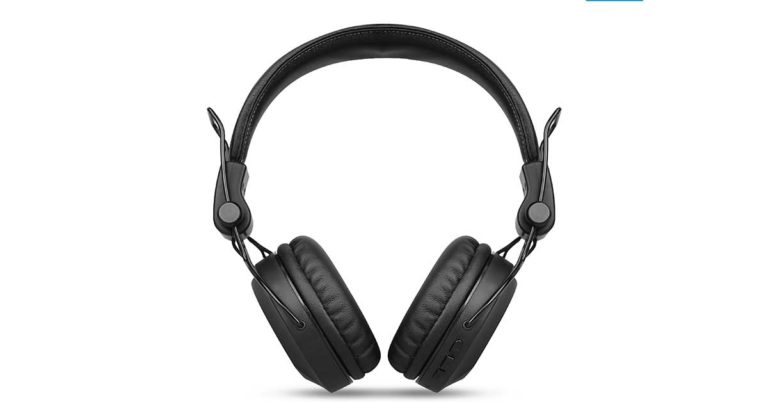
The audio market in India is getting bigger by the day. Some might give its credit to companies like Reliance JIO, as they have increased internet penetration in India. However, one main reason is that the youngsters are waking up to the smartphone culture and want better audio accessories and equipment to soothe their senses. Today, Blaupunkt BH01 Bluetooth wireless headphones were launched in India aimed at the next-gen user.
The German company forayed into personal audio range in Feb 2019 here. They are quickly bringing new headphones for each type of users. The Blaupunkt BH01 Bluetooth wireless headphones fall in the affordable range of BT headsets and are priced at Rs 1,699. The company claims that the resonance provided by these headphones are best in class and they work on Bluetooth 5.0, the latest BT tech right now.
These are over the ear pair of headphones, which have good cushioning on the ear cups as well as headband. The company has added a unique equalizer button on them that enables the user to switch between music mode and Turbo boost mode. Blaupunkt says, the Turbo boost mode is added keeping the Indian consumers in mind who listen to a lot of Bollywood and regional music.
Andrzej Cebrat, Managing Director, Blaupunkt said, “Blaupunkt in India has already become leaders in the range of home audio products. Blaupunkt with its century-old legacy of impeccable innovation and 20+ years of experience in Indian audio products segment. It aims to raise the bar in India market and meet consumer demands with its latest edition BHO1 in the Indian Market”.
The Blaupunkt BH01 Bluetooth wireless headphones come with 300 mAh battery. This can keep the headphones alive for up to 10 hours in a single charge. The battery gets fully charged in 2.5 hours. There is a mic function on the headphones too which lets the users make voice calls with the headphones. Other control buttons on the headphones include Play, Pause and track change.
With Blaupunkt BH01 Bluetooth wireless headphones, the company has extended its range of audio products in the Indian market. Now they have a range of televisions, sound bars and headphones. And at this price point, they will go ahead and fight for market space with the likes of Skullcandy, who already have a good lead in India.
Recently, we caught up with Mr Yogesh Mudras, MD, UBM India. We picked his brains on how the gaming industry in India is evolving and what role is the ecosystem playing in its growth. He gave us some good insights on what made gaming revive here, since it was a dying breed in India, just 5 years ago.
Can you tell our readers more about what the UBM India group does when it comes to gaming?
A little backgrounder, UBM India, organises exhibitions in the country and provides the industry with platforms that bring together buyers and sellers from around the world. Through a portfolio of over 25 large scale exhibitions, 40 content led conferences & seminars across the country.
In the gaming vertical, we host a 2-day interactive Game Development and Design Conference in India, which aims to bring different stakeholders under a single platform from the industry with keynote presentations, brainstorming panel discussions and case studies. This summit provides a platform for game designers, programmers, artists, producers, and business professionals in the gaming community to enhance their knowledge, address challenges and gain insights on future trends of the industry.
The conference is an initiative taken to address all aspects of gaming, ranging from current trends, a slow shift from mobile games to the augmented engagement level of online games, digital distribution platforms, game design and development for the Indian market, emerging technologies to smart monetisation. Under the aegis of UBM and Informa, we also present a lineage in Gaming expos and conferences with — Game Developers Conference ( GDC ) which is held annually in San Francisco attracting over 550 exhibitors, 28,000 attendees, hosting over 500 sessions with 830 speakers and another annual three day expo — Middle East Games Con in Abu Dhabi that delivers a world of innovation and the ultimate gaming experience bringing in the region’s vibrant and ever-growing community together.
Till a few years ago gaming was a dying breed, how did it revive?
Gaming in India saw its first light with games like Tetris, Space Impact, Solitaire, Super Mario and Pacman. In the last few decades, the gaming industry in India has come a long way and with a tag of being called the Boomtown of digital gaming, it is all set to reach, or even surpass, the $1 billion market by 2020. With millennials increasingly getting hooked to technology with mobile phones and social media the booming opportunity in the gaming space has revived. With the emergence and growing adoption of 3G/4G network mobile services, which was not there back then, and with increased production of games, the industry will get a further push. This, in turn, will offer new opportunities for developers, publishers and technology experts.
Over the last two years, gaming has hit new heights in India as there is a focus on the local development of games, large volume of users and rising potential of monetisation. This implies that gaming has the potential to emerge as a significant sector creating jobs for thousands of millennials who can join the creative workplace. Apart from this, game apps allow players to stream their games on social media platforms and post scores and statistics or invite people to join the force. Clearly, the gaming industry is far more evolved from the time when a lot of us were growing up.
What is accelerating its growth now?
The gaming industry has seen growth from casual to serious gamers. The major drivers for the gaming industry growth are increasing smartphone penetration and affordability, expanding the internet user base and declining data prices. The way games are run today has changed completely in terms of both engagement and revenues.
Rising demand for evolved gaming consoles such as PlayStation 4, Xbox One, Nintendo Switch etc., is being witnessed in urban areas of India. Government initiatives like Digital India and Make in India have created a lucrative pull towards the gaming industry, encouraging gamers to play games based on famous events like Kaun Banega Crorepati, T20fever.com, IPL and Khel Kabaddi, amongst others.
Moreover, the innovation of technologies, the focus of gaming companies is towards AR, VR and AI related games in the country and is anticipated to boost India’s gaming market in the coming year.
Gaming startups are spaces for rapid growth. With money moving into the Indian gaming industry, investors are certainly expecting exceptional results and return on investment, as India is the world’s second largest internet population with skills base across IT, Testing and Arts. Game development outsourcing is a promising trend in India, as there is abundant talent in the programming and art sectors. Although there are some challenges involved, this is the ideal time to invest in the industry given that just two years ago, India was placed on the 2nd position in the mobile game session’s category, securing a 13 per cent share.
There are many factors from both the organisation and a business perspective regardless of platform. Almost all new games these days are competitive and is a form of entertainment which give people the power to enjoy their passion for gaming in ways that suit their mood, lifestyle or interest. The global games industry has reinvented itself to maximize consumer engagement and is based on three dimensions playing, viewing and owning which helped in revenue growth on a global scale. As we look toward the future, we foresee games playing an increasingly impactful role in disrupting and reshaping traditional industries, from implementing individual game mechanics to an array of mergers and acquisitions crossing the boundaries of traditional industries.
How is India poised to become the next big thing when it comes to Gaming?
There are nearly 300 million gamers in India and 95% of them are below 30. Looking ahead, app store game downloads for local and foreign players are expected to reach 5.3 billion by 2020. Now, there are players in India who take gaming seriously and are professionally well trained who can compete with other country gamers in gaming Arenas and Tournaments. Tournaments like DOTA, players are winning prize amount of 1 Million dollars each, a professional gamer doesn’t have to do some boring 9-5 Job to earn money, he can earn it by doing what he loves to do. some of the trending games in India right now are PUBG, Clash Royale, HQ Trivia, 8 Ball Pool, and of course, Candy Crush, amongst others, which has given way to real-time experience, leading to massive user-retention.
Will UBM India Group hold gaming tournaments as well? If so, where and when?
UBM India is an aggregator platform, our aim is to support the gaming industry by hosting conferences such as the recently held Game Development and Design Conference. It is an initiative aimed at stakeholders to converse and discuss the way forward for the gaming industry in India. It is a platform for all the stakeholders in the gaming fraternity to come together and address all aspects of gaming, ranging from current trends, a slow shift from mobile games to the augmented engagement level of online games, digital distribution platforms, game design and development for the Indian market, emerging technologies to smart monetisation. Our aim is to bring together creative forces, everyone under one roof to provide opportunities for developers, hardware, software and middleware service providers, visualization technologies, content production services, online streaming service providers corporations, and the end user.
What according to you is the biggest challenge for this market, especially brands who sell hardware or software solutions to gamers?
With technology ever changing, to compete in this field itself is a huge challenge. The evolution of technology has caused the death of handheld gaming devices. These days, we have mobile gaming with consoles still thriving and each new invention of the console makes us believe in new invention and capabilities. The hardware platforms, on which the game runs, be it an arcade, a PC or a gaming console has witnessed a flat trajectory in the console market. The original systems weren’t designed to support the latest technology which means a lot of porting and backward compatibility and both hardware and software has to go hand-in-hand for this.
Technology giant Google will kick start its annual I/O 2019 developer conference on Tuesday. At the event, the company is expected to shed a light on the new features and improvements coming to its Android operating system, Google Assistant, and to its various popular apps and services. But this year, Google is expected to do more than what it normally does. The company is also expected to launch its mid-range smartphones at the event. Here, we have compiled everything that you can expect from Google I/O 2019 developer conference:
In This Article
Pixel 3a and Pixel 3a XL
Reports and rumours about the Pixel 3a and Pixel 3a XL smartphones have been surfacing online for months now. Google is expected to unveil its mid-range smartphones on the first day of Google I/O 2019. While the Pixel 3a will reportedly be available at a starting price of $399, the Pixel 3a XL will cost $479. It has also been said that both the smartphones will come with a camera performance that will be on par with its Pixel 3 flagship handsets. But then, they will come with a plastic build instead of a glass one, be powered by less powerful processors and come without wireless charging.
How do we know that the launch will on May 7?
There are various leaks about Google’s Pixel 3a and Pixel 3a XL smartphones. But if something does confirm the launch, it is the smartphone’s listing on e-commerce giant Flipkart’s website. The listing says that one can find out more about the two handsets on May 8. If the two smartphones will get listed on Flipkart on May 8, they have been unveiled on May 7, which is the first day of Google’s conference.
Details about Android Q
If there’s one thing that everyone looks forward to at Google I/O every year, it is the full preview of Android. While the company has already released two betas of Android Q, we are sure it is saving a lot of details for the event. The latest version of Android will give users more control over privacy, ability to limit apps to track their location only when required to, a system-wide dark mode, and a number of other features.
Android Q: Things that are little-known
While the features we mentioned till now are known because of the Android Q betas, there are other things that are not known popularly. For instance, Android Q will be able to work with foldable phones and will enable them to go from tablet to handset mode seamlessly. Google is also reported to get a Samsung Dex-like mode with Android Q.
There are plenty of questions that Google left unanswered about its cloud gaming service Stadia. We don’t even know how much Google Stadia’s subscription will cost yet. At its I/O developer conference this year, Google is expected to announce more about the new service.
Nest Hub Max with a smart display
The technology giant has revealed a Nest-branded Home Hub smart display without giving us too many details about it previously. It is expected to give us more details about it during Google I/O 2019. The device comes with a 10-inch display and has stereo speakers. That’s all that we know about the Hub Max right now, but then, one doesn’t have to be a genius to know that it will focus a lot on Google Assistant.
Additions to Google Assistant
Google Assistant just gets better every year. And this year should be no different. Google will be showing off what’s new to its digital assistant during the developer conference and how it has made it smarter than its rivals. News on Google Lens is expected too.
Duplex
One among the key highlights of last year’s Google I/O was the demonstration of Duplex, that enables Google Assistant to make calls to make reservations on your behalf. We are really hoping to find out more about it at this year’s event.
Enhancements in Google Photos
Let’s face it: A majority of us use Google Photos as the default app for photos now. Google knows this, and it never manages to get more useful features to the app every year. We will have to wait a little more to find out what it plans to get this year.
Maybe some additions to Android TV OS
While we know that there isn’t much to expect from Wear OS this year, there is no word about the Android TV OS. So, there is a possibility that Google will be upgrading it for users this year.
Facebook is not the safest and securest social platform in the world, but then, not any platform is 100% safe. Hateful, inappropriate and wrong content gets posted on social media every day. Most social media platforms deploy AI and automated software which filters the inappropriate content out. But since it is just a program, sometimes it cannot recognize objectionable content. And that’s where the moderators come in. Facebook moderators watch and keep an eye on the contents being posted on its platform every day. But even if that doesn’t help, every Facebook user has the option to report posts on the platform.
Although Facebook itself has the “Report Something” discussion page which describes how the user can report what they think is inappropriate. The guide helps the user by letting them know how to handle situations and how to report something or some post/video/image etc. But other than that, here’s how you can report something on Facebook:
In This Article
How to report on Hate Speech?
If the user finds something which promotes Hate Speech or something similar, then he can take the following steps to report it:
First, they need to click on the three dot icon on the right of the post.
They will then be taken to ‘Give feedback on this post’ page.
Once the user has submitted the reason why they are reporting the post, they would need to click on send. Facebook’s Community Standards have several things which the user can report if he thinks that it doesn’t belong on the social platform. Posts involving harassment, nudity, violence, terrorism, hate speech can be reported by the user.
Once reported, the user would get a response thanking him for his feedback.
How to report on an Impersonation/ Impersonator?
If a user finds someone impersonating them or someone they know on Facebook, the following steps can be followed:
First, the user needs to go to the profile of the person who is impersonating someone.
Then he needs to click on the three dots icon on the top right of the profile.
Once done, he needs to select the ‘Give feedback or report this profile’.
After that, the user needs to select the reason for his report. He can select the ‘Pretending to be Someone’ or ‘Fake Name’.
How to report an AD
Nowadays, Ads can become a constant pain if they pop-up every time the user is browsing on his social media page. They can hinder the user’s experience on social media. If this is happening with you or with someone you know, the following steps can be followed to stop it:
The user would need to click on the three dots on the right of the post (Ad).
After which he would need to select the “Hide Ad” or “Report Ad” option. Once done, that Ad will be removed from your Facebook feed immediately. This can be used on other social media platforms as well.
Instagram is currently the most popular social media app. While it’s a great way to share your photos with your friends, your Instagram profile can often be vulnerable to various privacy risks. But then, you can protect yourself on the platform by following certain easy steps. You don’t necessarily have to avoid the platform for it.
We have listed down everything that you can do to make sure your Instagram account is safe. Take a look:
In This Article
Make your profile Private
By not having a public profile, you are getting yourself and your content away from the eyes of anyone who you have not accepted as your follower. While it means lesser views on Stories and fewer likes on photos, it also means that your content is only visible to those whom you really care about on the app. Here’s how you can make your Instagram profile private:
Open your profile on Instagram.
Swipe to the left and click on the ‘Settings’ icon.
Tap on the option of ‘Privacy and Security’ and then select ‘Account Privacy’.
Enable the toggle next to ‘Private Account’.
If you are accessing your profile via the web, the only difference will be a checkbox in place of a toggle with the option of ‘Private Account’. Just click on it to select the option.
Once you do this, only your followers will be able to see what you post on the platform. Rest will have to wait till you approve their follow request.
Turn on two-factor authentication for your account
If you have the option of two-factor authentication turned on, then you will receive a text message with a code every time you log in to Instagram using a new device. You would be required to enter the code to log in to your account. This basically ensures that no one logs in to your account and poses as you. Here’s how you can do it:
Go to the Settings of your account and click on ‘Privacy and Security’.
Here, tap on ‘Two-Factor Authentication’ and then select ‘Get Started’.
Enable the toggle next to ‘Text Message.’ You can also alternatively enable ‘Authentication App’ if you have a preference of that over messages.
Check if your account has been hacked
Do you think that your Instagram account has been hacked? You will be able to confirm this by checking your past account activity on the app. Here’s how you can do that:
Go to ‘Settings’ and then tap on ‘Privacy and Security’.
Here, click on the option of ‘Access Data’. If you are accessing via the web, you would see the option of ‘View Account Data’ instead. Press on that.
You will come to a page that will give you information on various aspects of your profile including ‘Account privacy changes’, ‘Logins’ and ‘Logouts’ to name a few.
Check all of these and if you find any unfamiliar activity, it means that someone else has access to your account. If you are sure that this is the case, change your password.
Stop third part apps from getting your data
There are tonnes of third-party apps that will ask to get access to data on your Instagram account. But then, you should only give access to apps that truly require it to function correctly. If you think you have already given access to an app that doesn’t need your Instagram data, you can revoke it too. However, note that this can only be done via the web. Here are the steps that you need to follow:
Access your Instagram profile via the web.
Go to Settings.
Tap on ‘Authorized Apps‘. This will show you a list of apps that have access to your Instagram data.
Press on ‘Revoke Access’ for any app you don’t wish to share your data with and when asked to confirm, select ‘Yes’.
Remove some followers
Sometimes, in order to keep your account secure, you need to remove certain followers. This will make sure that they are not able to see your posts anymore. If you think you are in need of this, here’s what you need to do:
Select ‘Followers’ on your Instagram profile.
Search for the name of the follower you wish to block.
Tap on the three-dot icon next to their name, and then select ‘Remove’
Music streaming app Spotify has started testing ads that listeners can interact by using their voices, according to a recent report that has surfaced online. The concept behind these ads is that when a user hears a voice-controlled advertisement, all they have to say is ‘Play Now’ to listen to a piece of content that they would find relevant. As of now, the app is using two ads to test the new functionality. One of them is for Axe products by Unilever and the other is for a podcast called ‘Stay Free: The Story of the Clash’, which is exclusively available on Spotify.
So basically, if a user says the key word during an ad, you will be taken to the podcast or the Axe-product playlist. According to the company, the microphone of the user’s smartphone will only be active during the duration of the ad being played on Spotify. In case the user says anything other than ‘Play Now’, the advertisement that is being played will get deactivated.
As of now, Spotify is testing the new ad feature on Android as well as on iOS versions of its app. However, the clear use case here are speakers that are activated by voice and we should mention that Spotify, during its earnings call, descried it as “critical area of growth”.
One among the major competitors that Spotify has in the United States is Pandora, which also recently experimented with ads that can be controlled by voice. But then, in Pandora’s case, it only added to the voice commands that were already present on its service since the beginning of the year.
It is also worth mentioning that currently, Spotify is only testing the new ad-related feature only in the United States. In addition to this, the feature will only be activated if you have the music streaming app‘s voice controls turned on.
In case you don’t like the concept of voice-controlled ads, you can also disable them completely by heading to the Settings section of your app and disabling the ‘Voice-Enabled Ads’ toggle.
This is not the only feature that Spotify has been experimenting with. A recent report claimed that the music streaming app will be placing suggested podcast episodes into playlists that are generated algorithmically for its users.
We should mention that this year, Spotify plans to spend $500 million on acquisitions that it plans on making in the podcast industry, so, it’s not surprising to see that it is coming up with features like these already.
OnePlus 7 Pro’s price in India has been leaked weeks ahead of the smartphone’s official launch. It has been reported that OnePlus 7 Pro will be going on sale in the country at a starting price of Rs 49,999 for its 6GB RAM/128GB storage variant. It is worth noticing that this information has come in just a day after OnePlus 7 Pro went on pre-orders in India on Amazon’s website.
OnePlus 7 Pro is all set to debut on May 14 and along with it, the company will also be launching OnePlus 7. The key highlights of the smartphone are reported to be a pop-up selfie camera, a display with a refresh rate of 90Hz and Qualcomm’s Snapdragon 855 SoC. Here’s a look at the details of the rumoured pricing of the OnePlus 7 Pro smartphone:
In This Article
OnePlus 7 Pro price in India (expected)
The India pricing of OnePlus 7 Pro has been leaked by popular tipster Ishan Agarwal. He took to Twitter to say that the 6GB RAM/128GB storage model of the smartphone will be priced at Rs 49,999, while its 8GB RAM/256GB storage version will cost Rs 52,999. The variant that will come with 12GB of RAM and 256GB of internal storage will reportedly cost Rs 57,999. He has also said that the handset will be available in Mirror Grey, Nebula Blue, and Almond colour options.
Recently, it was also reported that OnePlus 7 will be available in India at a starting price of Rs 39,500. So, it seems like there is going to be quite a difference in the pricing of the two.
OnePlus 7 Pro specifications (expected)
The upcoming handset is expected to come with a 6.7-inch QHD+ (1440×3120 pixels) display that has an aspect ratio of 19.5:9 and a refresh rate of 90Hz. Powered by Qualcomm 855 SoC, the smartphone is expected to come with up to 12GB of RAM and offer up to 256GB of UFS 3.0 storage.
On the camera front, the OnePlus 7 Pro is expected to sport a triple rear camera setup with a 48MP primary sensor with an f/1.6 lens and OIS coupled with an 8MP telephoto sensor with an f/1.6 lens and a 16Mp wide-angle sensor with an f/1.6 lens. The smartphone houses a 4,000mah battery that has support for 30W Warp Charge.
The company is all set to launch its flagship smartphones on May 14 at simultaneous events in the United States, India and Europe.
Google Photos, like a number of other services by the technology giant, has become one among the most indispensable apps for Android smartphones. It stores as many images as you can manage to click and doesn’t cost a penny. But then, having thousands of photos in your smartphone often means that it becomes incredibly hard to look for them. Not many are aware, but Google Photos has a number of tools that can help you keep your pictures organised and make using the app more manageable.
Here, we have listed down everything that you can do organize your pictures on Google Photos, and no, it wouldn’t take ages to follow them. Take a look:
In This Article
Make albums
You may think that this is the most basic way of organizing Google Photos, but then, it is very effective. Follow these steps to make albums in your Google Photos app:
Select the images that you want to include in the album by long pressing on the first one and then clicking on the rest of them.
Press the plus icon in the top right corner of the screen and then tap on ‘Album’.
You will then be prompted with a number of options. Click on ‘New Album’ if you want to create a fresh album for the photos or ‘Shared Album’ if you want to put them in an album that other people have access to. You can also find and select an existing album.
Name your album and click on the blue checkmark to save the images in it.
Create albums of people or pets
If you don’t have too much time, you can actually get AI’s help in making these albums. This is particularly true if you want to create albums showing images of specific people or pets. Here’s what you need to do:
Go to the ‘Albums’ tab in Google Photos.
Click on the ‘New Album’ under the ‘Albums’ header.
Select the option of automatically adding photos of people and pets.
Choose the faces that you want to include the images in your album and then tap on ‘Confirm’.
Add a title for your album and then exit from the album.
Google Photos will then keep on adding relevant new photos in the album on its own.
Pick out your ‘Favourites’
The easiest way to quickly access an image in Google Photos is by marking it as your favourite. Here’s what you need to do:
Open any image or video in Google Photos.
Click on the Star icon on the upper right corner of the image or video.
All the photos that have a star on them will appear in the ‘Favourites’ section of the app.
Google Photos is doing it for you
You may not realise it, but Google Photos has been organizing your photos already. You can head to ‘Albums’ section of the app and on the top, you’ll find various albums with the titles – People, Places, Places and Things.
Nokia 4.2 smartphone is all set to launch in India next week on May 7, HMD Global has confirmed. The Finnish smartphone maker took to Twitter to post a teaser that confirms the launch of its upcoming handset. The official teaser has a short video that shows a power button with an LED notification light and a Google Assistant button.
We should mention that these are among the highlights of the Nokia 4.2 smartphone, that made its global debut at the Mobile World Congress 2019 in Barcelona, Spain in February this year. It is also worth noticing that the company has posted this teaser just days after Nokia 4.2 and Nokia 3.2 handsets were listed on the company’s official website.
The company took to Nokia Mobile India’s official Twitter account to confirm the launch of the Nokia 4.2 smartphone. The teaser was posted on Friday, May 3, 2019, and it said that the handset is all set to launch in India in the next four days. This basically means that we will see the device get launched in the country on May 7. The teaser posted by the company is a short 14-seconds video that, as we mentioned earlier, shows a power button that sports an LED notification light and a dedicated Google Assistant key on the handset.
As of now, there is no word about whether Nokia 3.2 smartphone will also be getting launched in India on the same day as Nokia 4.2. However, considering that Nokia 3.2 is also listed on the company’s website, it will definitely be launched sometime soon.
In This Article
Nokia 4.2 price in India (expected)
Nokia 4.2 smartphone’s base model that comes with 2GB of RAM and 16GB of internal storage, is priced at $169, which is approximately Rs 11,700. Its higher-end variant with 3GB of RAM and 32GB of onboard storage costs $199, which is roughly Rs 13,800.
If the handset is priced similarly in India, it will be competing with the likes of Redmi Note 7 Pro, Samsung Galaxy M30 (review), and the recently launched Realme 3 Pro smartphones.
Nokia 4.2 specifications
Nokia 4.2 sports a 2.5D glass on the front and the back and comes with a polycarbonate body and a metal internal structure. The smartphone has a 5.71-inch HD+ (720 x 1520 pixel) display with an aspect ratio of 19:9.
Powered by Qualcomm’s Snapdragon 439 SoC processor, the handset comes with up to 3GB of RAM and 32GB of internal storage. The device can also support a microSD card of up to 400GB.
Nokia 4.2 sports a dual rear camera setup of a 13MP camera with f/2.2 autofocus lens along with a 2MP fixed-focus lens.
The global smartphone market is undoubtedly one among the most competitive segments, and last year, it saw a decline. While most companies saw good results in the first half of 2018, the second saw a fall in the sales of smartphones across the world. Blame the global economic slowdown, but it seems like a lot of people avoided buying smartphones in the last two quarters of the year and most manufacturers had to face a low demand. The problem was big enough for even Apple to revise the prices of its iPhones to get more people to buy its products.
Today, Counterpoint has published a list of top-selling smartphones across the globe in 2018. We have to say, even though Apple’s 2018 iPhones saw a decline in sales, the company still managed to grab six out of these ten slots and that is very impressive.
The only other two companies which made it to the list were Chinese smartphone brand Xiaomi and South Korean technology giant Samsung. This is quite surprising as completely expected OnePlus to be on the list too, especially considering that it has seen tremendous growth last year and is currently ruling the premium smartphone market in India. But it seems like the company would have to push its sales further if it wants to be on the 2019 list of top selling smartphones.
Coming back to Counterpoint’s report, it also did not have any other smartphones from major technology brands like Oppo, Vivo and even Huawei. But then Huawei will most likely make an appearance in 2019’s list as the company this year has taken Apple’s No. 2 position in terms of global shipments. Here’s a look at the smartphones that sold the most across the world in 2018:
In This Article
iPhone X
The tenth-anniversary of Apple’s flagship smartphone – iPhone X – is the most sold smartphone of 2018. Considering that it is a collector’s edition smartphone and that its prices fell after the launch of 2018 iPhones, it is no surprise that iPhone X managed to grab the top spot in this list.
iPhone 8
Various reports last year suggested that while Apple has to cut down the production of iPhone XR, it ordered its suppliers to make more of its 2017 iPhones because they saw an increase in sales. So, we did expect the most affordable of the three 2017 iPhones – iPhone 8 – to be on the list. It is the second most sold smartphone of 2018.
iPhone 8 Plus
iPhone 8 Plus followed closely at No. 3. It cannot be said that whether it was the relatively comparatively lesser prices or the presence of a home button which a number of users are still more comfortable with that led to a sudden rise in sales. But the fact that the iPhone 8 Plus is on this list clearly means that it had a good 2018.
iPhone 7
Apple is known for rolling out the latest updates to its older smartphone models. And this is one reason that a number of iPhones are bought even 2-3 years after their launch. While they offer a number of same features as the newer iPhones because of the same version of iOS, they are priced way lesser. This may be the reason that the iPhone 7 made it to the list.
Xiaomi Redmi 5A
The next device on the list is finally not Apple. It’s a budget smartphone from Chinese smartphone company Xiaomi – Redmi 5A. The company is known for its entry-level and affordable smartphones and currently hold the top position in the budget segment of the Indian smartphone market.
Samsung Galaxy S9
Samsung’s 2018 flagship smartphone – Galaxy S9 – is the next best-sold smartphone on the list. The smartphone is known for its powerful performance, excellent camera and of course, its beautiful display.
iPhone XS Max
Apple’s last year’s flagship smartphone – iPhone XS Max – is the next best-sold smartphone of 2018. We should mention that iPhone XS Max was the most expensive of the three devices that were launched by Apple last year.
iPhone XR
iPhone XR was launched as the affordable iPhone by Apple last year. However, as we just saw in the list here, iPhone XS Max did better than iPhone XR in terms of sales. The smartphone has almost the same features as the iPhone XS and XS Max and only differs in the kind of screen that is used, and rear camera.
Samsung Galaxy S9 Plus
Samsung’s Galaxy S series’ higher end variant – Galaxy S9 Plus – is the ninth most sold smartphone of 2018. The smartphone has the same set of specifications as Samsung Galaxy S9 and only differs in terms of the screen size.
Samsung Galaxy J6
The second and the last budget smartphone on the list – Samsung Galaxy J6 – is the tenth on Counterpoint’s list of most sold smartphones of 2018.
While iPhones accounted for most of Apple’s earnings previously, the same has not been the case with iPhone XS, iPhone XS Max and iPhone XR (review), largely because of their exorbitant pricing. Recently, the Cupertino-based technology giant held its Q2 2019 earnings call and revealed that the iPhone shipments had fallen 17% year-on-year. Just days after that, analyst group IHS has provided its estimate of the number of iPhones the company has sold in Q2 2019. According to the report by IHS, Apple has shipped 43.8 million iPhones in Q2 2019, which is down 16% year on year as compared to 52.2 million iPhone shipments in Q2 2018.
The estimate by IHS first appeared in 9to5Mac and we should mention that it is higher than that of other analyst firms like Canalys and IDC. While Canalys estimated that the company shipped 40.2 million iPhones, IDC has given the number 36.4 million as its estimate.
It is also worth noticing that IHS estimated that South Korean technology giant Samsung has shipped 70.8 million smartphones in Q2 2019, which is a fall of 9%. Huawei, on the other hand, is said to have shipped 59.1 million handsets in the same period.
This is not the first time that a decline in iPhone shipments has been reported about and Apple has reinforced its commitment to services to make up for it. The Cupertino-based technology giant has reported a growth in revenue from the wearables that it is selling and services. During the company’s earnings call, CEO Tim Cook said that with price adjustments in China, lower Chinese taxes on the iPhone and Apple’s trade-in program, iPhone sales will start recovering towards the end of this quarter.
Cook also added that the correction of the iPhone pricing in India has started giving the company better results. To recall, the technology company had recently reduced the pricing of iPhone XR in India from Rs 76,900 to Rs 59,900. Apple CEO also said that India is very challenging as a market in the short term but it is extremely important for the company for the long term. Apple is also trying to open its retail stores in India, although there is no word as of now about when that will happen.
It is also worth mentioning that Apple is taking all the required steps to manufacture its high-end smartphone in the country as that will lead to a further fall in the prices of the latest iPhones.
Electric car maker Tesla today sent out an email to its employees which stated that leaking information about the company to the press can lead to firing, felony charges, and lawsuits, according to a report. The email was sent by Tesla’s security team and contained the recent actions that the company has taken against employees who had leaked information about it.
The report, which was first published by CNBC, said that the email spoke about an employee who “exfiltrated confidential business information from the Tesla domain to his personal account and threatened to disclose confidential company information.” The electric car maker has filed felony charges against this employee. The email also spoke about two lawsuits against former employees over “stealing proprietary information and trade secrets” and intellectual property.
We should mention that this is the latest moves in Silicon Valley to keep employees from leaking out information to the press. And ironically, this was leaked out too. To recall, technology giant Google had also leaked out a similar email in 2016 which stated how the company finds out which employees are leaking out information. This was followed by an email from Cupertino-based technology giant Apple that was sent to its employees in 2018. The email spoke about how Apple had got 12 of its employees arrested for leaking out information to the press about its future plans.
In 2018, a report in Buzzfeed carried an internal memo from a Facebook executive which said that the company severely reprimands leakers on its internal forums: “How fucking terrible that some irresponsible jerk decided he or she had some god complex that jeopardizes our inner culture and something that makes Facebook great?”
Secrecy is a very important factor in the Silicon Valley culture and according to The Guardian, companies at times leave mouse traps to see if the employees would behave. Mouse traps are basically USB sticks that are supposed to have sensitive data are left behind. But then, at times, this is fake just to get hold of the employees who are leaking information to the press.
Considering that a lot has been going on at Tesla off late, this email does not come as a surprise as the company would do what is required to make sure its information is safeguarded.
But Tesla controversies are somehow incomplete without Twitter. Today’s email also pointed out that an employee was fired, “for sharing confidential business information on Twitter, including production numbers, with journalists.”
OnePlus’ upcoming smartphones are undoubtedly dominating the technology news across the globe. In the last few days, the company itself has posted some teasers, which has given us some idea about what to expect from the OnePlus 7 Pro. Today, OnePlus has posted a teaser video of its upcoming flagship handset falling into a bucket of water on Twitter.
Along with the video, OnePlus has written, “Water resistant ratings for phones cost you money. We bought something less expensive instead.” This clearly means that although OnePlus 7 Pro will not come with an IP rating, it will have some level of water resistance.
However, OnePlus has also made it clear that you should not try to do the same. If you want the video on full-screen mode, you will be able to read a warning by the company that reads, “Products not IP certified. Water resistant under optimal test conditions. OnePlus makes no guarantees regarding water/liquid resistance.” OnePlus has also mentioned that water damage of the smartphone will not be covered under standard warranty.
OnePlus co-founder Carl Pei has also published a blog post talking about the video, in which he has said, “We know that an IP rating would be the simplest way to prove our phone’s capability, but the certification doesn’t help us communicate our focus on your real experience, which is why we created this direct and relatable video to show you what our water-resistant quality can actually bring to you in your real life in a more powerful way.”
He further added that OnePlus has “never stopped improving our design and going through tests to make sure you can finally experience our water-resistant quality.” We have to agree with what he is saying as OnePlus smartphones, even though they come without an IP rating, are known to survive spills.
To make it completely clear that this isn’t something that users should try, Pei added, “However, this is not a bucket challenge, and we certainly don’t want all of you to try to drop your OnePlus 7 Pro in a bucket. And just like other smartphone brands that do IP classify their devices, our warranty does not cover water damage.”
Considering that OnePlus 7 Pro is expected to cost more than previous smartphones by the company, we thought that OnePlus would include an IP rating this time. But now that the company has announced that it isn’t, we have to admit that it is slightly disappointing to know that OnePlus 7 Pro would not be water resistant. OnePlus 7 Pro is all set to launch on May 14 along with OnePlus 7 at three simultaneous events in the US, India and Europe.
Realme 3 Pro smartphone went on sale in India for the second time yesterday via Flipkart and Realme store. The Chinese smartphone brand later revealed in a tweet that the stock of the smartphone was completely sold out within minutes. If you have not been able to buy the smartphone so far, you would be happy to know that Realme has announced the third sale of the handset too. Realme 3 Pro will be going on sale for the third time in India on Monday, May 6, at 12pm IST.
The handset was launched in India last week and during the first day of its sale, Realme had organised three separate flash sales – at 12pm (noon), 4pm, and 8pm IST. But this trend did not continue during the second sale as Realme 3 Pro only went up on sale at 12 pm. Here’s a look at all the details of the smartphone that you should know about before you buy it:
In This Article
Realme 3 Pro price in India
The Realme 3 Pro smartphone can be bought at a starting price of Rs 13,999 in India. It s worth noticing that at the given price, the handset competes directly with Xiaomi’s Redmi Note 7 Pro, which has garnered a slot of appreciation for packing powerful specifications at an affordable price.
The rivalry between the two smartphones began Realme teased its 3 Pro device saying that it could support Fortnite, unlike other ‘Pro’ smartphones. Soon after this, Xiaomi said that it is working with Epic Games and Qualcomm to get support for the battle-royale game to Redmi Note 7 Pro. It was announced earlier this week that the device now has Fortnite support.
Realme 3 Pro specifications
Realme 3 Pro runs Android 9.0 Pie skinned with ColorOS 6.0 and sports a 6.3-inch full-HD+ display. The display of the handset comes with a layer of Corning Gorilla Glass 5 and has an aspect ratio of 19.5:9. Powered by Qualcomm Snapdragon 710 SoC, Realme 3 Pro smartphone comes with up to 6GB of RAM and offers up to 128GB of internal storage. Users cam also add a microSD card of up to 256GB to get more storage.
On the camera front, the handset sports a dual rear camera setup that comes with a 16MP primary sensor with f/1.7 aperture and a 5MP sensor that has an f/2.4 aperture. A 25MP front-facing camera is also present on Realme 3 Pro.
For connectivity, Realme 3 Pro has a fingerprint sensor, dual-SIM support, 4G LTE, and Widevine L1 certification. The newly-launched handset packs a 4,045mAh battery.
Huawei Mate 20 Pro was launched in the later months of 2018 and it instantly grabbed eyeballs due to its design and the distinctive back panel. It held a triple-rear camera set up in a ‘bug-eye’ sort of way. And when launched it was awarded as one of the best camera smartphones of the year. In a way, it also paved the way for the Huawei P30 Pro. But now, the successor of the smartphone, the Huawei Mate 30 Pro is in talks and it will have everything bigger and better than its predecessor.
The Huawei Mate 30 Pro will reportedly be launched in October 2019 and it would be the Chinese company’s second flagship of the year. Although there is a lot of time for its launch, a few details about the smartphone have already surfaced online. According to them, the upcoming smartphone may come with 5G connectivity support and 55W fast charging.
According to a report by new.qq.com, the Huawei Mate 30 Pro will have a 6.71-inch OLED display which would be curved from all sides and is said to be supplied by BOE. It would also have an in-display fingerprint scanner, although it is not confirmed till now whether it will be ultrasonic or optical. But the main design change of the display will most probably be the notch, as it would reportedly hold a hole-punch display.
Other than that, the Huawei Mate 30 Pro will reportedly be powered by the Kirin 985 SoC, the successor of the Kirin 980 SoC used in its current flagship – Huawei P30 Pro. For 5G connectivity, the Huawei Mate 30 Pro will have a Baron 500/ Balong 5000 chip but there will also be an option to opt for the 4G variant of the device.
In the camera department, Huawei Mate 30 Pro will reportedly have a quad-camera setup similar to the P30 Pro. There could be a standard lens, a telephoto lens, a wide-angle lens and a Time of Flight (ToF) camera. But there is also a possibility that it could have a penta-camera setup. As mentioned above, it would most probably come with a 55W fast charging support and will pack a 4,200mAh battery. It would also support a 10W reverse charging.
Currently, these specifications are based on rumours so are liable to change.


![[Video] Nokia 4.2 unboxing, first impressions and camera shots](https://www.gadgetbridge.com/wp-content/uploads/2019/02/Screenshot-109-768x402.jpeg "[Video] Nokia 4.2 unboxing, first impressions and camera shots")