In This Article
Design and Display
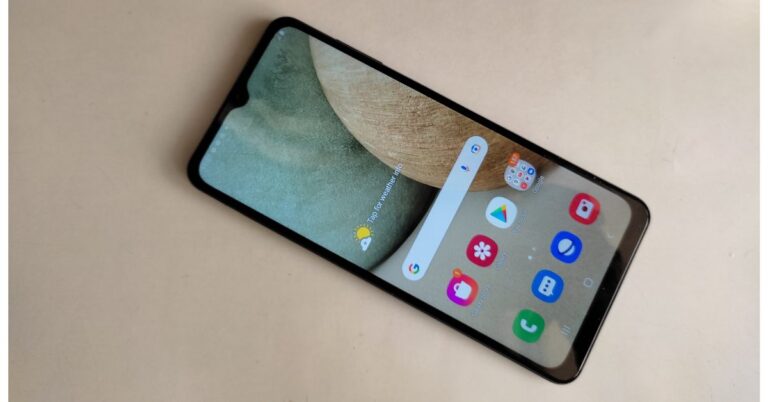
In terms of design, the Samsung Galaxy A12 is identical to the Galaxy M12(review), which we have recently reviewed. It bears the same rugged texture on most parts of the rear panel except the bottom quarter where you will find a smooth finish. A good thing about the rear panel is that it does not attract any smudges or fingerprints. There is a quad rear camera set up in the left-hand corner of the back. Unlike M12 here the camera bump is a little raised and not lies completely flat. Even with a heavy camera bump, it doesn’t wobble when it is kept on a hard flat surface. The phone does feel bulky in the hand but the weight distribution is good. Consumers will take some time to get used to it. On the utility front, it has a power button which is also a fingerprint scanner along with the volume rocker that is given on the right side of the frame. Frankly speaking, this side-mounted fingerprint scanner is as fast as the Galaxy M12, which is a good thing. The left side of the frame is clean except for the dual SIM tray being placed on it. The headphone jack, USB Type-C port and speaker grill are given at the bottom.
 Moving on to the display, the Samsung Galaxy A12 features a 6.5-inch HD+ TFT Infinity-V Display with 720×1,600 pixels of resolution and an aspect ratio of 20:9. It has a standard 60Hz refresh rate, which is the only difference between the Galaxy M12 and A12. However, considering the price Samsung should have gone for an FHD or an AMOLED display same as provided by its competitors like Redmi Note 10 (review) and Redmi 9 Power (review)at a similar price point.
 Still, at this price point, the display looks pretty nice. Rather than the hole punch cut out, it has a V-shaped camera notch at the top. The colour and the brightness are absolutely fine even when using outdoors. At the same time, the display is WIDEVINE L1 certified so that you can stream HD content on it easily. The viewing angles are good too.
Performance and Cameras
Talking about the performance, the Samsung Galaxy A12 is powered by octa-core MediaTek Helio P35 SoC paired with up to 4GB of RAM and up to 128GB of storage. Noticeably P35 is a mediocre chipset that also has an old processor. The phone is good for day to day usage but in terms of gaming, it is not recommended for high-end gaming but for normal casual gaming only. It is an entry-level phone but you can still play some games on it such as COD: Mobile on low settings. The mobile phone’s performance could have been better if the company opted to go for a better chipset in this price range. In terms of RAM and storage, the smartphone comes with 4GB RAM and 64/128GB of storage. With the main tech specs out of the way, let’s talk about the software. The phone runs One UI 2.5 based on Android 10. The Galaxy A12 is secured by Knox security running version 3.6. Again in terms of security, the device equips a side-mounted fingerprint sensor and face unlock, which are equally fast. Also, OS-wise you won’t get to see much bloatware or ads.
Ok, now that’s done now let’s talk about the cameras on the device. On Samsung Galaxy A12 you get a quad rear camera setup that includes a 48-megapixel primary sensor with f/2.0 aperture. In addition to this, there is a 5-megapixel ultra-wide-angle lens with f/2.2 aperture, a 2-megapixel macro lens with f/2.4 aperture and another 2-megapixel depth sensor with an f/2.4 aperture. Upfront there is an 8-megapixel selfie sensor with an f/2.2 aperture.
With the main tech specs out of the way, let’s talk about the software. The phone runs One UI 2.5 based on Android 10. The Galaxy A12 is secured by Knox security running version 3.6. Again in terms of security, the device equips a side-mounted fingerprint sensor and face unlock, which are equally fast. Also, OS-wise you won’t get to see much bloatware or ads.
Ok, now that’s done now let’s talk about the cameras on the device. On Samsung Galaxy A12 you get a quad rear camera setup that includes a 48-megapixel primary sensor with f/2.0 aperture. In addition to this, there is a 5-megapixel ultra-wide-angle lens with f/2.2 aperture, a 2-megapixel macro lens with f/2.4 aperture and another 2-megapixel depth sensor with an f/2.4 aperture. Upfront there is an 8-megapixel selfie sensor with an f/2.2 aperture.
 The shots taken from the Galaxy A12 offer a good dynamic range in good light conditions. Whereas the wide-angle lens is helpful in landscape photography and this also offers good wide-angle night shots too. The macro sensor allows you to get really close to the subject. The portrait shots are perfect with edge detection on point. You can get a fair idea from the below samples.












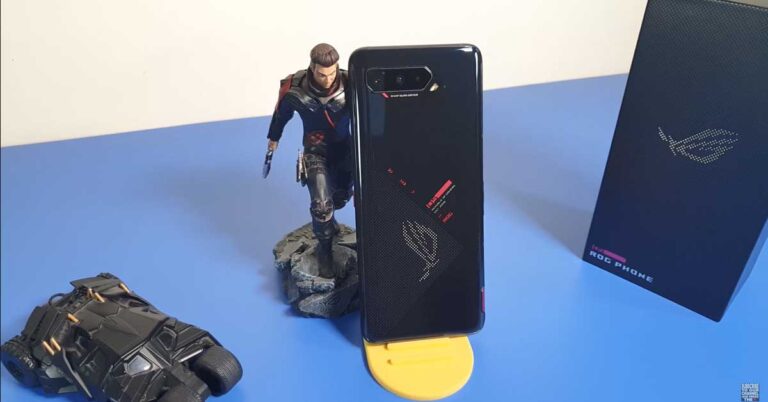
 Coming back to the display, ASUS ROG Phone 5 has a 144Hz AMOLED display that supports up to 1,200 nits of brightness and HDR 10+. FHD+ is the resolution that strides in with the smartphone. We loved every bit of it. We found the display to be bright and vivid. Gaming, as well as movies, experience on it, was top notch. Something that we have seen earlier on Samsung and Apple devices only. The display gets an A+ on our sheets as the graphics are lively, characters are crisp, and the screen does not wash out even under direct sunlight. We played a few Netflix shows on it and they all look good. ASUS ROG Phone 5 can manage dark scenes and fast-paced action scenes with extreme ease.
 Coming to the cameras of the ASUS ROG Phone 5, the handset comes with 3 cameras at the back. These include a primary 64MP wide, 13MP ultrawide and 5MP sensor for macro shots. The primary camera is the best out of the three. We got some very good shots from it in the day as well as night. For close-up shots, we did turn on the LED flash, which enabled us to get better details from portrait shots at night. Ultrawide angle shots we were not in awe of, as the details did come down a lot and smudged edges were apparent. The same is the case with Macro shots. 3 out of ten shots were not very useful. So, you need to get a hang of it or take multiple shots of the subject and keep the best one.
 8K video recording can be shot on the smartphone at 30 FPS. However, we did like the 4K at 60FPS to be our preferred setting for videos. The front camera is driven by a 24MP sensor and it is exceptional for taking selfies during the day. During low-light, you do get decent shots too, a night not so much. The best is to use the rear camera with LED flash for the best results.
But ASUS ROG Phone 5 is not built primarily for photographers. It is built for gaming and it excels in the department. We loved the performance of the smartphone when it came to video games.
8K video recording can be shot on the smartphone at 30 FPS. However, we did like the 4K at 60FPS to be our preferred setting for videos. The front camera is driven by a 24MP sensor and it is exceptional for taking selfies during the day. During low-light, you do get decent shots too, a night not so much. The best is to use the rear camera with LED flash for the best results.
But ASUS ROG Phone 5 is not built primarily for photographers. It is built for gaming and it excels in the department. We loved the performance of the smartphone when it came to video games.