In an attempt to help users stay safe while they work from home, the laptops and PCs manufacturer HP announced the launch of its Contactless Service On Wheels service now is being expanded to 25 more cities in India. Through this service, the company will be able to address the PC and Print servicing needs of consumers in the country.
Commenting on the initiative, Mr. Vinay Awasthi, MD, HP Inc. India market said, “At HP, our customers are our highest priority, and we strive to extend best in class support and services to enable them work, learn and play from home seamlessly. The ‘Contactless Service on Wheels’, is a testament to HP’s innovative spirit and adaptability in these unprecedented times. The service will offer an unparalleled experience of reliability, safety and business continuity to our valued customers and work from home professionals.”
Due to the ongoing coronavirus pandemic crisis in the country, HP will be expanding its Contactless Service On Wheels service to 25 cities soon, therefore, benefitting thousands of customers by helping them stay safe to contain the spread of coronavirus infections and maintain social distancing. The Contactless service on Wheels service is part of HP’s commitment to providing uninterrupted support to its customers with safety. The service will be provided through HP’s robust support service ecosystem and certified HP technicians travelling in mobile vans.
According to the company, these vans will act in accordance with all local health and safety guidelines, while bringing HP’s hallmark of service delivery, closer to home. At the moment this service is available in seven cities Delhi, Mumbai, Chennai, Kolkata, Bengaluru, NOIDA and Ghaziabad. This move came after the company observed that customers were postponing their onsite service for their PC/Printer at Home due to social distancing and health advisory norms.
“Following a positive response from customers, the Contactless Service on Wheels is now being expanded to 25 cities including Pune, Ahmedabad, Cochin, and Hyderabad,” the company stated.
In order to get the facility of the service the users can register their query with HP’s service team to schedule an appointment. HP says that the onsite technicians will reach your home in a van with essential parts. While the customers can hand over their products outside their homes to the technician, who will carry out the repairs in the van and return it to the customer after service. This process will minimize any contact between the two parties. For major repairs, the device will be taken to the Service Center and delivered to the customer at a later date. The company has future plans to expand this benefit to Enterprises, SMBs and SOHO offices besides consumers.
The e-commerce website will be hosting Flipkart Big Saving Days sale from June 23 until June 27 on its platform. During the sale, the company will be offering big discounts on the latest smartphones. If you are planning to upgrade your device, then now is the right time to buy one for yourself or gift it to your loved ones. Interestingly, the sale is also going to offer massive discounts on the flagship handsets such as Motorola Razr, Vivo Z1x, Redmi K20 Pro, Realme X2 Pro, iQoo 3 even Apple iPhone 8.
The Flipkart Big Savings sale is scheduled to go live at midnight today. During the five days sale will be offering a 10 percent instant discount for HDFC Bank customers. It is also going to bring no-cost EMI options and additional exchange discounts on your old mobile phones that also include Motorola Razr. Below we have detailed some of the smartphones that will be receiving attractive offers as well as discounts which will be available for a limited period of time.
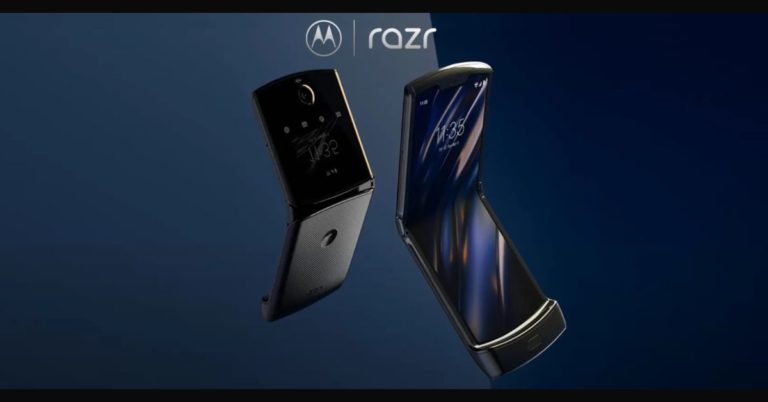
Motorola Razr
Motorola Razr is the company’s second generation of its foldable smartphone that was launched in India a few months back. It was introduced with a price tag of Rs 1,24,999 for the single 6GB of RAM and 128GB of storage model. But during the sale, it will be receiving a massive additional exchange discount of Rs 25,000, therefore, bringing down the cost to Rs 1,24,999. In addition to this, the no-cost EMI option starts at Rs 5,209 per month. So if you were waiting for the right time now you grab the foldable smartphone at lesser pricing. The device is available in a lone Noir Black colour option in the country.
Redmi K20 series
Xiaomi introduced the Redmi K20 series in the country last year that includes the Redmi K20 and Redmi K20 Pro. But during the Flipkart Saving Days sale, you can avail discounts on both the devices. Redmi K20 will be available at Rs 20,499 along with an extra exchange discount of Rs 2,000. No-cost EMI option will also be offered on the purchase of the smartphone. Whereas Redmi K20 Pro can be purchased at Rs 23,499 during the Flipkart Sale bundled with an additional extra exchange discount of Rs 2,000 and EMI options.
Vivo Z1x
Coming to the next smartphone Vivo Z1x which is available in two variants of 6GB of RAM with 64GB of storage and 8GB of RAM with 128GB of memory. Now during the sale, it will be available at Rs 14,990 and Rs 16,990 respectively.
Apple iPhone XS
iPhone XS now retails in India with a price tag of Rs 62,999 in India for the 64GB storage variant. But now it can be purchased at as low as Rs 58,999 onwards. Additionally, there will be no-cost EMI options starting at Rs 9,834 per month.
Apple iPhone 8
During the sale, one can purchase the 64GB variant of the iPhone 8 at Rs 36,999 in India. On the purchase of the device, there will be a no-cost EMI payment option that starts at Rs 6,167 per month.
Instagram is a photo-sharing app owned by Facebook. The app is getting more popular among both regular users as well as influencers as it comes with a better privacy setting than its own parent company Facebook. Just like Facebook one cannot save or download someone’s picture of the creator however they have been following them as there is no native option to download the images. So to download we have to take the support of third-party apps to get the job down or we simply take a screenshot to see if we are inspired by something or we really loved the outfit styled by your favorite influencer. But now you can not only download the photos but also videos as well as stories also. So have given you some hacks and tricks in our story to help you download Instagram videos, photos, and stories in bulk. But before we get into it don’t forget to take the permission of the creator.
The first and very simple hack for the casual users which we would reveal here is that most of us are unaware of is that without taking the help of a third-party app we can still download images from Instagram one by one. Whereas the second technique requires an app for Android and PC for the bulk download. So below we have explained to you both the methods Android and PC you can choose the safest method as per your requirement.
How to download images from Instagram for Android?
First of all, find the image you want to download on your Android device.
Now tap on the three dots icon above the picture and select Copy Link.
Lenovo owned Motorola entered into the Television trade last year in 2019. Now the company is getting ready to foray into the audio business by launching its first-ever home theatre range. Motorola will be introducing AmphisoundX home theatres on June 23 in India. Yes, the company is releasing its World’s first-ever Home Theatre Range in the country first.
The company has been sharing teasers as well as posters of its upcoming Home Theatre range all set to get launched on June 23. All the variants will be available via the e-commerce website Flipkart. The new range of Motorola home theatres will include a total of three audio products: Motorola AmphisoundX 80W, the Motorola AmphisoundX 150W, and Motorola AmphisoundX Dolby Wireless 160W.
As the name suggests Motorola AmphisoundX Dolby Wireless 160W is powered by Dolby audio. It is a 2.1 Channel Home Theatre range that does not require any cords yes it works wirelessly that can be connected via Bluetooth. The soundbars come with HDMI ARC and optical as another connectivity option. The product has 4 front-firing sound drivers with 6.5-inch bass drivers. It is provided with a 60W subwoofer and 100W soundbar. This Motorola soundbar will be available via Flipkart with a price tag of Rs 10,999.
Whereas the Motorola AmphisoundX 150W Bluetooth Home Theatre comes with a power output of 150W. This includes a 70 W Subwoofer, 8 inch Bass Drive, 150 W Peak Power, 3-inch Audio Drivers. With HDMI Arc and Optical Enabled, it can Stream Upto 4K High-Resolution Audio Via Your TV. The device will be available for purchase at Rs 10,999 via Flipkart.
Lastly, the Motorola AmphisoundX 80W Bluetooth Home Theatre will start selling on Flipkart at Rs 7,999. This soundbar comes with a power output of 80W and there is a 5.1 channel. The driver size includes 5.25-inch 30W Subwoofer, 2.25-inch x 3 (Soundbar), 3-inch x 2 (Satellites).
The Motorola AmphisoundX home theatre range is scheduled to go on sale in the county via e-commerce website Flipkart starting June 23. There will be a discount of Rs 1,000 on each of the products accompanied by special launch offers.
Today the tech giant Apple is going to host this year’s Virtual Worldwide Developers Conference. And just ahead of WWDC the company has introduced Apple Developer Forums. The company is expected to converse about its upcoming projects such as software as well as hardware which is going to be the company’s visualization for the rest of the year. This time Apple can discuss iPhone MacBooks, iMacs and Mac Pros, iOS 14, iPad, WatchOS, MacOS. Due to coronavirus, the company will be hosting the event online so this time one can attend the event without having to pay an entry fee that stars at $1600 that translates to Rs 1,22,003.
Here is how to watch the WWDC live
Today Apple’s Worldwide Developers Conference will be live-streamed on your iOS devices, PC and even on Apple TV. The event will begin at 10 AM PT that is 10.30 PM IST. One can watch it on the company’s developer website, app as well as official YouTube channel. The keynote will be led by Apple’s CEO Tim Cook. The developers can also get registered to attend the week-long conference and session. To register visit the Apple’s developer app/website.
What to expect from the WWDC keynote?
The company will be discussing several software and hardware products that we are going to see this year. The next iOS version is the company’s basic announcement of WWDC. At the moment nothing has been shared about the next generation of iOS 13. But this time the iOS 14 is going to come with improved multitasking features, fresh home screen layouts and a new face-lift to its AR apps among others. The coronavirus outbreak has also affected the production for the next iPhone so the company might also push back the launch event of both the device as well as iOS 14 to October.
One prominent development will be a new branding for iOS as well as iPhone OS. Yes, speculations are being made that the company might change the name of these products.
Recently, Apple’s software chief, Craig Federighi announced that from now on iPad will run on its own OS. The new operating system for the iPad will be called iPad OS and will no longer run on iOS. It is going to have its own native operating system which will share the same core of both iOS as well as macOS. While the specific details of the new OS for iPad are yet to go official we expect the company might also discuss it at the conference.
The company might also include the major changes it has made for its Mac devices over the years in its Keynote. As per the rumours the company is most likely to introduce its latest iMac computer this year but it is not confirmed where this will take place at WWDC. The newly designed iMac is expected to be offered in two screen sizes of 21.5-inch and 23-inch options with narrow bezels.
The company is also expected to shift from Intel’s processor to its own RM-based processors for Mac computers. Reports suggest its chipset will be based on the unannounced A14 processor. Hence this step will give Apple more control over its hardware development in order to increase the speed and make its devices more powerful.
Philips, a global leader in health technology, today announced it has once again joined forces with the American Telemedicine Association (ATA) to help further the adoption of telehealth across the industry, demonstrating its commitment to connecting care across acute, post-acute and home care settings. The continued collaboration spotlights the growing adoption and momentum in telehealth amidst COVID-19, and the need to convey the exponential shift to telehealth capabilities.
The COVID-19 pandemic has increased the share of Americans participating in telehealth from 11 percent in 2019 to 46 percent up until now, with healthcare systems reporting a 50 to 175-fold increase in telehealth volume compared to pre-pandemic levels.
According to Philips, “As the world begins to move from the first wave of reactive care, into a more proactive phase and beyond, virtual care solutions are supporting the recovery of COVID patients as they transition through their care journey, and non-COVID patients as they return to elective surgeries, diagnoses, prevention and treatments that have been put on hold since the onset of the pandemic.”
Asserting on importance of new opportunities to deliver quality care whenever and wherever it’s needed, Ann Mond Johnson, CEO, ATA, “There is no better time for Philips to team with the ATA. Philips is creating proactive, AI-powered solutions to improve patient monitoring, precision diagnosis and clinical workflows at every point along the continuum. This directly aligns with our vision for telehealth — to drive the transformation of health by integrating virtual care from the hospital to physician offices and the home.”
Philips alignment with ATA will help promote strong growth and faster adoption of telehealth and policy changes escalated during the COVID crisis as we pivot to innovate ‘virtual first’ strategies to support hospitals, payers, and patients across care settings, including digital health technologies to support healthy living in the home.
“Philips has been a leader in telehealth across acute care and post-acute care settings in the hospital and in the home for over three decades, helping health systems deploy and scale telehealth solutions to help improve patient outcomes, enhance patient and staff experience and lower care costs,” said Roy Jakobs, Chief Business Leader Connected Care, member of the Executive Committee at Royal Philips.
“Our alignment with ATA will help promote strong growth and faster adoption of telehealth and policy changes escalated during the COVID crisis as we pivot to innovate ‘virtual first’ strategies to support hospitals, payers, and patients across care settings, including digital health technologies to support healthy living in the home,” added Jakob.
As per Philips, COVID-19 has propelled digital technology to the forefront as healthcare systems rapidly expand telehealth, including virtual care, remote patient monitoring, data analytics and medical record-sharing capabilities to care for patients with COVID-19.
In response to the pandemic, Philips has been working with customers around the world to rapidly develop and deploy scalable telehealth solutions to support frontline care professionals and their patients.
The e-commerce platform Amazon is back with another new session of the quiz on its platform. It brings Amazon Quiz sessions for its customers on a daily basis. Customers can stand a chance to win bumper prizes just by playing at home from 8 am to 12 noon. Every day Amazon asks 5 questions that the customers have to answer correctly. This session is only available for the app user in India.
In today’s Amazon Quiz the winners will get a chance to win Rs 15,000 Amazon Pay Balance. In the quiz, five questions are asked to which Gadget Bridge provides answers to make sure our readers also get a chance to win amazing prizes. Check out June 22 Amazon Quiz Answers:
June 22 Amazon Quiz Answers
Question 1: At which venue is India scheduled to play a day and night Test match during their tour of Australia in 2020-21?
The answer is- Adelaide Oval
Question 2: Shintaro Tsuji, who recently stepped down from his company, is known to have created which iconic character brand?
The answer is- Hello Kitty
Question 3: Which of these terms was coined by John McCarthy and other researchers, at Dartmouth in the summer of 1956?
The answer is- Artificial Intelligence
Question 4: The campaign theme in 2020 for which of these days observed on June 14th, was ‘Safe blood saves lives’?
The answer is- World Blood Donor Day
Question 5: Arturo Vidal who scored Barcelona’s first La Liga goal on their return after the COVID- 19 represents which country?
The answer is- Chile
To participate in the Amazon quiz all you need to do is download Amazon App from Google Play Store. After downloading the app follow the below-mentioned step:
Open the app and log in to your account. If you are not a member then first register yourself by providing some personal information.
Now scroll down on the home screen to find the Amazon Quiz banner or you can also find it on FunZone.
Then tap on the start button to begin the quiz.
Now you are asked five questions. Each question has four options as answers. You have to answer all the five questions correctly to win prizes.
After answering all the questions correctly you will be selected for a lucky draw.
The lucky draw winner’s names will be announced at the end of the month. The lucky one will win prizes.
Ahead of the Apple’s annual Worldwide Developers Conference 2020 (WWDC20) keynote that is slated to take place on Monday, June 22nd virtually due to the COVID-19 pandemic. During this digital-only keynote, the Cupertino-based tech giant is likely to lift curtains off the next generation of iOS, macOS, watchOS, and tvOS to provide the first look of what’s Apple is bringing for its fans next.
During the WWDC20, rumours suggest Apple is likely to lift up some of the pre-existing restrictions in its upcoming iOS 14. As per a Bloomberg report, Apple is planning to enable apps like Chrome or Gmail to be set as defaults in iOS 14. This change will bring in a big impact on developers who strive hard to step up their competition with Apple’s built-in apps. The iOS users still are using Apple’s old apps. On the other hand, Windows, macOS and Android users can enable third-party apps to be set as default.
According to MacRumors, Apple seemingly working on a new fitness app for iPhone, Apple Watch, and Apple TV that is designed to enable users download fitness-related videos to carry workouts. Codenamed “Seymour,” this app is rumoured to appear in iOS 14, watchOS 7, and tvOS 14. It is likely to be a standalone app that will be available alongside the existing Activity app.
Under the upcoming iOS 14, iMessage is likely to be getting new @-mentions and the option to retract a message from a thread just like we see on Microsoft Teams and WhatsApp.
Moreover, rumours have hinted that soon users could use their iPhones or Apple Watch just like an NFC car key to unlock their car. How would this happen? Well, Apple is likely to launch a new “CarKey” feature. Along with this, news is rife Apple could also bring changes to iCloud Keychain that is tech giant’s in-built password management tool. With this, Apple iOS user will be getting timely reminders to change their passwords along with support for two-factor authentication.
According to Apple, “The all-new Apple Developer Forums will connect the developer community with more than 1,000 Apple engineers to answer questions and engage in technical discussions. Starting the first day of WWDC, anyone can search and view the forum discussions to follow along, and Apple Developer Program members will be able to post their own questions and learn directly from Apple experts.”
Stay tuned as we will bring you more updates once the Apple’s WWDC20 event kickstarts on June 22nd.
In order to track the environmental and socioeconomic impacts caused by the global response to the coronavirus (COVID-19) pandemic, a unique collection of data from Earth-observing spacecraft managed by NASA, the European Space Agency (ESA) and the Japan Aerospace Exploration Agency (JAXA) will be unveiled during a media teleconference at 9 a.m. EDT Thursday, June 25.
According to NASA, “The COVID-19 Earth Observation Dashboard is a tri-agency collaboration that brings together current and historical satellite observations with analytical tools to create a user-friendly information resource for the public and researchers. The dashboard tracks key indicators of changes in air and water quality, climate, economic activity, and agriculture.”
The teleconference to release global view of coronavirus impact will witness participation from:
Thomas Zurbuchen, associate administrator of NASA’s Science Mission Directorate, Washington
Josef Aschbacher, director of ESA Earth observation programmes, Frascati, Italy
Koji Terada, vice president and director general for the Space Technology Directorate at JAXA, Tsukuba, Japan
Shin-ichi Sobue, project manager for JAXA’s Advanced Land Observing Satellite-2, Tsukuba, Japan
Ken Jucks, upper atmosphere research program manager at NASA’s Earth Science Division, Washington
Marie-Helene Rio, ocean applications scientist at the ESA Centre for Earth Observation, Frascati, Italy
If you too are interested in witnessing the teleconference with supporting graphics, it will be streamed live at here.
Moreover, a link to the COVID-19 Earth Observation Dashboard along with supporting graphics for the briefing will become available at approximately 8 a.m. Thursday, June 25 here.
The COVID-19 pandemic changed the routines of millions of people around the world seemingly overnight. In some places, once-congested streets are now easily navigable; previously crammed sidewalks, eerily vacant. Such widespread, rapid change in human activity is unprecedented and its effects on our planet and our lives are only just beginning to be realized.
Earlier in May, NASA’s Earth Science Division announced that it is supporting the science community as it investigates the many changes this unique situation has brought to light. Through its Rapid Response and Novel Research in Earth Science (RRNES) initiative, the agency is providing funding for selected, rapid-turnaround projects that make innovative use of satellite data and other NASA resources to address the different environmental, economic and societal impacts of the pandemic.
The agency recently funded the following four RRNES projects:
Exploring Uneven Gains in Urban Air Quality
Impact of Air Pollution Reduction on the Atmosphere
Air Pollution Links to Water Quality
Shedding (Night) Light on Pandemic Economic Impacts
After recently rolling out $8-per-month printing service under which Google Photos users can get their favourite photos printed and shipped back to them in a cardboard envelope, the news is rife that the tech giant is now closing down its AI-guided trial service on June 30th. The real reason behind this sudden move is still unknown but it is likely that Google is working on some enhanced features to make Google Photos app available to the larger public.
The $8-per-month printing service allowed its users to select their 10 favourite themes on the basis of a faces (including human and animals), landscapes and a mixture of all that is around. Once done, Google Photos users were able to edit the selections before printing the photos. Mind you! These pictures were then printed on 4×6 cardstock. These pictures could be used for gifted purposes of numerous occasions.
According to Droid Life, Google had sent across a notice to the users of this picture app stating that this service would not be available post June 30. Google further added, “Thank you for your invaluable feedback these last several months. You have provided us with a lot of helpful information about how we can evolve this feature, which we hope to make more widely available. Please keep your eyes open for future updates. Although we will be ending the trial program, we hope that you have experienced some joy from the prints you received along the way.”
Mind you! Google Photos app $8-per-month printing service was launched just before the COVID-19 was announced as a global pandemic. Therefore, people seemingly could not use much of this service as the attention was diverted to other essential things they need to buy. However, only time would reveal the real cause or what next step the tech giant is going to take.
In May, Google Photo announced that when sharing an album, the default option will be to share with a specific person or people via their Google account. This gives you more control over who’s added to the album.
The users of Google Photos will still have the option to share albums in Google Photos via a link, which you can embed in an email, text, or blog to make it easy to share photos with people who don’t use Google Photos or have a Google account.
Additionally, Google Photos users will also have the option to turn link sharing on or off at any time and you can decide if you want to let other collaborators add photos to an album. They will also be able to remove someone from the album, which will remove the photos and videos they added.
The Samsung Galaxy Note 20 series is rumoured to launch on August 5. On this day the company will reportedly host an Unpacked 2020 event online, due to the coronavirus pandemic. Up till now, we came across lots of rumours, reports and leaks with regard to the sequel of Galaxy Note 10. So far the colour options, display screen and chipset details have been tipped. In a new development, a tipster has claimed that the Ultra variant of the upcoming device is going to feature an LTPO OLED display with a higher refresh of 120Hz. In addition to this, live images of the device showcasing the front panel have also come to light.
News is abuzz that the upcoming Samsung Galaxy Note 20 Ultra will be powered by Snapdragon 865+ SoC. This chipset is yet to be announced by Qualcomm. Moreover, it will be supported by an upgraded S Pen stylus. In addition to this, the device will be featuring an LTPO OLED display with QHD+ resolution supported by a refresh rate of 120Hz. There are going to be new camera functions also.
A Twitter post has also showcased the live images of the Samsung Galaxy Note 20 Ultra which appears to be similar to Galaxy Note 10+ that was launched last year. However, the tipster has only shared the images of the front panel displaying vibrant natural looking wallpapers. The display has a notch to house a selfie camera located at top centre. A curved display panel is clearly seen and on the left side, the device has a volume rocker and a power button.
Some of the previous leaks suggest that the vanilla variant will have a full-HD flat display with 60HZ refresh rate along with wide frames. This indicated that the smartphone will go for narrow bezels instead of a curved display. Moreover, the Galaxy Note 20 series is tipped to be available in three colour options in Black, Copper, White/Grey, and Mint Green. The series is going to include Samsung Galaxy Note 20, Samsung Galaxy Note 20+ and Samsung Galaxy Note 20 Ultra. This time we will see a lot of differences in the specifications of the three smartphones. The regular model is most likely to come with a 6.7-inch display, while the Plus variant will come with a 6.9-inch display.
On Sunday, June 21 the first solar eclipse also known as Surya Grahan in India is going to be witnessed. This time it is said to be the deepest annular solar eclipse that will be observed after hundreds of years in different parts of Asia, Africa, Europe, and Australia including India. The term annular solar eclipse means that a ring of fire will be seen in the sky.
On Sunday this year first solar eclipse will be witnessed in different parts of the world and a ring of fire like phenomenon will appear only for 30 seconds, In India, the partial solar eclipse will begin at 9:15 AM and will reach to its maximum form of annular eclipse forming a necklace of pearls at 12:10 noon.
What is an annular solar eclipse?
As we are very well aware that the solar eclipse is a phenomenon when the Earth is immersed in a shadow cast by Moon eventually blocking the sunlight fully known as full solar eclipse or partially and happens when the Sun, Moon and Earth are aligned. But during the annular solar eclipse when the moon passes between the Sun and the earth either fully or partially hides the sun when seen from the planet earth. Therefore, it gives an impression of a ring of fire or gives an impression of a necklace.
Annular Solar Eclipse timings
This occurrence will be seen in a few parts of northern India while other parts of the country will witness partially. According to Planetary Society, India the eclipse will be visible between 9:56 AM to 2:29 PM in India. It will begin near Gharsana in Rajasthan around 10:12 AM. The formation of the wonder will begin from 11:49 am and end at 11:50 am. It will appear for less than a minute at 12:10 noon.
A partial eclipse will begin in Kolkata at 10:46 am and end at 2:17 pm, whereas it will begin in New Delhi from 10:20 am to 1:48 pm, in Mumbai from 10 am to 1:27 pm. While in Chennai it will start from 10:22 am to 1:41 pm and in Bengaluru between 10.13 am and 1.31 pm.
How to watch Solar Eclipse?
If you are located in one of the above-mentioned locations, then it will be visible with your own eyes. But before you step out of your home to witness the phenomenon then we would warn you not to see it with your naked eyes. Before stepping out think of wearing protection or dark glasses as the harmful rays might damage your sight permanently leading to blindness. Before you watch the solar eclipse take note to use aluminized Mylar, black polymer or welding glass (shade number 14).
In order to understand the viral proteins that cause COVID-19 and design therapeutics to stop them, an experimental Microsoft datacenter submerged beneath the sea in Scotland’s Orkney Islands is processing workloads for a global, distributed computing project known as the Folding@home.
Launched in October 2000, the Folding@home distributed computing project aimed to simulate protein dynamics. According to Microsoft, Proteins are molecular machines that perform many functions essential to life, ranging from providing a sense of taste and smell to muscle contraction and hair growth. How proteins – chains of amino acids – fold into structures determines their function.
Asserting that the Folding@home simulations can lead to breakthroughs such as identifying sites on a viral protein that a therapeutic drug could bind to, Spencer Fowers, a principal member of technical staff for Microsoft’s special projects research group, said, “Folding@home was one of the first distributed computing groups to start working on COVID-related problems and immediately came out with a bunch of workloads that were geared toward finding antibodies and figuring out ways they could create immunizations.”
When Folding@home announced the COVID-19 related research effort, Fowers jumped on the opportunity and deployed the software across the servers on the Northern Isles. In addition, Fowers worked with colleagues at Microsoft to enable Microsoft employees currently working from home to deploy the project on their office computers, and worked with the Folding@home community to improve the ability to install the software remotely.
In addition, these efforts are the contributions that Microsoft is making to Folding@home via the AI for Health initiative, which recently granted Azure computing resources to help Folding@home run simulations of COVID-19 proteins. That effort has already revealed sites on the virus that potential drugs could bind to, Greg Bowman, the director of Folding@home and an associate professor at Washington University in St. Louis, noted in a video prepared for Microsoft’s virtual Build developers conference.
“This COVID-19 pandemic is an example of why the distributed computing platform is still relevant today,” said Fowers, explaining that “it makes it quick for adoption, and it gives people the opportunity to feel like they are contributing.”
In a blog post, Microsoft stated that distributed computing projects harness otherwise idle computer processing power to perform specific tasks for big science research. The ongoing projects include efforts to understand climate change, map cancer markers and fight infectious disease. The trend started in the late 1990s when tens of thousands of people downloaded the SETI@home screensaver to hunt for extraterrestrial radio signals.
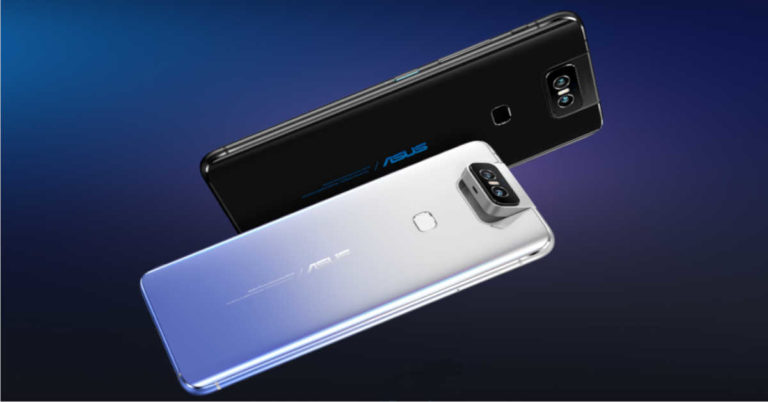
We have just seen the leaked hands-on video as well as images of Asus gaming smartphone ROG Phone 3. And now specification of the alleged Asus ZenFone 7 has been leaked on the web. The device has been spotted at Geekbench benchmarking site. The smartphone is the successor of the Asus 6Z in India and known as ZenFone 6 internationally which comes with a rotating camera module. As per the listing, the handset is going to be powered by Qualcomm Snapdragon 865 chipset.
The successor of the ZenFone 6 or Asus 6Z is yeat to go official but ahead of the launch Asus ZenFone 7 has appeared on the Geekbench website revealing the key specifications of the device. The device has been spotted on the Geekbench 5 listing with the model name ‘asus ZF’ which gives the impression of Asus ZenFone 7 or Asus 7z. As per the listing, the processor is mentioned with a code name “Kona” which hints that the sequel of the ZenFone 6 will be powered by Snapdragon 865 SoC clocked at 1.80GHz paired with 16GB of RAM The mysterious device has scored 975 in single-core and 3346 in multi-core tests. Moreover, it has been revealed that the phone is going to run on Android 10.
As of now, not much has been revealed and also the information related to the upcoming Asus smartphone is also very scarce. But as per Qualcomm’s press release, Asus Zenfone 7 is confirmed to be powered by Snapdragon 865 chipset.
To recall Asus 6Z or Asus ZeFone 6 was launched last year in July. Earlier it was to release as Asus Zenfone 6 but the company has to rebrand the device after a court ruling said that Asus could not launch any products in India with ‘Zen’ or Zenfone branding. The smartphone comes with a 6.4-inch full-HD+ IPS display with 92% screen to body ratio and 19.5:9 aspect ratio. It is powered by Qualcomm’s Snapdragon 855 SoC with Adreno 640 GPU for graphics and up to 8GB of RAM with 256GB of storage.
There is a rotating camera unit on it that includes a 48MP primary sensor with f/1.79 aperture paired with a 13MP ultra-wide-angle sensor. It boasts a 5,000mAh battery with Quick Charge 4.0 support.
With June approaching, we all strive hard to discover something unique to gift our dads on Father’s Day. If you are thinking about gifting some cool gadgets to your father with an aim to make his life much more convenient, check out the following list of amazing products from the world of technology:
Bose Frames Alto
With its classic angular shape and commanding lenses, Bose Frames Alto remixes the most iconic sunglass silhouette in history with Bose sound. It’s a new way to hear and interact with the world around you, all while discreetly listening to music. Some of the amazing features are that it has open-air-audio system and is Bluetooth enabled. It comes with an integrated microphone and UVA/UVB protection feature.
It is available at a discounted price of Rs 19,710 on Amazon India
Philips Hue
This Father’s Day why not gift you dad the convenience of turning off all your lights with one tap. Philips Hue is not just a smart bulb, it’s a smart lighting system. The smart lights, Hue Bridge and smart controls will forever change the way you experience light. There is an easy start to this smart light:
Philips Hue with Bluetooth-controlled system
A Bluetooth-controlled system can control lights within Bluetooth range. Set the mood of a single room with any Philips Hue Bluetooth-compatible bulb and the Hue Bluetooth app, which controls up to 10 lights.
Philips Hue with Bridge
Adding a Hue Bridge activates the built-in Zigbee network — a more advanced way to control your lights — and unlocks the full suite of smart lighting features: add up to 50 bulbs, set routines, and more.
It is available at a discounted price of Rs 6,500 on Flipkart.
PowerEgg X drone
If your dad loves photography, PowerEgg X drone could land and take off on water – rain or shine! In addition to the PowerEgg X’s waterproof features, this incredible device combines HD camera technology, artificial intelligence (AI), and drone technology that gives Dad the ultimate tech gadget this Father’s Day. Equipped with a 4k/60fps HD camcorder with a three-axis gimbal, the PowerEgg X produces professional-quality video and stunning 12-megapixel images. The device features a fully modular design, allowing users to quickly switch between the following modes: Autonomous Personal AI Camera, Handheld Gimbal Camera, or Smart Drone.
The PowerEgg X is now available for $899 for the Explorer package and $1249 for the waterproof Wizard package at BestBuy.com, B&H Photo, Amazon.com, Powervision.me and more.
CHOETECH Portable Waterproof Solar Charger
This charger is compatible devices at up to 5V/2.1A when under direct sunlight. It converts up to 25% of solar power into free energy with highly efficient sun power solar panel. Energy-saving, constructed with PET laminated solar panels with high-wear PVC fabric, this USB solar charger offers weather-resistant outdoor durability.
Targeting the outdoor gadget freaks, Huami’s Amazfit T-Rex smartwatch has passed 12 regulations of military standard (MIL-STD-810) quality test to resist the harsh environment which can operate under unpredictable weather conditions, rain, hail or shine. Another distinct feature the T-Rex is built to withstand extreme temperatures as well as damp, salt and any challenging outdoor conditions, surviving for two hours under rapid temperature change.
With a 20-day battery life, Amazfit T-Rex smartwatch is packed with 14 sports modes, tracking user performance in everything from indoor and outdoor running to cycling to skiing and more. The smartwatch features a 1.3-inch AMOLED screen with (360×360 pixels) capable of displaying 16.7 million colours with superb clarity. It features 20-hour GPS, GLONASS, a BioTracker PPG optical heart rate sensor, an advanced activity tracker and a sleep monitoring sensor, all providing detailed data to enable you to best reach your fitness goals.
Looking at the other features, the Amazfit T-Rex comes with 14 sport mode has 5ATM water-resistant design also allows you to advance your activities underwater, keeping track of your performance in open water swimming or triathlons. Built-in fast 28nm Sony GPS chip, so your GPS can continuously work for 20 hours. Activity-tracking with distance, active hours, calories and steps. Sweat-absorbent and comfortable silicone strap, Outer bezel made of special ink-filling technology, inner sweat-wicking design makes it breathable and keep it dry and not sticky. Bluetooth Music Control directly from your watch while exercising. A selection of 30 watch faces full of personality to choose from.
With an aim to take care of the needs of those working from home, Sony’s wireless sports headphones WI-SP510 that comes with IPX5 rating along with wireless Sports EXTRA BASS Neckband headphones for casual and daily usage. The tech company claims that “The WI-SP510 headphones enhances your audio experience with powerful and punchy audio, giving you energy to keep going.”
In addition to this, Sony WI-SP510 makes for a perfect workout buddy with its IPX5 water resistance rating which can handle splashes and sweat during your intense workout session without any disruptions.
As far as battery is concerned, Sony WI-SP510 comes with up to 15 Hours of battery life for long listening hours with 10 minutes quick charge. Sony claims, “the sports headphones comes with a quick charge function wherein just 10 minutes of charging gets you a full 1 hour of playback. You can now listen to your favourite music throughout the day.”
Sony WI-SP510 has a lightweight design of the neckband and an arc fitting support makes sure your ear-buds stay in place. In order to make it comfortable for daily usage, each earbud comes with a built-in magnet to ensure tangle-free carrying and storage. Sony WI-SP510 also carries built-In mic for hands free calling with HD. This means that you can leave your phone where it is and take calls with the touch of a button thanks to a built-in microphone.
It is available for Rs 4,990 across Sony retail stores (Sony Center and Sony Exclusive), www.ShopatSC.com portal, major electronic stores and other e-commerce websites.
Samsung Galaxy M31
Samsung Galaxy M31 carries a 64MP quad-camera setup. The Galaxy M31 smartphone comes with a powerful 8MP Ultra-Wide lens along with 123-degree and has a dedicated 5MP Macro Lens for close-up shots of objects that you love. In addition, it has a 5MP depth lens for amazing portrait shots with live focus. On the front, the 32MP selfie snapper of Samsung Galaxy M31 supports 4k video recording and slow-motion selfies.
This is always exploring the limits of smart watch battery life. With HUAWEI’s self-developed wearable chip Kirin A1, the dual-chip design and intelligent power saving technology, it serves you day and night for up to 2 weeks. Inspired by the aesthetic design of minimalism, HUAWEI WATCH GT 2 integrates a high quality 3D glass face to create the bezel-less vision. The fine craftsmanship is captured in the details of the watch case and its classic design style. The HUAWEI WATCH GT 2 tracks your workouts with precise positioning systems and monitors your heart rate with the accurate TruSeen™ 3.5. With 15 professional sport modes and 85 custom workout modes2, it is the professional companion for your indoor and outdoor activities.
The HUAWEI Watch GT 2 Classic Pebble Brown is available at a discounted price of Rs 15,990 on Amazon India.
The search giant Google has announced the launch of its AI-powered app to take on Pinterest. The company has introduced Keen that will allow the users to save as well as share ideas, links as well as resources. They can create their own boards just like we have on Pinterest to segregate the collected and liked links according to themes. Keen has been developed by Area 120 which is the company’s workshop creating experimental projects such as app and other services.
Keen is now available for down on the web as well as on the Google Play Store for Android devices. Keen is a platform specially curated for the people allowing them to save and share about what they are passionate about and also let them connect to the users on the same wavelength.
Keen co-founder CJ Adams, said in its blog post, “To explore this idea further, four colleagues and I created a new experiment called Keen as part of Area 120, Google’s workshop for experimental projects. We worked in close collaboration with a team at Google called People and AI Research (PAIR), dedicated to human-centered machine learning systems, to develop this experiment.”
Basically keen is an easy technique to save, bookmark or link in a better format just like we save something to Boards that we want it to be used in the future. Simply create a title, save related web searches to get a feed with new things to explore. You make a “keen,” which can be about any topic, whether it’s baking delicious bread at home, getting into birding or researching typography. Keen lets you curate the content you love, share your collection with others and find new content based on what you have saved. You can easily curate it yourself or for someone else. One can keep it private or public so one can easily control which content is needed to be share ore who can contribute.
According to the company Keen uses Google Search and the latest in machine learning to remain on the lookout for helpful content related to what interests you the most for instance you can easily plan your wedding or save ideas for setting up your terrace garden. The more you save to a keen and organize it, the better the recommendations become. Even if you’re not an expert on a topic, you can start curating a keen and save a few interesting “gems” or links that you find helpful. Just as we do on Pinterest we can also follow keens created by other users on the platform so that every time they post something related to the topic that you have interest in you can be notified. Save and add links, text, images and web searches. The more you save gets you more to explore. You can also invite your friends to collaborate with, share ideas and build your community.
“Keen isn’t intended to be a place to spend endless hours browsing. Instead, it’s a home for your interests: a place to grow them, share them with loved ones and find things that will help in making this precious life count, writes Adams in the blog post.
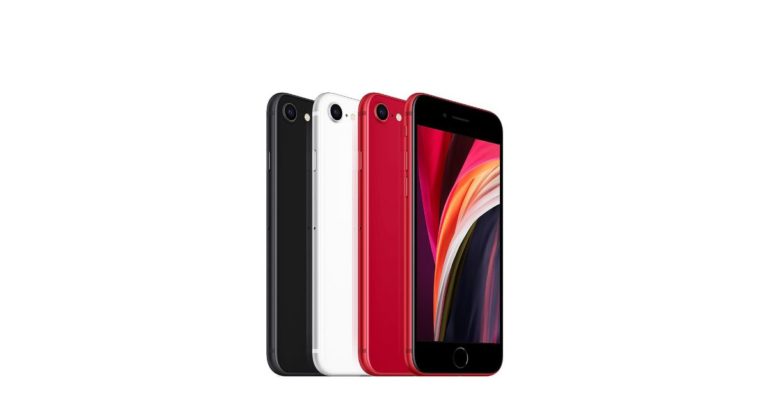
The Cupertino, California based company Apple will soon begin to manufacture or assemble the latest 2020 model of iPhone SE 2020 in India. A new report has revealed that in due course this would bring down the cost of Apple’s latest model hence will become more affordable. This will be possible because of the company’s manufacturing partner Wistron, which is already constructing iPhone 7 in Bengaluru.
The information reported that Apple is prepping up to manufacture iPhone SE 2020 models in India citing reliable sources. The Taiwanese contract manufacturer Wistron based out in Bengaluru will be taking the responsibility to manufacture the device in the country.
Wistron is Apple’s supplier, which already operates factories in Karnataka to manufacture Apple iPhone 7 in the country. Apple has also asked one of its suppliers in China to begin shipping the components for the iPhone SE to Wistron in India. This will most likely begin next month in July 2020.
“At least one Apple component supplier in China has been asked to begin shipping components for the new iPhone SE to Wistron in India starting in July, the person said. Apple already assembles older versions of the iPhone in India, but almost all their components are shipped from China. Apple and Wistron didn’t reply to requests for comment,” The Information reported.
The move taken by the company is to avoid the import tax by 20 percent being imposed on its devices. At the moment the second generation of SE models is currently available in India manufactured and imported by China. So now the manufacturing of Made in India iPhone SE 2020 will begin as soon as in July. Recently there were some reports claiming that premium smartphone companies would also begin the production of the iPhone 11 in India but due to the Coronavirus outbreak, the plans have now been put on hold.
Recently, the Government of India launched the production-linked incentive (PLI) scheme to boost domestic manufacturing as well as the assembling of smartphones in order to become self-reliant or Aatmanirbhar. Right now there are two companies Foxconn and Wistron being operated in the country to supply Apple devices.
To recall Apple started the local production in the country back in the year 2017 for its first generation of iPhone SE models. Witron was handed over the assembling responsibility at its plant-based in Bengaluru followed by the manufacturing of iPhones by Foxconn in India. Foxconn has manufactured the iPhone XR in Chennai since 2019.
The Chinese smartphone company Huawei has launched its new 5G phone in the market. The company has launched Huawei Enjoy 20 Pro in its home market China. The smartphone is powered by MediaTek Dimensity 800 chipset and comes with a triple rear camera set up. The device features a water drop-style display and will be available in multiple variants. It packs a 4,000mAh battery and supports 22.5W fast charging.
Huawei Enjoy 20 Pro pricing and availability
Huawei Enjoy 20 Pro is now official and will be available in two variants. The price of the 6GB of RAM with 128GB of storage has been set at CNY 1,999 that translates to Rs 24,800. Whereas the 8GB of RAM with 128GB of storage model has been launched with a price tag of CNY 2,299 that translates to Rs 24,800. The smartphone will be available in three colour options Dark Blue, Galaxy Silver, and Magic Night Black. The device is scheduled to go on sale on June 24 but as of now, it has been put on pre-orders. The international availability of the 5G phone is still unknown.
Huawei Enjoy 20 Pro specifications
Huawei Enjoy 20 Pro features a 6.5-inch full-HD+ display with a resolution of 1,080×2,400 pixels and a 20:9 aspect ratio. The display is supported by a 90Hz refresh rate panel. It runs on EMUI 10.1, skinned on top of Android 10 and is powered by octa-core MediaTek Dimensity 800 processor paired with up to 8GB of RAM with 128GB of storage option. The internal memory can be expanded up to 256GB using a microSD card.
In terms of imaging, Huawei Enjoy 20 Pro comes with a triple rear camera set up consisting of a 48-megapixel primary camera sensor with f/1.8 aperture. Further assisted by a secondary 8-megapixel lens with f/2.4 aperture and a tertiary 2-megapixel sensor with f/2.4 aperture. Upfront there is a 16-megapixel front-facing camera for taking selfies.
The options available for the connectivity are 5G (SA/ NSA), 4G VoLTE, Wi-Fi 802.11ac, Bluetooth, GPS/ A-GPS, USB Type-C and a 3.5mm audio jack. Whereas, the sensor on the phone includes an accelerometer, an ambient light sensor, a gyroscope, a magnetometer and a fingerprint sensor on the side of the phone. The smartphone boasts a 4,000mAh battery supported by 22.5W fast charging.
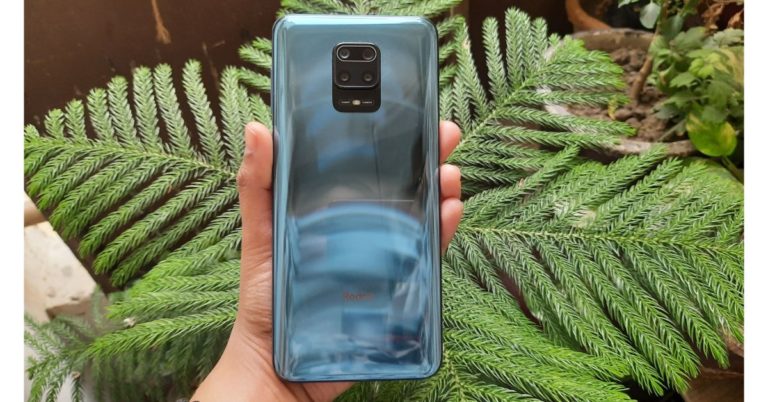
Just before the coronavirus lockdown was imposed in India, Xiaomi introduced two mobile phones in the country under its sub-brand Redmi. The company launched Redmi Note 9 Pro and Note 9 Pro Max. The latter one is the top variant from the series and is available in multiple configurations of 6GB + 64GB, 6GB + 128GB and the 8GB + 128GB and today we bring to you the review of the 6GB of RAM with 128GB variant of the Note 9 Pro Max.
The smartphone features a quad rear camera and has a hole-punch display along with P2i splash-proof coating. The smartphone also includes a side-mounted fingerprint scanner and is going to take on Samsung Galaxy A71 and Vivo V17 Pro. So, to make your buying decision easy, read the rest of our review to understand should you or should you not buy this device.
In This Article
Design and Display
In terms of design and display of the Redmi Note 9 Pro Max, we see a lot of innovative changes. After unboxing the device, the first thing we noticed is a massive display and when held it felt heavy as it boasts a massive 5,020mAh battery, yet it gives a rock-solid feeling. Being bulky often makes it less manageable to be used with one hand. On most occasions we were able to manage the phone with just one hand, however, to reach the top part we had to use the other hand.
The display comes with a layering of Corning Gorilla Glass 5 to prevent nicks. There is a hole punch located at the top centre to house a selfie camera. When rolled over you get a glossy back panel for a bolder look. For the review, we received the Aurora Blue variant. Redmi Note 9 Pro Max is available in more colour options too which include Interstellar Black and Glacier White. The best part about the device is that it picked very few fingerprints, so we had to spend less time cleaning it.
Also on the back, there is a bumped up quad rear camera set up that kept the phone raised when placed on the surface. Just beneath the camera set up an LED flash has been placed to take better pictures during the dark conditions. The Redmi branding can be found just above the bottom rim on the back. On the right side volume rocker and a power button can be found. It comes with a side-mounted fingerprint scanner set inside the power button instead of an in-display sensor to bring down the cost. The fingerprint scanner is swift to unlock the device in a blink of an eye.
At the bottom, users can find a 3.5mm audio jack with the USB Type-C port for charging, a mic and a speaker grille. At this price point, we think Xiaomi is offering its best design. You get an all-glass body, a giant display and the rear camera module just intensifies the design of the smartphone.
Coming back to the display, the Redmi Note 9 Pro Max features a 6.67-inch FHD+ DotDisplay with a 20:9 aspect ratio, however, the high refresh rate was missing on this phone. It offers a 60Hz refresh rate, which is lower than the 90Hz refresh rate being offered by other popular brands and one of its siblings too. If the device has a higher refresh rate it is capable of delivering smoother gaming experience, which might be looked down upon by the gaming community. So to test it out further we did play a lot of games on it and it did not affect our performance. Game accuracy is good and graphics are pleasurable.
Redmi Note 9 Pro Max was able to take the burden of hefty games such as PUBG mobile, Asphalt 9 and Call of Duty mobile. But we would recommend you to go play in default graphics settings for best power to play ratio. The viewing angles were also fine and the display is bright enough to be used under the direct sunlight. It could easily load all the apps, was good at multitasking and we didn’t come across any lag. All in all, we would say the display is bright and the tall screen made the Netflix binge more enjoyable.
Performance and camera
Coming to its performance, Redmi Note 9 Pro Max is powered by Qualcomm Snapdragon 720G processor with Adreno 618 GPU for graphics. As said, it has been launched in multiple configurations of 6GB of RAM and 64GB of internal storage, 6GB of RAM and 128GB of storage and an 8GB RAM and 128GB storage model. For the review, we have got the 6GB of RAM and 128GB of storage unit that costs Rs 17,999. The smartphone is good at multitasking and it can very well handle day-to-day jobs. During our review, we did not come through any lag. As we mentioned before it comes with a 60Hz refresh rate scrolling through our Instagram feeds and while online shopping is suave. In terms of gaming also it had done well and we faced no heating issues.
For the software, the handset runs on MIUI 11 on top of Android 10, which is the latest OS being offered by most of the companies. However, the UI you get is again not clean and we are pointing out at the bloatware installed on the phone. It came with several pre-installed apps as well as games such as Helo that will, unfortunately, spam your device, Domino’s, Osom Rummy to name a few more.
On the brighter side, you will get a massive 5020mAh battery that will last for more than a day if you are a heavy user and spend most of your time watching videos and gaming. But if you are a casual user then the battery would last for 2 days. For us it lasted for more than two days. The device is shipped with a 33W charger, which fuels the battery up to 50 percent in around 30 minutes.
All in all, we would say that the smartphone is a good performer and you won’t be disappointed at all.
Now here comes the important part of the Redmi Note 9 Pro Max review, which is the camera performance and we would openly say that the camera performance of the phone is the beyond best that Xiaomi could offer at sub Rs 20,000. There is a quad rear camera set up on the handset, which includes a 64-megapixel primary sensor, an 8-megapixel ultra-wide-angle lens offering 119-degree field-of-view (FoV), 5-megapixel macro lens and a 5-megapixel depth sensor. Upfront there is a 32-megapixel selfie camera.
Regular Photo Mode/ 64-megapixel
The camera set up on the phone offers several modes for clicking enhanced images. The photo mode lets you shoot pictures in 16-megapixel by default, but there is a separate mode in the camera app that allows you to shoot pictures delivering 64-megapixel resolution. To ignite the photographer in you, the company has served more options such as Portrait, Night, Panorama and Pro mode. The smartphone managed to capture a natural-looking picture and it shoots the finest detail any other smartphone in this range could.
Portrait mode
The portrait mode is just at par. The edge detection was perfect and the depth between the subject and the background was also natural. The shots taken from the ultra-wide-angle are picture-perfect. We would say the colour temperature and the white balance is just what we need to click a good-looking picture. The macro lens is also fine as we are a big fan of clicking macro images, especially of plants and flowers. But to get the perfect macro shot you have to do the hard work of clicking more than one picture as sometimes the pictures were slightly blurred. But when you get the desired shot it is well detailed, of course, all this in good lighting conditions.
Macro Shots
On the less bright side, the low light images were not as good as we expected to be. The images were grainy though and hardly any improvements were seen when the images were taken in night mode. The images turned out to be less sharp and on zooming in it lacked details. So, we do recommend to keep the flash on for night shots as that will bring more sharpness to the images.
Without Night Mode/ With Night ModeWide/Ultra Wide
For selfies, there is a 32-megapixel front-facing camera housed inside a hole-punch display. It delivered natural-looking pictures. So images turned out to be less made up and the portrait mode also does a reasonable job delivering appealing selfie portraits.
If you are looking for a smartphone, which clicks great pictures, we would surely recommend this device.
Conclusion
In Redmi Note 9 Pro Max the company has tried to cover all its spaces it could have in a budget. You get a cool design, latest UI, good processor and outstanding camera performance barring low light. You can call the phone a handy television for its tall display, but it could have been better if they provided a higher refresh rate of at least a 90Hz display. Nonetheless, you get a massive battery that will keep this smartphone going on for days. So overall, the pros massively outweigh the cons.
Pros
Long-lasting battery
Refreshing design
Rear, as well as the selfie camera, performed well during the day
The e-commerce platform is back with another new quiz on its platform. The Amazon Quiz can be played daily on the mobile app that goes live via mobile app. All you need to do is answer all the questions correctly and win free products and goodies such as gadgets and Amazon Pay Balance up to Rs 50,000, today you have a chance to win Xbox One S Gaming Console.
June 20 Amazon Quiz has gone live and a new set of questions have also been updated. The daily quiz on the Amazon app has become the hottest topic as it gives a chance to win exciting free gifts. In today’s Amazon quiz you have a chance to win Xbox One S Gaming Console. The quiz contains only five questions that are based on current affairs and general knowledge. Answering all the questions correctly will get your name selected for a lucky draw. Only one person will be selected as the winner and the results are announced at the end every month. The lucky ones might win something by answering all the questions correctly, and the wrong answers will get you eliminated from the quiz. To participate and win check out today’s answers of the Amazon Quiz.
June 20 Amazon Quiz Answers
Question 1: In recent times, India has recorded a 29% increase in the population of which of these animals?
The answer is- Asiatic Lions
Question 2: Which of these actors made his Bollywood debut with the 2013 film Kai Po Che!?
The answer is- Shushant Singh Rajput
Question 3: ________ language day is celebrated by UN on June 6, the birthday of the famous poet Alexander Pushkin.
The answer is- Russian
Question 4: Which organisation introduced Captain ARJUN—a robot to screen passengers for COVID- 19 symptoms?
The answer is- Indian Railways
Question 5: Recently launched by Karnataka, the mobile app ‘Bengaluru Megha Sandesha’ and web portal ‘Varunamitra’ provides what kind of information?
According to the tech company, “The Apple Developer Forums have been completely redesigned, so they’re more engaging to use, automatically surface the most relevant content, offer simpler navigation, and make it easier to categorize and search for content. Connect with fellow developers and Apple engineers as you give and receive help on a wide variety of development topics, from implementing new technologies to established best practices. And during WWDC20, the forums will be a central place to engage with the community and over 1,000 Apple engineers, discuss new technologies, and get your questions answered.”
Completely redesigned for an even better user experience, the all-new forums are now live and will support special tags for WWDC20 starting June 22. The new version of the Apple Developer Forums includes all existing posts and supports all existing user accounts. All a developer has to do is simply sign in with his/her credentials as usual.
Once signed in, the Apple Developer Forums are a great place to post questions and share comments on a variety of development topics with fellow developers and Apple engineers. Besides this one can format their posts using a Markdown-like editor. Moreover, Tags are used to describe topics related to your question. You can choose up to four tags to add to your question. Only choose tags that are directly relevant so that users can easily find questions, provide answers, and engage productively.
While accessing the Apple Developer Forums, the tech giant further revealed that you can earn reputation points when you constructively participate on the forums, for example, when your reply is marked as the solution or as “Apple Recommended”. Reputation points may be lost if you spam the site, author indecipherable or off-topic content, or post content that violates the Apple Developer Forums Participation Agreement.
Moreover, when a question or reply gives useful information or describes something of interest to you, you can upvote it to thank the author. You must have an Apple Developer Forums account to upvote questions and replies. On the other hand, you can downvote a question to discourage the author when a question or reply gives incorrect information. Only forums users with 100 or more reputation points can downvote questions and replies.
On Apple Developer Forums, a user can share questions and replies with anyone by clicking the Share icon at the bottom of a post for this a menu will appear with share options. You can provide feedback on the forums by contacting Apple Developer Support or by creating a post and adding the “Forums Feedback” tag.
Additionally, the tech giant has also shared list of available tags to categorize questions and search for content on Apple Developer Forums like macOS- the operating system for Mac, beta- the pre-release version of software or hardware along with several other tags. You can check out the complete list of tags to be shared on Apple Developer Forums here.
Recently we came across a leaked TENAA listing revealing the alleged renders of the Asus ROG Phone 3. In a new development, the key specifications of the smartphone have now been leaked on the internet. As per a leakster the device is said to come with an OLED display panel with a higher refresh rate and will be powered by Qualcomm Snapdragon 800 series chipset paired with a massive RAM and a huge battery with 30W fast charging support. Moreover, the tipster has also leaked the live images of the upcoming gaming smartphone by Asus.
Asus will soon launch ROG Phone 3 which is the successor of ROG Phone 2 gaming smartphone. It is expected to launch next month in the month of July. As the launch of the device is inching closer. In the past, the device has been spotted on benchmarking sites Geekbench and AnTuTu and TENAA. But now a famous Chinese leakster Digital Chat Station has shared the key specification of the gaming machine.
As per the leak Asus ROG Phone 3 is expected to arrive with a 6.59-inch FHD+ OLED display with a 144Hz refresh rate. The gaming phone is said to be powered by a Snapdragon 865 chipset clocked at 3.09GHz with a 16GB of RAM. It is said to boost a 6,000 mAh battery with a 30W fast charging support.
For the images, the ROG phone is speculated to be employing a triple rear camera set up which is said to include a 64-megapixel primary sensor. Moreover, the handset is suggested to weigh around 240 grams and 9.85mm in thickness.
Image Courtesy: Weibo
The same tipster has also shared a live hand on images of the upcoming Asus ROG Phone 3 taken from a hand-on video of the device leaked on YouTube. The alleged images revealed that the smartphone will not come with a rugged finish instead it is going to feature a new look with a black glossy finish and a horizontally placed camera module housing three cameras. At the moment only images of the rear panel have been shared with and LED ROG logo. Apart from the live image render of the smartphone shared shows the front panel. As per the render, the phone is seen sporting noticeable bezels on the upper as well as the lower ends of the panel whereas the selfie camera is hidden inside the display.
To recall, the device was spotted on the Chinese regulatory website TENAA with model number ‘ASUS_I003DD’. According to the listing Asus ROG Phone 3 is going to feature a 6.9-inch AMOLED display with 1,080×2,340 pixels of resolution. It is said to be powered by an octa-core Snapdragon 865 chipset.
The listing suggests that the will be made available in three variants of 8GB RAM with 128GB of storage, 16GB of Ram with 256GB of storage option and 16GB of RAM with 512GB of internal storage. It is likely to sport a triple rear camera set up consisting a 64-megapixel primary sensor, a secondary 13-megapixel sensor and the resolution of the tertiary lens is not known now it is expected to be a telephoto lens with 8x zoom support.
Moreover, the device will run on Android 10 and will come with a 6,000mAh battery with fast charging support. There will be no headphone jack so it is expected to have a USB Type-C or video out port on the left side of the Asus gaming phone.
Samsung introduced Galaxy Note 10 Lite had arrived in the country earlier this year in the month of January. After a few months, the company has reduced the price of the smartphone. The company today announced that the device has now received a price of Rs 4,000. The device comes with an S Pen stylus support and packs a 4,500mAh battery. The mobile phone is the Waterdown variant of Samsung Galaxy Note 10 which was released last year.
Samsung Galaxy Note 10 Lite new pricing and availability
Samsung Galaxy Note 10 Lite was launched in two storage variants of 6GB of RAM with 128GB of storage and 8GB of RAM with 128GB of internal storage. At that time the price of the 6GB RAM model was set at Rs 38,999 while the 8GB variant cost Rs 40,999. These were the introductory prices for the handset and before the price drop, the retail price was different.
But now the price of all the variants have been revised. The 6GB RAM variant will be available at Rs 37999 and Rs 39,999 for the 6GB of RAM and 8GB of RAM variants respectively. Both the variants have received a price drop of Rs 4,000.
In addition to this, the company will be offering cashback offers and discounts on the purchase of Galaxy Note 10 Lite. Transactions done using a Citibank debit or credit card are eligible for Rs 5,000 cash back, this brings down the cost of the device to Rs 32,999 and Rs 34,999 for the 6GB and 8GB RAM variant. If not willing to Citibank cashback, the buyers are entitled to Rs 2000 instant cashback. All the offers are valid till June 30.
Samsung Galaxy Note 10 Lite specifications
Samsung Galaxy Note 10 Lite comes with a 6.7-inch Full HD+ Infinity-O Super AMOLED display with a 20:9 aspect ratio with 1080 x 2400 pixels of resolution. The device runs on Android 10. It is powered by a 2.7GHz Exynos 9810 processor paired with up to 8GB of RAM and 128GB of internal storage. The storage is expandable and can be expanded up to 1TB via a microSD card.
In terms of cameras, the newly launched Samsung smartphone features a triple rear camera set up that consists of a Dual Pixel OIS 12 megapixel, a 12-megapixel ultra wide angle camera with 123-degree field of view and a 12-megapixel tele lens. On the front, there will be a 32-megapixel front camera for selfies and video calls.
Galaxy Note 10 boasts a 4500mAh battery with super-fast charging support. The phone also comes with a built-in S Pen stylus supported by Bluetooth Low-Energy. The smartphone comes with a defense-grade security platform, Samsung Knox – that protects the user’s data against any tampering.
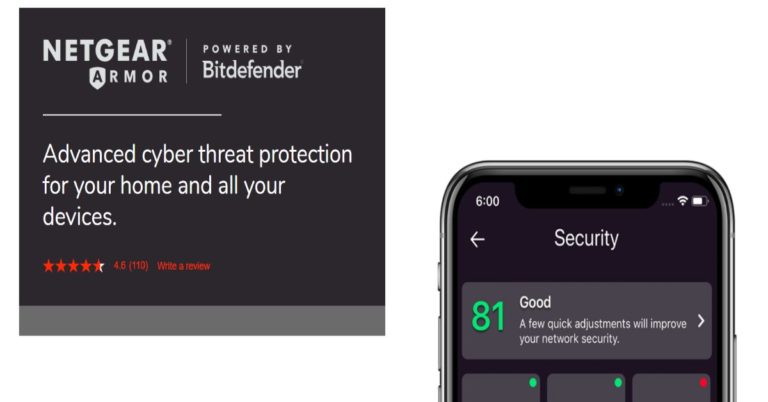
Netgear today introduced Armour Protection for its latest Wi-Fi 6 routers along with mesh systems to cover larger areas. The company has today announced the availability of advanced cyber protection, Netgear Armor powered by Bitdefender on Orbi Wi-Fi 6 Mesh Systems and a number of Netgear Wi-Fi 6 routers.
According to the company, Netgear Armor cybersecurity safeguards the connected home devices from cyber threats both at home and on-the-go. The Netgear Armour includes Bitdefender’s award-winning anti-virus, anti-malware and data protection software integrated into the company’s Orbi Mesh Wi-Fi systems and Nighthawk Wi-Fi routers to protect Internet of Things (IoT) products, connected TVs, thermostats, mobile phones, computers, tablets and other devices.
The company says its Armor cybersecurity protects the connected networks against threats, including trojans, ransomware, zero-day exploits, rootkits, and spyware, helps block fraudulent websites trying to steal financial data such as passwords or credit card numbers and looks out for malicious links in browsers, emails, or apps.
Netgear Armor comes with Active Vulnerability Scans for all the connected devices in your home. When threats are detected it automatically alerts you and the identified danger is blocked through Netgear Orbi/Nighthawk app. It also has web protection which helps to keep your browser safe by alerting you and blocking potentially harmful webpages and anti-theft protection if your devices are lost or stolen for Android and Windows devices. The Bitdefender VPN is the latest feature that comes with Bitdefender Security for secure browsing and to encrypt the internet connection to keep online activity private and worry-free while connected to public Wi-Fi networks. According to the company, the existing customers can update to the latest version of the Bitdefender app to access the VPN feature for free for up to 200MB of encrypted data traffic per day per device.
Netgear Armor is available for a free 30-day trial period. After the trial period, a yearly subscription starting at $69.99 USD is necessary that translates to Rs 5,329 as per Indian currency. Whereas the existing customers can upgrade their VPN from the free 200MB of encrypted data traffic per day per device to unlimited encrypted data traffic for an additional yearly subscription of $39.99 that translates to Rs 3,045.
Netgear Nighthwak AX8
Accessible via the Orbi or Nighthawk mobile app for Apple iOS or Android devices, NETGEAR Armor is now available for Orbi Wi-Fi 6 Mesh System (Models: RBK 752, 753 852 and 853) and the following Wi-Fi 6 performance routers: Nighthawk Tri-Band AX12 (Model: RAX200), Nighthawk AX12 (Model: RAX120), Nighthawk AX8 (Model: RAX80), Nighthawk AX6 (Model: RAX50) and AX1800 (Model: RAX20 and RAX15).
By the third quarter of 2020, Netgear Armor is expected to be available on Nighthawk Wi-Fi 6 Mesh Systems (MK62/63), which will be provided via an automated firmware update. While the existing customers can use their app to update the firmware to the latest version and activate Netgear Armor by clicking on the ‘Security’ tile.
Recently Apple launched its new configurations for its 16-inch MackBook Pro model. Now some of the users have come up with issues occurring while connecting MacBook Pro and MacBook Air to a USB. Several users have reported this issue to the company and most of the latest MacBook Pro 2020 and MacBook Air 2020 models have been afflicted by USB connectivity issues. According to the Apple Support community forums, only USB 2.0 devices have been facing the fault.
Various users took to Reddit as well as Apple Support forums to report this connectivity issue to all the devices that call for USB-A connection this includes a USB keyboard, mouse as well as other external accessories. Those who have reported the issue suggest that it is not with a particular device actually most of the complaints are coming from the users limited to USB 2.0 accessories instead of USB 3.0 and 3.1. This issue has widely impacted Apple’s new both 13-inch 2020 models of MacBook Pro and MacBook Air.
A user reported on Reddit, “When I use an external USB-C hub in any port of my MBP [MacBook Pro], and connect USB 2.0 devices that include a Filco keyboard and a Razer DeathAdder mouse… after a while (minutes or hours), the USB 2.0 devices will stop responding (keyboard dead, mouse not moving or clicking),”
According to a report by MacRumors besides the connectivity issue, may of the users are also complaining about disconnection and freezing issues when using USB 2.0 accessories that connect to a Mac through a hub, though there seems to be no clear pattern as to which accessories are affected or when the issue occurs, making it difficult to determine what could be causing the disconnects.
SMC resets, safe mode, Disk Utility repairs, different user logins, and operating system reinstalls have all been unsuccessful addressing the bug, which suggests that it may be something that Apple needs to fix in a future software update if it is a software problem, the report said
Until the company gets a fix for this problem, one of the Reddit users seems to have solved the problem by switching to Thunderbolt CalDigit hub which is quite expensive. However, it’s still unclear if this workaround will work for all the impacted devices.
“Apple has a USB 2.0 issue with either the chipset they are using, or a Catalina bug regarding the handling and refreshing of USB 2.0 devices.
However, this can be worked around.
USB-C hubs vary in their functionality and there are two types:
USB hubs that are transparent proxies
The Anker, Satechi and StarTech hubs
USB hubs that are terminating proxies
The CalDigit hub and anonymous person on the internet and their monitor hub
Transparent proxies take the USB 2.0 input and present it as USB 2.0 to the MacBook Pro. The Mac or Catalina then will do something wrong and the USB 2.0 devices will freeze / become unresponsive at some point (minutes or hours after being attached).
Terminating proxies take the USB 2.0 input, terminate it, and present it as a fresh input that is USB 3.0 to the MacBook Pro. Everything is good in this scenario.”