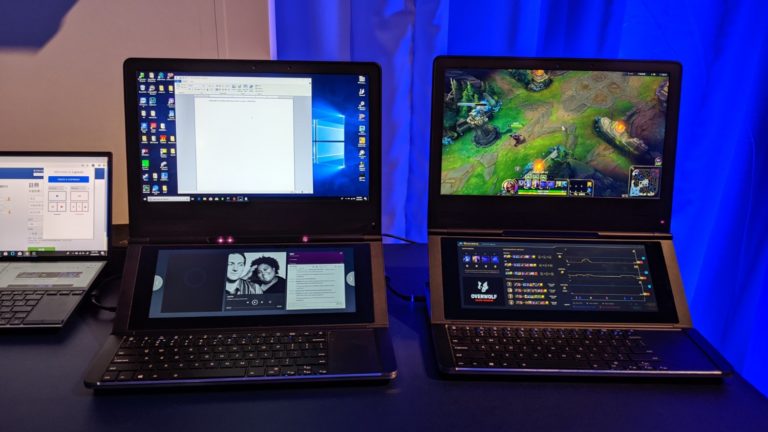
Intel unveils its Multi-Display laptops at the Computex 2019, Optane Memory M15 and NUC Elements also announced

0

Computex 2019 is mid-way through and all the major brands are launching and announcing their next projects and products at the event. Intel is no exception to this and the company has launched and unveiled multiple products at the event. Most of these products are currently a ‘Prototype’ project which the company is working on but there are some which would be launched for the general consumers sometime later. Now, the company has come up with a new ‘Honeycomb Glacier’ form factor laptop with a secondary screen. It is something similar to the Asus’s ZenBook Pro Duo which was also announced earlier at Computex 2019.

The new laptop uses a secondary hinge which allows the main display to be raised to eye level while the second display which is placed above the keyboard is also raised and inclined for the user to see and use. Intel’s new concept laptop is fully functional and it also comes with features such as eye tracking to automatically activate the window the user is looking at across both the displays. There is also a voice assistant which the user can use to command the device using his voice. Since the secondary display is raised in Intel’s new prototype, it provides more cooling to the device.

Intel’s another concept device comes with a full-sized second display instead of a keyboard or trackpad. It was covered in fabric material and it was designed to feel like a folio. There is a stiff hinge on the device which lets it stand as a regular laptop but it can be opened at varying angles. As the previous model, this model of laptop can be used for multitasking using both the screens. There is also an option to use the secondary display as a keyboard and trackpad as it would be displayed on the second screen itself. But it can also be connected with a Bluetooth physical keyboard. The keyboard is slim in build and can be carried between the screens of the laptop.

Furthermore, Intel also unveiled its new NUC Elements device at the event. This is build on the Compute Card product line which has been discontinued. The device will be a palm-sized module which will have a CPU with Integrated graphics along with memory storage. According to Intel, the NUC Elements will sell the device itself similar to the existing NUC PCs. There will also be accessories released with the device itself such as the docking chassis. The device will come in multiple variants with different CPU, memory and storage configurations. The price details and the availability of the device will be announced sometimes later in the future.

Lastly, the new Optane Memory M15 was also announced by the company at the Computex 2019. According to the company, it provides better power efficiency and performance than the previous generation. It can be paired with Intel 9th Gen Core CPUs. But the pricing, the storage options and other details have not yet been revealed by the company.

For the latest gadget and tech news, and gadget reviews, follow us on TwitterFacebook and Instagram. For newest tech & gadget videos subscribe to our YouTube Channel. You can also stay up to date using the Gadget Bridge Android App.

Redmi Note 7S, Redmi Note 7 Pro sale in India to be held today at 12 pm IST: Get all the details here

Redmi Note 7S and Redmi Note 7 Pro are all set to go on sale in India today. The sale will begin at 12 pm (noon) IST and interested buyers can head to Flipkart, Mi.com, and Mi Home stores to get their hands on the two devices. The key highlights of the Redmi Note 7S and Redmi Note 7 Pro include a dual rear camera setup that comprises of a 48MP primary sensor and a 4,000mAh battery that has support for Qualcomm’s Quick Charge 4.0. The two smartphones also come with a waterdrop-shaped notch on their displays and rear-mounted fingerprint scanners. Here are more details about the sale, offers and specifications of Redmi Note 7S and Redmi Note 7 Pro:

Redmi Note 7S, Redmi Note 7 Pro price in India, sale and offers

Redmi Note 7S price in India begins at Rs 10,999 for its base model that comes with 3GB RAM/32GB storage and goes up to Rs 12,999 for the variant that has 4GB RAM/64GB storage. The handset is available in Onyx Black, Ruby Red, and Sapphire Blue colours.

Coming to the Redmi Note 7 Pro, its 4GB RAM/64GB storage model is priced at Rs 13,999 in India while its 6GB RAM/128GB storage version is priced at Rs 16,999. The smartphone is available in Neptune Blue, Nebula Red, and Space Black colour options.

As we mentioned earlier, the two smartphones will be going on sale at 12 pm (IST) via Flipkart, Mi.com and Mi Home Stores.

Redmi Note 7S specifications

Redmi Note 7S sports a 6.3-inch full-HD+ Dot Notch Display that is protected by Corning Gorilla Glass 5 and has an aspect ratio of 19.5:9. Powered by 2.2GHz Snapdragon 660 octa-core SoC coupled with Adreno 512 GPU, Redmi Note 7S comes with up to 4GB of RAM and up to 64GB of internal storage. A microSD card of up to 256GB can be added in case the user feels that he requires more storage from the smartphone. The handset runs Android 9.0 Pie with MIUI 10 baked on top.

For imaging duties, Redmi Note 7S sports a dual rear camera setup that comprises of a 48MP Samsung GM1 primary sensor clubbed with a 5MP sensor. The smartphone comes with a 13MP front-facing snapper that can be used to click selfies and make video calls. Redmi Note 7S houses a 4,000mAh battery that comes with that has support for Quick Charge 4.

Redmi Note 7 Pro specifications

The Redmi Note 7 Pro runs Android 9 Pie skinned with MIUI 10 and it sports a 6.3-inch full-HD+ display that comes with an aspect ratio of 19.5:9. Powered by an octa-core Qualcomm Snapdragon 675 SoC, the smartphone comes with up to 6GB of RAM.

Redmi Note 7 Pro comes with a dual rear camera setup which has a 48-megapixel primary sensor and a 5-megapixel secondary sensor. For selfies and video calls, there is a 13MP sensor on the front facing panel.

Redmi Note 7 Pro comes with up to 128GB of internal storage and can hold a microSD card of up to 256GB. The phone also features a fingerprint sensor and houses a 4,000mAh battery that has support for Quick Charge 4.0.

For the latest gadget and tech news, and gadget reviews, follow us on TwitterFacebook and Instagram. For newest tech & gadget videos subscribe to our YouTube Channel. You can also stay up to date using the Gadget Bridge Android App.

Apple refreshes iPod Touch after 4 years: Here’s everything that’s new

0

Cupertino based technology giant Apple has done something that nobody was expecting it to. The company has refreshed its iPod Touch after almost four years. The new iPod Touch is powered by Apple’s A10 Fusion chip, which is the same processor that is found in iPhone 7, iPhone 7 Plus and even the 2018 iPad. The technology giant has also introduced a 256GB variant of its iPod Touch with the new refreshed version.

We should mention that iPod Touch was refreshed last in July 2015, and its last version was launched along with iPod shuffle and iPod nano. The previous version of iPod Touch was powered by the Apple A8 chip, which is also present in the iPhone 6, and iPhone 6 Plus. According to the company, the new version’s CPU works twice as fast as the predecessor’s and offers three times better graphics.

iPod Touch price in India

The iPod Touch is available in three storage variants in India – 32GB variant, 128GB model and 256GB version. While the base model costs Rs 18,900, the 128GB storage model is priced at Rs 28,900, and the most high-end version bears a price tag of Rs 38,900. We should mention that the prices of the 32GB and 128GB storage variants in India have gone up by Rs 1,900 and Rs 3,600 respectively.

The newly launched iPod Touch comes in six colour options — Space Grey, White, Gold, Blue, Pink, and (PRODUCT)RED. It will be available for purchase in India starting early next month, however, as of now, no clear date has been specified.

iPod Touch features

The new iPod Touch comes with support for Group FaceTime video calls and ARKit, which are both features that were not present on its predecessor, so it’s not surprising to see that Apple is highlighting these so much. We should point out that the iPod Touch features a 4-inch display, which is the same size as the iPhone SE.

As we mentioned earlier, the refreshed iPod Touch comes with Apple’s A10 Fusion chip. Apart from this, most other specifications and features of the device remain the same as its predecessor. The iPod Touch comes with a 1.2MP front-facing camera and an 8MP rear camera.

The refreshed version of the iPod Touch is 6.1mm thin and at 88 grams, it is the lightest ever iOS device yet. The battery life of the iPod Touch is said to be up to 40 hours for music playback and up to 8 hours for video playback.

For the latest gadget and tech news, and gadget reviews, follow us on TwitterFacebook and Instagram. For newest tech & gadget videos subscribe to our YouTube Channel. You can also stay up to date using the Gadget Bridge Android App.

TikTok parent ByteDance to launch its own smartphone: Report

Chinese technology company ByteDance, which owns the popular video sharing app TikTok, has seen tremendous success in the last one year. While it is not the company that founded the app, it acquired Musical.ly and merged it into TikTok. In India, it gained a lot of attention and garnered a huge user-base. Now, reports have surfaced online that suggest that ByteDance is looking to expand its services and is working to launch a new smartphone. The ByteDance smartphone will come pre-loaded with various apps by the company.

As of now, no details about the ByteDance smartphone are available, but it is speculated to be a budget device that will cater to the typical audience that uses apps by the company. According to the report in the Financial Times, the handset is currently in works.

Apart from TikTok, ByteDance’s portfolio also includes Douyin, which is the Chinese version of TikTok. While both the apps are known to work on the same software, ByteDance has separate networks for both of them since China has stricter censorship laws. News Republic and TopBuzz are also a part of the company’s portfolio.

Another report that cites Financial Times says that the smartphone will have the entire suite of ByteDance‘s consumer apps pre-installed on it. The handset is also expected to have features that are geared around the TikTok app. As we mentioned earlier, the ByteDance smartphone is expected to be a budget offering as most of the people who use the TikTok are young and they may not want to buy something in the premium smartphone category.

According to a report in The Verge, ByteDance has signed a deal with Smartisan to get the patent portfolio and hire some of their employees. By doing this, the company may be getting things in place to make its own smartphone. However, we can’t say whether people or even die-hard TikTok fans would be willing to buy a smartphone like this, especially because the app works on all Android and iOS devices.

A few weeks back, TikTok had faced a ban in India and was taken off from Google Play Store and Apple’s App Store. This happened because a PIL was filed which claimed that the app had a lot of pornographic content. Later, the ban was removed from the app under the condition that it regulates the content on its platform better and ensures that no inappropriate videos stay there.

For the latest gadget and tech news, and gadget reviews, follow us on TwitterFacebook and Instagram. For newest tech & gadget videos subscribe to our YouTube Channel. You can also stay up to date using the Gadget Bridge Android App.

Dell launches new laptops in its XPS, Inspiron and Vostro series: Price and specifications

0

Dell has joined the other electronics makers in launching its new laptops at the ongoing Computex 2019. The company launched its new XPS and Inspiron series laptops.  In the XPS series, the company unveiled its XPS 13 2-in-1 and the XPS 15 while the Inspiron 15 7000, Inspiron 13 5000 and the Inspiron 11 3000 2-in-1 were launched in the Inspiron series laptops. In addition to this, Dell brought out the new Vostro 13 5000 and the Vostro 15 7000 laptops for the professional users.

Dell XPS 13 2-in-1 and XPS 15 price and specifications

The XPS 13 2-in-1 holds a price tag of $999.99 (approximately Rs 69,600) and will go on sale from July onwards. On the other hand, the Dell XPS 15 holds a starting price of $999.99 (approximately 69,600) as well and it will start selling from June onwards.

The Dell XPS 13 2-in-1 comes with an InfinityEdge display and it offers an edge-to-edge screen viewing. It comes in FHD+ and UHD+ options with the top-end variant coming with the HDR400 certification along with Dolby Vision. There is also Eyesafe display technology which is just a BlueLight Filter. The XPS 13 comes with an actively cooled 15W design which offers 2.5x performance over its predecessor. Powered by the Intel 10th Gen Core CPUs, the new laptop comes with Intel Dynamic Tuning technology. The XPS 13 2-in-1 comes with edge-to-edge MagLev keyboard and a larger touchpad with Gorilla Glass protection on top.

On the other hand, Dell XPS 15 sports an UltraSharp 4K UHD (3840 x 2160 pixels) InfinityEdge 15.6-inch display with optional touch support. There is also an option to go for the OLED display panel with 100% DCI-P3 colour gamut. The XPS 15 9th Intel Core i9 CPUs come with NVIDIA GTX 1650 GPU. Dell XPS 15 also supports Intel Wi-Fi 6 chipset which offers three times faster speed. The new laptop packs up to 64GB RAM and 2TB of PCIe SSD. Its build quality is impressive as well, as it is made of CNC machined aluminium, carbon fibre, and Gorilla Glass materials.

Dell Inspiron 15 7000, Inspiron 13 5000 and Inspiron 11 3000 2-in-1 price and specifications

The Dell Inspiron 15 7000 and the Inspiron 13 5000 comes with a starting price tag of $579.99 (approximately Rs 40,400) and have gone on sale already. The Dell Inspiron 11 3000 2-in-1 holds a price tag of $349.99 (approximately Rs 24,400) and will start selling from June 10 onwards.

The new Dell Inspiron 15 7000 laptop is powered by the 9th Gen Intel Core H-class CPUs and packs up to 16GB of DDR4 RAM. It comes with NVIDIA GTX 1650 GPU and has the option to opt for dual NVMe SSD option as well. To better adjust the heat, the Inspiron 15 7000 comes with magnesium alloy with Adaptive Thermals. Other than that, the Inspiron 15 7000 also has the fingerprint scanner and has dual heat pipes, fans, and a drop hinge design.

The new Inspiron 13 5000 notebook sports a 13-inch display and comes in an aluminium-made body with diamond cut edges around the touchpad. It supports microSIM card slot and comes in two colour options – Platinum Silver and Iced Lilac.

The smallest of the lot, the Inspiron 11 3000 2-in-1 comes as an entry-level convertible laptop. It can work as a laptop and a tablet as well. The device is powered by the 7th Gen AMD CPUs and has eMMC storage.

Dell Vostro 13 5000 and Vostro 15 7000 price and specifications

The Dell Vostro 13 5000 is priced at $849 (approximately Rs 59,100) while the Vostro 15 7000 is available at $1,149 (approximately Rs 80,000). Both the laptops are already available in the markets.

The Dell Vostro 13 5000 is the thinnest laptop of the series while the Dell Vostro 15 7000  is the top-end variant of the Vostro-series. The Vostro 15 7000 is powered by the new H Series Intel Core CPU paired with NVIDIA GeForce GTX 1650 GPU. It comes with triple drive expandable storage options.

For the latest gadget and tech news, and gadget reviews, follow us on TwitterFacebook and Instagram. For newest tech & gadget videos subscribe to our YouTube Channel. You can also stay up to date using the Gadget Bridge Android App.

Gigabyte showcases its AORUS gaming solutions for enhancing user experience

Gigabyte Technology has unveiled its latest gaming products including the AMD X570 flagship motherboard, the AORUS PCIe Gen4 M.2 SSD, and the world’s first PCIe 4.0 NVMe SSD with 8TB capacity. While AMD X570 flagship motherboard is claimed to boast both a 16-phase digital power design and advanced thermal design, the PCIe 4.0 NVMe SSD is said to be capable of delivering sequential read speeds over 15,000MB/s.

These additions were unveiled by the company at the AORUS XTREME POWER showcase, where the company also launched its gaming monitor lineup including the FPS genre focused KD25F monitor, MOBA focused curved CV27F monitor, and the world’s first Black Equalizer 2.0 technology enabled, curved CV27Q monitor.

Speaking about the launches, Eddie Lin, Vice President of AORUS said, “As gaming performance and efficiency continue to improve, multicore processors, high clock rates, and elite storage performance have become the standard for high-end PC configurations. Taking this into consideration we understand that going forward, stable and efficient power designs have never been more important. AORUS delivers not only the most advanced power designs to maximize overclocking performance on multicore processors but also the flagship X570 AORUS motherboard with a 16-phase power design, the PCIe 4.0 based NVMe M.2 SSD with a full body copper heatsink, and the only consumer 8TB SSD that surpasses sequential read speeds of 10,000MB/s. With our high-response rate 27-inch tactical gaming monitors, we’ve got an incredibly diverse gaming lineup.”

In order to fully unlock the potential of the 3rd Gen Ryzen processors built on 7nm, the company’s flagship X570 AORUS XTREME comes with a 16-phase, all Infineon digital power design in which each phase is capable of managing up to 70A. According to the company, the beefed up power design reduces impedance and improves balance boosting the board’s overall power efficiency, durability, and service lifespan.

The X570 AORUS XTREME also comes with Fins-Array Stacked Fin Heatsink, Direct Touch Heatpipes, and Nanocarbon Baseplate which help in optimizing cooling to the VRM and chipset. The company has also said that it makes the PCB “extra sturdy.”

There are also some trademark features from previous AORUS lineups that have made their way to select X570 AORUS motherboards. Features like I/O shroud design, RGB Fusion LED lighting, Smart Fan, HiFi audio are claimed to have been improved and implemented along with some other AMD’s built-in features.

The Smart Fan technology that has been used on two of the X570 AORUS motherboards comes with a noise sensor which gauges the fan noise decibel levels. This enables users to adjust the noise levels for silent and cool fan operation.

Coming to the X570 AORUS lineup, it comes with built-in Intel Wi-Fi 6 802.11ax for up to 2.4Gbps wireless connection speeds, close to matching the 2.5Gbps speeds of its Ethernet setup. We should also mention that it provides the flexibility of having both high-speed Wi-Fi and ethernet.

Gigabyte has also added the newest version of Q-Flash Plus Technology on X570 AORUS motherboards, and with this, users can conveniently update the BIOS even without installing a processor, memory, graphics cards, or booting up the PC. Coming to the PCIe 4.0 that is used in AORUS X570 series motherboards, it is claimed to offer up to 32GB/s (x16) bandwidth for much higher throughput compared to previous generations.

For the latest gadget and tech news, and gadget reviews, follow us on TwitterFacebook and Instagram. For newest tech & gadget videos subscribe to our YouTube Channel. You can also stay up to date using the Gadget Bridge Android App.
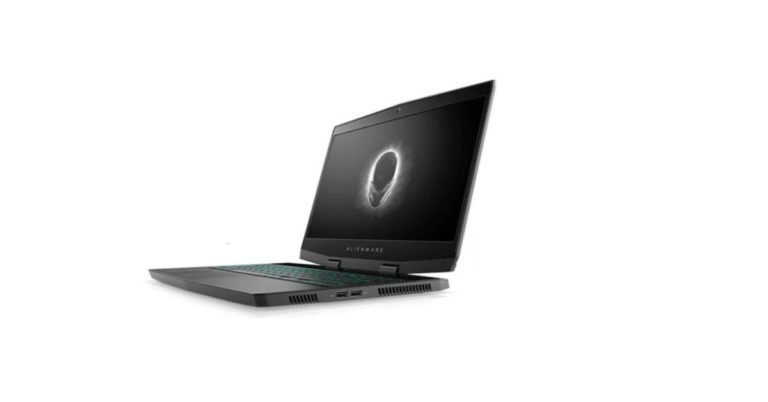
Dell Alienware m15, Alienware m17 gaming laptops launched at Computex 2019

American multinational computer technology company Dell has announced that Alienware m15 and Alienware m17 gaming laptops at the Computex 2019. The newly-launched laptops come with a new design and pack more powerful specifications. The key highlights of the laptops include 9th Gen octa-core Intel processors, Nvidia GeForce RTX series graphics and improved thermal architecture. Dell Alienware m15 and Alienware m17 are claimed to be the thinnest gaming laptops from the company till now.

While Alienware m15 is claimed to be the world’s first 15-inch laptop that comes with Tobii eye-tracking technology, Alienware m17 is the first ever laptop to come with a display that is Eyesafe certified and reduces blue light exposure. The two new laptops come with an Alienware Area 51m inspired the design and are very different from the previous generation Alienware m15 and Alienware m17 laptops.

Other key highlights of the laptops include a high refresh rate, low response time, per key RGB lighting, a dedicated gaming command centre. Here’s more on Alienware m15 and Alienware m17 specifications:

Dell Alienware m15 specifications and price

Dell AlienWare m15 comes with a 15.6-inch full-HD display that has a refresh rate of 240Hz, a response time of 7ms, and comes with support for Tobii eye-tracking technology. Customers can choose from lower refresh rate panels as well as a top end model with 4K UHD display with 60Hz refresh rate and a response time of 1ms. Dell Alienware m15 laptop is powered by up to 9th Generation Intel Core i9-9980HK octa-core processor clubbed with up to 16GB of DDR4 RAM. It also has 4TB of PCIe M.2 SSD in a Raid 0 configuration. The device ranges from Nvidia GeForce GTX 1650 GPU to Nvidia GeForce RTX 2080 GPU with 8GB of GDDR6 VRAM. The laptop is available in two colour options – Lunar Light and Dark Side of the Moon. The starting price of the laptop will be $1,499.99 (approximately Rs 1,04,400).

Dell Alienware m17 specifications and price

Dell Alienware m17 sports a 17.3-inch full-HD display with a refresh rate of up to 144Hz and a response time of 9ms. It should be mentioned that the laptop comes with the EyeSafe and Tobii eye-tracking technology. Powered by up to 9th Gen Intel Core i9-9980HK octa-core processor, the laptop comes with up to 5.0GHz clock speed.

The new Alienware gaming laptop base variant has the Nvidia GeForce GTX 1650 GPU for graphics processing. Customers can get up to Nvidia GeForce RTX 2080 GPU with 8GB of graphics memory. There is an option of getting up to 16GB of DDR4 RAM and up to 4TB of PCIe M2.0 SSD. The laptop features the same magnesium alloy and will be available in Lunar Light and Dark Side of the Moon colour options. The starting price of the laptop is $1,499.99, which is approximately Rs 1,04,400 and will be available starting June.

For the latest gadget and tech news, and gadget reviews, follow us on TwitterFacebook and Instagram. For newest tech & gadget videos subscribe to our YouTube Channel. You can also stay up to date using the Gadget Bridge Android App.

What to do if you have forgotten your smartphone’s password, PIN or pattern?

Smartphones are one of the most important devices in today’s time, ad they make our everyday life easier. Smartphones store lots of our personal data and in a way, they know more about us and than even our next-door neighbours. So it becomes extremely important to protect the smartphones and the data they hold. For that, the smartphones come with several features like lock screen, PIN, passwords and so on. But what to do if you forget about your password, pattern or PIN? It can be really frustrating as there aren’t too many options that are left after that.

Here, we are listing down the steps and methods about what to do when you forget about the password, PIN or pattern to unlock smartphone:

For Samsung smartphones:

If you have a Samsung smartphone and you lost your password then there are few things you can do to open your smartphone. Every Samsung smartphone asks the user to create a Samsung account, and if you have activated the Find My Mobile during the setup then the process will be easy. Here are the steps by which you can unlock your Samsung device:

  1. Open the Find My Mobile website on your PC or laptop or any other device and log in with your Samsung account which is logged in on the smartphone.
  2. Once logged in, you will see your current smartphone at the upper-left corner of the webpage.
  3. On the right side of the page, you will see the ‘Unlock my device’ option. Click on it.
  4. You can then unlock your Samsung smartphone remotely by entering the password of your Samsung account.

For devices running Android 4.4 KitKat or earlier version of Android

The smartphones running the Android 4.4 or earlier are easy to open if you have forgotten your password.

  1. Type the wrong password 5 times in a row.
  2. After that, you will be taken to a new prompt which will show the following options – Forgot pattern, Forgot PIN, Forgot password.
  3. Then you need to tap on the type of password you forgot. Once done, it will ask you to enter your Google’s username and password. After entering the details, click on Submit.
  4. After that, you will be taken to the prompt to change our PIN, pattern or password.

Using Find My Device

Find my device is a great way to locate and reset your phone’s password. If your smartphone is running Android 5.0 Lollipop or later versions of the OS then you can use Google’s Find My Device. Here are the steps to follow:

  1. Visit the Find My Device website from your PC or laptop and log in to your Google account.
  2. Then you can choose your device displayed on the upper-left corner of the page.
  3. Once there, you can click on Erase device. It should be noted that in the later version of Android, resetting a phone’s password, PIN or pattern is hard. And even Find My Device can’t let you reset it. You can only erase your device and set a new password after it boots up.
  4. Before the erasing starts, you will be asked to enter the Google details once again. Enter it and clock on Submit.
  5. After that, your smartphone’s data will be erased and you will need to set up a new password, PIN or pattern.

Factory Data Reset

Almost every smartphone today running the new Android versions gives the user to reset the device if they somehow forgot their password, PIN or pattern. But sometimes, there is no option and you will have to wipe it clean from the recovery mode menu. Here are the steps to do it:

  1. You can enter the recovery mode by pressing the Power button and the Volume Down button.
  2. Then you will be taken to the Recovery Mode of the device.
  3. There you will be given many options. Choose Wipe Data/ Factory Reset.
  4. You will be asked to enter your Google account’s username and password.
  5. Once done, click on Reset to completely wipe the phone and start afresh.

For the latest gadget and tech news, and gadget reviews, follow us on TwitterFacebook and Instagram. For newest tech & gadget videos subscribe to our YouTube Channel. You can also stay up to date using the Gadget Bridge Android App.

Compare: Redmi K20 Pro and OnePlus 7 Pro

0

OnePlus 7 Pro and the Redmi K20 Pro were two among the most anticipated smartphones of first half of 2019. The OnePlus 7 Pro was launched on May 14 while the Redmi 20 Pro launched on May 28, and since they are both supposed to be premium, the competition among the two was inevitable. Both the OnePlus 7 Pro and the Redmi K20 Pro are the ‘Pro’ variants which means that they are the beefed-up variants and hold the top-end specifications. But the ‘Pro’ in their name is not the only thing they share, here, we compare Redmi K20 Pro and OnePlus 7 Pro so that you can see how similar and different they are:

Display

Redmi K20 Pro: 6.39-inch Full-HD+ (1080 x 2340 pixels) AMOLED display screen with an aspect ratio of 19.5:9, 91.9% screen to body ratio with hardware DC dimming support

OnePlus 7 Pro: 6.67-inch curved Quad HD+ Fluid AMOLED display with a screen to body ratio of 93.22%, refresh rate of 90Hz and A+ quality rating by DisplayMate

The display is the main part of any smartphone as the user would spend most of his time looking at the screen of the device. The OnePlus 7 Pro wins here as it comes with a 90Hz display and is rated A+. Plus, QHD+ screens have an edge over Full HD ones. But the, it is also costlier than Redmi K20 Pro.

Processor

Redmi K20 Pro: Qualcomm Snapdragon 855 SoC

OnePlus 7 Pro: Qualcomm Snapdragon 855 SoC

Both the newly launched smartphones are powered by the same CPU but performance may still differ as they run different operating systems. Many factors go when deciding the performance of the smartphone, but then with Qualcomm Snapdragon 855 SoC, the two will be able to handle very heavy usage too.

Rear camera(s)

Redmi K20 Pro:  AI-powered triple-rear camera setup which comprises of a 48MP Sony IMX586 sensor and an f/1.75 aperture, a 13MP wide-angle-lens and an 8MP sensor with an f/2.4 aperture.

OnePlus 7 Pro:  Triple rear camera setup with 48MP primary Sony IMX586 sensor, an 8MP telephoto sensor, and a 16MP wide-angle sensor. Camera app has support for 3x zoom.

There is a triple-rear camera setup on both the devices. The Redmi comes with an AI-powered camera but the OnePlus comes with a 3x zoom support. Both of the have the main camera as the 48MP Sony IMX 586 sensor. You may opt for either depending on what you prefer.

Selfie camera

Redmi K20 Pro: 20MP pop-up selfie camera

OnePlus 7 Pro:  16MP pop-up selfie camera

The Redmi K20 Pro comes with a 20MP camera, making it a winner. Both the companies have their first pop-up selfie cameras in these devices.

RAM and storage

Redmi K20 Pro: 6GB RAM/ 64GB storage, 6GB RAM/ 128GB storage, 8GB RAM/ 128GB storage, 8GB RAM/ 256GB storage

OnePlus 7 Pro: 6GB RAM/128GB storage, 8GB RAM/256GB storage and 12GB RAM/256GB storage

The Redmi K20 Pro gives more option in the RAM and storage department so the users can go for the model of their needs. But the OnePlus 7 Pro has a 12GB RAM variant which the latter lacks.

Support for microSD card

Redmi K20 Pro: Yes, up to 512GB

OnePlus 7 Pro: No

The only downside of the OnePlus 7 Pro is that it doesn’t support an extendable memory whereas the Redmi K20 Pro does. But the OnePlus 7 Pro comes with the newest UFS 3.0 which gives it a faster read and write time.

Battery

Redmi K20 Pro: 4,000mAh battery with 27W fast charging support

OnePlus 7 Pro: 4,000mAh battery with Warp Charge 30W fast charging support

Both the smartphones come with similar battery but what differs is their fast charging capabilities. OnePlus 7 Pro comes with better and a faster charger, so we would recommend that if battery is one of your key concerns.

Operating system

Redmi K20 Pro: Android 9 Pie skinned with MIUI 10

OnePlus 7 Pro: Android 9.0 Pie skinned with OxygenOS 6

Even though both the smartphones run the similar Android version there is a clear winner here. The UI battle between these two flagship devices is clearly won by the OxygenOS running OnePlus 7 Pro because it gives a cleaner and is close to the stock Android.

Price

Redmi K20 Pro: Starting price Rs 26,200

OnePlus 7 Pro: Starting price Rs 48,999

This is the major focus point of the comparison between these two devices. The Redmi K20 Pro is half the price of the OnePlus 7 Pro. The 8GB RAM variant of the OnePlus 7 Pro comes at Rs 52,999 while the 12GB RAM variant is priced at Rs 57,999. On the other hand, the 8GB RAM variant of the Redmi K20 Pro is priced approximately Rs 30,000.

Both these devices come with a good build quality and are a good performer. If the users are not afraid to spend a chunk of money on one of the most premium looking devices out there with all the bells and whistles then they should no doubt go for the OnePlus 7 Pro. But if they want a flagship level performance and are in a budget then the Redmi K20 Pro is the smartphone to look at.

For the latest gadget and tech news, and gadget reviews, follow us on TwitterFacebook and Instagram. For newest tech & gadget videos subscribe to our YouTube Channel. You can also stay up to date using the Gadget Bridge Android App.



Best-looking gadgets that have been launched in Q1 2019

The year has seen a number of launches in terms of smartphones, speakers, laptops and tablets. We have often shared with your lists of various electronics on the basis of their powerful specifications. Here, we have listed down the best-looking gadgets that have been launched in 2019. Take a look:

OnePlus 7 Pro

OnePlus 7 Pro does not support 3x optical zoom via its telephoto lens

This had to be on the top of our list of best-looking gadgets of 2019. OnePlus 7 Pro looks extremely premium and extremely different from all other OnePlus smartphones that we have seen till now. The handset has a curved display and edges and a glass body. It is available in Mirror Grey, Almond and Nebula Blue colour options and has the top-end specifications like Snapdragon 855 SoC, 12GB RAM, Fluid AMOLED display and triple rear cameras.

Huawei P30 Pro

ARM cuts ties with Huawei amid the US trade ban

At the launch of Huawei P30 Pro, the company said that it was inspired from elements of nature for the design of Huawei P30 Pro. And we have to say, it worked in favour of the handset. The smartphone has a gradient back panel and it comes in two beautiful colours Aurora and Breathing Crystal. The handset has a quad camera setup on its back panel and comes with up to 50x digital zoom.

Apple iPad Air 2019

New-iPad-air-and-iPad-mini-with-Apple-Pencil

Apple recently updated its iPad Air series. The new iPad comes with a 10.5-inch LED-backlit Retina display, is powered by an A12 Bionic chip and has an 8MP primary camera. On the front, there is a 7MP selfie camera. The new iPad has also seen an upgrade in design and is definitely one among the best-looking tablets that you can buy today.

Samsung Galaxy S10+

samsung-galaxy-S10+-rear

The flagship smartphone of South Korean technology giant Samsung is simply exemplary when it comes to the design aspect. The smartphone comes almost no bezels on the screen and has a hole-punch camera that is embedded in the display itself. Samsung Galaxy S10+ has a glass back and comes with a triple rear camera setup on its back panel. It is available in Prism Black, Prism White and Prism Blue. Our list of best-looking gadgets of 2019 would have been incomplete without it.

Asus ZenBook 30 Edition


Asus ZenBook 30 (UX334FL) Edition has a hand-stitched leather design and is pearl white in colour. The special edition laptop has been launched to celebrate the company’s 30th anniversary. The device comes with a 13.3-inch full-HD display and is powered by an 8th Gen Intel Core i7-8565U processor. The laptop has a 50Wh 3-cell lithium-polymer battery.

Razer Blade Stealth Quartz Pink

Razer unveiled the Razer Blade Stealth in Quartz Pink

On Valentine’s Day this year, Razer unveiled a new colour variant of its Razer Blade Stealth series – Quartz Pink. Along with the laptop, a number of its accessories were also made available in the same colour. While rest all the specifications of the laptop remained the same as the regular variant, we felt that this is an excellent buy for anyone looking to buy a good-looking laptop.

Vivo V15 Pro

vivo v15 pro best-looking gadgets

The smartphone from Vivo sports a pop-up selfie camera model and has a triple rear camera setup on its rear panel. It gives the user a full-screen experience and is definitely among the better-looking smartphones. Other specifications of Vivo V15 Pro include a 6.39-inch Ultra FullView FHD+ Super AMOLED display, an on-screen fingerprint scanner and up to 8GB of RAM.

Asus ZenBook 13

Asus zenbook 13

In January 2019, Asus got its new ultrabooks under the ZenBook range to India. Among these was the Asus ZenBook 13 and it is one among the best looking laptops that you can buy today. It has a 13.3-inch Full HD LED Backlit Wideview NanoEdge Display that comes with a bezel-less screen experience and the company’s Splendid technology. In addition to this, the laptop comes with an ErgoLift Hinge using which the keyboard can be tilted to a position that is comfortable for the user.

OnePlus Bullets Wireless 2

OnePlus Bullets Wireless 2

OnePlus has always launched headphones that are minimal yet elegant to look at and its Bullets Wireless 2 headphones are no exception. The headphones come with curved edges that are supposed to enhance the comfort of the wearer. OnePlus Bullets Wireless 2 has a metallic built and a magnetic switch for pause and playback controls.

Samsung Galaxy Buds

Samsung Galaxy Buds lbest-looking gadgets
Samsung Galaxy Buds are the South Korean technology giant’s wireless earphones that it launched this year. They are 30% smaller than their predecessor and are available in Black, Yellow and White colour options. To improve the sound of the earphones, Samsung has added an ‘Enhanced Ambient Sound’ feature. The presence of Adaptive Dual Microphone in the Galaxy Buds has also been touted. They are definitely a good option to consider if you wish to buy one among the best-looking gadgets of the year.

For the latest gadget and tech news, and gadget reviews, follow us on TwitterFacebook and Instagram. For newest tech & gadget videos subscribe to our YouTube Channel. You can also stay up to date using the Gadget Bridge Android App.

[td_smart_list_end]

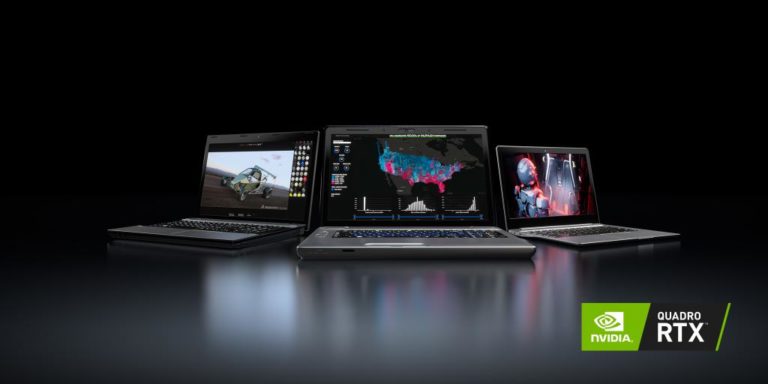
NVIDIA Quadro RTX 5000 GPU is finally coming to the laptops, will be launched in June

NVIDIA’s Quadro RTX 5000 GPU is one of the most powerful graphics processors in the computing industry. That’s the reason it is big in size and it was made available only in PC till now. NVIDIA has finally found a way to shrink the size of the Quadro RTX 5000 GPU so that now it can fit in laptops as well. The new GPU comes with 3,072 CUDA cores and 48 RT cores with 384 Tensor cores and 16GB GDDR6 RAM. The new and mobile Quadro RTX 5000 GPU is designed for users who do a lot of graphic work or video work and require a lot of graphics processing power.

The NVIDIA Quadro RTX 5000 GPU will come with the Ray Tracing technology and it is more powerful and efficient than its predecessors. Currently, there are 17 new laptops of 7 partner companies which are scheduled to have the Quadro RTX 5000 GPU inside them. The new laptops will come with the “RTX Studio” branding on them and according to NVIDIA’s Jason Paul, the new GPUs will offer “desktop class performance on the go”.

According to NVIDIA, the Quadro RTX 5000 GPU powered laptops are capable of running 7x faster than the MacBook Pro with 32GB RAM and AMD’s Pro Vega 20 GPU. The laptops with the RTC Studio branding will come with the “NVIDIA Studio Stack” which is a software suite of SDKs and APIs which are designed for a faster video editing, rendering, vector animation, etc. The company also said that the RTX Studio branding are tested extensively with software from Adobe, Autodesk, Avid, Blackmagic and Maxon. Other than the video software, game developers who used Unity or Unreal will also get a desktop like performance out of these machines. They also promised that the new laptops will give “the best performance and reliability.”

But the company also said that they aren’t putting just the Quadro RTX 5000 GPU in the upcoming laptops. But they will also be putting the Quadro RTX 3000 with 6GB GDDR6 RAM, Quadro RTX 4000 with 8GB GDDR6 RAM as well, all of them will hold different pricing depending on the power of the GPU. The Quadro RTX 3000 GPU packs a 36RT cores and has 288 Tensor cores. While the Quadro RTX 4000 GPU packs a 40 RT core and has 320 Tensor cores.

All the new RTX Studio branded laptops will be made available from June onwards. And the companies which will bring the new Quadro RTX-series GPUs in their machines are – ASUS, Dell, HP, MSI, Razer, Gigabyte and Acer. Depending on the branding and the specification of the laptops their prices might differ but the base price will be $1,600 (approximately Rs 1,11,456).

For the latest gadget and tech news, and gadget reviews, follow us on TwitterFacebook and Instagram. For newest tech & gadget videos subscribe to our YouTube Channel. You can also stay up to date using the Gadget Bridge Android App.

ARM Cortex-A77 CPU, ML CPU and Mali-G77 GPU launched at the Computex 2019

0

At the ongoing Computex 2019, most of the major electronic makers are unveiling their newest offerings. We already saw, Intel, AMD, Qualcomm and Lenovo unveil products at the event. Now, ARM announced a couple of new CPUs along with a new GPU for the next generation of mobile devices at the Computex 2019. It announced the Cortex-A77 which is an updated and advanced version of the older Cortex-A76 CPU. The new CPU promises up to 20% increase in performance over its predecessor. The Mali-G77 GPU is the newest GPU offering from ARM. It is also a big update from its predecessor and it is the first GPU to be based on the ARM’s new ‘Valhall’ architecture.

The Mali-G77 GPU promises a performance increase of around 1.4 times than the earlier Mali-G76. In addition to this, the company announced a new ML (machine learning) CPU which gives a performance of 4TOP/s. This new ML CPU will be capable of giving a speedy performance in the tasks such as 3D face unlock or advanced depth control when shooting a portrait mode picture.

Other than that, the Mali-G77 GPU comes with a new superscalar engine along with a simplified scalar ISA. The new GPU has a compiler-friendly instruction set and has a reworked data structures which results in a better functioning with the API like Vulkan. The new Mali-G77 GPU offers 33% more computing power and comes with an improved execution engine. The new GPU has a quad texture mapper, in short it can offer twice the performance and gaming efficiency in rendering texture or playing graphic heavy games than its predecessor.

Talking about the new CPU, the Cortex-A77, it is based on the 7nm fabrication process and can offer a maximum clock speed of 3GHz. And as mentioned above is 20 times faster than the earlier Cortex-A76 even though it is built on the same template. This is because ARM has managed to increase the single-threaded performance of the new CPU. The Cortex-A77 is said to offer an improved ML and AR experience and will also be able to support the 5G ready devices. The new Cortex-A77 comes with micro-architecture improvements which results in a better overall performing CPU.

Lastly, the ARM ML CPU is based on a new architecture which is designed for smartphones and smart cameras. It can also be used in AR/VR devices, drones and medical or consumer based electronic devices. It is dedicated towards the Machine Learning tasks. The ARM ML CPU is capable of offering up to 4TOP/s performance without draining the battery of the device making it energy efficient performer.

For the latest gadget and tech news, and gadget reviews, follow us on TwitterFacebook and Instagram. For newest tech & gadget videos subscribe to our YouTube Channel. You can also stay up to date using the Gadget Bridge Android App.

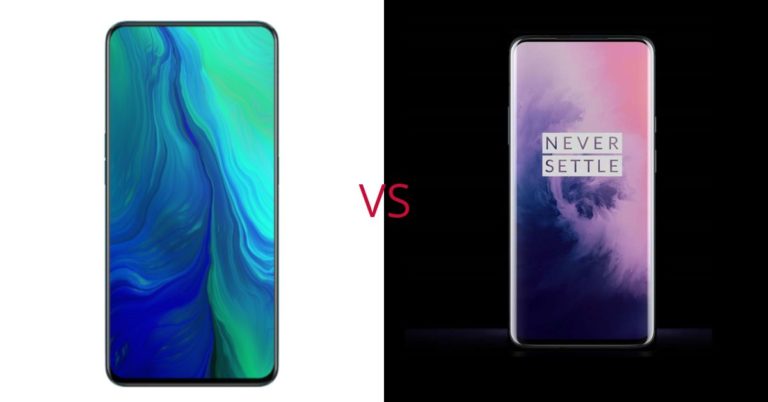
Compare: Oppo Reno 10x Zoom and OnePlus 7 Pro

Oppo has today launched its Oppo Reno 10x Zoom smartphone in India. The smartphone promises a great display, excellent camera experience, and a lasting battery. Here, we compare the Oppo Reno 10x Zoom and OnePlus 7 Pro.

Take a look at how the Oppo Reno 10x Zoom compares to OnePlus 7 Pro and find out which among the two is the perfect buy for you:

Display

Oppo Reno 10x Zoom: 6.6-inch panoramic AMOLED display with 93.1% screen-to-body ratio, 6th generation Corning Gorilla Glass and TUV Rheinland certification.

OnePlus 7 Pro: 6.67-inch curved Quad HD+ Fluid AMOLED display with an aspect ratio of 93.22%, refresh rate of 90Hz and A+ quality rating by DisplayMate.

While there is only a very negligible difference between the display sizes of Oppo Reno 10x Zoom and OnePlus 7 Pro, we would recommend you to opt for the latter here because it has a QHD+ screen that comes with a refresh rate of 90Hz. In our opinion, that should surpass Oppo’s AMOLED screen.

Processor

Oppo Reno 10x Zoom: Octa-core Snapdragon 855 SoC

OnePlus 7 Pro: Qualcomm Snapdragon 855 SoC

Both the smartphones come with the exact same processor – Qualcomm Snapdragon 855 SoC – which is also the most powerful one in the world yet.

Rear camera(s)

Oppo Reno 10x Zoom: Triple-rear camera setup with a 48MP Sony IMX586 sensor, a 13MP periscope telephoto lens and an 8MP super wide-angle lens. Supports 10x zoom.

OnePlus 7 Pro: Triple rear camera setup with 48MP primary Sony IMX586 sensor, an 8MP telephoto sensor, and a 16MP wide-angle sensor. Supports 3x zoom.

Both the smartphones come with a 48MP Sony IMX586 sensor primary camera and both have a telephoto and a wide-angle lens, even though the resolutions are different. However, if you are more into taking zoomed in shots, then we recommend the Oppo’s offering.

Selfie camera

Oppo Reno 10x Zoom: 16MP pop-up selfie camera

OnePlus 7 Pro: 16MP pop-up selfie camera

The selfie cameras of the two smartphones are the same. While OnePlus’ is housed in a pop-up selfie camera module, Oppo’s is placed in a swing selfie camera module.

RAM and storage

Oppo Reno 10x Zoom: 6GB RAM/128GB storage and 8GB RAM/256GB storage

OnePlus 7 Pro: 6GB RAM/128GB storage, 8GB RAM/256GB storage and 12GB RAM/256GB storage

If RAM and storage matter to you, then OnePlus’ latest flagship is the obvious choice as it comes with a massive 12GB of RAM and 256GB of internal storage.

Battery

Oppo Reno 10x Zoom: 4,065mAh battery with VOOC 3.0 support

OnePlus 7 Pro: 4,000mAh battery with Warp Charge 30W fast charging support

Oppo’s new smartphone surpasses OnePlus’ flagship as far as the battery capacity of the two are concerned. However, we should mention that with Warp charging, you would be able to charge the OnePlus smartphone very quickly.

Operating system

Oppo Reno 10x Zoom: ColorOS 6 based on Android 9.0 Pie

OnePlus 7 Pro: Android 9.0 Pie skinned with OxygenOS

Starting price

Oppo Reno 10x Zoom: Rs 39,990

OnePlus 7 Pro: Rs 48,999

The starting price of Oppo’s latest smartphone is Rs 9,000 lesser than that of OnePlus. It does lack in some aspects like display, but it also surpasses OnePlus in other aspects like the battery. If you can compromise on a few of these, Oppo Reno 10x makes a much better buy.

For the latest gadget and tech news, and gadget reviews, follow us on TwitterFacebook and Instagram. For newest tech & gadget videos subscribe to our YouTube Channel. You can also stay up to date using the Gadget Bridge Android App.

OnePlus 7 Pro’s Nebula colour variant is now on sale in India: Get all the details here

0

OnePlus launched its new flagship smartphone – OnePlus 7 Pro – in India earlier this month and the smartphone comes with an impressive set of specifications. The sale of the OnePlus 7 Pro with Mirror Grey colour variant went live after its official launch. Today, the Nebula Blue colour variant of the OnePlus 7 Pro has finally gone on sale in India. The Almond colour variant of the device will arrive in India next month. The Nebula Blue colour option of the OnePlus 7 Pro is being offered in two variants – 6GB RAM/ 128GB storage and 8GB RAM/ 256GB storage. The sale is currently live on Amazon India, OnePlus.in and retail stores as it began on 12pm (Noon).

OnePlus 7 Pro price and launch offers in India

The OnePlus 7 Pro with 6GB RAM/ 128GB storage is bring sold at Rs 48,999 while the 8GB RAM/ 256GB storage variant of the device holds a price tag of Rs 52,999. There is also the top-end variant of the OnePlus 7 Pro with 12GB RAM/ 256GB storage and it holds a price tag of Rs 57,999.

All the variants of the OnePlus 7 Pro can be purchased from Amazon India, OnePlus.in, OnePlus exclusive offline stores, Reliance Digital, MyJio, and Croma stores. The sale of the Nebula Blue colour option of the OnePlus 7 Pro is currently live on the abovementioned platforms.

The sale offers of the OnePlus 7 Pro include benefits worth Rs 9,300 from Reliance Jio and up to 70% guaranteed exchange value from Servify. There is also Rs 2,000 cashback if the purchase is made using SBI credit or debit cards.

OnePlus 7 Pro specifications and features

The OnePlus 7 Pro sports a 6.67-inch Fluid AMOLED Quad-HD display with an aspect ratio of 19.5:9. The smartphone runs Android 9 Pie skinned with OxygenOS and has support for dual-SIM (Nano). It is powered by the Qualcomm Snapdragon 855 SoC paired with the Adreno 640 GPU. The OnePlus 7 Pro is able to support up to 12GB of LPDDR4x RAM and 256GB GB of internal storage. It packs a 4,000mAh battery with Warp Charge 30 fast charging support along with a 10-layer liquid cooling system.

The OnePlus 7 Pro features a triple-rear camera setup which comprises of a 48MP Sony IMX586 sensor with an f/1.6 aperture. The second camera is a 16MP ultra-wide-angle sensor with an f/2.4 aperture paired with a third 8MP telephoto lens with an f/2.4 aperture. On the front, there is a 16MP pop-up selfie camera for video calls and selfies.

For connectivity, the OnePlus 7 Pro comes with 4G VoLTE, Wi-Fi 802.11ac, Bluetooth v5.0, NFC, GPS/ A-GPS, and a USB Type-C (v3.1 Gen 1).

For the latest gadget and tech news, and gadget reviews, follow us on TwitterFacebook and Instagram. For newest tech & gadget videos subscribe to our YouTube Channel. You can also stay up to date using the Gadget Bridge Android App.

 

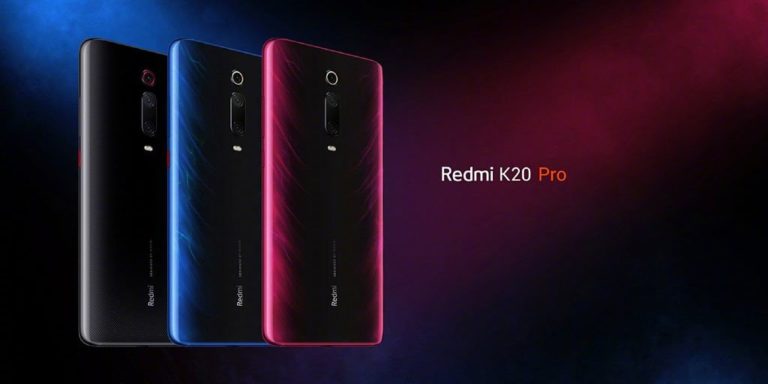
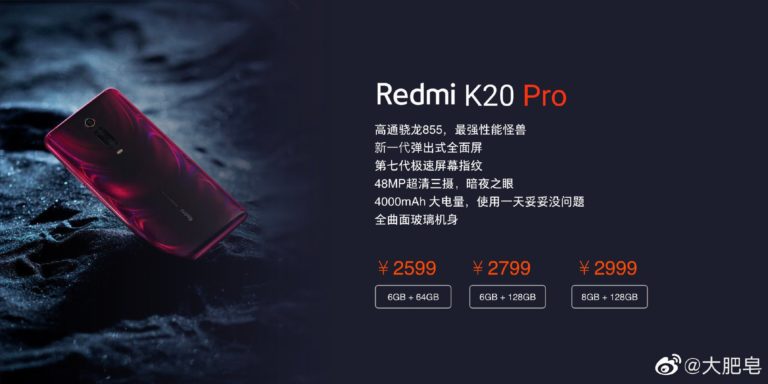
Redmi K20 Pro and Redmi K20 with AI-powered triple-rear camera setup launched: Price and specifications

After months of teases and leaks, the Redmi K20 and the Redmi K20 Pro have finally been launched at a press event in Beijing, China. The new smartphones are the latest offering from the Chinese smartphone maker. The Redmi K20 and the Redmi K20 Pro are the most premium smartphones launched in the Redmi sub-brand of Xiaomi and they are priced more than a typical Redmi device. The Redmi K20 and the Redmi K20 Pro come with AMOLED displays, in-display fingerprint scanners and hardware DC Dimming support. And the Redmi K20 and the Redmi K20 will be the first smartphones from Xiaomi to have the pop-up selfie camera. Other than the new smartphones, the company also launched the RedmiBook 14 at the event. Here’s a look at the price and specifications of the Redmi K20 and Redmi K20 Pro:

Redmi K20 and Redmi K20 Pro price and availability

Redmi K20 with the 6GB RAM/ 64GB storage is priced at CNY 1,999 (approximately Rs 20,200)  and the 6GB RAM/ 128GB storage variant of the smartphone costs CNY 2,099 (approximately Rs 21,200). The Redmi K20 is available in two colour options – Glacier Blue and Flame Red.

The Redmi K20 Pro with the 6GB RAM/ 64GB storage holds a price tag of CNY 2,499 (approximately Rs 25,200). The 6GB RAM/ 128GB storage variant of the device has a price tag of CNY 2,599 (approximately Rs 26,200) while the one with 8GB RAM/ 128GB storage is priced at CNY 2,799 (approximately Rs 28,200). The top-end variant of the Redmi K20 Pro with 8GB RAM/ 256GB storage is priced at CNY 2,999 (approximately Rs 30,200). The Redmi K20 Pro will come in three colour options – Glacier Blue, Flame Red and Carbon Fiber Black.

The first sale of the Redmi K20 will start on June 6 in China while the Redmi K20 will start selling from June 1 onwards.

Although the India release of both the newly launched Redmi smartphone is currently not known, Xiaomi India’s head Manu Kumar Jain had earlier tweeted about their arrival in the country. But then, we still need to find out when it will happen.

Redmi K20 Pro specifications

Redmi K20 Pro sports a 6.39-inch Full-HD+ (1080 x 2340 pixels) AMOLED display screen with an aspect ratio of 19.5:9. It has a 91.9% screen to body ratio and comes with hardware DC dimming support. The new Redmi K20 Pro is powered by the octa-core Qualcomm Snapdragon 855 SoC (1 core X 2.85GHz, 3 cores X 2.42GHz, and 4 cores X 1.8GHz) paired with Adreno 640 GPU. It comes with up to 8GB of RAM and 256GB of internal storage and can support a microSD card of up to 512GB. The newly launched Redmi K20 Pro packs a 4,000mAh battery with 27W fast charging support and has an in-display fingerprint scanner.

On the camera front, the Redmi K20 Pro features an AI-powered triple-rear camera setup which comprises of a 48MP Sony IMX586 sensor and an f/1.75 aperture, a 13MP wide-angle-lens and an 8MP sensor with an f/2.4 aperture. On the front, there is a 20MP pop-up selfie camera.

K20 pro

Connectivity options of the Redmi K20 Pro include Wi-Fi 802.11ac, Bluetooth 5.0, GPS, NFC, USB Type-C port and a 3.5mm audio jack.

Redmi K20 specifications

Coming to Redmi K20, it holds similar features, design and specifications as its Pro variant. But it is powered by the Qualcomm Snapdragon 730 SoC paired with up to 6GB RAM and 128GB of internal storage. It packs a 4,000mAh battery but with 18W fast charging support.

K20

Rest of the specifications of the Redmi K20 is same as the Redmi K20 Pro.

For the latest gadget and tech news, and gadget reviews, follow us on TwitterFacebook and Instagram. For newest tech & gadget videos subscribe to our YouTube Channel. You can also stay up to date using the Gadget Bridge Android App.

Oppo Reno 10x Zoom Edition, Oppo Reno with side-swing selfie camera launched in India: Price and specifications

Oppo Reno 10x Zoom Edition and Oppo Reno smartphones have been launched in India. The two smartphones were launched at an event in New Delhi and prior to being launched in India, they were launched in China. As the name suggests, the key highlight of the Oppo Reno 10x Zoom Edition is its 10x lossless hybrid optical zoom. A common feature between the two handsets is the side-swing selfie camera. The smartphone company is offering an international warranty service on the two handsets. At the launch event, Oppo also announced that its first premium Oppo flagship store in South Asia in Hyderabad. Here are the details about Oppo Reno 10x Zoom Edition and its watered down variant’s price, release date, launch offers and specifications:

Oppo Reno 10x Zoom Edition, Oppo Reno price in India

Oppo Reno 10x Zoom Edition is available in 6GB RAM/128GB storage and 8GB RAM/256GB storage variants in India that are priced at Rs 39,990 and Rs 49,990 respectively. The handsets will be available in Jet Black and Ocean Green colour variants.

Coming to Oppo Reno, the smartphone is available at Rs 32,990 for its 8GB RAM/128GB storage model. Both the devices can be picked up from Flipkart starting June 7.

Oppo Reno specifications

Oppo Reno features a 6.4-inch Full-HD+ panoramic AMOLED display that has a screen-to-body ratio of 93.1%. The display of the smartphone is protected by 6th generation Corning Gorilla Glass and it is certified by TUV Rheinland. The smartphone’s display comes with support for DCI-P3 colour gamut. Powered by a Snapdragon 710 SoC, the handset comes with 8GB of RAM. The smartphone runs Android 9 Pie with ColorOS 6 on top and houses a 3,765mAh battery that has support for VOOC 3.0 fast charging. The smartphone comes with 128GB of onboard storage.

For imaging duties, the Oppo Reno comes with a dual-rear camera setup that has a 48MP Sony IMX586 primary sensor clubbed with a 5MP depth sensor. The smartphone also comes with a swing selfie camera module that holds a 16MP camera sensor.

For connectivity, the handset comes with 4G LTE, Wi-Fi, Bluetooth, NFC, and a USB Type-C port. In addition to this, there is support for Hi-Res and Dolby Atmos. The smartphone also comes with Game Boost 2.0 to enhance the gaming experience for the user.

Oppo Reno 10x Zoom Edition specifications

Coming to Oppo Reno 10x Zoom Edition, it sports a 6.6-inch panoramic AMOLED display. Powered by an octa-core Snapdragon 855 SoC, the smartphone has up to 8GB RAM and up to 256GB of internal storage. It comes with an ultrasonic in-display fingerprint scanner and houses a 4,065mAh battery with VOOC 3.0 support.

For imaging duties, the handset comes with a triple-rear camera setup with a 48MP Sony IMX586 sensor, a 13MP periscope telephoto lens and an 8MP super wide-angle lens. The device has the same front-facing snapper as its younger sibling and houses a 16MP sensor in its selfie camera module. Connectivity features of the smartphone include 4G LTE, Wi-Fi, Bluetooth, dual GPS, NFC, and a USB Type-C port.

For the latest gadget and tech news, and gadget reviews, follow us on TwitterFacebook and Instagram. For newest tech & gadget videos subscribe to our YouTube Channel. You can also stay up to date using the Gadget Bridge Android App.

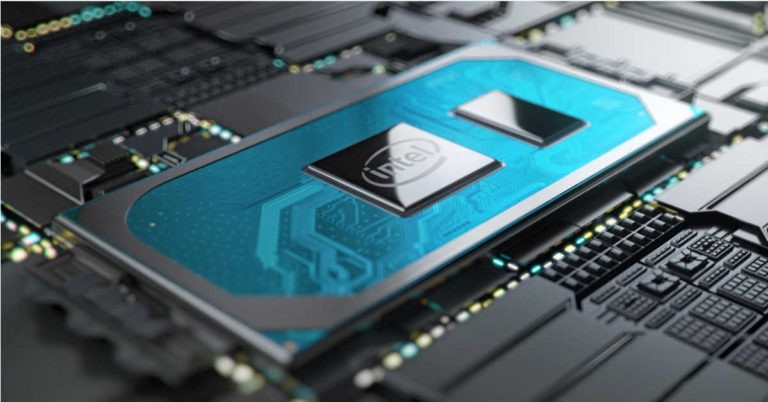
Intel 10th generation core ‘Ice Lake’ 10nm CPUs unveiled at Computex 2019

Chipmaker Intel held its annual keynote at the Computex 2019 tradeshow. At the keynote, GM and Senior Vice President, Client Computing Group, Gregory Bryant unveiled Intel’s much-awaited 10nm ‘Ice Lake’ CPU lineup, which will be the first in the company’s 10th generation Core family and will be aimed at thin and light laptops. Besides getting some general performance improvements, Intel has touted the graphics capabilities of the Iris Plus integrated GPU. A new AI functionality called Intel Learning Boost is also being called one among the key highlights of the new CPUs.

According to Bryant, the new Ice Lake CPUs have now started shipping to laptop OEMS and a number of devices that will be powered by them are expected to be available for sale in 2019 US holiday shopping season.

It is worth mentioning that the new Ice Lake CPUs are based on the company’s Sunny Cove core architecture and are built with 10nm fabrication process. The company has manufactured and shipped 10nm CPUs in volume and is also known to have missed the 2016 target of ‘Cannonlake’ processors that were eventually cancelled. Cut recently, Intel promised that it would be shipping its Ice Lake CPUs in volume by June.

The Iris Plus integrated GPUs are used in Intel’s Gen11 graphics architecture. The company has said that it previewed its performance just a day before Computex and it claims that it is up to 2x the graphics performance of the previous generation equivalent. The company has launched 11 Ice Lake CPU models across Core i3, Core 15 and Core i7 tiers, however, the exact specifications of the processors have not been announced.

Coming to Intel Deep Learning Boost, it is said to have a 2.5x performance when compared to an equivalent 8th Gen Core U-Series processor. The Iris Plus iGPU has 1 Teraflop of bandwidth and also comes with integrated Wi-Fi 6 and Thunderbolt 3.

The company’s Project Athena framework was first announced at CES 2019 and today Bryant said that its first complete specification and previewed upcoming laptops from Dell, Acer, HP, and Lenovo. Project Athena aims to define a new generation of 5G connected laptops with beefed-up battery life.

The company has said that it has used its new ‘key experience indicators’ based on research spanning multiple years into the users’ expectations and challenged for any kind of usage. The laptops under Project Athena will come with 16 hours of battery life for non-streaming video playback and 9 hours for everyday usage of the device.

For the latest gadget and tech news, and gadget reviews, follow us on TwitterFacebook and Instagram. For newest tech & gadget videos subscribe to our YouTube Channel. You can also stay up to date using the Gadget Bridge Android App.

Mi Super Sale: Discounts and offers on Redmi Note 6 Pro, Redmi 6A, Redmi Y2 and more

0

In the midst of all the new smartphone launches, Xiaomi has kick-started its Mi Super Sale in India. The sale is currently live on Mi.com and will go on till Friday, May 31. During the Mi Super Sale, most of the popular smartphones from Redmi are getting discounts and offers. Some of the smartphones which are getting a discount are Redmi 6A, Redmi Y2 and Redmi 6 Pro. In addition to this, Amazon India has brought a similar sale on its own platform named the Mi Days sale. On Amazon, the customers will be getting the Amazon Pay balance along with additional exchange discounts on only a few Xiaomi devices.

Amazon India and Mi.com sale offers and discount

The Redmi Note 6 Pro, Redmi Note 5 Pro, Redmi 6A, Redmi 6 and the Redmi Y2 are currently being available with offers and discounts in the ongoing sale. The customers who purchase the devices from Mi.com will be getting the Mi Protect for Rs 799 along with an additional exchange discount of up to Rs 5,000. Amazon India is giving the Amazon Pay balance along with additional exchange discounts.

Redmi 6 Pro is currently being offered for Rs 8,999 for the 3GB RAM/ 32GB storage variant (Rs 1,000 discount from its original price). The 4GB RAM/ 64GB storage variant of the smartphone is selling for Rs 9,999 (Rs 2,000 off of its original price).

On the other hand, the Redmi Note 5 Pro is being sold for Rs 10,999 for the 4GB RAM/ 64GB storage variant (down from its original price of Rs 12,999) and the 6GB RAM/ 64GB storage variant of the device is being sold at Rs 11,999 (Rs 1,000 discount from its original price). With the purchase of the Redmi Note 5 Pro, the customers will also get Mi Protect at Rs 999.

Similarly, the Redmi Note 6 Pro is being sold at Rs 11,999 which is down from its original price of Rs 13,999. But customers can also get an additional exchange discount of Rs 1,000.

Similarly, the Redmi 6 with the 3GB RAM/ 64GB storage is bring offered at Rs 7,499 which is Rs 500 off of its original price. The Redmi 6A with 3GB RAM/ 32GB storage is being offered at Rs 6,499 which is down from its original price of Rs 6,999. With the purchase of the said devices from Amazon India, it is offering Rs 500 Amazon Pay balance to the customers for purchasing the Redmi 6A. But is should be noted that the Redmi 6A with the 2GB RAM/ 16GB internal storage hasn’t received any discount and is selling at its original pricing.

The selfie-centric smartphone, the Redmi Y2 with 4GB RAM/ 64GB storage is selling for Rs 9,999 which is Rs 1,000 down from its original price. The 3GB RAM/ 64GB storage variant of the Redmi Y2 is still at Rs 8,999.

For the latest gadget and tech news, and gadget reviews, follow us on TwitterFacebook and Instagram. For newest tech & gadget videos subscribe to our YouTube Channel. You can also stay up to date using the Gadget Bridge Android App.

Qualcomm and Lenovo join hands to bring ‘Project Limitless’ laptop with 5G connectivity

0

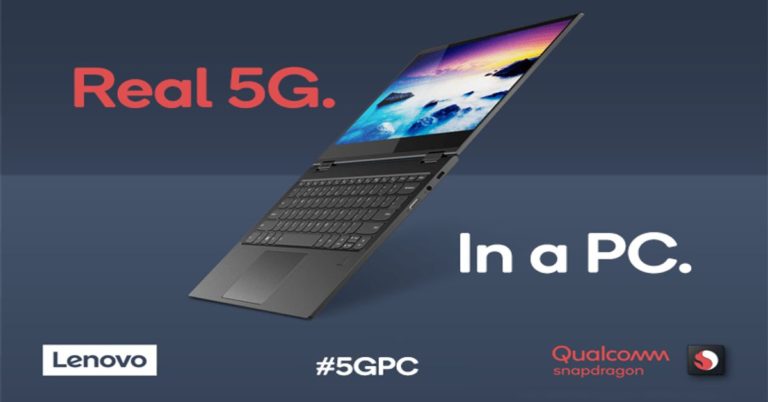
Computex 2019 saw the launches of some of the most advanced, powerful and newest CPUs, and computer components at Taipei, Taiwan. The latest among these launches come from Qualcomm and Lenovo. The two companies have come together to launch the first 5G-enabled always-connected laptop powered by the Snapdragon 8cx 5G Compute Platform. American chipmaker Qualcomm and electronic maker Lenovo have collaborated on this project where they demonstrated the uses of the always-connected computers on the 5G networks. The name of this new laptop/ project is ‘Project Limitless’ and it is a prototype device which is currently not ready to be launched as a commercial device.

The newly unveiled Project Limitless laptop is powered by the Snapdragon 8cx platform which was launched back in 2018. The Snapdragon 8cx is the world’s first 7nm platform built for PCs and laptops with 5G connectivity capability. Earlier, we saw that Qualcomm quoting that its goal for the laptops powered by the Snapdragon CPUs is a good battery life of more than a day, always-on internet connection and light in weight. According to Qualcomm, the speed of 5G connectivity is very high, according to the company, 5G connectivity is able to give a very high speed and with low latency. It says that, with 5G connectivity, using a remote storage will feel like using the local storage on the laptop/PC. Even large files can be sent and received faster with this new connectivity than what we are used to and what we use today.

There are various other ways the 5G connectivity can be useful and will be better than what we are used to right now. It can give 4K and 8K video streaming, AR and VR applications can be run smoothly, mobile gaming will be more responsive and will allow high quality video calling. Other than all these features, the new Project Limitless has promised that it will offer an enterprise-grade security to the user. As mentioned above, the new Project Limitless brought out by the coalition of the two companies won’t be commercially launched yet, but the companies have said that more details of the laptop will be announced next year in 2020.

The Project Limitless is powered by the Qualcomm Snapdragon 8cx CPU which has 8 Kryo 495 CPU cores paired with Adreno 680 GPU. For 5G connectivity, the company has put its second generation X55 5G modem for 5G connectivity and Cat 22 LTE where 5G connectivity isn’t available. The Snapdragon 8xc SoC supports Quick Charge 4+ and is able to drive two 4K HDR displays.

Moreover, Lenovo was one of the first electronics companies to work with Qualcomm to bring out the Windows 10 based laptops powered by the Snapdragon 835 Mobile PC platform. One of such laptops was the Lenovo Yoga C630 WOS which was powered by the Qualcomm’s Snapdragon 850 CPU. The Lenovo Yoga C630 WOS was launched way back at Computex 2017.

For the latest gadget and tech news, and gadget reviews, follow us on TwitterFacebook and Instagram. For newest tech & gadget videos subscribe to our YouTube Channel. You can also stay up to date using the Gadget Bridge Android App.

HyperX launches the first gaming keyboard which has its own switch design

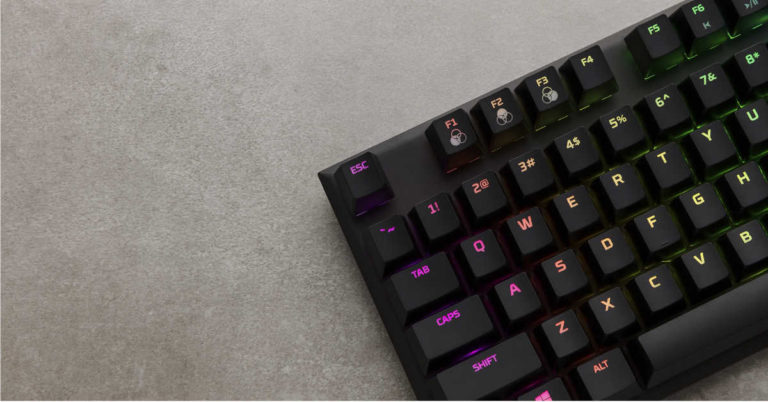
Kingston Technology’s HyperX has been making gaming keyboards for a few years and much like other manufacturers, it uses Cherry MX or Kailh key switches, depending upon the price of its products. Now, at Computex 2019, the company has announced HyperX Alloy Origins the first keyboard that comes with a new key switch design by HyperX itself.

The newly launched keyboard is called HyperX Alloy Origins and it comes with switches that are based on typical reds. We should mention that this is a popular choice in gaming keyboards because the most competitive gamers have a preference for it because they are highly responsive. It is also worth pointing out that HyperX has tweaked the red design by shaving the travel distance to 3.8mm and actuation point to 1.8mm. For those unaware, this is 0.2mm less than a standard Cherry MX red switch.

Basically, if you are one among the gamers who really liked the red switches and wanted them to be even more Red, you would definitely like Alloy Origins’ design. However, if you use your keyboard for typing more than for gaming, it may not be the choice for you.

HyperX Alloys Origin is a full-sized keyboard that has a trim aluminium frame and it comes with the company’s ‘Black Pudding’ translucent keycaps, which is not something that everyone likes in their gaming keyboard.

The company has said that HyperX Alloys Origin is available in the third quarter of 2019, starting at $109.99. This is the same price at the company’s Alloy FPS RGB, which comes with Kailh switches.

Recently, the company also launched its Xbox licensed gaming headsets in India named – HyperX CloudX. The new CloudX comes with a 53mm Dynamic driver with neodymium magnets and its sound frequency range is 15Hz to 25KHz (25,000Hz). The sound pressure level in gaming headset is 95dBSPL/mW at 1kHz.

Kingston has said that it has taken into consideration the fact the users wear gaming headsets for a longer duration of time, and that’s why it has ensured that it is light and comfortable. It weighs 325gms without the microphone and with the microphone attached it weighs 337gms, which is light considering it has an aluminium frame. Its cable has a length of 1.3m and its microphone is an electret condenser noise cancelling microphone with 50Hz to 18KHz frequency (18,000Hz).

For the latest gadget and tech news, and gadget reviews, follow us on TwitterFacebook and Instagram. For newest tech & gadget videos subscribe to our YouTube Channel. You can also stay up to date using the Gadget Bridge Android App.
Oppo Reno and Oppo Reno 10x Zoom Edition to launch in India today: How to watch the live stream

0

Oppo is finally bringing its Oppo Reno series of smartphones in India and they will be launched at an event in New Delhi today. The company will be launching two smartphones – the Oppo Reno vanilla version and the Oppo Reno 10x Zoom Edition. Both the smartphones were launched in China earlier this year and had made headlines with its new and unique shark fin selfie camera. The event will start from 12pm (IST) onwards. Interested users can also watch the live stream of the event on the official Oppo Reno India YouTube channel.

Oppo Reno and the Oppo Reno 10x Zoom Edition prices (expected)

Although the company hasn’t said anything about the smartphones’ official pricing in India, we are expecting them to be similar to their costs in China.

The vanilla variant of Oppo Reno with 6GB RAM/ 128GB storage is priced at CNY 2,999 (approximately Rs 30,900) in China, while the 6GB RAM/ 256GB storage variant of the device is selling for CNY 3,299 (approximately Rs 34,000). The highest variant of the Oppo Reno with 8GB RAM/ 256GB storage sells for CNY 3,599 (approximately Rs 37,100).

On the other hand, the Oppo Reno 10x Zoom Edition with the 6GB RAM/ 128GB storage sells for CNY 3,999 (approximately Rs 41,100). The higher 6GB RAM/ 256GB storage variant of the device costs CNY 4,499 (approximately Rs 46,400) and the highest 8GB RAM/ 256GB storage variant is priced at CNY 4,799 (approximately Rs 49,500).

Oppo Reno specifications

The vanilla variant of Oppo Reno sports a 6.4-inch Full-HD+ AMOLED display with Gorilla Glass 6 protection on top. Since it is not a flagship model, it is powered by the Snapdragon 710 SoC, paired with up to 8GB of RAM and 256GB of storage. The smartphone runs Android 9 Pie skinned with ColorOS and packs a 3,765mAh battery with VOOC 3.0 fast charge support.

On the camera department, the Oppo Reno features a dual-rear camera setup which comprises of a 48MP Sony IMX586 sensor paired with a 5MP depth sensor with an f/2.4 aperture. On the front, there is the side-swing/ shark-fin 16MP selfie camera with an f/2.0 aperture.

Oppo Reno 10x Zoom Edition specifications

Coming to Oppo Reno 10x Zoom Edition, it sports a 6.6-inch panoramic AMOLED display. It is a flagship model and is powered by the Snapdragon 855 SoC paired with up to 8GB of RAM and 256GB of internal storage. The Oppo Reno 10x Zoom Edition runs Android 9 Pie skinned with Color OS and packs a 4,065mAh battery with VOOC 3.0 fast charge support.

On the camera front, the Oppo Reno 10x Zoom Edition features a triple-rear camera setup which comprises of a 48MP Sony IMX586 sensor with an f/1.7 aperture. The second camera is a 13MP periscope telephoto lens paired with an 8MP super wide-angle lens. On the front, there is the same shark-fin/side-swing 16MP selfie camera.

For the latest gadget and tech news, and gadget reviews, follow us on TwitterFacebook and Instagram. For newest tech & gadget videos subscribe to our YouTube Channel. You can also stay up to date using the Gadget Bridge Android App.

Redmi K20 Pro, Redmi K20 set to launch today: How to watch the live stream

Xiaomi is all set to launch its Redmi K20 and Redmi K20 Pro smartphones today. The launch event of the two smartphones will take place in Beijing, China at 2 pm CST (11:30 am IST). For weeks, the company has been teasing the launch of Redmi K20 on its social media platforms and has touted it to be a ‘Flagship Killer 2.0’. The new smartphone is likely to compete with the OnePlus 7. Among the key features of Redmi K20 smartphone are Qualcomm’s Snapdragon 855 SoC, an in-display fingerprint scanner and Game Turbo 2.0. The upcoming smartphone will be coming with a DC Dimming-supported display. Here’s a look at the launch timings, expected price and specifications of the Redmi K20 and Redmi K20 Pro smartphones:

Redmi K20 Pro, Redmi K20 live stream

You can watch the launch of Redmi K20 Pro and Redmi K20 at 2 pm local time in China, which is 11:30 am IST. The launch of the smartphones will be live streamed on Redmi’s official account on Weibo and the Xiaomi website. It is worth noticing that the live stream will be available in Mandarin (Chinese).

Redmi K20 Pro, Redmi K20 price (expected)

The pre-bookings of the Redmi K20 smartphone have started in China and customers can pre-order the handset by paying CNY 100 (approximately Rs 1,000). The price of the Redmi K20 Pro and Redmi K20 smartphones will be announced later at the event today. The Redmi K20 will be launched in India too, the company has confirmed.

According to a leak, the Redmi K20 Pro’s base variant with 6GB RAM and 64GB storage will be available for CNY 2,599, while its 6GB RAM/128GB storage model will be priced at CNY 2,799. The 8GB RAM/128GB storage variant of the smartphone can be bought at CNY 2,999. The company is also expected to launch its first Redmi series laptop today.

Redmi K20 Pro, Redmi K20 specifications

The Redmi K20 Pro smartphone will be powered by Qualcomm Snapdragon 855 SoC, while the younger sibling would be powered by the Snapdragon 730 SoC. The handsets will sport a 6.39-inch full-HD+ AMOLED display. While the Pro model of the smartphone will come with a pop-up selfie camera, the Redmi K20 will spot a waterdrop-shaped notch on the top.

The company has confirmed that the Redmi K20 will come with a seventh-generation in-display fingerprint sensor, enhanced gaming with Game Turbo 2.0 and DC Dimming feature. The presence of a 48MP Sony IMX586 primary sensor has also been touted. The smartphone will house a 4,000mAh battery and come with support for 27W fast charging technology. The handsets are said to run Android Pie skinned with MIUI 10.

For the latest gadget and tech news, and gadget reviews, follow us on TwitterFacebook and Instagram. For newest tech & gadget videos subscribe to our YouTube Channel. You can also stay up to date using the Gadget Bridge Android App

Computex 2019: Asus ZenBook 13, ZenBook 14, ZenBook 15 and ZenBook 30 Edition laptops launched

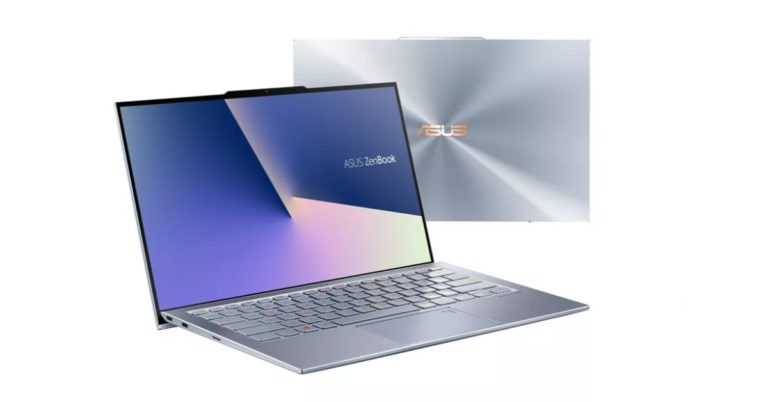
Taiwanese technology company Asus has expanded its Zenbook laptop lineup with three new devices – ZenBook 13 (UX334), ZenBook 14 (UX434), and ZenBook 15 (UX534). All the three new offerings come with a slim design, a metallic body and ScreenPad 2.0, which is an upgraded version of the company’s touchscreen embedded touchpad. Asus has also taken wraps off its ZenBook Edition 30 (UX334FL) laptop that has a leather design and has been made to commemorate the company’s 30th anniversary.

Asus ZenBook 13 (UX334), ZenBook 14 (UX434), and ZenBook 15 (UX534) come with some design elements from their predecessors that were launched in August 2018. However, the key change in the design of the new laptops is the addition of ScreenPad 2.0. Another upgrade in the ZenBook laptops is that they come with an Nvidia GeForce GTX 16xx series or an Nvidia GeForce MX250 graphics cards. As of now, there is no word on the price details and availability of the devices.

Speaking of the ScreenPad 2.0, it comes with a 5.65-inch full-HD+ IPS panel with 178-degree viewing angle and precision touchpad (PTP) technology. This enables the display to support multi-finger gestures. Here’s a look at the specifications of the three newly-launched laptops:

Asus ZenBook 30 Edition specifications

The Asus ZenBook 30 (UX334FL) Edition comes with a hand-stitched leather design that is pearl white in colour. The special edition laptop has a 13.3-inch full-HD display with a 178-degree viewing angle and a screen to body ratio of 92%. Powered by an 8th Gen Intel Core i7-8565U processor, the laptop comes with up to 16GB of RAM clubbed with the Nvidia GeForce MX150 GPU and 2GB of graphics memory. It has 1TB of PCIe Gen 3.0 storage and houses a 50Wh 3-cell lithium-polymer battery.

Asus ZenBook 13 (UX334) specifications

The Asus ZenBook 13 (UX334) laptop features a 13.3-inch full-HD display with viewing angle of 178-degrees and a screen to body ratio of 95%. It can be configured with up to an 8th Gen Intel Core i7-8565U processor clubbed with 16GB of RAM. It has up to 1TB of PCIe 3.0 SSD. You can choose between Intel UHD 620 graphics and Nvidia GeForce MX250 GPU clubbed with 2GB of graphics memory for configuration. The laptop has a 50Wh 3-cell lithium-polymer battery.

Asus ZenBook 14 (UX434) specifications

The new Asus ZenBook 14 (UX434) laptop features a 14-inch full-HD display that has a viewing angle of 178-degrees and a screen to body ratio of 92%. The laptop is powered by 8th Gen Intel Core i7-8565U processor or an 8th Gen Intel Core i5-8265U CPU. The Nvidia GeForce MX250 GPU is also present on the device with up to 2GB of GDDR5 VRAM. There is up to 16GB of LPDDR3 RAM and 1GB of PCIe 3.0 SSD.

Asus ZenBook 15 (UX534) specifications

The Asus ZenBook 15 (UX534) sports a 15.6-inch 4K UHD with a viewing angle of up to 178-degrees and a screen to body ratio of 92%. However, there is an optional 15.6-inch full-HD panel too. Powered by up to 8th Gen Intel Core i7-8565U processor, the laptop comes with a RAM of up to 16GGB and comes equipped with Nvidia GeForce GTX 1650 graphics card with up to 4GB of GDDR5 VRAM. The storage of the device goes up to 1TB PCIe 3.0 SSD and it houses a 71Wh 8-cell lithium-polymer battery.

For the latest gadget and tech news, and gadget reviews, follow us on TwitterFacebook and Instagram. For newest tech & gadget videos subscribe to our YouTube Channel. You can also stay up to date using the Gadget Bridge Android App.
Sony launches four new party speakers with 360-degree sound and Jet Bass Booster: Price and features

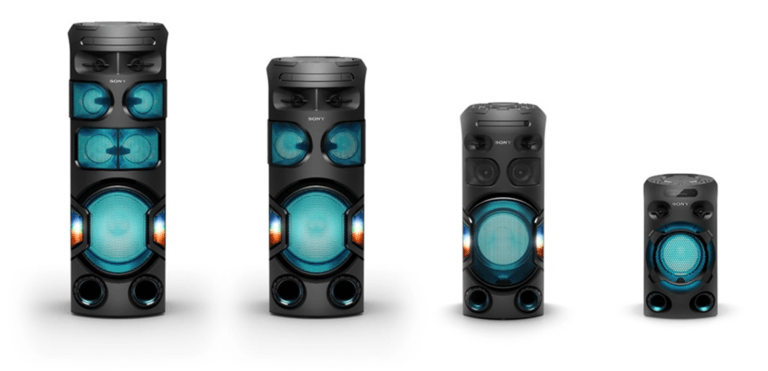
Sony has launched a new range of Party speakers with four new models named – MHC-V82D, MHC-V72D, MHC-V42D and MHC-V02. Two of the speakers come with 360-degree sound and 360-degree light which is claimed to give the ultimate party experience. While all of them have the Jet Bass Booster which gives a powerful bass, it also has a Karaoke feature which can be used to sing along with the music. They come with an illuminated LED touch panel with Taiko feature.

Sony MHC-V82D, MHC-V72D, MHC-V42D and MHC-V02 price and  availability

Sony MHC-V82D is the top-end model and is priced at Rs 52,990 while the Sony MHC-V72D is priced at Rs 42,990. On the other hand, the Sony MHC-V42D holds a price tag of Rs 29,990 and the smallest and the most affordable of the lot is the Sony MHC-V02 which is priced at Rs 15,990.

All the four new speakers are available for purchase from Sony Stores, major electronics stores and major e-commerce platforms from May onwards.

Sony MHC-V82D, MHC-V72D, MHC-V42D and MHC-V02 features and specifications

The Sony MHC-V82D and the Sony MHC-V72D comes with the 360-degree sound and has the Jet Bass Booster along with the Mega Bass for powerful sound. It has DSEE sound enhancement and comes with Dolby Digital and Cinema Surround Sound. Karaoke function includes Vocal Fader, Key Control, Scoring, Mic Volume, Echo, Guide Vocal (Apps Only) and Voice Changer. Both of them comes with Voice Control and Gesture Control. Both the Sony MHC-V82D and the Sony MHC-V72D has a touch panel and a splash proof top panel. As mentioned above, the Sony MHC-V82D and the Sony MHC-V72D come with 360-degrees party lights and speaker lights.

The Sony MHC-V82D and the Sony MHC-V72D has 2 mics and a guitar input as well for the Karaoke. It can also be connected with Bluetooth, USB, HDMI, Audio In, etc. Furthermore, both of the Sony MHC-V82D and the Sony MHC-V72D supports Disc in and FM. The Sony MHC-V82D is 31 kgs in weight while the Sony MHC-V72D weighs 21.6 kgs.

On the other hand, the Sony MHC-V42D and the Sony MHC-V02 fall on the mid-range and low-end category of party speakers. Unlike the top-end speakers, the Sony MHC-V42D and the Sony MHC-V02 doesn’t come with 360-degree sound. But both of them have the Jet Bass Booster along with Mega bass for powerful sound and bass. They come with Cinema sound support and has similar Karaoke function as the top-end party speakers. Both these speakers also support voice controls.

The Sony MHC-V42D and the Sony MHC-V02 doesn’t come with gesture control or motion control, touch panel and they aren’t splash proof. But they come with speaker lights. Both of them come with 1 mic input. For connection, the Sony MHC-V42D and the Sony MHC-V02 come with Bluetooth, USB, HDMI, Audio in, Disc and FM. The Sony MHC-V42D weighs 12.6 kgs while the Sony MHC-V02 weighs 6.0 kgs.

For the latest gadget and tech news, and gadget reviews, follow us on TwitterFacebook and Instagram. For newest tech & gadget videos subscribe to our YouTube Channel. You can also stay up to date using the Gadget Bridge Android App.
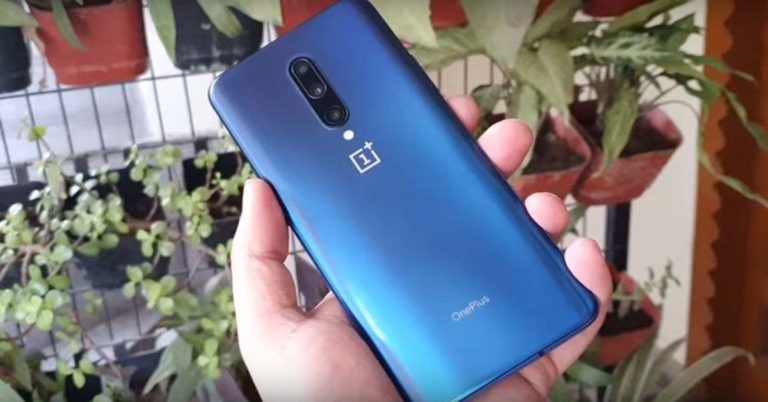
Asus VivoBook S14 and VivoBook S15 launched at Computex 2019

Taiwanese technology company Asus has today launched two new laptops that are targeted at PC users – VivoBook S14 and VivoBook S15. The VivoBook S14 and VivoBook S15 are available in two variants and are powered by the 8th generation Intel processors. Asus VivoBook S14 and VivoBook S15 have the ScreenPad 2.0 and are powered by Nvidia GeForce MX250 GPU. The new laptops in the VivoBook series come with the NanoEdge display design that we have seen in the Zenbook series. The newly launched gadgets come with a colourful design and have contrasting edges.

The Asus VivoBook S14 and VivoBook S15 are the first ever laptops by the series to some with ScreenPad 2.0, which is basically an upgraded version of the company’s touchscreen-equipped touchpad. The new laptops from the VivoBook series come with an ErgoLift hinge design that is claimed to provide a more comfortable typing experience to the user. The laptops also come with support for Wi-Fi 6, low-latency and faster connectivity experience. However, Asus has not revealed the price and availability details of the two laptops as of now. Here’s a look at the specifications of the VivoBook S14 and VivoBook S15 laptops:

Asus VivoBook S14 specifications

The Asus VivoBook S14 features a 14-inch full-HD display that has an aspect ratio of 16:9 and a screen-to-body ratio of 88%. We should mention that the laptop can be configured with up to 8th gen Intel Core i7-8565U processor clubbed with up to 16GB of RAM. The storage space on the device is up to 1TB of PCIe SSD. The graphics options of the Asus VivoBook S14 vary between Intel UHD 620 and the Nvidia GeForce MX250. The latter has 2GB of GDDR5 VRAM.

The company has launched two variants of the laptop, namely the VivoBook S14 (S431) and the VivoBook S14 (S432). The ScreenPad 2.0 will only be available in the VivoBook S14 (S432). Another difference between the two variants in the battery capacity. While the VivoBook S14 (S431) houses a 47Wh 2-cell battery, the VivoBook S14 (S432) packs a 42Wh 3-cell battery. Both the variants come with fast charge support, however, only the latter comes with an extra USB 2.0 port.

Asus VivoBook S15 (S531/S532) specifications

Asus VivoBook S15 features a 15.6-inch LED-backlit full-HD display that has an aspect ratio of 16:9 and a screen to body ratio of 88%. The laptop can be configured with up to quad-core 8th Gen Intel Core i7 processor clubbed with 16GB of RAM and 1TB of PCIe SSD. For graphics, you can choose between an integrated Intel UHD 620 and the Nvidia GeForce MX250 graphics card.

The latter has 2GB of graphics memory. There are two variants of Asus VivoBook S15 that are available. While the VivoBook S15 (S532) has ScreenPad 2.0 and comes with a 42Wh 3-cell lithium polymer battery, the VivoBook S15 (S531) comes without the ScreenPad 2.0.

For the latest gadget and tech news, and gadget reviews, follow us on TwitterFacebook and Instagram. For newest tech & gadget videos subscribe to our YouTube Channel. You can also stay up to date using the Gadget Bridge Android App.