Apple is famous for making very reliable and premium smartphones. After the successful sales of the iPhone 12 series with a new design, we can expect iPhone 13 to follow its design pattern. We can expect iPhone 13 to come with a newer chipset and better camera. Apple is expected to launch its complete iPhone series in the month of September however the company has not confirmed the actual dates (officially), here is some data we got from the online leaks.
The Timeline
We can expect that Apple will be releasing all its iPhone 13 series phones, which will include normal iPhone 13, iPhone 13 pro and iPhone 13 pro max together on September 14. The company may also release its mini segment and new Airpods alongside. According to IT Home, a reliable Twitter leaker informed with his tweet that the phone is even listed on one of the e-commerce websites in China along with the rumoured Apple’s Airpods 3. It was also mentioned in the publication that the pre-orders will start from the 17th and the phone will go on sale on the 24th. Although, last time the publication’s rumour about the date came out to be wrong. However this time even Jon Prosser, another tipster confirmed that the rumours are true.So if the dates are true the press invites should be a week before the announcement of the phone which is the 7th of September. And after the pre-order on the 17th, the first sale should be a week later on the 24th of September. Read Also: EXCLUSIVE: First look renders of the upcoming Apple iPhone 13 show diagonally placed camera lenses and a smaller notchWe are really excited about the launch of the upcoming Apple products. Also, the prices of the new iPhones will increase as reportedly, the chipset production cost has been increased by TSMC thus resulting in the higher price of smartphones. We can expect around a 20% price bump on the upcoming iPhones. Stay with Gadget Bridge for more updates on the upcoming Apple launch.For the latest gadget and tech news, and gadget reviews, follow us on Twitter, Facebook and Instagram. For newest tech & gadget videos subscribe to our YouTube Channel. You can also stay up to date using the Gadget Bridge Android App. You can find the latest car and bike news here.
Dell’s Alienware series is known for setting up a benchmark in the gaming laptop segment. Alienware is an American hardware subsidiary of Dell. The company has announced and launched 5 new laptops for its Indian customers. Laptops being launched are Alienware X17, X15, XPS 17, XPS 15, and G15. The company has announced all the specs for its upcoming laptops. Here are all the specifications and prices for the new laptops.
Alienware X17 & X15
There is a significant upgrade in thermals made by the company. It is claimed the new cooling system is 25% more efficient than the current Alienware Cryo-Tech. The laptop has a massive 17.3-inch display having a 1080p display panel and 360 Hz refresh rate. The company also offers an optional Cherry MX mechanical keyboard setup on the go. The laptop is powered by the latest Intel offering i.e Core i9-11900H CPU. On the GPU side, the laptop is powered by Nvidia GeForce RTX 3080. Paired with 32 GB of RAM and 1TB internal storage. The Windows Hello IR camera for Biometric security. The specification of X15 remains the same, just a smaller screen size of 15.6-inches and no Cherry MX mechanical keyboard in this option.Price of X17: Starting from Rs 2,90,990Price of X15: Starting from Rs 2,40,990Read Also: Dell unveiled Alienware x15 and Alienware x17 gaming laptops with Tiger Lake-H CPUs and GeForce RTX 30-Series GPUs
Alienware XPS 15 & XPS 17
These laptops are focused on multimedia consumption and editing. Both the laptops offer 4K UHD+ touchscreen display with 500 nits of brightness, DisplayHDR 400 certification,100 percent Adobe RGB,1,600:1 contrast ratio, 99 percent DCI-P3 typical. Although the purpose of this laptop is completely different it is nowhere slow and the company has made no compromise regarding the internal specification. Intel’s Flagship 11th gen Intel Core i9-11900H CPU paired with RTX 3050 Ti GPU comes in it. The laptops will have a quad-speaker design being 2 x 2.5W woofers and 2 x 1.5W tweeters, which support Waves MaxxAudio Pro technology. The only difference between them is screen size being XPS with 15.6-inches and XPS 17 supports 17.3-Inches, respectively.Price of XPS15: Starting from Rs 2,23,990Price of XPS17: Starting from Rs 2,64,490Read Also: Dell XPS 13 with 11th Gen Intel Core processor launched in India
Dell G15
This laptop is a new budget segment gaming notebook by the company. Even though they have slashed the price there is no compromise regarding hardware. The display is a Full HD 15.6-inch panel with a 120 HZ refresh rate and 25 nits of peak brightness. The company will launch G15 in two CPU variants and multiple GPU pairs. The first option is Intel’s 11th gen Core i7. The other option for AMD lovers is the Ryzen 7 5800H processor. There are a total of 3 GPU options to choose from. These include Nvidia GeForce RTX 3060, Nvidia GeForce RTX 3050, or Nvidia GeForce RTX 3050 Ti. Price of Dell G15: Starting from Rs 82,990It’s really exciting to see Dell and Alienware’s new lineup of laptops for all budget segments. We feel that in their premium option the company should have planned more CPU and GPU offerings by AMD as it would have attracted AMD fanboys a lot.For the latest gadget and tech news, and gadget reviews, follow us on Twitter, Facebook and Instagram. For newest tech & gadget videos subscribe to our YouTube Channel. You can also stay up to date using the Gadget Bridge Android App. You can find the latest car and bike news here.
Until now there was a strict drone policy in India. But now it has been updated, which brings a lot of relief on approval, fewer forms and nominal fees. The new drone rules 2021 in India eases geographical restrictions as well. The Drone Rules 2021 also do away with the security clearance before any registration or licence issuance. The Indian government has today announced the new drone policy that ensures ease of drone use in India. As per the fresh norms, the Unmanned Aircraft Systems also known as UAS Rules 2021 has been replaced with liberalised Drone Rules, 2021. It brings a lot of relaxation on clearance to fees. With the new drone policy, there is no need for any registration or licence issuance for the use of drones in the country. Also, the permit fees to operate drones has been reduced to nominal charges. According to the government, the relaxation will create employment and economic growth due to their reach, versatility, and ease of use, especially in India’s remote and inaccessible areas. In view of its traditional strengths in innovation, information technology, frugal engineering and huge domestic demand. It is also aimed to benefit all sectors of the economy like – agriculture, mining, infrastructure, surveillance, emergency response, transportation, geo-spatial mapping, defence, and law enforcement.
Read on the key benefits of the new Drone Rule 2021 in India:
The Civil Aviation Ministry has abolished several approvals like unique authorisation number, unique prototype identification number, certificate of manufacturing and airworthiness, certificate of conformance, certificate of maintenance, import clearance, acceptance of existing drones, operator permits, authorisation of R&D organisation, student remote pilot licence, remote pilot instructor authorisation, drone port authorisation etc.The number of forms has been reduced from 25 to 5. Whereas the type of fee has been reduced from 72 to 4. As per the new drone policy, the quantum of the fee was reduced to nominal levels and delinked with the size of the drone. For instance, the fee for a remote pilot license fee has been reduced from INR 3000 (for large drones) to INR 100 for all categories of drones; and is valid for 10 years.According to the Civil Aviation Ministry, the Digital sky platform shall be developed as a user-friendly single-window system. There will be minimal human interface and most permissions will be self-generated. In addition to this, the interactive airspace map with green, yellow and red zones shall be displayed on the digital sky platform within 30 days of publication of these rules. For the operation of drones in India, no permission is required now in the green zone. The Green zone means the airspace up to a vertical distance of 400 feet or 120 metres that has not been designated as a red zone or yellow zone in the airspace map; and the airspace up to a vertical distance of 200 feet or 60 metres above the area located between a lateral distance of 8 and 12 kilometres from the perimeter of an operational airport. Whereas the Yellow zone is now reduced from 45 km to 12 km from the airport perimeter. Also, no remote pilot licence is required for micro drones (for non-commercial use) and nano drones. As per new Drone Rules 2021, there is no need for security clearance before issuance of any registration or licence and Type Certificate, unique identification number and remote pilot licence by R&D entities operating drones in their own or rented premises, located in a green zone.No restriction on foreign ownership in Indian drone companies and the import of drones to be regulated by DGFT. The requirement of import clearance from DGCA has also been abolished. On the other hand the coverage of drones under Drone Rules, 2021 increased from 300 kg to 500 kg. This will cover drone taxis also.Now onwards DGCA shall prescribe drone training requirements, oversee drone schools and provide pilot licences online. The Remote pilot licence is to be issued by DGCA within 15 days of the pilot receiving the remote pilot certificate from the authorised drone school through the digital sky platform.Moreover, the testing of drones for issuance of Type Certificate to be carried out by Quality Council of India or authorised testing entities. Also, a type certificate will be required only when a drone is to be operated in India. Importing and manufacturing drones purely for exports are exempt from type certification and unique identification numbers. Nano and model drones (made for research or recreation purposes) are exempt from type certification. Manufacturers and importers may generate their drones’ unique identification number on the digital sky platform through the self-certification route.In addition, the new drone policy of India also eases the process specified for the transfer and deregistration of drones through the digital sky platform. As per the government, the drones present in India on or before 30 Nov 2021 will be issued a unique identification number through the digital sky platform provided, they have a DAN, a GST-paid invoice and are part of the list of DGCA-approved drones. There will be Standard operating procedures (SOP) and training procedure manuals (TPM) to be prescribed by DGCA on the digital sky platform for self-monitoring by users. No approvals are required unless there is a significant departure from the prescribed procedures.The maximum penalty for violations has now been reduced to Rs 1 lakh. Safety and security features like ‘No permission – no takeoff’ (NPNT), real-time tracking beacon, geo-fencing etc. to be notified in future. A six-month lead time will be provided to the industry for compliance. Drone corridors will be developed for cargo deliveries. Lastly, the Drone promotion council is to be set up by the Government with participation from academia, startups and other stakeholders to facilitate a growth-oriented regulatory regime.
For the latest gadget and tech news, and gadget reviews, follow us on Twitter, Facebook and Instagram. For newest tech & gadget videos subscribe to our YouTube Channel. You can also stay up to date using the Gadget Bridge Android App. You can find the latest car and bike news here.
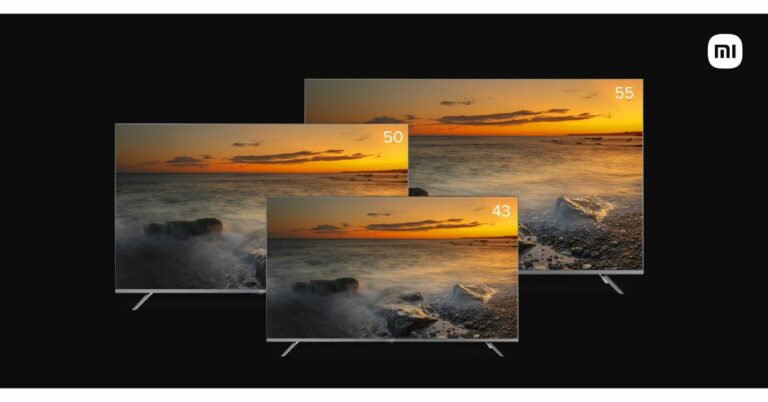
Xiaomi today hosted its Smarter Living 2022 event in India where it introduced a few new products. The company announced the launch of its new TV series namely Mi TV 5X. This is a follow up of the popular Mi TV 4X series that includes 43-inch, 50-inch, and 55-inch models. The latest arrival of the smart TV will be available in the same screen sizes in the Indian market. Both the models come with thin bezels along with a metal finish and the latest PatchWall interface.
Mi TV 5X price and availability
Mi TV 5X comes with a starting price of Rs 31,999 for the 43-inch model. The price of the 50-inch variant is set at Rs 41,999 and the 55-inch model at Rs 47,999. The device will be available across Mi.com, Flipkart.com, Mi Home, Mi Studio and Croma, starting September 7 in the country. There will be up to Rs 3,000 instant discount to the HDFC Bank Credit Cards holders as well as on Easy EMIs. There will be up to 9 months of no-cost EMI offers from the leading Banks and NBFCs.
Mi TV 5X tech specs and features
Mi TV 5X will be made available in three different sizes of 43-inch, 50-inch, and 55-inch models. It is powered by Vivid Picture Engine 2 that uses a Photo-electric sensor that smartly adapts to the ambient lighting conditions, thereby providing users with a comfortable viewing experience. According to the company the latest version has been programmed to provide exceptional colour accuracy and vibrancy for stunning visuals in all conditions. The Mi TV 5X offers a “Billion Colour View”, covering 94% of the DCI-P3 standard. In addition to this, the television equips a 4K display panel that boasts 3840 x 2160p resolution and offers support for all popular codecs including Dolby Vision, HDR10, HDR 10+, Hybrid Log-Gamma (HLG). The device also includes the company’s own ‘Reality Flow Engine’ that interpolates frames when needed to ensure blur-free and smooth viewing while watching sports or playing games. The newly launched Mi TV comes with the latest version of Patchwall – Patchwall 4. The new UI has been thoroughly optimized to provide faster search results, quick transitions between apps and lag-free content discovery. The User Centre and App Inputs have been moved to the first fold for easy access. User Centre acts as a personal hub for users where they can save their favourite content, watch new trailers, check their subscription plans and much more.Mi TV 5X runs on the Android 10 version out of the box that brings access to over 5,000 apps and games from Google Play along with built-in Chromecast and Google Assistant support. It also features the Mi QuickMute feature that allows users to mute the TV by simply double-tapping the volume down key. The speaker on the TV offers an output of 40W with clear three-dimensional audio and rich bass. It features Dolby Atmos support and access to voice commands to search and access entertainment, get answers, control the TV and also operate their smart home devices. The Television offers 2GB of RAM along with 16GB of storage. It brings support for eARC, ALLM via the three HDMI 2.1 ports that also enables next-gen gaming with the latest consoles. For connectivity, there are two USB ports, a LAN port, one optical port, 3.5 mm jack and an Ethernet port for all additional connectivity. It also brings support for both 2.4GHz/5GHz Wi-Fi connectivity.
For the latest gadget and tech news, and gadget reviews, follow us on Twitter, Facebook and Instagram. For newest tech & gadget videos subscribe to our YouTube Channel. You can also stay up to date using the Gadget Bridge Android App. You can find the latest car and bike news here.
Sharing photos has become an integral part of taking photos. But sending or uploading your pretty photos online makes it look frizzy. This is because while uploading a picture on any socials the application uses a compression algorithm to save its server space and traffic. Compression of photos and videos results in decreasing quality for both aspects. But worry not, we have some simple ways to upload videos and images without losing their quality or without compression so you can share your experience with your loved ones.
Google Photos
Probably the easiest and underrated feature of Google Photos. Own a Google account? Just open Google photos and upload your photos on it. Before that just make sure that the upload setting is set to lossless quality. Just press the share option after that and select the recipient and you are good to go. The best part about Google photos is it also backs up and syncs your photos and videos. You can access your photos and videos easily from anywhere, all you need is a device with an internet connection. Remember, there is a limit of 15GB for free storage in Google Photos.
Cloud Sharing
Cloud sharing is one of the best ways to share photos, videos or even files with others without any compromise. Why this method is so successful is because there are tons of options to choose from. Some of the best ones are Google Drive, Microsoft OneDrive and iCloud. All you need is to upload the photo or video into the cloud service of your choice and then head to the share options. There is no worry about your data getting leaked as there are tons of options available for sharing your file. The sharing link will only open the desired file you send. Also, there are customisation options like setting the file as viewable or downloadable accordingly. It is advised to get to know the service you want to use properly before starting. All the applications are available on both PC and smartphones.Read Also: How to get Apple music lossless?
WiFi Direct
WiFi direct is like sending your files over Bluetooth just with increased speed and lesser range. WiFi direct simply connects two devices via WiFi with each other, and can be on a phone or laptop’s inbuilt hotspot. One of the devices acts as an access point and another device connects directly to it. The best part of WiFi direct is that multiple devices can connect through one access point. There are many third-party apps as well to make this process hassle-free. Apps like Send anywhere, Nearby share or AirDrop(in apple specific) allows you to just select the file you want to share and follow the steps and guides in the application itself. Your file will be sent to the receiver in no time.
Email
We often forget emails can now carry multimedia as well, although there is a limit on the file size you can share. Unlike other social media applications, it does not compress your photo. Sending photos through email, in the good old way, is very easy. All you have to do is know the recipient’s email address. After entering the details just head to the attachment and attach the images and videos you want to share. After attaching just click send and your files are sent directly to the person you want to share the multimedia file with.Read Also: How to schedule send your emails in Gmail?These are the ways through which you can send video and photos without losing the quality of the file. Although there is another old fashioned way of sending your file is through Bluetooth, but it is a slow process. The sharing gets limited to one person as well as the range is limited to 10 metres. Comparatively the above ways are much faster and advanced and will come in handy.For the latest gadget and tech news, and gadget reviews, follow us on Twitter, Facebook and Instagram. For newest tech & gadget videos subscribe to our YouTube Channel. You can also stay up to date using the Gadget Bridge Android App. You can find the latest car and bike news here.
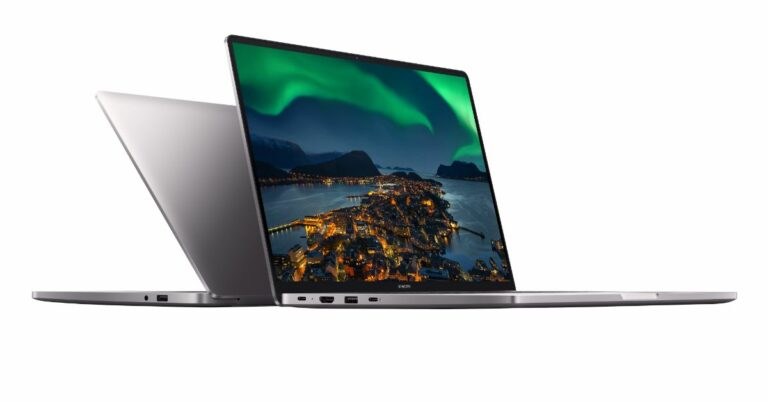
Chinese electronics brand Xiaomi today at its Smarter Living 2022 event introduced a host of electronic items in India. Mi Notebook 2021 is one such item to launch at the event today. The latest lineup includes Mi Notebook Ultra and Mi Notebook Pro that come powered by 11th Gen Intel Core processors with Intel Iris Xe graphics. Both laptops also include all-day battery life, Type-C fast charging, and Thunderbolt 4 along with a backlit keyboard.
Mi Notebook Ultra specifications and pricing
Mi Notebook Ultra comes with a unibody design made out of a single block of Series 6 Aluminium, an aircraft-grade metal alloy, precisely cut using a CNC machine. The body chassis is further taken through a process of sandblasting and anodization for a Lustrous grey finish. The laptop weighs 1.7 kg and is 17.9mm thick. The device features a 15.6-inch Mi-Truelife+ display with 3,200×2,000 pixels and 16:10 aspect ratio. The Mi laptop comes with a 90Hz refresh rate, 300 nits peak brightness, 100 percent sRGB coverage. The screen is TUV Rheinland low blue light certified and has DC dimming as well. Under the chassis, there is Intel Core i7-11370H CPU/ Core i7-11370H paired with Intel Iris Xe graphics. It offers up to 16GB of DDR4 RAM and 512GB of NVMe SSD storage for storing content.The Mi laptop also includes a 720p HD camera with a 2D array dual-microphone setup, providing great video and call quality. In addition to this, the Mi Notebook Ultra has a 70 WHr battery and offers up to 12 hours of battery life. Also, with the 65W USB Type-C charger, it can charge from 0 to 50% in just under 45 mins. The device further includes Wi-Fi 6, Bluetooth v5.1, a Thunderbolt 4 port, HDMI port, USB Type-C port, two USB Type-A ports, and a 3.5mm audio jack for connectivity. For additional security, the power button doubles up as a fingerprint scanner which supports Windows Hello for fast, secure and easy login. The backlit keyboard comes with three levels of illumination (off, dim and bright). Each key comes with a deep travel distance of 1.5 mm with a concave curved top making typing easier and more accurate with the right tactile feedback.The price of the laptop starts at Rs 59,999 for the Core i5 processor and 8GB of RAM while the Core i5 processor and 16GB of RAM will be available at Rs 63,999. The price of the Intel Core i7 processor with 16GB of RAM is set at Rs 76,999.
Mi Notebook Pro specifications and pricing
Mi Notebook Pro is made out of an Aircraft-grade Series 6 Aluminium alloy chassis. This unibody design enables it to be lightweight at just 17.3mm thin and 1.4 kg lighter. It features a 14-inch 2.5K display with 2,560×1,600 pixels of resolution and a 16:10 aspect ratio. The screen supports 300 nits peak brightness, 100 percent sRGB coverage, TUV Rheinland certification. The notebook is powered by 11th Gen Intel Core i5 and i7 Tigerlake H35 processors with Iris Xe graphics coupled with up to 16GB of RAM and 512GB of SSD storage. The keyboard uses scissor switches with a comfortable travel of 1.3mm. Users can also enjoy fast and secure login with the fingerprint scanner that is embedded within the power button. Both the laptops run on Windows 10 Home and will be eligible for a free upgrade to Windows 11 when available. They also come preloaded with MS Office Home & Student Edition 2019, and Mi SmartShare. The price of the Mi Notebook Pro with an Intel Core i5 processor and 8GB of RAM starts at Rs 56,999. The Core i5 with 16GB RAM options will be available at Rs 59,999 whereas the Core i7 with 16GB RAM will retail in India at Rs 72,999.
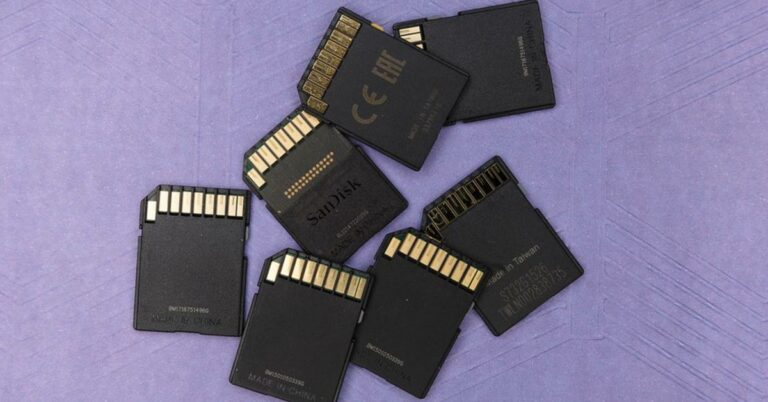
SD cards and memory cards are the source through which you store your photos and videos on camera or mobile phones (with microSD cards) mostly. SD cards come in handy when it comes to transferring those photographs and videos to your system. Few of the Systems come with an inbuilt SD card reader and all you have to do is insert your SD cards there and you are good to go. Talking about the systems which do not give SD card readers, they need external card readers for transferring any data from the card to the PC. Usually, good SD cards come with a big price tag and are very bulky. This list is exactly to eliminate such problems. This list contains the top affordable SD and memory card readers under Rs 500 that will come in handy.
SeCro Type-C
SeCro is at the top of our list as it has the modern USB Type-C. Due to Type-C support, it can be directly plugged in your Mac or Windows laptop with USB-C support. You can also connect this device directly to your supported mobile phones and tablets. The device is capable of transferring your data fast as it is equipped with a newer 3.1 USB-C, which will be ideal for faster read and write speeds. The reader supports a wide range of SD cards as well as Micro SD cards.Price: Rs 499Buy HereRead Also:USB 4 is coming: Everything you need to know
SeCro USB 3.0
SeCro USB is an alternative for the Type-C variant of the same company. It is a lightweight and compact card reader which has faster transfer speeds as compared to normal traditional USB 2.0. The finish of the product looks premium and its size makes it travel friendly. It supports a wide variety of SD cards. It’s also commendable by the company that in this compact form factor they managed to put a MicroSD card reader as well. People looking for a compact card reader with USB 3.0 fast transfers can surely go with this card reader.Price: Rs 499Buy here
Brand Conquer SD Card Reader
This card reader is really exciting as it can support multiple devices. Brand Conquer has 3 types of input ports USB 3.0, type-c and a micro USB. There are a lot of older phones which support micro USB OTG transfer. This is the exact spot where this device shines as it will transfer your photos with faster speeds. The card reader supports a wide range of SD cards and MicroSD cards and is compact in sizePrice: Rs 374Buy hereRead Also: Xiaomi Mi 11 smartphone likely to house Snapdragon 875 SoC
iBall CR CR24
iBall CR CR24 is a compact Pendrive styled USB card reader. As we know iBall is a popular and reliable brand in India, the company is trusted with tons of products among many of its customers. The device is paired with USB 2.0 and supports multiple types of SD cards and Micro SD cards. The card reader is made of plastic, yet the fit and finish feels premium in hand. This is the best card reader in the segment for people who want a trusted brand value with a little compromise in transfer rates.Price: Rs 441Buy here
TEC TAVAKKAL All in One
This device is not exactly a solo card reader but due to its features, it was a great pick for this list. This device has a total of 7 ports which consist of 3 USB 2.0 ports, 2 SD card ports, 1 MicroSD port and M2 card support. The company also provides lifetime customer care support for its device. This USB hub is ideal for people who multitask a lot and operate multiple devices all at once.Price: Rs 379Buy hereThese were the top picks for the SD and memory card readers under Rs 500. These devices will not only increase your productivity but also not punch a hole in your pockets. Please see that the prices may fluctuate at the time of buy and we have no control over them. They are on the list of under Rs 500 at the time of this article.For the latest gadget and tech news, and gadget reviews, follow us on Twitter, Facebook and Instagram. For newest tech & gadget videos subscribe to our YouTube Channel. You can also stay up to date using the Gadget Bridge Android App. You can find the latest car and bike news here.
Most of the data nowadays are stored in a system either it can be a MAC or a Windows PC for normal consumers. Viruses lead to damage to your system and make it slow. Antivirus is required not only to provide protection to your system from malware and viruses but also to save your precious data from online trackers and malicious software. Here is the list of our top picks when it comes to Anti-Viruses (both paid and free), which will keep your system safe and running smoothly.
1. Norton 360 with LifeLock Select
It is the most used Anti-Virus by many big companies. Norton offers device protection for up to 5 devices. No matter which device it is, an Apple device, Android or Windows, Norton 360 got you covered. It provides safe browsing tools, password manager to lock up your passwords safely. Norton also provides 100GB of cloud storage to save all the data you wish. Norton backs it up and keeps it secure. The software comes up with an IP VPN to mask your IP and Location with LifeLock giving you fraud alerts and theft protection. It’s a family solution clubbed with a parental lock, making it ideal for everyone. Although the Antivirus is not free it’s worth spending a little extra.Price: Rs 1,349.00 onwardsDownload hereRead Also: Beware of spyware and protect your devices
2. Bitdefender Antivirus (Free)
Bitdefender is the best free alternative if you want good protection against viruses for your device and don’t want to spend a lot. There is also a total security version that is paid and lets you pair up to 5 devices in the subscription. The device can be either Apple, Android or Windows. It also has parental control making it ideal for kids. The free version has all the basic functionalities and is very easy to set up. Bitdefender is packed with features like real-time monitoring, virus protection, malware, spyware and ransomware. One can always buy a subscription if he/she is satisfied with the product else the software remains completely free for lifetime.Download here
3. Kaspersky Antivirus and Internet Security
Kaspersky is a lightweight security solution for your system that doesn’t eat up a lot of system resources. Primarily designed for Windows and macOS it provides a lot of features like detecting viruses, trojans, worms, spyware and adware. Kaspersky has built-in password protection that doesn’t allow malware to deactivate your antivirus automatically and take over your system. It automatically disables suspicious links and keeps track of instant messages and emails for protection. With 24/7 free technical support, it’s really ideal software for your system. Although it is only available in the paid versions, the company often offers free features inside the software as a loyalty bonus.Price: Rs 479.20 onwardsDownload hereRead Also: Buying a new PC? Here’s why you need anti-virus protection
4. Malwarebytes
Malwarebytes is specially targeted towards malware removal from your system. MAC’s are expected to be the most secure devices, but even they can have malware attacks on them. Malwarebytes provides real time protection from malware and also scans your system continuously for suspicious files. For sudden attacks on your system, this software can be your go-to as it provides 14 days free trial with limited functionalities. Although even with limited functionalities it can easily save yours under attack system. One can always buy a subscription after the 14 days expiration and pay extra for supporting up to 5 devices.Download here
5. AVG Free
AVG is a free solution for basic vulnerabilities protection. AVG Free works as all in one solution, it comes with virus protection as well as a system cleaner built-in. AVG protects your system from virus attacks and malware takeover. It has built-in hacker protection which will let you know if there is anything suspicious with your system. While protecting your data it also makes sure that the system is running smoothly with its clean up utilities and tools. The antivirus is completely free with limited features and full features can be unlocked by buying the premium version.These are the top picks for antivirus for giving your system the best protection it needs. Although Windows Defender is more than enough to protect your system against viruses and threats, when you need extra protection tools with multiple devices to support these antiviruses really shine.For the latest gadget and tech news, and gadget reviews, follow us on Twitter, Facebook and Instagram. For newest tech & gadget videos subscribe to our YouTube Channel. You can also stay up to date using the Gadget Bridge Android App. You can find the latest car and bike news here.
The American smart wearable manufacturer, Fitbit, now acquired by Google, has announced the launch of a new fitness band in India and globally. The company has introduced the Fitbit Charge 5 which comes with upgraded features and design over its predecessor Fitbit Charge 4. Unlike its predecessor, the watch comes with a thinner design while the display is brighter. It further includes the most advanced health and fitness tracker, to help keep a pulse on your fitness, stress, heart health, sleep and overall well being.Fitbit Charge 5 pricing and availability detailsFitbit Charge 5 has been launched in India with a price tag of Rs 14,999. The fitness band will be offered in Graphite/ Black, Platinum/ Steel Blue, and Soft Gold/ Lunar White colour options. The device is now available for pre-order and will be available for purchase starting this fall. The Fitbit Charge 5 is available in the US at $179.95 that translates to Rs 13,300 whereas in Europe it will be selling at EUR 17.95 that comes around Rs 15,600 and in Australia at AUD 269.95 translating to Rs 14,500.Fitbit Charge 5 specificationsSpeaking of the specification, the Fitbit Charge 5 features a 1.04-inch colour AMOLED touchscreen display with 450 nits of peak brightness. It offers an always-on display with 20 colourful clock faces to customize what information you want to see most. It allows you to swipe a finger, view your stats, and receive/send notifications from/to your smartphone. The Fitbit Fitness band also comes with a built-in GPS + GLONASS, SpO2 sensor, skin temperature sensor, and optical heart rate monitor. The device can also withstand up to 50 metres in water, which makes it swim-proof. The watch also includes NFC and is compatible with Android 8.0 or higher devices and iOS 12.2 or higher Apple products. With six months of Fitbit Premium, the Fitbit Charge 5 will offer deeper insights, actionable guidance and a range of more than 500 workouts, plus mindfulness and nutritional content. Additionally with new w Daily Readiness experience, coming soon to Charge 5, as well as Sense, Versa 3, Versa 2, Luxe and Inspire 2 devices, you can understand if your body is ready for a workout or if you should prioritize recovery instead. The Premium members can also access more than 200 workouts from certified trainers and popular brands like Daily Burn, barre3, obé and new high energy workouts from LES MILLS. As per the company, the fitness tracker will provide you with a score based on your fitness fatigue (activity), heart rate variability (HRV) and recent sleep. You’ll also get an analysis of what impacted your score, and suggestions like a recommended target Active Zone Minutes goal, along with Premium content to help you make the best decisions for your body. The ECG app will track your heart rate 24/7 and provide notifications when you are above or below your personal ranges, and while many factors can affect your heart rate, a high or low heart rate may be an indication of a heart condition that requires medical attention. You will also receive sleep tools as part of your well-being like daily Sleep Score, Sleep Stages and SmartWake alarms. Premium members also receive a deeper analysis and guidance to improve sleep quality.
For the latest gadget and tech news, and gadget reviews, follow us on Twitter, Facebook and Instagram. For newest tech & gadget videos subscribe to our YouTube Channel. You can also stay up to date using the Gadget Bridge Android App. You can find the latest car and bike news here.
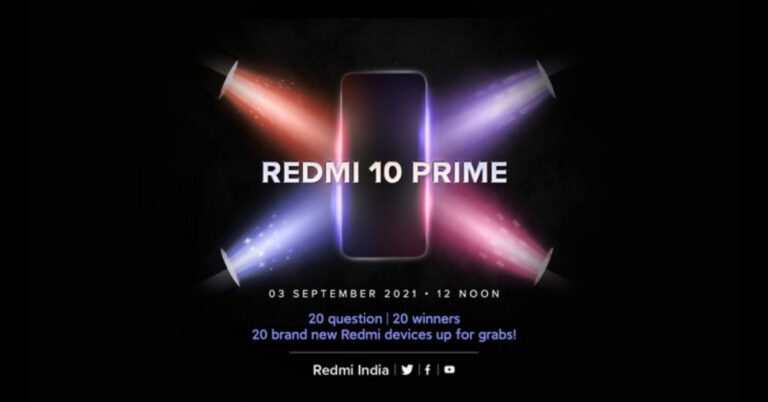
Xiaomi’s sub-brand, Redmi, has officially announced the launch of its new smartphone in India next month. The company itself confirmed to introduce the Redmi 10 Prime in the country on September 3. In addition to this, the company has also revealed the key features of the upcoming budget smartphone. The device is speculated to be a rebranded variant of Redmi 10 that debuted last month only. Redmi 10 Prime launch in India is scheduled to happen on September 3. The company took to Twitter to confirm the launch date of the upcoming smartphone. Additionally, the Chinese smartphone brand has also teased the key specs of the handset, which includes a hole-punch display with an adaptive refresh rate. Moreover, the phone will also include dual microphones.
Redmi 10 Prime expected pricing
The device is said to be a rebranded variant of Redmi 10 as the model number spotted on the Bluetooth Special Interest Group with a model number 21061119BI that is identical to the Redmi 10. So if that is to be believed then the Indian model will be priced around the global pricing of $179, which translates to Rs 13,300 for the 4GB RAM with 64GB storage. The 4GB RAM with 128GB storage was launched at $199, which comes to be around Rs 14,800 and the 6GB RAM with 128GB storage is priced at $199, which translates to Rs 16,600.Redmi 10
Redmi 10 Prime expected specifications
Speaking of the specification, the Redmi 10 Prime is likely to feature a 6.5-inch full-HD+ AdaptiveSync display with 1,080×2,400 pixels of resolution and up to 90Hz refresh rate. The phone is expected to be powered by an octa-core MediaTek Helio G88 SoC, and up to 6GB of RAM and 128GB of storage.Redmi 10 Prime could also include a quad rear camera setup with a 50-megapixel primary sensor. Further assisted by an 8-megapixel ultra-wide, two 2-megapixel sensors for macro and depth photography. Upfront there will be an 8-megapixel sensor for selfies and video calling. The phone may also come with a 3.5mm headphone jack and dual speakers along with a side-mounted fingerprint sensor and AI face unlock. It could boast a 5,000mAh battery with 18W fast charging.
For the latest gadget and tech news, and gadget reviews, follow us on Twitter, Facebook and Instagram. For newest tech & gadget videos subscribe to our YouTube Channel. You can also stay up to date using the Gadget Bridge Android App. You can find the latest car and bike news here.



 So if the dates are true the press invites should be a week before the announcement of the phone which is the 7th of September. And after the pre-order on the 17th, the first sale should be a week later on the 24th of September.
Read Also: EXCLUSIVE: First look renders of the upcoming Apple iPhone 13 show diagonally placed camera lenses and a smaller notch
We are really excited about the launch of the upcoming Apple products. Also, the prices of the new iPhones will increase as reportedly, the chipset production cost has been increased by TSMC thus resulting in the higher price of smartphones. We can expect around a 20% price bump on the upcoming iPhones. Stay with Gadget Bridge for more updates on the upcoming Apple launch.
For the latest gadget and tech news, and gadget reviews, follow us on Twitter, Facebook and Instagram. For newest tech & gadget videos subscribe to our YouTube Channel. You can also stay up to date using the Gadget Bridge Android App. You can find the latest car and bike news here.
So if the dates are true the press invites should be a week before the announcement of the phone which is the 7th of September. And after the pre-order on the 17th, the first sale should be a week later on the 24th of September.
Read Also: EXCLUSIVE: First look renders of the upcoming Apple iPhone 13 show diagonally placed camera lenses and a smaller notch
We are really excited about the launch of the upcoming Apple products. Also, the prices of the new iPhones will increase as reportedly, the chipset production cost has been increased by TSMC thus resulting in the higher price of smartphones. We can expect around a 20% price bump on the upcoming iPhones. Stay with Gadget Bridge for more updates on the upcoming Apple launch.
For the latest gadget and tech news, and gadget reviews, follow us on Twitter, Facebook and Instagram. For newest tech & gadget videos subscribe to our YouTube Channel. You can also stay up to date using the Gadget Bridge Android App. You can find the latest car and bike news here. 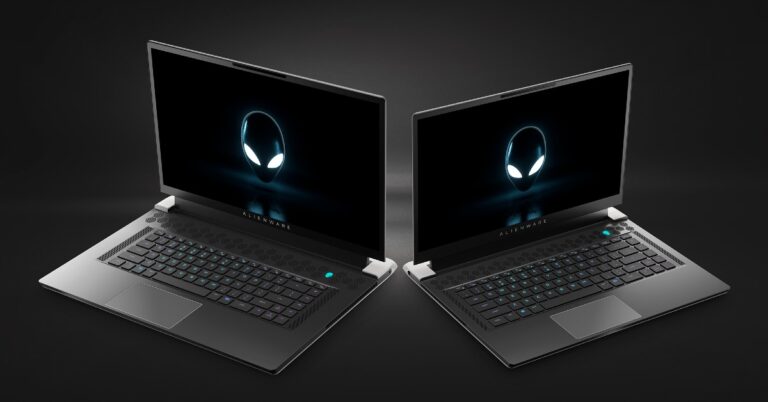
 Read Also:



 Read Also: