Lenovo ThinkPad X1 ANC, Yoga ANC headphones along with ThinkVision M14 portable monitor launched at MWC 2019

After the launch of a new series of IdeaPad and ThinkPad laptops, Lenovo has unveiled two new headphones for the ThinkPad and Yoga series. Although the new headphones – Lenovo ThinkPad X1 ANC and Yoga ANC – have similar features, they are designed differently. The company also launched a portable USB Type-C monitor for laptops/desktop. Here’s a look at the price and specifications of the newly launched headphones and portable monitor:

Lenovo ThinkPad X1 ANC, Yoga ANC and ThinkVision M14 price and availability:

Lenovo ThinkVision M14 – the company’s portable monitor – will start selling at a price of $249 (approximately Rs 17,675) in the European markets starting May 2019. Coming to the headphones, the Lenovo ThinkPad X1 ANC is priced at $149 (approximately Rs 10,575) and Lenovo Yoga ANC costs $169 (approximately Rs 11,995). The headphones will be available in the European markets from June onwards. There is no news about their Indian release till now.

Lenovo ThinkPad X1 ANC, Yoga ANC and ThinkVision M14 features:

Both the pairs of headphones come with active noise-cancellation but, as we mentioned earlier, they have different design and style. As they are released in the ThinkPad and Yoga lineup of products so they will follow the design and style of their respective product series.
The ThinkPad X1 ANC comes in dark grey colour. To give a better sound output and make a six-mic array without a protruding arm the company has partnered with Dolby and Synaptics, both of which are known companies in their respective fields. The headphones use a combination of active noise cancelation (ANC) and electronic noise cancelation (ENC) to give a clear audio quality. The users can also interact with the voice assistants on their phones using these devices. On the other hand, the Lenovo Yoga ANC headphone comes in a white finish. However, you will be able to sport some design elements from the ThinkPad headset, like the aluminum caps on the earpieces. Like the other released headset, the Yoga ANC also comes with ANC and ENC to give a better sound output and a better audio quality to the user.
X
X1
Both the headsets from Lenovo comes with Bluetooth 5 and USB Type-C cable for charging and can also be used in USB Type-C devices. They have a collapsible body so they can be stored and carried from one place to the other easily. Other details and the specifications of these headsets are not known yet as the company hasn’t announced them. So, what will be their audio output and how long will they last is not known. The third product of the lot, the ThinkVision M14 portable monitor is meant to give the user more screen space to work so that their productivity can be increased. The device can be connected with any laptop or PC using a USB Type-C cable. It does not require an additional power source and it doesn’t come with its own, instead it just takes its juice from the device it is connected with. Lenovo ThinkVision M14’s display is a 14-inch Full HD resolution and it comes with a height adjustable chin which helps to raise the screen to the level of the laptop/desktop. Its brightness maxes out at 300nits. Since the monitor weighs 595gms and is 4.6mm thick, it can easily be carried with laptop in a laptop bag.
For the latest gadget and tech news, and gadget reviews, follow us on TwitterFacebook and Instagram. For newest tech & gadget videos subscribe to our YouTube Channel.

Oppo 5G smartphone with Snapdragon 855 processor announced at MWC 2019

0
A number of smartphone makers showed off their latest gadgets and innovations at the ongoing Mobile World Congress 2019. And among the two most prominent trends have been foldable phones and 5G connectivity. Smartphone manufacturers from across the globe have moved on to the new network, and most of them have done so with Qualcomm’s latest Snapdragon 855 processor and Snapdragon X50 5G modem. Among these is Chinese smartphone brand Oppo, which has unveiled its 5G device at the tech show. Oppo held an event in Barcelona over the weekend where it briefly showcased its 5G smartphone, however, it did not give out too many details about it. We don’t know anything about the availability or the specifications of the smartphone, but Oppo has confirmed that the device would be powered by Qualcomm’s latest processor. Along with this, the Chinese smartphone maker also announced its Oppo 5G Landing Project and said that it has partnered with telecom majors like Optus, Singtel, Swisscom, and Telstra so that it can launch and roll out its 5G products and services.
The company’s vice president Anyi Jiang showed Oppo’s first 5G smartphone to the attendees and said that a number of obstacles had to be overcome in order to make the smartphone as it comes with the design of the antenna and RF modules. Qualcomm’s president Cristiano Amon also took to stage where he announced that Oppo’s 5G smartphone would house Qualcomm Snapdragon 855 chipset and the Snapdragon X50 modem that provides 5G connectivity. He said in a statement, “Given their leadership in the 4G era, Oppo is well positioned to be a leader in the transition to 5G. We see tremendous opportunities to drive further innovation in the 5G era, and Qualcomm Technologies looks forward to working closely with Oppo to realise the true potential of 5G and support the launch of their first 5G smartphone powered by our flagship Qualcomm Snapdragon 855 Mobile Platform with the X50 5G modem, integrated RF transceiver and RF Front-End solutions.” We should mention that Samsung also launched the 5G variant of its Galaxy S10 smartphone at an event in San Francisco on February 20 and Xiaomi unveiled the 5G variant of its Mi Mix 3 smartphone at MWC 2019 in Barcelona, Spain.
For the latest gadget and tech news, and gadget reviews, follow us on TwitterFacebook and Instagram. For newest tech & gadget videos subscribe to our YouTube Channel.
BlackBerry Key2 Red Edition with 128GB storage unveiled at MWC 2019: Price and specifications

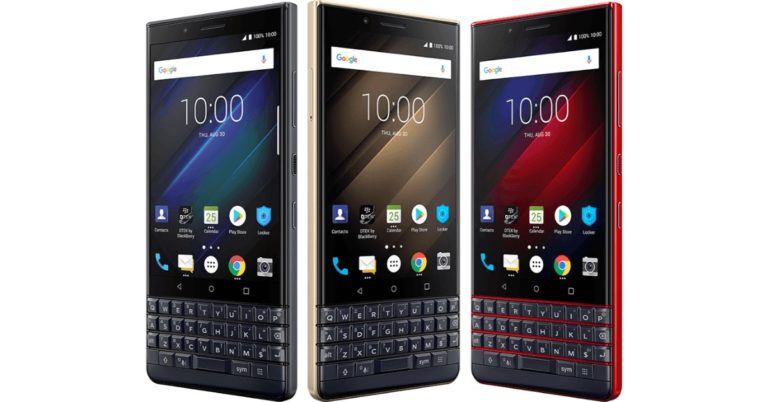
We have some news for BlackBerry fans! The company’s BlackBerry Key2 smartphone is getting a Red Edition. However, this isn’t like Red Edition smartphones from other companies and has more than just cosmetic changes. The BlackBerry Key2 Red Edition houses twice the internal storage as compared to the original device. To be more precise, it has 128GB of internal storage, while the original Key2 smartphone had 64GB of onboard storage. But that’s not all. Another change in the Red Edition of BlackBerry Key2 smartphone is that it comes with a tweaked UI and has some modernised versions of some of the company’s native apps. So if you have been thinking whether or not you should buy the BlackBerry Key2, maybe these changes would help you make up your mind.
Another thing that you should note is that the back panel of the smartphone is still Black, and it’s only the front and the side edges that have been coloured Red now. We should also mention that the BlackBerry Key2 Red Edition will be getting launched with a revamped version of Hub+ software that comes with a new Action Bar that can be seen at the bottom of the Hub+ applications. BlackBerry has also claimed that these applications will offer enhanced ergonomics by giving users quicker access to features like search, sort and compose. Furthermore, there is also a UX update on BlackBerry Hub and BlackBerry Calendar that, according to the company, give it a more modern look. And needless to say, the extra internal storage of the device will only enhance its performance. As of now, the company has not disclosed the release date for the BlackBerry Key2 Red Edition, however, we do know that the smartphone will be available in North America, Europe, Middle East and Asia. BlackBerry Key2 Red Edition will be priced at EUR 779, which is approximately Rs 63,000. The device will come bundled with a special edition set of red BlackBerry-branded earbuds. We are guessing that the device will be launching soon considering that it has already gone on pre-orders in Europe via the official BlackBerry Mobile online store.
For the latest gadget and tech news, and gadget reviews, follow us on TwitterFacebook and Instagram. For newest tech & gadget videos subscribe to our YouTube Channel.
HyperX launches its Xbox licensed gaming headset named CloudX in India: Price and specifcations

0
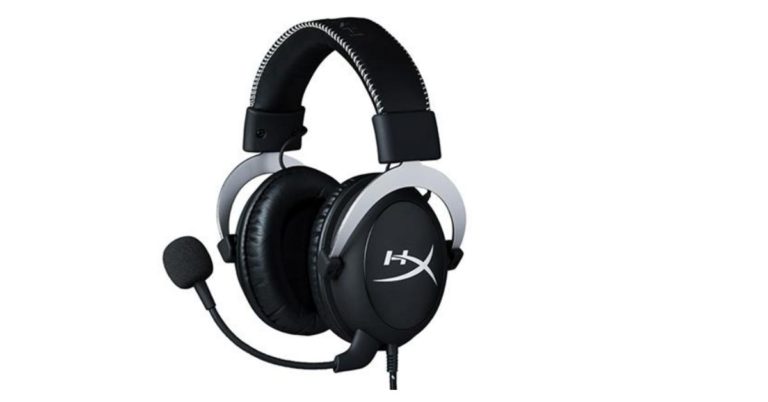
Kingston owned HyperX has launched its official Xbox licensed gaming headsets in India named – HyperX CloudX. The gaming headsets has been tested and approved by Microsoft and it is aimed at the ever-growing India’s gaming community. We have already seen many companies releasing their gaming equipment and peripherals in the past weeks. And with the release of CloudX, HyperX also marks its launch of new gaming accessories.

HyperX CloudX features and price

With HyperX CloudX, the company has promised comfort, durability and an amazing sound output. That’s why the CloudX gaming headset has an aluminum frame for durability and the ear cushions of the headsets comes with 100% memory foam along with leatherette-padded headband for comfort of the gamers. For audio it has a 53mm drivers which enhances the bass reproduction and gives out clear high, mids as well as lows. The cups of the headphones are closed-cup in design which makes its noise-cancelling on point. The microphone of the headset also comes with noise-cancellation so that the voice of the user can be heard clearly when playing multiplayer games. It doesn’t just work with laptops or desktops, but even on mobile devices like smartphones and tablets since it has a 3.5mm jack. The microphone of the headset can be unplugged so that it becomes like a regular headphone. This feature of HyperX CloudX allows it to work as a music headphone rather than a gaming headset.  The HyperX CloudX gaming headset is available in Indian retail markets as well as online shopping platforms for Rs 9,990. The company is offering a two-year warranty.

HyperX CloudX specifications

The CloudX comes with a 53mm Dynamic driver with neodymium magnets. Its sound frequency range is 15Hz to 25KHz (25,000Hz) and impedance is 41ohms. The sound pressure level in which the CloudX works is 95dBSPL/mW at 1kHz. The company has said that it has taken into consideration the fact the since it is a gaming headset, the users will wear it for longer duration of time, and that’s why it has made it light and comfortable. It weighs 325gms without the microphone and with the microphone attached it weighs 337gms, which is light considering it has an aluminium frame. Its cable has a length of 1.3m and its microphone is an electret condenser noise cancelling microphone with 50Hz to 18KHz frequency (18,000Hz). For the latest gadget and tech news, and gadget reviews, follow us on TwitterFacebook and Instagram. For newest tech & gadget videos subscribe to our YouTube Channel.

Qualcomm announces Quick Charge Power along with Qi interoperability

Till now, American chipmaker Qualcomm’s Quick Charge fast charging technology was only limited to wired charging, and today the company has announced that now, this technology will work with wireless power as well. Qualcomm made this announcement at the ongoing Mobile World Congress 2019 and it further said that the Quick Charge technology for wireless power will add speed in the charging process on charging pads. However, for this, the charging pads would also have to meet certain requirements and standards. Qualcomm has also added that charging pads will able to deliver speedy electricity with Quick Charge support, and that too in a ‘consistent and safety conscious’ way. Furthermore, Chinese smartphone giant Xiaomi also said at the event that its upcoming Mi Wireless Charging Pad will use Quick Charge support from Qualcomm.
The American chipmaker has added that some wireless charging products have been launched in the past that claim to come with Quick Charge support, however, none of these have passed through the company’s required Quick Charge compliance process Qualcomm’s Quick Charge compliance programme has been expanded to include wireless charging pads because of the issues that have been raised by consumers in the past. The programme will also ensure interoperability and that the charging pad manufacturers meet with Quick Charge as well as Qi wireless charging standards. On its blog, the American chipmaker added about its technology, “Wireless charging pads powered by Quick Charge will work with the same Quick Charge 2.0, 3.0, 4 and 4+ adapters that millions of users already have at home, work, and elsewhere.” Qualcomm also added that Xiaomi will be the first company to launch Quick Charge compliant wireless power pad and that it has plans to do so very soon. Speaking on this further, Yanteng Wang, lead of wireless charging of Xiaomi said, “We are excited to introduce Quick Charge protocol for wireless power in Mi Wireless Charging Pad, complementing our existing line-up of Quick Charge technology-certified wall and battery chargers, and providing our loyal customers the lowest charge times and maximum power efficiency possible across their charging options.” We should also add that since wireless charging is slowly becoming mainstream, Qualcomm’s Quick Charge support for Qi-based products has been unveiled at just the right time.
For the latest gadget and tech news, and gadget reviews, follow us on TwitterFacebook and Instagram. For newest tech & gadget videos subscribe to our YouTube Channel.
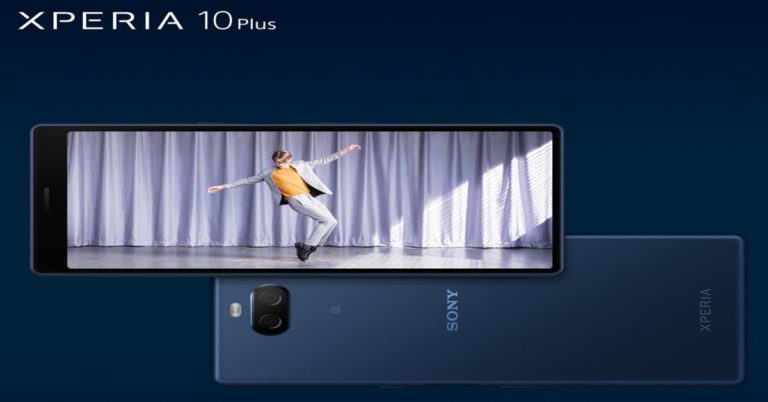
Sony Xperia 10, Xperia 10 Plus and Xperia L3 launched: Price and Specifications

0
Japanese electronics maker Sony has launched its new smartphones at the MWC 2019 named – Xperia L3, Xperia 10 and Xperia 10 Plus. The company has also unveiled its flagship smartphone named Xperia 1 at the same event. Sony Xperia L3, Xperia 10 and Xperia 10 Plus fall under the mid-range segment and come with side-mounted fingerprint scanner, like we have seen in other Sony smartphones. What’s special about Xperia 10 and Xperia 10 Plus is their wide display of 21:9 aspect ratio. The given aspect ratio of the smartphones is what most films are made in, so with these smartphones the company might be targeting the media lovers who consume the media on their smartphones. The Sony Xperia 10 Plus has a larger display, a bigger battery, better camera and a better processor than its non-plus counterpart. And Sony Xperia L3 is the smallest among the three devices.

Sony Xperia 10, Xperia 10 Plus price and availability

 Sony Xperia 10 is priced at $349.99 (approximately Rs 24,800) while the Sony Xperia 10 Plus is priced at $429.99 (approximately Rs 30,500). Both the devices will go on sale from March 18 in the US only. The launch dates and prices of the smartphones in India are not known as of now.
We should mention that Sony Xperia L3’s price hasn’t been announced yet but it will go on sale in selected markets only from February 25. The price of the device may vary in different regions but it will launch soon (single-SIM and dual-SIM both).

Sony Xperia 10 specifications

Sony Xperia 10 comes with a 6-inch Full HD+ display with 21:9 aspect ratio. It is powered by Snapdragon 636 SoC processor clubbed with 3GB RAM and 64GB internal storage. The smartphone can hold a microSD up to 512GB. Sony Xperia 10 runs Android 9.0 Pie out-of-the-box and also supports dual-SIM card (nano + nano). Like its display, the camera too has 21:9 video capturing along with bokeh mode, HDR, hybrid autofocus, 4K video recording and 5X digital zoom, 120fps slow, motion movie recording. In the front, there is an 8MP camera with f/2.0 aperture and flash.
Xperia 10
Xperia 10
The Xperia 10 smartphone comes with a 2,870mAh battery with fast charging support. The device also supports 4G VoLTE, Bluetooth v5.0, NFC, USB Type-C, Google Cast and other features. It also comes supports high-resolution audio with many formats of audio supported like LPCM, FLAC, ALAC, DSD. Xperia 10 also has DSEE HX, LDAC, SmartAmplifier, Virtual Phones Technology, Stereo Recording and Qualcomm aptX HD audio.

Sony Xperia 10 Plus specifications

Sony Xperia 10 Plus comes with a larger 6.5-inch Full HD+ display with 21:9 aspect ratio and Corning Gorilla Glass 5 on top. The smartphone runs on Snapdragon 636 SoC processor and comes with 4GB RAM. Internal storage of the smartphone is 64GB and it comes with microSD card support of up to 512GB. At the back of the Sony Xperia 10 Plus is a dual rear camera setup of a 12MP wide-angle sensor with f/1.75 aperture paired with an 8MP sensor with f/2.4 aperture. It too supports 21:9 video capturing along with bokeh effect, HDR, hybrid autofocus, 5X digital zoom, 2x optical zoom, 4K video recording, 120fps slow-motion recording etc. https://twitter.com/sonyxperia/status/1099942824043311105 At the front, there is an 8MP selfie camera with f/2.0 aperture and flash. It houses a 3,000mAh battery that has supports fast charging. Sony Xperia 10 Plus comes with 4G VoLTE, Bluetooth v5.0, NFC, USB Type-C, Google Cast. It has all the necessary sensors and like the Xperia 10, it too comes with high-resolution audio support. It too has DSEE HX, LDAC, SmartAmplifier, Stereo Recording, Virtual Phones Technology and Qualcomm aptX HD audio.

Sony Xperia L3

Sony Xperia L3 is the smallest of the lot with 5.7-inch HD+ IPS display with 18:9 aspect ratio and Corning Gorilla Glass 5 protection. Unlike the above-mentioned smartphones it is powered by MediaTek MT6762 Helio P22 octa-core processor and runs on Android Oreo. It comes in a 3GB RAM and 32GB storage variant and it has support for a microSD card of up to 512GB. It has a dual rear camera setup of a 13MP wide-angle sensor with f/2.2 aperture coupled with a 2MP depth sensor with f/2.4 aperture. Its camera has bokeh effect, hybrid autofocus, and 4x digital zoom.
Xperia L3
Xperia L3
The front panel of the Sony Xperia L3 houses an 8MP sensor with an f/2.0 aperture with flash. It comes with a 3,300mAh battery and has 4G VoLTE, Bluetooth v5, NFC, USB Type-C, Google Cast, among other features.
For the latest gadget and tech news, and gadget reviews, follow us on TwitterFacebook and Instagram. For newest tech & gadget videos subscribe to our YouTube Channel.

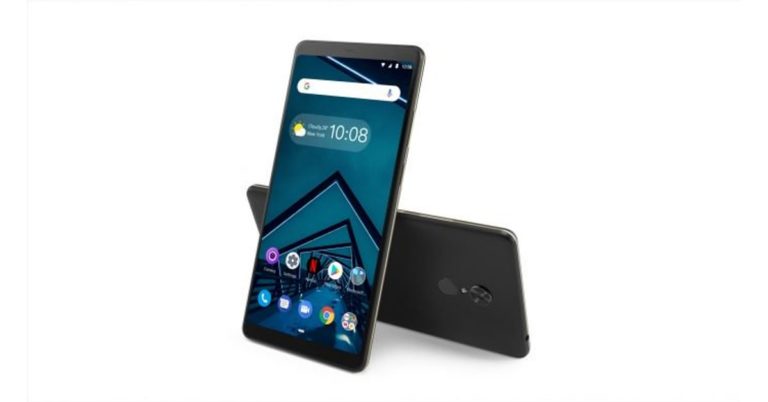
Lenovo launches a ‘Smartphone-Tablet Hybrid’ named Tab V7 at the MWC 2019

0
Chinese electronics maker Lenovo has unveiled a new tablet at the ongoing MWC 2019 called the Lenovo Tab V7 which, according to the company, works as a ‘tablet-and-smartphone-in-one’. As its name suggests, it is a tablet sized smartphone or vice-versa. Where other smartphone companies are going ‘big and innovative’ with their futuristic foldable phone designs, Lenovo has decided to take another route. Lenovo Tab V7 comes with a 6.9-inch IPS Full HD display and runs on Android 9.0 Pie out of the box. It comes with all the other features a smartphone has along with a big screen like a tablet. According to the company, the Tab V7 is a ‘smartphone-tablet hybrid’ but considering that it is just over 7-inch it can be said as a ‘Big’ smartphone or a phablet. Lenovo Tab V7 Price The Lenovo Tab V7 will start selling from April 2019 in the European markets and it will be priced at EUR 249 (approximately Rs 20,100). But the company hasn’t revealed the Indian price of the smartphone or when will it will be available in the market.
Lenovo Tab V7 Specifications The Tab V7 has a 6.9-inch IPS display with 1080 x 2160 pixels resolution with an aspect ratio of 18:9. It has a 81 percent screen-to-body ratio with thin bezels. It is powered by a 1.8 GHz Octa-core Snapdragon 450 SoC CPU and comes with Adreno 506 GPU. The Tab V7 comes in two variants – 3GB RAM + 32GB storage and 4GB + 64GB storage variant. For connectivity, the Lenovo Tab V7 comes with 4G VoLTE, Wi-Fi, Bluetooth 4.2 LE, GPS and USB Type-C. The device comes with Dolby Audio-powered front facing speakers. The device holds a rear camera with a 13MP primary sensor with flash and at the front it has a 5MP selfie camera. Under the back camera is the fingerprint scanner for unlocking the device, but it also comes with a face unlock feature. Being labelled as a smartphone hybrid, it supports dual-SIM card and has 4G network support on both the SIMs. Calls, messages and data services can be used on both the SIMs. It packs a huge 5,180mAh battery with fast charging which according to Lenovo can give up to 10 hours of video playback and browsing along with up to 30 hours of talk time.
For the latest gadget and tech news, and gadget reviews, follow us on TwitterFacebook and Instagram. For newest tech & gadget videos subscribe to our YouTube Channel.

Oppo foldable phone prototype revealed, design similar to Huawei Mate X

0
Chinese smartphone brand Oppo in all probability will be the next handset vendor to come unveil its foldable device. The company’s vice president Brian Shen has revealed this by showcasing a prototype of Oppo’s foldable phone. However, Oppo’s vice president has not thrown light on the specifications or availability information of the upcoming device. We should mention that Oppo‘s prototype handset looks a lot like the Huawei Mate X that was launched recently at the Mobile World Congress 2019 in Barcelona. But then, its form factor also reminded us of Samsung Galaxy Fold that was unveiled on February 20. From the images that have been shared by Shen on Weibo, it can be seen that Oppo is working on a device that will fold outwards and will have a flexible display. When unfolded, users will be able to use the device as a tablet.
This is where the device is similar to Huawei Mate X, which provides a real estate of 8-inches on the screen when it is unfolded. Besides this, Oppo’s foldable phone will also come with a thick bar on one side that will house the camera module of the smartphone. It is being speculated that like Huawei Mate X smartphone, the device would let users capture selfies and landscape shots with this camera module. It is also worth adding that the smartphone does not have a notch or a cut-out when it is unfolded. For those unaware, Samsung Galaxy Fold comes with a notch on its display to house the selfie camera of the device. Coming back to Oppo’s foldable device, its camera module also has a dual LED flash and the thick bar also has the Oppo branding on it. It is also being speculated that the prototype will run Android skinned with ColorOS. In addition to sharing the picture, Shen also asked Weibo users if they wanted the company to begin the mass production of the smartphone. This further points towards the device being in the prototype stage. Although it is too early to comment on the pricing of the upcoming smartphone, it is being said that like Huawei Mate X and Samsung Galaxy Fold, it will be in the premium category too.
For the latest gadget and tech news, and gadget reviews, follow us on TwitterFacebook and Instagram. For newest tech & gadget videos subscribe to our YouTube Channel.
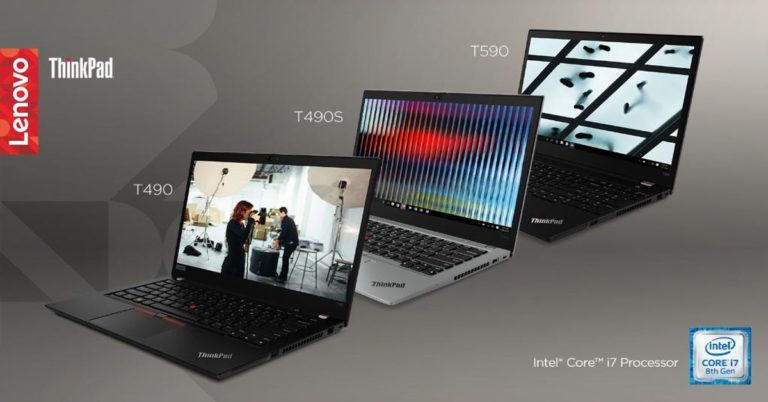
Lenovo IdeaPad and ThinkPad series of laptops launched at MWC 2019: Price and specifications

0
Chinese consumer electronics giant Lenovo has unveiled its new series of laptops in the ThinkPad and IdeaPad series. In the ThinkPad series the following models were added – T490s priced at $1,279 (approximately Rs 90,900), T490 priced at $999 (approximately Rs 70,900) and T590 priced at $1,029 (approximately Rs 73,000). Lenovo also added two new products in its X series named X390 priced at $1,099 (approximately Rs 78,000) and X390 Yoga priced at $1,359 (approximately Rs 96,500). All the newly launched laptops will be available in the market from May of 2019. Lenovo also updated its IdeaPad series with a 2-in-1 laptop named C340. It comes in both Intel and AMD CPU options and will be available in the markets from March at EUR 599 (approximately Rs 48,200) for both CPU variants. Also, in the IdeaPad series, the company introduced S540 which is priced at EUR 799 (approximately Rs 64,400) and S340 priced at $549 (approximately Rs 64,400). Both these laptops come with Intel and AMD CPUs. They will be available in the market from March. Lenovo ThinkPad T series and X series specifications The newly launched laptop series from Lenovo comes with many new features and upgrades over the old ones. Both the T series and the X series come with a physical shutter for webcam called PrivacyGuard. Also, among the common features in these laptops is a new BIOS with ‘self-healing’ capability, Intel Wi-Fi 6 Gig+ on the T490s, X390 and the X390 Yoga. Additionally, the T series comes with HDR display and Dolby Vision along with Intel 8th generation CPUs. While the ThinkPad X390 has a 13.3-inch Full HD display and is powered by Intel Core i7 vPro CPU. It can support up to 32GB RAM and 1TB of PCIe SSD storage. According to Lenovo, the X390 comes with 18hours battery backup.
Lenovo IdeaPad S series specifications Lenovo IdeaPad S540 will have varying sizes, it comes in a 14-inch and a 15-inch size. In the Intel CPU option, it offers an 8th gen Intel Core i7 CPU with optional NVIDIA GeForce MX250 GPU along with an optional Full HD IPS display. The company has promised that the newly launched series will have a better battery life than their predecessors. While in the AMD option it offers a Ryzen 7 3700 CPU with built-in Radeon RX10 Vega GPU. The IdeaPad S540 comes with RapidCharge tech which can give up to 12 hours of battery life. According to Lenovo, the laptops can run for 2 hours with just 15 minutes of charge. The IdeaPad S540 comes with a Dolby speaker and TrueBlock privacy shutter on its webcam. The other laptop in the IdeaPad series – the IdeaPad S340 also comes in two varying size, a 14-inch and a 15-inch variant. In the Intel variant the IdeaPad S340 offers an 8th gen Intel Core i7-8565U CPU with up to GeForce MX250 GPU. While in the AMD variant the laptop offers a Ryzen 7 3700 CPU with built-in Radeon RX10 Vega GPU. It comes in various colours and offers a slim design. Lastly, Lenovo’s 2-in-1 convertible laptop, the IdeaPad C340 comes with Amazon Alexa out of the box. The laptop offers up to 8 hours of battery life and it also comes with RapidCharge. Being a convertible laptop, it comes with Active Pen support which will be useful for the artists. It has been launched in a 14-inch and a 15-inch model.
For the latest gadget and tech news, and gadget reviews, follow us on TwitterFacebook and Instagram. For newest tech & gadget videos subscribe to our YouTube Channel.

ZAAP Hydra Xtreme Bluetooth speaker review: Sturdy built meets superior sound quality

ZAAP Technologies recently launched its Hydra Xtreme Bluetooth speaker in India at a price of Rs 3,299. There are already a number of good affordable speakers available that will be giving the new offering a tough competition. So, is ZAAP’s new waterproof speaker worth considering for music lovers? We spent a few days with the gadget, and here’s our review of the ZAAP Hydra Xtreme speaker:

Design

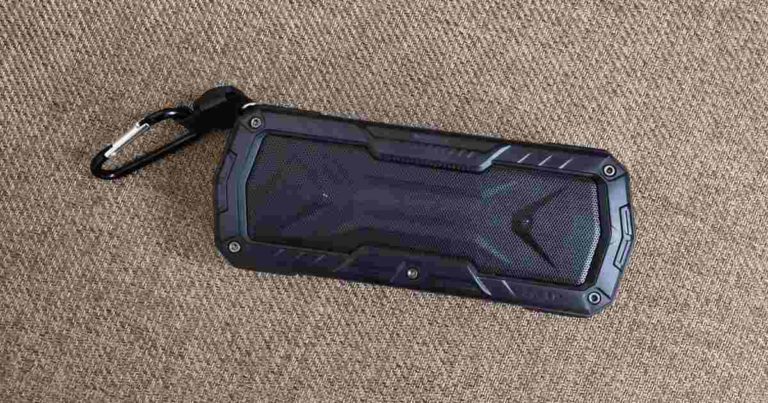
When it comes to design, the look and feel of the ZAAP Hydra Xtreme Bluetooth speaker. To begin with, the speaker is not for you if you are looking for a sleek looking music gadget for yourself. It is a rugged Bluetooth speaker and it looks exactly like that. It has a sturdy built and a compact design, and both these factors add on to ZAAP Hydra Xtreme’s portability. The Bluetooth speaker is only available in one colour – Black. On the front of the speaker, a blue-coloured light is placed that indicates the connection status and on top left, there is a carabiner that enables you to connect it to your bag. On the top of the speaker, you will find four square buttons, among which, one is the power, two-volume rocker and a play/pause keys. All the buttons are made of rubber, but were very responsive throughout our time with the speaker. Besides this, there is a microUSB port on ZAAP Hydra Xtreme that can be used for charging the device and a 3.5mm jack, in case you wish to play music via an AUX cable. Both of these ports are hidden under a rubber flap, so they don’t spoil the look of the speaker and at the same time, they stay protected if you are using the device in an area close to water. In a nutshell, we found the design of ZAAP Hydra Xtreme to be reasonably good, especially considering the price range. Like we said earlier, it is not an elegant or sleek looking gadget, but instead is rugged and sturdy and its design shows that. But then, we would rather pick this than going for a Bluetooth speaker that is very impressive to look at but isn’t waterproof and is easily breakable.

Performance

Let’s talk about the specifications of the ZAAP Hydra Xtreme Bluetooth speaker first. The device has an IP65 rating, which means it is water, shock, dust and snow resistant. It has a 2,000mAh battery and its connectivity options include Bluetooth 3.0, a 3.5mm aux port, a micro USB charging port. The company is also offering a one-year warranty on the speaker. zaap hydra xtreme 5 ZAAP Hydra Xtreme was extremely good when it came to performance. The Bluetooth speaker has 12+ Watt drivers and a subwoofer two 50mm drivers. We should point out, that the sound is unidirectional. Considering the design of the device, the speakers are placed only in the front. We personally have a preference for a round device, because they distribute the sound equally in all directions, making them more suitable for parties. However, considering that ZAAP Hydra Xtreme has some very good aspects, we could ignore it as it anyway wasn’t too big a problem for us. Coming back to the performance of the speaker, we should mention that it was very easy to connect the speaker with our smartphone via Bluetooth. The moment we switched on Bluetooth on our smartphone, we could see the ZAAP Hydra Xtreme in the device list and ready for pairing. It took few seconds for the two devices to connect with each other. After this, we actually couldn’t stop using the speaker at all as we were completely hooked. We played some music that was heavy on bass, and ZAAP Hydra Xtreme could handle that enormously well. zaap hydra xtreme 6 The treble and mids were good too. However, we should point out one thing. Don’t listen to music at the highest possible volume on the Bluetooth speaker as the quality distorts a bit. A little less than the highest volume is just perfect. We also tried to talk to our contacts while our smartphone was connected to ZAAP Hydra Xtreme, and we encountered no problem with it. We could hear the person we were talking to, and we were also heard well at all times. Coming to its water-resistance, the ZAAP Hydra Xtreme is said to be splash-proof. So, while you can take it with yourself to a pool party, we recommend keeping it outside the pool to make sure it doesn’t get damaged. Most water-proof speakers can handle heavy moisture in the air and can survive some splashes. So is the case with ZAAP Hydra Xtreme. Coming to the 2,000mAh battery, it survived 6 hours of playback time in the entire week, which we think is pretty decent.

Verdict and Final Thoughts

At a price of Rs 3,299, ZAAP Hydra Xtreme is a good buy for anyone who likes to carry their Bluetooth speaker with themselves when they are travelling or going to pool and beach parties. It has an extremely good built, is portable, and is splash resistant. It may not be the best speaker to look at, but it has a reasonably good design. Besides, the sound quality of the ZAAP Hydra Xtreme speaker is extremely good and that, we feel, is the most important factor. Pros
  • Sturdy built
  • Great battery
  • Good sound quality
Cons
  • Cannot handle very high volumes
  • unidirectional sound

OnePlus 5G prototype smartphone showcased at MWC 2019

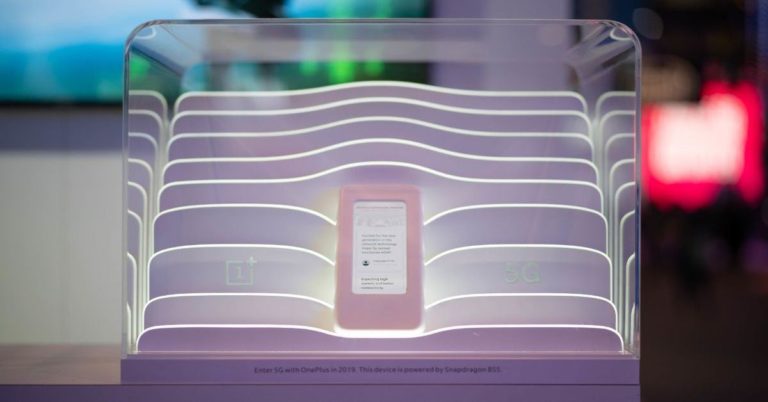
Just a few days before the Mobile World Congress 2019 started, Chinese smartphone brand OnePlus announced that it will be giving some attendees a first look at its 5G smartphone prototype along with Qualcomm. The company did not disappoint fans and did indeed give a first look at its 5G prototype at Qualcomm’s 5G demo booth. The company has showcased two smartphones at the American chipmaker’s demo booth. While one of them showcases future of mobile gaming or 5G cloud gaming, the other one shows a live feed of messages that OnePlus community members are posting on the company’s ‘Say Hello to 5G’ community page. As announced at Qualcomm Snapdragon Tech Summit in December 2018, OnePlus 5G smartphones are powered by Snapdragon 855 SoC clubbed with the chipmaker’s X50 modem, which enables 5G connectivity on various devices. OnePlus’ 5G device has a futuristic setting of 5G cloud gaming where players would require a smartphone as well as a gamepad to fully experience gaming on the handset. OnePlus has claimed that players will be able to enjoy games that they otherwise play on PCs on the company’s 5G smartphone. This will be made possible because of enhanced throughput and lower latency of 5G.
The 5G smartphone prototype by the Chinese smartphone company has been covered in a white protective case, which is something that OnePlus has done to maintain confidentiality. It is quite a possibility that the company will unveil its 5G smartphone along with its next flagship OnePlus 7. So, it has done everything it could to make sure to maintain some level of secrecy while showcasing the device. OnePlus 5G 2 We should mention that OnePlus’ association with Qualcomm dates back to the launch of OnePlus One. And ever since then, the Chinese smartphone maker has always used Snapdragon 8 series processors in its handsets. OnePlus 5G Speaking on the 5G advancements made by the company, OnePlus CEO Pete Lau said, “5G is a game changer. It can change everything from gaming to communication, to health and beyond. More than that, it can perform several, or all, of these at the same time. One great example of how 5G will change the world is gaming. 5G’s dramatic improvement in speed, latency, and network capacity can truly fulfil the promise of cloud gaming. Combined with powerful OnePlus devices, people can play advanced games anywhere they are, provided they are on a 5G connection.”
For the latest gadget and tech news, and gadget reviews, follow us on TwitterFacebook and Instagram. For newest tech & gadget videos subscribe to our YouTube Channel.
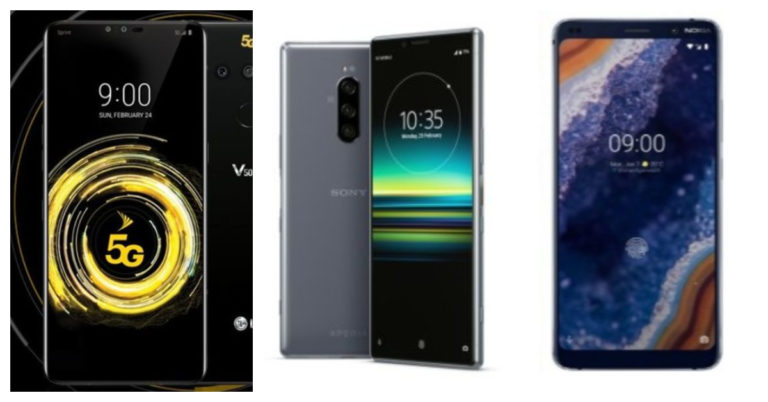
LG V50 ThinQ vs Sony Xperia 1 vs Nokia 9 PureView: Comparison

At Mobile World Congress 2019, LG, Sony and Nokia have launched their smartphones, which have been in a lot of rumours ahead of their launch. LG launched the V50 ThinQ, Sony launched the Xperia 1 and HMD Global launched the Nokia 9 PureView. All the phones are fantastic to look at and have top the specs. And that’s exactly why you might find it hard to choose which one to buy. For your assistance we have enlisted the price and specifications of the smartphones so that you can have a quick look and contemplate on your needs and desires of a smartphone, and consequently, zero in on the one you want to buy. So, here is the comparison of all the three smartphones:

Display

LG V50 ThinQ: 6.4-inch AMOLED capacitive touchscreen with a resolution of 1440×3120 pixels and aspect ratio of 19.5:9 Nokia 9 PureView: 5.99-inch P-OLED capacitive touchscreen with a resolution of 1440×2880 pixels and aspect ratio of 18:9 Sony Xperia 1: 6.5-inch OLED capacitive touchscreen with a resolution of 1644×3840 pixels and 98.6 cm2 screen to body ratio

Processor

LG V50 ThinQ: Qualcomm Snapdragon 855 SoC Nokia 9 PureView: Qualcomm Snapdragon 845 SoC Sony Xperia 1: Qualcomm Snapdragon 855 SoC

Primary Camera

LG V50 ThinQ: Triple rear camera setup—two 12MP sensors and one 16MP sensor Nokia 9 PureView: 5 x 12MP sensors Sony Xperia 1: Triple rear camera setup—three 12MP sensors

Front Camera

LG V50 ThinQ: Dual rear camera setup with an 8MP and a 5MP sensor meant for taking selfies Nokia 9 PureView: 20MP camera sensor meant for taking selfies Sony Xperia 1: 8MP camera sensor meant for selfies

RAM and Storage

LG V50 ThinQ: 6GB RAM coupled with 128GB internal storage Nokia 9 PureView: 6GB RAM coupled with 128GB internal storage Sony Xperia 1: 6GB RAM coupled with 64GB and128GB storage

Support for Storage card

LG V50 ThinQ: microSD card up to 512GB Nokia 9 PureView: None Sony Xperia 1: microSD card up to 512GB

Battery

LG V50 ThinQ: 4,000mAh non-removable battery Nokia 9 PureView: 3,320mAh non-removable battery Sony Xperia 1: 3,300mAh non-removable battery

Operating System (OS)

LG V50 ThinQ: Android 9.0 Pie Nokia 9 PureView: Android 9.0 Pie with Android One Sony Xperia 1: Android 9.0 Pie

Price

LG V50 ThinQ: Still unknown Nokia 9 PureView: $699 (approximately Rs 49,700) Sony Xperia 1: EUR 799 (approximately Rs 74,200) For the latest gadget and tech news, and gadget reviews, follow us on TwitterFacebook and Instagram. For newest tech & gadget videos subscribe to our YouTube Channel.
Alcatel 3 (2019), Alcatel 3L and Alcatel 1S launched: Price and Specifications

0
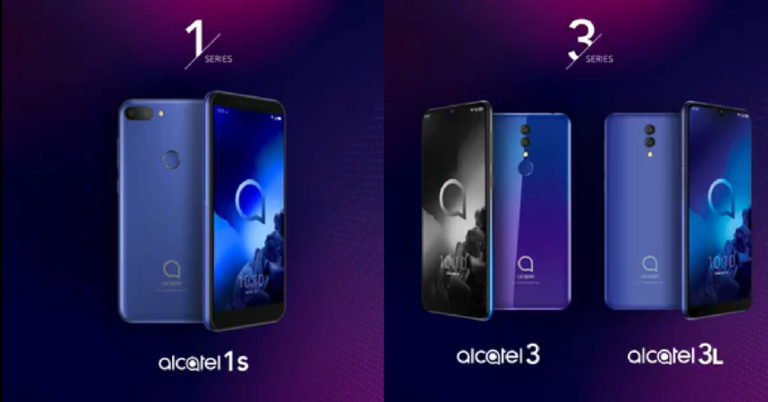
It’s not just the big names like Samsung and Nokia which are launching their new products at MWC 2019, but lesser known brands such as Alcatel too are releasing new gadgets to keep up with the market. The France based smartphone company has released three of its smartphones ahead of MWC 2019 namely – Alcatel 3 (2019), Alcatel 3L and Alcatel 1S. All three smartphones have FullView Display panels that come with a notch. The new devices by Alcatel have a screen-to-body ratio of up to 88% and they come with dual rear cameras with AI Scene detection. The three recently launched smartphones will also have Google Lens integration along with AR emojis.  Here’s a look at the pricing and complete list of specifications of the three smartphones: Alcatel 3 (2019), Alcatel 3L, and Alcatel 1S price and availability The Alcatel 3 (2019) is priced at EUR 159 (approximately Rs 12,800) for the 3GB + 32GB storage variant while its 4GB + 64GB storage is priced at EUR 189 (approximately Rs 15,200). Alcatel 3 (2019) is available in Gradient Black Blue and Gradient Blue Purple colours.
Alcatel 3L, on the other hand, has a starting price of EUR 139 (approximately Rs 12,800) and it comes in Metallic Blue and Anthracite Black colour options. The third phone launched by the company – Alcatel 1S – is the cheapest of the lot. It has a price tag of EUR 109 (approximately Rs 8,800). The device comes in four colour options – Black, Blue, Rose and Gold. All three launched phones are not on sale right now as the company will start selling the devices around May-June in the global market. Alcatel 3 (2019), Alcatel 3L, Alcatel 1S specifications  Alcatel 3 (2019) sports a 5.9-inch HD+ (720 x 1560 pixels) resolution Super FullView Display that has an aspect ratio of 19:5:9. It is powered by Snapdragon 439 SoC CPU and comes in 3GB + 32GB storage and 4GB + 64GB storage variant. In addition to this, a microSD card up to 128GB can be added to the device. It runs Android 8.1 Oreo and has a dual rear camera setup comprising of a 13MP primary camera (interpolated to 16MP) with f/2.0 aperture + a 5MP fixed focus camera (interpolated to 13MP) with f/2.0 aperture. Alcatel 3 (2019) comes with AI Imaging Scene Detection which can detect up to 21 different scenarios when clicking pictures and adjust the cameras to offer the best possible settings. The front cameras of the phone supports Face Unlock and it can also be used to create AR emojis. It includes 4G LTE, Wi-Fi, Bluetooth v4.2, FM radio, GPS/A-GPS, Micro-USB and a 3.5mm headphone jack. It comes with a 3,500mAh battery which the company guarantees to deliver up to 18 hours of talk-time or 900 hours of standby time on a single charge. Alcatel 3L is powered by Snapdragon 429 SoC and has 2GB RAM + 16GB storage. The rest of the specifications of Alcatel 3L is same as Alcatel 3 (2019). Lastly, Alcatel 1S is powered by an octa-core Unisoc Spreadtrum SC9863A SoC CPU and has 3GB of RAM. It sports a 5.5-inch HD+ (720 x 1440 pixels) FullView Display with an aspect ratio of 18:9. Unlike the other two Alcatel smartphones, the Alcatel 1S runs Android 9.0 Pie out of the box. It sports a dual rear camera setup comprising of a 13MP primary sensor (interpolated to 16MP) with f/2.0 aperture and a 2MP secondary sensor with f/2.8 aperture. The front of the phone houses a 5MP sensor (interpolated to 8MP) with f/2.2 aperture. The internal storage of the Alcatel 1S is 32GB but it supports a microSD card up to 128GB. It has 4G, Wi-Fi, Bluetooth v4.2, GPS, FM radio, Micro-USB along with a 3.5mm headphone jack. The smartphone houses a 3,060mAh battery which according to the company can give up to 24 hours of talk-time and 600 hours of stand by time on 4G network.
For the latest gadget and tech news, and gadget reviews, follow us on TwitterFacebook and Instagram. For newest tech & gadget videos subscribe to our YouTube Channel.

Alcatel 3T 10 Tablet launched with Optional ‘Audio Station’

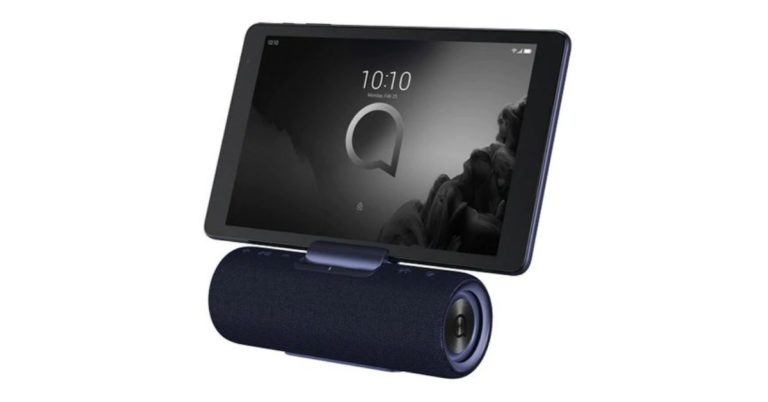
The Alcatel 3T 10 tablet has been launched alongside the three Alcatel smartphones at the Mobile World Congress 2019. All the four devices have been made by TCL Communication, a licensee of Alcatel brand. There is an optional audio station coming with it, which is one of its key features and makes it a smart 2-in-1 system. Also, the Audio Station can be clipped onto the tablet which runs on Android Pie and comes with a quad-core processor.

Alcatel 3T 10 specifications

The Alcatel 3T 10 runs Android 9.0 Pie and sports a 10-inch HD+ 1,280X800 PIXELS display with 10-point capacitive touch tech. The smartphone is powered by a 1.28GHz quad-core MediaTek MT8765B SoC, coupled with 2GB RAM. Internal storage is set at 16GB that is expandable with the help of a microSD card slot. There is a rear camera of 2MP (interpolated to 5MP) and the front camera also has the same sensor. Connectivity options include WiFi 802.11, Bluetooth 4.2, microUSB 2.0, GPS and 4G LTE. The battery capacity of the Alcatel 3T 10 is 4,080mAh and sports a screen resolution of 800×1,200 pixels. To talk about the audio station, it will be powered by 2,000mAh battery, and provide a playback time of 7 hours. It measures 185x67mm and features Bluetooth 4.2 connectivity, a 3.5mm aux jack, a microUSB port, and a microSD card reader. Also, when you connect it to the tablet, the Audio Station creates an on-screen hub so that it gives users at-a-glance information.

Alcatel 3T 10 price and release date

The availability of the Alcatel 3T 10 will start this year with the price of the product set at EUR 179, that is roughly Rs 14,400. The Audio Station will cost EUR 229, that is approximately Rs 18,400. At the MWC 2019, Alcatel will also be introducing—Alcatel 1S, Alcatel 3 (2019) and Alcatel 3L.   For the latest gadget and tech news, and gadget reviews, follow us on TwitterFacebook and Instagram. For newest tech & gadget videos subscribe to our YouTube Channel.

Samsung Galaxy Fold vs Huawei Mate X: Comparison

0
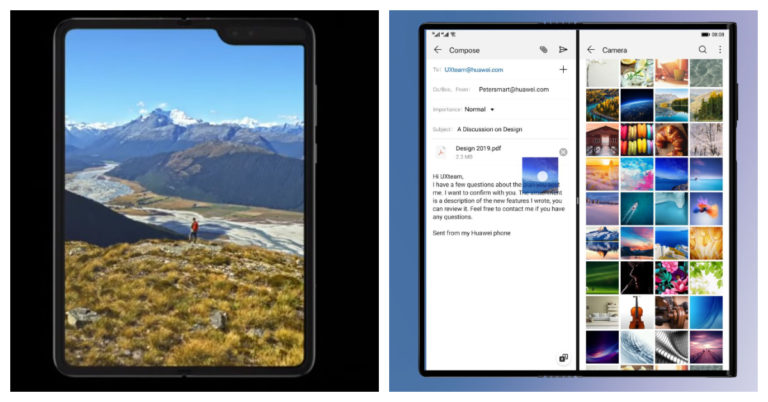
The era of foldable phones has begun! On February 20, South Korean technology giant Samsung unveiled its Galaxy Fold, which is one of a kind foldable phone that has top-of-the-line specifications. Days later, Chinese smartphone brand Huawei has taken wraps off its foldable smartphone named Huawei Mate X at MWC 2019. It seems like in the next few months, the smartphone market will get to see the launch of a host of these foldable smart devices that look like they are straight out of a sci-fi movie. Both the foldable phones have crazy and ground-breaking specifications along with a hefty price tag. These phones are not for everybody but for serious tech-lovers. People will buy these foldable phones only when they have a love for advanced technology and are ready to pay a hefty price for it. Here, we have compared Samsung Galaxy Fold smartphone with Huawei’s Mate X. Take a look at our spec-to spec comparison and decide which one is the right buy for you:

Display

Samsung Galaxy Fold: Main Display – 7.3-inch Infinity Flex Dynamic AMOLED panel with 1536×2152 pixels and an aspect ratio of 4.2:3. Cover Display – 4.6-inch Super AMOLED panel with 840×1960 pixels resolution and 21:9 aspect ratio. Huawei Mate X: Main display – 6.6-inches with 1148×2480 pixels resolution and an aspect ratio of 19.5:9 Secondary display – 6.38-inch display with 892×2480 pixels and an aspect ratio of 25:9 (when folded) An 8-inch OLED FullView Display panel with 2480×2200 pixels resolution and an aspect ratio of 8:71 appears when the device is unfolded.

Processor

Samsung Galaxy Fold: Snapdragon 855 SoC Huawei Mate X: Huawei’s HiSilicon Kirin 980 chipset

Primary Camera

Samsung Galaxy Fold: 16MP ultra-wide sensor with an f/2.2 aperture, a 12MP wide-angle sensor that has a variable aperture of f/1.5 to f/2.4, and a third 12MP telephoto lens with PDAF and an f/2.4 aperture paired with 2X optical zoom. Huawei Mate X:  A 40MP wide-angle sensor, a 16MP ultra-wide-angle sensor and an 8MP telephoto sensor.

Front Camera

Samsung Galaxy Fold: A 10MP sensor with an f/2.2 aperture + an 8MP RBG depth sensor with an f/1.9 aperture + a 10MP sensor with an f/2.2 aperture. Huawei Mate X: A 40MP wide-angle sensor, a 16MP ultra-wide-angle sensor and an 8MP telephoto sensor.

RAM and Storage

Samsung Galaxy Fold:  12GB RAM and 512GB internal storage Huawei Mate X: 8GB RAM and 512GB internal storage

Support for Storage card

Samsung Galaxy Fold: No Huawei Mate X: Yes, up to 256GB

Battery

Samsung Galaxy Fold: 4,380mAh Huawei Mate X: 4,500mAh

Operating System (OS)

Samsung Galaxy Fold: Android Pie skinned with Samsung One UI Huawei Mate X: Android Pie skinned with EMUI 9.1.1

Starting Price

Samsung Galaxy Fold: $1,980 (approx. Rs 1,41,300) Huawei Mate X: EUR 2,299 or $2,610 (approx. Rs 1,85,525)
For the latest gadget and tech news, and gadget reviews, follow us on TwitterFacebook and Instagram. For newest tech & gadget videos subscribe to our YouTube Channel.

Sony Xperia 1 is the world’s first smartphone to come with an OLED 4K display: Here’s a look at the complete list of specifications

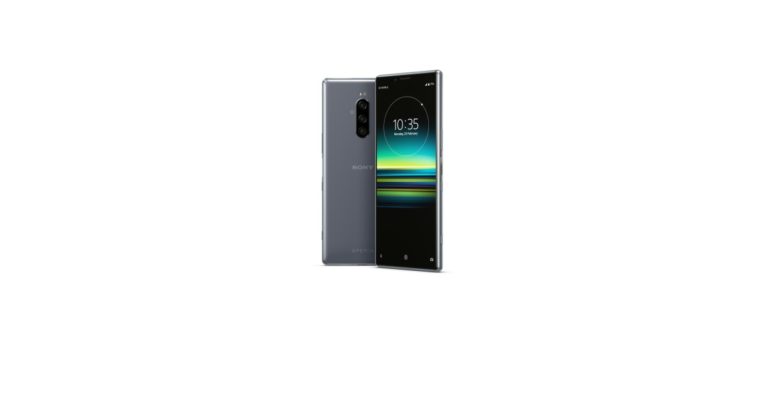
Japanese electronics maker Sony has unveiled its Xperia 1 smartphone at Mobile World Congress 2019, in Barcelona, Spain. Sony Xperia 1 smartphone is being touted as the first smartphone in the world to come with a 4K OLED display and has an extra tall aspect ratio of 21:9. The flagship smartphone also houses a triple camera setup on its back panel. The device also has a Game Enhancer mode and comes with some features like Pair Shortcut Smart Stamina mode. Here’s a look at the complete list of pricing details and specifications of the newly launched flagship smartphone by Sony:

Sony Xperia 1 price

As of now, there is no word on the pricing of the newly launched Sony Xperia 1 smartphone. The company has only said that the device will hit the shelves in Spring this year, so we can expect to see it within the next couple of months.

Sony Xperia 1 specifications

The newly-launched Sony Xperia 1 smartphone features a 6.5-inch ‘CinemaWide’ OLED 4K display that comes with X1-style image processing has the colour calibration of the company’s professional master monitors. The screen resolution of the display is 3,840 x 1,644 pixels, comes with HDR support and has an aspect ratio of 21:9. Moreover, Amazon and Netflix content on the device will also be played in the 21:9 HDR format, so that users can make the most out of the smartphone’s display. For audio, Sony Xperia 1 smartphone has support for Dolby Atmos. The smartphone is powered by Qualcomm’s Snapdragon 855 processor clubbed with 6GB of RAM and it will be available in 64GB and 128GB storage options. Sony Xperia 1 smartphone can hold a microSD card of up to 512GB, which can come in handy in case users think that they need more storage. The device runs Android 9.0 Pie. The device houses a 3,300mAh battery that supports Sony-developed Battery Care which enables slower overnight charging and Smart Stamina mode. The device comes with IP68 certification for water and dust resistance. Both the sides of the smartphone are protected by Corning Gorilla Glass 6. Like a number of other Sony devices, the smartphone comes with a side-mounted fingerprint scanner, however, this time it is not embedded in the power button. Sony Xperia 1 also comes with a Game Enhancer mode that is said to set a balance between performance and battery life of the device. Furthermore, it also has a Pair shortcut that will let users launch two apps on the screen. For imaging duties, Sony Xperia 1 smartphone comes with a triple rear camera setup with 12MP sensors. While the main camera comes with f/1.6 aperture, Optical SteadyShot and Dual Pixel autofocus. While the second camera has a 2x telephoto sensor, the third one comes with an ultra-wide lens. The device comes with CineAlta professional division that enables 24fps recording, colour profiles and project management. It also has an eye autofocus technology that helps users capture sharper portrait shots from the device. Besides this, there is also an 8MP front-facing camera on the smartphone that can be used to take selfies and make video calls.
For the latest gadget and tech news, and gadget reviews, follow us on TwitterFacebook and Instagram. For newest tech & gadget videos subscribe to our YouTube Channel.

LG G8 ThinQ and G8s ThinQ with IP68 certifications launched at MWC 2019

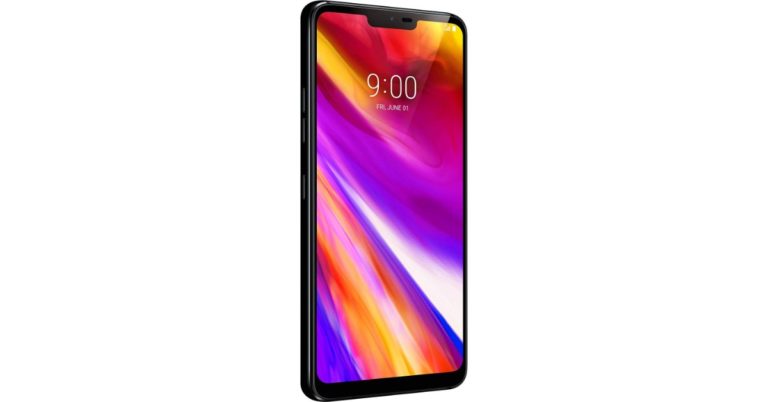
Yesterday, LG launched the G8 ThinQ and the G8s ThinQ smartphones at the Mobile World Congress 2019. One striking similarity between the two smartphones is that the LG G8 ThinQ and the G8s ThinQ include Hand ID that scans your palms in order to unlock the phone. This happens with the help of ToF Z Camera and infrared sensors. The LG G8 ThinQ has a Crystal Sound OLED which, according to the company, makes the front speaker and earpiece useless. Also, The LG G8 ThinQ is IP68 dust and water resistant. The ToF Z Camera leads to better Bokeh and Video Portrait mode. Over that, you can find a 3D-based face recognition on it. The best part about this is that the smartphone cannot be unlocked by someone else using your photographs. The pricing and availability of the LG G8 ThinQ and the LG G8s ThinQ have not yet been revealed. However, we can expect the company to soon come up with these details.

LG G8 ThinQ specifications

The smartphone sports a 6.1-inch QHD+ 1,440X3,120 display with an aspect ratio of 19.5:9. The LG ThinQ runs Android Pie out-of-the-box and has a pixel density of 564ppi. The smartphone is powered by Snapdragon 855 SoC, paired with 6GB RAM. As far as the internal storage is concerned this smartphone comes with 128GB. This with the help of a microSD card, can hold up to additional 2TB data. There is a triple rear camera setup on the LG G8 ThinQ that consists of two 12MP sensors and a single 16MP sensor. On the front, there is an 8MP autofocus camera for video chat and selfies. Connectivity options include 4G VoLTE, WiFi 802.11, Bluetooth v5.0, NFC, FM Radio and USB Type-C. The smartphone houses a 3,500mAh battery and supports Quick Charge 3.0 technology. https://www.youtube.com/watch?v=1c6c0hYQEkE

LG G8s ThinQ specifications

The LG G8s ThinQ sports a 6.2-inch full HD+ display with a resolution of 1,080×2,248 and an aspect ratio of 18.7:9. The device is powered by Qualcomm Snapdragon 855 SoC coupled with 6GB RAM. The internal storage here is up to 64GB. Another 128GB of storage can be added to the phone if a microSD card is incorporated. In terms of camera, the LG G8s ThinQ also has a triple rear camera setup—two 12MP sensors and a single 13MP sensor. On the front there is an 8MP sensor camera meant for clicking selfies. To keep it alive it carries a 3,550mAh battery. For the latest gadget and tech news, and gadget reviews, follow us on TwitterFacebook and Instagram. For newest tech & gadget videos subscribe to our YouTube Channel.  

Microsoft HoloLens 2 launched: Here is all you need to know

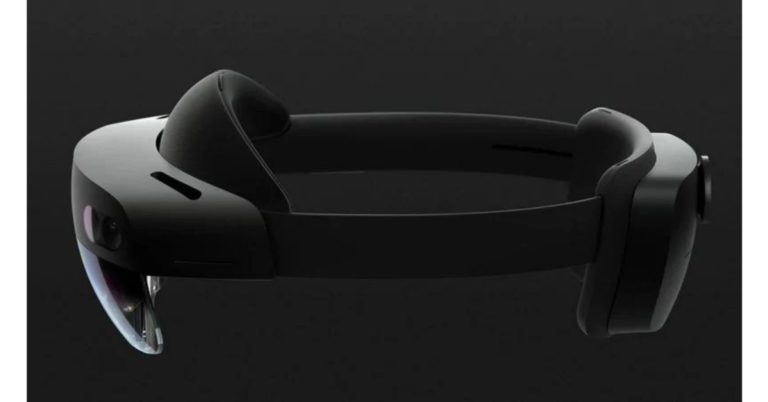
On Sunday, Microsoft launched the HoloLens 2, which is the tech giant’s second-generation mixed reality headset. Compared to the HoloLens 1 which was launched prior to this one, there are many enhancements like improved gesture controls, better performance and higher power efficiency. Also, the field of view is double with respect to its predecessor, the figure stands at 52 degrees and the Holographic density is 57 pixels per degree. The device is priced at $3,500 that is approximately Rs 2,49,000. It is not yet available in India, and its availability in the country is yet unknown. However, you can find them in Japan, China, Germany, Canada, UK, Ireland, France, Australia, and New Zealand. It is worth noticing that Microsoft has employed the microelectromechanical system (MEMS) display technology that, the company claims, provides equivalent of a 2K display for each eye. The HoloLens 2 is powered by Qualcomm Snapdragon 850 Compute Platform. Also, the HoloLens 2 has a custom-built Holographic Processing Unit. Going into further details, the device has an Iris scanner. This scanner goes through the security process once users wear the headset. There is an audio input in it too. Moreover, there is a custom-built Holographic Processing Unit and a USB-Type C port for charging. The 8MP sensor meant for video conferencing is placed within the device too.
It is worth noticing that the Microsoft HoloLens 2 helps users interact with holograms and feel it with synthetic tactile feedback. Apart from this, the HoloLens 2 manipulates holograms through aerial hand gestures as well. Also, eye tracking and voice commands are available. The flip-up visor and dial-in fit design leads to an optimum fit. Other features include a vapour chamber technology, carbon fibre chassis, Dynamics 365 Guidelines. Another device that Microsoft has launched in addition to the HoloLens 2 is the Azure Kinect. The Azure Kinect is incorporated with AI-backed solution that will be very useful for enterprise customers. It has a ToF sensor, a 12MP RGB camera and a 1MP depth sensing lens. The Azure Kinect is priced at $ 399, that is roughly Rs 28,921. It is available for pre-order, initially in the US and China. For the latest gadget and tech news, and gadget reviews, follow us on TwitterFacebook and Instagram. For newest tech & gadget videos subscribe to our YouTube Channel.

HMD global launches Nokia 1 Plus, Nokia 210 feature phone at MWC 2019: Price and specifications

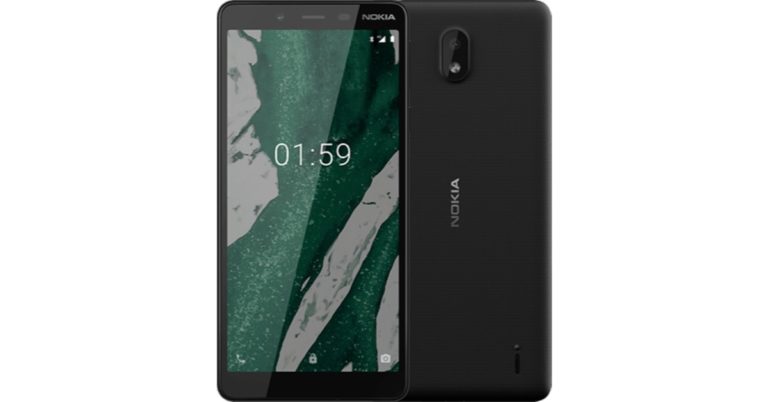
HMD Global has launched its Nokia 1 Plus smartphone at a pre-MWD 2019 conference in Barcelona, Spain. The device is an upgraded version of the Nokia smartphone and it runs Android 9.0 Pie (Go Edition) and is aimed at a young audience. Along with the Nokia 1 Plus smartphone, the company has also unveiled its Nokia 210 feature phone at the event. It is the third feature phone that the company has launched after Nokia 3310 and its 8110 Banana Phone, and it comes with a web browser, an App Store and some social media apps. Here’s a look at the pricing details and specifications of the newly launched devices by Nokia:

Nokia 1 Plus, Nokia 210 price and availability

The price of Nokia 1 Plus smartphone is $99, which is approximately Rs 7,000 and the device will be going on sale in international markets in Black, Blue, and Red colour variants. On the other hand, Nokia 210 feature phone bears a price tag of $35, which is approximately Rs 2,500. The feature phone will be going on sale starting next month and will be available in Red, Black, and Grey colours.

Nokia 1 Plus, Nokia 210 specifications

Nokia 1 Plus runs Android 9.0 Pie (Go Edition) and sports a 5.45-inch FWVGA IPS display that has an aspect ratio of 18:9. Powered by a quad-core MediaTek MT6739WW processor, the device comes with 1GB of RAM and is available in 8GB and 16GB of internal storage options. It can hold a microSD card for more storage. For imaging duties, there is an 8MP sensor on the smartphone’s back panel along with an LED flash and support for autofocus. On the front panel of the smartphone, there is a 5MP sensor that can be used for clicking selfies and making video calls. Nokia 1 Plus smartphone houses a 2,500mAh battery and comes with Wi-Fi, Bluetooth, GPS, Micro-USB, and a 3.5mm headphone jack for connectivity. nokia_210 Coming to Nokia 210, the feature phone runs S30+ operating system and sports a 2.4-inch QVGA display and has a VGA camera on its back panel coupled with an LED flash. The feature phone houses a 1,020mAh battery and comes pre-loaded with Opera Mini browser. It also has an App Store and comes with the iconic Snake game.
For the latest gadget and tech news, and gadget reviews, follow us on TwitterFacebook and Instagram. For newest tech & gadget videos subscribe to our YouTube Channel.

LG V50 ThinQ with support for 5G connectivity launched at MWC 2019: Price and specifications

0
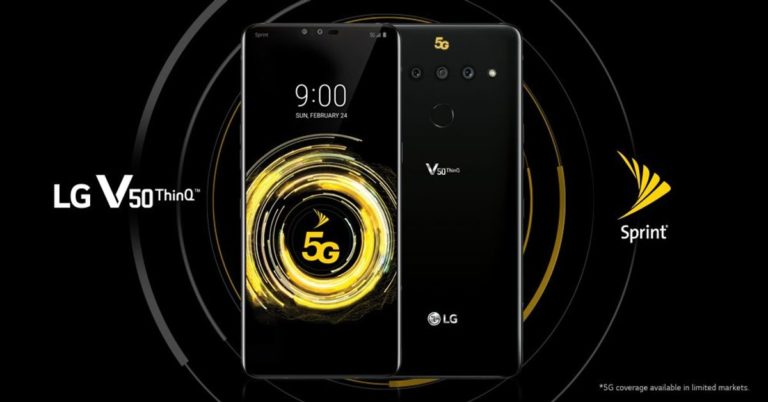
LG has unveiled its flagship smartphone for 2019, the LG V50 ThinQ at MWC 2019, Barcelona. It was launched along with LG G8 ThinQ and LG G8s ThinQ smartphones. The LG V50 ThinQ is the first 5G smartphone from the company. A secondary display was also launched alongside the LG V50 ThinQ named ‘Dual Screen’ which will basically act as a case and will connect with the smartphone by Pogo pin connectors.

LG V50 ThinQ price and availability

As of now, there is no word on the pricing of the LG V50 ThinQ smartphone, however, it was said that the event that the device will be available “later this year.”

LG V50 ThinQ specifications

The LG V50 ThinQ sports a 6.4-inch Quad HD+ OLED FullVision Display that has an aspect ratio of 19:5:9 and a pixel density of 538ppi. The LG V50 ThinQ will support dual SIM cards (Nano + Nano) and runs Android 9 Pie. As we mentioned earlier, LG also launched secondary screen accessory along with the smartphone that looks like a flip-cover and will add a secondary display to the handset. It has a 6.2-inch Full HD+ OLED display with three Pogo pin connectors that enable it to be attached to the smartphone. It doesn’t have a battery of its own and will be powered by LG V50 ThinQ’s battery.
LG V50 ThinQ is powered by Snapdragon 855 SoC CPU paired with Snapdragon X50 modem which is capable of supporting 5G connectivity. The device has Adreno 640 GPU that controls all its graphics processing operations and it comes with a triple-rear camera setup with a 12-MP primary sensor with 78-degree telephoto lens with f/1.5 aperture, a 12MP 45-degree telephoto lens of f/2.4 ,a 16MP 107-degree wide-angle lens of f/1.9 aperture. For selfies and video calls, there is a dual camera setup of an 8MP RGB sensor of f/1.9 aperture and a 5MP 90-degree wide-angle lens of f/2.2 aperture. It has 6GB of RAM along with 128GB of storage, and can hold a microSD card of up to 2TB. The LG V50 ThinQ comes with 3G, 4G LTE-A and 5G connectivity along with Bluetooth 5.0, NFC and Wi-Fi. It has a USB Type-C port and houses a 4,000mAh battery which has support for Quick Charge3.0. Being a flagship smartphone, it comes with IP68 rating which makes it water and dust resistant and it also has a certification from MIL-STD 810G . In the audio department, the smartphone has full-range BoomBox stereo speakers along with 32-bit Hi-Fi Quad DAC and DTS:X 3D surround sound support. The list of audio specifications of V50 ThinQ doesn’t end there as it comes with Qualcomm aptX and aptX HD audio technology for better audio experience over wireless audio accessories.
For the latest gadget and tech news, and gadget reviews, follow us on TwitterFacebook and Instagram. For newest tech & gadget videos subscribe to our YouTube Channel.

HMD Global launches Nokia 3.2 and Nokia 4.2 at MWC 2019: Price and specifications

0
HMD Global has unveiled its new budget smartphones – Nokia 3.2 and Nokia 4.2 at MWC 2019 event in Barcelona, Spain. Both of these smartphones will run Android Pie and will be a part of Google’s Android One programme like other Nokia smartphones from HMD Global. The Nokia 3.2 and Nokia 4.2 smartphones also come with features like Artificial Intelligence (AI)-powered camera, Face Unlock and waterdrop notch. The new smartphones by Nokia have a dedicated button for Google Assistant which is similar to Samsung’s Bixby button. There is also a notification light in the power button itself, so that the power button will light up when any notification is received.

Nokia 3.2, Nokia 4.2 price and specifications

Nokia 3.2 will start selling from May this year and will be priced at $139 (approximately Rs 9,900) for the 2GB RAM + 16GB variant and $169 (approximately Rs 2,000) for the 3GB RAM + 32GB variant. The other smartphone, Nokia 4.2 will start selling April onwards and will be priced at $169 (approximately Rs 12,000) for the 2GB RAM + 16GB version  and $199 (approximately  Rs 14,200) for the 3GB RAM + 32GB variant.

Nokia 3.2 specifications

Nokia 3.2 sports  a 6.26-inch HD+ (720 x 1520 pixels) display that comes with an aspect ratio of 19:9. The smartphone has a polycarbonate body and is powered by Qualcomm’s Snapdragon 429 SoC CPU. There are two variants of the smartphone, one with 2GB RAM + 16GB storage and the other with 3GB RAM + 32GB storage. For more storage, users can install a microSD card of up to 400GB. The smartphone has single 13MP camera with f/2.2 aperture on its back panel and a 5MP fixed-focus sensor with f/2.2 aperture for selfies and video calls. Nokia 3.2 smartphone will house a 4,000mAh battery and its 3GB RAM variant comes with a fingerprint scanner on its back panel.
HMD Global launches Nokia 3.2 and Nokia 4.2 at MWC 2019: Price and specifications
Nokia 3.2

Nokia 4.2 specifications

Nokia 4.2, which is the other smartphone launched at MWC 2019, sports a 2.5D glass on the front and the back. It too comes with a polycarbonate body and a metal internal structure making it durable. It has a 5.71-inch HD+ (720 x 1520 pixel) display with an aspect ratio of 19:9. It sports a Snapdragon 439 SoC processor and it is available in two variants. There is a 2GB + 16GB storage variant along with a 3GB + 32GB storage variant. The device can also support a microSD card of up to 400GB. Unlike Nokia 3.2, Nokia 4.2 sports a dual rear camera setup of a 13MP camera with f/2.2 autofocus lens along with a 2MP fixed-focus lens. For the latest gadget and tech news, and gadget reviews, follow us on TwitterFacebook and Instagram. For newest tech & gadget videos subscribe to our YouTube Channel.

Huawei MateBook X Pro, MateBook 14 and MateBook 13 laptops launched at MWC 2019: Price and specifications

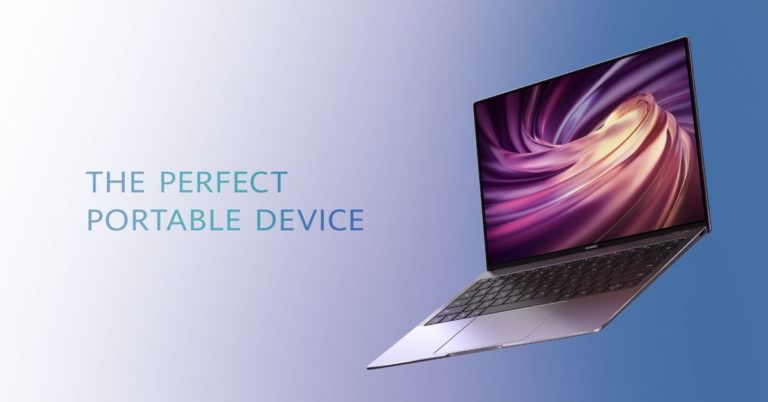
Chinese electronics brand Huawei has unveiled its MateBook 14 and the upgraded version of its MateBook X Pro laptops at an event right before the Mobile World Congress 2019. The company had announced last month at CES 2019 that its MateBook 13 laptop will be available in global markets. So, the Huawei MateBook X Pro laptop is aimed at consumers who want to get their hands on the latest and the most-high end technology in terms of laptops, the MateBook 14 and MateBook 13 are for more mainstream kind of consumers. All the three devices run Windows 10 Home. Here’s a look at the pricing details and specifications of the three newly launched laptops:

Huawei MateBook X Pro, MateBook 13 and MateBook 14 price

The Core i5 model of Huawei Mate X Pro that comes with 8GB RAM, is priced at EUR 1,599, which is approximately Rs 1,29,000, and the Core i7 model, that comes with 16GB RAM is priced at EUR 1,999, which is approximately Rs 1,61,200. The price of Huawei Mate 13 laptop starts at EUR 999 and goes up to EUR 1,399. The two models of Huawei MateBook 14, on the other hand, are priced at EUR 1,199 and EUR 1,499 respectively. While MateBook 13 will be available starting this month, the MateBook X Pro and the MateBook 14 will be available in April 2019.

Huawei MateBook X Pro (2019) specifications

The upgraded version of the Huawei Mate X Pro laptop comes with a CNC machined metallic unibody that has a premium sandblasted finish. The device has a 13.9-inch LTPS Ultra FullView touchscreen that has a 3.2 aspect ratio and comes with 3K resolution. It is powered by up to 8th-generation Intel Core i7-8565U coupled with Nvidia GeForce MX250 GPU. The device has four speakers with Dolby Atmos, among which two are tweeters and two are woofers. For connectivity, there are two USB Type-C ports, one USB Type-A port, a new Thunderbolt 3 port, Wi-Fi 6 and a fingerprint power button. The laptop also houses a 57.4 Wh battery.

Huawei MateBook 14 specifications

Huawei MateBook 14 laptop features a 14-inch FullView IPS touch display that has an aspect ratio of 3:2 and 4.9mm thick bezels on top and sides. The display of the laptop comes with a 2K+ resolution and the device is powered by up to Intel Core i7 8565U processor paired with up to 16GB of RAM and 1TB of storage. Huawei MateBook 14 comes with Nvidia GeForce MX250 GPU. It packs a 65W power adapter which is said to provide three hours of usage in just 15 minutes of charging. The device has support for Dolby Atmos, Amazon Alexa, Microsoft Cortana and a fingerprint power button. For connectivity, there is a USB Type-C, an HDMI, a USB Type-A 3.0, and a USB Type-A 2.0 port.

Huawei MateBook 13

The Huawei MateBook 13 laptop sports a 13-inch FullView touchscreen display with an aspect ratio of 3:2 and a screen resolution of 2160×1440 pixels. The laptop has 8GB of RAM, an 8th-generation Intel Core i7 or Core i5 processor, and 512GB of SSD. The device houses a 3,670mAh battery and for connectivity, there are two USB Type-C ports, a fingerprint power button, a 3.5mm audio jack and two Dolby Atmos speakers.
For the latest gadget and tech news, and gadget reviews, follow us on TwitterFacebook and Instagram. For newest tech & gadget videos subscribe to our YouTube Channel.

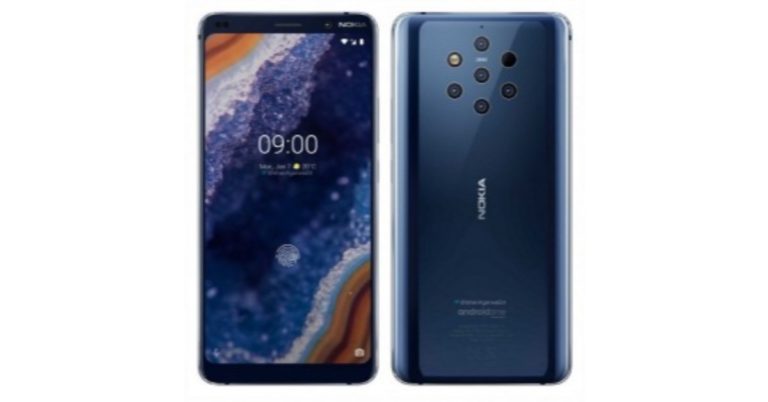
Nokia 9 PureView unveiled at MWC 2019: Price, availability and specifications

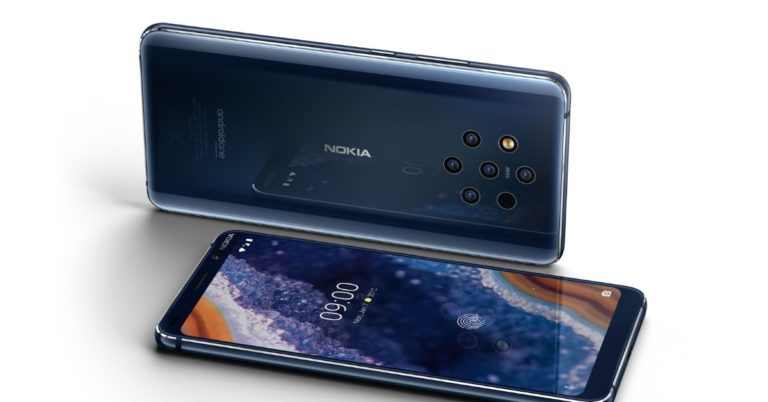
The much-awaited smartphone, the Nokia 9 PureView has been unveiled at the Mobile World Congress 2019. We had come across a lot of leaks and speculations about the smartphone, which only increased the anticipation as the days proceeded towards its launch date. Now finally, it has been unveiled at the MWC and one of the key highlights include the smartphone’s penta-lens camera—something that we knew all along. Other key highlights include a 5.99-inch 2K screen, Qualcomm Snapdragon 845 processor and 6GB RAM.

Nokia 9 PureView: Pricing and availability

The smartphone will be priced at $699 that is approximately Rs 49,700 and is available for pre-orders in specific markets worldwide. Even though we are still oblivious to the pricing and availability in India, we know that the device will go on sale in March here.

Nokia 9 PureView specifications

The imaging capabilities has been developed in partnership with Light. The Nokia 9 PureView is powered by Qualcomm Snapdragon 845 CPU. The smartphone sports a penta-lens camera setup and also has Google’s Photos app. The five rear cameras have Zeiss certified lenses that consist of three 12MP monochrome sensors and two 12MP RGB sensors. The mechanism behind this camera is that when someone clicks a picture with it, the five lenses come together to take the image. There is a 20MP selfie camera on the front as well.
The Nokia 9 PureView sports a 5.99-inch Quad-HD+ POLED display with a resolution of 1,440×2,960 pixels and an aspect ratio of 18.5:9. There is an in-display fingerprint sensor and the device packs 6GB RAM coupled with 128GB internal storage. Connectivity options include WiFi 5, Bluetooth 5.0, NFC, USB Type-C and 3.5mm audio jack. The Nokia 9 PureView is powered by a 3,320mAh battery that is non-removable. The smartphone runs on Android 9.0 Pie and on top of that, it is IP67 certified for water and dust resistance. Last but not the least, the handset comes with next-generation Pro Camera user-interface, which will help users to use the penta-lens camera, such as allowing them to take native monochrome shots. For the latest gadget and tech news, and gadget reviews, follow us on TwitterFacebook and Instagram. For newest tech & gadget videos subscribe to our YouTube Channel.

Nokia 9 camera samples showcased online

A number of leaks about Nokia 9 PureView, Nokia 3.2 and Nokia 4.2 surfaced online before they were finally launched at Mobile World Congress. Now, another smartphone of the same company, the Nokia 9’s camera samples have been publicised. The camera shots of this smartphone has been highlighted on Instagram recently. The post has been made by Nokia’s social media chief, Edoardo Cassina who posted an image of the smartphone photographed by Konsta Punkka. According to the image, the Nokia 9 will have a penta-lens camera setup.
After months of speculations, Nokia 9 PureView has been launched at the Mobile World Congress. The smartphone had been leaked many times before it was finally unveiled. It is the first ever smartphone in the world to come with a Penta-camera setup on its back panel. We should mention that this is the highest number of rear cameras a smartphone has ever had. Prior to this, it was Samsung Galaxy A9 (2018) that came with four rear cameras on its back panel. Coming back to Nokia 9 PureView, it is powered by Qualcomm’s Snapdragon 845 processor, and sports a 5.99-inch Quad-HD+ POLED display that has an aspect ratio of 18.5:9. The device comes with 6GB of RAM, 128GB of internal storage, and houses a 3,320mAh battery. The device comes with Android 9 Pie and is IP67 certified for water and dust resistance.
We should mention that HMD Global has also announced its Nokia 3.2 and Nokia 4.2 smartphones, and both the devices are a part of Google’s Android One program, much like other Nokia smartphones from HMD Global. While Nokia 3.2 smartphone comes with 6.26-inch HD+ display, Qualcomm Snapdragon 429 processor, 2GB /3GB of RAM, 16GB/32GB of storage and a 13MP primary camera coupled with a 5MP selfie camera. Nokia 4.2, on the other hand, has a 5.71-inch HD+ display and is powered by Qualcomm Snapdragon 439 processor. The device has a dual camera setup on its back panel that has a 13MP sensor and a 2MP sensor. It has 2GB /3GB of RAM and 16GB/32GB of storage. It can also hold a microSD card of up to 400GB. In addition to this, HMD Global has also launched its Nokia 1 Plus, and Nokia 210 phones at its event at MWC 2019. For the latest gadget and tech news, and gadget reviews, follow us on TwitterFacebook and Instagram. For newest tech & gadget videos subscribe to our YouTube Channel.  

Food-delivery startup Swiggy to acquire Uber Eats

0
Online food delivering service Swiggy will soon be acquiring its business rival Uber Eats. Uber Eats is also food-delivering service which was started by the transportation network company Uber. Reports suggest that Swiggy is already in the final stage of negotiations with Uber regarding the merger. The deal between the two companies will most likely reach its conclusion by next month. The Swiggy-Uber deal will be a share deal in which Uber will get 10 percent stake of Swiggy. If this deal finalizes, then Swiggy will have an upper hand over another big rival in the Indian market – Zomato. For those unaware, Zomato is among the biggest players in the food-tech segment. Earlier, Swiggy was also in talks with Zomato about a merger, however the latter denied and the deal failed. The report, which was first published in Economic Times, stated “The development is in line with Uber’s global strategy to cut down on losses as it prepares for a public offering at a possible valuation of $120-150 billion.”
In 2018, Swiggy gained the unicorn status and a few weeks back, the company started a new service where it would deliver food essentials along with food. If the report about Swiggy being in merger talks with Uber Eats is true, it just goes to show that the food-delivery start-up has become a very prominent player in the market. If the merger is successful, Swiggy would gain a huge advantage over its competitors. As of 2018, Swiggy has gained $1 billion in funding and totalled the value at an astonishing $3.3 billion, according to a report by Business Insider. Speaking about the funding, Sriharsha Majety who is the CEO of Swiggy had said, “With this funding, we will further invest in building differentiated offerings, plugging the white spaces in the ecosystem, and developing our technology while keeping superlative customer experience at the core.” Uber Eats entered the Indian market in May 2017, and it primarily did well because it was a part of Uber. The company hasn’t limited itself to just cabs and food services. Recently, Uber also announced its water-based transport called UberBOAT and UberBOAT XL, but these services are only available in Mumbai as of now.
For the latest gadget and tech news, and gadget reviews, follow us on TwitterFacebook and Instagram. For newest tech & gadget videos subscribe to our YouTube Channel.