

How to buy the brand new OnePlus 7 at just Rs 11,099
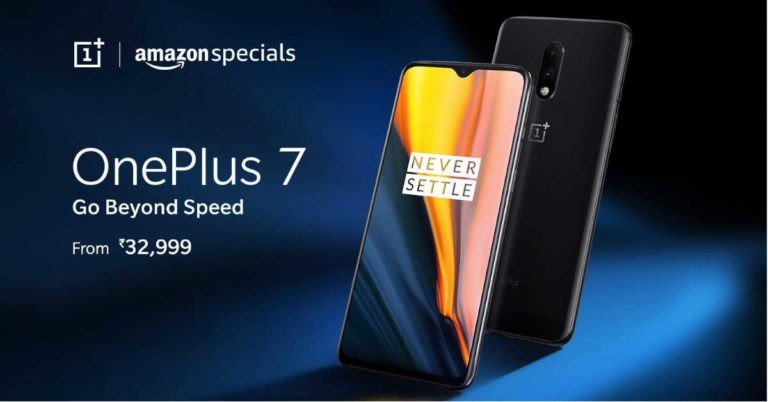
If you are a OnePlus fan, you would know that OnePlus 7 has gone on its first sale in India today. Although the Chinese smartphone brand launched the OnePlus 7 along with OnePlus 7 Pro in India last month, the Pro version of hit the shelves in the Indian market before OnePlus 7 did. The handset has already gone on sale on Amazon India, OnePlus India’s website and OnePlus exclusive offline stores.
The key highlights of the smartphone are its Qualcomm Snapdragon 855 processor and its dual rear camera setup. If you are considering to buy the smartphone, we should tell you that it can be bought at Rs 11,099 instead of its starting price of Rs 32,999.
If you want to avail this offer, head to Amazon India to buy the OnePlus 7 smartphone. Opt for the exchange offer on the website under which, you can exchange your old smartphone for the new OnePlus 7 for up to Rs 19,900. The exchange amount varies on different smartphones. If you manage to get an exchange amount of Rs 19,900, the cost of your handset will come down to Rs 13,099.
Other than this, you can get an additional discount of Rs 2,000, provided you pay for your purchase via an SBI debit or credit card. On doing this, the cost of your OnePlus 7 smartphone would come down to Rs 11,099.
We should mention that this is what you will have to pay for the base variant of the smartphone after the two offers are applied. The base variant of OnePlus 7 comes with 6GB of RAM and 128GB of internal storage.
But then, these two offers are also available for the 8GB RAM/256GB storage variants of OnePlus 7 smartphone as well. The cost of the high-end model comes down to Rs 16,099.
Other offers that are available on OnePlus 7 include no-cost EMIs and Reliance Jio benefits. The buyers of the handset will get benefits worth Rs 9,300 from Reliance Jio and up to 70% guaranteed exchange price from Servify.
As of now, the smartphone is only available for purchase via Amazon India, OnePlus.in and OnePlus exclusive offline retail stores. The smartphone will also be going on sale via all the partner retail outlets of the Chinese technology brand starting June 14. Pre-bookings of the handset on these platforms will begin later this week on June 7. As of now, there is no word on the launch offers that will be available on partner retail stores.
For the latest gadget and tech news, and gadget reviews, follow us on Twitter, Facebook and Instagram. For newest tech & gadget videos subscribe to our YouTube Channel. You can also stay up to date using the Gadget Bridge Android App.
Asus TUF FX505DT and TUF FX705DT laptops with AMD Ryzen CPUs and NVIDIA GeForce GPUs launched in India
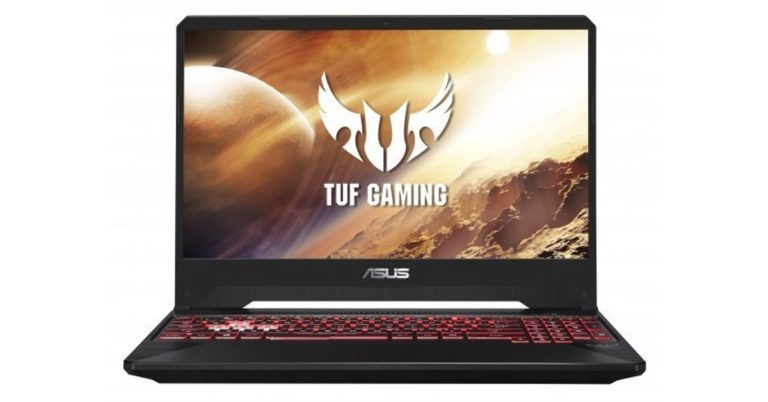
Asus, the Taiwanese electronic and technology firm unveiled its new gaming laptops in the Asus TUF series, the laptops are named – TUF FX505DT and TUF FX705DT. The new gaming laptops were unveiled in India yesterday and they are powered by the AMD Ryzen CPUs paired with NVIDIA GeForce GTX GPUs. Both the new laptops will be adding to Asus’s increasing products portfolio. Here’s a look at their price details and specifications.
In This Article
Asus TUF FX505DT and TUF FX705DT price and details
The starting price of the newly launched Asus TUF gaming laptops is Rs 64,990 and they are available for purchase on popular e-commerce platforms as well as offline stores. In a statement, Arnold Su, ROG and PC Head at Asus India said, “At Asus, we are glad to unveil the TUF gaming Laptops FX505DT and FX705DT that combine amazing processing power and graphics upgrade with durability. Available at affordable prices, we are affirmative that these laptops will prove to be suitable partners to India’s growing brigade of passionate gamers and multi-tasking individuals.”Asus TUF FX505DT and TUF FX705DT specifications and details
Both Asus TUF FX505DT and TUF FX705DT laptops come with 120Hz IPS-level NanoEdge display. The TUF FX505DT sports a 15.6-inch Full-HD (2160 x 1080 pixels) resolution display with a screen refresh rate of 120Hz. It packs up to 32GB DDR4 2666 MHz RAM while for storage the TUF FX505DT has 256GB SSD along with 1TB SSHD. As mentioned above, the TUF FX505DT will be powered by the latest AMD Ryzen CPU. For gaming, the newly launched laptop will be powered by the NVIDIA GeForce GTX 1050 with 3G GDDR5 VRAM GPU. It runs Windows 10 OS and packs a 48Whr, 3-cell Li-ion battery. Speaking of the other offering, Asus TUF705DT packs a 17.3-inch Full HD display with a screen refresh rate of 60Hz. It packs up to 32GB of DDR4 2400 MHz RAM and for storage, it comes with a 512GB SSD along with a 1TB SSHD storage. As its 15-inch counterpart, the TUF FX705DT too will be powered by the latest AMD Ryzen CPU. For gaming, it will pack an NVIDIA GeForce GTX 1650 with 4G GDDR5 VRAM GPU. It runs Windows 10 OS and packs a 64Whr, 4-cell Li-ion battery. As mentioned above, with the launch of two new laptops Asus has added two new devices to its list of gaming portfolio. And since both these laptops come in the TUF-series, they offer the durability and the toughness which Asus TUF laptops are known to have. Both these newly launched laptops come with military grade MIL-STD-810G certification as well.
For the latest gadget and tech news, and gadget reviews, follow us on Twitter, Facebook and Instagram. For newest tech & gadget videos subscribe to our YouTube Channel. You can also stay up to date using the Gadget Bridge Android App.
Apple CEO Tim Cook takes a jab at Android Pie: Here’s what he said
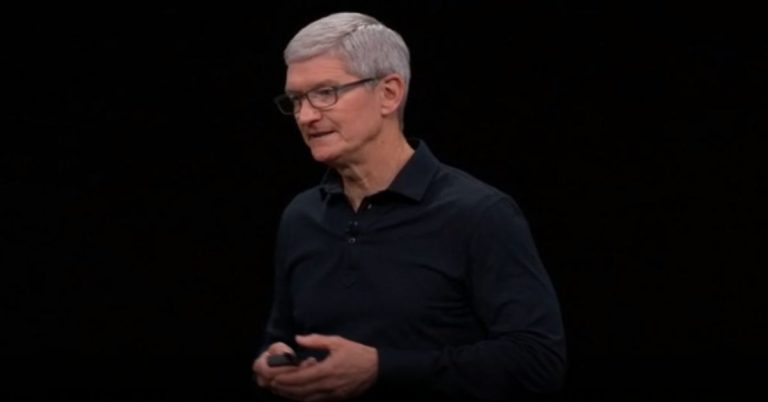
Apple kick-started its WWDC 2019 in San Jose, California yesterday. At its developer conference, the company made a number of key announcements. It unveiled iOS 13 that comes with Dark Mode, took wraps off iPadOS, announced new additions to its WatchOS and tvOS, and showcased its all-new Mac Pro and Pro Display XDR. In addition to all of this, there was one more thing that Apple did. The company’s CEO Tim Cook, took a jab at Android, as always.
Before introducing the iOS 13, Cook spoke about Apple’s last year’s iOS 12. He said that iOS 12 has seen tremendous success in the industry and has 97% customer satisfaction. The CEO then went to talk about the adoption rate of iOS 12 saying, “As always, our adoption rate is industry leading as well. Eighty-five percent of the iOS customers are on the latest release. In fact, iOS 12 has been installed on more systems than any version of iOS ever.”
As soon as Cook said all of this, we knew what was coming next. Apple CEO then went on to add very matter-of-factly, “This is in stark contrast to the latest offering by those other guys, which was released before iOS 12. They only have 10% adoption.”
 The moment he said this, the slide behind him on the stage changed and it showed percentages of adoption of both iOS 12 and Android Pie. So there really wasn’t a need of guessing who exactly Cook was talking about.
This isn’t the first time that Apple has taken a jab at Android in this manner. It has almost become a sort of a tradition for the Cupertino-based technology giant to slide a humorous remark whenever the two companies can be compared. It is one of the things that Apple does whenever it can, and the company’s fans too look forward to it.
Cook did go on to explain how this high adoption rate was better for both users and developers and then he finally unveiled the iOS 13 at the event.
While what he said was indeed humorous, there are other facts involved in the stark contrast between the adoption rates of the two operating systems too. Firstly, Android is an open source platform and because of this, a number of technology companies use the operating system. Some use stock Android and the others customise it with their skins. But because of this, Android’s user base is far wider than that of iOS.
Secondly, smartphone makers have a very key role in rolling out the latest Android versions to their users. So, Android adoption rate depends a lot on them too. Apple, on the other hand, does not have to worry about any third party smartphone makers rolling out the latest version of their operating system to devices, as iOS is exclusively used in the company’s own devices and is a closed OS.
We would say that considering these two factors, it is very obvious why exactly there is such a big difference in the adoption rates of the two operating systems. We all may judge Google for not doing enough to ensure a wider roll-out, but let’s keep this in mind when we are doing so.
For the latest gadget and tech news, and gadget reviews, follow us on Twitter, Facebook and Instagram. For newest tech & gadget videos subscribe to our YouTube Channel. You can also stay up to date using the Gadget Bridge Android App.
The moment he said this, the slide behind him on the stage changed and it showed percentages of adoption of both iOS 12 and Android Pie. So there really wasn’t a need of guessing who exactly Cook was talking about.
This isn’t the first time that Apple has taken a jab at Android in this manner. It has almost become a sort of a tradition for the Cupertino-based technology giant to slide a humorous remark whenever the two companies can be compared. It is one of the things that Apple does whenever it can, and the company’s fans too look forward to it.
Cook did go on to explain how this high adoption rate was better for both users and developers and then he finally unveiled the iOS 13 at the event.
While what he said was indeed humorous, there are other facts involved in the stark contrast between the adoption rates of the two operating systems too. Firstly, Android is an open source platform and because of this, a number of technology companies use the operating system. Some use stock Android and the others customise it with their skins. But because of this, Android’s user base is far wider than that of iOS.
Secondly, smartphone makers have a very key role in rolling out the latest Android versions to their users. So, Android adoption rate depends a lot on them too. Apple, on the other hand, does not have to worry about any third party smartphone makers rolling out the latest version of their operating system to devices, as iOS is exclusively used in the company’s own devices and is a closed OS.
We would say that considering these two factors, it is very obvious why exactly there is such a big difference in the adoption rates of the two operating systems. We all may judge Google for not doing enough to ensure a wider roll-out, but let’s keep this in mind when we are doing so.
For the latest gadget and tech news, and gadget reviews, follow us on Twitter, Facebook and Instagram. For newest tech & gadget videos subscribe to our YouTube Channel. You can also stay up to date using the Gadget Bridge Android App.
 The moment he said this, the slide behind him on the stage changed and it showed percentages of adoption of both iOS 12 and Android Pie. So there really wasn’t a need of guessing who exactly Cook was talking about.
This isn’t the first time that Apple has taken a jab at Android in this manner. It has almost become a sort of a tradition for the Cupertino-based technology giant to slide a humorous remark whenever the two companies can be compared. It is one of the things that Apple does whenever it can, and the company’s fans too look forward to it.
Cook did go on to explain how this high adoption rate was better for both users and developers and then he finally unveiled the iOS 13 at the event.
While what he said was indeed humorous, there are other facts involved in the stark contrast between the adoption rates of the two operating systems too. Firstly, Android is an open source platform and because of this, a number of technology companies use the operating system. Some use stock Android and the others customise it with their skins. But because of this, Android’s user base is far wider than that of iOS.
Secondly, smartphone makers have a very key role in rolling out the latest Android versions to their users. So, Android adoption rate depends a lot on them too. Apple, on the other hand, does not have to worry about any third party smartphone makers rolling out the latest version of their operating system to devices, as iOS is exclusively used in the company’s own devices and is a closed OS.
We would say that considering these two factors, it is very obvious why exactly there is such a big difference in the adoption rates of the two operating systems. We all may judge Google for not doing enough to ensure a wider roll-out, but let’s keep this in mind when we are doing so.
For the latest gadget and tech news, and gadget reviews, follow us on Twitter, Facebook and Instagram. For newest tech & gadget videos subscribe to our YouTube Channel. You can also stay up to date using the Gadget Bridge Android App.
The moment he said this, the slide behind him on the stage changed and it showed percentages of adoption of both iOS 12 and Android Pie. So there really wasn’t a need of guessing who exactly Cook was talking about.
This isn’t the first time that Apple has taken a jab at Android in this manner. It has almost become a sort of a tradition for the Cupertino-based technology giant to slide a humorous remark whenever the two companies can be compared. It is one of the things that Apple does whenever it can, and the company’s fans too look forward to it.
Cook did go on to explain how this high adoption rate was better for both users and developers and then he finally unveiled the iOS 13 at the event.
While what he said was indeed humorous, there are other facts involved in the stark contrast between the adoption rates of the two operating systems too. Firstly, Android is an open source platform and because of this, a number of technology companies use the operating system. Some use stock Android and the others customise it with their skins. But because of this, Android’s user base is far wider than that of iOS.
Secondly, smartphone makers have a very key role in rolling out the latest Android versions to their users. So, Android adoption rate depends a lot on them too. Apple, on the other hand, does not have to worry about any third party smartphone makers rolling out the latest version of their operating system to devices, as iOS is exclusively used in the company’s own devices and is a closed OS.
We would say that considering these two factors, it is very obvious why exactly there is such a big difference in the adoption rates of the two operating systems. We all may judge Google for not doing enough to ensure a wider roll-out, but let’s keep this in mind when we are doing so.
For the latest gadget and tech news, and gadget reviews, follow us on Twitter, Facebook and Instagram. For newest tech & gadget videos subscribe to our YouTube Channel. You can also stay up to date using the Gadget Bridge Android App. Black Shark 2 to go on its first sale in India from 12pm onwards today: Price and other details
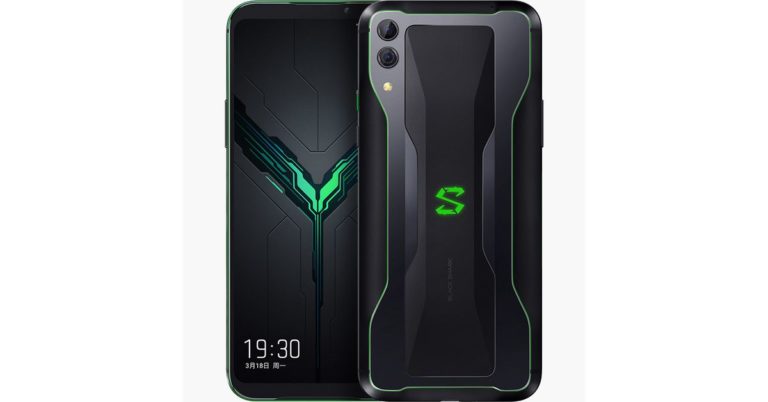
Xiaomi had launched its gaming-centric Black Shark 2 smartphone in India last week. The Black Shark 2 is the first device to be launched by the gaming sub-brand in India. Today, a week after its launch, the Black Shark 2 is set to go on its first ever sale in the country from 12pm (noon) onwards. The smartphone will be exclusively sold on Flipkart with offers, no cost EMIs along with banking discount offers as well. The highlights of the Black Shark 2 are that it is powered by the Snapdragon 855 SoC and packs up to 12GB of RAM. It also comes pre-loaded with lots of gaming-centric features making it one of the best gaming smartphones in the market right now. Here’s a look at its price and sale features:
In This Article
Black Shark 2 price and sale offers in India
The Black Shark 2 with the 6GB RAM/ 64GB storage is priced at Rs 39,999 while the top-end variant of the device with 12GB RAM/ 256GB storage holds a price tag of Rs 49,999. It is available in two colour options – Frozen Silver and Shadow Black. First sale offers on the new Black Shark 2 includes a no-cost EMI from Flipkart along with 10% of banking discount if the customer makes the purchase using Axis Bank Buzz credit cards. As mentioned above, the Black Shark 2 will exclusively be sold on Flipkart and the sale will start from 12pm (noon) today onwards.Black Shark 2 specifications and features
The Black Shark 2 sports a 6.39-inch Full-HD+ (1080 x 2340 pixels) AMOLED display with an aspect ratio of 19.5:9. It is powered by Qualcomm’s Snapdragon 855 SoC paired with up to 12GB of RAM and 256GB of UFS 2.1 internal storage. The Black Shark 2 packs a 4,000mAh battery with 27W fast charging support. For imaging duties, the Black Shark 2 features a dual-rear camera setup which comprises of a 48MP main camera paired with a 12MP secondary camera. On the front, there is a 20MP selfie camera with an f/2.0 aperture. On the gaming part, the Black Shark 2 comes with a plethora of gaming-based features which make it capable of handling any and all games of today with ease. It comes with Liquid Cool 3.0 technology which provides a better heat management. The smartphone has Qualcomm’s Snapdragon Elite Gaming feature which offers the gamers a better and more fluid gaming performance. Other than that, the Black Shark 2 has the pressure-sensing Magic Press technology which can be used as additional and extra controls when gaming. The device also packs dual RGB strips which can be configured to sync with the in-game effects and can be customized as per the user’s needs.
For the latest gadget and tech news, and gadget reviews, follow us on Twitter, Facebook and Instagram. For newest tech & gadget videos subscribe to our YouTube Channel. You can also stay up to date using the Gadget Bridge Android App.
OnePlus 7 to go on sale in India today: Price and sale details

The newly-launched OnePlus 7 smartphone will be going on sale in India for the first time today at 12 pm (noon). The handset was launched along with OnePlus 7 Pro last month but it has taken a bit longer to hit the stores in India. According to the Chinese smartphone brand, OnePlus 7 will be available for purchase on Amazon India’s website, OnePlus.in and OnePlus exclusive offline stores.
The smartphone comes with a waterdrop-shaped notch, Qualcomm Snapdragon 855 SoC and sports a dual rear camera setup. Here’s a look at the sale details, price and launch offers:
In This Article
OnePlus 7 price in India, sale details
OnePlus 7 is available in two storage options in India – one with 6GB of RAM and 128GB of internal storage and the other with 8GB of RAM and 256GB of internal storage. While the former is priced at Rs 32,999, the later is available for purchase at Rs 37,999. While the 6GBB RAM variant is available only in Mirror Grey colour option, the 8GB RAM variant can also be bought in a Red colour model that is only exclusive to India and China. The smartphone will be going on sale starting 12 pm (noon) today on Amazon India, OnePlus.in and OnePlus exclusive offline retail stores. The device will also be available on all partner retail outlets of the company starting June 14. If you wish to buy the smartphone from there, you can pre-book starting June 7. Coming to the launch offers, OnePlus 7 customers will be getting a discount of up to Rs 2,000 if they pay for their purchase using an SBI debit or credit card. In addition to this, OnePlus 7 customers can opt for no-cost EMIs. The buyers will also get benefits worth Rs 9,300 from Reliance Jio and up to 70% guaranteed exchange price from Servify.OnePlus 7 specifications and features
OnePlus 7 smartphone sports a 6.41-inch Full HD+ display that has a waterdrop shaped notch on its top to house the selfie camera. Powered by the Qualcomm Snapdragon 855 SoC, the handset packs up to 8GB RAM. The OnePlus offering runs Android 9 Pie skinned with OxygenOS and it houses a 3,700mAh battery. The device comes with up to 256GB of UFS 3.0 storage. On the camera front, the device features a dual-rear camera setup that consists of a 48MP primary camera and a 5MP depth sensor. For selfies, there is a 16MP front-facing snapper. OnePlus 7 supports Wi-Fi, GPS, USB Type-C, 3G, and 4G for connectity. For the latest gadget and tech news, and gadget reviews, follow us on Twitter, Facebook and Instagram. For newest tech & gadget videos subscribe to our YouTube Channel. You can also stay up to date using the Gadget Bridge Android App.Nokia 4.2 review: Good for basic tasks
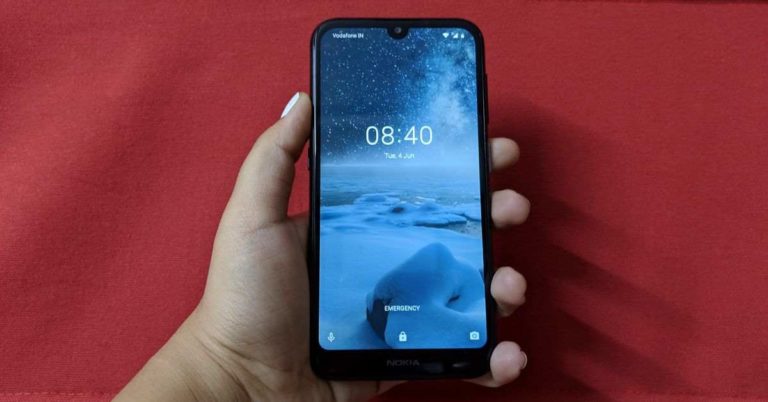
HMD Global recently launched its Nokia 4.2 smartphone in India that is priced at Rs 10,977. At this price point, the smartphone competes with a number of other smartphones from the likes of Samsung, Asus and Xiaomi. But can it match up to them in terms of performance? Read our review of Nokia 4.2 to find out more:
 The compact form factor of the Nokia 4.2 smartphone ensures that the one-handed usage is no problem at all on the device. The built quality of the smartphone is also very sturdy, so that is another plus.
Among the key highlights of the smartphone is its dedicated Google Assistant button that is placed on the left edge along with a SIM tray slot. While it is a useful addition for anyone who uses the assistant a lot, it cannot be remapped. Another thing that the company had touted is that there is an LED light on the power button of the smartphone. The button lights up each time the handset receives a notification. The power button and the volume rocker keys are present on the right edge. The top edge of the device comes with a 3.5mm headphone jack and a secondary microphone. While at the bottom users will find a microUSB port, a speaker and the primary microphone.
Overall, the look and feel of the Nokia 4.2 smartphone is first-class and it is one among the best-looking devices in the given price segment.
Coming to the display, Nokia 4.2 smartphone comes with a 5.71-inch HD+ screen. The display was a decent one. The colours appear to be accurate, although the viewing angles of the handset could have been better. The images and text appeared to be sharp and clear. The sunlight readability was sometimes problematic, but if you turn the brightness up, it becomes better.
The compact form factor of the Nokia 4.2 smartphone ensures that the one-handed usage is no problem at all on the device. The built quality of the smartphone is also very sturdy, so that is another plus.
Among the key highlights of the smartphone is its dedicated Google Assistant button that is placed on the left edge along with a SIM tray slot. While it is a useful addition for anyone who uses the assistant a lot, it cannot be remapped. Another thing that the company had touted is that there is an LED light on the power button of the smartphone. The button lights up each time the handset receives a notification. The power button and the volume rocker keys are present on the right edge. The top edge of the device comes with a 3.5mm headphone jack and a secondary microphone. While at the bottom users will find a microUSB port, a speaker and the primary microphone.
Overall, the look and feel of the Nokia 4.2 smartphone is first-class and it is one among the best-looking devices in the given price segment.
Coming to the display, Nokia 4.2 smartphone comes with a 5.71-inch HD+ screen. The display was a decent one. The colours appear to be accurate, although the viewing angles of the handset could have been better. The images and text appeared to be sharp and clear. The sunlight readability was sometimes problematic, but if you turn the brightness up, it becomes better.
 Saying that we definitely have seen much better displays in this price range. The screen of the smartphone performed averagely most of the time and failed to create a mark even though there is nothing too wrong in it. Samsung Galaxy M10 and Galaxy M20, which fall in the same price bracket, offer much better displays than Nokia 4.2.
 Coming to the performance of the device, the Snapdragon 439 SoC performs basic and everyday tasks with ease. But don’t burden it with too much of multitasking. For instance, we did not see the best performance from the device when we tried watching videos on it while the navigation was on. The smartphone also started heating up each time we tried to multi-task on it.
Gaming was a similar experience. Playing games like Alto’s Odyssey was not a problem on the device, but we have seen other smartphones perform better when it comes to games like PUBG Mobile and Asphalt 9: Legends. If you are a regular gamer who plays graphically demanding games on smartphones, probably you can consider some other option.
The call quality of the Nokia 4.2 was good. We faced no problems while making calls even from areas like basements and elevators and could listen to the person we were talking to at all times.
Coming to the cameras, we found the sensors on Nokia 4.2 to do a decent job. The images taken during the day did have accurate colours and were bright. However, the images lacked a certain sharpness. But then, we have to say that the images taken outdoors looked much better than the ones taken indoors. The zoomed-in shots were not the best in class but decent.
Coming to the performance of the device, the Snapdragon 439 SoC performs basic and everyday tasks with ease. But don’t burden it with too much of multitasking. For instance, we did not see the best performance from the device when we tried watching videos on it while the navigation was on. The smartphone also started heating up each time we tried to multi-task on it.
Gaming was a similar experience. Playing games like Alto’s Odyssey was not a problem on the device, but we have seen other smartphones perform better when it comes to games like PUBG Mobile and Asphalt 9: Legends. If you are a regular gamer who plays graphically demanding games on smartphones, probably you can consider some other option.
The call quality of the Nokia 4.2 was good. We faced no problems while making calls even from areas like basements and elevators and could listen to the person we were talking to at all times.
Coming to the cameras, we found the sensors on Nokia 4.2 to do a decent job. The images taken during the day did have accurate colours and were bright. However, the images lacked a certain sharpness. But then, we have to say that the images taken outdoors looked much better than the ones taken indoors. The zoomed-in shots were not the best in class but decent.
 But what was actually unsatisfactory were the shots taken at night. They turned out to be grainy and lacked clarity. The front camera mostly worked decently and it did not add the unnatural looking beauty features, which is something we are completely fine with.
 Nokia 4.2 smartphone has a 3,000mAh battery that will last you a day with moderate usage. We used the smartphone for calls, watching YouTube videos, navigation, listening to music and browsing the web and we often had to charge it by the end of the day. We suggest having the lite version of social media apps on the handset for best battery use.
In This Article
Nokia 4.2 Design and Display
Design is one of the best aspects of the Nokia 4.2, even though it may remind you a bit of Nokia 6.1 Plus and Nokia 5.1 Plus. If you like your smartphone to have a subtle and minimalistic design, then Nokia 4.2 is something that you will like. However, if you like something chunkier, then you may not be able to appreciate the design of Nokia 4.2. While the device is available in Gloss Pink and Black colour variants, the one that we got for review is dressed in Black. The front, as well as the back panel of the smartphone, is coated with 2.5D glass, making the handset’s design and look premium. On the rear panel of the smartphone, there is a vertically stacked camera module that comes with two sensors and an LED flash. Beneath this module, a fingerprint scanner is placed and the Nokia branding can also be found here. The compact form factor of the Nokia 4.2 smartphone ensures that the one-handed usage is no problem at all on the device. The built quality of the smartphone is also very sturdy, so that is another plus.
Among the key highlights of the smartphone is its dedicated Google Assistant button that is placed on the left edge along with a SIM tray slot. While it is a useful addition for anyone who uses the assistant a lot, it cannot be remapped. Another thing that the company had touted is that there is an LED light on the power button of the smartphone. The button lights up each time the handset receives a notification. The power button and the volume rocker keys are present on the right edge. The top edge of the device comes with a 3.5mm headphone jack and a secondary microphone. While at the bottom users will find a microUSB port, a speaker and the primary microphone.
Overall, the look and feel of the Nokia 4.2 smartphone is first-class and it is one among the best-looking devices in the given price segment.
Coming to the display, Nokia 4.2 smartphone comes with a 5.71-inch HD+ screen. The display was a decent one. The colours appear to be accurate, although the viewing angles of the handset could have been better. The images and text appeared to be sharp and clear. The sunlight readability was sometimes problematic, but if you turn the brightness up, it becomes better.
The compact form factor of the Nokia 4.2 smartphone ensures that the one-handed usage is no problem at all on the device. The built quality of the smartphone is also very sturdy, so that is another plus.
Among the key highlights of the smartphone is its dedicated Google Assistant button that is placed on the left edge along with a SIM tray slot. While it is a useful addition for anyone who uses the assistant a lot, it cannot be remapped. Another thing that the company had touted is that there is an LED light on the power button of the smartphone. The button lights up each time the handset receives a notification. The power button and the volume rocker keys are present on the right edge. The top edge of the device comes with a 3.5mm headphone jack and a secondary microphone. While at the bottom users will find a microUSB port, a speaker and the primary microphone.
Overall, the look and feel of the Nokia 4.2 smartphone is first-class and it is one among the best-looking devices in the given price segment.
Coming to the display, Nokia 4.2 smartphone comes with a 5.71-inch HD+ screen. The display was a decent one. The colours appear to be accurate, although the viewing angles of the handset could have been better. The images and text appeared to be sharp and clear. The sunlight readability was sometimes problematic, but if you turn the brightness up, it becomes better.
 Saying that we definitely have seen much better displays in this price range. The screen of the smartphone performed averagely most of the time and failed to create a mark even though there is nothing too wrong in it. Samsung Galaxy M10 and Galaxy M20, which fall in the same price bracket, offer much better displays than Nokia 4.2.
Nokia 4.2 Performance and Cameras
Before we speak about Nokia 4.2’s performance, here’s a look at its specifications. Nokia 4.2 runs Android 9.0 Pie and features a 5.71-inch HD+ (720×1,520 pixels) a-Si TFT display with 19:9 aspect ratio. Nokia 4.2 is powered by an octa-core Qualcomm Snapdragon 439 SoC and comes with 3GB of RAM. It has 32GB of internal storage and can install a microSD card of up to 400GB. For imaging duties, the smartphone features a dual rear camera setup with 13MP and 2MP sensors. For selfies and video calls, there is an 8MP front-facing camera. The smartphone houses a 3,000mAh battery. Speaking of the software, Nokia 4.2 is a part of Google’s Android One programme, much like all other Nokia devices by the company, and as said runs Android 9.0 Pie. You will get features like Digital Wellbeing, Adaptive Battery and Adaptive Brightness in the handset. The device is also promised to get Android Q and Android R updates. Coming to the performance of the device, the Snapdragon 439 SoC performs basic and everyday tasks with ease. But don’t burden it with too much of multitasking. For instance, we did not see the best performance from the device when we tried watching videos on it while the navigation was on. The smartphone also started heating up each time we tried to multi-task on it.
Gaming was a similar experience. Playing games like Alto’s Odyssey was not a problem on the device, but we have seen other smartphones perform better when it comes to games like PUBG Mobile and Asphalt 9: Legends. If you are a regular gamer who plays graphically demanding games on smartphones, probably you can consider some other option.
The call quality of the Nokia 4.2 was good. We faced no problems while making calls even from areas like basements and elevators and could listen to the person we were talking to at all times.
Coming to the performance of the device, the Snapdragon 439 SoC performs basic and everyday tasks with ease. But don’t burden it with too much of multitasking. For instance, we did not see the best performance from the device when we tried watching videos on it while the navigation was on. The smartphone also started heating up each time we tried to multi-task on it.
Gaming was a similar experience. Playing games like Alto’s Odyssey was not a problem on the device, but we have seen other smartphones perform better when it comes to games like PUBG Mobile and Asphalt 9: Legends. If you are a regular gamer who plays graphically demanding games on smartphones, probably you can consider some other option.
The call quality of the Nokia 4.2 was good. We faced no problems while making calls even from areas like basements and elevators and could listen to the person we were talking to at all times.
 Coming to the cameras, we found the sensors on Nokia 4.2 to do a decent job. The images taken during the day did have accurate colours and were bright. However, the images lacked a certain sharpness. But then, we have to say that the images taken outdoors looked much better than the ones taken indoors. The zoomed-in shots were not the best in class but decent.
 But what was actually unsatisfactory were the shots taken at night. They turned out to be grainy and lacked clarity. The front camera mostly worked decently and it did not add the unnatural looking beauty features, which is something we are completely fine with.
 Nokia 4.2 smartphone has a 3,000mAh battery that will last you a day with moderate usage. We used the smartphone for calls, watching YouTube videos, navigation, listening to music and browsing the web and we often had to charge it by the end of the day. We suggest having the lite version of social media apps on the handset for best battery use.
Verdict
Nokia 4.2 excels in the design department and it a part of Google’s Android One programme, which means that it will get timely updates. The Google Assistant button and the notification light on the smartphone are also plus points. However, this is a competitive price point and Samsung Galaxy M10, which is similarly priced, did far better in terms of cameras, multitasking and battery. If these are a priority for you, you would be happier with Samsung Galaxy M10. However, if you want a stock Android experience and a good-looking smartphone with a glass body, then Nokia 4.2 at Rs 10, 977 is not a bad buy. If you are someone who doesn’t use a smartphone too heavily and only need it for basic things, Nokia 4.2 wouldn’t disappoint you at all. Pros- Beautiful design
- Android One smartphone
- Google Assistant button
- Inconsistent camera performance
- Battery life could be more lasting
- Not great at multi-tasking
Huawei launches second phase of its EMUI 9.1 beta testing program, older smartphones also added to the list
Huawei has been banned from doing business with the US-based technology firms but that has not stopped it from making its EMUI better. Now, the company has announced that the second batch of the EMUI 9.1 beta version is currently live for testing. For that, the company has announced the names of 14 smartphones which will be getting the new EMUI 9.1 beta update. This new EMUI 9.1 beta update is based on Android 9 Pie. Huawei’s Mate-series and the P-series are among the flagship devices which will be receiving the new EMUI 9.1 beta update. Other than the Huawei smartphones, the sub-brand Honor devices too will be receiving the new EMUI 9.1 beta updates.
Earlier in April 2019, the company has announced that it will release the new and upgraded version EMUI 9.1 to 49 smartphones. It had also started testing the new EMUI 9.1 beta based on Android Pie on devices like Mate 20, Mate 20 Pro, Mate 20 X, Mate 20 Porsche Design edition etc.
On its official Weibo account, the company revealed that the second phase of the EMUI 9.1 beta testing started March 31 onwards and at that time, a total of 14 smartphones from Huawei were eligible for the new update. Those 14 smartphones included: Huawei Mate 10 Pro, Mate 10, Mate 10 Porsche Design, Mate RS Porsche Design, P20, P20 Pro, Nova 3, Nova 3i, Maimang 7/ Mate 20 Lite, Enjoy 9 Plus, Honor 10, Honor V10, Honor Play and Honor 8X.
The users of the abovementioned smartphones can now register for the second phase of EMUI 9.1 beta testing program. They can download the latest build of the Huawei’s own UI based on Android 9 Pie. The official Huawei Club community forum states that only those devices with 6GB or more of free internal storage will be recommended for installing the new EMUI 9.1 beta build. If the memory lacks, then there might be complications in the installation.
In addition to this, according to the company, some older Huawei smartphones such as Mate 9 and the Huawei P10-series will also receive the new update soon. Other than the 14 smartphones mentioned above, the company has also released a list of smartphones which are in line to receive the new EMUI 9.1 beta testing program. Those devices include Huawei Mate 9, Mate 9 pro, Mate 9 Porsche Design, P10, P10 Plus, Nova 4, Nova 4e, Nova 2S, Honor 9 and Honor V9.
But it should be noted that the EMUI 9.1 beta is currently out for the Chinese market only and there is no news about its global availability.
For the latest gadget and tech news, and gadget reviews, follow us on Twitter, Facebook and Instagram. For newest tech & gadget videos subscribe to our YouTube Channel. You can also stay up to date using the Gadget Bridge Android App.
Apple WWDC 2019: iOS 13, Mac Pro, watchOS 6 and more

Apple’s WWDC 2019 has started today in San Jose, California. During the keynote of Apple WWDC 2019, the technology giant spoke about all the new software related changes that are coming to its systems. Here, we have listed down the key announcements of the WWDC 2019:
In This Article
iOS 13
In iOS 13, Apple has claimed that unlocking Face ID has become 30% faster and that the operating system also promises 50% smaller app downloads and 60% smaller updates. Even app launch speed is said to have become 2X faster. But the key highlight of iOS 13, is the much-awaited Dark Mode. The new operating system comes with a system-wide dark mode. Apple has also added a swipe keyboard. The Photos app in iOS 13 comes with sharing suggestions and the Music app has time-synced lyrics in music. The company has completely revamped Reminders app. Maps app has now become extremely more detailed. A new feature called ‘Look Around’ has also been added that will show places in 3D. Users can also tap on labels to know more about places. To enhance the privacy of the device, iOS 13 will enable users to share location with the app just once and it will have to ask again each time it wants it. Users will also be able to login with Apple instead of your social logins to access various services. If an app asks for your email, Apple will also offer to create a new email address to share that instead. This email ID will forward information to your real email ID. With iOS 13, iMessage will show Animoji or Photo to people whom you message. Needless to say, you will control who sees your photos. The company has also added Memoji stickers feature to iOS 13. In the Photos app, a number of new editing options have been added for both photos and videos. Photos app will also show you photos of a special day on that day. So suppose it is your sister’s birthday when you open the app, you will be shown her pictures and photos from her previous birthdays on that day.iPadOS
Apple gave a preview of its iPadOS at the event. As the name suggests, the operating system is only meant for iPads and it gets a new, revamped Home Screen that will show more apps and more functionalities to Split View and Slide Over. Users will be able to use the Apple Pencil in more ways with the iPadOS, and apart from this, the company has also added support for folder sharing to its iCloud Drive. Improved text editing and desktop-style browsing with Safari has also been added.tvOS
To make the Apple TV more personal, Apple has introduced multi-user support for tvOS. TVOS also supports Apple Music, and with multiuser support, everyone’s choice of music will be available. Furthermore, the lyrics of the songs will also be available. The operating system will also come with support for Xbox.WatchOS
Apple has introduced new watch faces. These include Gradient face, digital face, California dial, silver face, and tactical chimes. More apple apps have been added to Apple Watch including Audiobooks, Voice Memo and Calculator (which can also do tip calculations). Apple Watch will now also have Independent apps, so there wouldn’t be a need for installing them on your iPhone. Some of them may not be even available for iPhones. Furthermore, the company is also adding the App Store to Apple Watch. WatchOS 6 will also come with Activity Trends. You will also be able to see trends for up to 365 days. It will also suggest you what else you can do to be more active. Apple has also added the Noise app to help those with hearing disabilities. For women, watchOS 6 comes with a Cycle tracking app. As the name suggests, this will help women to track their menstrual cycle. The app will also be coming to iPhones. The company has also introduced a new Pride coloured Apple Watch straps.macOS Catalina
Apple’s macOS Catalina replaces the iTunes with its popular entertainment apps including Apple Music, Apple Podcasts and the Apple TV app. The operating system also comes with a new Sidecar feature enables users to extend their Mac desktop by using their iPad as a second display or as a high-precision input device. Apple has also said that with macOS Catalina, it has added T2 Security Chip support Activation Lock for more security, a ‘One more minute’ feature that enhances the Screen Time, and a number of new improvements to Photos, Safari, Gallery View, and Reminders.Mac Pro
The new Mac Pro is meant for professional filmmakers and is powered by a 28 core Intel Xeon processor and has 300 watts of power. The system comes with up to 1.5 terabytes of system memory and 8 internal PCI slots and two built-in Ethernet posts. It also has an x16 PCI connector and MPX Module. The machine can support 3 streams of 8K and 12 streams of 4k. It has a 1.4 KW power supply.Apple Pro Display XDR
The new Mac Pro comes with a new matching display which comes with a 6K Retina resolution and has a cutting-edge polariser that delivers 25% better contrast as compared to a typical LCD display. The new 32-inch 6K Mac Pro display is available in a matte option and an anti-reflective coating. It supports 1000nits of full-screen brightness and 1600nits peak brightness. It can support a contrast ratio is 1,000,000:1 and comes with Thunderbolt 3.Tools for developers
Besides this, Apple has also unveiled new technologies that make it easier and faster for developers to create powerful new apps. These technologies include SwiftUI, ARKit 3, RealityKit and Reality Composer. With these, developers will be able to create more powerful user interfaces as well as better AR experiences. For the latest gadget and tech news, and gadget reviews, follow us on Twitter, Facebook and Instagram. For newest tech & gadget videos subscribe to our YouTube Channel. You can also stay up to date using the Gadget Bridge Android App.Oppo F11 Pro 64GB storage variant and Oppo A5 receive a permanent price cut in India
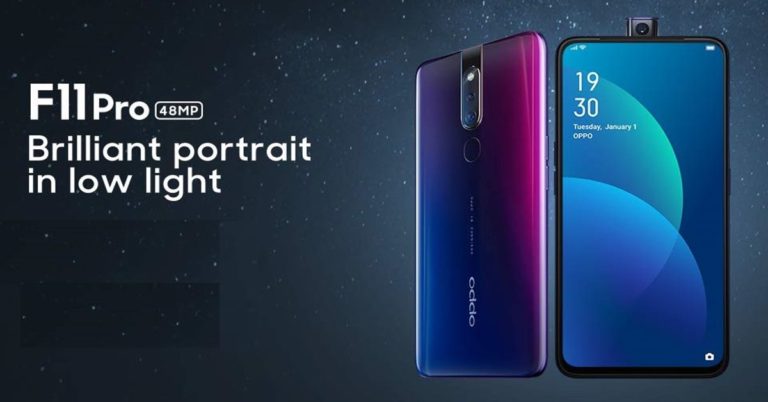
Oppo F11 Pro with 64GB storage and Oppo A5 have received a permanent price cut in India. The price cut was announced by the company and both the devices are being sold at their updated prices starting today. The Oppo F11 Pro 64GB was launched in March 2019 and it came with features such as a MediaTek CPU, AI Beauty 2.0 and a dual-rear camera setup.
The Oppo F11 Pro 64GB variant has received a price cut of Rs 2,000 from its original price. Now, the Oppo A5 too was launched in April 2019 and after a month of its launch, it is getting a price cut of Rs 1,000. The Oppo A5 came with features like a Snapdragon SoC, dual-rear camera setup etc.
In This Article
Oppo F11 Pro 64GB and Oppo A5 price (revised)
The Oppo F11 Pro with 64GB storage is now selling for Rs 20,990, down from its original price of Rs 22,990. However, the 128GB storage variant of the device still sells for the original price of Rs 23,990. On the other hand, the Oppo A5 with 64GB storage is priced at Rs 11,990 which is down from its original price of Rs 12,990. The revised pricing of both the devices is not listed on Amazon India and Flipkart currently. The offline stores are selling both the devices for their revised prices.Oppo F11 Pro specifications and features
The Oppo F11 Pro sports a 6.53-inch Full-HD+ (1080 x 2340 pixels) LCD display. It is powered by the octa-core MediaTek Helio P70 SoC paired with 6GB of RAM. The F11 Pro runs Android 9 Pie skinned with ColorOS 6. The smartphone packs a 4,000mAh battery with VOOC Flash Charge 3.0 fast charging support. For imaging duties, the Oppo F11 Pro has a dual rear camera setup which comprises of a 48MP main camera paired with a 5MP secondary camera. On the front, there is a 16MP pop-up selfie camera module. Other features of the Oppo F11 Pro includes 4G LTE, Wi-Fi, Bluetooth v4.2, GPS/ A-GPS, and a Micro-USB port.Oppo A5 specifications and features
Oppo A5, on the other hand, sports a 6.2-inch HD+ (720 x 1520 pixels) FullView display. It is powered by the Qualcomm’s Snapdragon 450 SoC paired with 4GB of RAM. The Oppo A4 supports dual-SIM and runs Android 8.1 Oreo skinned with ColorOS 5.1. The smartphone packs a 4,230mAh battery with no fast charging. On the camera front, the Oppo A5 sports a dual-rear camera setup which comprises of a 13MP main sensor paired with a 2MP secondary camera. On the front, there is an 8MP selfie camera. Other features of the Oppo A5 includes 4G VoLTE, Wi-Fi 802.11 b/g/n, Bluetooth v4.2, GPS/ A-GPS, Micro-USB, and a 3.5mm headphone jack. For the latest gadget and tech news, and gadget reviews, follow us on Twitter, Facebook and Instagram. For newest tech & gadget videos subscribe to our YouTube Channel. You can also stay up to date using the Gadget Bridge Android App.Redmi K20, K20 Pro launch in India scheduled for mid-July: Xiaomi India MD Manu Jain
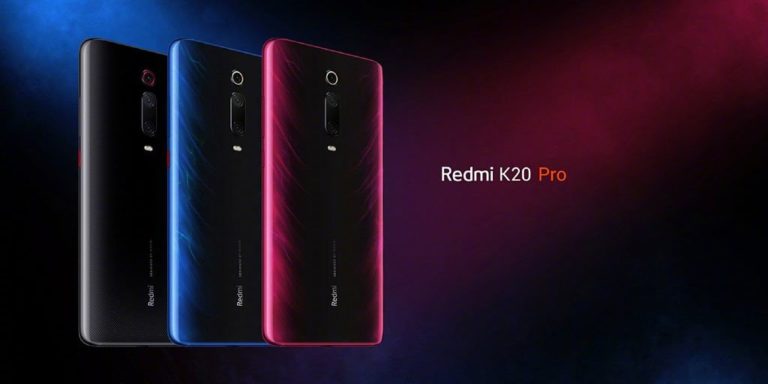
Chinese smartphone brand Xiaomi is all set to launch its Redmi K20 and Redmi K20 Pro smartphones in India within the next six weeks. The company’s Chief Manu Kumar Jain today took to Twitter to announce that the newly-launched Redmi K20 and Redmi K20 Pro handsets will be launched in the Indian smartphone market within the next six weeks. This means that smartphones will be launched in India somewhere in mid-July.
While as of now, there is no word on the price, availability or any of the company’s partnerships in India, the smartphones are expected to be priced in the budget segment of the Indian smartphone market, much like other Xiaomi devices.
Even earlier, Jain had teased the Redmi K20 and Redmi K20 Pro smartphones to launch in India, he did not give any details about when exactly the launch will happen. While now we have an idea about when the smartphones will be launched, there is no official word on the pricing, availability details or launch offers that customers will be able to avail with the smartphones.
Redmi K20, Remi K20 Pro price in India (expected)
In China, the Redmi K20 was launched in two variants – 6GB RAM/64GB storage and 6GB RAM/128GB storage. The 6GB RAM/ 64GB storage of the smartphone is priced at CNY 1,999 (approximately Rs 20,200) and the 6GB RAM/ 128GB storage model costs CNY 2,099 (approximately Rs 21,200). The Redmi K20 was launched in two colour options – Glacier Blue and Flame Red. Coming to the Redmi K20 Pro, it was launched in four variants – 6GB RAM/64GB storage, 6GB RAM/128GB storage, 8GB RAM/256GB storage and 8GB RAM/128GB storage. While the 6GB RAM/ 64GB storage variant of the smartphone bears a price tag of CNY 2,499 (approximately Rs 25,200), the 6GB RAM/ 128GB storage model can be picked up at CNY 2,599 (approximately Rs 26,200). The one with 8GB RAM/ 128GB storage of Redmi K20 Pro is priced at CNY 2,799 (approximately Rs 28,200 and the top-end variant of the handset that comes with 8GB RAM/ 256GB storage is priced at CNY 2,999 (approximately Rs 30,200). The Pro version of the smartphone will come in three colour options – Glacier Blue, Flame Red and Carbon Fiber Black. Even when the two smartphones are launched in India, Redmi K20 and Redmi K20 Pro are expected to be priced similarly. Some reports have also suggested that the Redmi K20 Pro will launch as POCO F2 in India. For the latest gadget and tech news, and gadget reviews, follow us on Twitter, Facebook and Instagram. For newest tech & gadget videos subscribe to our YouTube Channel. You can also stay up to date using the Gadget Bridge Android App.Panasonic Lumix S1H will be capable of recording 6K videos at 24fps
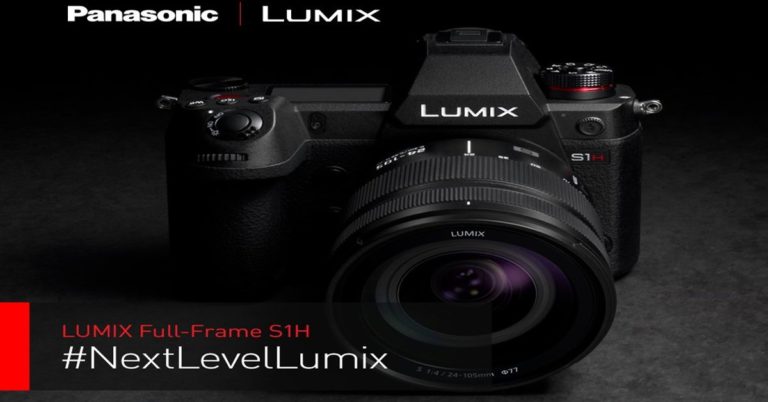
Japanese electronics maker Panasonic has confirmed that it is working on its new video-focused version of the full-frame mirrorless camera called the Lumix S1H. The new mirrorless camera’s prototype was showcased at an event in Los Angeles, USA. With the addition of the Lumix S1H, the company will be adding another product to its catalog and it will be the third camera in Panasonic’s new S1 series of full-frame mirrorless cameras. According to the company, the Lumix S1H would be unveiled globally at the Q3 2019.
In This Article
Panasonic Lumix S1H price and availability
The Panasonic Lumix S1H has an estimated price of $4,000 (approximately Rs 2,77,680) and as mentioned above, it will be launching at the Q3 2019. Once the mirrorless camera from Panasonic is launched, it will be made globally available.Panasonic Lumix S1H specifications and features
Panasonic Lumix S1H falls in a similar category as the Lumix S1 and the Lumix S1R professional, full-frame mirrorless cameras. According to the company, the Lumix S1H is the first interchangeable lens mirrorless camera which can shoot 6K videos at 24fps and 5.9K videos at 30fps with an aspect ratio of 16:9. The new video-focused mirrorless camera from Panasonic will also support video recording in multiple aspect ratio like 16:9 and anamorphic 4:3. Other than that, the company has also said that the camera will be the first in the world to shoot 10-bit 4K and Cinema 4K video at 60fps. It also has a wide colour gamut and it compares against the Cinema VariCam cinema cameras. The new Lumix S1H is also capable of shooting V-Log/ V-Gamut with its wide and dynamic range of 14+ stops. Other than that, the upcoming camera from Panasonic will be able to record non-stop video (under the regular operating temperatures) till the memory card of the camera is full or till the battery depletes.Other than the details mentioned above, the company didn’t reveal much details about the Lumix S1H such as the ISO range, Card slots, sensor size etc. All the technical specifications and the details will be revealed by the company once it launches at the Q3 2019. Currently, Panasonic had showcased a prototype of the Lumix S1H at the Cine Gear Expo which was held at Paramount Studios, LA, USA. The event ran from May 30 to June 2.The #NextLevelLumix Lumix S1H has been unveiled https://t.co/zZmmxpYTqv #lumix #wherelumixgoes #cinegearexpo2019 pic.twitter.com/KhmZbiWqwc
— LUMIX Cameras (@LumixUSA) May 31, 2019
For the latest gadget and tech news, and gadget reviews, follow us on Twitter, Facebook and Instagram. For newest tech & gadget videos subscribe to our YouTube Channel. You can also stay up to date using the Gadget Bridge Android App.
Apple WWDC 2019 to start today: How to watch the live stream of the keynote
Cupertino based technology giant Apple will be holding its World Wide Developer Conference (WWDC 2019) today. The event will span over five days and will end on June 7. However, today, the most anticipated keynote of the event will be held and the company will be talking about its all major software-focussed developments for 2019. CEO Tim Cook will be present at the keynote among other key executives of the company. Apple’s WWDC 2019 event will take place at its McEnery Convention Center in San Jose, California.
As always, Apple will be live streaming the keynote session of its WWDC event via its official website as well as the WWDC app. The WWDC 2019 keynote will begin at 10 am PDT, which is 10:30 pm IST. Here’s everything that you need to know if you want to watch the WWC 2018 keynote live and what to expect from it.
In This Article
How to watch the live stream of Apple WWDC 2019 keynote
Apple WWDC 2019 keynote will begin at 10 pm PDT, which is 10:30 pm IST. The Cupertino-based technology giant will live stream its keynote across various channels. Apple TV owners can watch the keynote via the Apple Events app. If you own an iPhone, iPad, iPod Touch or a Mac that has the Safari browser on it, you can simply watch the WWDC 2019 keynote live stream via the Apple Events website. Other than this, the event can also be seen via the WWDC app on any Apple device. Windows users will also be able to watch the keynote, but only via the Microsoft Edge browser. In addition to this. Android users can also watch the event using Google Chrome and Mozilla Firefox browsers. We should mention that Apple WWDC 2019 stream required support for MSE, H.264, and AAC.Apple WWDC 2019: What to expect
There will be a number of key announcements that Apple will be making at the event. Since the services business has become so important and relevant to Apple now, the company will be giving more importance than it usually does to the WWDC 2019. Apple is expected to give us the first glimpse of the iOS 13, which is said to come with a dark mode. Other than this, the company will also be giving details about its macOS 10.15, Marzipan apps, tvOS, watchOS and some updates about its other services. To know more about what is expected, you can read our detailed story here. For the latest gadget and tech news, and gadget reviews, follow us on Twitter, Facebook and Instagram. For newest tech & gadget videos subscribe to our YouTube Channel. You can also stay up to date using the Gadget Bridge Android App.Oppo has teased a smartphone prototype with an under the display selfie camera
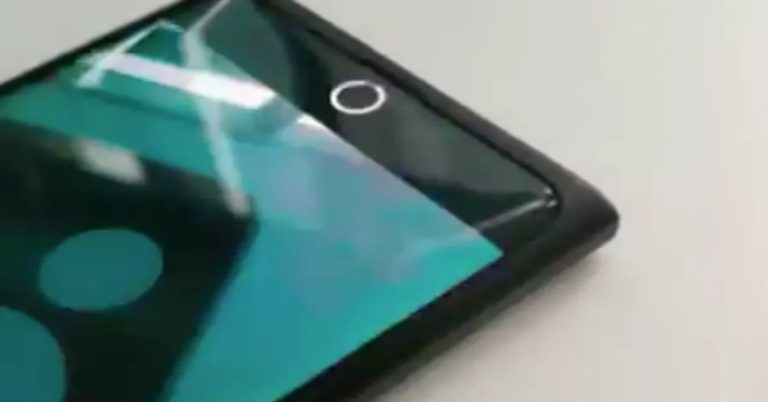
Till now, we have already seen what kind of notches the smartphones come with – regular notch, waterdrop notch, hole-punch notch and no-notch with a pop-up selfie camera. To include the front camera in the smartphones, the notches were somewhat important as they hold the selfie camera and other sensors. There were also some smartphones which came with their own innovative and new ideas to avoid the notch like the Samsung Galaxy A80 with its rotating camera and the Asus Zenfone 6 with its flip-up camera. But now, the Chinese smartphone maker, Oppo has revealed a smartphone with a non-mechanical under the display selfie camera which removes the notch completely without putting any moving parts into the phone.
Oppo’s Vice President, Brian Shen, on the Chinese social messaging platform, Weibo shared a short video which shows a smartphone’s prototype. This prototype smartphone comes with no visible notch and no-pop up selfie camera or moving cameras of that sort. But when the front facing camera icon is tapped, the smartphone opens the front camera even though there is no front camera visible on the smartphone. When the front camera of the prototype is opened, it shows the ceiling of the room it is kept in, the user also hovers his finger above the smartphone, the action is reflected back on the smartphone screen showing that the camera of the smartphone is working and is not just a gimmick.
Oppo’s VP Chen also said that the new smartphone camera technology is still in its early part of development. He said, “At this stage, it’s difficult for under-display cameras to match the same results as normal cameras, there’s bound to be some loss in optical quality. But, no new technology jumps to perfection right away.”
It is true that the under-display camera cannot match the same quality of image as the normal above display cameras. But it should also be noted that, if the new technology is perfected then it can surely replace the current ‘notched’ camera smartphones. And unlike the moving cameras like the pop-up selfie cameras, the under-display camera won’t be prone to damages or wear and tear damage.
The company currently hasn’t revealed when it will be using this technology on a mass-produced smartphone but since the new camera technology is far from perfect, we would have to wait for it to come out for the masses.
Other than Oppo, another Chinese smartphone giant, Xiaomi had also showcased a video of a prototype of Mi 9 where the company’s president said, “No hole, no notch, no pop-up camera.” In other words, Xiaomi is also testing its own version of the under the display camera. But it hasn’t yet revealed when will it be placed in a smartphone or what smartphone will be launched with the new camera technology. For the latest gadget and tech news, and gadget reviews, follow us on Twitter, Facebook and Instagram. For newest tech & gadget videos subscribe to our YouTube Channel. You can also stay up to date using the Gadget Bridge Android App.For those seeking the perfect, notchless smartphone screen experience – prepare to be amazed. 📲
— OPPO (@oppo) June 3, 2019
You are taking a very first look at our under-display selfie camera technology. RT! 🤯 pic.twitter.com/FrqB6RiJaY
World’s first 8K TV, LG OLED88Z9 goes up for pre-orders
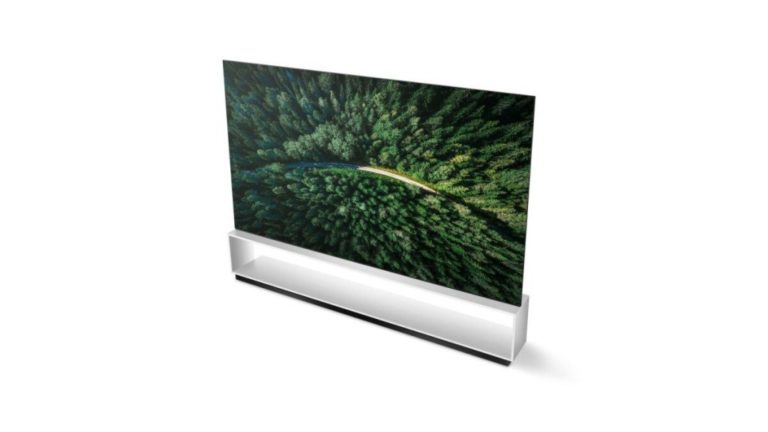
Earlier in January, ahead of the CES 2019, the South-Korean electronics maker LG announced the world’s first 8K OLED TV named – LG OLED88Z9. The TV offers 8K resolution display which the consumer can use to play 8K content. The new 8K thin tube from LG has a resolution of 7,680 x 4,320 pixels and has an OLED screen size of 88-inches.
It is also interesting to note this TV is amongst the first televisions that offers 8K resolution on mainstream television. LG has after months of its showcasing has put the LG OLED88Z9 up for pre-orders in South Korea. Soon, the 8K OLED TV will reach the North American and European markets. News is by the third quarter of 2019 (July – September) it will reach these shores. Although the TV is up for pre-order but its price hasn’t been revealed by the company. But seeing the technology it offers, it will definitely be priced at a premium segment.
When it comes to technical specifications, the new LG OLED88Z9 offers 33 million pixels on the screen and as mentioned above, it offers a resolution of 7,680 x 4,320 pixels. It is also the world’s first 8K OLED TV and supports HDR along with Dolby Vision formats on content. 8K is currently the highest resolution any TV has to offer. 8K TV is 32 times sharper than the regular HD TV, 16 times sharper than the Full HD TVs and offers four times more sharpness and details than the regular 4K TV. But currently there isn’t much 8K content available. Also, do not expect it any time soon. But it should be noted that this is what had happened when the world was first introduced to the 4K technology, there just wasn’t enough content for the 4K TV to play. But now, 4K has become the norm and so will 8K in the future.
There are various online streaming platforms which offer TV Shows and movies to its users in 4K quality. After the 4K, the 4K Blue Ray format has become highly popular. Even YouTube offers some content in 4K. Tokyo Olympic Games 2020 is right around the corner, and it is expected that the Olympics 2020 will be broadcasted in 8K resolution, which will be a first.
The LG OLED88Z9 is a smart TV as well, it comes with support of Google Voice Assistant and Amazon Alexa. Although not much details are known about this new 8K TV but when launched, it will come with all the features a smart TV comes with and many new features as well.
For the latest gadget and tech news, and gadget reviews, follow us on Twitter, Facebook and Instagram. For newest tech & gadget videos subscribe to our YouTube Channel. You can also stay up to date using the Gadget Bridge Android App.
Nokia 3 starts receiving Android 9.0 Pie update: Here’s everything new
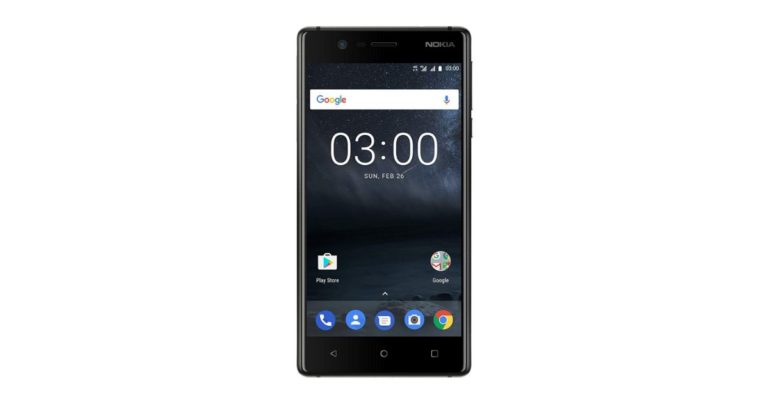
HMD Global is one among the smartphone makers that is known for rolling out software updates timely to its handsets. The company has also ensured that all its Nokia smartphones are a part of Google’s Android One programme. Any smartphone which is under the Android One programme is promised to get timely Android updates for two years and security patches for three years. Now, the company has rolled out the latest Android 9.0 Pie update to its Nokia 3 smartphone, which is one among the entry-level handsets by the company.
We should mention that the smartphone was launched by the company two years ago and this means that HMD Global really sticks to its work when it comes to rolling out updates to its smartphones. HMD Global’s Chief Product Officer, Juho Sarvikas took to Twitter to announce that Nokia 3 smartphone, which was unveiled first in 2017, has started receiving the latest Android 9.0 Pie update. He also said that the company kept its promise of delivering two years of Android updates to the smartphone.
His tweet reads, “The wait is over! Keeping up with our promise of 2 years of Android updates, Nokia 3 (2017) is now officially running on Android 9 Pie! Step up to Nokia smartphones, they Just Keep Getting Better!
A number of new features have come to the Nokia 3 smartphone along with the update. The Android 9.0 Pie update changelog includes new system navigation, adaptive battery, adaptive brightness, and revamped settings and notifications. The update has also got the May Android Security patch to the smartphone. The update is being rolled out over-the-air (OTA) and if you have not already received it, your device will get it shortly.
To recall, Nokia 3 smartphone was launched in India in June 2019 and it was priced at Rs 9,499. At the time of its launch, Nokia 3 smartphone was running Android 7.0 Nougat operating system. But then, it received updates to Android 8.0 Oreo, Android 8.1 Oreo and now, it has finally received the Android 9.0 update too.
Coming to the specifications of the smartphone it comes with a 5-inch IPS LCD display that has an HD resolution. Powered by a quad-core MediaTek 6736 SoC, Nokia 3 comes with 2GB of RAM and 16GB of internal storage. The smartphone from Nokia comes with support for a microSD card of up to 128GB. The handset houses a 2,630mAh battery. For imaging duties, there is an 8Mp primary camera with an LED flash and there is an 8MP front-facing camera to click selfies and make video calls.
For the latest gadget and tech news, and gadget reviews, follow us on Twitter, Facebook and Instagram. For newest tech & gadget videos subscribe to our YouTube Channel. You can also stay up to date using the Gadget Bridge Android App.
Redmi Note 6 Pro price in India cut: Here are the details
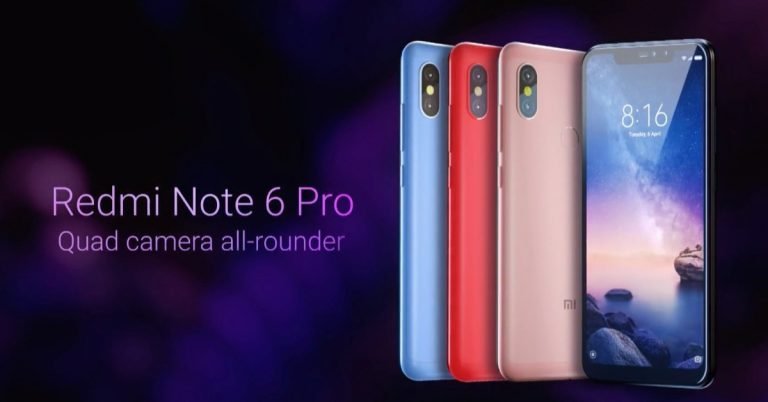
The 6GB RAM version of the Redmi Note 6 Pro smartphone has received its first price cut in India. The company has announced a price cut of Rs 2,000 in India and now it can be picked up at Rs 13,999 from Mi.com and Flipkart. The variant that comes with 4GB of RAM has also got a price slash of Rs 2000 and can now be bought at Rs 11,999. We should mention that the device was launched in November last year, and Xiaomi also launched its successor Redmi Note 7 Pro in February. Among the key highlights of the smartphone are a 19:9 display, a dual selfie camera, P2i water repellent nanotechnology, and a massive 4,000mAh battery.
Xiaomi Redmi Note 6 Pro’s 6GB RAM/64GB storage variant can now be bought at Rs 13,999 and its 4GB RAM model is now priced at Rs 11,999. The smartphone can be picked up from Flipkart, Mi.com, and Mi Home stores. The company is offering a number of discounts including an exchange offer, no-cost EMI options an Instant Jio cashback of Rs 2,4000 and up to 6TB Jio 4G Data benefits. You can also get an instant discount of 10% if you buy your smartphone from Flipkart using an Axis Bank Buzz credit cards.
Redmi Note 6 Pro specifications
The Xiaomi smartphone features a 6.26-inch Full HD+ display with a 19:9 aspect ratio that is protected by Corning Gorilla Glass. Powered by Qualcomm Snapdragon 636 14nm processor, Redmi Note 6 Pro comes with up to 6GB of RAM and 64GB of onboard storage. For imaging duties, the smartphone comes with four cameras in total. The back panel of Xiaomi Redmi Note 6 Pro houses 12MP+5MP dual rear cameras and the selfie cameras come with two 20MP lenses. The front-facing cameras of the smartphone come with AI Portrait Selfie mode and AI scene detection. The smartphone houses a 4,000mAh battery that supports Quick Charge 3.0 technology and promises a standby time of 12 days. At the time of launch, Redmi Note 6 Pro had Android 8.1 Oreo skinned with MIUI 10. We should also mention that most of the specifications of the smartphone are the same as the smartphone’s predecessor, Redmi Note 5 Pro. The specifications that are common between the two smartphones are their dual rear camera setup, the battery capacity and the processor. For the latest gadget and tech news, and gadget reviews, follow us on Twitter, Facebook and Instagram. For newest tech & gadget videos subscribe to our YouTube Channel. You can also stay up to date using the Gadget Bridge Android App.Airtel has upgraded its #AirtelThanks program: Here are all the details

Bharti Airtel has strengthened its partnership with ZEE5 and has now announced that Airtel will be offering more digital content to its subscribers. Airtel has upgraded its #AirtelThanks in which it offers a wide range of exclusive benefits. The Airtel Platinum customers will now get unlimited access to the full ZEE5 catalogues and content as a part of the monthly recharge plans. To avail this offer, the subscribers would need to recharge with the Infinity Postpaid Plan of Rs 499 after which they will be available for the benefits #AirtelThanks brings with it.
Shashwat Sharma, Chief Marketing Officer of Bharti Airtel said: “#AirtelThanks has received phenomenal response and we are delighted to bring ZEE5’s exciting content to our Platinum customers as part of the value proposition. We will continue to expand our ecosystem of partners to enable a differentiated experience for our customers.”
The contents which ZEE5 will provide to the subscribers of #AirtelThanks is its VOD (Video on Demand) network content along with the exclusive and new ZEE5 originals. It includes movies, TV shows, music videos, lifestyle shows, kids shows, and plays. Some of the best movies which ZEE5 will be offering to the subscribers of #AirtelThanks – Karenjit Kaur – The Untold Story of Sunny Leone, Rangbaaz, Skyfire, The Final Call, Hutatma (Marathi), Auto Shankar (Tamil), High Priestess (Telugu), Kaafir, Bombers. It is also offering new movies such as Uri – The Surgical Strike, Simmba, Kedarnath, Veere Di Wedding, etc.
The users of Airtel Platinum can claim the free ZEE5 Subscription offer from Airtel Thanks section of My Airtel app. After that, they would need to download the ZEE5 application to receive the premium content of the offer.
Manish Aggarwal, Business Head of ZEE5 India said, “This partnership is in line with our growth strategy as it is a crucial step towards fulfilling our aim to offer new and exciting content. It will strengthen our reach by the potential proliferation of ZEE5 premium content to a wider and new set of audience. We are happy to partner with Airtel, and via similar partnerships we will continue to enhance our offerings with the customer at the center.”
Other than that, the Airtel Platinum customers will also get VIP services like premium content, e-books, device protection along with exclusive invites and priority access to the events and sales.
The new plan is currently live and the Airtel Platinum users can avail the offer to enjoy the full content in various languages on ZEE5.
For the latest gadget and tech news, and gadget reviews, follow us on Twitter, Facebook and Instagram. For newest tech & gadget videos subscribe to our YouTube Channel. You can also stay up to date using the Gadget Bridge Android App.
HMD Global to launch Nokia 6.2 at a launch event on June 6: Report
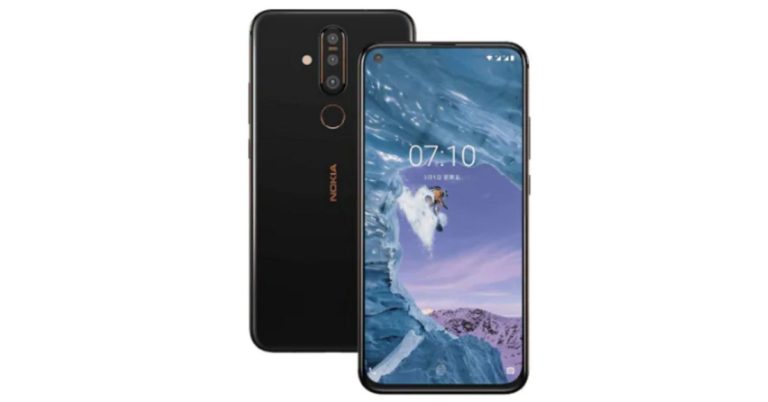
HMD Global might soon launch the next device in its Nokia 6-series – the Nokia 6.2 on June 6. The Nokia 6.2 is also known as Nokia X71 in some markets. The company last week had revealed that it will be hosting a global launch event on June 6 but it did not reveal what smartphones or devices the company will be launching at the scheduled event, and even the launch venue was not revealed. Now, a tweet by Nokia Anew reports that the company might launch its Nokia 6.2 at the launch event.
Nokia Anew’s tweet reveals that the Nokia 6.2’s pricing will be the same as Nokia 6.1. So we might see the Nokia 6.2’s price at around $290 (approximately Rs 20,200). When Nokia 6.1 was launched in India, it came with a price tag of Rs 16,999 so there is a possibility that the new Nokia 6.2’s price will be the same as its predecessor. It should be noted that HMD Global launched Nokia X71 few weeks ago in Taiwan and according to a tweet, the Nokia X71 is Nokia 6.2 itself with a different name. Rumours suggests that the Nokia 6.2 is the global variant of the Nokia X71.
Nokia 6.2 specifications (expected)
Coming to the specifications, Nokia 6.2 is the global variant of the Nokia X71. So, we may see some changes in their specifications but most of them are expected to remain the same. The Nokia X71/Nokia 6.2 will sport a 6.39-inch Full HD+ PureDisplay with an aspect ratio of 19.5:9. It is powered by the mid-range Qualcomm’s Snapdragon 660 SoC paired with 6GB of RAM and 128GB of internal storage. The device packs a rear-mounted fingerprint scanner, runs Android 9 Pie and it packs a 3,500mAh battery. For imaging duties, the Nokia 6.2 features a triple-rear camera setup which comprises of a ZEISS-certified 48MP main sensor with an f/1.8 aperture paired with an 8MP 120-degree super-wide angle lens. The third camera is a 5MP depth sensor. On the front, there is a 16MP selfie camera with an f/2.0 aperture.More details about the device will be made available once it launches few days from now. We would have to wait for a few more days to find out what Nokia has up its sleeve. Stay tuned with us to get regular updates!Nokia 6.2 will be presented soon enough – in spring. So we don't have long to wait. The smartphone will probably be a hit, continuing the tradition of the 6 series. Nokia 6. is the best – selling series.
— Nokia anew 🤍❤️🤍 (@nokia_anew) March 11, 2019
The price remains at the same level as in Nokia 6.1.#nokia6 #exclusive
For the latest gadget and tech news, and gadget reviews, follow us on Twitter, Facebook and Instagram. For newest tech & gadget videos subscribe to our YouTube Channel. You can also stay up to date using the Gadget Bridge Android App.
OnePlus 7 Pro review: The game just got upgraded to a whole new level
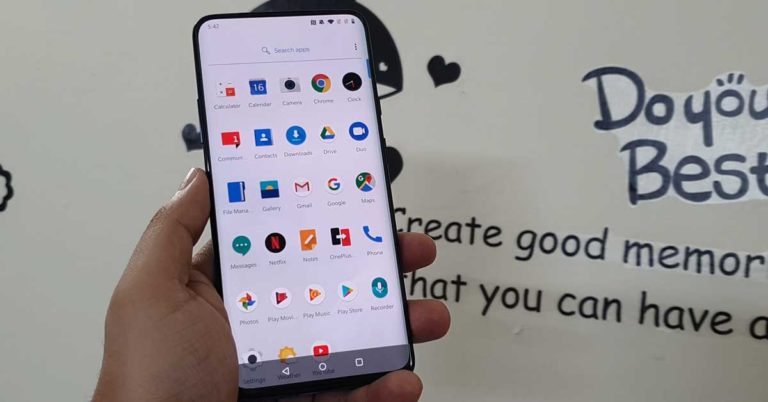
We still remember how OnePlus started off with an invite-only way of buying a smartphone that had the works. It started with the OnePlus One and it was very intriguing for us to know more about this company. That wants to sell a good smartphone only to limited people who hold a golden invite to purchase it. Well, the strategy worked and more than 7 versions down the years, the company has built itself a brand name that is as premium as Apple and Microsoft. OnePlus 7 Pro is their latest innovation which has stunned critics and fans everywhere.
This smartphone not only is attractive to look at but has top-of-the-line technical specifications which puts most in the category or even above its pay scale to shame. We spent over half a month with the device to understand its superpowers. This is our review of the OnePlus 7 Pro, fully tinkered with and scrutinised.
 The back is dressed in Nebula blue colour, which gives a gradient like effect. One can find dark ink blue at the top to a lighter shade of blue towards the bottom. The smartphone is available in a couple of other colours too and we did find the Almond white version to be quite attractive as well. At the back, you will also find a triple rear camera bump (vertically stacked), with an LED flash and OnePlus branding under it.
The phablet does take time getting used to since it is larger than others in the category and does take an extra bit of space in the trouser pocket. However, once you are comfortable with this giant, you will find a gentler side to it.
Now to talk about another great aspect and first time inside any OnePlus device is the triple rear camera array. This has a 48MP primary camera with Sony IMX586 sensor with 7P lens quality. This is accompanied by an 8MP telephoto lens having an aperture size of 2.4 and an ultra-wide-angle lens with a 16MP sensor and an aperture size of 2.2. Optical image stabilisation is available on the rear cameras and the brilliant nightscape mode, as well as the ability to record 4K videos at 60FPS, are part of the package. For the smart shooter, the Pro mode is also available.
The elevating front camera on the OnePlus 7 pro has an elevating 16MP Sony IMX 471 sensor with an aperture size of 2.0. The company has tested the slide function of the front camera for 300,000 times. That should last you for a very long time without faltering. Also, the sliding camera detects fall. If the camera is out and the phone accidentally slips from your hand, the camera will automatically detect the fall and go back in.
We tested both the cameras in daylight, indoors and at night. The results in daylight as well as indoors (in well-lit conditions) were great and better than the OnePlus 6T. However, the initial tests of the nightscape mode were not very good. We found the OnePlus 6T to be better here.
But after the recent May end update, the nightscape mode has become much better. Same can be said about the selfie camera. We do not use third party apps for camera tests, so the native OnePlus app for both the cameras was tested to its full potential and we were quite happy with the results. The only exception for the selfie app is low light to dark areas where you can see a bit of grain seeping into the images. Other than that, they are right up there with the rest of the competition.
The back is dressed in Nebula blue colour, which gives a gradient like effect. One can find dark ink blue at the top to a lighter shade of blue towards the bottom. The smartphone is available in a couple of other colours too and we did find the Almond white version to be quite attractive as well. At the back, you will also find a triple rear camera bump (vertically stacked), with an LED flash and OnePlus branding under it.
The phablet does take time getting used to since it is larger than others in the category and does take an extra bit of space in the trouser pocket. However, once you are comfortable with this giant, you will find a gentler side to it.
Now to talk about another great aspect and first time inside any OnePlus device is the triple rear camera array. This has a 48MP primary camera with Sony IMX586 sensor with 7P lens quality. This is accompanied by an 8MP telephoto lens having an aperture size of 2.4 and an ultra-wide-angle lens with a 16MP sensor and an aperture size of 2.2. Optical image stabilisation is available on the rear cameras and the brilliant nightscape mode, as well as the ability to record 4K videos at 60FPS, are part of the package. For the smart shooter, the Pro mode is also available.
The elevating front camera on the OnePlus 7 pro has an elevating 16MP Sony IMX 471 sensor with an aperture size of 2.0. The company has tested the slide function of the front camera for 300,000 times. That should last you for a very long time without faltering. Also, the sliding camera detects fall. If the camera is out and the phone accidentally slips from your hand, the camera will automatically detect the fall and go back in.
We tested both the cameras in daylight, indoors and at night. The results in daylight as well as indoors (in well-lit conditions) were great and better than the OnePlus 6T. However, the initial tests of the nightscape mode were not very good. We found the OnePlus 6T to be better here.
But after the recent May end update, the nightscape mode has become much better. Same can be said about the selfie camera. We do not use third party apps for camera tests, so the native OnePlus app for both the cameras was tested to its full potential and we were quite happy with the results. The only exception for the selfie app is low light to dark areas where you can see a bit of grain seeping into the images. Other than that, they are right up there with the rest of the competition.
In This Article
Design and Display
Let us start with the aesthetics of the OnePlus 7 Pro. This is the first time OnePlus has gone with an all screen flagship. You read that right, there are almost no bezels or as the Sacred Games character ‘Bunty’ says, no kala patta (sidebands) on this smartphone. The chin is also mostly gone and what users get is a 6.67-inch edge to edge phablet with QHD+ OLED display that has 516 PPI and 1 lakh:1 contrast ratio. So, what that essentially does is that users will find vibrant colours on deeper blacks. The screen is protected by 3D Corning Gorilla glass, and just when you thought that was enough, OnePlus 7 Pro hits you in the face with a 90Hz screen refresh rate. Which is better than some of the best-selling gaming monitors in the country. To elaborate further, this screen refreshes 90 times per second. Some of its competition does half of that. OnePlus calls it Fluid viewing experience and we loved every bit of it. HDR10+ tech is also part of the package which works seamlessly. We played a lot of games like Asphalt 9 and Alto’s Odyssey on it and the screen just kept throwing great sharp graphics back at us. We must say a very immersive experience indeed. Watching videos too is a pleasant experience, especially if you are watching FHD+ content. The daylight legibility of the touchscreen is nice, however, when in auto mode the screen does go very dark at times. Which makes it hard to read and one has to come back to manual screen mode. The text on the screen is crisp and one can see no lag when apps pop open or when you swipe around on the home screens or app drawer. Which made us wonder has OnePlus put all its eggs in one “display” basket? The answer is No, they have not. They have done some incredible things all around and thanks to their listening habit (to the community), the OnePlus 7 Pro is a great collaboration between the fans and the company. Since it is an all display smartphone you find an elevating selfie camera on the front with the large ear speaker grille being pushed upwards towards the edge of the panel. The Curved display merges into the metal sideband, which has the power button with a dedicated ringer slider key on the right and the volume rocker keys on the left. At the bottom, OnePlus 7 Pro has the 2 Nano SIM card tray, the USB type C charging port and the speaker grille. The craftsmanship can be seen on the front as well as the back of the OnePlus 7 Pro. The chrome plated metal sideband also holds another 3D corning gorilla glass, this time at the back, firmly in place. The form factor does remind you of what Samsung has been doing with its Galaxy S and Note series since the past few years, nevertheless is refreshing to see with no notch or punch holes on the OnePlus 7 Pro. The back is dressed in Nebula blue colour, which gives a gradient like effect. One can find dark ink blue at the top to a lighter shade of blue towards the bottom. The smartphone is available in a couple of other colours too and we did find the Almond white version to be quite attractive as well. At the back, you will also find a triple rear camera bump (vertically stacked), with an LED flash and OnePlus branding under it.
The phablet does take time getting used to since it is larger than others in the category and does take an extra bit of space in the trouser pocket. However, once you are comfortable with this giant, you will find a gentler side to it.
The back is dressed in Nebula blue colour, which gives a gradient like effect. One can find dark ink blue at the top to a lighter shade of blue towards the bottom. The smartphone is available in a couple of other colours too and we did find the Almond white version to be quite attractive as well. At the back, you will also find a triple rear camera bump (vertically stacked), with an LED flash and OnePlus branding under it.
The phablet does take time getting used to since it is larger than others in the category and does take an extra bit of space in the trouser pocket. However, once you are comfortable with this giant, you will find a gentler side to it.
Performance and Cameras
When it comes to performance, we have to start with the dragon. OnePlus 7 Pro is the first smartphone to sport the Qualcomm Snapdragon 855 chipset. This is the top-of-the-line CPU from the company and is supposed to be 30% faster than the SD 845. Not that we needed the extra boost over the 845, but hey what the heck anything that will enable us to the get the kill faster in PUBG is always welcomed. The clock speed of the new CPU can go up to 2.84GHz. Also, graphics are powered by a 640 Adreno GPU. Together they do make up for a killer combination, but hey that is just half of the story. With it the OnePlus 7 Pro has a whopping 12GB RAM. Side note, there are 6GB and 8GB versions available too at a lesser price. On the 12GB variant, users get 256GB of storage, which is not expandable since there is no microSD card slot available on the device. UFS 3.0 is supported on this smartphone, which basically means you can transfer files and photos from and to the mobile from any computing device very-very quickly. Also, what OnePlus has done is put in a liquid cooling system on the chipset that keeps the CPU and GPU cool at all times. We tested this feature out further and found it to be great on most occasions. However, when playing in hot climates like New Delhi the top part of the rear does get a bit warm. Which is not the case when you are playing indoors or in an air-conditioned car. As for the battery, that has got a boost too, now you get a 4,000 mAh battery on the OnePlus 7 Pro, which is a bump of 300 mAh over OnePlus 6T. This is united with Warp Charging, which we saw in the OnePlus 6T McLaren edition as well. What it essentially does is gives you 48% of charge in just 20 minutes. That is almost 12-16 hours of battery life (under nominal use) in just 20 minutes. When fully charged we were able to keep it alive for 32 hours straight. This involved a lot of phone calls, WhatsApp exchanges and hour or two of Asphalt 9 sessions and GPS navigation. All of it with WiFi and 4G enabled. A fast in display fingerprint reader does a comeback in this smartphone too and a new vibration mode has been added as well. Talking about which the indisplay fingerprint reader is much faster than its predecessor. It is the fastest that we have seen so far in any smartphone. Over that, screen gestures and navigation swipes comeback to the OnePlus 7 Pro as well. These work really well and as an avid user of the OnePlus 6T, we felt right at home. For the unknown, one can get rid of the bottom navigation buttons and instead use gestures like swiping up from the bottom right or left to go back. Swiping up from the bottom middle to exit an app and swiping up in the same manner and holding will pop out the recently used apps. Again, once you get used to this, there is no going back as it gives you a better edge to edge screen experience. Moving to the Audio part, this smartphone comes with Dolby Atmos surround sound experience since the speaker at the bottom and the ear speaker grille act as stereo speakers. Giving the user better resonance. Like the screen, the sound is very immersive too. Together they make up for a killer combo at the price point. The operating system on the OnePlus 7 Pro is Android 9 Pie with the latest Oxygen OS 9.5 that has all the goodies like a separate app drawer. The Experience of the Oxygen OS is very close to stock Android and you get almost no bloatware on the device except for few Amazon and Google native apps. With 12GB RAM, the first impact is of a splendid user experience. The smartphone responds to each tap and swipe with extreme accuracy. The apps open unrealistically quick and one can hardly find any gaps on the OS. A Zen mode has been added to the mix that locks the mobile for 20 minutes. This is a quick way of digital detox. You will not be able to operate the smartphone for those many minutes. Except you can pick incoming calls and make emergency calls. For connectivity, Bluetooth 5.0, Wifi 802.11, APTX, NFC, GPS and LTE come from the get-go. We ran the usual barrage of tests on the OnePlus 7 Pro. On GeekBench it scored 3,433 on the Single Core CPU test, 10,733 on multi-core CPU test and 7,455 points on compute test. On Antutu it scored 3,55,473 points that puts it way above the rest in the premium smartphone pack. Now to talk about another great aspect and first time inside any OnePlus device is the triple rear camera array. This has a 48MP primary camera with Sony IMX586 sensor with 7P lens quality. This is accompanied by an 8MP telephoto lens having an aperture size of 2.4 and an ultra-wide-angle lens with a 16MP sensor and an aperture size of 2.2. Optical image stabilisation is available on the rear cameras and the brilliant nightscape mode, as well as the ability to record 4K videos at 60FPS, are part of the package. For the smart shooter, the Pro mode is also available.
 The elevating front camera on the OnePlus 7 pro has an elevating 16MP Sony IMX 471 sensor with an aperture size of 2.0. The company has tested the slide function of the front camera for 300,000 times. That should last you for a very long time without faltering. Also, the sliding camera detects fall. If the camera is out and the phone accidentally slips from your hand, the camera will automatically detect the fall and go back in.
We tested both the cameras in daylight, indoors and at night. The results in daylight as well as indoors (in well-lit conditions) were great and better than the OnePlus 6T. However, the initial tests of the nightscape mode were not very good. We found the OnePlus 6T to be better here.
The elevating front camera on the OnePlus 7 pro has an elevating 16MP Sony IMX 471 sensor with an aperture size of 2.0. The company has tested the slide function of the front camera for 300,000 times. That should last you for a very long time without faltering. Also, the sliding camera detects fall. If the camera is out and the phone accidentally slips from your hand, the camera will automatically detect the fall and go back in.
We tested both the cameras in daylight, indoors and at night. The results in daylight as well as indoors (in well-lit conditions) were great and better than the OnePlus 6T. However, the initial tests of the nightscape mode were not very good. We found the OnePlus 6T to be better here. But after the recent May end update, the nightscape mode has become much better. Same can be said about the selfie camera. We do not use third party apps for camera tests, so the native OnePlus app for both the cameras was tested to its full potential and we were quite happy with the results. The only exception for the selfie app is low light to dark areas where you can see a bit of grain seeping into the images. Other than that, they are right up there with the rest of the competition.
Verdict
The OnePlus 7 Pro price starts at Rs 48,999 for the 6GB version, Rs 52,999 for the 8GB version and Rs 57,999 for the 12 GB version (the one we reviewed). Yes, these are the costliest flagships from the company but every bit of the price is justified. The latest machinery comes inside a well-packaged skin that not only looks good but is premium to hold. Yes, there are few software chinks in the armour. But as we have seen in the past OnePlus quickly learns and updates its OS so that these go away. With the OnePlus 7 Pro, we have fallen in love with OnePlus all over again. If you have a budget of over 45K, go for it in a blink of an eye. Pros: Latest machinery Excellent Display and looks Warp charging Cons: Cameras getting better, not the best Gets a bit warm when playing games for long Rear panel is a fingerprint magnet For the latest gadget and tech news, and gadget reviews, follow us on Twitter, Facebook and Instagram. For newest tech & gadget videos subscribe to our YouTube Channel. You can also stay up to date using the Gadget Bridge Android App.Realme 3 Pro goes on open sale in India: Get all the details here
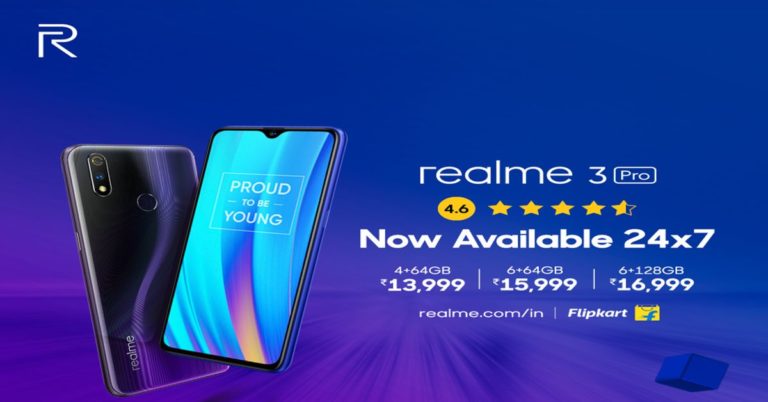
Chinese smartphone brand Realme had earlier launched its flagship named Realme 3 Pro in April 2019. Till now, the device was selling on flash sales on e-commerce platforms, but now, the Realme 3 Pro will be up for open sale on Flipkart, Realme.com and other offline stores. Some highlights of the Realme 3 Pro include a Snapdragon CPU, a 4,045mAh battery and a dual-rear camera setup. The open sale of the Realme 3 Pro was announced by the CEO of Realme India, Madhav Sheth.
In This Article
Realme 3 Pro price and availability
The Realme 3 Pro holds a price tag of Rs 13,999 for the 4GB RAM/ 64GB storage while its 6GB RAM/ 64GB storage is priced at Rs 15,999. The top-end variant of the device sells for Rs 16,999 and it has 6GB RAM/ 128GB storage. The Realme 3 Pro comes in three colour options – Carbon Grey, Nitro Blue and Lightning Purple. The Realme 3 Pro will be available on Flipkart, realme.com and other offline stores. According to the company, the Realme 3 Pro will be available on 8,000 offline stores across the country. The new device will also be made available on the Realme exclusive Kiosk at the Pacific Mall, Subhash Nagar, New Delhi. Commenting on the sale, Madhav Sheth, Chief Executive Officer of Realme India said, “Considering the rapidly growing customer demand towards Realme 3 Pro, we are increasing the stocks and making our flagship device available at an open sale. We saw a phenomenal response from our customers for the flagship smartphone and had sold 1,70,000 lakh + units in 8 minutes of its first sale. The initiative is to fulfil our commitment to deliver best consumer experience to our customers.”Realme 3 Pro specifications and features
The Realme 3 Pro sports a 6.3-inch Full-HD+ (1080 x 2340 pixels) IPS display with an aspect ratio of 19.5:9. The 2.5D display of the device comes with Corning Gorilla 5 protection on top. It is powered by an octa-core Qualcomm Snapdragon 710 SoC paired with Adreno 616 GPU. The new smartphone from Realme comes with either 4GB or 6GB of RAM paired with 64GB and 128GB of storage options. The smartphone has support for a microSD card of up to 256GB. The Realme 3 Pro runs Android 9 Pie skinned with ColorOS 6 and it packs a 4,045mAh battery with VOOC 3.0 fast charging support. The device comes with a rear-mounted fingerprint scanner along with Widevine L1 certification which allows the users to stream HD content from Amazon Prime Videos and Netflix. For imaging duties, the Realme 3 Pro features a dual-rear camera setup with a 16MP main camera (IMX519 sensor) with an f/1.7 aperture and a 5MP secondary camera (GC5035 sensor) with an f/2.4 aperture. On the front, there is a 25MP selfie camera with an f/2.0 aperture. The Realme 3 Pro comes with camera features which includes 960fps super slow motion video recording, Ultra HD mode for capturing 64MP images along with an optimised Nightscape etc. Other features of the Realme 3 Pro include 4G LTE, Wi-Fi 802.11ac (2.4GHz+5GHz), Bluetooth v5, a 3.5mm headphone jack, and a Micro-USB port.
For the latest gadget and tech news, and gadget reviews, follow us on Twitter, Facebook and Instagram. For newest tech & gadget videos subscribe to our YouTube Channel. You can also stay up to date using the Gadget Bridge Android App.
Samsung Notebook 7 with 13-inch and 15-inch displays announced: Key details
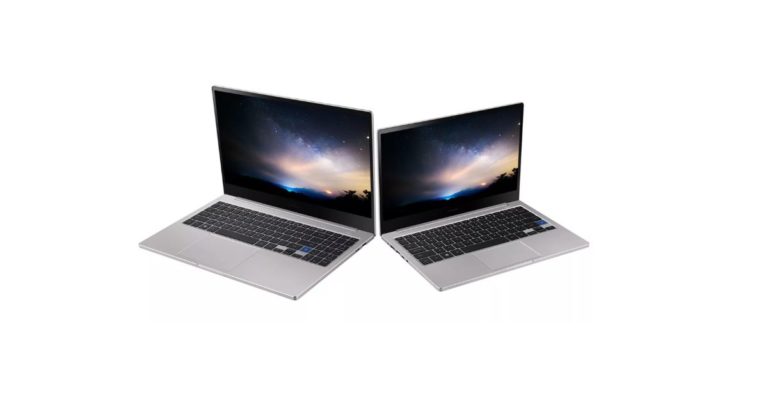
South Korean technology giant Samsung has announced its new Notebook 7 laptops. Among one of the most noticeable things about the Samsung Notebook 7 laptops is their design, which looks inspired by Apple’s currently MacBook Pro laptops.
The new Samsung laptops will be available in 13-inch and 15-inch versions and they both run the Windows 10 operating system. The newly launched laptops come with diamond-cut edges, a wide trackpad and slim bezels surrounding their displays. Other than this, the font that the company has used on the keyboard, and the wallpaper are a lot like the ones we have seen on MacBook Pro laptops too.
In addition to this, there is a wide indentation that is present into the metal chassis that make it easier to hold the screen up. Among the two laptops, the 13-inch model resembles the Apple MacBook Pro more because of its keyboard arrangement and centre-aligned trackpad. If we speak about the 15-inch one, the laptop looks a little different with a numpad on its keyboard, because of which all the keys and its trackpad are placed left-of-centre.
However, unlike Apple’s MacBook Pro, Samsung’s NoteBook 7 comes with a number of useful ports including two USB 3.0 ports, a USB-C port, HDMI, and a microSD slot. But then, we should also point out that there is no support for Ethernet on both the variants.
Samsung Notebook 7 starts at a price of $999.99 and will be released in the United States on July 26. Interested customers will be able to pick the device from Amazon or Samsung’s official website.
Most of the specifications of the two variants of Samsung Notebook 7 are the same. The newly launched laptop is powered by an 8th Gen Intel Core processor and they come with 8GB of RAM. The displays of the laptops come with 1080p resolution and both the variants sport a fingerprint scanner.
However, the 15-inch variant of the laptop comes with Nvidia’s GeForce MX250 discrete graphics that are supposed to be better than Intel’s integrated graphics. It also has support for an additional SSD.
Another new laptop that the company has launched is a 15-inch Notebook 7 Force, which is a lot like Notebook 7. The new Samsung Notebook 7 Force is priced at $1,499 and it is powered Nvidia’s GeForce GTX 1650. The laptop comes with 16GB of RAM, an Ethernet port and two slots for storage expansion. The company has touted the video editing and gaming capabilities of the laptop.
For the latest gadget and tech news, and gadget reviews, follow us on Twitter, Facebook and Instagram. For newest tech & gadget videos subscribe to our YouTube Channel. You can also stay up to date using the Gadget Bridge Android App.
iPhone 11 mock up reveals triple-rear camera setup with a different design
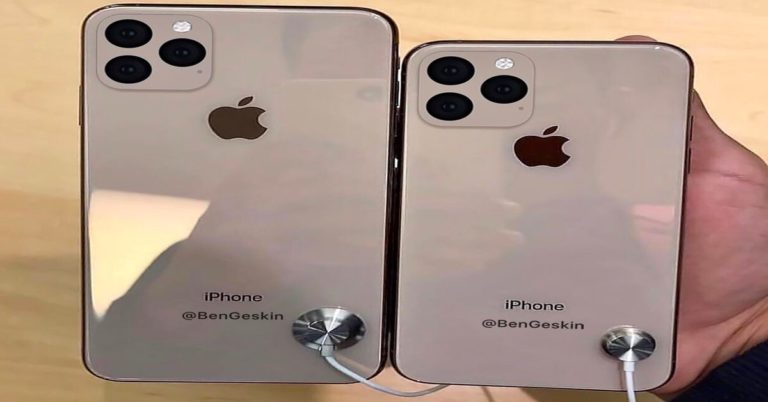
Apple’s WWDC 2019 will kick-start today and the Cupertino-based technology firm will be speaking about the updates in its iOS 13 and various services today. Although the new iPhones 11 won’t be launching at today’s event and there are months for its launch event, but that hasn’t stopped the leaks and renders of the upcoming iPhone. According to various reports, just like last year, Apple will be launching three models of the new iPhone 11, which will be the successors to iPhone XR, iPhone XS and the iPhone XS Max. Now, a new mock-up has revealed the presence of a triple-rear camera setup on the back of the iPhone 11 and the iPhone 11 Max.
This time around, the relatively affordable of the lot will be named as iPhone XR 2, according to the report. The mock-up reveals that the new iPhone 11 and the iPhone 11 Max will have a square-shaped camera arrangement with three cameras at the back paired with an LED flash. But the camera placement and setup of the affordable iPhone XR will be different to the ones used in its costlier counterparts. Other than the camera placement, the design and build of these devices has also been revealed.
The new mock-up of the iPhone 11 and the iPhone 11 Max was revealed by the tipster named Ben Geskin and it is similar to the previous renders of the iPhone 11. As mentioned above, the iPhone 11 and the iPhone 11 Max will follow the smartphone trend of 2019, which is packing triple-rear cameras on the back of the flagship devices. Other than the camera placement, the design of the upcoming iPhone 11-series will be a lot different than the previous year iPhone devices. The mock-up device reveals an iPhone of golden colour and the Apple logo sits besides the squared-camera module which is silver in colour.
https://twitter.com/BenGeskin/status/1135068588937793536
Talking about the iPhone XR 2, it will hold a dual-rear camera setup and will come in bright and vibrant colour options which earlier reports suggested. But the iPhone 11 and the iPhone 11 Max will come in the same basic – Black, White and Gold colour options. Although the company hasn’t revealed the specific launch date of the new iPhone 11-series, but judging by its previous launches we could see the device launched around September or October of 2019.
For the latest gadget and tech news, and gadget reviews, follow us on Twitter, Facebook and Instagram. For newest tech & gadget videos subscribe to our YouTube Channel. You can also stay up to date using the Gadget Bridge Android App.
Microsoft’s Windows 10 Home users won’t be able to defer updates anymore
Microsoft’s Windows 10 has released its new update which was earlier promised by the company. This is the update that the users were waiting for as a few aspects of the previous Windows 10 were not something which let out positive results. Prior to this, Microsoft had promised the users of the Windows 10 that it will allow the ‘control, quality and transparency’ for both its minor and major upgrades. And it has done that with the new update of Windows 10 1903. But the thing is, some of the Windows 10 Home users (around 800M active user) have found out that they can’t automatically defer any updates of the OS.
According to CNet, the Windows 10 slowly learns with the new update, so, with this this update, users can’t automatically defer any updates. In other words, they aren’t getting the promised controls that Microsoft touted earlier. All they get is the option to manually pause the updates for around 35 days. The Windows 10 Home users would then have to repeat this process every week to delay the updates of the OS.
Earlier the Windows 10 Home users had the option to cancel or not let their previous version of Windows update to the latest version which in some cases came with problems and bugs. But this time, Microsoft is applying the ‘end-of-service dates’ to all the Windows 10 versions. So, when the company will start pushing out new updates for Windows 10, they will be installed automatically without needing the permission of the user. Even if the user had deferred the permission to install the new updates, they still would be downloaded and installed. So, this time, the users don’t have a say in this.
The users can find out if their version of Windows 10 is still in service or not. For that, they need to go to Settings, then to System and then to About. They can then be able to locate the version number on the official Windows 10 Release information website.
Other than the Windows 10 Home users, the Windows 10 Pro, Education and Enterprise users have the option to defer the updates automatically for both the types of updates. So, the Windows 10 Home users are on the short end here. Earlier, there were updates for the Windows 10 which came with several problems like decreasing the gaming performance or deleting the user’s personal data to name a few.
The other version of Windows 10 is getting the option to defer the updates for 36 months, but the Windows 10 Home users won’t be getting the same option.
For the latest gadget and tech news, and gadget reviews, follow us on Twitter, Facebook and Instagram. For newest tech & gadget videos subscribe to our YouTube Channel. You can also stay up to date using the Gadget Bridge Android App.
Apple clears out iTunes’ Facebook and Instagram pages
Ahead of Apple’s WWDC 2019 event that is scheduled for today, a number of reports have surfaced online that claim that the Cupertino-based technology giant may have plans of closing down iTunes. Till now, Apple has not broken its silence on the matter, so iTunes being broken down into various services is just a speculation. While Apple may be still tight-lipped about it, it has given a big hint that the reports may be true. According to a report, Apple has cleared out the Instagram and Facebook pages of iTunes. So all the posts pictures and videos that were till now present on the page has now been removed.
With this, the days of iTunes are really looking numbered. The report of the Instagram and Facebook pages of iTunes being cleared out first appeared in MacRumors and it was discovered by some Redditors. According to the report, Apple seems to have migrated the iTunes accounts to Apple TV counterparts on Facebook and Instagram. However, the Twitter account of the service is still intact and no one knows its fate till now.
Reports about Apple’s plans on closing down iTunes and/or disintegrating it have been around for a while now. Some off them suggest that Apple will be breaking down the service into various other services like Music, Podcasts, and TV. Some leaked screenshots also surfaced online last week that showed a glimpse of what was supposed to be Apple Music and Apple TV apps. A report in Bloomberg has also indicated that the Cupertino-based technology giant will be closing down iTunes in favour of various different apps.
However, we will have to wait for a few more hours to find out what exactly Apple has up its sleeve. Apple’s WWDC is scheduled for today at 10 am PT. The event will take place at the McEnery Convention Center in San Jose, California. Every year at its developer conference, the company talks in detail about the newest software that will come to its devices later during the year. WWDC 2019 event will be very important for Apple as it has been focussing on its software and services business now more than ever.
Other than talk about services, Apple will also be giving us a first look at its iOS 13 software, so we would know what new features will be coming to iPhones and iPads. Announcements around macOS, WatchOS and tvOS are also expected at the event.
For the latest gadget and tech news, and gadget reviews, follow us on Twitter, Facebook and Instagram. For newest tech & gadget videos subscribe to our YouTube Channel. You can also stay up to date using the Gadget Bridge Android App.
Google outage takes down YouTube and Gmail, gets restored after hours

A number of web services including YouTube, Snapchat, Gmail, Nest and Discord suffered major outages today. Users from various parts of the world have claimed that they could not access any of these services for a few hours today. The root cause of this is said to be an issue with Google’s cloud service that powers apps other than the technology giant’s own services. The issue in Google’s cloud service started at around 3 pm ET and it took the company more than four hours to resolve them completely.
Mostly, users in the East Coast of the United States were affected by the outage. however, some people across Europe also pointed out that they were not able to access YouTube and Gmail. Google’s G Suite Status dashboard also showed problems with a number of Google web services at one point. Other than this, Down Detector listed that YouTube suffered an outage in a number of countries across the globe.
As we mentioned earlier, YouTube and Gmail were not the only ones that suffered. Discord, Snapchat and Vimeo users were also affected and it is worth mentioning that all of these use Google Cloud on the backend. It has been reported that Spotify also experienced problems because of the outage in Google’s cloud service. This also stopped some of the stores from processing credit card payments for hours.
The technology giant has blamed “high levels of network congestion in the eastern USA” for the issues that have been caused in its cloud service. Speaking to technology website The Verge, the company said, “We will conduct a post mortem and make appropriate improvements to our systems to prevent this from happening again. We sincerely apologize to those that were impacted by today’s issues.”
We should mention that this isn’t the first time this year that such an outage has taken place. Earlier this year, YouTube was down for more than an hour and a half before the company restored the service.
Other than this, a big outage was also faced by Facebook and most of its services including Instagram, WhatsApp and even Oculus this year. All the apps and websites of the company were down for several hours across the globe before the social media giant managed to restore them.
Facebook addressed the outage by saying, “Earlier today, some people may have experienced trouble connecting to the family of apps. The issue has since been resolved; we’re sorry for any inconvenience.”
For the latest gadget and tech news, and gadget reviews, follow us on Twitter, Facebook and Instagram. For newest tech & gadget videos subscribe to our YouTube Channel. You can also stay up to date using the Gadget Bridge Android App.