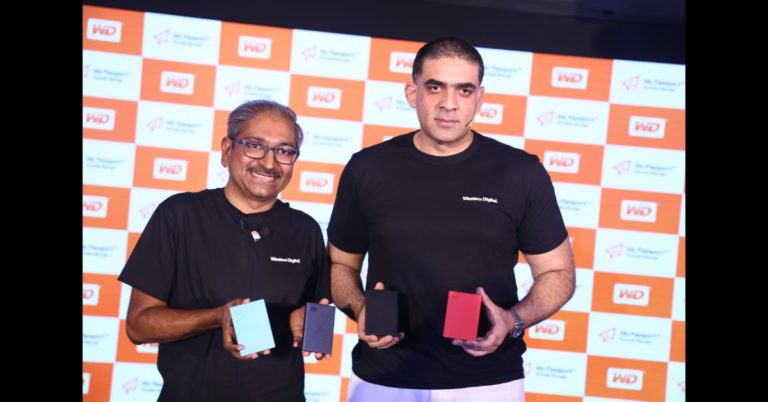
Today, Western Digital announced the launch of its new My Passport HDD in India. The portable hard disk will be available in two storage options of 1TB and 5TB. According to the company, it is the slimmest 5TB HDD.
These days people look out for portable hard drives that are compact as well as reliable.The latest generation of My Passport HDD is up to 30% smaller than its predecessor and comes with much higher capacity. The device comes integrated with WD Backup software that makes sure that photos, videos, music and documents don’t get lost.
“People today want a storage device that matches their lifestyle: compact, snazzy, yet reliable. From listening to our customers, we keep innovating and introducing attractive products for them. Our award-winning My Passport line is now enhanced with the slimmest 5TB portable hard drive in the WD brand portfolio. As the study points out, people find the process of backing up data inconvenient and time-consuming. Our new My Passport addresses this concern and offers automatic back up, where a user can just pick the time and frequency to back up important files from their system onto their My Passport drive,” said Mr. Khalid Wani, Direct Channel Sales, Western Digital India.
The latest edition of My Passport comes with an automatic back up where the users can transfer their important files from their system to their to the device at a much faster speed. It comes in a fresh new look and is also offered in new colour options Black, Blue and Red, and My Passport for Mac drive in Midnight Blue.
The new My Passport HDD is 0.75 in (19.15mm) thick and has been formulates for Windows 10. It comes with a USB 3.0 connector that is compatible with USB 2.0. The HDD for Mac is formatted for macOS and it features a USB-C connector to deliver plug-and-play storage. It can be used to store, organize and share a tremendous amount of photos, videos, music and documents.
WD My Passport HDD will be available for purchase via all the leading e-commerce platforms as well as retailers in the country. The My Passport drives 1TB storage variant will be available with a price tag of Rs 4,499 whereas the 5TB will cost you Rs 10,999.
German audio products brand Blaupunkt has announced Anniversary sale in India. The sale is now live and will go on till March 8th. During the sale, the company will be offering great deals and discounts on all its audio products.
Announcing the sale Blaupunkt Audio CEO, Sukhesh Madaan said“Blaupunkt was launched last year on Amazon India platform and we are determined to offer the best possible consumer experience. We are leaving no stone unturned to combine German technology with Indian specific music taste and in the process ensuring an unparalleled brand experience. It’s our annual process wherein the month of March, we run super-aggressive, never before offers for our shoppers to end the financial year on the high”
Blaupunkt has completed its 100th year in the audio industry and it entered into the Indian market last year to mark the anniversary celebration the company has announced its anniversary sale. The company will be offering discounts up to 65 percent across all its audio products via e-commerce website Amazon. Blaupunkt product portfolio is divided into 3 broad categories named as Personal Audio, Home Audio & Bluetooth speakers.
BTW-Pro True Wireless earbuds were launched in India with a price tag of Rs 6,999 but now it is available at Rs 5,999. BTW Pro offers the best performance with Qualcomm Aptx, its stick design, dual microphone and better noise clarity with external noise cancellation. Whereas the Blaupunkt Towers- PS600 can now be purchased at Rs 21,990 during this period. Earlier it was available at Rs 39,990.
During the Blaupunkt anniversary sale Truly Wireless BTW01 earbuds will be available at Rs 3,999. These come with touch controls and the individual earbuds delivers 6 hours of playtime on a single charge. The BWL02 130W Bluetooth Soundbar with Wireless Subwoofer now can be bought at Rs 7,990 down from Rs 19,990. Blaupunkt BTW LITE Truly Wireless Sleek & Comfortable Earphones with HD Sound, Water Resistant IPX5 and Voice Assistance can be purchased at Rs 3,299.
Today Resso Social Music Streaming app launched in India. The app has been designed for the new generation of music enthusiasts. The new music platform allows its users to express, connect and interact with music as well as artists.
The app is now available for download for free and for downloadable content, unlimited skips and high-quality audio the users can upgrade to a monthly premium subscription by paying Rs 99 for the Android and Rs 119 for the iOS users.
Commenting on the launch, Hari Nair, Head of Music Content and Partnership, Resso India said, “Resso is designed to revolutionize how users consume music by filling the longstanding gap between music streaming and interacting with other listeners. With the launch of Resso in India, our objective is to empower users to express themselves and connect with like-minded individuals through music.”
In order to provide an extensive catalogue the company has collaborated with various music labels such as Sony Music Entertainment, Warner Music Group, Merlin and Beggars Group, T-Series, Saregama, Zee Music, YRF Music, Times Music, Tips, Venus, Shemaroo and regional majors such as – Speed Records, Anand Audio, Lahiri Music, Divo, Muzik 247.
According to the company the app’s interface has been designed in such a way that it can provide instant engagement for any user to discover new music.
It also allows its users to share lyrics of a song and let them express themselves with the help of user-generated content.
The easy to use features allows them to connect with a larger community instantly. To express themselves the users can use the Vibes feature which allows them to create videos, gifs or pictures based on a song that they can share along with lyrics.
With the help of comment features, they can also connect to people who have similar tastes in music and engage with each other by commenting on your favourite song. The users can also select and share lyric quotes of their favourite with other people to express what’s on their mind.
The app library has been divided into different genres, sub-genres, for instance, it is divided into alternative, experimental, fusion, post-rock, indie rock while sub-genres have further been segregated into popgaze, bow pop, indie psych-pop and ambient to name a few. The app also encourages artists by encouraging them to reinvent their catalogue for their fans and also introduces them to new listeners.
Last year in September the premium smartphone brand OnePlus forayed into the television industry with the launch of OnePlus TV Q1 Pro and OnePlus TV Q1. The smart television comes with a number of high-end features that competes with Samsung and Sony. The company today announced a new initiative for its OnePlus TV community in India.
Today the OnePlus has announced a new community initiative called ‘OnePlus TV Product Ninjas Program’. The program is specially focused on the Indian consumers inviting community members to contribute towards co-creating localized features with the OnePlus TV team.
Similar to the popular OnePlus Open Ears Forum OnePlus invites its newest member to contribute creatively in the brand’s innovation efforts towards the Smart TV and IoT segment. The new venture will include various activities like the TV naming process, Open Beta testing, Closed Beta testing and continuous forum interactions. The participants will be working with the brand’s product team in order to create a better OnePlus TV experience. The team will invite around ten users to closely work with product managers and create some features which will truly meet your needs and solve real problems.
The OnePlus TV Product Ninja Program will also include both online activities and offline workshops. “You’ll be engaging yourself in discussions with the product team and fellow Product Ninjas to brainstorm, ideate and contribute to different aspects of the OnePlus TV. During each activity, you will be able to familiarise yourself with the journey of a TV product manager. And at the end of the program, your work and contributions will translate into usable features on the OnePlus TV,” the company on its forum explained.
The Project Ninjas will be eligible for exclusive OnePlus product perks for the Product Ninjas. And the company will be awarding one big prize for one outstanding contributor.
Firstly in order to qualify, you’ll have to meet the requirements below:
Creativity and passion to help build the perfect OnePlus TV experience
An eagerness to actively contribute to the OnePlus TV product team
Interest in TV is a must
Willingness to participate in all our activities (timings will be decided in accordance with all OPTV Product Ninjas)
The Chinese smartphone company, OnePlus, usually introduces its new handsets to the world in mid of the year. This time the company is going to change things. According to a new report, this year OnePlus will launch its upcoming series next month in mid-April.
According to the report by TechRadar global, the new OnePlus 8 series is going to launch in the second week of April. The information has been revealed by its close source to the company. “The source expects this to be a global announcement, so this is likely to be the same date that the phone is unveiled all over the world,” the report said. However, the source did not confirm any details of the upcoming smartphone. But as per previous leaks this time the company will be unveiling not two smartphones like every year but three devices namely OnePlus 8, OnePlus 8 Pro and OnePlus 8 Lite.
Recently, we also came across some hands-on images of the OnePlus 8 Pro that were shared on Twitter. The leaked images revealed the form factor of the forthcoming device. By looking at the image we could only get an idea of the camera setup as the phone was protected with a translucent protective sleeve. It is clearly visible that the phone will have a similar camera module just like its predecessors OnePlus 7. The smartphone will be featuring a vertically placed camera module in the centre of the device. The camera system consists of three camera sensors and the LED flash is visible below it while an additional camera sensor was seen placed on the right side of the camera system. The additional sensor is expected to be a 3D ToF camera.
Another leak suggests that the phone might get an IP rating for water and dust resistance. However, it is still not sure whether the OnePlus phones will get an IP67 or IP68 rating. Besides this, the company has also joined Wireless Power Consortium that indicates that OnePlus 8 lineup will be offering wireless charging support. The company’s name was spotted among the members’ list on the website which also includes other brands such as Apple, Samsung, LG, Oppo, HMD Global, Asus among others.
The software tech giant Google has cancelled its biggest event of the year Google I/O 2020 over Coronavirus fears. The company has finally called off its Google’s developer’s event which was to be held between May 12th to 14th this year. The company also recently cancelled its Cloud Next event which was to be hosted in San Francisco. Many tech companies such as Microsoft, Facebook and now Google have cancelled their annual conferences. The outbreak has already claimed over 3000 lives across the globe and over 89,000 people have been diagnosed with COVID-19. While all the biggest tech events which have been cancelled as they were taking place in the US and Europe amid these concerns many events in India have also started getting cancelled.
“Due to concerns around the coronavirus (COVID-19), and in accordance with health guidance from the CDC, WHO, and other health authorities, we have decided to cancel the physical Google I/O event at Shoreline Amphitheatre.” the company announced on its website.
The company usually introduces its upcoming projects and new changes to its Android, Apps and hardware. The company scrapped its developer’s event amid Coronavirus concerns. Last month another trade show Mobile World Congress, Facebook’s F8 developer conference, Game developers conference, Microsoft MVP Global Summit also got cancelled due to the rising cases and the list is growing.
The spread of Coronavirus has impacted a lot to the tech industry. Google also promised to give a full refund to those who have already purchased the tickets to the event.
“All guests who have purchased tickets to I/O 2020 will receive a full refund by March 13, 2020. If you don’t see the credit on your statement by then, please reach out to io@google.com. Guests who have registered for I/O 2020 will not need to enter next year’s drawing and will be automatically granted the option of purchasing an I/O 2021 ticket.”
In a recent tweet made by Alphabet and Google CEO Sundar Pichai to announce that they are releasing free access to their advanced Hangouts Meet video-conferencing capabilities to all G Suite and G Suite for Education customers globally starting this week. This will include larger meetings, for up to 250 participants per call, live streaming for up to 100,000 viewers within a domain and the ability to record meetings and save them to Google Drive.
The Dark Mode feature on WhatsApp has now officially landed on both Android as well as iOS platforms. The much-awaited feature has been under testing since last year. Now the company has finally rolled out this new feature for its users across the globe.
The dark mode is now available for iPhone and Android. The company rolled out this feature via a new update which gives a fresh new look to its platform. According to the company this feature aims to reduce eye strain under low light environments or when the lights are turned off. “And we hope it helps prevent those awkward moments where your phone lights up the room,” the company stated while announcing the new feature to its users.
The company said in its blog post that while designing this feature they kept few things in mind such as they wanted to choose such colours, which will minimize eye fatigue and choose those colours that are closer to the system defaults on iPhone and Android respectively. “We wanted to help users easily focus their attention on each screen. We did this by using colour and other design elements to make sure the most important information stands out.” the company explained in its blog post.
To recall, the company released WhatsApp Android beta testers via Google Play in January in 2019, as a part of the v2.20.13 update. For iOS users, v2.20.20 (2.20.30.13) was rolled out for beta testers earlier last month. Yesterday the company changed its display pictures across all its social media channels. The company’s logo was seen against a black background which is now its profile picture on Facebook, Twitter as well as Instagram.
In order to introduce a new theme to its platform the social media chatting app also shared a video of how the dark theme will help its users in their daily routine.
Whatsapp users on Android 10 and iOS 13 can turn on the dark mode by enabling it in system settings. Users on Android 9 and below can go into WhatsApp Settings > Chats > Theme > select ‘Dark’.
Last week Vivo’s sub-brand iQOO launched two smartphones in India. The company launched iQOO 3 in two variants 4G as well as 5G. The device is specifically targeted to the gaming enthusiasts in the country and is powered by Qualcomm’s flagship chipset Snapdragon 865 SoC. It features an HDR 10+ display with a 180Hz touch sampling rate. The smartphone comes with a hole-punch at the top of the display to house a selfie camera and also sports a quad rear camera set up consisting of a 48-megapixel primary camera. iQOO 3 sale will begin on Flipkart and iQoo.com today.
In This Article
iQOO 3 pricing and availability
iQOO 3 will be available in two variants: 4G and 5G variants. Both the variants will go on sale in India today at 12 noon via e-commerce website Flipkart and iQoo.com. The 4G variant price starts at Rs 36,990 for the 8GB RAM with 128GB storage whereas the 8GB RAM with a 256GB storage model can be purchased at Rs 39,990. The 5G variant will be available in a single RAM as well as a storage variant of 2GB RAM with 256GB of storage at Rs 44,990. Both the variants will be offered by the company in two colour options Quantum Silver and Tornado Black.
The launch offers includes flat Rs 3000 instant discount on ICICI credit cards and all EMI transactions. An additional discount of Rs 3000 on the exchange of your old mobile phone. Data benefits of worth Rs 12000 can be availed by Jio prepaid subscribers on the purchase of iQOO 3. Moreover, no-cost EMI up to 12 months valid on all major credit cards and Bajaj Finserv cards.
iQOO 3 specifications and features
iQOO 3 features a 6.44-inch full-HD+ Super AMOLED display with 1200 nits peak brightness, 1080 x 2400 pixels of resolution. The display comes with a 1.40 percent screen-to-body ratio and 180Hz touch sampling rate along with Schott Xensation UP protective layer. The smartphone runs on iQoo UI 1.0 based on the top of Android 10. Under the hood, there is a Qualcomm Snapdragon 865 processor paired with up to 12GB of LPDDR5 RAM and up to 256GB of onboard UFS 3.1 storage.
In the camera department, the newly launched phone flaunts a quad rear camera set up. The camera system includes a 48-megapixel Sony IMX582 sensor with f/1.79 aperture, a secondary 13-megapixel telephoto camera sensor with f/2.46 aperture with 20x digital zoom along with a tertiary 13-megapixel wide-angle lens with a 120-degree field of view and f/2.2 aperture. Lastly, it is aided by a 2-megapixel depth sensor with f/2.4 aperture. On the front, there is a 16-megapixel selfie camera with an f/2.45 aperture. The selfie camera also supports 4K video recording.
On the connectivity front, iQOO 3 has 5G, 4G connectivity, Bluetooth 5.1, USB Type-C 2.0, GPS and Glonass. In terms of connectivity, the handset includes an in-display fingerprint sensor, an accelerometer, ambient light sensor, compass, gyroscope and proximity sensor. The mobile phone packs a 4,440mAh battery that is supported by 55W Super FlashCharge tech that claims to charge the phone up to 50 percent in just 15 minutes.
German audio company Sennheiser has today announced the launch of its two wireless earphones in India. The company launched Sennheiser CX 350BT and CX 150BT in-ear wireless earphones in India. The key highlights of the earphones include 10-hour battery life and portable design along with a dedicated voice assistant button. The device also comes with smart features that can be controlled via Sennheiser Smart Control App. Read on to know more about its availability as well as its pricing.
Mr. Kapil Gulati, Director, Consumer Segment, Sennheiser Electronics India, said, “We are extremely excited to launch two products in the wireless category for our Indian consumers. Over the last few years, we have seen a phenomenal response in this segment and through these launches, we are looking forward to gaining more popularity in the youth segment. These earphones embrace the latest wireless technology and sport a sturdy and sleek design. At Sennheiser, our focus has always been on innovation and with these new models in our wireless range, our aim has been to help our consumers experience an enhanced audio experience every day.”
In This Article
Sennheiser CX 350BT and CX 150BT in-ear wireless earphones features
Both the CX 350BT and CX 150BT in-ear wireless earphones comes with a sleek as well as compact neckband style design. It is shipped with Four different sizes of ear tips in order to achieve a perfect and secure fit and offers noise isolation.
It delivers a 10-hour battery life along with USB-C charging support. Both the models include a dedicated voice assistant button for fast access to Siri or Google Assistant. Provided with smart features the Sennheiser earphones can be accessed via Smart Control App for personalised audio, update and configure the earphones. These can be connected to your device with the help of Bluetooth. The Bluetooth 5.0 allows you to pair the earphones with two devices at the same time. The earphones have support for audio codecs SBC and AAC for achieving high-quality audio experience.
According to the company, CX 350BT also features AptX and AptX Low Latency support which allows perfect sync while streaming videos or during gaming sessions. The earphones come with a dedicated voice assistant button that can be activated with a touch.
Sennheiser CX 350BT and CX 150BT in-ear wireless earphones pricing and availability
Both the models of Sennheiser CX 350BT and CX 150BT in-ear wireless earphones comes in two colour options black as well as white. CX 350BT will be available at Rs 7,490 whereas CX 150BT comes with a price tag of Rs 4,990. Both the models can be purchased via e-commerce website Amazon, Flipkart, via the company’s official store as well as leading electronic retail outlets in India.
The popular mobile game PUBG Mobile has rolled out a new update with version number 0.17.0 today. The fresh update includes the return of Hardcore Mode in Arcade and new features and improvements.
The makers of the game said, “After countless requests from PUBG MOBILE players and community members, the beloved Hardcore Mode has officially returned to the Arcade. In Hardcore Mode, all sound prompts have been removed and manual actions are required like pick-up and opening doors for an even more realistic experience and competitive challenge.”
From today onwards the developers of PUBG Mobile have released a new update version 0.17.0 to all its players. On the request of the players, the company has brought ‘Hardcore Mode’ for its users. With the new update, the developments have put an end to all sound prompts in order to test the player’s skills. To celebrate its second anniversary Tencent Games will be adding Anniversary theme “2GETHER WE PLAY”, which will arrive in the game from March 9 along with fresh festive gears, challenges as well as rewards. The update size is 1.69GB on Android and 1.95GB on iOS which includes Amusement Park Mode in Classic Erangel, an Arctic Mode, a new weapon, Hardcore Mode, Death Replay, and Colorblind Mode. However, the Classic Erangel will be available to the players from March 12.
The new content added for Classic Mode includes:
New AirDrop Weapon: DBS a weapon that can be used for high damage at close range. It is a double-barrel shotgun that the players can find through AirDrop. It lets the players fire 2 shots per magazine and holds 14 rounds of 12 Gauge ammo per reload, and can be equipped with the Holo Sight, Red Dot and 2x to 6x scopes.
Brothers In Arms System – Now the players can register themselves as Rookie or Veteran to play together in the battle of Classic Mode. According to the company, the Veterans with rich game experience can guide rookies in the game and receive great rewards, during which the rookies can learn from the veterans and master the game quickly.
Death Replay function – With this function, the players can watch from the attacker’s perspective for a certain time prior to their deaths.
Universal Marks – for quick communication the users are allowed to mark locations, supplies, vehicles, death crates and doors for teammates.
Colourblind Mode- With the new update now you get more colour options for in-game indicators, such as Poison, Smoke, and Auxiliary Lines, for people with colour blindness in the Graphics settings.
Teammate Volume Control- The players can now adjust the voice volume of individual teammates in battle.
Firearm balancing along with several other improvements
In a few months, we came across lots of new related to popular chatting app WhatsApp. The Facebook-owned company now has more than 2 million users across the world. In order to make its app more user-friendly the company keeps updating the app or seen testing new features on its platforms. Recently the app rolled out dark mode beta version of WhatsApp on both Android and iOS applications. The company was also spotted testing the same features on the web as well as desktop platforms. In the recent development, the company is now working on its new security and privacy feature called Protect Backup.
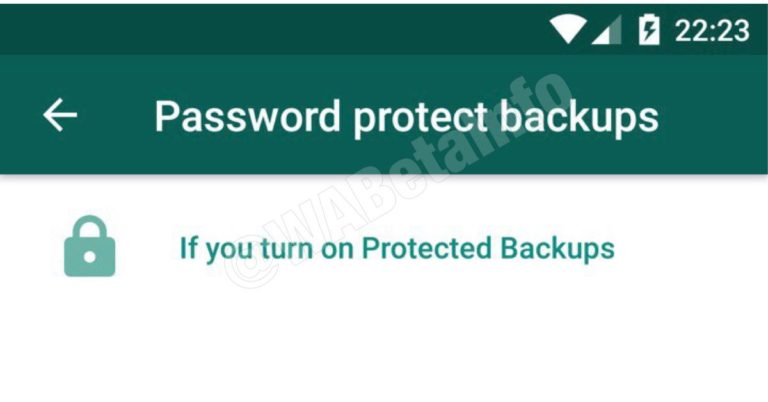
The new Protect Backup feature on WhatsApp is under development and is not available for the users yet. WABetaInfo which keeps tracking WhatsApp’s recent development has shared that WhatsApp is working on this feature and there isn’t any release date available. The publisher suggests that there is a possibility to protect your backup hosted on Google Drive. This feature will allow its users to encrypt their backup with a password so that neither WhatsApp nor Google will be allowed to see its content.
WABetaInfo stated, “The feature is in an alpha stage of development, so what we’re showing now is very poor but it’s enough to understand what’s its purpose.”
To prove the publisher has also shared some screenshots of the feature. However, not much details have been shared about this new feature but it is suggested that the user might not be able to restore his chat history if he loses the password used to encrypt the database. There is also an option to turn on and off the feature.
Image Courtesy: WABetaInfo
Until now there is no information related to the new feature that has been shared by the company but soon the feature will be available in the future. This feature is now available through Android Google Play Beta Program with version number 2.20.66.
Similarly, Whatsapp is also working to bring the dark mode feature on the WhatsApp web and desktop. Currently, the company is testing the beta version of the dark mode feature on both WhatsApp Android and iOS which will be rolled out soon to the general public through stable updates. The dark mode for desktop is also under development
Xiaomi’s spin-off brand Poco recently launched its X2 smartphone in India. The smartphone is available in three variants and falls in the sub-Rs 20,000 category. In this segment, the Poco X2 has a number of competitors. But then, it comes with a massive 4,500mAh battery, is powered by Qualcomm’s Snapdragon 730G, and its display has a refresh rate of 120Hz. We spent a few days with the smartphone to find out how good it really is. Check out our review of Poco X2 to know more:
In This Article
Poco X2 design and display
With Poco X2, Xiaomi is offering a smartphone that will be perfect for you in terms of design (if you like flashy gadgets). The handset has a gradient rear panel that is bright blue in colour and is made up of glass. The back panel of the device also has the vertical camera module that has a circular design around it. There is also the ‘Poco’ branding towards the bottom of the rear wall. However, it is worth pointing out that the device does not have Xiaomi written on it. Poco X2 is available in Atlantis Blue, Phoenix Red and Matrix Purple colour options and the one that we got for review (like we said) was dressed in blue.
The edges of the handset are made up of a plastic-like material. While the right side houses the power and volume rocker keys, the left one has the SIM tray sandwiched in it. The top has the secondary microphone and the bottom edge has the Type-C port, speaker grille and the 3.5mm headphone jack on it. It is worth pointing out that the power button also doubles up as the fingerprint scanner. This reminded us of devices from the Sony XPERIA range that we have reviewed in the past. The device is protected by Corning’s Gorilla Glass 5 on the front as well as on the back.
Coming to the front, you will see the 6.67-inch screen of the Poco X2. The display of the smartphone has an aspect ratio of 20:9 and the overall device looks very large. We should mention that one-handed usage is kind of difficult on the smartphone and we often had trouble reaching all the parts of the screen including the volume rocker buttons. A very noticeable thing about the front panel is the dual selfie camera sensors on the top right of the device. Although this did not hinder the viewing experience most of the times, when we watched some videos on YouTube in full screen mode, the black pill was very evident. Poco has also sandwiched the ear speaker of the handset at the top in a very thin slit between the screen and the top edge.
To conclude, we would say that the design of Poco X2 has its pros and cons. The device is good looking and those who like flashy gadgets would really like it, but we would have preferred something more subtle, so it is a bit subjective. While the glass back panel makes the smartphone look premium, at the same time makes it slippery too. It is also worth citing that the back panel of the smartphone is prone to getting fingerprints, so it would be advisable to keep a microfiber cloth with you at all times. We would recommend you to go for the device if you like premium looking phones, but then, you would have to take a lot of care of it just like any other premium device.
Coming back to the 6.67-inch 2340×1080-pixel driven display of the smartphone, it was one amongst its key highlights. The display projected bright and vibrant colours at all times, which remained consistent at different viewing angles. The images that were shown on the screen were sharp and clear. We watched a lot of YouTube videos on the device and the quality of the images on the screen remained top-notch even at very high resolutions.
It is worth mentioning that the screen of the device comes with 120Hz refresh rate and this pushes up the user experience a couple of notches. The sunlight readability of the smartphone’s display was good too, and we always consider this to be a big plus.
Poco X2 performance and cameras
Before we talk about the performance and cameras of Poco X2, we will take a minute to talk about the rest of its specifications. Poco X2 is powered by Qualcomm‘s Snapdragon 730G and it is available in three storage options: 6GB RAM/64GB storage, 6GB RAM/128GB storage and 8GB RAM/256GB storage. While the base variant costs Rs 15,999, the high-end one is priced at Rs 19,999. The device runs Android 10 skinned with MIUI 11.0.3 Poco Launcher and it houses a 4,500mAh battery.
Coming to the software integrations of the handset, the first thing that we noticed was that it comes with a lot of bloatware. Poco X2 has a number of pre-installed apps like Gaana, Helo, Facebook, Opera, Amazon and a lot of Xiaomi’s in-house apps too. The device also has the company’s own GetApps store and we received an annoying number of notifications asking us to install apps via it during our time with the device. The handset also comes with some ‘Special Features’ in its Settings app that make tasks like gaming and messaging better.
Speaking about the performance of the smartphone, it excelled in most of the tasks that we assigned it with. We launched multiple apps on the device and switched between them, and even used multiple tabs of Chrome together, but we did not see any lag in the performance. Poco X2 could manage multitasking like a cakewalk. We played a number of games on the smartphone and even when we tried graphic-hungry ones like Asphalt 9: Legends, the device did not warm up even once. We even used the smartphone for navigation for over 40 minutes and even then, it did not heat up.
Coming to the battery life of the handset, when our usage was heavy and involved long phone calls, watching YouTube videos, playing games and using social media apps, it lasted an entire day. Which is a great thing to achieve in a mid-segment smartphone.
The call quality of the smartphone was decent at most times. We could make and receive calls from any area including basements and elevators and we had no problem hearing the person on the other end of the call either.
Now, let’s talk about the cameras of the smartphone. Poco X2 comes with four cameras on its back and two cameras on its front panel. The device has a 64MP Sony IMX686 sensor that has an f/1.89 aperture, an 8MP ultra-wide camera with an f/2.2 aperture, a 2MP macro lens with a focal length of 2cm-10cm and a 2MP depth-sensing camera. On the front, there is a 20MP selfie camera along with a 2MP depth sensor.
We certainly believe that the camera app of the Poco X2 could become better, especially the UI. If you wish to use the wide-angle camera, you would have to use the zoom control to go to it as there is no toggle button dedicated for it. This became difficult at times. Even selecting various modes of the app wasn’t as easy as it is in other apps, some of them from Xiaomi.
The primary camera of the smartphone did a great job. The pictures turned out to be very sharp and the colours were accurate and vibrant. A very good thing about the photos was the fact that the details came out really well, particularly in well-lit conditions. In dimly-lit conditions, the quality of images did deteriorate.
Zoomed in shot
The wide-angle camera of the handset does not match up to the primary camera in terms of quality. However, this is something that we expected. While they do manage to get a lot more area in the picture, the quality does go for a toss. This is particularly true in dimly lit conditions and however switching over to the night mode helps. The macro lens also had a similar performance in well-lit and and room with less light. The quality of images did fall when we tried to use it in slightly dark areas.
Coming to the selfie cameras of the smartphone, we were happier with them than we were with some of the rear cameras. We clicked a number of pictures using them and all the shots that we got were good and well detailed, even the ones that we took in dimly-lit conditions.
Verdict
At a cost of Rs 19,999, the Poco X2 comes with its own set of pros and cons. The positive points of the smartphone include its display, its smooth performance, front camera and its lasting battery life. The design of the handset has a few issues like it is a bit slippery and its one-handed usage can be troublesome for people with small hands. The UI has a lot of bloatware and the some of the rear cameras gave us mixed results. However, if you want to buy a device that can handle heavy games and can multi-taks well, or if you love to watch videos on your smartphone, you would not be disappointed with Poco X2.
Last year the American chipmaker Qualcomm announced the support for India’s NavIC satellite navigation system in its upcoming portfolio at that time. Then in January, the company announced its new chipset Snapdragon 720G, Snapdragon 662, and Snapdragon 460 chipsets. This system-on-chip (SoC) models will be supporting Navigation with Indian Constellation (NavIC).
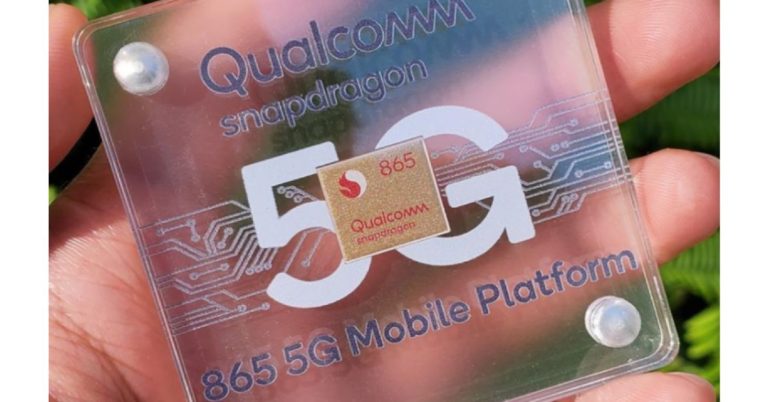
Whereas its top-of-the-line chipset Snapdragon 865 does not support NavIC which has been designed by the Indian Space Research Organisation (ISRO). Now the device powered by the latest chipset the flagship Snapdragon 865 SoC will also have support for India’s navigation satellite system.
Soon the flagship device powered by Qualcomm’s Snapdragon 865 chipset will be supporting NacIC which is also known as Indian Regional Navigation Satellite System (IRNSS). The company recently revealed that its flagship chipset will soon be capable of supporting this feature with a final software update.
In October last year, the company announced the support for NavIC Satellite Navigation System in its system-on-chip (SoC) and also showed its gratitude to work with ISRO to bring the feature to the Indian consumers to upgrade their navigation experience and enhance the geolocation capabilities of mobile, automotive and the Internet of Things (IoT) solutions in the region. The company also mentioned that this would be capable with the final software update coming to their OEMs around April 2020 for the Snapdragon 765, 720G, 662 and 460 support NavIC. Snapdragon 865 chipsets.
Last week Realme India chief also revealed that its Realme X50 Pro 5G smartphone comes with support for the Indian Space Research Organisation’s (ISRO’s) Navigation With Indian Constellation (NavIC) technology. The head revealed this after a user enquired about him on Twitter. His tweet reads, “Yes, our ultimate flagship, #realmeX50Pro features #NavIC & even our upcoming phone will feature it as well. So World’s first, World’s second, coming in a row, all for India. Plan to talk more on 5th March. See you there with 1500 #realme fans.”
Those who are unaware, NavIC provides accurate location performance, faster time-to-first-fix (TTFF) position acquisition, and improved robustness of location-based services. This will help in improving the user experience for location-based applications especially in dense urban environments where geolocation accuracy tends to degrade. The IRNS has been developed and designed by the Indian Space Research Organisation to provide accurate position information service to users in India as well as the region extending up to 1500 km from its boundary, which is its primary service area. According to ISRO, “The space segment consists of the IRNSS constellation of eight satellites, NavIC. Three satellites are located in suitable orbital slots in the geostationary orbit and the remaining four are located in geosynchronous orbits with the required inclination and equatorial crossings in two different planes. All the satellites of the constellation are configured identically. The satellites are configured with I-1K Bus to be compatible for launch onboard PSLV.”
In addition to this, iQOO also launched its latest smartphone powered by Snapdragon 865 that is iQOO 3 5G. But it is still unclear that after the update will it have support for NavIC or not.
The Home Ministry of Civil Aviation has given a landmark decision on Monday on the access of Wifi by passengers on the Aircrafts. The Indian government has given the green light allowing the use of Wifi during flights as per official notification.
On Monday, the Indian government took the decision to permit passengers to use WiFi during flights in the Indian airspace with the permission of Pilot. As per the official notification, the passengers will be able to use the Wifi inside the aircraft and the main Pilot has the permission to switch on the in-flight Wi-Fi.
From now on all the airlines operating in India will be able to provide free access to in-flight WiFi services to its passengers. The department of telecommunications two years back proposed the Ministry for the permission of both internet and mobile communications in the Indian airspace.
The official notification reads, “The Pilot-in-Command may permit the access of Internet services by passengers on board an aircraft in flight, through WiFi on board, when a laptop, smartphone, tablet, smartwatch, e-reader or a point of sale device is used in flight mode or airplane mode,”. It further adds “Provided that the Director-General shall certify the aircraft for the usage of internet service in-flight through WiFi on board subject to the procedures as specified in this behalf,”
The notification also adds the new rules set for the availability of the Wi-Fi during flights. Only the main Captain is authorised to switch on or switch off the Wi-Fi during the flight Wheres the captain should follow certain guidelines such as:
The WiFi service will only be switched on when the aircraft is at a reduced speed.
The WiFi service will not be allowed during the take-off or landing
If the weather is not clear the Captain has the authority not to turn on the WiFi.
The aircraft proving the in-flight WiFi should be certified by DGCA in this matter.
The notification also mentioned that the main Captain can only allow the access of WiFi to laptops, smartphones, tablets, smartwatches, e-readers when they are on a flight or airplane mode. This means that the users can now stream videos on their devices during flights and would be able to make VoIP calls with messengers such as Whatsapp. Exact charges of the service will be decided by respective airlines.
Can you guess what OnePlus is going to bring to the table today? Yes, the company is going to bring a new device to the world but not a phone this time. Today the company will be introducing a new OnePlus concept device.
The company has shared a tweet on its official OnePlus UK Twitter account that shows some odd images in a video that is going to be announced today. By watching the video we can surely say that this time the company is not going to launch a new smartphone. The OnePlus India Twitter account also shared a similar tweet which confirms that the device will be first introduced in both the UK as well as India at the same time. The makers also asked their fans to guess what’s coming up. But we could almost guess that this time the company is planning to foray into the smartwatch industry.
In another teaser, the company head Pete Lau shared some images along with some puzzling hints to let its fans guess what the company is planning next. The images look like a mechanism for the hinge that also made us think that the company might be introducing a concept folding phone.
In its previous tweet, the company said that it is working on a special project “not a phone” or a “commercial product.”
Accepting the challenge we tried zooming in and brightening the images left us with a taunting encoded message which reads Stop trying, You won’t find anything, but remember, Robots are cool. But whatever the company is up to would be interesting as and the fans are eagerly waiting for it.
Separately the company is also planning to soon launch its new series of OnePlus phones. In the coming week or months, the company will be launching OnePlus 8 as well as OnePlus 8 Pro. This time it is speculated that the company will also bring the OnePlus 8 Lite variant under the 8 series. We also came across some renders of the upcoming smartphone being shared via Twitter. The leaked images also revealed the design concept of the smartphone. The leaked image shows the phone covered inside a translucent white cover to protect the device which you get inside the retail box. The protective sleeve only lets you see the design of the camera module. It carries a similar camera arrangement that we have already seen on the Oneplus 7 series. There is a vertically placed camera module to house three cameras. On the side of the camera module, you will notice another camera separately. This is supposed to be a 3D ToF camera.
Other than that it is speculated that the OnePlus 8 smartphone will have an IP68 rating which means the device will be dust and water-resistant. The reports suggest that the phone will be powered by a Snapdragon 865 processor coupled with 8Gb and 16GB of RAM. Moreover, as per the rumours the device will be featuring a punch-hole display with a 6.5-inch curved AMOLED display screen along with 120Hz of refresh rate. Also it is expected to house a 4,500mAh battery supported by 50W wired fast charging along with wireless charging support
Motorola has already introduced its foldable smartphone in the market last year. In the month of November last year, the Lenovo owned company popularised its clamshell design smartphone in the smartphone market that is Motorola Razr. But before it could make its way to the Indian market its rival counterpart Samsung last month launched as well opened the booking for its new Foldable phone that is Samsung Galaxy Z Flip in India. So without any further delay, Motorola has decided to launch the Razr in India this month only.
So the Motorola Razr 2019 now finally has a launch date and that is March 16. Yes, the company has announced its final date to launch the much-awaited smartphone in the Indian market. However, not many details about the upcoming smartphone have not been revealed by the company. But the pricing and availability details to be revealed on the launch day only.
To strike a note Motorola first introduced its foldable phone in the year 2004. The first time when the company introduced the phone to the market it summoned all the old memories associated with the phone. But this time the phone is all new and offers us dual-screen display, cameras and much more.
The company has already introduced the flexible phone globally and is now available in many regions especially the US and Canada. The company launched the device with a price tag of $1,499.99 that translates to Rs 1,08,801 as per Indian currency. Until now the pricing and Availability for India are still unknown but as the launch date approaches the company might reveal more details about the Motorola Razr.
The Motorola Razr comes with a clamshell design which is similar to the 2004 variant but the new version is much more stylish, which comes with a full touch screen display and has a water-repellent body. The device has a 2.7-inch Quick View display that offers 600×800 pixels of resolution when in a folded state. It allows you to check notifications, enable Google Assistant, control music and lets you take selfies. When unfolded you will get a 6.2-inch flexible OLED HD+ screen with a 21:9 aspect ratio and 876×2,142 pixels of resolution inside. This time the device has no gap between the two halves of the screen, unlike the older version.
The new Moto Razr draws its power from an octa-core Qualcomm Snapdragon 710 SoC processor with Adreno 616 GPU and clubbed with 6GB of RAM and 128GB of internal storage. It runs on Android 9 Pie and packs a 2,510mAh battery supported by a 15W TurboPower fast charger. The bottom chin features a fingerprint sensor.
For photos and videos Motorola Razr features a 16-megapixel f/1.7 primary camera on the outside that can also be used to take selfies even when it is folded. The camera supports the Night Vision mode that allows it to capture low light images. On the inside, you get access to a 5-megapixel camera that too lets you take selfies.
As the number of Coronavirus cases is on the rise across the globe the outbreak has also affected trading in India. For the past month, we have seen a slow down in the smartphone industry due to the Coronavirus. Firstly it affected the GWM 2020 that resulted in the cancellation of trade show and now the supply of smartphones including iPhones is running low in the country. The slow down has hit several smartphone brands such as Apple, Xiaomi, Realme, Oppo among others.
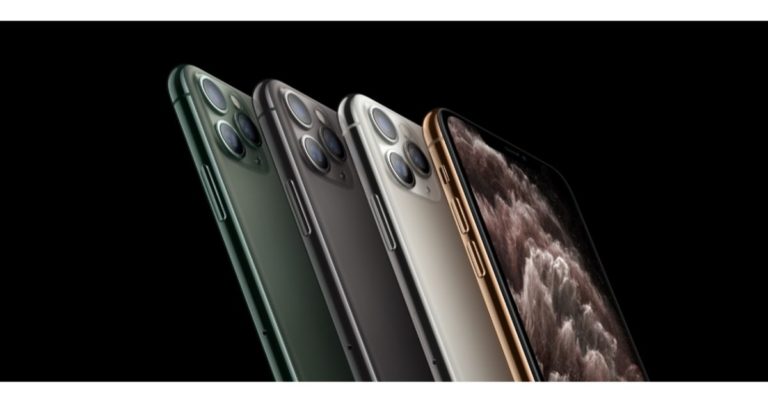
As per a report, only 10-20% f of the stock has been sent to the stores in India in the past 10 weeks. In this scenario, Apple has been the most affected by the CoronaVirus outbreak as its reserves have almost dried up. Only scarce quantity is now available for the iPhone 11 series as well as some of the models of Apple Watch. To this, the company has also hiked the pricing of two of its models of the iPhone 11 series that is iPhone 11 Pro and Pro Max. Additionally, the company has also increased the pricing of its most demanded iPhone 8 and iPhone Plus smartphones. However, the problem has not affected the supply of iPhone XR and iPhone 7 because they are manufactured in India through Foxconn and Wistron.
Recently Xiaomi has also increased the pricing of some of its smartphones in the country. There is also a shortage of Xiaomi’s as well as TCL televisions in the country. Xiaomi has also delayed the launch of its new air conditioners in India by a few weeks.
In the meanwhile, the offline retailers have also brought down the discounts on Apple products such as iPhone, MacBook and Apple Watch. In India, they are now being sold at their listed pricing.
While on the other hand, Apple has also started sending care packages to their employees stuck in Wenzhou and Hubei in China. The care packages include an iPad, face masks, hand sanitizer and more. According to MacRumors the package also includes a letter from the iPhone maker to their employees that says the iPads have been proved for their children’s online learning or pass time during their tedious stay at home.
The letter says “We are sending our best wishes to you, on behalf of the entire Apple Team, together with another CareKit for you and your families. In the kit, you will find comfort items and an iPad that can be used to facilitate children’s online learning or help pass the time during the prolonged stay at home. In addition, a series of counseling and consultation services have been prepared especially for you to help you through this time.”
It can really be frustrating to deal with poor signal strength on your smartphone. Not to mention, it can make a simple task like sending a text message very time-consuming. This can get particularly annoying when you realize that the area you are in has perfectly strong cellular signal and it is in fact, your smartphone that is responsible for it. Here, we are listing down a few hacks that can help you in such a situation. Take a look:
In This Article
Turn off the Airplane mode and switch it back on
This is one of the simplest and the most popular hacks that can get better signal back to your smartphone. To do this, you need to go to the Quick Settings section of your handset and then click on the Airplane icon. Then, wait for a few minutes and wait for your device to disconnect from all the connections. Once this happens, you can click on the Airplane icon again to turn it on. By doing this, in most cases, your smartphone will reconnect to cellular signal and start working fine again.
If that didn’t work, restart your smartphone
Although the Airplane icon hack is an extremely popular and effective one, it doesn’t always work. If you find yourself in a situation like this, the next best thing that you can do to make your smartphone connect to strong cellular signals is restart it. To do this, you need to hold the power button for a few seconds till the onscreen menu appears. From the list of options, select ‘Restart’. Just in case your handset does not have the option of restarting, just turn it off using the power button and then switch it on again.
Try removing your SIM card
Another hack of dealing with bad cellular network on your phone is removing your SIM card from your device. Make sure you do this while it is turned on. You can use the SIM ejector tool, which is included in the phone’s box, to do this. Just check if the SIM card fits in the SIM tray correctly or if it is damaged or soiled, and then you can re-insert it.
In case your device has an eSIM, you cannot follow this step. You can only restart your device so that it reconnects with cellular network.
If none of these work, contact your carrier
If none of the hacks that we have stated here work, there can be a possibility that the problem isn’t in your smartphone, but instead, the issue is arising because of your wireless carrier. If you are consistently facing network-related issues, then the right thing to do is to contact your carrier and report the problem. The problem may be arising out of problems ranging from a cell tower being down to an issue with a tower’s fiber optic cable. Whatever it is, your wireless carrier will be able to help you with it.
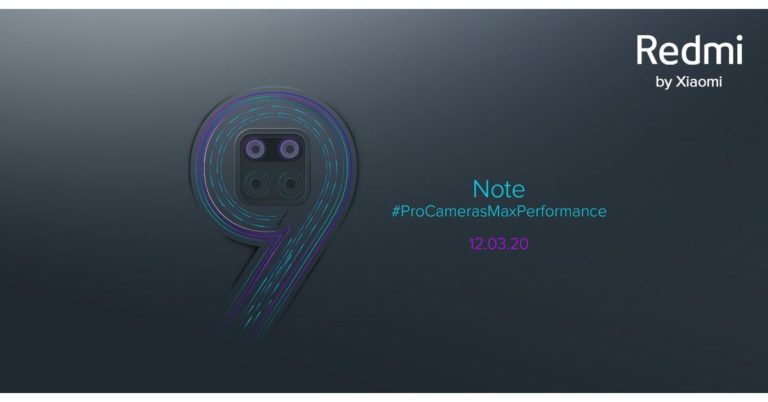
The Chinese smartphone brand Xiaomi’s sub-brand Redmi is all set to launch a new smartphone in India. The company will be launching the Redmi Note 9 series in the country on March 12. The company has also started sending media invites for next week’s launch event. To recall the series is the successor of Redmi Note 8 line up of smartphones, which was launched last year in 2019. The new series is expected to include two smartphones Redmi Note 9 and Redmi Note 9 Pro as its predecessor also includes Redmi Note 8 and Redmi 8 Pro.
The official Redmi India Twitter handle has shared a teaser image today to announce the arrival of the Redmi Note 9 series. The company today revealed the launch date of the upcoming series that is going to happen on March 12th. If we look at the shared image closely you will notice that the Redmi Note 9 series will be featuring a quad-camera set up. Now you must be wondering what’s new about it, as the Redmi Note 8 series also has four cameras on it. Here is a twist, this time the new series of Redmi Note is going to feature a quad-camera setup placed inside a square-shaped camera module just like the one, which we have already seen on the popular Apple iPhone 11 series.
Brace yourselves for the biggest #Redmi product launch of 2020! 🤩#ProCamerasMaxPerformance is going to be nothing like you have ever seen before! A new #RedmiNote is coming on 12th March! 😎
— Redmi India – #Redmi9 is here! (@RedmiIndia) March 2, 2020
Besides this, the company’s CEO, Manu Kumar Jain also took to Twitter to announce the launch date of the upcoming device. In another Tweet, he also posted a picture in which the smartphone is hidden under a newspaper where only the lower half of the back panel is visible. On zooming the image you can only see a Type-C port, headphone jack and speaker grille. Interestingly famous Bollywood actor Ranvir Singh is seen promoting the upcoming Redmi Note 9 series.
Separately, the company has created a microsite of the forthcoming series on its official Mi.com website as well as on the Amazon India. As per the microsite, the device is going to come with new features, processor and design. The microsite also consists of a video that tells the saga of the Redmi Note series in India. As per the video the company launched Redmi Note 4G which is India’s first 4G smartphone. This time it is expected that the company might launch the new series with 5G connectivity. And this might be possible with the Snapdragon 720G processor. In January Mr Jain announced its collaboration with the chipset maker Qualcomm in order to launch the first smartphone featuring Snapdragon 720G chipset.
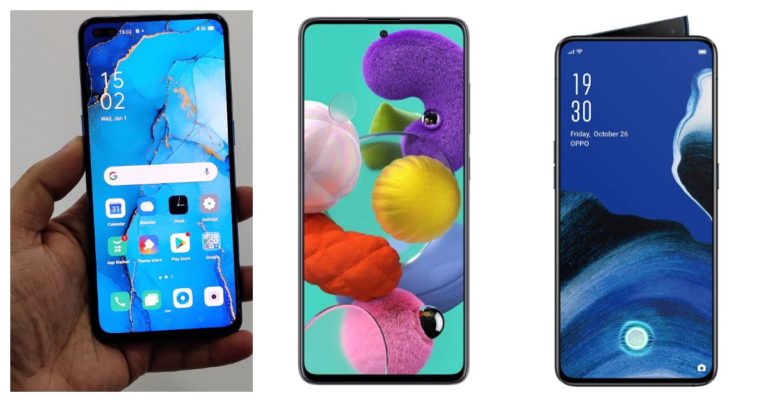
Oppo Reno 3 Pro has been launched in India today. The device comes with a starting price of Rs 29,990. The key highlights of the newly launched mobile phone include a new MediaTek Helio P95 chipset, a 44-megapixel selfie camera, a quad-camera rear setup with a 64-megapixel primary sensor. The smartphone is the successor of Oppo Reno 2 that was launched in the country last year. The predecessor came with a shark fin-shaped pop-up selfie camera whereas Oppo Reno 3 Pro comes with a dual punch-hole selfie camera. If you were wondering which smartphone to pick that will be packed with great features as well as be light on your pocket then here is our comparison of Oppo Reno 3 Pro with Reno 2 and Samsung Galaxy A71. The trio is similar in terms of pricing as well as features and this will help you make a choice.
In This Article
Display
Oppo Reno 3 Pro: 6.7-inch full-HD+ Super AMOLED display
Oppo Reno 2: 6.55-inch AMOLED Panoramic notch-less display with a 20:9 aspect ratio.
Samsung Galaxy A71: 6.7-inch full-HD+ Super AMOLED Infinity-O Display
Oppo Reno 3 Pro: Quad rear camera setup that consists of a 64-megapixel main sensor with f/1.8 aperture, a 13-megapixel telephoto lens with f/2.4 aperture, an 8-megapixel ultra-wide-angle sensor with 119.9 degrees of field of view and lastly a 2-megapixel mono lens.
Oppo Reno 2: Quad camera setup houses a 48-megapixel primary shooter, a 13-megapixel telephoto camera, an 8-megapixel wide-angle camera, and 2-megapixel portrait camera.
Samsung Galaxy A71: Quad camera setup with 64MP primary camera, 12MP ultra-wide-angle lens, a 5MP depth sensor and a 5-megapixel macro lens
Selfie camera
Oppo Reno 3 Pro: Dual selfie camera set up that consists of a 44-megapixel primary lens with f/2.4 aperture and a 2-megapixel depth sensor with f/2.4 aperture
Oppo Reno 2: 16-megapixel Shark Fin selfie camera.
Samsung Galaxy A71: 32MP selfie camera with f/2.2 aperture.
RAM and storage
Oppo Reno 3 Pro: 8GB of RAM with 128GB and 256GB storage option
Oppo Reno 2: 8GB of RAM along with up to 256GB of internal storage.
Samsung Galaxy A71: 8GB of RAM with 128GB of internal storage
Battery
Oppo Reno 3 Pro: 4,025mAh battery
Oppo Reno 2: 4,000mAh battery
Samsung Galaxy A71: 4,500mAh battery
Operating system
Oppo Reno 3 Pro: ColorOS 7 on top of Android 10
Oppo Reno 2: Android 9 Pie with ColorOS 6.1 on top
Samsung Galaxy A71: One UI 2.0 on top of Android 10
Price
Oppo Reno 3 Pro: Rs 29,990
Oppo Reno 2: Rs 36,990
Samsung Galaxy A71: Rs 29,999
Our Take
The three smartphones come with almost similar displays along with better camera resolution. However, Oppo Reno 2 lacks in some of the aspects such as display, camera and battery. But in terms of imaging specs Oppo Reno 3 Pro beats Samsung Galaxy A71. Oppo Reno 3 has a better camera setup additionally it also features a 44-megapixel dual selfie camera whereas A71 comes with a single selfie camera of 32-megapixels. But if we consider the pricing, both Samsung A71 and Oppo Reno 3 come with similar pricing. All in all, if you are looking for a phone with good battery life and all the needed features then you can go for Samsung Galaxy A71. But if a good selfie camera is your priority then you can choose Oppo Reno 3 Pro.
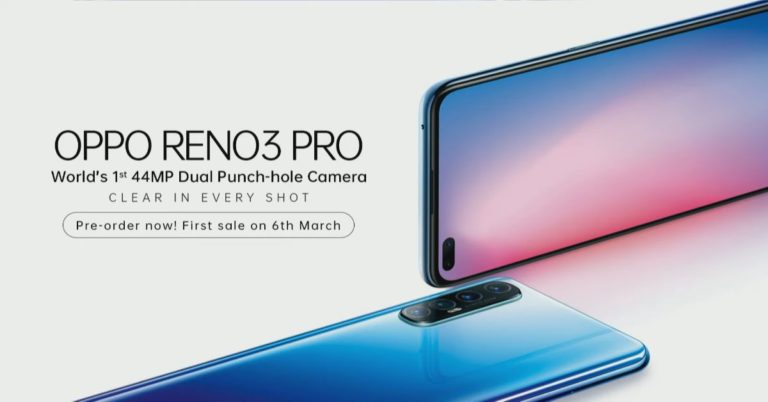
Oppo Reno 3 Pro has finally landed in India today. The device is the twisted variant of one which was launched in China last year. In Indian variant comes with a dual punch hole housing selfie cameras along with a quad-camera setup with a 64megapixel main camera. At the same event, the company also launched its financial service called Oppo Kash just like Realme Paysa. The device is powered by the new MediaTek Helio P95 chipset whereas the Chinese variant comes with the new Snapdragon 765G. Read on to know about the available launch offers and its specifications.
In This Article
Oppo Reno 3 Pro pricing and launch offers
The company has launched Oppo Reno 3 Pro in India which was launched in China last year but with distinct features as well as design. Here the smartphone has been launched with a price tag of Rs 29,990 for the 8GB RAM with 128GB storage variant. Whereas the 8GB of RAM with 256GB storage will be available at Rs 32,990. The smartphone will be offered in three colour options: Auroral Blue, Sky White, and Midnight Black.
The handset is set to go on sale via e-commerce platforms Flipkart, Amazon, and other offline retailers on March 6th. Initially, the 128GB storage model will be available for purchase soon. The company will also announce the date of availability for the 256GB storage variant in the country. The company has also started taking the pre-order for the base variant of Oppo Reno 3 Pro. On the first three days of the sale, the device will be available offline at 10 percent cashback applicable on the HDFC Bank Debit and Credit cards. The customer can purchase the phone at zero down payment from BajajFinserv, HDB Financial Services, IDFC First Bank and HDFC Bank. Moreover, the customers purchasing the phone offline will get complete damage protection and one thousand lucky customers will get free ENCO wireless headphones. From 2nd March the customers can pre-book the device online at 10 percent instant Bank discount on Yes Bank and HDFC Bank credit and debit cards. In addition to this, the company is also offering a limited stock of Oppo wireless speakers at only One Rupee.
Oppo Reno 3 Pro specifications
Oppo Reno 3 Pro features a 6.7-inch full-HD+ Super AMOLED display with 1080×2400 pixels of resolution along with a 20:9 aspect ratio and 91.5 percent screen-to-body ratio. Also, the display comes with a dual punch-hole design to the house selfie camera. It runs on ColorOS 7 on top of Android 10. The handset draws its power from octa-core MediaTek Helio P95 chipset clubbed with 8GB of RAM and up to 256GB of storage. The chipset has two Cortex A75 cores along with six Cortex A55 cores and employs PowerVR GM 9446 GPU for graphics.
In the camera department, Oppo Reno 3 Pro features a quad rear camera setup that consists of a 64-megapixel main sensor with f/1.8 aperture. Furthermore, there is a 13-megapixel telephoto lens with f/2.4 aperture, an 8-megapixel ultra-wide-angle sensor with 119.9 degrees of field of view and lastly a 2-megapixel mono lens. The camera set up supports 5X hybrid zoom and 20X digital zoom. To take selfies the device comes with a dual selfie camera set up that consists of a 44-megapixel primary lens with f/2.4 aperture and a 2-megapixel depth sensor with f/2.4 aperture.
In terms of connectivity, the Reno 3 pro includes 4G VoLTE, Wi-Fi 802.11ac, Bluetooth, GPS/ A-GPS and a USB Type-C port. It packs a 4,025mAh battery that is supported by a 30W VOOC Flash Charge 4.0 technology. It can charge the battery up to 50 percent in less than 20 minutes and to full in an hour.
Chinese smartphone maker Black Shark is soon going to arrive with a new gaming smartphone in the market. The company will be launching its next-gen gaming device Black Shark 3 in China on March 3 that is tomorrow. The company has also collaborated with Tencent Games, the developer of the popular game PUBG.
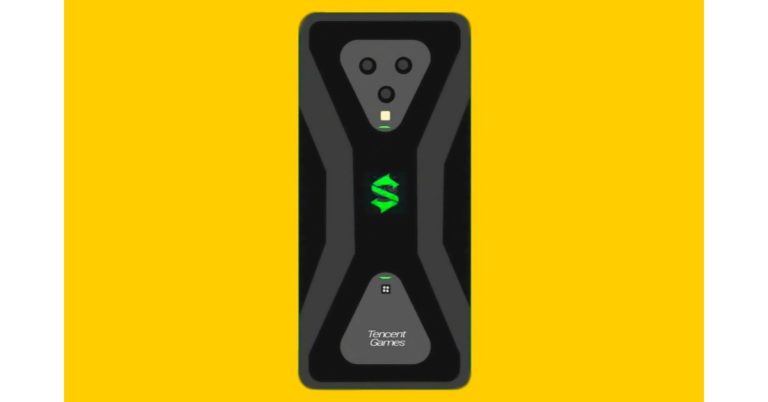
Tomorrow Black Shark will launch its new gaming handset in China. Black Shark 3 will be the company phone to offer 5G connectivity. Ahead of the official launch, the device has been tipped on the web which shows the smartphone is going to have a triple camera setup on the rear panel. A famous tipster Xiaomishka has shared an image via its Twitter account that shows the handset’s rear panel. As per the leaked render the phone will have a symmetrical design along with a triple camera system, the camera set up will be placed inside a triangular frame. Facing it there is another similar triangular frame on the bottom half which carries the Tencent Games logo. In between both the triangular frames you will notice a green ‘S’ logo. The first triangular frame features triple camera sensors two above and one below them while the flash is seen just below the camera set up inside the frame.
It is confirmed that the Black Shark 3 will be housing a 4,720mAh battery that will be supported by a 65W fast charging tech. Besides this, the upcoming smartphone will be featuring a display supporting 90Hz display along with a 270Hz touch sampling rate. Under the hood, there will be Qualcomm’s Snapdragon 865 processor with a 5G modem coupled with LPDDR5 RAM as well as UFS 3.0 storage.
Image Courtesy: Weibo
According to a previous Weibo post by Xiaomi’s CEO, Lei Jun, Black Shark 3 will have a dual battery. He explained that the motherboard will be in the middle while the battery is placed on either side. He also claims that the 65W charger can charge up to 2780mAh battery in just 15 minutes. He also revealed that the number of battery charging cycles has also been increased and the device can also be charged with the help of a magnet on the back while playing games.
In his post, he also confirmed that the company will also be launching the Pro variant of the Black Shark 3. This variant will pack a bigger battery that is 5000mAh. As per leaked Antutu benchmark, Black Shark 3 which comes with codename MBU-AO scored 612651 on its benchmarking app. It will run on Android 10 and will come with 12GB of RAM and 512GB storage.
The Cupertino based company Apple has increased the price of some of its smartphones in India. The list includes the newly launched iPhone 11 Pro and iPhone 11 Pro Max, iPhone 8 and iPhone 8 Plus. To recall the iPhone 11 series was launched last year while the 8 series was launched two years back. The hike in the pricing is due to the increase in basic customs duty (BCD) rate that was announced by the Indian Government during the presentation of Union Budget 2020 also the withdrawal of earlier exemption from basic customs duty under the Social Welfare Surcharge. However, the pricing of its other products remains the same until now. The changes in the pricing will effect from today onwards.
The premium smartphone manufacturer Apple has reviewed the pricing of iPhone 11 Pro, iPhone 11 Pro Max, iPhone 8 and iPhone 8 Plus in India. Now, iPhoen11 Pro Max can be purchased at Rs 1,11,200 for the 64GB storage variant while the 256GB variant will be available at Rs 1,25,200. The 512GB model has now been priced at Rs 1,43,200. Rs 1300 has been increased on all the variants of the iPhone 11 Pro Max. Earlier the 64GB variant was available at Rs 1,09,900 whereas the 256GB and the 512Gb storage option cost Rs 1,23,900 and Rs 1,41,900 respectively.
Similarly from now onwards iPhone 11 Pro will also show an increase of Rs 1300 on all its variants. The 64GB variant can now be purchased at Rs 1,01,200 whereas the 256GB storage option will be available at Rs 1,15,200 and the 512GB model now comes at Rs Rs 1,33,200. At the time of launch, the base model was priced at Rs 99,900 while the 256GB and 512GB storage models came with a price tag of Rs 1,13,900 and Rs 1,31,900, respectively.
Then as well the company has also hiked the price of iPhone 8 models also. The 64Gb variant will now be available at Rs 40,500 while the 128Gb storage options now come at Rs 45,500. Earlier both the variants were priced at Rs 39,900 and Rs 44,900 for the base as well as 128GB model. Furthermore, the iPhone 8 Plus also shows an increase of Rs 700. The base model that is the 64GB storage will now be available at Rs 50,600 whereas the 128GB model now costs Rs 55,600. Earlier both the 64GB and the 128GB storage models were priced at Rs 49,900 and Rs 54,900 respectively.
The Official Apple Online Store in India reflects the revised pricing of the above-mentioned models whereas its online partners such as Flipkart and Amazon are yet to update the new pricing. However, the pricing of the iPhone 11, iPad tablets, Apple Watch and MacBook devices have not seen any changes.
The Chinese electronics brand has recently announced the launch of Huawei MediaPad M5 Lite 10 in India. The key highlights of the newly launched Huawei tablet include an in-built Harman Kardon quad speakers and ClariVu 5.0 Display. It comes with a Huawei M-Pen stylus supporting 2,048 levels of pressure sensitivity. Read on to know more about its pricing as well as availability.
In This Article
Huawei MediaPad M5 Lite 10 pricing and availability
Huawei MediaPad M5 Lite 10 has been launched in India with a price tag of Rs 22,990 for the 4GB RAM with 64GB of storage. According to the company, the tablet will go on presale on March 6th via e-commerce websites Flipkart and Croma along with several retail outlets across India. The Notify Me button has gone live and those who are interested can register themselves at the official website. The device will be available with exclusive offers for the customers purchasing the phone during this period.
The launch offers include 10 percent off to the buyers making the payment using Axis Bank Buzz Credit Card whereas those using Flipkart Axis Bank Credit Card will be offered 5 percent cashback. The tablet will be available in a single colour option of Space Grey.
Huawei MediaPad M5 Lite 10 specifications
The newly launched Huawei tablet comes with a ClariVu 5.0 10.1-inch full-HD IPS multi-touch display with 1,920×1,200 pixels resolution. Huawei MediaPad M5 Lite 10 packs inbuilt Harman Kardon quad speakers that offer Omni-directional sound technology. The device has a smooth metallic unibody with a 2.5D curved glass edge which gives it a premium look. It is powered by HiSilicon Kirin 659 Octa-Core processor coupled with GB RAM with 64GB of storage. The internal storage is expandable and can be expanded up to 256GB using a microSD card. It runs on Android 8 and houses a 7,500mAH battery that claims to support 13 hours of video playback and is augmented with HUAWEI QuickCharge technology and comes with a 9V / 2A 18W charger.
In terms of imaging, the tablet features an 8-megapixel rear camera and an 8-megapixel front camera for taking selfies and video calling. The Huawei MediaPad M5 Lite 10 is shipped with an M-Pen lite stylus that is supported by 2,048 layers of pressure sensitivity for all your work and creative needs & LTE/4G for high-speed internet connectivity.
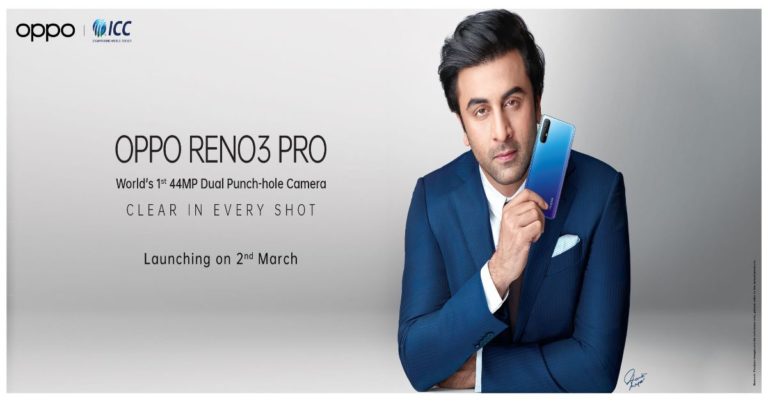
The Chinese smartphone brand Oppo is all set to launch a new smartphone in India today. The company is going to launch Oppo Reno 3 Pro in the country. To recall, prior to its Indian launch the smartphone made its debut in the Chinese market last year in December. However, the Indian variant will have some slight changes to its design as well as specifications when compared to the Chinese version.
In the country, the handset is going to come with a dual hole-punch camera set up rather than a single cut out. Besides this, the smartphone will have a 64-megapixel primary camera. The company has been teasing the phone for a long time now. Read on to know how to watch the event live and its expected specifications as well as it’s pricing.
In This Article
Oppo Reno 3 Pro expected pricing and how to watch the live stream
As said, Oppo Reno 3 is going to make its debut in India today. The company will be hosting a launch event in New Delhi, which is going to begin at 12.30 noon IST. The Oppo Reno 3 Pro launch event will be webcasted across all its social media channels as well as on YouTube.
The price of the upcoming smartphone is still unknown, but the device will go on sale in the country via e-commerce websites Amazon, as well as Flipkart along with all the offline retailers across the country. The pricing is expected to be similar to the Chinese variant. In China, the company launched Oppo Reno 3 at CYN 3,999 that translates to Rs 40,000 for the 8GB RAM with a 128GB storage variant. Whereas the 12GB RAM with 256GB storage model is expected to be priced at CYN 4,499 that translates to Rs 45,000. It is confirmed that Oppo will be offering the phone in three colour options Aura Blue, Midnight Black and Sky White.
Oppo Reno 3 Pro expected specifications
The official specifications of Oppo Reno 3 Pro are still unknown. But according to the teasers, the device is going to flaunt a dual punch-hole selfie camera set up that will be including a 44-megapixel ultra-clear main along with a 2-megapixel depth of field lens. The set up will be supporting a dual bokeh lens for a binocular bokeh effect that will be producing sharper edges and background gradients. Additionally, it will be supporting an ultra night selfie mode with AI noise reduction, face protection feature.
On the rear, there will be a vertically aligned quad camera set up that will be consisting of a 64-megapixel ultra-clear main camera. The camera set up is aided by a 13-megapixel telephoto lens, a 2-megapixel mono lens and an 8-megapixel ultra-wide-angle lens. It will come with an in-display fingerprint sensor for biometrics.
Until now the information related to the processor, battery and display is still unknown we will soon update you in our full story after Oppo Reno 3 gets officially launched.